Running an esports program means stitching together registration, scheduling, match reporting, community ops, and post-event analytics. Each piece usually lives in a different tool, and none of them talk to each other cleanly. That fragmentation is the real problem. You spend more time reconciling brackets and viewership numbers than you do improving the competitive experience.
The stakes are rising fast. The global esports market is projected to grow from USD 9.94 billion in 2026 to USD 55.41 billion by 2035, a 21.19% CAGR, according to Precedence Research (2026). The esports management platforms market alone is forecast to jump from USD 7.15 billion in 2025 to USD 21.46 billion by 2030, per The Business Research Company (2026). More money means more scrutiny. If you own an esports product, program, or sponsorship strategy, your platform choice now carries real operational and revenue weight.
This guide reads like a buyer's evaluation, not a brand tour. If you evaluate tools the way a product manager does, by operational fit, integrations, maintainability, and measurable outcomes, the right pick depends less on brand familiarity and more on the motion you actually run. A tournament management platform solves a different job than an esports analytics tool. A scholastic esports league infrastructure product serves schools, not sponsors. The mistake most buyers make is choosing by name recognition instead of by workflow. Below, we sort 5 platforms by intent so you can match the tool to the job.
What's inside
This guide covers 5 esports platform tools across four distinct categories: tournament and competition management, scholastic and league infrastructure, viewership and audience analytics, and developer or back-office platform layers. We selected each platform based on use-case fit, public proof and scale, integration depth, operational clarity, and available pricing transparency. The goal is decision support for anyone comparing an esports competition platform for organizers, brands, schools, or communities. Each entry states who it fits, what it does well, and what it costs where that information is public.
TL;DR
- Best for tournament organizers and communities: Battlefy handles discovery, brackets, registration, and match reporting at scale.
- Best for competition infrastructure and developers: Challengermode offers hosting, matchmaking, branded spaces, and a free tier to start.
- Best for scholastic and collegiate programs: PlayVS runs K-12 and college esports leagues with recruiting and championship structure.
- Best for viewership and sponsor analytics: Esports Charts delivers worldwide viewership intelligence with a public PRO tier at $29.99/month.
- Best for back-office and agency operations: 3H Esports Tech provides ERP-style workflows for clubs, MCNs, and agencies.
- Pick by motion, not brand: Match the platform to whether you run competitions, schools, analytics, or operations.
What is an esports platform?
An esports platform is software that helps organizations run competitive gaming, covering tournament operations, league management, community engagement, analytics, or a combination of these functions. Most buyers encounter four distinct platform types, and confusing them is the fastest way to buy the wrong tool.
The four main platform categories:
- Tournament and competition management: Handles registration, bracket generation, scheduling, check-in, match reporting, and prize distribution for esports tournaments.
- Scholastic and league infrastructure: Supports schools, districts, coaches, and students running organized league play, plus recruiting and curriculum.
- Viewership and audience analytics: Tracks stream viewership, peak concurrents, tournament popularity, and sponsor exposure across platforms and regions.
- Developer and white-label layers: Provides APIs, back-office ERP, and branded infrastructure for publishers, agencies, and clubs building their own experiences.
Core capabilities to expect across an esports competition platform:
- Tournament registration and bracket management
- Match scheduling, check-in, and score reporting
- Player and team profiles, seeding, and waitlists
- Community and communication features (chat, notifications)
- Analytics on participation, viewership, and engagement
- Integrations, APIs, or white-label options for developers and brands
Live streaming now drives over 41% of esports revenue in 2025, per Precedence Research (2026), which explains why viewership analytics has become a category of its own rather than a bolt-on feature. North America accounts for 39% of global esports revenue in 2025, with Asia-Pacific expected to grow fastest through 2035. The takeaway for buyers: the platform market is fragmenting by function, so your evaluation should start with the job, not the logo.
When to use an esports platform
The right platform depends on the motion you run. Here is how to pattern-match your situation.
Run tournaments and brackets at scale
If your core job is hosting esports tournaments, prioritize a tournament management platform that automates registration, bracket generation, scheduling, and match reporting. Look at check-in flows, waitlist handling, and prize operations. Organizers and communities running frequent events need repeatable, low-overhead competition management, not a reporting dashboard. The volume of matches you process should drive the decision.
Operate scholastic or collegiate programs
Schools, districts, and colleges need scholastic esports infrastructure built for coaches, students, and administrators. That means league scheduling aligned to school calendars, eligibility handling, recruiting pathways, and curriculum support. This is a specialized job. A general tournament tool will not cover the compliance, seasonal structure, and player recruitment workflows a scholastic esports league platform requires.
Measure audience and sponsor value
If you need to prove sponsorship ROI or understand tournament popularity, use an esports analytics platform. Viewership analytics, peak concurrents, watch time, and platform breakdowns let organizers, brands, and teams quantify exposure. Sponsors increasingly demand this data before committing budget, so analytics is no longer optional for anyone selling esports as a marketing channel.
Comparison table
The table below ranks seven esports platform tools by category relevance. Use it to shortlist by intent first, then read the detailed entries for fit. Pricing and ratings reflect publicly verified values where available; some vendors gate pricing behind sales or demo requests.
| # | Product | Intent | Key use case | Pricing | G2 rating |
|---|---|---|---|---|---|
| 1 | Battlefy | Tournament ops | Tournament creation, brackets, registration, match reporting | Not publicly listed | Not listed |
| 2 | Challengermode | Competition infrastructure | Hosting, matchmaking, branded spaces, developer tooling | Free; Core from €59.90/mo (annual); Enterprise quote | Not yet rated |
| 3 | PlayVS | Scholastic leagues | K-12 and collegiate league play, recruiting | $495 early bird HS / $395 MS (annual, 2026-27) | Not listed |
| 4 | Esports Charts | Viewership analytics | Viewership, popularity, sponsor exposure data | PRO $29.99/mo or $299/yr; dashboards custom | Not listed |
| 5 | 3H Esports Tech | Back-office operations | ERP for clubs, MCNs, and agencies | Not publicly listed | Not listed |
The table intentionally lists five detailed entries; two additional platform slots in the original scope could not be verified against first-party sources, so we omitted unconfirmed brands rather than list placeholders. Read the ratings column with context: several esports platforms carry limited or no public G2 review data, which reflects category maturity rather than product quality.
1. Battlefy
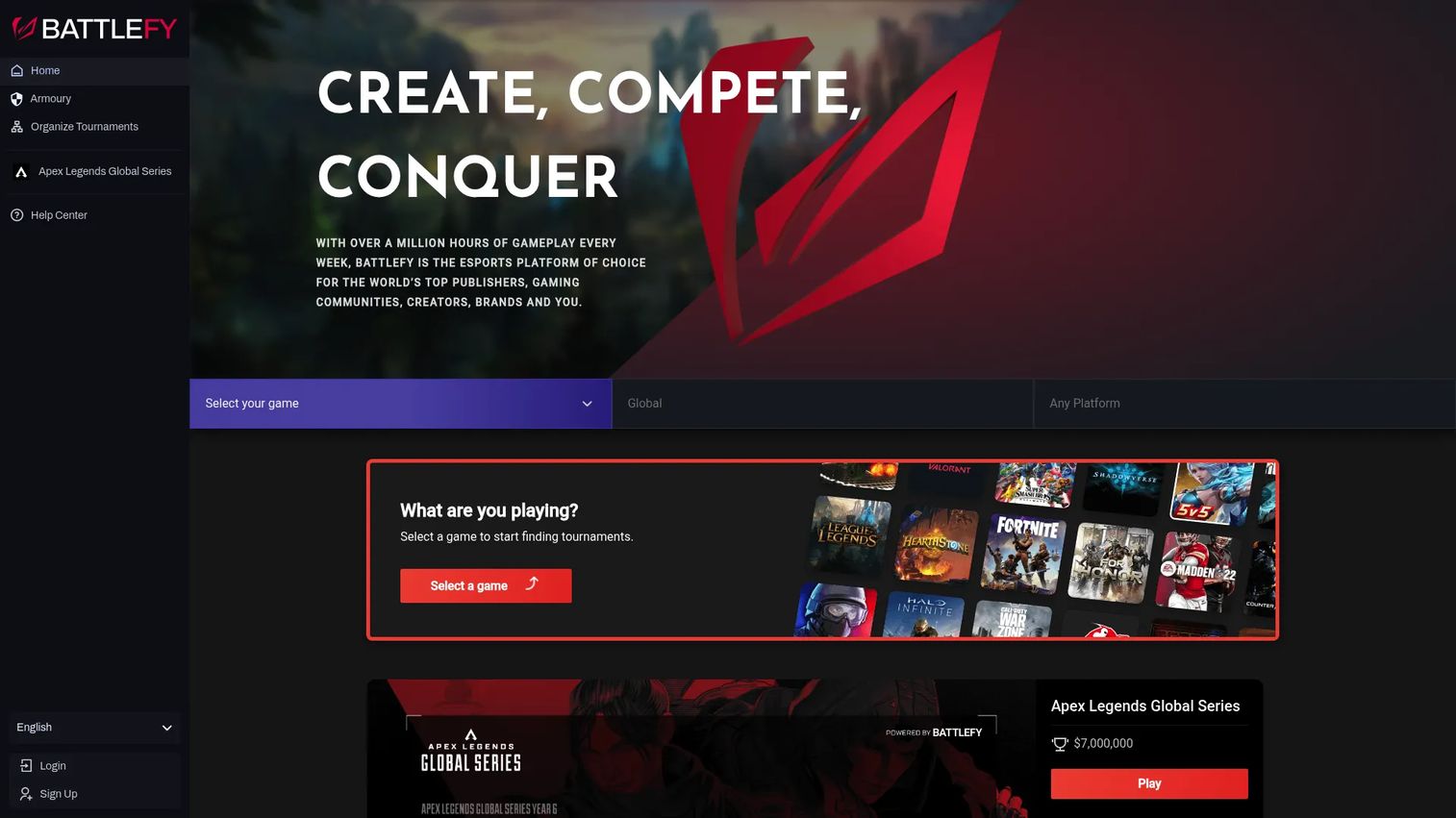
Battlefy is an esports tournament platform for creating, managing, and joining competitive gaming events. It handles the full organizer workflow, from tournament creation through bracket play to score reporting, and it doubles as a discovery surface where players find and join events. For organizers and communities running frequent online competitions, it removes most of the manual coordination that usually eats into event day.
Best for: Esports organizers and communities running online tournaments and open competitions at volume.
Key strengths
- Tournament creation and bracket management: Spin up events with automated bracket generation, seeding, and structured competition management.
- Registration, check-in, and waitlists: Handle player and team registration, check-in flows, and overflow waitlists without spreadsheets.
- Match pages with chat and reporting: Give each match a dedicated page with chat, score reporting, and seeding built in.
Why choose Battlefy: If your primary motion is running tournaments and you want players to discover and self-register, Battlefy fits the organizer job directly. It is built around the operational reality of event day, check-ins, brackets, and reporting, rather than around analytics or scholastic structure. Communities that host recurring competitions get the most value because the setup work amortizes across many events.
Battlefy pricing: Battlefy does not publish a readable first-party pricing page, and no public pricing figures were verifiable at the time of writing. Organizers should contact Battlefy directly for current commercial terms. There is no confirmed public G2 rating, which is common for esports tournament tools where review volume stays low relative to general SaaS categories.
2. Challengermode
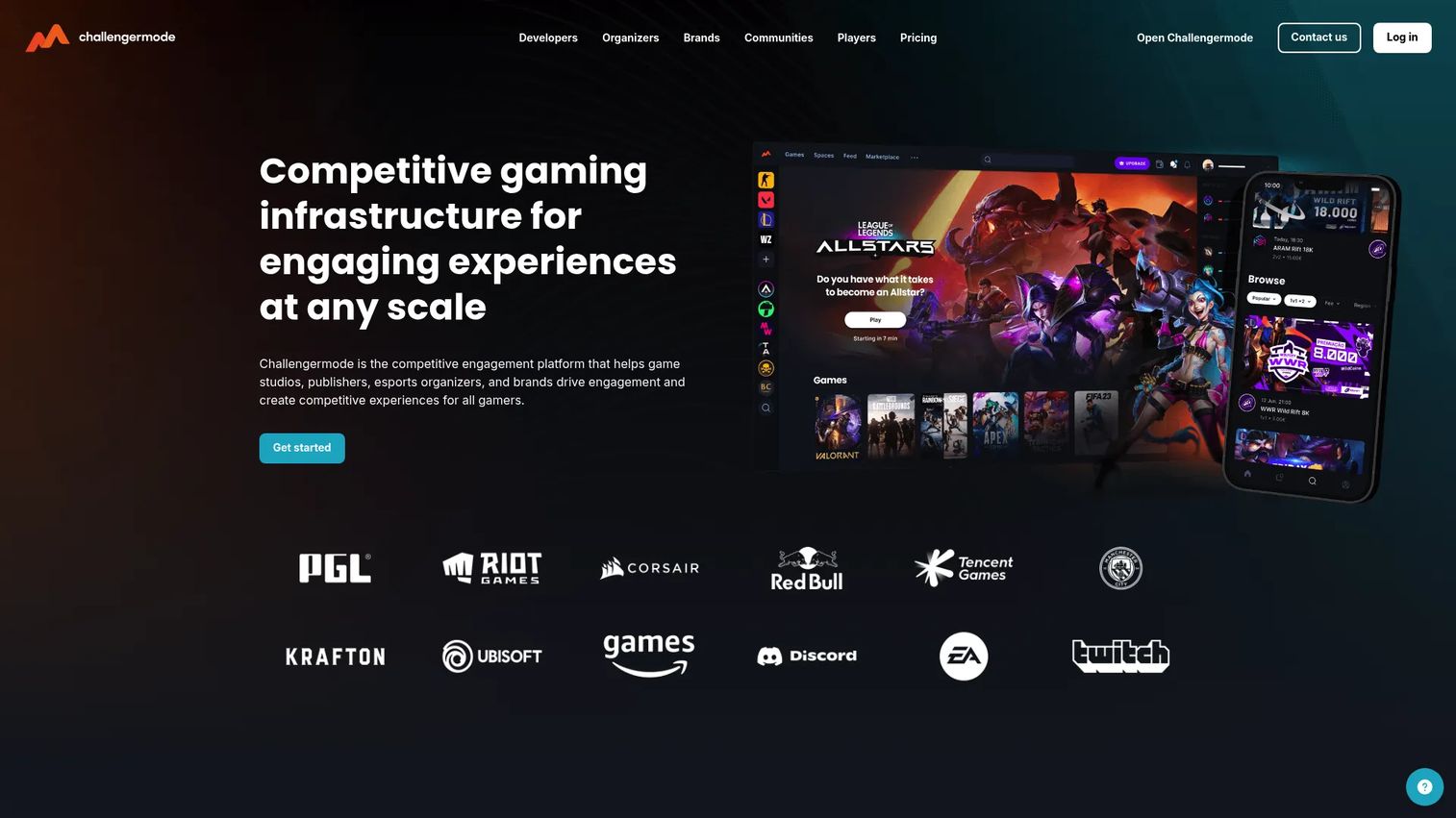
Challengermode is an esports competition management platform serving players, organizers, and game developers. It combines tournament hosting, matchmaking, and ladders with branded Spaces and monetization tools, and it exposes infrastructure that developers can build on. That breadth makes it a strong fit for teams that want more than a single-tournament tool, especially publishers and organizers who need an esports platform for developers.
Best for: Esports teams, organizers, and game publishers needing competition infrastructure plus developer tooling.
Key strengths
- Tournament hosting: Run competitions and ladders with structured matchmaking across titles.
- Matchmaking and ladders: Support ongoing competitive play, not just one-off brackets, with ranked ladders.
- Branded spaces and monetization: Give organizers and brands their own branded environment with built-in monetization options.
Why choose Challengermode: Choose Challengermode when you need competition infrastructure that scales beyond individual events, particularly if you are a publisher or brand wanting a white-label or developer-accessible layer. The free tier lets you validate the platform before committing budget, which matters for a PM-style evaluator weighing opportunity cost against a longer procurement cycle. It sits between pure tournament tooling and full custom infrastructure.
Challengermode pricing: Challengermode publishes pricing openly. The Free plan is €0/month. Core starts from €59.90/month on annual billing, and Enterprise is quote-based through sales. G2 currently shows no established review score for Challengermode, which reflects a lack of review volume rather than product performance.
3. PlayVS
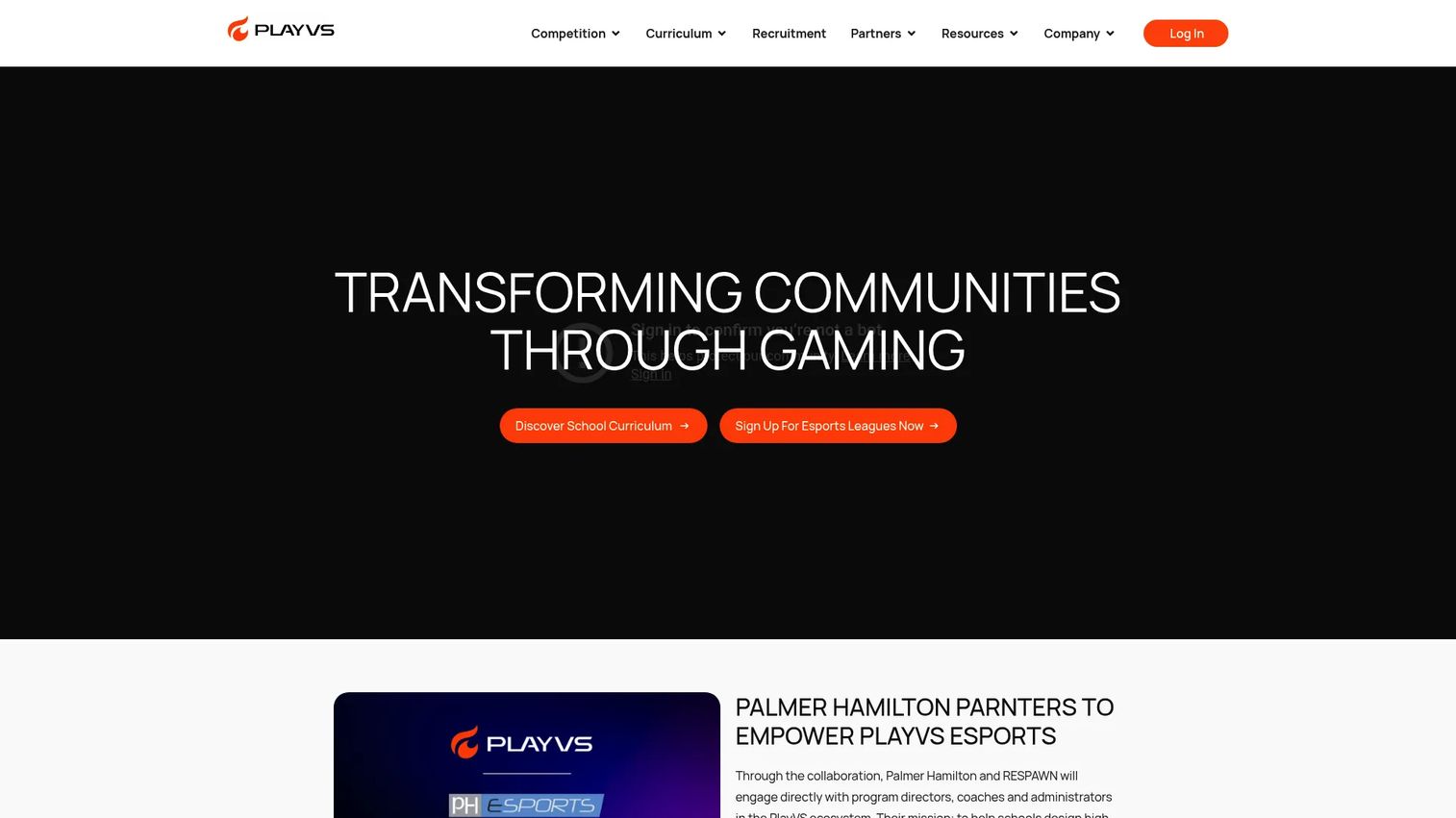
PlayVS is a scholastic esports platform built for K-12 competitions and collegiate recruiting. It runs organized middle school and high school leagues, adds a recruiting layer through PlayVS Recruit, and structures championship play with the PlayVS Cup. For schools and districts, it handles the seasonal, calendar-aligned, eligibility-aware reality that generic tournament tools were never designed for.
Best for: K-12 schools and districts running organized scholastic esports leagues, plus students pursuing collegiate recruiting.
Key strengths
- Middle and high school leagues: Run structured, season-based scholastic esports competition aligned to school calendars.
- PlayVS Recruit: Connect students to college recruiting pathways through player recruitment tooling.
- PlayVS Cup: Give programs a championship competition to compete toward across the season.
Why choose PlayVS: If you run esports inside an educational institution, PlayVS solves the specialized job that tournament and analytics platforms do not touch. Eligibility, seasonal structure, coach administration, and recruiting matter more than raw bracket flexibility here. Districts standardizing esports across multiple schools get a single, purpose-built esports league platform instead of improvising with tools meant for open online competition.
PlayVS pricing: For the 2026-27 school year, PlayVS uses a per-school access fee covering all leagues. High school access is $495 early bird or $595 standard; middle school is $395 early bird or $495 standard, with early-bird pricing available through August 7, 2026. Some state partner leagues may carry additional fees. Pricing is billed annually. No public G2 rating was verified at the time of writing.
4. Esports Charts
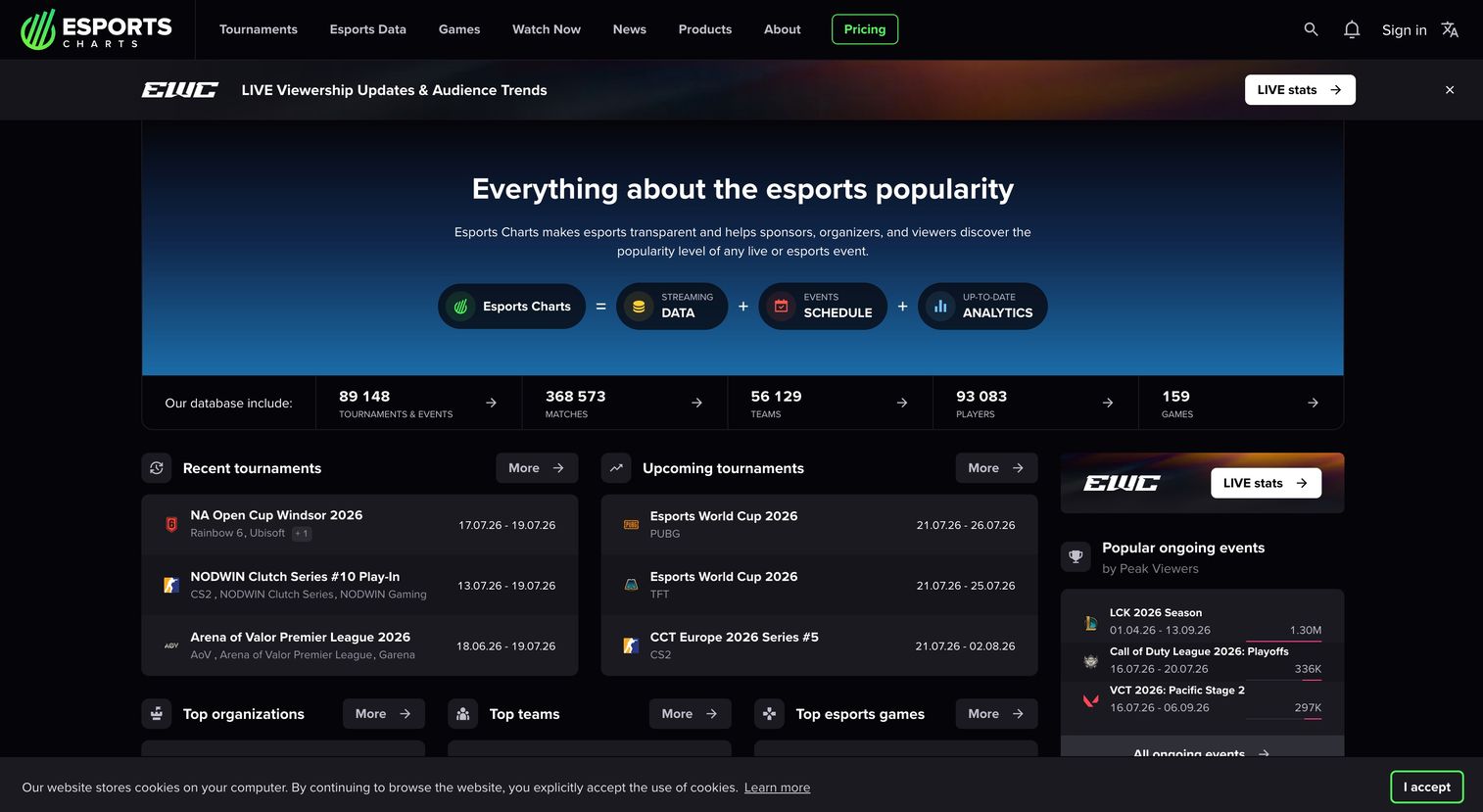
Esports Charts is an esports analytics platform covering viewership, popularity, and historical statistics across events, teams, and organizers. It is the reporting layer that tournament and league tools do not provide, quantifying peak concurrents, watch time, language and platform breakdowns, and roster-level exposure. For anyone selling or measuring esports as a marketing channel, it turns viewership into defensible numbers.
Best for: Esports publishers, organizers, teams, and agencies needing viewership intelligence and sponsor reporting.
Key strengths
- Worldwide statistics and analytics: Access global esports viewership and popularity data across titles and events.
- Events Dashboard: Break down viewership by language, platform, and time with detailed event-level reporting.
- Teams Dashboard: Track roster and match-level exposure data to quantify team and sponsor value.
Why choose Esports Charts: Choose Esports Charts when your job is proving sponsor ROI or benchmarking tournament popularity rather than running the competition itself. Brands, agencies, and organizers use the viewership analytics to justify sponsorship spend and compare event performance. It pairs naturally with a tournament management platform: run the event on one tool, measure its audience on this one.
Esports Charts pricing: The PRO Subscription is publicly listed at $29.99/month or $299/year, and there is no free tier. The Events Dashboard and Teams Dashboard products use variable or custom pricing, typically quoted based on scope. Pricing is in USD and verified from the vendor's own pricing page. No public G2 rating was confirmed at the time of writing.
5. 3H Esports Tech
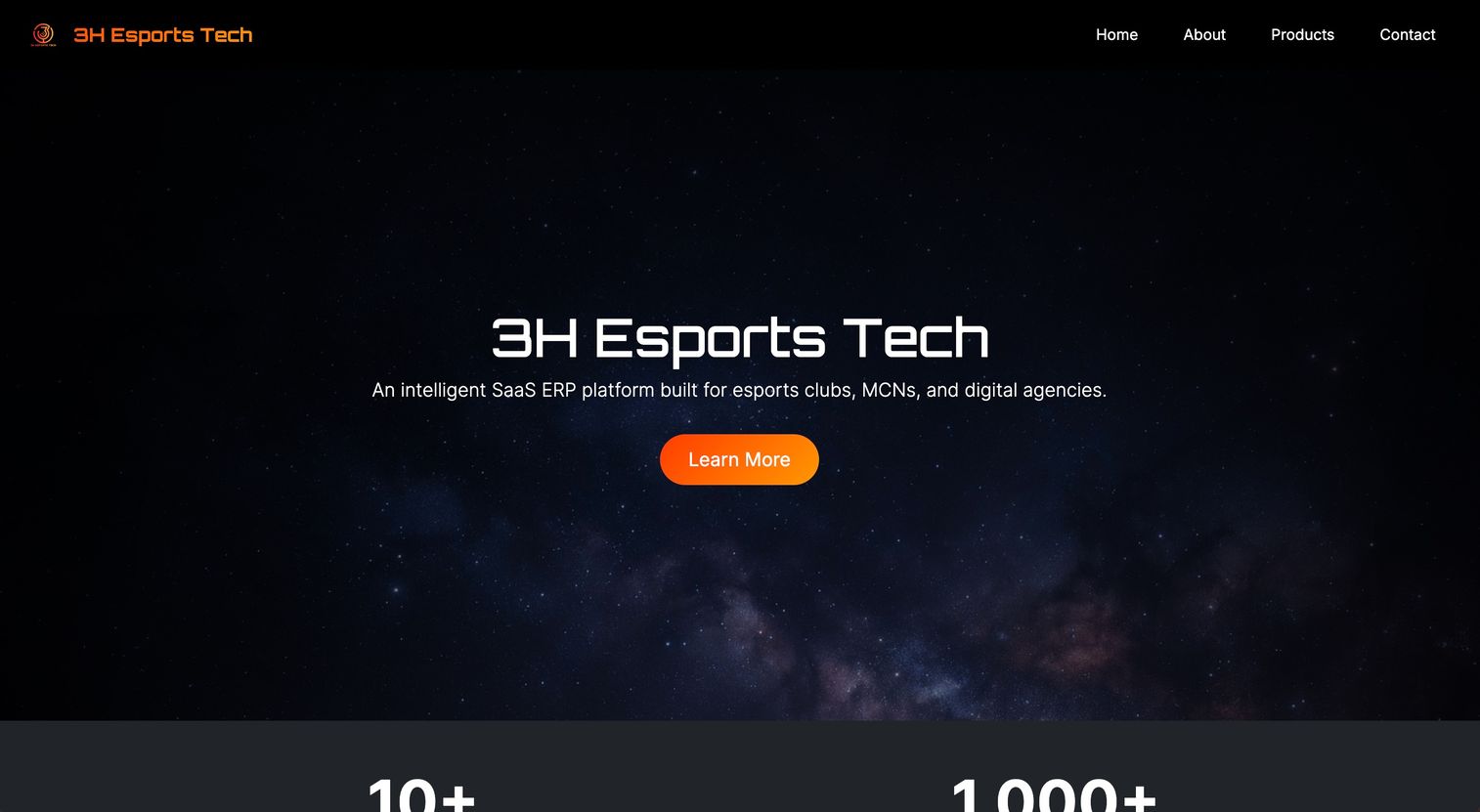
3H Esports Tech is a SaaS ERP platform for esports clubs, MCNs, and digital agencies. Instead of running the competition, it runs the business behind it, covering HR, finance, team management, and agent workflows. That makes it a distinct category from the tournament and analytics tools above, aimed at organizations managing rosters, talent, and revenue rather than brackets.
Best for: Esports clubs, MCNs, and agencies needing back-office ERP and operational workflows.
Key strengths
- Agent portal mobile web app: Give agents a mobile-first portal for managing talent and activity on the go.
- Real-time sales reporting: Track sales activity and performance across the organization in real time.
- HR, finance, and team modules: Consolidate back-office operations for HR, finance, and roster management in one system.
Why choose 3H Esports Tech: Choose 3H Esports Tech when your operational pain is running the organization, not the event. Clubs and agencies managing rosters, talent contracts, and revenue need ERP-style workflows that tournament platforms simply do not offer. It fills the operational gap for teams that have outgrown spreadsheets but do not need competition hosting.
3H Esports Tech pricing: The official products page is public, but no pricing figures are listed; pricing appears to sit behind a demo or inquiry request. Prospective buyers should contact 3H Esports Tech for current commercial terms. No public G2 rating was verified at the time of writing.
Considerations before buying an esports platform
Before committing to any esports platform, run the same evaluation discipline you would apply to any core operational tool.
Use-case fit over feature count
Match the platform to your actual motion. A tournament management platform, a scholastic esports league platform, an analytics tool, and an ERP solve genuinely different jobs. Do not buy a competition platform expecting sponsor reporting, or an analytics tool expecting bracket management. Start from the job you run most often.
Integrations and data flow
Check how the platform connects to the rest of your stack. Does it export viewership data, sync registration to your CRM, or expose an API for developers? Fragmented data is the core pain in esports operations. Prioritize tools that reduce reconciliation work rather than add another silo.
Operational overhead and maintainability
Estimate the ongoing burden, not just setup. Recurring events amortize setup cost, but seasonal scholastic play and analytics reporting have their own maintenance rhythms. Ask who owns the tool day to day and whether it scales without proportional headcount.
Pricing transparency and contract terms
Some platforms publish pricing openly while others gate it behind sales. Factor annual-only billing, per-school fees, and quote-based enterprise tiers into your total cost. Transparent pricing usually signals a self-serve motion; gated pricing usually signals longer procurement.
Proof, scale, and trust signals
Look for public evidence the platform operates at your scale. Review volume, named customers, and viewership data all help. Limited G2 presence in this category reflects market maturity, so weigh first-party proof and reference customers accordingly.
Conclusion
The strongest pick depends entirely on the job you run. For tournament operations and community competitions, Battlefy fits the organizer workflow directly. For competition infrastructure with developer and white-label reach, Challengermode gives you a free starting point and scalable hosting. For scholastic and collegiate programs, PlayVS is purpose-built for schools in a way general tools are not. For viewership and sponsor analytics, Esports Charts turns audience into defensible numbers. For back-office operations, 3H Esports Tech runs the business behind the team.
The recurring mistake is choosing by brand familiarity instead of by motion. Start with the job, then verify integrations, reporting, and operational fit against your real stack. Shortlist two platforms that match your primary intent, run a scoped trial where a free tier exists, and measure the maintenance burden before you scale. Pick the platform that reduces reconciliation work, not the one with the most features.
If your broader work involves showing complex products to buyers or teams, building interactive demos with a platform like Guideflow can help you communicate value through guided, self-serve experiences.
Start your journey with Guideflow today!
FAQs
An esports platform is software that helps organizations run competitive gaming, spanning tournament operations, league management, community engagement, or analytics. Most platforms specialize in one category: competition management, scholastic infrastructure, viewership analytics, or developer and back-office layers. The right one depends on whether you run events, schools, sponsorships, or operations.
A tournament management platform should cover registration and tournament registration flows, bracket management, match scheduling, check-in, waitlists, and score reporting. Community features like match chat and notifications help engagement, while integrations or APIs matter for developers. Prioritize automation that reduces manual coordination on event day.
PlayVS is purpose-built for scholastic esports, running K-12 and collegiate league play with recruiting and championship structure. Unlike general tournament tools, it handles eligibility, seasonal scheduling aligned to school calendars, and coach administration. Schools and districts standardizing esports across programs get the most value from a dedicated esports league platform.
Esports analytics platforms quantify viewership, peak concurrents, watch time, and platform breakdowns so brands can measure sponsor exposure. Tools like Esports Charts turn audience into defensible numbers that justify sponsorship spend. With live streaming driving over 41% of esports revenue in 2025 per Precedence Research, viewership analytics has become essential for anyone selling esports as a marketing channel.
Evaluate use-case fit first, then integrations, operational overhead, maintainability, and pricing transparency. A product manager should weigh how the tool connects to existing data systems, how much ongoing maintenance it demands, and whether it scales without proportional headcount. Public proof and reference customers matter more than feature lists.
Some do. Challengermode offers branded Spaces and developer-facing infrastructure, making it a fit for publishers and brands needing a white-label esports platform or API access. Others focus on a single hosted workflow. If you need to build on the platform or embed it under your own brand, confirm API scope and white-label availability before buying.
A tournament management platform runs the competition: registration, brackets, scheduling, and match reporting. An esports analytics tool measures the audience: viewership, popularity, and sponsor exposure. They solve different jobs and often pair together, running the event on one tool and measuring its reach on the other.
Some platforms combine competition management with community features and basic reporting, but deep viewership analytics and back-office ERP usually live in separate tools. Most organizations run a competition platform for events and add an analytics tool for sponsor reporting. Match the primary tool to your dominant motion, then fill gaps with specialized platforms.