Your finance team spends the first ten days of every month closing the books. Reconciliation happens across four spreadsheets. Two of them disagree. By the time the numbers are clean, the board deck is already late, and nobody trusts the revenue figure anyway.
That is what the wrong general ledger setup costs you. Not just hours, but confidence. When your system of record is stitched together from manual entries and exports, finance stops being a decision engine and becomes a reporting bottleneck. You feel it most when a board member asks a simple question and the answer takes three days.
The global accounting software market hit USD 19.38 billion in 2024 and is projected to reach USD 31.25 billion by 2030, growing at an 8.4% CAGR, according to Grand View Research (2024). That growth is not vanity. It reflects a real shift: finance teams are replacing manual bookkeeping with software that centralizes transactions, automates reconciliation, and closes faster.
This guide evaluates general ledger software through four lenses that matter to a founder: reporting quality, automation depth, auditability, and fit for where your business is headed. The right general ledger accounting software cleans up board reporting, shortens your close, and takes finance visibility off your desk. The wrong one adds a migration headache with no payoff. Below, we break down eight general ledger systems worth your shortlist, and where each one actually fits.
If you are evaluating adjacent parts of your stack too, our roundups of the best business intelligence software and best AI cybersecurity solutions cover the reporting and compliance layers that sit next to your ledger.
What's inside
This article compares eight general ledger software options built for SaaS and growth-minded finance teams. We chose tools based on the criteria that separate a real finance system from a glorified spreadsheet: depth of reporting, multi-entity support, automation, integrations, pricing transparency, and how much the tool leans on your team to maintain it.
Every product here handles core general ledger work. Where they split is scale, complexity, and cost. We flag who each tool fits and, just as important, who should skip it to avoid overbuying. Use the comparison table to shortlist fast, then read the sections that match your stage.
TL;DR
- Best for mid-market scale: Sage Intacct, for multi-entity accounting and deep reporting without ERP-level overhead.
- Best for flexible, API-driven finance: SoftLedger, for teams that want programmable ledgers and real-time consolidation.
- Best for broader ERP needs: NetSuite, when finance is one piece of a company-wide platform.
- Best for lean, simple setups: Xero and QuickBooks Online, for small teams that need clean bookkeeping and fast onboarding.
- Best value for growing teams: Zoho Books, for full-featured accounting at a low entry price.
- Best for service businesses: FreshBooks, for freelancers and agencies with lightweight general ledger needs.
What is general ledger software?
General ledger software is the accounting system that records, organizes, and reports every financial transaction as the central system of record for a business. It sits at the core of your finance stack and feeds everything downstream, from the balance sheet to the board deck.
A general ledger program does more than store numbers. It structures how money moves through your business and makes that movement auditable. Here is what a modern general ledger system handles:
- Chart of accounts management: The backbone that categorizes every transaction into assets, liabilities, equity, revenue, and expenses so reports actually mean something.
- Transaction recording: Capturing debits and credits from invoices, payments, payroll, and bank feeds, ideally automatically rather than by hand.
- Financial reporting: Generating balance sheets, income statements, and cash flow statements on demand, not after a week of spreadsheet surgery.
- Reconciliation: Matching your books against bank statements and other sources so discrepancies surface early instead of at close.
- Workflow automation: Rules that post recurring entries, allocate costs across entities, and route approvals without manual touches.
- Audit trail: A timestamped record of who changed what and when, which is non-negotiable when you raise your next round.
The strongest general ledger solutions turn these functions into real-time financial reporting rather than month-old snapshots. That shift, from historical record to live decision engine, is the whole point. Cloud accounting made it possible, and 68% of the accounting software market was cloud-based in 2025, per Precedence Research (2025).
When to use general ledger software
Not every business needs a full general ledger system on day one. Here are the three moments when it stops being optional.
Replace spreadsheet-led bookkeeping
Spreadsheets break quietly. A formula gets overwritten, a tab gets deleted, and suddenly your revenue number is wrong and nobody knows why. Once you are running payroll, invoicing customers, and tracking expenses across more than a handful of accounts, manual bookkeeping stops scaling. General ledger software enforces double-entry rules, connects to bank feeds, and removes the silent errors that spreadsheets hide until they cost you.
Speed up month-end close
If your close drags into the second week of the month, your reporting is always stale. Accounting ledger software with automation posts recurring journal entries, flags reconciliation gaps, and consolidates entities without a human chasing each line. Teams that automate the close cut days off the cycle and free finance to analyze results instead of assembling them.
Create cleaner board-ready reporting
Board members do not want a spreadsheet. They want a clean income statement, a cash position they trust, and metrics that survive due diligence. General ledger software produces those reports directly from the system of record, so the numbers in your deck match the numbers in your ledger. That alignment is what lets you answer hard questions in the room instead of promising to follow up.
Comparison table
Here is how the eight general ledger software options compare on intent, differentiation, pricing, and G2 rating. Pricing reflects publicly listed starting prices where vendors publish them; several enterprise-grade general ledger systems tailor pricing by modules and entity count. We ordered the list by overall fit for a growth-stage SaaS finance team, not alphabetically.
| # | Product | Intent | Key differentiation | Pricing | G2 rating |
|---|---|---|---|---|---|
| 1 | Sage Intacct | Mid-market multi-entity finance | Deep reporting and consolidation without full ERP | Custom, by module | 4.3/5 |
| 2 | SoftLedger | API-driven, real-time finance | Programmable ledger with flexible integrations | Custom | 4.6/5 |
| 3 | DualEntry | Audit-ready ERP automation | AI-powered multi-entity, multi-currency close | Custom (demo) | 4.9/5 |
| 4 | Xero | Small business cloud accounting | Simple, integration-rich core ledger | From $18/month | 4.4/5 |
| 5 | QuickBooks Online | SMB bookkeeping and accounting | Broad familiarity and ecosystem | From $19/month | 4.2/5 |
| 6 | NetSuite | Company-wide ERP | Unified finance, CRM, and operations | Custom | Not listed |
| 7 | Zoho Books | Low-cost full-featured accounting | Strong automation at a low entry price | Free, then $15/mo | 4.4/5 |
| 8 | FreshBooks | Service-business accounting | Simple invoicing and lightweight GL | From $2.30/mo | 4.5/5 |
What SaaS founders should look for in general ledger software
You are not buying accounting software for its own sake. You are buying finance infrastructure that lets you run the company without becoming the company's part-time controller. Three things matter most.
First, control without complexity. You want a system your finance team owns end to end, not one that pulls engineering into every workflow change. The moment your ledger needs a developer to add a custom report, it stops being a finance tool and starts being a project.
Second, reports you can trust. The number in your board deck has to match the number in the system, every time. That means the general ledger accounting software has to be the single source of truth, with a clean audit trail behind every figure. If you are stitching reports together from exports, you do not have reporting, you have a reconciliation problem waiting to embarrass you.
Third, something finance can maintain and scale. The best general ledger solutions grow with you. Adding an entity, a currency, or a new revenue stream should be a configuration change, not a re-implementation. Match the tool to where your finance team is now and where your reporting needs will be in 12 to 24 months.
When general ledger software is the right move
Certain moments make the case obvious. If you recognize two or more of these, it is time.
Fast growth is the first trigger. When headcount, entities, or transaction volume climb, manual processes stop keeping up and errors multiply. Board reporting pain is the second. If assembling a clean deck takes days and still invites doubt, your system of record is the problem. Multi-entity complexity is the third. Once you operate more than one legal entity or currency, consolidation by spreadsheet becomes a monthly risk. Audit readiness is the fourth. When you are heading into a raise or an acquisition, buyers will test your books, and a real audit trail is the difference between a clean diligence process and a painful one.
1. Sage Intacct
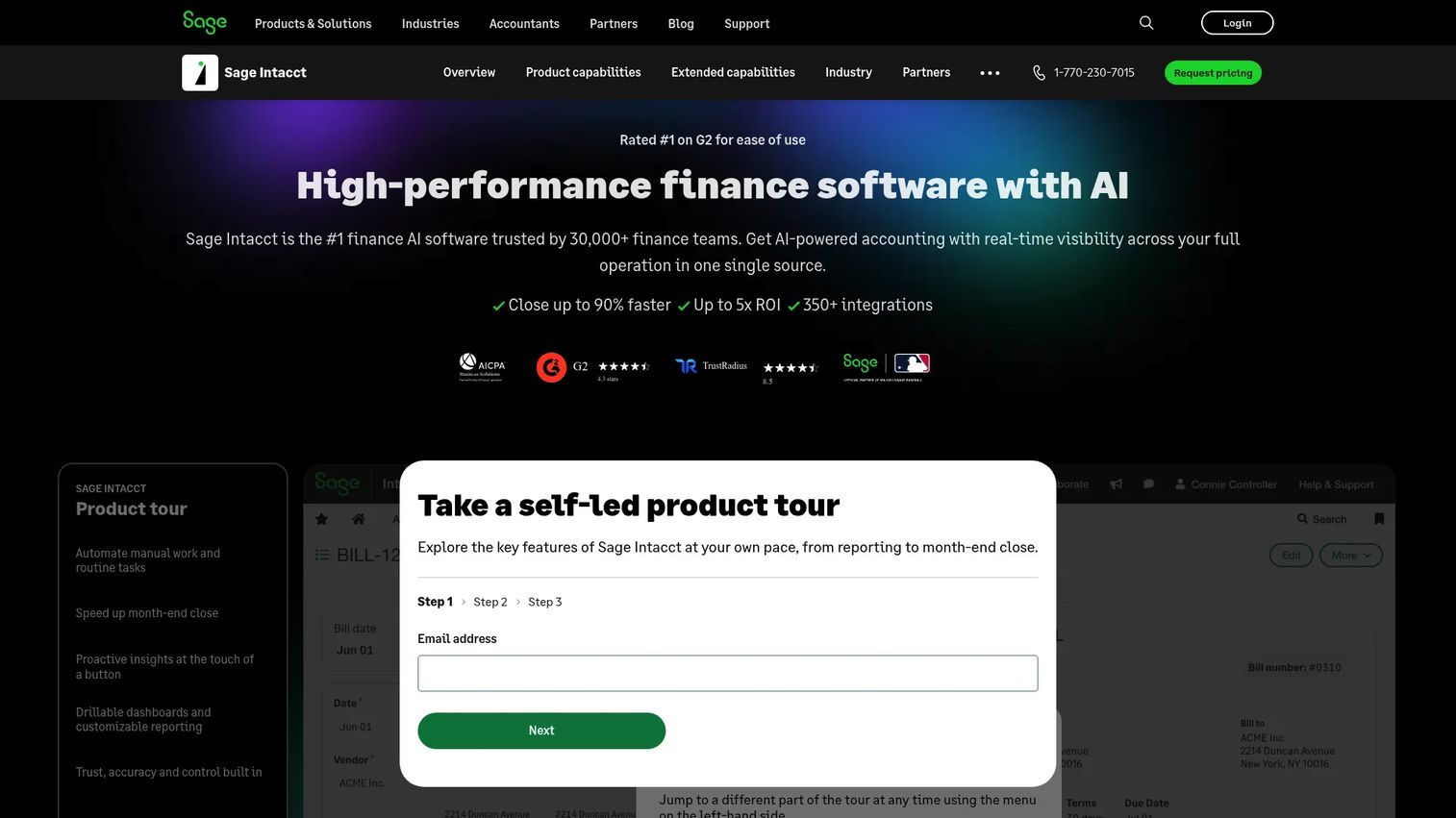
Sage Intacct is cloud-based accounting and financial management software built for finance teams that have outgrown small-business tools but do not need a full ERP. It centralizes core financials, automates the close, and handles multi-entity consolidation, which makes it a common landing spot for growth-stage SaaS companies. If your reporting needs are getting complex but your operations are still finance-led, Sage Intacct hits a sweet spot.
Best for: Mid-market finance teams needing automated cloud accounting and multi-entity reporting.
Key strengths
- Multi-entity and consolidation: Roll up multiple entities and currencies without manual spreadsheet consolidation, so month-end stays clean as you add subsidiaries.
- Real-time dashboards and reporting: Live financial statements and operational metrics that let finance answer board questions on the spot.
- Core financials automation: Automated journal entries, allocations, and approvals that cut days off the close cycle.
Why choose Sage Intacct: Founders pick Sage Intacct when spreadsheets and SMB tools stop scaling but a full ERP would be overkill. It gives you dimensional reporting and consolidation without dragging in warehouse or manufacturing modules you will never use. Teams that want deep financial visibility without a heavy implementation land here.
Sage Intacct pricing: Sage Intacct uses custom pricing tailored by modules, organization size, and industry. The pricing page does not display public dollar amounts, so plan to scope your requirements with sales. This module-based model means you pay for the financial capabilities you use, which suits teams that want to start with core general ledger and add functions as they grow. Sage Intacct holds a 4.3/5 rating on G2.
2. SoftLedger
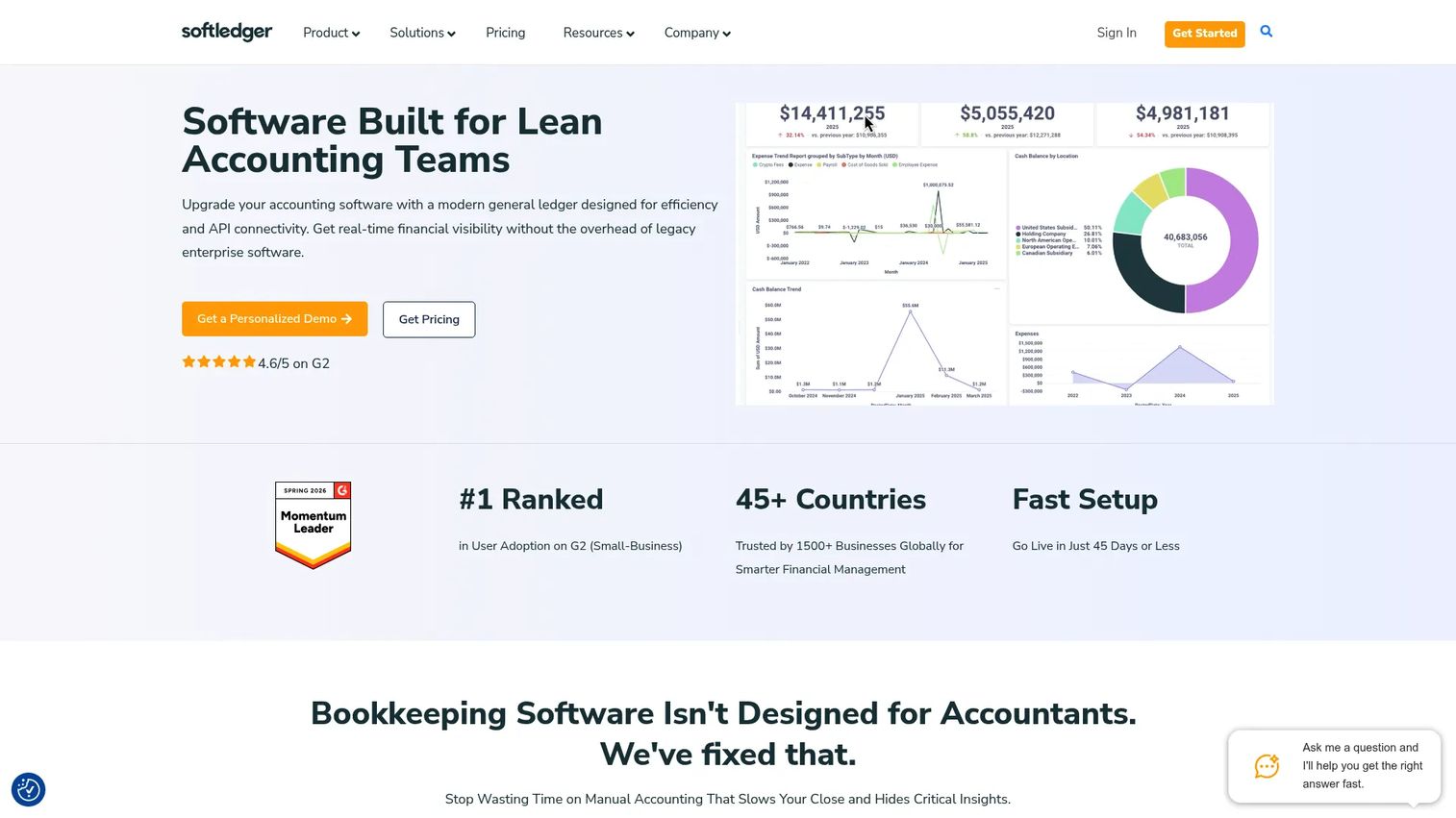
SoftLedger is cloud accounting software built for multi-entity finance teams that want a programmable, API-first general ledger. It pairs core ledger functions with real-time consolidation, flexible integrations, and even digital asset accounting. For teams that treat their finance stack like part of their engineering stack, SoftLedger fits the way they already work.
Best for: Finance teams needing multi-entity accounting with consolidation and flexible integrations.
Key strengths
- Multi-entity accounting and consolidation: Consolidate across entities in real time, so you see the whole company without waiting for a manual roll-up.
- Real-time financial reporting: Live reporting that reflects transactions as they post, rather than a month-old snapshot.
- Crypto and digital asset accounting: Native support for digital assets, which few general ledger systems handle natively.
Why choose SoftLedger: SoftLedger earns its place when your finance operation needs to move data programmatically and consolidate fast. The API-driven architecture means custom reporting and integrations without waiting on a vendor roadmap. Teams that want a flexible general ledger program they can wire into the rest of their systems choose it over more rigid tools.
SoftLedger pricing: SoftLedger offers Standard and Enterprise plans, with pricing customized to your exact requirements. The pricing page does not list public dollar amounts, so you will get a tailored plan after scoping your needs. This approach fits teams whose complexity varies widely by entity count and integration scope. SoftLedger holds a 4.6/5 rating on G2.
3. DualEntry
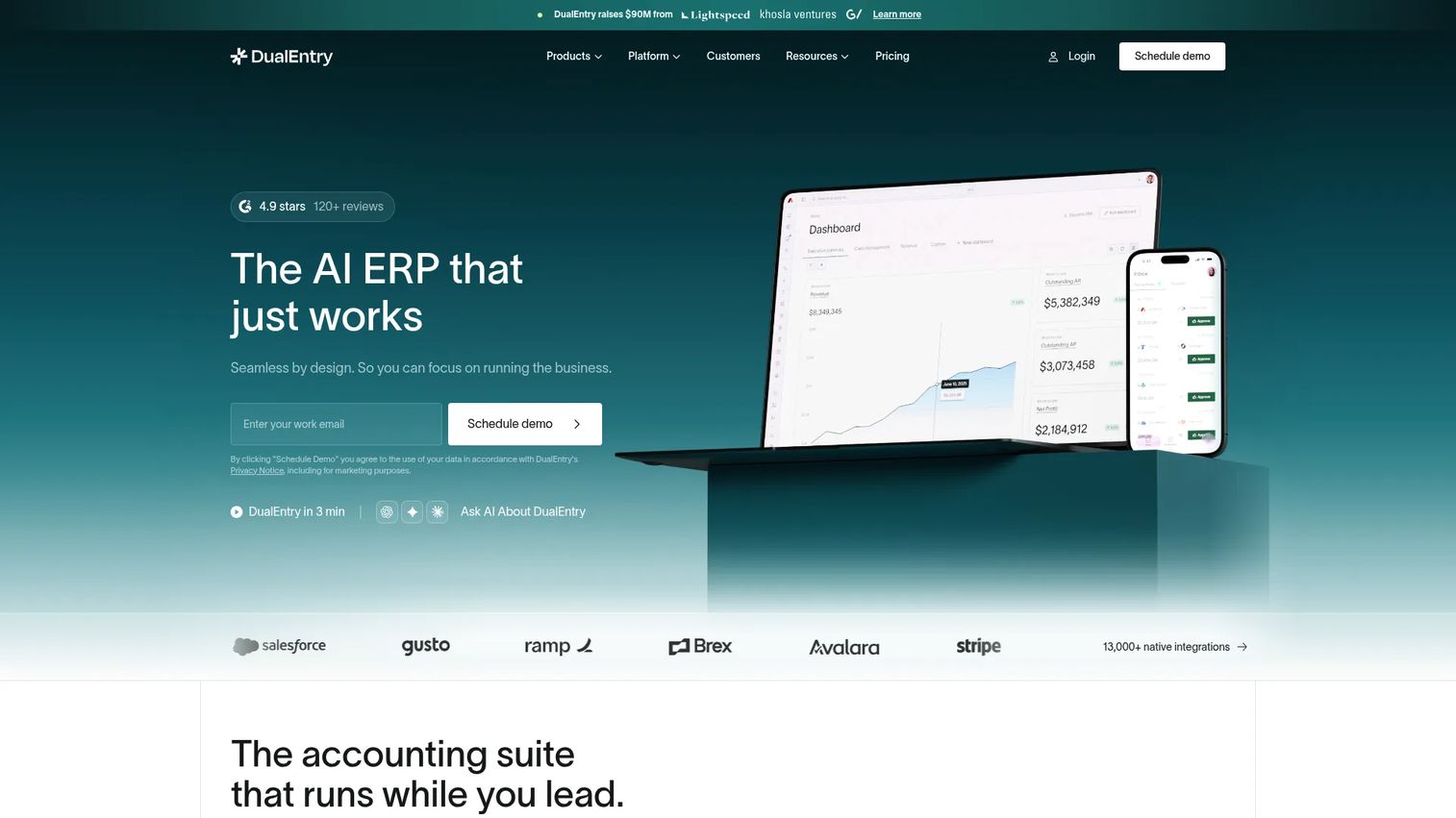
DualEntry is an AI-powered ERP and accounting platform for finance teams that need multi-entity, multi-currency, audit-ready operations. It automates the general ledger, handles consolidation and revaluation, and covers accounts payable, accounts receivable, and reconciliation in one place. For fast-growing teams building toward audit and diligence, DualEntry is designed around that end state.
Best for: Fast-growing finance teams that need ERP automation across multiple entities and currencies.
Key strengths
- General ledger automation: AI-assisted posting and categorization that reduces manual entry and keeps the ledger current.
- Multi-currency consolidation and revaluation: Consolidate and revalue across currencies automatically, so global operations stay accurate.
- AP, AR, and reconciliation: Core transactional workflows in one platform, which keeps reconciliation tight and the audit trail intact.
Why choose DualEntry: DualEntry fits teams that want automation and audit-readiness without assembling several tools. The multi-entity and multi-currency depth suits companies expanding internationally or preparing for a raise where clean, consolidated books matter. Its high user ratings reflect teams that value the automation layer.
DualEntry pricing: DualEntry shows three plans, DualEntry, DualEntry Plus, and DualEntry Ultra, but does not display public numeric pricing. There is no free trial, and the pricing page directs you to schedule a demo to scope a plan. This fits finance teams that expect a guided implementation rather than self-serve signup. DualEntry holds a 4.9/5 rating on G2, among the highest in this list.
4. Xero
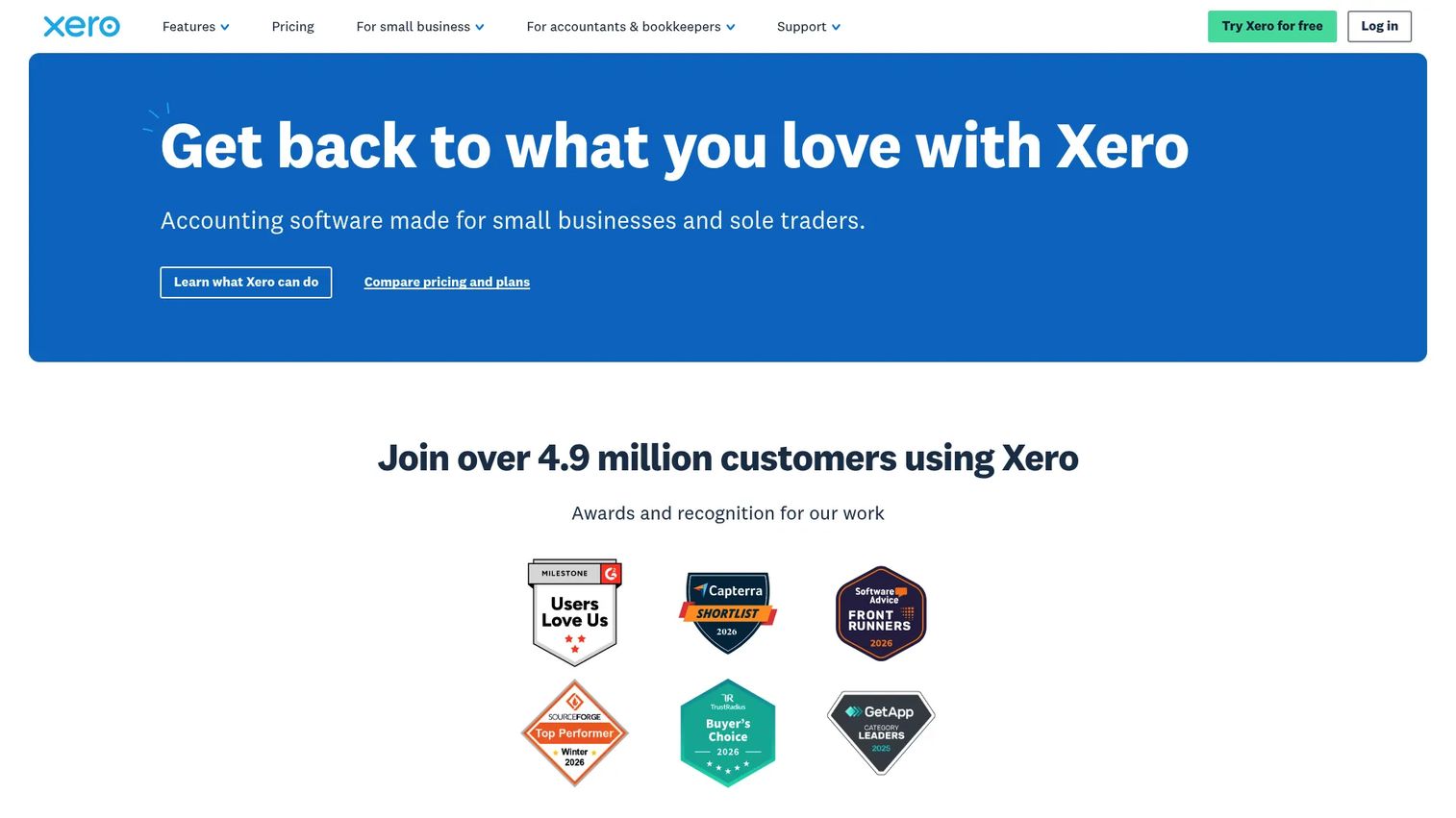
Xero is cloud accounting software for small businesses and the accountants who serve them. It covers online invoicing, bank connections, reconciliation, and reporting in a clean interface that lean teams can run without a controller. For early-stage companies that need a real general ledger without operational drag, Xero is a strong default.
Best for: Small businesses needing cloud accounting, invoicing, and bank reconciliation.
Key strengths
- Online invoicing: Send and track invoices directly, so revenue posts to the ledger without double entry.
- Bank connections and reconciliation: Automatic bank feeds that match transactions and keep reconciliation from piling up.
- Expense tracking and reporting: Straightforward expense capture and reports that give you a clear financial picture fast.
Why choose Xero: Xero is the pick for lean teams that want clean books without complexity. Its large integration ecosystem means it connects to the rest of your stack easily, which matters when you have no time for custom work. If you are pre-multi-entity and just need a trustworthy general ledger for small business use, Xero delivers.
Xero pricing: Xero publishes transparent US pricing across three plans. The Early plan starts at $18/month, Growing runs $37/month, and Established is $90/month, all billed monthly. The company also runs periodic promotional discounts. This clear tiering makes Xero easy to budget for, which is exactly what a small finance team wants. Xero holds a 4.4/5 rating on G2.
5. QuickBooks Online
QuickBooks Online is cloud accounting software for small and mid-sized businesses, and it is the most widely recognized name in the category. It handles invoicing, expense tracking, bank feeds, and reconciliation, backed by a huge ecosystem of integrations and accountants who already know it. For teams that want a familiar, well-supported general ledger, QuickBooks Online is hard to ignore.
Best for: Businesses that want cloud bookkeeping, invoicing, and bank-connected accounting.
Key strengths
- Invoicing and quotes: Create and send invoices and estimates that flow straight into the ledger.
- Expense tracking and receipt capture: Snap and categorize receipts so expenses stay current and audit-ready.
- Bank feeds and reconciliation: Connected bank feeds that keep reconciliation continuous rather than a month-end scramble.
Why choose QuickBooks Online: QuickBooks Online wins on familiarity and support. Nearly every accountant and bookkeeper knows it, so hiring and outsourcing are simple. The trade-off comes as you scale: teams with heavy multi-entity or advanced reporting needs often feel upgrade pressure toward more robust general ledger systems. For most small and mid-sized companies, though, it covers the essentials well.
QuickBooks Online pricing: QuickBooks Online shows four plans. Simple Start starts at $19/month, Essentials at $37.50/month, Plus at $57.50/month, and Advanced at $137.50/month, with a 30-day free trial. Promotional discounts often apply to the first months. The tiered structure lets you start small and move up as reporting needs grow. QuickBooks Online carries a 4.2/5 rating on G2.
6. NetSuite
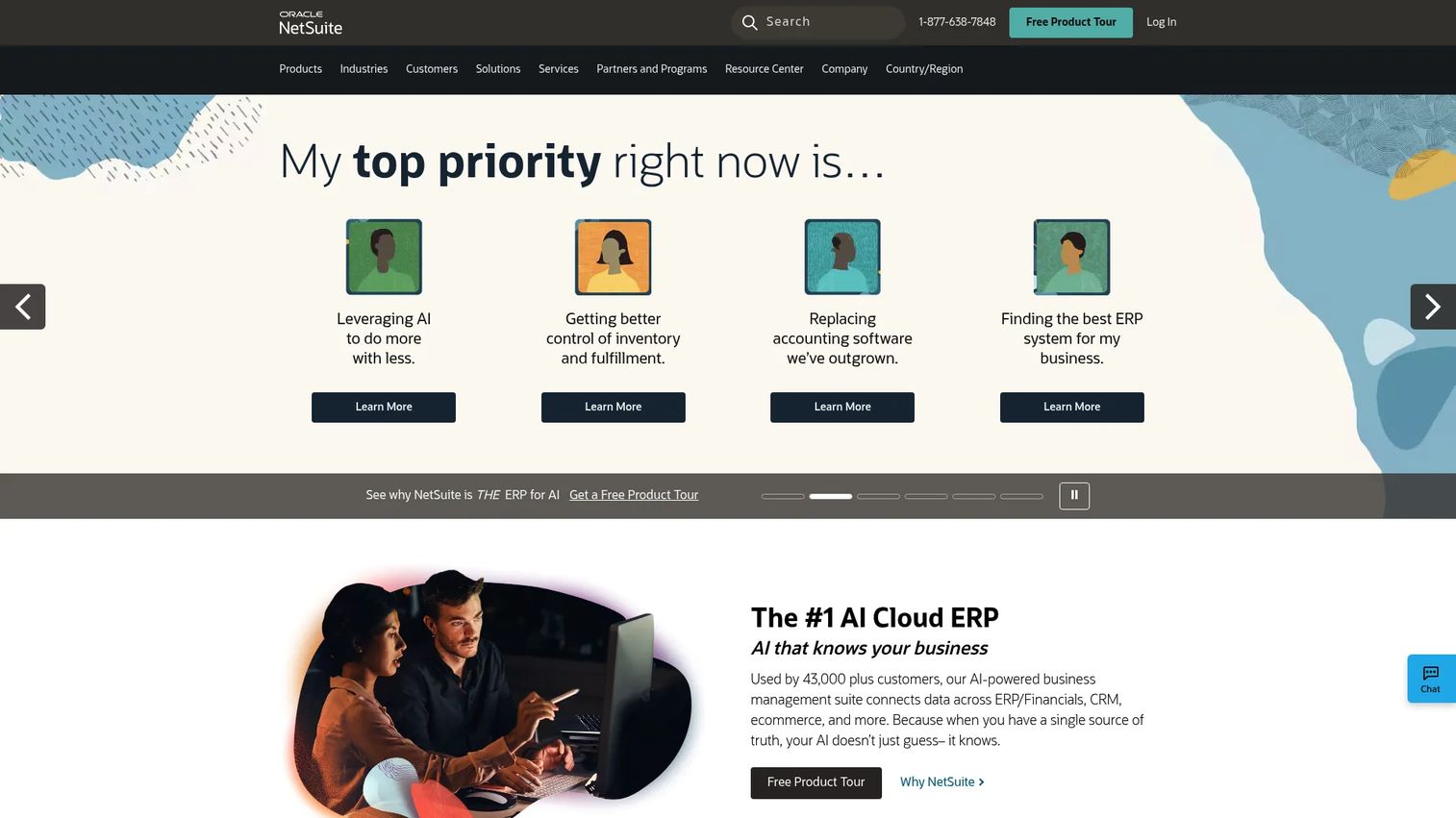
NetSuite is a cloud ERP and business management platform from Oracle, with financial management as one part of a much broader system. Alongside the general ledger, it covers CRM, e-commerce, and subscription billing through SuiteBilling. For companies where finance is one function inside a unified operation, NetSuite consolidates the whole picture.
Best for: Mid-market to enterprise teams needing a unified cloud ERP platform.
Key strengths
- Cloud ERP and financial management: A single platform for the general ledger and the operational systems around it, so data does not fragment.
- CRM and e-commerce: Sales and commerce data connected to finance, which tightens reporting across the business.
- SuiteBilling subscription management: Native subscription and billing records, which matter for SaaS revenue recognition.
Why choose NetSuite: NetSuite makes sense when your general ledger cannot live in isolation. If finance, sales, inventory, and billing all need to share one system of record, the ERP breadth justifies the added complexity. Companies that have outgrown standalone accounting tools and want one platform to consolidate multi-entity operations choose NetSuite for that reach.
NetSuite pricing: NetSuite uses custom pricing based on modules, users, and configuration, and does not publish public plan pricing. Because it is a full ERP, expect a scoped implementation and a quote tailored to your operations. This suits organizations ready to invest in a company-wide platform rather than a point accounting tool. Verified third-party ratings were not available at drafting time.
7. Zoho Books
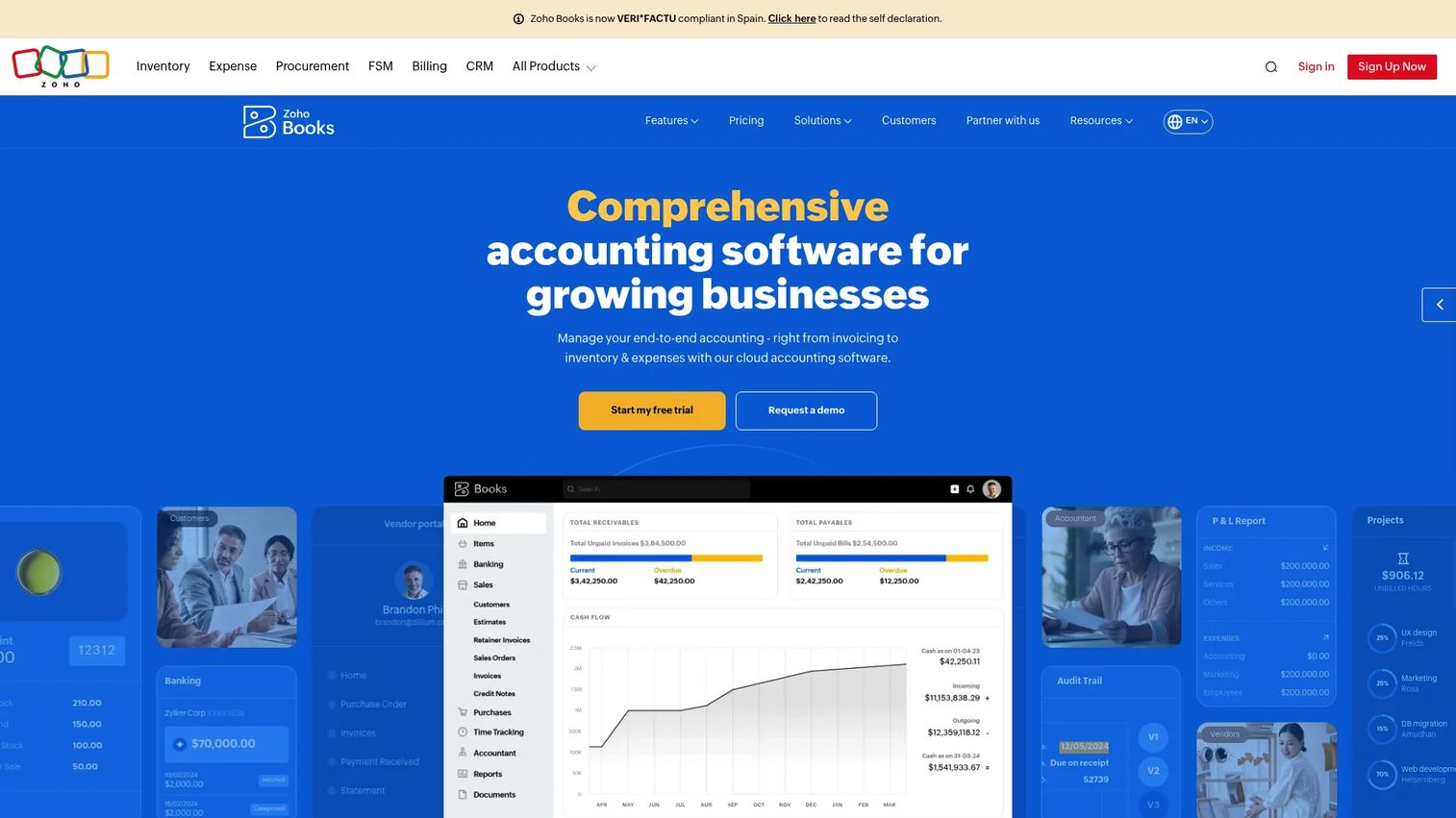
Zoho Books is cloud accounting software for small and growing businesses, and it delivers a lot of function for the price. It covers invoicing, bank feeds, reconciliation, expense tracking, and reporting, with strong automation baked in. For cost-conscious teams that still want a capable general ledger, Zoho Books punches above its price point.
Best for: Businesses that want a low-cost, full-featured cloud accounting system.
Key strengths
- Invoicing and quotes: Full invoicing and estimate workflows that feed the ledger directly.
- Bank feeds and reconciliation: Automatic bank connections that keep reconciliation current with minimal effort.
- Expense tracking and reporting: Detailed expense management and reports that give small teams real visibility.
Why choose Zoho Books: Zoho Books fits growing teams that want automation and breadth without a big spend. It plugs into the wider Zoho suite, so companies already using Zoho tools get a connected stack. If value and a genuine free tier matter, Zoho Books is one of the strongest general ledger software options for small business use.
Zoho Books pricing: Zoho Books offers a Free plan at $0, then Standard at $15, Professional at $40, Premium at $60, Elite at $120, and Ultimate at $240, with the paid tiers billed annually. That range makes it easy to start free and scale up as complexity grows. The low entry price with real functionality is the draw. Zoho Books holds a 4.4/5 rating on G2.
8. FreshBooks
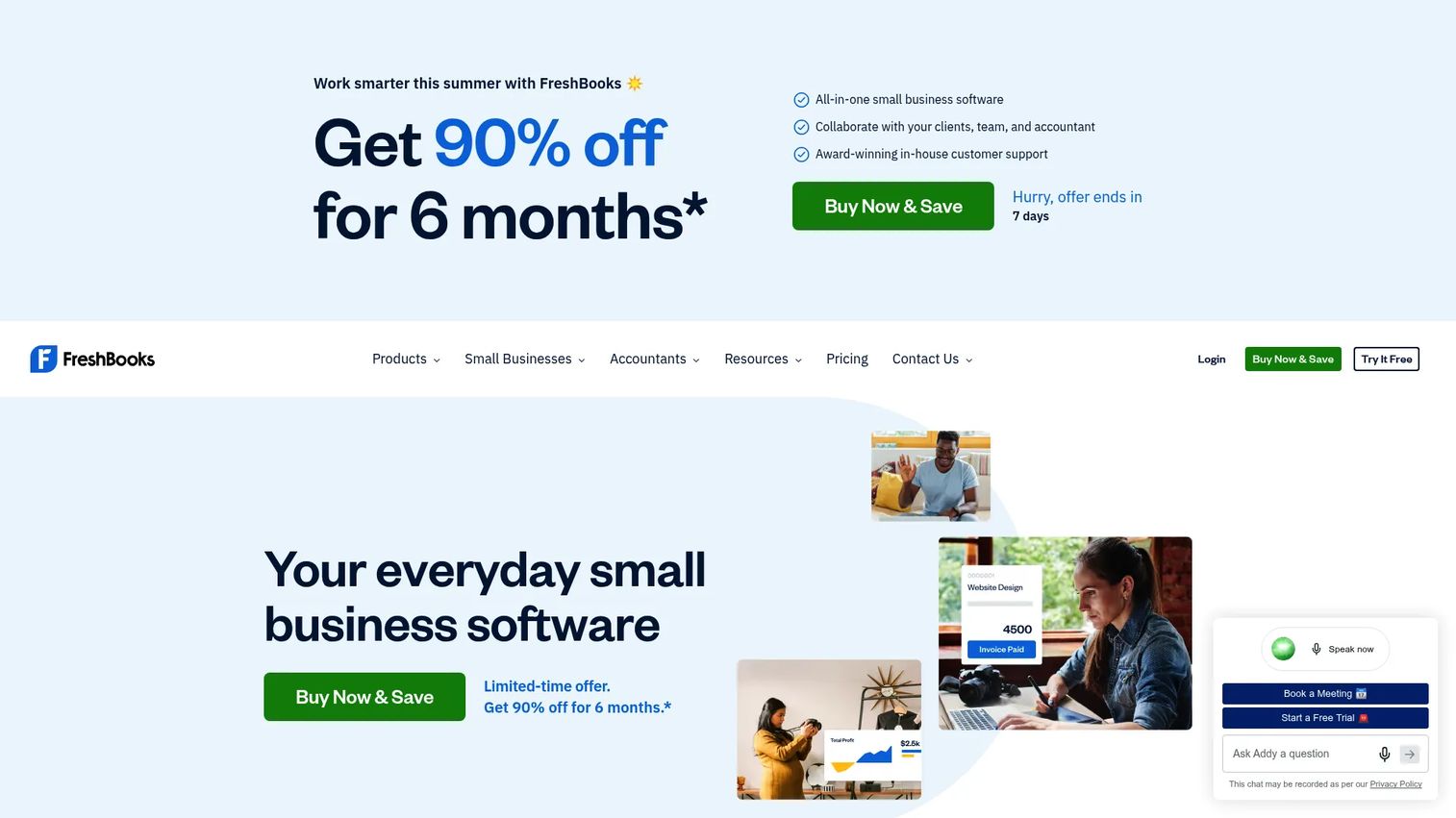
FreshBooks is cloud accounting and invoicing software built for freelancers and service businesses. It leans into invoicing, time tracking, and expense management, with general ledger functions that cover the essentials for lightweight accounting. For solo operators and small service teams, FreshBooks keeps the books simple.
Best for: Freelancers and service businesses that need simple invoicing, time tracking, and expense management.
Key strengths
- Invoicing and recurring invoices: Automated and recurring invoicing that keeps revenue flowing and recorded.
- Time tracking: Built-in time tracking that ties billable hours directly to invoices, which service businesses need.
- Expense tracking and receipt capture: Simple expense capture that keeps the ledger tidy without heavy admin.
Why choose FreshBooks: FreshBooks is best for service-based businesses that want simplicity over depth. It handles invoicing and basic accounting cleanly, so freelancers and agencies avoid the overhead of complex finance systems. Teams running multi-entity operations or heavy reporting will outgrow it, but for lightweight general ledger needs, that simplicity is the point.
FreshBooks pricing: FreshBooks publishes four plans. Lite starts at $2.30/month, Plus at $4.30/month, Premium at $7.00/month, and Select is custom, with a 30-day free trial. Note the listed prices reflect promotional rates. The low entry cost makes FreshBooks accessible for solo operators and small teams. FreshBooks holds a 4.5/5 rating on G2.
Considerations
Before you commit to any general ledger software, run it through these criteria. The goal is a system that fits your stage now and your reporting needs 12 to 24 months out.
Reporting depth
Can the tool produce board-ready statements and dimensional reports directly, or will you export and rebuild in a spreadsheet? Shallow reporting is the fastest way to recreate the bottleneck you are trying to remove. Test the reports you actually present to your board before you buy.
Multi-entity and consolidation
If you run, or will soon run, more than one entity or currency, consolidation has to be native. Manual roll-ups do not scale and introduce error at exactly the moment accuracy matters most. Confirm the tool handles multi-entity accounting without workarounds.
Audit trail and compliance
Every serious general ledger system should log who changed what and when. When you head into a raise or acquisition, that audit trail is what makes diligence clean. Check that the compliance features match your industry and your investors' expectations.
Integrations and automation
Your ledger should connect to banking, billing, payroll, and reporting without custom engineering. The more automation the tool handles, the less your finance team spends on manual entry and the faster you close.
Pricing and total cost
Look past the sticker price to implementation, add-on modules, and per-entity costs. Transparent pricing like Xero's is easy to budget; custom-quoted general ledger solutions require scoping. Match the spend to the value, and do not overbuy for a scale you have not reached.
Conclusion
The right general ledger software depends on where your finance team is today and where your reporting needs are headed. For growth-stage SaaS teams that need deep reporting and multi-entity consolidation without full ERP weight, Sage Intacct and SoftLedger are the strongest picks, with DualEntry a compelling option for audit-ready, multi-currency automation. When finance is one part of a company-wide system, NetSuite consolidates everything under one roof.
For lean teams, Xero and QuickBooks Online deliver trustworthy books with fast onboarding, Zoho Books offers the best value with a genuine free tier, and FreshBooks keeps things simple for service businesses. The point is to match the tool to your stage, not to buy the most powerful system you can find.
Pick the general ledger accounting software that lets your team close faster, report cleaner, and take finance visibility off your desk. Start with the two or three that fit your stage, scope them against your real board reports, and choose the one your finance team can own without dragging in engineering.
FAQs
General ledger software is the accounting system that records and organizes every financial transaction as a business's central system of record. It manages the chart of accounts, posts debits and credits, and produces financial statements. Modern gl software runs in the cloud and automates much of the manual work that spreadsheets require.
For a SaaS company, general ledger software centralizes revenue, expenses, and cash into one trustworthy system, which produces clean board reporting and faster decisions. It supports revenue recognition, subscription billing data, and multi-entity consolidation as you grow. The practical payoff is less founder time spent chasing finance answers and more confidence in the numbers.
The core benefits are a faster month-end close, cleaner reporting, and better financial visibility. Automation removes manual entry and reconciliation work, a strong audit trail keeps you diligence-ready, and real-time reporting turns finance from a historical record into a decision engine. Together, that means fewer errors and faster answers.
They overlap heavily. Accounting software is the broad category, and the general ledger is its core, the system of record where all transactions post. Most accounting software for the general ledger function includes invoicing, expenses, and reconciliation around that ledger. In practice, when people say general ledger software, they mean accounting software centered on the ledger.
Prioritize reporting depth, automation, a complete audit trail, and integrations. If you run multiple entities, native multi-entity consolidation moves to the top of the list. For a founder, the deciding factor is whether the ledger becomes the single source of truth your board reports can rely on without manual rework.
For small business needs, Xero, QuickBooks Online, and Zoho Books are the strongest general ledger software for small business use. Xero and QuickBooks Online offer clean interfaces, broad integrations, and easy onboarding, while Zoho Books adds a free tier and strong value. Pick based on your budget, your accountant's familiarity, and how soon you expect to add complexity.
It automates the repetitive work that slows a close: posting recurring journal entries, matching transactions during reconciliation, and consolidating entities. That removes days of manual effort and surfaces discrepancies early instead of at deadline. Teams that automate these steps close faster and spend the saved time analyzing results rather than assembling them.
Migration is manageable with planning. The work centers on cleaning your existing data, mapping your chart of accounts to the new system, and setting an opening balance date. Most teams migrate at a fiscal period boundary to keep reporting clean and run parallel books briefly to confirm accuracy. Scope it early, and the payoff of a faster close and cleaner reporting arrives quickly.