Digital mortgage closing software has moved from convenience to infrastructure. According to a 2025 Snapdocs and Arizent study, 90% of mortgage lenders now offer digital closings, yet only 14% close more than 80% of their loans that way. The gap is not about technology availability. It is about workflow fit.
The hard part is not getting a borrower to sign electronically. The hard part is coordinating lender documents, settlement agents, notarization, identity checks, recording, and secondary-market delivery without adding another manual queue. A closing that still depends on email threads and status chasing creates defects, delays rescheduling, and erodes borrower trust at exactly the wrong moment.
This guide maps 14 platforms across the full closing lifecycle, from document generation and eNotes through title operations, RON, and wire fraud prevention. Each tool is positioned against the specific workflow problem it solves best.
What's inside
This guide is for mortgage operations leaders, lender executives, title and settlement team leads, and founders mapping mortgage technology infrastructure.
Tools were selected based on:
- Coverage of core mortgage closing workflows: EClosing, hybrid, RON, IPEN, eNotes, eVaults, or post-closing
- Mortgage-specific integrations with LOS, title, settlement, MERS eRegistry, or eVault systems
- Compliance and audit support relevant to mortgage transactions
- Distinct positioning across the closing lifecycle (not generic eSigning tools)
Not every platform covers the full workflow. Some are document engines. Others are RON providers or fraud prevention tools. The right shortlist depends on where your process breaks.
TL;DR
- Best for document generation and eNotes: DocMagic covers the full document-to-eVault workflow for lenders
- Best for Encompass-based lender operations: Encompass eClose integrates natively with ICE Mortgage Technology workflows
- Best for eRecording and settlement network connectivity: Simplifile connects lenders and title companies to county recording systems
- Best for borrower-facing digital mortgage experience: Blend Close prioritizes the consumer lending journey from application through closing
- Best for title and settlement operations: Qualia and SoftPro cover title production, escrow accounting, and settlement coordination
- Best for RON-first workflows: Proof Close, Stavvy, and BlueNotary each serve online notarization and digital closing needs at different scales
What is digital mortgage closing software?
Digital mortgage closing software helps lenders, title companies, settlement agents, notaries, and borrowers complete mortgage closings through electronic documents, digital signing, online notarization, eNotes, eVaults, recording, and post-closing delivery workflows.
It differs from general eSignature tools in scope. A generic eSigning platform handles document signatures. Digital mortgage closing software handles the full chain: Document preparation, disclosure delivery, borrower review, notarization, eNote creation, MERS eRegistry registration, eVault management, recording, and investor delivery.
Key capabilities to look for include:
- Digital document preparation: Mortgage-specific document generation tied to loan data and compliance rules
- eSigning and borrower review: Secure borrower access to closing packages before and during the appointment
- RON and IPEN support: Remote online notarization and in-person electronic notarization workflows
- eNote creation and eVault connectivity: MISMO SMART Doc eNote creation and approved eVault storage
- MERS eRegistry support: Registration and transfer of eNotes on the MERS eRegistry
- LOS integration: Connection to the loan origination system so document data stays consistent
- Audit trails and compliance reporting: Tamper-evident records, session logs, and exception tracking
- Post-closing delivery and eRecording: Electronic document recording and investor delivery workflows
- Identity verification and fraud controls: Borrower identity checks and wire instruction protection
One important clarification: Digital mortgage closing software is not always one product. Many lenders assemble the workflow from a LOS, document provider, eClosing platform, RON provider, eVault, and eRecording network. The tools below span all of those categories.
When to use digital mortgage closing software
Reduce manual closing coordination
Manual coordination between lenders, settlement agents, and notaries creates status gaps and document rework. Digital mortgage closing software routes documents, tracks progress, and sends notifications automatically. This matters most for operations teams scaling transaction volume without adding headcount proportionally.
Support hybrid and fully electronic closings
Many lenders start with hybrid closings, where some documents are signed electronically and others are wet-signed, before moving to eNotes and full eClosing. A 2025 ServiceLink survey found that 62% of recent homebuyers used eSigning in a homebuying transaction, and 27% conducted their closing appointment remotely. Adoption is accelerating, and platforms that support the full range from hybrid through RON give lenders room to evolve.
Strengthen compliance and post-closing control
eNotes require MERS eRegistry registration and approved eVault storage. RON requires state authorization, county recording acceptance, and investor eligibility confirmation. Post-closing delivery to agencies and warehouse lenders requires tamper-evident audit trails and verified delivery records. These are not generic compliance requirements; they are mortgage-specific, and the right platform handles them by design.
Digital mortgage closing software comparison
The table below maps 14 platforms by primary use case, key differentiator, pricing, and G2 rating. Because this category spans document generation through fraud prevention, "best for" reflects the workflow stage each tool serves strongest.
| # | Product | Best for | Key differentiator | Pricing | G2 rating |
|---|---|---|---|---|---|
| 1 | DocMagic | Document generation, eNotes, and eClosing | Integrated document engine through eVault and investor delivery | From $15 per eClosing | 4.0/5 |
| 2 | Encompass eClose | Encompass-native lender eClosing | Built into ICE Mortgage Technology's Encompass platform | Custom pricing | N/A |
| 3 | Simplifile | eRecording and settlement network | Broad county recording network with collaboration tools | Custom pricing | N/A |
| 4 | Blend Close | Borrower-facing digital mortgage closing | Consumer-grade closing experience with RON and eNote support | Custom pricing | N/A |
| 5 | nCino Mortgage Suite | Banks and lenders on nCino | End-to-end mortgage banking with built-in AI and analytics | Custom pricing | 4.9/5 |
| 6 | SmartCLOSE | Collaborative closing coordination | Multi-party closing portal for lenders and settlement agents | Custom pricing | N/A |
| 7 | Proof Close | RON and identity-backed closings | Online notarization with identity verification and audit trails | Free plan; Pro+ from $199/month | N/A |
| 8 | Stavvy | Hybrid and full eClosing for lenders | MISMO-compliant SMART Doc engine with RON and IPEN support | Custom pricing | N/A |
| 9 | Qualia | Title and escrow operations | AI-powered title workflow with escrow accounting and partner connectivity | Custom pricing | 4.7/5 |
| 10 | SoftPro | Title production and settlement | Configurable title production with eSigning and RON via SoftPro Sign | From $75/month minimum | 4.6/5 |
| 11 | Snapdocs | Closing coordination and settlement networks | Multi-party coordination with eVault and AI quality control | RON from $20/user/month; enterprise custom | 4.6/5 |
| 12 | BlueNotary | RON-first transactions | On-demand online notarization with SOC 2 Type 2 compliance | Free Basic; Pro Hybrid from $27/month | N/A |
| 13 | ClosingLock | Wire fraud prevention | Secure wire instructions and payoff verification | Custom pricing | 4.8/5 |
| 14 | Docutech | Mortgage document generation | Dynamic document generation with eSign and eVault via ConformX and Solex | Custom pricing | N/A |
Best 14 digital mortgage closing software tools for 2026
The list below covers full eClosing platforms alongside specialized workflow tools. Some are strongest for lenders; others serve title operations, RON, fraud prevention, or document preparation. The right fit depends on transaction type, your existing LOS, title partner relationships, notary model, and investor delivery requirements.
1. DocMagic
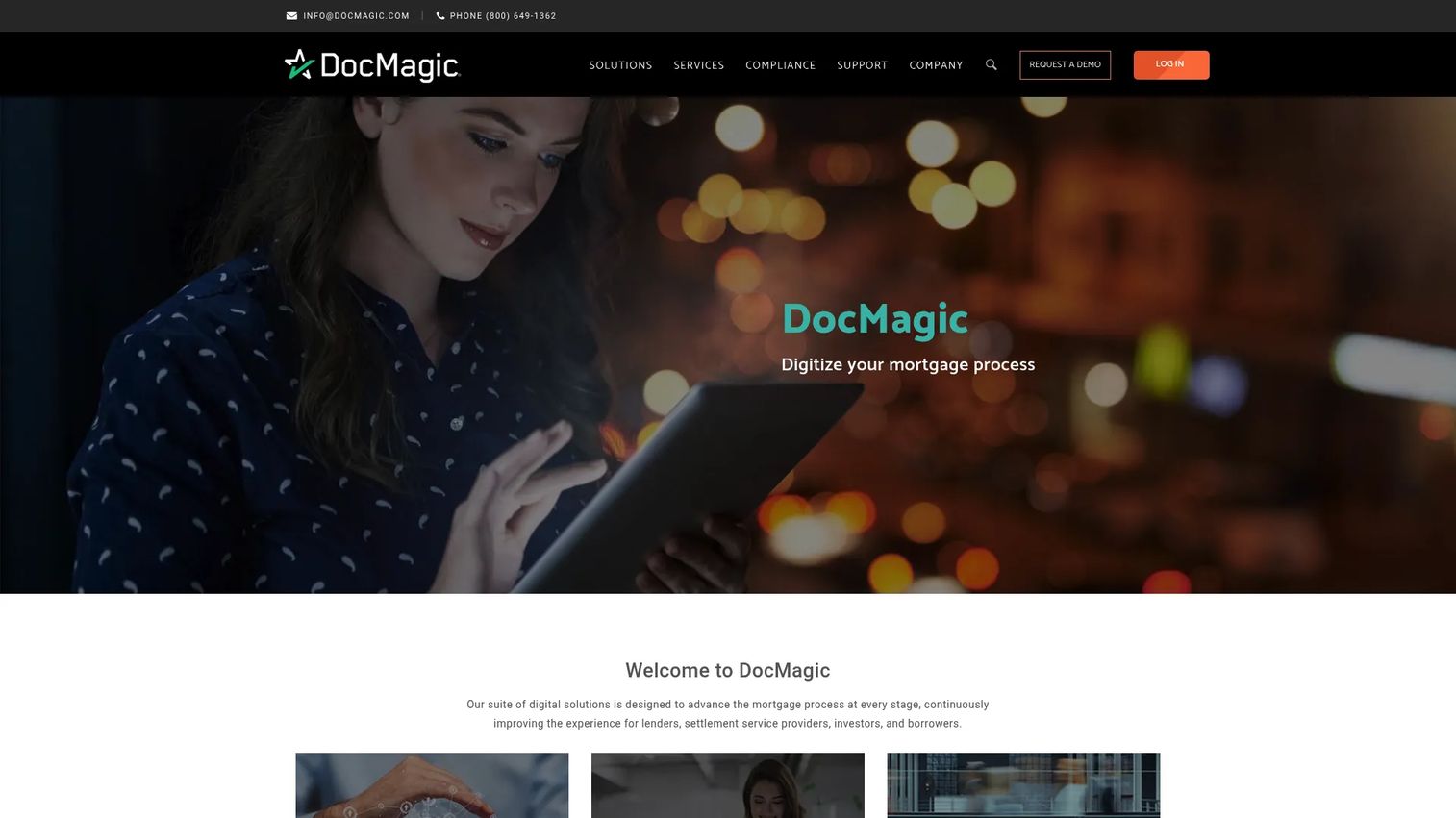
DocMagic is a mortgage technology platform that covers document generation, eSignatures, eNotarization, eClosing, eNote creation, eVault connectivity, and investor delivery. Its Total eClose product supports hybrid and fully electronic closings using MISMO SMART Doc eNotes registered on the MERS eRegistry. The platform also includes SmartCLOSE, a collaborative closing portal connecting lenders and settlement agents, and LoanMagic, a mobile borrower engagement tool.
Best for: Mortgage lenders that need document preparation and eClosing execution to stay tightly connected in one platform.
Key features
- Mortgage document generation with compliance monitoring
- eSigning, eNotarization, and appraisal eDelivery
- Total eClose with SMART Doc eNote and MERS eRegistry
- Certified eVault and investor eDelivery
- SmartCLOSE collaborative closing portal
Why choose DocMagic: Choose DocMagic when document accuracy and closing execution are both pain points. Keeping the document engine and eClosing workflow inside one platform reduces the handoff errors that create defects at closing.
DocMagic pricing: Hybrid eClosing tiers are listed at $15, $20, and $30 per eClosing depending on workflow type. Fully electronic closings are listed at $35 per eClosing. SmartCLOSE and other modules use per-file fees; contact DocMagic sales for current packaging. These figures appear in a DocMagic-hosted presentation rather than a live pricing page, so verify current rates directly with the vendor before committing.
G2 rating: 4.0/5
2. Encompass eClose
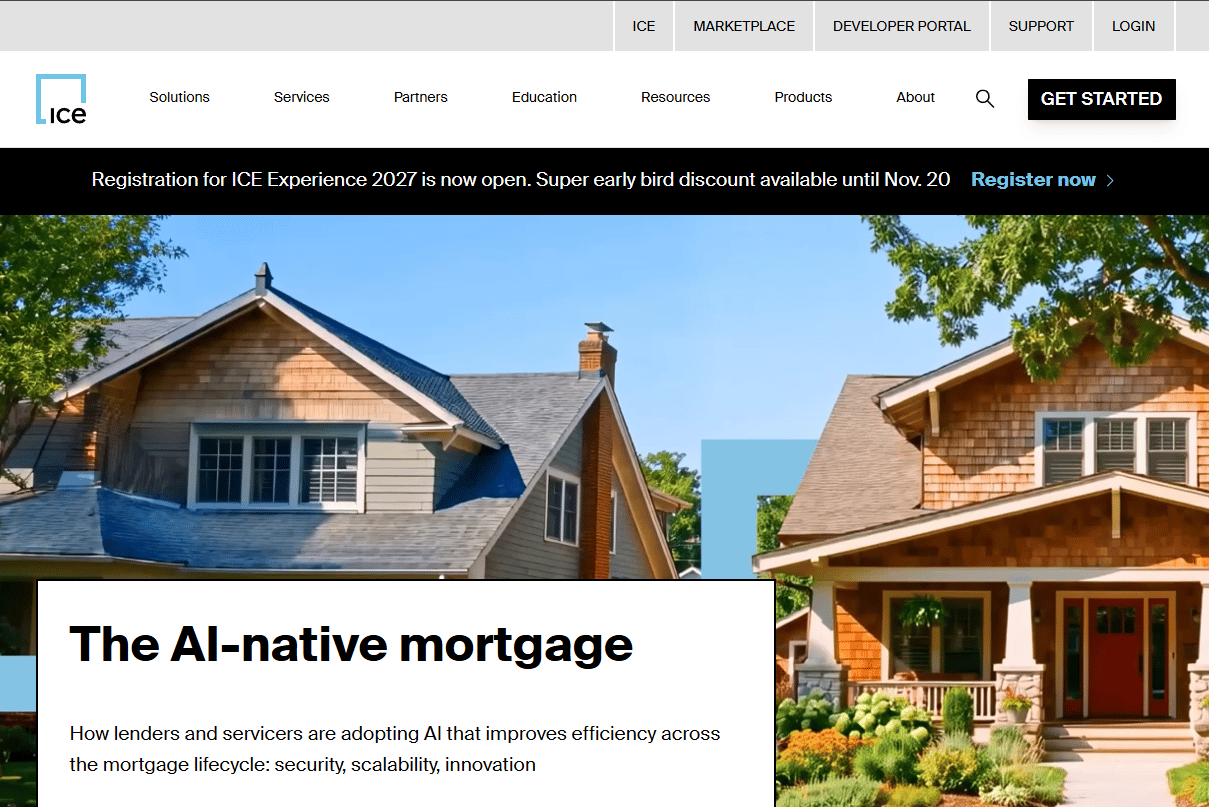
Encompass eClose is the eClosing module within ICE Mortgage Technology's Encompass platform. It lets lenders and settlement agents collaborate on closing packages, and borrowers review and sign eligible documents through the Encompass Consumer Connect portal or embedded widgets. The product supports hybrid eClose with eNotes, hybrid closings without eNotes, and ink-only workflows, giving lenders a range of closing types within a single LOS environment.
Best for: Lenders whose core origination operations already run on Encompass and want eClosing without adding a separate platform.
Key features
- Secure lender and settlement-agent collaboration on eClose packages
- Borrower eSigning through Consumer Connect portal
- Hybrid eClose with eNote support
- Ink-only and hybrid closing workflows
- API and POS framework integrations
Why choose Encompass eClose: The main advantage is native fit. If your pipeline, disclosures, and origination data already live in Encompass, adding eClose keeps the data consistent and avoids a separate vendor relationship. The buying question is whether your current Encompass configuration and partner stack support the eClose workflows you need.
Encompass eClose pricing: Pricing comes through ICE Mortgage Technology and requires contact with a relationship manager. Ask specifically about eClose module pricing, eNote workflows, and partner-network packaging.
3. Simplifile
Simplifile, now part of ICE Mortgage Technology, is an electronic recording and closing platform connecting title companies, lenders, counties, and settlement agents. Its core capability is electronic recording of deeds, mortgages, liens, assignments, and related documents across a broad network of county recording jurisdictions. It also supports eSigning and notarization workflows including hybrid, IPEN, and RON, along with collaboration tools for lenders and settlement agents working on documents, fees, and disclosures.
Best for: Title companies and settlement agents whose primary bottleneck is document recording and post-closing delivery rather than borrower-facing signing.
Key features
- Electronic recording across county recording networks
- eSigning and notarization supporting hybrid, IPEN, and RON
- Lender and settlement-agent collaboration on documents and fees
- Document routing, workflow automation, and audit trails
- Consumer Edition for individual real-estate document submissions
Why choose Simplifile: Simplifile earns its place when the closing bottleneck is recording speed and settlement connectivity. It may sit alongside a separate borrower-facing eClosing platform rather than replacing one.
Simplifile pricing: ICE Mortgage Technology directs buyers to contact sales. County recording jurisdictions access the network at no charge. Ask about submitter fees, settlement network access, and lender workflow modules.
4. Blend Close
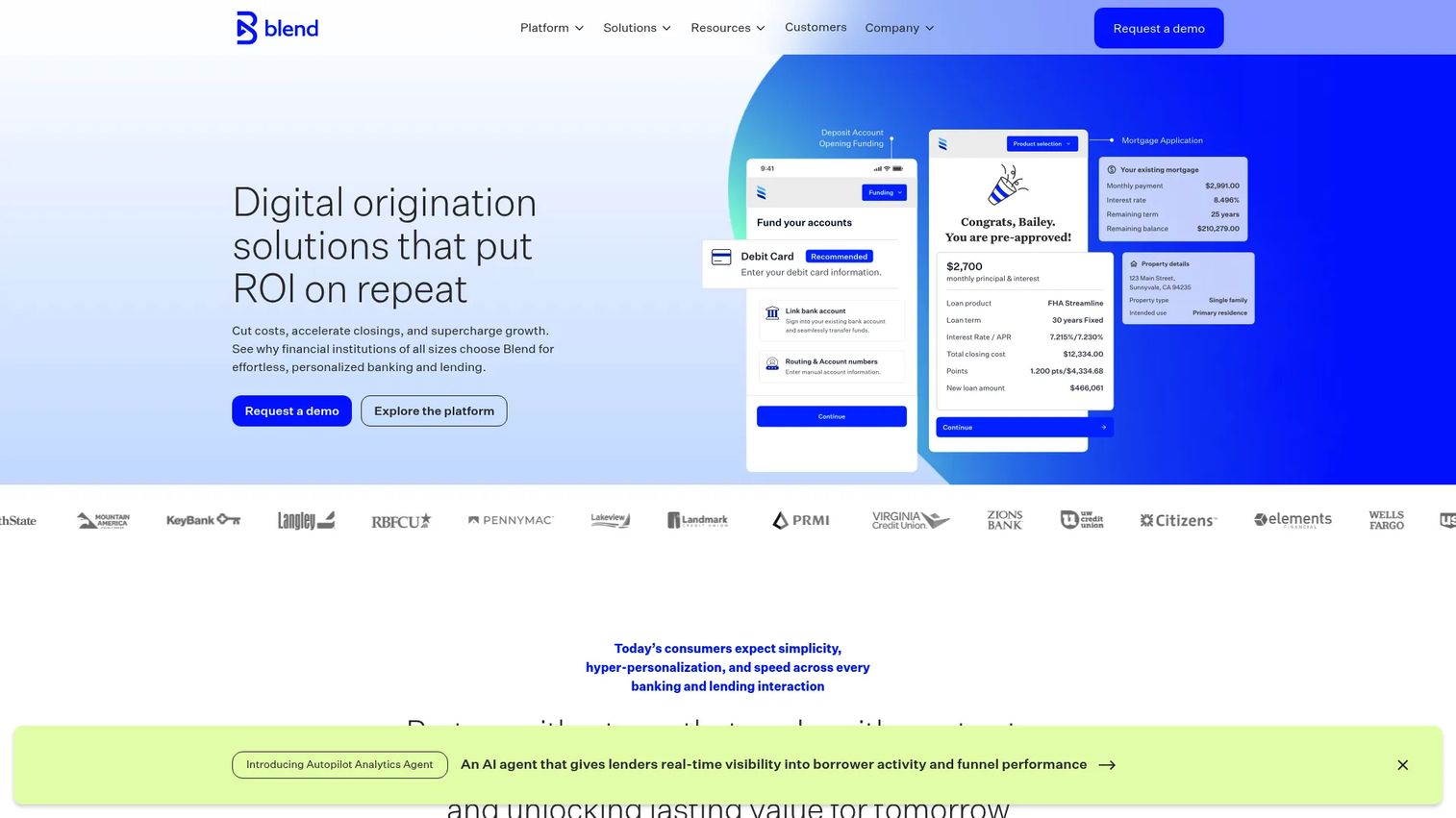
Blend Close is the closing module within Blend's digital mortgage platform. It supports traditional wet-sign, hybrid, hybrid with eNote, and remote online notarization closings. Borrowers review and sign closing documents through Blend's consumer portal, and settlement agents work within a dedicated Settlement Agent Workspace. The platform includes eNote and eVault integration and RON through Blend Signing Room.
Best for: Banks, credit unions, and mortgage lenders that want the closing experience to feel consistent with the broader digital mortgage application and origination journey they are already running on Blend.
Key features
- Borrower closing-document review and eSigning
- Hybrid, hybrid with eNote, wet-sign, and RON workflows
- Remote online notarization through Blend Signing Room
- Settlement Agent Workspace
- eNote and eVault integration
Why choose Blend Close: This is the right fit when borrower experience is the primary driver. Lenders modernizing the consumer-facing side of the mortgage process, from application through closing, benefit most from keeping that journey inside one platform.
Blend Close pricing: Blend directs buyers to request a demo. Ask about borrower portal, closing module, implementation fees, and transaction-volume terms.
5. nCino Mortgage Suite
nCino Mortgage Suite is an end-to-end mortgage lending platform combining a mobile-native point of sale, AI-powered document validation, mortgage analytics, incentive compensation management, and digital closing capabilities. It is built for banks, credit unions, and independent mortgage lenders that want origination, underwriting, and closing within one operating environment. The platform includes automated loan-field population, pipeline visibility, and production scorecards alongside borrower engagement tools.
Best for: Banks and lenders already standardizing mortgage operations inside nCino's broader banking platform.
Key features
- Mobile-native mortgage point of sale with real-time loan pricing
- AI-powered document validation and automated loan-field population
- Mortgage analytics with pipeline visibility and production scorecards
- Borrower collaboration and engagement tools
- Incentive compensation management
Why choose nCino Mortgage Suite: Choose nCino when the closing workflow is one part of a larger mortgage banking operating model you are building or already running on nCino. This is broader than a narrow RON or eSigning tool, and the value compounds when origination, underwriting, and closing share the same data layer.
nCino Mortgage Suite pricing: nCino prices by quote. Ask about mortgage suite modules, implementation scope, user licensing, and integration work.
G2 rating: 4.9/5
6. SmartCLOSE
SmartCLOSE is a collaborative closing portal designed to connect lenders, settlement agents, and other closing parties on a shared platform. It surfaces as a standalone product but also appears as a module within the DocMagic ecosystem. The product is positioned around reducing the status-chasing and document-revision cycles that slow multi-party closings.
Best for: Teams where closing friction comes primarily from coordination between lenders and settlement agents rather than from a single workflow step.
Key features
- Collaborative closing portal for lenders and settlement agents
- Fee and document workflow management
- Status visibility across closing parties
- Integration with document generation systems
- Configurable workflow support
Why choose SmartCLOSE: Use SmartCLOSE when the bottleneck is handoff visibility and multi-party coordination. It reduces the back-and-forth that happens when lender and settlement-agent teams are working from different systems.
SmartCLOSE pricing: SmartCLOSE prices by transaction volume and configuration. The primary source was unavailable for verification at time of writing; contact the vendor directly and verify current module pricing.
7. Proof Close
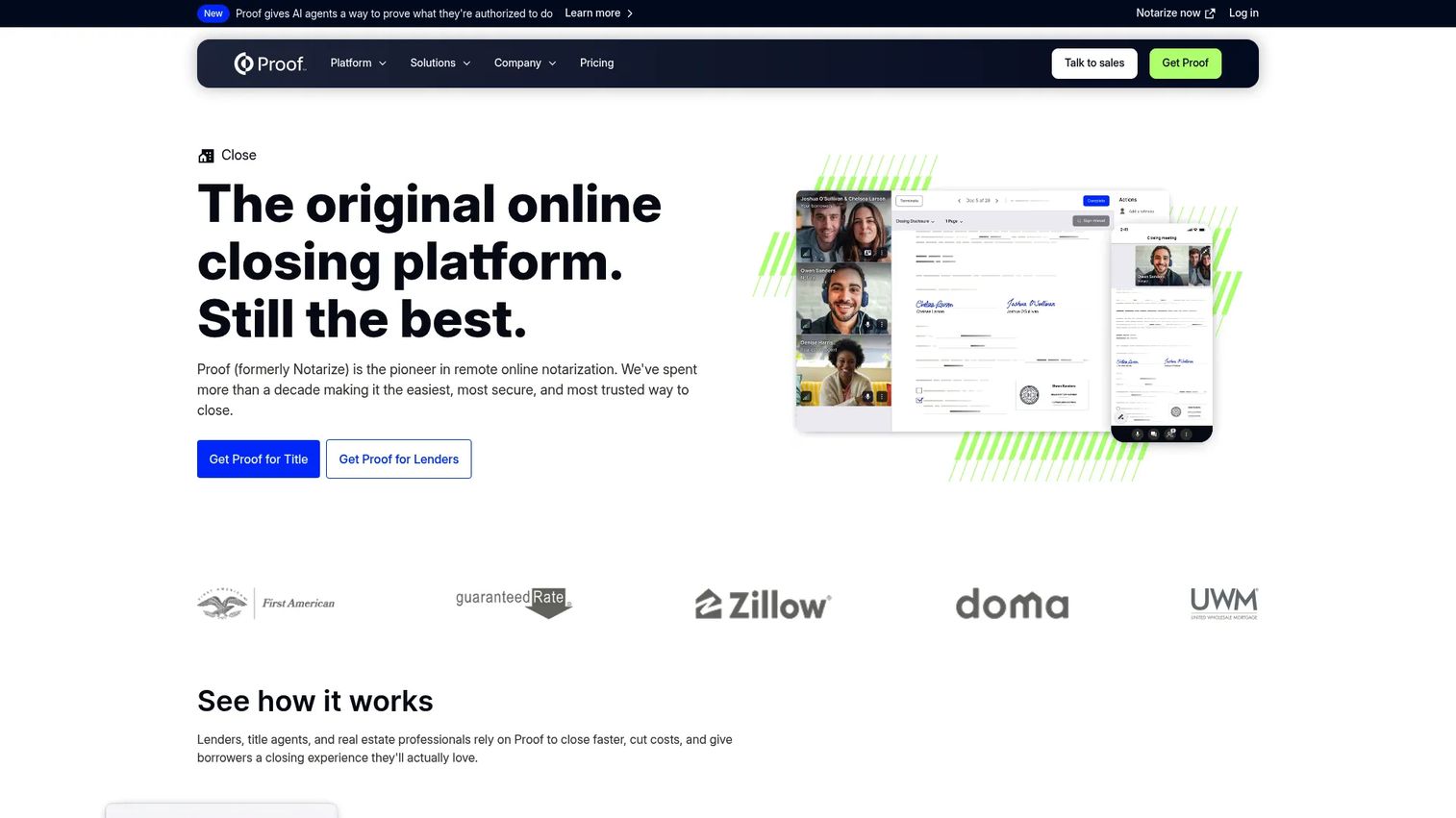
Proof Close is a digital real-estate closing platform for lenders, title agents, and real-estate professionals. It handles full and hybrid eClosings, online notarization through Proof's Notarize Network, identity verification, fraud protection, and instant closing-package delivery. The platform includes built-in compliance policies and integrations with Encompass, Resware, and other platforms. Proof also publishes transaction pricing for its Title Pro products covering notarization, identity verification, and eSignature.
Best for: Lenders and title professionals whose primary requirement is compliant online notarization with strong identity verification and audit capture.
Key features
- Full and hybrid eClosings with built-in compliance policies
- Remote online notarization through Proof's Notarize Network
- Identity verification and fraud protection
- Instant closing-package delivery
- Integrations with Encompass, Resware, and similar platforms
Why choose Proof Close: Proof Close is a strong fit when identity and notarization are the central risk in the closing workflow. Before rolling out, verify state-level RON eligibility, lender policy acceptance, and investor approval for the transaction types you plan to close.
Proof Close pricing: The Pro plan is free with transaction fees. Pro+ runs $199 per month plus transaction fees. Premium and Enterprise plans use custom pricing. Title Pro transaction pricing: $99 per notarization meeting, $4 per identity-verification signer, $4 per eSignature transaction. Verify current transaction fee schedules at proof.com/pricing before finalizing.
8. Stavvy
Stavvy is a digital transaction platform for real estate professionals covering mortgage lending, eClosing, default servicing, and home-equity lending. Its eClosing capabilities include RON, IPEN, hybrid eClosing, a MISMO-compliant SMART Doc engine, and an eligibility engine that checks eNotarization and eRecording eligibility by state and county. Stavvy also supports digital default-servicing workflows with rules-based decisioning.
Best for: Mortgage lenders moving from hybrid closings toward full eClosing, who need mortgage-specific eligibility logic and eNote support rather than a generic signing tool.
Key features
- Remote online notarization and IPEN
- eSign and hybrid or full eClosing workflows
- MISMO-compliant SMART Doc engine
- Eligibility engine for eNotarization and eRecording
- Digital default-servicing workflows
Why choose Stavvy: Stavvy is built for lenders who want a mortgage-specific closing platform rather than a general notarization product adapted for mortgages. Before selecting, verify notary network coverage for your markets, investor delivery eligibility for eNotes, and warehouse lender acceptance.
Stavvy pricing: Stavvy prices by quote based on closing volume, RON and IPEN requirements, eNote workflows, and additional modules. Contact Stavvy sales for current packaging.
9. Qualia
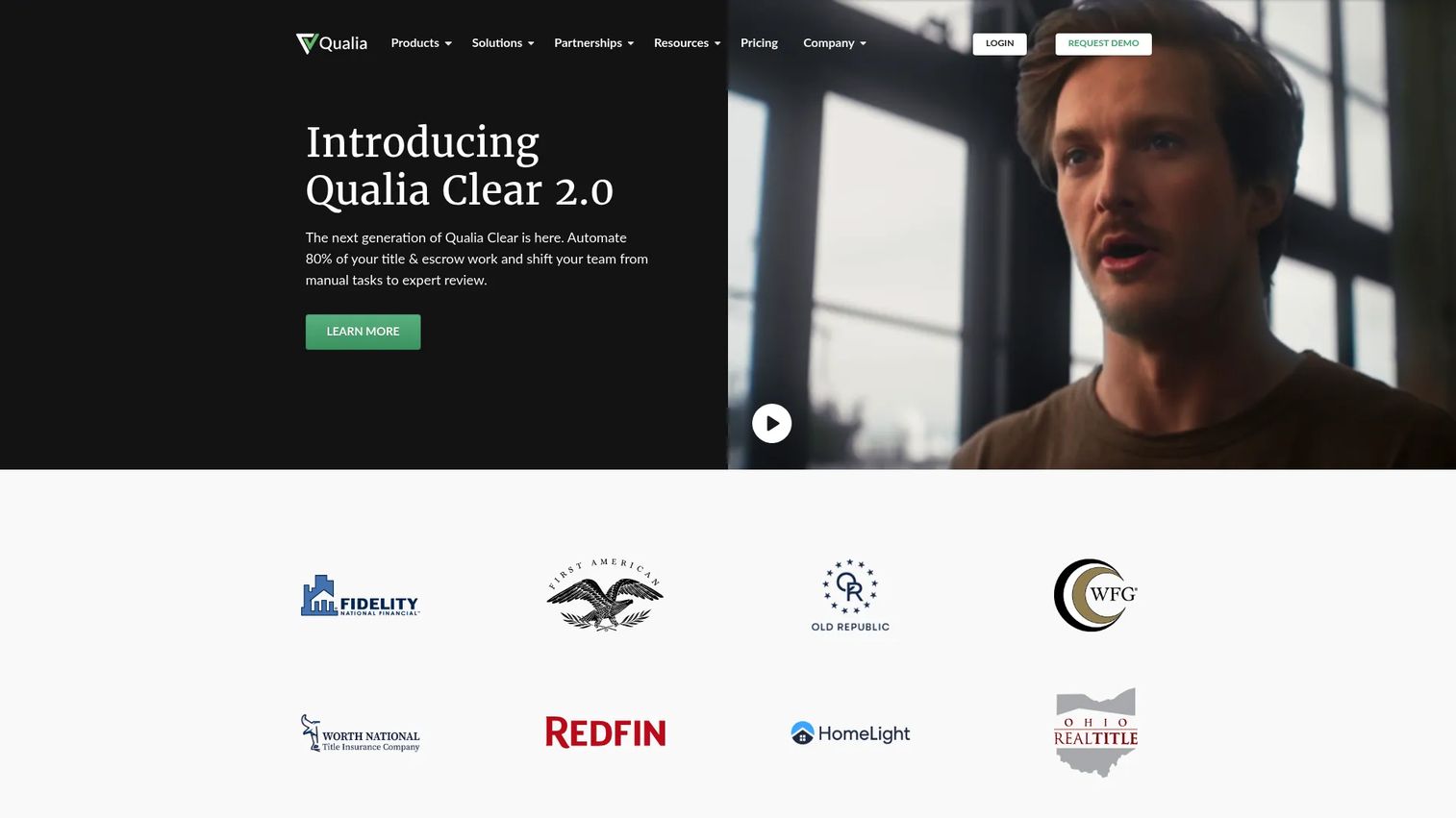
Qualia is a cloud-based title, escrow, and digital real-estate closing platform for title companies, escrow firms, law firms, and lenders. Its product lineup includes Qualia Core for title production and workflows, Qualia Clear for digital closings, Connect for lender and client collaboration, Shield for title insurance and data protection, and Qualia Atlas for high-volume title operations. AI-powered order opening, document processing, smart balancing, and bank integrations sit across the suite.
Best for: Title companies and escrow organizations that need production-grade workflow management, accounting, and digital closing coordination in a single platform.
Key features
- AI-powered order opening and document processing
- Configurable workflows and task management
- Title production, policy issuance, and rate management
- Escrow accounting, reconciliations, and bank integrations
- In-app communication and secure document sharing
Why choose Qualia: Qualia excels when the core workflow sits with title and settlement operations rather than with the lender. It handles the operational backbone around closing, including accounting, vendor management, and partner connectivity, not just the borrower-signing layer.
Qualia pricing: All Qualia products are priced by quote. Contact Qualia to discuss title workflow modules, user seats, transaction volume, and integration scope.
G2 rating: 4.7/5
10. SoftPro
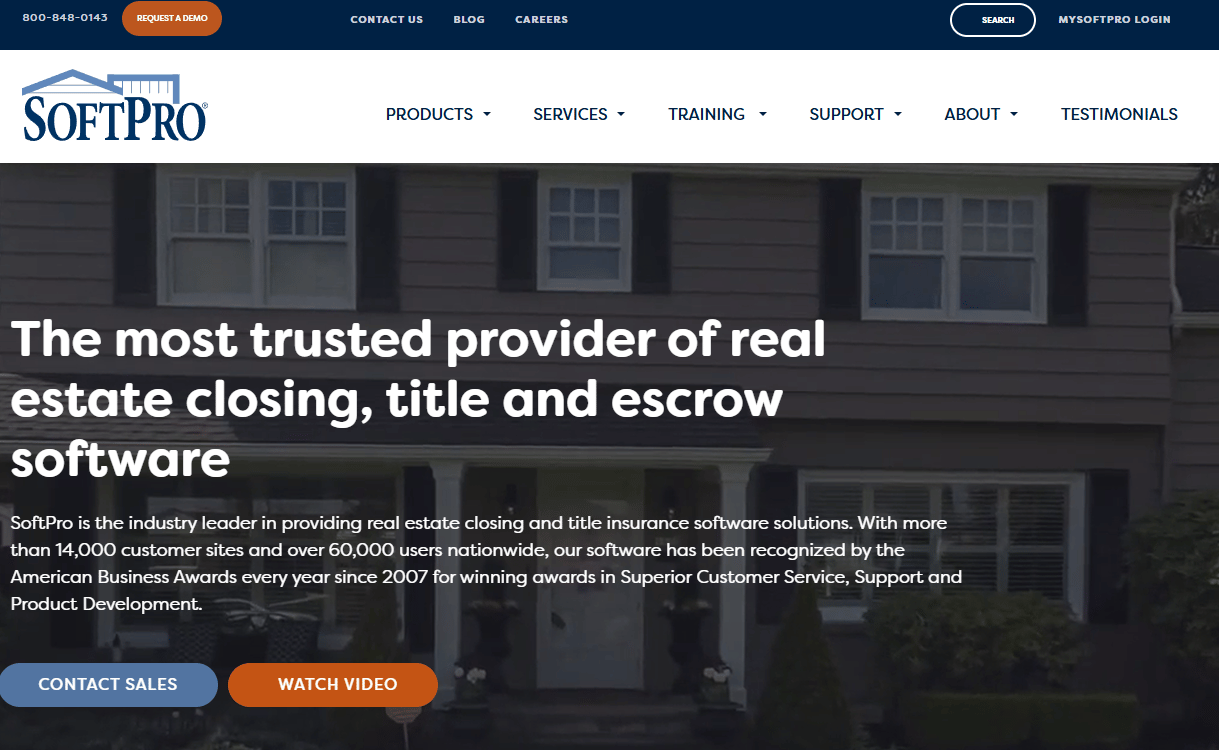
SoftPro provides closing, title, and escrow software for real estate professionals. The platform covers title production, escrow accounting, trust-account reconciliation, order management, and process automation with configurable workflows, screens, and document support. SoftPro Sign adds eSigning and RON capabilities. SoftPro 360 provides access to integrated vendor services, and ClosingsLIVE supports secure client communication.
Best for: Established title companies and escrow firms with complex back-office requirements that need configurable production-grade software.
Key features
- Title production workflow and escrow accounting
- Process automation with configurable workflows and fields
- Trust-account reconciliation and reporting
- SoftPro Sign eSigning and RON
- Integrated vendor services through SoftPro 360
Why choose SoftPro: SoftPro is strong for title operations teams with significant back-office complexity. Lenders may encounter it through title partners rather than buying it directly, which makes it worth understanding for closing coordination purposes.
SoftPro pricing: SoftPro Standard, Select, and Hosted products are priced by quote. SoftPro Sign eSIGN starts at a $75 minimum monthly fee, with $1.50 per order after the 50th. SoftPro Sign eSIGN plus RON starts at a $400 minimum monthly fee, with RON closings at $40 each after the tenth and orders at $1.50 each after the 50th. Verify current rates at softprocorp.com before finalizing.
G2 rating: 4.6/5
11. Snapdocs
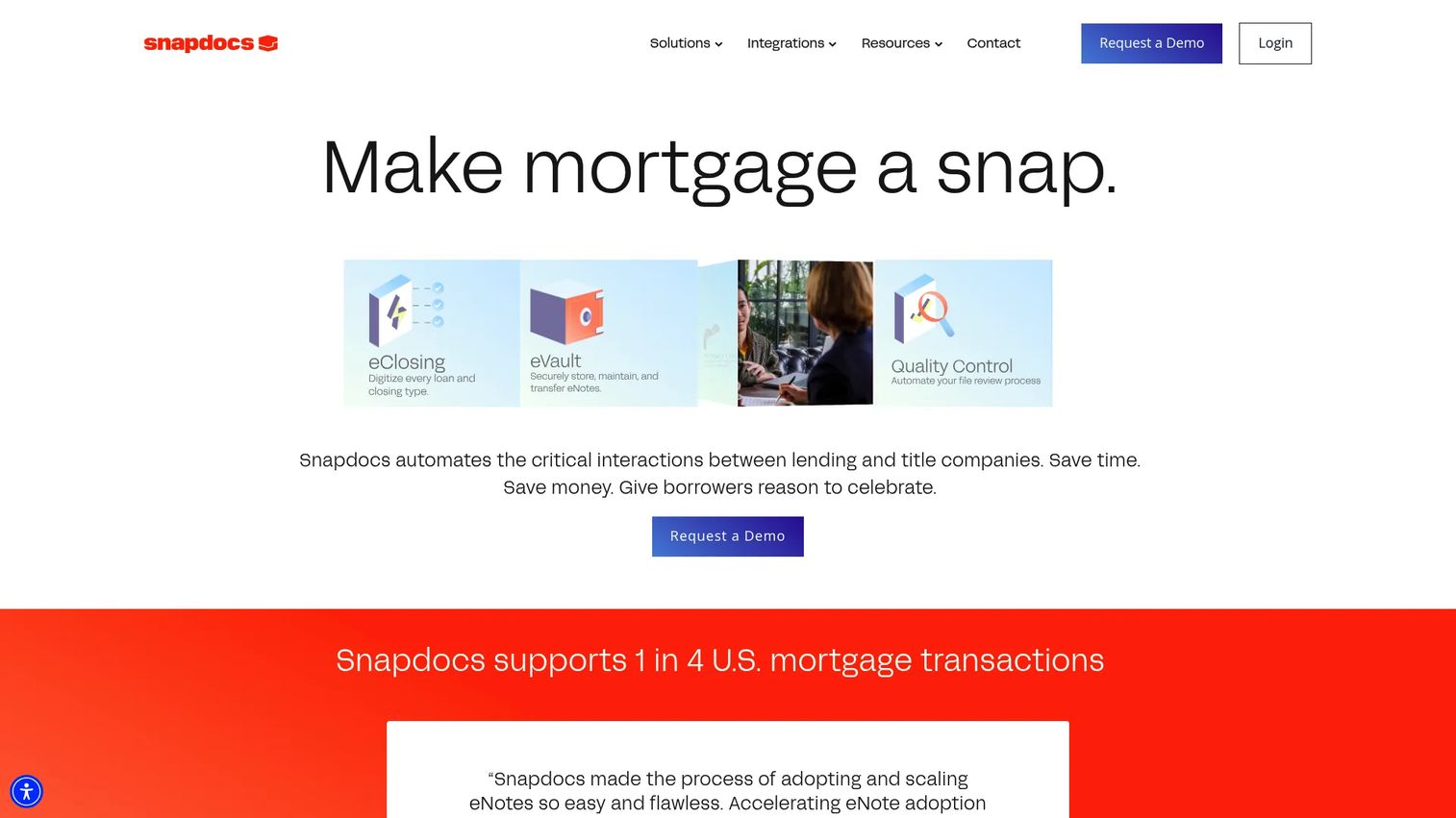
Snapdocs is a mortgage closing platform that automates digital closings, notary scheduling, eVault workflows, and quality control. It supports wet, hybrid, eNote, and RON closings. Notary Connect handles notary scheduling and management. The platform includes AI-powered quality control and open APIs with integrations to LOS, POS, RON, and title production systems. Snapdocs also offers a free notary signing-agent account.
Best for: Mortgage lenders and settlement companies that need more reliable multi-party closing coordination across notaries, settlement agents, and borrowers.
Key features
- eClosing for wet, hybrid, eNote, and RON workflows
- Notary Connect scheduling and management
- eVault and eNote management
- AI-powered quality control
- Open APIs with LOS, POS, RON, and title-production integrations
Why choose Snapdocs: Snapdocs performs best when the closing problem is coordination reliability across parties. If missed notary appointments, late packages, and status gaps are creating the most defects, Snapdocs addresses those at the workflow level.
Snapdocs pricing: RON plans start at $20 per user per month for the Notary tier and $50 per team per month for the Team tier. Enterprise eClosing pricing requires a custom quote. Contact Snapdocs to discuss transaction volume, settlement network access, and digital closing module scope.
G2 rating: 4.6/5
12. BlueNotary

BlueNotary is an online notarization platform connecting individuals, businesses, real-estate professionals, and notaries for remote document notarization and eClosings. It offers 24/7 on-demand notarization with certified notaries, digital document signing, identity verification, live video and audio sessions, and SOC 2 Type 2 compliance. The platform also supports eClosing for real-estate transactions.
Best for: Teams that need straightforward access to remote online notarization and identity verification without the full overhead of a mortgage-native eClosing platform.
Key features
- 24/7 on-demand online notarization
- Digital document signing and identity verification
- eClosing support for real-estate transactions
- Document templates and pre-tagging
- SOC 2 Type 2 and HIPAA compliance
Why choose BlueNotary: BlueNotary is a good fit for notarization-first workflows where RON access is the primary requirement. Before using it for mortgage transactions, verify mortgage-specific coverage, investor acceptance of RON closings, and state-level eligibility for the transaction types involved.
BlueNotary pricing: Individual notarization starts at $25 for one stamp, with additional stamps at $8 each. Additional signers cost $5 each and BlueNotary witnesses cost $10 each. A free Basic GNW notary plan is available. Pro Hybrid runs $27 per month and Business Pro runs $47 per seat per month. Verify current business plan terms at bluenotary.us before finalizing.
13. ClosingLock
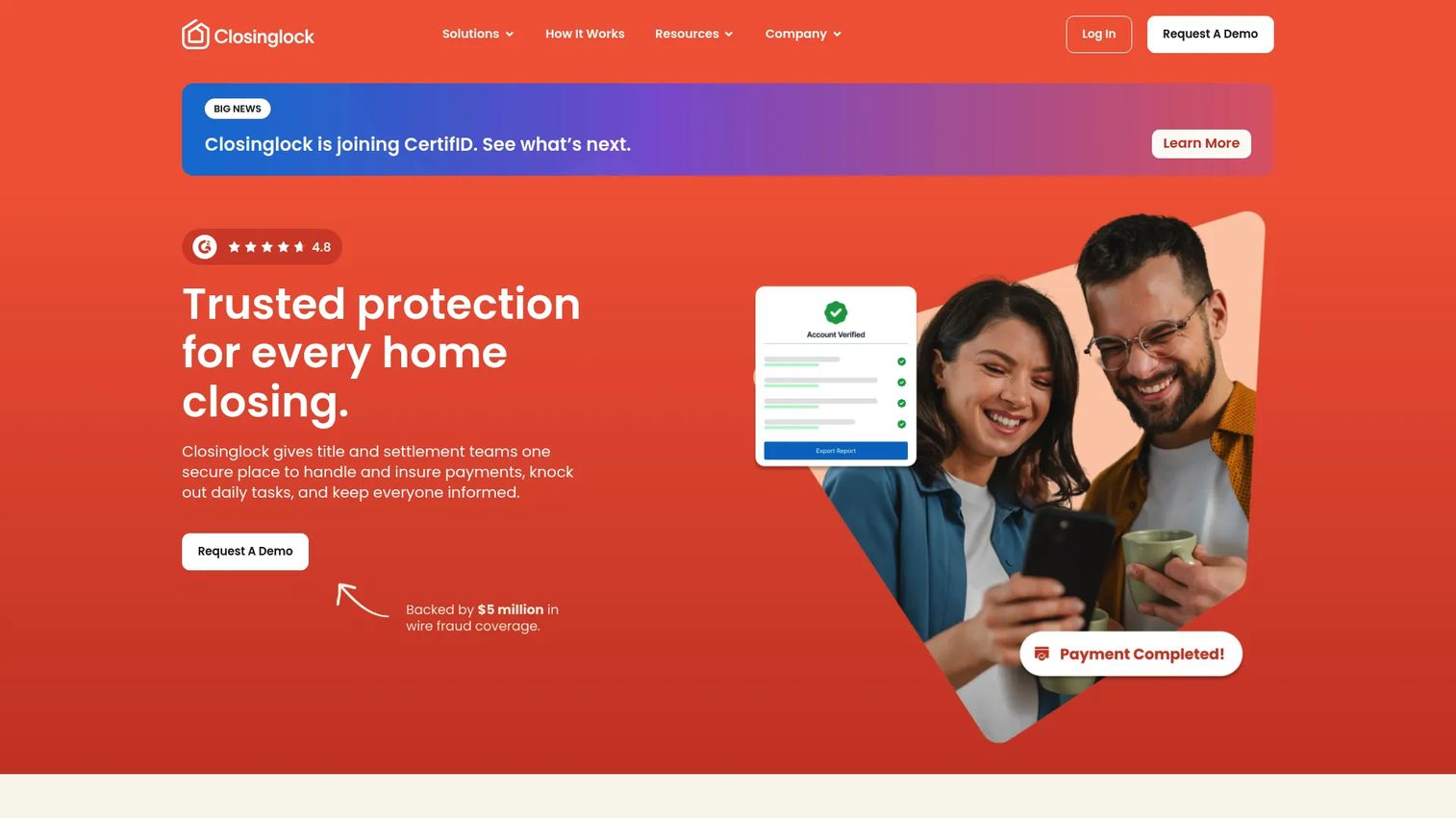
ClosingLock is a secure real-estate closing platform focused on fraud prevention, payments, wire instruction security, and document management. Its core capabilities cover secure digital payments, secure wire instructions, identity verification, payoff retrieval and verification, document management with eSigning, two-way text messaging, and automated workflow and progress tracking. It is not a full eClosing platform; it addresses the specific risk of fraud around funds and wire instructions.
Best for: Title companies, law firms, and settlement teams whose biggest closing risk is fraud around payoff letters, wire instructions, or fund disbursement.
Key features
- Secure digital payments and wire instructions
- Payoff retrieval and verification
- Identity verification and fraud prevention workflows
- Document management and eSigning
- Two-way text messaging and progress tracking
Why choose ClosingLock: Use ClosingLock when wire fraud and payoff security are the primary risk, not as a replacement for a full eClosing platform. It complements the broader closing workflow rather than running it end to end.
ClosingLock pricing: ClosingLock directs buyers to request a demo. The vendor's pricing page was not displaying reliable figures at time of writing. Contact ClosingLock to verify current transaction volume pricing, wire instruction tools, and user access terms.
G2 rating: 4.8/5
14. Docutech
Docutech provides digital mortgage technology and document services for lenders and servicers. Its ConformX product handles dynamic document generation with compliance checks, disclosure packages, and closing document support. Solex adds eSign, eDelivery, eClosing, and eVault capabilities. The platform also includes document storage, management, security controls, and MERS eRegistry integration.
Best for: Mortgage lenders and servicers needing integrated document generation, compliance monitoring, eSigning, eClosing, and fulfillment from a single document technology provider.
Key features
- Dynamic document generation with ConformX
- eSign, eDelivery, eClosing, and eVault through Solex
- Document storage, management, and security controls
- MERS eRegistry integration
- LOS integrations for data consistency
Why choose Docutech: Docutech is a strong fit when document preparation accuracy is the root closing bottleneck. The combination of ConformX and Solex keeps generation and delivery inside one system. Verify current product naming, ownership structure, and packaging directly with Docutech before contracting, as the product lineup has evolved.
Docutech pricing: Docutech directs buyers to request a demo. Ask about document volume, disclosure workflow scope, closing package requirements, and integration fees.
Considerations when choosing digital mortgage closing software
Match the tool to the closing type
Hybrid, hybrid with eNote, full RON, and IPEN each require different platform capabilities. Map your current transaction mix before evaluating vendors. A platform strong for hybrid may not support eNote creation or eVault registration. A RON-native tool may not handle the document generation side. Understand which closing types your volume supports today and which you plan to roll out within the next 12 months.
Verify state, county, investor, and warehouse requirements
RON laws differ by state, county recording acceptance varies, and investor eligibility for eNotes is set by Fannie Mae, Freddie Mac, Ginnie Mae, and warehouse lenders independently. A platform that works in one market may face restrictions in another. Get written confirmation on RON authorization, eNote investor acceptance, and eRecording eligibility for your target markets before committing to a vendor.
Check identity verification and integration depth before feature lists
Prioritize fit with your LOS, document provider, title platform, eVault, MERS eRegistry, and servicing system. A platform with impressive features but weak integration with your existing stack will create manual workarounds. Also evaluate the audit management software and exception-reporting depth, since weak audit trails create problems in regulatory examinations and investor delivery.
Evaluate security controls and audit trails
Cover identity verification, tamper-evident documents, session recordings, role-based permissions, SOC 2 certification, data retention policies, and exception reporting. No platform makes your organization compliant with TRID, state mortgage regulations, or investor guidelines by itself. Confirm with your legal and compliance teams what specific controls are required before selecting.
Model adoption by transaction volume and team capacity
A low-volume lender may start with hybrid eClosing and add RON selectively. A larger lender may need document automation, eVault operations, and secondary-market delivery at scale from day one. The right platform depends not just on current needs but on whether the vendor can support your volume and workflow complexity as you grow. Factor in implementation time, training requirements, and change management when comparing options.
Conclusion
Digital mortgage closing software covers a wide range of workflow problems, and no single platform solves all of them equally well.
DocMagic and Docutech are strong when document generation and eClosing need to stay connected. Encompass eClose fits lenders already operating on ICE Mortgage Technology's platform. Simplifile handles eRecording and settlement network connectivity. Blend Close works when borrower experience drives the buying decision. nCino Mortgage Suite suits banks running broader mortgage banking operations on nCino.
For title and settlement operations, Qualia and SoftPro each offer production-grade workflow depth with different configuration models. Snapdocs focuses on multi-party closing coordination with eVault and quality control. Proof Close, Stavvy, and BlueNotary each serve RON and digital closing at different scales and price points. ClosingLock addresses wire fraud and payoff security as a specialist tool rather than a full eClosing platform.
Start by mapping your current closing workflow from disclosure package to post-closing delivery. Identify the step that creates the most defects, delays, or compliance risk. Then shortlist the tools built specifically for that stage, and verify state laws, investor eligibility, county recording acceptance, and LOS integration before finalizing any contract.
FAQs
Digital mortgage closing software helps lenders, title companies, settlement agents, notaries, and borrowers complete mortgage transactions through electronic documents, eSigning, online notarization, eNotes, eVaults, recording, and post-closing delivery. It is more specialized than a general eSignature tool because mortgage closings require compliance with TRID disclosure rules, MISMO data standards, MERS eRegistry registration, and investor-specific delivery requirements.
eClosing software often focuses on the electronic signing and notarization portion of the closing event. Mortgage closing software can span a wider range: Document preparation, settlement coordination, title workflow, county recording, eVault management, and investor delivery. Many lenders use multiple systems together to cover the full lifecycle rather than expecting one platform to handle everything.
A hybrid eClosing is one where some documents in the closing package are signed electronically and others are wet-signed or notarized in person. The promissory note is typically wet-signed in a standard hybrid closing. In a hybrid with eNote, the promissory note is also electronic and requires eVault registration on the MERS eRegistry. Many lenders start with hybrid closings because they are easier to roll out without requiring full investor and county eRecording approval.
RON stands for remote online notarization. The notary and signer are in different physical locations and meet via live video session. IPEN stands for in-person electronic notarization. The notary and signer are in the same location, but all documents are signed and notarized electronically rather than on paper. State laws govern which types are permitted, and requirements differ by transaction type, county recording jurisdiction, and investor acceptance policy.
Not every digital closing uses an eNote. A hybrid eClosing can have electronic signatures on most documents while the promissory note remains a wet-signed paper original. When the promissory note is electronic, the lender needs an approved process for creating a MISMO SMART Doc eNote, registering it on the MERS eRegistry, and storing it in an approved eVault. Fannie Mae, Freddie Mac, Ginnie Mae, and warehouse lenders each maintain their own eligibility and approval requirements for eNotes.
The answer depends on where the workflow breaks. Lenders needing document generation and eNote capability should evaluate DocMagic or Docutech. Those already on Encompass should look at Encompass eClose. Lenders prioritizing borrower experience across the full mortgage journey may find Blend Close or nCino Mortgage Suite a stronger fit. Teams where RON is the primary requirement should compare Proof Close, Stavvy, and BlueNotary against their state eligibility, investor policy, and volume requirements.
Start with closing type support: Does the platform handle the specific mix of hybrid, RON, IPEN, and eNote workflows you need? Then check integrations with your LOS, title platform, eVault, and MERS. Review compliance controls, audit trail depth, and security certifications. Assess borrower experience and title partner adoption within your market. Finally, model pricing against your transaction volume and verify investor, warehouse lender, state, and county requirements before contracting.
Electronic signatures, online notarization, and eNotes are accepted in many mortgage transaction contexts, but requirements vary by state, county, investor, and transaction type. Federal law under ESIGN and UETA establishes a baseline for electronic signatures, but RON authorization, eNote investor acceptance, and county eRecording eligibility each require separate confirmation. Review applicable state laws, investor guidelines, and county recording rules with legal and compliance counsel before rolling out any digital closing workflow.