


Your dispatcher can see the van on a map. What they cannot see is whether the driver has picked up, dropped off, gone off-duty, or is stuck waiting on a customer who never showed.
That gap is the real problem. A dot on a map tells you location. It does not tell you where the driver sits in the workflow, which trip is next, or what the passenger needs to hear right now. So the team fills the gap with phone calls, texts, and a spreadsheet nobody trusts by 3pm.
The market is moving fast. The global driver and staff management software market was worth USD 3,195.4M in 2025 and is projected to reach USD 9,405.3M by 2035, according to Future Market Insights (2025). That growth reflects a shift from location-only tracking toward full workflow visibility.
Driver app software is broader than GPS tracking. A driver tracking app pings coordinates. A real driver management app manages statuses, trips, communication, earnings, and handoffs in one mobile workflow. This guide compares the tools that do the second thing.
What's inside
This guide covers driver app software for taxi, transport, delivery-adjacent, chauffeuring, shuttle, and fleet workflows. It is written for operators and product-minded buyers who care about workflow design and measurable operational outcomes, not app-store feature dumps.
We selected and compared each tool on four criteria:
- Scheduling and dispatch depth: recurring shifts, prebooked jobs, and vehicle assignment
- Real-time status and trip visibility: meaningful job states, not just location pings
- Driver and passenger communication: handoff details at the right moment
- Performance and analytics: earnings dashboards, completion rates, and route data
Every tool is compared on workflow fit first, price and rating second.
TL;DR
- Best for trip status visibility and structured driver workflows: FASTTRAK Cloud
- Best for driver earnings and job discovery: FREE NOW
- Best for all-in-one transport operations: Anolla
- Best for fleet-focused comparison shopping: AllRide Apps
- Best for telematics-heavy fleets: Samsara or Motive
- Best for fleet data and reporting depth: Geotab or Verizon Connect
- Best for delivery-adjacent dispatch and proof of delivery: Onfleet or Track-POD
Match the pick to your primary job. If you run passenger trips, weight status and communication. If you run vehicles at scale, weight telematics and reporting.
What is driver app software?
Driver app software is a mobile tool that manages driver workflows, including dispatch, trip and task status, real-time updates, communication, and performance tracking, across one or more vehicles and services.
It sits above simple GPS tracking. A driver tracking app answers "where is the vehicle." Driver app software answers "where is this trip in the workflow, what happens next, and who needs to know."
The category usually covers these capability buckets:
- Scheduling and dispatch: assign trips, prebooked jobs, recurring shifts, and vehicles
- Trip and task status management: on-duty and off-duty toggles, job status updates, trip ticket details
- Real-time updates and notifications: live status changes pushed to dispatch and customers
- Driver communication and passenger handoff: in-app messaging, arrival updates, passenger links
- Earnings or performance dashboards: income tracking, completion rates, utilization
- Multi-vehicle and multi-service support: varied routes, shift types, and trip categories in one system
The difference from GPS-only tools comes down to state. A location pinger reports coordinates. A transport operations software platform reports workflow states that dispatch, drivers, and customers can act on.
When to use driver app software
Not every operation needs the same depth. Here is how to know which capability matters most to you.
Coordinate trips without calling drivers repeatedly
If your dispatch day runs on status-check phone calls, you are paying for the wrong kind of visibility. A dispatch app with meaningful job states replaces "where are you" calls with live updates. Drivers toggle status, dispatch sees the change, and nobody interrupts a trip to ask a question the app already answered.
Track earnings, job performance, or completion
When drivers are paid on trips, bonuses, or completion, a driver-facing earnings dashboard becomes an accountability and retention tool. Drivers see income in real time. Operators see completion rates and utilization. Performance analytics turn incentive plans into something both sides can trust.
Manage multi-vehicle or multi-service transport
Running varied routes, shift types, and trip categories needs more than a location pinger. A fleet driver app that handles multi-vehicle operations and multi-service transport lets you assign the right vehicle, route, and driver without manual cleanup. This is where trip management app depth separates real platforms from GPS tools.
Comparison table
The goal here is to compare workflow fit, not just feature counts. Read the "Best for" column first, then check the "Key differentiator" column to see whether the tool matches your primary job. Pricing and ratings vary by source, so treat them as a starting point.
| # | Product | Best for | Key differentiator | Pricing | G2 rating |
|---|---|---|---|---|---|
| 1 | FASTTRAK Cloud | Livery and ground transport dispatch | Cloud booking, dispatch, and driver apps | From $99/mo | Not listed |
| 2 | FREE NOW | Driver earnings and job discovery | Taxi-first mobility with prebooked jobs | Free business signup | Not listed |
| 3 | Anolla | All-in-one transport operations | Modular platform with 20+ add-on modules | Free tier | Not rated |
| 4 | AllRide Apps | Fleet-focused white-label software | AI transport and logistics suite | From $490/mo | 5.0/5 |
| 5 | Samsara | Telematics-heavy fleets | Connected operations and video safety | Custom | 4.5/5 |
| 6 | Motive | Compliance-adjacent fleet ops | Integrated telematics and safety | Custom | 4.4/5 |
| 7 | Geotab | Fleet data and reporting depth | Telematics with plan-based packages | Custom | 4.5/5 |
| 8 | Verizon Connect | Coordination at scale | Live map and route replay | Custom | 3.8/5 |
| 9 | Onfleet | Delivery-adjacent dispatch | Routing, dispatch, and proof of delivery | From $619/mo | 4.6/5 |
| 10 | Track-POD | Proof of delivery and last mile | Route planning plus electronic POD | From $35/driver/mo | 4.5/5 |
Best driver app software for 2026
Ten tools, ordered by relevance to transport and fleet driver workflows. Each section covers what it does, who it fits, and where its strengths sit.
1. FASTTRAK Cloud
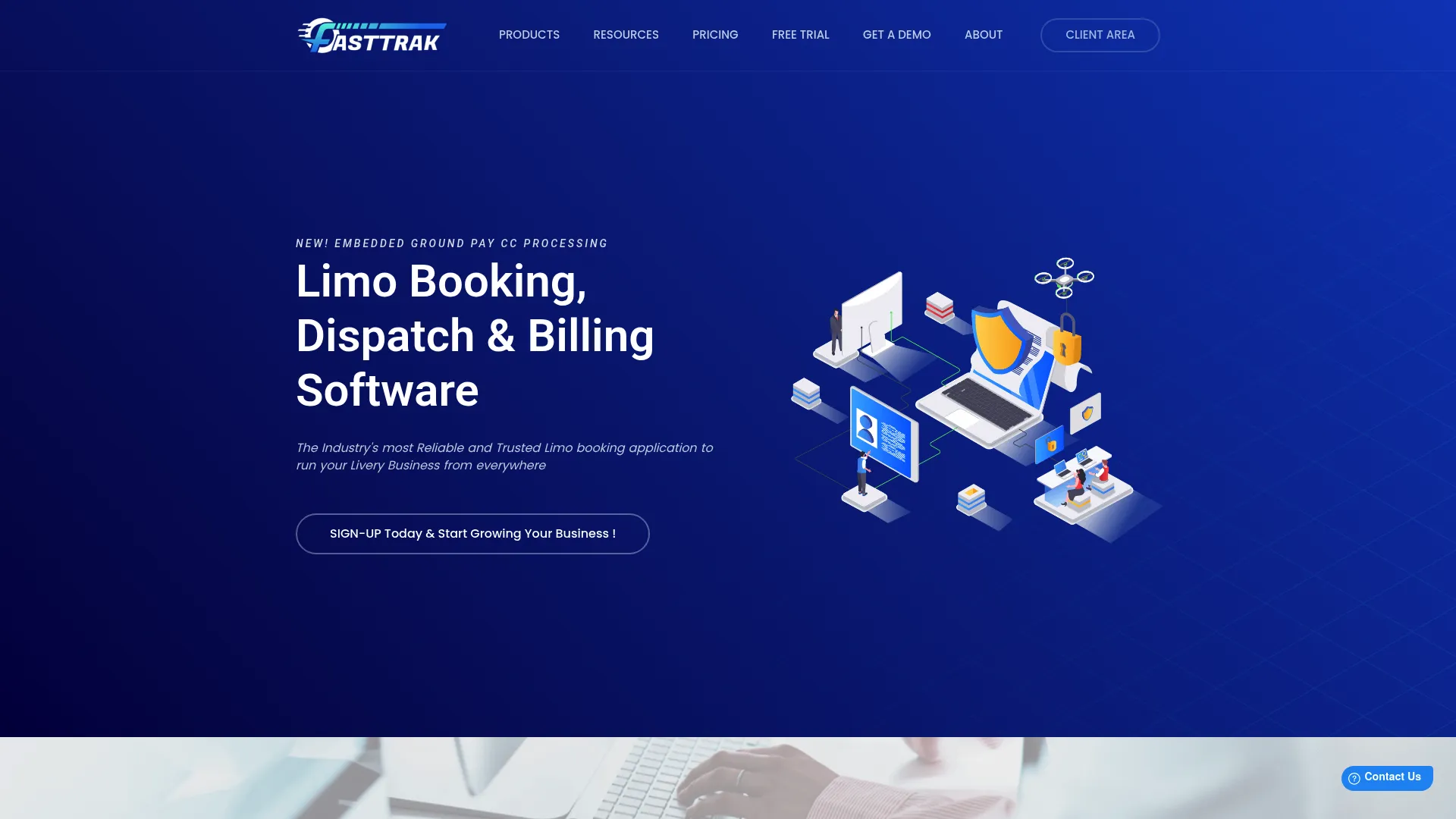
FASTTRAK Cloud is cloud-based limousine and livery software built around booking, dispatch, and billing. The driver app gives ground transport operators structured trip visibility, so dispatchers see where each ride sits in the workflow rather than just where the vehicle is. It pairs an online booking portal with driver apps and passenger location links.
Best for: Ground transportation operators needing cloud limo booking, dispatch, and billing in one place.
Key strengths
- Customer online booking portal
- Driver apps for structured trip workflows
- Passenger location links for arrival visibility
Why choose FASTTRAK Cloud: If you run livery or chauffeur trips, the value is workflow structure. Drivers move rides through clear states, dispatch stays aligned without status calls, and passengers get location links instead of "he's almost there" phone updates. Trip tickets and client-visible driver updates keep the whole handoff visible.
FASTTRAK Cloud pricing: The Starter plan is $99 per month for up to 100 bookings. Professional is $129 per month for up to 250 bookings. Enterprise starts at $299 per month for higher volumes. A free 30-day trial is available.
2. FREE NOW
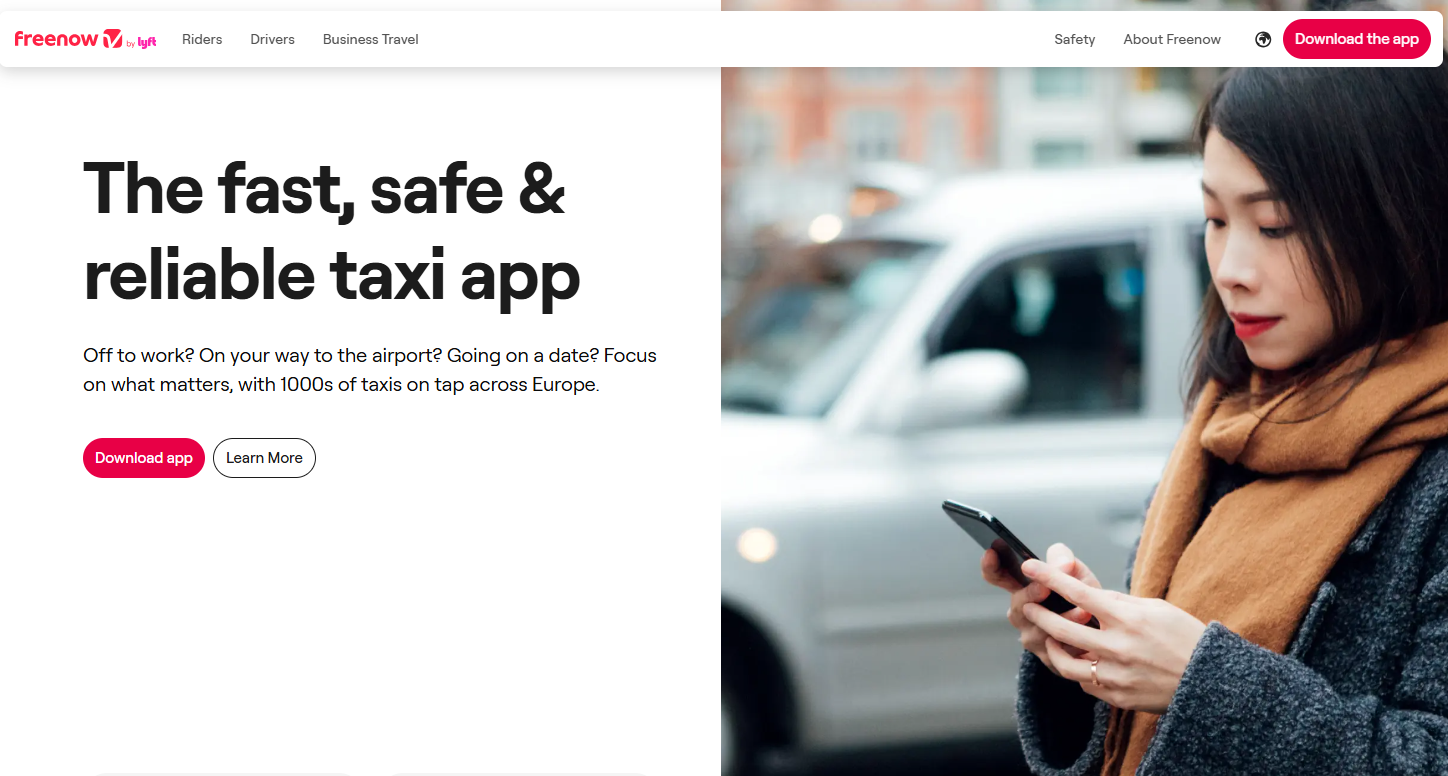
FREE NOW is a European multi-mobility app centered on taxis and business travel. On the driver side, it focuses on making driving easier and earning more: live updates, prebooked jobs, and job discovery that helps drivers fill their day. This section is about the driver experience, not fleet admin.
Best for: Drivers and taxi operators who want taxi-first urban mobility with earnings and schedule control.
Key strengths
- Taxi and private-car booking
- Prebook rides in advance
- Real-time tracking and in-app payments
Why choose FREE NOW: For drivers, the pull is income and control. Prebooked jobs let drivers plan a shift instead of chasing rides. Real-time updates and in-app payments keep earnings visible, and job discovery surfaces work nearby. Operators get a network that keeps drivers busy without heavy dispatch overhead.
FREE NOW pricing: Business accounts offer free signup with no upfront cost. FREE NOW PLUS includes a free first month, then moves to a monthly subscription. Exact ongoing PLUS pricing is not publicly listed.
3. Anolla
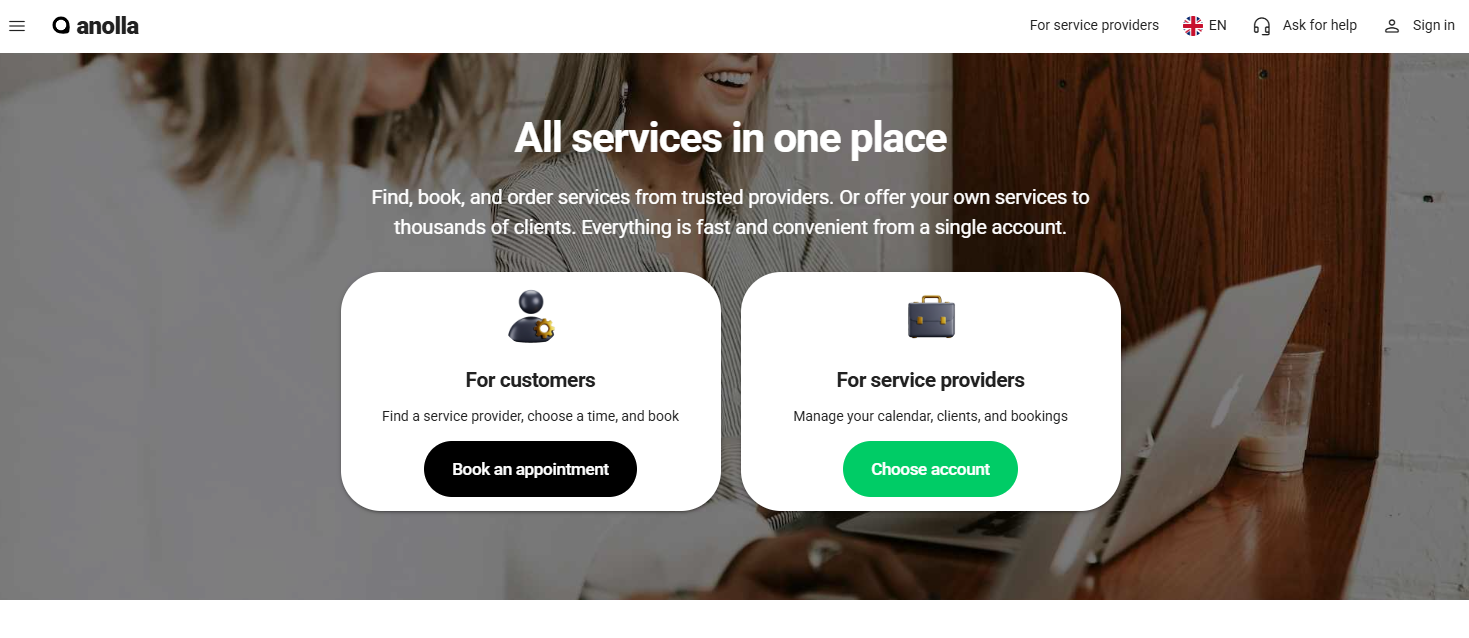
Anolla is AI-based booking and service marketplace software for customers and providers. It is built as an all-in-one transport operations platform: scheduling, a service marketplace, AI support, customer communication, mobile access, and analytics. Position it as broad transport software for operators, not a single-purpose driver app.
Best for: Service and transport businesses that need booking, quote requests, and customer or provider workflow management in one modular platform.
Key strengths
- Free-to-use customer bookings and provider signup
- Modular all-in-one platform with 20+ add-on modules
- AI support, real-time notifications, and mobile apps
Why choose Anolla: The draw is breadth. Instead of stitching together a booking tool, a dispatch app, and a comms layer, you configure modules as you grow. AI support and real-time notifications reduce manual coordination, and the marketplace model helps operators match demand to available service.
Anolla pricing: The core software is free at 0 euros. Paid features are activated as needed on a usage-based model, and no public numeric paid price is listed.
4. AllRide Apps
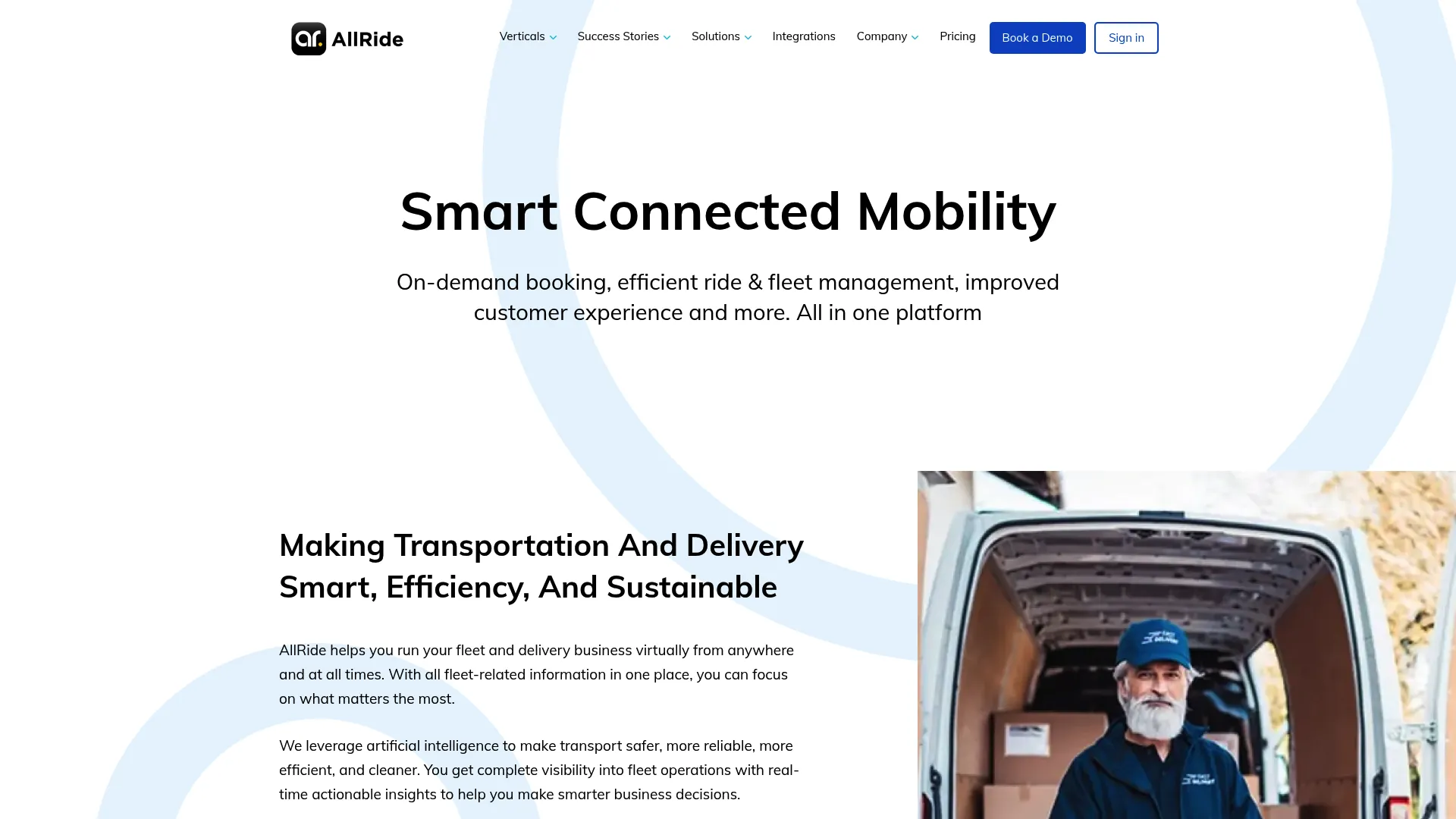
AllRide Apps is an AI-powered transport, logistics, and delivery software suite for fleet and mobility businesses. It positions itself around fleet management, workflow-first dispatch, trip visibility, and multi-vehicle operations, which makes it a shortlist-worthy option for operators comparing driver app software.
Best for: Transport, delivery, and fleet operators needing white-label mobility software with category breadth.
Key strengths
- Route optimization
- Real-time tracking
- Demand forecasting
Why choose AllRide Apps: The pitch is category breadth plus fleet depth. If you run multi-vehicle operations and want white-label apps for drivers and customers, AllRide covers routing, tracking, and forecasting in one suite. Demand forecasting is a genuine differentiator for operators planning capacity ahead of peaks.
AllRide Apps pricing: Public pricing is shown for the AllRide Cab ride-hailing product, with a Starter plan at $490 per month plus $0.05 per trip. A free sign-up and annual plans are available. It holds a 5.0/5 rating on G2 from a small number of reviews.
5. Samsara
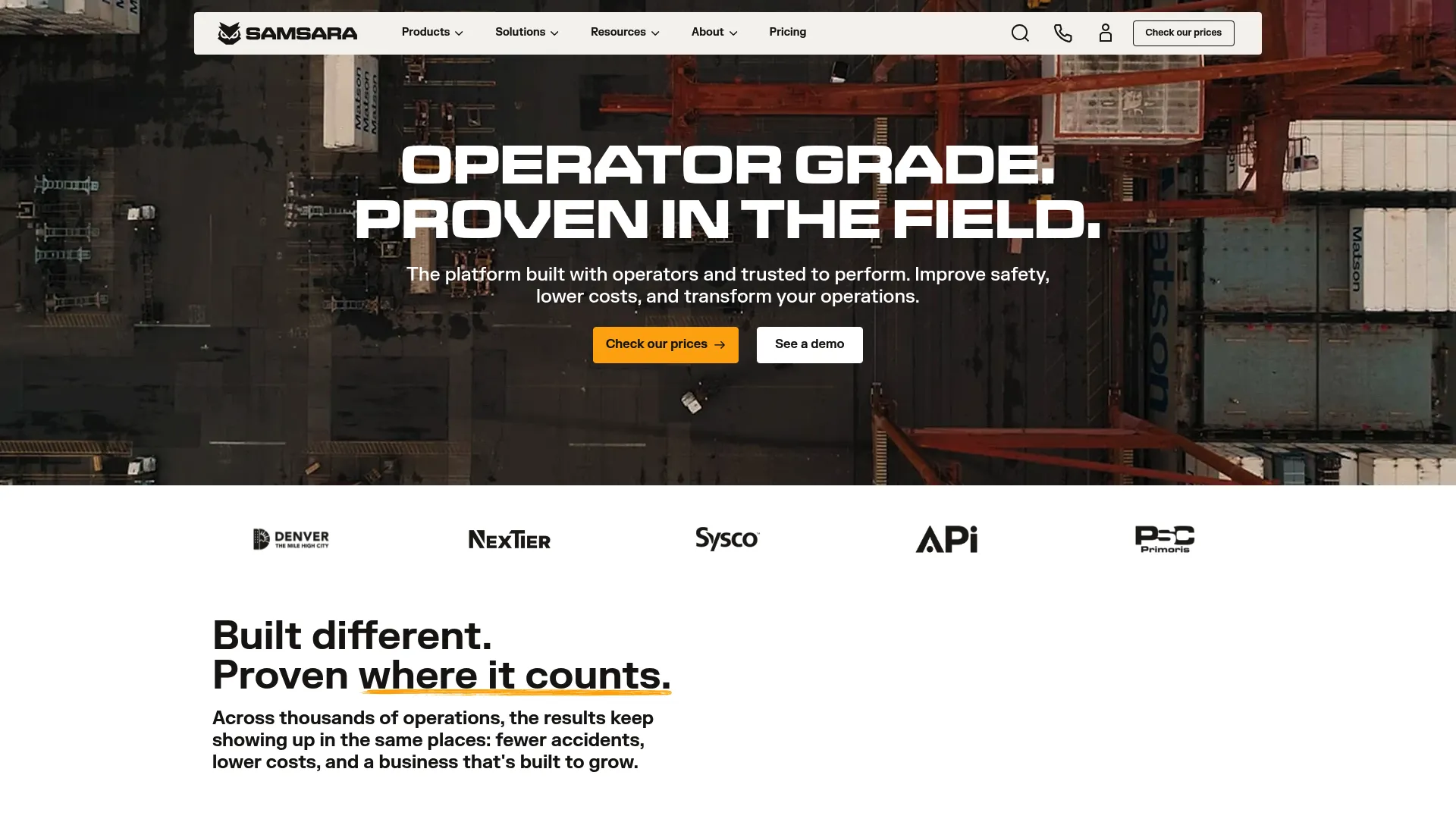
Samsara is a connected operations platform for physical businesses. It brings telematics-driven fleet visibility, driver workflows, and safety and operations alignment together, with real-time updates and mobile coordination. It fits best when a driver app needs to sit inside a broader fleet stack rather than stand alone.
Best for: Fleet, equipment, and workforce operations that need an integrated safety and telematics platform.
Key strengths
- AI cameras and video safety
- Fleet telematics and GPS tracking
- Equipment, workforce, and workflow management
Why choose Samsara: The strength is scope. When you need driver workflows, safety video, and telematics unified, Samsara ties them into one operations view. That alignment matters for larger fleets where safety, compliance, and dispatch decisions depend on the same real-time data.
Samsara pricing: Samsara does not publish numeric pricing; the pricing page uses a vehicle and asset count selector and directs buyers to a quote. It holds a 4.5/5 rating on G2 from more than 4,800 reviews.
6. Motive
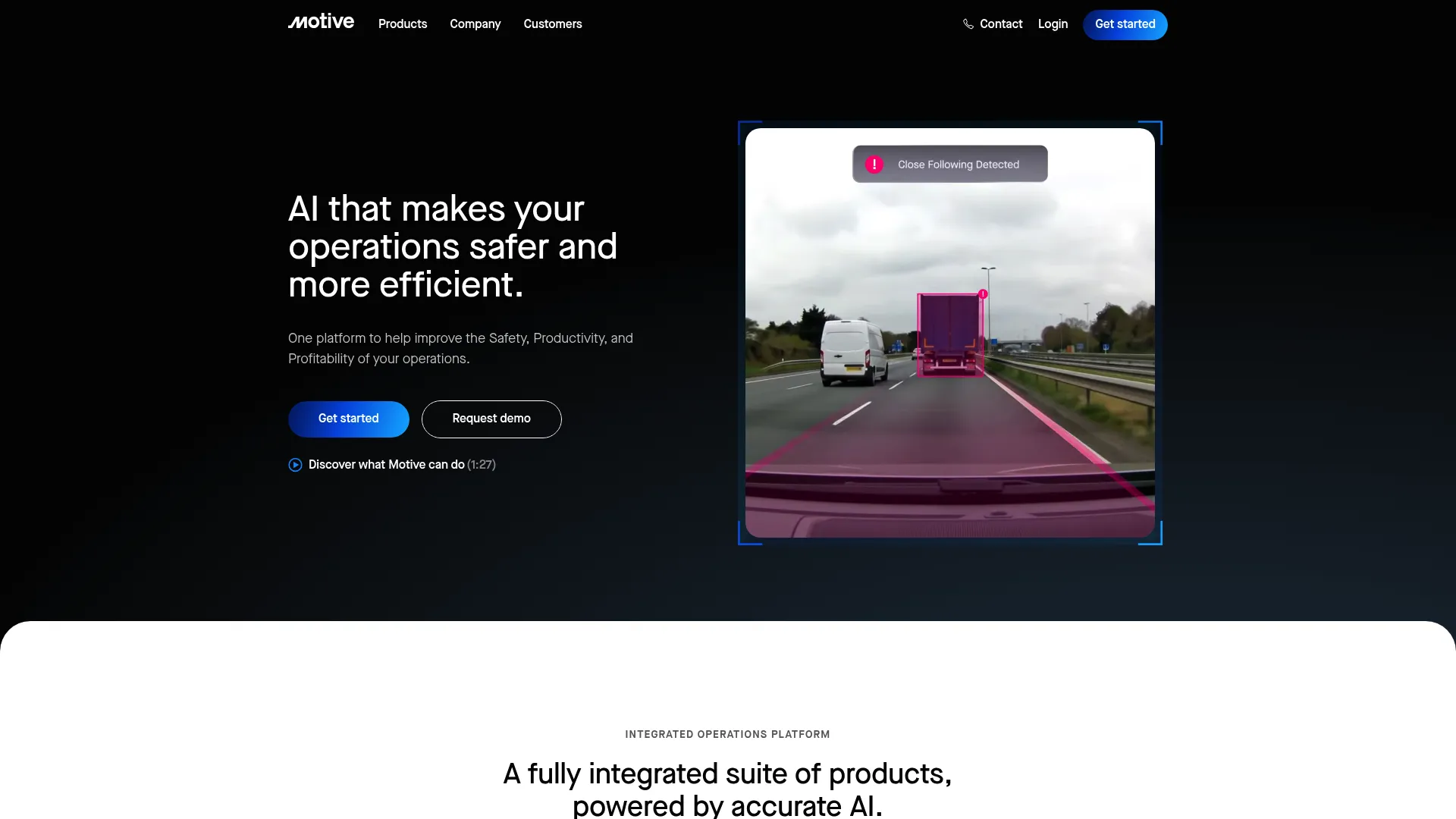
Motive is an AI-powered integrated operations platform for fleets. It centers on driver coordination, dispatch visibility, and fleet operations, adding compliance-adjacent workflows and real-time location plus status context. The focus is fleet operations, not pure tracking.
Best for: Commercial fleets that want unified telematics, safety, compliance, and maintenance workflows.
Key strengths
- Fleet management
- Fleet telematics and GPS tracking
- Driver safety and AI dashcams
Why choose Motive: For commercial fleets, the appeal is one platform covering telematics, safety, and compliance-adjacent workflows. Dispatch visibility and status context sit alongside AI dashcams and maintenance, so operators manage drivers, vehicles, and risk without juggling separate tools.
Motive pricing: Motive does not display public pricing and directs visitors to contact sales. It holds a 4.4/5 rating on G2.
7. Geotab
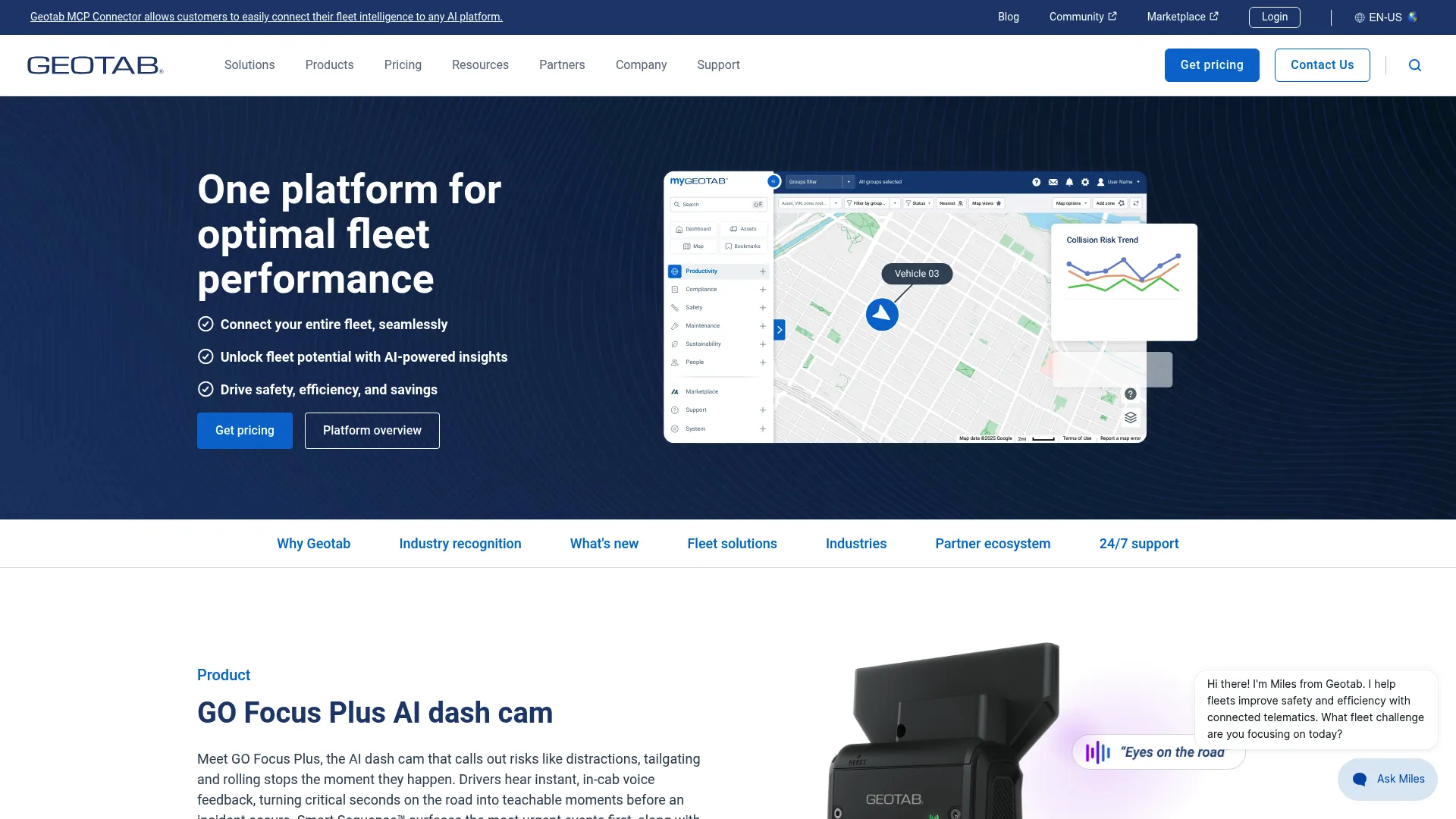
Geotab is a fleet telematics and management platform for vehicle tracking, reporting, safety, maintenance, and integrations. It suits teams that already think in analytics and operational data, offering driver and vehicle context, mobile workflow visibility, and multi-vehicle operations at scale.
Best for: Fleet operators needing telematics, compliance, and integrated vehicle visibility at scale.
Key strengths
- GPS location and real-time vehicle tracking
- Driver safety, alerts, and coaching
- Fleet reporting, maintenance, and fuel management
Why choose Geotab: The depth is in the data. If your team runs on reports, Geotab gives you tracking, safety coaching, maintenance, and fuel management, plus marketplace integrations to extend it. Base, Regulatory, Pro, and ProPlus packages let you scale capability as operations grow.
Geotab pricing: Geotab offers Base, Regulatory, Pro, and ProPlus packages in North America, but does not publish numeric prices and directs buyers to sales or resellers. It holds a 4.5/5 rating on G2.
8. Verizon Connect
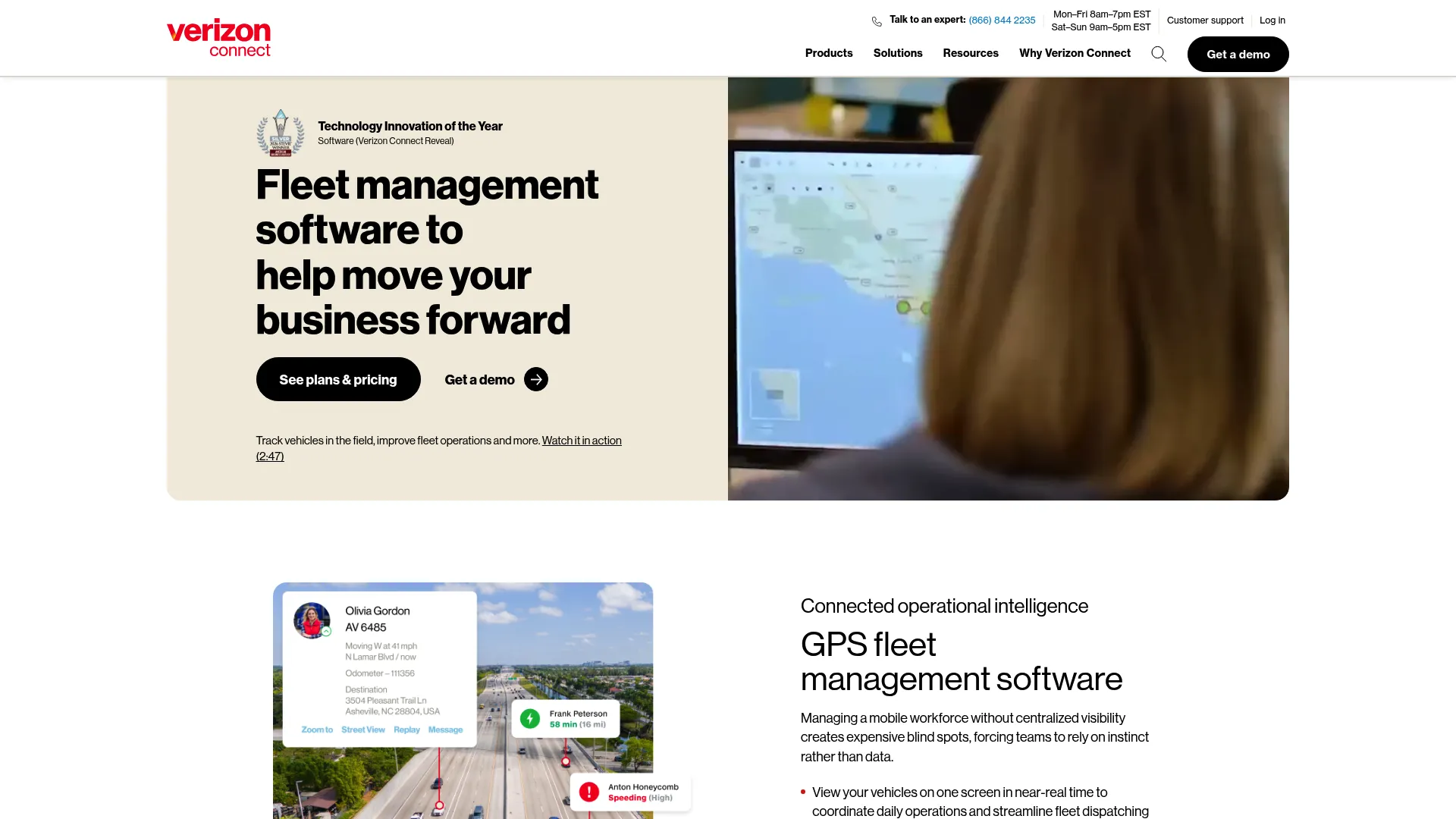
Verizon Connect is fleet management software for tracking vehicles, assets, drivers, compliance, and safety. It centers on route visibility, dispatch coordination, and fleet monitoring, with status updates and operational reporting built for coordination at scale.
Best for: Businesses needing fleet visibility, driver safety, and asset tracking across larger operations.
Key strengths
- Live map and vehicle history route replay
- Geofences and custom alerts
- Standard reports for fleet monitoring
Why choose Verizon Connect: The value is coordination at scale. A live map, route replay, geofences, and custom alerts give dispatch a clear operational picture across a large fleet. Standard reporting supports the recurring decisions that keep vehicles and drivers on schedule.
Verizon Connect pricing: Verizon Connect does not publish public pricing and routes buyers through "See plans and pricing" links to a quote. It holds a 3.8/5 rating on G2.
9. Onfleet
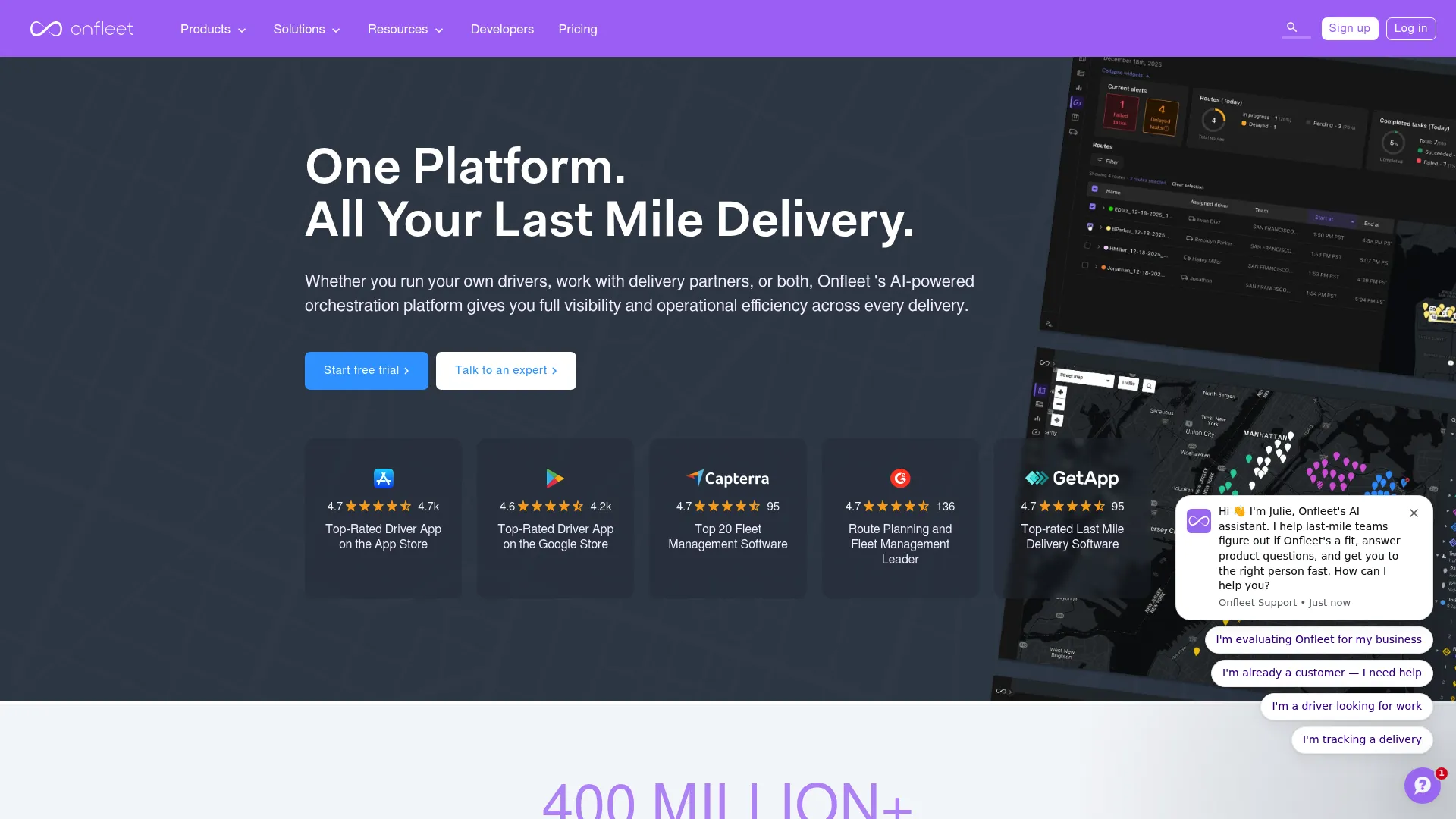
Onfleet is delivery management software for routing, dispatch, tracking, and customer notifications. It is strongest for task-driven workflows: route management, task tracking, customer updates, and mobile driver coordination. If your operation runs on stops and deliveries, this is the fit.
Best for: Businesses managing local delivery operations that need dispatch, tracking, and proof-of-delivery workflows.
Key strengths
- Route optimization
- Driver-dispatcher chat
- Photo and signature proof of delivery
Why choose Onfleet: For delivery-adjacent operations, Onfleet keeps dispatch, drivers, and customers aligned. Route optimization plans the day, driver-dispatcher chat handles exceptions live, and proof of delivery closes each task with accountability. Customer notifications reduce "where is my order" calls.
Onfleet pricing: Plans start at $619 per month for Launch, $1,349 per month for Scale, and $3,099 per month for Enterprise. A Courier Suite add-on is $299 per month. A 14-day free trial is offered, with no free tier.
10. Track-POD
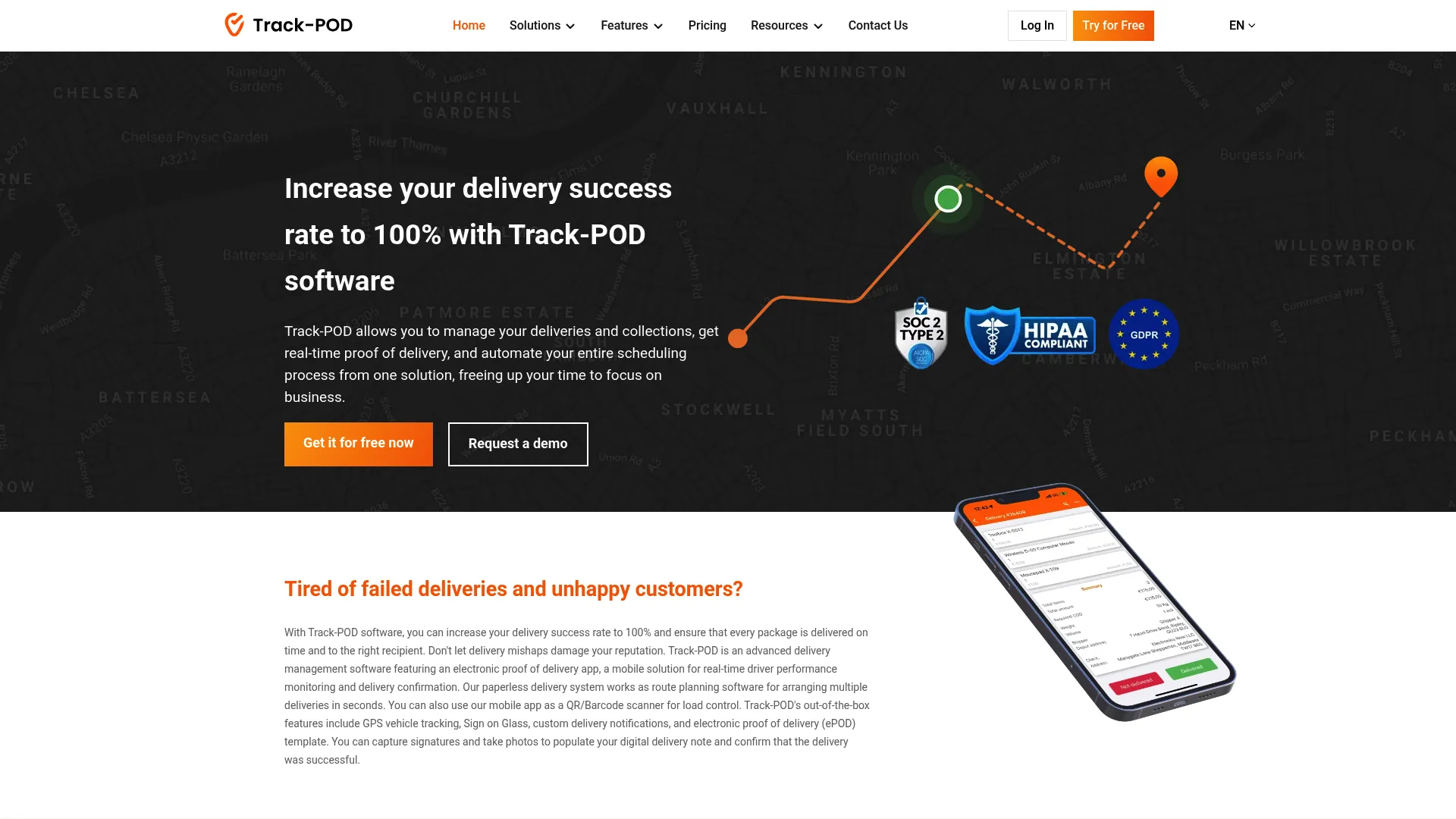
Track-POD is delivery management software for last-mile logistics, route planning, and electronic proof of delivery. It keeps things practical and logistics-focused: route and task tracking, mobile status updates, customer handoff visibility, and operational accountability through ePOD.
Best for: Businesses needing route planning, driver tracking, and proof-of-delivery in one platform.
Key strengths
- Route planning and optimization
- Electronic proof of delivery (ePOD)
- Real-time vehicle tracking and customer delivery notifications
Why choose Track-POD: The focus is last-mile accountability. Route planning gets vehicles out efficiently, mobile status updates keep dispatch informed, and ePOD gives you a defensible record of every handoff. Customer delivery notifications close the loop on visibility.
Track-POD pricing: Per driver plans start at $35 per month for Advanced, $69 for Advanced Plus, and $89 for Ultimate, all billed annually per driver or vehicle. Per-order plans start at $285 per month for 1,500 orders. A free trial is available with no credit card required. It holds a 4.5/5 rating on G2.
Considerations before you buy
Before you commit, run each shortlisted tool through this checklist. It maps to the operational reality of dispatch, drivers, and customers.
Dispatch and scheduling depth
Can the tool handle recurring shifts, prebooked jobs, and route changes without manual cleanup? Test how it handles a mid-shift reassignment. If a simple vehicle swap breaks the schedule or forces re-entry, that friction compounds every day at scale.
Real-time visibility and updates
Does the app support meaningful status states, or just location pings? Look for on-duty and off-duty toggles, job status updates, and trip ticket details. Location alone forces dispatch to guess; real status states let them act.
Driver and customer communication
Can dispatch, drivers, and passengers or customers share the right handoff details at the right moment? Check for in-app messaging, arrival updates, and passenger or customer links. The best tools push the right information without a phone call.
Analytics and performance tracking
Does it show earnings, job completion, utilization, or route performance in a way the team can act on? A dashboard is only useful if it drives a decision. Confirm you can segment by driver, route, or trip type, not just view a single aggregate number.
Mobile usability and maintenance
How easy is it for drivers to use daily, and how much effort will it take to keep workflows current? Drivers adopt what feels fast on a phone mid-shift. Factor in the ongoing effort to update statuses, routes, and rules as your operation changes.
Conclusion
The right driver app software depends on your primary job, not a feature checklist.
If you run passenger or livery trips and need structured trip visibility, FASTTRAK Cloud gives dispatch and drivers a clear workflow. If your priority is driver earnings and job discovery, FREE NOW puts income and schedule control in the driver's hands. For all-in-one transport operations, Anolla offers modular breadth, and AllRide Apps brings white-label fleet depth.
For telematics-heavy fleets, Samsara and Motive unify safety, compliance, and dispatch. When reporting depth is the priority, Geotab and Verizon Connect deliver fleet data at scale. And for delivery-adjacent dispatch and proof of delivery, Onfleet and Track-POD keep tasks, drivers, and customers aligned.
Start with the workflow that costs you the most time today. Shortlist two or three tools that solve it, run the considerations checklist, and trial before you commit. Workflow fit beats feature count every time.
FAQs
Driver app software coordinates driver workflows in one mobile tool: dispatch, trip and task statuses, real-time updates, communication, and performance tracking. It replaces the mix of phone calls, texts, and spreadsheets most transport teams use to keep drivers, trips, and customers aligned.
GPS tracking answers one question: where is the vehicle. Driver app software answers where the trip sits in the workflow, what happens next, and who needs to know. It reports actionable status states, not just coordinates, so dispatch can act instead of guess.
Look for scheduling and dispatch depth, meaningful trip and task status states, real-time updates, driver and customer communication, and performance or earnings dashboards. For multi-vehicle operations, add vehicle assignment and multi-service support. Mobile usability matters most, since drivers use it mid-shift.
It depends on the operation. Anolla suits all-in-one transport operations with its modular platform, while AllRide Apps fits fleet-focused, white-label needs. For livery and ground transport dispatch, FASTTRAK Cloud gives structured trip visibility. Match the tool to your primary workflow.
Yes. Driver-facing earnings dashboards show income in real time, which supports incentives and retention. Performance analytics surface completion rates, utilization, and route data operators can act on. FREE NOW leans hard on earnings and job discovery for the driver side specifically.
If you run varied routes, shift types, or trip categories, a location pinger will not keep up. A fleet driver app that handles multi-vehicle operations and multi-service transport lets you assign the right vehicle, route, and driver without manual cleanup, which is where real platforms separate from GPS tools.
Look for meaningful status states, not just location pings. On-duty and off-duty toggles, job status updates, and trip ticket details let dispatch see workflow progress live. The best updates push arrival information to customers automatically, cutting "where is my ride" and "where is my order" calls.
Compare on billing model first: per driver or vehicle, per order or trip, flat monthly, or custom quote. Track-POD and FASTTRAK Cloud publish clear starting prices, while Samsara, Motive, Geotab, and Verizon Connect route buyers to sales. Factor in setup, add-on modules, and how pricing scales as your fleet grows.