You block off a machine for a Saturday morning group. A walk-in takes it because nobody updated the whiteboard. Now you have two parties, one ATV, and a refund conversation you did not want to have.
That is the daily reality of running rentals on spreadsheets, text threads, and a paper waiver binder. Double bookings. Missed signatures at check-in. Confirmations that go out an hour late. No clean view of which machines are down for maintenance and which are ready to roll. Every one of those gaps costs a booking, a review, or a chunk of your Saturday.
The market is moving fast enough that these gaps compound. The ATV and UTV rental market was valued at USD 1.59 billion in 2024 and is projected to reach USD 2.46 billion by 2030 at a 7.1% CAGR, according to Next MSC (2025). Cloud-based rental software already accounted for 72.6% of market share in 2025 per PW Consulting (2026), and nearly 63% of rental companies globally have adopted digitalized systems to improve operational efficiency, per Global Growth Insights (2026). Buyers are no longer asking whether to move off spreadsheets. They are comparing tools on booking, inventory, payment processing, dynamic pricing, customer reminders, fleet tracking, and digital waivers.
The problem is that most of the pages you will land on are single-vendor pitches. Feature lists, a demo button, no honest guidance on who each tool actually fits. This piece is built the other way around: as an operator's shortlist.
What's inside
This guide compares four ATV rental software tools chosen for operational depth: booking and reservation management, fleet visibility, payment processing, waiver workflows, and pricing flexibility. We favored tools with enough range to matter to a growing rental business, not just a booking widget bolted onto a website.
We selected and ordered them by how well they map to distinct operator models: full rental operations control, booking automation, tour-heavy workflows, and website-plus-reservations. Pricing and ratings reflect what each vendor publicly listed at the time of writing. Use the comparison table to orient fast, then read the section that matches your situation.
TL;DR
- Best all-around for ATV rental ops: Yo!Rent, with inventory, invoicing, document verification, and one-time license pricing.
- Best for booking automation and communications: Indexic, with reservation management and integrated electronic waivers in one system.
- Best for tour-heavy rental businesses: Roverd, with 24/7 online booking, QR code check-in, and pay-per-booking pricing.
- Best for website plus reservation management: VEVS, which pairs a business website builder with booking, payments, and management tools.
- How to decide: Shortlist two, then map each against booking, waivers, payments, and fleet control before you commit.
What is ATV rental software?
ATV rental software is a purpose-built platform that manages the full lifecycle of renting out all-terrain vehicles: reservations, inventory, payments, waivers, pricing, and fleet status, in one system instead of scattered tools.
It sits in the broader rental management software category, but the good ones account for the specifics of powersports: hourly and daily rate mixes, deposit handling, liability waivers signed before the wheels turn, and machines that cycle in and out of maintenance throughout the day.
Core capabilities buyers expect:
- Online booking and reservation management: Let renters book from your site or a booking page, with a reservation calendar that reflects real availability.
- Inventory and availability control: Track each unit, block double bookings, and see what is rentable right now.
- Payment processing and checkout: Take deposits and full payments through a secure rental checkout, not a manual card swipe after the fact.
- Dynamic pricing and flexible rates: Set hourly, daily, weekend, and seasonal rates, with surge logic for peak demand.
- Customer notifications and reminders: Automate confirmations, reminders, and follow-ups to cut no-shows.
- Digital waivers: Collect signed liability forms online before check-in, stored and searchable.
- Fleet tracking and status visibility: See which units are out, returned, reserved, or down for maintenance.
- Reservation calendars and scheduling workflows: Manage the day visually, reassign units, and avoid overbooking.
The strongest platforms tie these together so a booking automatically holds inventory, triggers a waiver request, captures a deposit, and updates fleet status without anyone touching a spreadsheet.
When to use ATV rental software
Not every operation needs the same thing on day one. Here is how to pattern-match your situation to the capability that matters most.
When you need to stop double bookings
If you are still tracking availability on a whiteboard or a shared sheet, double bookings are a matter of when, not if. A reservation calendar tied to live inventory removes the guesswork. The moment a unit is booked, it comes off the board for that window. Scheduling controls also let you build in buffer time for cleaning and inspection between rentals, so a machine is never promised before it is actually ready.
When waivers and payments are slowing check-in
A line at the counter on a Saturday morning is lost revenue. If renters are filling out paper waivers and you are running cards manually, check-in drags. Digital waivers sent ahead of time mean renters sign before they arrive. Online checkout with deposit handling means the money is settled before the machine leaves the lot. Both remove friction from the busiest, most error-prone moment of your day.
When fleet status changes throughout the day
ATVs go down. A flat, a fouled plug, a return that needs a wash before it goes back out. When status changes hour to hour, you need fleet tracking that reflects reality, not last night's snapshot. Pair that with maintenance scheduling and status flags, and you stop promising units that are sitting in the shop.
Comparison table
Here is a compact side-by-side before the detailed entries. Pricing and ratings reflect each vendor's public listings at the time of writing. Ratings vary in availability by platform, so we note them only where a source was verified.
| # | Product | Intent | Key use case | Pricing | G2 rating |
|---|---|---|---|---|---|
| 1 | Yo!Rent | Full rental operations control | Launching a rental marketplace with inventory, invoicing, and document verification | From $1,499 one-time | 4.7/5 |
| 2 | Indexic | Booking automation and waivers | Reservation and rental booking with integrated electronic waivers | aWaiver from 15 cents each | Not listed |
| 3 | Roverd | Tour-heavy booking flow | 24/7 online booking with QR code check-in and pay-per-booking pricing | 5% per successful online booking | Not listed |
| 4 | VEVS | Website plus reservations | All-in-one website builder with booking, payments, and management | €299 per year | Not listed |
The table orients you fast: Yo!Rent leans toward operators who want to own the whole stack, Indexic toward booking and waiver automation, Roverd toward tour and activity flow, and VEVS toward businesses that want a customer-facing website bundled with reservation management. The sections below go deeper on fit.
1. Yo!Rent
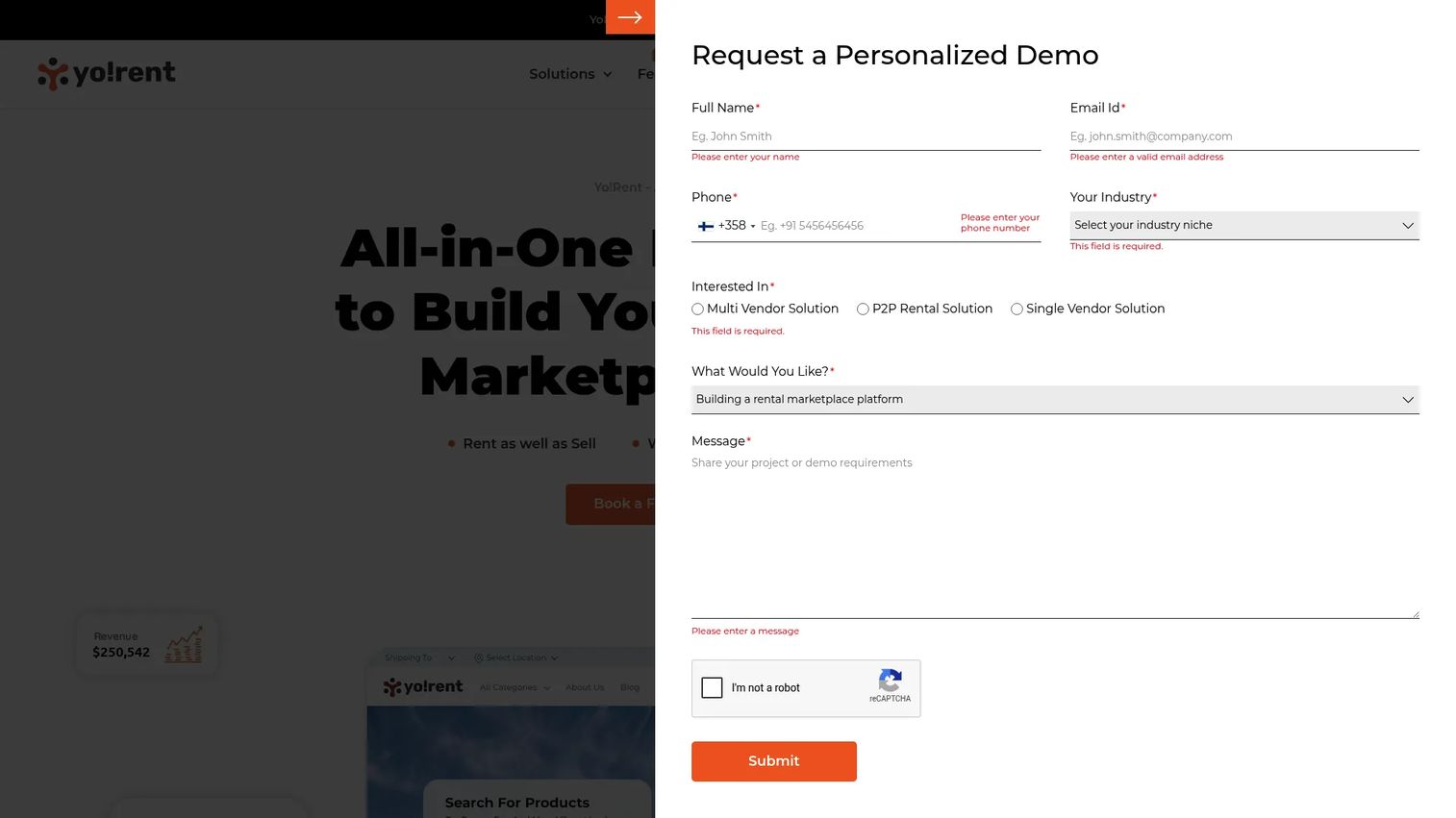
Yo!Rent is rental marketplace software for building online rental, rent-and-sell, and eCommerce platforms. Of the four, it is the most operationally complete pick for an ATV rental business that wants to own its platform rather than rent access to someone else's. It ships with a booking calendar, rental invoicing, document verification, rental security management, and advanced search with custom filters and product comparison.
The document verification piece matters for powersports. When you are handing over a machine that can hurt someone, verifying identity and holding a security deposit is not optional. Yo!Rent bakes that into the flow instead of leaving it to a side process.
Best for: Businesses launching a rental marketplace that want full control and a one-time license instead of a recurring subscription.
Key strengths
- Booking and invoicing in one place: A booking calendar tied to rental invoicing so reservations and billing stay connected.
- Document verification and security management: Verify renter documents and manage deposits before a unit goes out, built for higher-risk rentals.
- Advanced search and comparison: Custom filters and product comparison help renters find the right machine faster on a multi-unit fleet.
Why choose Yo!Rent: If you want to own the asset rather than pay a monthly platform fee forever, the one-time license model is the differentiator here. It fits operators comfortable with a more configured setup in exchange for control over branding, workflow, and cost structure over time. For a founder watching burn, trading a recurring line item for a fixed cost can be an easy case to make.
Yo!Rent pricing: Yo!Rent uses one-time license packages with zero recurring charges and zero transaction fees, verified on its public pricing page. The GoQuick package starts at $1,499 one-time, GoQuick Boost at $2,999, and GoCustom at $6,749, with GoQuick Ultra at $6,999. Buyer mobile apps for Android and iOS are sold separately at $1,999 and can only be purchased alongside a web app, and customizable app source code is available at $4,999. There is no free tier. Yo!Rent holds a 4.7/5 rating on G2.
2. Indexic
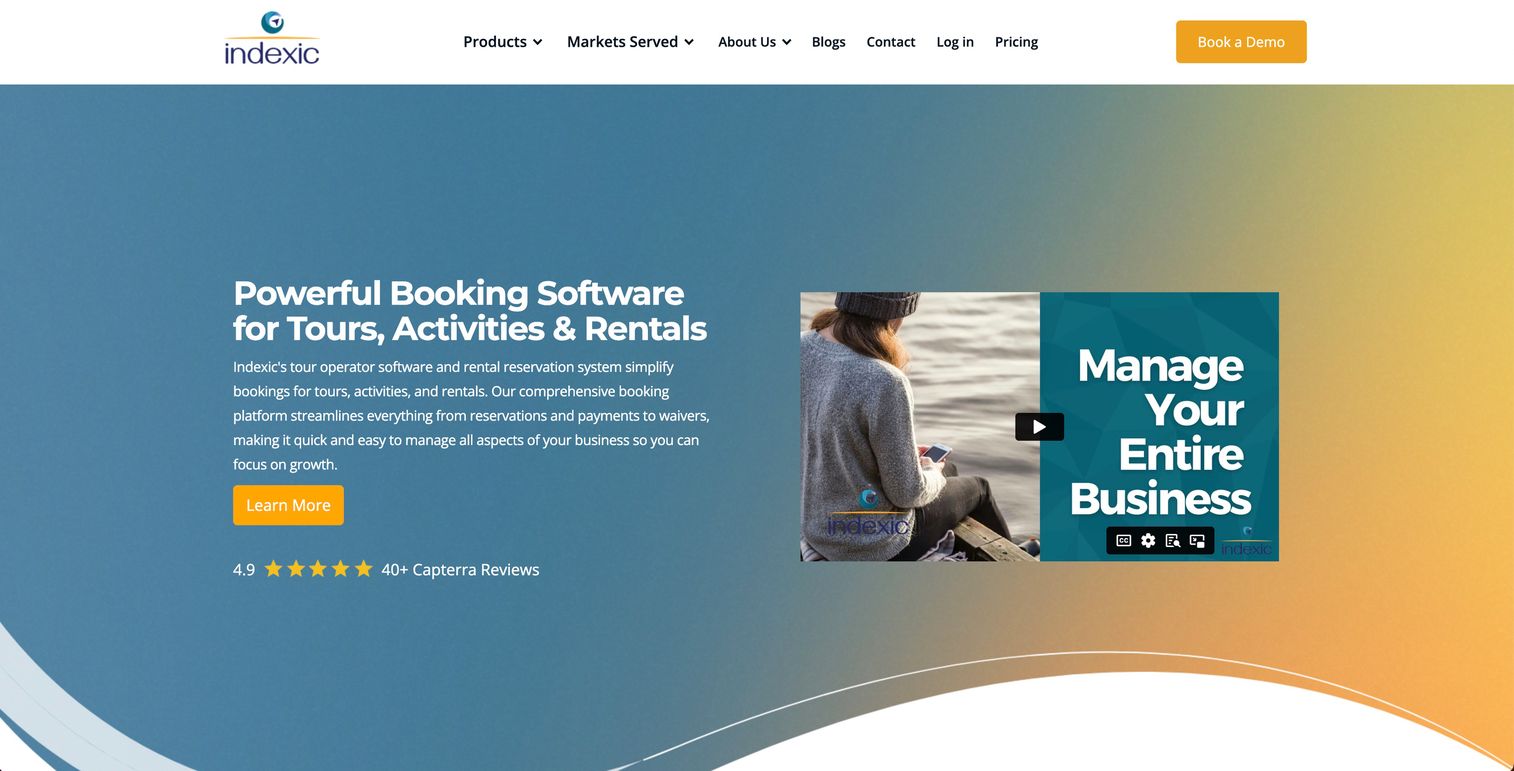
Indexic is tour, activity, and rental booking software with integrated digital waivers, built for operators who want booking and liability handling in one system rather than stitched together. Its aReservation product covers reservation and rental booking management, and aWaiver handles integrated electronic waivers, backed by payments, reporting, and customer communications.
The pairing is the point. When a renter books, the waiver request can go out automatically, and signatures are stored and searchable rather than sitting in a binder. For an ATV operation where every rider signs before riding, that removes a manual step from the busiest part of the day and gives you a clean record if a claim ever surfaces.
Best for: Tour and rental operators who need booking and waiver workflows living in the same system.
Key strengths
- Reservation and rental booking management: Handle bookings and rental scheduling from a single reservation system.
- Integrated electronic waivers: Collect and store signed liability forms tied to each booking, no separate waiver tool required.
- Payments, reporting, and communications: Take payments, pull reporting, and automate customer messages from one place.
Why choose Indexic: If waivers are currently slowing your check-in and you want them native to the booking flow rather than bolted on, Indexic's integrated approach fits. Operators who run both guided tours and open rentals get a single system for both motions, which reduces the tool count and keeps customer records in one place.
Indexic pricing: Indexic's aWaiver product starts at 15 cents each, with a $30 yearly storage fee, and the $30 credit covers your first 200 waivers, verified on the vendor's site. There are no stated monthly fees for aWaiver. Public pricing for the aReservation booking product was not listed at the time of writing, so contact Indexic directly for a quote on the reservation side. No free tier is stated.
3. Roverd
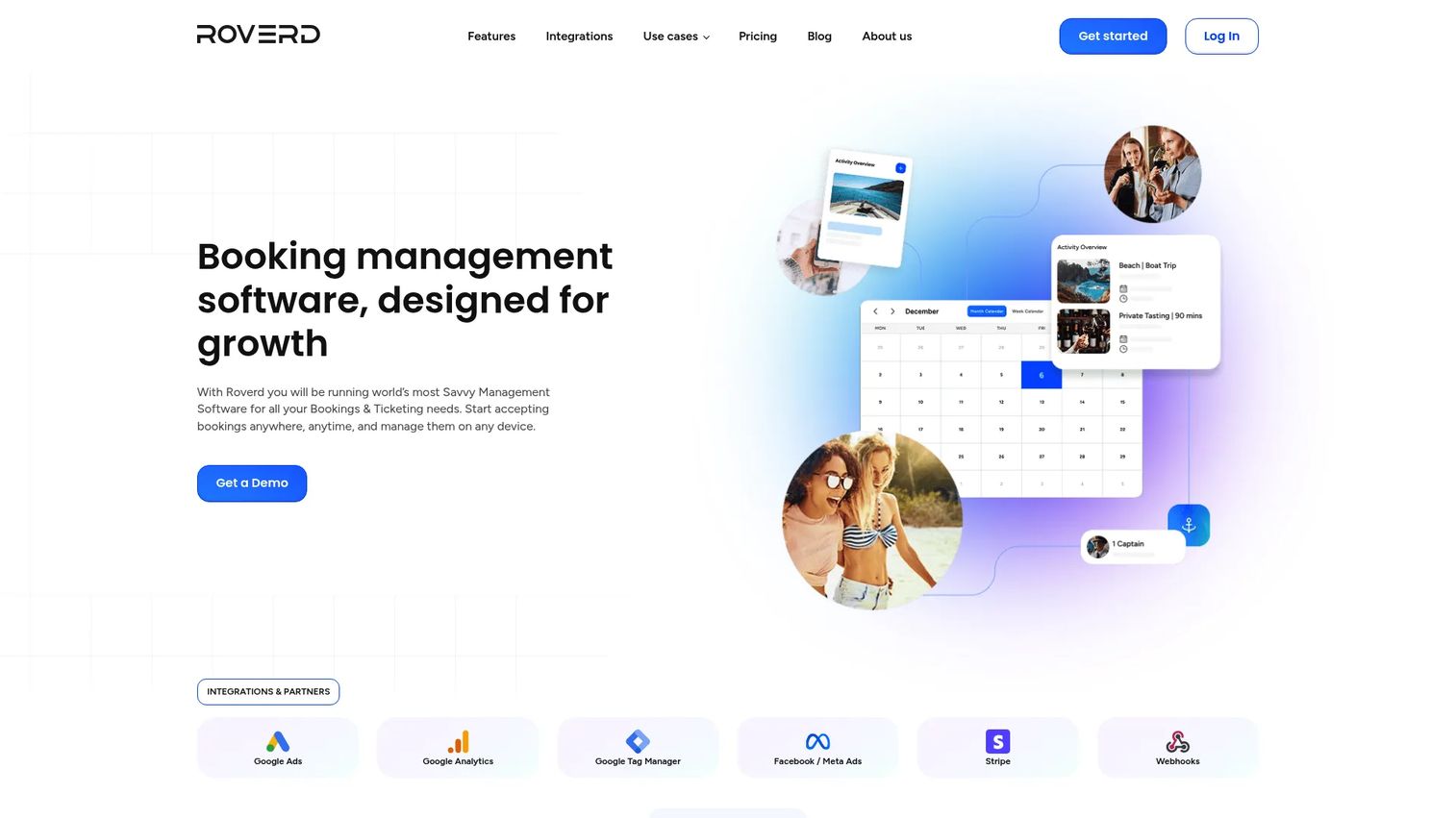
Roverd is booking management software for tours, activities, classes, events, and appointments, and it is the strongest fit here for tour-heavy ATV rental businesses. It leans into booking flow clarity: 24/7 online booking, automated notifications and reminders, QR code check-in, Stripe and PayPal payments, webhooks and API access, staff and sales channel management, and multi-language and currency support.
The QR code check-in and automated reminders are what stand out for a tour operation. Reminders cut no-shows on scheduled departures, and QR check-in speeds up the moment a group arrives, which matters when you are launching riders on a fixed timetable. The webhooks and API also mean you can wire Roverd into the rest of your stack rather than treating it as an island.
Best for: Businesses that need pay-per-booking reservation software without monthly fees, especially those running scheduled tours alongside rentals.
Key strengths
- 24/7 online booking with reminders: Let customers book anytime, with automated notifications and reminders to reduce no-shows.
- QR code check-in: Speed up arrivals on scheduled departures with fast, contactless check-in.
- Payments and integrations: Stripe and PayPal payments plus webhooks, API, and multi-currency support for a connected stack.
Why choose Roverd: The pay-per-booking model is the draw. With no monthly subscription and a percentage taken only on successful online bookings, your software cost scales with revenue rather than sitting as fixed overhead. That is attractive for seasonal operators whose volume swings hard between summer and winter. Roverd's depth on rental-specific pricing and deployment models is narrower than a full rental platform, but for a booking-first tour operation that trade is often worth it.
Roverd pricing: Roverd's Standard plan has no subscription fees and charges 5% per successful online booking, verified on its pricing page. An enterprise and custom plan is available with tailored pricing for larger operations. There is no free tier in the traditional sense, though the pay-per-booking structure means you only pay when you earn. No verified G2 rating was available at the time of writing.
4. VEVS
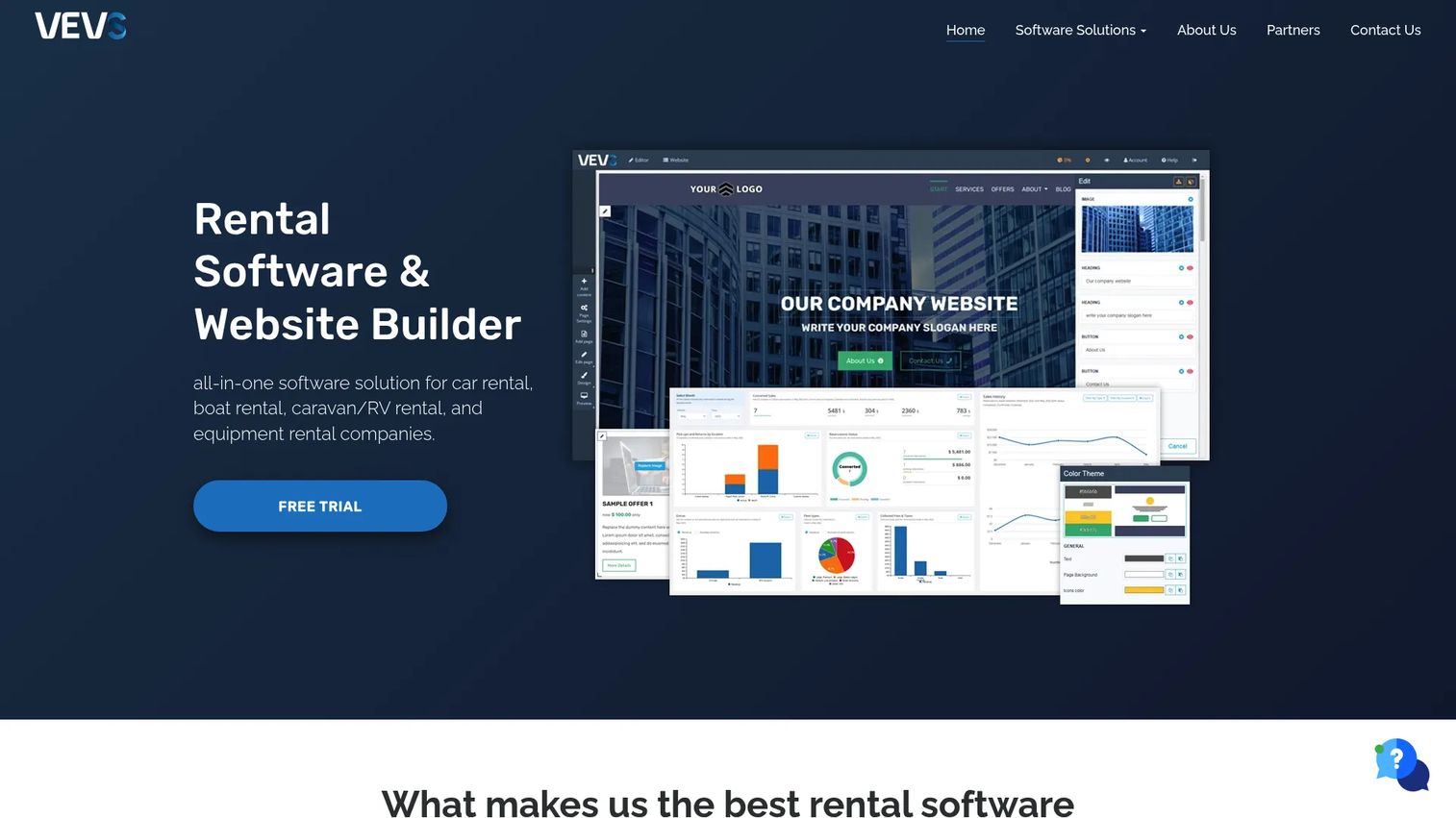
VEVS is a website builder paired with industry-specific software for businesses like rentals and hospitality. It is the pick when you want rental software and a customer-facing website in one package rather than running them as separate projects. VEVS bundles SEO tools, mobile-friendly responsive design, and industry-specific software with booking, payments, and management tools.
The website layer is the differentiator. If you do not already have a strong web presence, VEVS lets you launch one with booking baked in, so your marketing site and your reservation system are the same thing. For an operator who wants a guided setup and a single vendor for both the storefront and the back office, that consolidation is the appeal.
Best for: Businesses that want an all-in-one website and vertical rental software package rather than assembling the two separately.
Key strengths
- Built-in SEO tools: Improve discoverability so renters find your booking page without a separate marketing stack.
- Mobile-friendly responsive design: Deliver a booking experience that works on the phones most renters actually use.
- Booking, payments, and management in one: Run reservations, take online payments, and manage operations from the same platform as your website.
Why choose VEVS: If your bottleneck is not just operations but also having a professional, bookable web presence, VEVS solves both at once. It suits operators who prefer a guided setup and want a single subscription covering the website and the rental workflow, rather than paying for a site builder and a rental tool separately.
VEVS pricing: VEVS publicly lists its business website builder at €299 per year, verified on its pricing page, and advertises a 7-day free trial. Pricing is subscription-based and billed yearly, which fits businesses comfortable with a recurring cost in exchange for the bundled website. No free tier beyond the trial is listed.
Considerations before you buy
The demo button is not the decision. Before you commit, run each shortlisted tool against the criteria that actually break operations.
Booking and calendar accuracy
Test whether a booking instantly removes a unit from availability across every channel. If your website, phone bookings, and walk-ins do not share one live reservation calendar, double bookings will slip through. Ask how buffer time between rentals is handled.
Waiver and check-in flow
Confirm whether digital waivers can be sent before arrival and stored searchably against each booking. A waiver that only gets signed at the counter defeats the purpose. For powersports, a clean, retrievable signature record is a liability safeguard, not a nice-to-have.
Payments, deposits, and pricing flexibility
Check that the tool handles deposits, full payments, and refunds through a secure rental checkout, and that it supports the rate structures you actually use. Hourly ATV rentals, daily rates, weekend premiums, and dynamic pricing for peak demand should all be configurable without workarounds.
Fleet visibility and maintenance
Look for fleet tracking that reflects real-time status: rented, returned, reserved, or down for maintenance. Maintenance scheduling that flags units out of service prevents the worst kind of double booking, promising a machine that is sitting in the shop.
Cost model and stack fit
Weigh one-time license, subscription, and pay-per-booking models against your seasonality and volume. A percentage fee scales with revenue; a fixed license caps long-term cost. Confirm integrations and API access so the tool fits your existing stack rather than adding a silo.
Conclusion
The right ATV rental software depends on which problem is costing you the most right now. If you want to own your platform and control cost over time, Yo!Rent's one-time license and operational depth make it the all-around pick. If waivers and booking automation are your bottleneck, Indexic keeps both in one system. For tour-heavy operations that want pay-per-booking pricing and fast QR check-in, Roverd fits the flow. And if you need a bookable website as much as a back office, VEVS bundles both.
The practical next step: shortlist two, not four. Pick the two that map closest to your model, then run each against the four things that actually decide your day, booking accuracy, waiver flow, payments and deposits, and fleet control. Whichever handles all four without workarounds is the one that earns its place in your stack.
FAQs
At minimum, online booking with a live reservation calendar, inventory and availability control, secure payment processing with deposits, digital waivers, dynamic pricing, automated reminders, and fleet tracking. For powersports specifically, prioritize waiver handling and document verification, since liability exposure is higher than with general rentals.
For ATV rentals, yes. Every rider should sign a liability waiver before riding, and collecting those digitally before arrival speeds check-in and gives you a searchable, timestamped record. Tools like Indexic integrate waivers directly into the booking flow so signatures are tied to each reservation.
Good platforms support hourly, daily, weekend, and seasonal rates, often with dynamic pricing for peak demand. When evaluating, confirm you can configure hourly ATV rentals alongside longer rentals without workarounds, since many rental businesses mix rate types across the same fleet.
General rental management software handles booking, inventory, and payments across many rental categories. ATV rental software is a vertical slice tuned for powersports specifics: liability waivers, document verification, deposit handling, and maintenance status on machines that cycle in and out of service throughout the day.
Very. ATVs go down for maintenance, returns need inspection, and status changes hour to hour. Fleet tracking that reflects real-time status, rented, returned, reserved, or down, prevents you from promising a machine that is unavailable. Pair it with maintenance scheduling for the cleanest picture.
Yes, and it should. Look for a secure rental checkout that takes deposits and full payments, handles refunds, and integrates with processors like Stripe or PayPal. Deposits are especially important for powersports given the value and risk of the equipment, so verify deposit handling is native rather than a manual step.
Prioritize scheduled-departure booking, automated reminders to cut no-shows, fast check-in like QR codes, group booking support, and cancellation controls. Roverd is built around tour and activity flow with 24/7 online booking and QR check-in, which fits operators running rides on a fixed timetable alongside open rentals.