You spent three weeks training a new hire. They quit before month two. Or maybe you watched a promising customer sign up, complete half the setup wizard, and never log in again.
The pattern is the same in both cases: somewhere between "welcome aboard" and "fully productive," something broke. This guide covers the four stages of an effective onboarding journey and nine steps to build one that reduces churn. It also explains how to measure whether your approach is working.
Onboarding journey guide: key takeaways
- An onboarding journey is the structured sequence of experiences moving someone from first contact to full productivity. It covers preboarding through ongoing support.
- Four stages apply to both employee and customer onboarding: preboarding, orientation, foundation building, and ongoing support. The specific touchpoints differ, but the structure remains consistent.
- Poor onboarding directly causes churn. Unclear expectations, slow time to value, and missing early wins all increase disengagement risk.
- Self-serve, interactive onboarding experiences reduce repetitive explanations and let people learn at their own pace.
- Measuring engagement data at each stage reveals exactly where people get stuck, so you can make targeted improvements.
What is an onboarding journey
An onboarding journey is the complete sequence of experiences guiding someone from first contact to full productivity. Unlike a checklist of tasks, the journey emphasizes what the person experiences at each stage and the outcomes they achieve along the way.
The term applies to two distinct contexts:
- HR onboarding journey: The path a new employee travels from offer acceptance to becoming a fully contributing team member. Typically spans 30 to 90 days.
- Customer onboarding journey: The path a new user follows from signup through achieving meaningful value with your product. Timeline varies based on product complexity.
Why does the word "journey" matter here? It shifts focus from what the organization delivers to what the person experiences.
A process is something you do to someone. A journey is something they travel through.
When you think in terms of journey, you start asking different questions. Instead of "Did they complete the training module?" you ask "Do they feel confident handling their first customer call?" Instead of "Did they watch the product tour?" you ask "Have they accomplished something meaningful?"
HR onboarding vs customer onboarding
Both types of onboarding share the same fundamental goal: reduce time to value and prevent churn. The mechanics differ, but the underlying psychology is identical. People who feel lost, overwhelmed, or unsupported leave.
| Dimension | HR onboarding | Customer onboarding |
|---|---|---|
| Goal | Employee productivity and retention | Product adoption and account retention |
| Primary owner | HR, hiring manager, buddy | Customer success, product, marketing teams |
| Timeline | Typically 30 to 90 days | Varies by product complexity |
| Key content | Policies, culture, role training | Product walkthroughs, feature guides |
| Churn risk | Employee turnover | Account cancellation or disengagement |
For HR teams, onboarding involves compliance requirements, cultural integration, and role-specific training. You're helping someone understand not just what to do, but how things work around here.
For customer success teams, onboarding focuses on product education, feature adoption, and account configuration. You're helping someone accomplish the goal that led them to purchase in the first place.
The overlap is significant. Both require clear expectations, early wins, accessible resources, and human touchpoints at critical moments. Partner onboarding follows similar principles, requiring the same careful balance of automation and human support.
Why effective onboarding reduces churn
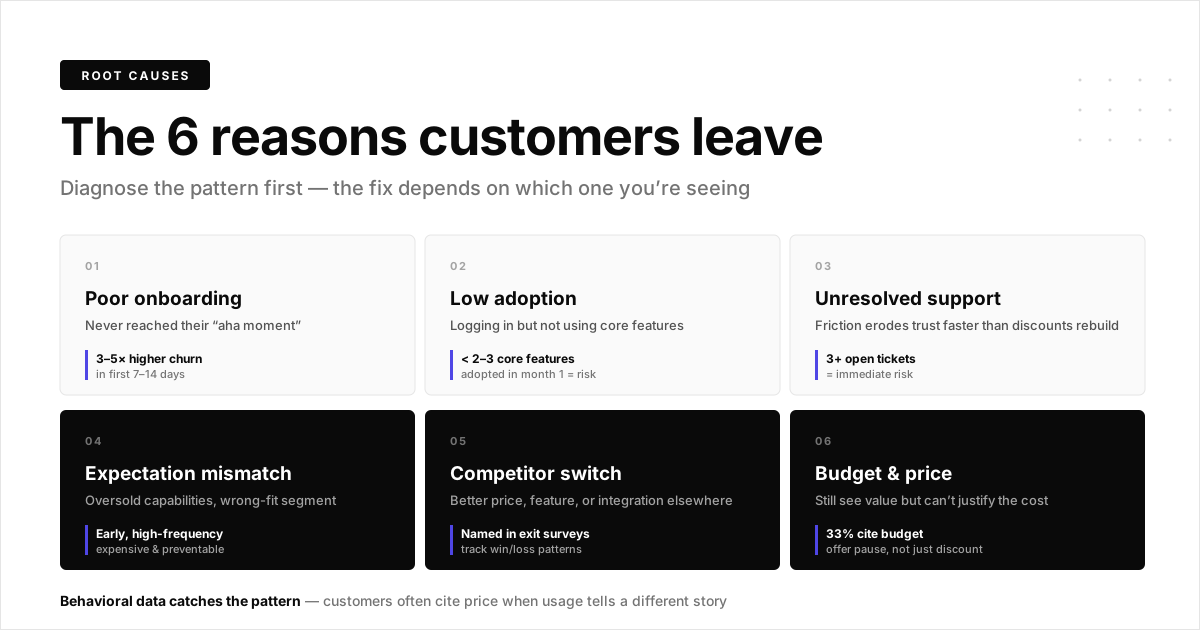
The connection between onboarding quality and retention isn't abstract. 20.5% of companies lose half their new hires in the first 90 days.
Every friction point creates an opportunity for someone to disengage. 30% higher first 90 day churn follows poor onboarding.
Consider what happens when onboarding goes wrong:
- Unclear expectations: People leave when they don't understand what success looks like. Without clear goals, neither employees nor customers can gauge their own progress.
- Slow time to value: The longer it takes to feel productive, the higher the churn risk.
- No early wins: First successes build confidence and commitment. Without them, doubt creeps in.
The takeaway: onboarding isn't a nice-to-have orientation program. It's risk mitigation. Every improvement you make to the journey directly reduces the probability of losing that person.
The 4 stages of an onboarding journey
Most effective onboarding journeys follow a four-stage structure. This framework applies to both employee and customer contexts, though the specific activities at each stage differ.
Preboarding
Preboarding covers everything that happens after someone commits but before they officially start. For employees, this is the period between accepting the offer and day one. For customers, it's the time between purchase and first login.
This stage is often neglected, which is a mistake. The gap between commitment and start creates anxiety. People wonder if they made the right choice.
Effective preboarding addresses that anxiety directly. A welcome message confirms they made a good decision.
Access credentials get handled before they arrive. Clear information explains what the first day or session will look like.
Some teams use interactive demos during preboarding to let new hires or customers preview the product before their first live interaction. This reduces first-day overwhelm.
Orientation
Orientation is the first direct experience with your organization or product. For employees, this typically includes introductions, compliance training, and culture immersion. For customers, it includes initial product walkthrough and account setup.
The goal of orientation isn't comprehensive education. It's delivering a quick win.
People arrive with energy and attention. Orientation either capitalizes on that momentum or squanders it.
A new employee who spends their first day filling out forms loses enthusiasm. A new customer who spends their first session configuring settings without accomplishing anything meaningful loses motivation.
Effective orientation ends with the person having done something real.
Foundation building
Foundation building is the deeper learning phase where new hires or users develop competence. This stage typically spans weeks, not days.
For employees, foundation building includes role-specific training, skill development, and increasing responsibility. For customers, it includes feature exploration, workflow optimization, and expanding use cases.
This stage benefits from structured resources people can access on their own schedule. Onboarding guides and self-serve training let people learn at their own pace without requiring live support for every question.
The risk during foundation building is abandonment. People get busy. Without structured touchpoints, they drift away before reaching full competence.
Ongoing support and development
Onboarding doesn't end after the first week or even the first month. The final stage extends indefinitely, transitioning from intensive onboarding to sustained support.
For employees, ongoing support includes regular check-ins, advanced training, and mentor relationships. For customers, it includes success check-ins, feature updates, and expansion opportunities.
The organizations that retain people longest treat onboarding as a continuous investment, not a one-time event and 82% higher retention and 70% more productivity follow structured onboarding.
9 steps to build an onboarding journey that works
The four stages provide the framework. The following nine steps show you how to build each stage effectively.
1. Define success metrics before you start
You can't improve what you don't measure and more than half do not measure onboarding at all. Before designing any onboarding content, define what success looks like and how you'll track it.
For employee onboarding, relevant metrics include time to full productivity, 30/60/90-day retention rates, and new hire confidence ratings.
For customer onboarding, relevant metrics include time to first value, feature adoption rates, onboarding completion rates, and support ticket volume during the first 30 days.
Avoid vague goals like "good experience." Define specific, measurable outcomes.
2. Map the journey by role or persona
One-size-fits-all onboarding fails because different people have different needs. A sales rep and an engineer require different training. A power user and a casual user need different product education.
Start by identifying your key segments. For employees: which roles have distinct onboarding requirements? For customers: which personas or use cases require different paths?
Then map the ideal journey for each segment. What do they need to know? What do they need to accomplish?
Journey mapping reveals gaps and redundancies in your current approach.
3. Create preboarding touchpoints
Don't let the gap between commitment and start become a void. Fill it with intentional touchpoints that maintain momentum.
Effective preboarding touchpoints include:
- Welcome email sequence: 2 to 3 messages that confirm the decision, introduce key people, and preview what's coming
- Access and logistics: Everything they need to hit the ground running on day one
- Optional preview content: Resources for people who want to get ahead
For product onboarding, consider offering a self-serve interactive demo they can explore before their first live session.
4. Design an orientation that delivers value fast
Orientation sets the tone for everything that follows. Design it around delivering a meaningful first win, not just transferring information.
Ask yourself: What's the smallest meaningful accomplishment this person can achieve on day one?
For employees, that might be completing their first real task or contributing to a team discussion. For customers, that might be creating their first project or completing their primary workflow once.
Structure orientation to reach that win as quickly as possible. Move compliance, configuration, and comprehensive training to later stages.
5. Build interactive guides for repetitive explanations
Every organization has questions that get asked repeatedly. "How do I submit an expense report?" "How do I create a new project?" "Where do I find the reporting dashboard?"
Answering these questions live, every time, doesn't scale. It consumes support bandwidth and creates bottlenecks. Customer support teams increasingly use interactive guides to resolve these issues before they become tickets.
Self-serve, interactive guides address this problem. Instead of scheduling a call or waiting for a response, people can walk through the process themselves, at their own pace.
Teams use tools like Guideflow to capture any workflow and turn it into a clickable, step-by-step guide. Interactive guides replace repetitive walkthroughs for both employee training and customer education.
6. Assign mentors or buddies
Technology handles information transfer well. It handles relationship building poorly. The human element of onboarding requires actual humans.
For employee onboarding, buddy programs pair new hires with experienced colleagues who can answer informal questions and provide context. The buddy isn't a trainer or a manager. They're a peer who remembers what it felt like to be new.
For customer onboarding, the equivalent might be a dedicated customer success manager or access to office hours where they can ask questions in real time.
The key is accessibility. People need someone they can reach without feeling like they're creating a burden.
7. Schedule milestone check-ins
Structured touchpoints at predictable intervals surface problems before they cause churn. Without them, issues fester silently.
Common milestone intervals: Day 1, Week 1, Day 30, Day 60, Day 90.
At each check-in, ask: Are they making progress? Do they understand their goals?
What's still confusing? What support do they still need?
A 15-minute conversation or a brief survey can reveal critical information. The goal is creating regular opportunities for problems to surface while there's still time to address them.
8. Collect feedback at each stage
Feedback collection serves two purposes: it surfaces individual issues that need immediate attention, and it reveals patterns that indicate where your onboarding journey needs improvement.
Methods for collecting feedback include surveys after key milestones, one-on-one conversations, in-app prompts triggered by specific actions, and observation of how people actually use resources.
The critical step most organizations skip: acting on feedback. Collecting input without responding to it signals that you don't actually care what people think.
9. Iterate based on engagement data
Feedback tells you what people say. Engagement data tells you what they actually do. Both matter, but behavior is often more honest.
Track how people interact with your onboarding resources. Which sections do they complete? Which do they skip?
Where do they spend the most time? At what point do they drop off?
Analytics from interactive demos reveal exactly which steps cause confusion or abandonment. If 80% of users drop off at step 4 of your product tour, that step needs attention.
Use engagement data to make targeted improvements. Small changes to high-friction points often produce larger results than comprehensive overhauls.
Common onboarding mistakes that increase churn
Knowing what to do is half the equation. Knowing what to avoid is equally important.
Information overload on day one
The instinct to "cover everything" backfires. Dumping policies, procedures, product features, and cultural norms into a single session guarantees that most of it won't stick.
What works instead: Spread information across the journey stages. Cover only what's essential for the immediate next step.
No clear path to first win
People need to feel progress. If they spend their first day or first week consuming content without accomplishing anything tangible, motivation drops.
What works instead: Design orientation around a specific, achievable outcome. Make sure every new person can point to something they did, not just something they learned.
One-size-fits-all content
Generic onboarding ignores role, skill level, and goals. A technical user forced through basic tutorials gets frustrated. A non-technical user thrown into advanced features gets overwhelmed.
What works instead: Segment your audience and create paths tailored to each segment's needs.
No visibility into where people get stuck
Without data, you can't diagnose problems. You might assume onboarding is working because no one complains, while people silently disengage.
What works instead: Instrument your onboarding journey to track engagement at each stage. Look for drop-off points and low completion rates.
Ending onboarding too early
The assumption that onboarding ends after week one ignores how learning actually works. Competence develops over months, not days.
What works instead: Extend structured support through at least 90 days. Transition gradually from intensive onboarding to ongoing development.
How to personalize the onboarding journey at scale
Personalization improves outcomes. But manual customization for every individual doesn't scale. The solution is building personalization into your systems so it happens automatically.
Dynamic variables for role-based content
Instead of creating separate onboarding programs for each role, create one program with variables that adapt based on who's going through it.
Variables might include name and company, role or department, goals or use case, and industry. When someone starts onboarding, the system pulls their information and adjusts the content accordingly.
Tools like Guideflow let you personalize demos for every prospect using dynamic variables that pull from your CRM.
Branching paths for different use cases
Not everyone needs the same journey. Branching logic lets people self-select their path based on their goals.
At key decision points, offer choices: "I'm here to accomplish goal A" vs "goal B." Each choice routes them to relevant content. One onboarding program serves multiple audiences without forcing anyone through irrelevant material.
Self-serve experiences that adapt to behavior
The most sophisticated personalization responds to what people actually do, not just what they say.
If someone skips a section, don't force them back through it. If someone revisits a section multiple times, offer additional resources. Behavior-driven personalization requires tracking engagement data and building logic that responds to patterns.
Onboarding tools and technology
The right tools make effective onboarding possible at scale. Here's an overview of the main categories.
Interactive demo platforms
Interactive demo platforms let you create clickable, self-serve product experiences for onboarding. Users walk through the product at their own pace without needing a live guide or a login to a production environment.
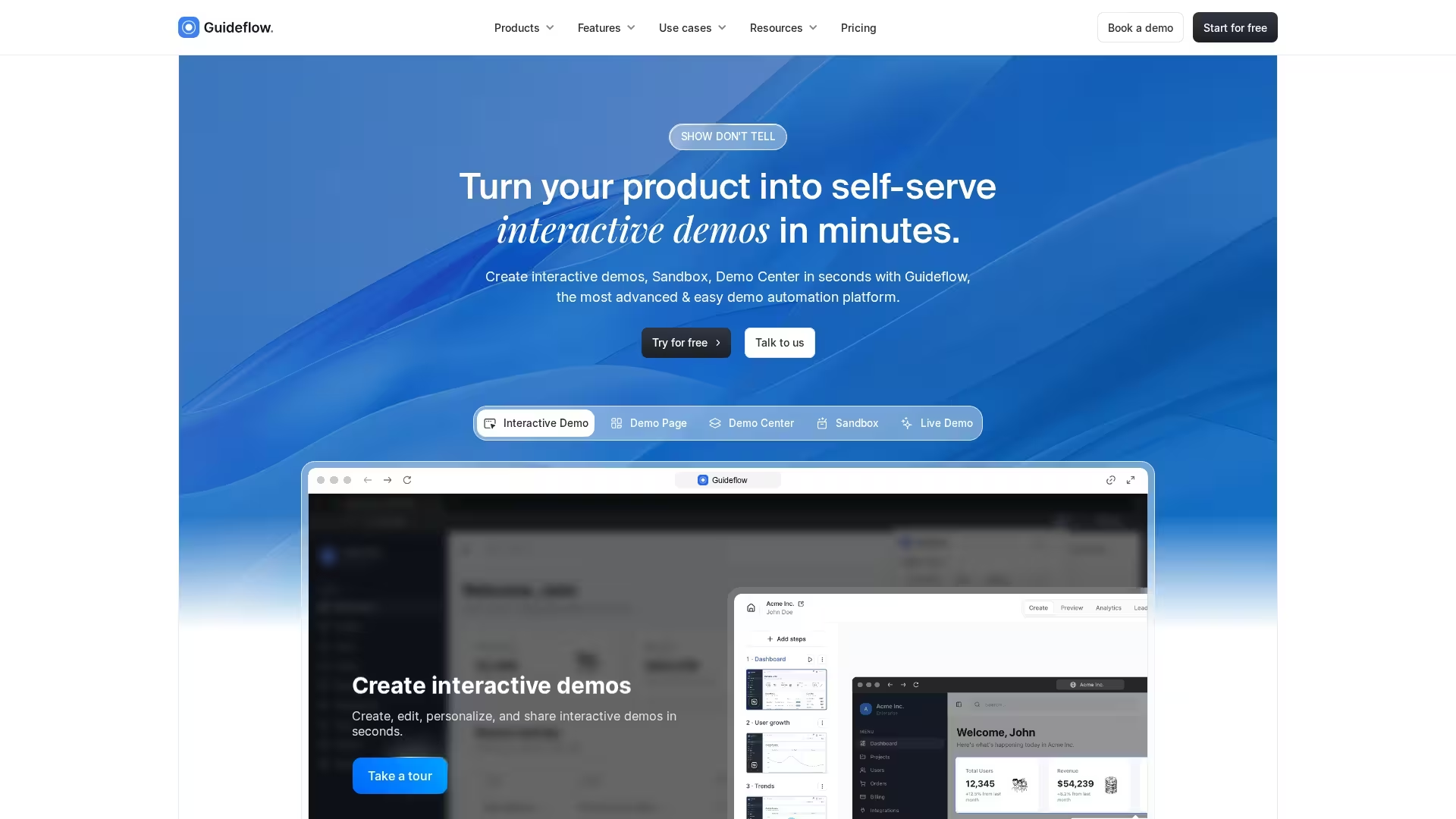
Guideflow is an example of an interactive demo platform that teams use to build onboarding guides. You capture your product flow directly from your browser, customize it with tooltips and branching paths, and share it via link or embed.
Learning management systems
Learning management systems (LMS) provide structured, course-based training. They're common in HR onboarding for compliance training, skill development, and certification programs.
LMS platforms work well when you need formal curriculum with prerequisites, completion tracking, assessment and testing, or regulatory compliance documentation.
HR onboarding software
Dedicated HR onboarding tools manage the administrative side of employee onboarding: paperwork, compliance forms, equipment provisioning, and self-service portals.
Customer success platforms
Customer success platforms help teams track user health, automate touchpoints, and manage onboarding milestones for customer accounts. They provide health scores based on product usage, automated email sequences, and task management for CSM workflows.
How to measure onboarding success
Measurement closes the loop between effort and outcome. Without it, you're guessing whether your onboarding journey actually works.
Time to first value
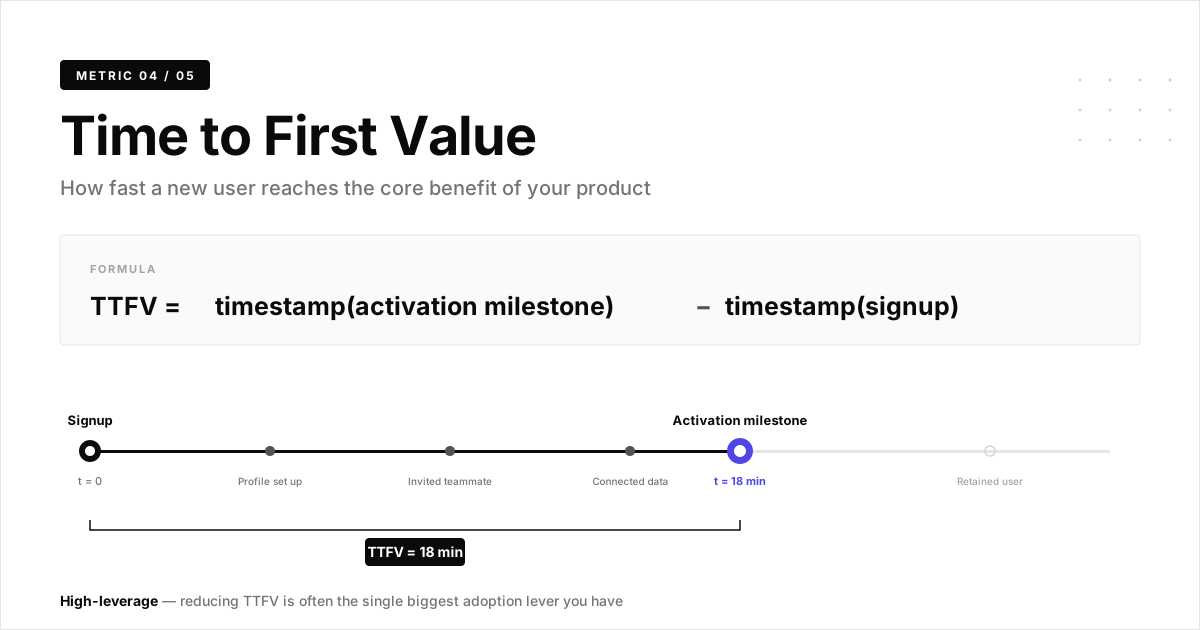
Time to first value measures how long it takes for someone to achieve their first meaningful outcome. For employees, this might be completing their first independent project. For customers, it might be accomplishing the primary goal that led them to purchase.
Shorter is better, but "shorter" needs context. A complex enterprise product might have a reasonable time to first value of two weeks. A simple consumer app might target two minutes.
Completion rates by stage
Track how many people finish each stage of onboarding. Drop-offs between stages signal friction.
If 90% of people complete preboarding but only 60% complete orientation, something in orientation is causing abandonment. Investigate what happens at that transition point.
Engagement depth and drop-off points
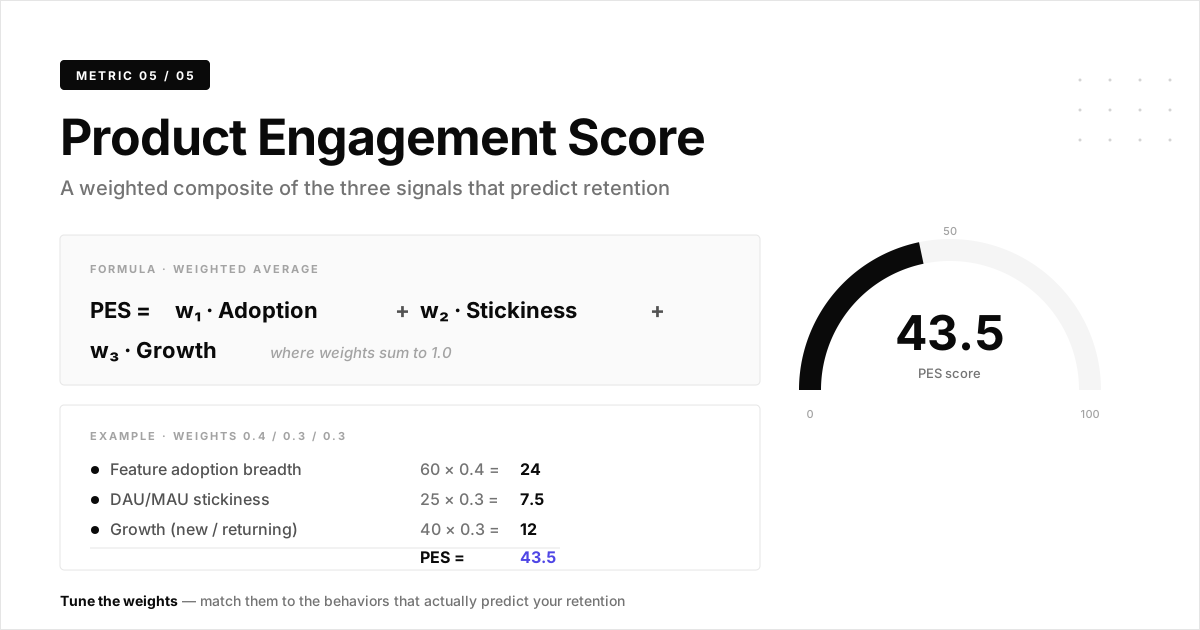
Beyond completion, measure how people engage with each section. Time spent, interactions completed, and resources accessed all provide signal.
Sections with unusually high time spent might indicate confusion or high interest. Consistent drop-off at specific points indicates friction that needs attention.
Retention at 30, 60, and 90 days
Ultimately, onboarding success shows up in retention. Track whether people who complete onboarding stay longer than those who don't.
| Metric | What it measures | Why it matters |
|---|---|---|
| Time to first value | Speed to first meaningful outcome | Predicts engagement and retention |
| Stage completion rate | Progress through onboarding phases | Identifies friction points |
| Engagement depth | Interaction quality within each stage | Reveals content effectiveness |
| 30/60/90-day retention | Ongoing commitment after onboarding | Validates onboarding ROI |
Compare retention rates across cohorts. If you make onboarding improvements in Q2, do Q2 cohorts retain better than Q1 cohorts?
Build onboarding journeys that drive adoption
Effective onboarding isn't a checklist to complete. It's an ongoing investment in the people you've worked hard to attract.
The organizations that retain employees and customers longest share a common approach: they treat onboarding as a journey, not an event. They define success metrics before they start.
They personalize experiences for different audiences. They measure engagement and iterate based on what they learn.
Start with one improvement. Define your success metrics if you haven't. Add a preboarding touchpoint if that stage is empty.
Build an interactive guide for the question you answer most often. Measure where people drop off and fix the highest-friction point.
Get started now to create interactive onboarding experiences that help your team scale.
FAQs about the onboarding journey
Orientation is a subset of onboarding focused on the initial introduction phase, typically covering introductions, policies, and first-day logistics. Onboarding is the full journey from acceptance through productivity, spanning weeks or months.
Most effective onboarding journeys extend at least 90 days, with some organizations continuing structured support for six months or longer. The timeline depends on role complexity and how long it takes to reach full productivity.
The 5 Cs are Compliance (legal and policy requirements), Clarification (role expectations), Culture (organizational values), Connection (relationships), and Check-back (ongoing feedback and support). This framework ensures onboarding addresses both practical and relational needs.
Yes. Self-serve onboarding using interactive demos, guides, and asynchronous content can be highly effective, especially when combined with milestone check-ins. Many teams find that self-paced learning increases completion rates.
Measure onboarding ROI by tracking retention rates, time to productivity, and support ticket volume before and after onboarding improvements. Reduced churn and faster ramp times are the clearest indicators of positive return.
The most common failure is treating onboarding as a one-time event rather than a sustained journey. When support ends after orientation, new hires and customers disengage before reaching full value.