Your organization spent real money hiring talented people. But according to the World Economic Forum (2025), 39% of workers' existing skills are expected to change or become outdated by 2030. Without a structured way to map roles, close gaps, and show employees where they can go next, that investment walks out the door.
The frustration is predictable: Employees want a next step but cannot see one. Managers want to develop their teams but lack consistent role definitions or readiness signals. HR wants to run skills-based workforce planning but has no way to connect career paths to actual business needs. Career development software exists to close all three gaps at once.
The problem this category solves is not motivation. It is structure. Only 18% of organizations have a formal internal mobility process, according to HR.com (2025-26). Career pathing tools give you the architecture to change that number, with governed role definitions, skills-gap analysis, development plans, and analytics that track who is ready to move and where.
This guide compares 8 career pathing tools selected for their approach to skills governance, manager adoption, and integration fit.
What's inside
This guide covers career mapping software for HR, talent, and people-ops teams evaluating tools for internal mobility and development planning. Tools were shortlisted based on four criteria:
- Skills governance and role-mapping depth
- HRIS and LMS integration capability
- Manager and employee adoption design
- Analytics and reporting for readiness and mobility
TL;DR
- Best for governance-heavy enterprises: TalentGuard, with a governed skills ontology, competency management, and audit trails built for defensible role mapping
- Best for AI-assisted skills mapping and internal mobility at scale: Phenom Applied AI, with dynamic skills architecture and talent marketplace connections
- Best for tying career growth to performance workflows: Lattice, strongest when career pathing sits inside a broader people platform
- Best for employee-facing growth planning with manager visibility: Quantum Workplace Growth, with AI-powered career vision assessments and team insights
- Best for HCM-native career exploration: Dayforce Career Explorer, for teams already running Dayforce talent management
- Best for a focused internal talent marketplace: fuel50, built around skills intelligence and opportunity matching
What is career pathing software
Career pathing software is a category of HR technology that helps organizations map the skills, roles, and development steps employees need to progress inside the company. It gives employees a view of where they can go, gives managers a structure for development conversations, and gives HR the data to make workforce planning decisions.
Core capabilities in this category include:
- Role mapping: Defining job families, levels, and the competencies that distinguish each
- Skills-gap analysis: Comparing an employee's current skills against the requirements of a target role
- Career lattice visualization: Showing lateral and upward moves, not just linear promotions
- Internal mobility workflows: Surfacing open roles, gigs, or projects that match an employee's profile
- Development plans: Structured actions tied to specific skill targets and timelines
- Learning recommendations: Connecting development gaps to courses, mentors, or resources
- Manager visibility: Giving managers a dashboard to track team readiness and growth
- Analytics and reporting: Measuring movement rates, readiness scores, adoption, and retention impact
- HRIS and LMS integration: Connecting career data to systems of record and learning content
Skills-based career pathing goes further by anchoring role progression to verified skill data rather than tenure or title alone. That shift matters most when organizations need to make workforce planning decisions under pressure, as 85% of employers plan to prioritize workforce upskilling, per the World Economic Forum (2025).
The best talent management software in this space also gives HR teams a way to demonstrate the ROI of development investment, connecting career path activity to retention and promotion rates.
When to use career pathing software
Improve retention and reduce attrition risk
Employees who cannot see a path forward leave. Career mobility software creates the visibility that keeps them engaged. When a rep or analyst can see which skills separate their current role from the next level, they have a reason to stay and a plan for getting there.
Standardize role progression across teams
Without a shared role architecture, every manager defines "ready for promotion" differently. Career pathing tools give HR a consistent framework for role levels, competency expectations, and readiness signals, so development conversations are built on the same foundation across the org.
Support succession and development planning
HR teams running succession and development planning need more than a spreadsheet of high-potential names. Career pathing software connects readiness data to role gaps, so when a position opens, you already know who is closest to ready and what they still need.
Career pathing software comparison
The table below summarizes the 8 tools in this guide. Pricing and G2 ratings reflect figures from vendor pricing pages and live G2 listings.
| # | Product | Best for | Key differentiator | Pricing | G2 rating |
|---|---|---|---|---|---|
| 1 | TalentGuard | Enterprise governance and skills intelligence | Governed skills ontology with audit trails | From $1.60/day/user | 4.6/5 |
| 2 | Dayforce Career Explorer | HCM-native career exploration | AI-assisted skills and opportunity matching inside Dayforce | Contact sales | 4.2/5 |
| 3 | Quantum Workplace Growth | AI-powered growth planning with manager support | Career Vision assessment and team insight dashboards | From $15,000/year | 4.7/5 |
| 4 | Phenom Applied AI | Large-scale internal mobility and talent marketplace | Dynamic skills architecture with AI-powered matching | Contact sales | 4.3/5 |
| 5 | fuel50 | Skills intelligence and internal talent marketplace | Modular skills ontology with mobility matching | Contact sales | 4.4/5 |
| 6 | Lattice | Performance-linked career development | Career growth tied to goals, reviews, and manager check-ins | From $4/seat/month | 4.6/5 |
| 7 | Qualtrics | Experience data and engagement signals around development | Survey-driven career sentiment tied to HR analytics | Contact sales | 4.3/5 |
| 8 | Zavvy by Deel | Lightweight development workflows in a Deel stack | Structured development plans with onboarding and feedback | Contact sales | N/A |
Best 8 career pathing software tools for 2026
1. TalentGuard
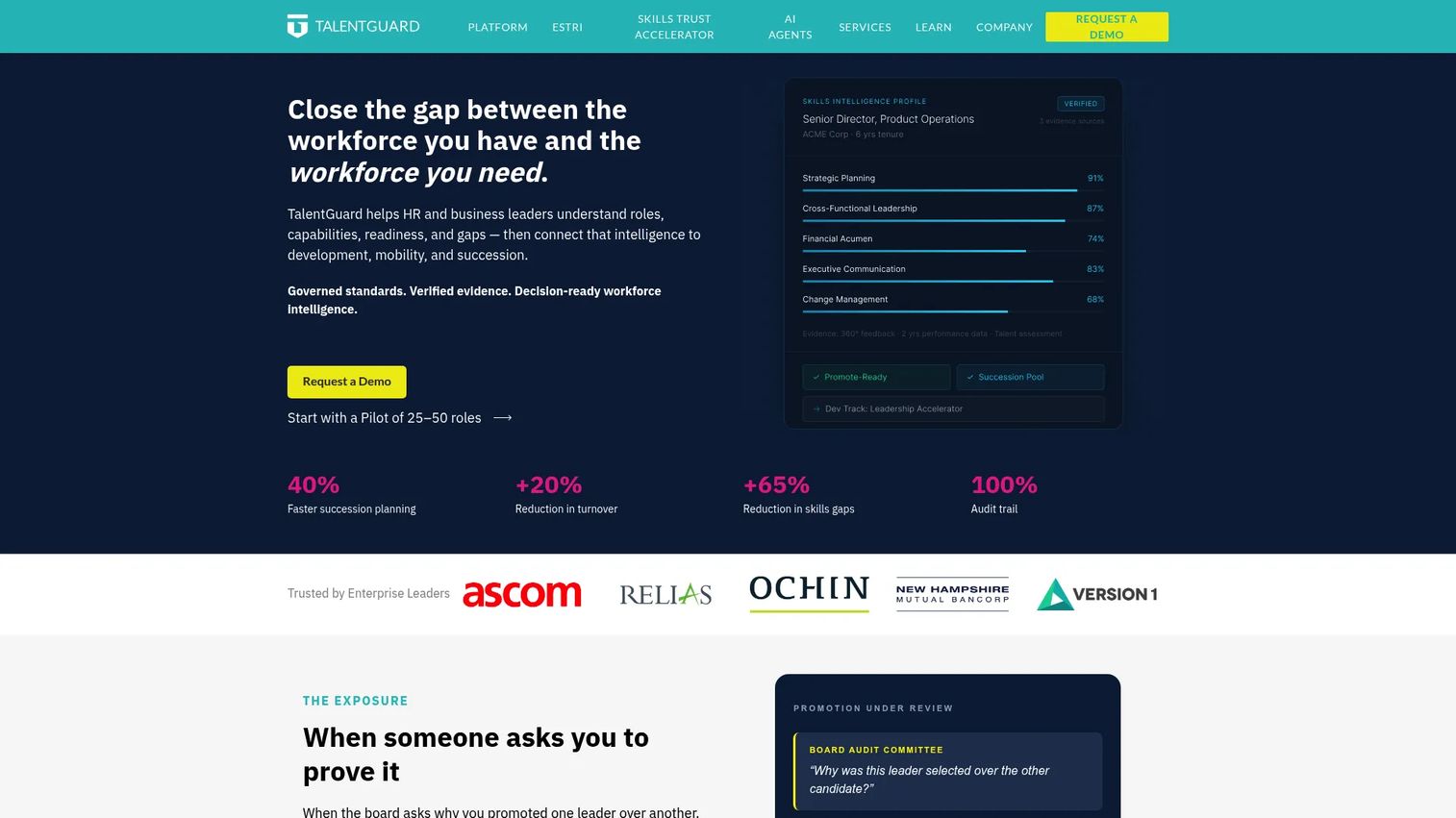
TalentGuard is an enterprise workforce-intelligence platform that connects governed role and skills data to assessment, development, internal mobility, succession planning, and broader workforce decisions. It is built for organizations where role definitions need to be defensible, versioned, and consistent across business units.
Best for: Mid-market and enterprise HR teams that need governed skills intelligence connected to career development, talent assessment, and workforce planning.
Key features
- AI-powered skills taxonomy and competency management
- Talent assessments with manager verification and gap analysis
- Career pathing and internal talent mobility with lattice visualization
- Personalized development planning and learning recommendations
- Succession planning, performance reviews, and certification tracking
Why choose TalentGuard: Choose TalentGuard when your organization needs role architecture that holds up to HR audits and leadership scrutiny. It performs best when skills governance matters as much as the employee experience layer, and when you need a single platform that connects competency data to succession and workforce planning decisions.
TalentGuard pricing: TalentGuard publicly lists three solution-specific packages on its solutions page. The Front-Line Manager Development offering runs $1.60/day/user, billed annually at $579. The HR Manager Enablement package is $12.00/day, billed annually at $3,903. The Competency Consultants Blueprint is priced at $199.99 per role with a minimum of 100 roles. Broader platform pricing requires a conversation with sales.
G2 rating: 4.6/5
2. Dayforce Career Explorer
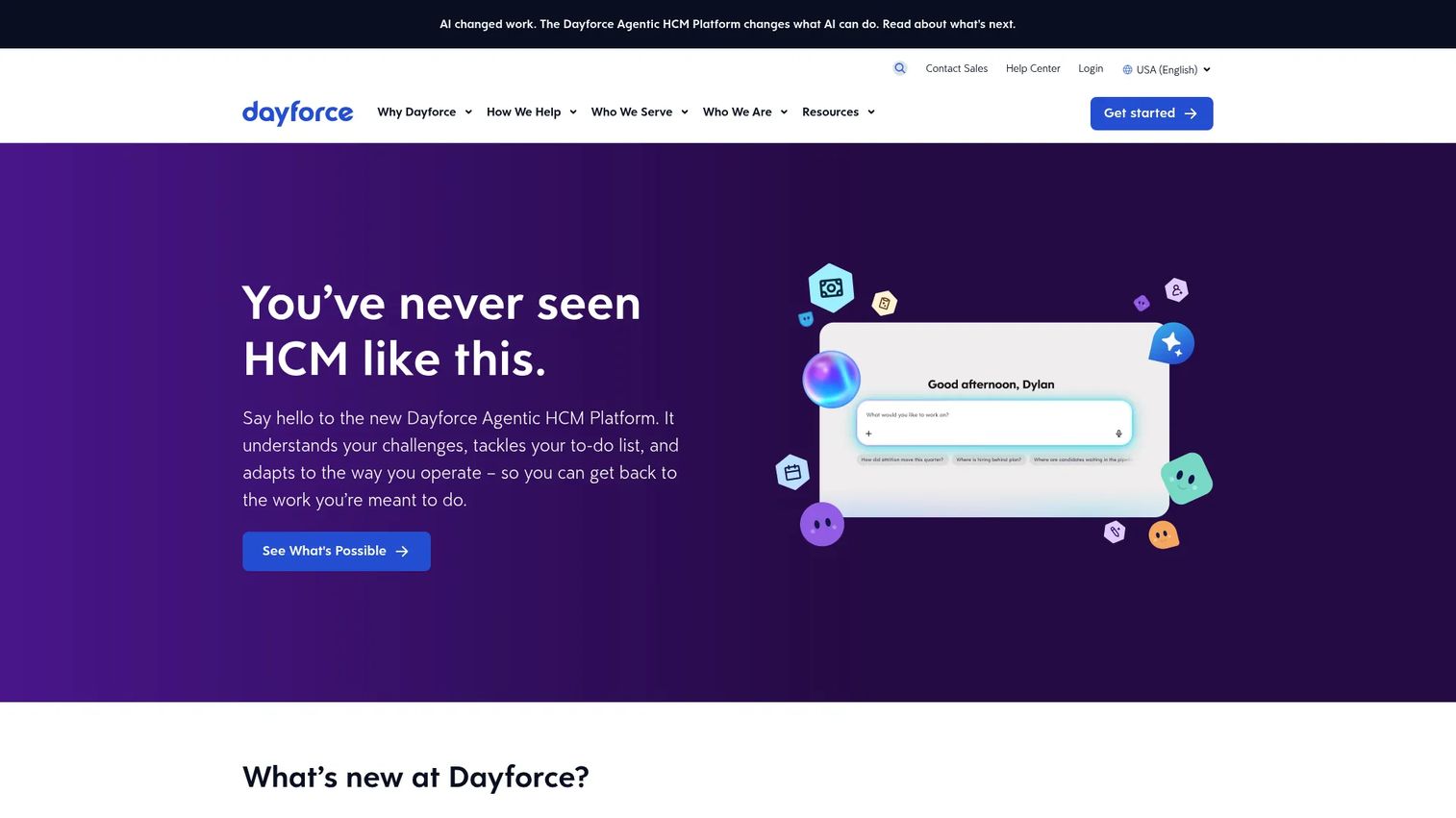
Dayforce Career Explorer is an AI-driven module within Dayforce Talent Management, built to help employees discover internal opportunities, understand their skills gaps, and build development plans without leaving the HCM platform they already use.
Best for: HR teams that want career pathing embedded inside their existing Dayforce HCM suite, connected to broader workforce data.
Key features
- AI-enhanced skills analysis tied to employee profiles
- Tailored development plans aligned to internal career paths
- Job and opportunity matching based on skills and interests
- Mentorship pairing and manager skills endorsements
- Skills management connected to Dayforce talent intelligence
Why choose Dayforce Career Explorer: This module earns its place when career pathing needs to live inside the system HR already runs. If your organization uses Dayforce for HR, payroll, and talent, adding Career Explorer avoids the integration friction of a standalone tool. Teams wanting a best-of-breed pathing platform with deep governance capabilities will want to compare it against more specialized options.
Dayforce Career Explorer pricing: Career Explorer is a paid add-on for Dayforce Talent Management.
G2 rating: 4.2/5
3. Quantum Workplace Growth
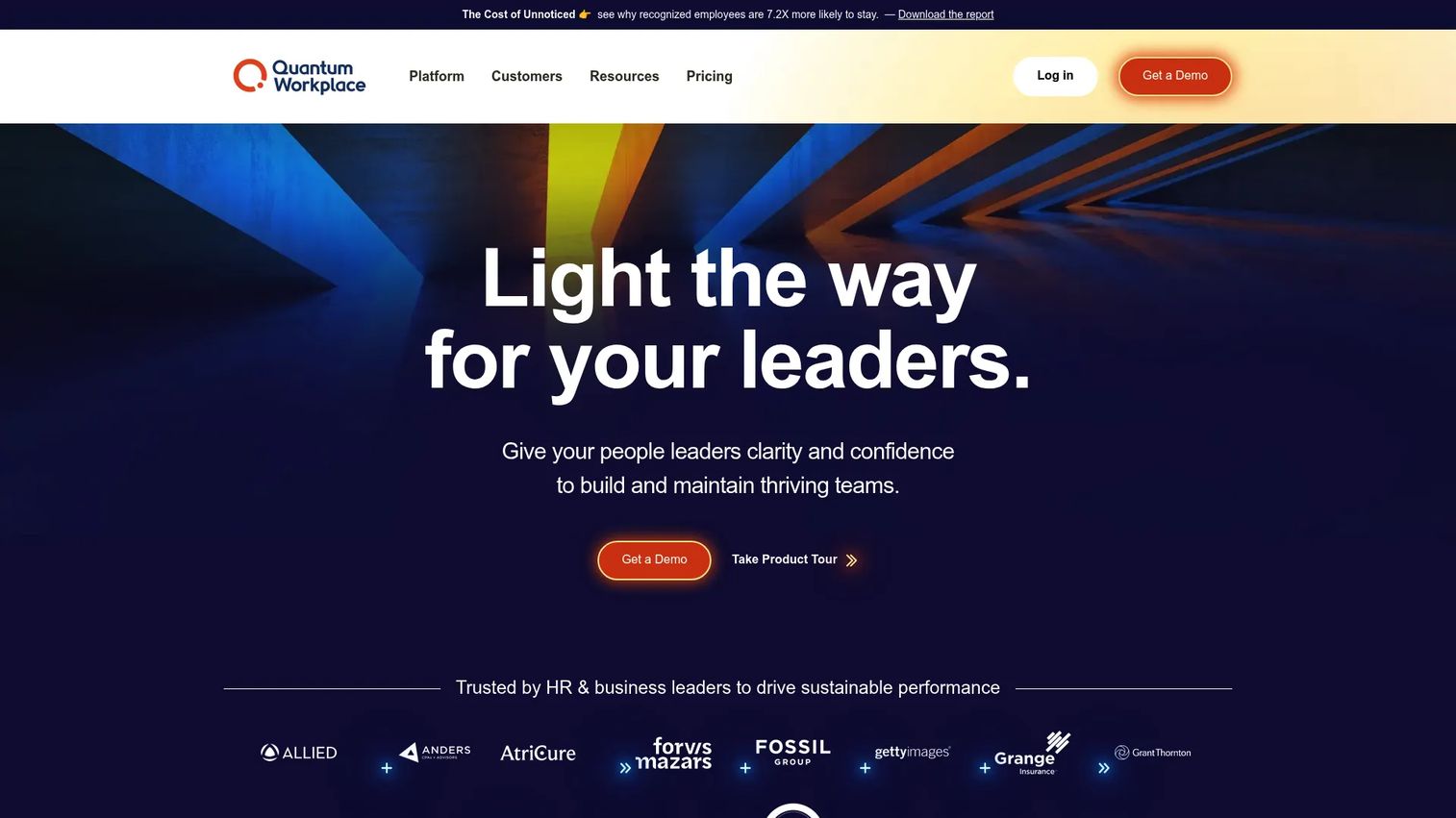
Quantum Workplace Growth is an AI-powered employee development solution that combines career vision assessments, competency-based growth plans, and manager collaboration tools. It is designed for organizations that want scalable, personalized career development integrated with engagement and performance workflows.
Best for: People teams that want AI-powered career growth planning tied to competency frameworks and transparent manager conversations.
Key features
- Career Vision assessment with AI-powered personalized recommendations
- Competency-based growth areas using custom or library frameworks
- Actionable growth plans with AI-generated or custom plan actions
- Job Explorer for mapping competencies to internal roles
- Manager collaboration tools including team plans and team insights
Why choose Quantum Workplace Growth: This tool works well when career pathing is part of a broader people strategy rather than a standalone skills architecture project. The manager collaboration and team insight features make it practical for organizations where consistent development conversations are the primary goal. Teams that need deep governance infrastructure or formal audit trails will want to evaluate more specialized platforms.
Quantum Workplace Growth pricing: Quantum Workplace packages start at a $15,000 minimum annual contract. Growth can be purchased as a standalone module or as part of the broader platform. Final pricing varies by employee count and selected features; contact sales for a quote.
G2 rating: 4.7/5
4. Phenom Applied AI
Phenom Applied AI is a talent platform that connects AI-powered skills matching, career development, and broader talent management workflows. Its internal mobility capabilities sit inside a larger infrastructure that covers recruiting, employee experience, and HR work orchestration.
Best for: Large enterprises that want internal mobility, skills-based career pathing, and adjacent talent workflows connected in one system.
Key features
- Dynamic skills architecture connecting talent data, roles, and experiences
- AI-powered candidate and employee matching with fit scoring
- Personalized career experiences with learning recommendations
- AI agents for sourcing, skills validation, and candidate engagement
- Talent marketplace integrations across gigs, mentoring, and referrals
Why choose Phenom Applied AI: Choose Phenom when your organization wants career pathing connected to a full talent intelligence infrastructure. It is strongest when internal mobility is part of a broader program that includes recruiting, gig work, mentoring, and analytics. The platform is broader than a simple pathing tool, which is a strength for large enterprises and a complication for teams that want a focused deployment.
Phenom Applied AI pricing: The pricing page directs prospects to contact sales or submit an RFP request.
G2 rating: 4.3/5
5. fuel50
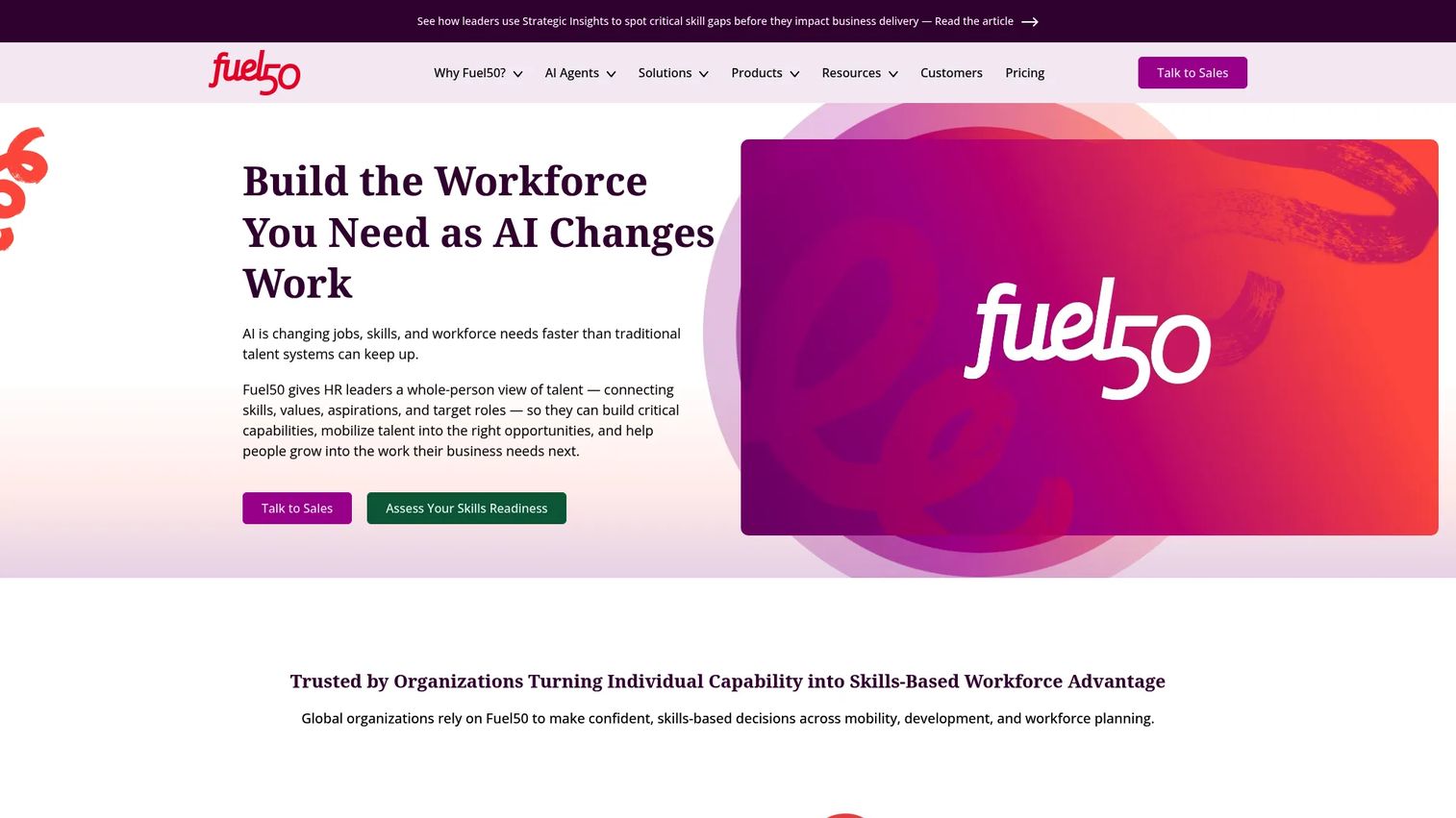
fuel50 is an enterprise talent intelligence platform that combines a skills ontology with an internal talent marketplace. It matches employees to roles, projects, gigs, and career paths based on verified skills data, and gives HR teams strategic workforce insights alongside the employee-facing experience.
Best for: Mid-size and large enterprises that want skills-based internal mobility with a strong employee-facing career discovery experience.
Key features
- Skills ontology with architecture, inventory, and insights modules
- Internal talent marketplace matching employees to roles, gigs, and paths
- Personalized career development with skills-gap discovery and learning
- AI career guidance and mentoring connections
- Strategic workforce insights and succession planning capabilities
Why choose fuel50: fuel50 earns its place when the employee experience layer matters as much as the HR data infrastructure. The marketplace model gives employees real career options to explore, not just a development plan to file. Teams looking for deep formal audit trails or tight governance frameworks may want to compare it carefully against more compliance-oriented platforms.
fuel50 pricing: fuel50 customizes pricing by employee count and selected modules. Modules include Skills Intelligence, Talent Marketplace, Mobility, Development, Succession, and Strategic Insights. Contact fuel50 sales for a quote.
G2 rating: 4.4/5
6. Lattice
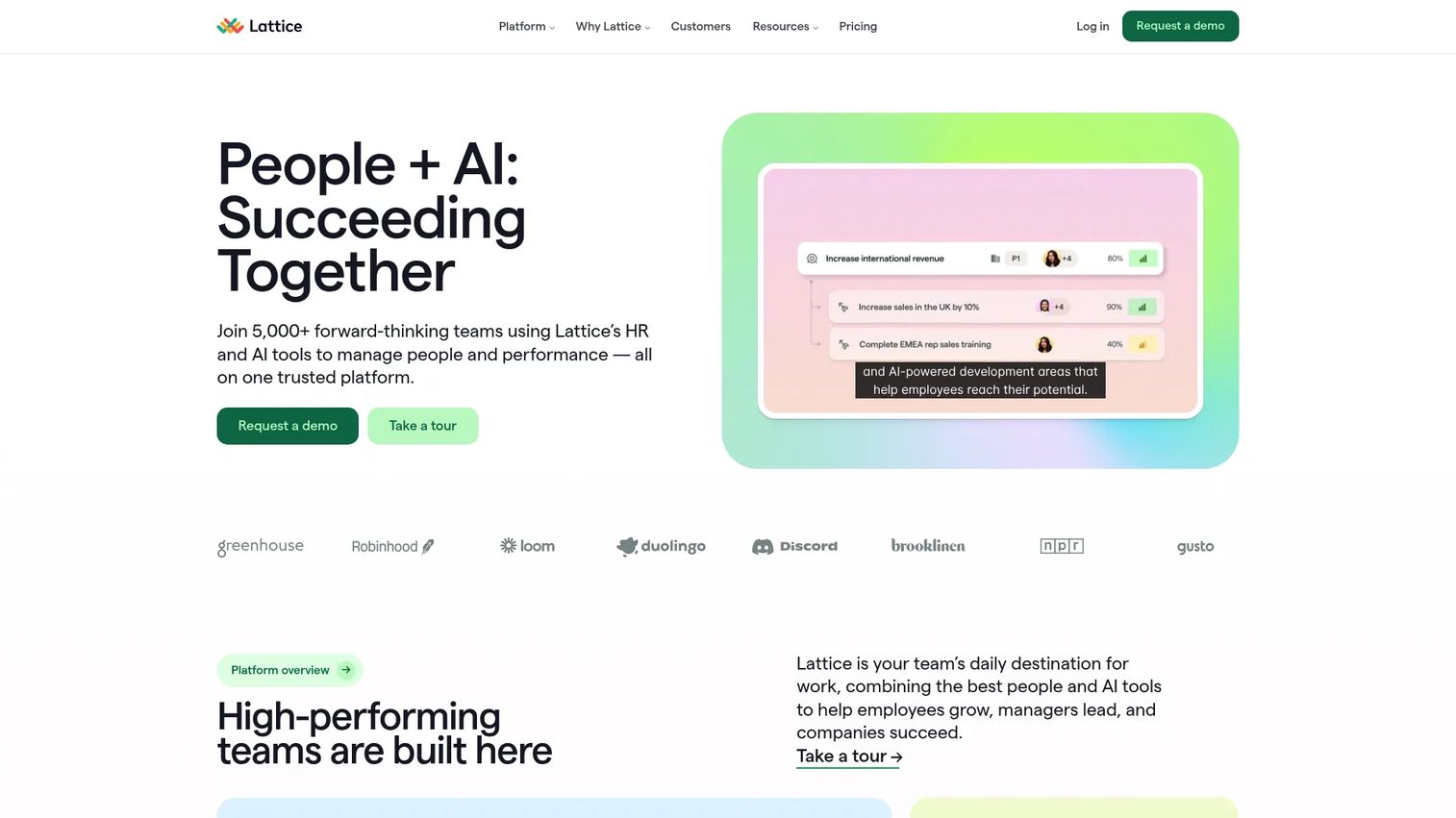
Lattice is a people platform that connects performance management, goals, engagement, compensation, and career growth in one product. Its Grow module handles career development and growth plans, sitting alongside performance reviews and manager check-ins rather than operating as a standalone pathing tool.
Best for: People teams that want career development close to performance reviews, goals, and manager workflows inside a single platform.
Key features
- Performance reviews and talent management with career context
- Goals and OKRs tied to individual development
- Employee engagement surveys and analytics
- Career growth plans linked to performance cycles
- Manager workflows for development conversations and check-ins
Why choose Lattice: Lattice is the right call when you want career pathing to be an extension of your existing performance and engagement stack, not a separate system to manage. The adoption case is strong for organizations already running Lattice for reviews and goals. It is not as specialized for career lattice design or skills governance as purpose-built platforms, so teams with complex role architecture needs may require a dedicated tool.
Lattice pricing: Lattice offers modular pricing billed annually. The Engagement plan starts at $4/seat/month. The Goals and OKRs plan is $8/seat/month. The Performance plan is $10/seat/month. The Grow add-on is an additional $4/seat/month. There is no free tier. A $4,000 minimum annual agreement applies.
G2 rating: 4.6/5
7. Qualtrics
Qualtrics is an experience management platform that spans customer, employee, market research, and product feedback. Its Employee Experience suite captures engagement signals, career sentiment, and development feedback at scale, making it useful when the problem is diagnosing why employees are disengaged or uncertain about their path.
Best for: Large organizations that want employee feedback and experience data woven into career development programs and HR strategy.
Key features
- Voice of Employee feedback across digital, chat, and survey channels
- Omnichannel experience management with automated text analytics
- Engagement insights and career sentiment signals
- Digital experience analytics with frustration signals and funnel data
- Broader HR analytics connecting employee listening to workforce decisions
Why choose Qualtrics: Choose Qualtrics when career development is one dimension of a broader employee experience program. It is strongest when HR needs to understand why employees feel stuck, not just map where they can go. It is typically part of an experience strategy rather than a primary career pathing engine, so most teams pair it with a dedicated pathing or development platform.
Qualtrics pricing: Qualtrics does not display pricing on its website. Pricing is based on planned usage metrics including survey responses and feedback volume. Contact Qualtrics for a quote.
G2 rating: 4.3/5
8. Zavvy by Deel
Zavvy by Deel is an AI-powered people development platform built into the Deel ecosystem. It handles onboarding, training, performance management, 360-degree feedback, and development planning from a single interface, with a focus on structured workflows that do not require heavy HR infrastructure to run.
Best for: People teams managing employee development, onboarding, and performance inside a Deel-based HR stack.
Key features
- Structured development plans tied to individual growth goals
- Onboarding and preboarding workflows for new hires
- 360-degree feedback and performance management
- Training and employee enablement with learning workflows
- Manager-friendly progress tracking and check-in support
Why choose Zavvy by Deel: Zavvy fits best when you want development planning with lower operational overhead, particularly if your team is already running HR operations through Deel. It covers development alongside onboarding and performance rather than delivering deep skills governance or a talent marketplace. Organizations that need a formal career lattice or audit-grade role architecture should evaluate more specialized tools alongside it.
Zavvy by Deel pricing: Contact Deel sales for current packaging and pricing.
Considerations when choosing career pathing software
Skills governance and versioning
Role definitions drift. What "Senior Account Executive" means in one region often differs from another. Before selecting a tool, confirm whether it supports versioned competency frameworks and whether HR can update role requirements without breaking existing employee paths. Governance matters most in regulated industries or any org where HR decisions must be defensible to leadership and legal.
HRIS and LMS integration
Career pathing data is only useful if it connects to systems of record. Confirm which HRIS platforms the tool integrates with natively, and whether learning recommendations push to your existing LMS or require a separate content library. A tool that sits in isolation creates the same content chaos you are trying to escape. Look for verified integration documentation, not just a logos page.
Manager adoption
The most common failure mode in career pathing programs is manager disengagement. If the tool is only designed for employees and HR, managers will route around it. Evaluate whether the platform gives managers dashboards, conversation prompts, and readiness signals they can act on during their normal workflow. Adoption by managers determines whether development plans get used or filed.
Employee clarity and transparency
Employees need to understand their next step in one or two clicks. Evaluate the employee-facing interface before you sign a contract. If career options are buried inside admin menus or require HR to configure every visible path manually, usage will stay low. Look for tools where role exploration and skills-gap visibility are built into the employee home screen.
Analytics and reporting
HR needs to show that career pathing programs move the needle on retention, internal hiring, and time-to-readiness. Confirm what the tool measures out of the box and whether you can export data to your existing analytics stack. Adoption rate, internal mobility rate, and readiness score distribution are the three metrics that matter most when reporting up to leadership.
Conclusion
The right career pathing tool depends on what you are actually trying to fix. TalentGuard leads for governance-heavy enterprise environments where role architecture must be auditable. Phenom and fuel50 are strongest when internal mobility is the primary goal and you want employees matched to roles, gigs, and projects at scale. Lattice and Quantum Workplace Growth serve organizations where career development should live alongside performance and engagement, not in a separate system. Dayforce Career Explorer fits teams already running Dayforce who want pathing without a new vendor relationship. Qualtrics adds value when employee listening and experience data need to inform the career development strategy. Zavvy by Deel covers development planning with lower overhead for Deel-native HR teams.
Start by identifying your biggest gap: Skills governance, manager adoption, employee visibility, or integration with existing systems. Then pilot one tool against that specific problem before expanding scope. Connecting career development to measurable readiness and retention outcomes is how you build a program that leadership will fund again next year.
Looking to build the enablement content and tools that make career programs stick? Start your journey with Guideflow today!
FAQs
Career pathing software is an HR technology category that helps organizations map the roles, skills, and development steps employees need to progress internally. It typically includes role and competency frameworks, skills-gap analysis, development plans, and analytics to track readiness and movement. The goal is to make career options visible to employees and actionable for managers and HR teams.
Succession planning focuses on identifying and preparing specific individuals for specific leadership roles, often at the senior level. Career pathing software is broader: It maps progression paths for all employees across a range of roles, not just the top of the org chart. Many platforms in this guide include both capabilities, but the emphasis and design logic differ significantly.
The features that drive adoption are skills-gap analysis, role mapping with clear competency requirements, and manager visibility into team readiness. Without those three, development plans become documents that HR files and employees ignore. Integration with HRIS and LMS platforms matters as a close second, since disconnected data prevents any meaningful workforce planning downstream.
Career mapping software creates the infrastructure for internal mobility by showing employees which roles they qualify for based on current skills, what gaps they need to close, and where open opportunities exist. Some platforms include talent marketplace functionality that surfaces gigs, projects, and positions matched to an employee's profile. That self-service layer reduces reliance on manager advocacy as the primary channel for internal moves.
Most enterprise-grade tools in this category support integration with common HRIS platforms and learning management systems, though the depth varies significantly. Native integrations with platforms like Workday, SAP SuccessFactors, and BambooHR are common, but verify which specific systems a vendor supports before you commit. Learning recommendation features are only useful if they connect to content your employees can actually access in your LMS.
A solid career pathing framework needs four things: A consistent role architecture across the organization, verified competency definitions at each level, a process for employees to self-assess and get manager feedback, and a way to connect development actions to actual skill gaps. Without the first two, the framework collapses when managers interpret it differently. Without the last two, it becomes a theoretical model that nobody acts on.
AI in career pathing software typically performs two jobs. First, it generates or suggests skills and competencies for roles based on job descriptions, market data, and internal patterns. Second, it matches employees to roles or development resources based on their current skill profile. The practical value is speed: A manual competency mapping project that takes months can be bootstrapped in days. Human review and validation are still necessary to catch errors and reflect organizational context.
Ownership typically sits with HR or People Operations, but the most successful implementations involve Talent Development and L&D teams in the design phase and direct managers in the ongoing workflow. Sales Enablement teams are often involved when career pathing covers sales roles and connects to ramp programs, certification paths, and readiness criteria for promotion. The stakeholder mix that matters for adoption is HR for framework governance, managers for development conversations, and employees for self-service career exploration. See also: best employee engagement software and best talent management software for related tools that complement career pathing programs. If your org also runs structured sales onboarding and learning paths, best sales training software covers adjacent tooling worth evaluating.