You started with a spreadsheet. Then a shared inbox. Then a quoting tool that doesn't talk to your accounting system, and a follow-up process that lives in one producer's head. Every renewal cycle, something slips. A client calls about a policy nobody logged, and you spend twenty minutes reconstructing what happened.
That fragmentation is expensive. The insurance agency software market is projected to reach USD 4.69B in 2026 and grow to USD 7.06B by 2030 at a 10.7% CAGR, according to Research and Markets (2026). The reason is simple: agencies are consolidating. Market Research Future (2025) reports roughly 60% of insurance agencies are adopting automation tools to streamline workflows. The bottleneck was never effort. It was the number of disconnected systems each task had to route through.
The right insurance agency software treats your agency as one operating system, not a pile of point tools. Five things separate a real platform from a feature list: centralization of client and policy data, workflow automation that removes manual steps, integrations across your stack, reporting leadership can act on, and security strong enough for sensitive client data. If you are building a repeatable operation that does not depend on any single person, those criteria matter more than any single feature.
If your broader stack touches adjacent categories, you may also want to review the best marketing automation software tools, best AI customer service agents, and best AI cybersecurity solutions as you plan around a core system.
What's inside
This guide covers the tools agencies actually run operations on, not one narrow software type. You will find agency management systems, insurance CRM and sales automation, marketing automation, analytics, digital payments, security awareness training, and lead capture. We selected each tool on four criteria: breadth of workflow coverage, insurance-specific functionality, integration depth, and proof from real users through G2 ratings. Pricing is included where vendors publish it and written around gracefully where they do not. The goal is a shortlist you can act on, sorted by relevance to broad agency operations rather than alphabetically.
TL;DR
- Best broad platform for larger agencies: Applied Epic, a browser-native agency management system covering P&C and Benefits in one backbone.
- Best for health and life agencies: AgencyBloc, an all-in-one system with CRM, commissions, quoting, and marketing.
- Best all-in-one for growth agencies: EZLynx, combining management, comparative rating, and automation.
- Best for independent agencies wanting simplicity: HawkSoft, at a transparent $99/user/month.
- Best sales and retention layer: AgencyZoom for CRM and automation, or Levitate for relationship marketing.
- Best point solutions by function: KnowBe4 for security awareness training, ePayPolicy for digital payments, and Podium for lead capture.
What is insurance agency software?
Insurance agency software is the set of systems an agency uses to manage clients, policies, quoting, communication, payments, reporting, and security in one connected operation rather than across disconnected tools. In practice it breaks into functional layers, and understanding those layers is how you decide what to centralize first.
- Agency management system (AMS): The operational backbone. It stores client and policy data, manages tasks and documents, handles accounting and commissions, and connects to carriers for quoting and submissions. This is the system of record.
- Insurance CRM: Manages leads, pipeline, and the sales-to-service handoff. A CRM for insurance agents focuses on winning and keeping business, where the AMS focuses on servicing it.
- Marketing automation: Runs email, text, websites, and campaigns that drive acquisition and retention automatically.
- Analytics and reporting: Turns production, retention, and performance data into dashboards leadership can act on.
- Digital payments: Collects premiums and fees online through ACH and card, with reconciliation support.
- Security and compliance: Protects client data through training, phishing simulation, and human-risk controls.
- Lead capture and chat: Converts website traffic into conversations through webchat, messaging, and reviews.
- AI-assisted workflows: Automates reconciliation, drafting, and repetitive servicing across the layers above.
Most agencies do not need every layer on day one. The pattern that works: pick a strong agency management system first, then add CRM, marketing, payments, and security as your bottlenecks reveal themselves.
When to use insurance agency software
Replace spreadsheets and disconnected inboxes
If client data lives in three places and none of them agree, you have outgrown spreadsheets. A single agency management system gives every producer and CSR the same view of the account, so nobody reconstructs history from memory.
Standardize client, policy, and task management
When servicing quality depends on which person picks up the phone, you need standard workflows. Insurance management software enforces consistent tasks, documentation, and follow-up so the experience is the same across your team.
Improve renewals, follow-up, and retention
Renewals slip when reminders live in someone's head. Retention automation in a CRM or marketing platform triggers the right outreach at the right time, so you keep the book you already earned.
Add reporting and visibility for leadership
If you cannot answer "which producer is growing and which office is churning" in under a minute, you need analytics. Clean dashboards replace the monthly spreadsheet scramble with numbers that survive scrutiny.
Reduce manual work with automation and AI
Manual reconciliation, re-keying, and repeated data entry drain hours. Workflow automation and AI-assisted features remove the low-value work so your team spends time on clients, not clicks.
Comparison table
Sorted by relevance to broad insurance agency software use. Pricing and G2 ratings reflect what each vendor publishes; where a vendor gates pricing behind a sales conversation, that is noted.
| # | Product | Intent | Key differentiation | Pricing | G2 rating |
|---|---|---|---|---|---|
| 1 | Applied Epic | Enterprise AMS backbone | P&C and Benefits in one browser-native system | Custom | 4.4/5 |
| 2 | AgencyBloc | Health and life AMS | All-in-one CRM, commissions, quoting, marketing | Custom | 4.6/5 |
| 3 | EZLynx | All-in-one growth AMS | Management plus comparative rating engine | Custom | 4.4/5 |
| 4 | HawkSoft | Independent-agency AMS | Transparent per-user pricing | $99/user/month | 4.8/5 |
| 5 | AgencyZoom | Sales and retention CRM | Insurance-specific automation and pipelines | From $99/month | 4.6/5 |
| 6 | Salesforce | Flexible CRM backbone | Deep customization and ecosystem | From $25/user/month | 4.4/5 |
| 7 | Agency Revolution | Marketing automation | Bundled websites plus automation | From $140/month | 4.0/5 |
| 8 | Levitate | Relationship marketing | Personalized outreach with a success specialist | Custom | 4.7/5 |
| 9 | KnowBe4 | Security awareness | Phishing simulation plus training at scale | From $1.63/seat/month | 4.6/5 |
| 10 | AgencyKPI | Insurance analytics | Cross-carrier benchmarking and dashboards | Not listed | Not listed |
| 11 | ePayPolicy | Digital payments | Insurance-specific payment portal | From $25/month | 4.8/5 |
| 12 | Podium | Lead capture | Webchat, reviews, and messaging in one inbox | Custom | 4.5/5 |
1. Applied Epic
Overview: Applied Epic is the broad, enterprise-grade agency management system that larger independent agencies run their entire operation on. It is browser-native and cloud-based, which means your team works from anywhere without a local install. For agencies that want a single operational backbone across P&C and Benefits, this is the anchor most other tools plug into.
Best for: Mid-size to enterprise independent insurance agencies that need one system for P&C and Benefits across multiple locations.
Key strengths
- Browser-native platform: Access the full system from any browser, so multi-location teams share one live view.
- End-to-end workflow coverage: Prospecting, pipeline, quoting, submissions, accounting, digital payments, reporting, and policy management in one place.
- Integrated Benefits and market access: Manage Benefits alongside P&C with built-in quoting and carrier connectivity.
Why choose Applied Epic: The case for Applied Epic is consolidation at scale. If you are running more than a handful of producers across offices and want quoting, servicing, accounting, and reporting to live in one system of record, this covers the widest surface area of any tool on this list. Its AI-assisted reconciliation and reporting depth suit agencies that need clean, defensible operating data.
Applied Epic pricing: Applied Systems does not publish a public price for Applied Epic on its site. Pricing is quoted based on agency size and modules, so you contact sales for a tailored figure. The platform holds a 4.4/5 rating on G2.
2. AgencyBloc
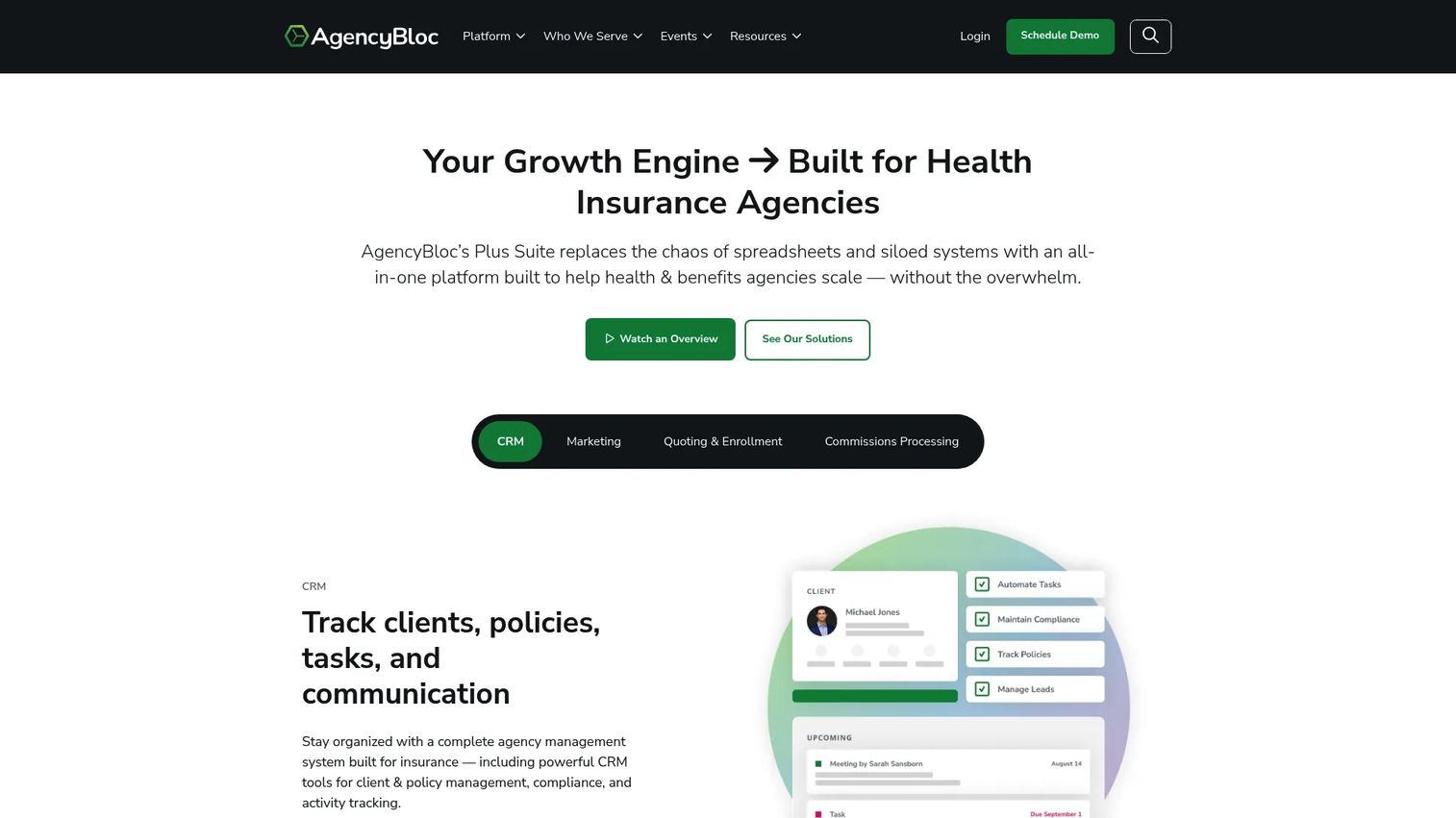
Overview: AgencyBloc is the specialized agency management system for health, Medicare, group benefits, and senior-market agencies. It bundles CRM, commissions, quoting, and marketing into one platform, so agencies in these lines do not stitch together generic tools that were never built for their workflows.
Best for: Health and benefits insurance agencies that need an all-in-one CRM, commissions, quoting, and marketing platform in one system.
Key strengths
- Purpose-built AMS+: A management system designed around health and life agency workflows, not adapted from P&C.
- Commissions processing: Commissions+ handles the commission tracking that health and benefits agencies live and die by.
- Quoting, marketing, and AI: Quote+ for enrollment, Engage+ for digital marketing, and AgencyBloc Intelligence for AI-assisted work.
Why choose AgencyBloc: For a health or life agency, a generic system means constant workarounds. AgencyBloc removes them by treating compliance, commissions, and enrollment as first-class functions. The strong workflow and communication layers make it the fit for agencies that want an insurance CRM and management system built for their exact line of business.
AgencyBloc pricing: AgencyBloc uses request-a-quote pricing; its pricing page directs you to request customized pricing rather than listing public dollar amounts. It earns a 4.6/5 rating on G2, among the higher marks in this category.
3. EZLynx
Overview: EZLynx is a cloud-based, all-in-one system for independent agencies that combines agency management with a comparative rating engine. That pairing is the point: you quote and service in the same place, so quoting and submissions do not require a separate tool and a separate login.
Best for: Independent insurance agencies that want an all-in-one platform for quoting, servicing, retention, and automation.
Key strengths
- All-in-one management system: Client, policy, and servicing workflows in a single connected system.
- Comparative rating engine: Built-in personal lines rating so producers compare carriers without leaving the platform.
- Built-in reporting and automation: Reporting and workflow automation that scale as the agency grows.
Why choose EZLynx: EZLynx suits startup and growth-focused agencies that want carrier connectivity, quoting, and servicing connected from the start. Rather than adding a rating tool later, you get it native, which keeps the renewal and re-quote cycle inside one system. That connected model is why growing agencies gravitate to it.
EZLynx pricing: EZLynx tailors pricing by number of users and the products you need, and directs visitors to contact sales for a quote rather than posting a flat rate. It holds a 4.4/5 rating on G2.
4. HawkSoft
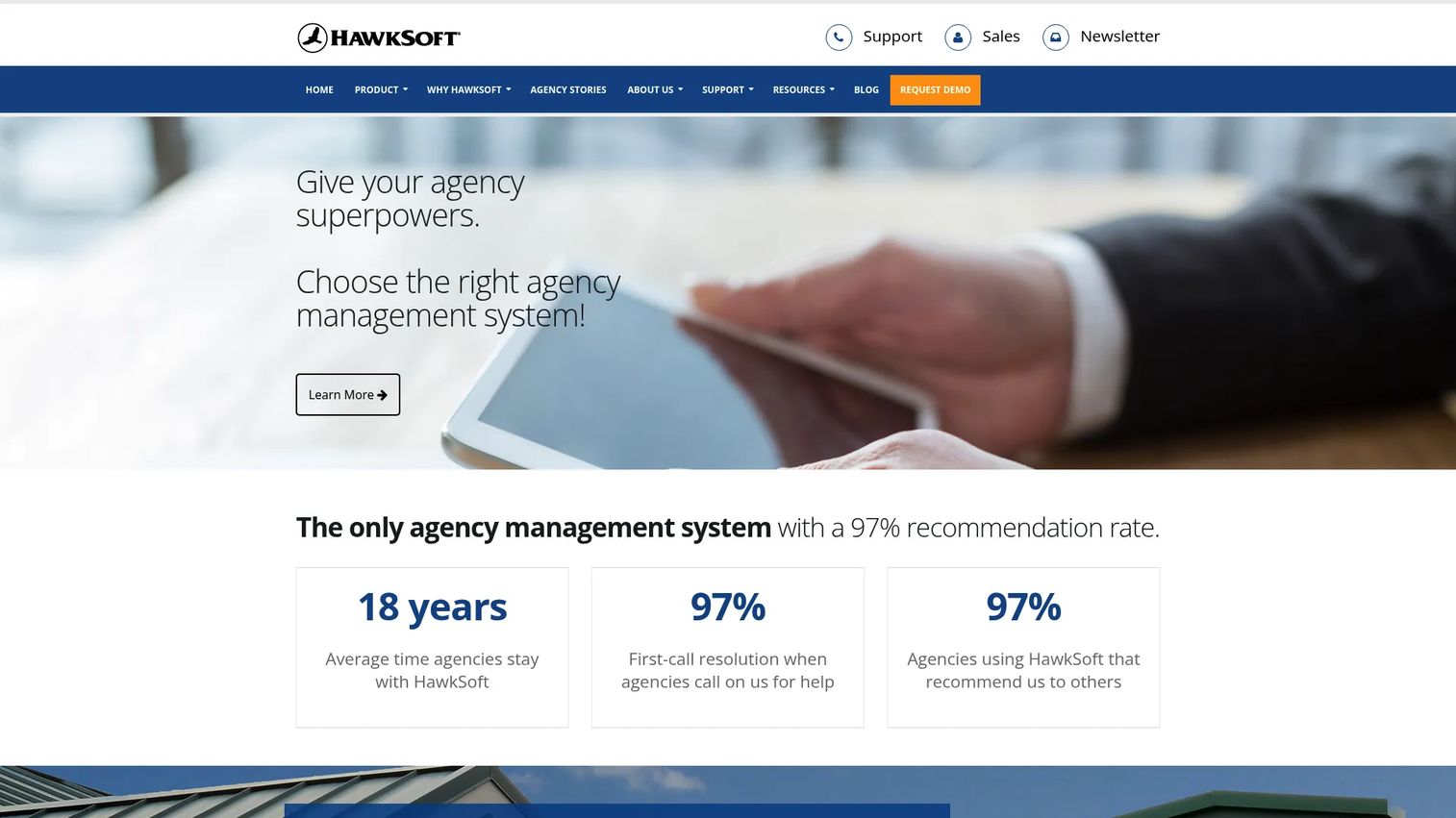
Overview: HawkSoft is an agency management system built for independent agencies that value a clean workflow and straightforward pricing. It runs as a full-featured desktop app with cloud access, pairing lead management, task management, reporting, and accounting in one place.
Best for: Independent insurance agencies that need an all-in-one agency management system with transparent pricing.
Key strengths
- Full-feature desktop app with cloud access: The complete feature set locally, with cloud access for flexibility.
- Lead and pipeline management: Track leads and sales pipeline alongside servicing.
- Reporting and accounting tools: Task management, reporting, and accounting and commission tools built in.
Why choose HawkSoft: HawkSoft stands out for independent agencies that want support, transparency, and a cleaner operational workflow without enterprise complexity. It is one of the few systems here that publishes a clear per-user price, which matters when you are protecting cash and want to know exactly what you will pay. Its 4.8/5 G2 rating is among the highest in this roundup.
HawkSoft pricing: HawkSoft states a retail price of $99/user/month for its cloud platform. Local server agencies may see an adjustment of up to $39/user/month depending on current pricing. That transparency is rare in this category.
5. AgencyZoom
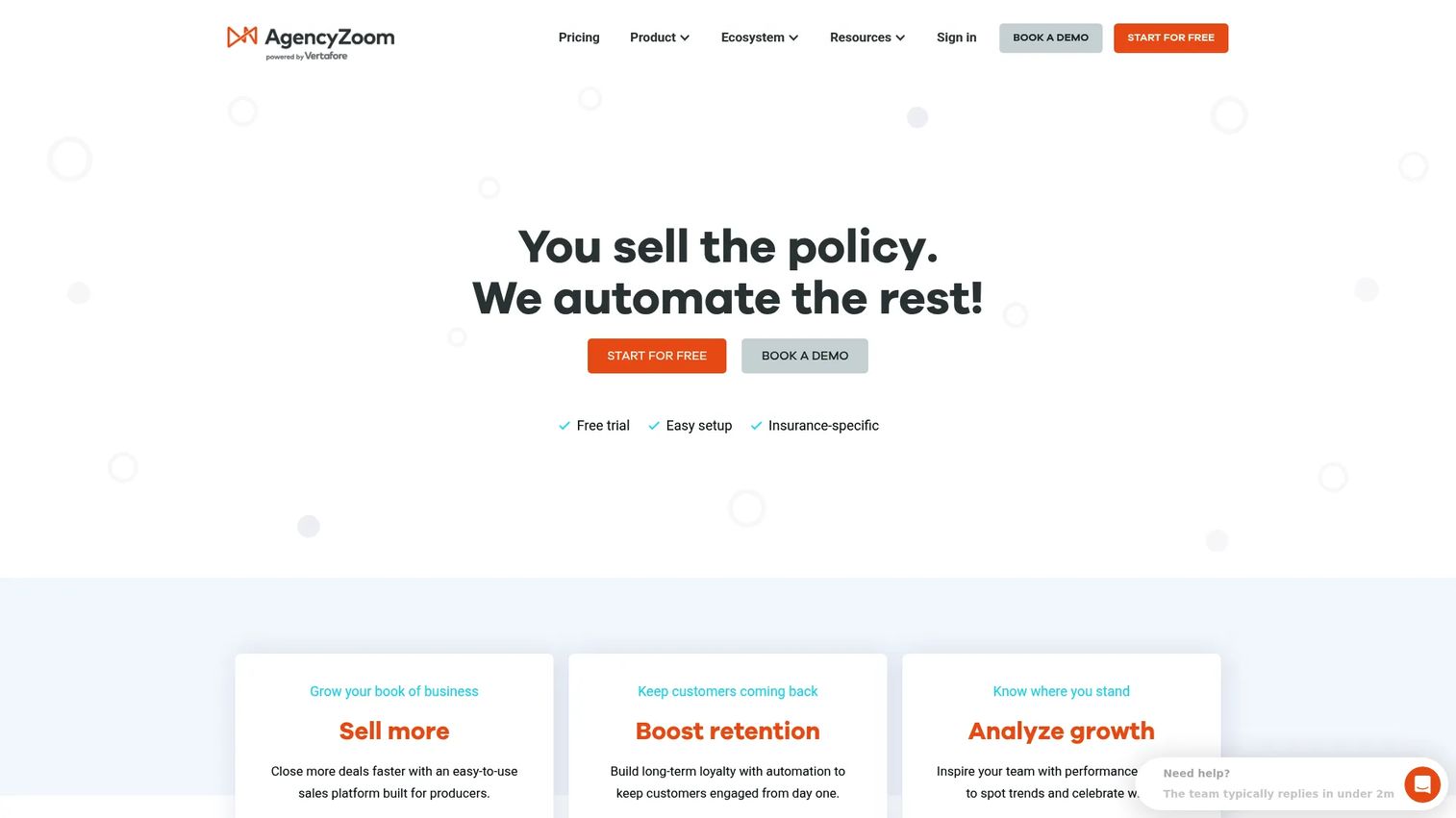
Overview: AgencyZoom is an insurance-focused sales automation and CRM platform. It sits as a sales and service layer on top of your AMS rather than replacing it, adding lead automation, retention workflows, and reporting where a core management system leaves off.
Best for: Insurance agencies that want CRM, sales automation, and retention workflows in one dedicated layer.
Key strengths
- Lead automation with custom pipelines: Customizable pipelines and workflows for how your agency actually sells.
- Service Center: A dedicated space for service-related activities and handoffs.
- Google Reviews integration: Turn happy clients into reviews that drive new lead capture.
Why choose AgencyZoom: If your AMS handles servicing but your pipeline and follow-up are inconsistent, AgencyZoom fills that gap. It is the insurance CRM layer that standardizes how leads move to close and how renewals get worked, so growth does not depend on one producer's habits. That makes it a strong retention automation companion to a core system.
AgencyZoom pricing: AgencyZoom publishes five monthly plans, each with a 14-day free trial and 7 seats. The Single Location Agency plan starts at $99/month, Multiple Location Agency at $129/month, Essential at $149/month, Growth at $199/month, and Pro at $349/month. Annual billing carries a 20% discount. It holds a 4.6/5 G2 rating.
6. Salesforce
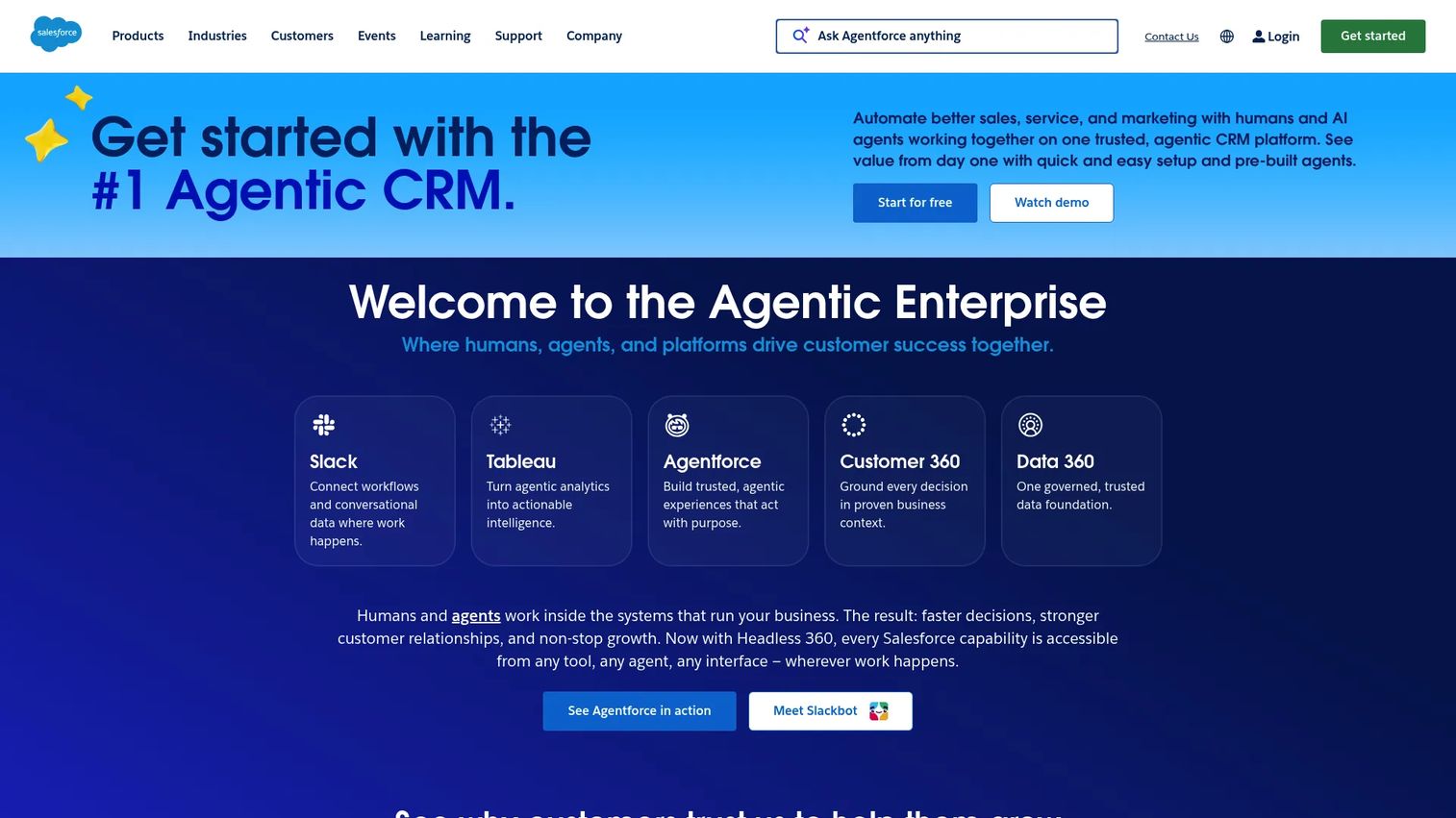
Overview: Salesforce is the flexible, general-purpose CRM backbone for agencies that need deep customization and a broad ecosystem. It is not insurance-specific out of the box, but it adapts to insurance workflows when a team wants a CRM it can shape to its exact process.
Best for: Agencies and teams that need an enterprise CRM platform with sales, service, marketing, and AI capabilities they can customize.
Key strengths
- Sales CRM: A configurable pipeline and account model that adapts to insurance sales motions.
- Service Cloud: Customer support and servicing workflows for post-sale relationships.
- Marketing automation and AI: Journeys, marketing automation, and Agentforce AI capabilities across the platform.
Why choose Salesforce: Salesforce is strongest when you want a CRM you control rather than one built only for insurance. Larger or fast-scaling agencies with the appetite to configure workflows and integrate a wide stack get the most from it. For agencies wanting insurance functionality without customization overhead, a purpose-built AMS or an insurance CRM may fit faster.
Salesforce pricing: Sales Cloud lists Starter Suite at $25/user/month, Pro Suite at $100/user/month, Enterprise at $175/user/month, Unlimited at $350/user/month, and Agentforce 1 Sales at $550/user/month. Starter and Pro can bill monthly or annually; higher tiers bill annually. It holds a 4.4/5 G2 rating.
7. Agency Revolution
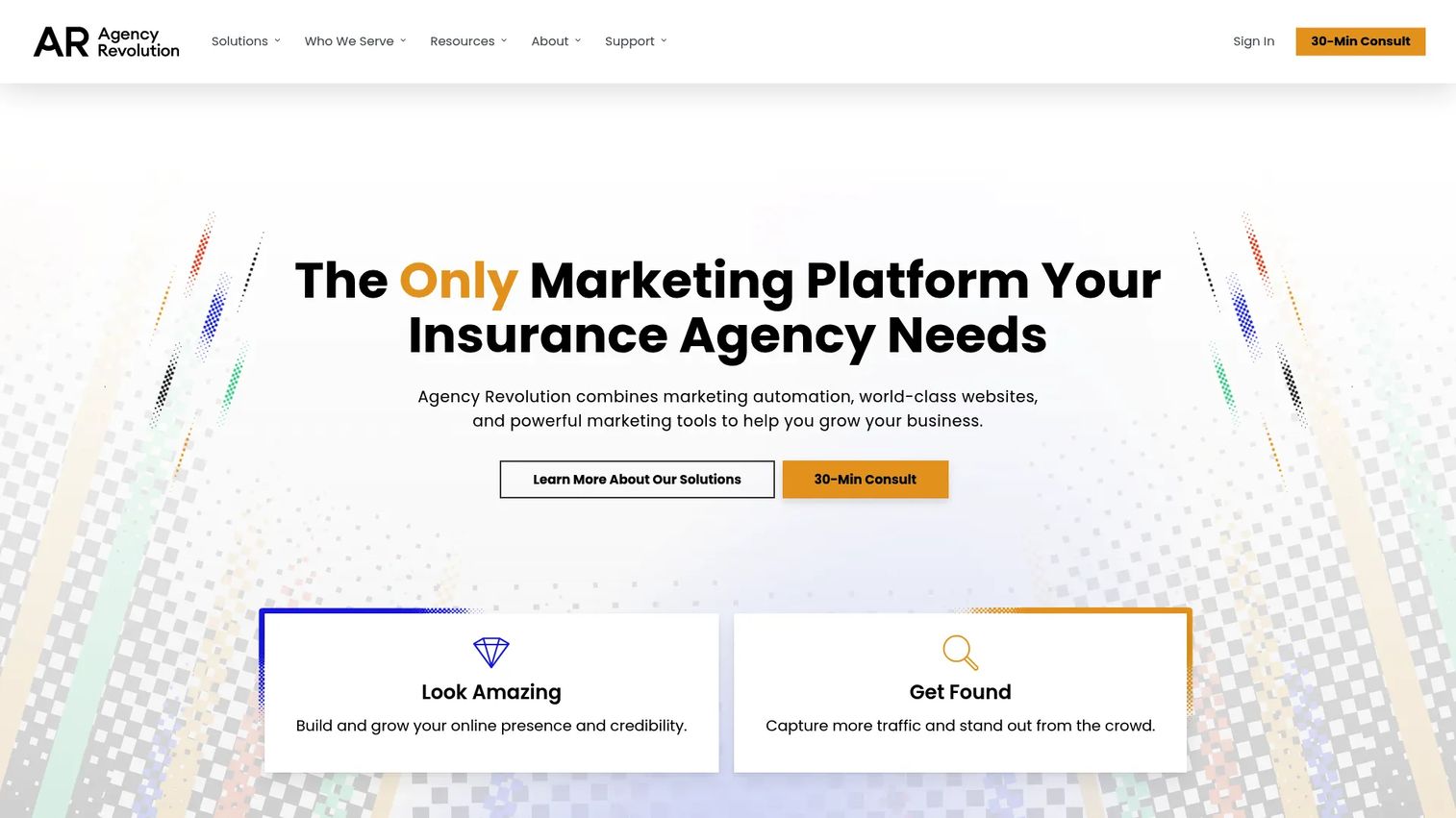
Overview: Agency Revolution is an insurance marketing platform combining agency websites, marketing automation, and AI-driven tools. It is built for agencies that want to improve acquisition and retention through automation rather than manual campaigns, and it integrates with your management system.
Best for: Independent insurance agencies that want bundled website and insurance marketing automation tools.
Key strengths
- Marketing automation (Fuse): Automated email and client communication that runs without daily effort.
- Agency websites (Forge): Insurance-specific websites built for lead capture.
- AI and unified dashboard: AI tools and an all-in-one dashboard tying campaigns together.
Why choose Agency Revolution: This is the fit for agencies that see marketing as a growth lever but lack the time to run it manually. By combining websites with automation, it turns client communication and lead capture into a system rather than a series of one-off sends. Retention automation and AMS integrations keep the book engaged between renewals.
Agency Revolution pricing: Agency Revolution publishes pricing by product. Essential Website starts at $140/month with a $500 setup, Forge Premium at $310/month with a $1,000 setup, Fuse marketing automation at $249/month with a $500 setup, and Fuse + DIFM at $649/month with a $500 setup. It holds a 4.0/5 G2 rating.
8. Levitate
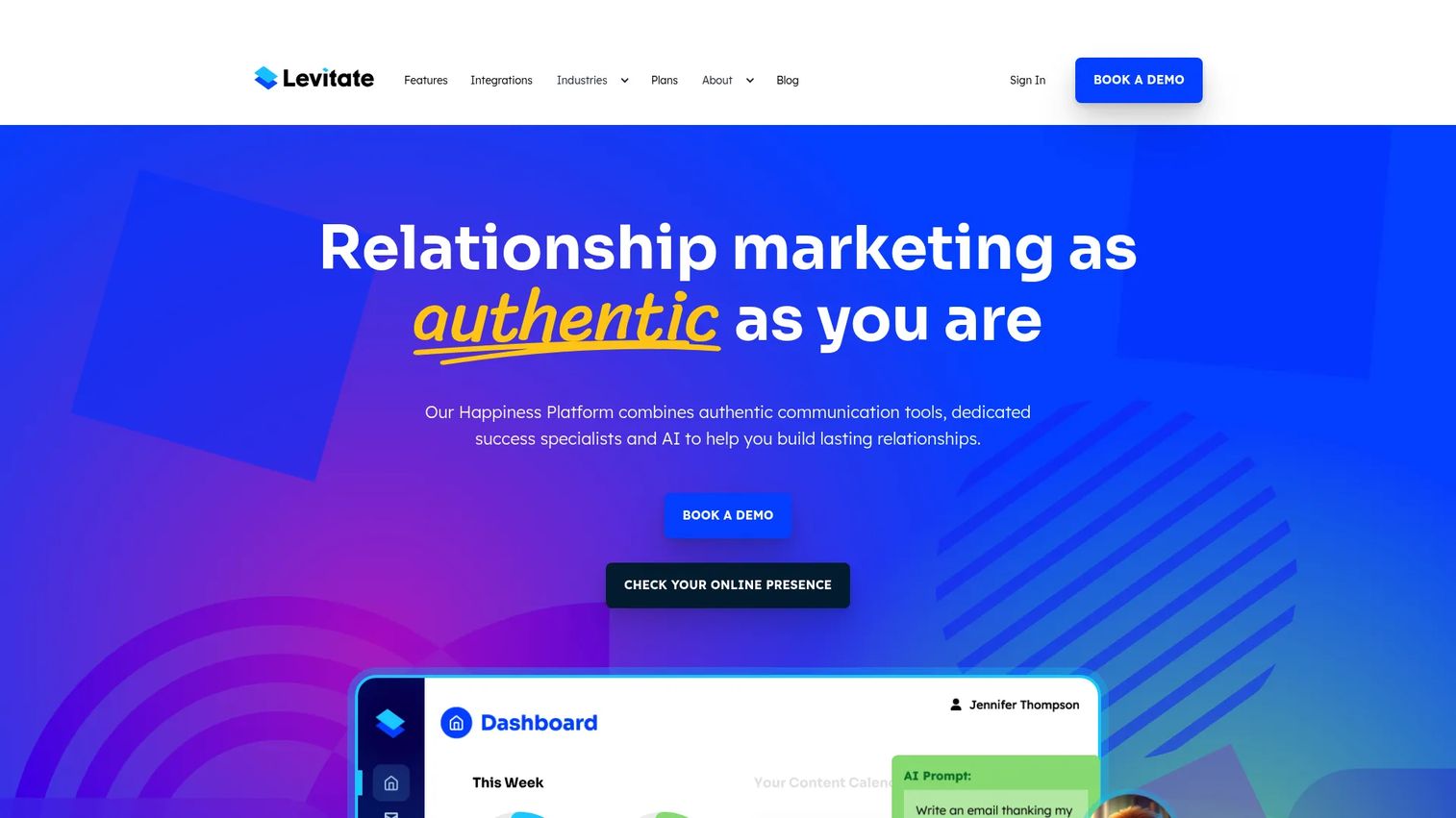
Overview: Levitate is a relationship marketing platform built around personalized outreach: email, social, and texting, plus reviews, websites, and AI-assisted content. It is designed for agencies that want consistent, human-feeling client communication without a heavy operations burden.
Best for: Small agencies and businesses that want relationship-focused marketing with hands-on support.
Key strengths
- Multichannel outreach: Email, social, and texting from one platform to keep clients warm.
- Dedicated success specialist: Hands-on help so the program runs even with a lean team.
- AI assistant and templates: AI-assisted content and templates that cut writing time.
Why choose Levitate: Levitate suits agencies where the bottleneck is consistency, not strategy. Renewal reminders, review generation, and personalized email and text keep relationships alive without adding an operations hire. For a small team that needs insurance marketing automation with a light footprint, the dedicated support model does the heavy lifting. Its 4.7/5 G2 rating reflects that hands-on approach.
Levitate pricing: Levitate publishes plan names, including Levitate Essential, Preferred, and Prestige, plus website tiers, but does not list public prices; several plans direct you to book a demo or talk to sales.
9. KnowBe4
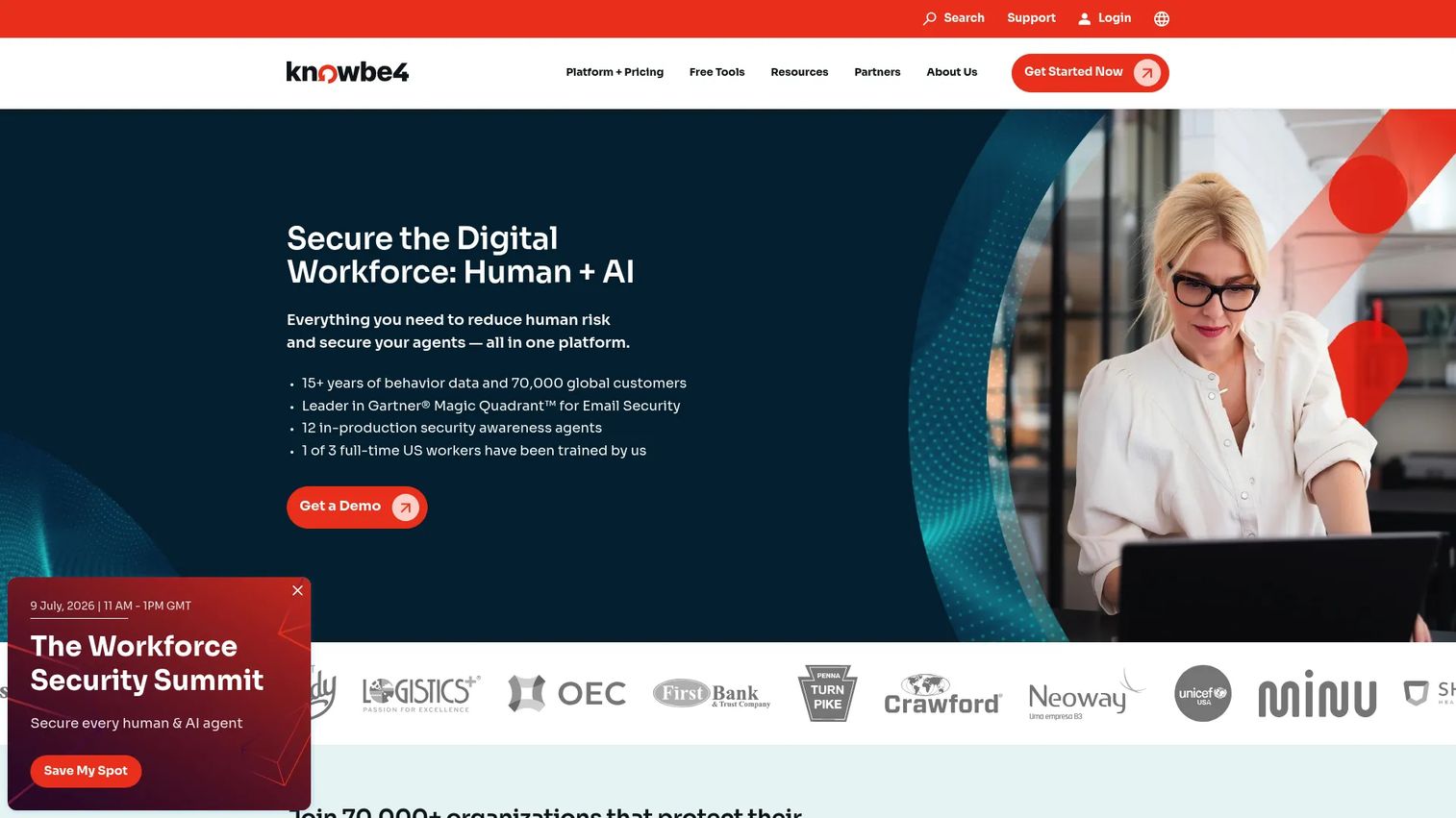
Overview: KnowBe4 is a security awareness and human-risk management platform. Agencies use it as the security layer that protects sensitive client data through training, phishing simulation, and risk scoring, addressing the biggest vulnerability in most agencies: people.
Best for: Organizations that want phishing simulation plus security awareness training at scale.
Key strengths
- Security awareness training: Structured training that turns staff into a human firewall.
- Phishing simulations: Realistic simulated attacks that reveal and reduce exposure.
- Risk scoring and reporting: Risk scores and reporting that support compliance conversations.
Why choose KnowBe4: Insurance agencies hold exactly the data attackers want, and human error is the most common breach path. KnowBe4 addresses that directly with security awareness training and phishing simulation, backed by reporting you can show auditors and carriers. It is the security and compliance layer a serious agency adds once the core stack is in place. If security posture is a broader concern, the best AI cybersecurity solutions and best AI security posture management tools are worth reviewing alongside it.
KnowBe4 pricing: KnowBe4 publishes regional per-seat pricing for Security Awareness Training on a three-year term. In the U.S., SAT Foundation runs from $1.63 per seat per month and SAT Advanced from $2.79 per seat per month at higher seat bands, with lower bands priced higher. Larger deployments at 1001+ seats are quoted. It holds a 4.6/5 G2 rating.
10. AgencyKPI
Overview: AgencyKPI is an insurance analytics and benchmarking platform that aggregates data from carriers, wholesalers, and agency management systems into dashboards. It is aimed at leadership teams that need clean operating data across producers, offices, and carrier relationships.
Best for: Insurance networks, agencies, brokers, and carriers needing consolidated performance data across sources.
Key strengths
- Cross-source data aggregation: Pulls data from carriers, wholesalers, and agency management systems into one view.
- Performance dashboards: Carrier, agency, and network dashboards for production and retention insight.
- Profit-sharing and contingency tracking: Tracks profit-sharing and contingency arrangements automatically.
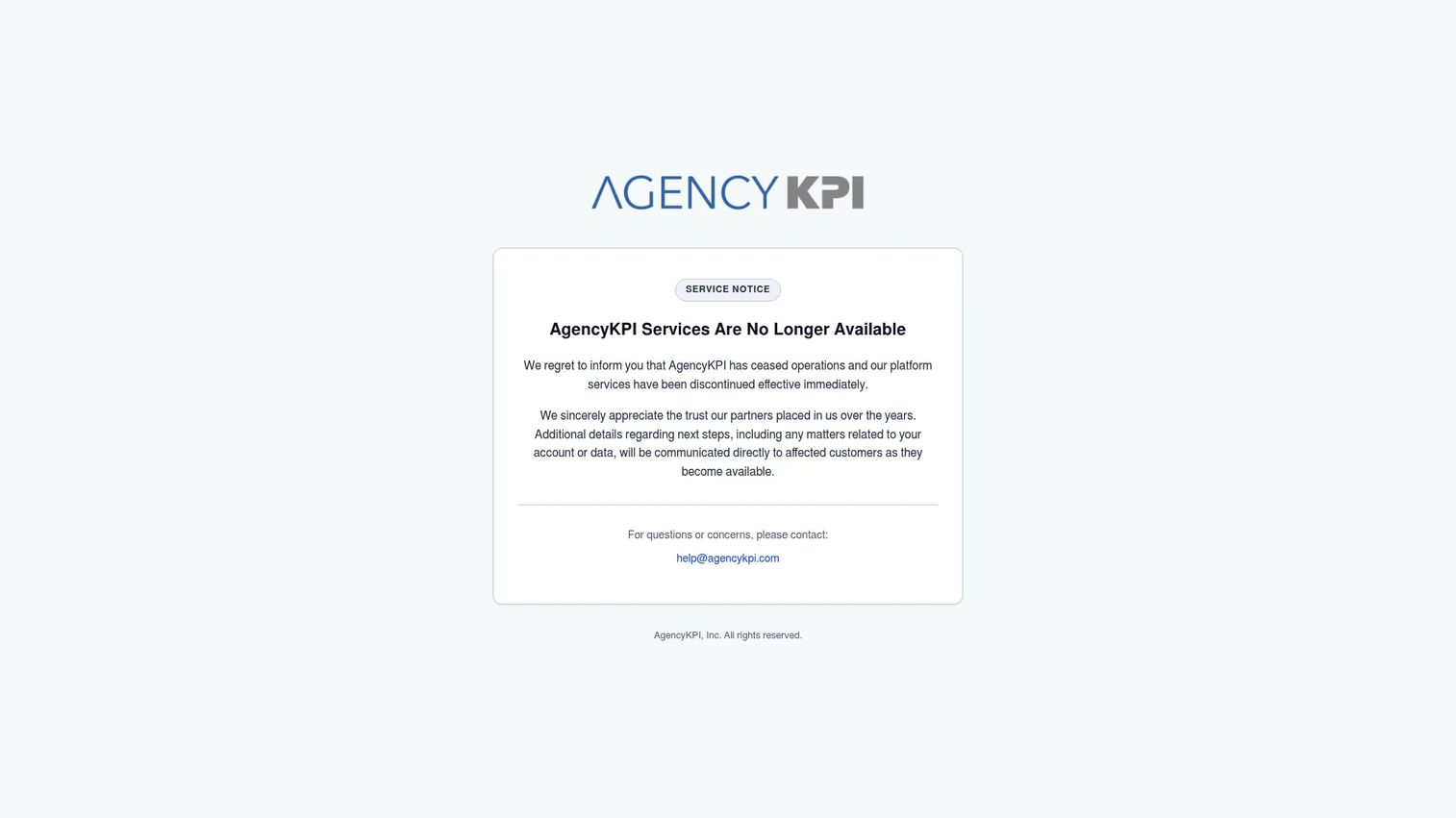
Why choose AgencyKPI: For a leadership team, the value is visibility. When production and retention data lives across carriers and systems, benchmarking is guesswork. AgencyKPI consolidates it so you can see which producers and offices are growing without stitching together spreadsheets. Note that the company currently states its services are no longer available, so confirm current status before you plan around it.
AgencyKPI pricing: AgencyKPI does not publish public pricing, and its site indicates services are no longer available, so treat availability as something to verify directly before evaluating.
11. ePayPolicy
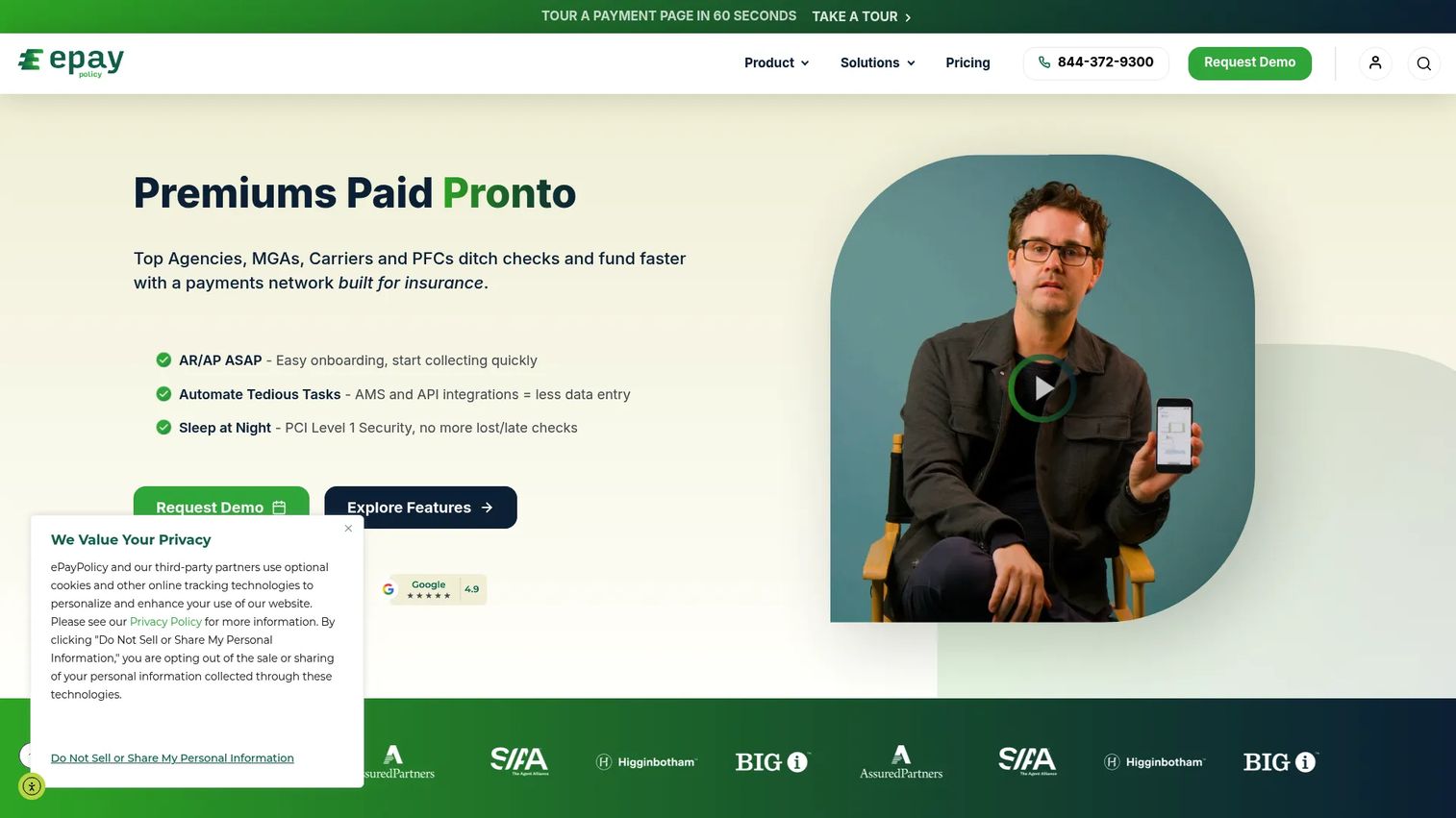
Overview: ePayPolicy is insurance-specific payment software for collecting and managing online payments. It handles ACH and card collection, invoicing, and payables, with AMS integrations so payments reconcile against your system of record instead of piling up as paper checks.
Best for: Insurance agencies and brokers that need a payment portal with accounting and management-system integrations.
Key strengths
- Customizable payment page: A branded payment page and dashboard clients actually use.
- AMS and API integrations: Digital payments that flow back into your management system for reconciliation.
- Check payments and network payables: Handles check payments and payables across your network.
Why choose ePayPolicy: If premium collection still runs on paper checks and manual matching, ePayPolicy speeds up cash flow and cuts reconciliation work. It is built for insurance, so the digital payments and integrations fit agency accounting rather than generic e-commerce. Its 4.8/5 G2 rating is among the highest here.
ePayPolicy pricing: ePayPolicy publishes clear tiers: Essentials at $25/month, Integrated at $50/month, and Enterprise at custom pricing. The pricing page also offers a 60-day free trial. It holds a 4.8/5 G2 rating.
12. Podium

Overview: Podium is an AI-powered communications and lead management platform for local businesses. Agencies use it to capture and convert website traffic through webchat, messaging, reviews, and payments, all in one inbox, so inbound leads get a fast response instead of a next-day callback.
Best for: Local agencies that want to centralize leads, messaging, reviews, and payments in one platform.
Key strengths
- AI-powered omnichannel inbox: Every message channel in one place with AI assistance.
- Review management: Review invites and management that build local reputation.
- Webchat, texting, and payments: Website chat, text messaging, and payment collection in one flow.
Why choose Podium: Speed-to-lead decides who wins inbound. Podium captures website visitors into a conversation and keeps the thread moving over text, which converts far better than a form and a wait. For agencies trying to turn traffic into quotes, it is the lead capture and messaging layer that closes the response gap. It holds a 4.5/5 G2 rating.
Considerations before you buy
A shortlist is only useful if you evaluate against the right criteria. Run every candidate through these before you sign.
Workflow coverage vs. your actual bottleneck
Start with the bottleneck, not the feature list. If servicing is the mess, an agency management system solves more than a shiny marketing tool. Map your worst weekly friction to a category first, then compare tools inside it.
Integration depth with your system of record
Your AMS is the system of record, so anything you add must feed it. Confirm the CRM, payments, or marketing tool integrates with your management system before you buy, or you are just creating another silo. Ask for the specific integration, not a general "yes."
Reporting leadership can actually use
Reporting and dashboards only matter if a founder or ops lead can read them in under a minute. Check whether the tool surfaces production, retention, and performance data cleanly, or whether it exports raw rows you still have to model yourself.
Security and compliance posture
You hold sensitive client data, so security is not optional. Evaluate encryption, access controls, and, for the human layer, security awareness training. Carriers and regulators increasingly expect it.
Total cost against your stage
Per-seat pricing scales fast. Model the cost at your headcount in twelve months, not today, and factor setup fees. Transparent pricing like HawkSoft's or ePayPolicy's makes this easy; quote-based vendors require you to push for a real number.
Conclusion
The right insurance agency software is the one that fixes your biggest bottleneck first, then extends into a connected operation. For a broad operational backbone, Applied Epic covers the widest surface for larger P&C and Benefits agencies, while EZLynx and HawkSoft serve independent and growth agencies wanting an all-in-one system with transparent pricing. For health and life, AgencyBloc is the specialized choice.
Layer on point solutions once the core is in place. AgencyZoom and Levitate handle sales and retention, Agency Revolution and Levitate cover insurance marketing automation, Salesforce gives you a customizable CRM backbone, KnowBe4 protects client data, ePayPolicy modernizes payments, and Podium closes the inbound response gap. AgencyKPI adds analytics, though you should confirm its current availability.
Next step: pick your single worst weekly friction, shortlist two or three tools in that category by agency size and integration fit, and run a trial or demo against your real workflow before you commit.
FAQs
Insurance agency software is the set of connected systems an agency uses to manage clients, policies, quoting, communication, payments, reporting, and security in one operation. It typically centers on an agency management system and extends into CRM, marketing automation, analytics, payments, and security tools as the agency grows.
An agency management system is the system of record: it stores policy data, handles servicing, accounting, commissions, and carrier connectivity. A CRM for insurance agents focuses on the front end, managing leads, pipeline, and follow-up to win and retain business. Many agencies run both, with the CRM feeding closed business into the AMS.
Small independent agencies often do well with HawkSoft for its transparent $99/user/month pricing and clean workflow, or EZLynx for an all-in-one system with built-in rating. For sales and retention on top of an existing system, AgencyZoom starts at $99/month, and Levitate suits lean teams that want relationship marketing with hands-on support.
Start with an all-in-one agency management system as your backbone, since it covers the widest core workflow. Add point solutions only where the core leaves a real gap, such as ePayPolicy for payments, KnowBe4 for security, or Podium for lead capture. The rule: consolidate first, then specialize where a bottleneck justifies another tool.
Reputable platforms build encryption, access controls, and compliance features into their systems. The most common breach path, though, is human error, not software. That is why agencies pair their core stack with security awareness training and phishing simulation from tools like KnowBe4 to reduce human-risk exposure.
Retention automation lives in CRM and marketing tools. AgencyZoom automates renewal workflows and follow-up inside a sales pipeline, Levitate handles renewal reminders and personalized outreach, and Agency Revolution runs automated client communication through marketing automation. Each keeps renewals from slipping through manual gaps.
ePayPolicy is purpose-built for insurance payments, collecting ACH and card payments online and integrating with agency management systems so transactions reconcile automatically. Broad AMS platforms like Applied Epic also include digital payments natively, which keeps collection inside the system of record.
Prioritize centralization of client and policy data, workflow automation, integration depth with your system of record, reporting leadership can act on, and security strong enough for client data. Pick the tool that fixes your worst weekly bottleneck first, confirm it integrates with your AMS, and model the cost at your projected headcount, not today's.