You do not feel the scaling problem in a board deck first. You feel it when support tickets keep rising, finance closes drag into week three, and your VP of Sales asks why onboarding still depends on three people in Slack.
Every full-time hire adds recruiting time, benefits, onboarding cost, and management overhead. At Series B, you need operational capacity without another management layer. That is exactly what business process outsourcing companies are built to provide.
The global BPO market reached $328.4 billion in 2025 and is projected to grow at 9.9% annually through 2033, according to Grand View Research (2026). North America alone accounts for 37.4% of that revenue. The category is not niche anymore. It is infrastructure.
The challenge is that the wrong BPO provider creates hidden costs: Training drag, quality erosion, escalation loops, and a management burden you cannot see until it lands on your calendar. This guide helps you shortlist the right one before you send a single RFP.
What's inside
This guide compares 15 BPO service providers for founders and operators who need operational capacity without adding management drag. Providers were selected based on recurring mentions across buyer research, service breadth, and operational relevance to SaaS scaling problems.
Selection criteria:
- Service depth and category fit (customer support, back-office, finance, IT, analytics)
- Delivery model options (onshore, nearshore, offshore, global distributed)
- Scalability and compliance readiness
- Pricing transparency and management overhead
Pricing and G2 ratings are sourced from each vendor's official page and live G2 listings.
TL;DR
- Best for complex customer support: Hugo or TaskUs, both purpose-built for high-growth tech operations
- Best for enterprise global outsourcing: Accenture or Teleperformance, with the footprint and maturity for multi-region complexity
- Best for finance and analytics operations: EXL Service or Genpact, strong for process discipline and data accuracy
- Best for mid-market SaaS support: Helpware or Unity Communications, flexible and fast to deploy
- Best for back-office and finance execution: IQ BackOffice or Noon Dalton, focused on repeatable operational workflows
- Best for call center scale: Concentrix, TTEC, Foundever, or Alorica, all capable of high-volume contact center delivery
What is BPO?
Business process outsourcing, or BPO, is the practice of hiring an external provider to run defined business processes such as customer support, finance operations, payroll, data processing, HR administration, IT support, or back-office workflows.
BPO is not just a cost play. For a Series B SaaS company, it is an operational capacity play. The goal is freeing internal leaders from repeatable execution so they can focus on decisions that require context.
Front-office BPO covers processes that touch customers directly, including customer support, technical support, sales development, and contact center operations.
Back-office BPO covers internal processes like finance and accounting, payroll, data entry, HR administration, and compliance support.
Knowledge-process outsourcing (KPO) covers higher-judgment work: Analytics, research, AI data operations, and automation-assisted workflows.
Delivery models vary significantly:
- Onshore: Agents located in the same country. Higher cost, closer cultural alignment
- Nearshore: Agents in adjacent time zones, often Latin America for US companies. Balance of cost and proximity
- Offshore: Agents in distant geographies, often Asia. Lower cost per hour, stronger documentation and management discipline required
- Global distributed: Mix of locations, often used by large enterprise providers
Team models matter too:
- Dedicated teams give you named agents who learn your product and represent your brand
- Shared teams pool agents across clients, lower cost for predictable low-complexity workflows
- Managed services include QA, workforce management, and reporting in the contract
- Staff augmentation places individuals who work under your direction
Key BPO service categories
- Customer support and contact center operations
- Finance and accounting outsourcing
- Payroll and HR administration
- Data processing and back-office workflows
- IT support and call center software-enabled operations
- Analytics, automation, and AI-assisted process work
- Compliance, risk, and regulated-industry support
When to use BPO companies
Scale support without turning founders into managers
Ticket volume compounds quickly. When your support queue grows faster than your team, the options are: Hire more internally, reduce quality, or outsource. A BPO provider with a documented onboarding process and quality assurance layer can absorb volume without putting a VP of Support role on your org chart prematurely. The trigger is usually when the founder or a senior leader is still triaging escalations weekly.
Move repeatable back-office work out of leadership meetings
Finance closes, reconciliation cycles, data entry, payroll processing, and document management are high-frequency, low-judgment tasks. When these processes consume time from your Head of Finance or RevOps lead, they delay board-ready reporting and slow down operating decisions. Outsourcing these workflows returns senior attention to analysis rather than execution. Good business process management software helps document the processes before you hand them off.
Add specialized capacity before hiring a full team
Sometimes you need regulated support, multilingual coverage, trust and safety operations, or technical support depth before you can justify a full internal hire. BPO firms let you add that capacity on a defined contract, test the workflow, and scale up or down without the recruitment cycle. This is also where nearshore and offshore delivery can reduce cost while maintaining quality.
BPO companies comparison
Below is a side-by-side view of all 15 providers. Pricing reflects each vendor's official positioning; most enterprise BPO firms price by quote. G2 ratings are drawn from live listings.
| # | Product | Best for | Key differentiator | Pricing | G2 rating |
|---|---|---|---|---|---|
| 1 | Hugo | Complex tech support operations | Fully managed CX and data teams for high-growth companies | From $9/hr per agent | N/A |
| 2 | Teleperformance | Enterprise global CX | Scale, multilingual delivery, and omnichannel coverage | Quote-based | 4.1/5 |
| 3 | EXL Service | Finance, analytics, and digital ops | Data and AI-led BPO for regulated industries | Quote-based | 5.0/5 |
| 4 | Accenture | Enterprise transformation | Consulting plus managed operations | Quote-based | 4.2/5 |
| 5 | Concentrix | Omnichannel CX at scale | AI-enhanced customer engagement and digital ops | Quote-based | 4.0/5 |
| 6 | Genpact | Finance and process transformation | Agentic AI and deep process discipline | Quote-based | 4.1/5 |
| 7 | Wipro | IT-enabled BPO | Technology, cloud, and managed services combined | Quote-based | 4.1/5 |
| 8 | Helpware | Mid-market SaaS support | Flexible CX and back-office teams | Quote-based | 4.9/5 |
| 9 | Unity Communications | SMB and mid-market outsourcing | Hybrid human-AI support with published starting rates | From $10.25/hr | 4.0/5 |
| 10 | IQ BackOffice | Finance back-office | Accounts payable, receivable, and payroll outsourcing | Quote-based | N/A |
| 11 | Noon Dalton | Back-office and recurring ops | Offshore teams for defined operational workflows | Quote-based | N/A |
| 12 | TaskUs | Digital CX and trust operations | High-growth tech support, AI data, and safety ops | Quote-based | 4.0/5 |
| 13 | TTEC | Contact center modernization | CX strategy plus outsourced delivery | Quote-based | 3.6/5 |
| 14 | Foundever | Global multilingual CX | Omnichannel CX across voice, chat, and digital channels | Quote-based | 5.0/5 |
| 15 | Alorica | High-volume customer care | Large-scale contact center and customer experience delivery | Quote-based | 3.9/5 |
Best 15 BPO companies for 2026
1. Hugo
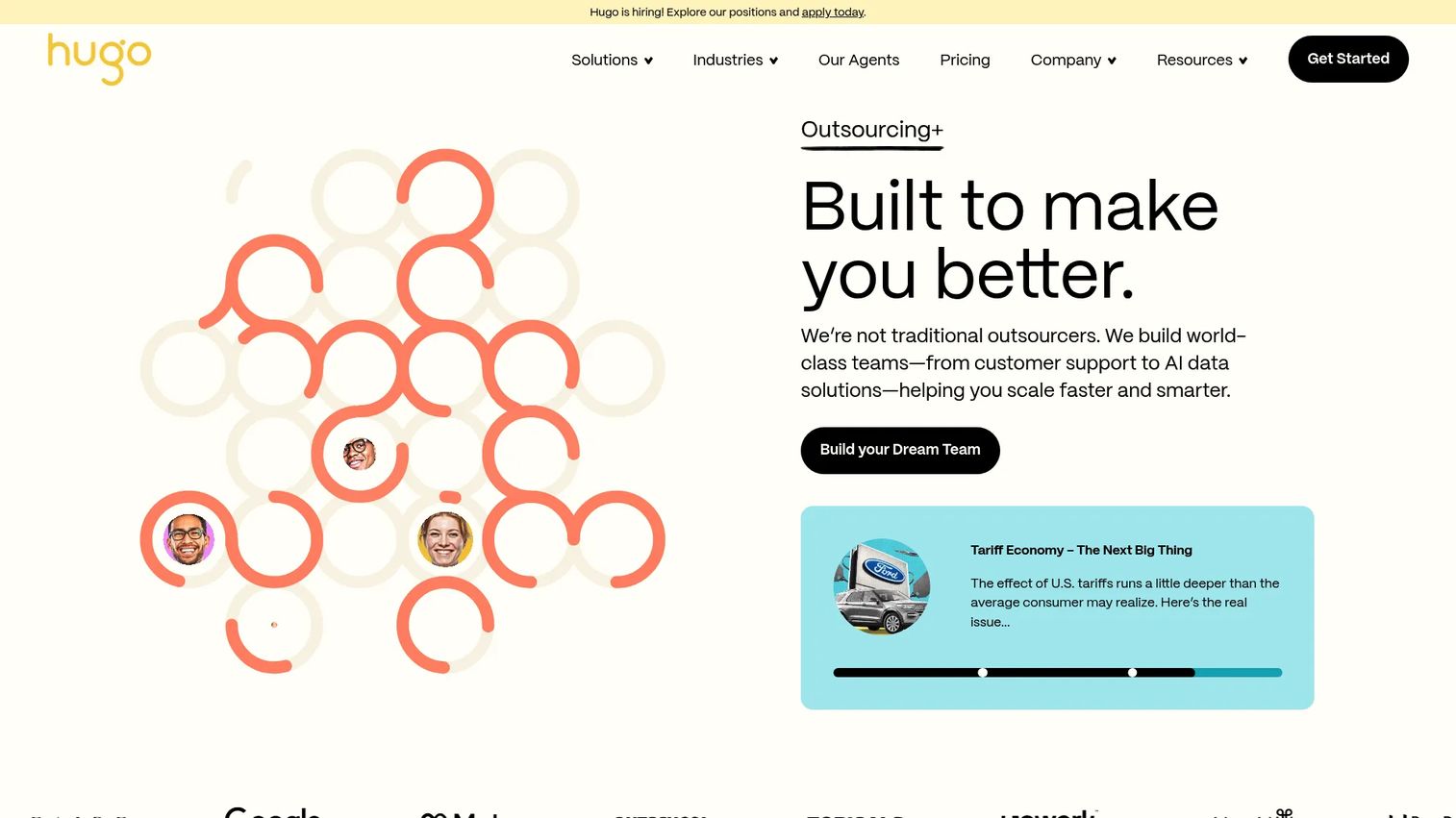
Hugo provides fully managed outsourcing teams for customer support, trust and safety, digital operations, and data and AI services. The company positions itself specifically for high-growth technology companies that need operational depth without building a large internal team first. Coverage spans 60+ languages, 24/7 availability, and omnichannel delivery across voice, chat, email, social, and in-app channels.
Best for: High-growth SaaS and tech companies that need complex customer support or AI data operations run end-to-end by a managed team.
Key features
- Omnichannel support: Voice, chat, email, social, and in-app
- Data and AI services: Generative AI, computer vision, NLP
- 24/7 coverage in 60+ languages
- Fully managed teams: Onboarding, QA, training, and workforce management
Why choose Hugo: Hugo is the right call when customer experience is core to your product and you cannot afford to separate support quality from brand quality. The fully managed model removes the internal ownership burden, which matters when your team is small.
Hugo pricing: Dedicated teams start at $9/hr per agent on month-to-month contracts. Custom team plans include onboarding, management, QA, training, workforce management, team leads, and reporting.
Hugo does not have a current G2 profile with meaningful reviews, so G2 sourcing is not applicable here.
2. Teleperformance
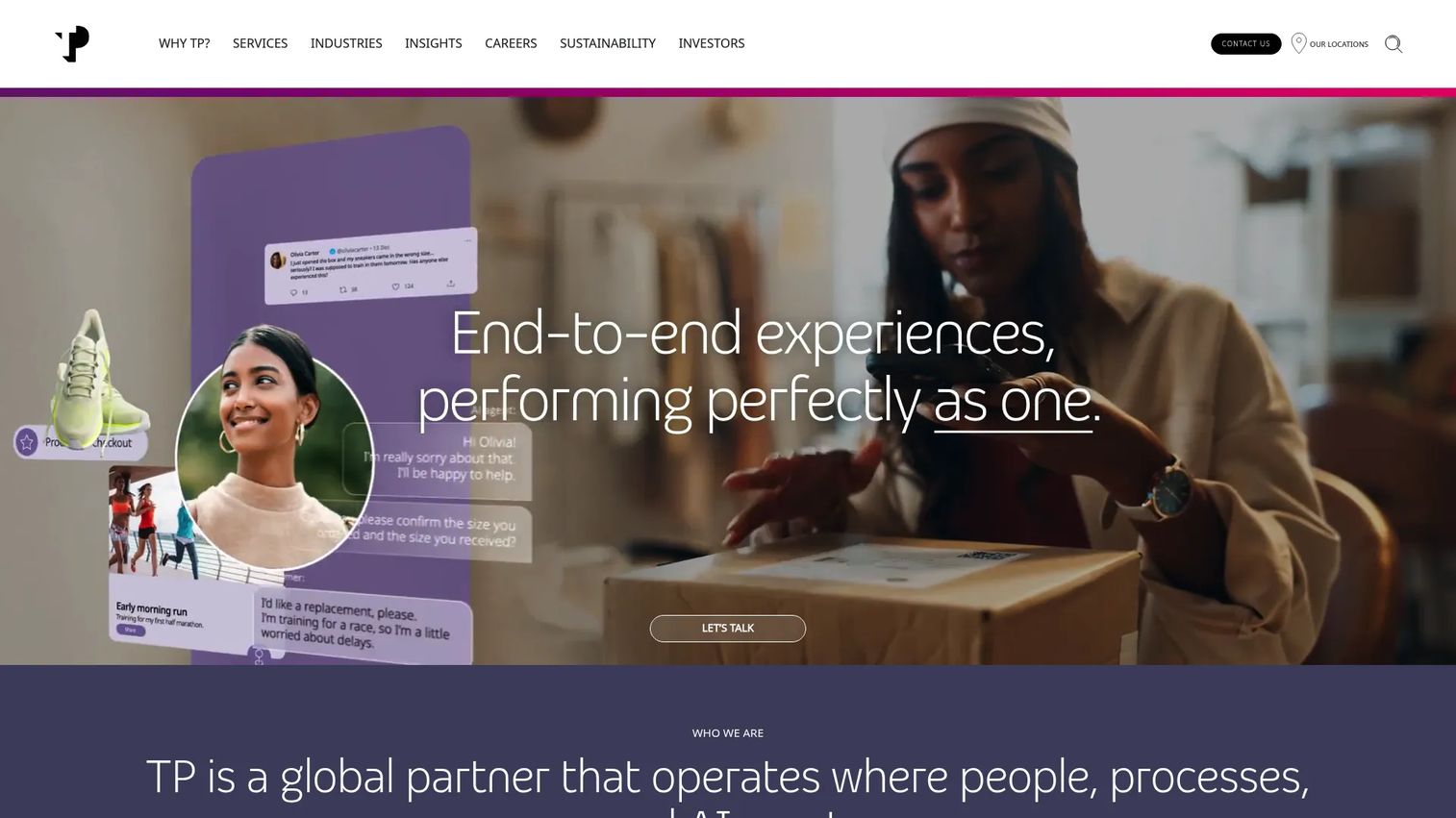
Teleperformance is one of the largest global digital business services companies, providing customer experience, back-office, trust and safety, and technology services across industries and geographies. The company operates at a scale few providers can match, supporting enterprise clients with multilingual delivery, AI-powered CX, finance and accounting operations, and managed infrastructure services.
Best for: Large enterprises that need global CX coverage across multiple regions and languages.
Key features
- Omnichannel customer service and technical support globally
- AI-powered CX and operational automation
- Trust and safety, fraud prevention, and content moderation
- Back-office support across finance, accounting, and HR
- Cloud, IT service management, and cybersecurity
Why choose Teleperformance: Choose Teleperformance when scale and geographic maturity matter more than boutique customization. For a Series B SaaS company, it may represent more enterprise procurement complexity than you need at this stage.
Teleperformance pricing: Pricing requires a direct sales engagement. Cost drivers include region mix, language coverage, channel configuration, staffing model, and service scope.
G2 rating: 4.1/5
3. EXL Service
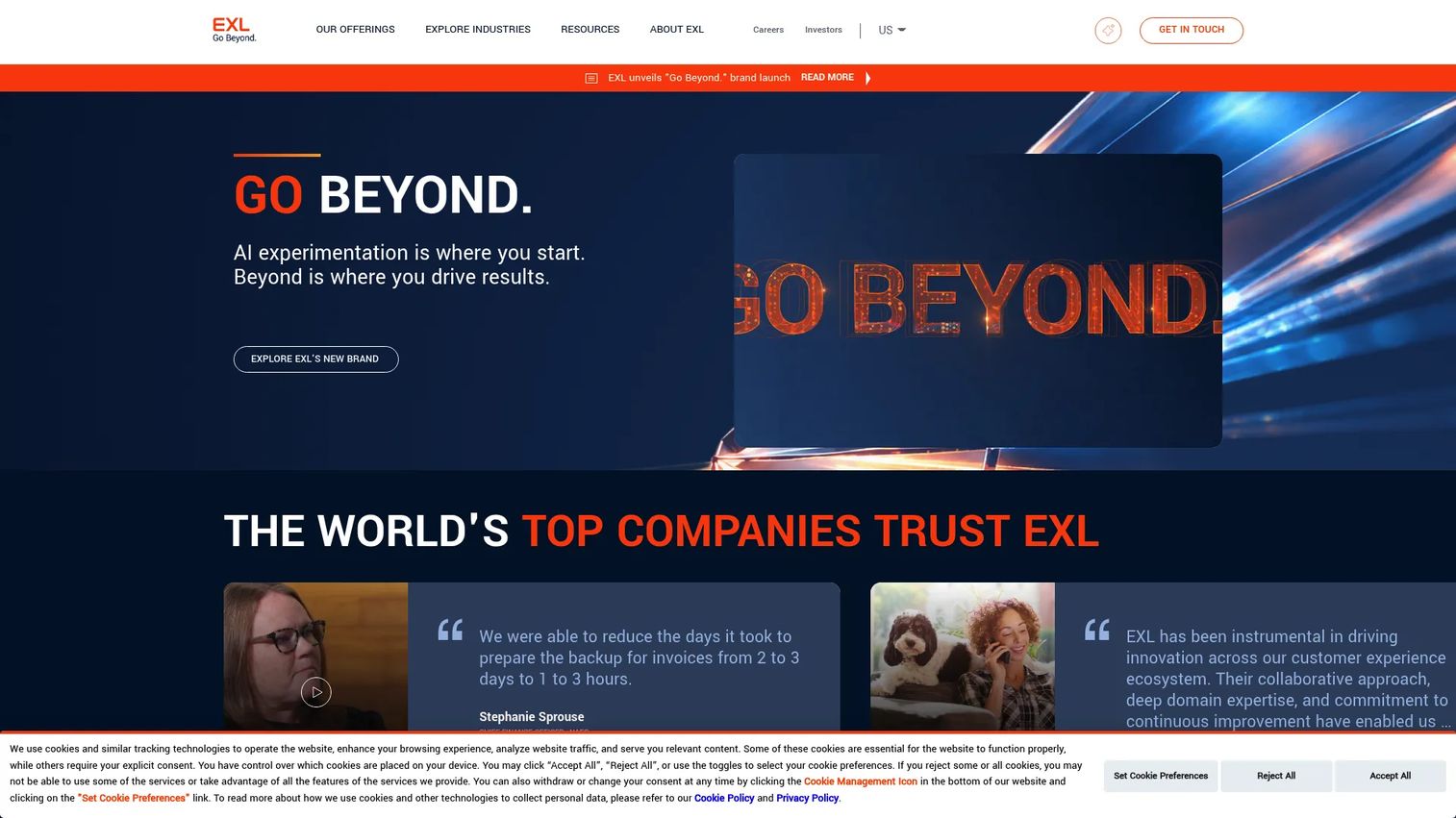
EXL Service provides data and AI-led digital transformation and business process services for enterprises across insurance, healthcare, banking, finance, and utilities. The company's differentiation sits at the intersection of operational execution and advanced analytics. For founders who need cleaner operating data alongside process delivery, EXL brings both.
Best for: Companies outsourcing finance, analytics, insurance, or healthcare operations where data accuracy and process quality are non-negotiable.
Key features
- Agentic AI and generative AI across business workflows
- Finance and accounting operations outsourcing
- Insurance and healthcare process support
- Workflow automation, ML, and cloud data management
- Industry-specific digital transformation programs
Why choose EXL Service: EXL is the right fit when operational data quality is a board-level concern. For a founder preparing for a fundraise or improving NRR, cleaner process output feeds into metrics that matter.
EXL Service pricing: EXL uses customized, outcome-based engagement models. Pricing reflects process scope, transaction volume, analytics requirements, and delivery location.
G2 rating: 5.0/5 (based on 2 reviews)
4. Accenture
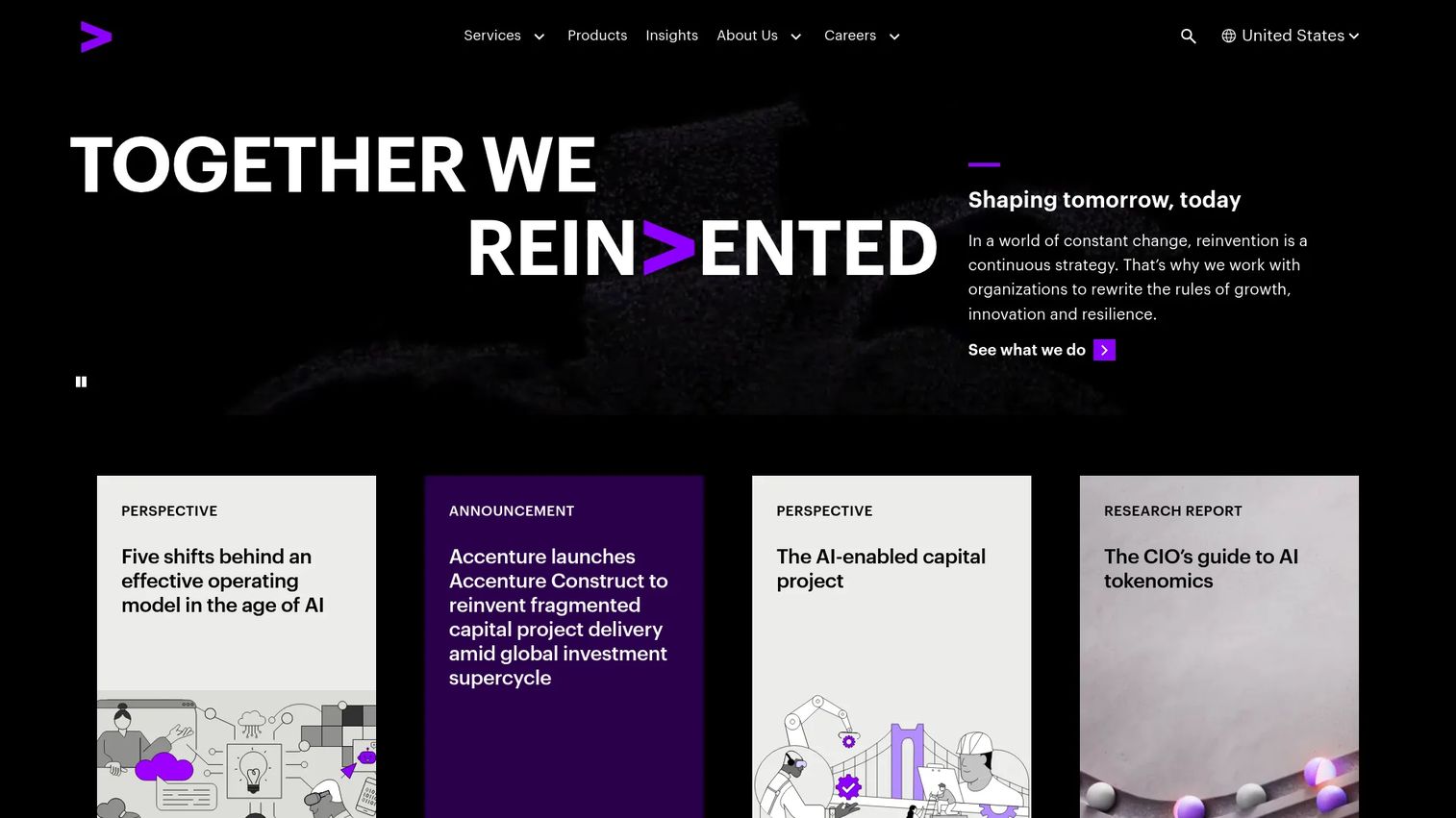
Accenture is a global professional services firm that combines consulting, technology services, and managed operations for enterprise clients. Its BPO capabilities span finance, procurement, HR, customer operations, cloud, and AI-enabled process redesign. Accenture is most relevant when outsourcing is part of a larger operating-model transformation.
Best for: Enterprise companies that need consulting, technology, and managed operations delivered as one integrated engagement.
Key features
- Managed business operations across finance, HR, and procurement
- Finance transformation and shared services
- Technology-led process redesign
- AI and cloud services
- Cybersecurity and managed infrastructure
Why choose Accenture: Accenture fits when the outsourcing decision is tied to an operating-model change, not just a capacity problem. For most Series B SaaS companies, the complexity and procurement cycle may exceed what you need today.
Accenture pricing: Custom pricing for all engagements. Key cost drivers include transformation scope, workstream count, global delivery configuration, technology stack, and contract term.
G2 rating: 4.2/5
5. Concentrix
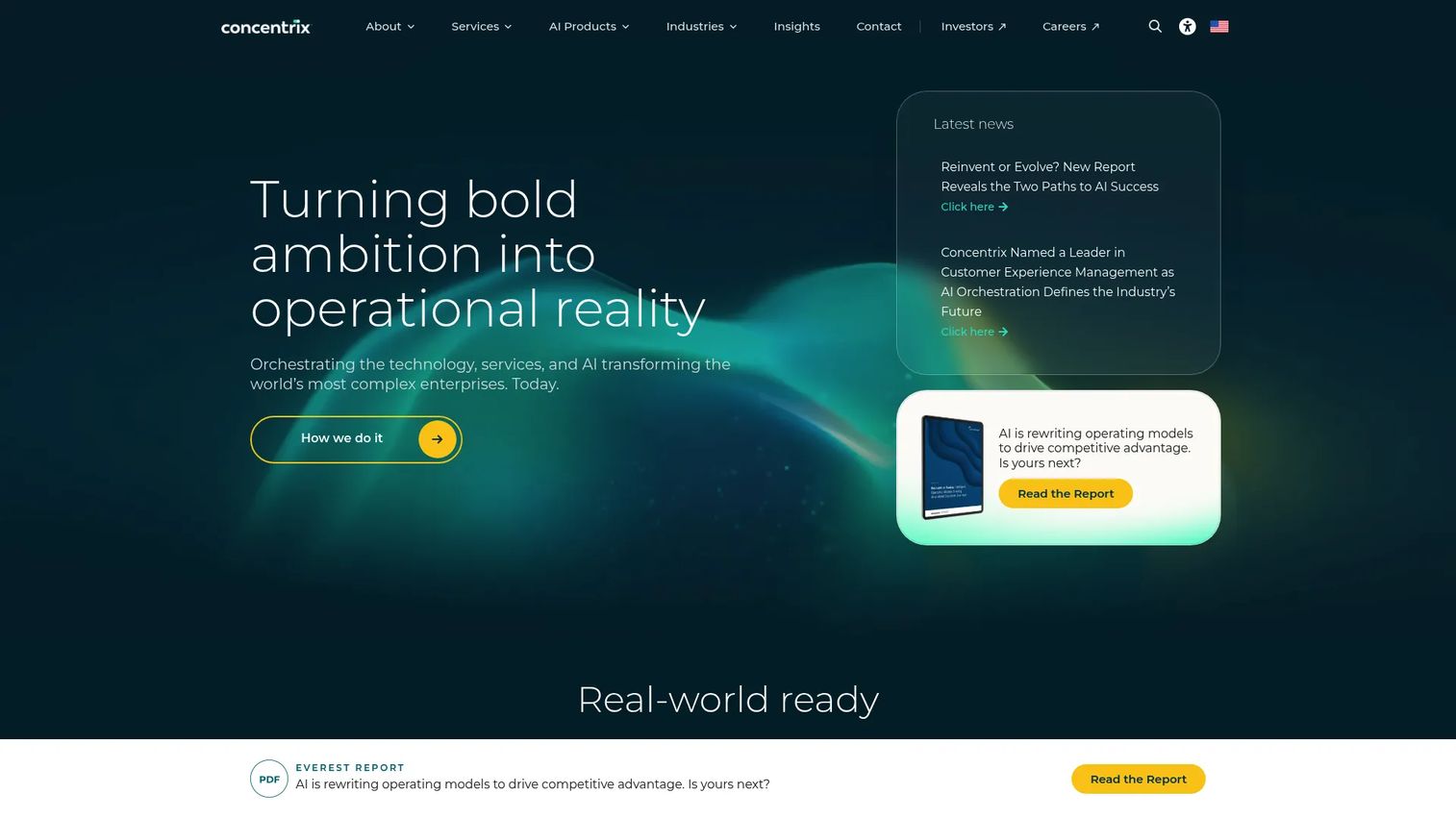
Concentrix is a global technology and services company providing customer experience management, digital operations, and AI-enhanced services. The company covers self-service automation, omnichannel support, analytics, and digital product development for clients across industries. Concentrix operates at large scale with a footprint that spans most major markets.
Best for: Companies with high-volume customer engagement needs across multiple digital channels.
Key features
- Intelligent self-service with conversational AI and automation
- Omnichannel CX across voice, digital, and messaging
- AI-enhanced agent tools and CX analytics
- Intelligent commerce and product experience operations
- Global delivery teams with broad industry coverage
Why choose Concentrix: Concentrix is a strong fit when volume, process consistency, and channel coverage are the primary evaluation criteria. It is more mature than a call center vendor and more accessible than some of the largest consulting-led BPO firms.
Concentrix pricing: Pricing is quote-based. Cost drivers include channel mix, support volume, agent location, languages supported, and service-level agreements.
G2 rating: 4.0/5 (based on 1 review)
6. Genpact
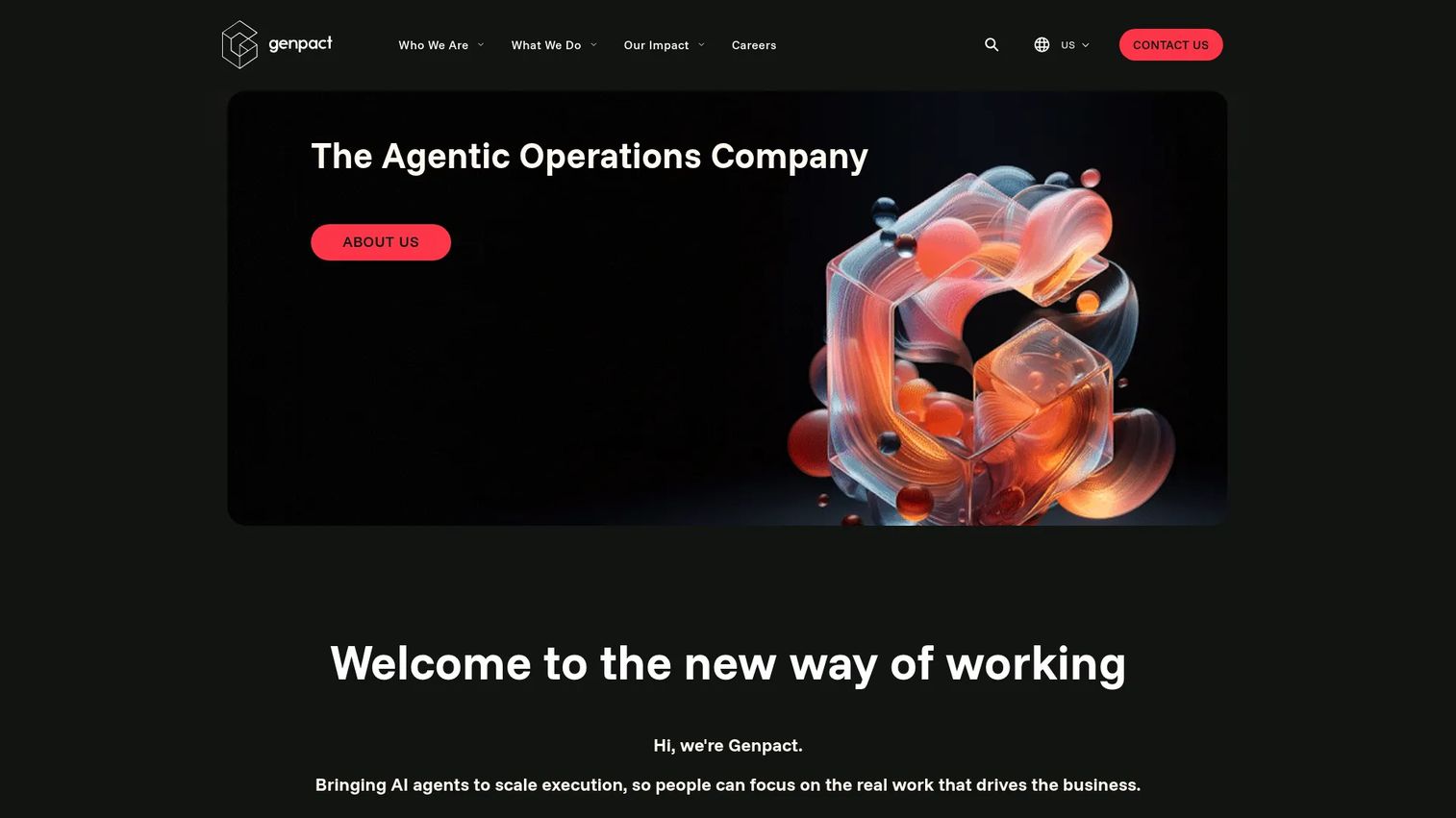
Genpact is an agentic operations and advanced technology services company. Its roots are in process discipline, originally built within GE's finance and manufacturing operations. Today the company applies that process rigor alongside AI, analytics, and automation for clients in finance, insurance, supply chain, banking, and related fields.
Best for: Finance and accounting outsourcing, compliance operations, and AI-enabled process transformation.
Key features
- Agentic AI for finance, supply chain, and banking workflows
- Finance and accounting outsourcing with deep process expertise
- Risk operations and regulatory compliance support
- Supply chain analytics and operations
- Process automation with human-in-the-loop governance
Why choose Genpact: Genpact is the right choice when your finance processes are complex enough that a generic BPO provider will create more problems than it solves. For founders replacing spreadsheet-driven operating rituals with documented processes, Genpact brings the methodology.
Genpact pricing: All engagements are custom. Pricing reflects process type, transaction volume, systems involved, compliance requirements, and team structure.
G2 rating: 4.1/5 (based on 28 reviews)
7. Wipro
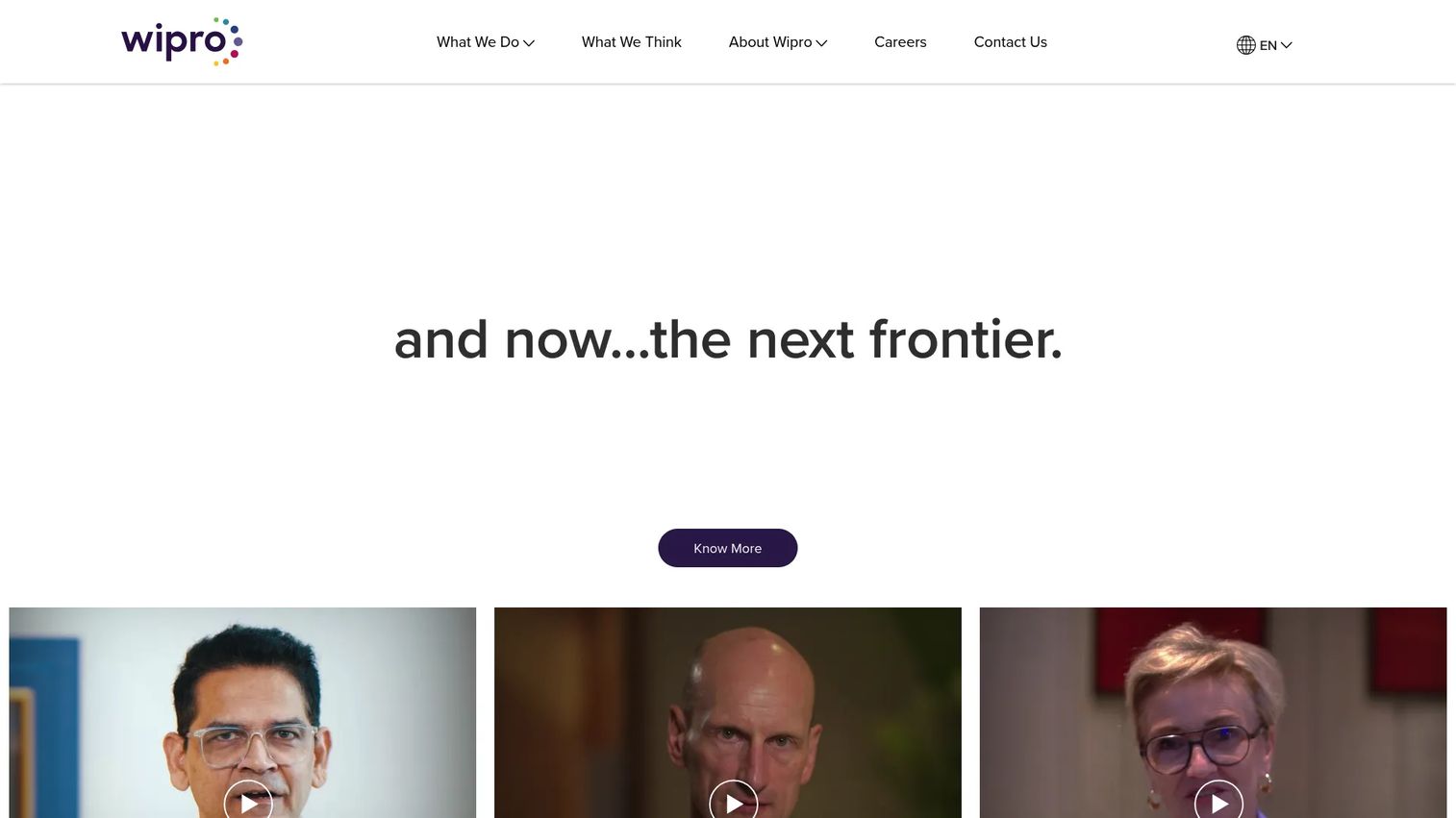
Wipro is an IT services and consulting company with BPO capabilities across finance, HR, customer operations, and digital process work. The company's differentiation is its technology integration depth: Outsourced processes at Wipro are often tightly coupled with cloud infrastructure, automation, and AI platforms.
Best for: Companies where the operational problem is also a systems problem, requiring BPO and IT capability together.
Key features
- AI-powered platforms through Wipro Intelligence
- Cloud engineering and cloud-native development
- Finance and accounting outsourcing
- HR operations support
- Customer service delivery with automation layer
Why choose Wipro: Wipro is a strong fit when the processes you want to outsource depend heavily on enterprise systems or require automation investment alongside delivery. If your pain is people-only, a more operationally focused BPO may serve you better.
Wipro pricing: Custom pricing based on workstream scope, technology integration, location mix, coverage hours, and automation requirements.
G2 rating: 4.1/5
8. Helpware
Helpware provides AI-enabled business process management across customer experience, back-office operations, AI product services, and technology consulting. The company is built for mid-market and growth-stage companies that need BPO capacity without the procurement and onboarding friction of enterprise providers.
Best for: Mid-market SaaS teams that need flexible customer support or back-office capacity without a long ramp time.
Key features
- Customer support and contact center delivery
- CX consulting and operations
- AI product, implementation, and training-data services
- Back-office support and content moderation
- Tech consulting, cloud, DevOps, and custom software
Why choose Helpware: Helpware is the right shortlist entry for a founder who needs fast operational relief without jumping straight to a global mega-provider. The AI customer service software it integrates makes it relevant for teams already investing in automation.
Helpware pricing: Pricing is quote-based and varies by role type, support level, location, hours, and team size. Contact their team for a tailored proposal.
G2 rating: 4.9/5
9. Unity Communications
Unity Communications provides BPO, employer-of-record, and AI agent services for customer support and business operations. The company is unusual in the BPO category for publishing starting rates across multiple service lines, which makes initial scoping faster.
Best for: SMB and mid-market teams that need customer operations and back-office support with a clear starting price.
Key features
- Hybrid human-AI customer support with 24/7 availability
- Employer-of-record services in the Philippines and Mexico
- Customer support, data entry, and technical support outsourcing
- AI agents across voice, chat, email, and SMS
- Back-office and sales support services
Why choose Unity Communications: The published pricing model removes one friction point in the vendor evaluation process. For a founder handing this shortlist to a new VP of Operations, a starting number makes the conversation faster.
Unity Communications pricing: BPO services start at $10.25/hr. Employer-of-record plans for the Philippines start at $99.99/month per employee, with a higher-tier EOR+ plan at $199.99/month. AI agents start at $0.07 per minute.
G2 rating: 4.0/5 (based on 1 review)
10. IQ BackOffice
IQ BackOffice focuses specifically on finance and accounting outsourcing, offshoring, and automation. The company uses its proprietary Archimedes workflow technology to manage accounts payable, accounts receivable, payroll, and financial reporting for mid-sized and enterprise clients.
Best for: Companies outsourcing finance and accounting back-office work where process consistency and automation depth are key.
Key features
- Accounts payable automation and outsourcing
- Accounts receivable and cash application management
- Full-service accounting including reconciliations and financial reporting
- Managed payroll services
- Payment processing via ACH, wire, check, and virtual card
Why choose IQ BackOffice: IQ BackOffice is the right choice when the pain is specifically in financial process execution. For a SaaS founder dealing with messy month-ends, slow reconciliations, or manual AP loops, the finance-only focus matters. You can also explore accounting software options to run alongside an outsourced team.
IQ BackOffice pricing: Pricing requires a custom quote. Cost drivers include transaction volume, process complexity, systems used, and required turnaround time.
IQ BackOffice does not have a G2 profile with meaningful reviews at this time.
11. Noon Dalton
Noon Dalton provides outsourced remote teams and business process outsourcing with a path toward AI-enabled operations. The company covers customer support, sales support, recruitment, data processing, insurance processing, e-commerce operations, and technology services. The offshore delivery model makes it cost-competitive for repeatable workflows.
Best for: Companies moving recurring back-office tasks to offshore teams without the overhead of a large enterprise BPO engagement.
Key features
- Customer support and omnichannel call-center operations
- Sales support: Lead qualification, follow-up, and CRM management
- Data processing and PDF data extraction
- Insurance processing and underwriting support
- E-commerce operations: Order processing, inventory, and tracking
Why choose Noon Dalton: Noon Dalton is the right fit for founders who want offshore operational capacity for well-documented, repeatable workflows. It works best when the process is clear and the internal owner is available to answer questions during ramp. Good business process documentation software will help you prepare before handoff.
Noon Dalton pricing: Pricing is quote-based. Cost depends on role type, work hours, offshore location, training requirements, and management structure.
Noon Dalton does not have a verified G2 or Capterra listing at this time.
12. TaskUs
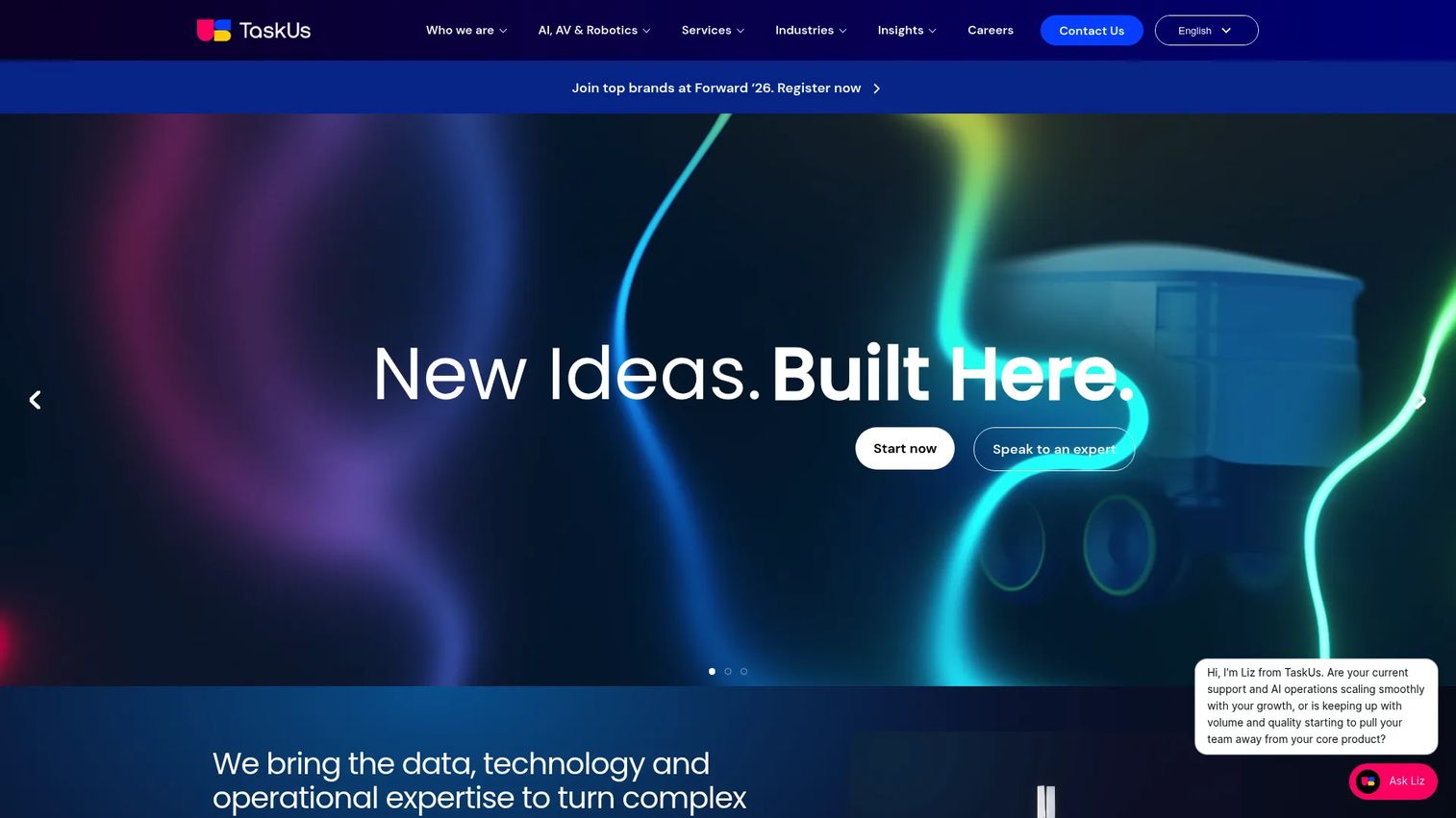
TaskUs provides technology-enabled business services across customer experience, AI data operations, trust and safety, autonomous vehicle operations, financial crime compliance, and learning services. The company is particularly strong with digital-native clients: Marketplaces, fintech companies, AI labs, and high-growth SaaS businesses.
Best for: Tech companies that need digital CX, AI data operations, and trust and safety support run at scale.
Key features
- Omnichannel customer experience across voice, chat, and email
- AI safety, data annotation, model evaluation, and testing
- Trust and safety and content moderation
- Agentic AI deployment and human-in-the-loop support
- Autonomous vehicle operations and remote intervention
Why choose TaskUs: TaskUs is the right fit when your support and operations needs go beyond standard call center capacity. For AI companies, marketplaces, and fintech businesses, the trust and safety and AI data capabilities are a meaningful differentiator. Check out Guideflow's guide to best AI customer service agents if you are also evaluating AI-led support options.
TaskUs pricing: Pricing requires a sales engagement. Cost drivers include service line, workflow volume, risk level, security requirements, and geographic coverage.
G2 rating: 4.0/5 (based on 11 reviews)
13. TTEC
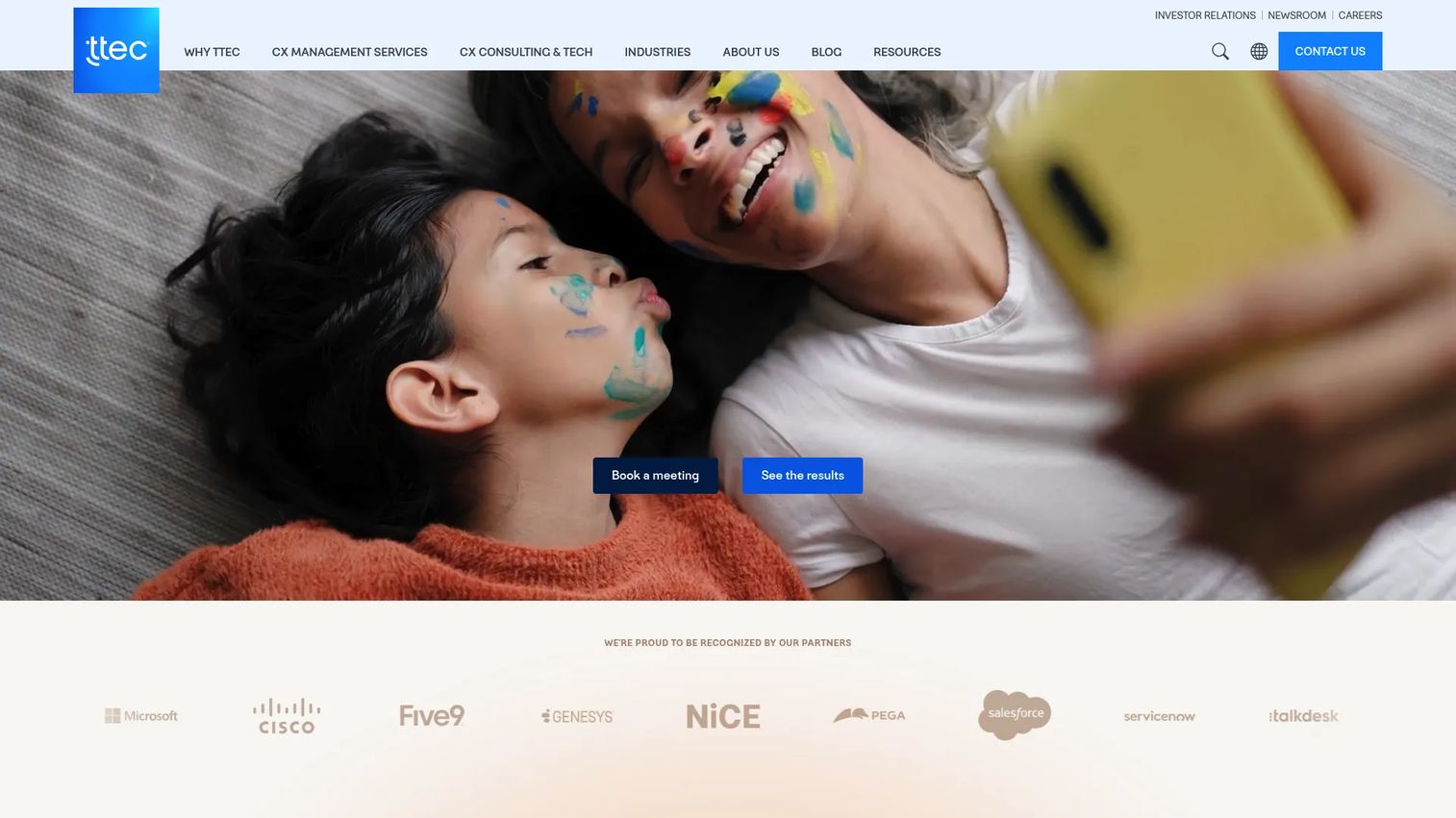
TTEC provides customer experience outsourcing, consulting, technology, analytics, AI, and managed services. The company combines CX strategy with contact center delivery, which distinguishes it from providers that offer execution only. TTEC is a relevant choice when customer experience has become a retention or NRR risk, not just a support cost.
Best for: Companies modernizing contact center operations while also rethinking the underlying customer experience strategy.
Key features
- Contact center operations with AI-enhanced tooling
- CX strategy and customer journey analytics
- Digital customer support across channels
- Workforce optimization and quality management
- Back-office, revenue generation, and managed services
Why choose TTEC: TTEC is worth shortlisting when you need both an outsourcing partner and a CX design perspective. For a founder whose support volume has grown faster than the playbook, having a partner that can also rebuild the workflow is valuable.
TTEC pricing: Pricing is quote-based. Cost drivers include channel mix, staffing model, technology layer, language requirements, and service levels.
G2 rating: 3.6/5 (based on 14 reviews)
14. Foundever
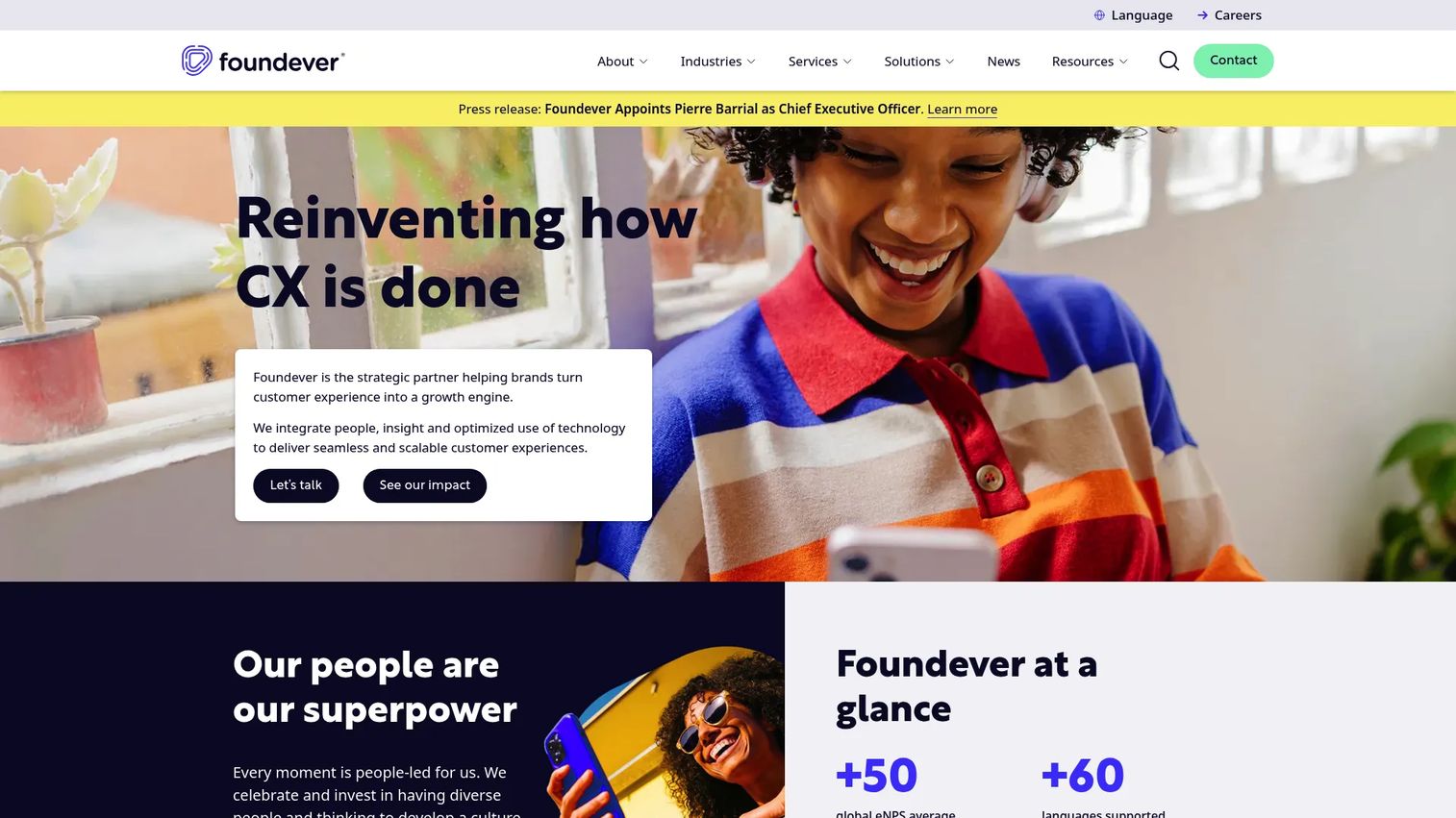
Foundever provides customer experience outsourcing, technology, and digital services for enterprise brands. The company delivers omnichannel CX across voice, email, chat, and social, with conversational AI, intelligent automation, and analytics layered into the service model.
Best for: Global companies that need multilingual customer experience operations across regions and service tiers.
Key features
- Omnichannel CX: Voice, email, chat, and social
- Conversational AI with chatbots, voicebots, and IVR
- Intelligent automation and unified agent desktop
- Customer analytics and reporting
- Workforce management across global teams
Why choose Foundever: Foundever is a strong fit when customer support spans multiple languages, regions, and service complexity levels. For a founder whose customer base has gone global faster than the internal team could follow, Foundever provides the coverage depth to match.
Foundever pricing: Pricing requires a direct engagement. Cost drivers include language mix, regional delivery, support tiers, channel configuration, and volume.
G2 rating: 5.0/5 (based on 1 review)
15. Alorica
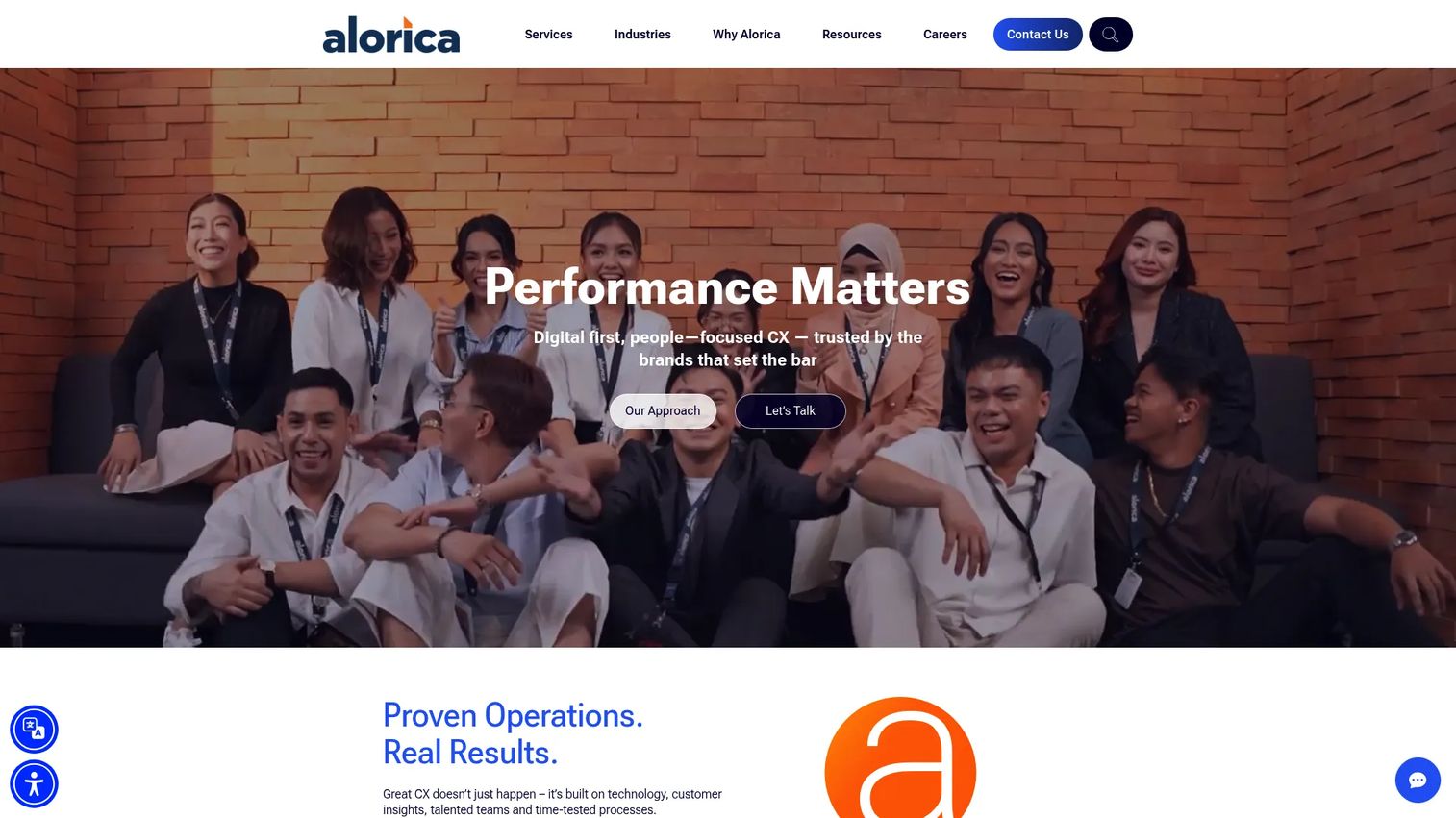
Alorica provides digital-first, people-focused customer experience and business process outsourcing services. The company covers customer care, technical support, revenue generation, trust and safety, and financial business services. Alorica's core strength is high-volume contact center delivery with AI and analytics embedded in the service layer.
Best for: High-volume customer support operations where scale, consistent agent performance, and coverage hours are the primary requirements.
Key features
- Customer experience outsourcing across care, technical support, and sales
- Conversational AI and agent assist tools
- Analytics and insights across customer interactions
- Trust and safety services
- Financial business services and collections
Why choose Alorica: Alorica is the right fit when the main problem is volume and coverage, not strategic CX redesign. For a founder whose support demand has outgrown internal hiring capacity, Alorica provides the workforce depth to close the gap fast.
Alorica pricing: Pricing requires a quote. Cost drivers include agent count, channels covered, coverage hours, delivery locations, and support complexity.
G2 rating: 3.9/5 (based on 4 reviews)
Considerations when choosing BPO companies
Service fit before vendor size
Large BPO providers are not automatically better. A Series B SaaS company may need technical support depth and a dedicated team, not a global transformation program with a 90-day procurement cycle. Match the provider's core service strength to the specific process you are ready to hand off.
Delivery model and time-zone coverage
Onshore delivery costs more but reduces communication friction and escalation lag. Nearshore, often Latin America for US companies, balances cost and time-zone proximity. Offshore reduces per-hour costs but requires stronger documentation and a defined escalation path. Factor in your customers' expectations for response time when choosing.
Dedicated versus shared teams
Dedicated teams give agents context on your product and brand. That context matters for technical support, high-stakes customer conversations, and anything requiring judgment. Shared teams reduce cost for predictable, low-complexity workflows where agent knowledge depth is less critical. Most BPO providers offer both models; know which one the process demands before the first conversation.
Compliance, data handling, and access controls
If your product operates in healthcare, fintech, or any regulated category, verify the provider's relevant compliance posture: HIPAA, PCI DSS, GDPR, SOC 2, or ISO 27001 where applicable. Deloitte's 2024 research found that 83% of executives now use AI as part of outsourced services, which adds data governance questions to every evaluation. Ask specifically what systems agents access, how data is stored, and how access is revoked at contract end.
Pricing model and total management cost
BPO pricing structures vary: FTE-based, per-hour, per-ticket, transaction-based, or managed service flat fees. The stated rate is rarely the full cost. Factor in training time, internal owner time, QA overhead, tooling, escalation management, and transition costs. According to The CPA Journal (2025), 72% of organizations outsource IT and data management and 69% outsource payroll or HR, suggesting these are the categories where pricing models are most mature and transparent.
Conclusion
The best BPO provider is not the biggest one. It is the one whose service model matches the process you are ready to hand off.
For complex customer support, shortlist Hugo, TaskUs, Helpware, TTEC, or Foundever. Hugo and TaskUs are purpose-built for high-growth tech operations. Helpware deploys fast for mid-market teams. TTEC adds strategic CX depth. Foundever covers global multilingual delivery.
For enterprise-scale operations, evaluate Accenture, Teleperformance, Concentrix, Genpact, Wipro, or EXL Service. These providers carry the footprint and compliance maturity for complex, multi-region engagements.
For back-office and finance-heavy work, compare IQ BackOffice, Noon Dalton, Unity Communications, EXL Service, and Genpact. IQ BackOffice and Noon Dalton are the most focused on repeatable operational execution. Unity Communications publishes starting rates, which shortens scoping conversations.
Build a shortlist of three to five providers based on service category, delivery model, compliance requirements, and your internal management capacity. Then send your RFP with documented processes already written.
Start your journey with Guideflow today!
FAQs
A BPO company is an external provider hired to run defined business processes on behalf of another organization. Common examples include customer support, finance and accounting operations, payroll administration, data processing, IT support, and back-office workflows. The provider typically supplies staff, management, quality assurance, and tooling under a service contract.
Front-office BPO covers customer-facing work: Contact centers, technical support, and sales support. Back-office BPO covers internal operations: Finance, accounting, payroll, HR, and data entry. Knowledge-process outsourcing handles higher-judgment work like analytics, research, and AI data operations. IT-enabled BPO combines process delivery with cloud, automation, and technology management.
Start by defining the specific process you want to outsource and document it clearly. Decide on the delivery model: Onshore, nearshore, or offshore. Verify compliance posture for your industry. Check references from companies at a similar stage with similar workflows. Compare pricing models across providers, and assign an internal owner before day one of the engagement.
They can be, but the cost reduction depends on the process type, delivery location, management overhead, and quality standards required. Offshore and nearshore BPO typically offers lower per-hour rates than onshore hiring. However, training time, internal owner time, QA, and transition costs reduce the savings. For high-judgment or high-stakes work, the cost equation is often closer than it appears.
Outsourcing is the broader practice of contracting external parties for any kind of work. BPO specifically refers to outsourcing defined, repeatable business processes: Payroll, customer service, data entry, finance operations, and similar workflows. IT outsourcing, for example, is a subset of outsourcing that may or may not qualify as BPO depending on whether the work is process-defined or project-based.
It can work well when workflows are documented, escalation rules are clear, and product knowledge can be trained to a defined standard. The risk increases when support requires deep product judgment, involves sensitive customer data, or when customer interactions contain signals your product team needs to hear. Keep strategic customer insights and high-stakes escalations close to the company, and outsource the repeatable tier first.
Onshore BPO offers the closest cultural and time-zone alignment but carries the highest cost. Nearshore balances proximity and cost, and is often a strong fit for US companies working with Latin American providers. Offshore BPO reduces cost per hour and can extend coverage to 24/7, but requires stronger documentation, clearer escalation paths, and more proactive management. The right model depends on your customers' expectations, the complexity of the process, and your internal oversight capacity.
Ask these before any contract: Who manages the team day to day, and what is their escalation path? What does the ramp plan look like, and how long until agents are productive? How is quality measured, and what SLAs are contractually committed? What systems will agents access, and how is that access controlled and revoked? How are escalations handled when agents cannot resolve an issue? What happens if volume doubles in 90 days? Which compliance controls are documented and auditable?