The frontend team is ready to build. The backend endpoint is still changing. Your third-party payment dependency behaves differently in staging every week.
This is a coordination problem that looks like a technical one, but product managers own the outcome. A release gets blocked not because the code is bad, but because one service isn't ready and the whole pipeline stalls waiting for it.
API mocking software breaks that dependency. Instead of waiting on a live endpoint, teams work against a controlled simulation that returns exactly what the contract specifies, including 401 errors, empty lists, delayed responses, and rate-limit failures. According to the Postman State of the API report (2025), 81% of API teams report testing APIs as a common activity, and the API mocking software market was estimated at $102.17 million in 2025 and is projected to reach $229.93 million by 2032 (360iResearch, 2026).
The tools in this guide differ in deployment model, protocol support, specification compatibility, and maintenance overhead. Choosing the wrong one adds engineering cost without adding test coverage where it matters.
What's inside
This guide covers eight API mocking software tools evaluated for 2026.
- Who it's for: Product managers and engineering leads evaluating API mocking tools for local development, CI/CD pipelines, and shared integration testing
- Selection criteria: Deployment model flexibility (local, hosted, Docker, CLI), OpenAPI or Swagger specification support, response realism (dynamic data, error injection, latency), and maintenance overhead
- Coverage: Local desktop tools, browser-based hosted endpoints, OpenAPI-first mock servers, code-level libraries, and multi-protocol simulation platforms
- Also included: A buyer checklist for keeping mocks synchronized with real API contracts as they evolve
TL;DR
- Best for local, offline-first API mocking: Mockoon gives developers a desktop and CLI mock server with OpenAPI support, Docker execution, and no infrastructure overhead
- Best for teams already using API collections: Postman adds mock servers to a workflow most teams already maintain for testing and documentation
- Best for high-fidelity service virtualization: WireMock handles stateful scenarios, fault injection, and multi-protocol simulation for complex integrations
- Best for browser-based hosted endpoints: Beeceptor creates shareable mock URLs without requiring anyone to run a local process
- Best for OpenAPI contract-first workflows: Prism and Stoplight generate mock behavior directly from API specifications
- Best for protocol flexibility: Mountebank supports HTTP, HTTPS, TCP, and SMTP imposters from a single configuration
What is API mocking software?
API mocking software creates simulated API endpoints and responses so teams can build, test, and validate software without depending on a completed, stable, or accessible live API.
What a mock API does
A mock API server intercepts HTTP requests and returns configured responses based on request matching rules. It does not call a real backend. Instead, it reads the incoming request path, method, headers, and body, then returns a pre-defined or dynamically generated response.
Common examples include:
- Returning a
200with a valid account object for a frontend working on a user profile page - Returning an empty array to test how the UI handles a zero-state
- Returning
401 Unauthorizedor429 Too Many Requeststo test error handling - Delaying a response by 2,000ms to surface slow-connection behavior
- Returning a schema-valid but structurally unexpected payload to test resilience
For product managers, this translates to: Your team can validate the user journey before the backend is built, and can reproduce edge cases consistently across development, QA, and CI environments.
How API mocks differ from test fixtures and production APIs
A test fixture is static sample data stored inside an application or test suite. A mock API server exposes a real network endpoint with configurable routing logic, making it accessible to any client that can send an HTTP request.
Service virtualization extends this further, allowing simulation of dependent services with stateful behavior, request history, and dynamic response rules based on prior interactions.
Production APIs connect to live backend systems and real data. Mock API servers connect to nothing upstream; they exist only to return controlled, repeatable responses.
Core capabilities to look for
- OpenAPI or Swagger import for spec-driven mock generation
- Request matching on path, method, headers, and body
- Dynamic response templating and conditional rules
- Latency, error injection, and fault simulation
- Local desktop, Docker, CLI, and hosted deployment options
- CI/CD execution support
- Request logging and proxy mode for recording real traffic
- Version control and environment-specific configuration
When to use API mocking software
Build frontend workflows before backend endpoints are ready
A PM can validate the checkout, onboarding, or settings flow with the design and frontend team before a single backend line ships. The mock must reflect the planned API contract, not an improvised data shape, or the validation work has to be redone. Pair this with API development tools to keep the contract accurate as the design evolves.
Test errors, delays, and edge cases before users find them
Empty states, timeout handling, permission failures, rate limits, and third-party unavailability are where most user experience defects hide. A mock server lets QA reproduce these conditions on demand without coordinating with external systems or waiting for production traffic. This is where API testing tools and mocking overlap most directly.
Stabilize automated testing and CI/CD pipelines
Test suites that depend on external services produce flaky results. A mock server with deterministic responses makes CI/CD tools more reliable and faster. Environment-specific mock configurations separate development behavior from release validation.
API mocking software comparison
The right API mocking software depends on whether your team needs a local developer tool, a collection-centered workflow, an OpenAPI-first mock server, or deeper service virtualization. The table below compares all eight tools on the criteria that matter most for a PM making a purchasing or prioritization decision.
| # | Product | Best for | Key differentiator | Pricing | G2 rating |
|---|---|---|---|---|---|
| 1 | Mockoon | Local offline-first API mocking | Desktop, CLI, Docker, and OpenAPI support | Free / €10 per license/month | 4.5/5 |
| 2 | Postman | Teams managing API collections | Collection-based mock servers with collaboration | Free / $19 per user/month | 4.6/5 |
| 3 | WireMock | High-fidelity service virtualization | Stateful mocking, fault injection, multi-protocol | Free / Enterprise (custom) | 4.9/5 |
| 4 | MockServer | Code-driven HTTP/HTTPS simulation | Programmable expectations and proxy verification | Free (open source) | Not listed |
| 5 | Beeceptor | Browser-based hosted mock endpoints | Shareable URLs, rules engine, no local install | Free / $10/month | 4.8/5 |
| 6 | Prism | OpenAPI contract-first development | Generates mock servers from OpenAPI documents | Free (open source) | Not listed |
| 7 | Mountebank | Multi-protocol dependency simulation | HTTP, HTTPS, TCP, and SMTP imposter support | Free (open source) | 4.5/5 |
| 8 | Stoplight | API design and governance workflows | Visual OpenAPI design with instant mock servers | Free / $44/month | 4.4/5 |
Best 8 API mocking software tools for 2026
Each tool in this list solves a different kind of dependency problem. The choice comes down to who needs access to the mock, what data patterns it needs to simulate, and how much engineering effort the team can dedicate to maintaining it.
1. Mockoon
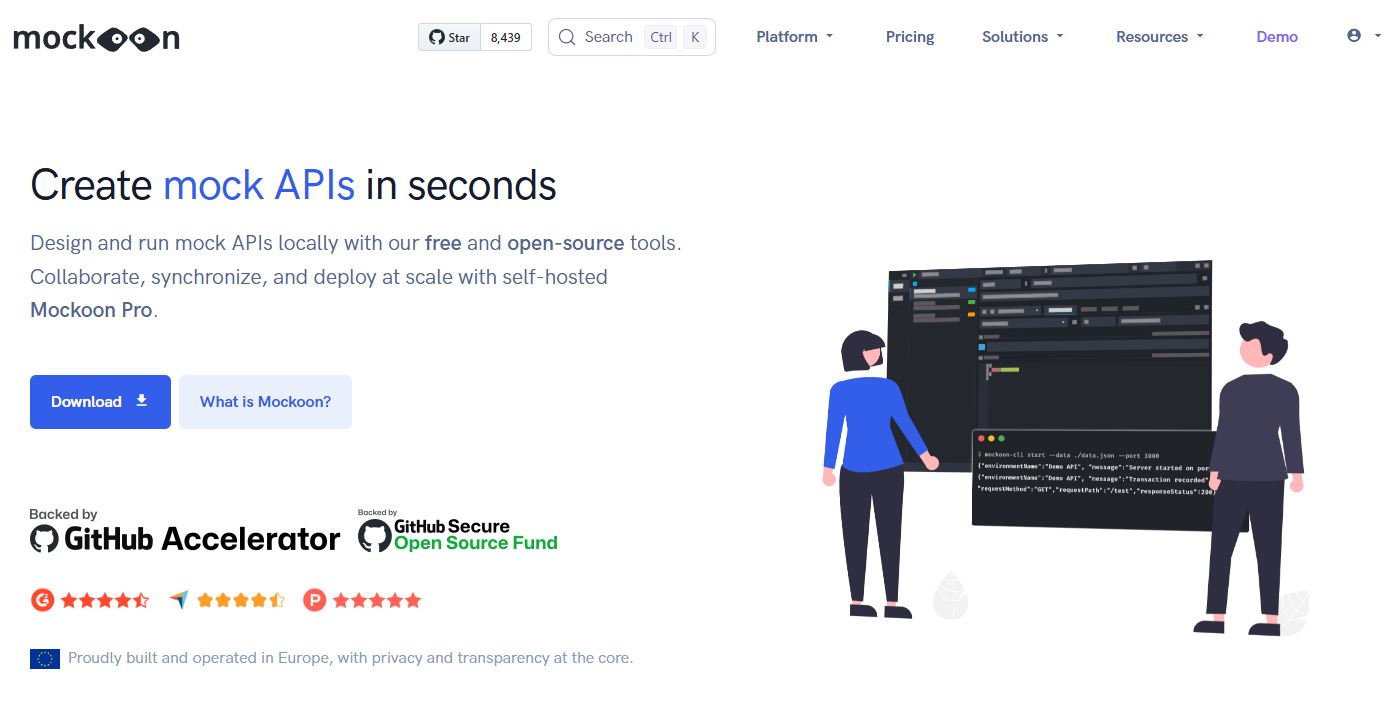
Mockoon is an open-source API mocking platform designed for fast, offline-first mock server creation. Developers run it as a desktop application or via CLI and Docker, with no server infrastructure required. It supports OpenAPI import and export, dynamic response templating, and a proxy mode for recording real API traffic.
Best for: Product teams whose engineers need fast local mock APIs for frontend work, QA scenarios, and CI jobs without depending on a shared hosted environment.
Key features
- Desktop app and CLI mock server creation
- OpenAPI and Swagger import and export
- Dynamic templating with Handlebars and rules engine
- Stateful CRUD operations with fake JSON databases
- Request logging, proxy mode, and HTTPS support
Why choose Mockoon: It keeps mock definitions close to engineering workflows and requires no account to get started. Teams that want mocks living alongside code in version control benefit from its CLI-first approach.
Mockoon pricing: The open-source version is free forever. The Team plan costs €10 per license/month (billed at €120/license/year) and adds collaboration, deployments, and administration. Enterprise pricing requires contact.
G2 rating: 4.5/5
2. Postman
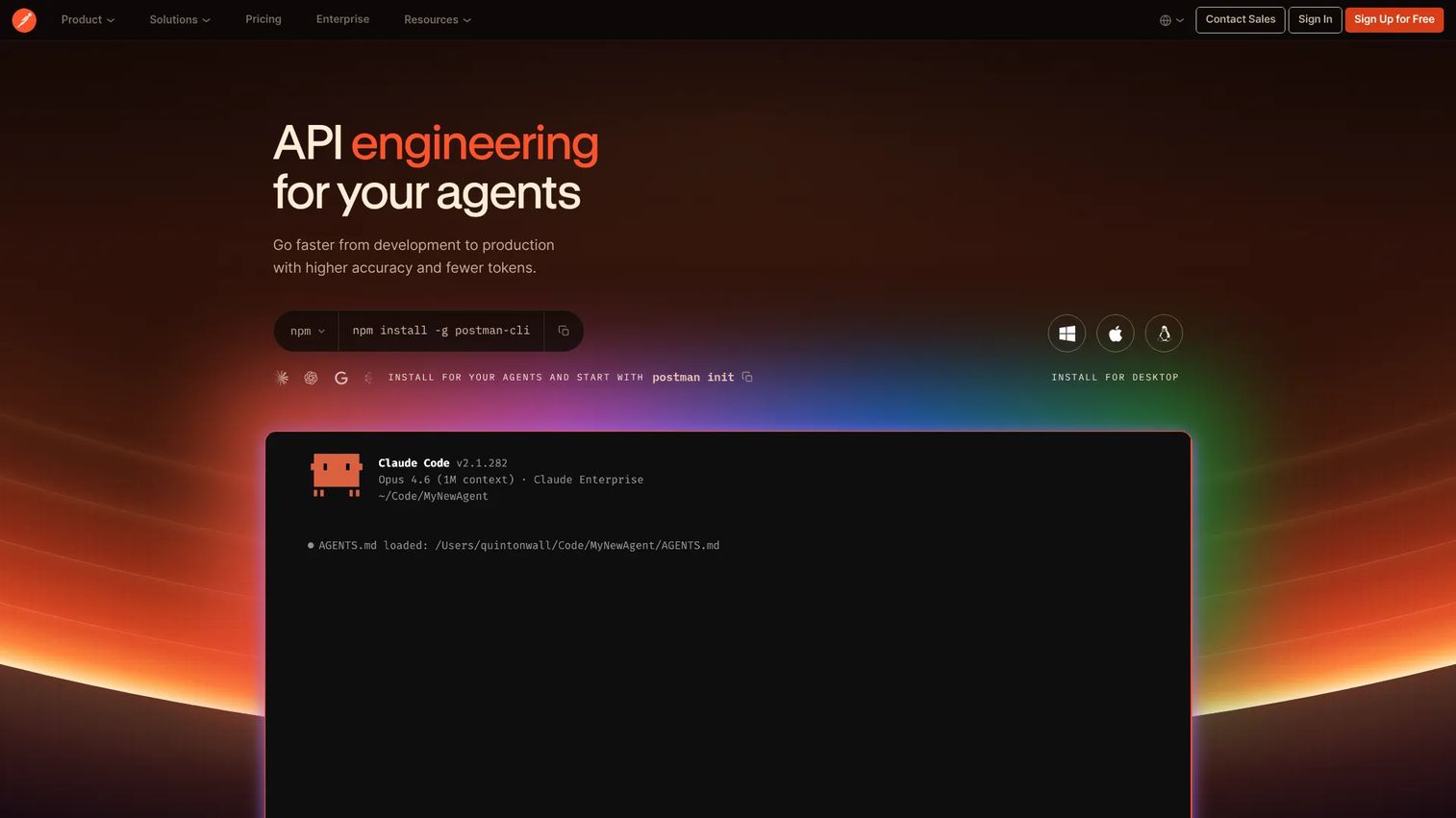
Postman is a full API platform covering design, testing, documentation, and collaboration. Its mock server capability is built around API collections, so teams that already maintain requests and examples in Postman can activate a hosted mock endpoint without switching contexts.
Best for: Teams already using Postman collections as the working reference for API exploration, testing, and documentation.
Key features
- Collection-based hosted mock servers
- Shared API workspaces with environment variables
- Example responses linked to collection requests
- Automated API tests and documentation generation
- OpenAPI import and multi-protocol client support
Why choose Postman: If your team already lives in Postman, adding mock servers avoids tool sprawl. The trade-off is that teams seeking advanced fault injection or stateful service simulation may need a more specialized tool.
Postman pricing: Free for individual use. The Solo plan is $9/month (billed annually). Team costs $19 per user/month (billed annually). Enterprise pricing requires contacting sales.
G2 rating: 4.6/5
3. WireMock
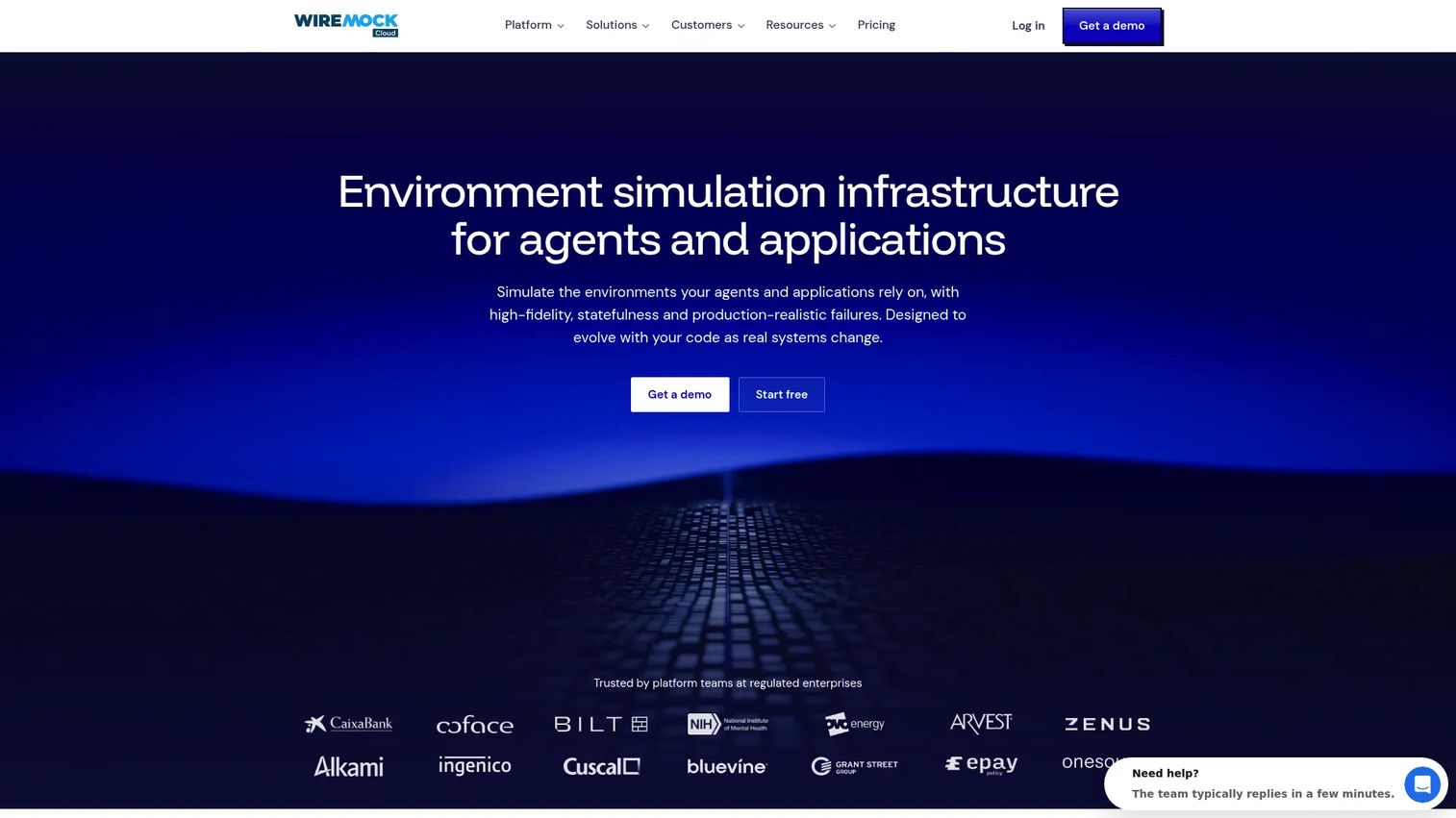
WireMock is a service virtualization platform for teams that need more than a canned response. It supports advanced request matching, stateful behavior across multiple steps, fault and latency simulation, and OpenAPI import. WireMock Cloud adds team collaboration, RBAC, SSO, and audit logs for enterprise environments.
Best for: Teams testing complex integrations, regulated workflows, or distributed systems where external dependencies can fail in realistic ways.
Key features
- Advanced request matching with flexible predicates
- Stateful mocking and multi-step scenario support
- Chaos testing with fault and latency simulation
- OpenAPI and Swagger import with validation
- WireMock Runner and CLI for local, CI/CD, and Kubernetes deployment
Why choose WireMock: Use it when a checkout, identity, payment, or partner dependency must be tested under failure conditions before launch. The engineering ownership is higher than a desktop mock tool, but the test realism is correspondingly stronger.
WireMock pricing: A free plan covers individual use with 1,000 calls per month. Enterprise pricing is quote-based and requires contact.
G2 rating: 4.9/5
4. MockServer
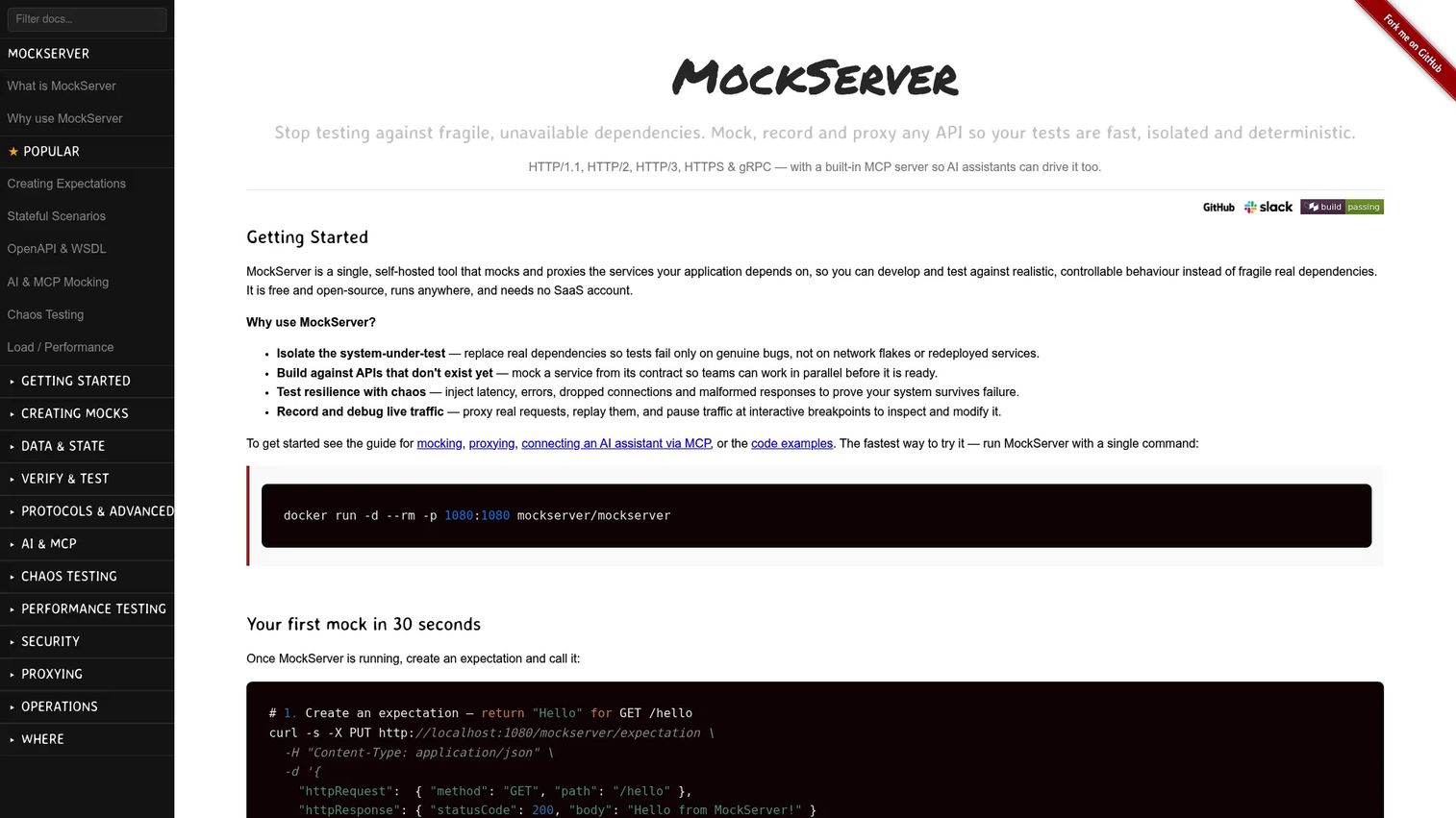
MockServer is a free, open-source tool for mocking and proxying HTTP, HTTPS, and gRPC services. Teams configure request expectations programmatically using Java or JavaScript clients, and MockServer verifies whether those expectations were met during a test run.
Best for: Engineering teams that need programmable mock behavior and request verification inside integration or automated test suites.
Key features
- HTTP, HTTPS, and gRPC API mocking
- Request expectation setting and verification
- Programmable response rules and conditional logic
- Proxy and traffic recording with replay
- Chaos and fault injection including dropped connections
Why choose MockServer: It fits mature engineering practices where code-based test configuration is preferred over a UI. Product managers benefit indirectly: Integration test suites become more deterministic, and release candidates arrive with documented evidence of dependency behavior.
MockServer pricing: MockServer is free and open-source with no paid tiers. Commercial support options may be available through the maintainers directly.
5. Beeceptor
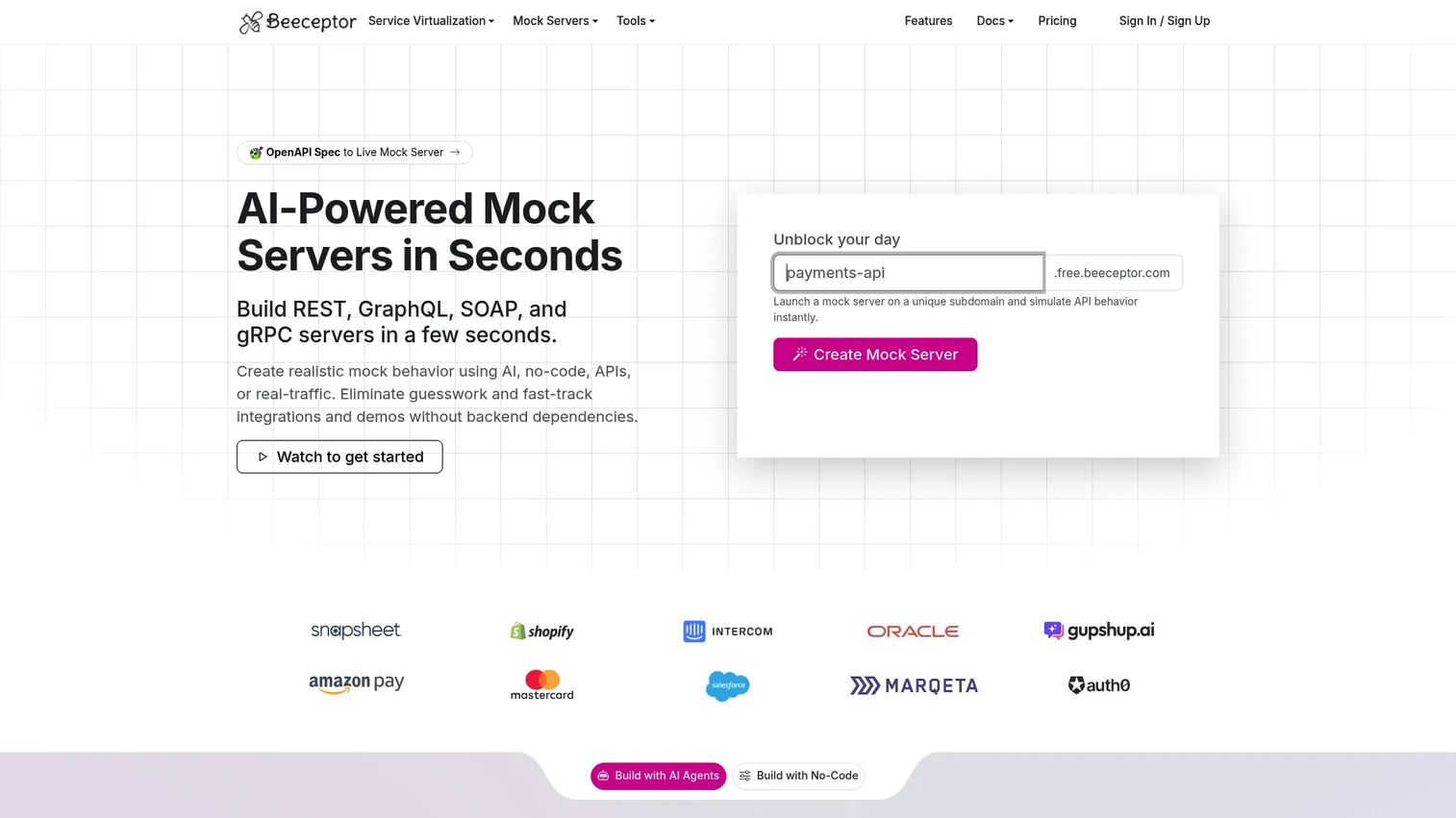
Beeceptor is a browser-based mock server and service virtualization platform. Create a named endpoint, configure response rules, and share the URL with anyone who needs it. No local process required. It supports OpenAPI and Swagger imports, request inspection, response delays, and CRUD routes.
Best for: Cross-functional teams that need a shareable mock endpoint for prototyping, integration checks, partner testing, or lightweight hosted simulations.
Key features
- Browser-based hosted mock API endpoints
- Rule-based response routing and dynamic responses
- OpenAPI and Swagger import
- Request inspection logs with full payload visibility
- Response delays, timeouts, and fault simulation
Why choose Beeceptor: The operational value is a stable URL accessible to product, QA, frontend, and external partners without any install step. Review data handling and access controls before using hosted endpoints with sensitive payload structures.
Beeceptor pricing: The free plan is available with usage limits. The Individual plan costs $10/month, Team is $25/month, and Scale is $99/month. Annual billing offers 20% off.
G2 rating: 4.8/5
6. Prism
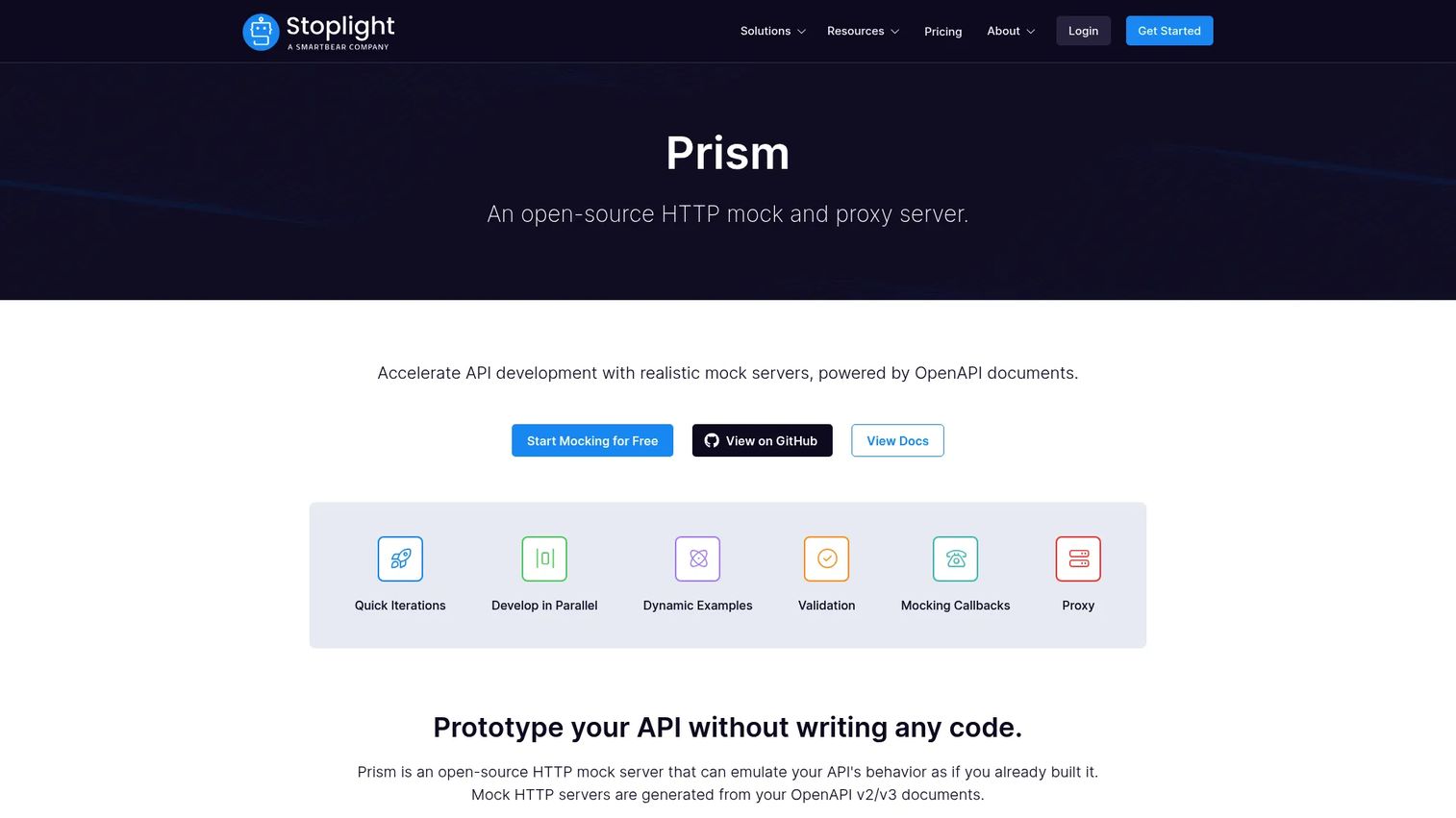
Prism is an open-source HTTP mock and proxy server that generates mock behavior directly from OpenAPI v2 and v3 documents. Point it at an API specification, and it exposes a local server that returns schema-valid, dynamically generated example responses.
Best for: API teams that want frontend and backend work to start from an agreed OpenAPI definition before implementation is complete.
Key features
- HTTP mock server generated from OpenAPI v2 and v3 documents
- Dynamic random examples based on schema types
- Request and response validation against specification
- Validation proxy to identify spec-versus-implementation gaps
- CLI-based workflow, runs locally or in Docker
Why choose Prism: Product managers can use a Prism-backed mock to validate whether the API contract supports the intended user journey during specification reviews, before engineering work becomes expensive to change. It is a focused tool without a rich collaboration UI.
Prism pricing: Prism itself is open-source and free. Stoplight's hosted platform, which includes instant mock servers, starts at $44/month (billed annually) for the Basic plan.
7. Mountebank
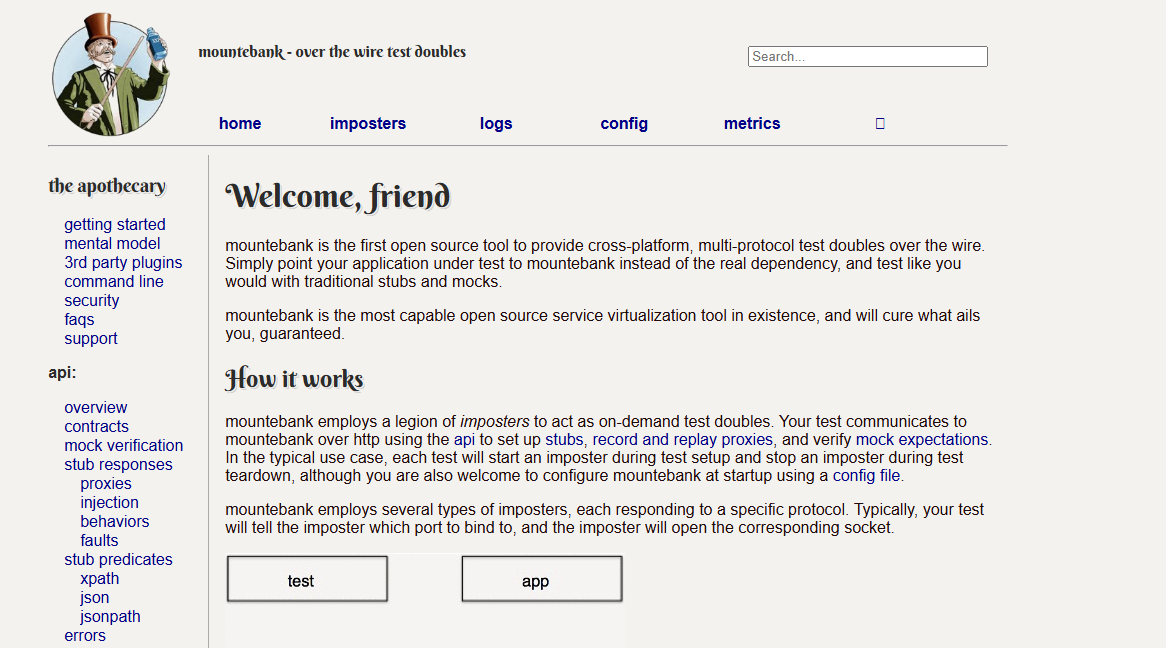
Mountebank is an open-source multi-protocol service mocking tool. It uses the term "imposters" for its mock server configurations, and it supports HTTP, HTTPS, TCP, and SMTP protocols. JavaScript injection allows custom response logic beyond static configuration.
Best for: Teams that need to simulate multiple kinds of network dependencies inside integration testing, including services beyond REST endpoints.
Key features
- Multi-protocol imposter support (HTTP, HTTPS, TCP, SMTP)
- Configurable request matching and response templates
- JavaScript injection for custom response behavior
- Stubs and predicates for conditional routing
- CLI-based setup with JSON configuration
Why choose Mountebank: It earns a place on the list when the testing problem crosses protocol boundaries. Use it when a feature depends on services beyond REST, such as email delivery workflows or legacy TCP connections. It is a code-first tool with a steeper initial configuration than desktop options.
Mountebank pricing: Mountebank is open-source and free. No commercial SaaS tier was verified.
G2 rating: 4.5/5
8. Stoplight
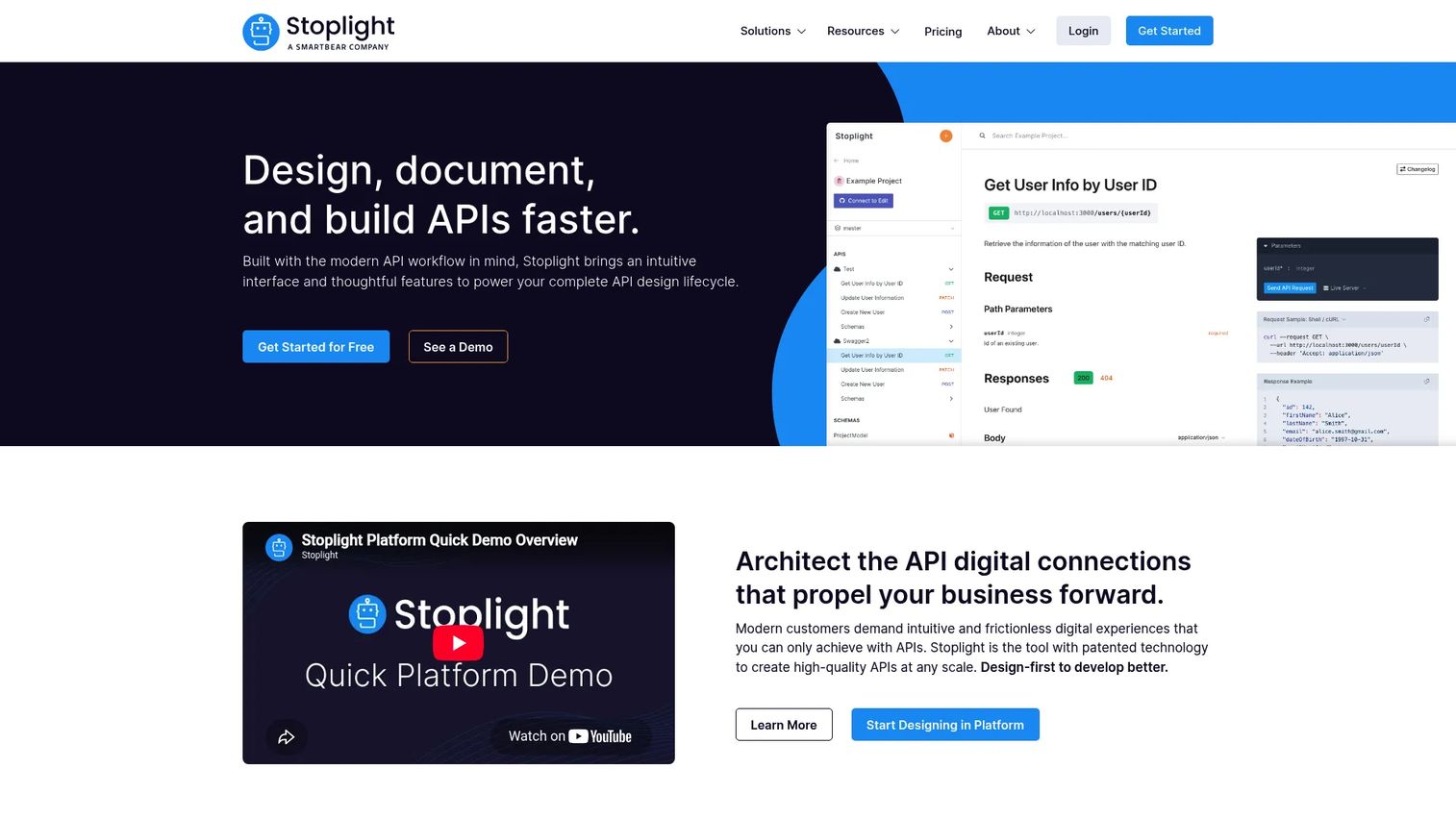
Stoplight is an API design and documentation platform built around OpenAPI. It includes a visual designer, instant mock servers, API style guides, governance rules, and Git integration. The mocking capability is part of a broader design-first workflow rather than a standalone mock server tool.
Best for: Product and platform teams formalizing a design-first API program with shared standards, reusable documentation, and contract governance across multiple services.
Key features
- Visual OpenAPI and JSON Schema designer
- Instant mock servers from API specifications
- Interactive documentation with code samples
- API style guides and governance rule enforcement
- Git integration and reusable component library
Why choose Stoplight: It fits organizations where API consistency, documentation, and review workflows matter as much as mock endpoint creation. Teams that want only a local mock server may find a narrower tool more direct.
Stoplight pricing: A free plan is available. The Basic plan costs $44/month (billed annually), Startup is $113/month (annually), and Pro Team is $362/month (annually). Enterprise pricing requires contact.
G2 rating: 4.4/5
Considerations when choosing API mocking software
Choose the deployment model your team will actually use
Local desktop tools, CLI tools, Docker-based runners, and hosted endpoints each require different setup and maintenance. The most capable platform adds no value if developers skip it during normal build cycles. Match the deployment model to how your engineers already work, and confirm Docker or CLI compatibility before committing if the team runs CI on every pull request.
Treat the API specification as a product artifact
OpenAPI definitions should have an owner, a review process, and a versioning cadence. Mocks that drift from the real contract create false confidence: The frontend passes QA against a mock that no longer matches what the backend ships. Pair your API mocking tool with API documentation tools to keep the contract current.
Test failure behavior, not only success paths
401, 403, 404, 429, and 500 responses are where the user experience breaks down. Empty payloads, partial data, and unavailable third-party services also require deliberate handling. Configure these failure scenarios in your mocks before QA starts. Refer to AI software testing tools for approaches that can automate edge-case generation.
Match simulation depth to the release risk
Static stubs are appropriate for early UI validation when the API shape is still provisional. Stateful simulation, proxying, and service virtualization are appropriate for integrations where a failure during a live transaction creates a customer-facing or compliance risk.
Set ownership and a refresh cadence
Add a mock update step to your release checklist. When an endpoint, schema, auth rule, or response shape changes, update the API contract, mock configuration, and automated tests together. Ownership gaps between engineering and product are where mocks rot. Connect this to your API monitoring tools to catch drift between mock behavior and production responses.
Conclusion
Each tool in this list solves a specific kind of dependency problem. Mockoon fits teams that want fast, version-controlled local mocks with low overhead. Postman suits teams that already maintain API collections as the shared source of truth. WireMock handles complex service virtualization where integrations need to fail realistically under test conditions. MockServer gives engineering teams code-level control over request expectations. Beeceptor provides a shareable hosted endpoint without requiring a local install. Prism and Stoplight serve design-first teams who treat the OpenAPI specification as the build artifact. Mountebank covers teams working across protocols beyond HTTP.
The right choice reduces dependency risk without creating an unmaintained parallel system. Make mock maintenance part of release planning: When the API changes, the mock, the contract, and the automated tests change with it. That discipline is what separates a useful API mocking practice from a QA environment that gives false confidence.
When you need to show a product workflow clearly to customers or internal teams, an interactive product experience can complement the engineering work behind it.
Start your journey with Guideflow today!
FAQs
API mocking software creates simulated endpoints that return controlled responses, so teams can build and test software without a completed or stable live API. It supports parallel frontend and backend development, edge case testing, and stable automated test environments. Unlike calling a production API, a mock server returns exactly what you configure, including errors and delays.
A stub typically returns predetermined data from inside a test or application. A mock API exposes a real HTTP endpoint with defined routes and response rules, accessible to any client that can make a network request. Mock servers can also include request validation, conditional routing, and response generation from schemas, which stubs cannot.
Yes, several tools in this list do this. Prism reads an OpenAPI document and immediately exposes a local mock server returning schema-valid example responses. Stoplight generates instant mock servers from the API specifications created in its visual designer. Mockoon and Beeceptor both support OpenAPI import to seed mock route configurations. Teams still need to maintain edge-case examples that matter to the product; spec import gives you a starting point, not a complete test suite.
Local tools fit individual development workflows and privacy-sensitive scenarios where you cannot share request payloads through a third-party server. Hosted endpoints fit shared testing, external partner integration checks, and situations where multiple stakeholders need access to the same mock URL without running software locally. The right answer comes down to who needs access and what data patterns the mock represents.
Most mock servers let you configure response rules that return specific HTTP status codes, delayed responses, malformed payloads, or empty bodies on demand. WireMock's fault simulation, Beeceptor's delay and error rules, and Mockoon's templating engine all support this. Choose which error scenarios to test based on the actual user journey, not a generic checklist. A checkout flow needs 429 and payment gateway timeout coverage; an authentication flow needs 401 and 403 scenarios.
No. Mocks reduce dependence on unstable or incomplete environments during development and unit testing, but they do not replace end-to-end validation against integrated services. Teams need contract confidence (the mock behaves as specified) and production-like validation (real services interact as expected under load). API mocks belong earlier in the release cycle; a staging environment or production canary handles the later validation.
Version-controlled OpenAPI specifications give the mock and the implementation a shared reference. Prism and Stoplight both use the specification as the source of truth for mock behavior. Adding contract tests to CI pipelines, where the mock is compared against the live API response, catches drift before release. A release checklist item for "update mock when endpoint changes" enforces discipline at the process level.
Ask how long initial setup takes and who owns the configuration. Ask whether the tool supports the team's deployment model, whether it runs in CI, and how mock definitions are versioned alongside code. Ask how teams update the mock when the API contract changes, and whether the tool can simulate the failure states customers will actually encounter. Also ask how the tool handles sensitive data in request payloads, particularly if partner or external team access is required.