You lost a candidate last week. Not on culture, not on the role, on the number. Your offer was $18K below what they had in hand, and you found out only after they declined. The band you were working from came from a spreadsheet someone built eighteen months ago.
That is the real problem with stale compensation data. It does not announce itself. It shows up as slow hiring, quiet attrition, and a comp philosophy that a board member can poke a hole in during a five-minute conversation. When you are trying to prove your GTM engine scales without founder heroics, losing people to preventable pay gaps is exactly the kind of leak that compounds.
The market has noticed. The global salary benchmarking software market is expected to grow at roughly a 14.4% CAGR from 2026 to 2033, per a LinkedIn market outlook published in 2026. The broader compensation software category, benchmarking modules included, is projected to climb from USD 3.95 billion in 2023 to USD 12.1 billion by 2032, a 13.25% CAGR, according to Market Research Future. More tools, more data, more claims about accuracy. That makes choosing harder, not easier.
The question is not "what is the market rate." It is "which tool gives your team credible, repeatable pay decisions you can defend, without adding chaos to a lean People Ops function." That is a different bar. Just as growth teams lean on the best customer data platform to unify fragmented signals, comp teams need one source of truth for pay. Below, nine salary benchmarking tools measured against the criteria that actually matter.
What's inside
This guide is for HR leaders, compensation managers, People Ops teams, and SaaS founders who are setting pay bands, checking offers, or tightening a compensation strategy. We picked tools based on four things: data freshness (how recent the underlying compensation data is), source quality (real employer-reported pay versus advertised or survey-based), coverage (geography, level, industry, and role), and workflow fit (how well the tool plugs into how your team already works). We stayed vendor-neutral. No tool here paid for placement, and each entry notes where it shines and where it fits best.
TL;DR
- Best for real-time European and global tech pay: Ravio, with employer-sourced data across thousands of companies.
- Best all-in-one benchmarking plus planning: Pave, especially its free Market Data Lite tier for teams testing the waters.
- Best for AI-assisted job matching across segments: Comprehensive, covering tech, non-tech, global, and executive comp.
- Best mature market-pricing dataset: Salary.com CompAnalyst for structured salary bands and analytics.
- Best broad survey-based coverage: Payscale, with market data spanning millions of salary profiles.
- Best for equity-aware startup comp: Carta Total Comp, pairing salary benchmarks with real-time equity data.
- Best HRIS-native comp visibility: HiBob and Workday, when comp data should live next to your people systems.
What is salary benchmarking software?
Salary benchmarking software is a platform that compares your internal pay against external market data so you can set defensible salary ranges, price open roles, and validate offers. It answers a specific question at scale: what does the market actually pay someone with this title, level, location, and industry, right now?
Good salary benchmarking tools do more than spit out a median. They let you filter by the dimensions that change pay, then feed those numbers into the decisions that follow, offers, raises, promotions, and annual comp cycles.
Core capabilities to expect from modern compensation benchmarking software:
- Market data ingestion: aggregated salary benchmarking data from surveys, employer submissions, or HRIS connections, refreshed on a stated cadence.
- Job matching: mapping your internal titles to standardized market roles so comparisons are apples to apples.
- Filtering: slicing by geography, company size, industry, level, and function to reflect geographic pay differentials and stage.
- Salary bands: building and maintaining pay ranges tied to market percentiles.
- Total rewards benchmarking: comparing not just base salary but bonus, equity, and benefits.
- Pay equity analysis: surfacing unexplained gaps across gender, race, or other protected classes.
- HRIS integration: syncing employee and job data so benchmarks map to real people, not hypotheticals.
The distinction that separates strong tools from weak ones is source quality. Advertised salary data (what job postings claim) is noisier than actual pay data (what employers actually pay). The freshest, most defensible market pricing comes from real employer submissions or direct HRIS connections, updated continuously rather than once a year.
When to use salary benchmarking software
Set pay bands before you scale hiring
If you are about to open ten roles and your ranges are guesses, you are gambling on every offer. Benchmarking software gives you percentile-based bands per role and location before recruiters start making promises. This is the difference between a repeatable offer process and one that routes every exception through you.
Defend compensation decisions to your board
Pay transparency laws and investor scrutiny mean your comp philosophy needs receipts. When a board member asks why an engineering lead earns what they do, "the market says so, here is the source and the date" beats "it felt right." Fresh compensation data turns a soft answer into a defensible one.
Run a clean annual comp cycle
Merit increases, promotions, and market adjustments all need a baseline. Plugging current salary benchmarks into your planning process keeps raises consistent, budget-aligned, and free of the recency bias that creeps in when managers negotiate ad hoc.
Comparison table
Here is how the nine tools stack up on intent, differentiation, pricing signal, and rating. Pricing across this category is largely quote-based, so treat the pricing column as a structure signal, not a final quote.
| # | Product | Intent | Key differentiation | Pricing | G2 rating |
|---|---|---|---|---|---|
| 1 | Ravio | Real-time global tech benchmarking | Employer-sourced live data, pay equity, bands | Custom (contact sales) | 4.7/5 |
| 2 | Pave | Benchmarking plus planning | Free Market Data Lite tier, planning workflows | Free tier; paid via demo | 4.7/5 |
| 3 | Comprehensive | AI job matching across segments | Tech, non-tech, global, exec datasets | Free search; platform quote | 4.9/5 |
| 4 | Salary.com CompAnalyst | Mature market pricing | Automated job matching, salary structures | Custom (contact sales) | 4.4/5 |
| 5 | Payscale | Broad survey-based data | Millions of salary profiles, pay planning | Free tier; paid via sales | 4.3/5 |
| 6 | CaptivateIQ | Comp planning and incentives | No-code plan modeling, real-time payouts | Custom (contact sales) | 4.7/5 |
| 7 | Carta Total Comp | Equity-aware total comp | Salary plus equity benchmarks, rewards statements | Add-on; contact sales | 4.4/5 |
| 8 | HiBob | HRIS-native comp | Comp management inside a full HR platform | Custom (contact sales) | 4.5/5 |
| 9 | Workday | Enterprise HR and finance | Unified HCM, planning, analytics at scale | Quote-based; trial for Planning | 4.2/5 |
1. Ravio
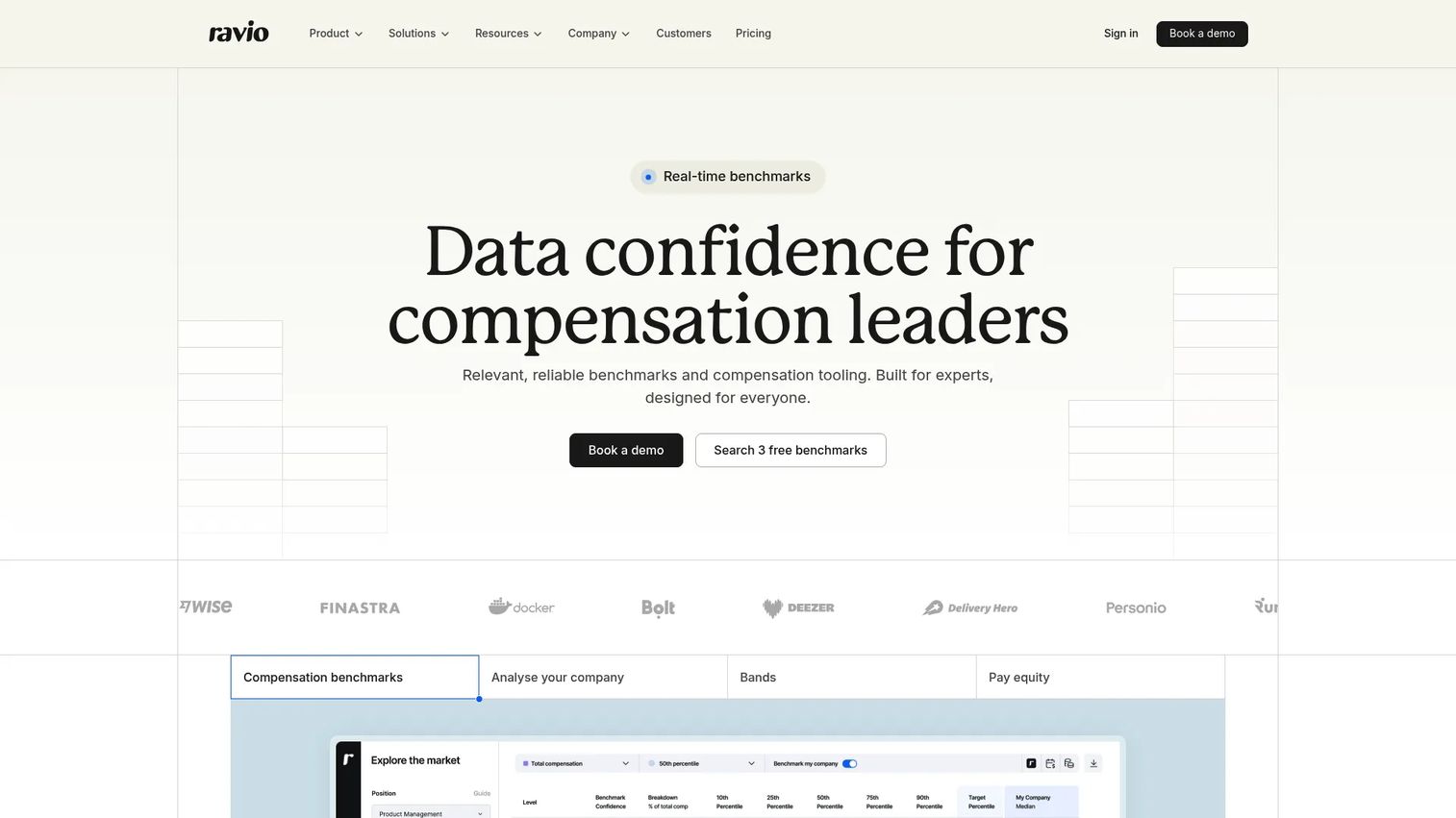
Ravio is compensation management software built around real-time salary benchmarking. Instead of leaning on annual surveys, it aggregates live compensation data directly from connected companies, which keeps benchmarks current rather than months stale. For tech teams operating across multiple countries, that freshness is the whole point.
The platform pairs benchmarking with salary bands management and pay equity analysis, so the same dataset that prices a role also flags unexplained gaps across your team. Because the data is employer-sourced through HRIS connections, it reflects what companies actually pay, not what job ads advertise, which is exactly the source-quality distinction that makes a benchmark defensible.
Best for: HR and total rewards teams at high-growth tech companies making compensation decisions across multiple geographies.
Key strengths
- Real-time benchmarking: Live, employer-sourced compensation data keeps your salary benchmarks current instead of anchored to last year's survey.
- Salary bands management: Build and maintain percentile-based ranges tied directly to fresh market data.
- Pay equity analysis: Surface and investigate unexplained pay gaps using the same dataset that prices your roles.
Why choose Ravio: If your team hires across Europe and beyond and needs benchmarks that reflect this quarter's market rather than last year's, Ravio's live employer-sourced model fits. It is a strong pick for founders who want defensible pay decisions backed by a clear, current source rather than an aging survey.
Ravio pricing: Ravio exposes a pricing page but does not publish figures; pricing is quote-based, so you contact sales for a number tied to your headcount and needs. Its G2 rating sits at 4.7/5.
2. Pave
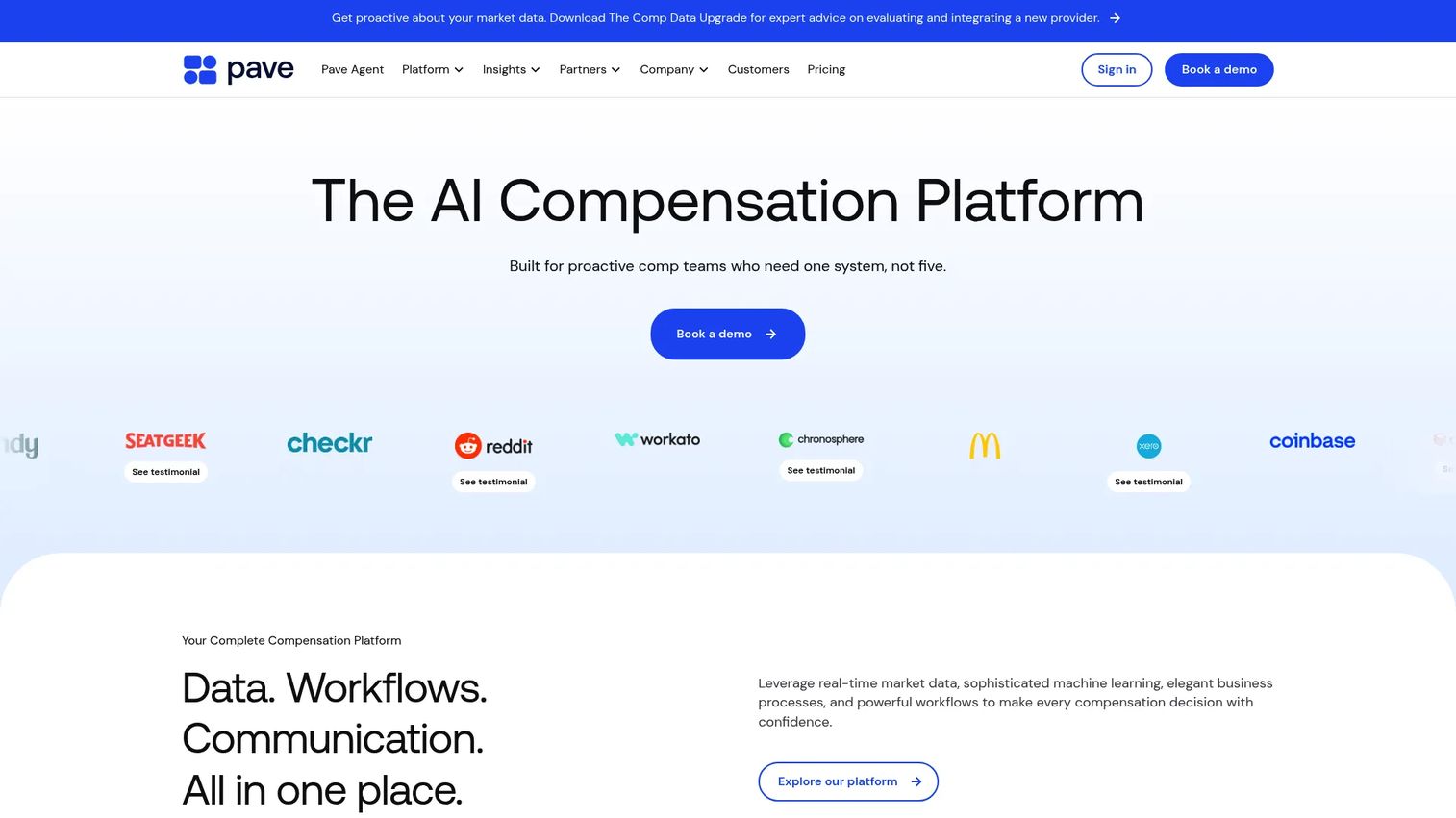
Pave is an AI compensation platform that combines benchmarking, market pricing, planning, and offer communication in one place. Its market data is sourced in real time from HRIS-connected companies, so the benchmarks reflect current pay rather than a periodic snapshot. It covers base salary plus equity, which matters for venture-backed teams where equity is a real part of the package.
What founders like about Pave is the free entry point. Market Data Lite gives teams a way to access benchmarks without a contract, then step up to Market Data Pro or the Full Suite when compensation planning and guardrails become the priority.
Best for: Companies that want compensation benchmarking and compensation planning living in the same platform.
Key strengths
- Real-time compensation benchmarks: HRIS-connected data keeps market pricing current for base and equity.
- Planning workflows: Guardrails and analytics turn benchmarks into consistent raise and promotion decisions.
- Total rewards and offer tools: Build and communicate offers that reflect the full package, not just base.
Why choose Pave: Pave earns its place when you want one tool that both prices roles and runs your comp cycle. The free Market Data Lite tier lowers the risk of committing before you have proven the fit, which resonates with lean teams protecting cash.
Pave pricing: Pave publicly lists a free Market Data Lite tier. Market Data Pro and the Full Suite are quoted through a demo rather than posted publicly. Its G2 rating is 4.7/5.
3. Comprehensive
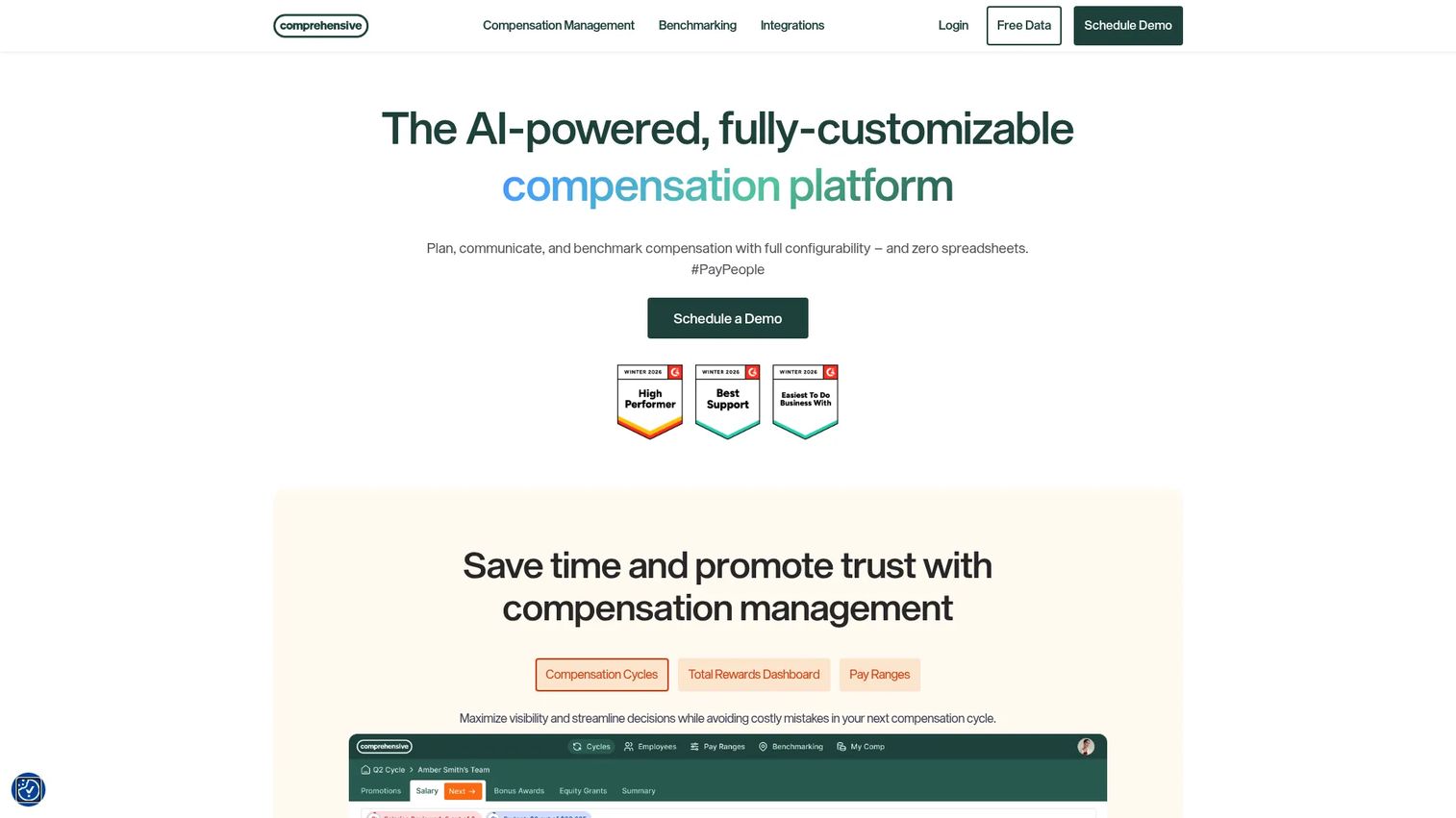
Comprehensive is an AI-powered compensation management platform that spans benchmarking, comp cycles, pay ranges, and total rewards communication. Its differentiator is breadth of segmentation. It layers multiple datasets so you can benchmark tech, non-tech, global, and executive compensation without switching tools.
AI-powered job matching maps your internal titles to standardized market roles, and filtering by title, geography, industry, company size, and level keeps comparisons honest. That segmentation depth is what makes it useful for teams whose org spans engineers, sales, and operations rather than a single function.
Best for: Mid-market and enterprise HR teams running compensation cycles and benchmarking in one system.
Key strengths
- Multi-segment coverage: Tech, non-tech, global, and executive datasets in a single platform.
- AI job matching: Automatically maps internal titles to standardized market roles for cleaner comparisons.
- Total rewards dashboard: Benchmark and communicate the full package, with pay ranges and pay equity analytics.
Why choose Comprehensive: If your headcount spans multiple functions and geographies, Comprehensive's breadth means you are not stitching together separate datasets. The free search access lets you test the benchmarking data before committing to the full platform.
Comprehensive pricing: Comprehensive offers free benchmarking search on its site. Broader platform pricing is not publicly listed; its FAQ notes pricing is typically per-employee, per-month, billed annually. Its G2 rating is 4.9/5.
4. Salary.com CompAnalyst
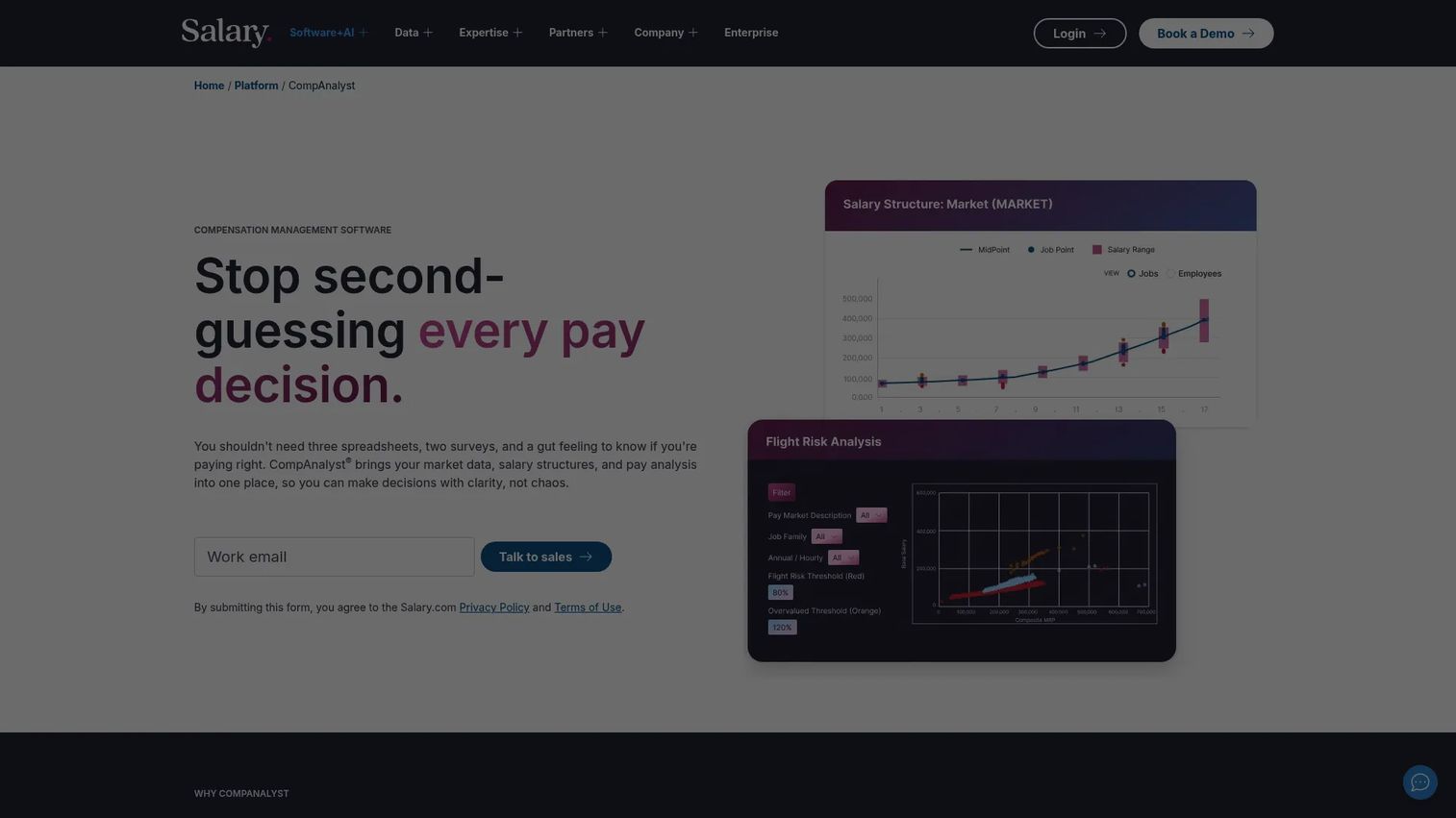
Salary.com CompAnalyst is a compensation management platform built around job pricing, salary structures, market data, and analytics. It is one of the more mature datasets in the category, which appeals to teams that want a deep, established source rather than a newer real-time model.
Automated job matching and market pricing handle the heavy lifting of mapping your roles to market data, while salary structure modeling helps you build and maintain pay bands over time. The analytics layer turns that into reporting you can bring to leadership.
Best for: HR and compensation teams needing a centralized platform for pay benchmarking and salary structure management.
Key strengths
- Automated job matching: Map internal roles to market pricing without manual crosswalks.
- Salary structure modeling: Build, maintain, and adjust pay bands as your org grows.
- Compensation analytics: Reporting that makes market pricing decisions legible to leadership.
Why choose Salary.com CompAnalyst: Choose CompAnalyst when you want a mature, well-established compensation dataset and structured salary-band tooling in one place. It fits teams that value depth and a long track record over the newest data model.
Salary.com CompAnalyst pricing: Public pricing is not displayed; the platform directs you to talk to sales or book a demo. Its G2 rating is 4.4/5.
5. Payscale
Payscale is compensation intelligence software for pricing jobs, managing pay, and running pay planning. Its market data draws on a large base of salary profiles and survey participation, giving it broad coverage across roles and industries. Payscale's annual compensation reporting, drawing on insights from thousands of HR and comp leaders, is a recurring reference point in the field.
The workflow spans HR market analysis, market pricing, salary structures, and HRIS data import, so benchmarking connects to the pay planning that follows. For teams that value survey-based methodology and wide role coverage, it is a well-known option.
Best for: Organizations needing compensation benchmarking, job pricing, and pay planning software in one platform.
Key strengths
- Broad market data: Wide role and industry coverage built on a large base of salary profiles.
- Market pricing and structures: Price jobs and build salary structures from the same dataset.
- HRIS data import: Bring in employee and job data so benchmarks map to real roles.
Why choose Payscale: Payscale suits teams that want established survey-based methodology and broad coverage, plus the ability to move from benchmarking into pay planning without switching tools. The free tier gives you a low-risk starting point.
Payscale pricing: Payscale's plan table lists Free, Basics, Professional, and Advanced tiers. Paid plans require contacting sales; no public numeric price is shown. Its G2 rating is 4.3/5.
6. CaptivateIQ
CaptivateIQ approaches compensation from a planning-first angle, with strong roots in sales commissions and incentive compensation. Its relevance to benchmarking is how it connects market data to budgets, plans, and payouts, turning external numbers into operational compensation decisions.
No-code plan modeling with SmartGrid lets comp teams build and adjust plans without engineering, while real-time calculations and payout statements keep the process transparent. Reporting, dashboards, and AI-assisted analytics tie it together for scaling teams that need process control.
Best for: Mid-market and enterprise teams managing complex compensation plans and incentive structures.
Key strengths
- No-code plan modeling: Build and adjust compensation plans with SmartGrid, no engineering required.
- Real-time calculations: Live payout statements keep compensation decisions transparent.
- AI-assisted analytics: Reporting and dashboards that connect market data to budgets and plans.
Why choose CaptivateIQ: CaptivateIQ fits when your compensation challenge is as much about planning and operations as it is about the benchmark itself. It works for teams that want to connect market data to structured, auditable compensation processes.
CaptivateIQ pricing: Pricing is custom, based on payees, plan complexity, and integrations; you contact sales for a quote. Its G2 rating is 4.7/5.
7. Carta Total Comp
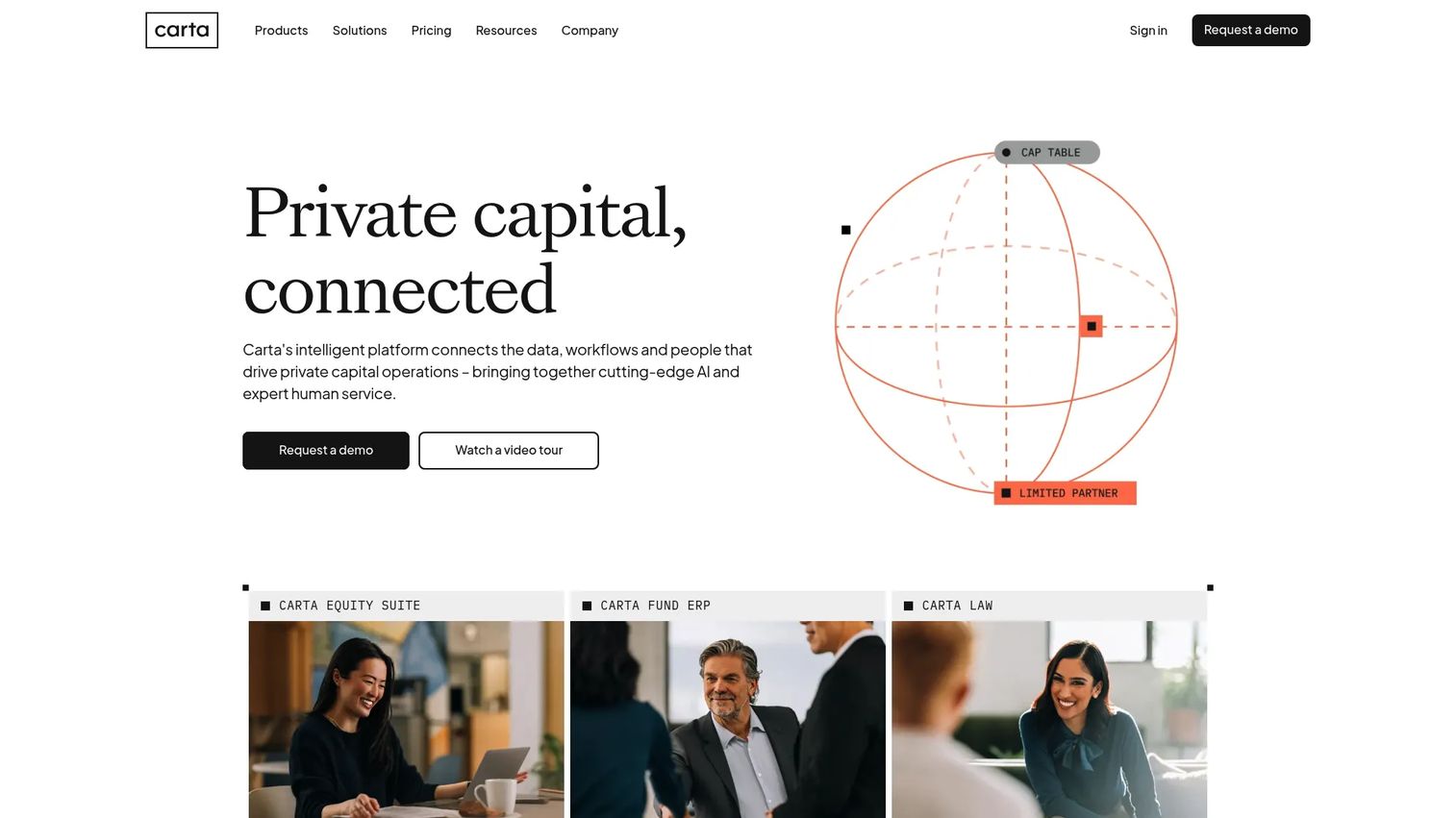
Carta Total Comp benchmarks salary, equity, and rewards together, which is exactly what venture-backed companies need. For a startup, base salary is only half the offer. Equity is the other half, and benchmarking it against the market is where most tools go quiet. Carta, already the cap-table system for many private companies, brings both into one view.
Total Comp pairs real-time salary and equity data with forecasting and total rewards statements, so you can set offers that reflect the full package and show employees what they actually hold. For founders managing dilution and retention at the same time, that dual view matters.
Best for: Private, venture-backed companies needing compensation benchmarking that includes equity.
Key strengths
- Salary and equity benchmarks: Benchmark both halves of the offer, not just base pay.
- Real-time forecasting: Model compensation decisions against current market insights.
- Total rewards statements: Show employees the full value of their package, base plus equity.
Why choose Carta Total Comp: If equity is a core part of how you compensate, Carta's combined salary-and-equity view is hard to replicate with a base-only benchmarking tool. It is a natural fit for teams already using Carta for cap-table management.
Carta Total Comp pricing: Total Comp is available as an add-on; pricing is by package and stakeholder count, with "contact sales" for a total. Carta's Launch tier is free for companies with under 25 stakeholders and up to $1 million raised. Its G2 rating is 4.4/5.
8. HiBob
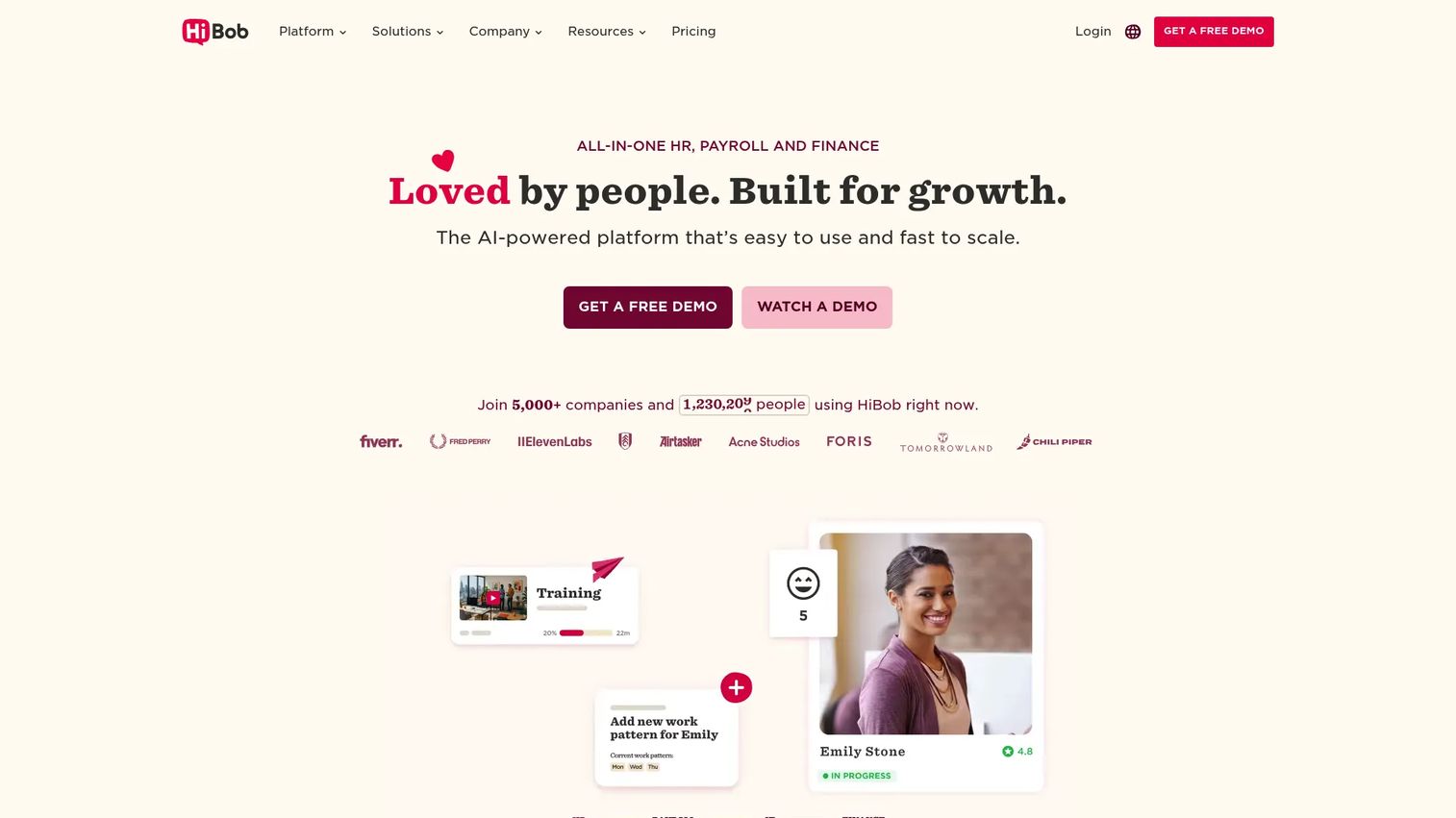
HiBob is a cloud HR, payroll, and finance platform for growing companies, with compensation management built into the broader people system. It is not a standalone benchmarking tool, but it earns a spot here because comp decisions land better when the data lives next to your HRIS, onboarding, and people analytics.
For teams that want compensation visibility inside the same system that holds core HR, HiBob's compensation module and people analytics keep pay in context. That HRIS-native placement means market data connects to real employee records, lifecycle workflows, and reporting without a separate export.
Best for: Mid-sized and multinational companies wanting configurable HRIS with compensation management in one place.
Key strengths
- Compensation management: Handle pay decisions inside the same system as core HR.
- People analytics: Connect compensation data to broader workforce reporting.
- Configurable HRIS: Core HR, onboarding, time, and payroll in a single platform.
Why choose HiBob: HiBob makes sense when you want comp data close to your people ops workflows rather than in a separate benchmarking silo. It fits growing teams consolidating HR systems who value context over a specialist benchmarking dataset.
HiBob pricing: HiBob does not publish numeric pricing; it offers custom quotes by company size, needs, and selected modules such as Core, Talent, and Payroll & Benefits. Its G2 rating is 4.5/5.
9. Workday
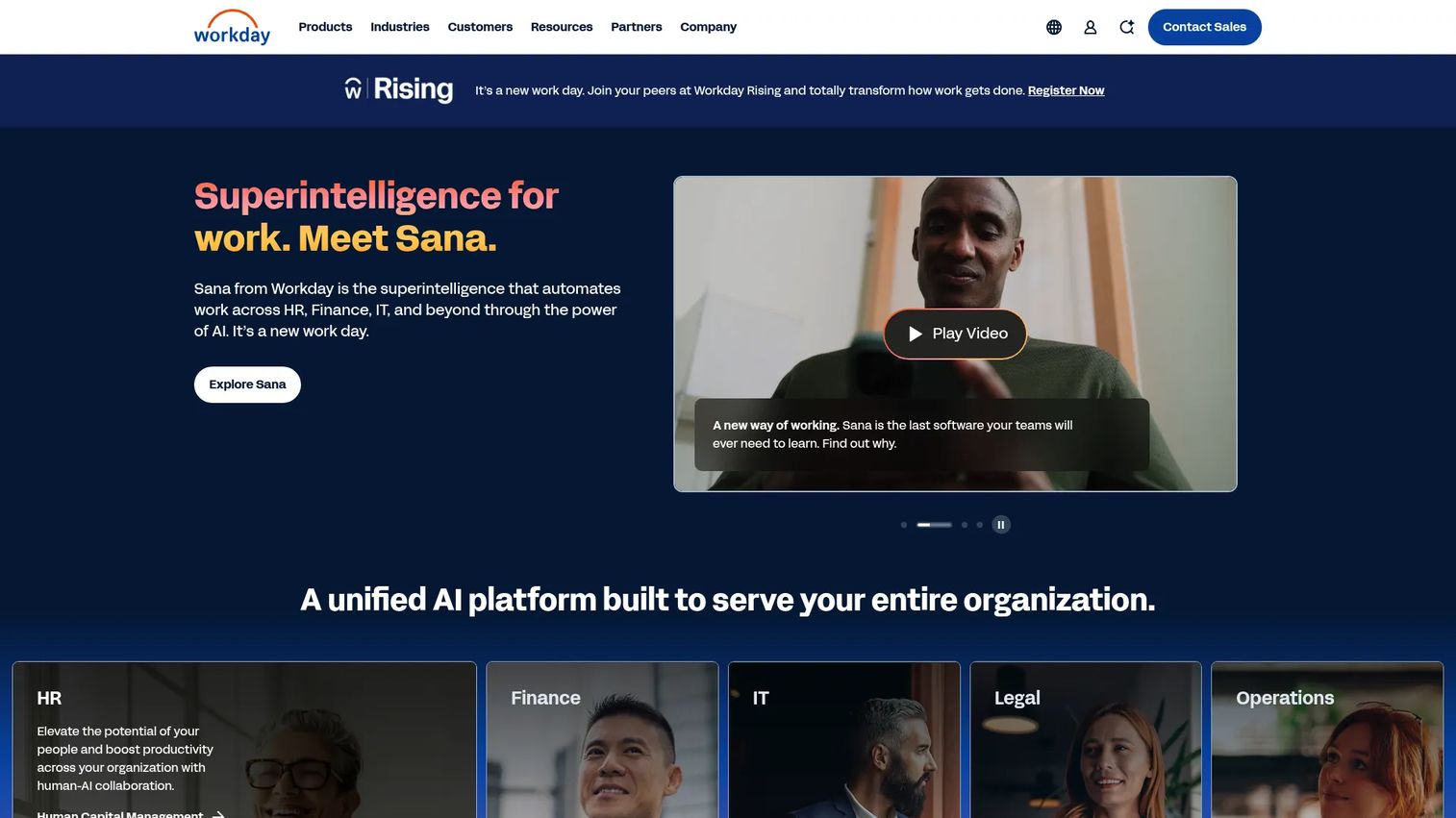
Workday is enterprise cloud software for HR and finance, with compensation management sitting inside a broader HCM suite. It is not a benchmarking-first tool, but larger teams use it as the system of record where compensation, workforce planning, and analytics all connect under governance and scale.
For a company past the point where point tools suffice, Workday's value is process control: compensation decisions flow through the same platform that handles planning, compliance, and analytics. AI agents for HR and finance and a unified HCM suite make it a fit for governance-heavy environments rather than lightweight benchmarking.
Best for: Large enterprises needing unified HR and finance systems with compensation under one governance layer.
Key strengths
- Unified HCM suite: Compensation, HR, and finance in one enterprise system.
- Workforce planning and analytics: Connect pay decisions to planning and compliance at scale.
- AI agents: Automation across HR and finance workflows.
Why choose Workday: Workday fits enterprises that need compensation embedded in a governed, unified HR and finance stack rather than a standalone benchmarking product. It prioritizes scale, process control, and integration over specialist market data.
Workday pricing: Core product pricing is quote-based and shown as "pricing varies." Workday publicly offers a 30-day free trial for Adaptive Planning. Its G2 rating is 4.2/5.
Considerations before you buy
A demo will make any tool look good. These are the criteria that separate a defensible pick from a pretty one.
Data freshness and refresh cadence
Ask exactly how old the underlying compensation data is and how often it refreshes. Real-time, HRIS-connected data reflects this quarter's market. Annual survey data can be a year behind by the time you use it. Neither is wrong, but you need to know which you are buying and whether it matches how fast your market moves.
Source quality
There is a real gap between actual pay data (what employers report or what flows through connected HRIS systems) and advertised salary data (what job postings claim). Actual pay data is more defensible. Push every vendor to explain where their numbers come from before you trust a single benchmark.
Coverage for your reality
A tool with deep US tech data is useless if half your team is in Berlin or in non-tech roles. Check coverage across the geographies, levels, industries, and functions you actually hire for, including geographic pay differentials, before you commit. Broad coverage on paper means nothing if it is thin where you operate.
Job matching accuracy
Benchmarks are only as good as the mapping between your titles and market roles. Weak job matching produces confident, wrong numbers. Evaluate how the tool maps your internal titles, and whether you can correct a bad match. The same discipline applies to how you read any dashboard, the way you would with the best data visualization tools: the chart is only as trustworthy as the data feeding it.
Workflow and HRIS integration
Data that never reaches your comp cycle is trivia. Confirm the tool connects to your HRIS and fits how your team already plans pay, sets offers, and runs reviews, the same way you would vet any addition to your stack, from a CDP to your event planning software.
Conclusion
The right salary benchmarking software depends less on feature count and more on fit. For real-time, employer-sourced data across global tech teams, Ravio and Pave lead, with Pave's free Market Data Lite tier lowering the barrier to entry. For breadth across tech, non-tech, and executive segments, Comprehensive stands out. For a mature, established dataset with structured salary bands, Salary.com CompAnalyst and Payscale deliver. Carta Total Comp is the clear pick when equity is a core part of your compensation. And when comp data should live inside your people systems, HiBob and Workday keep it in context.
Reframe the decision around four things: data freshness, source quality, coverage, and workflow fit. A benchmark you cannot defend to your board is worse than no benchmark at all.
Practical next step: shortlist one real-time data platform (Ravio, Pave, or Carta) and one planning-oriented option (Payscale, CaptivateIQ, or Comprehensive). Trial both against a role you are actively hiring for, then compare the numbers to the market data you already trust. The gap between them tells you which tool earns a place in your stack.
FAQs
Salary benchmarking software compares your internal pay against external market data so you can set defensible salary ranges, price open roles, and validate offers. It answers what the market pays for a given title, level, location, and industry, then feeds those numbers into your compensation decisions.
It ingests compensation data from surveys, employer submissions, or HRIS connections, then matches your internal job titles to standardized market roles. You filter by geography, company size, industry, and level to get a relevant benchmark, which you use to build salary bands, price jobs, and validate offers.
Most companies benchmark at least once a year ahead of their annual comp cycle, but fast-moving markets warrant more frequent checks. Teams hiring aggressively or operating in competitive talent markets often benchmark quarterly, especially when using real-time compensation data that refreshes continuously.
Tools draw on three main sources: traditional salary surveys, direct employer submissions, and live HRIS connections. HRIS-connected and employer-reported sources reflect actual pay and refresh frequently, while survey-based sources offer broad coverage. The strongest salary benchmarking data comes from real employer pay, not advertised job-posting figures.
Survey-based tools offer broad, established coverage and suit teams that value methodology and wide role sampling. Real-time, HRIS-connected tools reflect current market conditions and suit fast-moving markets where last year's data is already stale. Match the model to how quickly pay shifts in your roles and regions.
Prioritize data freshness, source quality, coverage for your actual geographies and levels, and workflow fit with your HRIS. For venture-backed teams, total rewards benchmarking that includes equity matters, since base pay is only part of the offer. The goal is repeatable, defensible pay decisions that do not route through the founder.
They overlap but are not identical. Benchmarking software supplies the external market data; compensation planning software uses that data to run raises, promotions, and budget cycles. Several tools, such as Pave, Payscale, and Comprehensive, combine both, so benchmarking connects directly to the pay decisions that follow.
A defensible salary benchmark has a clear, disclosed source, a recent refresh date, accurate job matching, and coverage that matches your roles and geographies. If a vendor cannot tell you where the compensation data comes from and how current it is, treat the number with caution, especially when a board or regulator may ask.