Your VP of Ops should not need five spreadsheet exports to answer whether an order can ship today. But that is exactly where most scaling companies end up: Orders in one system, inventory in another, finance reconciling in a third, and support answering "where is my order?" from a fourth. According to Priority Software (2025), 71% of retailers have no or only partial advanced order management capabilities. The operational cost is fragmented data, fulfillment errors, and a founder who gets pulled into operational triage instead of strategic decisions.
Order management software solves this. A good system connects order capture, inventory, fulfillment, shipping, returns, and financial data into one operating picture your ops or finance leader can own without you in the room.
This guide compares 15 order management software options for 2026 with verified pricing, G2 ratings, and honest guidance on which business size and stack each tool fits.
What's inside
- Who this is for: Founders, ops leaders, finance leaders, and commerce teams evaluating OMS tools
- How tools were chosen: Order lifecycle coverage, inventory visibility, fulfillment capability, integration depth, and pricing transparency
- What you'll get: A clear definition, comparison table, 15 tool reviews, and an evaluation checklist
- How to use this guide: Shortlist by order volume, channel complexity, and how much implementation appetite your team has
TL;DR
- Best for Salesforce-centered commerce teams: Salesforce Order Management
- Best for Microsoft-stack SMB and mid-market: Microsoft Dynamics 365 Business Central, starting at $80/user/month
- Best for finance-led order control: Sage Intacct (quote-based)
- Best for enterprise retail and omnichannel fulfillment: Manhattan ActiveOrder
- Best for ecommerce operators who need inventory plus order control: Brightpearl or Cin7, starting at $349/month
- Best for smaller teams starting with inventory control: Zoho Inventory, free plan available; Odoo, free for one app
What is order management software?
Order management software is a system that tracks, processes, routes, fulfills, and reports on customer orders from the moment a purchase is placed through delivery, returns, and financial reconciliation. Also called an OMS or order management system, it connects customer orders, inventory, fulfillment, shipping, payment, and service data into a single workflow.
OMS platforms range from lightweight order processing tools for small ecommerce businesses to enterprise fulfillment orchestration platforms handling millions of orders across hundreds of locations. The right fit depends on order volume, channel complexity, and how tightly the system needs to connect to your ERP, CRM, or warehouse stack.
Key features to look for
- Order capture from ecommerce, sales, marketplace, and POS channels
- Real-time inventory visibility across warehouse and store locations
- Order routing and fulfillment rules
- Warehouse picking, packing, and shipping workflows
- Returns, exchanges, and refunds
- Customer service order lookup
- ERP, CRM, ecommerce, warehouse, and 3PL integrations
- Operational dashboards and financial reporting
Order management software vs inventory management software
Inventory software tracks stock levels, locations, and replenishment triggers. Order management software uses that inventory data to process, route, fulfill, and report on customer orders. Many tools do both, but knowing which job matters most to your team helps narrow the shortlist quickly.
When to use order management software
Centralize orders from multiple channels
Spreadsheets and channel-native dashboards break once orders come from ecommerce, marketplaces, wholesale, and field sales simultaneously. For founders, this is the moment operational data stops being board-ready. A centralized OMS gives your ops leader one place to see the full order picture.
Reduce fulfillment errors and stockouts
Inventory visibility, routing rules, and warehouse workflows reduce overselling, manual rework, and customer service tickets. According to Linnworks (2025), only 36% of retailers report full inventory visibility. When order volume rises faster than headcount, this is the constraint that breaks first.
Connect order data to finance and customer service
Order data drives revenue recognition, invoicing, support workflows, and refunds. Without a connected system, finance reconciles late and leadership loses sight of margin impact and channel performance. According to the MIT Center for Transportation and Logistics (2025), 60% of companies are implementing an omnichannel strategy, up from 50% the prior year. Clean order data is what makes that strategy measurable.
Order management software comparison
The table below is a shortlist, not a universal ranking. Use it to identify two or three tools worth exploring further, then verify pricing, integration scope, and implementation requirements directly with each vendor before committing.
| # | Product | Best for | Key differentiator | Pricing | G2 rating |
|---|---|---|---|---|---|
| 1 | Salesforce Order Management | Salesforce commerce and CRM teams | Native order orchestration across Salesforce data | Contact for pricing | 4.2/5 |
| 2 | Microsoft Dynamics 365 Business Central | Microsoft-stack SMB and mid-market | ERP, finance, inventory, and order workflows together | From $80/user/month | 4.0/5 |
| 3 | Sage Intacct | Finance-led order and revenue control | Accounting-centered order workflows and reporting | Contact for pricing | 4.3/5 |
| 4 | NetSuite Order Management | Scaling companies needing ERP plus OMS | Unified ERP, inventory, financials, and order workflows | Contact for pricing | 4.1/5 |
| 5 | SAP Commerce Cloud | Enterprise B2B and B2C commerce | Commerce suite with complex B2B and B2C order flows | Contact for pricing | 4.3/5 |
| 6 | Manhattan ActiveOrder | Enterprise retail and omnichannel fulfillment | Advanced order promising and fulfillment orchestration | Contact for pricing | 3.6/5 |
| 7 | Blue Yonder Order Management & Commerce | Supply chain-heavy enterprises | AI-assisted planning, inventory, and fulfillment decisions | Contact for pricing | N/A |
| 8 | Aptos Order Management | Retailers with store and merchandising complexity | Retail OMS tied to POS and merchandising operations | Contact for pricing | N/A |
| 9 | Kibo Order Management | Mid-market and enterprise commerce teams | Distributed order management for commerce operations | Contact for pricing | 4.0/5 |
| 10 | Fluent Order Management | API-first commerce and fulfillment teams | Flexible order orchestration for complex networks | Contact for pricing | 4.9/5 |
| 11 | IBM Sterling Order Management | Large enterprises with complex supply chains | Enterprise-grade order orchestration and partner networks | From 1.5c per line | 4.4/5 |
| 12 | Zoho Inventory | Small businesses and lean ecommerce teams | Affordable inventory and order control | Free plan; paid from $29/month | 4.4/5 |
| 13 | Odoo Order Management | Teams wanting modular ERP flexibility | Open modular apps for sales, inventory, and accounting | Free for one app; paid from $24.90/user/month | 4.2/5 |
| 14 | Brightpearl | Retail and ecommerce operators | Retail operations platform with order and inventory control | Contact for pricing | 4.4/5 |
| 15 | Cin7 | Product sellers managing inventory across channels | Inventory-led order management across ecommerce and wholesale | From $349/month | 4.1/5 |
Best 15 order management software tools for 2026
1. Salesforce Order Management
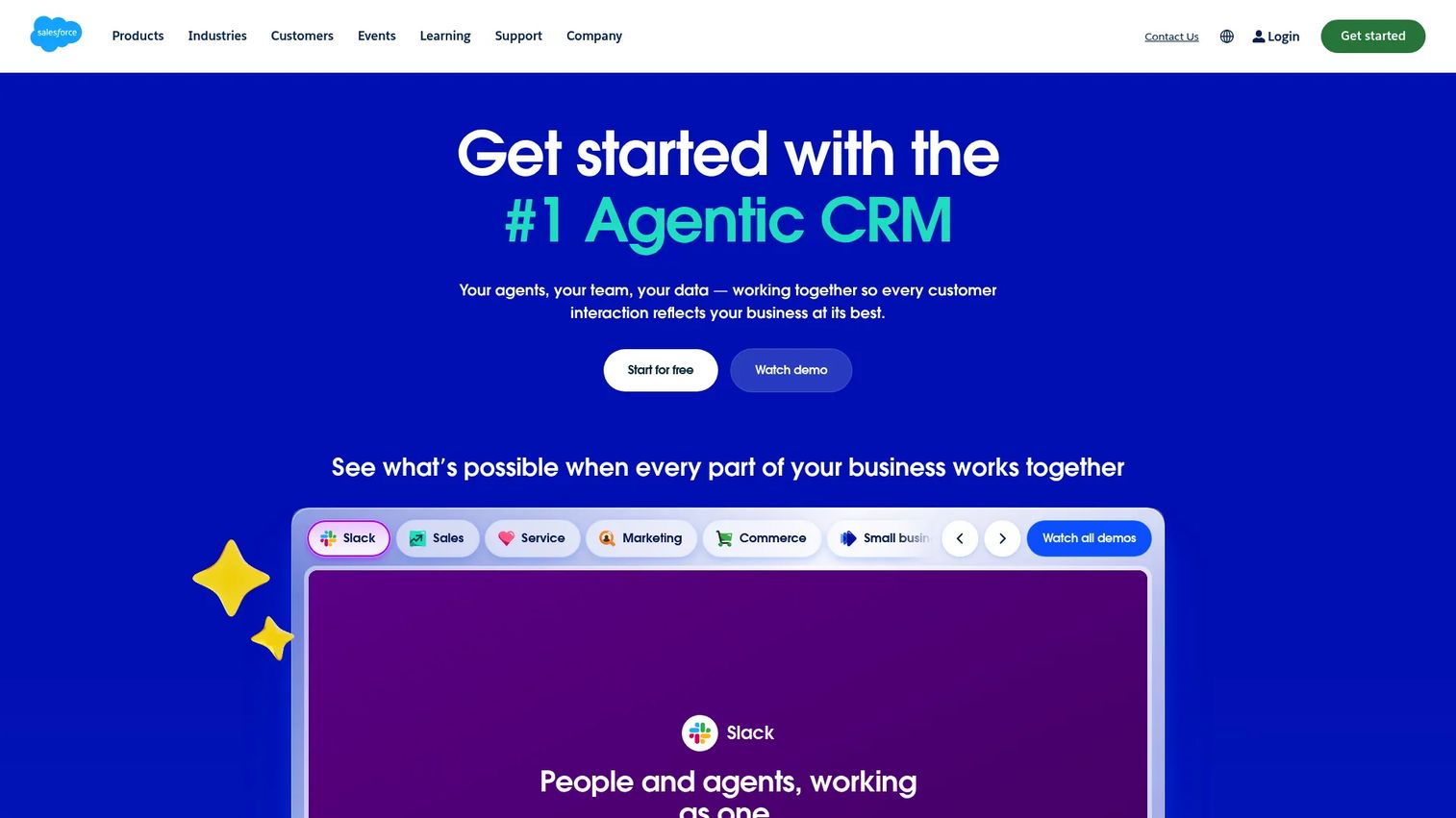
Salesforce Order Management is built for companies that already run their commerce, sales, and service operations on Salesforce. It handles order capture, fulfillment orchestration, payment processing, invoicing, returns, exchanges, and reshipments across channels, with all customer and order data living in the same Salesforce record. The Growth edition includes distributed order management and omnichannel inventory across up to 50 locations.
Best for: Commerce teams already using Salesforce Commerce Cloud, CRM, or Service Cloud who want order visibility without a separate system.
Key features
- End-to-end order lifecycle management and orchestration
- Distributed order management across fulfillment nodes
- Omnichannel inventory visibility
- Returns, cancellations, and reshipment workflows
- Native Salesforce customer data and service team access
Why choose Salesforce Order Management: It earns its place when Salesforce is already the operating layer for your customer, commerce, and service data. If you are not already in the Salesforce environment, the cost and implementation complexity is harder to justify.
Salesforce Order Management pricing: Pricing requires contacting Salesforce sales. The scope of a quote will cover order volume, number of fulfillment locations, channels, and which Salesforce products are already licensed. Expect a contract-based discussion rather than a published price sheet.
G2 rating: 4.2/5
2. Microsoft Dynamics 365 Business Central
Microsoft Dynamics 365 Business Central is a cloud ERP for small and midsized organizations covering finance, sales, inventory, supply chain, warehousing, projects, and service management in one system. For founders evaluating an operational backbone that handles both orders and accounting, Business Central is one of the most complete options at the SMB and mid-market price point. Microsoft Copilot and AI-assisted workflows are included, along with deep integration across Power BI, Teams, Excel, and Power Automate.
Best for: SMB and mid-market companies already invested in the Microsoft stack who want finance and order management under one roof.
Key features
- Sales order processing and purchasing workflows
- Inventory, warehouse, and supply chain management
- Finance and accounting integration
- Microsoft Copilot and AI-assisted task automation
- Power BI, Teams, and Excel connectivity
Why choose Microsoft Dynamics 365 Business Central: Strong fit when a founder wants one system for finance and operations rather than separate tools that need reconciliation. Implementation quality depends heavily on process mapping before go-live, so budget time with a partner.
Microsoft Dynamics 365 Business Central pricing: A 30-day free trial is available. Business Central Essentials is $80/user/month, paid yearly. Premium (which adds service order management and manufacturing) is $110/user/month, paid yearly. Team Members, a lighter access tier, is $8/user/month, paid yearly.
G2 rating: 4.0/5
3. Sage Intacct
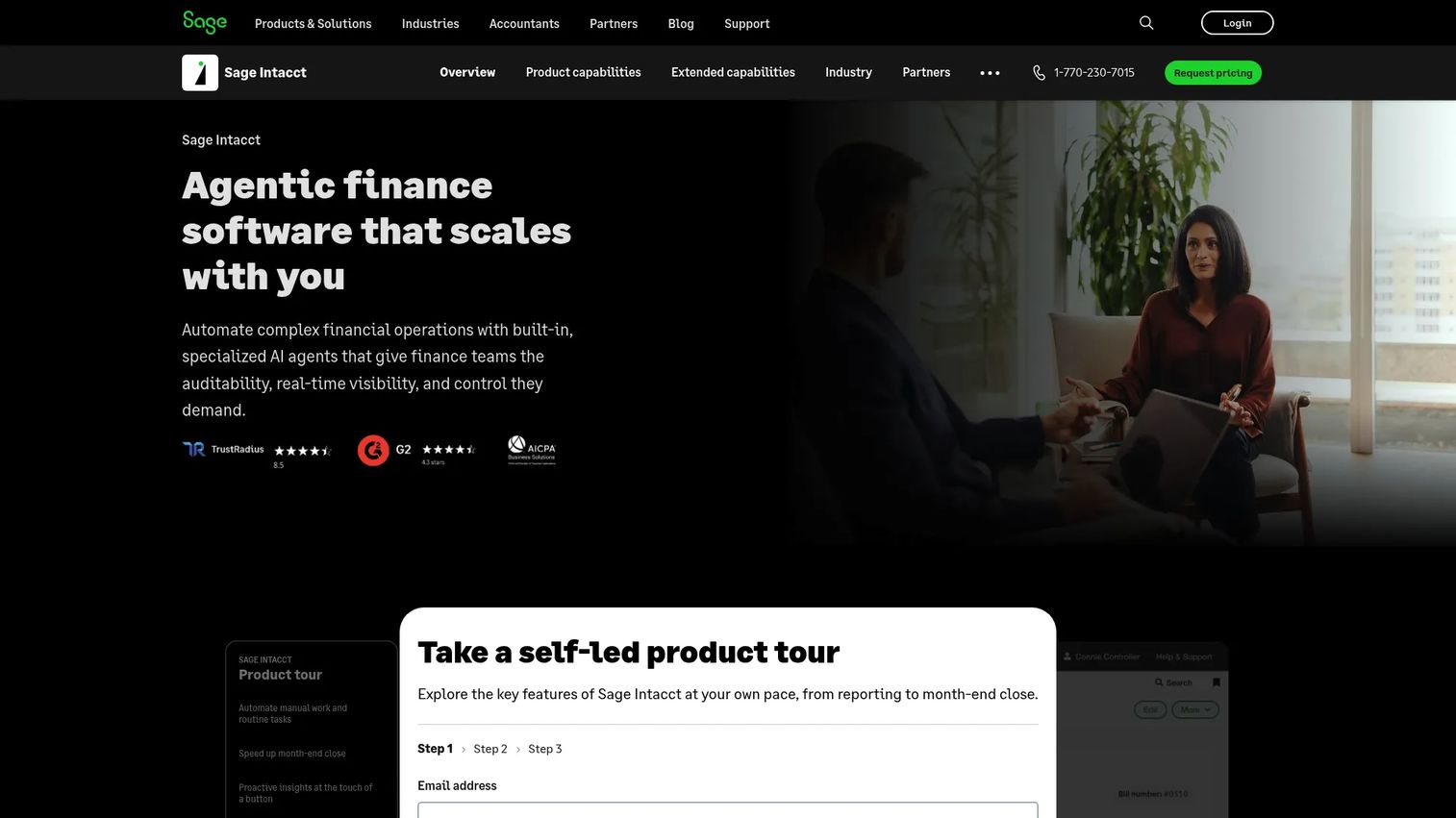
Sage Intacct is a cloud accounting and financial management platform built for growing and mid-sized organizations. Its order management relevance is strongest for finance-led workflows: Order entry, quote-to-cash, accounts receivable automation, multi-entity accounting, and revenue reporting. If your primary problem is connecting order data to financial reconciliation rather than warehouse orchestration, Sage Intacct often fits before a full OMS does. It also includes Finance AI agents for reporting, close processes, and AP automation.
Best for: Finance-led SaaS, services, and subscription businesses that need orders, invoices, and revenue tied together for board-level visibility.
Key features
- Order entry and accounts receivable automation
- Multi-entity accounting and consolidation
- Real-time dashboards and multi-dimensional financial analysis
- Finance AI agents for reporting and close workflows
- Salesforce integration and open API access
Why choose Sage Intacct: Good for founders who need clean financial data before a board review or fundraise. It is not a warehouse-first OMS, so teams with complex fulfillment orchestration needs will want to pair it with a dedicated system.
Sage Intacct pricing: Pricing is customized to organizational size, entities, users, and modules. Subscriptions are annual. Contact Sage sales for a quote; expect questions about number of entities, user count, and which modules you need.
G2 rating: 4.3/5
4. NetSuite Order Management
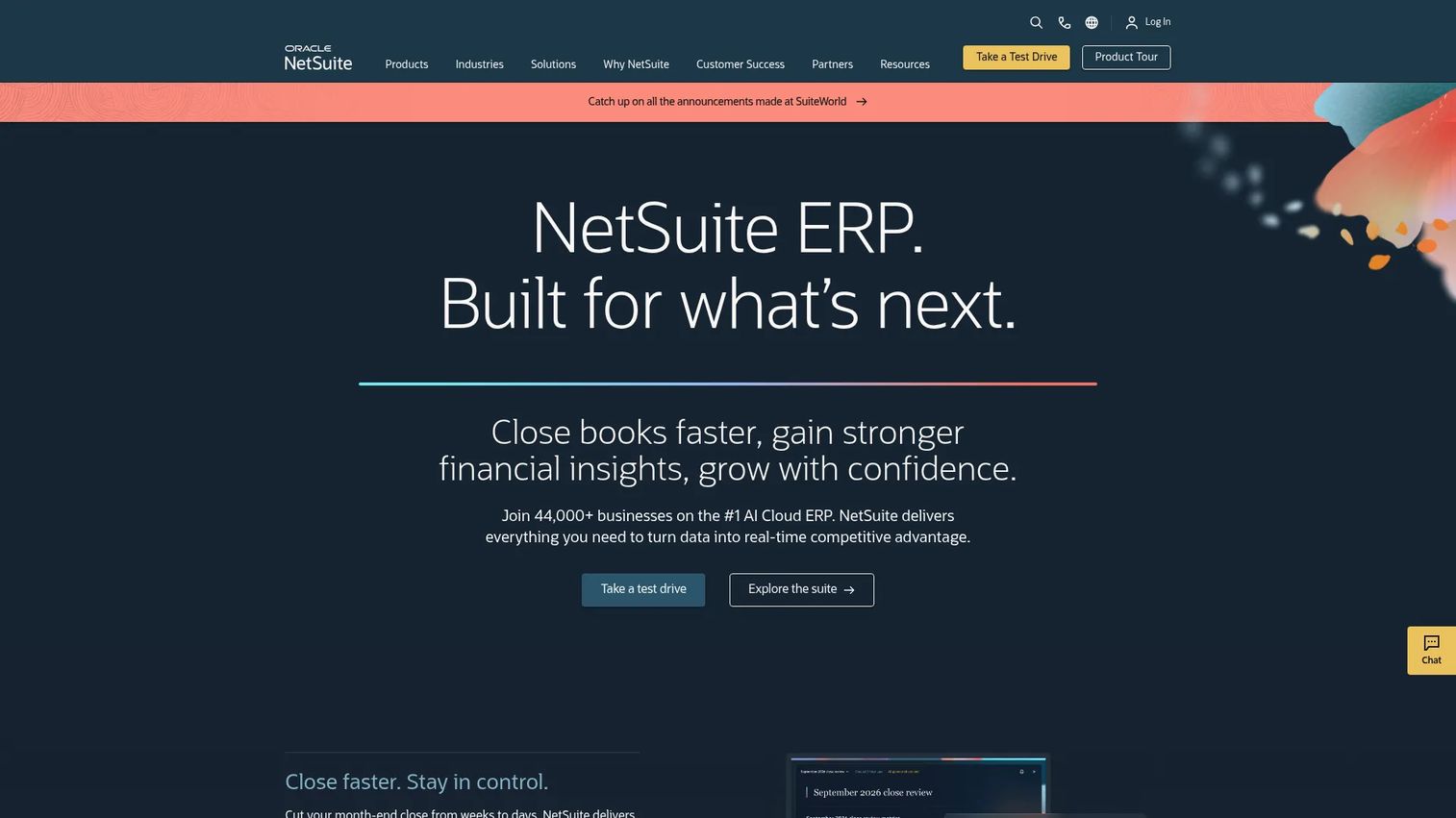
NetSuite Order Management is the order management capability embedded within Oracle NetSuite's cloud ERP. It automates the full order-to-cash cycle: Order capture across store, web, call center, mobile, and kiosk channels; multichannel fulfillment including split shipments and drop ship; returns and exchanges; and pricing management with multiple price levels and currencies. For scaling companies that have outgrown disconnected apps, NetSuite offers a path to a single operational backbone covering ERP, inventory, financials, and CRM.
Best for: Scaling companies that want ERP-centered order management and are ready to consolidate multiple operational tools into one platform.
Key features
- Multichannel order capture and management
- Order-to-cash automation with split shipments and drop ship
- Returns and exchanges across channels
- Pricing management with multiple price levels and currencies
- Inventory-based fulfillment orchestration
Why choose NetSuite Order Management: Strong for companies moving from departmental tools into one operating system. Implementation effort can be significant, so assess process readiness and internal ownership before signing. The platform rewards teams that invest in setup.
NetSuite Order Management pricing: NetSuite uses an annual license model covering the core platform, optional modules, and users, plus a one-time implementation fee. Order management is included in the platform license. Pricing requires contacting NetSuite sales; the quote will cover modules, user count, subsidiaries, and implementation scope.
G2 rating: 4.1/5
5. SAP Commerce Cloud
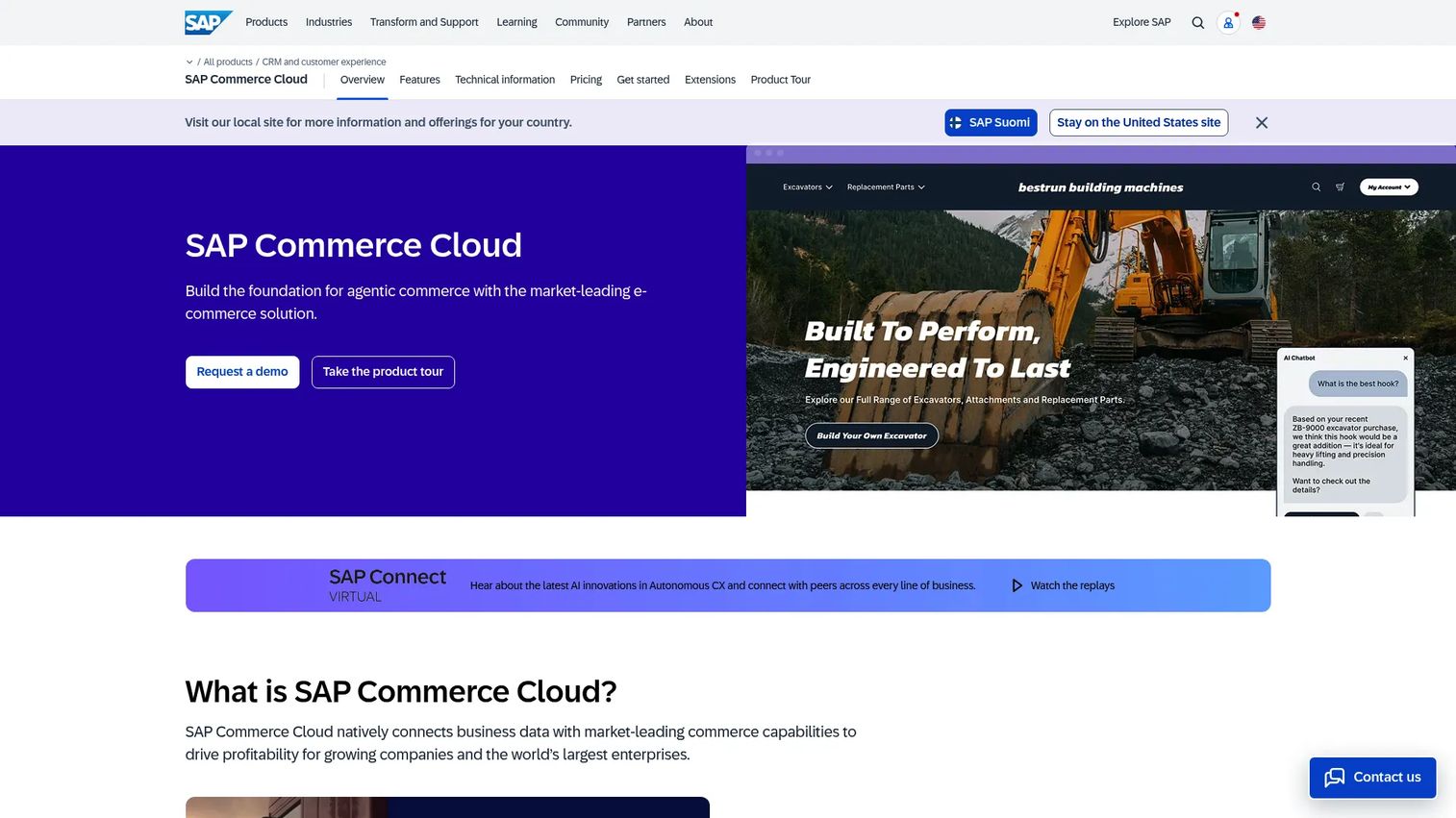
SAP Commerce Cloud is an enterprise digital commerce platform supporting B2B, B2C, and B2B2C experiences with AI-powered search, recommendations, catalog management, unified pricing, promotions, and SAP ERP connectivity. Order management sits within a broader commerce suite that handles catalog versioning, product classification, composable storefronts, and payment orchestration. For enterprises with complex commerce operations and an existing SAP footprint, it is one of the most integrated options available.
Best for: Large enterprises with complex product catalogs, B2B or B2C commerce requirements, and existing SAP system dependencies.
Key features
- B2B, B2C, and B2B2C commerce support
- AI-powered search, recommendations, and guided selling
- Product catalog and content management with versioning
- Unified pricing, promotions, and payment management
- Composable storefronts and SAP ERP connectivity
Why choose SAP Commerce Cloud: Good fit when commerce complexity and SAP integration matter more than fast deployment. Implementation planning and internal ownership are critical evaluation factors. Teams without SAP-experienced resources typically need a systems integrator.
SAP Commerce Cloud pricing: SAP does not publicly display a numeric price. Pricing requires contacting SAP or requesting a quote. A quote will cover commerce volume, regions, integrations, SAP dependencies, and implementation partner scope.
G2 rating: 4.3/5
6. Manhattan ActiveOrder
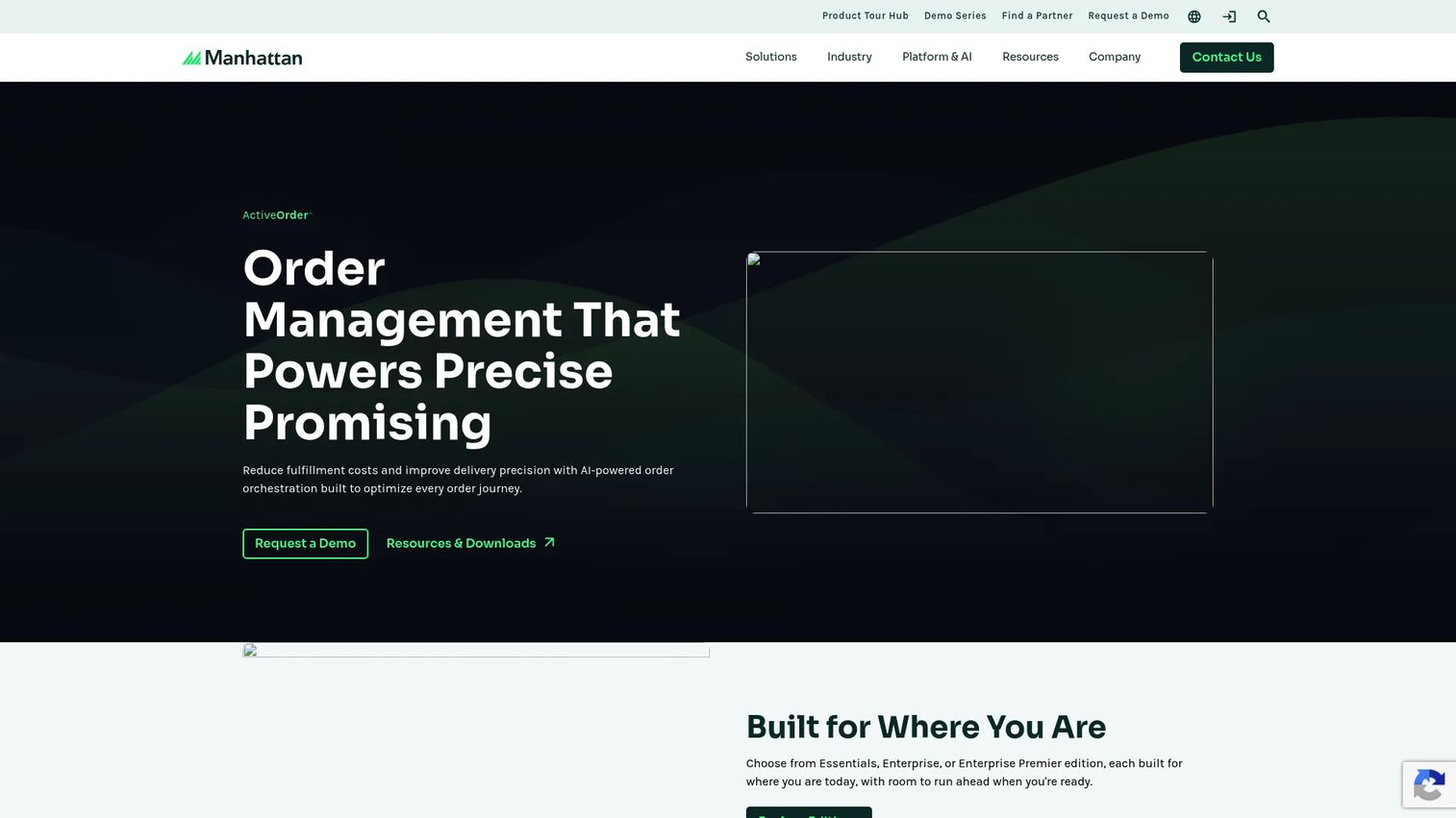
Manhattan ActiveOrder is a cloud-native OMS built for enterprise retailers that need to coordinate order promising, store fulfillment, ship-to-home, ship-from-store, curbside pickup, and returns across distributed inventory locations. It provides real-time global inventory visibility, precise delivery promising, and fulfillment orchestration with native analytics. Manhattan lists Essentials, Enterprise, and Enterprise Premier editions.
Best for: Enterprise retailers and brands with complex fulfillment networks where delivery promising and margin impact from fulfillment decisions are board-level metrics.
Key features
- Real-time global inventory visibility
- Precise order promising across sales channels
- Fulfillment orchestration: Ship-to-home, BOPIS, ship-from-store, ship-to-store
- Returns orchestration and post-purchase customer service
- Native fulfillment analytics and performance insights
Why choose Manhattan ActiveOrder: Strong for companies where fulfillment decisions directly affect customer experience and margin. Less relevant for lean teams with simple ecommerce flows who do not need distributed store fulfillment.
Manhattan ActiveOrder pricing: Manhattan does not publicly display prices. Pricing requires contacting their sales team. A quote will factor in order volume, store count, distribution centers, fulfillment nodes, and implementation scope.
G2 rating: 3.6/5
7. Blue Yonder Order Management & Commerce
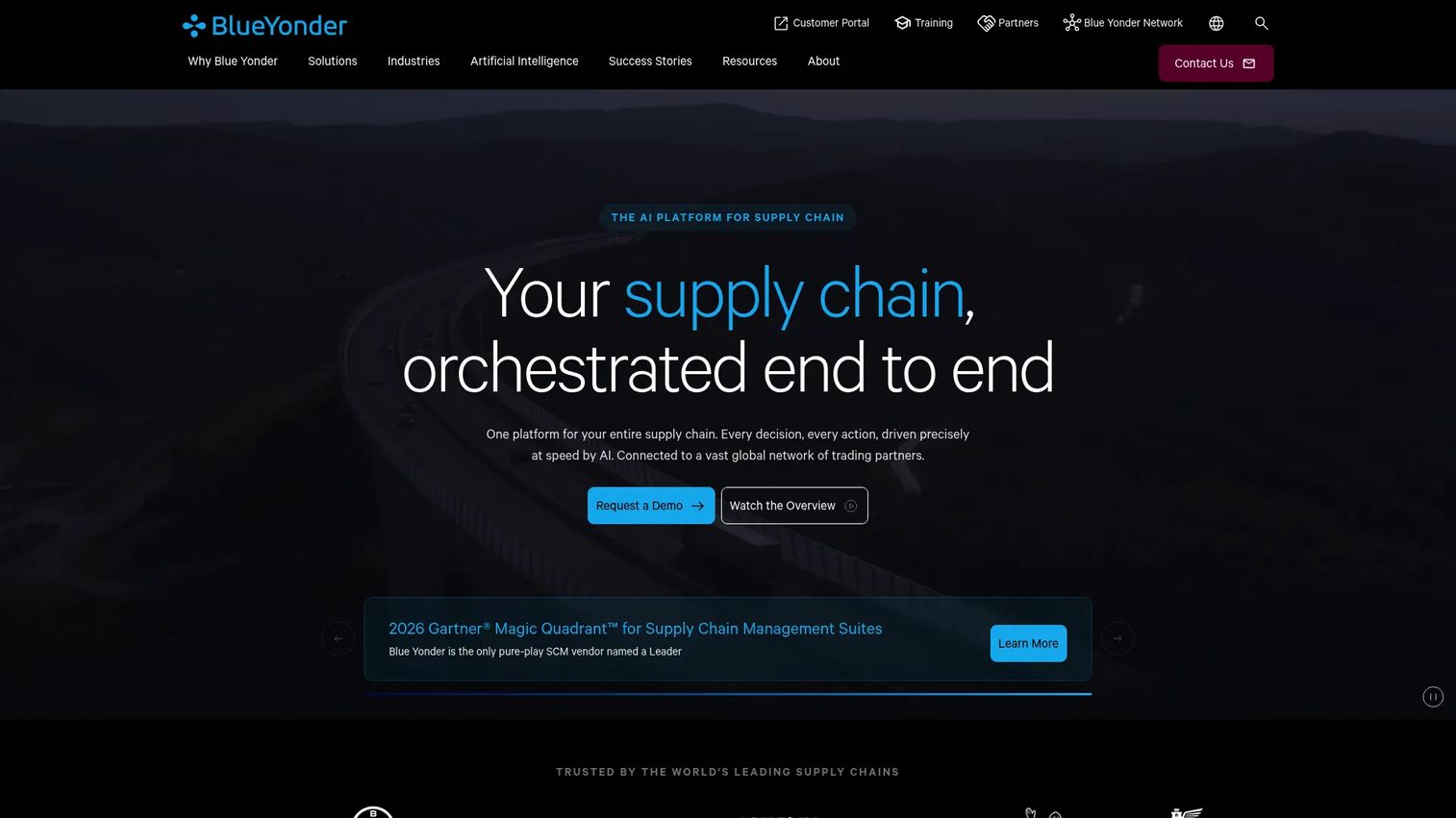
Blue Yonder Order Management & Commerce is an AI-native, composable order management platform designed for enterprises where order decisions depend on supply chain planning and inventory intelligence. It provides real-time inventory availability with machine learning-driven stockout prediction, autonomous delivery date calculation, AI-powered order sourcing, and a Fulfillment Sourcing Simulation to evaluate routing decisions before execution. It integrates with Returns Management and Smart Disposition for reverse logistics.
Best for: Large retailers, distributors, and B2B commerce organizations where order management must connect directly to supply chain planning and allocation decisions.
Key features
- Real-time inventory availability with ML-driven stockout prediction
- AI-powered order sourcing and autonomous delivery dates
- Fulfillment Sourcing Simulation for routing evaluation
- Store and warehouse fulfillment execution
- Returns management and smart disposition integration
Why choose Blue Yonder Order Management & Commerce: Good fit when order management must stay in sync with planning, inventory allocation, and supply chain execution. This platform requires enterprise-level operational maturity and a cross-functional implementation team.
Blue Yonder Order Management & Commerce pricing: Blue Yonder does not publish pricing. Contact their team for a quote covering modules, regions, channels, fulfillment network complexity, and integration scope.
G2 rating: N/A
8. Aptos Order Management
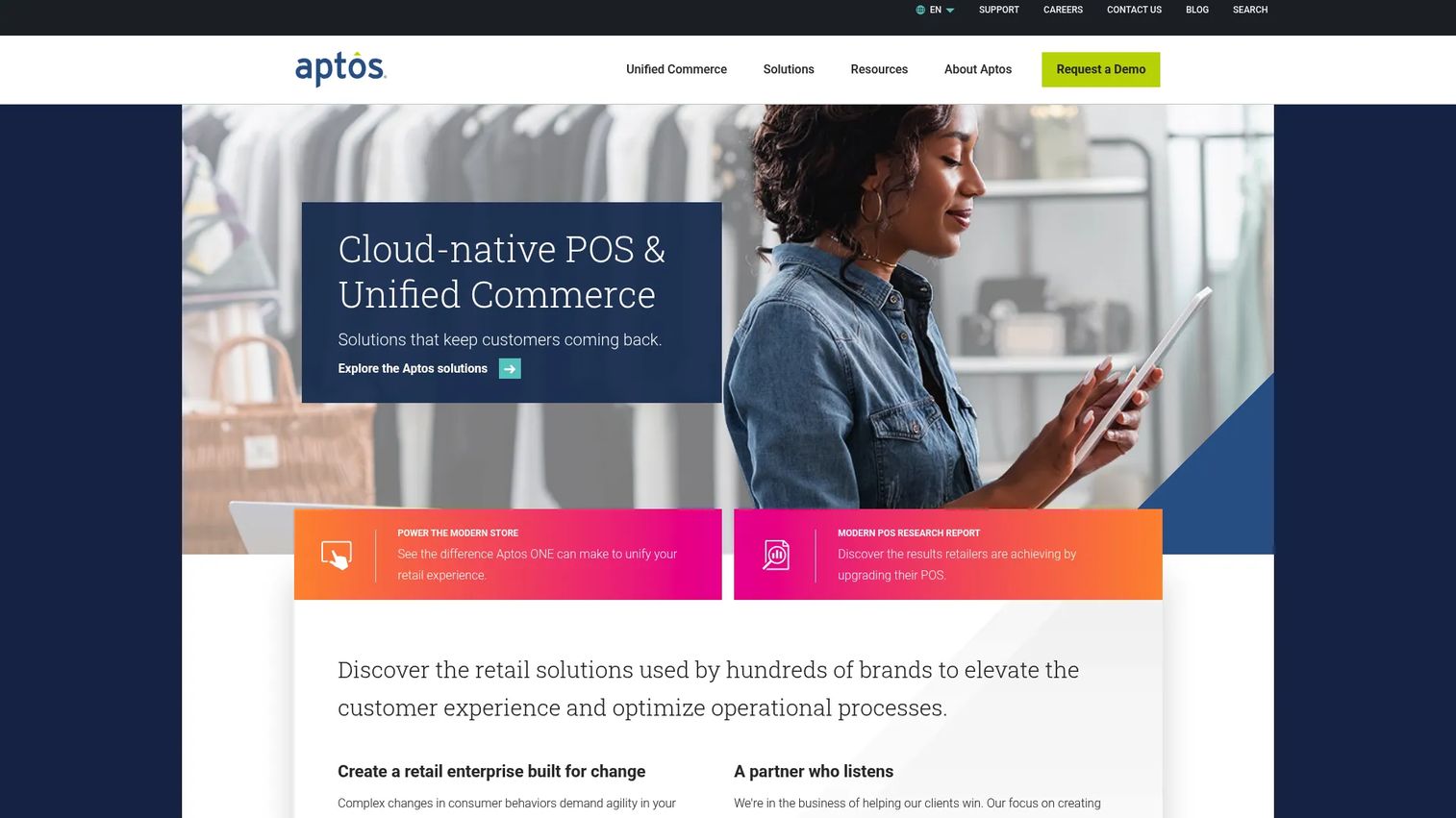
Aptos Order Management is a cloud-based retail OMS for omnichannel order orchestration, fulfillment, and lifecycle management. It provides real-time enterprise inventory visibility and reservation, intelligent order sourcing and routing, and end-to-end order processing across store, web, mobile, call center, and marketplace channels. Aptos is more retail-specific than a general-purpose ERP, with a focus on unified commerce and store operations.
Best for: Retailers that need order management connected to stores, POS systems, and merchandising operations in a single retail-specific platform.
Key features
- Real-time enterprise inventory visibility and reservation
- Intelligent order sourcing, routing, and brokering
- End-to-end order processing across all channels
- Store fulfillment and customer order visibility
- Returns and reverse logistics workflows
Why choose Aptos Order Management: Strong when store operations and customer order experiences need to work together within a retail-specific context. Less useful for non-retail businesses that only need basic order processing.
Aptos Order Management pricing: Aptos does not publish pricing. Contact Aptos for a quote. Key cost drivers include store count, register count, order volume, modules, and integration requirements.
G2 rating: N/A
9. Kibo Order Management
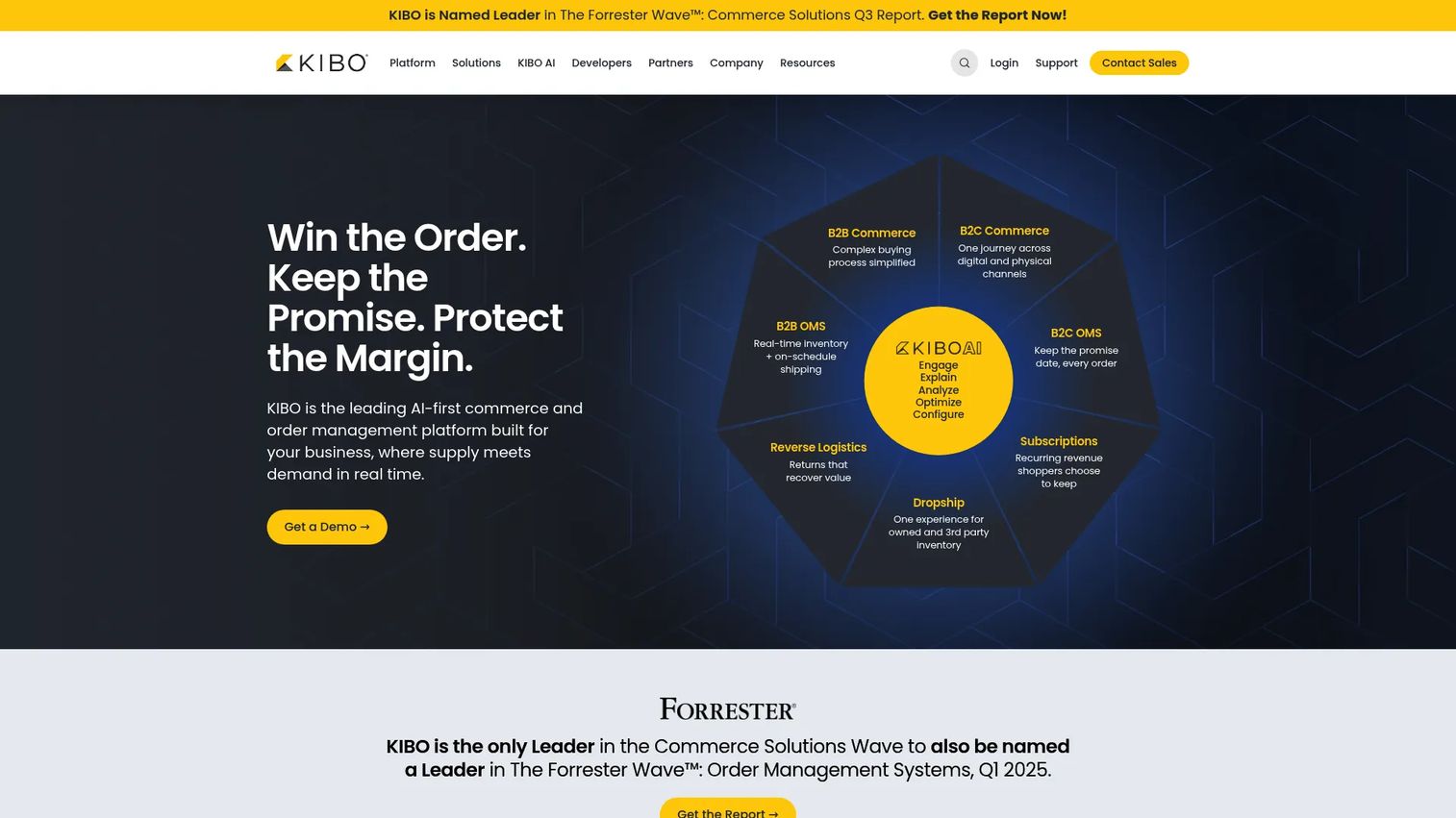
Kibo Order Management is composable order management software providing real-time inventory visibility, rules-based order routing, fulfillment workflows, and service and returns management for mid-market and enterprise commerce teams. It supports ship-to-home, BOPIS, curbside, and delivery fulfillment, along with estimated delivery date and order promising. Kibo publishes Starter, Essentials, and Advanced packages, though numeric pricing requires contacting sales.
Best for: Mid-market and enterprise commerce teams managing distributed fulfillment across multiple channels who want flexibility without building orchestration from scratch.
Key features
- Real-time inventory visibility across stores, warehouses, and vendors
- Rules-based order routing and fulfillment optimization
- Omnichannel fulfillment: Ship-to-home, BOPIS, curbside, and delivery
- Estimated delivery date and order promising
- Customer service, returns, and reverse logistics workflows
Why choose Kibo Order Management: Fits teams that need commerce flexibility and distributed order orchestration without building it internally. Verify ecosystem fit and integration requirements before scoping implementation.
Kibo Order Management pricing: Kibo lists Starter, Essentials, and Advanced packages. All require contacting sales for pricing. A quote will cover order volume, fulfillment nodes, channel count, and integration work.
G2 rating: 4.0/5
10. Fluent Order Management

Fluent Order Management is a cloud-native, API-first OMS for real-time inventory visibility, order orchestration, fulfillment, customer service, and returns. Its Fluent Light tier covers up to 500,000 orders per year, 10 fulfillment nodes, and 20,000 SKUs, making it one of the few enterprise-grade platforms with a defined entry-level scope. Fluent Enterprise pricing scales with order volumes. The platform suits composable commerce architectures and teams with technical ownership of their fulfillment stack.
Best for: Commerce teams that need configurable order orchestration across complex fulfillment networks and have the technical resources to own and configure the platform.
Key features
- Real-time inventory availability
- Order orchestration and fulfillment routing
- Store fulfillment, ship-from-store, and click-and-collect
- Returns and exchanges
- Customer service and order lifecycle management
Why choose Fluent Order Management: Good when off-the-shelf workflows are too rigid for your fulfillment complexity. Requires technical and operational ownership to configure and maintain effectively.
Fluent Order Management pricing: Fluent Light covers 500,000 orders per year, 10 fulfillment nodes, and 20,000 SKUs. Fluent Enterprise pricing is based on order volume. Contact Fluent Commerce for numeric pricing on both tiers.
G2 rating: 4.9/5
11. IBM Sterling Order Management
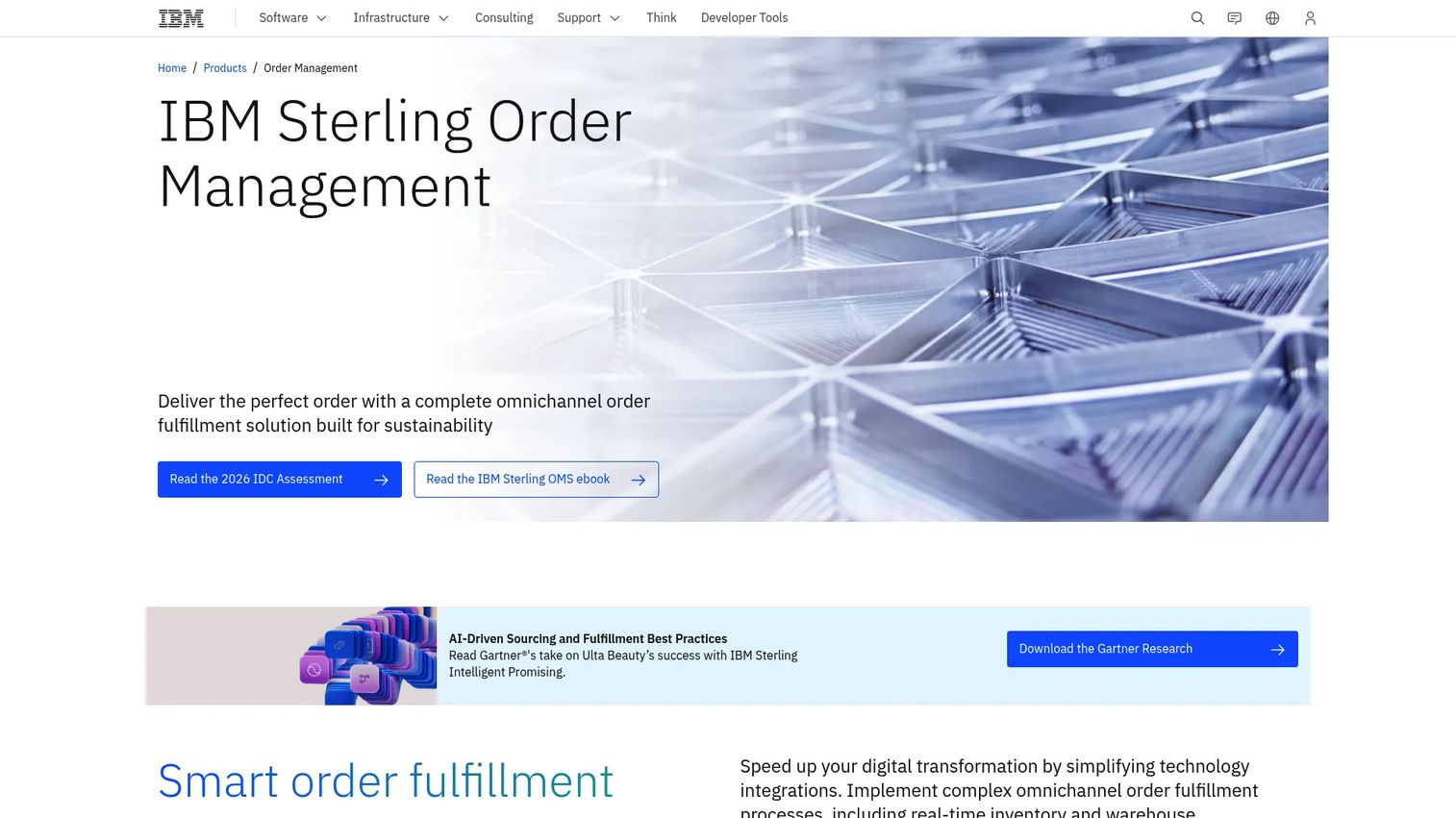
IBM Sterling Order Management is an omnichannel order fulfillment and orchestration platform for large B2B and B2C enterprises managing complex partner, supplier, and fulfillment networks. It provides order orchestration, real-time inventory visibility, scheduling optimization, reverse logistics, and omnichannel fulfillment including BOPIS and ship-from-store. IBM publishes per-order-line pricing, which makes it one of the few enterprise OMS vendors with a transparent pricing structure.
Best for: Large enterprises with complex supply chain operations, partner networks, and IT resources to manage an enterprise-grade platform.
Key features
- Enterprise order orchestration
- Real-time inventory visibility
- Scheduling optimization
- Reverse logistics and returns
- Omnichannel fulfillment: BOPIS and ship-from-store
Why choose IBM Sterling Order Management: Strong for enterprise buyers with complex operating models and in-house IT capacity. Not the fastest path for lean companies that need simple inventory and order control.
IBM Sterling Order Management pricing: IBM publishes per-order-line pricing. SaaS Essentials is 2.8c per order line per month. SaaS Standard is 4.5c per order line per month. Professional (container-based) is 1.5c per line. Enterprise (container-based) is 1.8c per line. Prices are indicative and may vary by country, excluding taxes and duties.
G2 rating: 4.4/5
12. Zoho Inventory
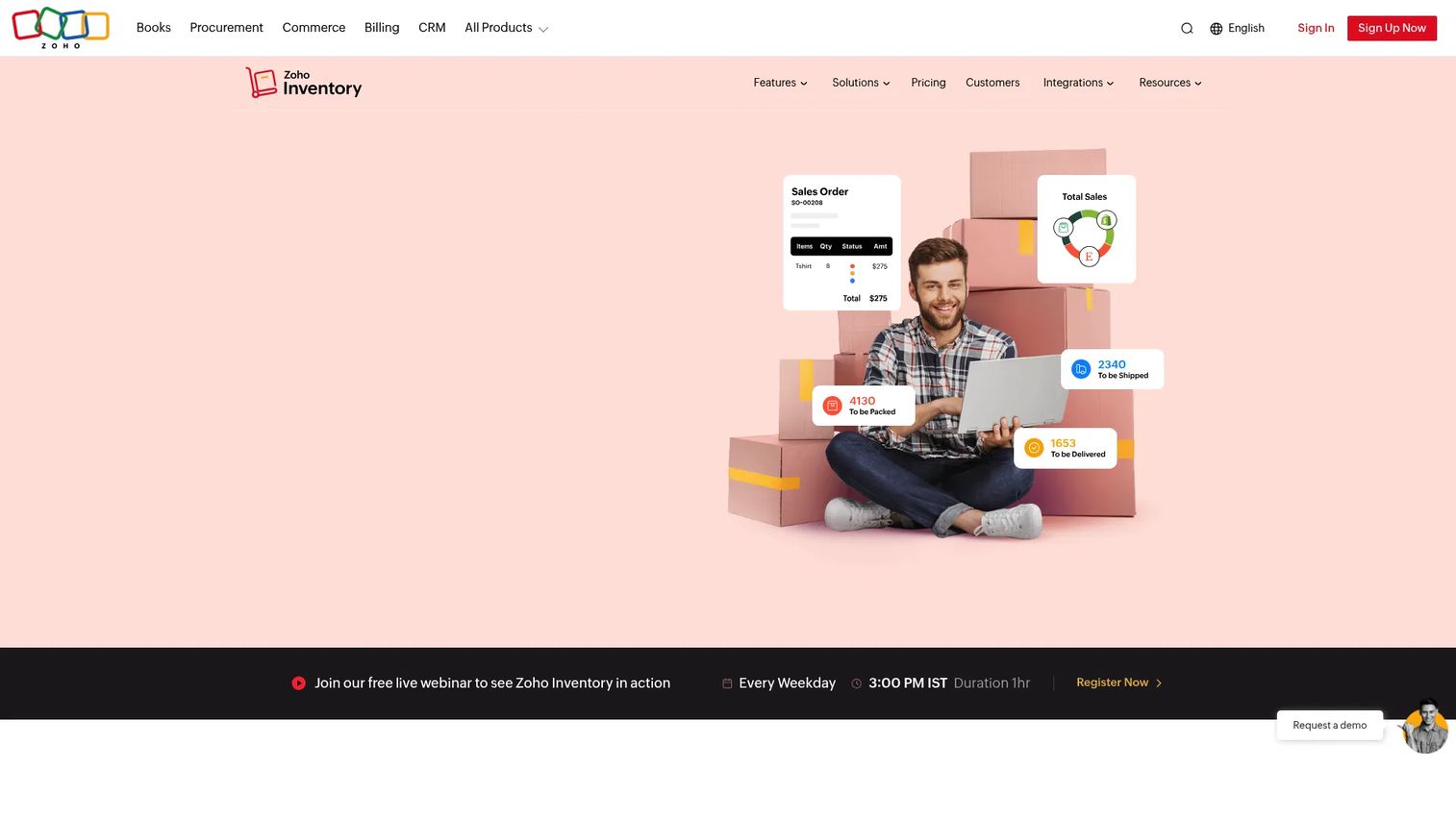
Zoho Inventory is online inventory management software covering purchasing, warehousing, order fulfillment, inventory control, multichannel selling, and analytics. For small businesses and lean ecommerce teams, it is one of the most accessible entry points into order and inventory management. The free plan supports 50 orders and one user. Paid plans scale from 500 to 15,000 monthly orders, adding warehouse locations, automation, and reporting capabilities.
Best for: Small businesses and ecommerce operators that need a practical first system for inventory, orders, and shipping without enterprise overhead.
Key features
- Multi-warehouse management
- Serial and batch tracking
- Multichannel selling across ecommerce and marketplaces
- Packaging, shipping, and post-shipment tracking
- Barcode generation and scanning
Why choose Zoho Inventory: Strong for teams that need an affordable, functional first system. Less fit for complex omnichannel retail or enterprise fulfillment operations requiring advanced routing rules.
Zoho Inventory pricing: The free plan includes 50 orders, 1 user, and 1 location. Standard is $29/organization/month, billed annually. Premium is $79/organization/month, billed annually. Plus is $129/organization/month, billed annually. Enterprise is $249/organization/month, billed annually. A 14-day free trial is available on paid plans.
G2 rating: 4.4/5
13. Odoo Order Management
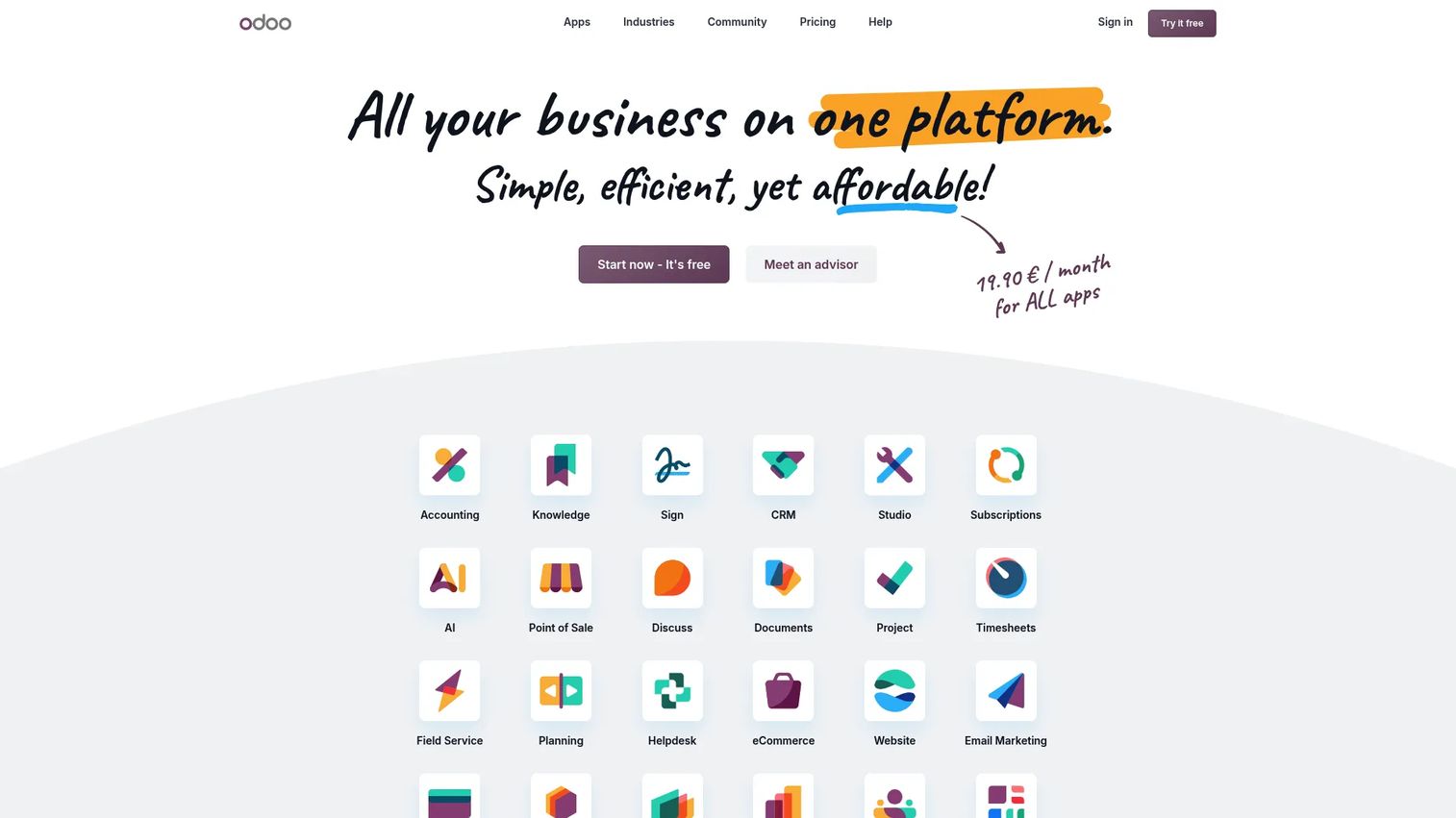
Odoo is a modular ERP where order management connects the Sales, Inventory, Accounting, and Ecommerce apps. It handles quotation-to-sales-order workflows, delivery and invoicing after sales, product variants, pricelists, discounts, multi-currency pricing, returns, refunds, and ecommerce order lifecycle management. The One App Free plan gives unlimited users access to a single app at no cost. The modular structure means you buy only what you need, though configuration complexity grows with each added app.
Best for: Teams that want modular ERP flexibility and can manage configuration across connected apps without committing to a monolithic suite.
Key features
- Quotation-to-sales-order workflows
- Delivery and invoicing after sales
- Product variants, pricelists, discounts, and multi-currency pricing
- Returns and refunds
- Ecommerce order lifecycle management
Why choose Odoo Order Management: Good for teams that want flexibility and can manage configuration across apps. Before estimating cost, list exactly which apps you need, as the price per user applies to all apps on paid plans.
Odoo Order Management pricing: One App Free is $0 for unlimited users with one app. Standard (all apps, Odoo Online) is $24.90/user/month, billed yearly. Custom (all apps, including Odoo Studio, multi-company, and external API) is $49.00/user/month, billed yearly.
G2 rating: 4.2/5
14. Brightpearl
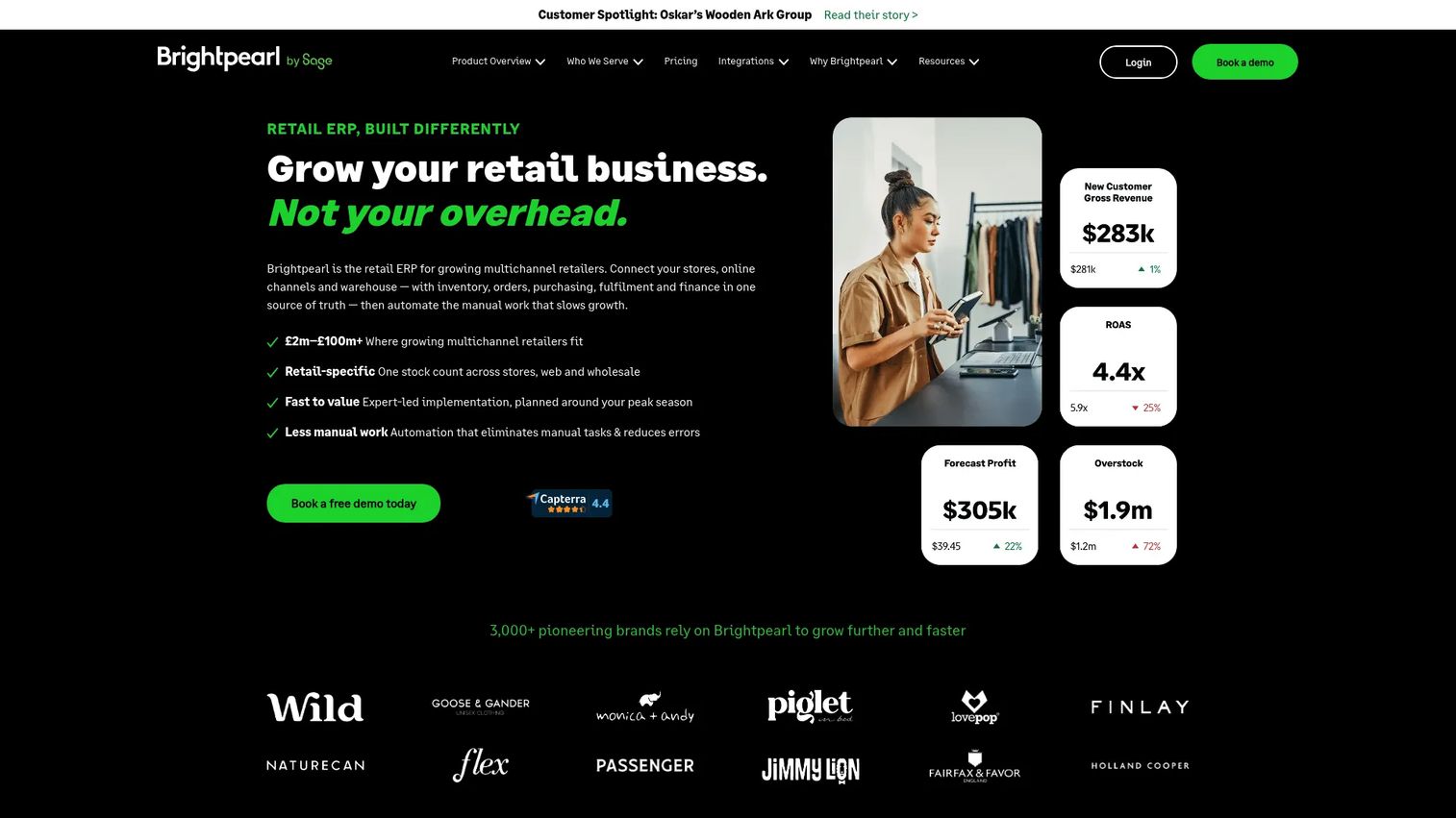
Brightpearl is a retail operating system for growing multichannel retailers and wholesalers. It covers inventory and order management, warehouse workflows, purchasing automation, retail accounting, reporting, CRM, and point of sale in one platform. Unlike general-purpose ERP, Brightpearl is built around retail and ecommerce operations and includes unlimited users at no extra per-seat cost. Pricing is bespoke and requires contacting Brightpearl for a quote.
Best for: Retail and ecommerce operators scaling beyond basic ecommerce admin tools who need order processing, inventory, and accounting connected in one system.
Key features
- Order processing and inventory management
- Warehouse workflows and purchasing automation
- Retail accounting integration
- Point of sale connectivity
- Ecommerce and accounting integrations with retail-specific reporting
Why choose Brightpearl: Strong for brands that need retail operations control without jumping straight to enterprise OMS. Evaluate accounting platform compatibility and ecommerce integration fit before buying.
Brightpearl pricing: Brightpearl's pricing is tailored to each customer and includes unlimited users. Contact Brightpearl for a quote. Key cost drivers include order volume, channels, warehouse locations, and implementation scope.
G2 rating: 4.4/5
15. Cin7
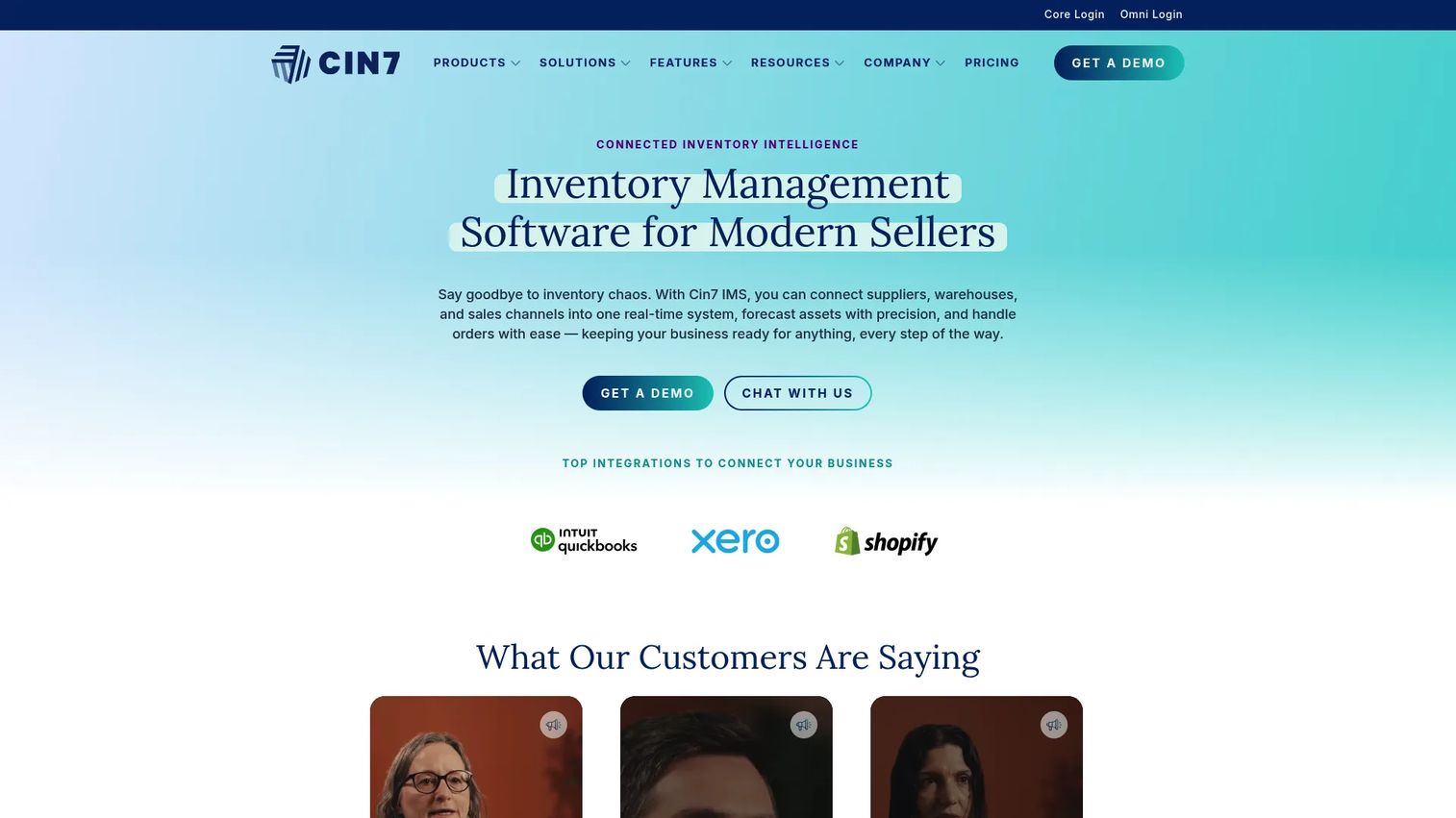
Cin7 is inventory management software that connects suppliers, warehouses, sales channels, and business operations into one system. It covers inventory management, order management across ecommerce and retail channels, warehouse management with barcode scanning, assembly and manufacturing with bill of materials, and reporting and analytics. Cin7 Core plans are structured around order volume: Standard covers 6,000 sale orders per year, Pro covers 24,000, and Advanced covers 120,000.
Best for: Product businesses managing inventory, purchasing, B2B commerce, ecommerce, and marketplace channels who need inventory accuracy as the foundation.
Key features
- Inventory management with real-time stock visibility
- Order management across ecommerce and retail channels
- Warehouse management and barcode scanning
- Assembly and advanced manufacturing with bill of materials
- Accounting, ecommerce, and app integrations
Why choose Cin7: Strong when inventory accuracy is the main operating constraint across multiple channels. Enterprise retail teams with advanced order promising and distributed store fulfillment needs will likely need a deeper OMS alongside it.
Cin7 pricing: Standard is $349/month (5 users, 2 integrations, 6,000 orders/year). Pro is $599/month (10 users, 4 integrations, 24,000 orders/year). Advanced is $1,199/month (15 users, 6 integrations, 120,000 orders/year). Prices exclude taxes.
G2 rating: 4.1/5
Considerations when choosing order management software
Match the system to order complexity
A 60-person commerce company does not need the same OMS as a national retailer with 300 store locations. Document your order volume, SKU count, channel mix, warehouse locations, return rate, and fulfillment nodes before starting conversations with vendors. The answers eliminate most of the list quickly.
Check integration depth before feature depth
Order management breaks when systems do not communicate. Evaluate your ERP, CRM, ecommerce platform, marketplace connections, warehouse system, shipping carriers, 3PL providers, and customer service tool before comparing dashboard features. A weak integration to your existing accounting system creates more reconciliation work than you started with.
Model total cost of ownership
License price is the smallest part of the budget conversation for most OMS platforms. Add implementation partner fees, data migration, process redesign, training, custom integration development, and internal admin time. For enterprise platforms, the services cost frequently exceeds the software cost in year one.
Decide who owns the system after go-live
A founder should not own OMS configuration after launch. Before you sign, name whether Ops, Finance, IT, or RevOps owns day-to-day administration, reporting configuration, and process changes. If the answer is unclear, the system will route back to you.
Verify reporting against the questions your board asks
The right OMS should answer specific operational questions without exports: Order backlog, fulfillment time, stockout rate, return rate, margin impact by channel, and channel performance. Run a demo scenario using those exact questions. If the answers require a custom report or a data export, factor that into your evaluation.
Conclusion
The order management software market, valued at $3.19 billion in 2025 according to The Insight Partners (2026), covers tools built for very different operational contexts. The right choice for your team comes down to two decisions: How much order complexity you have today, and how much you expect to add in the next 18 months.
For Salesforce-centered commerce teams, Salesforce Order Management is the clearest fit. Microsoft Dynamics 365 Business Central serves Microsoft-stack SMB and mid-market companies that need finance and order management together. Sage Intacct fits finance-led teams connecting order data to revenue and accounting. NetSuite handles companies ready to consolidate into an ERP-centered backbone.
Manhattan ActiveOrder, Blue Yonder, Aptos, Kibo, Fluent, and IBM Sterling are the enterprise options for retailers and commerce organizations with distributed fulfillment complexity. Zoho Inventory and Odoo serve leaner teams starting with inventory and order control. Brightpearl and Cin7 are strong picks for growing retail and ecommerce operators who need more than a basic admin panel.
Shortlist three tools based on your order volume, channel mix, ERP and CRM stack, and implementation appetite. Then ask each vendor to walk you through the questions your board will ask next quarter.
Start your journey with Guideflow today!
FAQs
Order management software is a system that manages customer orders from the moment a purchase is placed through fulfillment, shipping, returns, and financial reconciliation. It connects inventory, customer records, finance data, and fulfillment workflows in one operating layer. An OMS, or order management system, replaces the manual coordination of spreadsheets, channel dashboards, and separate fulfillment tools. You can also explore comparisons with adjacent tools in our guide to best sales management software.
Inventory software tracks stock levels, warehouse locations, and replenishment triggers. Order management software uses that inventory data to process, route, fulfill, and report on individual customer orders. Many platforms do both, but the buying question is which job is the primary constraint. If overselling and stockouts are your problem, inventory visibility comes first. If fulfillment routing and customer service visibility are the issue, a full OMS is the right layer.
For small businesses, the most practical shortlist includes Zoho Inventory, Odoo Order Management, Brightpearl, and Cin7. Zoho Inventory offers a free plan and paid plans starting at $29/month, making it the lowest-cost entry point. Odoo provides a free single-app option that can grow with additional modules. Brightpearl and Cin7 fit growing retail and ecommerce brands that need more operational control than a basic ecommerce admin tool offers. The right choice depends on whether inventory accuracy or order routing is the primary gap. For broader commerce tooling context, see our guide to the best ecommerce platform for small business.
Enterprise retailers typically shortlist Manhattan ActiveOrder, Blue Yonder Order Management, Aptos Order Management, IBM Sterling Order Management, SAP Commerce Cloud, and Salesforce Order Management. The final fit depends on fulfillment network complexity, store operations requirements, ERP stack, and implementation resources. Manhattan excels at order promising and distributed retail fulfillment. IBM Sterling offers transparent per-line pricing for large-volume operations. SAP Commerce Cloud fits organizations already running SAP infrastructure.
Pricing ranges from free (Zoho Inventory's entry plan, Odoo's single-app tier) to $349/month for Cin7's entry plan, to per-user ERP plans starting at $80/user/month for Microsoft Dynamics 365 Business Central. Enterprise platforms including Salesforce, Manhattan, SAP, NetSuite, Blue Yonder, and Brightpearl require a sales conversation. The price on enterprise contracts is driven by order volume, fulfillment locations, user count, modules, and implementation scope. License cost is typically smaller than implementation cost for enterprise deployments. For comparison with other software investment guides, see our best account management software roundup.
A capable OMS covers order capture from ecommerce, marketplace, and sales channels; real-time inventory visibility across locations; order routing and fulfillment rules; warehouse picking, packing, and shipping workflows; returns, exchanges, and refunds; customer service order lookup; and ERP, CRM, ecommerce, and 3PL integrations. Reporting and operational dashboards that answer questions about order backlog, fulfillment time, and return rate are equally important. The features that matter most to your team depend on whether your primary problem is inventory visibility, fulfillment routing, financial reconciliation, or customer service.
The clearest signals are overselling because inventory is not synchronized, delayed shipments because routing decisions are manual, finance reconciling orders late because data lives in multiple tools, and support teams answering "where is my order?" without a quick lookup path. For founders, the signal is often losing weekly visibility into order backlog and channel performance. Only 10% of surveyed retailers use a centralized order management system, according to Verifone and Retail Consulting Partners (2025), which suggests most companies wait longer than they should. The cost of waiting grows with order volume. You can also review our guide to 3PL software for context on when warehouse and fulfillment tools become part of the conversation.
Not typically. Some OMS platforms sit inside ERP systems (NetSuite, Microsoft Dynamics 365 Business Central, Odoo), while others integrate with ERP from outside (Fluent, Manhattan, Kibo). Standalone inventory tools like Zoho Inventory and Cin7 connect to accounting platforms rather than replacing them. The architecture that fits your company depends on whether finance, supply chain, or fulfillment is the dominant workflow. For companies at Series B and beyond, the question is usually whether to consolidate into an ERP with OMS capability or to run a best-of-breed OMS that integrates with an existing ERP. Neither is universally correct. Start with the operational question your team needs to answer every day, then evaluate which architecture puts the data in the right hands fastest. For related coverage, see our guide to best business intelligence software for how reporting tools fit alongside an OMS.