Your board wants cleaner financial visibility. Your VP Finance wants fewer spreadsheet reconciliations at month-end. Your product team is asking whether your banking or payment workflows will hold up under audit. These are not the same problem, and they do not have the same answer.
Financial services software is not one category. It spans accounting and ERP, core banking, lending and loan documentation, payments, mortgage origination, risk management, and financial crime compliance. The global market for financial services applications reached $165.91 billion in 2025, according to Mordor Intelligence, and 87% of financial services firms increased cloud investment over the prior two years, according to LSEG (2025). The right tool depends entirely on which workflow is breaking first.
This guide helps you shortlist the right category before you talk to a vendor. It covers 12 platforms across finance operations, banking, lending, payments, and compliance, evaluated by workflow fit and deployment maturity.
What's inside
- Who this is for: Founders and operators at fintech, lending, wealth, insurance, or financial-operations companies evaluating infrastructure choices for regulated workflows
- Selection criteria: Category fit for the named financial workflow, deployment maturity and enterprise readiness, compliance relevance, and integration depth with common GTM and finance stacks
- What's covered: Accounting, ERP, core banking, commercial lending, payments modernization, mortgage origination, loan documentation, trade finance, financial crime compliance, and risk reporting
- What to verify yourself: Pricing (most vendors here require a quote), implementation model, and integration fit with your existing stack before shortlisting
TL;DR
- Best for finance operations: Sage Intacct for multi-entity accounting, automated close, and reporting
- Best for commercial lending: Finastra Loan IQ for complex loan servicing and syndicated lending
- Best for payments modernization: Finastra Global PAYplus for multi-rail enterprise payments; Oracle Banking Payments for regulated banking payment operations
- Best for workforce and ERP alignment: Workday ERP for finance, HR, and planning on a unified data model
- Best for enterprise risk and compliance: Oracle Financial Crime and Compliance Management for AML, KYC, and fraud; Oracle Risk and Finance for regulatory reporting and treasury
What is financial services software?
Financial services software is a category of technology platforms that help banks, lenders, insurers, fintechs, investment firms, and finance teams manage financial operations, regulated workflows, customer transactions, risk, reporting, and compliance.
The category spans a wide range of sub-disciplines. Understanding where a specific tool fits is the most important step before evaluation.
Core categories of financial services software
- Accounting and ERP: Multi-entity close, revenue recognition, AP and AR automation, financial reporting
- Core banking and digital banking: Account management, customer servicing, deposit and withdrawal workflows
- Lending and loan servicing: Commercial loan origination, syndicated lending, credit lifecycle management
- Payments and financial messaging: Payment hub processing, real-time rails, cross-border payments, ISO 20022
- Mortgage origination: Digital borrower applications, loan origination, document collection, compliance
- Loan documentation and compliance content: Document generation, regulatory forms, 50-state lending compliance
- Trade finance: Letters of credit, guarantees, documentary collections, supply-chain finance
- Risk, finance, and regulatory reporting: Stress testing, credit risk, liquidity, profitability, and balance-sheet analytics
- Financial crime, AML, KYC, and fraud: Transaction monitoring, case management, sanctions screening, investigation workflows
Key capabilities to look for
- Multi-entity accounting and consolidation
- Cloud, hybrid, or on-premises deployment options
- Workflow automation across lending, payments, or compliance
- AI-assisted analytics with audit trails and governance controls
- Role-based permissions and access management
- Open banking API and system integration support
- Regulatory reporting outputs
- Audit-ready data models
How financial services software differs from general finance software
General finance tools handle accounting, planning, or billing. Financial services software goes further: It supports regulated customer money movement, lending workflows at scale, transaction monitoring, sanctions checks, capital reporting, or core banking operations. A fintech processing customer payments, a lender managing syndicated loans, or a bank running AML reviews cannot get there with a general-purpose accounting tool alone.
When to use financial services software
Replace spreadsheet-heavy finance operations
Close, consolidation, revenue recognition, or reporting no longer fits spreadsheets when your entity count grows, your audit needs tighten, or your board asks for numbers you cannot produce in a day. Finance operations platforms like Sage Intacct and Workday ERP handle multi-entity consolidation and close automation so your finance lead spends less time stitching exports and more time on analysis.
Modernize banking, lending, or payments workflows
A product or institution that processes loans, payments, or mortgage applications at scale needs infrastructure built for those workflows. Evaluation should cover reliability under transaction volume, audit traceability, integration with core systems, and deployment model. Finastra's lending and payments products and the Oracle Banking suite are built for these requirements.
Strengthen risk, compliance, and regulatory visibility
Compliance operations outgrow email and manual review queues when case volumes rise or regulatory expectations increase. AML monitoring, KYC workflows, sanctions screening, fraud investigation, and regulatory accounting each require purpose-built tooling. Oracle Financial Crime and Compliance Management and Oracle Risk and Finance address these workflows at institutional scale.
Financial services software comparison
All pricing and ratings below reflect verified data from vendor pricing pages and G2 listings. Most enterprise financial services vendors require a sales-led quote; pricing figures indicate what was confirmed at research time.
| # | Product | Best for | Key differentiator | Pricing | G2 rating |
|---|---|---|---|---|---|
| 1 | Sage Intacct | Multi-entity finance operations | AI-powered close, AP automation, and financial reporting | Custom pricing | 4.3/5 |
| 2 | Finastra Loan IQ | Commercial and syndicated lending | End-to-end loan lifecycle for complex credit products | Custom pricing | No reviews |
| 3 | Finastra Global PAYplus | Enterprise payments modernization | ISO 20022-native multi-rail payment hub | Custom pricing | No reviews |
| 4 | Finastra Trade Innovation | Bank trade finance operations | Full trade and supply-chain finance automation | Custom pricing | No reviews |
| 5 | Finastra LaserPro | Loan documentation and compliance | 50-state compliant loan document generation | Custom pricing | 3.2/5 |
| 6 | Finastra Mortgagebot | Digital mortgage origination | Retail, wholesale, and correspondent lending workflows | Custom pricing | 2.4/5 |
| 7 | Workday ERP | Enterprise finance and workforce alignment | Unified finance, HR, and planning on one data model | Custom pricing | 4.2/5 |
| 8 | Oracle Banking | Core and digital banking modernization | Microservices-rich core banking for multi-product institutions | Custom pricing | 4.2/5 |
| 9 | Oracle Banking Payments | Regulated payment processing | ISO 20022-based multi-rail payments for banks | Custom pricing | No verified rating |
| 10 | Oracle Financial Crime and Compliance Management | AML, KYC, sanctions, and fraud | End-to-end financial crime suite with ML-powered investigation | Custom pricing | 3.9/5 |
| 11 | Oracle Risk and Finance solutions | Risk, treasury, and regulatory reporting | Integrated stress testing, credit, liquidity, and profitability analytics | Custom pricing | No verified rating |
| 12 | Oracle ERP solutions | Enterprise finance and procurement | AI-powered finance, procurement, and project management at scale | From $600/month | No verified rating |
Best 12 financial services software platforms for 2026
1. Sage Intacct
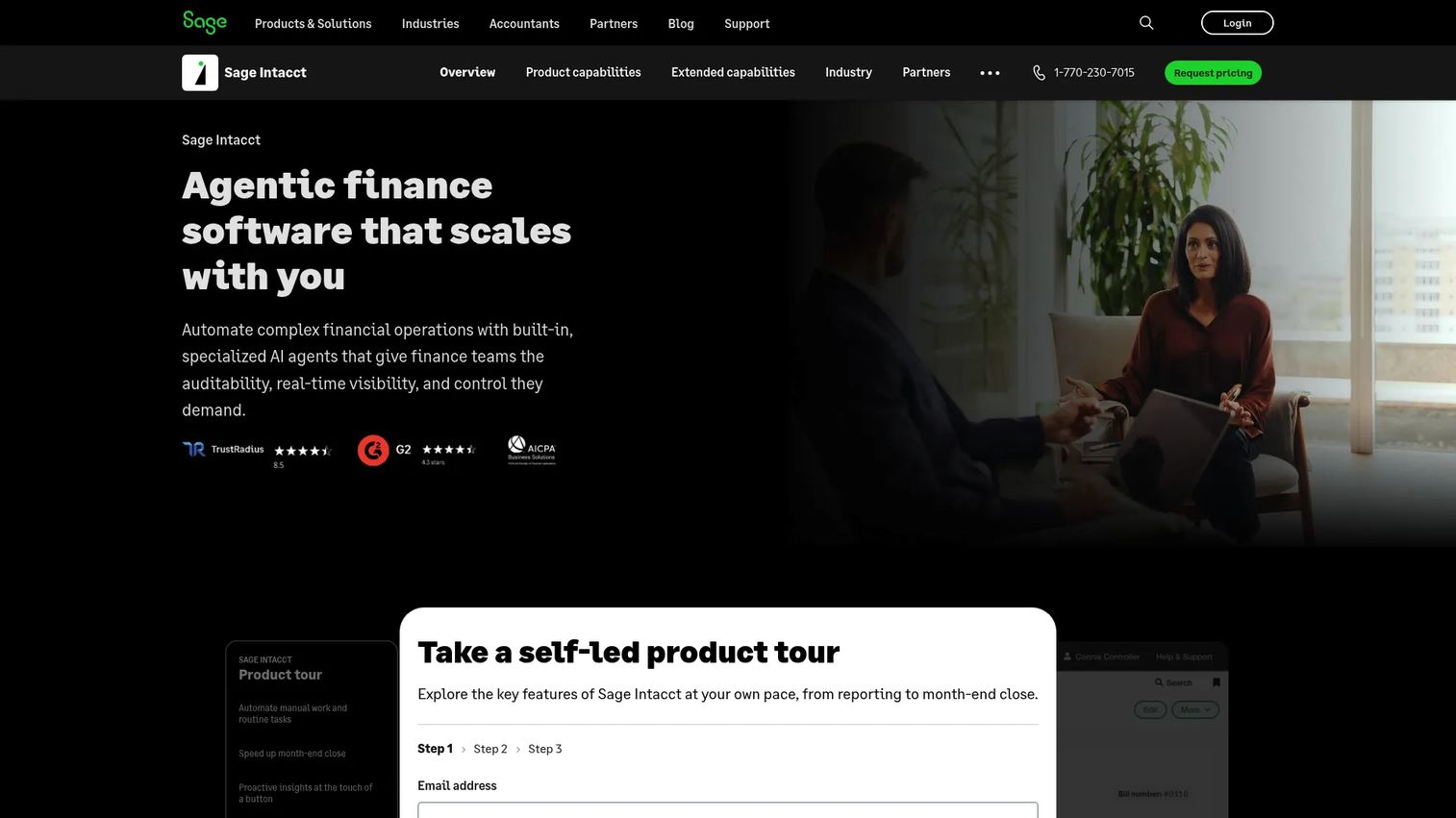
Sage Intacct is AI-powered cloud financial management software designed for growing and mid-sized organizations that need stronger accounting, multi-entity reporting, and automated close workflows. It is built specifically for the finance complexity that appears when a company moves past early-stage spreadsheet-driven operations. For fintech, lending, wealth management, private equity, and multi-entity SaaS companies, it provides the reporting infrastructure that makes board numbers reliable without a manual data pull.
Best for: Finance teams at fintech, lending, wealth, private equity, insurance, or multi-entity SaaS companies that need tighter accounting, close automation, and reporting.
Key features
- Multi-entity consolidation and intercompany accounting
- Accounts payable and accounts receivable automation
- AI agents for close management, financial assurance, and AP workflows
- Multi-dimensional dashboards and financial reporting
- Salesforce integration and REST API connectivity
Why choose Sage Intacct: For a Series B founder, the clearest value is faster, more reliable board prep and a finance function that does not depend on one person stitching together spreadsheet exports. Sage Intacct is not a core banking or payments platform, so teams that also need transaction infrastructure should pair it with a specialist system.
Sage Intacct pricing: Sage structures pricing as an annual subscription customized to the organization. To get a number, you contact sales. G2 reviewers describe pricing as mid-market in range. Capterra reviewers note pricing fits companies between 10 and 500 employees.
G2 rating: 4.3/5
2. Finastra Loan IQ
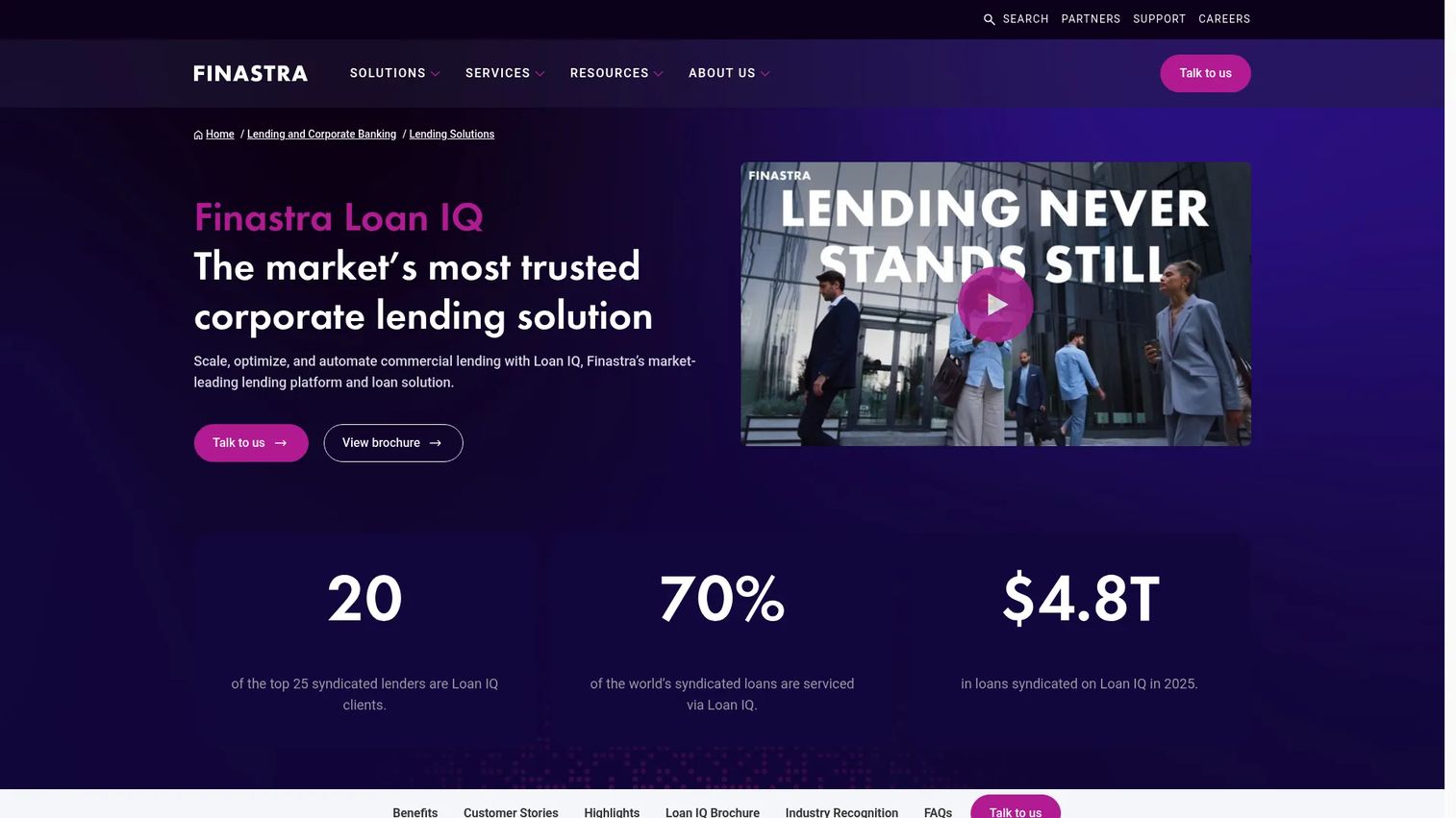
Finastra Loan IQ is a commercial loan servicing platform for financial institutions managing complex lending portfolios. It covers the full loan lifecycle: Origination, servicing, trading, accounting, and audit. Banks and lenders using Loan IQ can manage SME, bilateral, syndicated, complex, and specialty loans within a single platform, which matters when loan data, servicing events, and risk exposure must stay consistent across teams and geographies.
Best for: Banks and financial institutions managing commercial loans, syndicated credit facilities, and multi-product lending servicing operations.
Key features
- End-to-end loan lifecycle management: Origination through accounting
- Syndicated and bilateral lending support
- Credit lifecycle management and exposure tracking
- Workflow automation for servicing events
- Audit controls and reporting
Why choose Finastra Loan IQ: For a Series B fintech founder entering commercial lending, Loan IQ represents what enterprise-grade lending infrastructure looks like when complexity has passed the point of a lightweight internal build. It is built for institutions that cannot afford data inconsistency across a lending book.
Finastra Loan IQ pricing: Pricing requires a vendor conversation and varies by institution size, deployment model, and the modules selected. Contact Finastra directly for a quote.
3. Finastra Global PAYplus
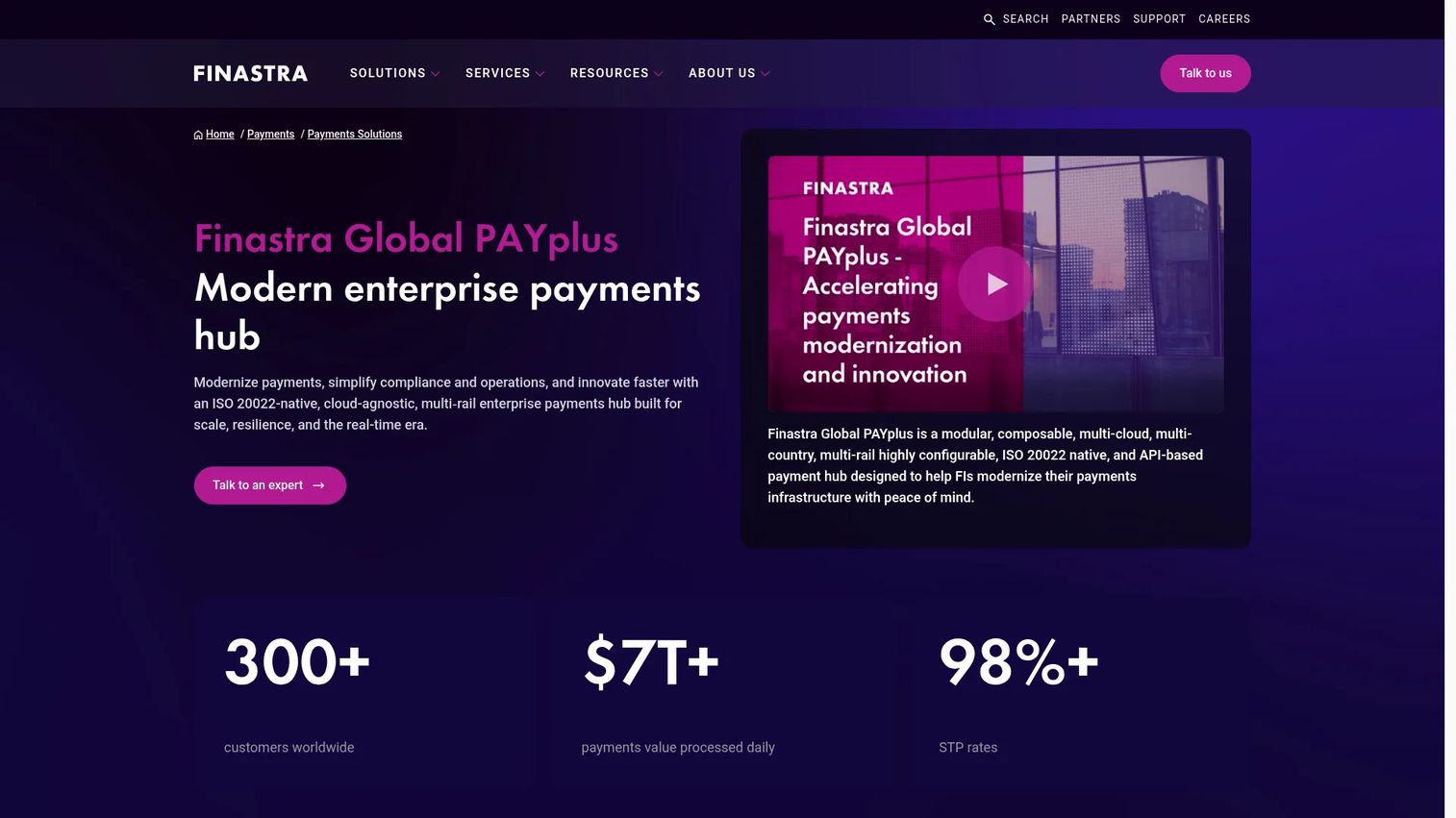
Finastra Global PAYplus is an ISO 20022-native, cloud-agnostic enterprise payments hub for financial institutions. It processes real-time, high-value, mass, and cross-border payments through a configurable rules engine. The platform supports ACH, RTGS, real-time payments, and alternative payment methods within a single modular architecture, and can be deployed on-premises, in the cloud, or as a managed Payments-as-a-Service.
Best for: Large financial institutions modernizing payment hubs, high-value payment processing, or enterprise payment operations across multiple rails.
Key features
- Unified processing for real-time, high-value, mass, and cross-border payments
- ISO 20022-native processing with pre-certified workflows
- Configurable rules engine and microservices-enabled architecture
- Built-in liquidity and risk management
- Cloud, on-premises, and Payments-as-a-Service deployment options
Why choose Finastra Global PAYplus: For founders building a product that depends on money movement, payment routing, or banking rails, this category matters earlier than most expect. Global PAYplus is built for institutions that need multi-rail payment processing under a single operational model, not point solutions stitched together per rail.
Finastra Global PAYplus pricing: Pricing is not available on the Finastra website. Cost varies by payment modules, transaction volume, deployment model, and implementation scope. Request a quote directly from Finastra.
4. Finastra Trade Innovation
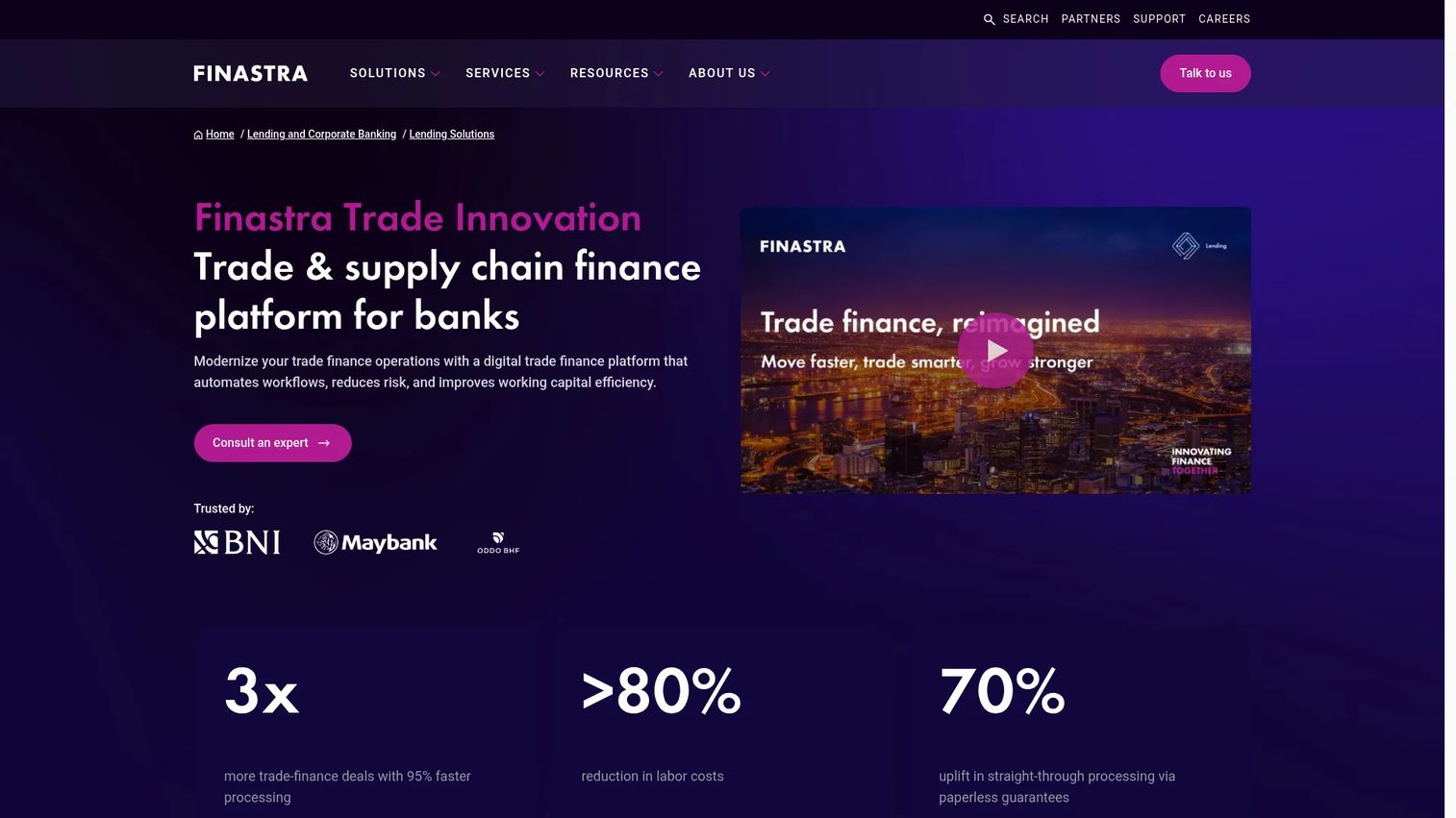
Finastra Trade Innovation is a digital trade and supply-chain finance platform for banks managing letters of credit, guarantees, documentary collections, and working-capital products. It supports buyer and seller loans, receivables, payables, supply-chain finance, and Islamic trade finance within configurable, cloud-ready workflows. AI-assisted document processing, real-time risk controls, and audit trails are built into the platform.
Best for: Banks and financial institutions with active trade finance operations managing multiple trade products and compliance requirements.
Key features
- Letters of credit, guarantees, and documentary collections
- Buyer and seller loan management
- Supply-chain finance and receivables processing
- AI-assisted document processing and straight-through processing
- Compliance checks, audit trails, and ecosystem integrations
Why choose Finastra Trade Innovation: Trade finance is operationally distinct from general lending and payments. Buyers should evaluate document handling accuracy, workflow control for exception cases, regulatory review capability, and integration with corporate banking channels before shortlisting.
Finastra Trade Innovation pricing: Quote drivers include institution size, trade finance modules, geographic scope, and deployment model.
5. Finastra LaserPro
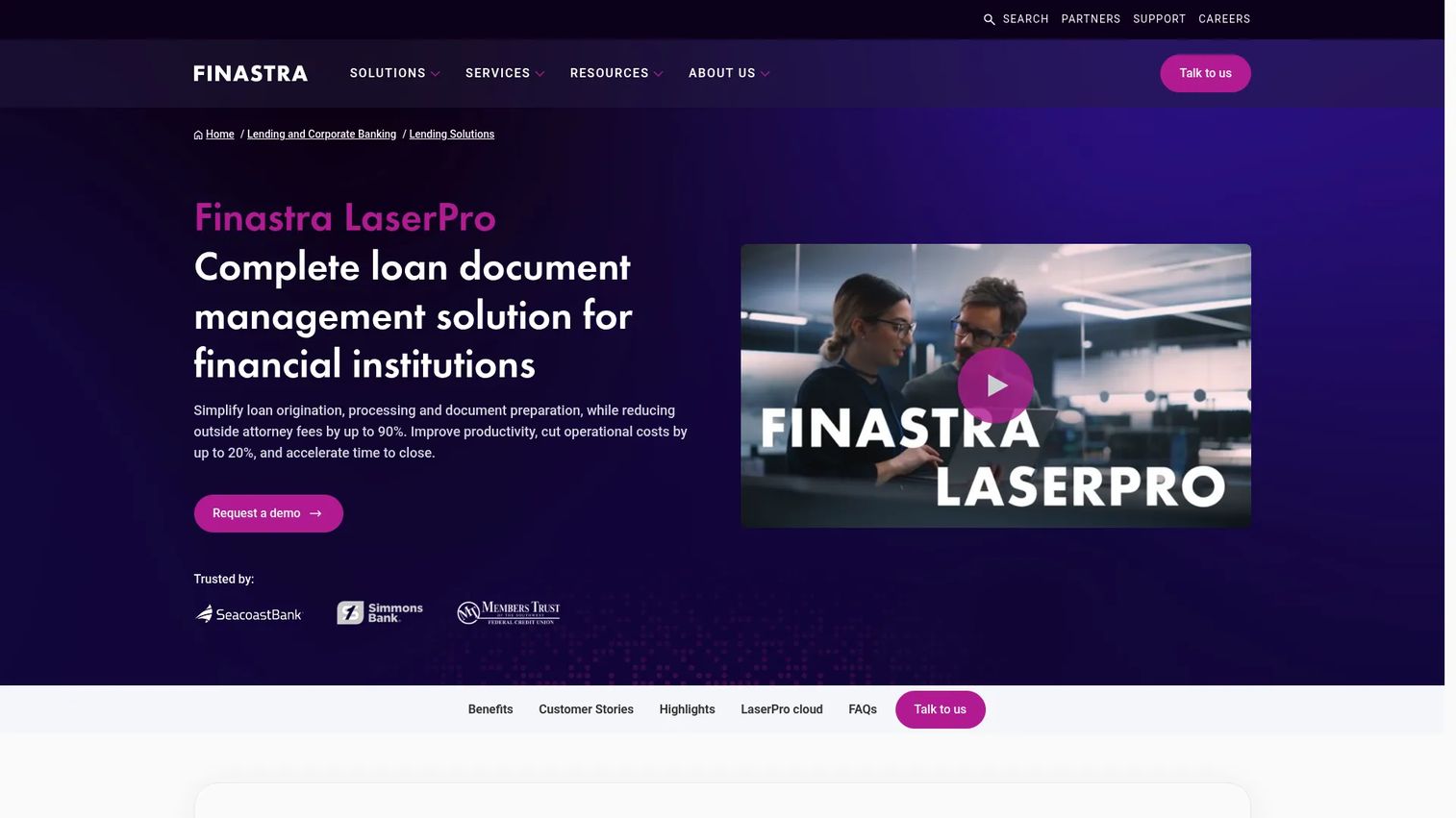
Finastra LaserPro is cloud-based loan documentation and lending compliance software for financial institutions across consumer, commercial, and mortgage lending. It generates loan documents with 50-state regulatory coverage and includes a warranty of up to $5 million on compliant document packages. LaserPro connects with more than 70 core systems and platforms, including nCino and Abrigo, and provides secure document exchange through LaserPro Exchange.
Best for: Banks and credit unions that need consistent, compliant loan document generation across consumer, commercial, and mortgage lending products.
Key features
- Loan document generation across consumer, commercial, and mortgage loan types
- Built-in 50-state regulatory compliance with up to $5 million warranty
- Secure file requests, uploads, and sharing via LaserPro Exchange
- Cloud-based lending workflows and automation
- Integration with 70+ core systems and platforms
Why choose Finastra LaserPro: Document compliance risk in lending is concrete and measurable. For founders and operators watching closing timelines or compliance review exposure increase, LaserPro removes the manual document generation step and the review burden that comes with it.
Finastra LaserPro pricing: Pricing requires a vendor quote. Cost depends on document volumes, lending product types, user count, and implementation requirements. Contact Finastra for current figures.
G2 rating: 3.2/5 (based on 6 reviews)
6. Finastra Mortgagebot
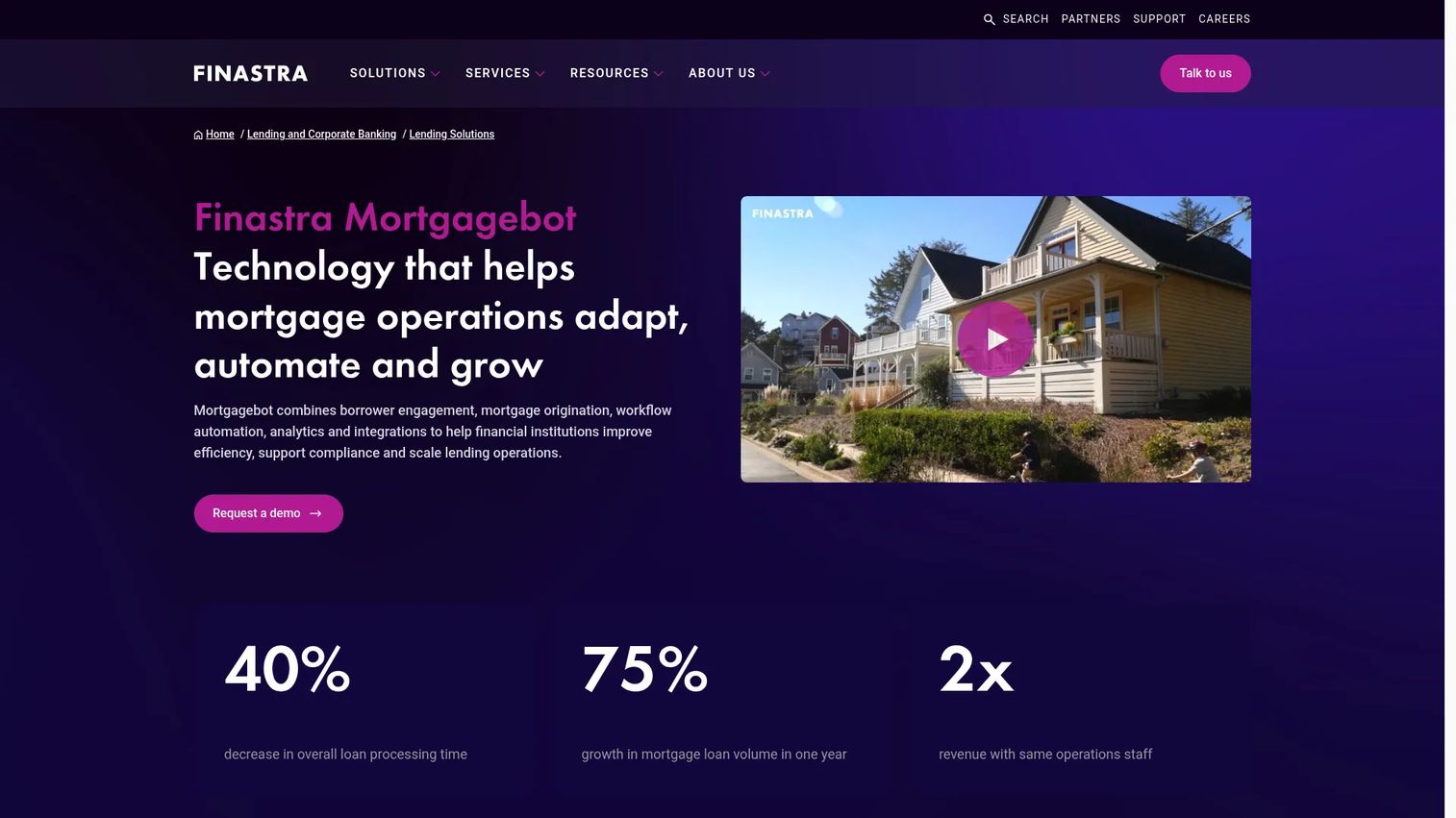
Finastra Mortgagebot is an integrated digital mortgage lending platform covering borrower engagement, loan origination, workflow automation, compliance, and analytics. It supports retail, wholesale, and correspondent lending, and integrates with major mortgage technology providers for document collection, underwriting, and closing. Banks, credit unions, and other financial institutions use it to manage mortgage applications from digital submission through to funded loan.
Best for: Mortgage lenders and financial institutions that need an end-to-end digital mortgage origination platform with compliance auditability and operational analytics.
Key features
- Digital borrower application and engagement workflows
- Retail, wholesale, and correspondent mortgage origination
- Workflow automation across the origination lifecycle
- Compliance support and audit trail
- Analytics and operational insights
Why choose Finastra Mortgagebot: Mortgage software should reduce application friction for borrowers while keeping compliance controls in place for the institution. For growth-stage lending companies, the relevant questions are borrower experience, processing visibility, and downstream document quality, not just loan count.
Finastra Mortgagebot pricing: Request a current quote directly from the vendor.
G2 rating: 2.4/5 (based on 4 reviews)
7. Workday ERP
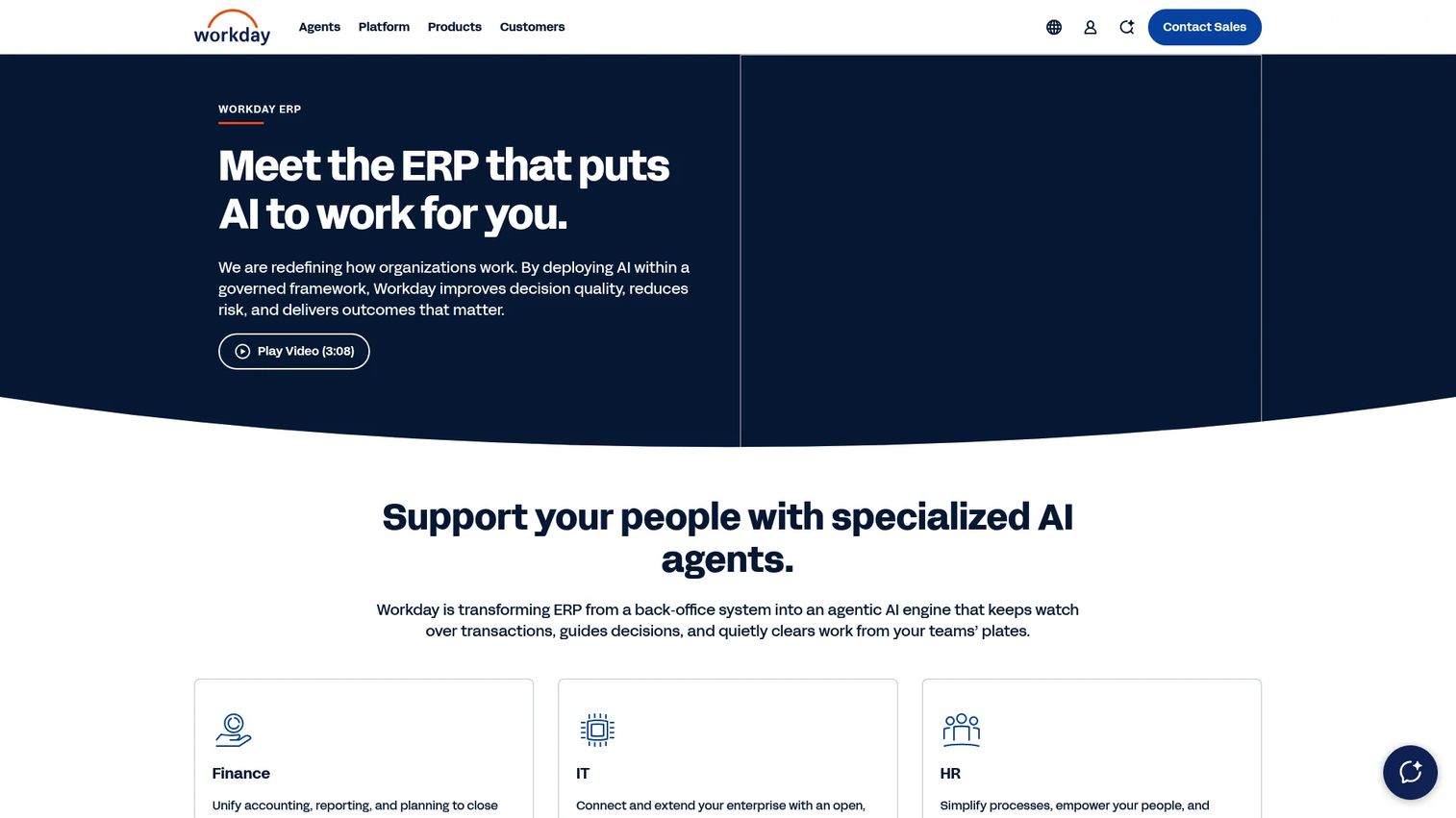
Workday ERP is a cloud-native SaaS ERP that unifies financial management, human capital management, planning, procurement, and operations on a single data model. It serves large and service-centric financial services organizations, including banking, insurance, capital markets, and investment management firms, that need finance and workforce data aligned without a separate integration layer.
Best for: Mid-market and enterprise financial services organizations that need finance, HR, planning, and operations data unified across the business.
Key features
- Financial management and accounting
- Human capital management
- Planning, scenario modeling, and forecasting
- Procurement and spend management
- AI-driven automation and analytics
Why choose Workday ERP: For a Series B founder scaling leadership teams, headcount planning, and finance operations simultaneously, Workday addresses the organizational complexity that appears when a company crosses 50 to 100 employees and multiple functional leads need consistent data. It is broader organizational infrastructure, not a specialist banking or lending system.
Workday ERP pricing: Prospective customers are directed to contact sales. Pricing varies by user count, modules, and deployment scope.
G2 rating: 4.2/5
8. Oracle Banking
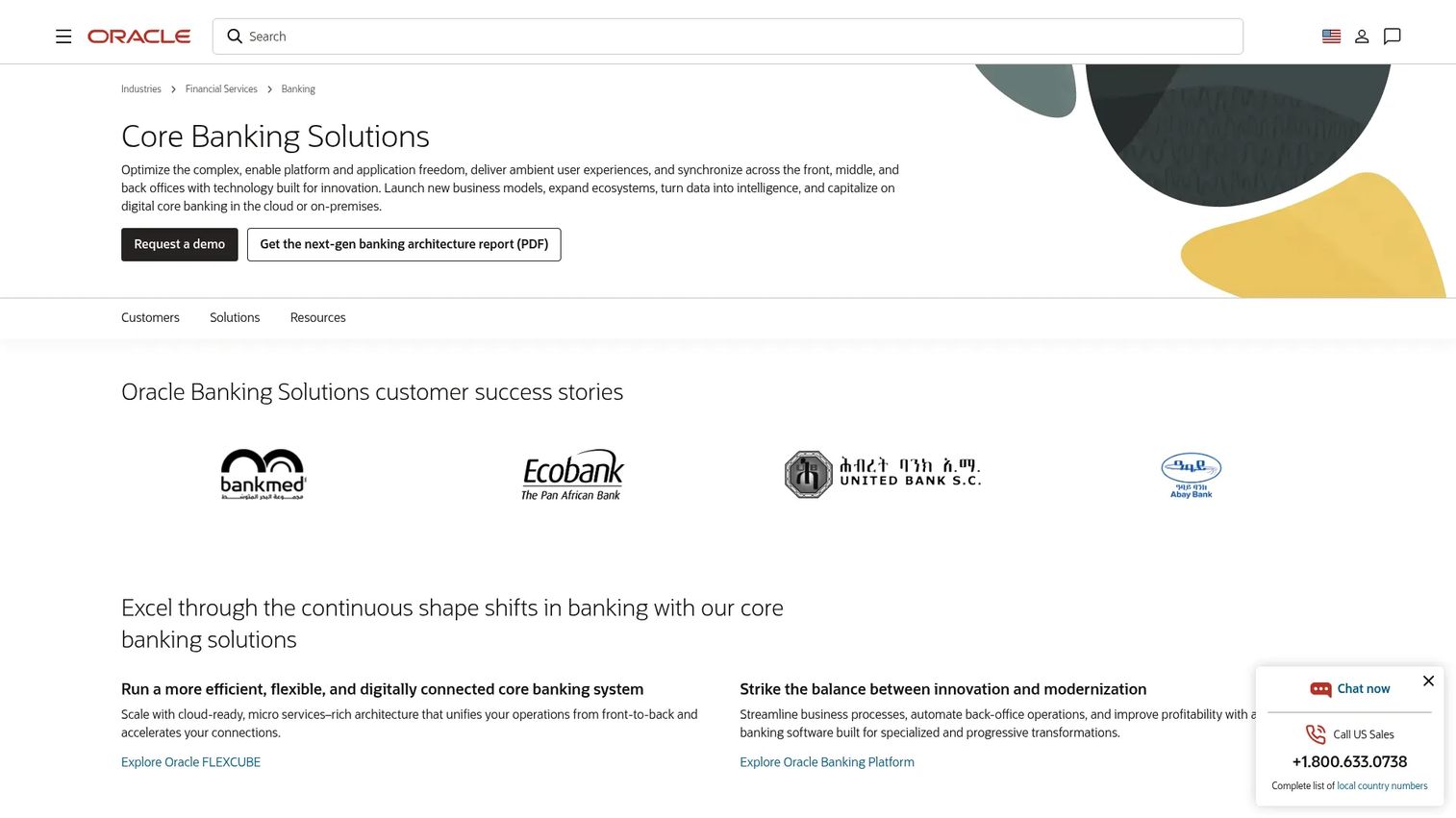
Oracle Banking is an enterprise banking software portfolio covering core banking, digital banking, payments, treasury, and open banking capabilities. The platform uses a microservices-rich, cloud-ready architecture that supports retail, corporate, Islamic, and microfinance banking. Institutions use it for progressive core modernization rather than wholesale replacement, which reduces implementation risk for large banks.
Best for: Banks and financial institutions modernizing core, digital, or related banking operations within an enterprise technology environment.
Key features
- Microservices-rich core banking architecture for progressive modernization
- Modular banking software for retail, corporate, Islamic, and microfinance
- Preintegrated SaaS banking services on Oracle Cloud Infrastructure
- Digital banking, open banking, and payments capabilities
- Support for cloud and on-premises deployment
Why choose Oracle Banking: Oracle Banking fits institutions that need breadth, governance, and integration within a large enterprise stack. For founders, this is a serious infrastructure decision with procurement, implementation, and long-term operational implications. Evaluate it when the complexity of your banking operations has outgrown modular or point tools.
Oracle Banking pricing: Quote drivers include modules selected, user count, deployment model, institution size, and implementation scope.
G2 rating: 4.2/5 (for Oracle Banking Digital Experience)
9. Oracle Banking Payments
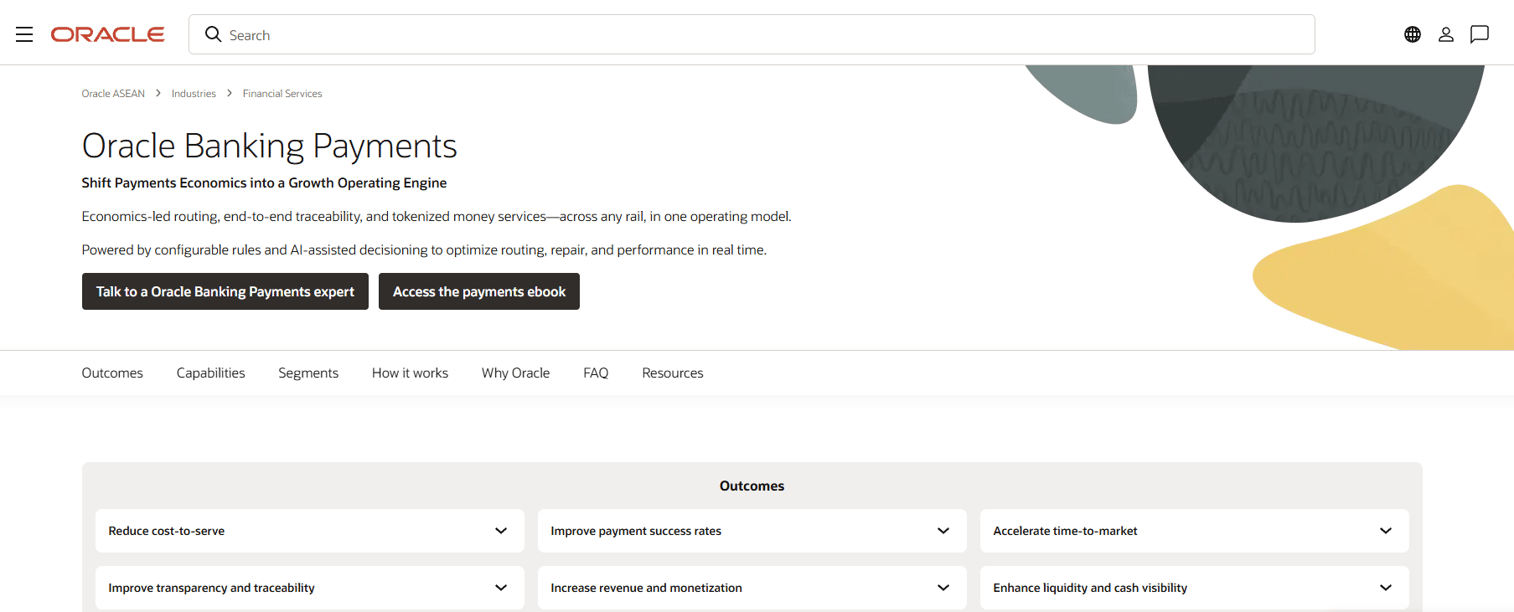
Oracle Banking Payments is a unified enterprise payment processing platform for retail and corporate financial institutions. It handles local, cross-border, real-time, and traditional payment processing through ISO 20022-based workflows. The platform supports configurable routing across multiple rails and networks, exception handling, reconciliation, and operational monitoring across multi-currency, multi-entity environments.
Best for: Banks and payment institutions modernizing enterprise payment processing across domestic, cross-border, real-time, and high-value rails.
Key features
- Unified processing for local and cross-border payments
- ISO 20022-based payment processing
- Configurable routing across multiple rails and networks
- Real-time payments and settlement
- Exception handling, reconciliation, and operational monitoring
Why choose Oracle Banking Payments: The distinction between payment operations infrastructure and generic billing tools matters as soon as money movement is core to the product. Underbuilding payment infrastructure creates regulatory exposure and operational brittleness. Oracle Banking Payments is designed for institutions where payment reliability is a non-negotiable.
Oracle Banking Payments pricing: Pricing requires a vendor quote. Contact Oracle directly for current figures.
10. Oracle Financial Crime and Compliance Management
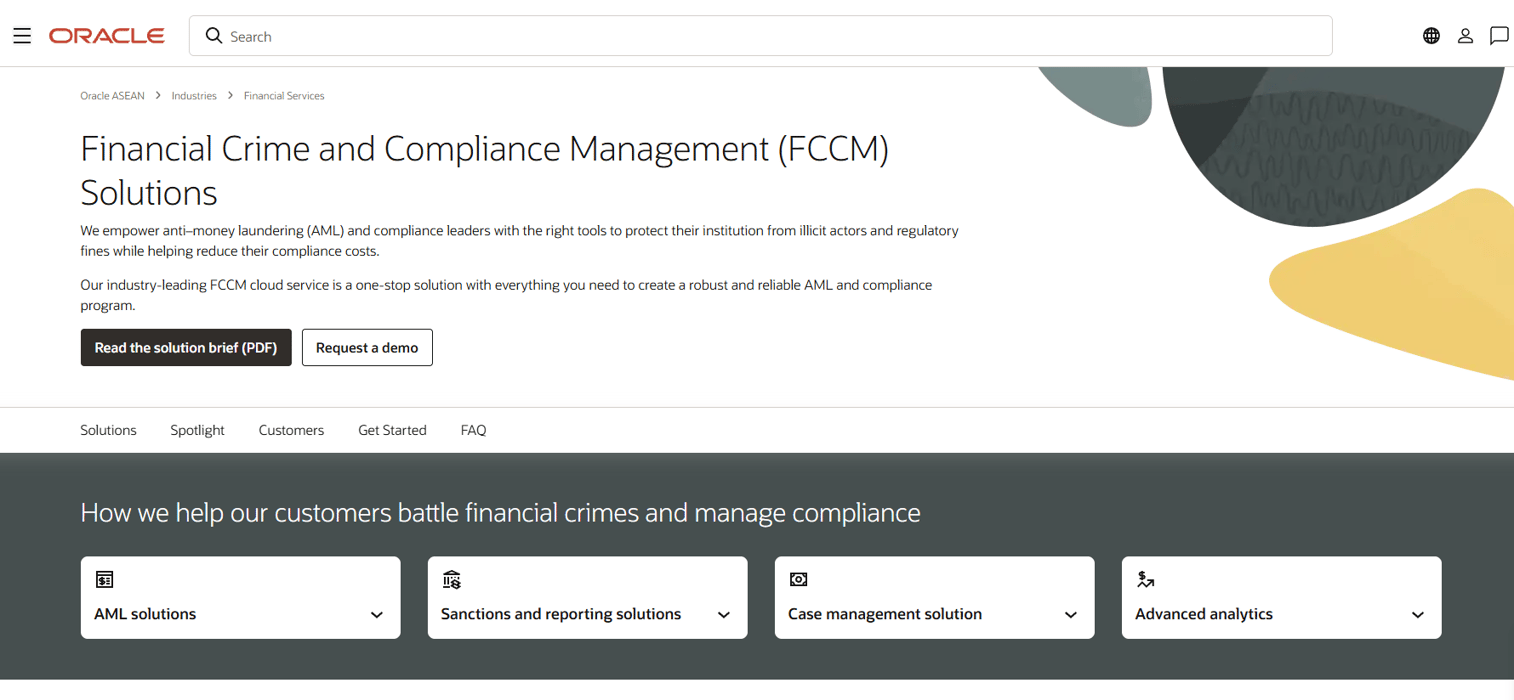
Oracle Financial Crime and Compliance Management is an end-to-end AML, KYC, sanctions, and fraud compliance suite for regulated financial institutions. It covers transaction monitoring, suspicious-activity detection, customer screening, transaction filtering, and case management. The Investigation Hub uses graph analytics and machine learning to surface patterns across accounts, entities, and transactions for compliance analysts.
Best for: Banks, fintechs, and financial institutions with active financial crime programs that need integrated transaction monitoring, investigation, and regulatory reporting.
Key features
- Transaction monitoring and suspicious-activity detection
- Know Your Customer (KYC) and customer screening
- Sanctions and transaction filtering
- Investigation Hub with graph analytics and machine-learning insights
- Case management and regulatory reporting support
Why choose Oracle Financial Crime and Compliance Management: For founders managing compliance operations, the core question is whether reviewers can find cases faster and document decisions for regulators more cleanly. Oracle FCCM reduces the manual review queue burden and improves investigation visibility across a compliance team. Oracle describes pricing as flexible and pay-per-use on its cloud service, though no figure is confirmed on the public pricing page.
Oracle FCCM pricing: Pricing is subscription-based and structured around usage, with modules, transaction volumes, and data sources as cost drivers. Contact Oracle for a current quote.
G2 rating: 3.9/5
11. Oracle Risk and Finance solutions
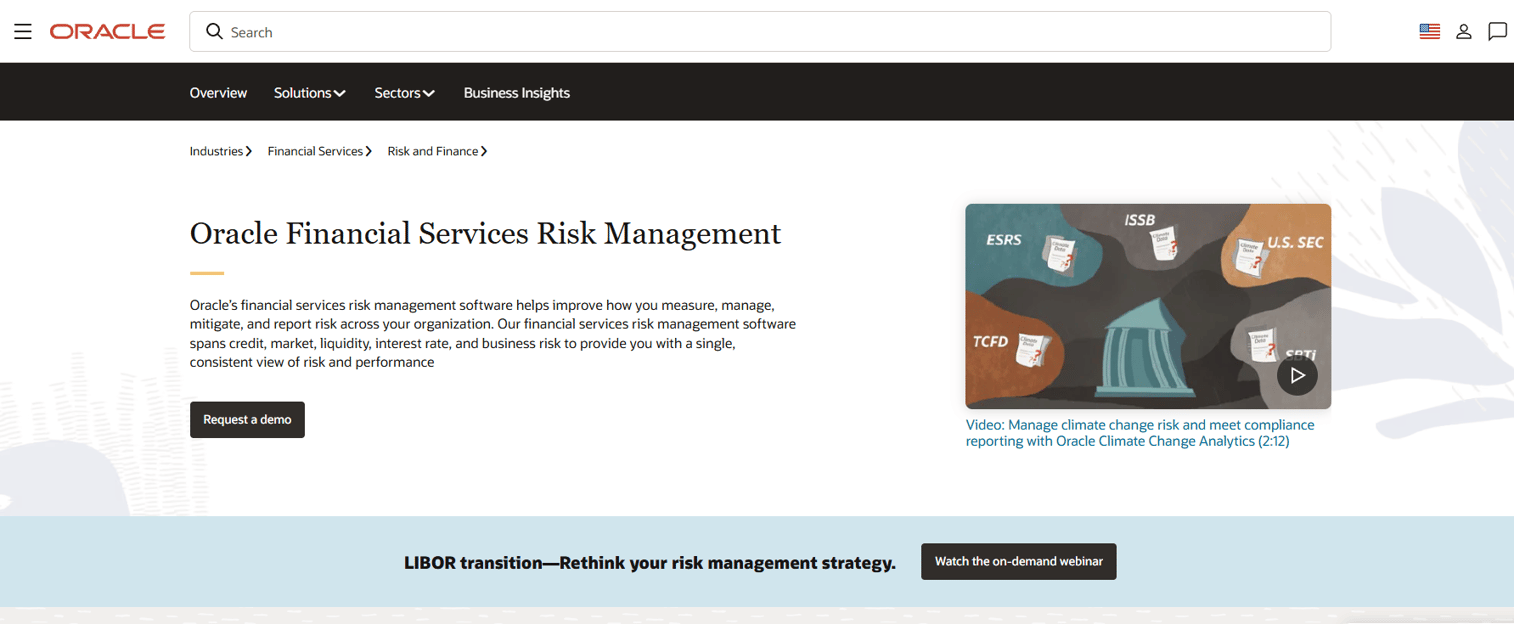
Oracle Risk and Finance provides analytics and cloud services for financial institutions managing credit risk, market risk, liquidity, profitability, stress testing, and regulatory reporting. The suite covers balance-sheet analytics, treasury management, and the finance data foundation that large institutions use for IFRS, CECL, and other regulatory accounting requirements.
Best for: Banks and large financial institutions managing risk, treasury, profitability, and regulatory reporting across integrated finance and risk functions.
Key features
- Stress testing and scenario analysis
- Credit risk analytics and management
- Market risk measurement
- Liquidity risk management
- Profitability, balance-sheet, and treasury analytics
Why choose Oracle Risk and Finance solutions: This is a scale-stage or enterprise-stage system for institutions where finance, risk, and regulatory reporting must operate from a consistent, governed data foundation. Series B founders should note it is not an early accounting tool. It becomes relevant when regulatory capital reporting, treasury, or institutional risk management is part of the operating mandate.
Oracle Risk and Finance pricing: Request a quote directly, as cost depends on modules, regulatory scope, data architecture, and deployment model.
12. Oracle ERP solutions
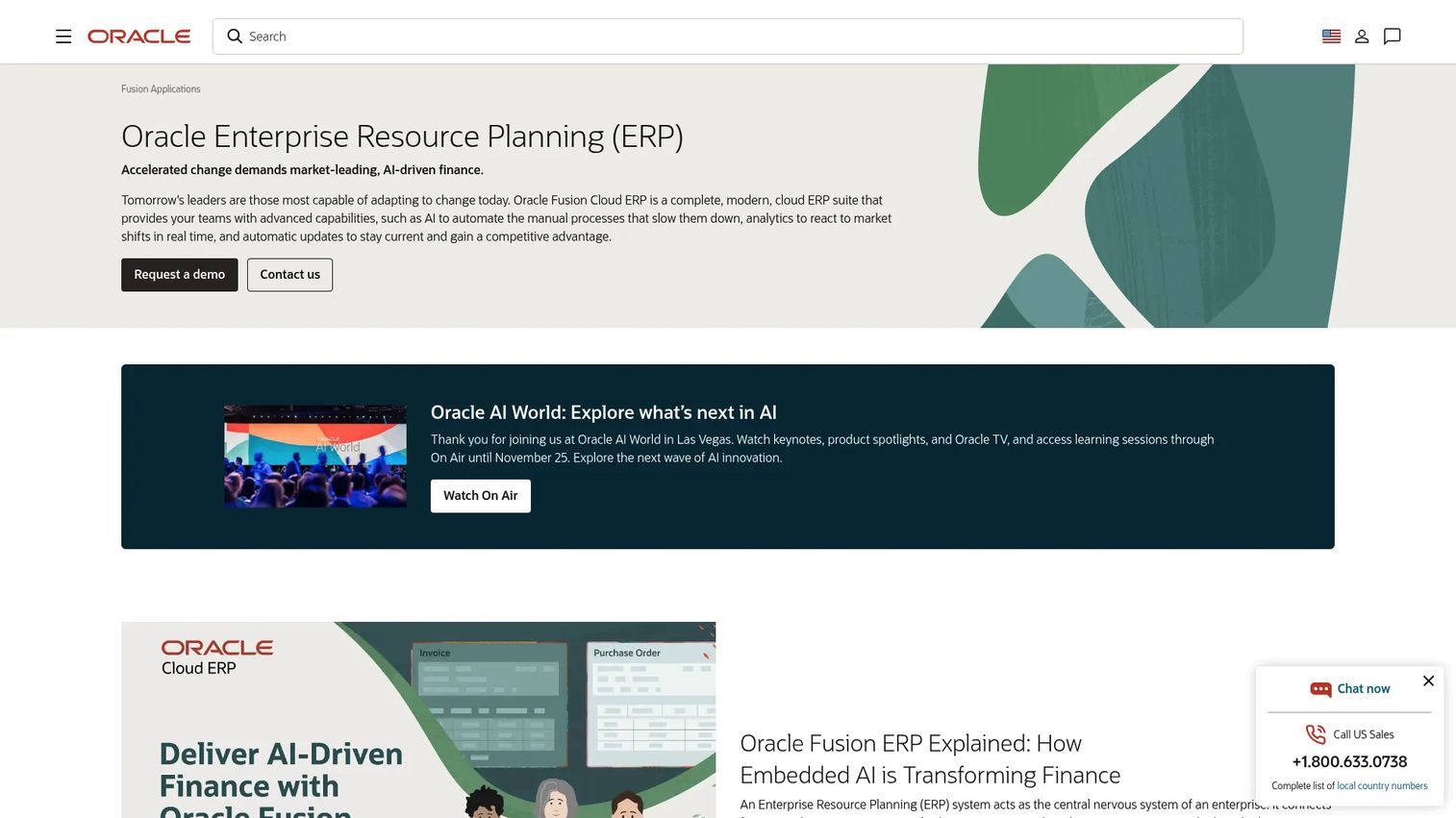
Oracle ERP solutions is Oracle Fusion Cloud ERP: A cloud ERP suite for finance, procurement, project accounting, risk management, analytics, and enterprise operations. It receives quarterly cloud updates and includes AI-powered automation across financial management, supplier management, and project delivery. Oracle ERP typically fits larger organizations with deep Oracle ecosystem alignment or complex enterprise architecture requirements.
Best for: Large financial services organizations and multinationals that need enterprise finance operations, procurement, and project management with quarterly cloud-native updates.
Key features
- AI-powered finance and accounting automation
- Procurement and supplier management
- Project management and project accounting
- Enterprise performance management and analytics
- Risk management and compliance controls
Why choose Oracle ERP solutions: Oracle ERP fits organizations where Workday or Sage Intacct has reached a ceiling on complexity, multi-jurisdiction requirements, or Oracle ecosystem depth. The subscription starts at $600 per month for Oracle Fusion Financials Cloud Service at a minimum of 10 hosted named users, based on Oracle's published U.S. price list. Total cost scales significantly with the modules, users, and implementation scope selected.
Oracle ERP pricing: Oracle Fusion Financials Cloud Service starts at $600/month (minimum 10 hosted named users, standard three-year subscription term, per Oracle's official U.S. price list). Full ERP suite pricing requires a vendor quote.
Considerations when choosing financial services software
Match the software category to the specific workflow first
Do not buy a banking system to solve close management. Do not buy accounting software and expect it to handle regulated payment operations. Start by identifying the job: Finance operations, lending, payments, mortgage, banking, risk, or compliance. The category map in this article gives you the framework. Skipping this step wastes evaluation time on tools that cannot solve the actual problem.
Check integration depth before feature breadth
Financial services tools rarely operate in isolation. Ask how each platform connects to your CRM, data warehouse, core systems, payment networks, identity tools, and reporting layers. A shallow integration becomes a full-time operations burden. Specifically, verify whether the integration is a certified connector, a webhook, or a custom build, since that difference determines maintenance cost.
Verify deployment, security, and compliance requirements before the demo
Cloud, hybrid, and on-premises deployment options carry different security profiles. In regulated financial services, audit trails, role permissions, data residency, access controls, and governance requirements should be evaluated before you let a demo become a shortlist favorite. Procurement and IT need to be in the room earlier than in most software evaluations.
Model implementation cost, not just subscription cost
Many tools in this category price by quote. The subscription is only one part of what you will pay. Implementation partners, data migration, configuration, training, internal owner time, and ongoing maintenance all add to the total. For enterprise systems like Oracle Banking or Workday, implementation costs can significantly exceed the annual software fee.
Choose for the next two operating stages, not the current one
A 30-person fintech and a regulated bank operating across five jurisdictions do not need the same system. Series B founders should choose software that supports the next two stages of operating scale without forcing enterprise procurement weight before the team is ready to absorb it. If the tool requires a dedicated administrator before you have one, that is a signal worth weighing.
Conclusion
Financial services software covers a wide range of problems. Picking the wrong category before you start evaluating costs more time than picking the wrong vendor within the right category.
Here is a plain summary of the shortlist by job:
- Finance operations and reporting: Sage Intacct for multi-entity accounting, automated close, and board-ready reporting
- Commercial lending: Finastra Loan IQ for complex loan servicing and syndicated credit
- Payments: Finastra Global PAYplus or Oracle Banking Payments, depending on institutional scale and rail requirements
- Mortgage: Finastra Mortgagebot for digital origination workflows
- Loan documentation: Finastra LaserPro for compliant document generation across lending products
- Trade finance: Finastra Trade Innovation for banks managing letters of credit, guarantees, and supply-chain finance
- Enterprise ERP: Workday ERP for unified finance and workforce data; Oracle ERP for larger, more complex environments
- Core banking: Oracle Banking for institutions modernizing retail, corporate, or digital banking operations
- Financial crime compliance: Oracle Financial Crime and Compliance Management for AML, KYC, and fraud
- Risk and regulatory reporting: Oracle Risk and Finance for treasury, stress testing, and regulatory accounting
The recommended next step: Define the workflow that is breaking first, identify who internally owns the fix, shortlist two or three tools from the relevant category, and verify pricing, implementation requirements, and integration fit before scheduling demos.
If your team sells complex software and needs buyers to understand the product before a live call, Guideflow can help you create self-serve interactive demos that prospects explore on their own terms.
Start your journey with Guideflow today!
FAQs
Financial services software is a category of platforms that help banks, lenders, insurers, fintechs, investment firms, and finance teams manage financial operations, regulated workflows, customer transactions, risk, reporting, and compliance. The category spans accounting and ERP, core banking, lending, payments, mortgage origination, trade finance, financial crime compliance, and risk analytics. Choosing the right tool means identifying which of these workflows you are trying to solve before evaluating vendors.
It depends on the workflow. A fintech may need accounting software first if financial reporting is breaking, payment infrastructure next if money movement is the product, or compliance tooling earlier if it handles regulated workflows. Map the highest-priority operational problem before picking a vendor, and avoid buying enterprise-grade infrastructure before the organization has the capacity to implement and maintain it.
No. ERP handles finance, procurement, HR, planning, and operational controls. Financial services software can also include core banking, commercial lending, payments processing, mortgage origination, AML and KYC compliance, and risk reporting systems. Workday ERP and Oracle ERP are ERP platforms. Finastra Loan IQ, Oracle Banking, and Oracle Financial Crime and Compliance Management are financial services platforms that serve different institutional jobs.
Banks typically evaluate core banking, payments, lending, financial crime, and regulatory reporting systems. Oracle Banking covers core and digital banking modernization. Finastra Loan IQ addresses commercial lending. Oracle Financial Crime and Compliance Management handles AML, KYC, and fraud. Oracle Risk and Finance covers regulatory reporting and treasury. The right starting point is the function under the most operational or regulatory pressure. You can also explore banking as a service software for adjacent infrastructure options.
Commercial lenders should evaluate Finastra Loan IQ for complex loan servicing and syndicated lending. Mortgage lenders should look at Finastra Mortgagebot for digital origination workflows. For loan documentation compliance across consumer, commercial, and mortgage products, Finastra LaserPro generates compliant document packages with 50-state coverage. The right choice depends on loan type, origination volume, and whether compliance or operational workflow is the primary constraint.
Most enterprise financial services vendors use custom pricing because cost varies by modules, user count, transaction volume, deployment model, integrations, and implementation scope. Oracle ERP starts at $600/month for the Fusion Financials Cloud Service at a 10-user minimum, but full suite pricing scales well beyond that. Sage Intacct, Workday, and the Finastra products all require a vendor quote. For payment processing software or accounting tools, there are often more transparent starting prices in adjacent categories.
Start with category fit: Identify the specific workflow the tool must support. Then check integration depth with your existing stack, security and deployment requirements, and whether your internal team can own the implementation and ongoing administration. Model total cost including implementation, not just subscription, and ask whether the tool supports your operating scale for the next two years, not just today. See our guide on accounting practice management software for adjacent finance operations context.
AI is useful when it is tied to a concrete workflow improvement. In financial crime compliance, machine learning helps surface suspicious transaction patterns faster than manual rules alone. In accounting, AI agents can automate close tasks and flag anomalies. In risk management, AI supports scenario modeling and stress testing at scale. The key criteria are governance controls: Audit trails, explainability, role-based permissions, and human review workflows matter more than the AI label itself.