You launched a referral program. You announced it in an all-hands, posted the open roles in Slack, and promised a bonus for every hire. Six weeks later, three referrals trickled in. Two never got logged. Nobody knows who refers, who paid, or whether the bonus ever cleared payroll.
The problem is rarely the idea. Referrals work. According to a LinkedIn study cited by Cadient.AI in 2025, 45% of new hires came from employee referrals, and referred hires stayed 15% longer on average. The problem is the manual machinery underneath: spreadsheets, forwarded emails, and a recruiter chasing down who submitted what. Every step that requires someone to remember to do something is a step where the program quietly dies.
That is what employee referral program software fixes. The right tool removes the manual work between a referral being submitted and a bonus being paid, while keeping recruiters out of the admin weeds. It handles referral automation, tracks every submission to an actual hire, and ties into your existing recruiting stack so referrals stop living in someone's inbox. For a founder trying to scale hiring without scaling recruiter headcount, that leverage matters.
This is the same evaluation logic we use across software categories. If you compare buyer tools elsewhere, our roundups on marketing automation, loyalty management, and employee advocacy follow the same approach: judge a tool by how much manual work it removes, not by its feature count.
What's inside
This guide is for HR leaders, talent acquisition managers, recruiting ops, and founders who want referral hiring to run predictably instead of by reminder. We looked at eight tools and judged each on four things that decide whether a referral program actually scales: referral automation depth, integration with your ATS, HRIS, and payroll, employee adoption and engagement mechanics, and how rewards and analytics are tracked end to end. Pricing and ratings reflect verified, first-party sources as of June 2026. Where a vendor gates pricing behind a sales call, we say so rather than guess.
TL;DR
- Best for end-to-end referral automation: ERIN, with text-to-refer, ATS and HRIS integrations, and a free tier until your first three referral hires.
- Best for enterprise talent suites: Phenom, where referrals live inside a broader AI talent experience platform.
- Best for a branded, engagement-led program: EmployeeReferrals.com, with leaderboards, Auto Share, and a referral tracking dashboard.
- Best for referral-first recruiting workflows: Talentpool, an AI recruitment platform with public annual pricing.
- Best for general referral program management: Referral Rock, if you want referral automation beyond hiring.
- Best for staffing agencies: Staffing Referrals, purpose-built for high-volume recruiter routing.
What is employee referral software?
Employee referral software is a platform that lets employees submit candidate referrals, then automates tracking, communication, rewards, and reporting from submission through hire and bonus payout. It replaces the spreadsheet-and-inbox method with a system that captures every referral, syncs it to your hiring tools, and keeps employees engaged enough to keep referring.
Most employee referral management software shares a common set of capabilities. The differences between tools come down to how deep each goes and how cleanly it fits your existing stack.
- Referral submission and sharing: Employees refer through portal links, email, SMS referral sharing, and Slack and Teams referrals, plus social sharing to their own networks.
- Referral automation: Automated invites, reminders, and follow-up so the program does not depend on people remembering to act.
- Referral tracking: A single record of every submission, its stage, and its outcome, from submitted to hired.
- ATS integration: Candidate sync and stage updates so referred candidates flow into the same pipeline recruiters already use.
- HRIS integration and payroll integration: Eligibility logic and bonus payout tracking that connects to the systems that actually cut the check.
- Rewards management: Bonus rules, payout timing, gamification, and leaderboards that drive employee engagement.
- Referral analytics: Reporting on participation, source quality, time to hire, and program ROI.
A branded referral portal ties it together, giving employees one place to refer and check status under your company's brand.
When to use employee referral software
Replace manual tracking before it breaks
If referrals currently live in a spreadsheet, a Slack channel, or a recruiter's memory, you have already outgrown the manual approach. The moment you cannot answer "who referred this hire and were they paid" without digging, it is time. Referral tracking software gives you one source of truth from submission to payout.
Scale hiring without scaling recruiter admin
A founder past the first 30 hires feels this fast. Every new role multiplies the coordination load. Referral automation absorbs the repetitive work, automated invites, status updates, reminder nudges, so recruiters spend time on candidates instead of chasing logs. That is leverage you can defend in a board meeting.
Drive participation with engagement mechanics
A program nobody uses is just a policy document. Tools with gamification, leaderboards, and SMS referral sharing keep employees engaged long after the launch email fades. When referring takes two taps and shows a live leaderboard, participation holds.
Comparison table
Here is how the eight tools compare on intent, key use case, verified pricing, and G2 rating. Pricing reflects first-party sources as of June 2026; where a vendor gates pricing, the table notes it.
| # | Product | Intent | Key use case | Pricing | G2 rating |
|---|---|---|---|---|---|
| 1 | ERIN | Referral automation platform | End-to-end refer, track, and pay workflow with ATS and HRIS integration | Free, then $699/month (billed annually) | 4.6/5 |
| 2 | Phenom | Enterprise talent suite | Referrals embedded in an AI talent experience platform | Quote-based | 4.3/5 |
| 3 | EmployeeReferrals.com | Branded referral program | Engagement-led program with gamification and Auto Share | Quote-based | 4.8/5 |
| 4 | Talentpool | AI recruitment platform | Referral-first hiring inside an end-to-end ATS | From ₹11,500/month (billed annually) | Not enough reviews |
| 5 | Referral Rock | Referral program software | Automated invites, tracking, and rewards across program types | From $175/month | 4.5/5 |
| 6 | Staffing Referrals | Staffing referral automation | Automated referral management for staffing agencies | Quote-based | 4.9/5 |
| 7 | Humanly | AI recruiting platform | Candidate screening and engagement with referral-adjacent workflows | Quote-based | 4.8/5 |
| 8 | Aliro | Referral and talent discovery | Referrals plus passive-candidate sourcing | Pay-per-hire | Not rated |
1. ERIN
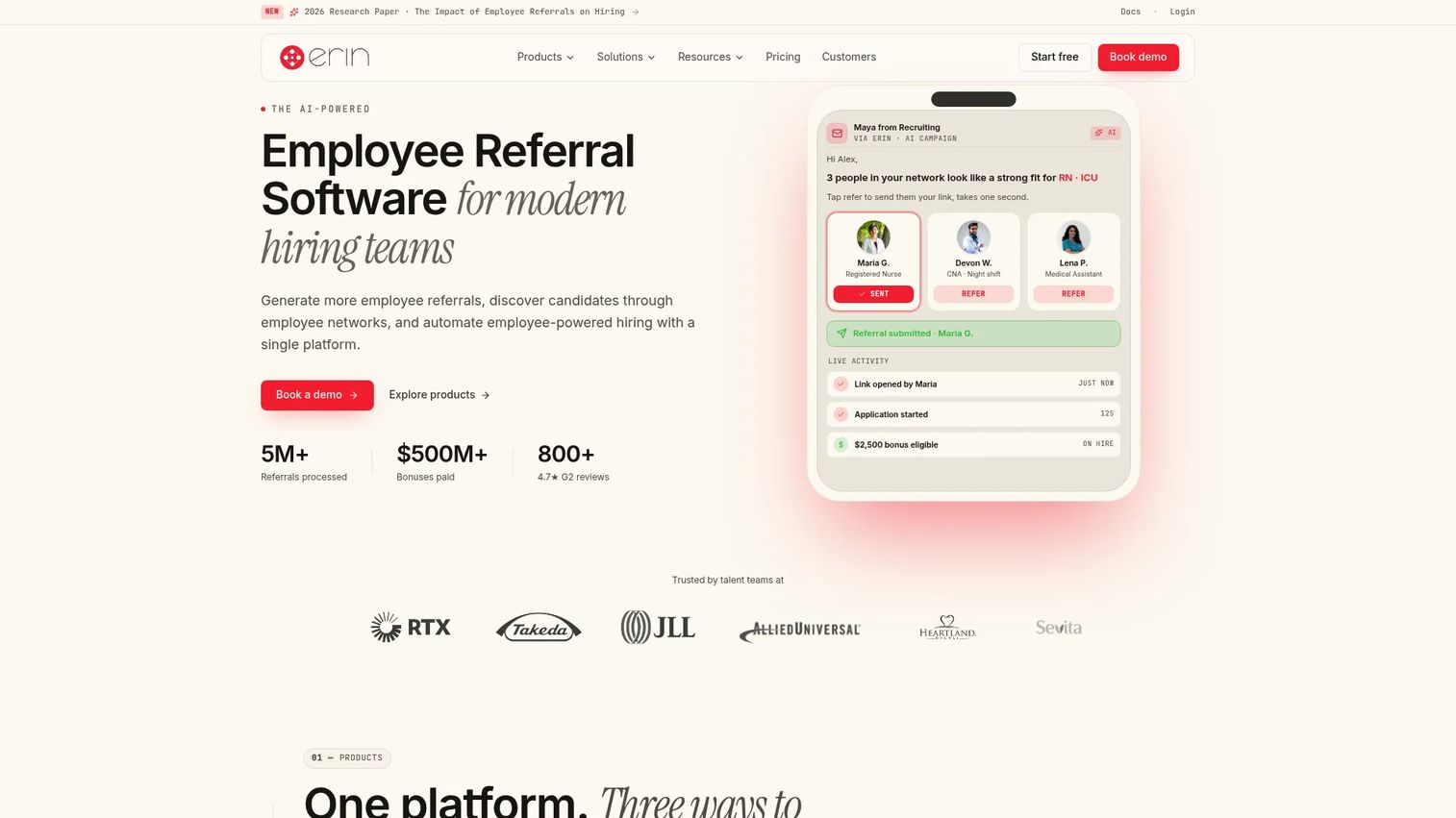
ERIN is the most operationally complete option in this list. It is AI-powered employee referral software built for talent acquisition teams that want one system to handle referrals, source from employee networks, and automate bonus workflows. Where most tools cover referral intake, ERIN covers the full path from a referral being submitted to a bonus clearing payroll, with text-to-refer keeping the submission step down to a few taps.
Best for: Organizations that want to automate employee referral hiring and bonus workflows end to end.
Key strengths
- Employee referral automation: Automated invites, reminders, and status updates so the program runs without manual chasing.
- Candidate sourcing from employee networks: Surfaces warm intros and connections beyond the people who actively submit referrals.
- AI referral assistant (Studio): Included free on every plan to help draft and personalize referral outreach.
Why choose ERIN: If you want a single system for refer, source, and launch assets rather than a referral portal bolted onto something else, ERIN is the cleanest fit. The free tier removes the usual budget objection, and the ATS and HRIS integrations mean referred candidates and payout data flow into the systems you already run. For a founder who wants recruiter leverage without a new line item until the program proves itself, that structure is hard to beat.
ERIN pricing: The Free plan includes the full Refer platform, ATS and HRIS integrations, text-to-refer, and no credit card, and stays free until your first three referral hires. Paid Refer is $699/month billed annually. Enterprise is custom. Studio, the AI referral assistant, is included free with every plan.
2. Phenom
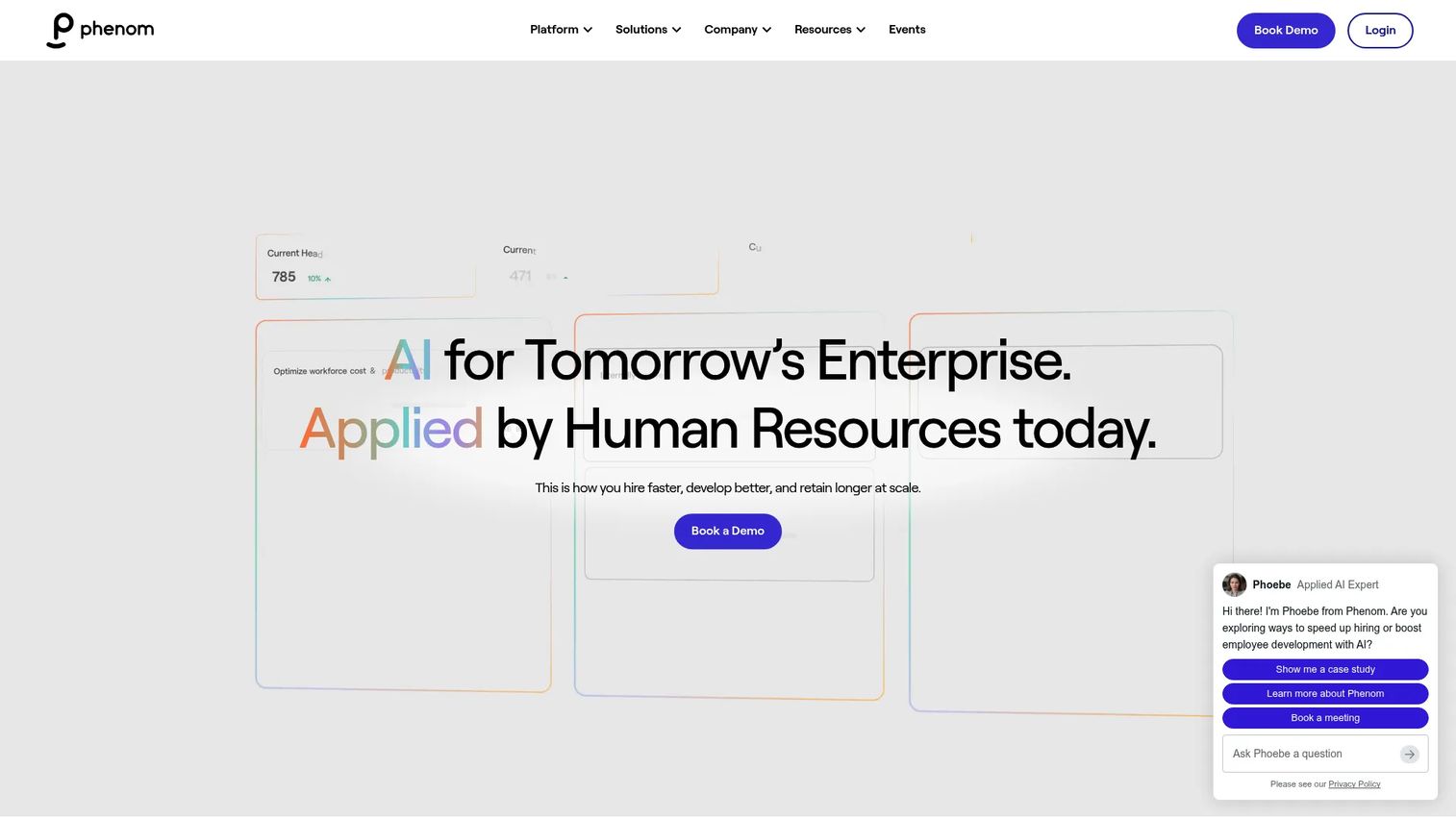
Phenom is an AI-powered talent experience platform that handles hiring, developing, and retaining employees, with referral functionality embedded inside the wider suite. For organizations already running Phenom for talent acquisition, referrals are not a separate purchase but a feature living next to candidate sourcing, scheduling, and screening. That embedded approach gives referral visibility and analytics inside the same platform recruiters already work in.
Best for: Enterprise HR teams seeking an AI talent experience platform where referrals are one capability among many.
Key strengths
- AI-powered talent acquisition and recruiting automation: Referrals plug into a broader candidate sourcing and recruiting engine.
- Employee experience and talent marketplace capabilities: Internal mobility and employee engagement extend beyond external referrals.
- Automation features such as chatbot, scheduling, and screening: Reduces recruiter admin across the full hiring workflow, not just referrals.
Why choose Phenom: Phenom makes the most sense when referrals are one piece of a larger talent strategy you want under one roof. If you are an enterprise team already evaluating a talent experience platform, getting referrals, a chatbot, scheduling, and screening from one vendor reduces stack sprawl. The trade-off is scope: this is a broad suite, not a dedicated referral tool, so it fits teams buying the whole platform rather than just a referral workflow.
Phenom pricing: Phenom does not list public pricing. The site directs visitors to request pricing or RFP assistance, which is typical for enterprise talent platforms with packaging that varies by scope and headcount.
3. EmployeeReferrals.com
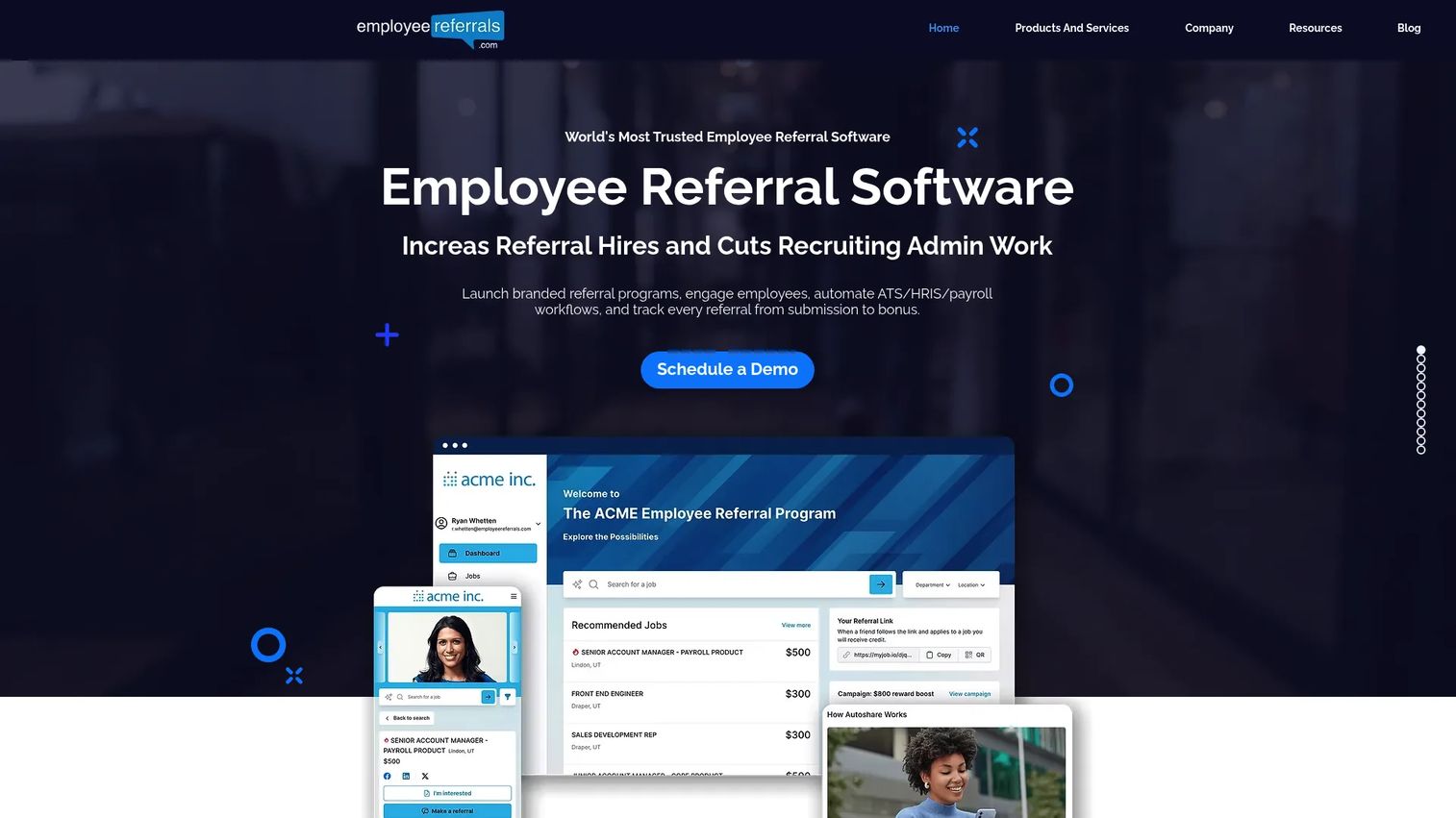
EmployeeReferrals.com is a dedicated employee referral platform focused on engaging employees, automating referral workflows, and tracking hires. It leans hard into participation: the branded referral portal, gamification, and leaderboards exist to keep employees referring long after launch. Auto Share makes social posting a one-click action, which widens reach beyond the people who would otherwise log in to refer.
Best for: Mid-to-large employers wanting a branded employee referral program with strong automation and engagement tools.
Key strengths
- Referral tracking dashboard: A single view of every referral, its stage, and its outcome.
- Auto Share for social posting: Lets employees share open roles to their networks in one click.
- Gamification and leaderboards: Drives sustained employee engagement and participation.
Why choose EmployeeReferrals.com: Choose this when you want a dedicated referral platform without buying a broader talent suite, and when employee participation is your real bottleneck. The engagement mechanics are the differentiator here. If your past programs went quiet because nobody remembered to refer, the gamification and Auto Share approach directly targets that. It fits teams that want referrals to be a living program, not a dormant policy.
EmployeeReferrals.com pricing: Pricing is quote-based. The site prompts visitors to schedule a demo rather than listing public plans, so expect packaging to depend on company size and feature scope.
4. Talentpool
Talentpool is AI-powered recruitment software for sourcing, screening, tracking, and hiring candidates, with referral participation built into a broader hiring workflow. Rather than a referral-only tool, it is an ATS where referrals feed the same pipeline as every other source. That gives recruiters one place to track referred candidates alongside everyone else, with AI scoring and ranking applied across the board.
Best for: Teams that need an AI-enabled ATS and recruitment platform with annual pricing and enterprise workflows.
Key strengths
- AI resume parsing: Automatically structures candidate data the moment a referral or application lands.
- AI scoring and ranking: Surfaces the strongest referred candidates without manual screening.
- End-to-end recruitment workflow automation: Keeps referrals moving through the same automated pipeline as all other sources.
Why choose Talentpool: Talentpool fits teams that want referral-first hiring operations inside a full recruiting platform rather than a standalone referral portal. Because referrals live in the same system as sourcing and screening, recruiter visibility stays high and there is no separate tool to reconcile. The published annual pricing also makes budgeting straightforward, which is rare in this category.
Talentpool pricing: The Lite plan starts at ₹11,500/month billed annually and includes a unified hiring platform, AI resume parsing, a JD generator, job board integrations, and a 5,000-candidate database. Pro adds advanced analytics and reporting at custom pricing. Enterprise adds complete automation, governance, SSO and RBAC, plus HRMS and assessment integrations at custom pricing. A free tier is available to start.
5. Referral Rock
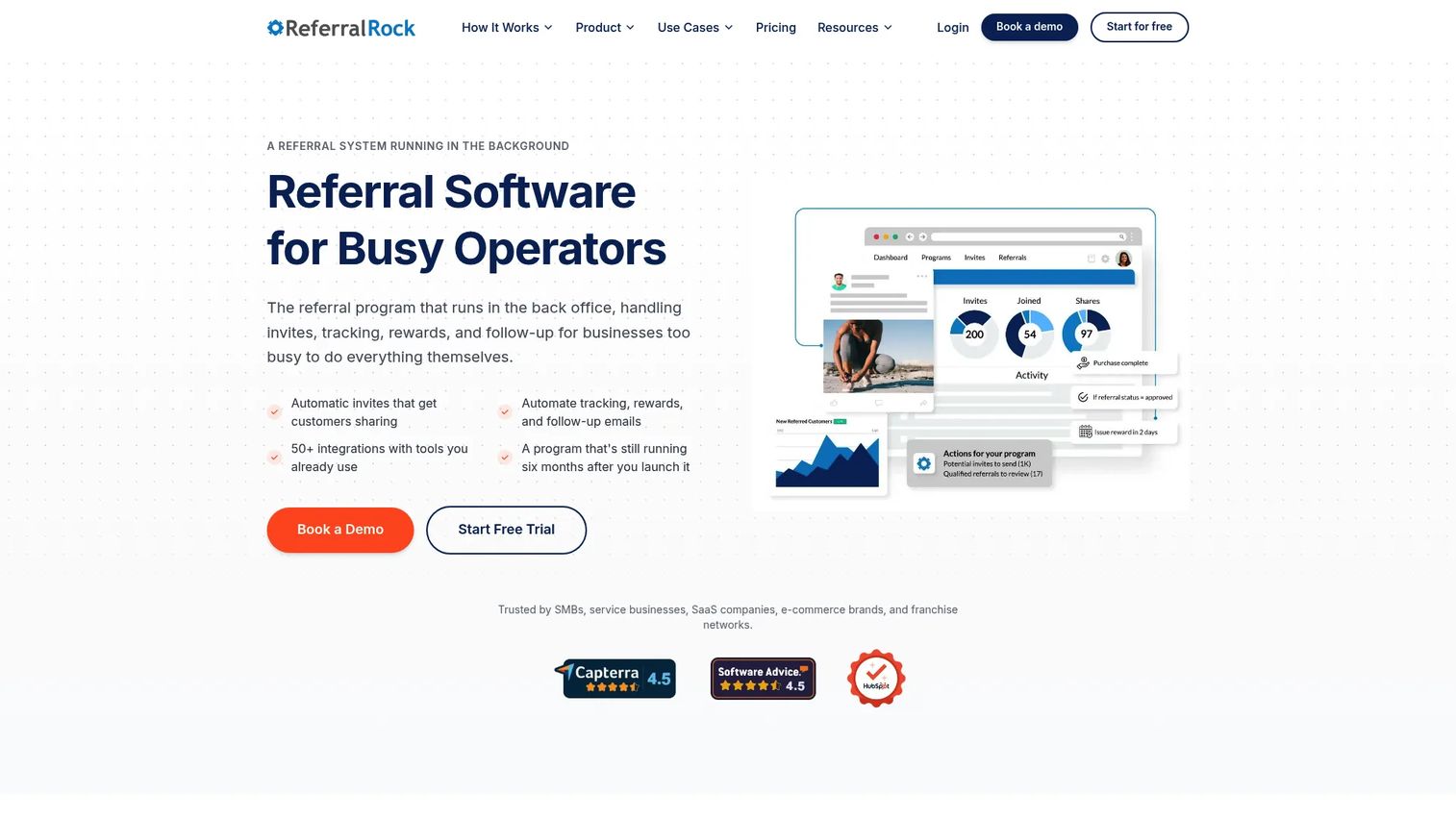
Referral Rock is referral program software that automates invites, tracking, rewards, and follow-up. It is not employee-referral-only: it handles referral programs across customer, partner, and employee contexts. For an HR team, that breadth means the same engine that runs a customer referral program can run an employee one, with a hosted member portal and personalized landing pages handling the front end.
Best for: Businesses that want to launch and manage referral programs without building the workflow in-house.
Key strengths
- Automated referral invites and follow-up emails: Keeps the program active without manual outreach.
- Hosted member portal and personalized landing pages: Gives each referrer a branded place to share and track.
- CRM and ecommerce integrations and referral lifecycle tracking: Connects referrals to the systems where outcomes get recorded.
Why choose Referral Rock: Choose Referral Rock when you want referral workflows that extend beyond hiring, or when your team already thinks about referrals as a broader program management discipline. The trade-off is focus: it is built for referral programs generally, so the hiring-specific niceties like deep ATS sync and payroll integration may need configuration. For teams that value flexible referral automation over recruiting-native depth, it is a strong pick.
Referral Rock pricing: Public pricing starts at $175 per month for Professional, $350 for Professional+, $200 for Engage, and $400 for Engage+, with Enterprise priced on request. Annual plans include free concierge onboarding, while monthly plans carry a $400 one-time onboarding fee.
6. Staffing Referrals
Staffing Referrals is automated referral management software built specifically for staffing agencies. Its Automated Referral Management (ARM) platform is tuned for high-volume hiring motions where candidate intake and recruiter routing happen at scale. Where general HR tools assume one company hiring for itself, Staffing Referrals assumes an agency placing many candidates across many clients, and the workflow reflects that.
Best for: Staffing agencies that want to run and automate employee and candidate referral programs.
Key strengths
- Automated Referral Management (ARM) platform: Purpose-built for staffing referral volume and recruiter routing.
- Unlimited brand ambassadors, applicants, and campaigns: Scales without per-seat or per-campaign caps.
- Real-time lead notifications and referral tracking: Routes referred candidates to the right recruiter the moment they come in.
Why choose Staffing Referrals: This is the specialist pick. If you run a staffing or recruiting agency rather than an in-house talent team, the workflow assumptions match your reality better than a general HR tool would. The unlimited ambassador and campaign model also suits the high-volume, many-clients nature of agency work, where capping participation would defeat the purpose.
Staffing Referrals pricing: Pricing is quote-based. The pricing page lists Starter, Pro, and Enterprise plans with feature breakdowns but no public price numbers, using demo-style CTAs instead.
7. Humanly
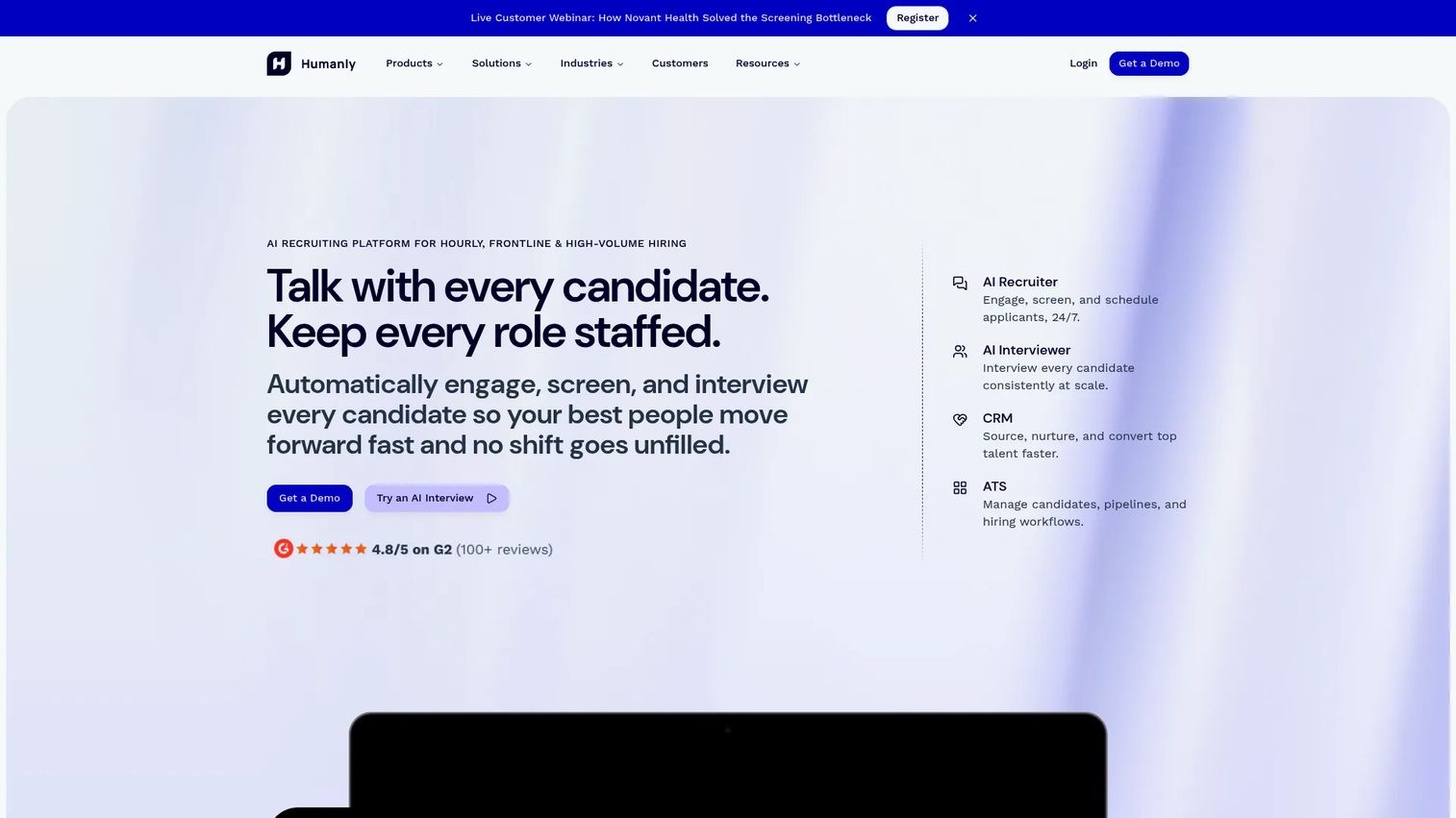
Humanly is an AI-powered recruiting platform for sourcing, screening, scheduling, and candidate engagement. It is not a pure referral tool, but it earns a place here for high-volume teams that want referral candidates flowing into the same automated screening and engagement pipeline as every other applicant. The value is consistency: a referred candidate gets the same fast, automated first touch as anyone else, which keeps strong referrals from going cold while a recruiter catches up.
Best for: High-volume recruiting teams that want to automate early-stage candidate engagement and scheduling.
Key strengths
- AI-powered candidate screening: Applies consistent screening to referred and non-referred candidates alike.
- Automated interview scheduling: Removes the back-and-forth that stalls strong referrals.
- Candidate outreach via SMS and email: Keeps referred candidates engaged from first contact.
Why choose Humanly: Pick Humanly when your bottleneck is early-stage engagement at volume, not referral intake itself. If you already capture referrals but lose them to slow follow-up, Humanly's automated screening and scheduling close that gap. It is best understood as a complement to a dedicated referral tool rather than a replacement, fitting recruiting teams that screen a lot of candidates fast.
Humanly pricing: Humanly does not publish public pricing. The product pages describe capabilities but direct pricing conversations to sales, so expect packaging to depend on hiring volume and feature scope.
8. Aliro
Aliro is an employee referral and talent discovery platform for hiring teams. It pairs referral sharing across social, text, and email with talent discovery that re-engages passive candidates already in your employees' networks. That second layer is the differentiator: beyond the people who actively submit referrals, Aliro surfaces warm intros from the broader network, widening the pool without more manual sourcing.
Best for: Mid-market and enterprise employers looking to expand hiring through referrals and passive-candidate discovery.
Key strengths
- Employee referral sharing across social, text, and email: Meets employees on the channels they already use.
- Talent discovery and candidate re-engagement: Surfaces passive candidates and warm intros from employee networks.
- Internal mobility and workforce diversity support: Extends referrals into broader workforce goals.
Why choose Aliro: Aliro fits teams that want a dedicated referral workflow with a sourcing layer attached. If your active referral volume is healthy but you want to reach the passive candidates your employees know without asking them to do extra work, the talent discovery angle is the draw. The pay-per-hire model also aligns cost with outcome, which appeals to teams wary of subscriptions for unproven results.
Aliro pricing: Aliro states there are no subscriptions and that you pay only when jobs are successfully filled, a pay-per-hire model rather than a recurring fee. The site does not publish a public per-hire number, so confirm specifics directly.
Considerations before you buy
Integration depth with your existing stack
The single biggest predictor of whether a referral program scales is how cleanly it connects to your stack. Check the ATS integration first: referred candidates should sync automatically and update stage without manual entry. Then verify HRIS integration and payroll integration, because bonus eligibility and payout tracking only work cleanly when the tool talks to the systems that cut the check.
Employee adoption and engagement
A referral tool only works if employees use it. Look for low-friction submission through portal links, SMS referral sharing, and Slack and Teams referrals, plus engagement mechanics like gamification and leaderboards. The easier it is to refer and the more visible the rewards, the longer participation holds.
Rewards and payout tracking
Map how each tool handles rewards management end to end: eligibility rules, payout timing, and bonus payout tracking. The best tools show employees exactly where their bonus stands, which removes the trust problem that quietly kills programs when people stop believing they will get paid.
Analytics and reporting quality
You cannot improve what you cannot see. Strong referral analytics show participation rates, source quality, time to hire, and program ROI. For a founder reporting to a board, that reporting turns referrals from a soft initiative into a measurable hiring channel.
Conclusion
The right pick depends less on feature count and more on your context. ERIN is the most complete end-to-end option, with referral automation, ATS and HRIS integration, and a free tier that removes the budget objection until the program proves itself. Phenom fits enterprise teams that want referrals inside a full talent suite. EmployeeReferrals.com wins on engagement when participation is your bottleneck. Talentpool suits teams wanting referral-first hiring inside an AI recruitment platform, Referral Rock handles broader referral program management, and Staffing Referrals is the agency specialist. Humanly and Aliro extend the workflow into screening and passive sourcing respectively.
Start by mapping your real constraint. If referrals die in a spreadsheet, prioritize automation and integration depth. If they die from low participation, prioritize engagement mechanics. Then shortlist two tools, run a short pilot against your actual ATS, and measure participation and time to hire before committing. That is how you turn referral hiring from a hopeful policy into a repeatable channel that scales without adding recruiter headcount.
FAQs
Employee referral software is a platform that lets employees submit candidate referrals and then automates the tracking, communication, rewards, and reporting from submission through hire and bonus payout. It replaces manual spreadsheets and inbox-based tracking with a single system. The goal is to make referral hiring predictable and measurable rather than dependent on people remembering to act.
ATS integration means referred candidates sync directly into your applicant tracking system, with stage updates flowing both ways. When a recruiter moves a referred candidate forward, the referral tool reflects that progress automatically. This matters because it keeps referrals inside the same recruiter workflow as every other candidate, so nothing falls through the cracks between two systems.
The features that decide whether a program scales are referral automation, integration depth across ATS, HRIS, and payroll, rewards management with clear payout tracking, referral analytics, and employee engagement mechanics. Automation removes manual work, integrations keep data clean, and engagement keeps employees participating. A tool strong on capabilities but weak on adoption still produces a quiet program.
For a SaaS company scaling past founder-led hiring, yes. Referred candidates tend to convert better and ramp faster, and a referral platform gives recruiters leverage without adding headcount. It turns a soft initiative into a measurable hiring channel with reporting you can defend in a board meeting, which is exactly the kind of repeatable system a scaling team needs.
Most tools support multiple submission paths: branded portal links, email, SMS referral sharing, social sharing, and Slack and Teams referrals. The best programs keep submission down to a couple of taps, because friction at the submission step is where participation drops. Text-to-refer and one-click social sharing are common ways tools reduce that friction.
Referral software applies eligibility logic, such as the candidate being hired and staying past a set period, then tracks bonus payout status from earned to paid. Strong tools connect to payroll integration so the payout actually clears, and they show employees where their bonus stands. That visibility removes the trust gap that quietly kills programs when people stop believing they will get paid.
Compare stack fit first: how cleanly the tool integrates with your ATS, HRIS, and payroll. Then weigh employee experience, admin overhead, rewards tracking, and reporting depth. The right referral program software removes the most manual work while fitting the systems you already run. A tool that creates a new silo or requires constant manual reconciliation defeats the purpose.
Referred candidates often convert better and stay longer because an employee is vouching for fit before they apply. Tools that add network sourcing or talent discovery extend that quality advantage by surfacing warm intros from your employees' broader networks. The combination of trusted referrals and structured tracking tends to produce stronger pipelines than cold sourcing alone.