Your board asked for emissions numbers last quarter. Your team pulled them from four spreadsheets, a utility portal, and a supplier email thread. Nobody could say with confidence whether the totals would survive an audit.
That gap is the real problem. Most teams start with carbon offset purchases because they feel like action. Then a disclosure deadline lands, and the offsets turn out to be the easy part. The hard part is measuring what you actually emit, sorting it into Scope 1, Scope 2, and Scope 3 emissions, and producing a defensible number.
Adoption of carbon accounting software has climbed to 70% of large organizations worldwide, up from 51% in 2020, according to SNS Insider (2024). The tooling moved from optional to standard fast. The question is no longer whether to buy carbon management software. It is which platform matches your reporting obligations, your data reality, and who on your team will own it.
What's inside
This guide is for founders, finance leaders, and sustainability leads at software companies choosing carbon accounting and emissions reporting software for 2026.
We selected and ranked platforms on the criteria that decide fit:
- Scope coverage: whether the tool handles Scope 1, 2, and 3 emissions
- Reporting and audit readiness: disclosure workflows, exports, and traceability
- Finance and ERP integration: how cleanly it connects to your systems of record
- Reduction planning: whether it moves you from tracking to decarbonization
You will get a side-by-side comparison table, a plain-English definition of the category, and a buyer's checklist built for operators who need board-ready numbers, not marketing claims.
TL;DR
- Best for reduction planning and operations: Plan A pairs carbon accounting with decarbonization target setting.
- Best for enterprise ESG data workflows: IBM Envizi structures emissions data for audit-ready reporting.
- Best for Salesforce-native teams: Salesforce's Net Zero Cloud connects carbon accounting to CRM data you already run.
- Best for Microsoft-native teams: Microsoft Sustainability Cloud aggregates operational data across the Microsoft stack.
- Best for complex compliance and EHS: Sphera and Cority Environmental Cloud handle regulated, multi-site operations.
- Best for weather and climate risk context: IBM's Environmental Intelligence Suite connects environmental data to operational decisions.
What is carbon offset software?
Carbon offset software calculates a company's or product's carbon footprint and lets it fund verified projects to counterbalance emissions it cannot yet eliminate. That is a narrow job. Most buyers actually need the broader category around it: carbon accounting software.
Here is the distinction that saves you money. Carbon offset tools handle the last step, buying credits against a footprint you already know. Carbon accounting software (also called carbon emissions management software, ghg tracking software, or emissions reporting software) handles the steps before that. It measures emissions, sorts them into scopes, builds a carbon inventory, and produces reports. Offsets are a complement to reduction, not a substitute for measurement.
Core capabilities to expect from a carbon accounting or carbon management platform:
- Emissions data collection from utilities, ERP, travel, and suppliers
- Scope 1, 2, and 3 reporting across direct, energy, and value chain emissions
- Carbon inventory and emissions dashboards for a live view of totals
- Audit-ready reporting with traceable, exportable outputs for compliance reporting
- Reduction planning and target tracking to prioritize decarbonization actions
The three formats you will encounter are not interchangeable. Here is how they differ.
| Format | Primary job | Best fit |
|---|---|---|
| Offset marketplace | Buy verified credits against a known footprint | Teams ready to counterbalance measured emissions |
| Carbon accounting platform | Measure, categorize, and report emissions | Teams building a defensible baseline and disclosures |
| Carbon management system | Accounting plus reduction planning and operations | Teams moving from reporting to decarbonization |
For most software companies, the center column is where you start. Offsets come later, once the number underneath them holds up.
When to use carbon offset software
Build a defensible emissions baseline
Spreadsheets work until someone asks how you got a number. Then they collapse. Structured measurement matters when a board member, an investor, or an auditor wants to trace a total back to source data. If you are heading into a fundraise or annual audit, a carbon data platform gives you audit readiness that a shared workbook never will. You need this before offsets, not after.
Prepare for reporting and disclosure
Frameworks like CSRD and CDP turn emissions data into deadline-driven work. Structured workflows matter most when the deadline is close and the data lives in ten places. A platform that maps your carbon inventory to a disclosure framework turns a two-week scramble into an export. This is where emissions reporting software earns its cost, by making compliance reporting repeatable instead of heroic.
Plan decarbonization, not just tracking
Measurement is the starting line. The value comes when the software shows you where emissions concentrate, then helps you prioritize reduction actions against them. Decarbonization planning means modeling targets, forecasting the impact of changes, and tracking progress quarter over quarter. Offsets fit here as a complement, covering what you cannot reduce yet, not as the primary strategy.
Comparison table
We ranked these seven tools on Scope coverage, reporting and audit readiness, finance and ERP integration, and reduction planning depth. Enterprise carbon platforms dominate this category, so most of these tools assume a real implementation rather than a self-serve signup. Pricing for carbon accounting software is largely quote-based, which we note plainly where public numbers were not available.
| # | Product | Best for | Key differentiator | Pricing | G2 rating |
|---|---|---|---|---|---|
| 1 | Plan A | Reduction planning and operations | Accounting plus decarbonization target setting | Quote-based | Not yet rated |
| 2 | IBM's Environmental Intelligence Suite | Weather and climate risk context | Environmental and climate risk intelligence | Quote-based | 4.2/5 |
| 3 | Salesforce's Net Zero Cloud | Salesforce-native teams | CRM-connected carbon and ESG data | From $48,000/org/year | Not verified |
| 4 | Microsoft Sustainability Cloud | Microsoft-native teams | Operational data across the Microsoft stack | From $4,000/tenant/month | 4.4/5 |
| 5 | Sphera | Complex compliance and EHS | Integrated EHS and sustainability workflows | Quote-based | 4.0/5 |
| 6 | IBM Envizi | Enterprise ESG data workflows | Structured emissions data and reporting | Quote-based | 4.3/5 |
| 7 | Cority Environmental Cloud | Regulated multi-site operations | Unified environmental compliance workflows | Quote-based | 4.0/5 |
Best carbon offset software for 2026
1. Plan A
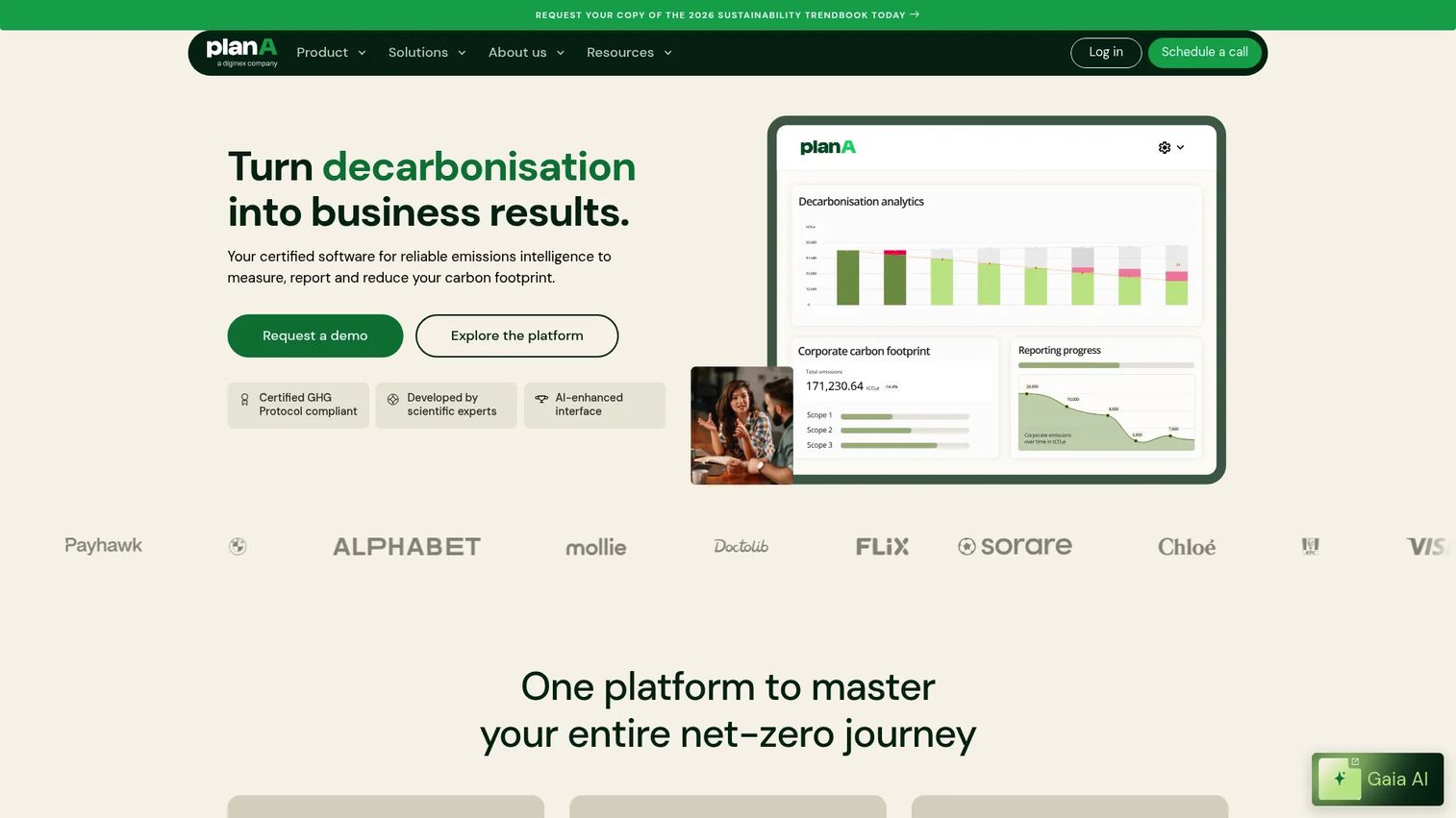
Plan A is carbon accounting and decarbonisation software built for businesses that want to move past measurement into action. It covers emissions accounting across Scopes 1, 2, and 3, then layers on decarbonisation planning with target setting and forecasting. That combination is what separates a reduction-first platform from a pure reporting tool.
Best for: Teams that want a defensible carbon inventory and a plan to actually lower it.
Key features
- Carbon accounting across Scope 1, 2, and 3
- Carbon reporting and ESG disclosures
- Decarbonisation planning with target setting
- Emissions forecasting for scenario modeling
Why choose Plan A: If your board wants a number and a trajectory, not just a snapshot, Plan A's decarbonisation planning does the second half of the job. It fits teams treating carbon as an operational metric rather than a one-time disclosure.
Plan A pricing: Pricing is quote-based through a demo request, which is standard for this category.
Plan A has no G2 reviews yet, so there is no aggregate rating to reference.
2. IBM's Environmental Intelligence Suite
IBM's Environmental Intelligence Suite takes a wider view than pure carbon accounting. It is an AI-powered set of applications for weather, climate risk, and environmental decision support. For operations exposed to physical climate risk, connecting that data to carbon workflows is the point.
Best for: Organizations that need weather and climate risk intelligence alongside emissions planning.
Key features
- Analyze proprietary and third-party data for event impact
- Monitor weather and climate risks with alerts
- Dashboard visualizations and geospatial insights
- Decision support for operations and planning
Why choose IBM's Environmental Intelligence Suite: Choose it when climate risk to your physical operations matters as much as your emissions total. It fits enterprises where weather disruption and sustainability planning sit in the same conversation.
Pricing: Expect enterprise quote-based pricing arranged through IBM sales.
On G2, the Environmental Intelligence Suite holds a 4.2/5 rating.
3. Salesforce's Net Zero Cloud
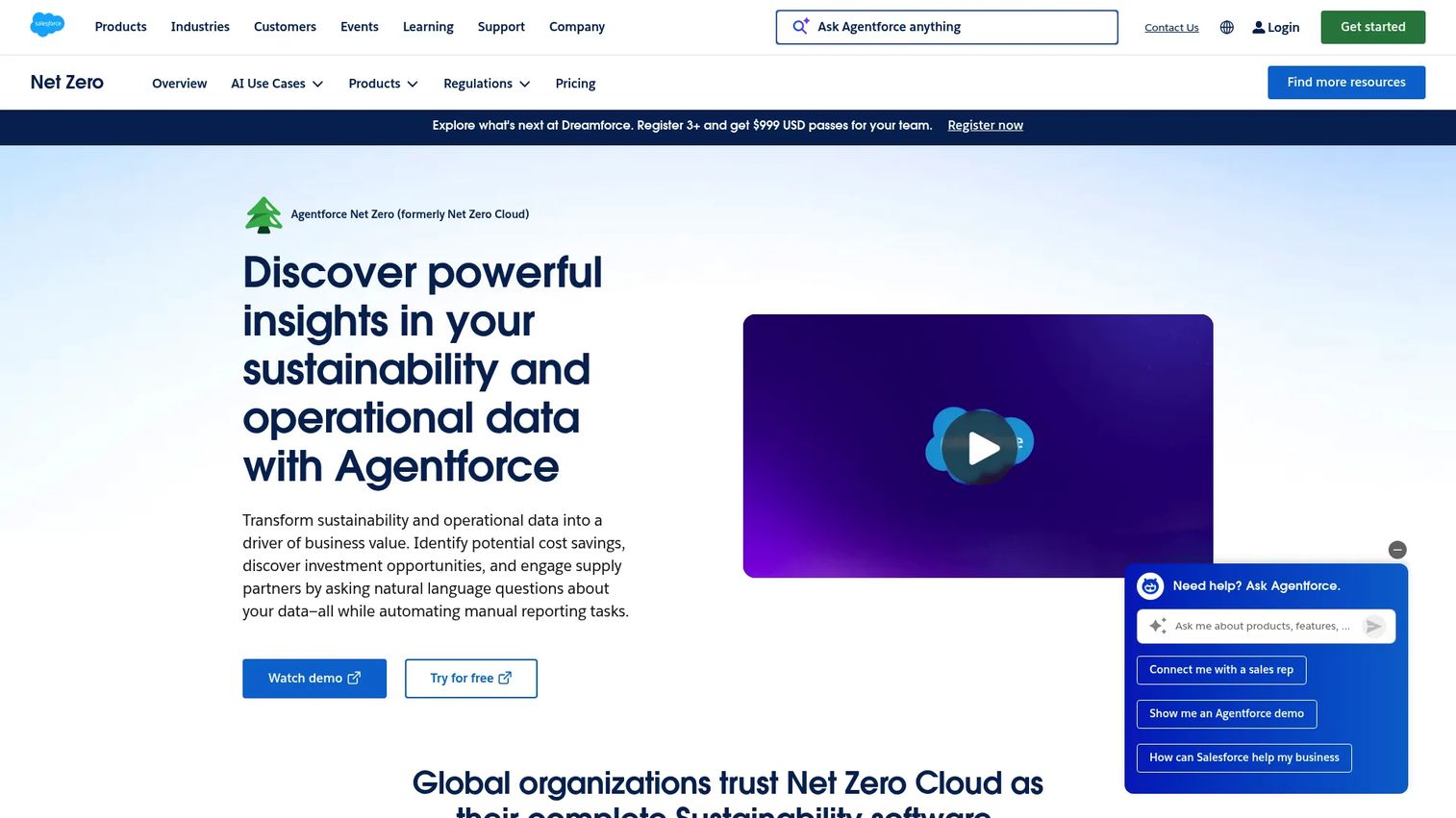
Salesforce's Net Zero Cloud is a sustainability management platform for tracking, analyzing, and reporting carbon and ESG data. If your company already runs on Salesforce, keeping emissions data in the same system as your customer data removes a data silo before it forms.
Best for: Enterprises already in the Salesforce ecosystem that want native carbon accounting and reporting.
Key features
- Carbon accounting across Scope 1, 2, and 3
- ESG disclosure and report authoring
- Supplier and emissions-factor data management
- Native fit with existing Salesforce data
Why choose Salesforce's Net Zero Cloud: Choose it when your reporting team already lives in Salesforce and wants ESG reporting support without a separate tool. The integration story is the differentiator, not the accounting engine alone.
Salesforce's Net Zero Cloud pricing: Salesforce publishes editions on its pricing page. The Starter edition is $48,000 USD per org per year, and the Growth edition is $210,000 USD per org per year, both billed annually. A free trial link is available.
A verified aggregate rating was not available from a primary source at the time of writing.
4. Microsoft Sustainability Cloud
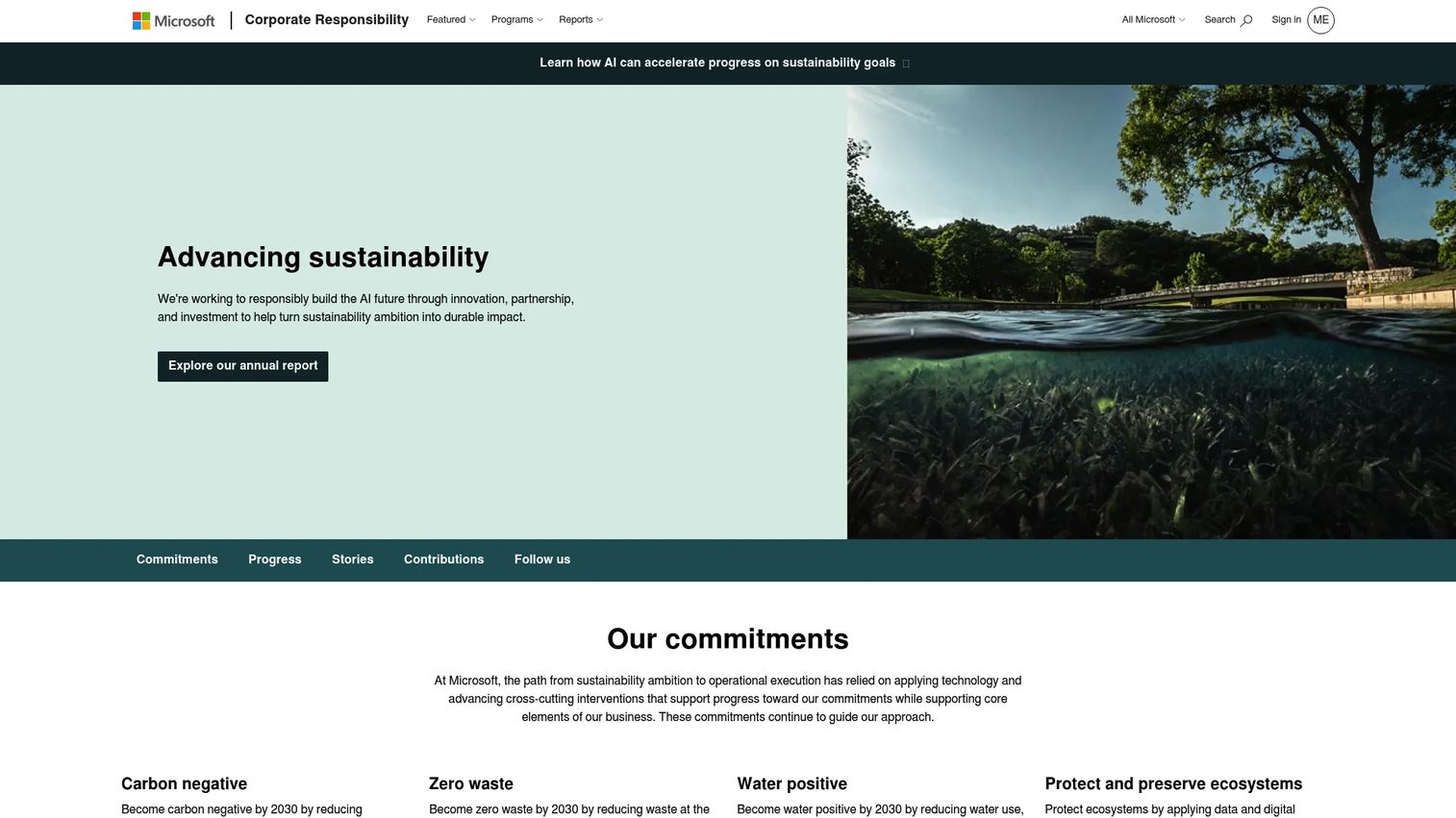
Microsoft Sustainability Cloud covers Microsoft's sustainability data and AI tooling for tracking, reporting, and reducing environmental impact. Its strength is breadth of operational data integration across the Microsoft stack, which matters for teams already running Azure, Fabric, and Microsoft 365.
Best for: Teams that want broad operational data aggregation inside a Microsoft-native environment.
Key features
- Microsoft Sustainability Manager for recording and reporting
- Sustainability data solutions in Microsoft Fabric
- Emissions Impact Dashboard for Azure and Microsoft 365
- Sustainability data exchange across the data estate
Why choose Microsoft Sustainability Cloud: Choose it when your finance and reporting teams already work in the Microsoft data estate and want emissions data in the same place. Consolidating the carbon data platform with existing infrastructure is the draw.
Microsoft Sustainability Cloud pricing: Microsoft Sustainability Manager Essentials is $4,000 per tenant per month, and Premium is $12,000 per tenant per month. Microsoft Cloud for Sustainability includes a free trial.
On G2, Microsoft Cloud for Sustainability holds a 4.4/5 rating.
5. Sphera
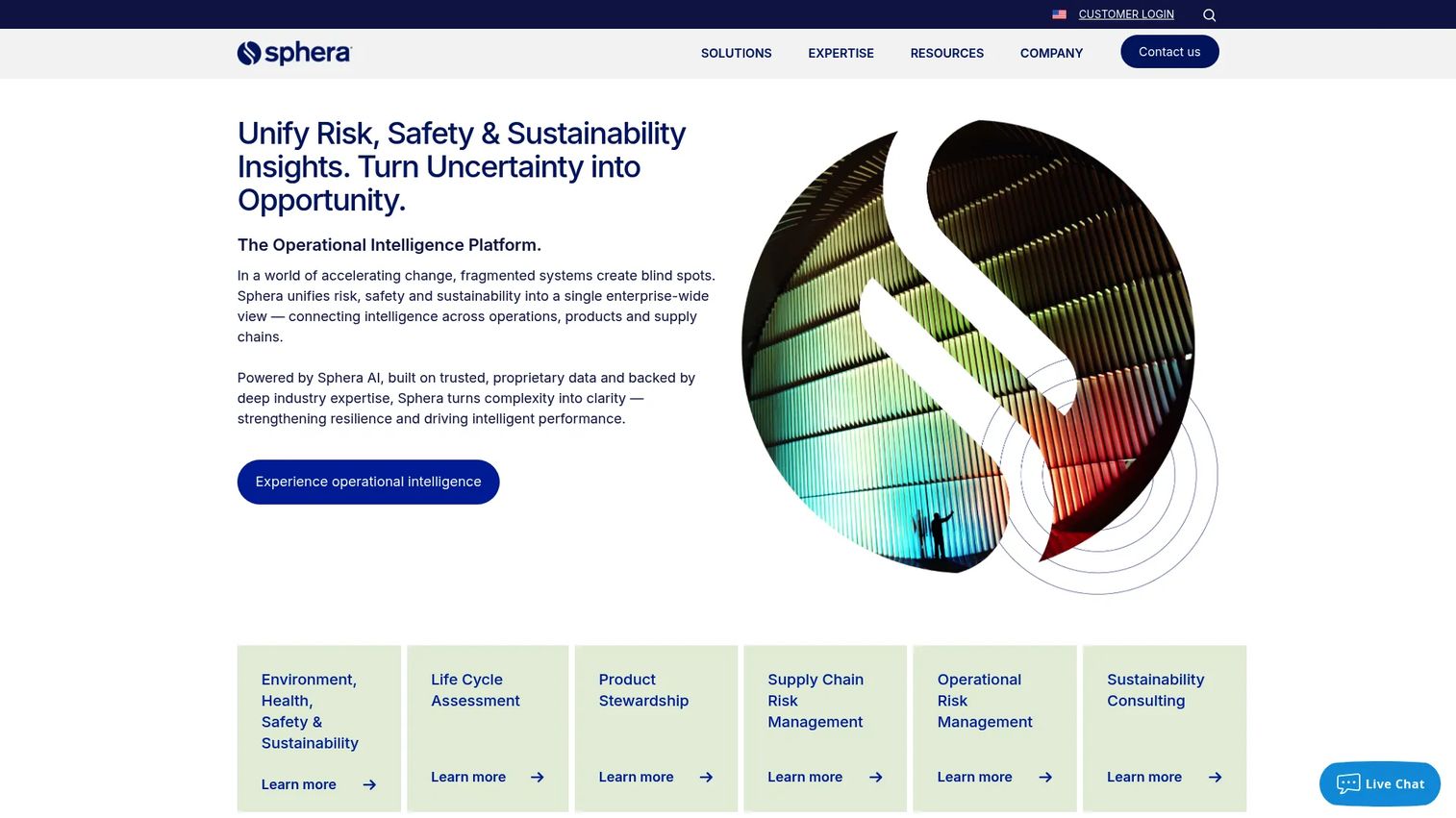
Sphera is enterprise software for sustainability, process safety, product stewardship, and supply chain risk. Its strength is depth on regulated, complex operations, where emissions data sits next to EHS and supplier risk in one system. That is a different problem than a software company's office footprint, and Sphera is built for it.
Best for: Large enterprises needing integrated EHS, sustainability, and supply chain risk tools.
Key features
- Real-time supply chain risk visibility and alerts
- Supplier 360 intelligence and multi-tier mapping
- Supplier engagement and assessment workflows
- Product stewardship and process safety coverage
Why choose Sphera: Choose it when your compliance obligations span more than carbon, and value chain emissions and supplier collaboration are central to your reporting. It fits industrial and multi-site operations, not lightweight setups.
Sphera pricing: Sphera doesn't list pricing. Expect quote-based enterprise pricing arranged through their sales team.
On G2, Sphera's seller page shows a 4.0/5 rating.
6. IBM Envizi
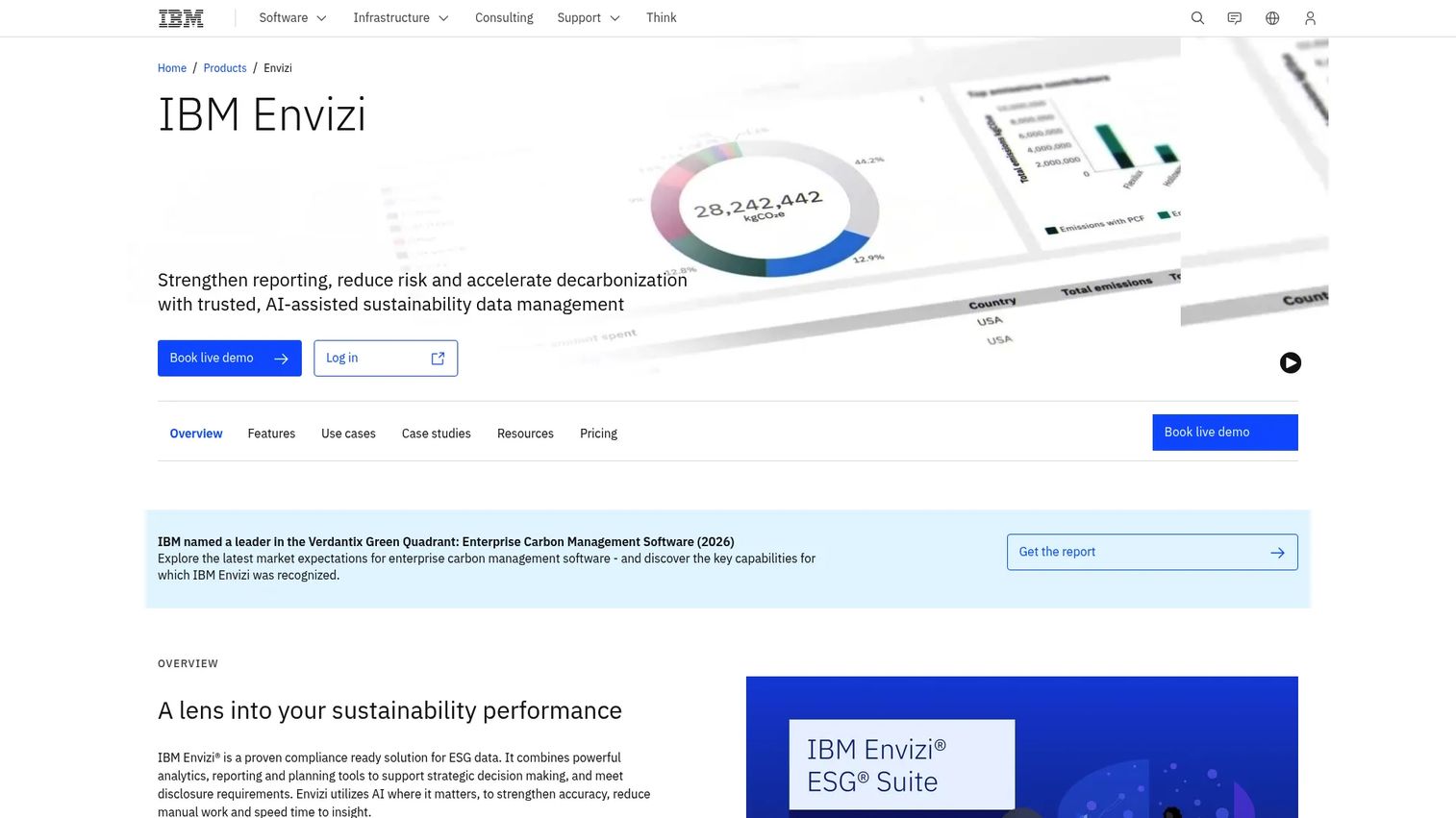
IBM Envizi is IBM's ESG and decarbonization suite for managing energy, emissions, reporting, and sustainability data. Its strength is structured emissions data with audit readiness built in, which is what cross-functional reporting teams need when finance, operations, and sustainability all touch the same numbers.
Best for: Large organizations needing ESG data management, emissions accounting, and sustainability reporting.
Key features
- ESG data management and reporting
- Scope 1, 2, and 3 GHG emissions calculations
- Automated data capture and validation
- Audit-traceable data for compliance reporting
Why choose IBM Envizi: Choose it when you need one system of record for emissions that finance and sustainability both trust. Its automated data capture and validation reduce the manual reconciliation that eats reporting cycles.
IBM Envizi pricing: IBM offers indicative bundles named Essentials, Standard, and Premium, priced to data volume. IBM does not display a numeric price and scopes exact pricing during a sales conversation.
On G2, IBM Envizi holds a 4.3/5 rating.
7. Cority Environmental Cloud
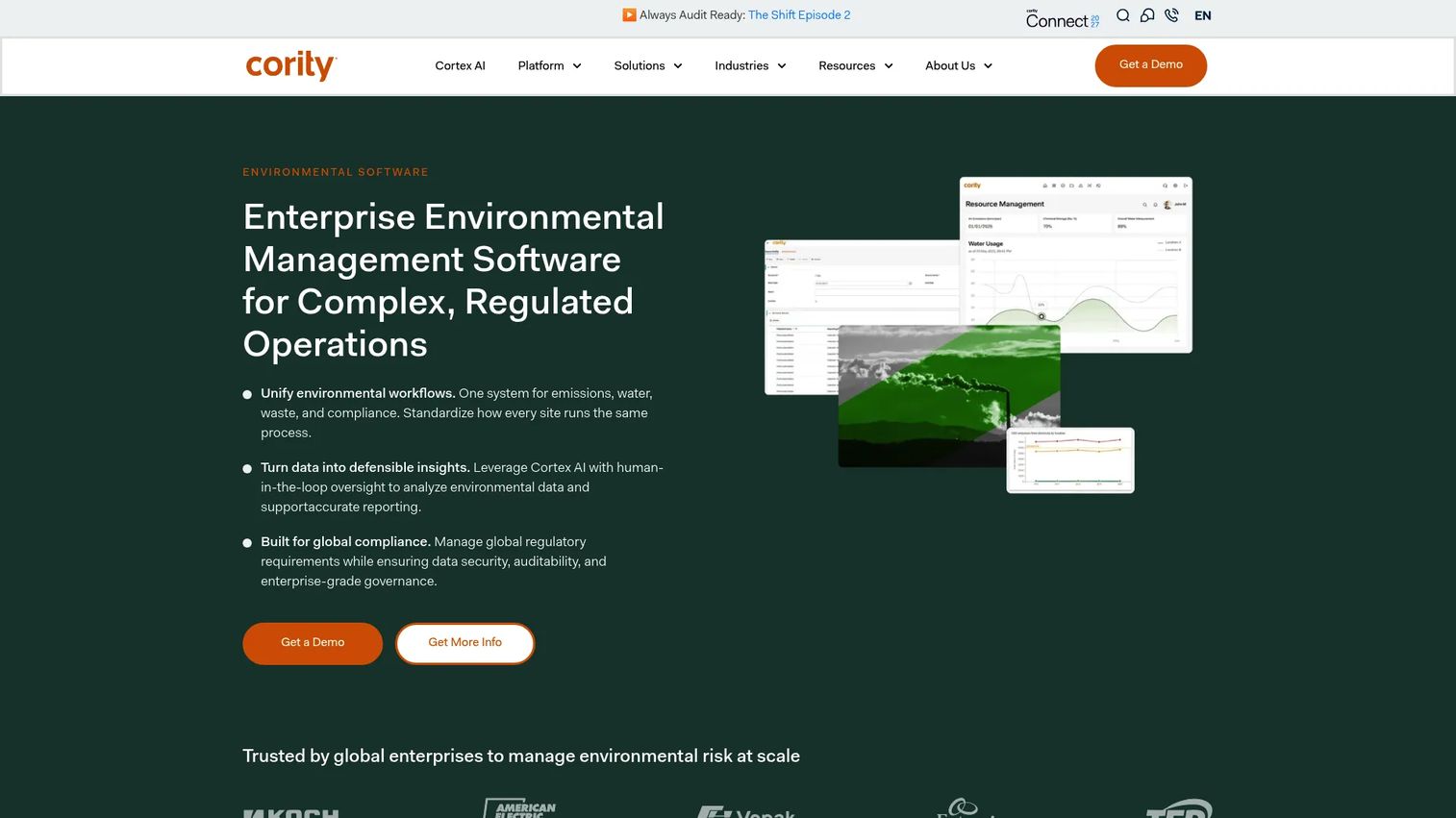
Cority Environmental Cloud is enterprise environmental management software for complex, regulated operations. It unifies emissions, water, waste, and compliance workflows in one place, which matters when your ghg reporting software also has to handle the rest of your environmental obligations.
Best for: Large enterprises needing centralized environmental compliance and reporting.
Key features
- Unifies emissions, water, waste, and compliance
- Automates environmental calculations and reporting
- Audit-ready data with global compliance support
- AI-assisted insights across environmental data
Why choose Cority Environmental Cloud: Choose it when emissions are one part of a broader environmental compliance load, and you want operational reporting connected across all of it. It fits regulated operations that already run EHS workflows.
Cority Environmental Cloud pricing: Pricing is arranged directly through their sales team, consistent with enterprise environmental platforms.
On G2, Cority's seller page shows a 4.0/5 rating.
Considerations
Before you shortlist, run each candidate through these five checks. They map to the criteria we ranked on, and they are where fit is won or lost.
Scope coverage
Confirm the platform handles Scope 1, 2, and 3 emissions, not just the first two. Scope 3 is where most software companies carry the bulk of their footprint, through cloud usage, travel, and suppliers. Supplier and value chain emissions data is harder to collect, so check how the tool handles supplier collaboration and estimation.
Reporting and audit readiness
Ask what the platform can export and whether the outputs map to the frameworks you report against. Traceability matters as much as the number. If an auditor cannot follow a total back to source data, the report does not hold. Look for disclosure workflows tied to CSRD, CDP, or your internal reporting.
Integration fit
Check the finance and ERP integration story before you commit. The value of a carbon data platform drops fast if data entry stays manual. Ask how it connects to your ERP, data warehouse, and utility feeds, and how much manual work remains after setup. Manual work after setup is where these projects stall.
Reduction planning
Decide whether you need reporting alone or decarbonization planning too. Some tools report emissions and stop there. Others help prioritize reduction actions, model targets, and track progress. If you want to lower emissions rather than just disclose them, weight this heavily.
Usability and ownership
Name the owner before you buy. Finance, sustainability, or operations will maintain this system, and the wrong owner means a tool nobody updates. Match the platform's complexity to the team that will run it week to week.
Conclusion
The best carbon offset software depends on what job you are actually solving. For reduction planning and operations, Plan A pairs accounting with decarbonisation targets. For enterprise ESG data workflows with audit readiness, IBM Envizi structures the numbers finance and sustainability both trust. For teams already committed to a platform vendor, Salesforce's Net Zero Cloud and Microsoft Sustainability Cloud keep emissions data inside the systems you already run. For complex, regulated, multi-site operations, Sphera and Cority Environmental Cloud connect emissions to broader EHS and compliance work. And IBM's Environmental Intelligence Suite fits when climate risk sits alongside emissions.
Your next step is simple. Shortlist two or three tools against your current data reality, your reporting obligations, and your integration needs. Then run a real evaluation with your own data, not a canned demo, and name the person who will own the system before you sign.
If you are building interactive product experiences to help buyers understand your own software faster, that is a different job, and Guideflow is built for it. Start your journey with Guideflow today!
FAQs
Carbon offset software helps you fund verified projects to counterbalance emissions you have already measured. Carbon accounting software measures those emissions first, sorts them into Scope 1, 2, and 3, and produces reports. Most teams need accounting before offsets, because you cannot offset a footprint you have not measured.
For most software companies, yes, because Scope 3 usually holds the majority of your footprint through cloud usage, travel, and suppliers. You can start with rough estimates and refine over time, but ignoring Scope 3 entirely produces a number that will not survive audit or disclosure scrutiny.
Platforms built for enterprise ESG data, like IBM Envizi and Cority Environmental Cloud, emphasize traceable, audit-ready outputs. The test is whether an auditor can follow any total back to its source data. Prioritize tools that log data lineage and export in the formats your frameworks require.
Yes. Most carbon accounting and carbon management platforms map your carbon inventory to disclosure frameworks like CSRD and CDP, turning a manual scramble into a structured export. Confirm the specific frameworks a tool supports before buying, since coverage varies and frameworks change year to year.
Finance and ERP integration matters most, because that is where your activity data already lives. Connections to your data warehouse, utility feeds, and travel and procurement systems reduce manual entry, which is the main reason emissions reporting projects stall. Ask how much manual work remains after setup.
It is worth it when a fundraise, an enterprise customer, or a disclosure obligation makes defensible numbers necessary. If emissions reporting is still ad hoc and low-stakes, a lighter setup may cover you. The trigger is when someone with leverage, an investor, auditor, or large customer, starts asking for traceable data.
Look past emissions dashboards to what the tool does with the data. Strong reduction planning shows where emissions concentrate, models the impact of specific actions, and tracks progress against targets over time. Weaker tools report the number and stop. If decarbonization is the goal, weight forecasting and target tracking heavily.