Security teams know sensitive data is everywhere. It lives in cloud buckets, SaaS apps, databases, developer systems, and forgotten copies from migrations that never got cleaned up. The hard part is not finding it in theory. The hard part is proving exactly where it is, who can reach it, what risk that creates, and which remediation step matters first.
According to the Omdia Universe: DSPM report (2025), 80% of IT decision-makers are using, adopting, or planning to implement data security posture management, up from 73% the year before. That acceleration reflects a shift: Asset inventories, CSPM tools, and DLP policies alone are not enough when sensitive data keeps appearing in unexpected places.
For presales and sales engineering teams, this category creates a specific challenge. Buyers ask nuanced questions about data-source coverage, classification accuracy, remediation handoffs, and integration with their SIEM or IAM stack. Generic answers do not survive a technical validation call. This guide gives you a structured shortlist you can use to prepare for those conversations, support RFP responses, and help buyers build a proof-of-concept scorecard before they commit.
What's inside
This guide covers 21 DSPM vendors evaluated for security, data security, privacy, cloud security, and presales teams building a shortlist in 2026.
- Who it's for: Security engineers, SEs supporting data security deals, privacy leads, and cloud security architects
- Selection criteria: Category fit for DSPM, market presence, documented capabilities, and review visibility
- What the comparison covers: Best fit by use case, key differentiator, pricing model, and G2 rating
- What to verify before finalizing: Data-source coverage, classification accuracy, remediation workflow depth, and integration with your existing stack
For related categories, see our guides on best AI security posture management tools, AI governance tools, and best AI cybersecurity solutions.
TL;DR
- Best broad enterprise starting points: BigID, Varonis, Securiti, Cyera Platform, and Sentra cover the widest range of enterprise evaluation patterns
- Best for presales teams supporting security reviews: Prioritize tools with clear data maps, access visibility, exportable remediation evidence, and audit-ready reporting
- Best for cloud-first teams: Cyera Platform, Sentra, and Bedrock Data offer strong cloud object-store, SaaS, and multicloud coverage
- Best for AI-era data security: Evaluate how each vendor handles prompt, agent, pipeline, and training-data exposure, not just file and database discovery
- Best proof-of-concept test: Run every shortlisted vendor against the same data sources and score classification accuracy, access-risk findings, and remediation handoff quality side by side
What is DSPM?
Data security posture management (DSPM) is software that discovers sensitive data, classifies it, maps exposure, analyzes access risk, and helps teams reduce data security posture gaps across cloud, SaaS, hybrid, and on-premises environments.
DSPM answers four questions most asset inventories cannot: What sensitive data do we have? Where exactly does it live? Who can reach it? What needs to change first?
Core capabilities in DSPM tools
- Sensitive data discovery: Scanning structured databases, unstructured file stores, cloud object storage, SaaS apps, and developer systems
- Context-aware classification: Identifying regulated data types, business-sensitive content, source code, secrets, and AI training data
- Exposure and access analysis: Mapping who can reach sensitive data, how it is shared, and whether access is excessive
- Risk scoring and prioritization: Ranking findings by sensitivity level, exploitability, business impact, and access patterns
- Data lineage and movement mapping: Tracking how data flows between systems and identifying downstream exposure
- Remediation workflow support: Routing fixes to IAM, DLP, SIEM, SOAR, or ITSM systems with ownership assignment
- Compliance reporting: Producing evidence for regulatory frameworks and audit cycles
- Security-stack integrations: Connecting findings to CRM, SIEM, CASB, SOAR, and identity platforms
- AI data governance: Discovering what data feeds copilots, agents, and analytics pipelines
DSPM vs CSPM vs DLP
DSPM focuses on data risk: What sensitive data exists, who can access it, and where exposure is highest. CSPM focuses on cloud configuration risk: Misconfigurations, policy gaps, and infrastructure-level vulnerabilities. DLP focuses on preventing sensitive data from leaving approved channels through active policy enforcement.
Mature security programs use all three together. DSPM finds the exposure, CSPM finds the infrastructure gap, and DLP controls the movement. Treat them as complementary, not interchangeable.
When to use DSPM tools
Find sensitive data across messy environments
Cloud sprawl means sensitive data lands in unexpected places: Object storage buckets from a migration two years ago, a shared SaaS workspace, a developer sandbox with production credentials copied in. Standard asset inventories miss most of it. DSPM scans the actual data, not just the containers, and surfaces what is there. This is the baseline use case that drives most initial evaluations.
Reduce exposure before an audit or incident
DSPM shows excessive permissions, data sitting in unencrypted stores, risky sharing configurations, and stale copies of regulated records in places where they should not be. For presales teams, this maps directly to security review conversations: Instead of explaining what the tool claims to do, you show a buyer what it found in their own environment during a proof of concept.
Support AI data security reviews
AI copilots, agents, and analytics pipelines pull from data sources that were never designed to feed AI systems. DSPM helps teams identify what data is available to those systems before a security review or a policy gap turns into an incident. This is now a standard evaluation question from security buyers, and the vendors on this list are handling it with varying levels of depth.
Prioritize remediation across security teams
Raw DSPM findings create noise without a prioritization layer. The useful workflow ranks exposure by sensitivity, access breadth, business impact, and exploitability, then routes the highest-priority fixes into ITSM tickets, IAM workflows, DLP policy changes, or SIEM alerts with clear ownership. Ask every vendor on your shortlist to walk through this flow end to end on a sample finding.
DSPM tools comparison
Most DSPM vendors at the enterprise end price by custom quote. The table below reflects verified pricing models from each vendor's site. G2 ratings are pulled from current listings. "Best for" describes likely evaluation fit by program type.
| # | Product | Best for | Key differentiator | Pricing | G2 rating |
|---|---|---|---|---|---|
| 1 | BigID | Enterprise data intelligence and privacy-aware DSPM | Unified discovery across privacy, security, governance, and AI risk | Custom quote; free trial available | 4.8/5 |
| 2 | Varonis | Enterprise access risk and data security operations | File, SaaS, identity, and permissions risk analysis | Custom quote | 4.7/5 |
| 3 | Securiti | Unified data security, privacy, and AI governance | DSPM connected to privacy operations and data controls | Custom quote | 4.6/5 |
| 4 | Cyera Platform | Cloud data security and fast DSPM deployment | Agentless discovery, classification, and data risk context | Custom quote | 4.5/5 |
| 5 | Sentra | Cloud-native DSPM across data stores | DSPM posture across cloud, SaaS, and shadow data | Custom quote | 5.0/5 |
| 6 | Symmetry Systems | Data access governance and posture visibility | Identity-aware data security graph; free trial available | Custom quote | 4.4/5 |
| 7 | Concentric AI Semantic Intelligence | Semantic classification and risk analysis | AI-based context for sensitive and business-critical data | Custom quote | 4.0/5 |
| 8 | AvePoint Confidence Platform | Microsoft 365 and collaboration data governance | Governance and risk controls for collaboration data | Custom quote | 4.5/5 |
| 9 | CrowdStrike Falcon Cloud Security | Teams wanting DSPM inside a cloud security platform | DSPM bundled with broader CNAPP context | Custom quote | 4.5/5 |
| 10 | Rubrik DSPM | Backup-aware data security and resilience teams | Data discovery tied to cyber resilience and recovery | Custom quote | 4.6/5 |
| 11 | Forcepoint DSPM | Data security teams connecting posture and policy | DSPM aligned with broader data protection stack | Custom quote | 4.5/5 |
| 12 | Proofpoint Data Security Posture Management | Human-centric data security programs | DSPM tied to people, content, and collaboration risk | Custom quote | N/A |
| 13 | Spirion | Regulated data discovery and classification | Longstanding focus on endpoint and cloud regulated data | Custom quote | 4.4/5 |
| 14 | CipherTrust Data Security Posture Management | Encryption and key-management teams | DSPM connected to cryptographic data protection controls | Custom quote | 4.5/5 |
| 15 | Bedrock Data | Cloud data security and autonomous discovery | Contextual visibility, lineage, and AI-data governance | Free tier for Snowflake; full plan by quote | N/A |
| 16 | Teleskope | Employee program management at enterprise scale | AI-powered ERG, mentoring, and event platform | Custom quote | N/A |
| 17 | Netwrix | Access auditing and data security visibility | Data access governance tied to auditing and change tracking | From $6.60/user/year (selected products) | 4.5/5 |
| 18 | Lookout | Mobile and cloud-connected data protection | AI-powered mobile security and AI governance | Custom quote | 4.3/5 |
| 19 | Digital Guardian | Enterprise DLP and data protection programs | Endpoint, network, and cloud data protection | Custom quote | N/A |
| 20 | SentinelOne Singularity Cloud Security | Cloud security teams wanting DSPM inside CNAPP | DSPM connected with cloud risk, identity, and threat context | From $179.99/year per endpoint (platform packages) | 4.9/5 |
| 21 | OneTrust Privacy Automation | Privacy-led data governance teams | Privacy automation with data discovery and governance context | Custom quote (Base and Suite tiers) | 4.3/5 |
Best 21 DSPM tools for 2026
1. BigID
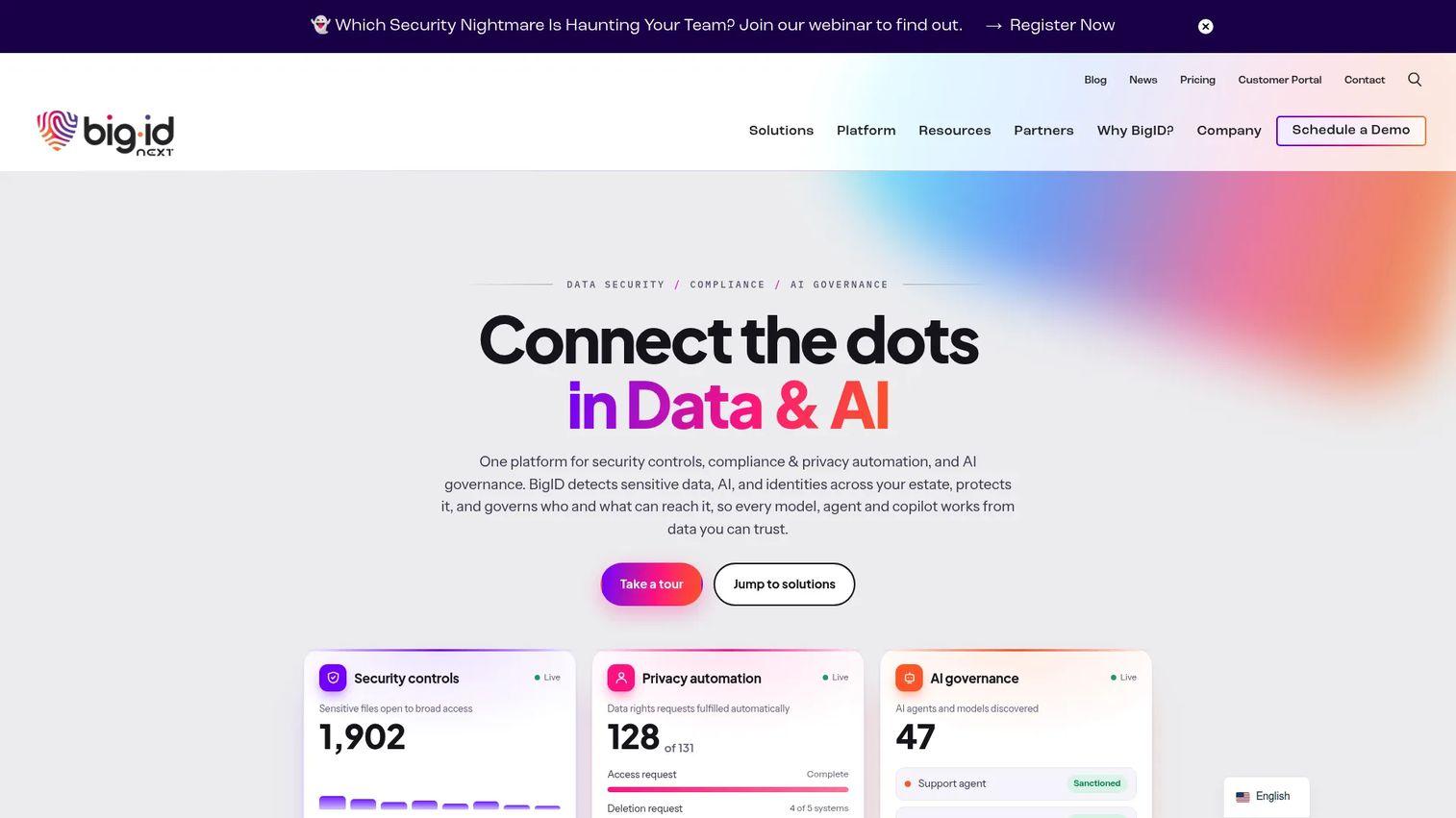
BigID is an enterprise data intelligence platform covering DSPM, data discovery, classification, privacy automation, governance, and AI risk in a single platform. It scans structured, semi-structured, and unstructured data across cloud, SaaS, on-premises, and hybrid environments. For presales teams supporting complex security evaluations, BigID is one of the broadest starting points on this list because it connects posture management directly to privacy workflows, governance programs, and AI data risk.
Best for: Enterprise security, privacy, governance, and AI teams needing unified sensitive-data discovery alongside compliance automation.
Key features
- Data discovery and classification across cloud, SaaS, on-premises, hybrid, and AI-connected environments
- DSPM with access governance, activity monitoring, DLP, and risk remediation
- Privacy automation covering data rights requests, consent, RoPA, assessments, retention, and deletion
Why choose BigID: Choose BigID when the buyer wants DSPM to connect directly with data governance and privacy programs rather than operate as a standalone security scanner. It handles breadth across regulated data types, jurisdictions, and AI pipelines.
BigID pricing: BigID prices by custom quote. Pricing changes based on data sources, connectors, deployment model, and support requirements. A free trial is available to get started.
G2 rating
4.8/5
2. Varonis
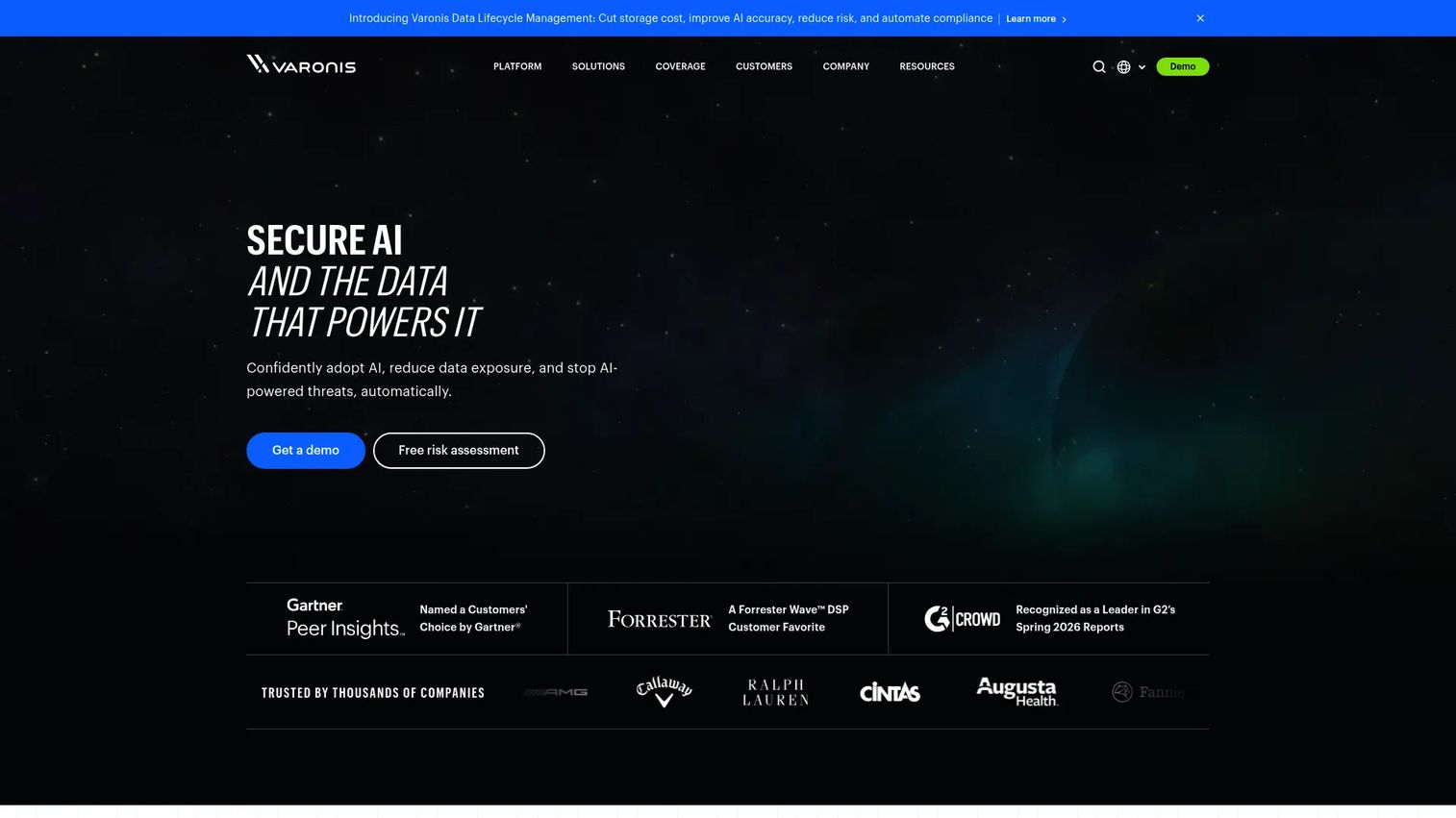
Varonis provides a data and AI security platform focused on discovering, classifying, monitoring, and protecting enterprise data and AI systems. Its access-risk analysis is particularly strong for organizations with complex file system and SaaS permission environments. Varonis also offers AI inventory, AI security posture management, runtime guardrails, and activity monitoring, making it relevant for buyers who need to govern AI access alongside traditional data security.
Best for: Enterprise security teams that need strong visibility into who can access sensitive data and what they are doing with it.
Key features
- Continuous data discovery and classification
- DSPM with access-risk remediation
- AI inventory, AI security posture management, and runtime guardrails
- SaaS data monitoring and automated remediation
- Permissions analysis across file systems, cloud, and identity sources
Why choose Varonis: Choose Varonis when access risk is the core buying trigger and the buyer needs active data security operations, not just a discovery inventory. It fits mature security teams that already care about identity and permissions depth.
Varonis pricing: Varonis prices by custom quote. Ask sales for licensing details by data source volume, user count, and managed service options.
G2 rating
4.7/5
3. Securiti
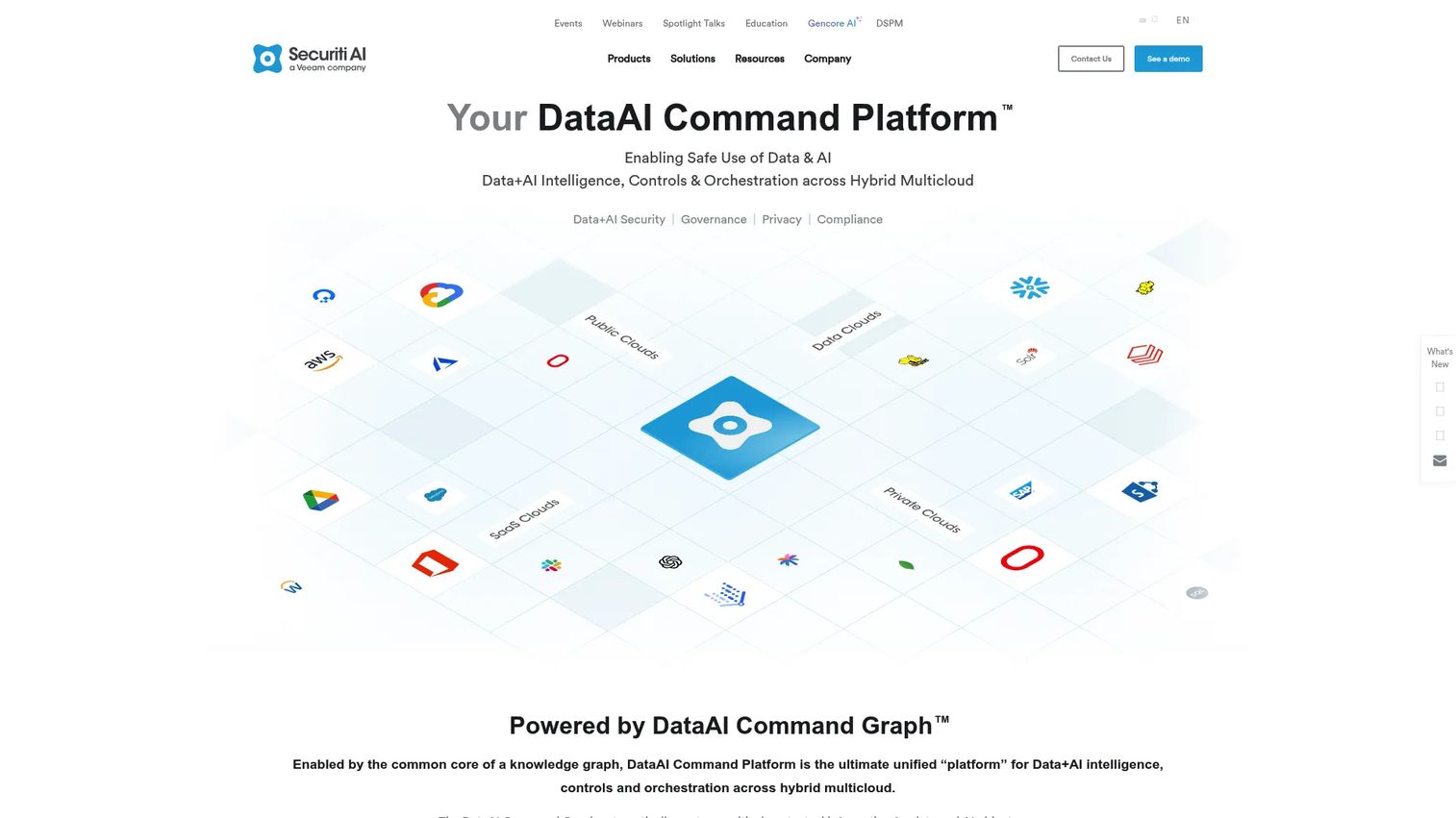
Securiti offers an AI-powered DataAI Command Platform spanning DSPM, privacy operations, data governance, and compliance automation across hybrid multicloud environments. Security and privacy teams frequently co-own sensitive-data risk at enterprise organizations, and Securiti is designed for that joint ownership model. Its data discovery, lineage, access governance, and privacy automation capabilities sit within a single platform rather than requiring separate point tools.
Best for: Organizations where security and privacy teams jointly own sensitive-data risk and need a single platform for posture, governance, and compliance.
Key features
- Data discovery and classification
- Privacy automation including DSR fulfillment and consent management
- Data governance, cataloging, lineage, and access governance
- Risk posture mapping and data access intelligence
- AI governance and compliance monitoring
Why choose Securiti: Choose Securiti when the buyer wants data visibility that simultaneously serves both security posture and privacy operations. It is strongest for organizations subject to multiple global privacy frameworks.
Securiti pricing: Securiti prices by custom quote. Ask sales which DSPM, privacy, and AI governance modules are included.
G2 rating
4.6/5
4. Cyera Platform
Cyera positions itself as an AI security platform for discovering sensitive data, governing human and AI access, and stopping AI-driven risk in real time. Its agentless architecture means cloud-first security teams can get fast visibility without deploying agents across data stores. Cyera covers DSPM and DLP as separate plan options, with add-ons including data subject request automation and a DataWatcher module.
Best for: Cloud-first security teams that need fast sensitive-data discovery and posture context across cloud and SaaS environments.
Key features
- Agentless discovery and AI-native data classification
- DSPM with exposure analysis and cloud data mapping
- Omni DLP with identity governance and access monitoring
- Agent Guardian for AI-agent security
- Automated remediation and workflow integrations
Why choose Cyera Platform: Choose Cyera when speed to visibility and cloud-native data coverage are the primary evaluation drivers. It fits teams that want a focused DSPM and DLP platform rather than a broader suite.
Cyera Platform pricing: Cyera offers separate DSPM and DLP plans, both priced by custom quote. Optional add-ons include Data Subject Request Automation and DataWatcher. Ask sales about data-source coverage and contract minimums.
G2 rating
4.5/5
5. Sentra
Sentra is a cloud-native data security platform for discovering, classifying, governing, and monitoring sensitive data across cloud, SaaS, and on-premises environments. Its agentless, in-environment scanning approach avoids moving sensitive data outside the customer's environment, which matters for regulated industries and buyers with strict data-handling requirements. Sentra covers shadow data detection, a relevant capability for organizations whose cloud footprint has grown faster than their governance program.
Best for: Enterprise security and compliance teams protecting sensitive data across regulated, multicloud, SaaS, and hybrid environments.
Key features
- AI-powered data discovery and classification
- DSPM with Data Access Governance
- Data Detection and Response
- Shadow data detection across cloud and SaaS
- Risk prioritization and remediation workflows
Why choose Sentra: Choose Sentra when buyers want a dedicated DSPM platform with strong posture visibility and in-environment scanning. It is a good fit for cloud security teams that have outgrown discovery-only tools.
Sentra pricing: Sentra prices by custom quote. Pricing changes based on environment scale, technology stack, and data volume across IaaS, PaaS, DBaaS, SaaS, and on-premises.
G2 rating
5.0/5 (based on limited review volume; verify current count on G2)
6. Symmetry Systems
Symmetry Systems provides a Data+AI security platform that connects identity, data, and AI risk to discover, govern, and protect sensitive data. Its identity-aware approach means posture analysis answers not just "where is the data?" but "who can reach it and through which identity paths?" This framing makes it particularly useful for security teams whose primary concern is identity-driven data exposure, including AI agent identity governance.
Best for: Enterprise security teams that need identity-aware data access governance across cloud, SaaS, on-premises, or air-gapped environments.
Key features
- Data discovery and classification
- Identity and permission analysis
- Near-real-time data monitoring and anomaly detection
- AI agent identity and governance
- Automated remediation and least-privilege enforcement
Why choose Symmetry Systems: Choose Symmetry Systems when the buyer's core question is "who has access to what sensitive data, through which identity, and why?" It is well suited for programs combining DSPM with identity and access governance priorities. A free trial is available.
Symmetry Systems pricing: Symmetry Systems prices by custom quote. Ask sales how pricing changes by connected data stores and identities. A free trial is available to evaluate the platform.
G2 rating
4.4/5
7. Concentric AI Semantic Intelligence
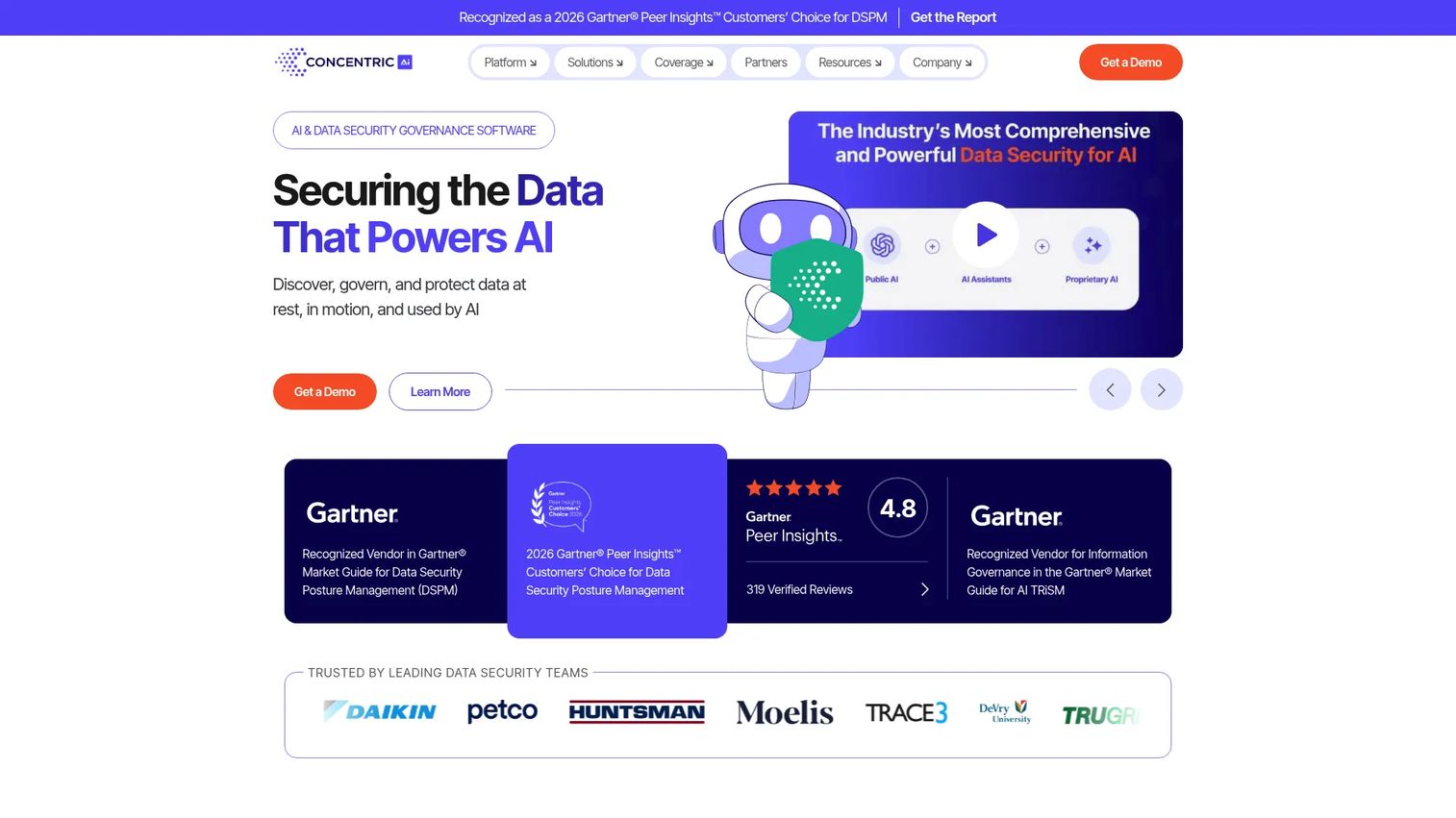
Concentric AI provides an AI and data security governance platform that discovers, categorizes, governs, and protects sensitive enterprise data across cloud, on-premises, SaaS, and AI environments. Its semantic classification approach goes beyond pattern matching to understand data in context, which improves accuracy for unstructured content such as contracts, design files, and internal communications. Semantic DLP extends this to inspecting prompts and uploads in real time to protect sensitive data from AI tools.
Best for: Organizations that need context-rich classification for unstructured data and want AI-aware content inspection built into the governance layer.
Key features
- Context-aware discovery, categorization, and classification
- Continuous risk monitoring with autonomous remediation
- Semantic DLP for real-time prompt and upload inspection
- Risk analytics and access analysis
- Data governance and remediation actions
Why choose Concentric AI Semantic Intelligence: Choose Concentric AI when classification accuracy and business context matter more than simple keyword or regex discovery. It is priced by the amount of data scanned, and Semantic DLP is priced per user. Ask sales about repository coverage.
Concentric AI pricing: Concentric AI prices by custom quote. Semantic Intelligence pricing scales by data volume scanned; Semantic DLP scales by user count. Ask sales about repository coverage and classification model requirements.
G2 rating
4.0/5
8. AvePoint Confidence Platform
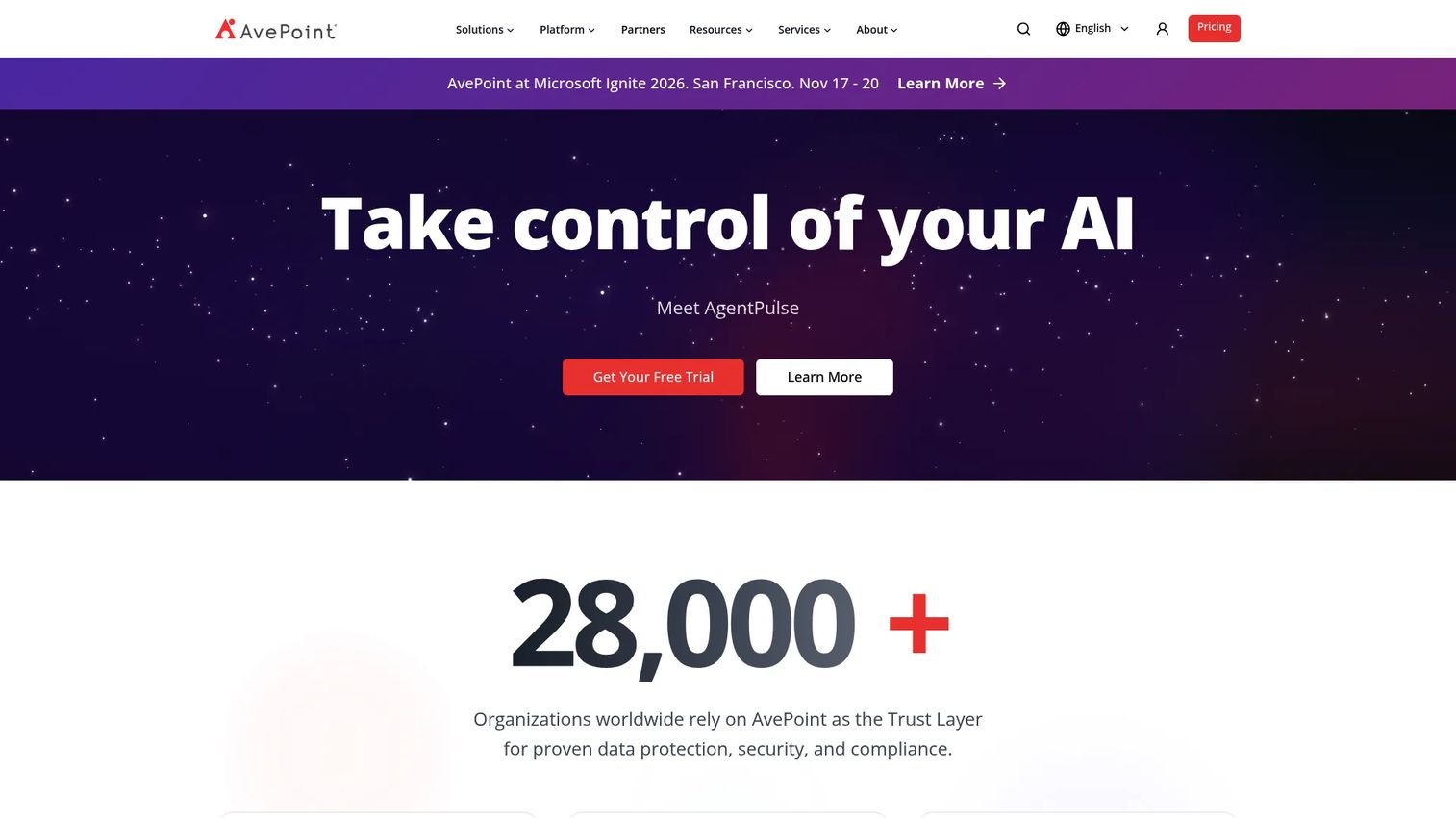
AvePoint offers a unified platform for data security, governance, compliance, resilience, and migration across Microsoft 365, Google Workspace, Salesforce, and other cloud environments. For organizations whose sensitive data risk concentrates in SharePoint, Teams, OneDrive, and related collaboration tools, AvePoint provides governance and lifecycle controls that purpose-built DSPM tools may not cover as deeply. It also includes AI agent governance and visibility.
Best for: Teams securing collaboration data and Microsoft-centric environments where governance, lifecycle controls, and backup resilience are all evaluation criteria.
Key features
- Automated backup and granular recovery across SaaS applications
- Unified data governance, security, compliance, and risk insights
- Data lifecycle management and reduction of redundant and obsolete data
- Migration across platforms with granular controls
- AI agent governance and visibility
Why choose AvePoint Confidence Platform: Choose AvePoint when the sensitive data risk problem lives primarily inside Microsoft 365 and collaboration workflows. It handles governance breadth that general DSPM tools may skip.
AvePoint Confidence Platform pricing: AvePoint prices by custom quote. Pricing changes by product module and seat count. Ask sales for the Confidence Platform package that includes data governance features.
G2 rating
4.5/5
9. CrowdStrike Falcon Cloud Security
CrowdStrike Falcon Cloud Security is a cloud-native security platform with CNAPP capabilities spanning posture management, detection and response, workload protection, container security, and data risk visibility. For buyers already standardizing on the Falcon platform, DSPM capabilities come as part of broader cloud security coverage rather than a standalone purchase. Verify with CrowdStrike which specific DSPM capabilities are included in each offering tier.
Best for: Cloud security teams that already standardize on Falcon or want DSPM integrated with CNAPP workflows, runtime detection, and identity risk.
Key features
- Cloud security posture management with graph-based risk prioritization
- Real-time cloud detection and response
- Cloud workload, container, Kubernetes, and serverless runtime protection
- Application and AI model security
- Data risk visibility within the broader Falcon platform
Why choose CrowdStrike Falcon Cloud Security: Choose Falcon Cloud Security when the buyer wants data security posture within the same operating model as cloud detection and response. It consolidates multiple cloud security disciplines under one agent and console.
CrowdStrike Falcon Cloud Security pricing: CrowdStrike offers six Falcon Cloud Security tiers, all priced by custom quote. Ask sales which DSPM capabilities are included and how they map to your selected tier.
G2 rating
4.5/5
10. Rubrik DSPM
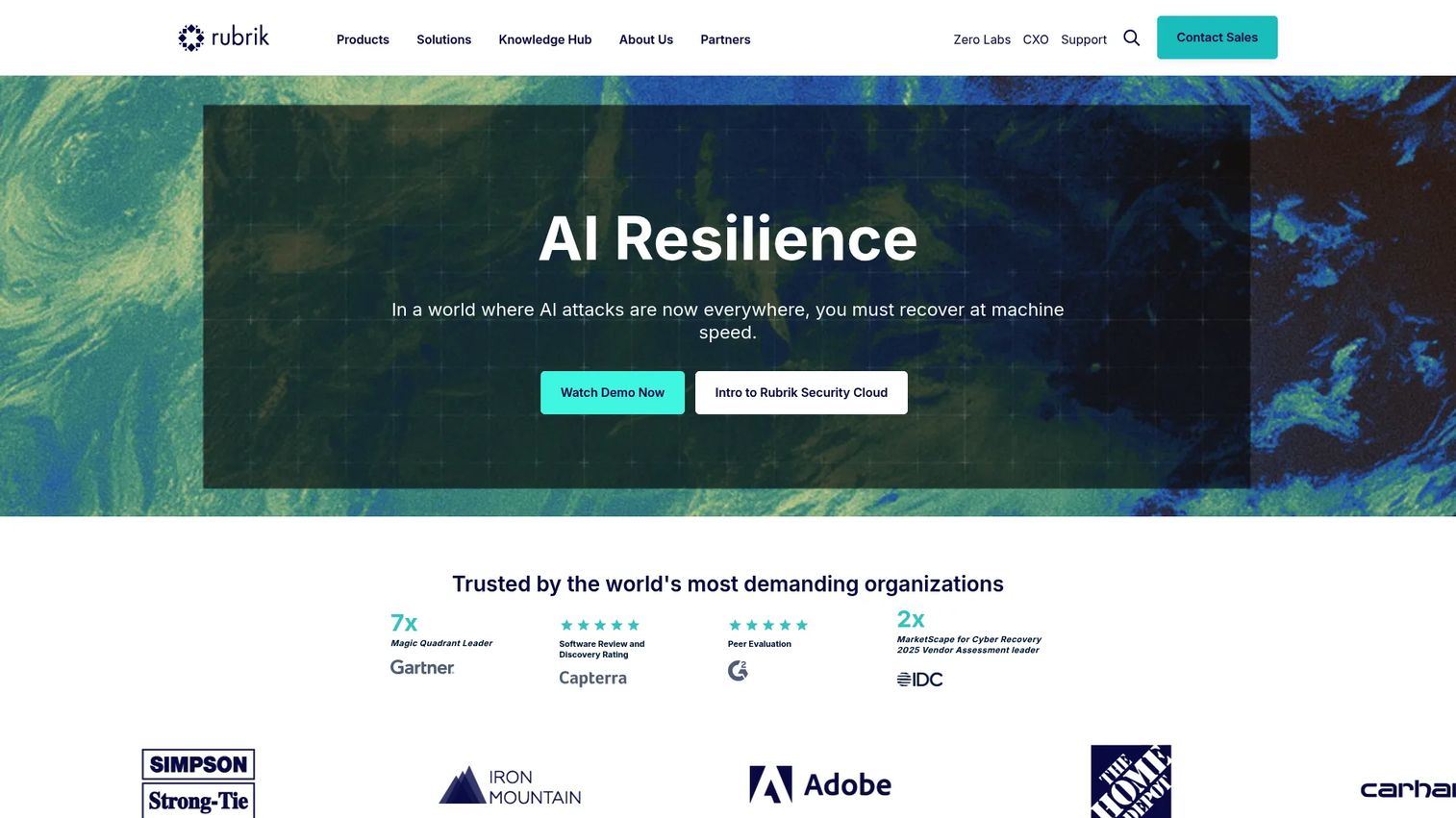
Rubrik DSPM helps organizations discover, classify, monitor, govern, and remediate sensitive data risks across on-premises, cloud, and SaaS environments. Its connection to Rubrik's cyber resilience and backup infrastructure differentiates it for buyers who want to understand data posture in the context of recovery planning. It also integrates with Microsoft 365 and Purview for MIP label detection and remediation.
Best for: Security and infrastructure teams that want data posture visibility connected to cyber recovery, backup, and resilience planning.
Key features
- Continuous discovery and classification of structured, semi-structured, and unstructured data
- Data inventory with visibility into overexposed, unprotected, and obsolete data
- Data access governance and risky permission remediation
- Built-in and custom security policies with risk prioritization
- Microsoft 365 and Purview integration with MIP label detection
Why choose Rubrik DSPM: Choose Rubrik DSPM when buyers want sensitive-data discovery connected to recovery planning and cyber resilience workflows. It is most compelling for organizations that already use Rubrik for backup.
Rubrik DSPM pricing: Rubrik prices by custom quote. Ask sales how DSPM is packaged alongside backup and cyber recovery products.
G2 rating
4.6/5
11. Forcepoint DSPM
Forcepoint DSPM offers AI-powered data security posture management for discovering, classifying, assessing, and remediating risks across structured and unstructured data in cloud and on-premises environments. Its AI Mesh classification layer supports customizable models, which allows organizations to extend detection beyond standard regulated data types to business-sensitive content specific to their industry. It sits within Forcepoint's broader data security portfolio.
Best for: Organizations evaluating DSPM alongside broader data security policy enforcement programs already using Forcepoint tools.
Key features
- Automated discovery and classification of structured and unstructured data
- AI Mesh classification with customizable models
- Risk assessment for overexposed data, permissions, and data sovereignty
- Permission visibility and remediation workflows
- Dashboards, monitoring, alerting, and compliance reporting
Why choose Forcepoint DSPM: Choose Forcepoint DSPM when buyers want posture visibility connected to existing data protection and policy programs, particularly in environments where Forcepoint's broader stack is already deployed.
Forcepoint DSPM pricing: Forcepoint prices DSPM by custom quote. Ask sales about data-source coverage, module selection, and deployment requirements.
G2 rating
4.5/5
12. Proofpoint Data Security Posture Management
Proofpoint DSPM is an AI-powered data security posture management platform for discovering, classifying, governing, and protecting sensitive data across SaaS, cloud, on-premises, and hybrid environments. It integrates with Proofpoint DLP and Data Security for AI, and its risk prioritization draws on data value, access patterns, misconfigurations, and attack paths. The platform covers compliance monitoring across more than 25 frameworks.
Best for: Enterprise security teams that evaluate data risk through people, content, and collaboration behavior, particularly where Proofpoint is already in the environment.
Key features
- AI-powered sensitive-data discovery and classification
- Risk prioritization using data value, access patterns, and attack paths
- Data access governance and least-privilege remediation
- Continuous compliance monitoring across 25+ frameworks
- Integration with Proofpoint DLP and Data Security for AI
Why choose Proofpoint Data Security Posture Management: Choose Proofpoint DSPM when buyers want posture signals connected to user behavior and content security, and when Proofpoint is already part of the security stack.
Proofpoint DSPM pricing: Proofpoint prices DSPM by custom quote. Ask sales which data security modules are included.
13. Spirion
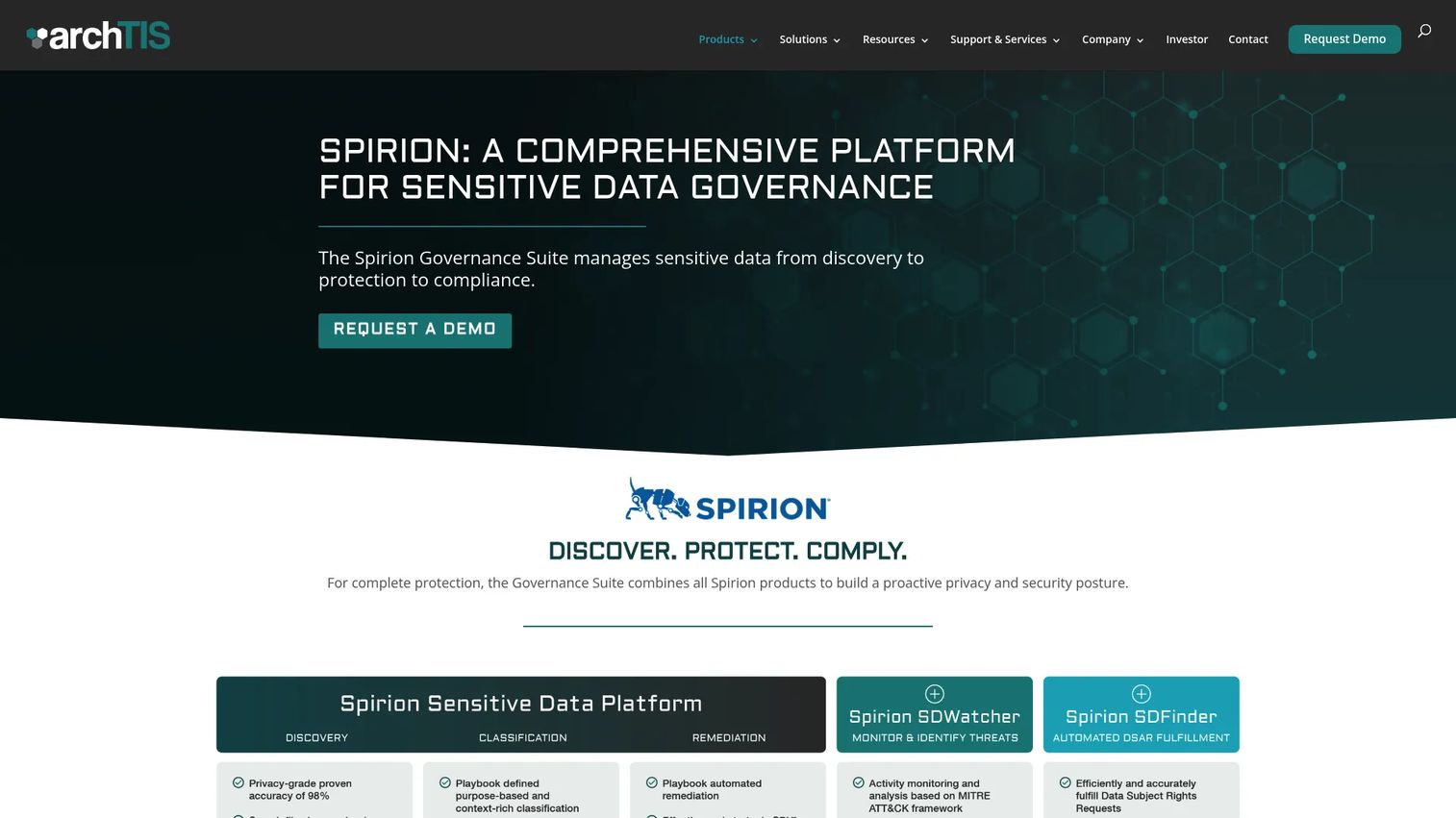
Spirion is a sensitive data governance platform for discovering, classifying, protecting, remediating, and governing sensitive data across on-premises and cloud environments. It has been in the sensitive data discovery space for an extended period, and its focus on regulated data types, endpoint scanning, and DSAR fulfillment makes it relevant for compliance-driven evaluations. Spirion integrates with Microsoft Purview for label detection.
Best for: Organizations focused on finding and classifying regulated data types and producing defensible classification outputs for audit and compliance purposes.
Key features
- Sensitive data discovery across endpoints, cloud repositories, databases, and email servers
- Purpose-based and persistent data classification with Microsoft Purview integration
- Automated remediation including redaction, anonymization, and quarantine
- Sensitive Data Watcher for activity monitoring and exfiltration detection
- DSAR and data-subject-rights request fulfillment automation
Why choose Spirion: Choose Spirion when the evaluation centers on finding specific regulated data types across endpoints and cloud repositories and producing repeatable, defensible classification results.
Spirion pricing: Spirion prices by custom quote. Ask sales how pricing changes by endpoint count, repository scope, and data volume.
G2 rating
4.4/5
14. CipherTrust Data Security Posture Management
CipherTrust DSPM from Thales discovers and classifies sensitive data, analyzes exposure and access risk, and applies integrated protection across cloud, SaaS, on-premises, hybrid, and AI environments. Its differentiator is the connection between DSPM posture findings and the CipherTrust Data Security Platform's encryption, tokenization, masking, and centralized key management capabilities. This makes it a natural fit for organizations that want to close the loop between finding a risk and applying cryptographic protection.
Best for: Enterprise security teams that need DSPM posture findings connected to encryption controls and centralized key management.
Key features
- Continuous discovery and classification of structured and unstructured sensitive data
- Risk analysis covering exposure, access, entitlements, and misconfigurations
- Integrated encryption, tokenization, masking, and key management for remediation
- Monitoring of data access and usage patterns for insider threats and policy violations
- SaaS, on-premises, and hybrid deployment options with data-sovereignty controls
Why choose CipherTrust Data Security Posture Management: Choose CipherTrust DSPM when the buyer wants posture management connected to cryptographic controls. It fits teams that need to find exposure and immediately apply encryption or tokenization as the remediation action.
CipherTrust DSPM pricing: CipherTrust prices by custom quote. Ask sales which data security and key-management modules are included.
G2 rating
4.5/5
15. Bedrock Data
Bedrock Data is an AI-native data security, governance, and management platform providing contextual visibility and control across cloud, SaaS, on-premises, and AI environments. It offers continuous discovery, AI-powered classification, data fingerprinting, lineage mapping, and entitlement analysis. A natural-language AI copilot supports investigation and governance workflows. Bedrock Data is a newer entrant in the DSPM space, so verify current capability depth before adding it to a competitive shortlist.
Best for: Enterprise security, governance, and data teams needing contextual visibility, classification, lineage tracking, entitlement analysis, and AI-data governance.
Key features
- Continuous discovery across SaaS, PaaS, IaaS, and on-premises environments
- AI-powered classification and data fingerprinting
- Data lineage mapping and entitlement and access-chain analysis
- Metadata Lake with Graph API integrations
- Natural-language AI copilot and dynamic policy enforcement
Why choose Bedrock Data: Choose Bedrock Data when buyers want a modern cloud DSPM option with lineage depth and AI-data governance. A free tier is available for Snowflake environments, which lowers the evaluation barrier for data teams already working in that stack.
Bedrock Data pricing: Bedrock Data Free covers Snowflake environments with weekly scans at no charge. The full Bedrock Data plan covers all datastores and is priced by custom quote. Ask sales about supported repositories and deployment model.
16. Teleskope
Teleskope is an AI-powered employee experience platform for enterprise ERGs, mentoring, events, communications, volunteering, giving, recognition, and onboarding. Based on verified brand research, Teleskope's documented capabilities are focused on employee program management at Fortune 500 organizations rather than data security posture management. Its SOC 2 certification and enterprise SSO support make it relevant for secure enterprise deployments, but presales teams evaluating a DSPM shortlist should confirm whether Teleskope's current product scope matches their data security posture requirements before including it in an RFP.
Best for: Large enterprises managing global employee programs across ERGs, mentoring, and events at scale.
Key features
- Employee resource group and community management
- Mentoring program management and mentor matching
- Event planning, attendance tracking, and global calendars
- Budget allocation, approvals, and expense tracking
- AI assistant (Ask Skope) for reports, communications, and workflow support
Why choose Teleskope: Choose Teleskope for enterprise employee experience program management. Verify directly with Teleskope whether their roadmap includes data security posture capabilities relevant to your evaluation.
Teleskope pricing: Teleskope prices by custom quote. Ask sales about deployment architecture, supported environments, and enterprise contract terms.
17. Netwrix
Netwrix provides data and identity security covering sensitive data discovery, identity governance, directory management, privileged access management, and threat detection. Its data access governance and change auditing capabilities are well established for Active Directory, Entra ID, and file system environments. Netwrix is notable for being one of the few vendors on this list with publicly displayed self-service pricing for selected products.
Best for: Organizations that need data access auditing and governance tied to operational security reporting, change tracking, and identity management.
Key features
- Data discovery and classification across hybrid environments
- Identity governance, directory management, and privileged access management
- Threat detection and response across Active Directory and Entra ID
- Access auditing and change tracking
- Compliance reporting
Why choose Netwrix: Choose Netwrix when buyers want data access visibility tied to audit trails and identity governance rather than a pure DSPM posture scanner. It fits organizations with complex Active Directory and hybrid identity environments.
Netwrix pricing: Netwrix 1Secure starts at $24 per identity per year. Netwrix Auditor Essentials Edition starts at $20 per enabled Active Directory user per year. Password Secure starts at $60 per user per year. Password Policy Enforcer starts at $6.60 per user per year. Most other Netwrix products require a personalized quote.
G2 rating
4.5/5
18. Lookout
Lookout provides AI-powered mobile security for the mobile workforce, covering endpoint protection, AI governance, social engineering protection, mobile EDR, and threat intelligence. Its product focus is on mobile device security and mobile threat detection rather than traditional DSPM data discovery and classification. Presales teams evaluating a DSPM shortlist should verify with Lookout whether cloud data posture capabilities fit their specific evaluation criteria.
Best for: Organizations seeking enterprise mobile security, mobile threat detection, AI governance for mobile workflows, and mobile SOC visibility.
Key features
- Mobile AI Security and threat detection
- AI Visibility and Governance
- Social Engineering Protection
- Advanced SOC with mobile EDR
- Mobile Threat Intelligence
Why choose Lookout: Choose Lookout when the primary concern is mobile endpoint security and AI governance for mobile-connected data. Verify current data posture capabilities against your DSPM evaluation criteria.
Lookout pricing: Lookout prices by custom quote. Ask sales how mobile security, AI governance, and data protection capabilities are packaged for your environment.
G2 rating
4.3/5
19. Digital Guardian
Digital Guardian is an enterprise data protection platform covering endpoint DLP, cloud-delivered analytics, incident management, secure collaboration with AES 256-bit encryption, dynamic permissions, and file tracking. It is strongest for organizations where controlling sensitive-data movement is as important as discovering exposure. Presales teams supporting mature DLP evaluations often encounter Digital Guardian alongside DSPM conversations.
Best for: Enterprises with mature DLP programs evaluating broader data posture needs alongside endpoint data protection.
Key features
- Endpoint data loss prevention with monitoring, blocking, and classification
- Cloud-delivered analytics and incident management
- SSE and EDR integrations
- Secure collaboration with AES 256-bit encryption and access revocation
- Policy enforcement and data-egress controls
Why choose Digital Guardian: Choose Digital Guardian when buyers care about controlling sensitive-data movement as much as discovering exposure. It fits organizations where endpoint and network DLP coverage is the primary driver.
Digital Guardian pricing: Digital Guardian prices by custom quote. Ask sales about endpoint counts, DLP module selection, and managed service options.
20. SentinelOne Singularity Cloud Security
SentinelOne Singularity Cloud Security is an AI-powered CNAPP unifying cloud posture management, workload and runtime protection, data security, identity controls, and investigation. It includes sensitive-data discovery and protection across cloud and network storage, attack-path analysis, cloud infrastructure entitlement management, and AI-driven alert triage. For buyers who want DSPM as part of a broader cloud security platform rather than a standalone purchase, SentinelOne is one of the more complete options.
Best for: Cloud security teams evaluating DSPM as part of a broader CNAPP platform covering posture, workloads, identities, applications, and data risk.
Key features
- Cloud security posture management and compliance monitoring
- Runtime protection for servers, virtual machines, containers, and AI workloads
- Attack-path analysis and verified exploitability assessment
- Cloud infrastructure entitlement management
- Sensitive-data discovery and protection across cloud and network storage
Why choose SentinelOne Singularity Cloud Security: Choose Singularity Cloud Security when buyers want cloud data risk within a broader CNAPP that handles detection, response, and identity in the same platform.
SentinelOne Singularity Cloud Security pricing: SentinelOne's published platform packages start at $179.99 per endpoint per year for Singularity Complete. Singularity Commercial is $229.99 per endpoint per year. Singularity Enterprise pricing requires contacting sales. Standalone Singularity Cloud Security pricing is not publicly listed separately. Ask sales which data security posture capabilities are included in your selected tier.
G2 rating
4.9/5
21. OneTrust Privacy Automation
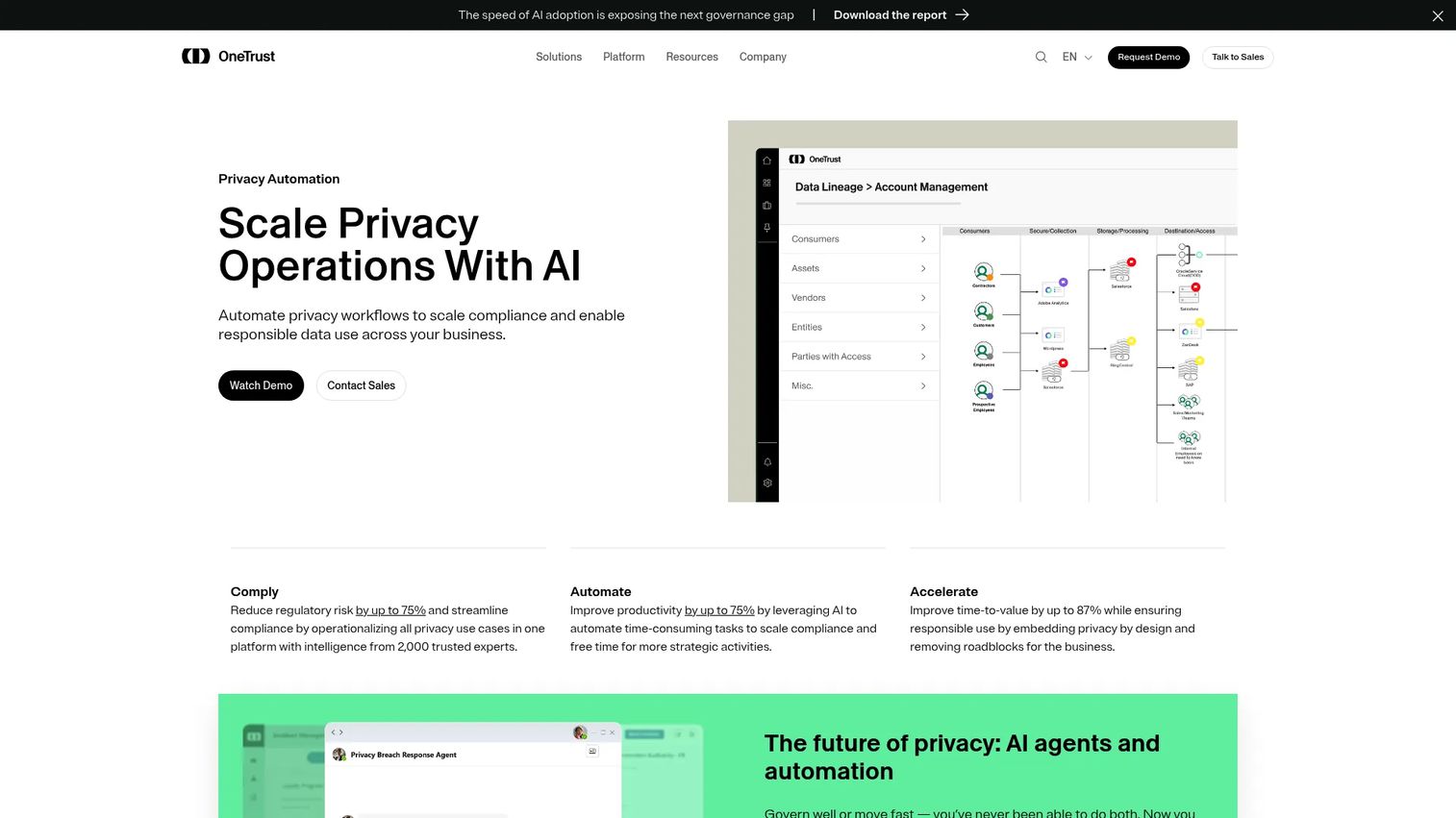
OneTrust Privacy Automation is a platform that automates privacy workflows to scale compliance and enable responsible data use. Its data mapping, DSR fulfillment, privacy impact assessments, vendor assessments, and incident management capabilities make it a natural fit for privacy-led teams who need data discovery connected to governance and retention workflows. OneTrust offers Base and Suite tiers, with Suite adding DSR automation, incident management, and third-party risk intelligence.
Best for: Privacy-led organizations that need data discovery connected to privacy automation, data subject requests, and governance workflows.
Key features
- Automated data subject request fulfillment
- Evergreen data and activity mapping
- Privacy impact, vendor, and AI risk assessments
- Privacy incident management and notification guidance
- Privacy notice management and publishing
Why choose OneTrust Privacy Automation: Choose OneTrust when privacy operations drive the DSPM evaluation and security needs to collaborate with legal, compliance, or governance teams on data risk decisions.
OneTrust Privacy Automation pricing: OneTrust offers Base and Suite tiers, both priced by custom quote. Suite adds DSR automation, incident management, vendor assessments, and third-party risk intelligence. Ask sales which modules are included.
G2 rating
4.3/5
Considerations when choosing DSPM tools
Data-source coverage
Generic "cloud data" coverage claims do not tell you enough. Map your actual environment first: AWS S3, Azure Blob, Google Cloud Storage, SaaS applications like Salesforce and Workday, databases, file shares, developer systems like GitHub, and collaboration platforms like Microsoft 365 and Slack. Bring that list to every vendor call and ask them to confirm which sources they scan natively and which require additional configuration.
Classification accuracy
Classification quality determines whether DSPM findings become actionable or just add noise. Test with a representative sample that includes regulated data types, business-sensitive content, source code, secrets, customer records, and AI training data. Ask each vendor to show you false positive rates and explain how their classification models handle context rather than simple pattern matching.
Access and exposure context
Discovery alone is not enough for a strong security review. Buyers need to know who can access sensitive data, how it is shared externally or internally, whether that access is excessive given the user's role, and whether risky identities or automated workflows have a path to the data. Ask vendors to walk through an access-risk finding end to end and show you what context they surface beyond the raw permission list.
Remediation workflow
Ask what happens after the finding. The answer tells you whether the tool integrates into how security teams actually work. Look for ownership assignment, ticketing integrations with ITSM tools, direct IAM workflows, DLP policy handoffs, SIEM alerting, SOAR playbook triggers, and evidence capture for audit. A strong remediation story is often the deciding factor in a head-to-head proof of concept.
Deployment and data-handling model
DSPM tools scan sensitive environments. Before procurement, ask each vendor about agentless architecture, data egress (whether your data leaves your environment during scanning), metadata-only processing, local processing options, encryption of scan outputs, role-based access controls on findings, and audit logs. For access review software and access control software programs running in parallel, confirm how DSPM outputs integrate with those governance workflows.
Conclusion
The DSPM market is growing fast. According to Grand View Research (2026), it was valued at $2.2 billion in 2025 and is projected to reach $6.2 billion by 2033. That growth reflects genuine demand, not just vendor marketing: 35% of North American organizations already use DSPM, and another 50% are piloting it or planning deployment within 12 months, according to Enterprise Strategy Group (2025).
For presales teams, the practical takeaway is straightforward. Before booking vendor demos, build a proof-of-concept scorecard. Score every shortlisted vendor against the same data sources, the same classification tests, the same access-risk findings, and the same remediation workflow on a representative slice of the buyer's environment. The tools that perform well in that structured test are the ones that survive the security review.
Group your shortlist by program type:
- Broad enterprise DSPM: BigID, Varonis, Securiti, Cyera Platform, Sentra
- Access and identity-heavy programs: Varonis, Symmetry Systems, Netwrix
- Cloud-first teams: Cyera Platform, Sentra, Bedrock Data
- Broader platform buyers: CrowdStrike Falcon Cloud Security, SentinelOne Singularity Cloud Security, Rubrik DSPM, Forcepoint DSPM, Proofpoint DSPM
- Privacy-led teams: Securiti, OneTrust Privacy Automation, BigID
For more related security and governance tooling, see our guides on best AI cybersecurity solutions and AI governance tools.
FAQs
DSPM tools are software platforms that discover sensitive data across cloud, SaaS, on-premises, and hybrid environments, classify it, analyze who can access it, assess the exposure risk it creates, and help teams prioritize and execute remediation. The category emerged as a response to the gap between asset inventory tools, which know where infrastructure lives, and data security programs, which need to know where sensitive data actually is.
DSPM focuses on data risk: What sensitive data exists, where it lives, who can reach it, and how to reduce exposure. CSPM focuses on cloud configuration risk: Infrastructure misconfigurations, policy gaps, and compliance violations at the cloud resource level. Mature cloud security programs need both, because infrastructure misconfigurations often create paths to sensitive data that DSPM then surfaces.
DSPM finds and prioritizes sensitive-data exposure across environments and surfaces where risk is concentrated. DLP enforces policies that control how sensitive data moves, preventing it from leaving approved channels or reaching unauthorized destinations. Position them as complementary: DSPM identifies the risk landscape, DLP enforces the guardrails. Most enterprise programs benefit from running both and integrating their findings.
Data security teams use DSPM to build and maintain a sensitive-data inventory. Cloud security architects use it to identify risky data in multicloud environments. Privacy teams use it to find regulated data and support data subject requests. Security operations teams use DSPM findings as input for threat detection and incident response. Presales and sales engineering teams use DSPM knowledge to support technical validation calls, security reviews, and RFP responses on behalf of their buyers.
Test discovery accuracy on a representative sample of your data sources. Evaluate classification quality on regulated data types, business-sensitive content, and AI training data. Assess the access-risk findings by checking whether the tool surfaces who can reach the data and through which identity path. Walk through the remediation workflow end to end on a real finding. Verify integrations with your SIEM, IAM, and ITSM systems. Check reporting quality and exportability for audit purposes.
DSPM tools can support compliance programs by finding regulated data, mapping who has access to it, and producing evidence of control coverage. They help security and compliance teams understand where regulated data lives and whether it is appropriately protected. Using a DSPM tool does not make an organization compliant with any regulation; it supports the evidence-gathering and remediation work that compliance programs require.
DSPM helps teams identify what sensitive data is available to AI systems before that access creates a policy gap or security incident. AI copilots, agents, and analytics pipelines can pull from sensitive data sources that were never designed to feed AI workflows. DSPM maps those connections, surfaces the exposure, and gives security teams the context to enforce access policies and governance controls on AI-connected data paths.
Most DSPM vendors started with cloud and multicloud data stores, but enterprise buyers typically need coverage that extends to SaaS applications, databases, collaboration platforms, file shares, and hybrid on-premises environments. Before finalizing a vendor shortlist, verify each vendor's supported data sources against your actual environment. Cloud-native DSPM tools may require additional configuration or have coverage gaps for legacy on-premises repositories, so that gap is worth surfacing early in the evaluation.