The average internet user now engages with 6.83 social platforms per month, according to DataReportal (2025). Your audience is not on one channel. Your budget is not infinite. And leadership wants pipeline numbers, not platform activity reports.
The real problem is not reach. Most platforms will give you reach if you pay for it. The problem is that every channel demands native content, its own production rhythm, and a different measurement approach. Committing to the wrong mix costs months of creative effort and budget that could have gone somewhere measurable.
This guide does not rank platforms by size. It answers the more useful question: Which digital media platforms actually fit your audience, your content format, your team capacity, and a measurable business goal in 2026?
What's inside
This guide compares 15 digital media platforms for marketers and business teams building channel strategy in 2026. Platforms were selected based on:
- Reach and marketing use case relevance
- Content format fit and production requirements
- Organic, paid, commerce, community, and messaging capabilities
- Practical considerations for small teams and enterprise marketers
Pricing refers to using each platform organically or via its ad and business tools. G2 ratings are listed where a verified business-product listing exists. Consumer media platforms with no relevant software listing show N/A.
TL;DR
- Best for broad consumer reach: Facebook for community and feed distribution, YouTube for video search
- Best for visual commerce: Instagram and TikTok, where product discovery and checkout behavior converge
- Best for B2B marketers: LinkedIn, with firmographic targeting no other platform matches
- Best for search-friendly video: YouTube, where content compounds over time through organic discovery
- Best for community insight: Reddit and Discord, where unfiltered audience language lives
- Best for direct customer messaging: WhatsApp for most markets, WeChat for China-specific reach
What are digital media platforms?
Digital media platforms are online channels where people and organizations create, distribute, discover, discuss, or monetize digital content.
They differ from digital media companies (publishers and distributors like news organizations or streaming services) in one important way: Users generate or interact with the content, not just consume it. Social media platforms are one subset of digital media platforms. The broader category also includes video platforms, messaging apps, live streaming services, community forums, and publishing destinations.
Platform categories to know:
- Social networks: Relationship-based content feeds (Facebook, Instagram, LinkedIn)
- Short-form video apps: Algorithm-driven discovery feeds (TikTok, YouTube Shorts, Instagram Reels)
- Video platforms: Long-form and live streaming content (YouTube, Twitch)
- Messaging platforms: Direct and group communication (WhatsApp, WeChat)
- Community platforms: Topic-organized discussion forums and servers (Reddit, Discord)
- Publishing platforms: Long-form written content and expert essays (Medium, LinkedIn newsletters)
- Social commerce surfaces: Purchase paths built into content feeds (TikTok Shop, Instagram Shopping, Pinterest)
Key capabilities marketers evaluate:
- Audience reach and demographic alignment
- Content discovery algorithms and organic reach potential
- Paid promotion and targeting options
- Creator partnership infrastructure
- Commerce and checkout paths
- Analytics and engagement reporting
- Integration with CRM and social media marketing tools
Marketers should evaluate platforms by business intent and audience fit. A platform with a billion users does not automatically outperform a smaller platform with a more concentrated buyer audience.
When to use digital media platforms
Build audience reach before demand capture
Paid search captures buyers already searching. Digital media platforms can create awareness and brand preference before that search intent exists. Use them when you need to shape how buyers think about a problem, not just intercept existing demand. Broad-reach platforms like Facebook and YouTube work well at this stage because they let you reach people who do not yet know they need your product.
Turn content into measurable engagement
Attribution on social media is genuinely difficult, but it improves with UTM discipline, dedicated landing pages, and CRM campaign tracking. Platforms with strong analytics tools, like LinkedIn and TikTok, let you connect content activity to conversion paths. Start by establishing baseline referral traffic and cost-per-click before scaling spend on any channel.
Support commerce, customer conversations, and community listening
Digital media platforms extend well beyond publishing posts. Instagram, TikTok, and Pinterest carry checkout paths directly inside the feed. WhatsApp and WeChat handle post-click customer conversations and order updates. Reddit and Discord serve as listening channels for unfiltered product feedback, category language, and buyer objections your messaging should address. Managing these channels well requires social media management tools that keep workflows organized.
Digital media platforms comparison
The table below sorts platforms by broad marketing usefulness, not monthly active users. Pricing reflects platform access and business tools. G2 ratings are shown where a verified listing exists.
| # | Product | Best for | Key differentiator | Pricing | G2 rating |
|---|---|---|---|---|---|
| 1 | Broad consumer reach and retargeting | Mature social graph with audience targeting | Free account, paid ads available | 4.3/5 | |
| 2 | Visual brand discovery and commerce | Reels, Stories, and shopping integration | Free account, paid ads available | 4.5/5 | |
| 3 | YouTube | Search-friendly video and education | Long-form discovery plus Shorts | Free channel, paid ads available | 5.0/5 |
| 4 | TikTok | Short-form creative testing | Interest graph drives fast creative feedback | Free account, paid ads available | N/A |
| 5 | B2B demand and professional targeting | Firmographic targeting and lead gen forms | Free page, paid plans and ads available | 4.4/5 | |
| 6 | X (Twitter) | Real-time commentary and PR | News cycles and public conversation threads | Free account, paid plans and ads available | N/A |
| 7 | Visual planning and product discovery | Intent-led discovery with shopping ads | Free account, paid ads available | 4.6/5 | |
| 8 | Snapchat | Gen Z campaigns and AR formats | Camera-first creative and AR lenses | Free account, paid ads available | 4.2/5 |
| 9 | Customer messaging and commerce | Direct conversations and business catalogs | Free app, business platform usage-based | N/A | |
| 10 | China-market engagement | Messaging, payments, and mini programs | Free app, business fees vary | N/A | |
| 11 | Community insight and niche audience research | Topic-based communities with high-intent discussion | Free account, paid ads available | 4.1/5 | |
| 12 | Threads | Text-first brand presence | Meta-linked public conversation feed | Free account | N/A |
| 13 | Twitch | Live community engagement | Creator-led streams with real-time chat | Free channel, paid subscriptions and ads available | 4.4/5 |
| 14 | Discord | Owned community building | Persistent servers with roles and member management | Free server, paid Nitro optional | N/A |
| 15 | Medium | Long-form publishing and expert content | Built-in readership for essays and ideas | Free publishing, paid membership optional | 3.8/5 |
Best digital media platforms for 2026
Platforms below are ordered by broad usefulness for digital marketers, not raw size. Each entry covers audience fit, content format, business use case, and what to watch before investing time or budget.
1. Facebook
Facebook remains the widest-reach consumer social network, with a mature social graph, business pages, groups, events, and marketplace functionality. Its advertising infrastructure is the most developed of any social platform, with retargeting audiences, lookalikes, and detailed demographic layers built over more than a decade. Organic reach on pages has declined significantly, but groups, events, and paid distribution still justify it for many B2C, local, and community-driven campaigns.
Best for: Broad B2C reach, local business promotion, retargeting campaigns, and community-driven marketing via groups.
Key features
- Business pages with insights and messaging tools
- Groups and events for community engagement
- Marketplace for product visibility
- Paid ad targeting with retargeting audiences
- Meta ad platform integration with Instagram
Why choose Facebook: Facebook earns its spot when scale and targeting matter more than cultural relevance. It excels for older demographics, local campaigns, and retargeting buyers who have already shown interest on other channels.
Facebook pricing: Creating an account and business page is free. Paid advertising runs through the Meta ad platform with budgets set by the advertiser.
G2 rating: 4.3/5
2. Instagram
Instagram is the visual discovery platform for brands, creators, and product-led content. Reels drive organic reach more reliably than static posts in 2026. Stories and carousels work well for brand storytelling and product education. Shopping tags and the Instagram Shop surface create a direct path from content to purchase, making it one of the stronger social commerce platforms for consumer brands. Creator partnerships (collaborations and paid promotions) extend reach into niche audiences that paid ads cannot target as precisely.
Best for: Visual brands, ecommerce marketers, product discovery, short-form storytelling, and creator partnership campaigns.
Key features
- Reels for short-form video reach
- Stories for time-sensitive brand content
- Shopping tags and product catalogs
- Creator collaboration tools
- Direct messages for customer conversations
Why choose Instagram: Choose Instagram when your product needs visual proof and your team can produce repeatable short-form creative. The platform rewards brands with a clear aesthetic and consistent publishing cadence.
Instagram pricing: Accounts and business profiles are free. Paid advertising runs through the Meta ad platform with advertiser-controlled budgets.
G2 rating: 4.5/5
3. YouTube
YouTube functions simultaneously as a video platform, a search engine, and a creator network. Long-form videos build evergreen search traffic through Google and YouTube's own discovery algorithm. Shorts serve the short-form feed. Live streams create event-style programming. Product tutorials, customer stories, and explainer videos sit on YouTube for months or years, continuing to generate views without additional spend. That compounding nature is what separates YouTube from most other platforms in this list. It is especially valuable when buyers research how something works before talking to sales.
Best for: Search-friendly video, product education, tutorials, creator partnerships, and long-tail content discovery.
Key features
- Long-form video with organic search discovery
- YouTube Shorts for short-form reach
- Live streaming for event content
- Channel subscriptions and member perks
- Creator analytics and audience insights
Why choose YouTube: YouTube fits marketers who want content to keep working after the campaign ends. Production investment is higher, but the return compounds over time in a way paid social does not.
YouTube pricing: Channel creation is free. Paid advertising runs through Google Ads with budgets set by the advertiser.
G2 rating: 5.0/5
4. TikTok
TikTok is a short-form video discovery platform built around an interest graph rather than a social graph. Content reaches people based on what they watch, not who they follow, which means new accounts can achieve significant reach if the creative connects. TikTok Shop brings commerce directly into the feed in markets where it is available. The creator marketplace connects brands with creators who already have established trust with niche audiences. TikTok's speed of creative feedback is one of its most useful characteristics for growth marketers: Weak hooks surface quickly, allowing rapid iteration.
Best for: Short-form creative testing, Gen Z and millennial reach, social commerce, and creator-led product awareness.
Key features
- For You feed with interest-based distribution
- Short-form video with sounds, effects, and filters
- Creator marketplace for influencer partnerships
- TikTok Shop for in-feed commerce (market-dependent)
- Paid advertising with campaign and ad-group budget controls
Why choose TikTok: Choose TikTok when speed of creative learning matters. Audiences signal what is working or not within days, giving marketers faster feedback loops than most other channels.
TikTok pricing: Account creation is free. Paid advertising campaign minimums start at $50 at the campaign level and $20 at the ad group level, per TikTok's official documentation.
5. LinkedIn
LinkedIn is the primary B2B social media platform for demand generation, thought leadership, recruiting, and account-based marketing. Its targeting is the most precise of any platform for reaching specific job roles, seniority levels, company sizes, and industries. Lead gen forms capture buyer information without redirecting off-platform. Company pages, newsletters, and sponsored content support the full awareness-to-consideration funnel. Founder and executive content consistently outperforms company page posts in organic reach, making LinkedIn one of the stronger channels for content marketing tied to personal brand.
Best for: B2B demand generation, thought leadership, professional targeting, recruiting, and account-based campaigns.
Key features
- Company pages with analytics and post scheduling
- Lead gen forms attached to sponsored content
- Firmographic targeting by role, seniority, and industry
- Newsletter publishing for owned audience building
- InMail for direct outreach to targeted professionals
Why choose LinkedIn: LinkedIn is the clearest choice when audience quality matters more than cheap reach. Use it when the buying committee is defined by job role, company size, and seniority.
LinkedIn pricing: Company pages are free. Premium individual plans start at $39.99/month (Premium Career) or $69.99/month (Premium Business). Sales Navigator Advanced starts at $159.99/month. Advertising budgets are set in Campaign Manager.
G2 rating: 4.4/5
6. X (Twitter)
X is a real-time public conversation platform built around posts, threads, and trending discussions. It works best for news cycles, founder commentary, product announcements, category debates, and fast feedback loops. Brands with a strong point of view can build meaningful followings when content is timely and specific. X Communities group users around shared interests, which creates more targeted engagement than the main feed. Spaces enables audio conversations with live audiences.
Best for: Real-time commentary, PR, founder-led visibility, industry conversations, and rapid audience feedback.
Key features
- Public posts and threaded conversations
- Real-time trending topics and discovery
- X Communities for interest-based groups
- Spaces for live audio conversations
- Paid subscription tiers for additional features
Why choose X: Choose X when your audience follows live conversations and your brand can publish with speed. It suits categories where opinion and commentary carry authority.
X pricing: Free accounts are available. Paid plans include Basic at $3/month (or $32/year), Premium at $8/month (or $84/year), and Premium+ at $40/month (or $395/year). Advertising is separately available.
7. Pinterest
Pinterest is a visual discovery and planning platform where users save ideas for future purchases and projects. Its user base skews toward planning behavior, meaning buyers often arrive with purchasing intent already forming. Categories including home, fashion, food, beauty, DIY, and weddings see strong native engagement. Product Pins connect directly to merchant catalogs, and shopping ads close the path from inspiration to purchase. Trend insights let marketers see what categories are growing before the wider market catches up.
Best for: Visual planning, ecommerce product discovery, evergreen content, and high-intent purchase inspiration.
Key features
- Product Pins linked to merchant catalogs
- Boards for organizing and distributing ideas
- Visual search for product discovery
- Shopping ads and catalog integration
- Trend insights for content planning
Why choose Pinterest: Choose Pinterest when your category benefits from planning behavior rather than impulse buying. It is less about daily conversation and more about influencing decisions before a purchase happens.
Pinterest pricing: Business accounts are free. Pinterest does not charge to add products or take sales commissions. Advertising spend is set by the advertiser.
G2 rating: 4.6/5
8. Snapchat
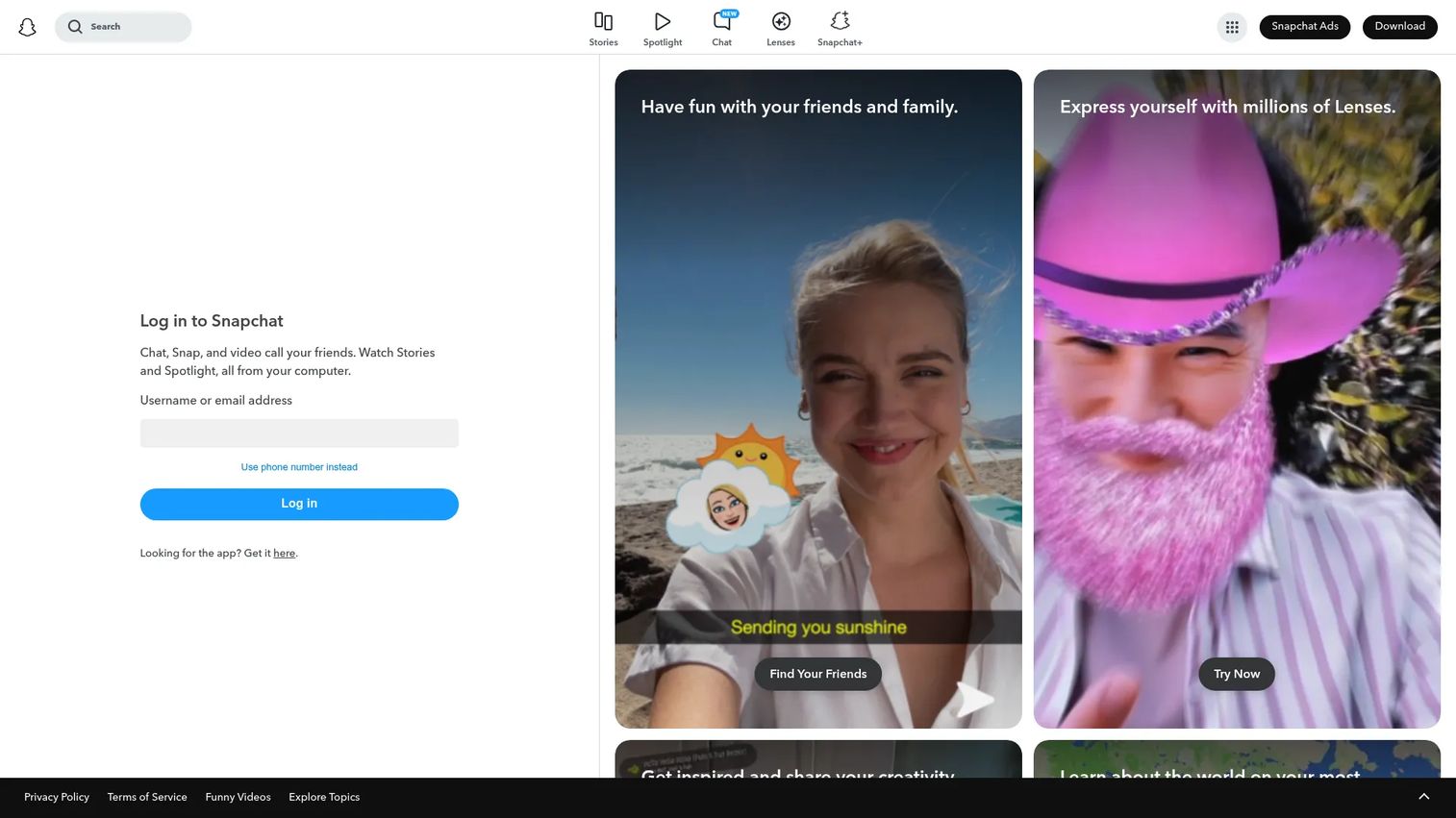
Snapchat is a camera-first platform with strong Gen Z penetration, private sharing behavior, and a distinct creative infrastructure built around augmented reality. AR Lenses let brands create participatory product experiences rather than passive ads. Spotlight surfaces creator content to a broader audience. Snap Map enables location-aware promotions. The platform's Stories and messaging behavior differs significantly from feed-first platforms, which means content that works on Instagram or TikTok requires rethinking for Snapchat's format.
Best for: Gen Z campaigns, AR experiences, location-based promotions, and mobile-first creative formats.
Key features
- Stories and Spotlight for content distribution
- AR Lenses for branded interactive experiences
- Snap Map for location-based discovery
- Sponsored filters for event and campaign promotion
- Camera creative tools including effects and transitions
Why choose Snapchat: Choose Snapchat when the campaign concept works through the camera. It suits brands that can make the product feel participatory rather than simply viewable.
Snapchat pricing: Creating an account is free. Snapchat Ads support budgets starting at $5/day. Snapchat+ subscription pricing is shown inside the app and varies by country.
G2 rating: 4.2/5
9. WhatsApp
WhatsApp is a messaging platform used for personal communication, customer conversations, order updates, and post-click follow-up. The WhatsApp Business app gives small businesses a profile, catalog, quick replies, and automated messaging tools. For larger teams, the WhatsApp Business Platform supports higher-volume messaging with API integration into CRM and marketing automation stacks. WhatsApp is particularly effective in markets where it is the dominant messaging channel, including India, Brazil, and much of Europe. Useful alongside business instant messaging software for teams managing multiple channels.
Best for: Customer messaging, small business commerce, support conversations, order updates, and international audience communication.
Key features
- Business profiles with hours, categories, and catalog
- Broadcast lists for opt-in customer updates
- Automated replies for common questions
- Click-to-chat links for campaign landing pages
- WhatsApp Business Platform for API-based messaging
Why choose WhatsApp: Choose WhatsApp when the customer relationship benefits from direct, high-trust conversation. It performs best after the buyer has shown intent and wants fast, specific answers.
WhatsApp pricing: WhatsApp Messenger and the WhatsApp Business app are free. The WhatsApp Business Platform charges based on conversation type, recipient country, and provider setup.
10. WeChat
WeChat is the dominant digital platform for China-market engagement. Rather than functioning as a single social app, WeChat operates as an integrated layer of daily digital life combining messaging, social content through Moments, mobile payments via Weixin Pay, official brand accounts, and mini programs that allow businesses to deliver full app-like experiences inside WeChat itself. For marketers whose audience includes Chinese consumers or business buyers, WeChat is not optional. For teams focused entirely on Western markets, it falls outside the channel mix.
Best for: China-market marketing, customer messaging, social commerce, payments, and mini program product experiences.
Key features
- Official accounts for brand content publishing
- Mini programs for in-app product and service experiences
- Weixin Pay for mobile commerce
- Moments social feed for content distribution
- Messaging and group communication
Why choose WeChat: Choose WeChat when China is a meaningful market segment. It integrates functions that require multiple separate platforms in Western markets.
WeChat pricing: Basic use of the app is free. Business account verification, mini program development, advertising, and payment infrastructure add costs that vary by service type.
11. Reddit
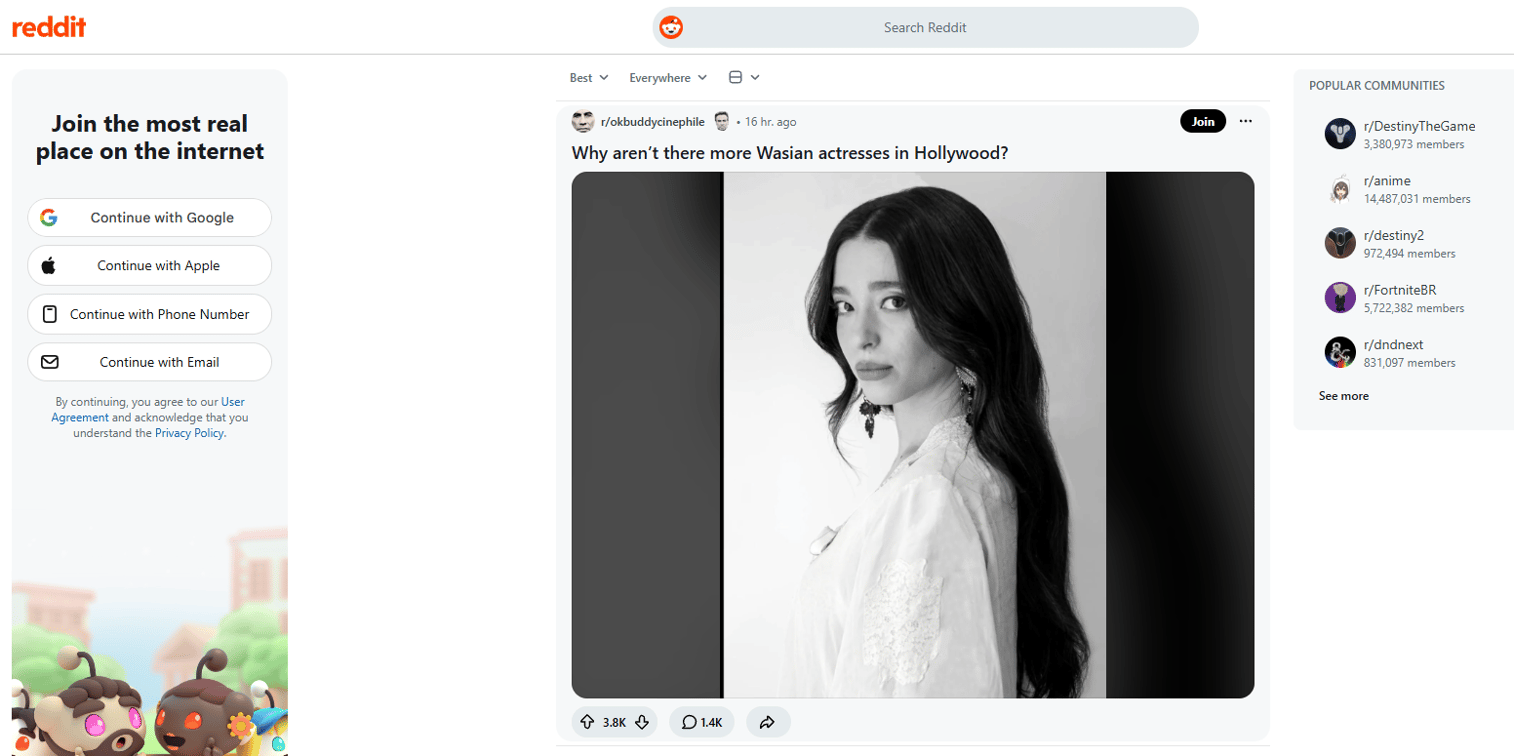
Reddit is a topic-based community and discussion platform organized around subreddits covering virtually every subject. For marketers, its primary value is intelligence: Understanding how buyers describe their problems, what language they use, which competitors they mention, and what objections appear before a purchase. Reddit Ads let brands place content around specific subreddits and interest groups. AMAs (Ask Me Anything sessions) give brands a format for direct community engagement when executed with genuine substance. Brands that contribute useful content earn credibility; low-effort promotion gets flagged or downvoted quickly. See also: social media analytics tools for tracking Reddit-sourced conversation signals.
Best for: Community research, niche audience insight, product feedback, category monitoring, and high-intent discussion.
Key features
- Subreddits organized by topic and interest
- Upvote and downvote content ranking
- AMAs for structured community engagement
- Reddit Ads with interest and community targeting
- Searchable discussion archive going back years
Why choose Reddit: Choose Reddit when you need to understand how people talk about a problem without marketing polish. It is the best listening channel for unfiltered buyer language.
Reddit pricing: Accounts are free. Paid advertising budgets are set by the advertiser.
G2 rating: 4.1/5
12. Threads
Threads is Meta's text-first social platform connected to Instagram accounts and the broader Meta ecosystem. It focuses on public conversation, replies, and real-time commentary in a format that resembles early Twitter. Brands use it for lightweight thought leadership, product updates, creator commentary, and community conversation. It is still maturing as a marketing channel in 2026, with advertising availability varying by region. Marketers should treat Threads as a low-friction brand presence channel rather than a primary demand engine.
Best for: Text-first brand presence, creator commentary, public conversation, and lightweight community engagement.
Key features
- Text posts with media attachments
- Meta account integration for existing followers
- Replies and reposts for conversation threading
- Public feeds with algorithmic distribution
- Cross-posting coordination with Instagram
Why choose Threads: Choose Threads when your audience already follows your brand across Meta properties. It adds a conversational layer without requiring a separate content production workflow.
Threads pricing: Accounts are free.
13. Twitch
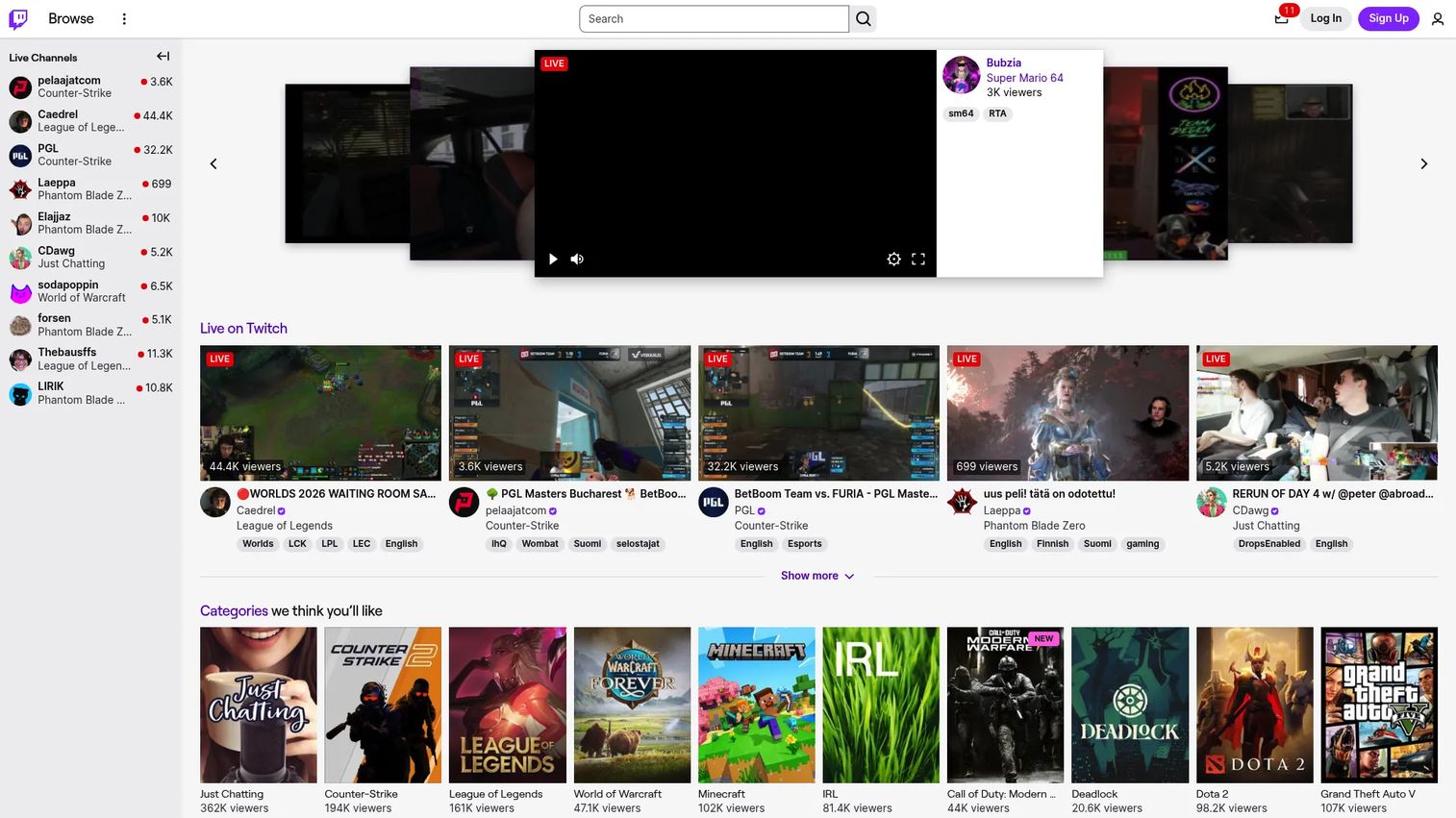
Twitch is a live streaming platform built around creator communities. Gaming is its historical core, but cooking, music, education, and IRL content have grown substantially. What distinguishes Twitch from other video platforms is its live, interactive format: Chat is simultaneous with the stream, creating an experience closer to a live event than a video upload. Channel subscriptions fund creators directly. Drops campaigns let brands reward viewers with in-game or product items for watching. For brands entering the gaming or creator economy, Twitch is worth understanding even if it does not fit every budget.
Best for: Live community engagement, creator sponsorships, gaming audiences, product launches, and event-style programming.
Key features
- Live streams with simultaneous chat interaction
- Channel subscriptions at Tier 1, Tier 2, and Tier 3
- Creator Dashboard for analytics and content management
- Drops campaigns for viewer reward programs
- Creator sponsorship and partnership infrastructure
Why choose Twitch: Choose Twitch when your campaign needs extended time with an engaged audience. It rewards brands that understand creator trust and live participation rather than passive impression delivery.
Twitch pricing: Channels are free to create. Tier 1 channel subscriptions start at $5.99/month. Twitch Turbo costs $11.99/month. Advertising and creator sponsorship agreements vary by campaign.
G2 rating: 4.4/5
14. Discord
Discord is an owned community platform built around servers, channels, and member roles. Unlike feed-based platforms where content disappears quickly, Discord conversations persist in organized channels that members return to. Voice channels enable real-time audio. Text channels organize discussion by topic. Roles and permissions let community managers control access and create tiered member experiences. Gaming, developer tools, Web3, education, and creator communities use Discord extensively. It also serves as a customer community platform for SaaS products, especially those with technical or power-user audiences. Pair with community management software for larger operations.
Best for: Owned communities, member engagement, customer education, developer communities, and creator-led groups.
Key features
- Servers with persistent organized channels
- Member roles and permission controls
- Voice channels for real-time audio
- Community events and announcement channels
- Screen sharing and streaming within servers
Why choose Discord: Choose Discord when ongoing participation matters more than content reach. It fits communities that need recurring discussion, member identity, and real-time interaction rather than broadcast content.
Discord pricing: Servers are free. Nitro Basic costs $2.99/month. Nitro costs $9.99/month and adds additional features including larger file uploads and server boosts.
15. Medium
Medium is a publishing platform for essays, thought leadership, founder perspectives, and educational content. Its Partner Program compensates writers based on member reading time, creating a built-in incentive for quality content. Publications on Medium aggregate content around themes and build their own followings. For teams without a mature blog infrastructure, Medium offers immediate distribution to readers already browsing by topic. For established content programs, it works as a syndication channel that extends reach beyond the owned blog. It integrates naturally into a broader content marketing workflow.
Best for: Long-form essays, founder thought leadership, expert educational content, and early publishing tests.
Key features
- Article editor with formatting and media support
- Publications for aggregating content by theme
- Follower network and topic-based discovery
- Partner Program for writer monetization
- Audio narration and offline reading for members
Why choose Medium: Choose Medium when the idea needs depth and distribution beyond your owned audience. It works for clear opinions, frameworks, and expert commentary that earns attention through substance.
Medium pricing: Publishing is free. Medium Member costs $5/month or $50/year. Friend of Medium costs $15/month or $150/year.
G2 rating: 3.8/5
Considerations when choosing digital media platforms
Audience fit before platform size
A smaller platform with a concentrated buyer audience will often outperform a giant platform with diffuse attention. Identify where your specific buyers spend time and engage with content related to your category. Use audience intelligence platforms or survey existing customers before committing budget to a channel based on raw user counts.
Content format and production cost
Each platform has a native content format that performs better than repurposed content from elsewhere. TikTok rewards native vertical video with platform-specific sounds. LinkedIn rewards text-heavy posts and professional context. YouTube requires genuine production investment. Audit your team's capacity to produce platform-native content before selecting channels. Spreading too thin across five formats produces mediocre results on all of them.
Measurement and attribution
Address attribution directly before scaling any channel. Set up UTM parameters on every link, create dedicated landing pages for each platform campaign, and establish baseline referral traffic metrics. Understand which part of the funnel each platform influences. Some channels drive first touch and will never show last-click credit in your CRM. Build your reporting framework to capture assisted pipeline, not just direct conversions. Social media analytics tools and marketing analytics software are worth evaluating alongside any platform decision.
Organic reach versus paid control
Organic reach on most social platforms is volatile and generally declining for brand pages. Treat organic as a testing environment and audience-building channel, not a reliable distribution mechanism. Paid advertising adds control but costs rise quickly without strong creative performance and a clear conversion path. Test creative formats organically before scaling with paid spend.
Brand safety and moderation
Each platform has different moderation norms, comment quality, and privacy expectations. Reddit communities self-moderate aggressively and will reject promotional content without community value. Discord servers require active management to prevent quality decay. Consider regional regulations, data privacy requirements, and content moderation overhead before adding a new platform to your mix.
Conclusion
The question is not which platforms are biggest. The question is which two to four platforms give your team the best shot at measurable results with the content you can actually produce consistently.
For broad consumer reach, Facebook and YouTube remain the defaults. For visual commerce, Instagram and Pinterest stand out. For B2B pipeline and professional credibility, LinkedIn is the clearest choice. For community insight that improves messaging, Reddit and Discord deserve time. For direct customer conversations, WhatsApp or WeChat depending on your geography.
Start by picking one primary reach channel and one conversion or community channel. Establish baseline metrics before expanding. Attribution will be imperfect, but it gets better with UTM discipline, dedicated landing pages, and CRM campaign tracking.
If your digital media strategy sends buyers to landing pages or product pages, make the destination worth the click. Use Guideflow to create interactive demos that let prospects explore your product before they book a call, turning paid and organic traffic into qualified engagement rather than passive pageviews.
Start your journey with Guideflow today!
FAQs
Digital media platforms are online channels where people and organizations create, distribute, discover, discuss, or monetize digital content. The category includes social networks, video platforms, messaging apps, community forums, live streaming services, and publishing destinations. Social media platforms are one subset of the broader digital media platform category.
Social media platforms are digital media platforms focused specifically on social networking, content sharing, and community interaction. Digital media platforms also include video streaming services, messaging apps, publishing tools, live streaming platforms, and social commerce surfaces that may not center on social connection. YouTube, WhatsApp, Discord, and Medium are digital media platforms that do not fit cleanly into the social media category.
The best platform depends on your audience and objective. LinkedIn is the clearest choice for B2B demand generation and professional targeting. Instagram and TikTok work well for visual commerce and consumer product awareness. YouTube suits brands investing in educational content and long-term search discovery. WhatsApp handles direct customer communication in markets where it dominates messaging.
LinkedIn leads for B2B because of its firmographic targeting and lead gen form capabilities. YouTube builds long-term visibility through educational content that compounds over time. X (Twitter) works for category commentary and PR when your audience follows industry conversations. Reddit offers unfiltered research into how buyers describe their problems. Medium is worth considering for expert essays and thought leadership that earns organic readership.
Instagram, TikTok, and Pinterest have the strongest native commerce capabilities including product catalogs, shopping ads, and in-feed checkout paths. Facebook supports retargeting and marketplace visibility for broader consumer reach. WhatsApp handles post-click conversations and order updates in markets where it is the dominant messaging channel. WeChat integrates the full commerce path for China-market sellers.
Focus on two to four platforms. Choose one primary reach channel that fits your content format and audience, one conversion or community channel tied to a measurable goal, and one owned destination for tracking. Spreading across six or more platforms with a small team produces weak results on all of them. Consolidate, measure, and expand only when one channel is producing consistent returns.
Most platforms allow free account creation. Costs come from paid advertising, creator partnerships, commerce transaction infrastructure, premium subscriptions, and the time required to produce and manage content at platform-native quality. WhatsApp Business Platform and WeChat business tools add usage-based fees. LinkedIn's paid plans add prospecting and outreach capabilities beyond the free tier.
Start with reach, engagement quality, and referral traffic from UTM-tagged links. Connect traffic to conversion rate and pipeline influence using CRM campaign tracking and dedicated landing pages. Track CAC and cost-per-click for paid channels. For community platforms, measure conversation volume and sentiment rather than direct attribution. Platform-native analytics provide engagement data, but the most defensible reporting ties platform activity to pipeline and revenue in your CRM.