Media buying used to mean picking a channel. Now growth teams are managing CTV, display, native, retail media, and first-party data strategy inside the same quarterly plan, while CPMs climb and attribution arguments multiply.
The category holding a lot of that complexity together is the demand side platform (DSP): Software that lets you buy digital ad inventory programmatically across publishers, channels, and exchanges from a single buying interface. According to Grand View Research (2026), demand-side platforms accounted for over 40% of global programmatic advertising platform market revenue in 2025, which was valued at $12.5 billion. That share reflects how central DSPs have become to performance marketing stacks.
The challenge is that "DSP" now covers everything from self-serve platforms built for agencies to enterprise systems requiring dedicated media buyers and six-figure minimum spends. Picking the wrong one means paying for capability you can't operate, or operating at a scale the platform wasn't built for.
This guide helps you sort it out.
What's inside
This guide compares 15 demand side platform tools for 2026. Selection criteria cover inventory access, audience targeting depth, campaign optimization, measurement quality, pricing transparency, and operating model fit. It's written for growth marketers, performance marketers, media buyers, and agencies building or refining a programmatic stack.
- Who it's for: In-house growth teams, demand gen managers, media buyers, and agency practitioners
- How tools were chosen: Inventory breadth, targeting capability, measurement quality, and accessible pricing information
- What you'll get: A ranked comparison table, per-tool breakdowns with current G2 ratings, a buyer checklist, and FAQs
TL;DR
- Best overall enterprise DSP: The Trade Desk for omnichannel open-internet buying, CTV, identity, and Koa/Kokai AI optimization
- Best for Google-native teams: Google DV360 for YouTube inventory, Google Marketing Platform workflows, and Floodlight measurement
- Best for commerce and retail signals: Amazon DSP for Amazon shopper audiences and on-and-off-Amazon programmatic reach
- Best for agencies and mid-market teams: StackAdapt for accessible self-service workflows, strong support, and a 4.7/5 G2 rating
- Best for local and multi-location campaigns: Simpli.fi for geo-fencing, address-based targeting, and localized programmatic reporting
What is a demand side platform?
A demand side platform is advertising software that lets advertisers buy digital ad inventory programmatically across publishers, ad exchanges, and channels from one buying interface.
DSPs automate media buying using audience data, bidding rules, budgets, and campaign goals. They connect to ad exchanges, supply-side platforms (SSPs), data providers, and measurement systems. Depending on the platform, a DSP can buy display, video, native, audio, mobile, connected TV (CTV), digital out-of-home (DOOH), and retail media inventory.
The distinction from ad networks matters: Ad networks typically package inventory and sell it at a margin, while DSPs give buyers direct control over bids, audience targeting, inventory sources, and optimization parameters.
Key features to look for
- Real-time bidding (RTB) and campaign activation
- Audience targeting: First-party data, third-party segments, contextual, and lookalike
- First-party data onboarding and CRM integration
- Inventory access: Open exchange, private marketplace (PMP), and direct deals
- Creative format support: Display, video, native, audio, CTV, DOOH
- Frequency capping and brand safety controls
- Bid optimization: Manual, rules-based, and AI-assisted
- Attribution, measurement, and reporting
- Identity and privacy tools for cookieless environments
- Self-service, managed service, or hybrid operating models
DSP buying methods to understand
- Open exchange: Real-time bidding on publicly available inventory across exchanges
- Private marketplace (PMP): Invitation-only auctions with preferred publishers
- Preferred deals: Fixed-price agreements with specific publishers, outside auction
- Programmatic guaranteed: Reserved inventory at a negotiated rate, delivered programmatically
- Direct insertion order: Manual campaign booking with a publisher, often outside the DSP auction layer
When to use a demand side platform
Centralize media buying across channels
If your team manages display in one tool, CTV in another, and native in a third, reporting is fragmented and audience frequency is impossible to control. A DSP consolidates those buying decisions so you can cap exposure, measure attribution, and optimize spend from a single dashboard. The consolidation argument is often the one that gets budget approved.
Scale programmatic campaigns without losing control
As budgets grow, manually placed campaigns stop scaling. DSPs let you set rules, bid floors, pacing logic, and brand safety controls that run continuously. You can access broader inventory at volume while maintaining guardrails around where your ads appear and how often.
Use first-party data for better targeting
Privacy changes have reduced the reliability of third-party cookies across browsers. Teams with CRM data, site visitor lists, or customer match files can onboard that data into a DSP to target owned audiences across programmatic inventory. The business case is simple: First-party signals outperform modeled third-party segments on conversion quality, and most CFOs will accept that argument.
Demand side platform tools comparison
DSP pricing varies significantly by media spend, service level, seat access, data usage, and contract terms. Most enterprise platforms work through sales negotiations or custom agreements rather than published tier prices. Where a platform publishes plan names or minimums, those figures are noted below.
| # | Product | Best for | Key differentiator | Pricing | G2 rating |
|---|---|---|---|---|---|
| 1 | The Trade Desk | Enterprise omnichannel buying | Open-internet DSP with Koa/Kokai AI and UID 2.0 | Custom pricing | 4.4/5 |
| 2 | Google DV360 | Google-native programmatic teams | YouTube, GMP integration, Floodlight measurement | Contact sales | N/A |
| 3 | Amazon DSP | Commerce and retail media | Amazon shopper audiences, managed service from $50K spend | From $50K managed | 4.2/5 |
| 4 | StackAdapt | Agencies and mid-market teams | Accessible multi-channel DSP with strong support | Custom pricing | 4.7/5 |
| 5 | Quantcast | Audience modeling and prospecting | AI-driven audience discovery with no campaign minimum | Custom pricing | 4.2/5 |
| 6 | Viant | People-based and CTV campaigns | Household-level identity graph with ViantAI | Custom pricing | 4.2/5 |
| 7 | Simpli.fi | Local and multi-location advertisers | Geo-fencing, address targeting, localized reporting | Custom pricing | 4.5/5 |
| 8 | Adform | European and global programmatic | Integrated DSP, DMP, ad server, and ID Fusion | Custom pricing | 4.3/5 |
| 9 | Equativ | Curated supply and premium buyers | Buyer-seller platform with direct supply access | Custom pricing | 4.0/5 |
| 10 | Infillion | Attention and location-based media | Composable API-first DSP with TrueX attention formats | Custom pricing | 3.9/5 |
| 11 | Nexxen | Video, CTV, and cross-screen | Unified DSP/SSP with proprietary ACR streaming data | Custom pricing | 3.8/5 |
| 12 | Yahoo! Advertising | Identity and native programmatic | Yahoo identity data with DSP buying tools | Custom pricing | 3.6/5 |
| 13 | Amobee | Historical reference (now Nexxen) | Rebranded into Nexxen; research Nexxen for current access | Custom pricing | 3.8/5 |
| 14 | Tremor International | Historical reference (now Nexxen) | Homepage redirects to Nexxen; verify current access | Custom pricing | N/A |
| 15 | MediaMath | Programmatic research and legacy context | API-first DSP now accessible via Infillion | Custom pricing | 3.9/5 |
Best 15 demand side platform tools for 2026
1. The Trade Desk
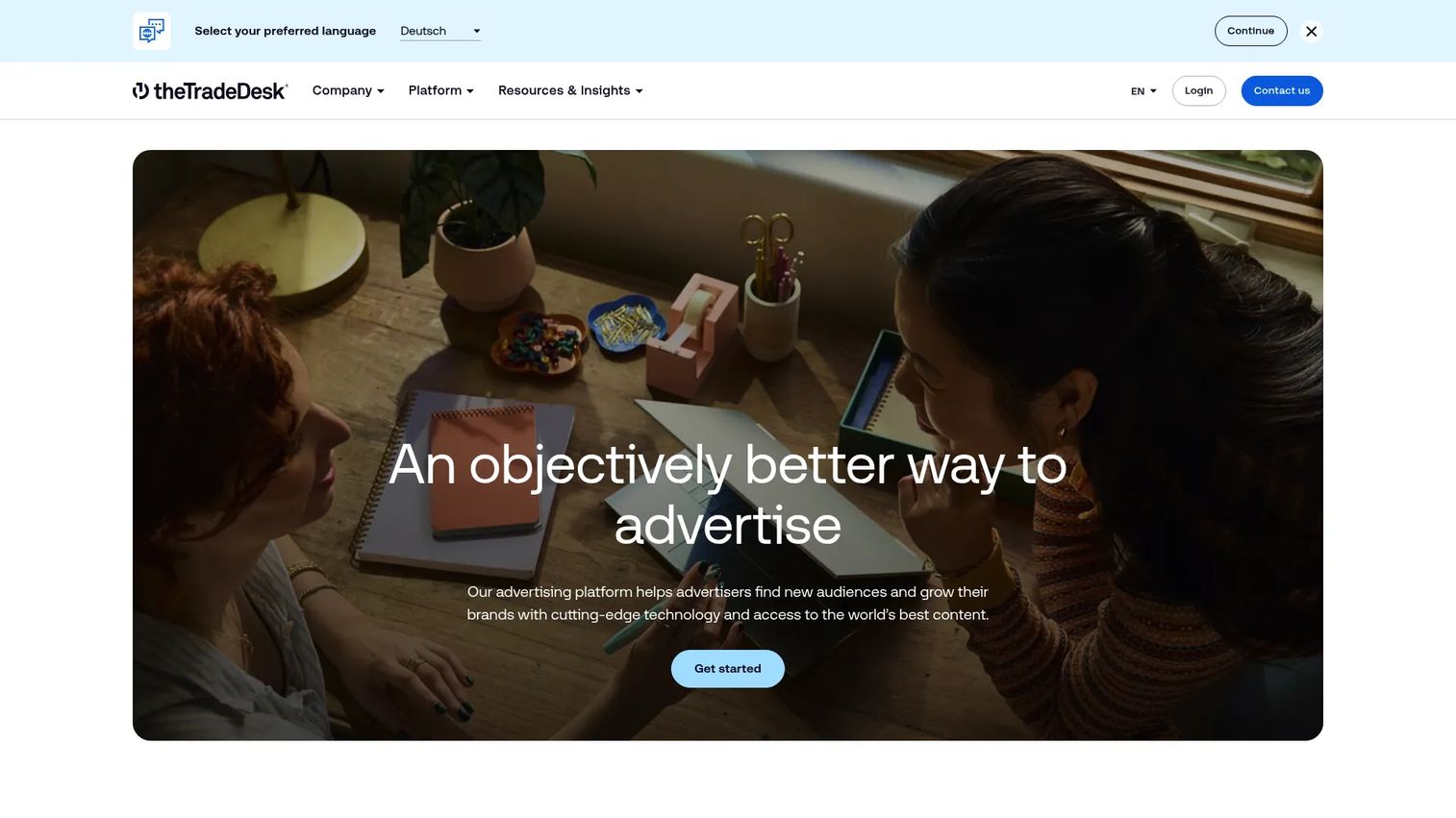
The Trade Desk is an independent, omnichannel demand-side platform built for agencies and enterprise advertisers running sophisticated programmatic campaigns at scale. It provides access to open-internet inventory across audio, CTV, DOOH, mobile, display, native, and video. The platform's AI tools, Koa and Kokai, power optimization and campaign assistance, and Unified ID 2.0 (UID 2.0) is The Trade Desk's open-source approach to cookieless identity.
Best for: Agencies and large brands running high-budget, multi-channel campaigns across the open internet.
Key features
- Omnichannel buying: Audio, CTV, DOOH, display, native, mobile, video
- AI optimization and assistance through Koa and Kokai
- Identity and privacy tools including Unified ID 2.0
- Audience targeting, campaign activation, and measurement
- Brand safety and fraud prevention controls
Why choose The Trade Desk: The Trade Desk is the strongest fit for teams that need the broadest open-internet reach combined with advanced optimization. Smaller teams without dedicated media buyers or substantial programmatic budgets may find the operating complexity outweighs the benefit.
The Trade Desk pricing: Pricing is handled through custom commercial agreements. Contact The Trade Desk directly for platform terms.
G2 rating: 4.4/5
2. Google DV360
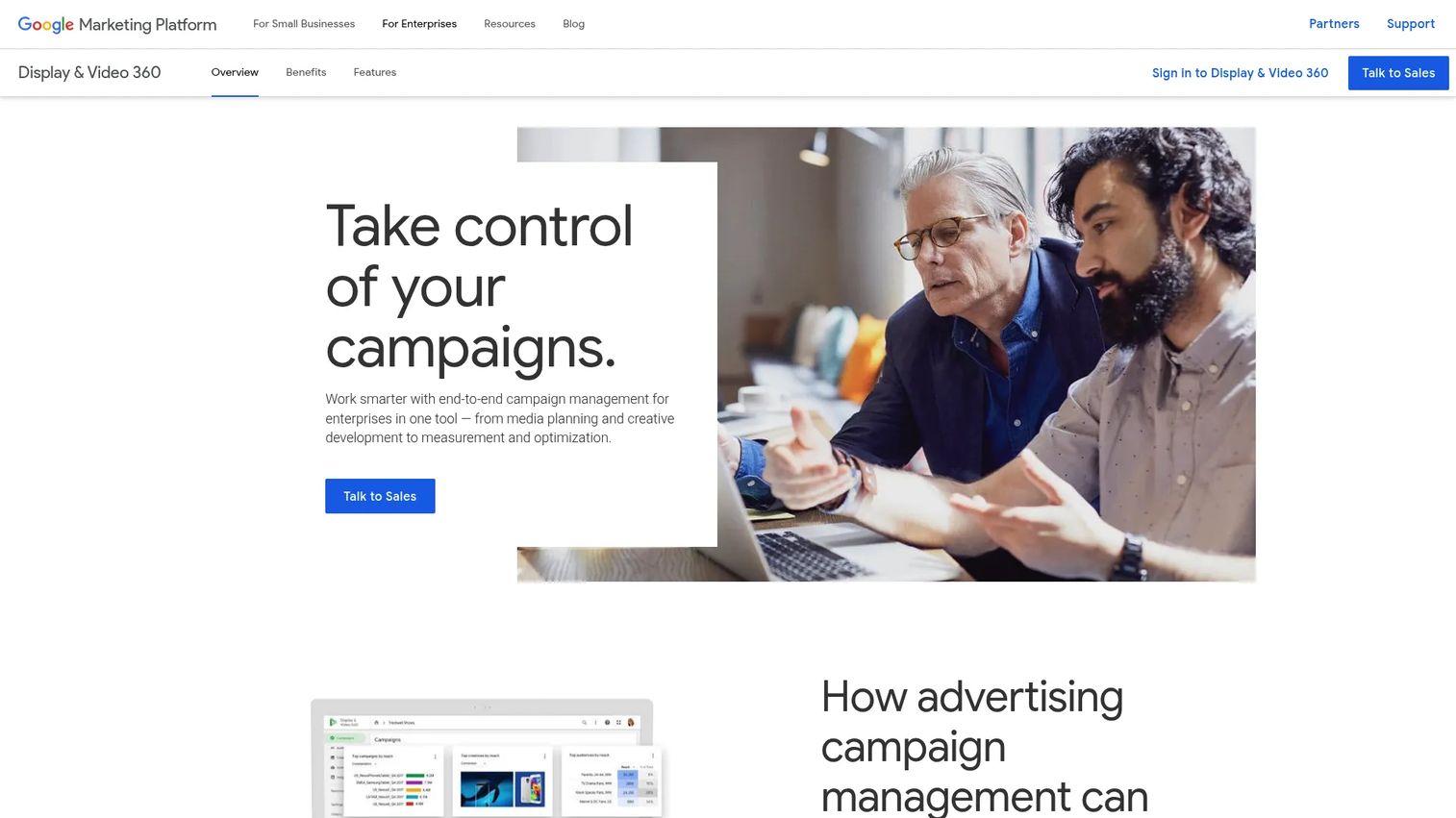
Google DV360 (Display and Video 360) is Google's enterprise DSP, sitting inside the Google Marketing Platform. It gives teams end-to-end campaign management across media planning, creative, measurement, and optimization. The primary advantage for Google-invested teams is deep integration with Analytics 360, Campaign Manager 360, YouTube, and Search Ads 360, with Floodlight as the measurement backbone.
Best for: Enterprise advertisers already running on Google Analytics, Campaign Manager, and YouTube who want programmatic buying inside that ecosystem.
Key features
- YouTube and Google inventory access
- Google Marketing Platform integration (Analytics 360, CM360, SA360)
- Machine-learning-powered bidding and optimization
- Cross-team collaboration across creative, analytics, and media
- Programmatic guaranteed and private marketplace deals
Why choose Google DV360: Teams whose measurement strategy runs through Floodlight get material advantages from keeping buying inside the Google Marketing Platform. Teams that run primarily outside Google's ecosystem may find other DSPs offer more transparent pricing and less setup friction.
Google DV360 pricing: Access is available through Google account teams or authorized resellers. Contact Google for platform access and commercial terms.
G2 rating: No current standalone G2 rating verified at the time this article was published.
3. Amazon DSP
Amazon DSP is Amazon Ads' programmatic advertising product, built around Amazon's shopper audiences and inventory. It lets advertisers run display, video, audio, and streaming TV ads across Amazon-owned properties and third-party publishers. Access to Amazon's first-party purchase intent data is the core differentiator: No other DSP carries the same depth of retail conversion signals.
Best for: Retail brands, e-commerce advertisers, and marketplace sellers who need shopper audience targeting across and beyond Amazon inventory.
Key features
- Programmatic display, video, audio, and streaming TV
- Amazon shopper audience targeting and third-party audience integration
- On-Amazon inventory plus thousands of third-party sites and apps
- Retail media measurement and attribution
- Self-service and managed service access models
Why choose Amazon DSP: The purchase intent signals make Amazon DSP compelling for commerce-driven campaigns. Teams outside retail should compare it against broader open-internet DSPs where Amazon's audience advantage is less pronounced.
Amazon DSP pricing: Self-service is available with no management fee; costs vary by format and placement. Managed service typically requires a $50,000 USD minimum media spend.
G2 rating: 4.2/5
4. StackAdapt
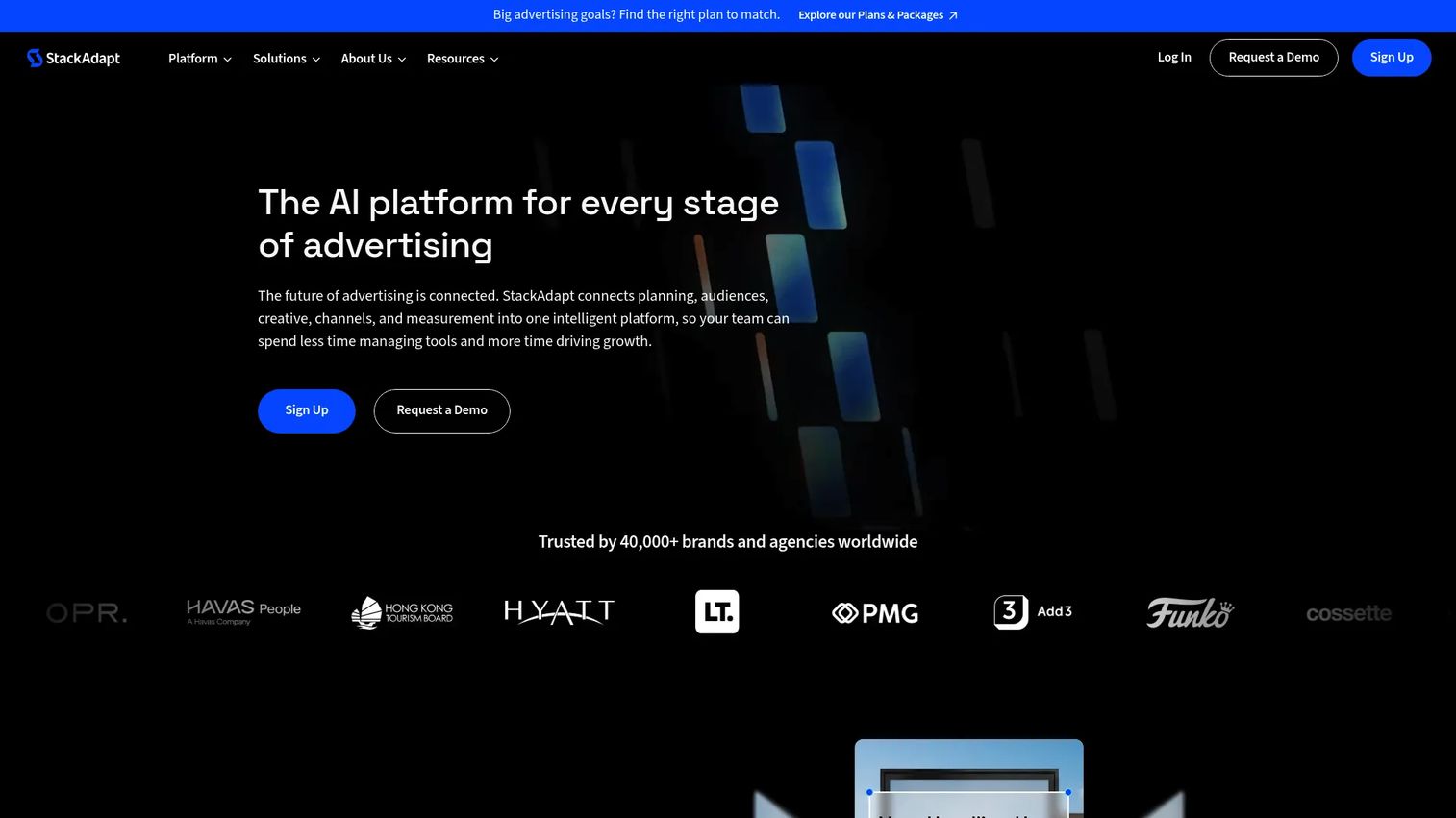
StackAdapt is a multi-channel programmatic platform used by agencies and in-house marketing teams. It covers CTV, video, display, native, audio, and DOOH in a single buying environment, with Ivy Studio handling AI-powered planning, forecasting, and optimization. StackAdapt's reputation among mid-market teams and agencies comes from its combination of accessible self-service workflows, strong customer support, and broad inventory access.
Best for: Mid-market growth marketers and agencies who want DSP capability without the operational overhead of the most enterprise-heavy platforms.
Key features
- Multi-channel buying: CTV, video, display, native, audio, DOOH
- AI planning, forecasting, and optimization through Ivy Studio
- First-party data activation and CRM integrations via Data Hub
- Real-time performance measurement and attribution reporting
- Self-service and managed support tiers
Why choose StackAdapt: StackAdapt earns its high G2 rating partly through support quality. Teams that want programmatic capability but lack a dedicated DSP operator find StackAdapt more approachable than enterprise platforms requiring heavy configuration.
StackAdapt pricing: StackAdapt offers five plan tiers (Basic, Grow, Scale, Accelerate, Enterprise) with payment terms ranging from credit card to custom contracts. Pricing figures are not listed publicly; contact StackAdapt for commercial terms.
G2 rating: 4.7/5
5. Quantcast
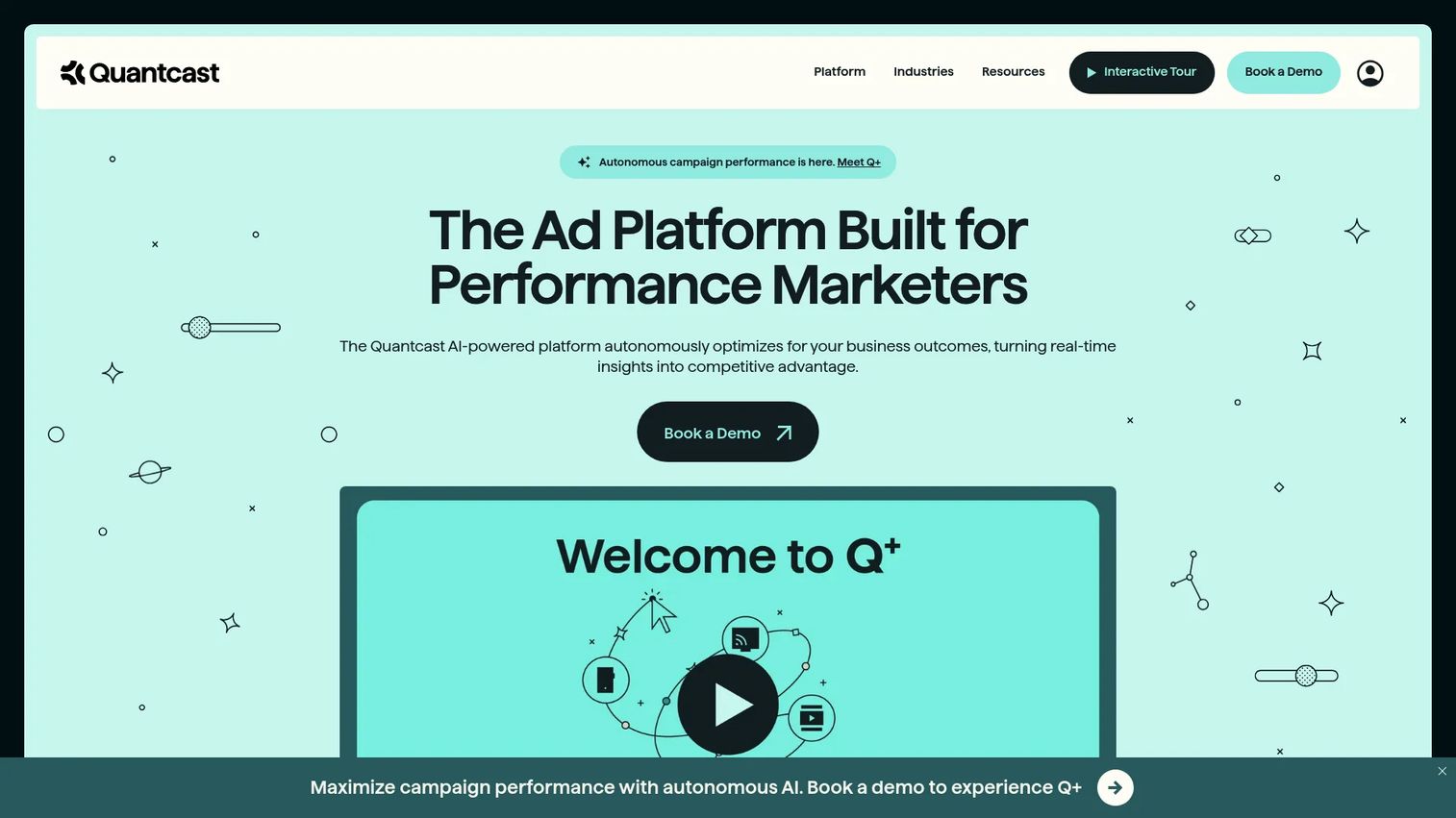
Quantcast is an AI-powered digital advertising platform built around audience discovery and programmatic activation. Its AI tools, including Q+, Agent Q, and Audience by Q, are designed to identify new demand beyond standard retargeting pools using large-scale, real-time web signals. Quantcast explicitly states there are no minimum budgets to use the platform, though some campaign configurations carry their own minimums.
Best for: Advertisers and agencies focused on audience prospecting, predictive modeling, and cookieless targeting for new customer acquisition.
Key features
- AI-driven predictive audience discovery and modeling
- Prospecting, retargeting, and contextual targeting
- Cross-channel campaign activation and optimization
- Custom attribution and reporting dashboards
- Cookieless audience tools for privacy-first targeting
Why choose Quantcast: The strongest argument for Quantcast is prospecting quality: If you're trying to find net-new demand and standard retargeting pools have plateaued, its audience modeling approach covers the gap better than general-purpose DSPs.
Quantcast pricing: Quantcast uses campaign-based pricing, including management, media, and non-media fees. Media costs use dynamic CPM pricing. No platform subscription fee is published; contact Quantcast for campaign-level terms.
G2 rating: 4.2/5
6. Viant
Viant is an omnichannel demand-side platform with a people-based advertising focus, built around a household-level identity graph. ViantAI automates campaign planning, bidding, measurement, and optimization. The platform covers display, video, mobile, audio, DOOH, and CTV, with advanced measurement options including Conversion Lift, Foot Traffic attribution, Multi-Touch Attribution, and cross-channel reporting.
Best for: Advertisers focused on household-level targeting, CTV campaigns, and measurement that goes beyond last-click attribution.
Key features
- Household-level identity graph and audience segmentation
- Omnichannel buying across CTV, video, display, mobile, audio, DOOH
- ViantAI for planning, bidding, measurement, and optimization
- Cookieless reporting: Conversion Lift, Foot Traffic, Multi-Touch Attribution
- Self-service and managed DSP access
Why choose Viant: Viant's identity graph and cookieless measurement capabilities make it a considered choice for teams running TV-led programmatic campaigns where household-level planning is more accurate than cookie-based models.
Viant pricing: Viant does not publish plan prices. Both self-service and managed options are available; contact Viant for commercial details.
G2 rating: 4.2/5
7. Simpli.fi
Simpli.fi is a real-world media platform built around location intelligence, active intent signals, and programmatic activation. Its geo-fencing, address-based targeting, and localized reporting capabilities make it a practical choice for multi-location businesses, local advertisers, franchises, and political campaigns. AI-powered planning, optimization, and creative generation are built into the platform across its Autopilot AI, Pro Self-Service, and Managed Service tiers.
Best for: Local advertisers, agencies managing multi-location clients, franchises, and political campaigns requiring precise geographic targeting.
Key features
- Geo-fencing and address-based audience targeting
- Omnichannel activation: CTV, paid search, paid social, display, video, audio, DOOH
- AI planning, optimization, and creative generation via Autopilot AI
- Localized campaign reporting and dashboards
- Keyword and recency audience targeting
Why choose Simpli.fi: If location precision and per-location reporting matter more than global media orchestration, Simpli.fi gives local-first buyers a level of geo control that broader enterprise DSPs don't prioritize. The Autopilot AI tier runs on pay-as-you-go billing with no campaign minimum.
Simpli.fi pricing: Autopilot AI is pay-as-you-go with no campaign minimum. Pro Self-Service and Managed Service are contact-sales. No published numeric prices were displayed on the Simpli.fi website.
G2 rating: 4.5/5
8. Adform
Adform is an integrated advertising technology platform combining DSP, ad server, and DMP capabilities in a single environment. Its ID Fusion identity tool supports addressable advertising in privacy-compliant environments. Adform is widely used by European advertisers and global agencies that need a single platform covering media buying, data management, ad serving, and identity without stitching together separate tools.
Best for: European advertisers, global agencies, and programmatic teams needing DSP, data management, and ad serving under one commercial agreement.
Key features
- Integrated DSP, ad server, and DMP (FLOW platform)
- Omnichannel media buying: Display, video, CTV, mobile, audio, DOOH, retail media
- ID Fusion for identity and cookieless audience management
- Audience management, targeting, and activation
- Campaign measurement, attribution, and reporting
Why choose Adform: The integrated stack reduces vendor fragmentation for teams managing buying, data, and serving separately. European market coverage and GDPR-oriented privacy tooling are practical advantages for advertisers operating under that regulatory context.
Adform pricing: Adform directs prospective customers to its sales team for pricing. Contact Adform for commercial terms.
G2 rating: 4.3/5
9. Equativ
Equativ is an independent ad technology platform serving both advertisers and publishers, with programmatic buying, CTV ad serving, retail media, and publisher monetization tools. The buyer-side proposition centers on curated marketplace access, creative enhancements, and direct supply relationships with premium publishers. Equativ's independence from large platform operators is positioned as a structural advantage for buyers concerned about supply-path conflicts.
Best for: Advertisers and agencies seeking premium supply access, curated deals, and an independent ad-tech stack spanning buying and publishing capabilities.
Key features
- Programmatic buying and campaign optimization
- Curated marketplace access and direct supply relationships
- CTV ad serving and video campaign support
- Creative ad enhancements for CTV and display
- Retail media and publisher monetization tools
Why choose Equativ: Buyers who prioritize supply quality and want direct relationships with premium inventory sources benefit from Equativ's curated marketplace approach. Teams that need a full self-serve DSP with broad reach should also evaluate larger open-internet platforms.
Equativ pricing: Pricing is not published. Plans range from Basic to Professional to Enterprise, all contact-sales. Reach out to Equativ for commercial terms.
G2 rating: 4.0/5
10. Infillion
Infillion is an AI-powered, composable advertising platform with an API-first DSP at its core. Campaign activation runs across video, display, audio, and CTV, with transparent AI optimization, a proprietary identity graph, and location intelligence built in. Infillion's TrueX format guarantees attention-based ad engagement, distinguishing it from platforms optimizing for impressions or click-through rates.
Best for: Brands and agencies seeking customizable programmatic infrastructure, guaranteed attention-based formats, and API-level control over campaign architecture.
Key features
- API-first composable DSP with direct UI access
- Campaign activation: Video, display, audio, CTV
- TrueX guaranteed-attention ad formats
- Proprietary identity graph and location intelligence
- Transparent AI optimization with dynamic budget allocation
Why choose Infillion: The attention-based TrueX format is worth evaluating when CPM-based buying is producing low engagement despite acceptable costs. The API-first architecture suits teams that want to build custom campaign workflows rather than work within a single platform's fixed UI.
Infillion pricing: Infillion works through sales and demo requests. Contact Infillion for pricing details.
G2 rating: 3.9/5
11. Nexxen
Nexxen is an advertising technology platform combining DSP, SSP, data, AI, and media capabilities for full-funnel programmatic performance. Its unified demand-and-supply architecture gives buyers direct access to publisher inventory, reducing supply chain friction. Nexxen's proprietary automatic content recognition (ACR) and streaming data assets support cross-screen campaign planning that ties linear TV viewing to digital activation.
Best for: Video-first advertisers, CTV buyers, and agencies planning cross-screen campaigns that connect TV exposure to digital campaign delivery.
Key features
- Full-funnel DSP and SSP with direct publisher supply
- CTV, video, and cross-screen campaign activation
- Proprietary ACR and streaming data for audience planning
- Identity resolution and audience discovery
- Campaign planning, optimization, and measurement
Why choose Nexxen: The combined demand-and-supply stack provides clean supply path access for CTV and video, which matters when programmatic fees and auction inefficiencies compound at scale. Note that Amobee's advertising technology was rebranded into Nexxen, so teams researching Amobee should evaluate Nexxen as the current product.
Nexxen pricing: Contact Nexxen for commercial terms and access options.
G2 rating: 3.8/5
12. Yahoo! Advertising
Yahoo! Advertising provides DSP buying tools, identity data, native inventory, and omnichannel campaign capabilities built on Yahoo's owned properties and data assets. Yahoo's identity data and native ad inventory represent the clearest differentiation for teams that want programmatic buying tied to a known identity graph outside the Google or Amazon ecosystems.
Best for: Advertisers seeking identity-driven programmatic buying with access to Yahoo's owned inventory and native ad formats.
Key features
- Yahoo identity data for audience targeting
- Native ad inventory and display buying
- DSP campaign management and optimization
- Omnichannel campaign capabilities
- Audience insights and reporting
Why choose Yahoo! Advertising: Teams that want an identity-based programmatic alternative outside the dominant walled gardens have a credible option here. The G2 rating reflects mixed reviewer sentiment, so evaluate against recent reviews before committing budget.
Yahoo! Advertising pricing: Contact Yahoo! Advertising for pricing and access. No plan prices are available through official channels.
G2 rating: 3.6/5
13. Amobee
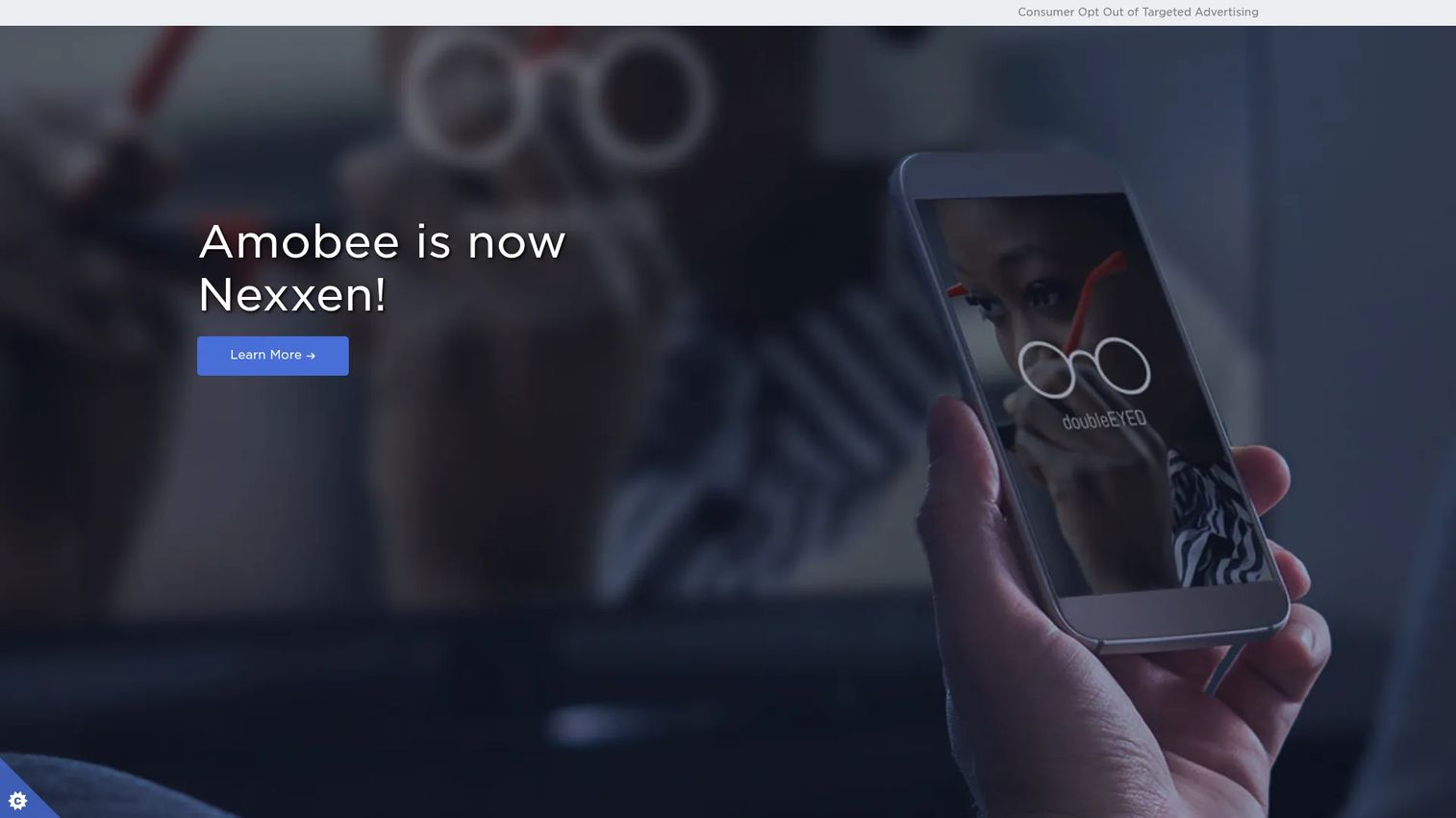
Amobee was a cross-channel programmatic advertising platform historically used for TV, digital, and audience-based campaign planning. The official Amobee homepage now states that Amobee is Nexxen. If you're researching Amobee as an active DSP buying option, the current commercial product is Nexxen (entry 11 above).
Best for: Marketers researching the historical context of cross-channel DSP development or verifying the current status of the Amobee platform.
Key features
- Cross-channel programmatic planning and activation (historical)
- Audience targeting: Demographics, purchase patterns, site visits, lifestyle
- CTV planning, activation, and optimization
- Campaign reporting and analytics
- Now operated under the Nexxen brand
Why choose Amobee: If your team evaluated Amobee previously and wants to understand the current product, contact Nexxen directly. The features and inventory capabilities now sit under that brand.
Amobee pricing: The Amobee platform has been rebranded as Nexxen. Contact Nexxen for commercial terms.
G2 rating: 3.8/5
14. Tremor International
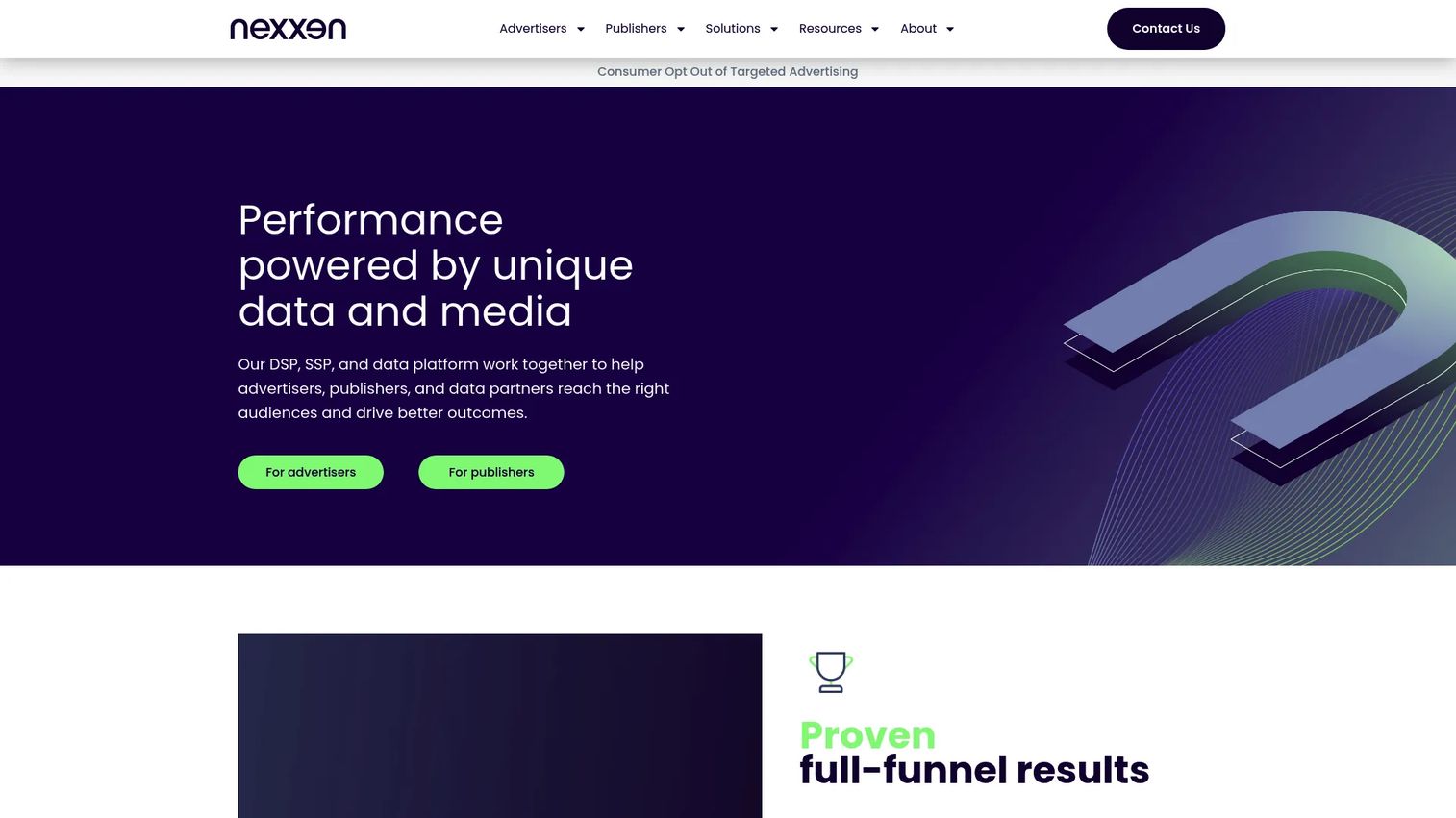
Tremor International was a video and CTV-focused ad technology company. Its official website currently redirects to Nexxen, reflecting the corporate and product rebrand. Teams researching Tremor International for programmatic video or CTV buying should review Nexxen as the operational successor.
Best for: Teams researching video-led programmatic history or verifying current platform access under the Tremor International name.
Key features
- Video advertising technology (historical)
- CTV and cross-screen campaign access
- Supply-side and demand-side platform capabilities
- Campaign planning and measurement
- Now operating under the Nexxen brand
Why choose Tremor International: For active campaigns, evaluate Nexxen. The Tremor International brand and homepage now redirect there.
Tremor International pricing: The product now operates as Nexxen. Contact Nexxen for commercial terms.
G2 rating: No current rating verified under the Tremor International brand.
15. MediaMath
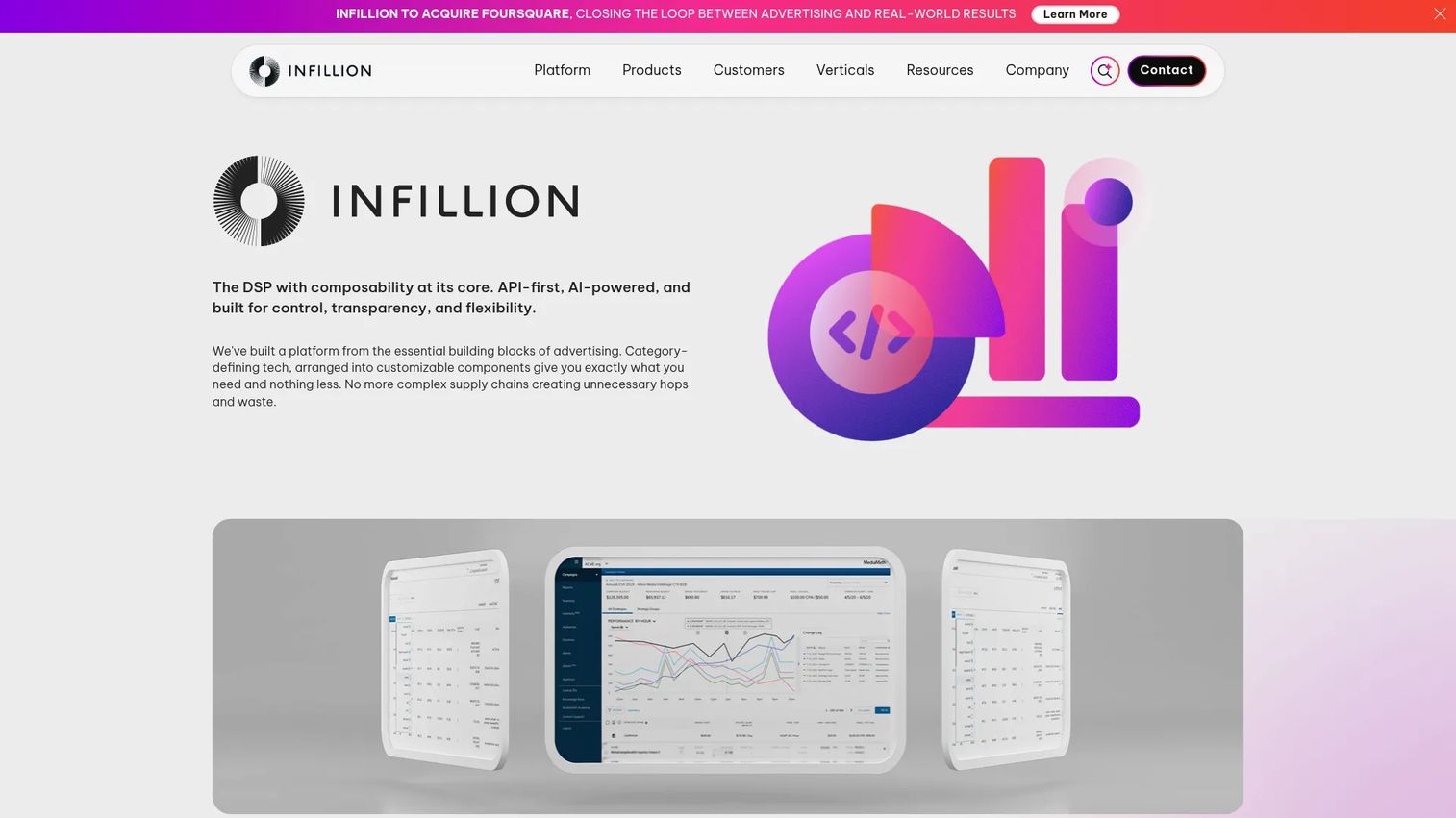
MediaMath was one of the earliest and most influential demand-side platforms in programmatic advertising history, known for its API-first architecture and API-level campaign management. The MediaMath homepage now redirects to Infillion's DSP offering. Teams researching MediaMath for active programmatic campaigns should evaluate Infillion as the current access point, where the API-first DSP lineage continues.
Best for: Marketers researching programmatic DSP history, legacy API-based infrastructure, or current platform availability via Infillion.
Key features
- API-first programmatic campaign management
- Creative management for component and video creatives
- PMP Direct and Exchange marketplace access
- Event-level log data and reporting
- Campaigns across video, display, audio, and CTV
Why choose MediaMath: If your team is evaluating an API-first DSP with deep campaign control, review Infillion's current offering where the MediaMath product line now lives. The G2 listing for MediaMath by Infillion maintains active reviews.
MediaMath pricing: Contact Infillion for current commercial terms. No separate pricing structure is available under the MediaMath brand.
G2 rating: 3.9/5
Considerations when choosing a demand side platform
Inventory access and channel fit
Ask which channels you need now and which become priorities in the next two quarters. A CTV-heavy team, a local multi-location agency, and an e-commerce performance team each need different supply paths. Confirming channel coverage against your actual media plan before signing prevents paying for inventory breadth you won't use.
Data, identity, and privacy strategy
Your DSP's usefulness depends on what data you can actually bring to it. Confirm first-party data onboarding options, identity resolution capabilities for cookieless environments, clean room support, and consent management. A platform that can't use your owned customer data safely will underperform relative to what the technology should deliver.
Reporting and attribution quality
Dashboards showing impressions and clicks are not sufficient for a team accountable to CAC, ROAS, and pipeline. Verify conversion tracking options, incrementality testing support, offline conversion import, and whether data can be exported into your attribution platform or best attribution software tools. What your CFO can believe depends on what you can actually connect to revenue.
Service model and team capacity
Self-service DSPs with powerful optimization features still require someone capable of operating them. A platform that looks good in a demo can burn budget quickly without a competent operator. Managed service adds fees but provides execution coverage for teams without in-house programmatic expertise. Hybrid models exist on most platforms; confirm support scope in the contract.
Pricing, fees, and minimum spend
DSP costs include media spend, platform fees, data fees, managed service fees, and sometimes creative fees and contract minimums. Model total cost across all those components before comparing platforms on headline price alone. A lower platform fee paired with a $50K monthly minimum spend may be more expensive at your budget than a higher-fee self-serve platform with no minimum.
Conclusion
The right demand side platform depends on your media mix, data assets, team capacity, and budget range.
Start your shortlist with The Trade Desk, Google DV360, and Amazon DSP if you're running at enterprise scale with dedicated media buyers. The Trade Desk wins on open-internet breadth and identity tools. Google DV360 makes sense when your measurement lives in Floodlight. Amazon DSP is the clear choice when purchase intent signals matter more than reach.
For mid-market teams and agencies, StackAdapt's combination of accessibility and support quality justifies its 4.7/5 G2 rating. Quantcast, Viant, and Simpli.fi are worth a direct comparison when your priority is audience modeling, household-level identity, or local programmatic precision.
Adform, Equativ, and Yahoo! Advertising suit specific contexts: European market coverage, curated premium supply, and identity-led native buying. Infillion is worth a look for attention-based formats and API-first flexibility.
For Nexxen, be aware that both Amobee and Tremor International now operate under that brand, which means evaluating one entry covers three historical names. MediaMath's API-first lineage continues through Infillion.
Build a shortlist of three platforms based on your channel priorities, data strategy, and what your team can actually operate. Most DSPs offer a demo or pilot; use that to test reporting quality and self-service usability before committing spend.
If your team sells software and your paid campaigns drive traffic to product pages, use interactive demos to help visitors understand the product before they book a call. Start your journey with Guideflow today!
FAQs
A demand side platform is advertising software that lets buyers purchase digital ad inventory programmatically across publishers, exchanges, and channels from one interface. DSPs automate media buying using audience data, bidding rules, budgets, and campaign goals, and connect to ad exchanges, SSPs, data providers, and measurement systems.
DSP stands for demand-side platform. It is used by advertisers and agencies to buy ad inventory programmatically across display, video, CTV, native, audio, and other digital channels. The "demand side" refers to the buyer's side of the programmatic transaction, as opposed to the supply side, which is the publisher.
A DSP helps advertisers buy media, while an SSP (supply-side platform) helps publishers sell inventory. Ad exchanges sit in between: Publishers connect their inventory through an SSP, buyers place bids through a DSP, and the exchange runs the auction that matches them. For a fuller comparison of the ad tech landscape, see our guide to ad network software.
Ad networks aggregate inventory from publishers and sell it at a margin, with less transparency over where ads appear and what bids are placed. DSPs give buyers direct access to exchanges and publishers, with control over bid prices, audience targeting, inventory filtering, and optimization parameters. The tradeoff is that DSPs require more operational skill to run well.
When a user loads a web page or app, an available ad impression is sent to an ad exchange. The DSP evaluates the impression against the campaign's audience rules, bid floors, and budget pacing, and submits a bid in milliseconds. The highest-qualifying bid wins, and the winning ad is served before the page finishes loading. The whole process typically takes under 100 milliseconds.
The best DSP for your team depends on channel mix, data capabilities, budget, and operating model. The Trade Desk suits enterprise teams running broad open-internet campaigns. StackAdapt is more accessible for mid-market teams and agencies. Amazon DSP wins for commerce-driven targeting. Simpli.fi leads for local and multi-location advertising. See the best display advertising software guide for context on adjacent buying tools.
Most DSPs price through media spend, platform fees, data fees, managed service fees, or minimum commitments rather than fixed monthly subscriptions. Amazon DSP's managed service requires a $50,000 USD minimum spend. Most enterprise DSPs work through custom commercial agreements. StackAdapt's Autopilot AI and Quantcast operate without published campaign minimums. Total cost depends on all fee components, not just the platform access fee.
Small teams often start with channel-native platforms like Google Ads, Meta Ads, or LinkedIn Campaigns because those are easier to operate without programmatic expertise. A DSP becomes useful when you need cross-channel frequency control, access to inventory outside social platforms, or first-party data activation at scale. For teams exploring broader digital marketing tools, the best mobile marketing software and best customer data platform guides cover adjacent categories worth evaluating alongside a DSP.
Programmatic advertising is the category: Automated, data-driven buying of digital ad inventory. A DSP is the software tool that executes programmatic buying. Programmatic also includes SSPs, ad exchanges, data management platforms, and measurement tools. The DSP is the buyer's interface into that ecosystem. See the best mobile attribution platforms guide for measurement tools that pair with DSP campaigns.