Your data is scattered across warehouses, SaaS apps, and spreadsheets. Segments don't match between tools. The activation number you reported last quarter relied on instrumentation nobody fully trusts. Now leadership wants to feed that same data into AI, and legal wants proof you can answer a deletion request in under 30 days.
This is the problem data governance tools solve. They give you a single map of what data you have, where it came from, who can touch it, and whether it meets compliance rules. Without that map, every segmentation decision, every onboarding ROI claim, and every AI model rests on data you can't defend.
The pressure is real and measured. Gartner has long estimated that poor data quality costs organizations an average of $12.9 million per year, a figure still cited across 2024 and 2025 governance research. The cost is not abstract. It shows up as wrong segments, stalled AI projects, and audit findings.
Most product and data teams accept they need governance software. The harder question is which platform fits their stack without burning engineering bandwidth on maintenance. A catalog built for a Hadoop shop is a poor fit for a modern Snowflake team. An enterprise master data platform is overkill for a 40-person SaaS company.
This guide ranks 13 data governance platforms by use case, integration fit, AI readiness, and verified pricing. The goal is a shortlist you can actually evaluate, not a generic feature dump.
What's inside
This guide is for product managers, data and analytics engineers, and governance or IT leaders evaluating data governance software. The angle is practical: which tool fits which stack, and what each one costs.
We selected and ranked platforms using four criteria:
- Category fit: genuine governance capability across catalog, lineage, master data management, privacy, or AI governance.
- Integration with your stack: how well it connects to warehouses, BI, transformation tools, and collaboration apps.
- AI readiness and automation: automated classification, lineage, and AI-assisted curation.
- Compliance and pricing transparency: access controls, audit trails, consent handling, plus verified G2 ratings and pricing where public.
Tools are ranked broadly by relevance to the keyword, leading with category leaders.
TL;DR
Short on time? Here are the decision shortcuts by scenario.
- Best for large regulated enterprises: Collibra, for a full governance operating model.
- Best for Microsoft and Azure stacks: Microsoft Purview, with native integration across M365 and Azure.
- Best for modern cloud data teams: Atlan, for active metadata and fast time-to-value.
- Best for enterprise master data management: SAP Master Data Governance.
- Best for AI governance: IBM watsonx.governance.
- Best free or open-source option: Apache Atlas.
- Best mid-market budget fit: OvalEdge.
Every data governance solution below serves a different stack and team size. Match the tool to your environment, not to the longest feature list.
What are data governance tools?
Data governance tools are software platforms that help organizations manage the availability, quality, security, and compliance of their data through cataloging, lineage tracking, policy enforcement, and access controls.
In practice, a data governance platform gives you one place to find data, understand where it came from, see who owns it, and enforce rules about how it gets used. That trusted foundation is what makes segmentation reliable and AI projects defensible.
Core capabilities of data governance software
Most data governance platforms share a common set of capabilities:
- Data cataloging: automated discovery and a searchable inventory of data assets.
- Lineage and metadata: tracing where data originates and how it flows downstream.
- Classification and curation: tagging sensitive data and adding business context.
- Policy enforcement: applying rules for usage, retention, and quality at scale.
- Role-based access: data access governance tools that control who sees what.
- Stewardship workflows: assigning owners and routing data issues for resolution.
- Compliance and audit: consent, retention, and audit trails for GDPR, CCPA, and more.
- AI-assisted automation: machine-suggested classification, lineage, and metadata enrichment.
- Integration: connectors into warehouses, BI, transformation tools, and collaboration apps.
These capabilities also overlap with information governance software, which extends governance to unstructured content and records.
Data governance tools vs. a data governance framework
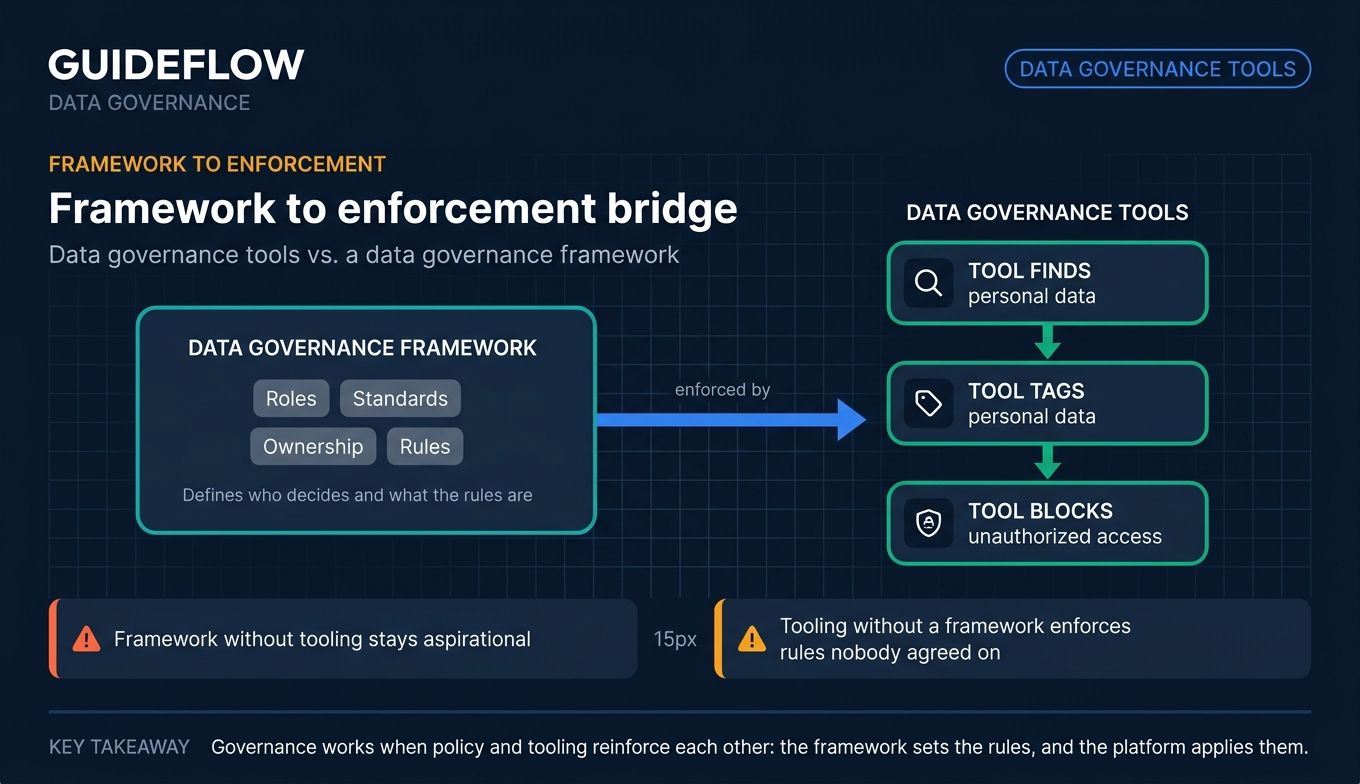
These two terms get confused often. A data governance framework is the policy: it defines roles, standards, ownership, and the rules your organization agrees to follow. It is a document and an operating model, not software.
Data governance tools execute and enforce that framework. The framework says "personal data must be classified and access-restricted." The tool actually finds the personal data, tags it, and blocks unauthorized access. You need both. A framework without tooling stays aspirational. Tooling without a framework enforces rules nobody agreed on.
When to use data governance tools
Not every team needs a full governance platform on day one. These three situations are the clearest triggers.
Establish trusted data for activation and retention decisions
When your segments don't match across tools, you can't trust activation or retention numbers. A governance platform gives you consistent definitions and lineage, so a "qualified user" means the same thing in your warehouse, your BI tool, and your product analytics. That trust is what lets you defend onboarding ROI when a finance team or board pushes back. The same clean instrumentation supports how product teams communicate value through interactive demos and other governed-data workflows. Teams looking to streamline activation can also explore the best user onboarding software to pair trusted data with strong activation flows.
Prepare your data stack for AI and analytics
AI models inherit the quality of the data behind them. Feeding an LLM or an ML pipeline ungoverned data produces outputs nobody can explain or audit. Lineage, classification, and quality controls give AI a trusted, traceable foundation. This is now a board-level driver. Fewer than a quarter of organizations report fully implemented AI governance frameworks, despite broad GenAI experimentation. If you're evaluating broader infrastructure, the best AI orchestration platforms pair well with governed data pipelines.
Meet privacy and compliance requirements at scale
GDPR, CCPA, and similar regulations require you to know where personal data lives, who can access it, and how long you keep it. Doing this manually breaks the moment your data estate grows. Governance tools automate data mapping, consent, retention, and audit readiness, so a deletion request or an audit does not trigger a fire drill.
Comparison table
The table below compares all 13 data governance platforms by intent, primary use case, verified pricing, and G2 rating. Use it to narrow your shortlist before reading the full sections. Pricing for most enterprise data governance tools is quote-based, so we note that clearly and surface public figures where they exist.
| # | Product | Intent | Key use case | Pricing | G2 rating |
|---|---|---|---|---|---|
| 1 | Collibra | Enterprise governance | Full governance operating model | Custom | 4.2/5 |
| 2 | Alation | Data intelligence + catalog | Catalog adoption and data products | Custom | 4.4/5 |
| 3 | Microsoft Purview | Microsoft/Azure governance | Governance across M365 and Azure | From $12.00/user/mo | 4.7/5 |
| 4 | Informatica CDGC | Enterprise metadata | Large-scale governance and quality | Custom (consumption) | 4.3/5 |
| 5 | Atlan | Modern data workspace | Active metadata for cloud stacks | Custom | 4.5/5 |
| 6 | SAP Master Data Governance | Enterprise MDM | Master data across SAP estates | Custom (usage-based) | 4.4/5 |
| 7 | IBM watsonx.governance | AI governance | Governing AI and ML models | Free tier; usage-based | 4.3/5 |
| 8 | Databricks (Unity Catalog) | Lakehouse governance | Governance across the lakehouse | Free tier; pay-as-you-go | 4.6/5 |
| 9 | MineOS | Privacy automation | Privacy ops and consent | Custom | 4.8/5 |
| 10 | BigID | Discovery + security/privacy | Sensitive data discovery | Custom | 4.8/5 |
| 11 | Apache Atlas | Open-source metadata | Metadata for Hadoop/Spark | Free (open source) | 4.5/5 |
| 12 | data.world | Cloud catalog + knowledge graph | Data democratization | Custom | 4.2/5 |
| 13 | OvalEdge | Mid-market governance | Full governance on a budget | Custom | 4.3/5 |
The 13 best data governance tools for 2026
Each tool below includes an overview, who it fits best, key strengths, the case for choosing it, and verified pricing. Read these to confirm the shortlist you built from the table.
1. Collibra
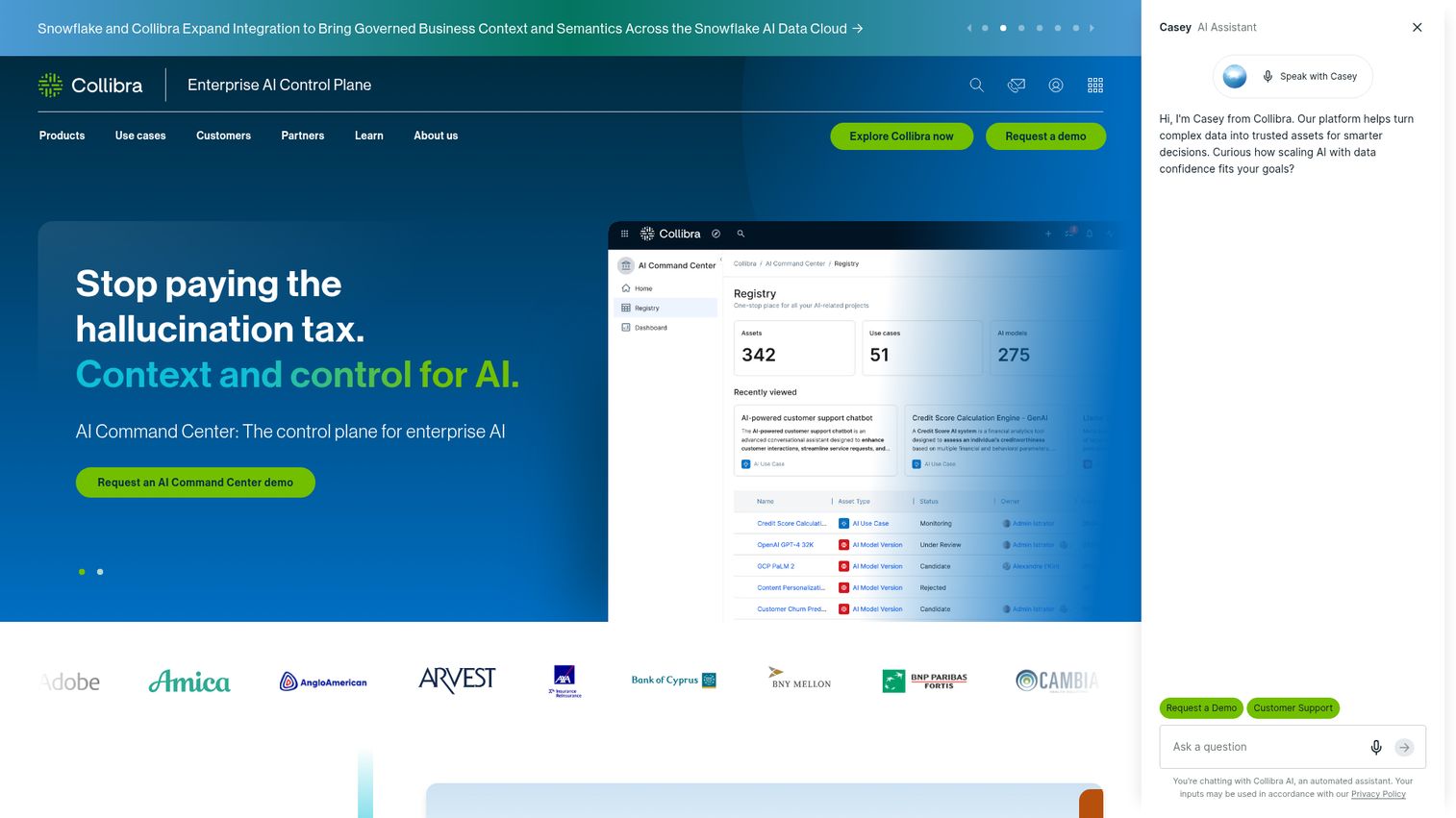
Collibra is a unified data and AI governance platform built for trusted, AI-ready data across structured and unstructured sources. It combines governance workflows, a data catalog, and AI governance in one operating model. Large regulated organizations use it to run governance as a company-wide discipline, not a side project.
Best for: Large regulated enterprises that need a full governance operating model with compliance controls.
Key strengths
- Governance workflows and policies: Centralized policy management with stewardship roles and accountability built in.
- Data catalog: Automated discovery, classification, and profiling with over 100 native integrations.
- AI governance: Cataloging, assessing, and monitoring AI use cases alongside your data assets.
Why choose Collibra: Collibra is widely recognized as a leading enterprise data governance and catalog platform. It fits when governance spans many teams, regulators, and data domains. If you need a single source of truth with business glossaries and policy enforcement at enterprise scale, it earns its place. Smaller teams may find it heavier than they need.
Collibra pricing: Collibra does not publish list pricing. Plans are custom and quote-based, aimed at enterprise buyers, so expect to contact sales and scope by data estate and users. Collibra holds a 4.2 out of 5 rating on G2 across more than 100 reviews.
2. Alation
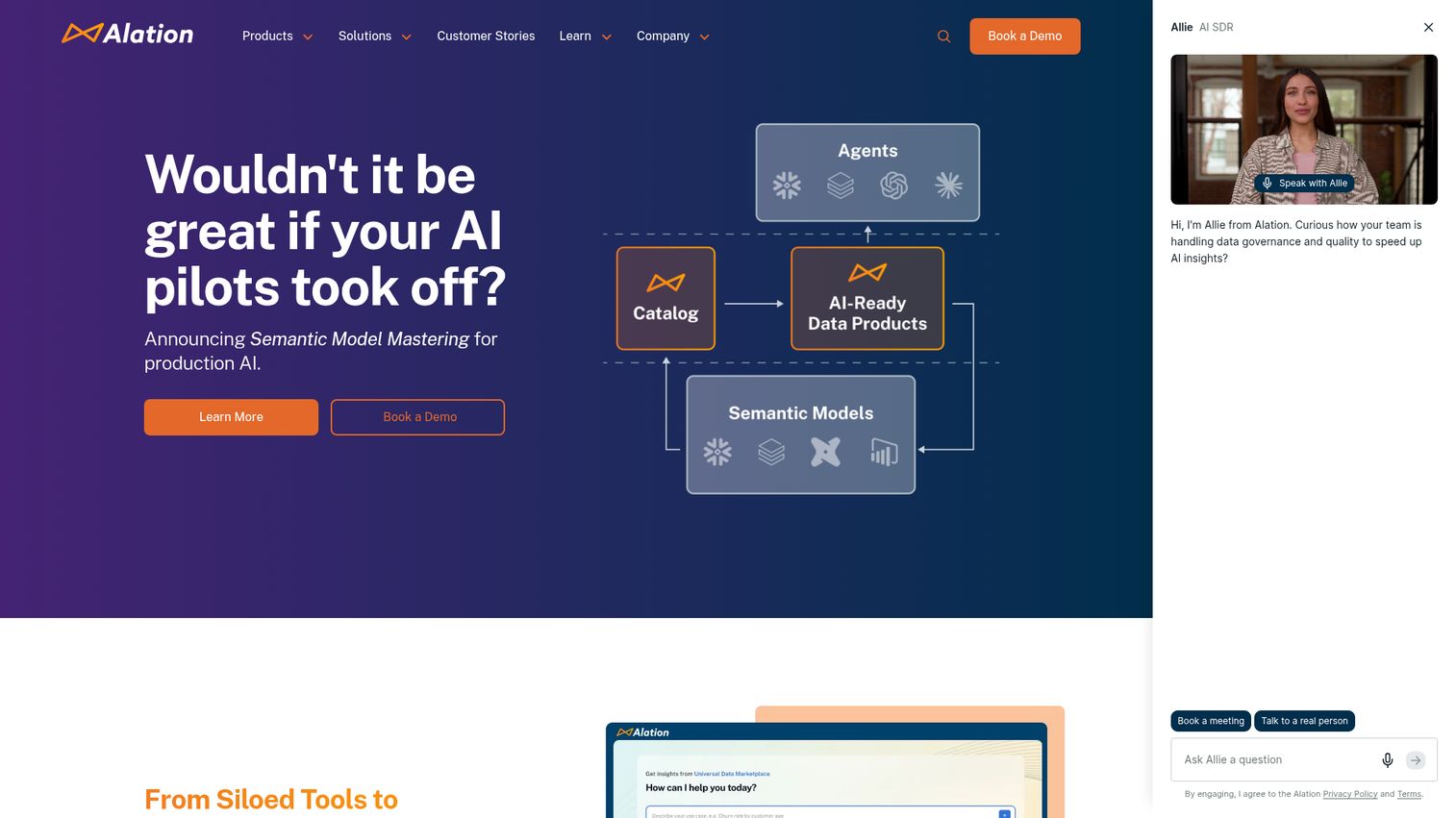
Alation is an agentic data intelligence platform that brings cataloging, governance, lineage, and data quality into one hub for trusted AI and analytics. Its catalog sits at the core, with natural-language search and trust signals that drive adoption. Teams that want their data catalog actually used choose Alation.
Best for: Enterprises prioritizing catalog adoption, lineage, and AI-ready data intelligence across complex ecosystems.
Key strengths
- Data catalog: Natural-language search with definitions, lineage, policies, usage, and trust signals.
- Governance and stewardship: Centralized policies, stewardship automation, access, masking, and approvals.
- Broad connectivity: 120+ connectors plus active metadata, AI curation, and data quality integrations.
Why choose Alation: Alation works when adoption is the real challenge. A catalog nobody uses delivers no governance. Alation's search, trust signals, and AI curation are designed to pull analysts and engineers in. If your priority is governed discovery that people actually engage with, it is a strong fit.
Alation pricing: Alation uses custom pricing. The first-party pricing page directs buyers to request a quote, with no public figures or tiers. Alation holds a 4.4 out of 5 rating on G2.
3. Microsoft Purview
Microsoft Purview is a unified data security, governance, and compliance platform for securing and governing data across on-premises, multicloud, SaaS, AI, and Microsoft 365 environments. It is the natural choice when your estate already runs on Microsoft. Classification, lineage, and sensitivity labels span the Microsoft stack and connected sources.
Best for: Microsoft-centric organizations that need governance, DLP, and compliance across their existing Azure and M365 estate.
Key strengths
- Data governance: Data Map and Unified Catalog for governance across the full data estate.
- Information protection: Data loss prevention and sensitivity labeling built in.
- Compliance suite: Audit, eDiscovery, Compliance Manager, lifecycle, and records management.
Why choose Microsoft Purview: If your data already lives in Azure and Microsoft 365, Purview removes integration friction. Governance, security, and compliance sit in one platform you partly already own. The deeper your Microsoft footprint, the stronger the fit.
Microsoft Purview pricing: Purview offers flexible options. The Microsoft Purview Suite add-on starts at $12.00 per user per month, paid yearly. It is also included in Microsoft 365 E5 at $57.00 per user per month. Data governance, security, and compliance modules are available pay-as-you-go on a usage basis. Purview Data Governance holds a 4.7 out of 5 rating on G2.
4. Informatica Cloud Data Governance and Catalog
Informatica Cloud Data Governance and Catalog is an IDMC service for simplifying, automating, and scaling data and AI governance to deliver trusted business outcomes. Part of the Intelligent Data Management Cloud, it targets large enterprises with sprawling cloud and on-premises data. Automation is the theme: curation, lineage, and policy at scale.
Best for: Enterprises that need AI-powered cataloging, governance, lineage, and policy automation across complex data environments.
Key strengths
- Centralized catalog: Clear lineage and shared business context in one place.
- AI-powered classification: Automated mapping that connects business and technical data.
- Policy and quality automation: Compliance automation with integrated data quality and observability.
Why choose Informatica CDGC: Informatica fits when scale and automation matter most. For large estates where manual curation cannot keep up, its AI-driven classification and automated lineage reduce the stewardship burden. It is built for enterprise complexity, not for a small data team.
Informatica CDGC pricing: Informatica uses flexible, consumption-based pricing through Informatica Processing Units, and directs buyers to request a quote. No public numeric prices or named CDGC tiers are listed. Informatica Cloud Data Governance and Catalog holds a 4.3 out of 5 rating on G2.
5. Atlan
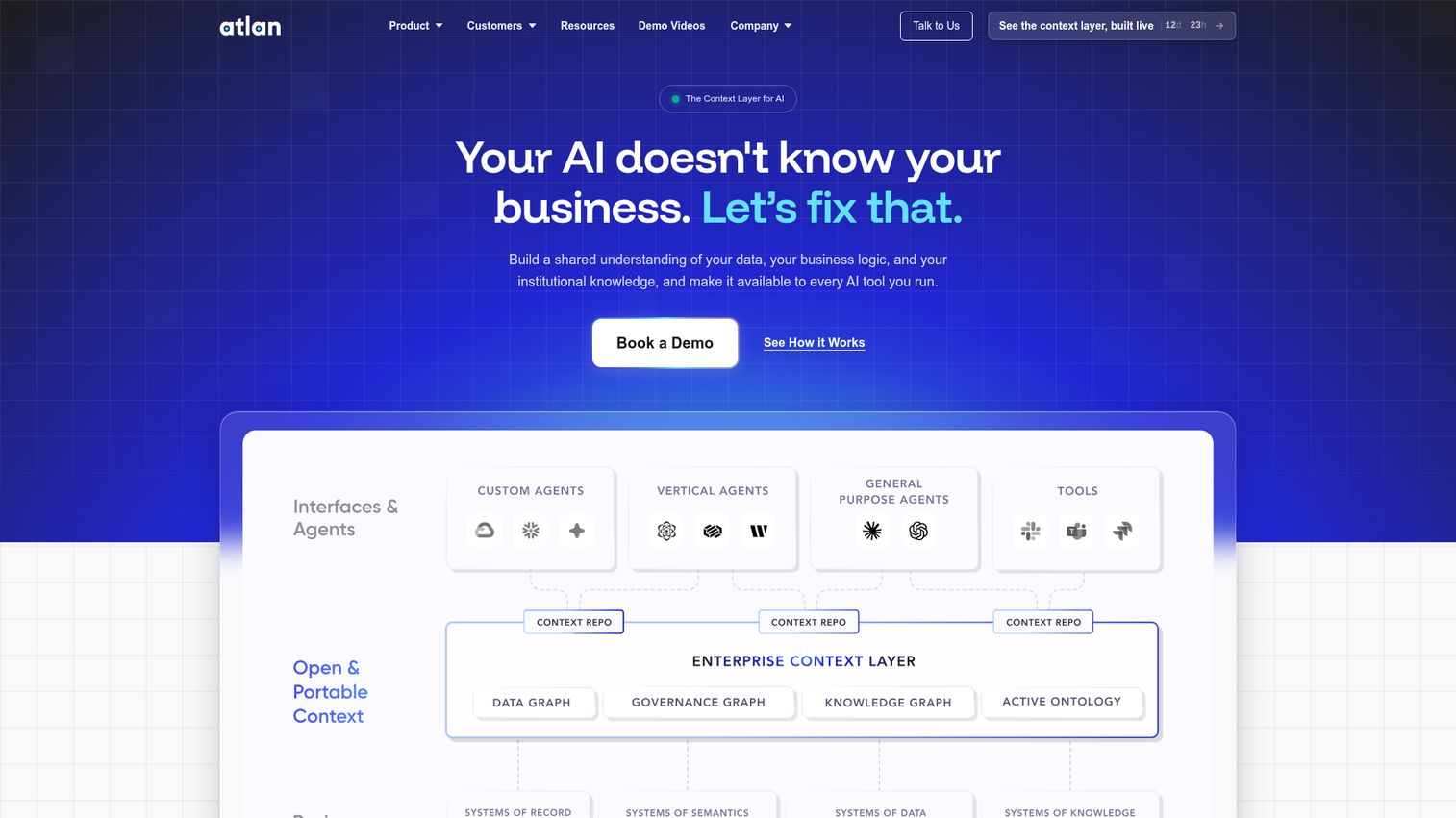
Atlan is the context layer for AI, bringing metadata, semantics, lineage, and business knowledge together so data teams and AI agents can find, understand, and act on data. It is built for modern cloud stacks and collaborative data teams. Time-to-value is a core selling point.
Best for: Enterprise data and AI teams on modern cloud stacks that need governed metadata, lineage, and discovery.
Key strengths
- Active metadata: Crawling across warehouses, BI platforms, transformation, and observability tools.
- Discovery and search: Filters for certification, owner, and lineage to find trusted data fast.
- Governance controls: Sensitive data tagging, granular access, data contracts, and AI-assisted enrichment.
Why choose Atlan: Atlan fits teams running modern tooling like Snowflake, dbt, Fivetran, and Airflow. Its integrations and collaborative workspace suit data teams that move fast and want context, not bureaucracy. If your stack is cloud-native, Atlan feels purpose-built.
Atlan pricing: Atlan uses custom pricing. The pricing page redirects to a talk-to-sales contact form, with no public figures, plan names, or billing terms shown. Atlan holds a 4.5 out of 5 rating on G2.
6. SAP Master Data Governance
SAP Master Data Governance is a master data management and governance solution in SAP Business Data Cloud for improving the quality of business-critical information through a central governed data layer. It consolidates master data across SAP and third-party systems. For SAP-heavy enterprises, the ecosystem fit is the draw.
Best for: Large enterprises that need governed, centralized master data across SAP and connected third-party systems.
Key strengths
- Data consolidation: Unifies master data across SAP and third-party sources.
- Central governance: Collaborative workflows and notifications for governed data changes.
- Data quality management: Business rules, monitoring, and analytics to maintain quality.
Why choose SAP Master Data Governance: SAP MDG fits when master data management is the priority and SAP is your backbone. Centralizing customer, product, and supplier data into one governed layer reduces the inconsistencies that ripple through downstream systems. The closer your operations run to SAP, the better the fit.
SAP MDG pricing: SAP does not publish a numeric price. Master Data Governance is licensed through SAP Business Data Cloud core capacity, with flexible usage-based billing in blocks of objects and contract terms from 3 to 36 months. SAP Master Data Governance holds a 4.4 out of 5 rating on G2.
7. IBM watsonx.governance
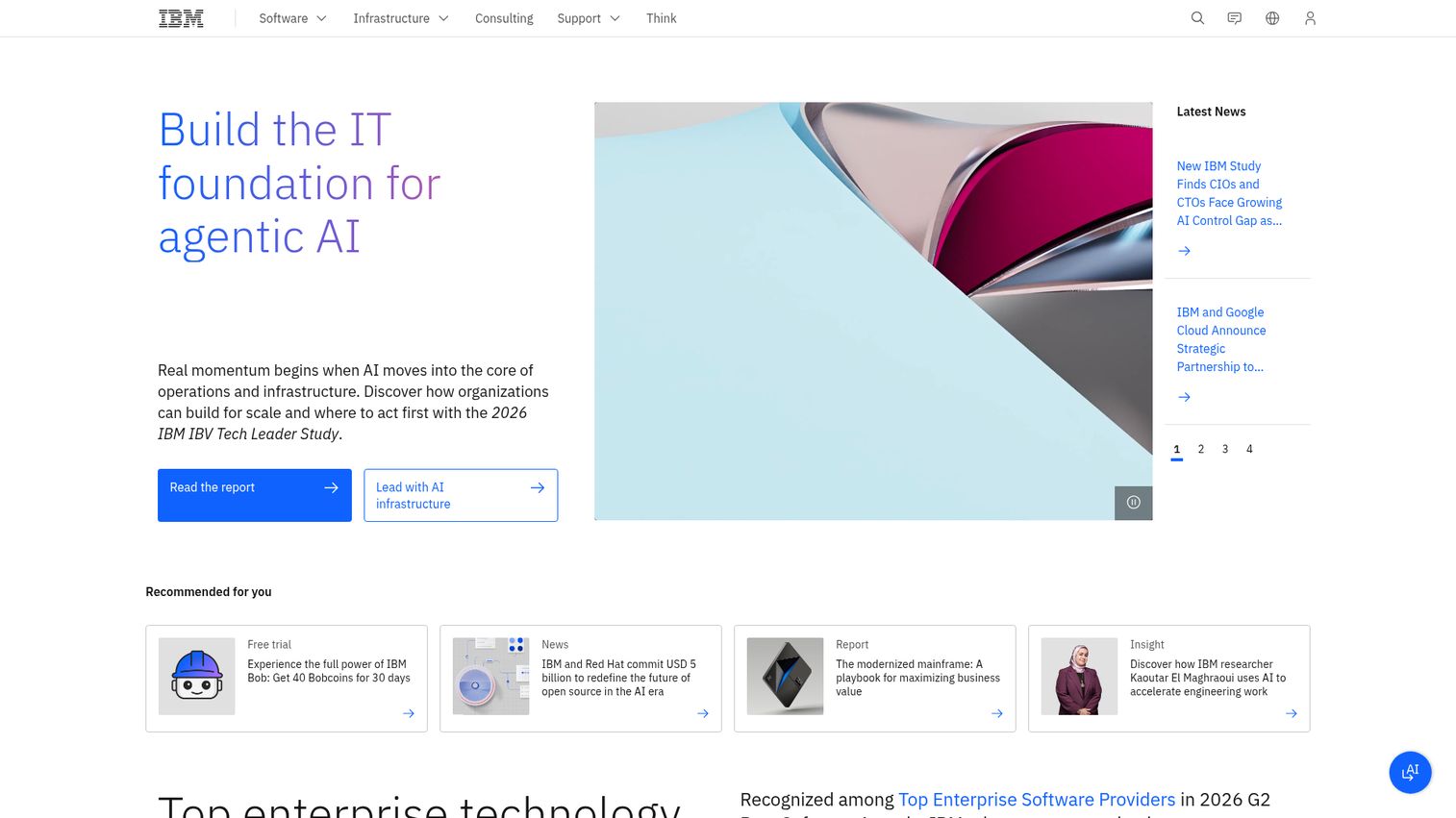
IBM watsonx.governance is an AI governance solution for directing, managing, monitoring, and scaling responsible, transparent AI across cloud and on-premises environments. As AI moves into production, governing models becomes as critical as governing data. This is where watsonx.governance focuses.
Best for: Enterprises that need governed, auditable AI lifecycle management, risk oversight, and compliance automation.
Key strengths
- Governance graph: A connected map of AI assets, policies, risks, and regulatory requirements.
- Risk control mapping: AI risk controls mapped to compliance applicability automatically.
- Compliance automation: Evidence collection and audit-ready reporting across AI processes.
Why choose IBM watsonx.governance: Choose watsonx.governance when your governance challenge is AI models, not just data. As regulators sharpen AI rules, having model lineage, risk mapping, and audit-ready evidence in one place reduces exposure. It pairs naturally with broader watsonx components.
IBM watsonx.governance pricing: IBM publishes clear tiers. A Lite plan is free for limited use. Essentials runs at USD 0.64 per evaluation pay-as-you-use, or USD 795 per instance. Standard is USD 3,710 per instance, and an AWS SaaS package runs USD 38,160 with 12,000 evaluations per year. IBM watsonx.governance holds a 4.3 out of 5 rating on G2.
8. Databricks Data Intelligence Platform (Unity Catalog)
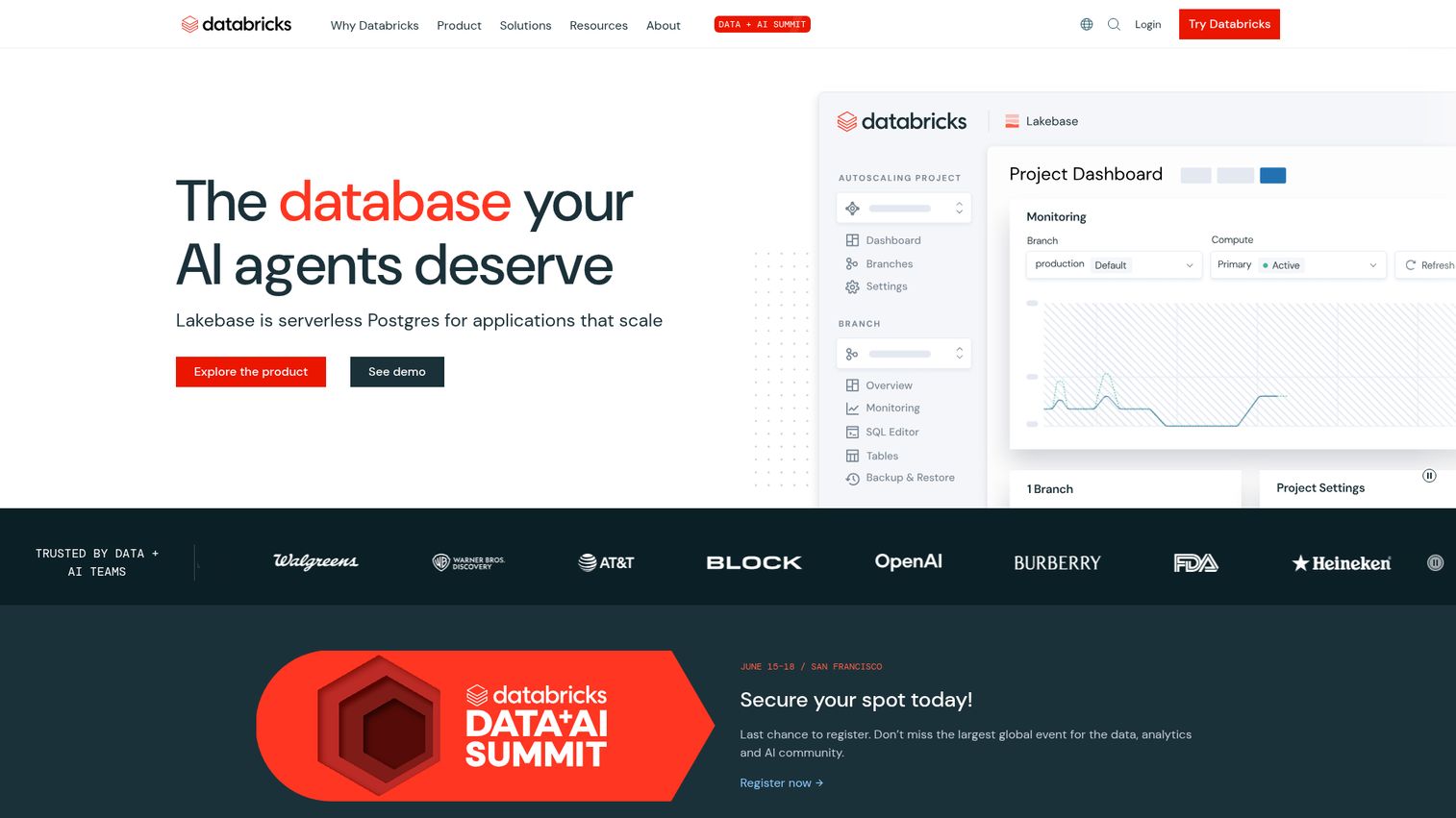
Databricks Data Intelligence Platform is a unified lakehouse-based platform for data, analytics, AI, governance, and related workloads. Unity Catalog provides governance across the lakehouse with centralized permissions, lineage, and fine-grained access. Teams already on Databricks get governance without bolting on a separate tool.
Best for: Organizations running a lakehouse that need unified governance alongside data engineering, analytics, and AI.
Key strengths
- Lakehouse foundation: An open, unified foundation for all data and governance.
- Data Intelligence Engine: Understands your data semantics for search, discovery, and assistance.
- Unified MLOps and security: End-to-end AI development with governance and access control built in.
Why choose Databricks: If your data and AI workloads already run on Databricks, Unity Catalog keeps governance native. Centralized permissions, lineage, and Delta Lake controls span workspaces without a separate platform. The deeper your lakehouse investment, the stronger the case.
Databricks pricing: Databricks uses pay-as-you-go pricing with no up-front costs, per-second billing, and committed-use discounts. A free tier is available to start. The accessible pricing page does not expose specific public price numbers or named paid tiers. Databricks Data Intelligence Platform holds a 4.6 out of 5 rating on G2.
9. MineOS
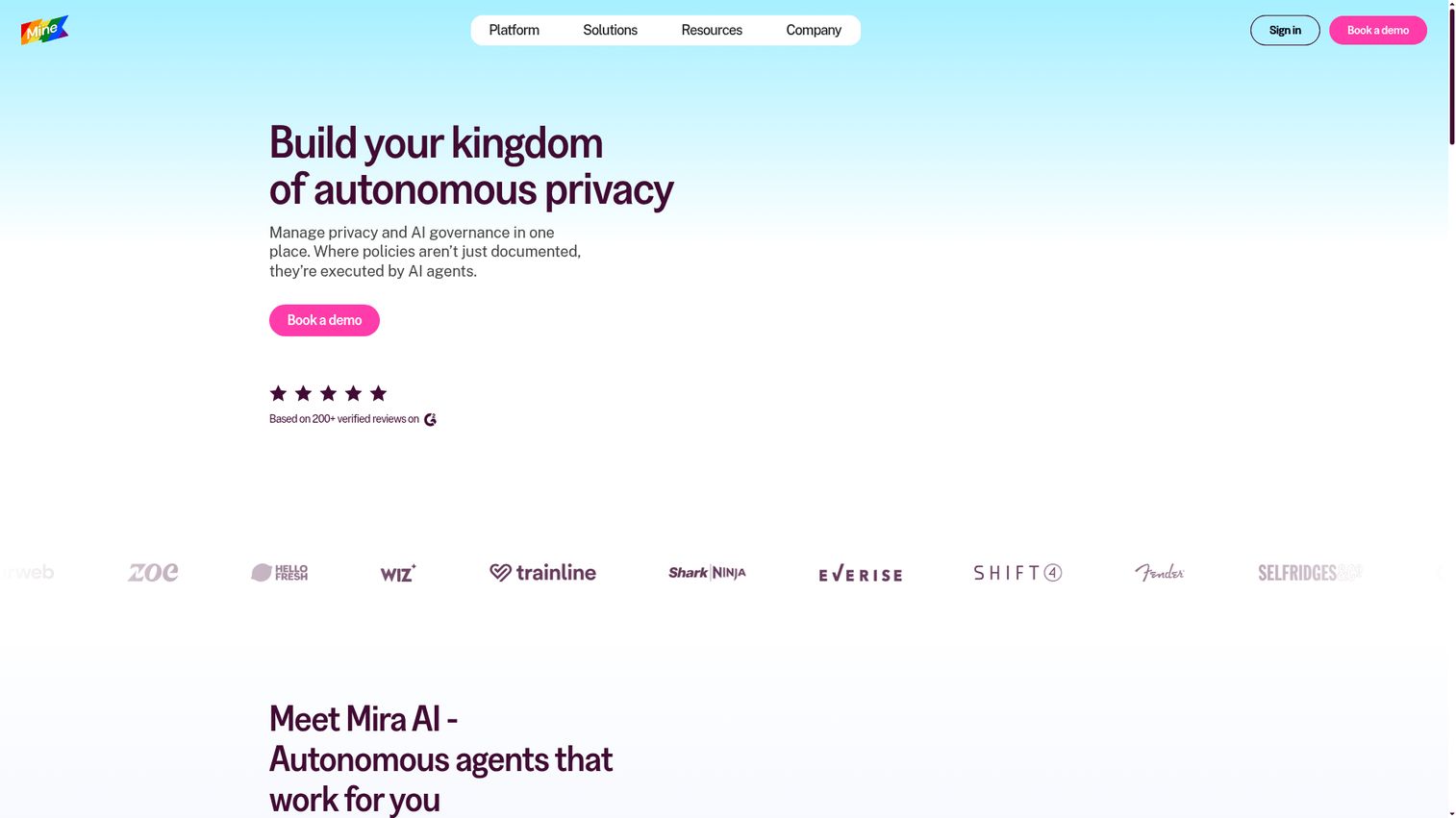
MineOS is an autonomous privacy, risk management, and compliance platform for managing privacy operations, AI governance, data mapping, DSRs, vendor risk, DSPM, and consent. It leads with privacy rather than cataloging. For teams where compliance drives the governance agenda, that focus matters.
Best for: Privacy, security, and compliance teams that need automated privacy operations and data subject request handling.
Key strengths
- Data mapping: Auto-discovery and classification of personal data across systems.
- DSR automation: Intake, fulfillment, compliance, and audit proof for subject requests.
- Privacy and risk modules: AI governance, privacy risk management, TPRM, DSPM, and consent.
Why choose MineOS: MineOS fits when privacy operations are the core job. Automating data mapping and DSRs turns a manual compliance scramble into a repeatable process. As a data access governance and privacy layer, it suits teams under heavy regulatory pressure.
MineOS pricing: MineOS does not publish numeric prices. Its plans page lists Request Handling tiers (Starter, Advanced, Professional) and Data Mapping tiers, with most showing a "Let's talk" call to action. MineOS holds a 4.8 out of 5 rating on G2.
10. BigID
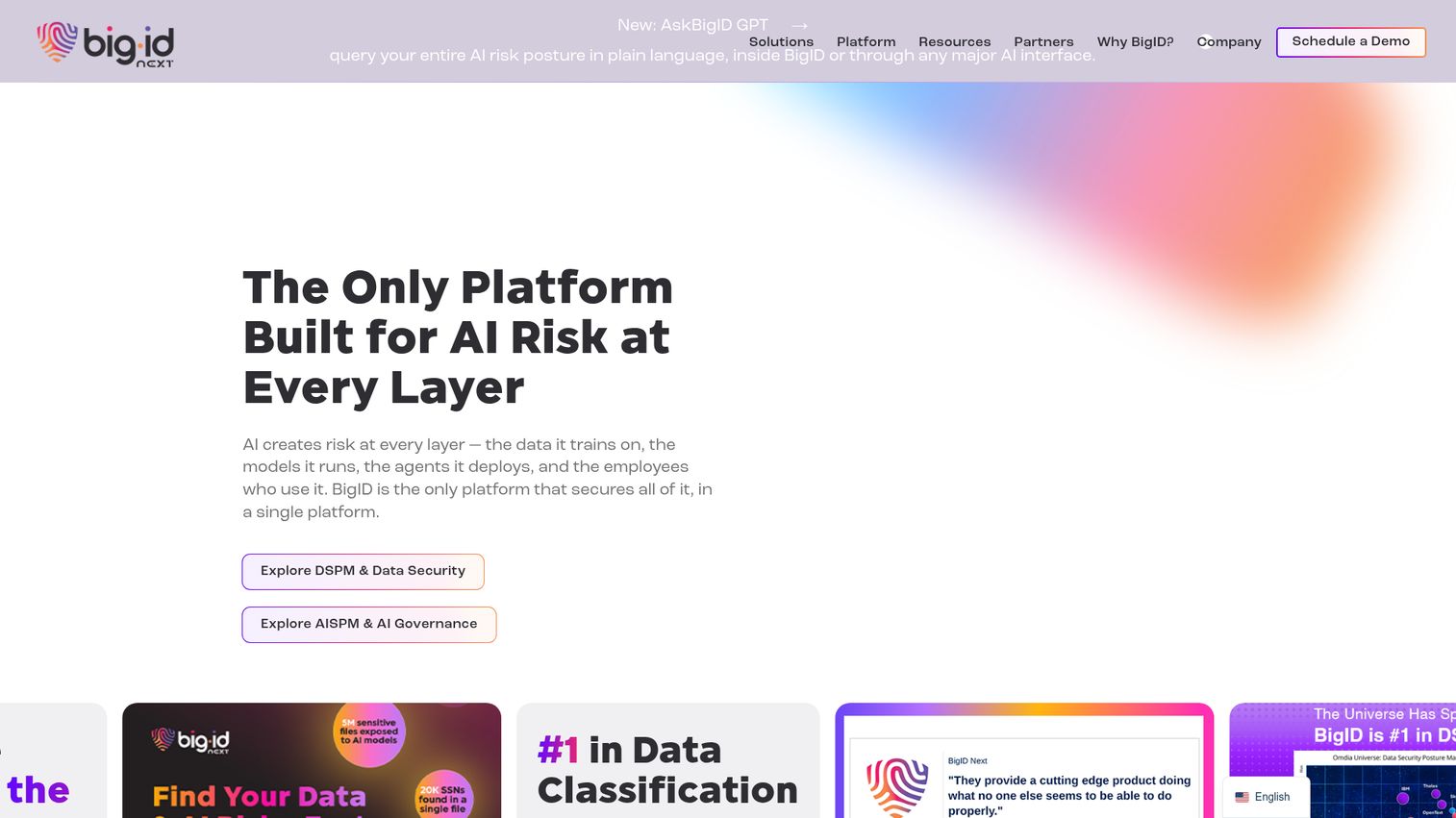
BigID is an enterprise data security, privacy, compliance, and AI governance platform for discovering, classifying, securing, and managing sensitive data across cloud, SaaS, on-prem, and development environments. Discovery and classification are its strengths. Security and privacy teams use it to find sensitive data before it becomes a liability.
Best for: Large enterprises that need data discovery, classification, DSPM, and privacy automation across hybrid environments.
Key strengths
- Data discovery: AI-driven classification across structured, semi-structured, and unstructured sources.
- Unified security and privacy: DSPM, risk remediation, DLP, access governance, and labeling in one platform.
- AI security: Shadow AI discovery, AI access governance, and risk posture assessment.
Why choose BigID: BigID fits security and privacy-first teams that need to know exactly where sensitive data lives. Its discovery engine spans hybrid estates, and its access governance and AI security features address modern risks. If finding and protecting sensitive data is the priority, it delivers.
BigID pricing: BigID does not publish public prices. Pricing depends on data sources, apps, connectors, deployment type, and support level, and the team packages capabilities into security and privacy bundles. BigID holds a 4.8 out of 5 rating on G2.
11. Apache Atlas
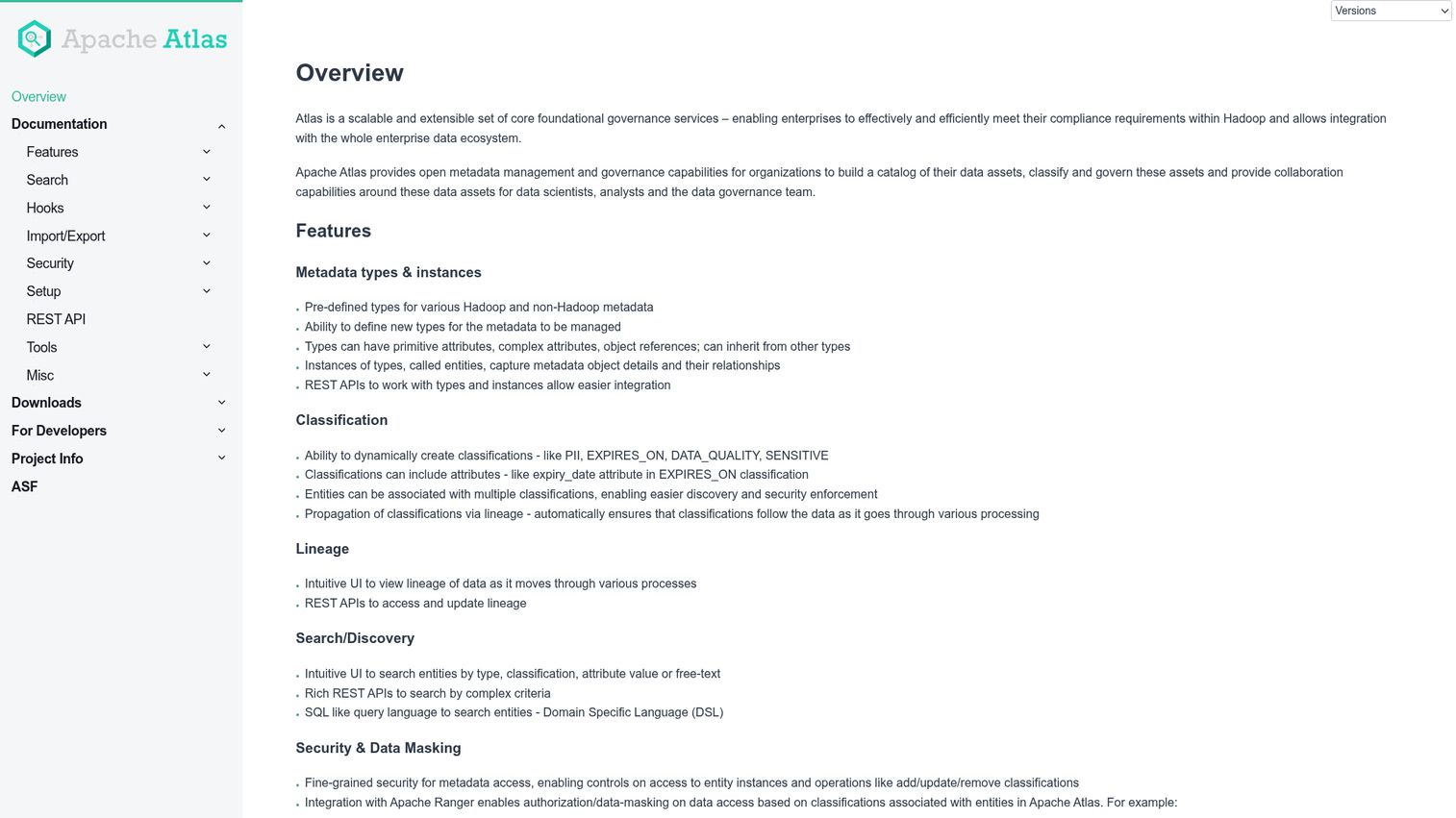
Apache Atlas is an open metadata management and governance framework for building a catalog of data assets, classifying and governing them, and supporting collaboration. It is the open-source standard for metadata in Hadoop and Spark ecosystems. Engineering teams that want full control choose it.
Best for: Engineering teams using Hadoop or broader data ecosystems that want open-source metadata governance and lineage.
Key strengths
- Metadata types and APIs: Predefined and custom type definitions plus REST APIs.
- Classification and lineage: Tagging, lineage, and search across data assets.
- Security integration: Data masking and access control via Apache Ranger.
Why choose Apache Atlas: Apache Atlas fits engineering teams that want open-source control and no license cost. For Hadoop and Spark environments, it provides catalog, lineage, and classification you can self-host and extend. The trade-off is that you own the infrastructure and operations.
Apache Atlas pricing: Apache Atlas is free and open source under the Apache License 2.0. There is no license fee. Costs come from self-hosted infrastructure and the engineering time to deploy and maintain it. Apache Atlas holds a 4.5 out of 5 rating on G2 from 17 reviews.
12. Data.world
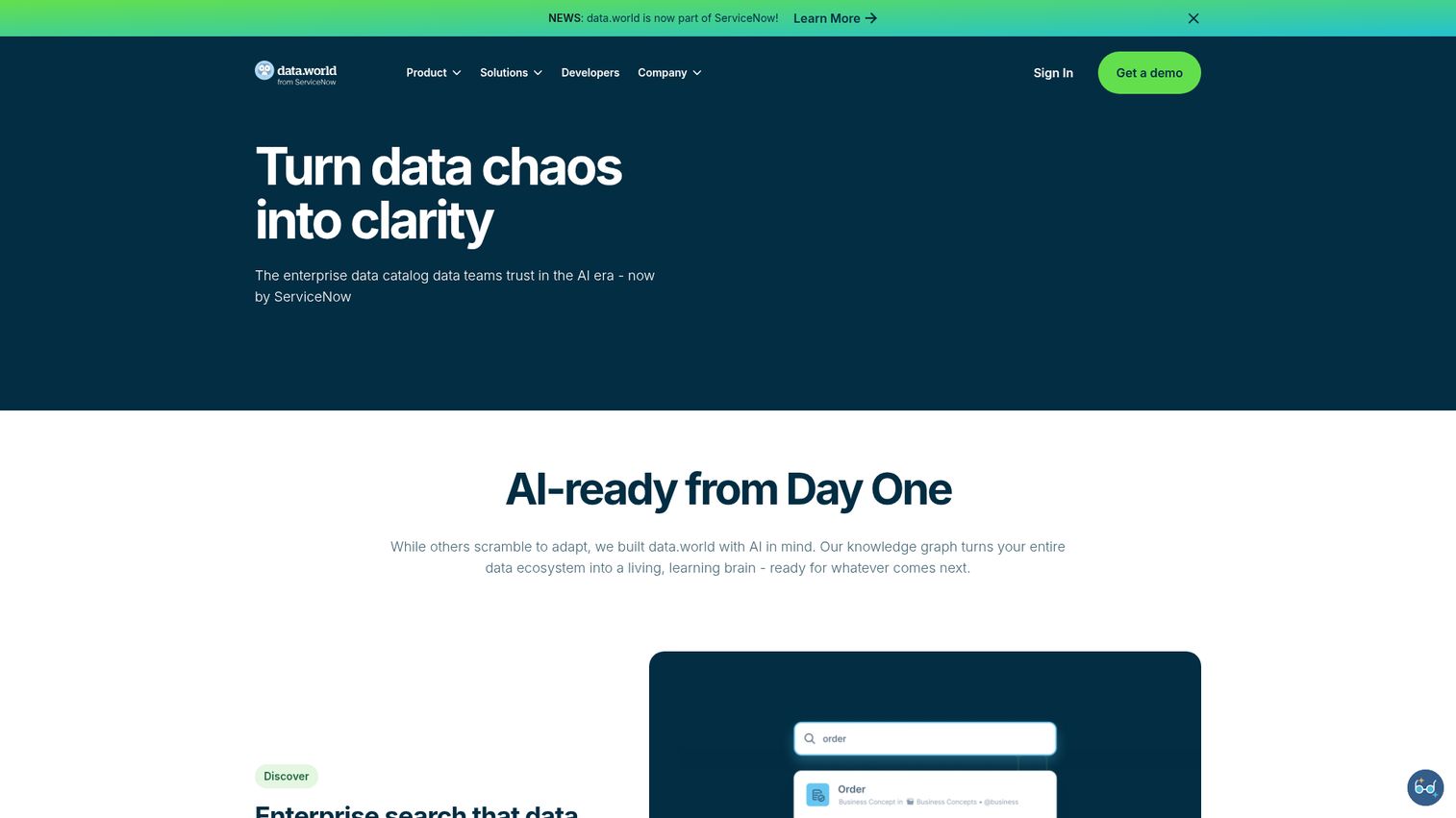
Data.world is an enterprise data catalog and governance platform powered by a knowledge graph architecture, now part of ServiceNow. The knowledge graph connects data, context, and relationships in a way traditional catalogs struggle to match. Teams focused on data democratization gravitate to it.
Best for: Enterprises that want governed data discovery and collaboration with a knowledge-graph-driven catalog.
Key strengths
- Enhanced discovery: AI-assisted search, auto-enrichment, and natural-language SQL generation.
- Agile governance: Automations and workflow support for stewards and stakeholders.
- DataOps collaboration: Lineage, metadata sharing, and in-app notifications.
Why choose data.world: data.world fits teams that want to democratize data access without losing governance. The knowledge graph surfaces relationships across assets, making discovery richer. If collaboration and self-serve exploration matter, its architecture is a differentiator.
data.world pricing: data.world lists plan tiers (Essentials, Standard, Enterprise, Enterprise+) but does not publish numeric prices. Higher tiers add integrations, lineage, audit logs, and region choices. Enterprise+ is a custom package for advanced security or contract needs. data.world holds a 4.2 out of 5 rating on G2.
13. OvalEdge
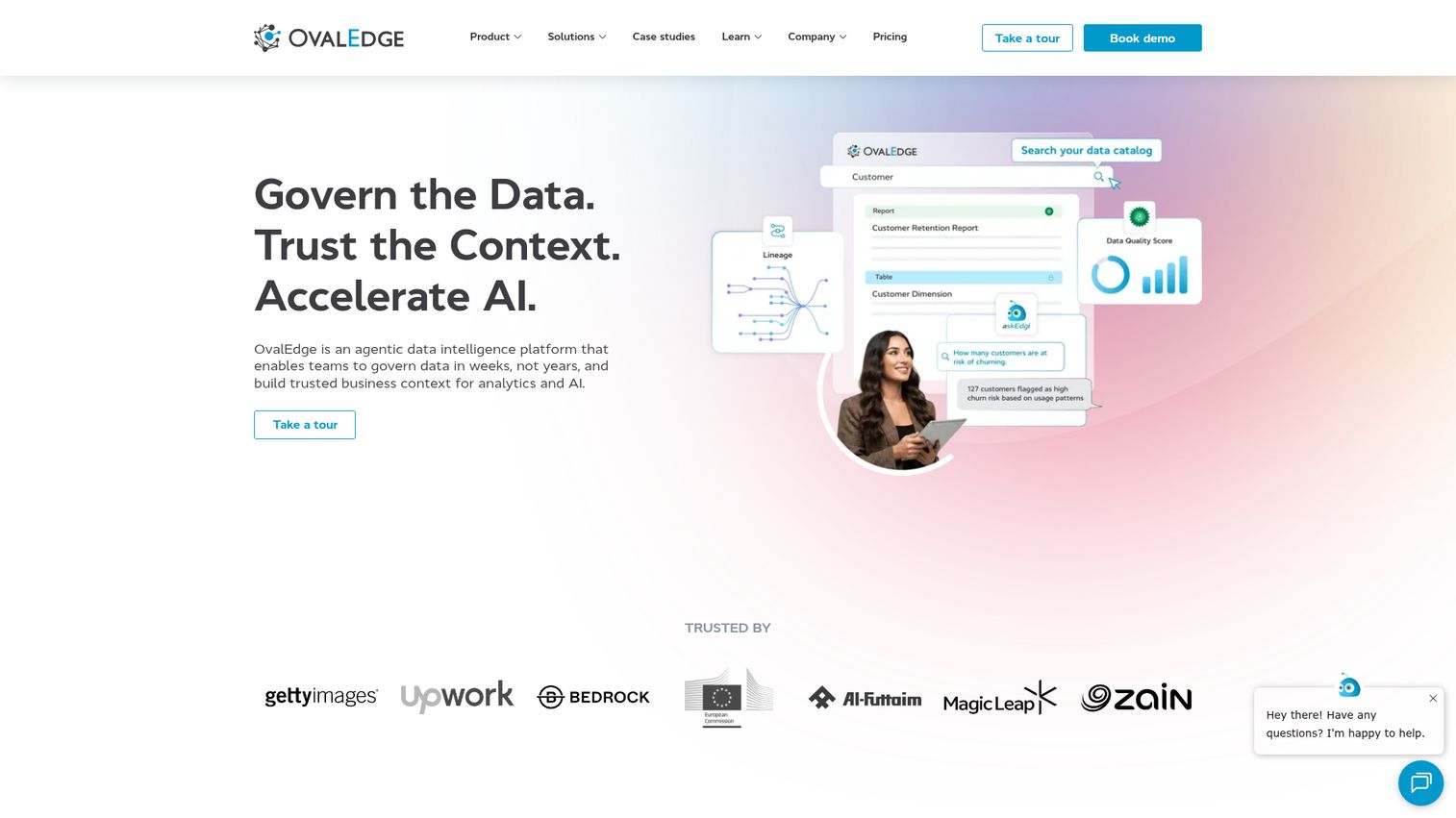
OvalEdge is an agentic data intelligence platform for data cataloging, governance, privacy and access, data quality, lineage, and trusted analytics and AI context. It is frequently cited as a more accessible option for mid-market teams. You get catalog, lineage, and governance without enterprise-tier cost.
Best for: Mid-market enterprises that need integrated catalog, governance, lineage, and data quality without enterprise pricing.
Key strengths
- Data catalog: 150+ native connectors with active and extended metadata extraction.
- Automated lineage and PII: Lineage generation, PII detection, and auto-classification.
- Governance workflows: Data access workflows, policy enforcement, business glossary, and askEdgi AI.
Why choose OvalEdge: OvalEdge fits mid-market teams that need full governance capability without the cost and complexity of enterprise platforms. It covers catalog, lineage, privacy, and access in tiers that scale from a starter SaaS plan upward. If budget and breadth both matter, it is a practical pick.
OvalEdge pricing: OvalEdge lists three plans (Essential, Professional, Enterprise) priced as custom, contact sales. Essential is SaaS-only with 5 connectors and core catalog and governance. Professional and Enterprise add privacy, access management, data quality, and more connectors. OvalEdge holds a 4.3 out of 5 rating on G2.
How to choose a data governance tool
A shortlist is only useful if you evaluate it against your reality. Use this checklist before committing.
Integration with your existing data stack
The best platform is the one that connects to what you already run. Check coverage for your warehouses, BI tools, transformation layer, CRM, and collaboration apps. A tool that fits a lakehouse natively beats a generic one that needs custom connectors. Native integration cuts maintenance and speeds adoption. The right CRM software and customer data platform in your stack will also shape which governance tool fits best.
AI-readiness and automation
Manual curation does not scale. Evaluate automated classification, lineage generation, and AI-assisted metadata enrichment. If you plan to feed AI or ML pipelines, confirm the platform can trace and govern that data end to end. AI readiness is now a core requirement, not a nice-to-have.
Compliance, access, and audit controls
Map your regulatory obligations to the tool's capabilities. Look for role-based access, consent handling, retention rules, and audit trails. For regulated industries, data access governance tools with granular controls are non-negotiable. Confirm the platform can answer a subject request or audit without manual reconstruction.
Adoption, usability, and maintenance
Governance only works if people use it. A catalog nobody searches delivers nothing. Weigh usability, stewardship workflows, and adoption analytics. Lower ongoing maintenance protects engineering bandwidth, which matters most for lean teams. Strong product analytics software can help you measure whether governance is actually being adopted across teams.
Pricing model and scalability
Match the pricing model to your stage. Enterprise data governance tools often run quote-based and scale by data volume or users. Consumption-based models suit variable workloads. Mid-market teams should weigh total cost across segments before committing to a multi-year contract.
Conclusion
The right data governance platform depends on your stack and team size, not on a feature checklist. For large regulated enterprises, Collibra and Informatica deliver full governance operating models. Microsoft shops get the cleanest fit from Microsoft Purview. Modern cloud data teams should look at Atlan, while lakehouse environments are well served by Databricks Unity Catalog.
Privacy-led teams will find MineOS and BigID strongest. Engineering teams wanting open-source control can self-host Apache Atlas. Mid-market teams balancing budget and breadth should evaluate OvalEdge, and AI-first governance points to IBM watsonx.governance.
The next step is concrete. Shortlist two or three tools that match your stack. Run a proof-of-concept against your actual warehouses and data sources, not a sandbox demo environment. Validate AI-readiness, compliance coverage, and how much ongoing maintenance each one demands. The tool that connects cleanly to your stack and requires the least upkeep is usually the one your team will actually adopt and keep using. If part of your evaluation involves demoing tools internally, a sandbox demo environment lets stakeholders explore capabilities safely before committing.
FAQs about data governance tools
Data governance tools are software platforms that help organizations manage the availability, quality, security, and compliance of their data. They do this through cataloging, lineage tracking, policy enforcement, and access controls. The goal is trusted, well-documented data that teams and AI systems can rely on. They span catalog, metadata management, master data, privacy, and AI governance.
A data governance framework defines the policies, roles, standards, and ownership your organization agrees to follow. It is a model, not software. Data governance tools execute and enforce that framework in practice. The framework sets the rules; the tool finds the data, applies the tags, and blocks unauthorized access. You need both to make governance real.
Most enterprise data governance platforms use custom, quote-based pricing scoped by data volume and users, including Collibra, Alation, Atlan, and BigID. Some publish figures: Microsoft Purview Suite starts at $12.00 per user per month, and IBM watsonx.governance offers a free Lite tier with usage-based paid plans. Apache Atlas is free and open source, with only infrastructure costs. Mid-market options like OvalEdge price by tier on request.
Data governance sets the policies, accountability, and standards for how data is used. Data management is the operational execution: storing, integrating, cleaning, and moving data. Governance decides the rules and who owns them. Management does the day-to-day work of keeping data available and usable. Many platforms now combine both in a single product.
AI and ML models inherit the quality of the data behind them. Governance tools provide data lineage tracking, classification, quality controls, and access policies that make AI trustworthy and auditable. With traceable, governed data, you can explain and defend model outputs. Without it, AI projects stall on data nobody can verify. This is why AI readiness is now a core evaluation criterion.
For large enterprises, Collibra and Informatica Cloud Data Governance and Catalog offer full governance operating models at scale. Microsoft Purview is the strongest fit for Microsoft and Azure estates. SAP Master Data Governance leads for enterprise master data management. For governing AI models specifically, IBM watsonx.governance is purpose-built. Match the choice to your existing stack.
Yes. Trusted instrumentation, reliable segments, and compliance matter at any size. Smaller teams gain confidence in activation and retention numbers and reduce audit risk. Budget-friendly options exist: OvalEdge serves mid-market teams, data.world supports collaborative governance, and Apache Atlas is free and open source. You do not need an enterprise contract to start governing data well.
Data access governance is the practice of controlling who can access which data, and under what conditions. It uses role-based access controls, policies, masking, and audit trails to enforce least-privilege access. Data access governance tools track and prove that only authorized people see sensitive data. This is central to both security and regulatory compliance.