Your AWS bill hits finance. Your Azure subscriptions are owned by three different teams. Engineering is provisioning via Terraform, but nobody's sure what the tagging policy is. And the CMDB hasn't caught up to any of it.
This is where most cloud management conversations start: Not with a vendor pitch, but with a spreadsheet nobody trusts and an escalation nobody wants to own.
Global public cloud spending reached $723.4 billion in 2025, up 21.5% year over year, according to Gartner (2024). As that number grows, so does the gap between what native cloud consoles show and what leadership actually needs to see. Ownership, cost allocation, policy enforcement, and provisioning approvals rarely resolve themselves inside AWS or Azure alone.
This guide is for cloud architects, FinOps teams, IT operations managers, and presales engineers who need a practical shortlist, not a marketing deck. It covers 15 platforms across governance, orchestration, cost management, infrastructure as code, and observability, so you can match the right tool to your operating model before a POC locks you in.
What's inside
This guide compares 15 cloud management platforms selected for multi-cloud coverage, governance depth, FinOps capability, and automation fit.
- Who it's for: Cloud teams, FinOps practitioners, IT operations, platform engineers, and presales teams supporting technical validation
- How tools were selected: Multi-cloud coverage, cloud governance and policy controls, cost visibility and FinOps depth, and integration with ITSM, CMDB, and IaC workflows
- What you'll decide: Which platform fits your operating model, whether a CMP is overkill for your team, and which pricing and rating details need verification before you shortlist
TL;DR
- Best overall for enterprise IT operations: ServiceNow, for teams that need CMDB, approval workflows, and cloud governance in one operating model
- Best for VMware-heavy hybrid estates: VMware Cloud Foundation Automation, for structured automation across VMware-centered environments
- Best for self-service provisioning: CloudBolt, with a free tier for up to 100 resources and service catalog controls
- Best for FinOps and cloud cost control: Apptio Cloudability, CloudHealth by VMware, CloudZero, and Spot by NetApp, depending on whether the buyer needs allocation reporting or automated savings
- Best for infrastructure as code: Terraform and Ansible, as the provisioning and configuration automation layer beneath broader governance programs
- Best for observability: Datadog, for teams where the management problem is visibility before it becomes a governance problem
What is a cloud management platform?
A cloud management platform is software that helps teams govern, provision, monitor, optimize, and automate cloud resources across public cloud, private cloud, hybrid cloud, and multi-cloud environments.
CMPs sit as an operating layer above native cloud consoles like the AWS Console or Azure Portal. They are not replacements for those consoles. They are the governance, cost, and workflow layer that native consoles cannot supply at scale.
When a single team uses one cloud provider, native tools often handle enough. When spend, ownership, policies, and provisioning span multiple teams, multiple accounts, and multiple providers, native consoles become a coordination problem. A CMP addresses that problem.
Key capabilities to look for:
- Cloud discovery and inventory across accounts and providers
- Cost management and FinOps: Allocation, forecasting, rightsizing, and anomaly detection
- Governance and policy enforcement: Tagging standards, access controls, approval workflows, and audit trails
- Self-service provisioning: Service catalogs that give engineers access without creating manual tickets
- Infrastructure automation: Terraform, Ansible, and API integrations for lifecycle management
- CMDB and ITSM integration: Connecting cloud records to enterprise IT operations
- Monitoring and operations workflows: Alerting, incident routing, and resource health
- Security and compliance controls: Role-based access, encryption, and compliance checks
- Reporting across teams, accounts, and business units: Showback, chargeback, and margin visibility
Important boundaries:
A CMP is not a replacement for Terraform or Ansible. IaC tools handle provisioning; CMPs add the governance, approval, and cost layer on top. FinOps-specific tools like CloudZero may solve spend visibility without replacing a broader CMP. Native cloud consoles remain sufficient for small, single-provider teams. A CMP earns its place when cloud operations become a cross-team problem. For presales teams evaluating complex cloud workflows, asset discovery software and application portfolio management software articles cover adjacent inventory and governance categories worth cross-referencing.
When to use a cloud management platform
Govern hybrid and multi-cloud infrastructure
Your team runs workloads across AWS, Azure, and a VMware-based private cloud. Every provider has different tagging schemes, access controls, and billing APIs. Without a management layer, policy enforcement is manual, ownership is disputed, and audit evidence is assembled from screenshots. A CMP gives you one place to define policies, track ownership, and produce consistent reporting across all of it.
Control cloud spend before it becomes invisible
FinOps pressure usually arrives after the bill arrives. Native billing dashboards show costs by service, not by team, product, or customer. A CMP or FinOps platform adds allocation, forecasting, showback, and chargeback. When multiple business units own cloud spend, someone needs to produce numbers finance and engineering can both act on.
Standardize provisioning without slowing engineering
Central IT wants guardrails. Engineering wants speed. A service catalog with approval workflows gives both: Engineers get self-service access to pre-approved environments, and platform teams keep control over what gets deployed and at what cost. This is where presales teams need to dig: Ask every CMP vendor whether their governance model adds friction or replaces manual process with automated checks.
Cloud management platforms comparison
The table below covers all 15 platforms with verified pricing and G2 ratings. Most enterprise CMPs sell through custom quotes. Where verified pricing exists, it is shown; where it does not, "Custom pricing" reflects confirmed quote-only sales motions. The global cloud management platform market was valued at $21.25 billion in 2025, according to Research and Markets (2026), and the tools below represent the breadth of that market, from full CMPs to IaC and FinOps specialists.
| # | Product | Best for | Key differentiator | Pricing | G2 rating |
|---|---|---|---|---|---|
| 1 | ServiceNow | Enterprise IT and cloud service management | ITSM, CMDB, and cloud governance in one platform | Custom pricing | 4.4/5 |
| 2 | VMware Cloud Foundation Automation | VMware-centered hybrid cloud estates | Policy-based automation across VMware environments | Custom pricing | 4.3/5 |
| 3 | CloudBolt | Self-service hybrid cloud provisioning | Service catalog and governance with a free tier | Free up to 100 resources; enterprise pricing on request | 4.3/5 |
| 4 | Flexera One | Hybrid IT governance and asset visibility | Cloud, software, and licensing spend in one view | Custom pricing | 4.4/5 |
| 5 | IBM Turbonomic | Application resource optimization | AI-assisted rightsizing across hybrid workloads | 30-day free trial; paid plans by quote | 4.4/5 |
| 6 | Apptio Cloudability | FinOps and cloud cost control | Allocation, forecasting, and unit-cost reporting | Custom pricing (Essentials, Standard, Premium tiers) | 4.3/5 |
| 7 | CloudHealth by VMware | Enterprise cloud cost governance | Cost reporting and policies across multi-cloud accounts | Custom pricing | N/A |
| 8 | HPE Morpheus Software | Hybrid cloud orchestration | Multi-cloud catalog with published socket pricing | From $600/socket/year (VM Essentials) | N/A |
| 9 | Nutanix Cloud Platform | Private and hybrid cloud operations | Hyperconverged infrastructure with cloud-like operations | Custom pricing (Starter, Pro, Ultimate editions) | 4.5/5 |
| 10 | Terraform | Infrastructure as code provisioning | Declarative multi-provider provisioning with free tier | Free (HCP Terraform Free plan); paid plans by usage or quote | 4.0/5 |
| 11 | Ansible | Configuration and operational automation | Agentless automation with open-source availability | Community edition free; Red Hat AAP by quote | 4.6/5 |
| 12 | OpenStack | Open-source private cloud | Full private cloud control with no license cost | Open source; costs from infrastructure and support | 4.2/5 |
| 13 | Datadog | Cloud observability and operations | Monitoring, logs, traces, and 1,000+ integrations | From $15/host/month (Pro, billed annually) | 4.4/5 |
| 14 | CloudZero | Engineering-led cloud cost intelligence | Unit economics and product-level cost allocation | Custom pricing | 4.6/5 |
| 15 | Spot by NetApp | Automated cloud cost optimization | Spot instance automation and commitment optimization | Custom pricing | N/A |
Best 15 cloud management platforms for 2026
1. ServiceNow
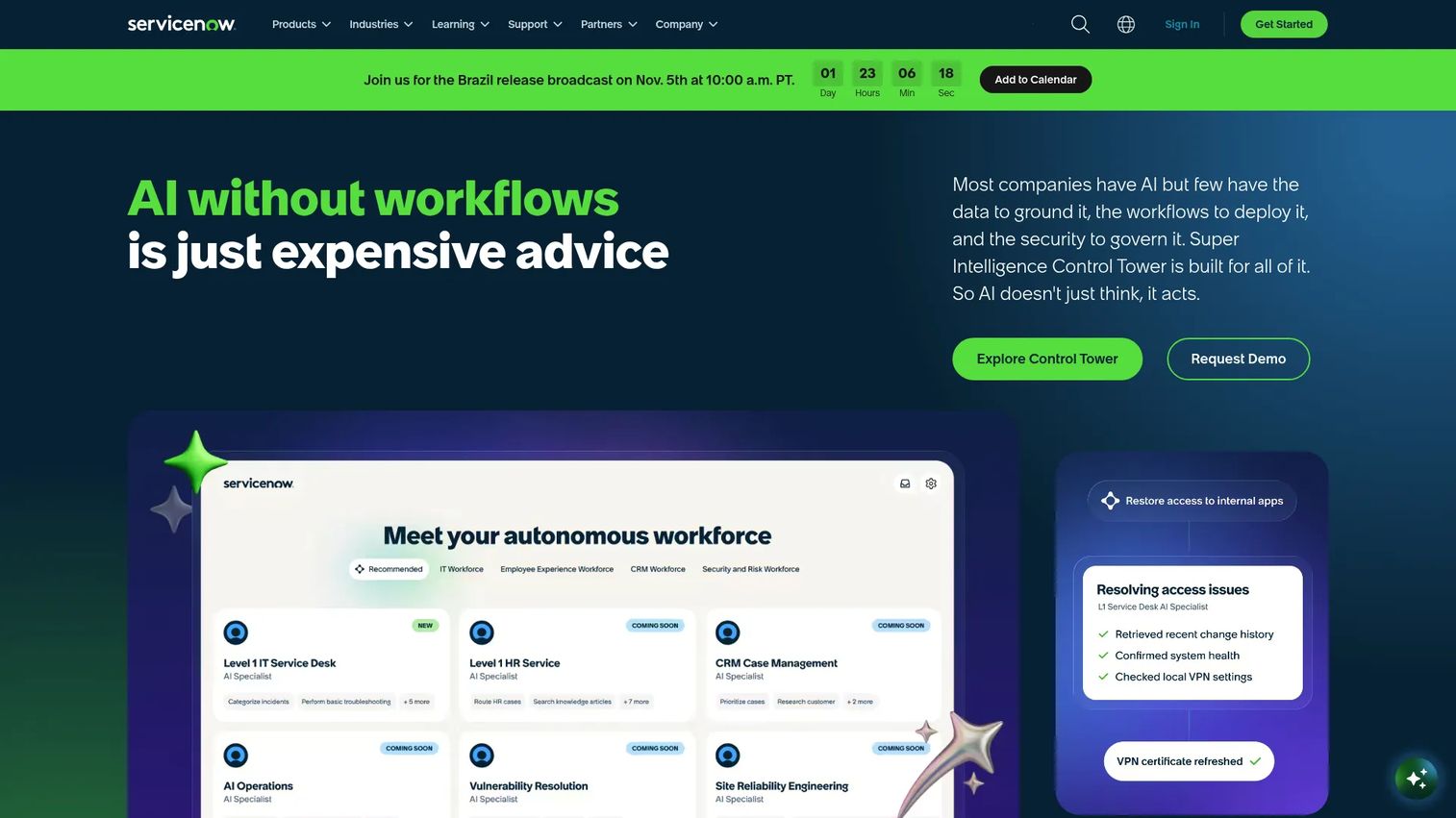
ServiceNow is an enterprise AI platform that connects IT service management, CMDB, operations workflows, and business automation across departments. In cloud management conversations, it appears because cloud requests, approvals, asset records, incidents, and ownership all tend to flow through ServiceNow in enterprises that already run it. It is not a cloud provisioning platform by design, but it is often the operating backbone for cloud governance in large organizations. Teams use it to route provisioning requests, track configuration items, manage cloud incidents, and maintain compliance records.
Best for: Enterprise IT teams that need cloud governance connected to existing ITSM workflows and a normalized CMDB.
Key features
- AI-powered ITSM and workflow automation
- CMDB and configuration item tracking
- Self-service portals and cloud request management
- Low-code application development for custom workflows
- Reporting dashboards and real-time analytics
Why choose ServiceNow: ServiceNow performs best when your cloud governance problem is also a process and audit problem. If procurement, security, and IT operations all need to see the same record, ServiceNow is often already the system they work in.
ServiceNow pricing: ServiceNow routes all pricing through custom quotes. Contact ServiceNow sales for module-based pricing.
G2 rating: 4.4/5
2. VMware Cloud Foundation Automation
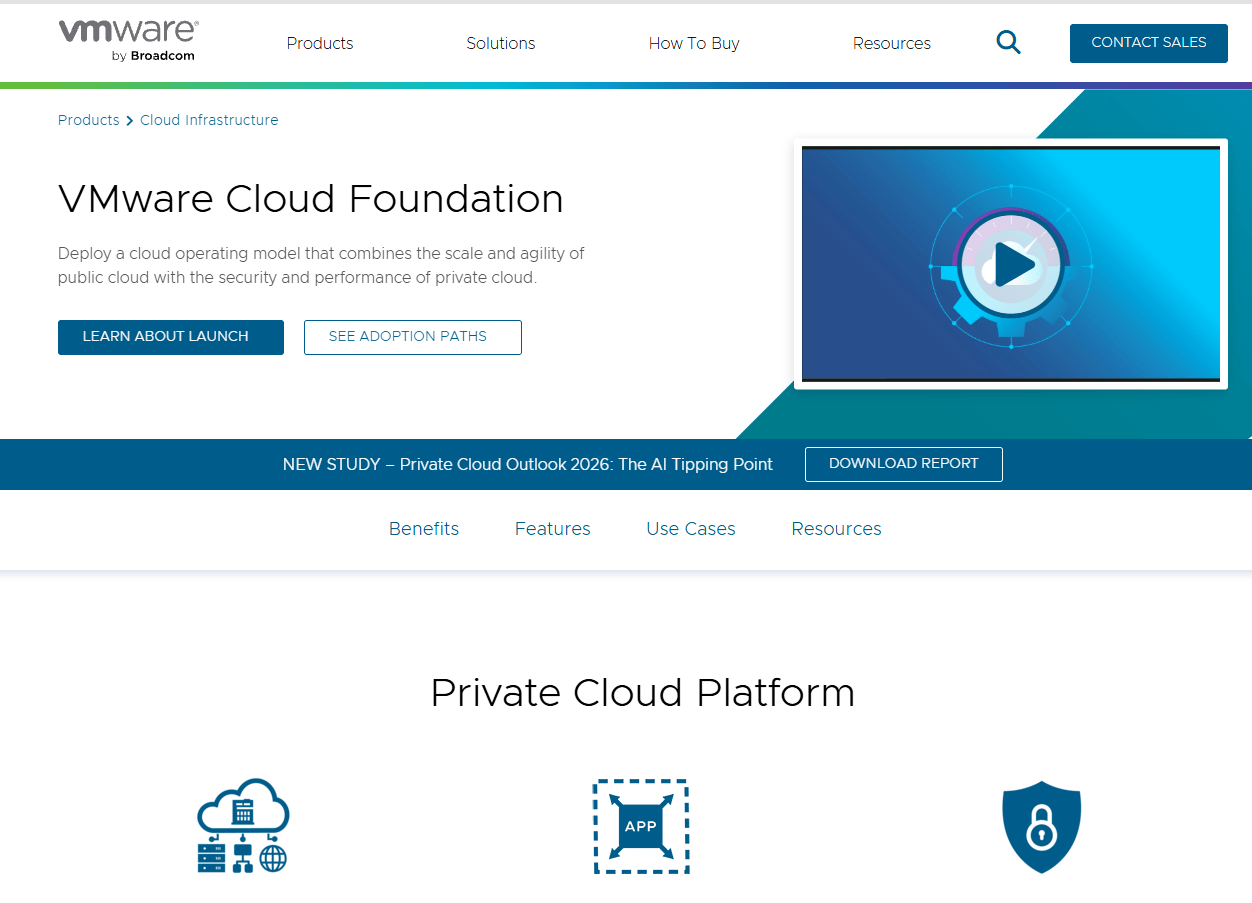
VMware Cloud Foundation Automation is a self-service automation platform for provisioning and managing infrastructure within VMware Cloud Foundation environments. It provides blueprint-based resource provisioning, policy controls, and approval workflows for teams that run private cloud or hybrid cloud on VMware. Following Broadcom's acquisition of VMware, the product sits within the VCF portfolio. It is the right starting point for infrastructure teams that have standardized on VMware and want cloud-like operations without migrating workloads to public cloud.
Best for: Infrastructure teams standardizing automation across VMware-heavy private and hybrid cloud environments.
Key features
- Blueprint-based resource provisioning
- Self-service catalog and consumption workflows
- Multi-cloud Blueprint REST APIs
- Policy-based governance, approvals, and fine-grained access control
- Lifecycle management for VMs and infrastructure resources
Why choose VMware Cloud Foundation Automation: Use it when VMware is the center of gravity for your private cloud. It gives teams a structured path to automate cloud-like operations without abandoning the infrastructure already built on VMware technology.
VMware Cloud Foundation Automation pricing: Pricing goes through Broadcom sales. Expect enterprise contract pricing with module-based licensing under the VCF portfolio. Contact Broadcom for a quote.
G2 rating: 4.3/5
3. CloudBolt
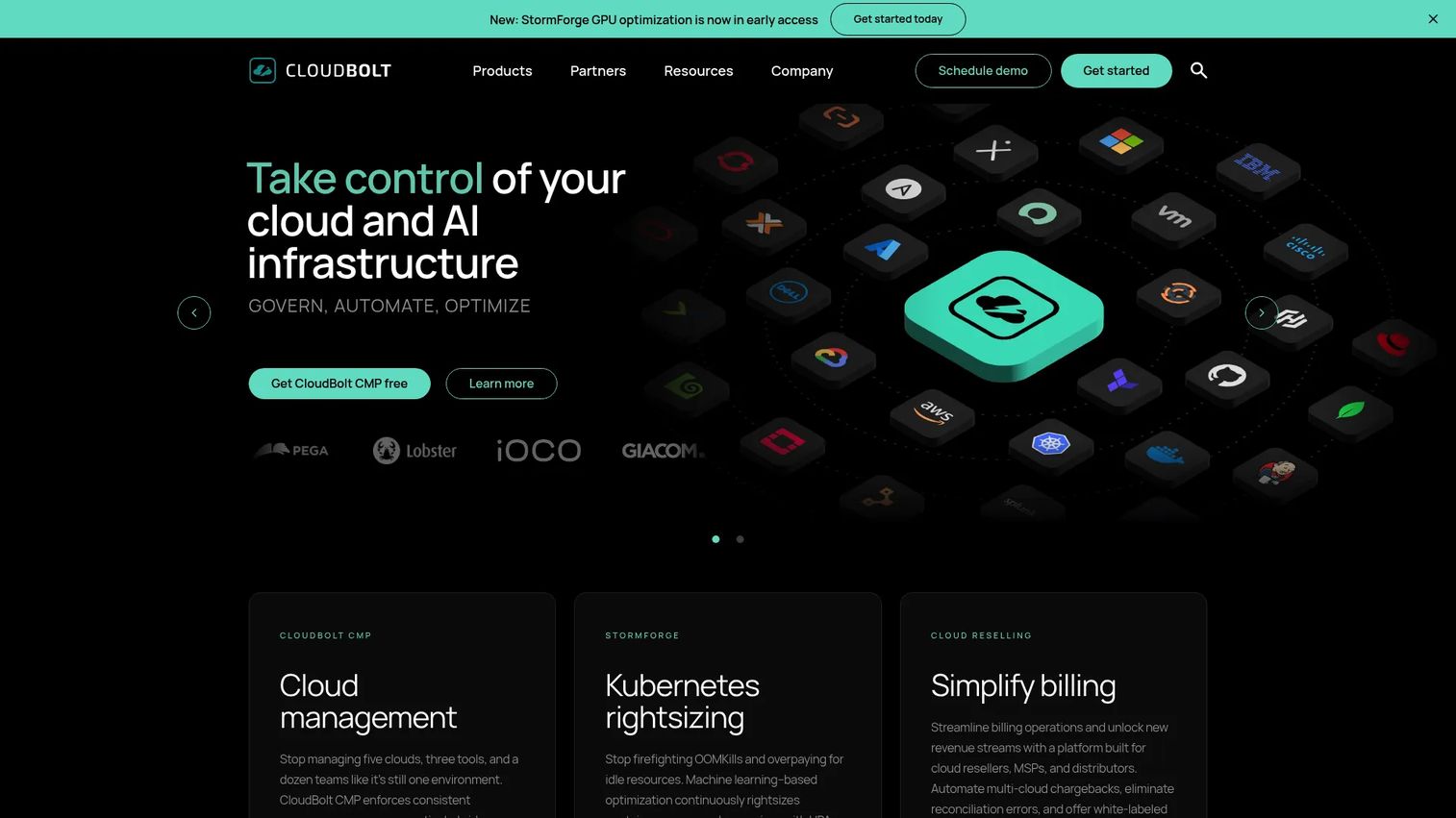
CloudBolt is a cloud management platform built for self-service provisioning, hybrid cloud orchestration, and governance across public and private infrastructure. It supports service catalogs with approval workflows, role-based access, and Terraform integration, so central IT can give engineering teams controlled access without turning every request into a manual ticket. CloudBolt stands out in this list because it offers a confirmed free tier for up to 100 resources, which is rare among enterprise CMPs and useful for proof-of-concept validation.
Best for: Platform and IT operations teams that need governed self-service provisioning across hybrid infrastructure, including teams that want to test before committing to an enterprise contract.
Key features
- Self-service provisioning and service catalog
- Approval workflows and role-based access control
- Terraform integration for IaC-native teams
- Full resource lifecycle orchestration
- Governance policies and guardrails
Why choose CloudBolt: It fits teams where the biggest friction is controlled self-service. Central IT gets governance; engineers get access. The free tier makes it one of the few CMPs you can evaluate hands-on without a sales conversation first.
CloudBolt pricing: Free for up to 100 resources.
G2 rating: 4.3/5
4. Flexera One
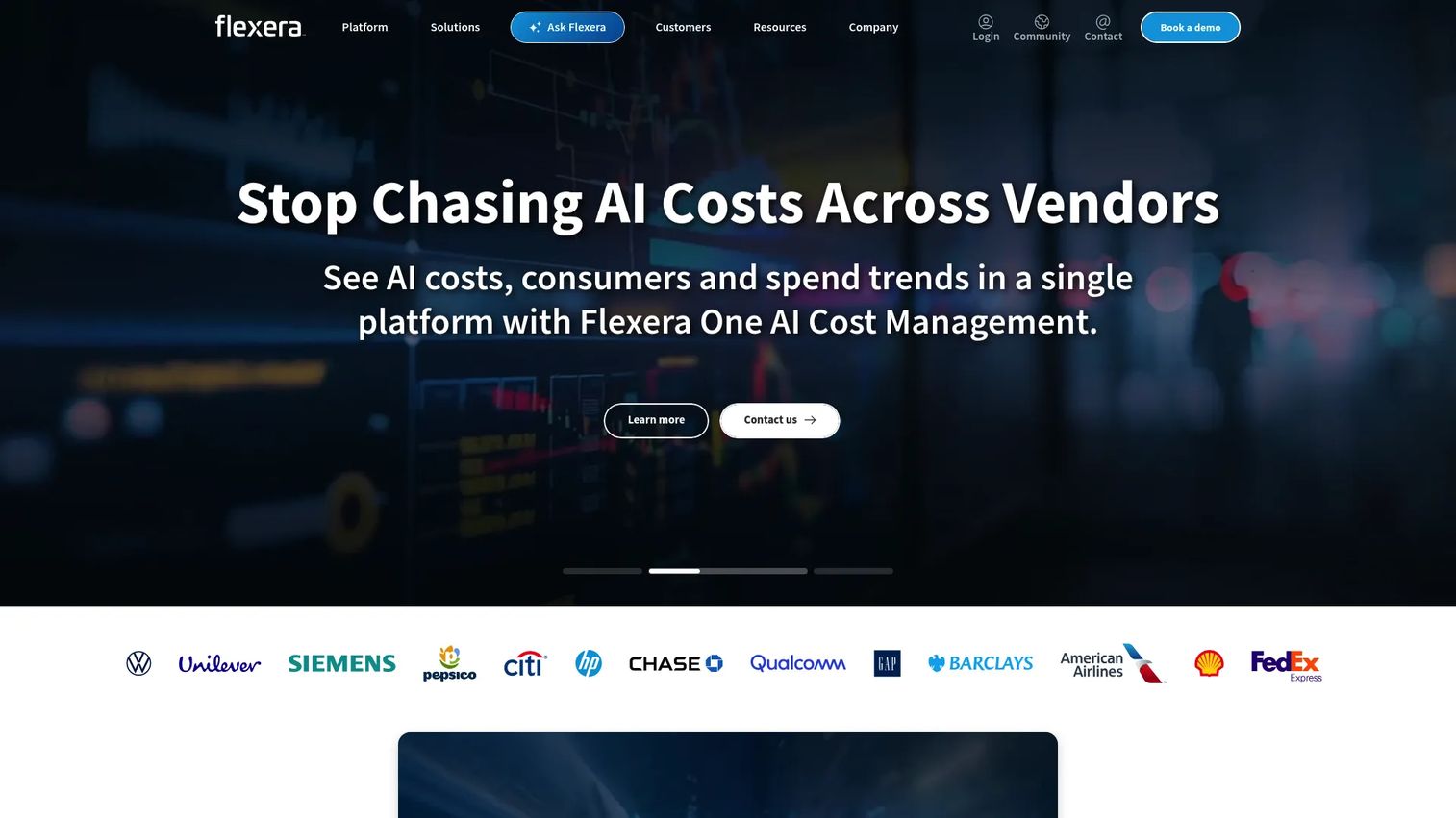
Flexera One is a SaaS platform for managing and optimizing IT assets, SaaS spend, cloud costs, and software licensing across hybrid IT environments. It is one of the few platforms that ties cloud cost management directly to software asset management and license optimization. For organizations where cloud spend is entangled with on-premises software licensing and SaaS contracts, that combination is hard to replicate with point tools. Finance, procurement, IT, and cloud teams all get the same view.
Best for: Enterprises that need cloud cost, software asset management, and hybrid IT governance in a single program.
Key features
- Hybrid IT visibility across hardware, software, SaaS, and cloud
- Software license optimization and compliance tracking
- Cloud cost management and FinOps capabilities
- SaaS discovery and spend optimization
- Technology intelligence, analytics, and cross-team reporting
Why choose Flexera One: Use it when cloud spend cannot be separated from licensing and SaaS conversations. It fits procurement-led organizations where a single source of truth across IT assets and cloud accounts is a compliance or audit requirement.
Flexera One pricing: Pricing is subscription-based and requires a custom quote. Flexera does not post plan rates. Contact Flexera for pricing based on module selection and estate size.
G2 rating: 4.4/5
5. IBM Turbonomic
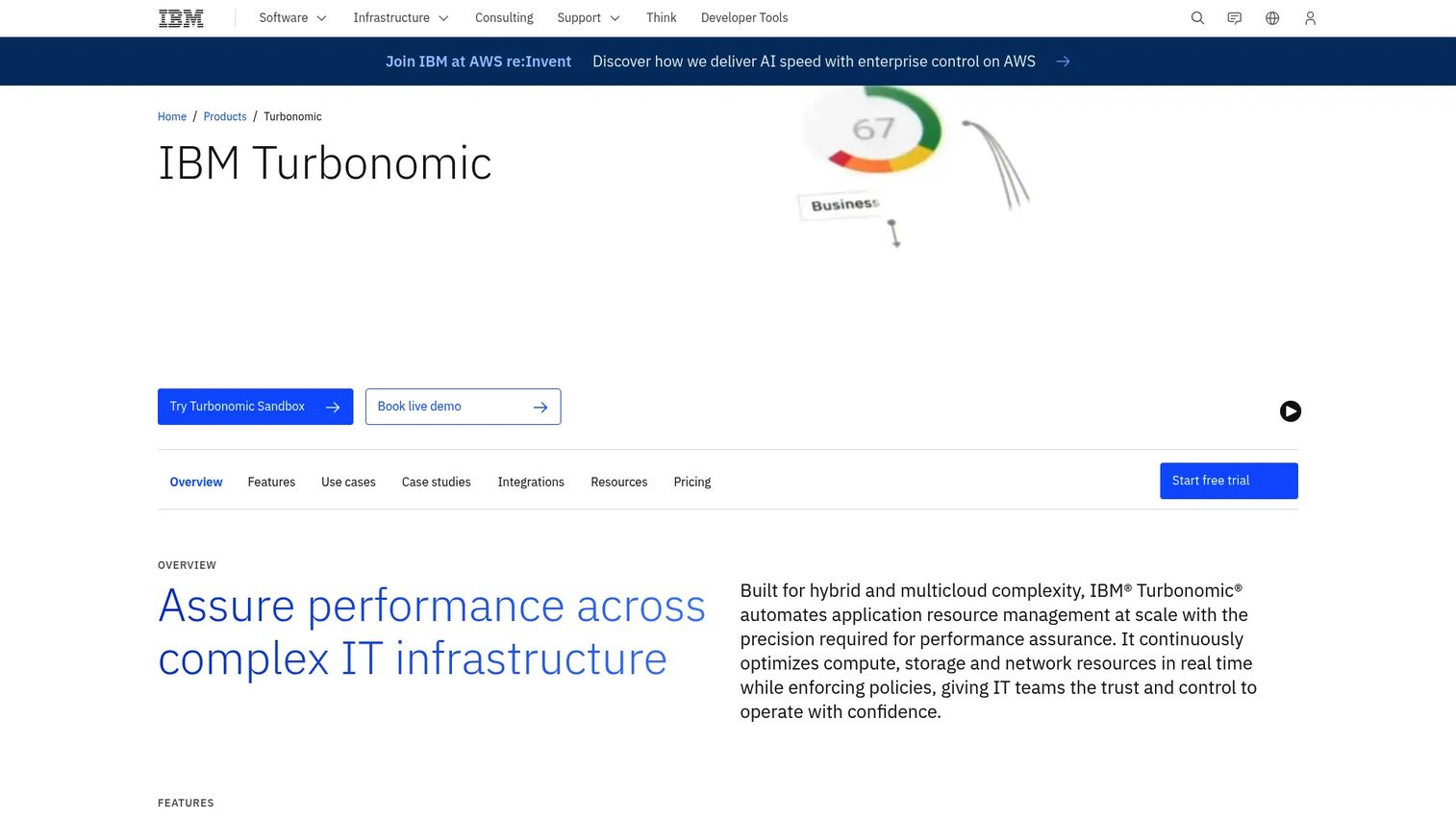
IBM Turbonomic is an application resource management platform that automates optimization of compute, storage, network, cloud, Kubernetes, and AI resources across hybrid and multi-cloud environments. It differs from most CMPs in its focus: Rather than service catalogs or approval workflows, it concentrates on keeping applications correctly resourced in real time. Policy-driven automation can resize VMs, rebalance workloads, and scale Kubernetes pods based on SLO requirements, not just scheduled jobs. For presales engineers running POCs involving performance and cost, this is one of the few platforms that can show measurable optimization actions during an evaluation.
Best for: Enterprise IT, CloudOps, and SRE teams that need automated performance assurance and resource optimization across hybrid cloud workloads.
Key features
- Full-stack visibility across VMs, containers, applications, and infrastructure
- Policy-driven automated actions: VM sizing, Kubernetes scaling, workload rebalancing
- AI-assisted rightsizing recommendations
- Hybrid and multi-cloud optimization
- SLO-driven resource management
Why choose IBM Turbonomic: Use it when the cloud management problem is performance plus cost, not governance workflows alone. It helps teams understand whether workloads are over-provisioned, under-provisioned, or at risk before the bill arrives.
IBM Turbonomic pricing: IBM offers a 30-day free trial with no credit card required. Paid SaaS, on-premises, and Workload Parking plans require a tailored IBM quote.
G2 rating: 4.4/5
6. Apptio Cloudability
Apptio Cloudability is a cloud financial management platform providing multi-cloud cost visibility, allocation, forecasting, optimization, and reporting. It is an IBM product and one of the most established FinOps platforms available. Its strength is cost allocation across organizational dimensions: Teams, products, environments, and business units can each see their portion of spend. Forecasting, budget tracking, commitment portfolio management, and anomaly detection sit alongside Kubernetes cost visibility and customizable dashboards. This is not a provisioning or governance CMP; it is the tool finance and FinOps practitioners reach for when they need to explain cloud bills.
Best for: FinOps teams, finance leaders, and cloud platform teams that need allocation, forecasting, and accountability across multi-cloud accounts.
Key features
- Multi-cloud cost visibility and analysis
- Cost allocation using tags, account groups, and business mappings
- Budgets, forecasting, and commitment portfolio tracking
- Anomaly detection and rightsizing recommendations
- Kubernetes and container cost visibility
Why choose Apptio Cloudability: Use it when the primary buyer is FinOps, finance, or cloud leadership. It helps explain where spend goes, who owns it, and which teams need to act on waste or rightsizing.
Apptio Cloudability pricing: IBM offers Essentials, Standard, and Premium tiers. Request pricing through IBM or the IBM Apptio sales team.
G2 rating: 4.3/5
7. CloudHealth by VMware
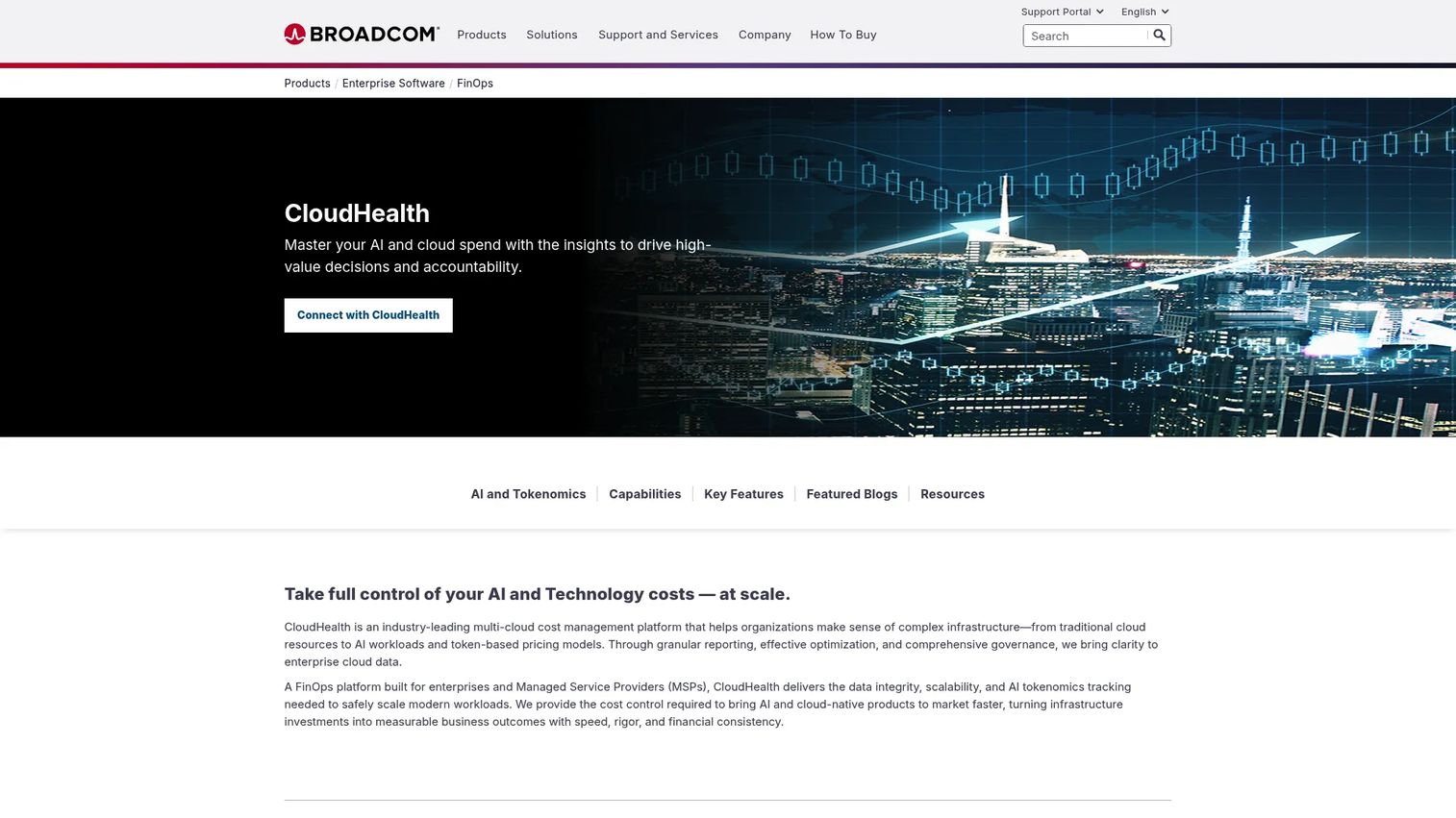
CloudHealth by VMware is a multi-cloud cost management and FinOps platform covering cost reporting, governance policies, optimization recommendations, and multi-account visibility. Following Broadcom's acquisition of VMware, CloudHealth sits within the broader VMware portfolio. Enterprise cloud teams with mature spend programs use it to produce repeatable cost reports, enforce budget policies, and generate rightsizing recommendations across cloud accounts and business units. It is purpose-built for organizations that have moved past "what did we spend?" and need to answer "who is responsible, and what should change?"
Best for: Enterprise teams managing cost reporting and governance policies across large, multi-account cloud estates.
Key features
- Multi-cloud cost reporting and attribution
- Policy governance, alerts, and automated budget actions
- Rightsizing and optimization recommendations
- Multi-account visibility across business units
- Budget tracking and spend allocation
Why choose CloudHealth by VMware: Use it when cloud management starts with financial accountability and operational guardrails. It fits teams with mature cloud spend that need consistent, repeatable cost reporting across accounts.
CloudHealth by VMware pricing: Pricing goes through Broadcom sales. Contact sales for enterprise contract pricing based on cloud spend and account volume.
8. HPE Morpheus Software
HPE Morpheus Software is a governed hybrid-cloud control plane for provisioning, automating, governing, and operating VMs, containers, and cloud infrastructure. It covers private cloud, virtualization, and public cloud in one service catalog, with role-based governance, policy controls, approvals, and multi-tenancy. HPE publishes list pricing, which is uncommon in this category and useful for budget planning before a sales conversation. It also supports VM migration between VMware ESXi and HPE's KVM-based hypervisor, which matters for teams evaluating VMware exit paths.
Best for: Teams that need one orchestration layer across mixed infrastructure including VMware, public cloud, and private data center resources.
Key features
- Self-service catalog and hybrid cloud orchestration
- Role-based governance, policy controls, and multi-tenancy
- Automation for application lifecycles and day-two operations
- Hybrid-cloud FinOps, budgeting, and rightsizing
- 90+ ecosystem integrations including Terraform, Ansible, and Kubernetes
Why choose HPE Morpheus Software: Use it when a team runs public cloud alongside virtualization or private infrastructure and wants one operating layer. It also fits organizations weighing VMware alternatives, given its HVM migration support.
HPE Morpheus Software pricing: VM Essentials starts at $600 per socket per year. Enterprise is $2,500 per socket per year.
9. Nutanix Cloud Platform
Nutanix Cloud Platform is a hybrid cloud infrastructure platform combining hyperconverged infrastructure, cloud services, intelligent operations, and automation across on-premises, edge, and public cloud environments. It is a platform for organizations that want cloud-like operations on private or hybrid infrastructure without treating every workload as a public cloud migration candidate. Nutanix bundles compute, storage, virtualization, Kubernetes support, and cloud management into NCP editions that scale from Starter to Ultimate. For presales teams, it surfaces regularly in discussions about private cloud modernization and VMware replacement.
Best for: Infrastructure teams building a cloud-like operating model on private and hybrid infrastructure, particularly those evaluating alternatives to VMware-based environments.
Key features
- Software-defined compute, storage, virtualization, and networking
- Intelligent operations, self-service automation, and cost governance
- Kubernetes support and container operations
- Consistent management across on-premises, edge, and public cloud
- NCP editions: Starter, Pro, and Ultimate
Why choose Nutanix Cloud Platform: Use it when private infrastructure still carries critical workloads and you need cloud-like operations without a full public cloud migration. It fits organizations that want a single vendor to cover infrastructure and cloud management together.
Nutanix Cloud Platform pricing: NCP bundles are available in one- to five-year licensing terms. Pricing requires a Nutanix quote and varies by edition and infrastructure footprint.
G2 rating: 4.5/5
10. Terraform
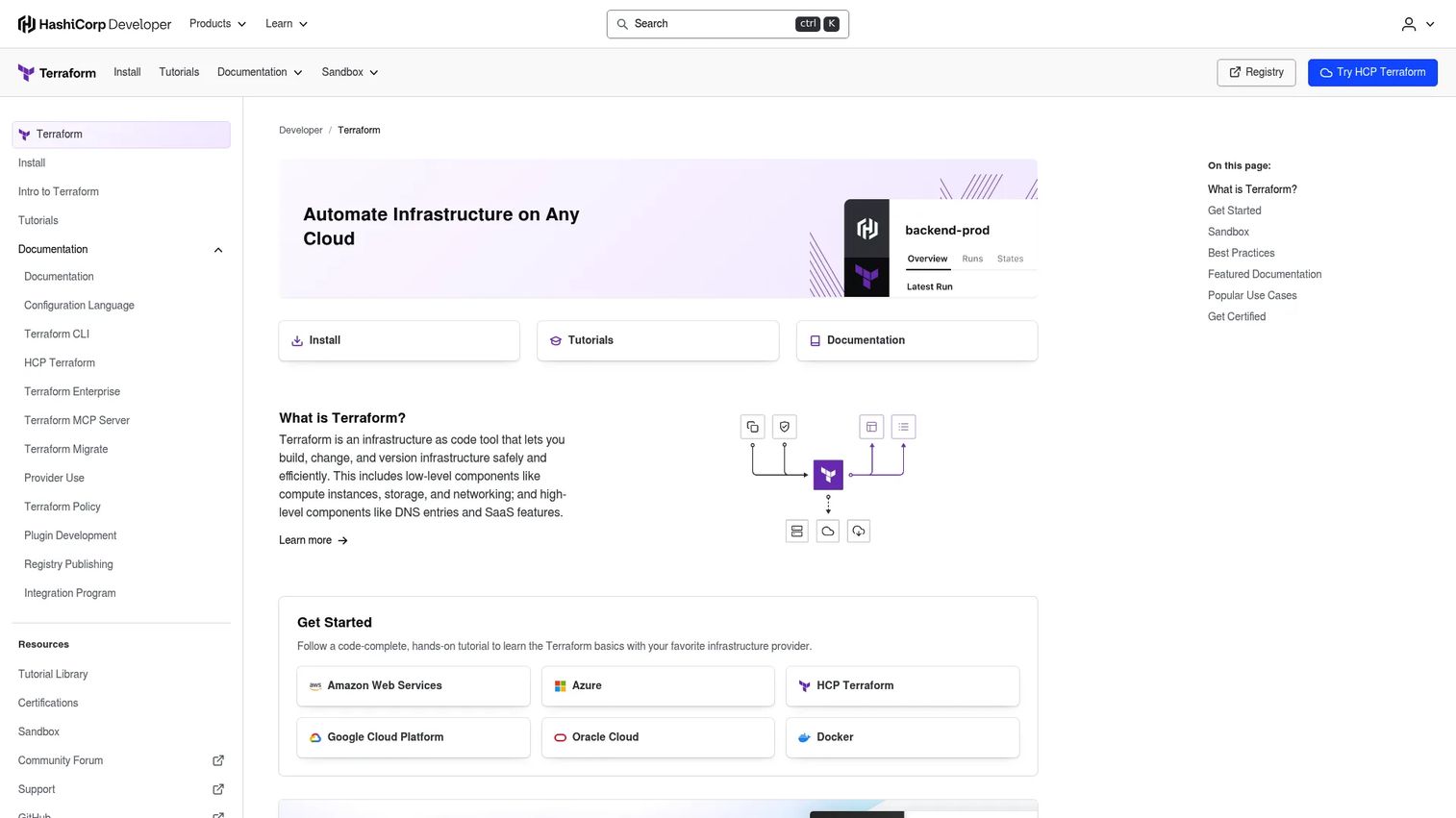
Terraform, now under IBM's ownership of HashiCorp, is an infrastructure-as-code tool for defining, provisioning, and managing cloud and on-premises resources using declarative configuration files. It belongs in this list because it is often the provisioning layer underneath cloud management programs. Teams that run governance, cost, and CMDB tooling on top of Terraform-managed infrastructure need to understand how the two interact. Terraform's Write, Plan, and Apply workflow creates a predictable change process; its provider ecosystem covers hundreds of cloud and SaaS APIs; and its HCP Terraform platform adds team collaboration, remote state, and policy enforcement.
Best for: Platform engineering teams that want declarative, multi-provider infrastructure provisioning as the foundation for broader cloud operations.
Key features
- Declarative HCL configuration across 1,000+ providers
- Write, Plan, and Apply workflow for predictable changes
- Reusable modules and Terraform Registry
- State management and dependency-aware resource graph
- HCP Terraform for team collaboration, remote state, and policy
Why choose Terraform: Use it when engineering wants cloud infrastructure defined in code and version-controlled like software. It works best as the provisioning layer beneath governance, cost management, and service delivery workflows, not as a replacement for them.
Terraform pricing: HCP Terraform Free plan supports up to 500 managed resources at no charge. Essentials uses pay-as-you-go billing per managed resource. Standard and Premium plans require a HashiCorp sales conversation.
G2 rating: 4.0/5
11. Ansible
Ansible is Red Hat's open-source, agentless automation engine for configuration management, application deployment, and operational orchestration. In the cloud management stack, it handles what happens after infrastructure exists: Patching, configuration enforcement, application deployment, and repeatable operational runbooks. It does not provision cloud accounts or manage cost allocation, but it removes the manual execution layer that slows cloud operations teams down. Community Ansible is free to use. Red Hat Ansible Automation Platform adds enterprise features including execution environments, automation hub, event-driven automation, and support.
Best for: IT, DevOps, and infrastructure operations teams that need reusable automation across servers, cloud resources, and network devices without agent installation.
Key features
- Agentless automation using SSH and native protocols
- YAML playbooks for human-readable task definition
- Configuration management and desired-state enforcement
- Application deployment and multi-tier orchestration
- Extensible modules, collections, and Red Hat automation hub
Why choose Ansible: Use it when the bottleneck is repeatable operational work after infrastructure exists. It helps teams replace manual runbooks and standardize execution at scale without adding agents to every managed resource.
Ansible pricing: Community Ansible is free and open source. Red Hat Ansible Automation Platform requires a subscription through Red Hat sales.
G2 rating: 4.6/5
12. OpenStack
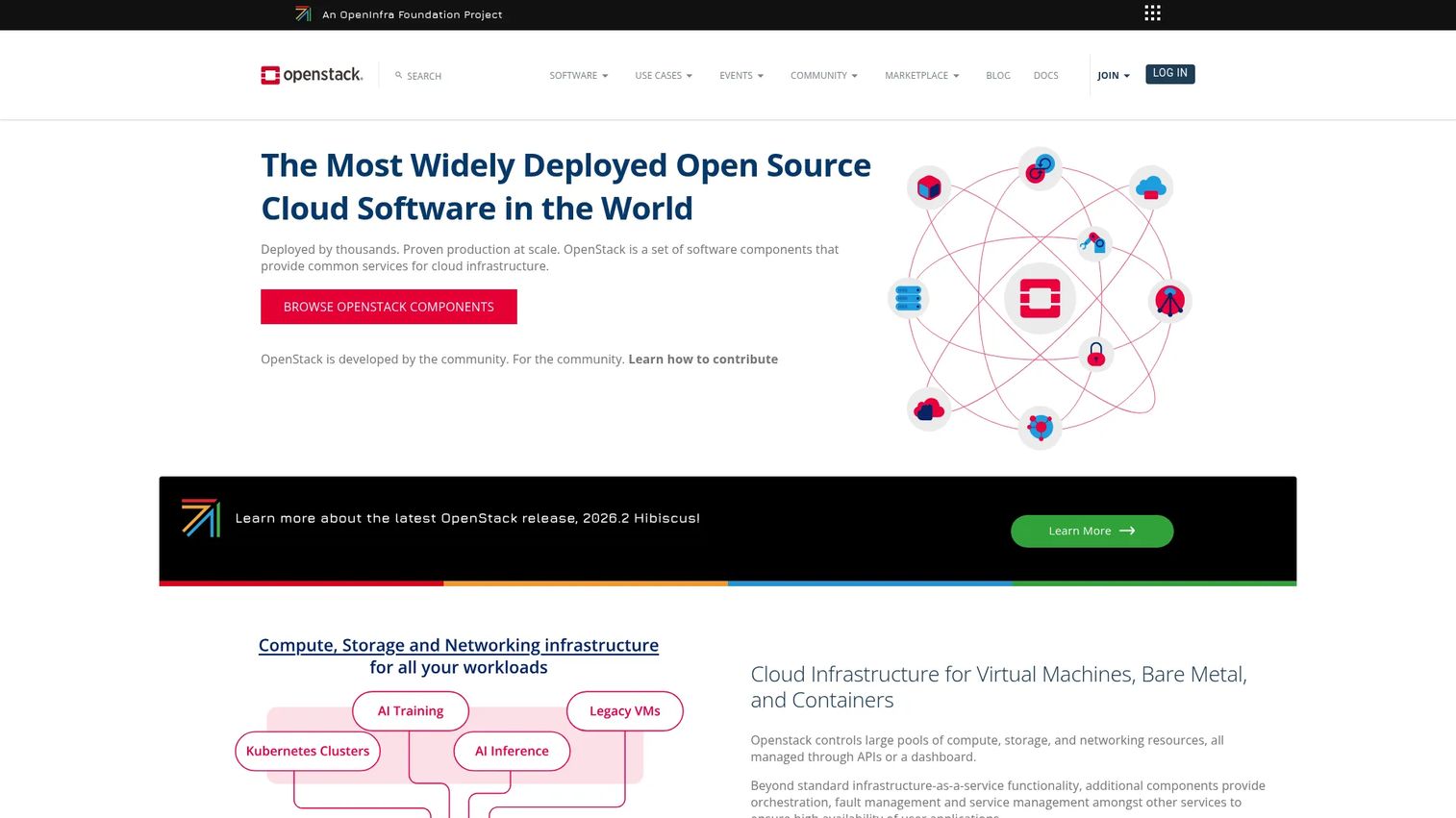
OpenStack is an open-source cloud operating system for managing compute, storage, and networking resources through APIs and dashboards. It gives organizations full control over private cloud infrastructure: Who runs compute workloads, how storage is allocated, how network overlays are configured, and how identity and access are managed. OpenStack requires engineering depth to deploy and operate. But for organizations that need private cloud control without a vendor license, it remains one of the only credible paths. Commercial distributions from Red Hat, Canonical, and SUSE reduce the operational overhead while preserving the open-source foundation.
Best for: Organizations building or operating open-source private cloud infrastructure with the engineering capacity to manage it directly.
Key features
- Compute orchestration via Nova
- Software-defined networking via Neutron
- Block and object storage
- Identity management via Keystone
- Web dashboard (Horizon) and full REST APIs
Why choose OpenStack: Use it when private cloud control matters more than buying a packaged platform. It fits organizations that want to avoid license costs and have engineering teams capable of running infrastructure directly.
OpenStack pricing: The OpenStack software is open source and carries no license cost. Operational costs come from infrastructure, support contracts, and commercial distributions. Managed OpenStack offerings from cloud providers carry their own pricing.
G2 rating: 4.2/5
13. Datadog
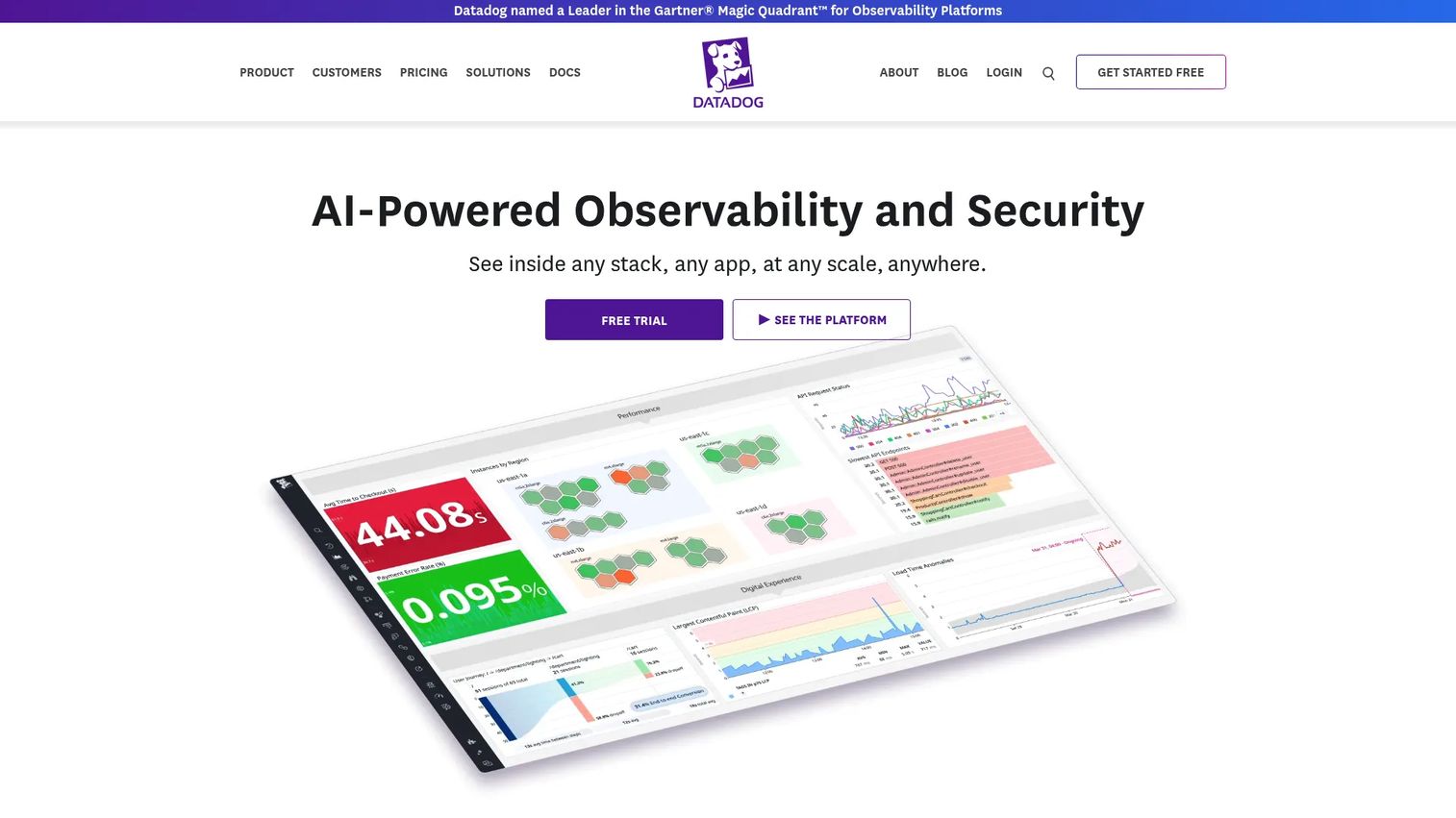
Datadog is an integrated monitoring and observability platform covering infrastructure, applications, logs, security, and AI workloads. It appears in cloud management discussions because you cannot govern or optimize what you cannot see. Datadog's 1,000+ integrations cover AWS, Azure, Google Cloud, Kubernetes, containers, and databases, giving operations teams a real-time view of infrastructure health. It is not a provisioning CMP or a FinOps platform, but it pairs well with every tool on this list by providing the observability layer that governance and cost tools depend on. For presales teams, it commonly appears in technical validation alongside a broader CMP.
Best for: Cloud and platform engineering teams that need observability, monitoring, and incident response across applications and infrastructure.
Key features
- Infrastructure monitoring with 1,000+ integrations and container monitoring
- Application performance monitoring and distributed tracing
- Log management and trace correlation
- Cloud security posture management and vulnerability monitoring
- Service maps and dependency visualization
Why choose Datadog: Use it when the management problem is visibility and incident response. It fits teams that already have provisioning and governance covered and need to close the observability gap.
Datadog pricing: Infrastructure Pro plan starts at $15 per host per month, billed annually ($18 on demand). Enterprise starts at $23 per host per month annually. DevSecOps plans start at $22 per host per month. Pricing varies by product module.
G2 rating: 4.4/5
14. CloudZero
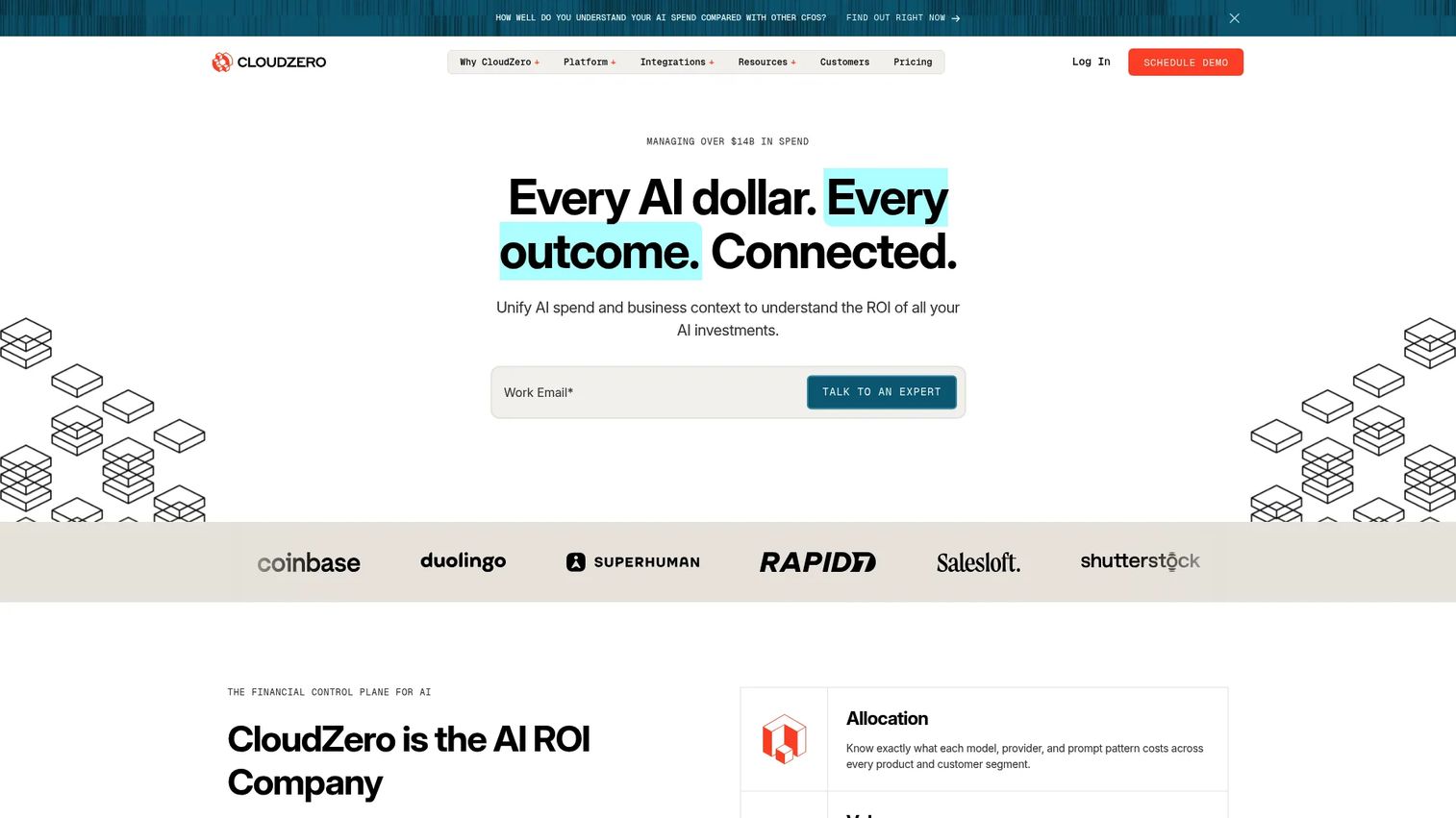
CloudZero is a cloud cost intelligence platform that connects cloud spend to engineering context: Products, features, teams, customers, and environments. Where most FinOps tools allocate spend by tags and accounts, CloudZero builds a cost model that maps to how engineering actually works. A team can see what it costs to run a specific feature, not just an AWS service. Anomaly detection, budget tracking, AI-powered cost analysis, and unit economics reporting give both finance and engineering the context they need to make real decisions about cloud architecture and spending.
Best for: Engineering-led teams and FinOps practitioners that need product-level cloud cost visibility and unit economics, not just account-level reporting.
Key features
- Cloud cost analysis and Explorer interface
- Cost allocation by team, product, feature, environment, or customer
- Unit economics calculation and reporting
- Anomaly detection and budget alerts
- AI-powered cost analysis and optimization recommendations
Why choose CloudZero: Use it when cloud cost conversations need engineering context. It moves teams from reviewing a bill to making product-level cost decisions based on how software actually consumes resources.
CloudZero pricing: CloudZero sells a single subscription with all capabilities included. Pricing is custom and aligns to the scale and complexity of your cloud environment. Contact CloudZero for a quote.
G2 rating: 4.6/5
15. Spot by NetApp
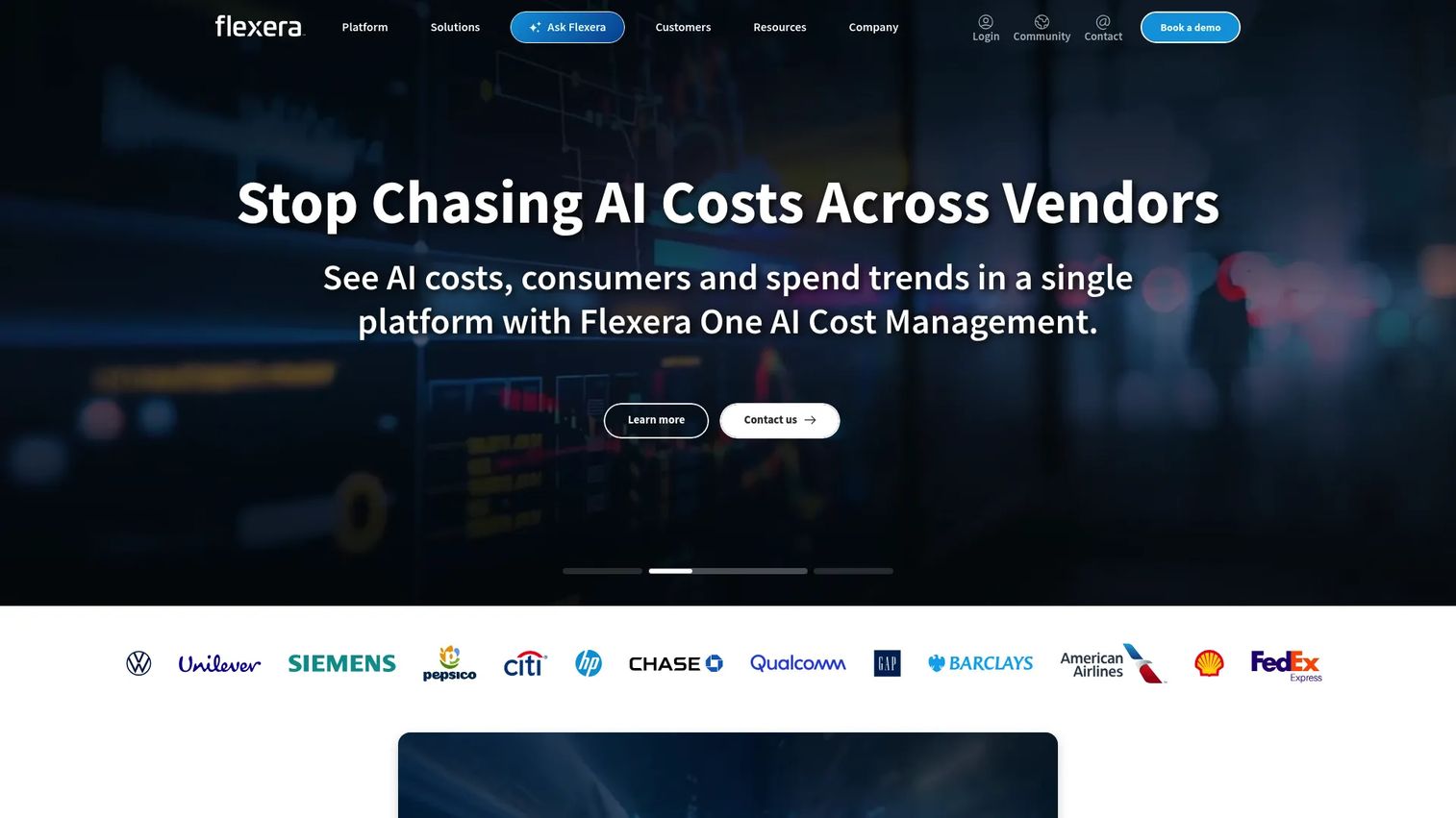
Spot by NetApp provides cloud operations and optimization tools that automate infrastructure management, improve multi-cloud visibility, and reduce cloud costs. Its differentiation is automation over reporting: Rather than generating rightsizing suggestions for engineers to action manually, Spot automates cost optimization for spot instances, committed use discounts, container workloads, and VM scaling. Teams that want savings actions, not just dashboards, find it useful. Note that the Spot by NetApp homepage currently redirects to Flexera following a portfolio change; verify the current product roadmap and commercial ownership before including it in a shortlist.
Best for: Cloud operations and FinOps teams that want automated cost optimization across compute, containers, and committed cloud spend, rather than manual recommendation review.
Key features
- Spot instance automation and interruption handling
- Commitment and reserved instance optimization
- Kubernetes and container cost optimization
- VM rightsizing and workload scaling automation
- Multi-cloud visibility and governance
Why choose Spot by NetApp: Use it when the team is ready to automate savings actions rather than review them. It fits organizations with predictable workloads eligible for spot or committed pricing that want optimization to run continuously.
Spot by NetApp pricing: Contact sales for pricing. The product's current commercial structure should be verified directly given recent portfolio changes.
Considerations when buying a cloud management platform
Start with your operating model
Map whether you run mostly public cloud, private cloud, hybrid, or a combination before shortlisting. A VMware-heavy estate and a cloud-native AWS organization should not shortlist the same tools first. CloudBolt and HPE Morpheus suit hybrid infrastructure with a strong private-cloud component. Terraform and Ansible suit engineering-led provisioning. ServiceNow suits organizations where cloud governance is an extension of IT service management.
Separate provisioning from governance
Terraform and Ansible automate infrastructure, but they do not replace governance, approval, CMDB, or cost workflows. Define what must happen before provisioning, such as approval and tagging, and what must happen after, such as cost allocation and incident routing, before deciding whether you need a full CMP or a point tool.
Verify FinOps depth before the POC
Some platforms show cloud spend. Others support allocation, forecasting, unit economics, and automated savings actions. Ask whether finance needs reports, engineers need actionable recommendations, or leadership needs margin visibility. Apptio Cloudability and CloudZero answer different versions of the same FinOps question.
Run the integration checklist before you commit
List the integrations your team actually depends on: ITSM, CMDB, Git, CI/CD, Kubernetes, identity provider, cloud accounts, and cost exports. Presales teams should turn this into a technical validation checklist and run it during the POC rather than after purchase.
Know when a CMP is overkill
A small, single-cloud team may do well with native consoles, Terraform, and Datadog for monitoring. A CMP earns its place when governance, scale, ownership, cost, and service delivery become cross-team problems. If none of those are cross-team problems yet, a CMP adds process before you need it.
Conclusion
Cloud management is not one category. It is a stack of jobs that buyers need to match to their operating model.
ServiceNow fits enterprise IT teams where cloud governance is an extension of ITSM and CMDB workflows. VMware Cloud Foundation Automation, HPE Morpheus Software, Nutanix Cloud Platform, and CloudBolt cover hybrid cloud orchestration and self-service provisioning from different starting points. Apptio Cloudability, CloudHealth by VMware, CloudZero, and Spot by NetApp each answer a different version of the FinOps question, from executive allocation reporting to engineering-level unit economics and automated savings. Terraform and Ansible remain the provisioning and configuration automation layer beneath most of these programs. Datadog provides the observability that governance and cost tools depend on. OpenStack gives organizations that need private cloud control without a license cost a credible foundation.
The right next step: Use the considerations checklist above to narrow your shortlist to three platforms, then build a POC checklist that validates integrations and workflow fit before you sign.
Cloud management platforms are complex to explain in a static deck. If your presales team needs to show technical workflows clearly during evaluation, interactive product experiences help buyers navigate complex platforms on their own terms before a live call.
Start your journey with Guideflow today!
FAQs
A cloud management platform is software that helps teams govern, provision, monitor, optimize, and automate cloud resources across public cloud, private cloud, hybrid cloud, and multi-cloud environments. It sits above native cloud consoles as the governance, cost, and workflow layer those consoles cannot supply at scale. The category includes full CMPs, FinOps platforms, IaC tools, and observability platforms that solve different parts of the same problem.
The right platform depends on your operating model. ServiceNow is the strongest fit for enterprise IT operations requiring CMDB and governance workflows. VMware Cloud Foundation Automation and HPE Morpheus Software suit VMware-centered hybrid estates. CloudBolt is a practical starting point for self-service provisioning. Apptio Cloudability and CloudZero address FinOps from different angles. Terraform and Ansible remain standard provisioning and automation tools across most cloud programs. Datadog closes the observability gap.
Cloud management can refer to managing one or many cloud environments. Multi-cloud management specifically covers two or more cloud providers with shared governance, cost reporting, identity management, and operations workflows. Multi-cloud adds the coordination problem: Policies, spend, and ownership must stay consistent across AWS, Azure, and Google Cloud simultaneously, which native consoles handle poorly.
Not typically. Terraform and Ansible handle infrastructure provisioning and configuration automation. CMPs add the governance layer on top: Service catalogs, approval workflows, CMDB records, cost allocation, and cross-team reporting. Many organizations run both. CloudBolt, for example, integrates directly with Terraform. The two layers serve different jobs and work best together.
Native consoles work well for small teams using one cloud provider. They become limiting when spend, access controls, policies, and provisioning decisions span multiple clouds or multiple business units. The signal is usually a dispute about ownership, a failed audit, or a month-end bill that nobody can explain by team or product. That is the moment a governance layer becomes necessary. For teams evaluating AI governance across complex cloud environments, AI governance tools covers adjacent policy and compliance tooling worth reviewing.
FinOps support ranges widely across platforms. Basic tools show spend by account or service. Platforms like Apptio Cloudability add allocation, forecasting, budget tracking, and commitment management. CloudZero goes further with unit economics and product-level cost mapping. Spot by NetApp automates savings actions rather than generating reports. Ask during evaluation whether the platform supports showback, chargeback, anomaly detection, and rightsizing recommendations, since all four are distinct capabilities that not every tool covers. For teams exploring broader FinOps tooling context, best business intelligence software covers the reporting layer that often complements FinOps platforms.
Focus on the same criteria your buyer's security, finance, and engineering teams will raise during validation. Check integration depth with ITSM, CMDB, and identity providers. Verify the governance model: How policies are applied, who approves exceptions, and how audit trails are generated. Confirm the provisioning workflow supports IaC tools the engineering team already uses. Validate cost reporting is granular enough for finance. Presales teams also benefit from reviewing best presales software tools for the broader evaluation toolkit.
Pricing varies significantly by vendor model. Terraform HCP Free starts at no charge for up to 500 managed resources. HPE Morpheus Software publishes list pricing starting at $600 per socket per year. Datadog infrastructure monitoring starts at $15 per host per month. Most enterprise CMPs, including ServiceNow, Flexera One, IBM Turbonomic, Apptio Cloudability, and CloudBolt beyond the free tier, require custom quotes. Verify current pricing directly with each vendor and cross-reference G2 and Capterra reviewer reports for budget ranges before entering a sales process.