Beverage distribution is an operational category where the gap between what your systems know and what your team actually needs to act on can cost you margin every single day. Routes change after loads are built. Warehouse teams pick mixed cases under time pressure. Sales reps quote from yesterday's inventory. Finance reconciles everything after the trucks are already back.
According to TraceGains (2025), 69% of food and beverage companies still run core operations on spreadsheets, fax, or email. That data lag between warehouse, delivery, and finance is not a workflow preference. It is a structural problem that the right beverage distribution software is built to remove.
The question is which tool fits your specific bottleneck. A routing problem does not need a full ERP migration. A compliance problem does not need a POS upgrade. A warehouse accuracy problem is not solved by a CRM. Getting the category match right is the whole game.
What's inside
This guide compares 15 beverage distribution software tools for 2026. It is written for founders, VP Operations candidates, and operators evaluating whether to consolidate systems or fill a specific workflow gap.
Tools were chosen for beverage workflow relevance, not generic software popularity. Selection criteria:
- Inventory and warehouse fit: Does it handle cases, kegs, lot codes, mixed pallets, and returns?
- Route, [delivery, and field sales support: Does it cover route planning, proof of delivery, and mobile order capture?
- ERP, accounting, and compliance integrations: Does it connect to the systems you already run?
- Pricing visibility and implementation fit: Can a capable operator see value within the first quarter?
TL;DR
- Best full beverage distribution platform: VIP for established distributors needing beverage-native route accounting and ecosystem reporting
- Best all-in-one beverage management](https://www.guideflow.com/blog/delivery-management-software) platform: Encompass Technologies for distributors consolidating ERP, ordering, payments, and AI analytics
- Best for warehouse execution: Lucas Systems for distribution centers where picking accuracy and throughput are the bottleneck
- Best for breweries and producers: Ekos for craft beverage operations managing production, batch tracking, and compliance together
- Best for routing-first teams: RouteSavvy for delivery teams that need route optimization without replacing their core ERP
- Best for enterprise scale: SAP or NetSuite when multi-entity governance, finance depth, and supply chain complexity justify the implementation cost
What is beverage distribution software?
Beverage distribution software is a category of operational software that helps beverage distributors manage inventory, warehouse work, route planning, delivery, field sales, compliance, accounting, and reporting from one connected system or stack.
It differs from generic ERP because beverage distribution has category-specific workflows that general platforms do not handle natively. Cases, kegs, pallets, deposits, empties, cold chain requirements, and mixed loads all create complexity that generic inventory modules were not built around. Supplier, distributor, retailer, and producer data interact constantly. Compliance workflows vary by product type and geography.
Core workflows beverage distribution software supports:
- Inventory, lot, batch, keg, and returnable-container tracking
- Warehouse receiving, picking, palletizing, quality checks, and replenishment
- Route planning, dispatch, fleet coordination, proof of delivery, and route settlement
- Sales order entry, mobile field sales, promotions, pricing, and merchandising
- ERP, accounting, POS, ecommerce, and supplier integrations
- Compliance reporting for alcohol deposits, excise tax, and food safety traceability
- Reporting, forecasting, profitability analysis, and AI-assisted planning
The main tool categories inside this market:
- Beverage ERP and route accounting platforms (VIP, Encompass Technologies): Full operating systems for distributors
- Warehouse execution and WMS tools (Lucas Systems): Optimize what happens inside the distribution center
- Mobile sales and retail execution tools (Skynamo, SimplyDepo): Connect field reps to inventory and order data
- Route planning tools (RouteSavvy): Optimize delivery without replacing the core stack
- Production and brewery management tools (Ekos): Connect production to inventory and compliance
- Accounting, POS, and integration platforms (QuickBooks, Sage, Xero, Square, Adaptigent): Fill specific workflow gaps without replacing everything
When to use beverage distribution software
Connect warehouse, sales, and delivery data
If your team still uses spreadsheets, manual reconciliation, or disconnected point tools for core workflows, the lag between what was ordered, what was picked, what was delivered, and what finance records creates daily friction. A connected platform reduces that gap. The right trigger is a VP of Operations who cannot answer "what did we actually ship today and at what margin?" without pulling from multiple sources.
Improve route economics and delivery execution
Delivery density, driver time windows, fuel costs, proof of delivery, and route settlement all affect gross margin in ways that most founders only see after the route closes. Teams managing more than a handful of routes without route planning software leave time and cost on the table every week. The calculus changes quickly once you model the per-stop cost of an unoptimized route.
Prepare for compliance and multi-site scale
Alcohol distribution, food safety traceability, TTB reporting, excise tax, keg deposit management, and lot tracking all become harder as volume grows. Breweries, wineries, and spirit distributors operating across multiple warehouses or states need systems that make compliance auditable without manual assembly. Build this infrastructure before the audit request, not after.
Beverage distribution software comparison
The table below covers both full platforms and point tools. Distributors often run combinations, so the grouping reflects how real stacks are built. Pricing and G2 ratings were verified against vendor pages and G2 listings.
| # | Product | Best for | Key differentiator | Pricing | G2 rating |
|---|---|---|---|---|---|
| 1 | VIP | Established beverage distributors | Beverage-native route accounting and three-tier ecosystem data | Contact sales | N/A |
| 2 | Encompass Technologies | Beverage businesses consolidating operations | Full ERP, distribution, ordering, payments, and AI analytics | Contact sales | 4.0/5 |
| 3 | SimplyDepo | Small and mid-sized distributors | Mobile ordering, route delivery, and customer portals | From $49/rep/mo (annual) | 4.7/5 |
| 4 | Lucas Systems | Warehouse-heavy distribution centers | AI-powered voice picking and intelligent batching | Contact sales | N/A |
| 5 | NetSuite | Scaling beverage businesses needing ERP | Cloud ERP with finance, inventory, CRM, and integrations | Contact sales | N/A |
| 6 | Ekos | Breweries, wineries, and beverage producers | Production, batch, inventory, compliance, and sales in one workflow | Contact sales | 4.1/5 |
| 7 | RouteSavvy | Routing-first delivery teams | Route optimization without replacing the core ERP | From $30/mo | 4.5/5 |
| 8 | Skynamo | Field sales and retail execution | Mobile sales app with offline access and ERP integrations | From $39/user/mo | 4.6/5 |
| 9 | Salesforce Sales Cloud | Beverage sales teams standardizing CRM | CRM depth, pipeline visibility, and AppExchange ecosystem | From $25/user/mo | 4.4/5 |
| 10 | SAP | Enterprise beverage operations | Global ERP governance, finance, supply chain, and analytics | Contact sales | 4.2/5 |
| 11 | QuickBooks | Smaller distributors needing accounting | Accessible accounting with invoicing and expense tracking | From $38/mo | 4.0/5 |
| 12 | Sage | Mid-market finance and operations teams | Accounting, inventory, and business management with ERP options | From $132.17/mo | 4.3/5 |
| 13 | Xero | Small distributors with simple finance needs | Cloud accounting with 1,000+ app integrations | From $27/mo | 4.4/5 |
| 14 | Square | Retail and taproom sales operations | POS, payments, and basic inventory for front-of-house | Free plan available | 4.6/5 |
| 15 | Adaptigent Adaptive Integration Fabric | Teams connecting legacy systems | No-code mainframe and legacy API integration | Contact sales | 5.0/5 |
Best 15 beverage distribution software tools
1. VIP
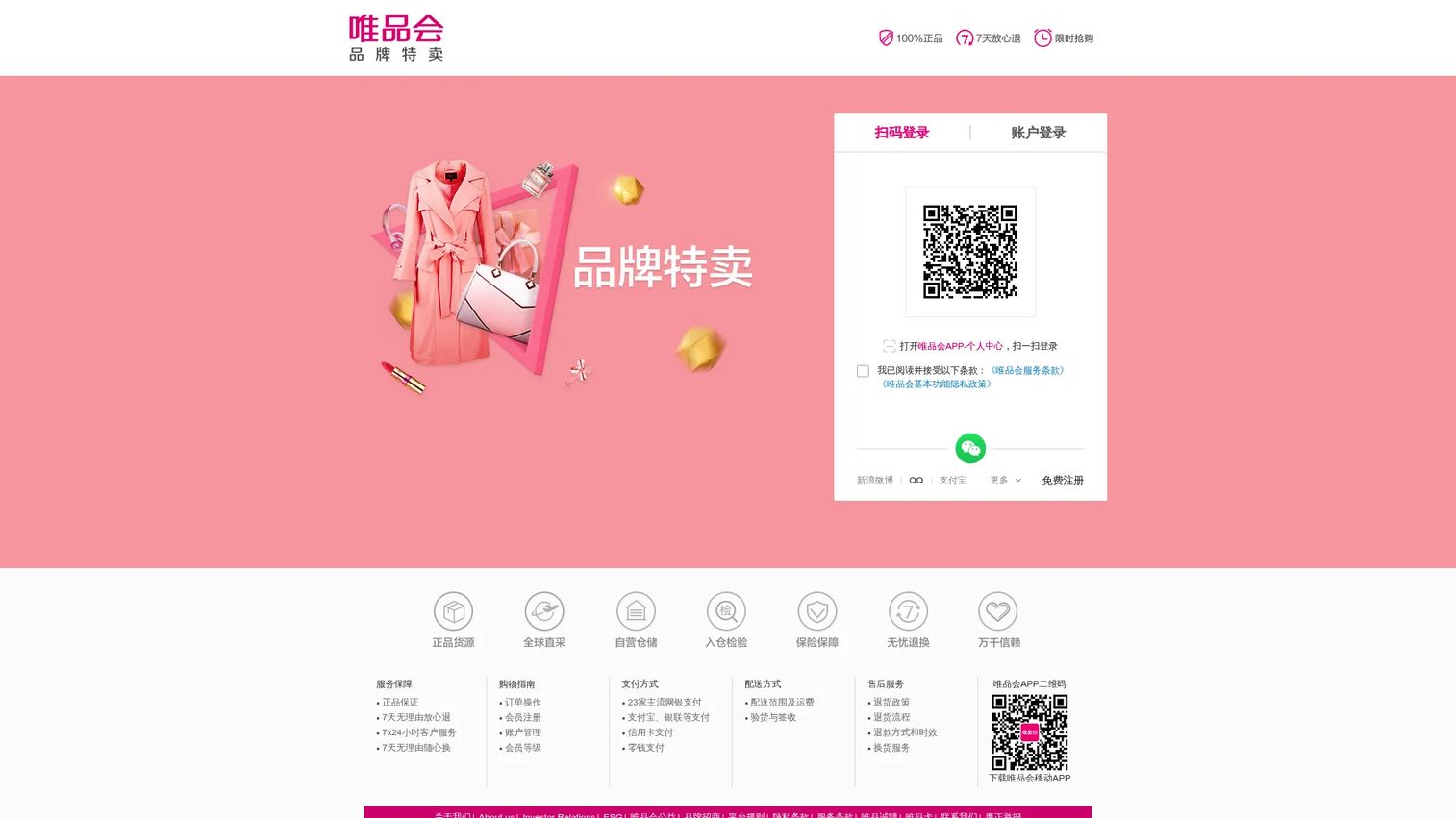
VIP is a beverage industry software platform built for distributors and suppliers operating across the three-tier system. The platform covers route accounting, logistics planning, distributor reporting, ecommerce ordering, and analytics specifically oriented around how beverages move through the supply chain. It is one of the few platforms that treats the beverage ecosystem, not generic distribution, as its primary design context.
Best for: Established beverage distributors that need beverage-native route accounting, supplier connectivity, and reporting without configuring generic ERP modules to fit.
Key features
- Route accounting and route settlement
- Distributor and supplier reporting
- Ecommerce ordering for retail and hospitality accounts
- Logistics planning and fleet coordination
- Beverage analytics across the three-tier ecosystem
Why choose VIP: The differentiation is depth of beverage specialization. If your workflows require understanding of supplier depletion data, route settlement, and retailer ordering in a beverage context, VIP is built for that. It is not a good fit if you need a broad ERP for finance and HR alongside distribution.
VIP pricing: VIP prices through a sales conversation rather than a self-serve page. Contact the team directly to get a quote.
2. Encompass Technologies
Encompass Technologies positions itself as a broad beverage management platform serving distributors, producers, breweries, wineries, retailers, and other businesses across the beverage industry. The platform covers ERP, production, distribution, warehouse management, fleet tracking, mobile applications, digital payments, retailer ordering, and AI analytics. It is designed for beverage businesses that want one broader system rather than a stack of point tools.
Best for: Beverage companies that want to consolidate multiple operational systems into a single platform with ERP depth and management-level analytics.
Key features
- Beverage ERP with production and distribution modules
- Retailer self-service ordering
- Digital payments and invoice OCR
- AI analytics and forecasting
- Fleet tracking and mobile field applications
Why choose Encompass Technologies: The case for Encompass is consolidation. If a new VP of Operations needs one system of record on day one that covers warehouse, routes, sales, and finance, Encompass is worth evaluating seriously. The tradeoff is implementation complexity that grows with the number of modules you activate.
Encompass Technologies pricing: Pricing is set through a sales conversation. Drivers include modules selected, user count, route volume, warehouse footprint, and implementation scope. Contact Encompass directly for a quote.
G2 rating: 4.0/5 based on 16 reviews on G2.
3. SimplyDepo
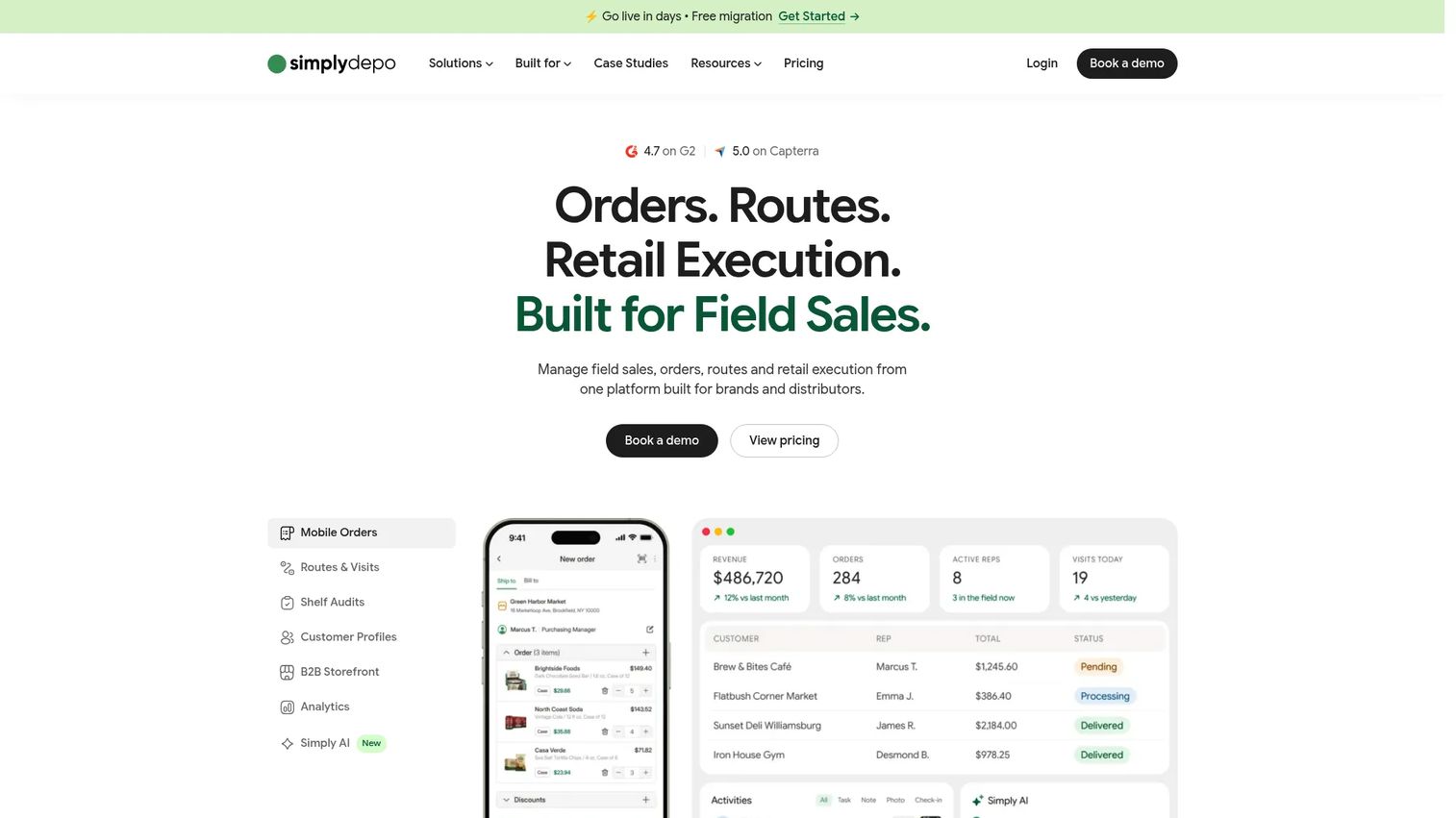
SimplyDepo is a distribution and field sales platform for CPG brands, wholesale distributors, and DSD operators. It covers mobile order capture, retail execution, route planning, inventory tracking, B2B customer self-service ordering, and pricing controls. The platform is built for teams managing field reps and delivery routes without committing to a large enterprise ERP migration.
Best for: Small and mid-sized beverage distributors that need practical route and field execution tools with a faster setup path than a full ERP.
Key features
- Mobile field sales and order capture with offline support
- Route planning and delivery optimization
- B2B customer self-service ordering portal
- Inventory tracking with pricing controls
- Integrations with QuickBooks, Shopify, HubSpot, and Salesforce
Why choose SimplyDepo: SimplyDepo earns its place when the operational constraint is field and route execution, not warehouse complexity or multi-entity finance. The 30-day free trial and no setup fees make it straightforward to validate fit before committing.
SimplyDepo pricing: Plans start at $69 per rep per month on annual billing for teams of one to five reps, dropping to $59 per rep per month for six to fifteen reps and $49 per rep per month for sixteen to forty-nine reps. Enterprise pricing for fifty or more reps is custom. A 30-day free trial is available with no setup fees.
G2 rating: 4.7/5 on G2.
4. Lucas Systems
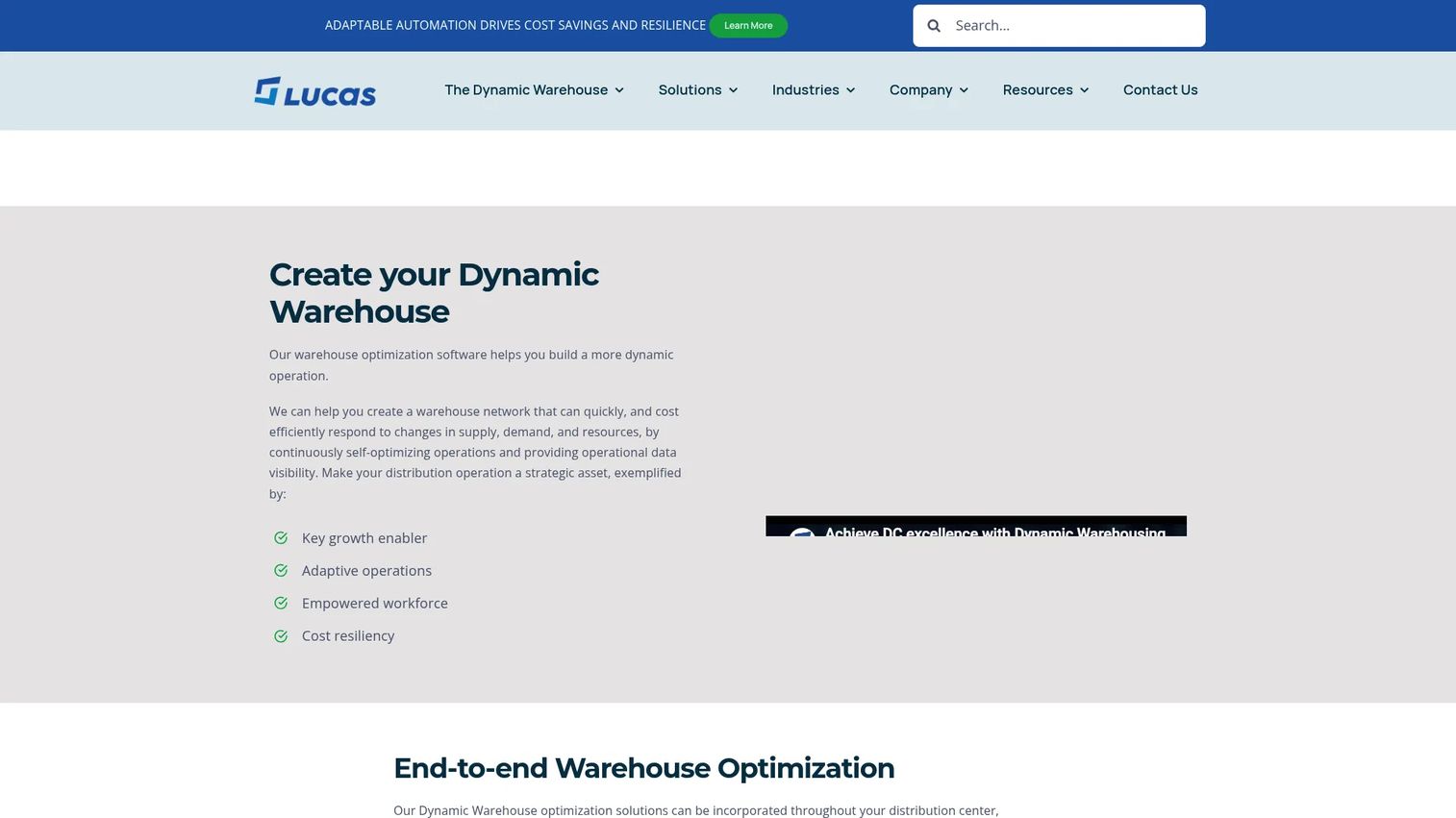
Lucas Systems provides AI-powered warehouse execution software for distribution centers handling beer, wine, spirits, and non-alcoholic beverages. The platform centers on voice-directed work, intelligent batching, pick-path optimization, pallet quality control, and a real-time management console. It integrates with WMS, ERP, and warehouse automation systems rather than replacing them.
Best for: Beverage distribution centers where warehouse picking accuracy, throughput, and labor productivity are the primary bottleneck.
Key features
- AI-powered voice-directed picking and multimodal mobile applications
- Dynamic batching and pick-path optimization
- Pallet quality auditing and load quality control
- Real-time management console with task orchestration
- WMS and ERP integration layer
Why choose Lucas Systems: This is a warehouse execution tool, not a route accounting or ERP replacement. The case is specific: If mixed-case picking, dual-pallet workflows, and pick-path inefficiency are costing you labor time and delivery accuracy, Lucas addresses those directly. It is not the right tool if the gap is in sales, routing, or finance.
Lucas Systems pricing: Lucas prices through a sales and consultation process. Cost factors include warehouse footprint, number of devices, modules, and integration complexity.
5. NetSuite
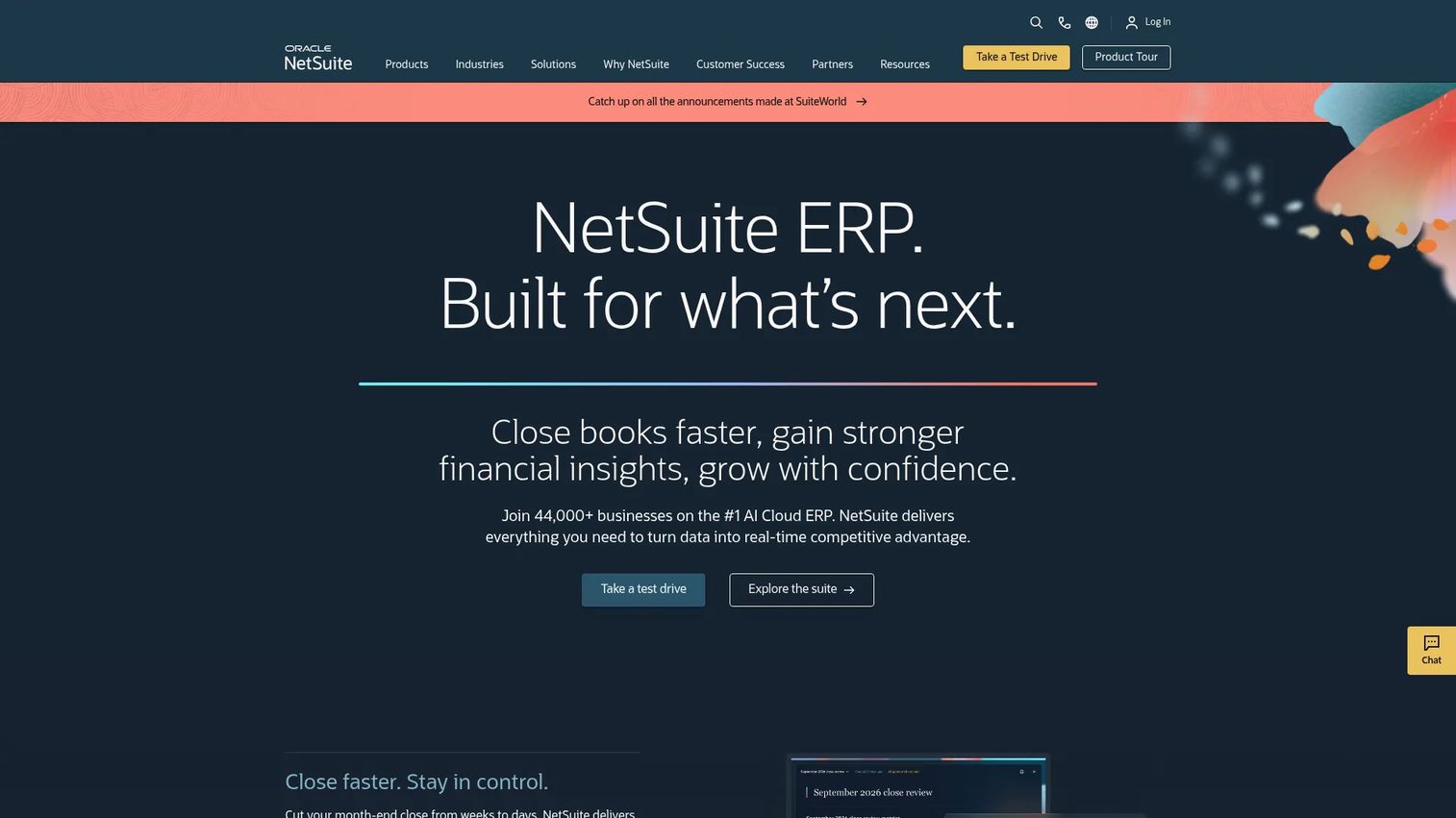
NetSuite is Oracle's cloud ERP platform used by scaling companies across industries. For beverage distributors, it covers financial management, inventory and order management, CRM, ecommerce, supply chain, and reporting. Beverage-specific workflows like route settlement, keg tracking, and excise tax compliance typically require configuration or partner add-ons rather than native modules.
Best for: Scaling beverage businesses that need ERP depth across finance, inventory, and multi-entity reporting, and are willing to invest in implementation expertise to configure beverage-specific workflows.
Key features
- Cloud ERP with financial management and accounting
- Inventory, order, supply chain, and warehouse management
- CRM, ecommerce, and commerce management
- Advanced analytics and AI capabilities through NetSuite Next
- Customizable modules and integrations
Why choose NetSuite: NetSuite is the right call when finance maturity, multi-entity consolidation, and ERP breadth matter more than out-of-the-box beverage specialization. If your new CFO or VP Finance needs a platform they already know, this fits. Expect implementation time and partner cost as part of the equation.
NetSuite pricing: Annual licensing is set through a sales conversation and varies by modules, users, entities, and implementation scope. Oracle does not display a standard starting price on the product page.
6. Ekos
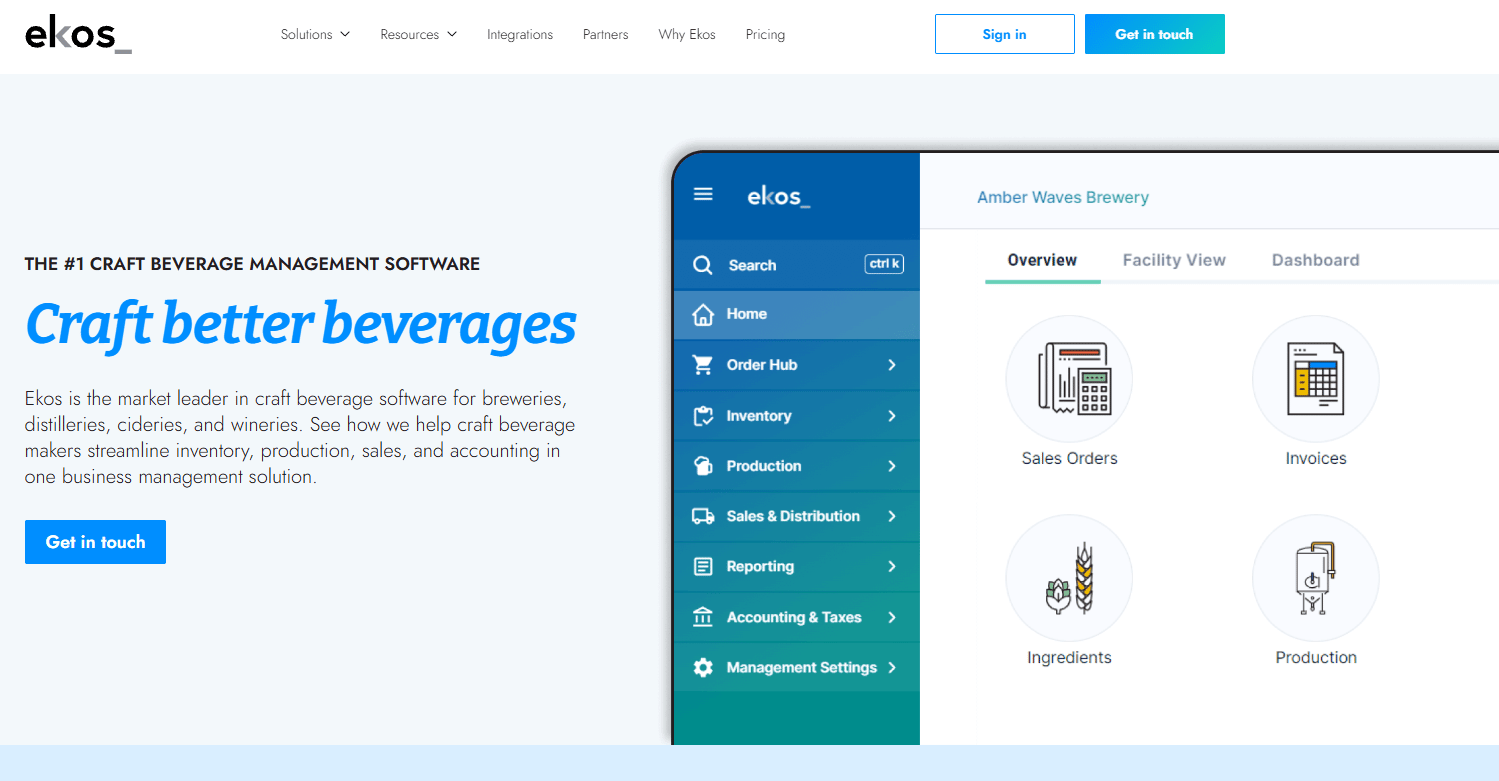
Ekos is a business management platform for craft beverage producers including breweries, wineries, cideries, and distilleries. It connects production management, batch and ingredient tracking, inventory, sales orders, keg tracking, and accounting integrations into one workflow. The platform is differentiated from pure distributor tools by its production-side depth.
Best for: Craft beverage producers that need to connect raw materials, production batches, finished goods, and compliance reporting in a single operating system.
Key features
- Batch and production management
- Inventory management with keg tracking
- Compliance and TTB reporting tools
- Sales order management
- Accounting integrations and reporting
Why choose Ekos: Ekos makes sense when the producer side of the operation needs as much visibility as the distribution side. For a brewery or winery scaling distribution without losing production control, Ekos keeps both workflows in one place. It is less suited for pure distributors with no production function.
Ekos pricing: Ekos offers Essentials, Plus, and Professional plans billed annually. Pricing is set through a sales conversation. Contact Ekos directly for a quote based on your production volume, locations, and modules.
G2 rating: 4.1/5 on G2.
7. RouteSavvy
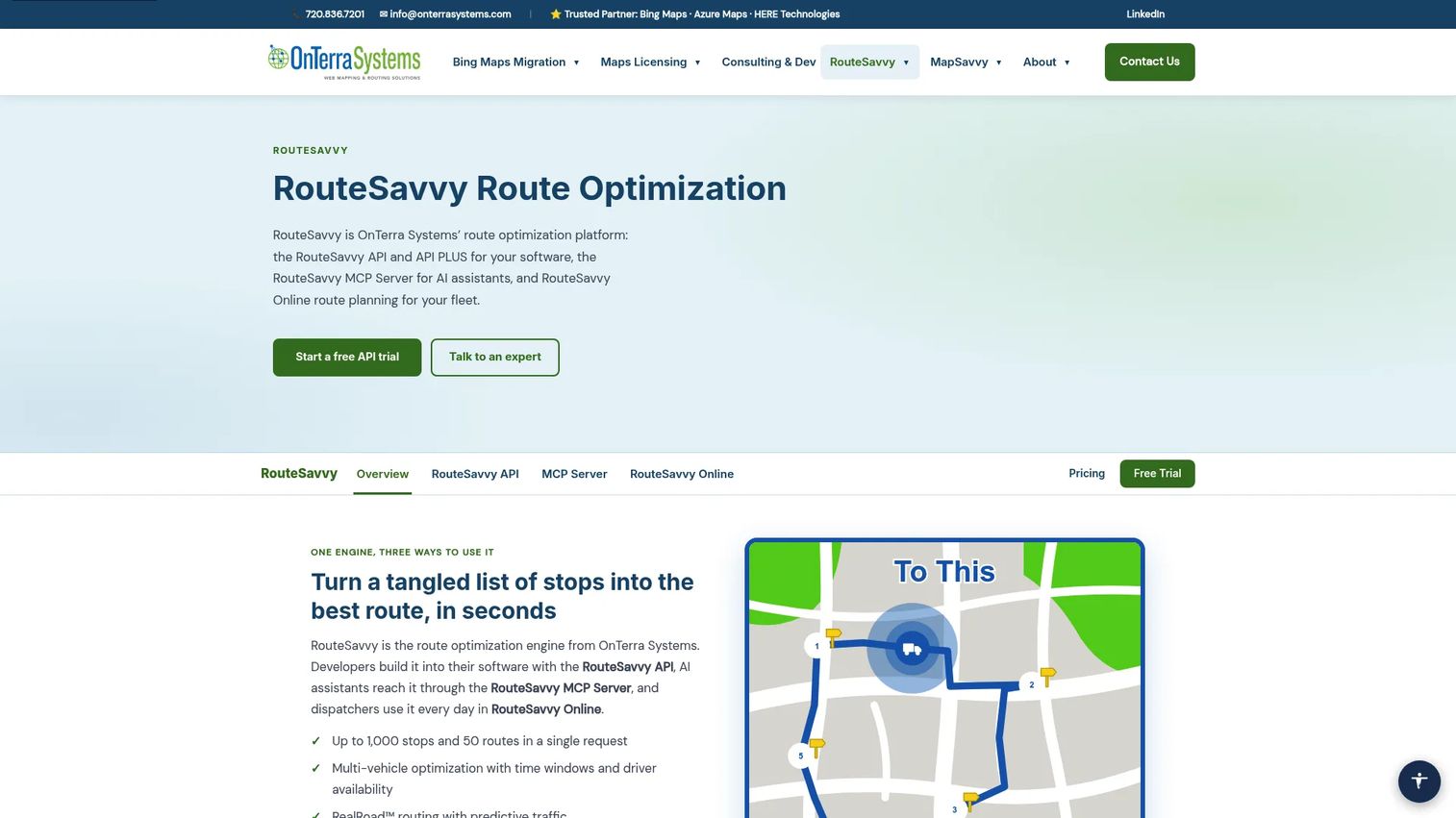
RouteSavvy is web-based route planning software for delivery teams managing small to mid-sized fleets. It handles multi-stop route optimization, bulk address import from Excel or CSV, mobile driver navigation, GPS tracking, and proof-of-delivery capture including photos and signatures. It is not a full distribution platform but functions well as the routing layer on top of an existing ERP or accounting system.
Best for: Beverage distributors that need route optimization and mobile driver tools without replacing their core ERP or accounting stack.
Key features
- Automated multi-vehicle route optimization and balancing
- Bulk CSV address import with error handling
- Mobile app with GPS tracking and proof-of-delivery capture
- Customer notifications and delivery confirmations
- Fleet routing and dispatch
Why choose RouteSavvy: The case for RouteSavvy is surgical. If routing is the specific constraint and your ERP handles everything else, adding a $30/month routing layer is faster and cheaper than migrating to a new platform. It is not the tool if you also need inventory, compliance, or warehouse execution improvements at the same time.
RouteSavvy pricing: RouteSavvy charges $30 per month for up to 30 routing credits, with additional $30 charges per 30-credit increment. A one-time $99 account activation fee applies. A 14-day free trial is available.
G2 rating: 4.5/5 on G2.
8. Skynamo
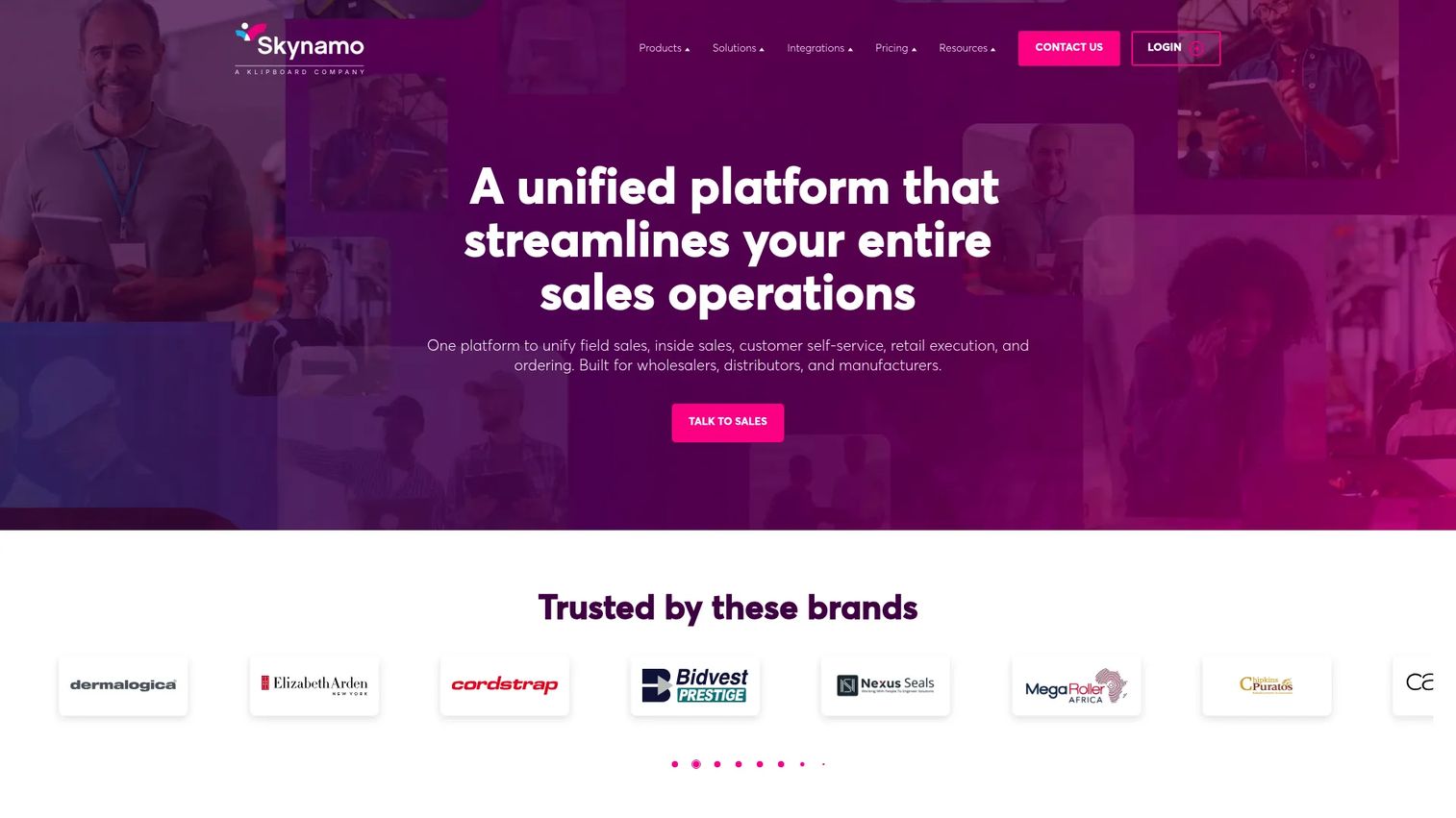
Skynamo is a unified B2B sales operations platform for manufacturers, wholesalers, distributors, and importers. The core product is a mobile field sales app that lets reps capture orders, record customer visits, view product and pricing data offline, track routes, and sync back to ERP systems. It is built for teams where field rep behavior and order accuracy are the gaps, not warehouse or route optimization.
Best for: Beverage field sales teams that need mobile order capture, rep activity visibility, and ERP sync without replacing the distribution platform they already run.
Key features
- Offline-capable mobile field sales app
- On-site order capture with product and inventory data
- Customer visit history and customizable visit forms
- Route scheduling and task management
- ERP integrations and customer self-service ordering
Why choose Skynamo: Skynamo fits when the sales rep is the bottleneck. If reps are capturing orders on paper, calling in orders late, or missing retailer visits, Skynamo standardizes that behavior and feeds the data back to your ERP. It is not a warehouse or route accounting tool.
Skynamo pricing: Skynamo starts at $39 per user per month. Pricing for ERP-integrated rollouts and add-on modules is custom. Contact Skynamo for team-based pricing.
G2 rating: 4.6/5 on G2.
9. Salesforce Sales Cloud
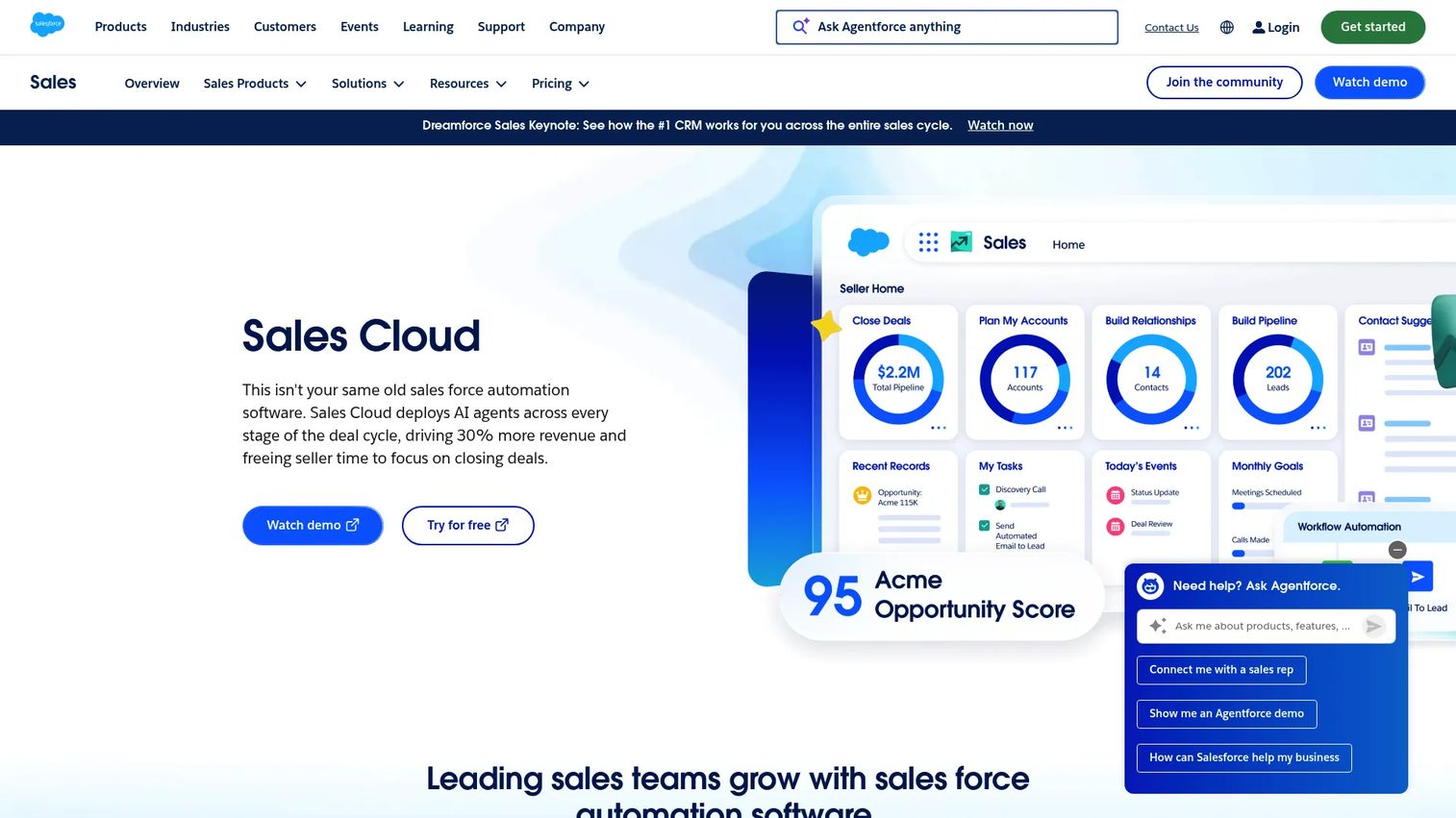
Salesforce Sales Cloud is a CRM platform for managing sales pipelines, account relationships, forecasting, and revenue operations. For beverage teams, it supports account management across retailers, bars, restaurants, and distributors, pipeline tracking, sales process automation, and integration with ERP and marketing systems through the AppExchange. It is not distribution software but it functions as the CRM layer for sales organizations running alongside a beverage ERP.
Best for: Beverage sales organizations that need pipeline visibility, account governance, and CRM depth alongside a separate distribution and warehouse platform.
Key features
- Account and opportunity management
- Pipeline and forecast tracking
- Sales automation and quoting workflows
- AppExchange integrations with ERP and marketing tools
- CRM access through browser extension and mobile app
Why choose Salesforce Sales Cloud: Choose it when sales process visibility is the gap, not warehouse or route execution. It pairs well with a beverage ERP or WMS. The tradeoff is cost and configuration effort at scale, which is why it fits better at mid-market and above than for smaller distributor teams.
Salesforce Sales Cloud pricing: Starter Suite is $25 per user per month billed monthly or annually. Pro Suite is $100 per user per month billed annually. Enterprise is $175, Unlimited is $350, and Agentforce 1 Sales is $550 per user per month, all billed annually. A 30-day free trial is available.
G2 rating: 4.4/5 on G2.
10. SAP
SAP provides enterprise software covering cloud ERP, finance, human capital management, supply chain, procurement, CRM, and analytics. For large beverage operations, SAP's supply chain, finance governance, and analytics capabilities support complex multi-entity structures, global procurement, and regulatory compliance at scale. Implementation effort and partner dependency are significant factors to model before committing.
Best for: Enterprise beverage companies with complex multi-entity structures, global operations, or strict governance requirements that justify substantial implementation investment.
Key features
- Cloud ERP with finance controls and multi-entity reporting
- Supply chain planning and procurement workflows
- Human capital management
- Business AI through Joule
- Spend management and analytics
Why choose SAP: SAP earns its place when scale and governance complexity make a mid-market platform insufficient. If your operation spans multiple countries, legal entities, or heavily regulated categories, SAP's breadth becomes a practical requirement. For distributors under 50 routes, the implementation cost is rarely justified by the operational gain.
SAP pricing: Core ERP and application packages are priced through a sales process. SAP Build base users start at $3.46 per active user per month. Contact SAP for quotes on ERP modules relevant to beverage distribution.
G2 rating: 4.2/5 on G2.
11. QuickBooks
QuickBooks is online accounting software for managing business finances, invoicing, expenses, bills, payroll, and cash flow. For small beverage distributors, it handles the finance layer without the complexity of a full ERP. Route accounting, compliance, and warehouse workflows are not native to QuickBooks and require supporting tools as the operation grows.
Best for: Small beverage distributors that need a solid accounting foundation before scaling into a broader ERP or distribution platform.
Key features
- Income and expense tracking
- Invoicing and online payments
- Automated bank transaction syncing and reconciliation
- Basic inventory tracking
- Financial reports and cash flow tools
Why choose QuickBooks: It is the right starting point when cleaning up the finance layer is the first priority. It is not the right long-term answer when route accounting, inventory accuracy, and compliance reporting start to matter. Most teams outgrow its inventory tools before they outgrow its accounting.
QuickBooks pricing: A free plan is available. Simple Start is $38 per month, Essentials is $85, Plus is $140, and Advanced is $340 per month. All plans are billed monthly.
G2 rating: 4.0/5 on G2.
12. Sage
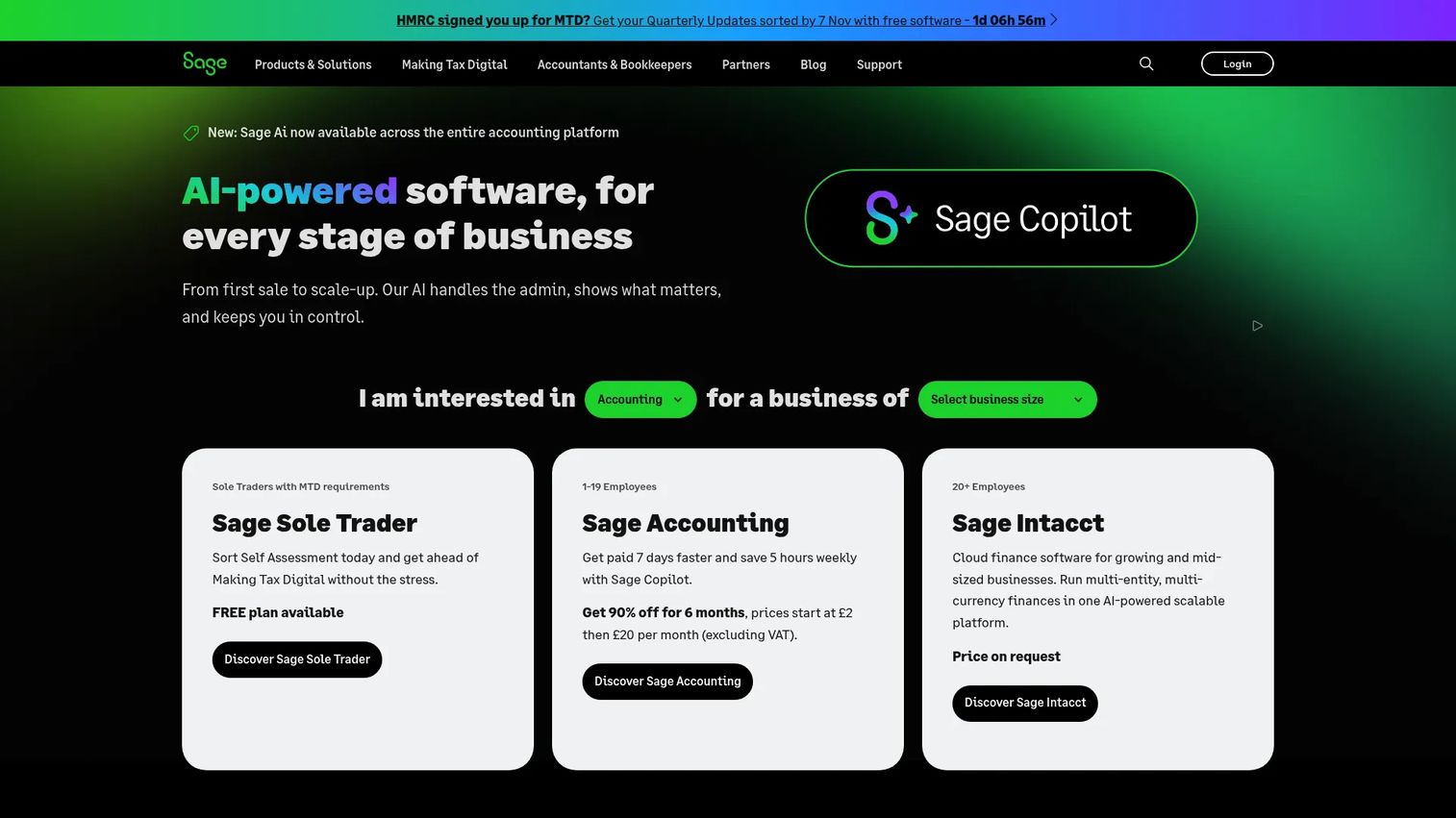
Sage is a portfolio brand covering accounting, financial management, payroll, HR, and ERP for organizations of varying sizes. Sage 50 covers cloud accounting with invoicing, inventory, job management, and financial reporting. Sage Intacct reaches further into multi-entity accounting, automation, and advanced reporting for mid-market teams. Product selection matters because Sage products serve significantly different operational contexts.
Best for: Beverage companies that have outgrown basic accounting and need stronger financial reporting, inventory tools, or multi-company visibility before committing to a full ERP migration.
Key features
- Cloud accounting with invoicing and expense management
- Inventory management and job costing (Sage 50)
- Multi-entity accounting and dashboards (Sage Intacct)
- AI-powered financial automation and anomaly detection
- Real-time reporting and advanced analytics
Why choose Sage: Sage fills the gap between QuickBooks-scale accounting and a full ERP commitment. If a beverage distributor needs stronger inventory controls, multi-company consolidation, or audit trails without the cost and complexity of NetSuite or SAP, Sage 50 or Sage Intacct is worth evaluating. Confirm which Sage product matches your specific need before entering a sales conversation.
Sage pricing: Sage 50 starts at $132.17 per month for Pro Accounting. Premium Accounting is $182.50 per month and Quantum Accounting is $271.17 per month. Sage Intacct pricing requires a sales conversation.
G2 rating: 4.3/5 on G2 for Sage Intacct.
13. Xero
Xero is cloud accounting software for small and growing businesses. For small beverage distributors and producers, it handles invoicing, bill payments, bank reconciliation, expense tracking, cash flow forecasting, and payroll. Xero's app marketplace with over 1,000 integrations lets teams add inventory, routing, or operational tools alongside the accounting layer without migrating away from Xero.
Best for: Small beverage teams that need straightforward cloud accounting and want flexibility to connect operational tools through Xero's app marketplace.
Key features
- Invoicing, quotes, and online payments
- Bank reconciliation and expense tracking
- Real-time reports and cash flow forecasting
- Payroll and project tracking
- Integrations with 1,000+ apps through the marketplace
Why choose Xero: Xero works well when financial workflow cleanup is the first priority and the team wants to build an integrated stack gradually. It is a finance layer, not the whole distribution operating system. Teams with more than a handful of delivery routes will need to add route planning or WMS tools alongside it.
Xero pricing: The Early plan starts at $5.40 per month for the first three months, then $27 per month. Growing is $11.80 per month for three months, then $59 per month. Established is $19.40 per month for three months, then $97 per month.
G2 rating: 4.4/5 on G2.
14. Square

Square is an integrated commerce platform for accepting payments and managing in-person and online business operations. For beverage businesses, Square is relevant at the retail and taproom layer: Managing front-of-house transactions, event sales, online ordering, basic inventory, and customer profiles. It is not a distribution, route accounting, or warehouse platform.
Best for: Beverage retailers, taprooms, and producers that need POS, payment processing, and simple inventory for direct-to-consumer and event sales.
Key features
- Point-of-sale payments and hardware
- Online payments and payment links
- Basic inventory management and customer profiles
- Online ordering and business banking
- Invoicing and payroll
Why choose Square: Square is the right tool when the problem is front-of-house transaction management, not distribution. A brewery taproom or beverage retailer benefits from Square's low barrier to entry. As the business grows into wholesale and multi-channel distribution, Square will need to connect to a broader accounting software or ERP layer.
Square pricing: Square Free has no monthly fee and charges standard processing fees. Square Plus is $49 per month per location and Square Premium is $149 per month per location. Both Plus and Premium include 30-day free trials.
G2 rating: 4.6/5 on G2 for Square Point of Sale.
15. Adaptigent Adaptive Integration Fabric
Adaptigent Adaptive Integration Fabric is a no-code mainframe integration platform for connecting mission-critical legacy data, applications, and transactions to modern APIs and cloud environments. For beverage distributors running older ERP, finance, or ordering systems, Adaptigent provides an integration layer that surfaces legacy data without requiring a full system replacement. It supports REST and SOAP API creation, complex service orchestration, and deployment across Windows, Linux, and OpenShift containers.
Best for: Beverage companies connecting legacy ERP, finance, ordering, or distribution systems to modern platforms without a full migration.
Key features
- No-code REST and SOAP API creation for legacy systems
- Complex multi-branch service orchestration
- COBOL and PL/1 application integration
- OpenAPI 2.0 and 3.0 support
- Deployment on Windows, Linux, and containers
Why choose Adaptigent Adaptive Integration Fabric: The fit is specific: When the real bottleneck is integration debt rather than application replacement, Adaptigent addresses it. If your operation depends on a mainframe system and modern tools cannot connect to it, an integration fabric is cheaper and faster than replacing the core system. It is not a distribution platform.
Adaptigent Adaptive Integration Fabric pricing: Adaptigent uses consumption-based pricing with pre-pay and post-pay options and volume-based discounts. Contact the team directly for a quote. Pricing is set through a sales conversation.
G2 rating: 5.0/5 on G2 based on 2 reviews.
Considerations when choosing beverage distribution software
Match the tool to the operating bottleneck
Identify the specific constraint before evaluating vendors. A full ERP will not fix a route-planning problem in the first quarter if routing is the only issue. Build a short list of your top three operational failures in the last 90 days. If two of them are in the warehouse, start with Lucas Systems or a WMS layer. If two are in field sales, start with Skynamo or SimplyDepo. If the problem is fragmented data across five systems, start with the integration or ERP question.
Verify beverage-specific workflows before signing
Ask every vendor to show how their tool handles cases, kegs, mixed pallets, deposits, lot codes, route settlement, excise tax, and retailer ordering. Generic tools can work in beverage distribution, but the configuration burden shifts to your team. A platform that handles these natively will have your VP of Operations up and running faster than one that requires custom development.
Audit integrations before committing
Your new platform needs to connect to your ERP, WMS, accounting tool, POS, and CRM without custom middleware for every link. Build a live fit-gap document that maps your actual order flow: Order entry, inventory allocation, route assignment, delivery confirmation, return processing, and month-end close. Run each vendor through that document before shortlisting.
Model implementation cost alongside subscription price
Migration, master data cleanup, route data, user training, scanner hardware, and mobile devices often matter more than the monthly license fee in year one. A $30 per month routing tool that takes two weeks to configure is a different cost conversation than a $500 per month ERP that takes six months to implement. Ask each vendor for a realistic onboarding timeline and what your team needs to contribute.
Demand distributor-specific proof from vendors
Ask vendors for evidence tied to route efficiency, pick accuracy, case volume, delivery cost reduction, stockout frequency, and reporting latency. Generic case studies that claim "efficiency gains" are weak signals. Ask for a distributor reference at a similar route count, SKU volume, and geography before you get to contract.
Conclusion
The best beverage distribution software depends entirely on the operational bottleneck you need to remove. There is no single platform that earns its place for every distributor in every situation.
For beverage-native route accounting and distributor ecosystem reporting, VIP is the purpose-built choice. For teams consolidating ERP, ordering, payments, and analytics into one platform, Encompass Technologies is the broader bet. Lucas Systems addresses warehouse execution specifically where picking accuracy and throughput are the constraint. Ekos fits breweries and producers connecting production to distribution and compliance.
For routing without full ERP replacement, RouteSavvy is fast to implement and focused. For field sales standardization, Skynamo works. For enterprise governance at scale, SAP and NetSuite justify the implementation investment. QuickBooks, Sage, and Xero cover accounting at different maturity levels. Square handles front-of-house transactions. Adaptigent handles legacy system integration debt.
Shortlist three tools and run a fit-gap against six workflows: A mixed-pallet order, a route change, a return or deposit, a stockout scenario, a compliance report, and a month-end close. Any vendor worth your signature can walk you through all six without a canned demo.
FAQs
Beverage distribution software is a category of operational tools that helps beverage distributors manage inventory, warehouse operations, route planning, delivery, field sales, compliance, accounting, and reporting. It differs from generic ERP by supporting category-specific workflows like route settlement, keg tracking, lot codes, mixed pallets, deposits, and excise tax compliance. Some platforms cover the full distribution operation while others address specific functions like routing, field sales, or warehouse execution.
Small distributors benefit from focused tools that deliver value quickly without a lengthy ERP migration. SimplyDepo covers route delivery, mobile ordering, and inventory for smaller field sales teams. QuickBooks or Xero handle the finance layer at accessible price points. RouteSavvy covers route optimization without replacing the core accounting stack. Square fits taproom or retail-facing operations that need POS and payments. The right starting point depends on whether the gap is in field execution, accounting, or delivery routing.
Larger distributors with complex route structures, multiple warehouses, and compliance requirements typically evaluate VIP for beverage-native route accounting, Encompass Technologies for broad beverage ERP consolidation, Lucas Systems for warehouse execution, NetSuite for finance and multi-entity ERP depth, and SAP when enterprise governance complexity justifies the implementation cost. The right answer depends on whether the primary need is route accounting, warehouse efficiency, finance governance, or all three.
ERP covers finance, operations, and reporting broadly across any industry. Beverage distribution software adds category-specific workflows that generic ERP platforms do not handle natively: Route settlement, lot tracking, keg and deposit management, retailer ordering portals, excise tax reporting, mixed-pallet picking, and three-tier ecosystem data. Some beverage platforms include ERP modules. Others are point tools that sit alongside an existing ERP. The distinction matters when evaluating whether you need the breadth of an ERP or the depth of a beverage-specific module.
Alcohol distributors need route accounting to manage daily delivery economics, inventory management with lot and batch tracking, TTB and excise tax reporting tools, proof of delivery capture, pricing and promotions management, retailer account management, and return handling for deposits and empties. Depending on scale, they may also need a WMS for warehouse execution and a CRM for managing accounts. The specific combination depends on how many routes, SKUs, and warehouses the operation runs.
Cost varies significantly by tool type. RouteSavvy starts at $30 per month for routing. SimplyDepo starts at $49 per rep per month on annual billing. Skynamo starts at $39 per user per month. Salesforce Sales Cloud starts at $25 per user per month. QuickBooks starts at $38 per month for accounting. Full beverage ERP platforms like VIP, Encompass Technologies, and NetSuite are priced through sales conversations, with cost driven by modules, users, routes, warehouses, and implementation scope. For ERP implementations, the first-year cost often includes consulting, data migration, and training alongside the license fee.
Generic accounting tools work well for the finance layer at early stages. QuickBooks and Xero handle invoicing, expense tracking, bank reconciliation, and financial reporting without beverage-specific configuration. The limits appear when route settlement, inventory lot tracking, compliance reporting, and retailer ordering need to be managed in the same workflow. At that point, accounting software needs to connect to distribution-specific tools or be replaced by a platform that handles both finance and operations natively.
Ask the vendor to walk through six actual workflows rather than a highlights reel: Entering a mixed-pallet order, handling a last-minute route change, processing a return or deposit, responding to a stockout, generating a compliance report, and closing the month in finance. Any platform worth evaluating can show all six in real time. If a vendor skips one or shows a simplified version, that is useful information before the contract conversation starts. Also ask which integrations are native versus API-dependent and what the realistic onboarding timeline looks like for a team at your route count and SKU volume.