A route planning mistake does not stay inside planning. It shows up in fuel cost, dispatch workload, crew handoff, delay recovery, and passenger experience before the day is half over.
The global airline route planning software market reached $8.36 billion in 2025 and is projected to grow at 7.9% annually through 2030, according to The Business Research Company (2026). That growth reflects a simple reality: Operators who rely on disconnected tabs, manual checks, and individual dispatcher memory are losing ground to teams with repeatable, integrated workflows.
Picking the right tool for your planning layer is not about feature count. It is about where the tool fits in your operation. Some products handle chart review and pilot planning. Others handle dispatch release, commercial schedule optimization, or fleet administration. The wrong choice does not just waste budget. It creates a new bottleneck where you thought you were solving one.
This guide maps 12 airline route planning software options across those layers so your VP of operations or dispatch team can build a qualified shortlist in one sitting.
What's inside
This guide compares 12 airline route planning software tools for 2026, covering everything from pilot-facing flight planners to enterprise dispatch and commercial schedule optimization platforms. It is written for airline operations leaders, dispatch managers, aviation SaaS founders, and software buyers building a shortlist.
Tools were selected based on:
- Route planning and dispatch workflow fit
- Weather data coverage and aircraft performance inputs
- Fleet, filing, and operations integration depth
- Pricing transparency and review availability across G2 and Capterra
The guide also separates airline-grade systems from pilot-facing flight planners and trip support tools, so you can match each product to the right workflow layer. For related operational software categories, see airline reservation software and airport management software.
TL;DR
- Best for route optimization at scale: JetPlan and Sabre Flight Plan Manager, for airlines that need operationally valid, cost-optimized flight plans with dispatch integration
- Best for chart-first route visualization: SkyVector, for pilots and dispatchers who need fast aeronautical chart access with weather layers
- Best for free planning and filing: FltPlan.com, with a free core platform and mobile app
- Best for commercial schedule planning: AIMS Commercial Planning and Amadeus SKY, for airline planning departments managing network strategy
- Best for charter and business aviation operations: FL3XX Aviation Management, for teams managing bookings, crew, and dispatch in one platform
- Best for international trip support: FlightBridge and SkyPlan, for operators whose planning extends into FBO coordination and cross-border logistics
What is airline route planning software?
Airline route planning software helps airlines, flight departments, and aviation operators build, validate, optimize, file, and manage flight routes using aircraft performance data, weather inputs, fuel calculations, airspace constraints, airport data, and operational workflow tools.
This category is broader than a basic flight planner. A general aviation flight planner helps a pilot build a route and file a plan. Airline route planning software connects that route to dispatch release, aircraft performance profiles, fuel cost modeling, FMS integration, EFB delivery, crew briefings, and operational records. The gap between the two is where most operations either run efficiently or start breaking down.
Key features to look for
- Route optimization: Cost index, fuel burn, time-based, and airspace-constrained routing alternatives
- Weather data: METAR, TAF, winds aloft, turbulence, icing, SIGMETs, and AIRMETs
- Flight plan filing: ICAO-compliant filing, regional requirements, and dispatch release support
- Aircraft performance inputs: Fuel burn calculations, weight and balance, and aircraft type profiles
- FMS and EFB integration: Electronic delivery of the operational flight plan to cockpit systems
- NOTAM and airspace awareness: Restriction filtering, closure alerts, and risk flag summaries
- Fleet and schedule workflows: Aircraft utilization, tracking, schedule reliability, and post-operation records
- Advanced operations support: RAIM, EDTO, ARINC 633 data exchange, and dynamic aerodrome suitability assessment
For founders evaluating aviation software vendors, also worth bookmarking: aviation compliance monitoring software and aviation MRO software cover adjacent operational layers.
When to use airline route planning software
Optimize routes before fuel costs hit the P&L
Use route planning software when fuel cost, weather deviations, and aircraft performance materially affect operating margins. For airline and charter operators, small route-level decisions compound across a fleet. A one-percent improvement in cost index routing on a hundred daily departures is not a rounding error. The right system gives dispatchers a defensible, optimized plan before the day starts, with clear alternatives if conditions change.
Give dispatchers a repeatable planning workflow
Use these tools when your planning operation depends on too many manual steps, individual memory, or disconnected tabs. The handoff from route plan to filing, crew briefing, EFB delivery, and operational record should follow a defined path. When it does not, one dispatcher's absence changes your operational tempo. Repeatable workflow tools make the operation less dependent on who is in the seat.
Connect fleet, schedule, and route decisions
Use airline-grade planning tools when route choice directly affects aircraft utilization, turnaround sequencing, or disruption recovery. This is where commercial planning and operations planning start to overlap. For founders building aviation SaaS, this is also the layer where software either becomes infrastructure or sits unused after the first quarter. Tools that integrate route planning with schedule and fleet data are worth the implementation investment. For related advanced planning and scheduling software categories, the same evaluation criteria apply.
Airline route planning software comparison
The table below maps all 12 tools by planning layer, key differentiator, pricing, and G2 rating. Pricing reflects what vendors display on their pricing pages. Where no figure is shown, the vendor requires a quote request. G2 ratings reflect current listings; N/A indicates no rating was found.
| # | Product | Best for | Key differentiator | Pricing | G2 rating |
|---|---|---|---|---|---|
| 1 | FlightBridge | Trip logistics and FBO coordination | Connects flight context with hotels, transport, and ground services | Free (Essential); Premium/Professional by quote | 5.0/5 |
| 2 | RocketRoute | Flight planning and ICAO filing | Integrated planning, filing, tracking, and trip support | Free trial; custom packages | 1.5/5 |
| 3 | AIMS Commercial Planning | Airline schedule and network planning | Schedule scenario comparison with revenue and cost analysis | Custom pricing | 4.0/5 |
| 4 | SkyVector | Chart-first route visualization | Aeronautical charts with METAR, TAF, and SIGMET overlays | Free | N/A |
| 5 | FltPlan.com | Free planning and filing | Free web and mobile platform with FBO and fuel data | Free; FltPlan Manager from $25/aircraft/month | N/A |
| 6 | FL3XX Aviation Management | Charter and business aviation operations | Scheduling, dispatch, crew, and fleet in one platform | Custom pricing | 4.5/5 |
| 7 | Sabre Flight Plan Manager | Enterprise airline dispatch and filing | 4-D cost optimization with regulatory compliance and EFB distribution | Custom pricing | 2.8/5 |
| 8 | Amadeus SKY | Airline network and schedule optimization | Multi-module suite covering frequency, fleet, and demand simulation | Custom pricing | 4.7/5 |
| 9 | AirMap | Drone and low-altitude airspace planning | UAS traffic management and digital authorization workflows | Custom pricing | 5.0/5 |
| 10 | iFlightPlanner | Pilot and small-operator planning | IFR/VFR planning, filing, and logbook for U.S. general aviation | From $49.99/year | N/A |
| 11 | SkyPlan | International trip planning and support | Optimized routing plus permits, slots, fuel, and ground coordination | Custom pricing | N/A |
| 12 | JetPlan | Airline-grade route optimization | Cost, time, and fuel-optimized flight plans with dispatch management | Custom pricing | N/A |
Best 12 airline route planning software tools for 2026
1. FlightBridge
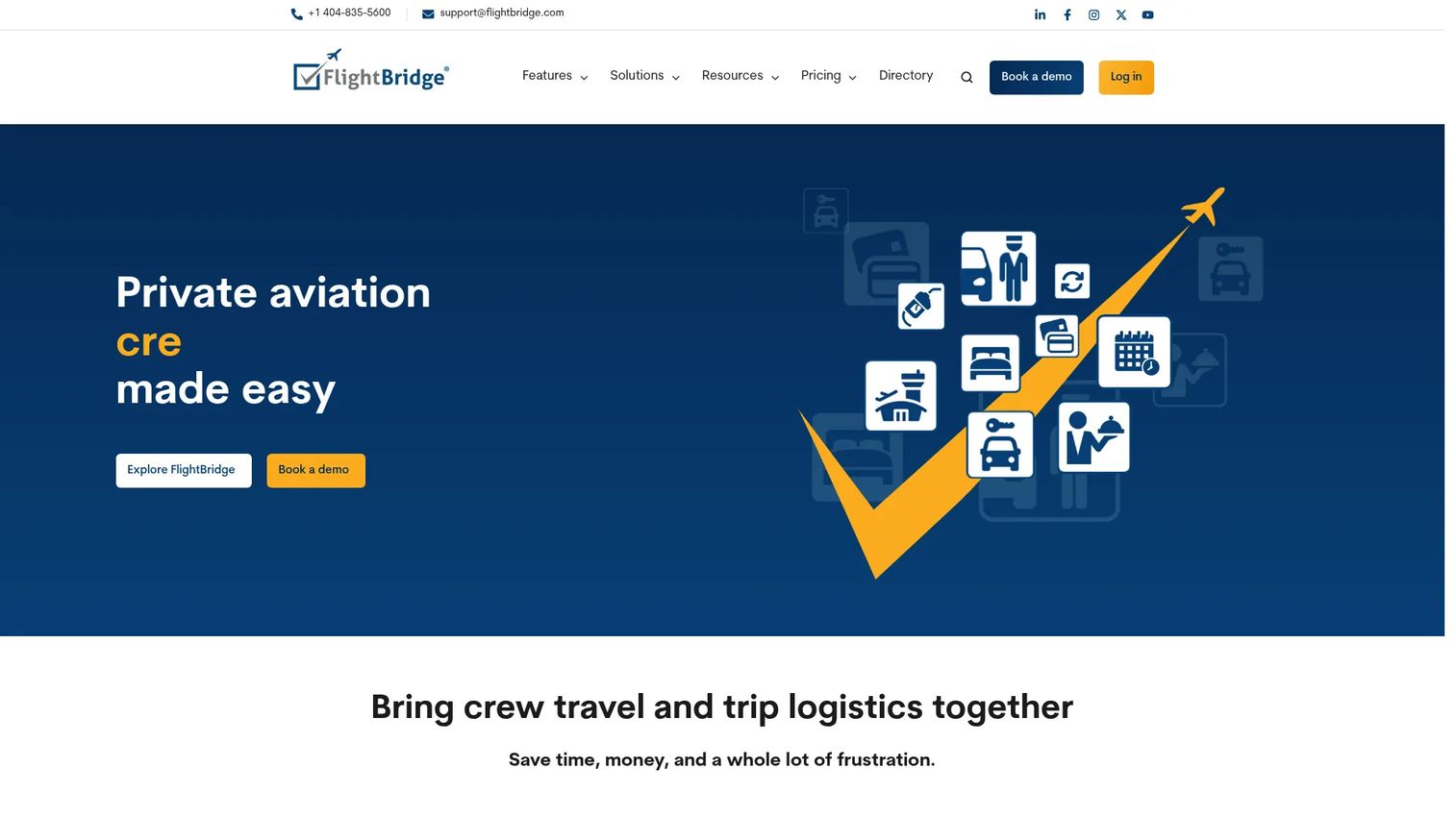
FlightBridge is an all-in-one trip logistics platform for private and business aviation. It connects flight scheduling context with hotel booking, rental car coordination, FBO communication, catering, and ground transportation. The platform integrates with flight scheduling systems and supports virtual card billing and direct FBO invoicing. Teams use it when the route plan is only the start of a broader trip execution workflow.
Best for: Private aviation operators, flight departments, and handlers managing crew travel and trip logistics alongside flight planning.
Key features
- FBO communication and service request workflows
- Discounted hotel and rental car booking
- Catering and ground transportation coordination
- Virtual cards with direct billing to operators
- Mobile app for crew and travel planners
Why choose FlightBridge: FlightBridge fits operations where dispatch does not end at the filed plan. If your team regularly coordinates FBO services, crew hotels, and passenger logistics, it closes the handoff gap between planning and trip execution that most route planning tools leave open.
FlightBridge pricing: The Essential plan is free. Premium and Professional tiers are priced on an annual subscription basis; fees vary by scheduling system integration, booking volume, and fleet size, and may be waived in some configurations. Contact FlightBridge sales for a quote on paid tiers.
G2 rating: 5.0/5
2. RocketRoute
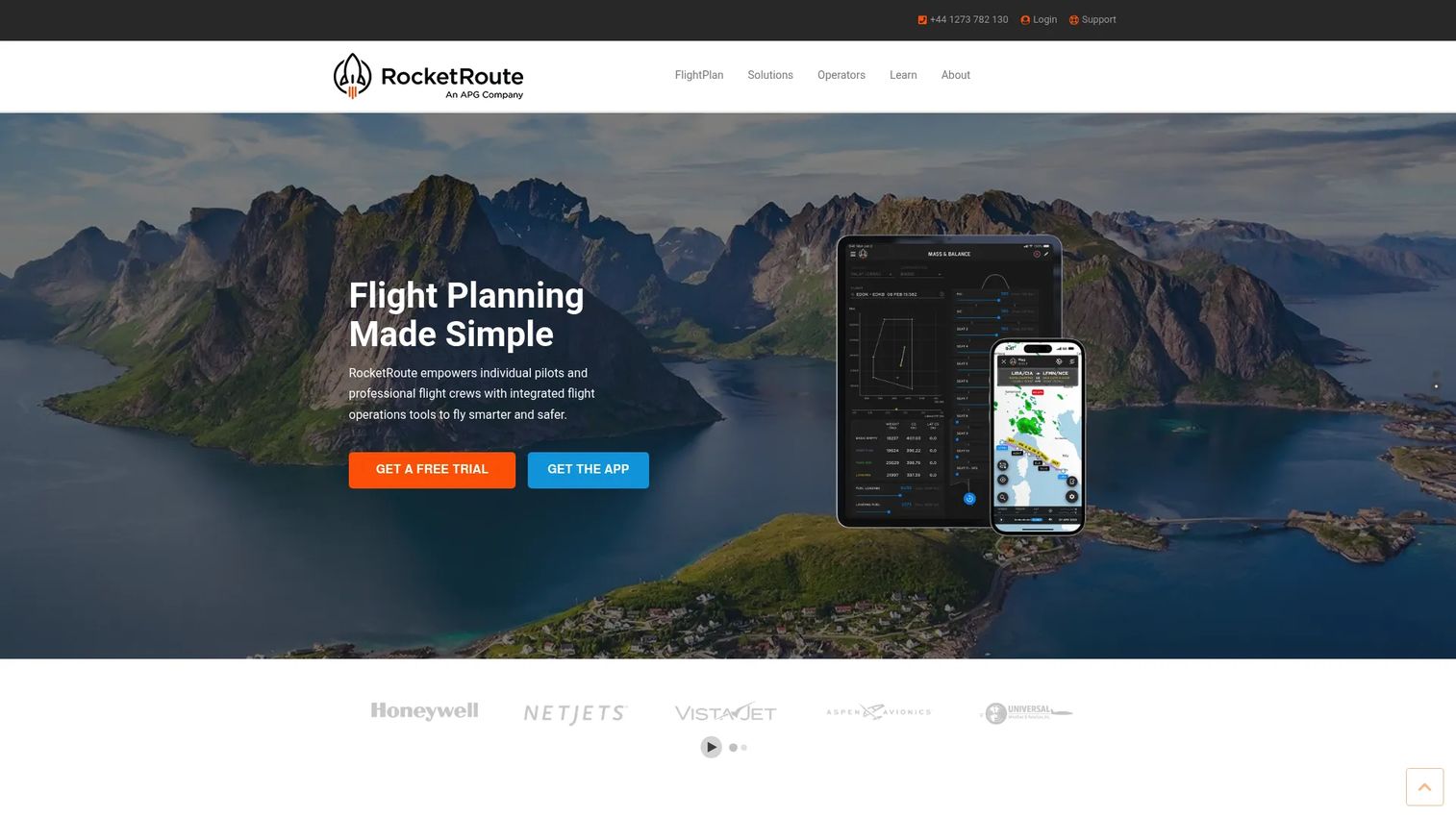
RocketRoute provides integrated aviation flight planning, filing, tracking, and trip support for pilots, flight crews, and operators. The platform supports ICAO flight plan filing, AutoRouting for IFR route optimization, worldwide IFR and VFR charts, real-time NOTAM and weather data, and crew briefing tools. Its Marketplace for ground handling, fuel, and landing slots is free to access without a subscription.
Best for: Dispatch teams and pilots that need digital planning, weather briefing, and ICAO flight plan filing in one workflow.
Key features
- ICAO flight plan filing with AutoRouting for IFR optimization
- Worldwide IFR and VFR charts with airport information
- Real-time weather and NOTAM data
- Real-time flight tracking and crew briefings
- Landing slot booking, ground handling, and fuel coordination
Why choose RocketRoute: Choose RocketRoute when you need a practical, integrated planning and filing workflow without a custom build. It is a reasonable fit for operators that care about consistent cross-device access and clear operational outputs from planning through departure.
RocketRoute pricing: RocketRoute offers a free trial and customized membership packages; no flat subscription price is shown on the product pages. The Marketplace is free to use with no subscription. Contact RocketRoute to discuss package pricing by aircraft count, regions, and filing volume.
G2 rating: 1.5/5
3. AIMS Commercial Planning
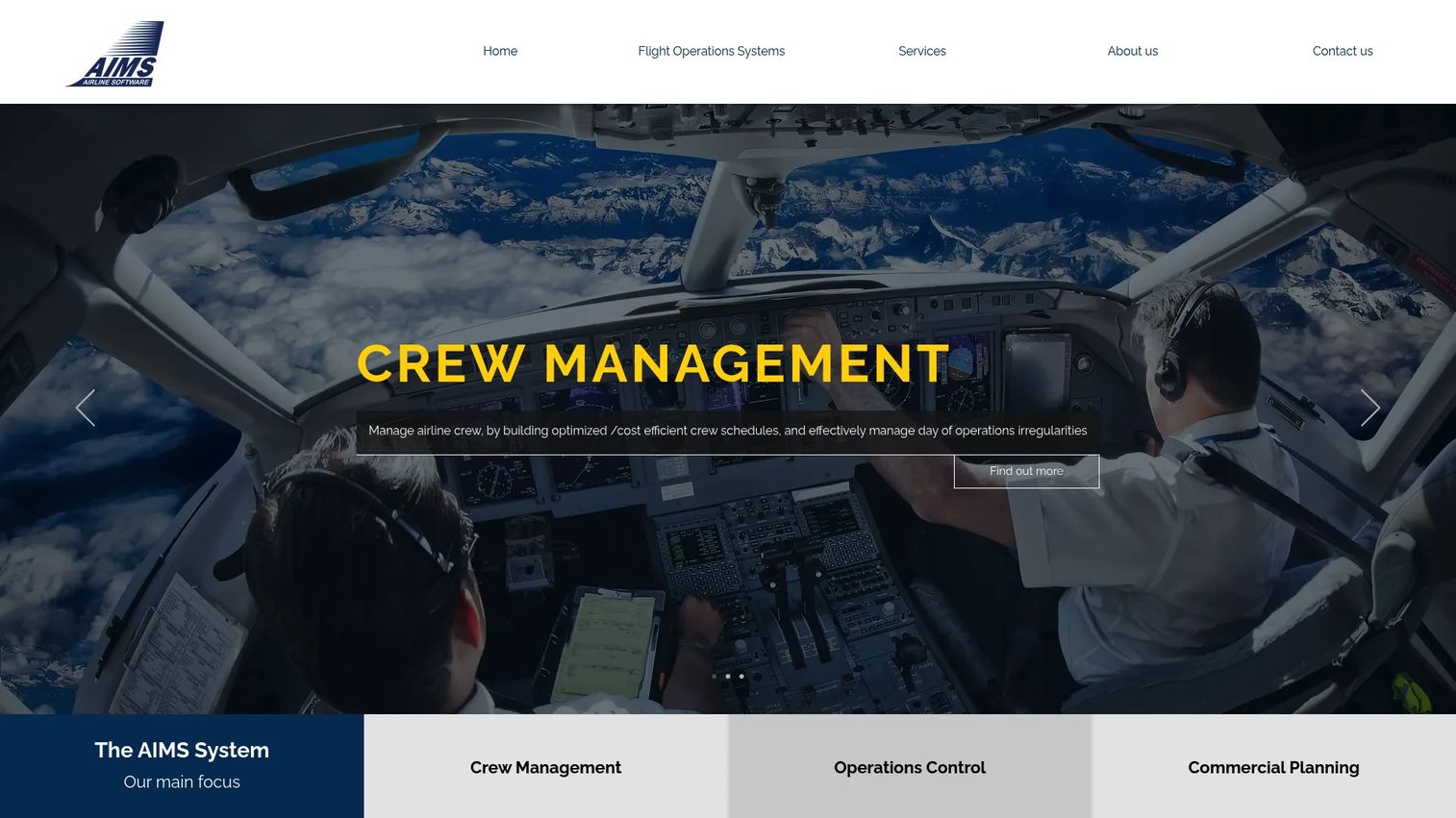
AIMS Commercial Planning is airline commercial and schedule planning software for building efficient, profitable flight schedules with optimized aircraft utilization. It supports comparative evaluation of multiple schedule scenarios, including competitor schedules, alongside IATA data exchange, airport slot management, and revenue and cost analysis. The tool is built for airline planning departments, not for pilot-facing preflight workflows.
Best for: Airline commercial planning teams optimizing flight schedules, route frequencies, aircraft utilization, and planning profitability before routes reach day-of-operations dispatch.
Key features
- Optimized flight schedule construction
- Comparative evaluation of schedule scenarios including competitor benchmarks
- IATA ASM/SSM and SSIM data exchange
- Airport slot management
- Estimated revenue, cost, and profit statistics per route
Why choose AIMS Commercial Planning: Choose AIMS when your route decision sits upstream at the network and schedule layer, before anything reaches a dispatcher or aircraft profile. It is a planning department tool, not a dispatch tool.
AIMS Commercial Planning pricing: The vendor directs buyers to submit an RFI form. Ask about module pricing, implementation timeline, support fees, and user limits when you engage sales.
G2 rating: 4.0/5
4. SkyVector
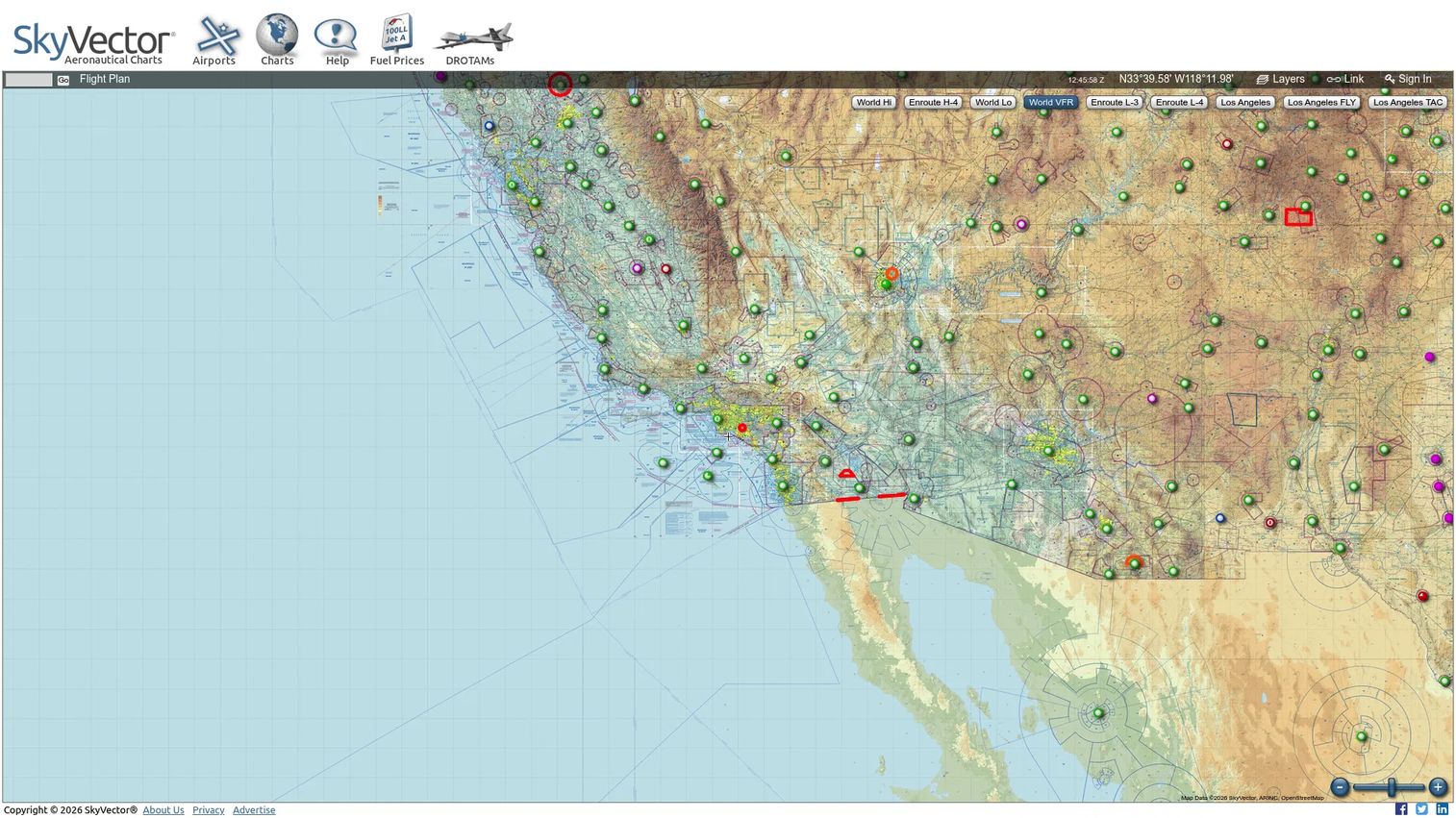
SkyVector is an online flight planning platform providing worldwide aeronautical charts, weather data, and route planning tools. It covers sectional chart views, METAR/TAF overlays, radar, satellite imagery, SIGMETs, AIRMETs, winds aloft, temporary flight restrictions, and FBO and airport information. It also supports FAA flight plan filing and uploads to Garmin and ForeFlight.
Best for: Pilots, schedulers, and dispatchers who need fast chart-based route review, weather context, and flight planning in a browser.
Key features
- Worldwide aeronautical charts and sectional chart views
- METAR, TAF, radar, satellite, and winds aloft overlays
- SIGMETs, AIRMETs, and temporary flight restriction data
- FBO and airport information
- FAA flight plan filing with avionics export (Garmin, ForeFlight)
Why choose SkyVector: SkyVector is strongest when route review starts with charts and weather context rather than operational dispatch systems. It is a practical first step for visual route validation, particularly for teams that need to review airspace before committing to a full planning workflow.
SkyVector pricing: The core SkyVector platform is free. Commercial operators should verify current advertising and commercial-use terms directly with the vendor.
5. FltPlan.com
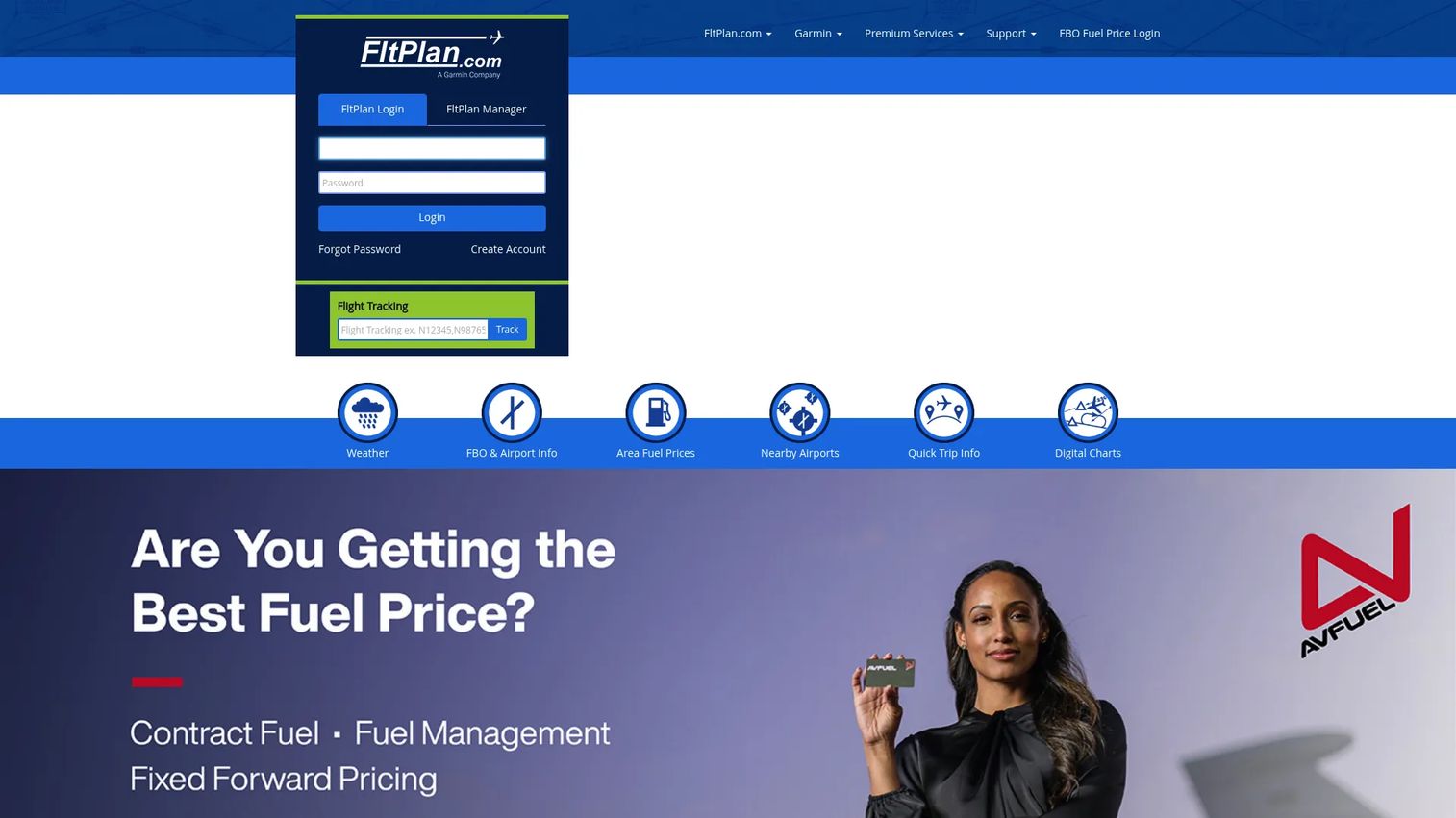
FltPlan.com is a free flight planning and filing service with companion mobile apps and premium services for fleet administration and cockpit connectivity. The core platform covers IFR and VFR flight planning, weather briefings, airport and FBO information, area fuel prices, navigation logs, and digital charts. The FltPlan Go mobile app adds moving maps, in-flight weather, weight and balance, and avionics integrations.
Best for: General aviation pilots and flight departments needing integrated flight planning, filing, charts, weather, and fleet management tools with low cost of entry.
Key features
- IFR and VFR flight planning and FAA filing
- Weather briefings, FBO information, and area fuel prices
- FltPlan Go mobile app with moving maps and in-flight weather
- Weight and balance calculations
- Avionics integrations and fleet administration tools
Why choose FltPlan.com: Choose FltPlan.com when cost control matters and the team needs core planning and filing without paying for it. The free tier is genuinely capable for most general aviation workflows. Fleet administrators that need FltPlan Manager can add it for $25 per aircraft per month.
FltPlan.com pricing: The core FltPlan.com website and FltPlan Go app are free. FltPlan Manager runs $25 per aircraft per month. PDC service is $199 per aircraft per year. Additional premium services are available; contact FltPlan for current pricing.
6. FL3XX Aviation Management
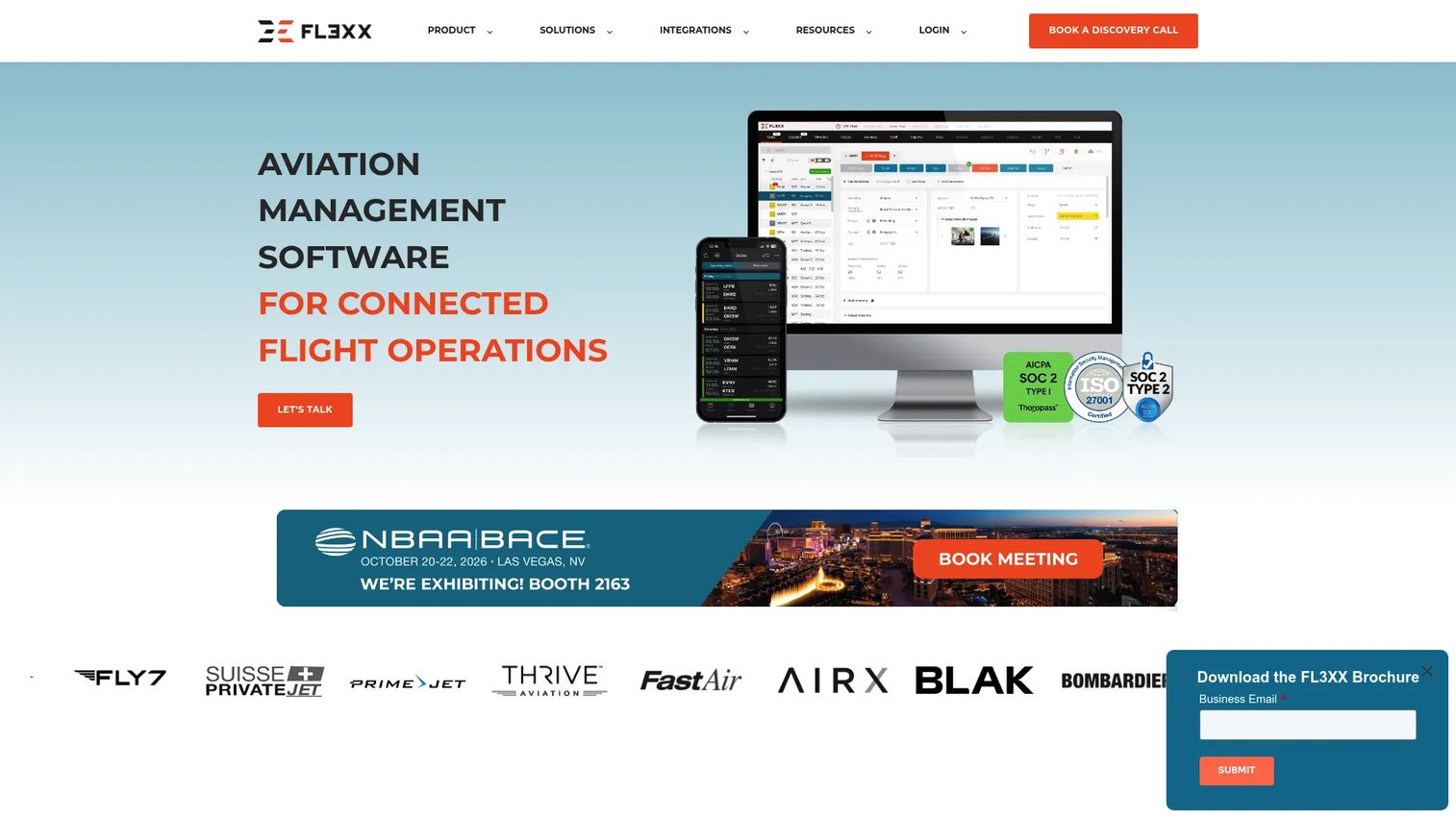
FL3XX Aviation Management is an aviation operations platform for charter operators, corporate flight departments, air ambulances, and cargo operators. It connects charter sales and quoting, flight dispatch, crew scheduling, maintenance tracking, and operational reporting in one platform. Route planning sits inside the broader operational workflow rather than as a standalone feature.
Best for: Charter and business aviation teams that need scheduling, dispatch, crew coordination, and fleet management connected in a single operational platform.
Key features
- Charter sales and quoting with CRM and invoicing
- Flight dispatch, scheduling, and airport slot workflows
- Crew assignment, duty-time calculations, and FTL tracking
- Maintenance status, forecasts, and documentation
- Reporting, business intelligence, and mobile operations apps
Why choose FL3XX Aviation Management: Choose FL3XX when route planning needs to live inside a broader operational system rather than a standalone planner. It suits teams where the same people handle bookings, aircraft scheduling, crew, and dispatch without switching platforms.
FL3XX Aviation Management pricing FL3XX directs buyers to request a demo or quote. When you contact sales, ask about aircraft count, user roles, integrations, onboarding scope, and support costs.
G2 rating: 4.5/5
7. Sabre Flight Plan Manager

Sabre Flight Plan Manager is an enterprise airline flight planning and dispatch tool designed to produce operationally valid flight plans in compliance with legal regulations and company policies. The system uses weather, airspace restrictions, aircraft performance, and schedule data to calculate optimized routes. It supports a 4-D cost-optimization approach, electronic flight plan distribution, and automated crew briefing documents. Note: Sabre's AirCentre airline operations portfolio was acquired by CAE; buyers should confirm current product availability and packaging directly with the vendor.
Best for: Airlines that need airline-grade flight dispatch, route optimization, regulatory compliance, and electronic flight plan distribution inside an enterprise operations stack.
Key features
- Operational flight planning with legal compliance checks
- 4-D cost-index route optimization
- Weather, airspace, and aircraft performance integration
- Electronic flight plan distribution and dispatch release
- Automated crew briefing document generation
Why choose Sabre Flight Plan Manager: Choose Sabre when the buying team needs proven enterprise depth and operations-stack integration. It is best evaluated by teams with mature dispatch operations, IT resources, and implementation budget.
Sabre Flight Plan Manager pricing: Pricing requires contacting Sabre or CAE sales directly. Ask about module packaging, implementation services, integration fees, and support terms.
G2 rating: 2.8/5 (for Sabre AirCentre)
8. Amadeus SKY

Amadeus SKY is a network and schedule planning suite for airlines optimizing route frequency plans, fleet capacity, schedule reliability, and passenger demand. The suite includes SkyMAX (schedule and fleet optimization), SkySYM (disruption-resilient schedule design), SkyCAST (demand forecasting and market share simulation), SkyPLAN (route frequency optimization), and SkyWORKS (schedule assessment and editing). It sits in network and commercial planning rather than tactical day-of-operations dispatch.
Best for: Airline network, commercial planning, and schedule optimization teams modeling route economics and schedule reliability at the network level.
Key features
- SkyMAX: Schedule and fleet capacity optimization
- SkySYM: Disruption-resilient schedule simulation
- SkyCAST: Demand forecasting and revenue modeling
- SkyPLAN: Route frequency plan optimization
- SkyWORKS: Schedule scenario editing and assessment
Why choose Amadeus SKY: Choose Amadeus SKY when route planning connects to network strategy and commercial schedule economics. It fits airlines that need planning models before routes become operational flight plans. This is a VP-of-network-planning tool, not a dispatcher tool.
Amadeus SKY pricing: Pricing requires contacting Amadeus sales. Ask about suite module scope, implementation timeline, data requirements, and consulting support.
G2 rating: 4.7/5
9. AirMap
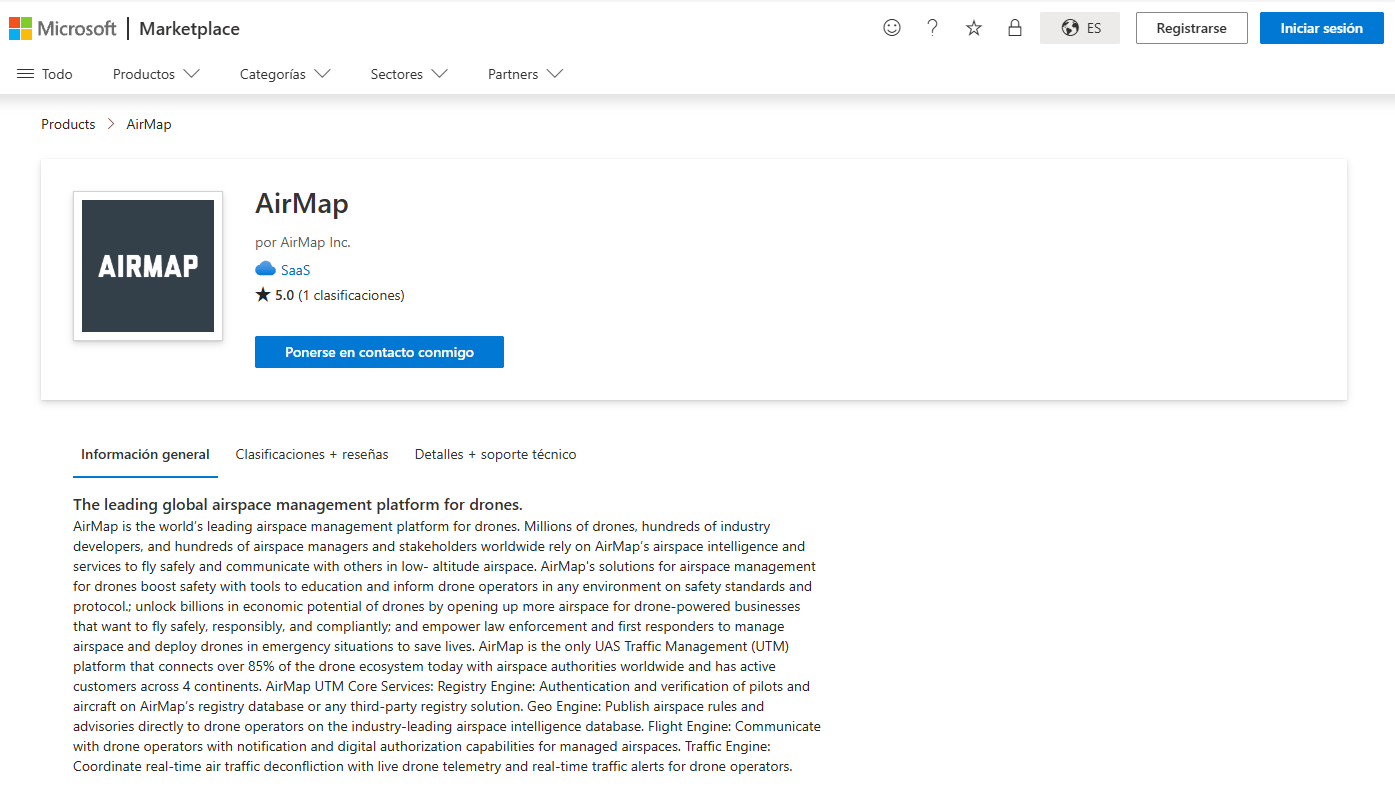
AirMap is a UAS traffic management platform for managing drone airspace, digital authorizations, and real-time traffic information. It supports pilot and aircraft registration, airspace rules and advisories, digital flight notifications, and traffic deconfliction. AirMap is not traditional airline route planning software, but it appears in aviation route planning research because UAS operators also need airspace authorization and route awareness at the operational level.
Best for: Airspace authorities, drone operators, and developers managing or integrating unmanned aircraft operations and airspace intelligence.
Key features
- Pilot and aircraft registration and verification
- Airspace rules, advisories, and digital notifications
- Digital flight authorizations for controlled airspace
- Real-time traffic deconfliction and alerts
- UAS data layer integrations for developers
Why choose AirMap: Choose AirMap when the route planning problem involves unmanned aircraft. For airline dispatch, it is adjacent rather than central. If your operation spans both manned and unmanned aircraft, it may be worth evaluating alongside your primary planning platform.
AirMap pricing: Contact AirMap directly for current availability and pricing terms.
G2 rating: 5.0/5
10. iFlightPlanner
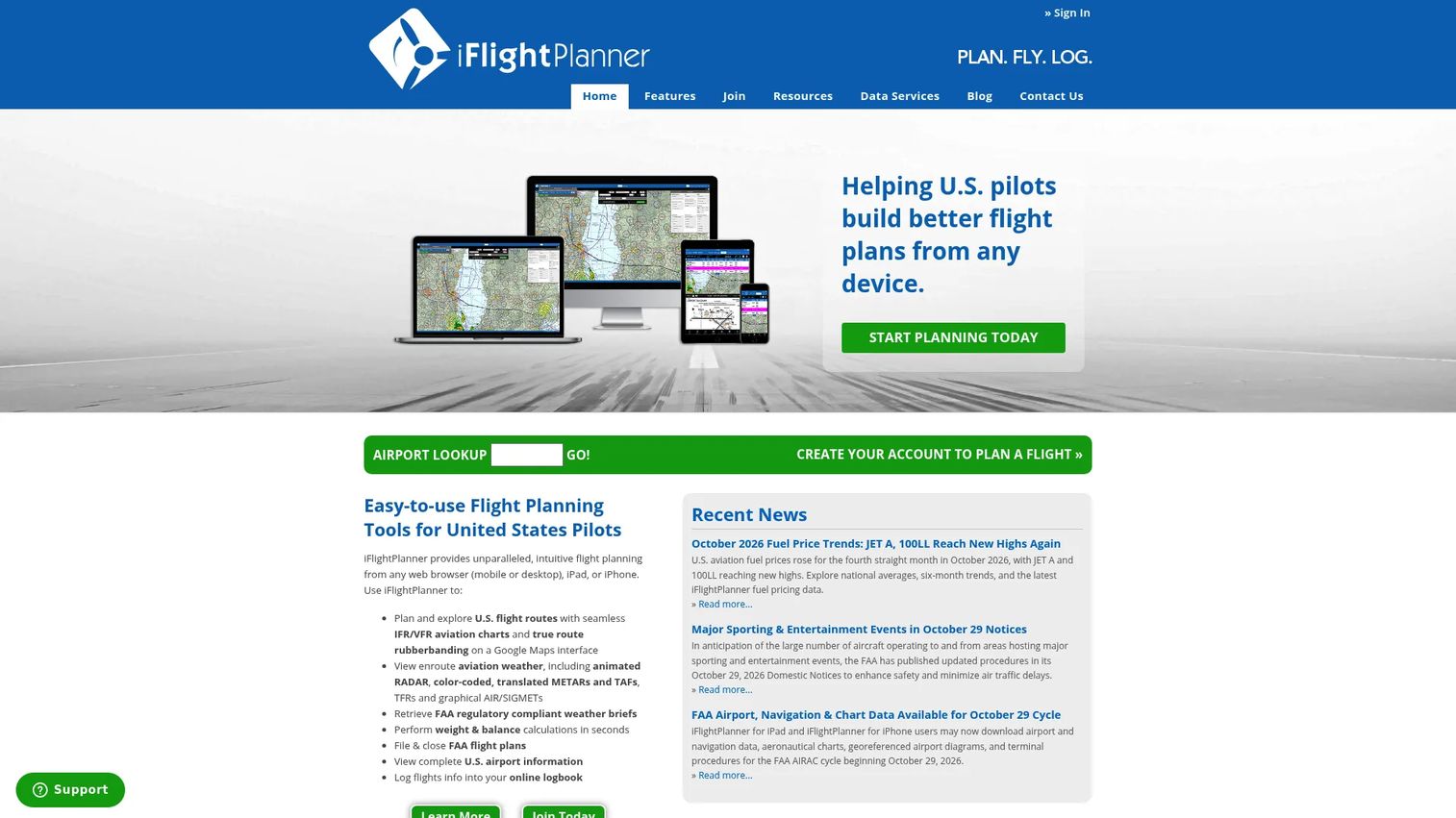
iFlightPlanner is web and mobile flight planning software built for U.S. pilots and small operators. It covers IFR and VFR route planning, aviation weather with animated radar, METARs, TAFs, AIRMETs, SIGMETs, and TFRs, FAA-compliant weather briefs, weight and balance, FAA flight plan filing, and an online pilot logbook. The Premium Business tier adds organization-level sharing and crew features.
Best for: U.S. general aviation pilots and smaller flight departments needing accessible flight planning, weather, FAA filing, and EFB tools.
Key features
- IFR and VFR route planning with chart rubberbanding
- Aviation weather: Animated radar, METARs, TAFs, AIRMETs, SIGMETs, TFRs
- FAA-compliant weather briefs and flight plan filing
- Weight and balance calculations
- U.S. airport information and pilot logbook
Why choose iFlightPlanner: Choose iFlightPlanner when the team needs accessible flight planning rather than enterprise dispatch infrastructure. It is a practical fit for smaller operations that do not require deep integration with FMS, EFB handoff systems, or airline-grade optimization.
iFlightPlanner pricing: The Core plan is $49.99 per year. Premium runs $99.99 per year. Premium Business pricing is by custom quote. All plans are billed annually.
11. SkyPlan
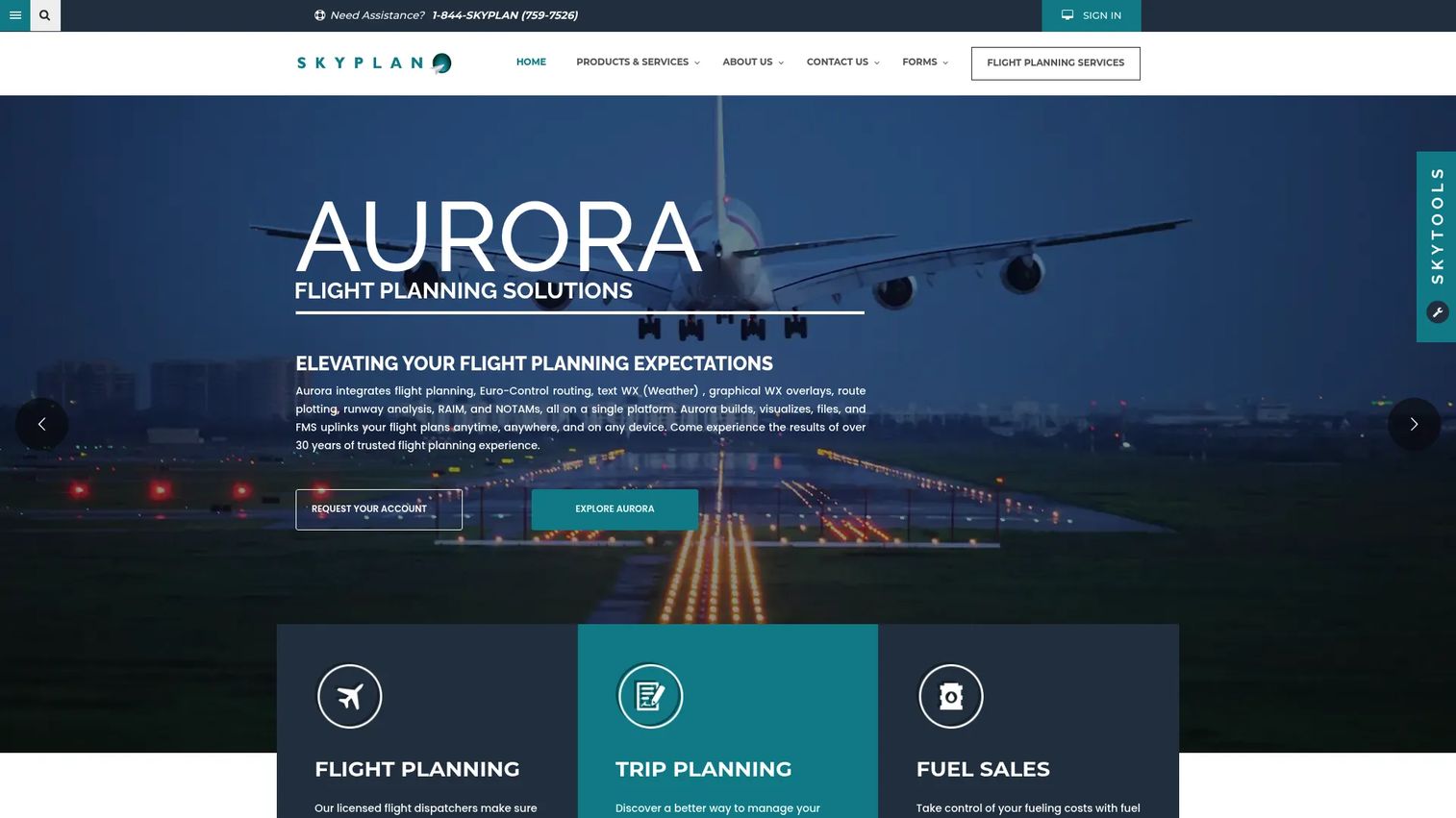
SkyPlan provides web-based flight planning software and aviation trip support services for corporate aviation, airlines, and other flight operations. Its Aurora flight planning system covers optimized routing, fuel burn calculations, aircraft performance modeling, weather data with graphical overlays, automated weather briefings, NOTAM briefings, ATC filing, ETP and ETOPS planning, FMS uplinks, and customizable plan templates. The service layer adds international permits, slots, fuel, and ground support coordination.
Best for: Operators that need international flight planning combined with trip coordination services including permits, ground support, and fuel planning.
Key features
- Aurora web-based flight planning with optimized routing
- Fuel burn calculations and aircraft performance modeling
- Weather data, graphical overlays, and automated weather briefings
- NOTAM briefings and ATC filing support
- ETP and ETOPS scenario planning with FMS uplinks
Why choose SkyPlan: Choose SkyPlan when the route plan is one part of a larger international trip workflow. It fits operators that need operational support around the plan. The service model means you are buying expertise and coordination alongside software.
SkyPlan pricing:Contact SkyPlan to discuss pricing by service scope, region, trip volume, and support level.
12. JetPlan
JetPlan is a Jeppesen flight planning engine and service for creating, reviewing, managing, transmitting, and filing operational flight plans. It covers flight plan creation and optimization, weather reports and NOTAMs, dispatch center management, and distribution of flight plan transactions. JetPlan produces optimized routes by cost index, time, or fuel across a range of aircraft profiles, and is used by corporate flight departments, charter operators, cargo operators, and commercial airlines.
Best for: Commercial airlines and larger operators that need optimized, operationally valid routes across a fleet with integrated weather and dispatch management.
Key features
- Flight plan creation and optimization by cost, time, or fuel
- Weather reports, radar, satellite imagery, and NOTAM data
- Dispatch center management and transaction distribution
- Electronic flight plan filing and transmission
- Aircraft performance-based routing inputs
Why choose JetPlan: Choose JetPlan when route optimization is the primary buying reason and you need operationally valid plans at scale. It is a mature, carrier-grade product backed by Jeppesen's aviation data infrastructure. Best suited to teams with dedicated dispatch and IT resources.
JetPlan pricing: Pricing is by quote. Ask Jeppesen sales about fleet size, regions covered, integration requirements, support tiers, and implementation services.
Considerations when choosing airline route planning software
Match the tool to your planning layer
Some tools handle chart review and pilot planning; others handle dispatch release, commercial schedule optimization, or fleet management. Before evaluating demos, define whether you need route visualization, filing, full optimization, fleet planning, or a combination. Buying an enterprise dispatch system when you need a pilot planner creates cost and complexity without benefit. The reverse is worse: A pilot planner will not replace a dispatcher's workflow.
Verify weather and aeronautical data sources
Route planning quality depends on current, trusted data. Ask every vendor how they handle METAR, TAF, winds aloft, SIGMETs, AIRMETs, NOTAMs, and airspace restrictions. Confirm how frequently data refreshes and what happens when a source is unavailable. For regulated operations, stale data is an operational risk, not a UI inconvenience.
Check FMS, EFB, and operations integrations
Airline-grade tools should integrate with flight management systems, EFB delivery workflows, dispatch release systems, and operational records. Ask what integrations are native, what requires custom development, and who is accountable when a handoff fails. A tool that stops at the filed plan and requires manual EFB entry is not a complete operations solution.
Understand implementation effort before you sign
Enterprise flight planning tools often require aircraft performance profiles, regional rule configurations, user role setup, and operational change management. The procurement timeline is not the implementation timeline. Ask how long the first real dispatcher workflow takes to run, not just when access is provisioned.
Pressure-test pricing before the demo ends
Many aviation tools price by quote. When you get to that conversation, ask specifically about user seat counts, aircraft in fleet, regions covered, module additions, support tiers, training, and integration costs. An entry price that looks reasonable can expand significantly once a full dispatch team and multiple integration points are in scope.
Conclusion
The 12 tools in this guide cover the full range of airline route planning and flight planning software, from free pilot-facing planners to enterprise dispatch systems and commercial network planning platforms.
For route optimization at the operational level, JetPlan and Sabre Flight Plan Manager are the candidates for airlines with mature dispatch infrastructure. For commercial and network planning, AIMS Commercial Planning and Amadeus SKY serve airline planning departments modeling schedule economics. SkyVector and FltPlan.com give accessible, low-cost chart and filing capabilities for smaller operators. FlightBridge and SkyPlan extend planning into trip coordination. FL3XX Aviation Management covers the full charter and business aviation operations stack.
The evaluation approach that works: Pick two tools that match your actual planning layer, run a real route workflow through each, and compare the handoff from planning to filing, dispatch, EFB, and operational records. Include dispatchers in the evaluation, not only IT or procurement. The tool that performs well in that test is the one worth buying.
Start your journey with Guideflow today!
FAQs
Airline route planning software helps airlines, flight departments, and aviation operators build, validate, optimize, file, and manage flight routes. It connects aircraft performance data, weather inputs, fuel calculations, airspace constraints, and airport information with dispatch, FMS, and EFB workflows. It is distinct from a basic flight planner in its operational workflow depth and integration requirements.
A flight planner typically helps an individual pilot or small operator plan a route and file a plan. Airline route planning software adds dispatch release workflows, aircraft performance profiles, regulatory compliance tools, FMS and EFB integration, fleet management, and operational record-keeping. The scope difference is significant for teams running more than a handful of daily departures.
JetPlan and Sabre Flight Plan Manager are built specifically for optimization-focused operational flight planning, using cost index, fuel, and time as routing variables. RocketRoute includes AutoRouting for IFR optimization at a smaller scale. Amadeus SKY handles optimization at the network and schedule level, upstream of day-of-operations dispatch. The right answer depends on whether you are optimizing individual flights or network frequency plans.
SkyVector and FltPlan.com are the two most common options for free or low-cost planning. SkyVector provides aeronautical charts, weather overlays, and FAA filing at no charge. FltPlan.com adds a mobile app, FBO data, fleet administration, and avionics integrations at no cost for the core platform. Neither replaces enterprise airline dispatch systems, but both are genuinely capable for general aviation workflows.
The most operationally important features are route optimization by cost and fuel, weather data coverage (METAR, TAF, winds aloft, SIGMETs, NOTAMs), aircraft performance inputs, flight plan filing, FMS and EFB integration, and operational records. For enterprise airlines, EDTO and RAIM planning support and ARINC 633 data exchange become relevant. The right feature set depends on aircraft type, route scope, and regulatory environment.
Most airlines can start with an existing enterprise platform before considering custom development. Custom builds make sense when legacy dispatch systems, proprietary operational data formats, or regulatory environments make commercial tools unworkable. That is a narrow set of circumstances. Exhausting configurable platform options before funding a custom build saves both time and budget.
Run a real operational scenario through each shortlisted tool. Test a weather change mid-plan, a fuel assumption adjustment, a constrained airspace route, the filing output, the EFB handoff, and the post-flight record. Include dispatchers in the evaluation from the first demo. Procurement and IT can verify security and integration requirements separately, but only dispatchers can confirm whether the planning workflow actually fits how the operation runs.
No. Drone route planning covers low-altitude airspace authorization, UAS constraints, geofencing, and mission planning for unmanned aircraft. Airline route planning covers aircraft performance, fuel burn, weather, dispatch release, FMS integration, and commercial operations at scale. The two categories share some airspace data requirements but serve entirely different operational workflows. AirMap is the tool on this list that covers the UAS planning side.