Your stack already has the signals. CRM stage changes, ad clicks, intent surges, website visits, product activity. The problem is that every system reports something different, and a human still has to stitch the work together before anything actually happens.
That gap is expensive. According to SAS (2025), 21% of marketers are testing agentic AI in live environments, while 73% plan to implement it within two years. The adoption curve is moving fast, but the buying decision is still messy: A tool that calls itself "agentic" might be a ruled-based workflow engine with a new label, or it might genuinely observe buyer signals, decide the next action, execute across channels, and feed results back into future decisions.
This guide cuts through that. It covers 14 agentic GTM platforms for 2026 and helps you answer the question that matters most: Which platform can turn a specific GTM bottleneck into a measurable execution loop?
What's inside
This guide is for growth marketers, demand generation leads, RevOps teams, and revenue leaders evaluating AI platforms that can reduce manual GTM work, improve attribution, and prove pipeline impact.
- Who it covers: Fourteen platforms across campaign orchestration, sales execution, enrichment workflows, CRM-native agents, and workflow automation
- How tools were selected: Relevance to agentic GTM execution, signal handling, integration depth, autonomy controls, and measurable outcomes
- Pricing and ratings: Verified against vendor pricing pages and G2 listings
- What you'll learn: How to separate agentic execution from AI-labeled dashboards, what to check before running a pilot, and which bottleneck maps to which tool
TL;DR
- Best full-funnel GTM agent platform: Dhisana AI, for teams that want research, qualification, multi-channel execution, and CRM updates in one agentic workflow
- Best signal-led pipeline platform: Common Room, for teams turning product, community, web, and engagement signals into sales actions
- Best flexible enrichment workflow tool: Clay, for RevOps and growth teams building custom enrichment and outbound workflows without engineering
- Best CRM-native agent layer: Salesforce Agentforce for Salesforce orgs; HubSpot for teams that want AI inside a consolidated customer platform
- Best enterprise ABM and intent: Demandbase and 6sense, for account-based teams with mature operations and high data volumes
- Best workflow automation layer: Zapier for no-code teams; n8n for technical teams that want self-hosting and extensibility
What is agentic GTM platform software?
Agentic GTM platform software uses AI agents to observe buyer signals, interpret account context, decide next actions, execute GTM workflows, and learn from pipeline or revenue outcomes.
This is not the same as AI copywriting tools or basic automation rules. The defining characteristic is the feedback loop: An agentic system acts, measures the result, and adjusts future behavior. That loop is what separates the category from a dashboard that surfaces insights but leaves execution to humans.
The category spans several tool types, because buyers do not purchase "agentic GTM" in the abstract. They buy a system that solves a specific bottleneck. The main types include CRM-native agents, signal and intent platforms, campaign orchestration platforms, enrichment and data workflow systems, sales execution and enablement agents, and general workflow automation builders.
Key features to look for
- Signal ingestion: CRM data, web activity, product usage, intent signals, advertising engagement, call recordings, and firmographic data
- Account context: Persistent memory of account history and engagement across workflows
- Decision logic: Transparent reasoning behind scores, routes, and triggered actions
- Autonomous execution: Ability to take action across GTM systems without manual hand-offs
- Human controls: Approval flows, guardrails, permission levels, and audit history
- Attribution: Pipeline created, CAC, stage conversion, sales velocity, and retention reporting
- Learning loops: Performance feedback that improves future agent decisions
Agentic GTM vs workflow automation
| Dimension | Workflow automation | Agentic GTM |
|---|---|---|
| Trigger type | Predefined rules or conditions | Dynamic signal interpretation |
| Decision logic | Fixed branching logic | Context-aware reasoning |
| Context memory | None or session-scoped | Persistent account memory |
| Execution scope | Single-system actions | Cross-system GTM workflows |
| Optimization | Manual updates | Outcome-based learning |
| Human oversight | Optional | Approval flows built in |
Workflow automation remains useful for predictable, repeatable tasks. Agentic GTM platforms add value where the data is messier, the decision requires context, and the action needs to span multiple systems.
When to use agentic GTM platforms
Turn fragmented buyer signals into action
Use agentic GTM when you already collect signals but cannot respond to them fast enough. Website visits, CRM stage changes, ad engagement, review-site spikes, intent surges: Each one lives in a different system. Signal latency hurts pipeline because accounts move through buying windows faster than humans can process reports and decide what to do next. Agentic platforms close that gap by routing the right action to the right channel automatically.
Scale campaign execution without adding headcount
Use these platforms when your team is launching more segments and channels than humans can manage manually. Rising CPMs and creative fatigue mean campaigns need faster iteration cycles. Agentic campaign tools can run audience tests, shift budget toward performing segments, and generate creative variants without waiting on a request queue.
Run a measurable GTM pilot
Use a focused pilot when leadership needs proof before committing to a broader rollout. Pick one workflow, set a 30 to 60 day window, and define baseline metrics before the pilot starts. Useful pilot metrics include qualified meetings booked, pipeline created, CAC, stage conversion rate, and sales velocity. A single workflow with clean before-and-after data builds more internal confidence than a broad deployment with fuzzy results.
Agentic GTM platform comparison
The table below compares all 14 platforms by their primary GTM use case, key differentiator, pricing entry point, and G2 rating. Tools are ordered to match the item sections that follow. Pricing and ratings were verified against vendor pages and G2 listings.
| # | Product | Best for | Key differentiator | Pricing | G2 rating |
|---|---|---|---|---|---|
| 1 | Dhisana AI | Full-funnel GTM agent workflows | Long-running agents across research, enrichment, qualification, and CRM sync | From $49/mo | N/A |
| 2 | Common Room | Signal-led pipeline generation | Unified buyer signals from product, community, web, and social channels | From $2,500/mo | 4.5/5 |
| 3 | Clay | Custom enrichment and outbound workflows | Flexible data orchestration with AI research agents and waterfall enrichment | From $167/mo (annual) | 4.6/5 |
| 4 | Salesforce Agentforce | Salesforce-native AI agents | CRM-native agents grounded in Salesforce data, workflows, and permissions | From $0 (consumption-based) | 4.4/5 |
| 5 | HubSpot | CRM-native AI for SMB and mid-market | AI agents and assistants embedded across a unified customer platform | From $0/mo | 4.4/5 |
| 6 | Gong | Revenue intelligence and deal execution | AI trained on customer conversations, deal activity, and forecast signals | Custom pricing | 4.7/5 |
| 7 | Demandbase | Enterprise ABM and orchestration | Account intelligence, buying group insights, and coordinated ABM workflows | Custom pricing | 4.4/5 |
| 8 | Copy.ai | GTM workflow automation and content operations | AI workflows for repeatable GTM plays, research, messaging, and handoffs | From $24/mo (annual) | N/A |
| 9 | Metadata | Paid media and campaign automation | Agentic campaign execution across audience, budget, creative, and optimization | Custom pricing | 4.6/5 |
| 10 | Tapistro | Intent orchestration and GTM signal routing | Signal unification, journey routing, and autonomy controls for GTM teams | Free to start, usage-based | 4.7/5 |
| 11 | 6sense | Predictive intent and revenue marketing | AI-driven account prediction, intent signals, and ABM prioritization | Custom pricing | 4.1/5 |
| 12 | Highspot | Sales enablement and AI revenue execution | AI-assisted content guidance, playbooks, and rep execution workflows | Custom pricing | 4.7/5 |
| 13 | Zapier | No-code GTM automation across apps | AI-assisted automation and agents connected to 9,000+ apps | From $0/mo | 4.5/5 |
| 14 | n8n | Technical GTM workflow automation | Flexible visual automation with AI nodes, self-hosting, and code steps | From 20€/mo (annual) | 4.7/5 |
Best 14 agentic GTM platforms for 2026
1. Dhisana AI
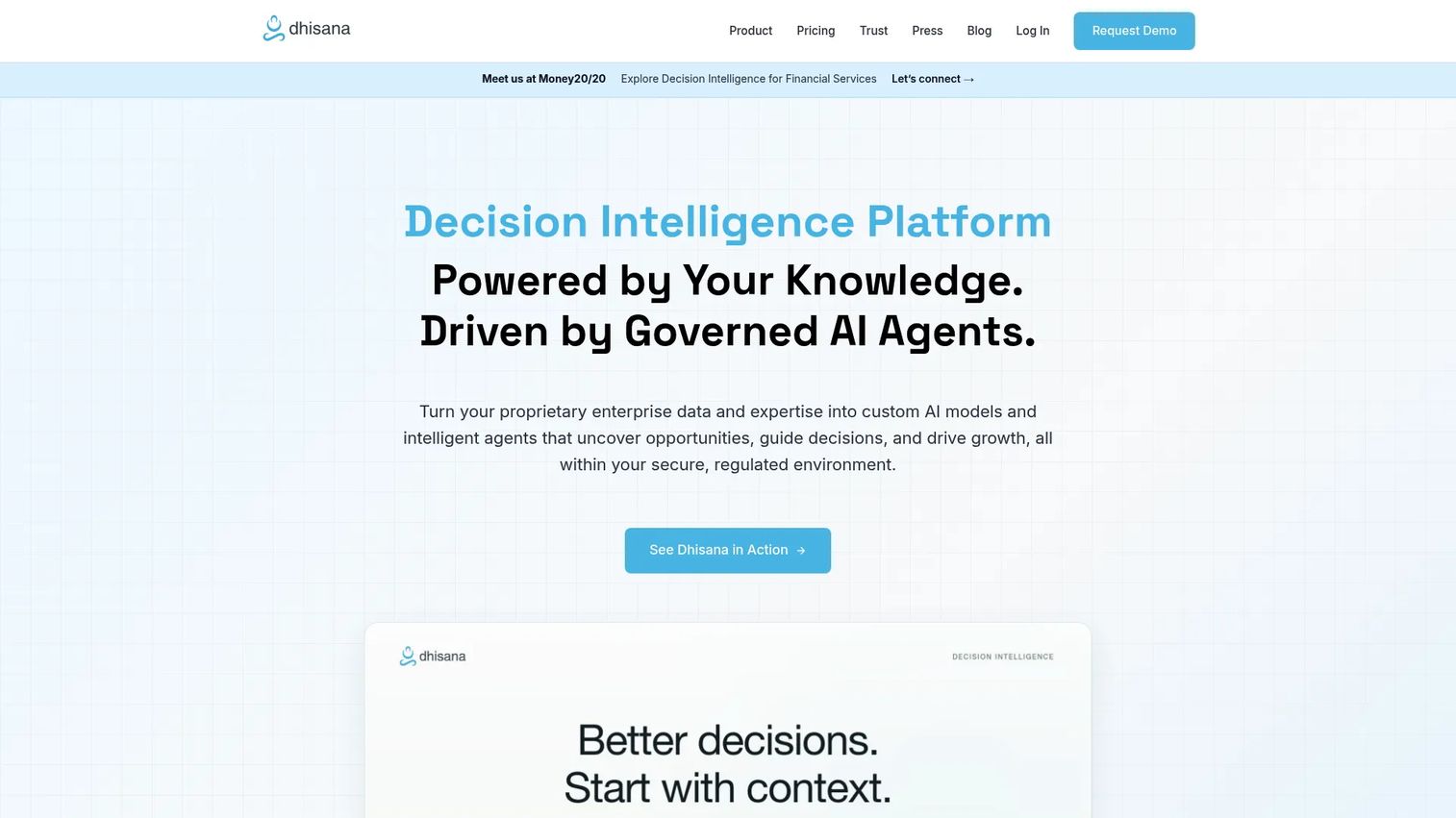
Dhisana AI positions itself as an enterprise decision-intelligence platform powered by governed AI agents. Its core capability is long-running GTM agents that can carry out multi-step workflows across research, account enrichment, lead qualification, outreach, and CRM synchronization. For growth teams tired of stitching together five-point tools to run a single prospecting workflow, Dhisana offers a more unified agent-based approach.
Best for: Teams that want a full-funnel GTM agent system rather than separate point tools for research, enrichment, and execution.
Key features
- Long-running GTM agents across prospecting and qualification
- Signal detection with explainable recommendations
- Governed workflows with approvals, permissions, and audit trails
- Revenue and industry-specific agent templates
- Multi-channel execution with CRM sync
Why choose Dhisana AI: It fits teams that want agents to own multi-step work with governance built in. The approval and auditability layer makes it a credible option for enterprise teams that need to control what agents do before they act.
Dhisana AI pricing: Plans start at $49/month (Professional, 5,000 Agent Work Units). Business is $149/month with 15,000 units. Enterprise uses custom capacity and deployment terms. A free tier is available.
2. Common Room
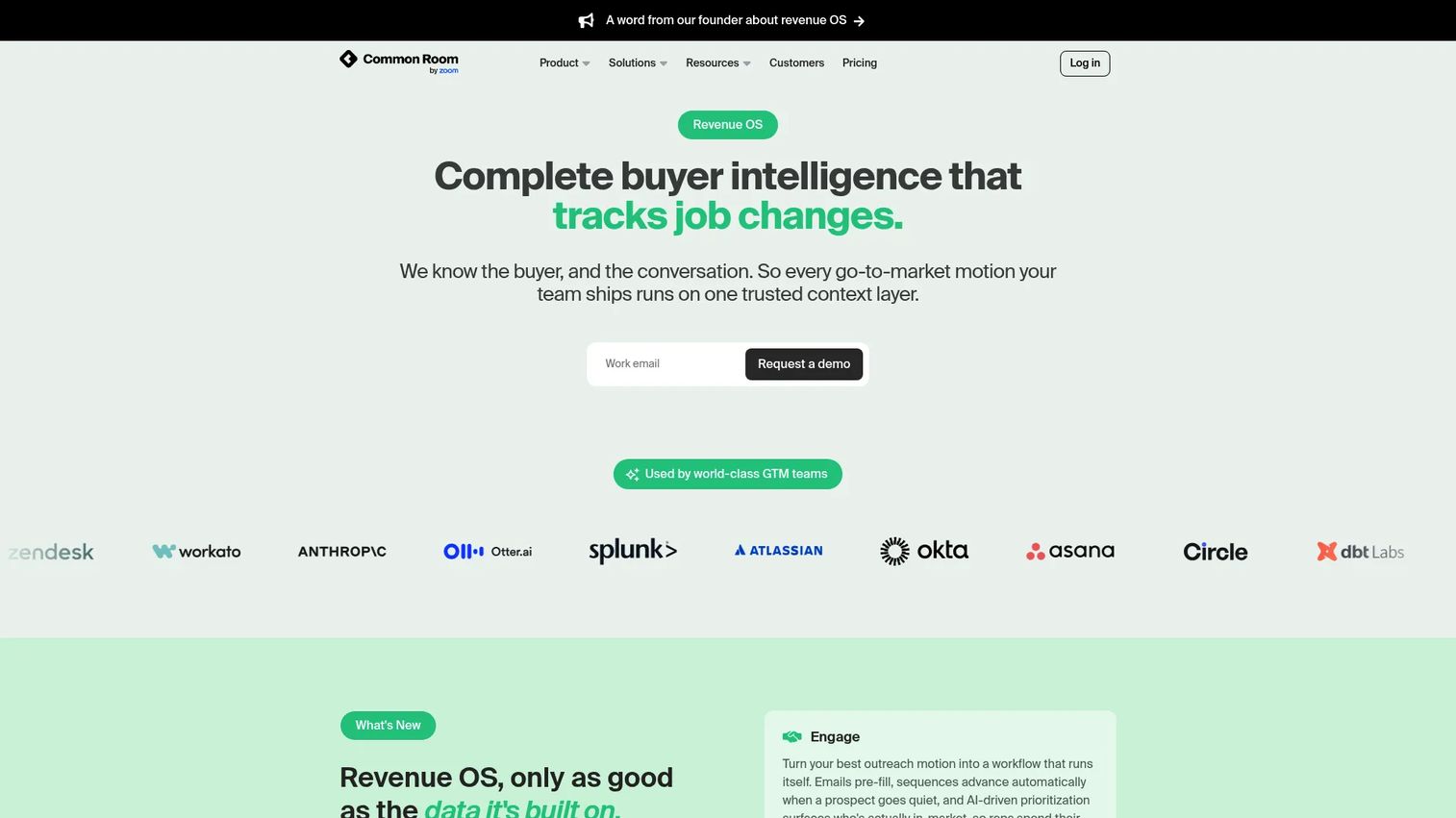
Common Room is a buyer intelligence platform that pulls together product usage, community engagement, website activity, and social signals into unified account and person profiles. Its RoomieAI research layer scores accounts, surfaces buying intent, and routes signals into GTM actions. For growth teams running product-led or community-led motions, it identifies accounts showing buying behavior before anyone fills out a form.
Best for: Product-led and community-led teams that need buyer signals, enrichment, and prioritization connected to CRM and sales workflows.
Key features
- Person360 buyer profiles combining behavioral and firmographic data
- Buyer-intent and buying-committee intelligence
- RoomieAI for AI-powered account research
- Prospector for contact discovery and enrichment
- Workflow routing, alerts, and CRM integrations
Why choose Common Room: The clearest fit is teams where signals come from multiple sources (product, community, review sites, LinkedIn) and no single tool currently connects them. Verify which CRM integrations and data sources align with your motion before committing.
Common Room pricing: Essential starts at $2,500/month (billed annually), with 5 seats and up to 100,000 contacts. Advanced and Enterprise plans are custom-priced with higher seat limits and contact volumes.
G2 rating: 4.5/5
3. Clay
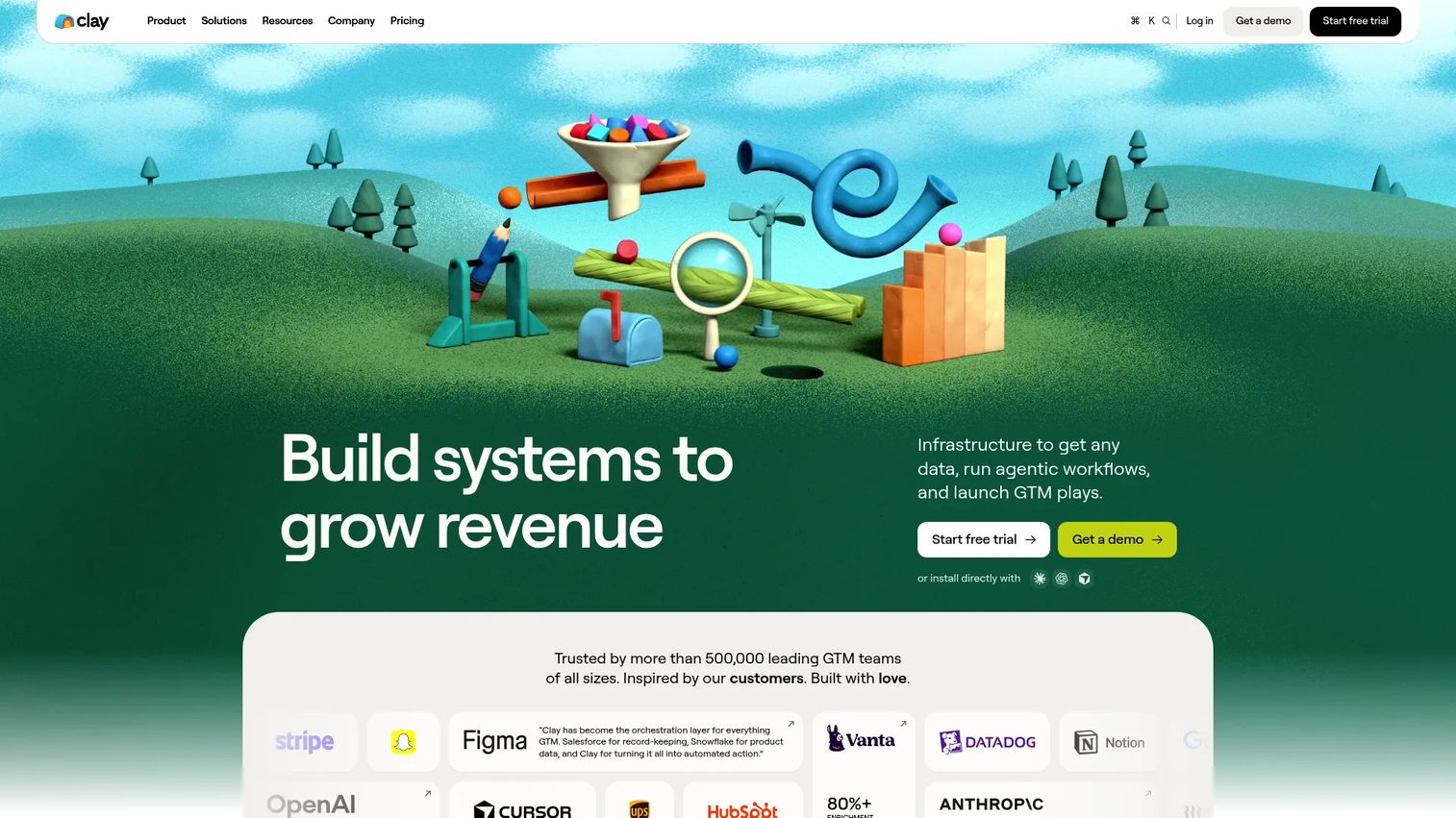
Clay is a GTM data workflow platform for researching, enriching, scoring, and activating prospect and account data. Its Claygent AI agent runs web research, and its waterfall enrichment pulls from multiple data providers in sequence until a field is populated. RevOps and growth teams use Clay to build targeted outbound lists, enrich CRM records, and trigger campaigns without waiting on engineering.
Best for: Growth and RevOps teams building custom prospecting, enrichment, and outbound workflows without engineering help.
Key features
- Multi-provider waterfall enrichment
- Claygent AI agent for web-based account and contact research
- Prospecting tables with job-change and signal tracking
- CRM and data-warehouse synchronization
- Email campaign sequencing and ad-platform audience activation
Why choose Clay: It gives technical marketers the flexibility to build exactly the workflow they need. The tradeoff is that flexible systems require ownership. Without someone managing workflow logic and data quality, Clay tables can become hard to maintain.
Clay pricing: A free plan is available with 500 actions/month. Launch starts at $167/month (annual) or $185/month (monthly). Growth is $446/month (annual) or $495/month (monthly). Enterprise pricing is custom.
G2 rating: 4.6/5
4. Salesforce Agentforce
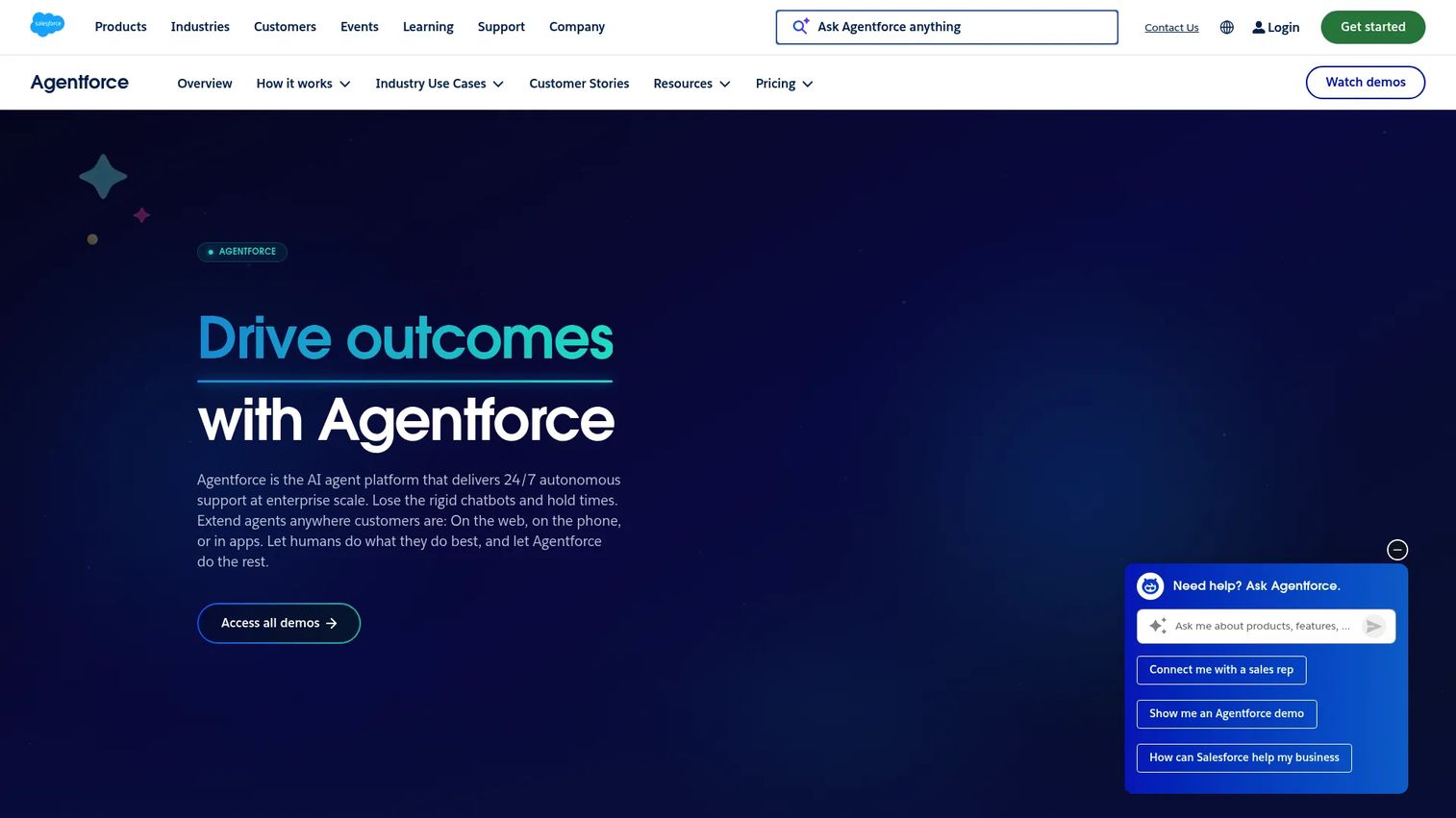
Salesforce Agentforce is the CRM-native AI agent layer built into the Salesforce platform. It lets organizations build, deploy, and orchestrate AI agents across sales, service, marketing, and custom workflows, all grounded in Salesforce data, permissions, and security. For enterprise GTM teams already running on Salesforce, it removes the need to build a separate AI layer outside the system of record.
Best for: Salesforce-heavy organizations that want AI agents grounded in CRM data, governed by existing Salesforce permissions and audit controls.
Key features
- CRM-native agent building and deployment via Agentforce Studio
- Salesforce data grounding and external system connections
- Agent Script for hybrid deterministic and AI reasoning
- Multi-step workflow orchestration through MuleSoft, Flow, and MCP
- Built-in governance, observability, and enterprise security
Why choose Salesforce Agentforce: The fit is strongest when Salesforce is already the GTM system of record and teams want agents that respect existing data models and permissions. Implementation effort and admin ownership requirements vary by org complexity, so factor that into your pilot plan.
Salesforce Agentforce pricing: Salesforce Foundations is free. Consumption-based options include Flex Credits at $500 per 100,000 credits and Conversations at $2 per conversation. The Agentforce User License starts at $5/user/month. Max Editions start from $550/user/month.
G2 rating: 4.4/5
5. HubSpot
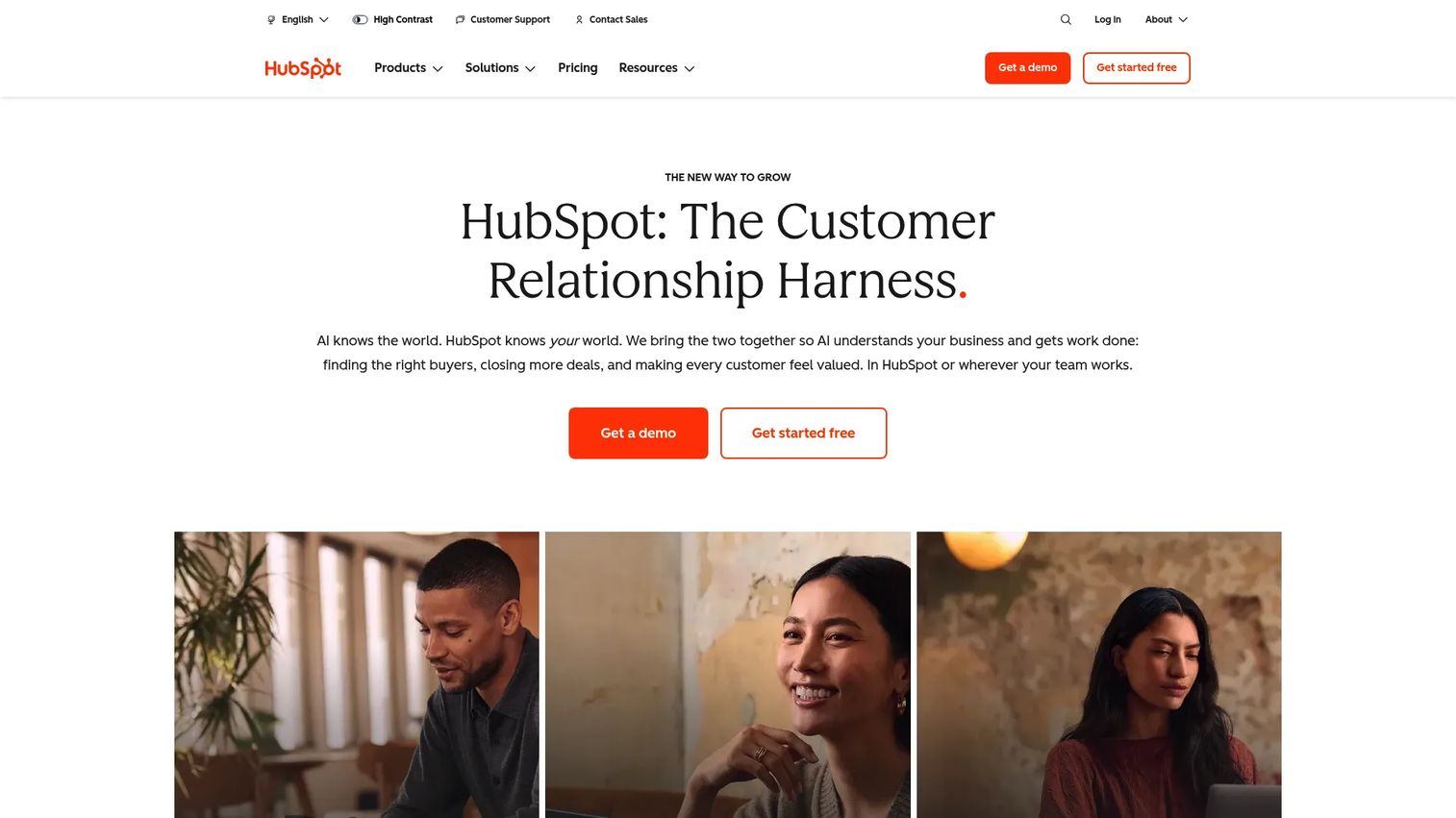
HubSpot is a customer platform that combines CRM, marketing automation, sales tools, service workflows, and AI agents in one system. Its AI layer spans customer agents, prospecting agents, content agents, and data agents, all working from the same unified contact and account data. For growth teams already using HubSpot, the case for staying inside the platform is consolidation: Fewer tools, cleaner attribution, and AI that knows your full customer history.
Best for: Growth teams that want AI inside a CRM, marketing automation, and customer platform they already use, without adding a separate AI stack.
Key features
- CRM-native AI agents and assistants across marketing, sales, and service
- Marketing automation with lead generation and campaign management
- Sales workspace with pipelines, prospecting, and deal management
- Payments, invoices, and B2B checkout built into the platform
- Agent marketplace for extending AI workflows
Why choose HubSpot: Strong fit when the goal is consolidation over customization. The platform covers more ground per seat than most alternatives in this list. Check which AI features are gated to Professional or Enterprise tiers before planning your pilot.
HubSpot pricing: Free plan available. Starter starts at $7/seat/month (annual) or $20/seat/month (monthly). Professional starts at $1,300/month (annual). Enterprise starts at $4,700/month.
G2 rating: 4.4/5
6. Gong
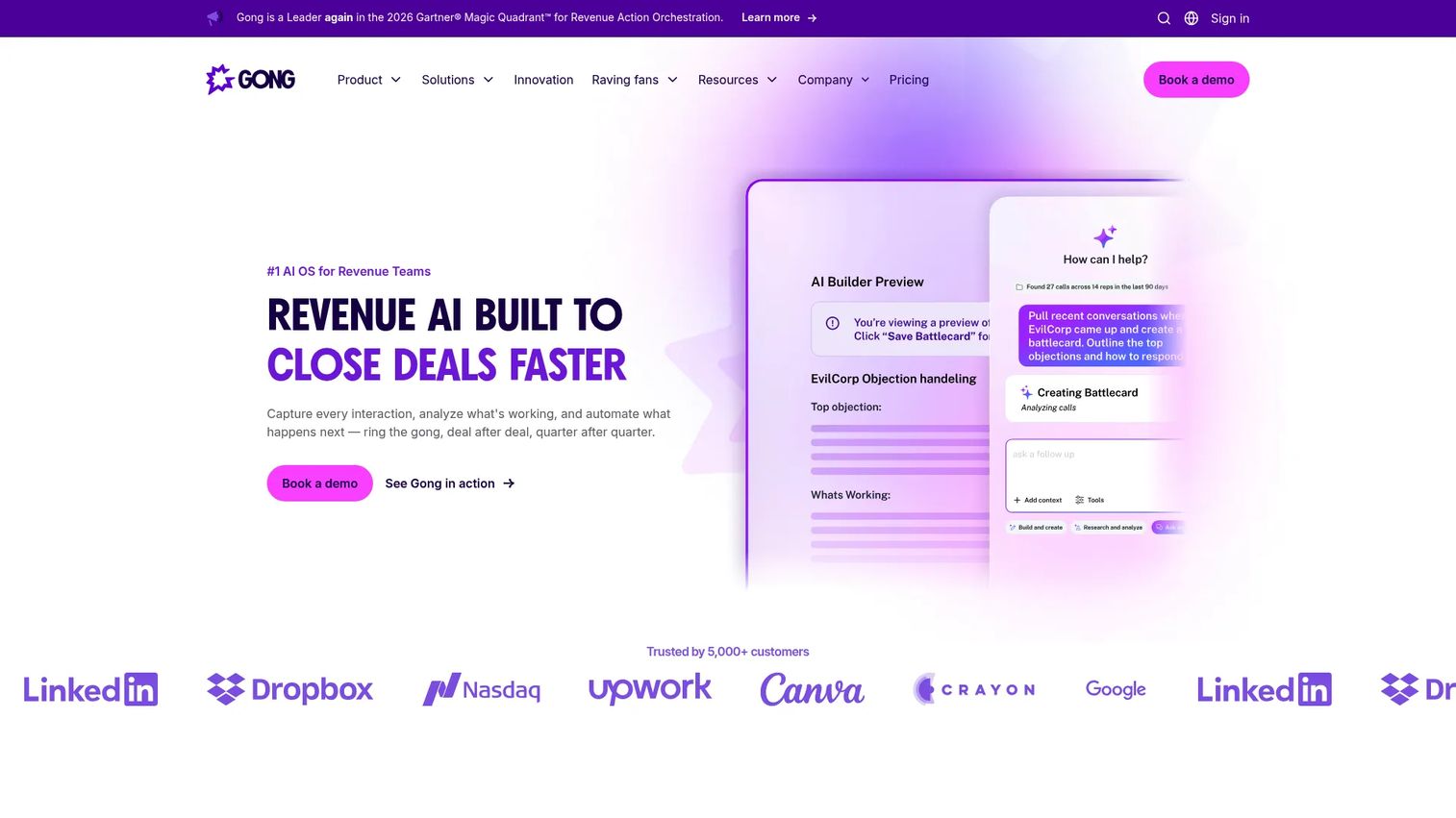
Gong is a Revenue AI platform that captures and analyzes customer calls, emails, meetings, and other interactions to surface deal intelligence, forecast signals, and coaching opportunities. Its AI is trained on actual sales conversations, which makes its deal risk alerts and forecast predictions more grounded than those built on CRM fields alone. For growth teams focused on pipeline quality, Gong closes the loop between what buyers say and what the funnel reports.
Best for: Revenue teams that want AI grounded in actual sales conversations and deal activity rather than CRM-entered data.
Key features
- Automatic recording and transcription of calls, emails, and meetings
- AI-powered conversation and deal health analysis
- AI forecasting and pipeline predictions
- Sales engagement and automated outreach
- Coaching and team performance intelligence
Why choose Gong: The strongest fit is when customer conversations are the richest source of GTM signal and the team wants coaching, forecasting, and deal intelligence from the same platform. Gong is not a campaign orchestration tool. Pair it with a marketing execution system when demand generation coverage is also needed.
Gong pricing: Pricing is customized per organization based on user count and platform scope. Contact Gong directly for a proposal.
G2 rating: 4.7/5
7. Demandbase
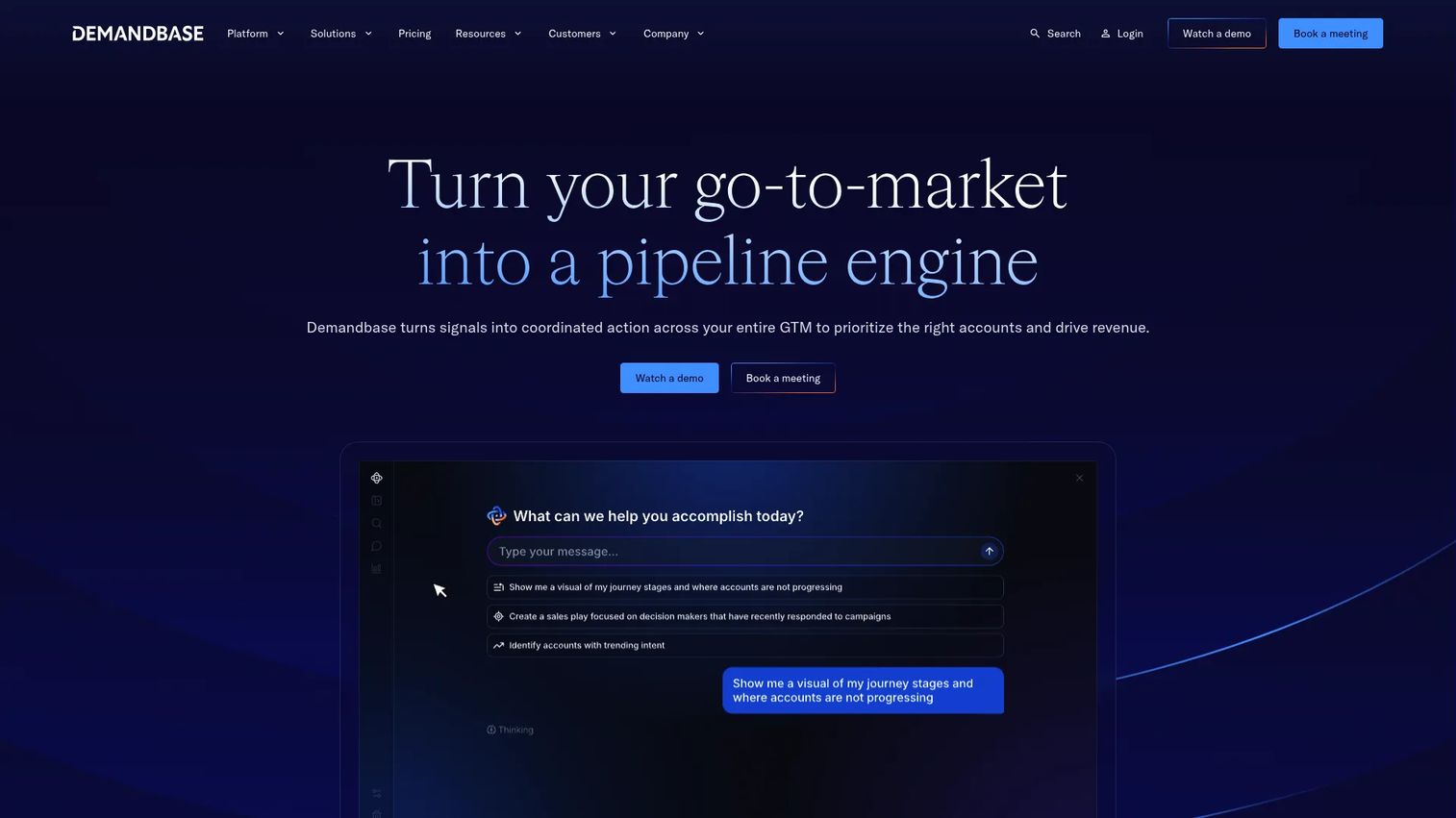
Demandbase is an enterprise ABM and account-based GTM platform. It combines account intelligence, intent data, buying group signals, targeted advertising, and pipeline analytics into a coordinated motion that connects marketing and sales on the same account view. For teams running formal ABM programs, it replaces the spreadsheet-and-Slack version of account prioritization with a data-driven layer that feeds both reps and campaigns.
Best for: Enterprise ABM teams coordinating account targeting, advertising, sales plays, and pipeline measurement across a named-account list.
Key features
- Account and buying-group prioritization with intent signals
- Sales intelligence with account activity and engagement insights
- Targeted account-based advertising across digital channels
- Unified account, buying-group, and engagement data
- AI-driven pipeline analysis and next-action recommendations
Why choose Demandbase: The fit is strongest for mature B2B teams with formal account-based motions and complex buying committees. CRM and account data hygiene directly affects output quality. Run a data audit before the pilot, not after.
Demandbase pricing: Custom pricing across Sales and Marketing, Advertising, and Data packages. Contact Demandbase for a quote.
G2 rating: 4.4/5
8. Copy.ai
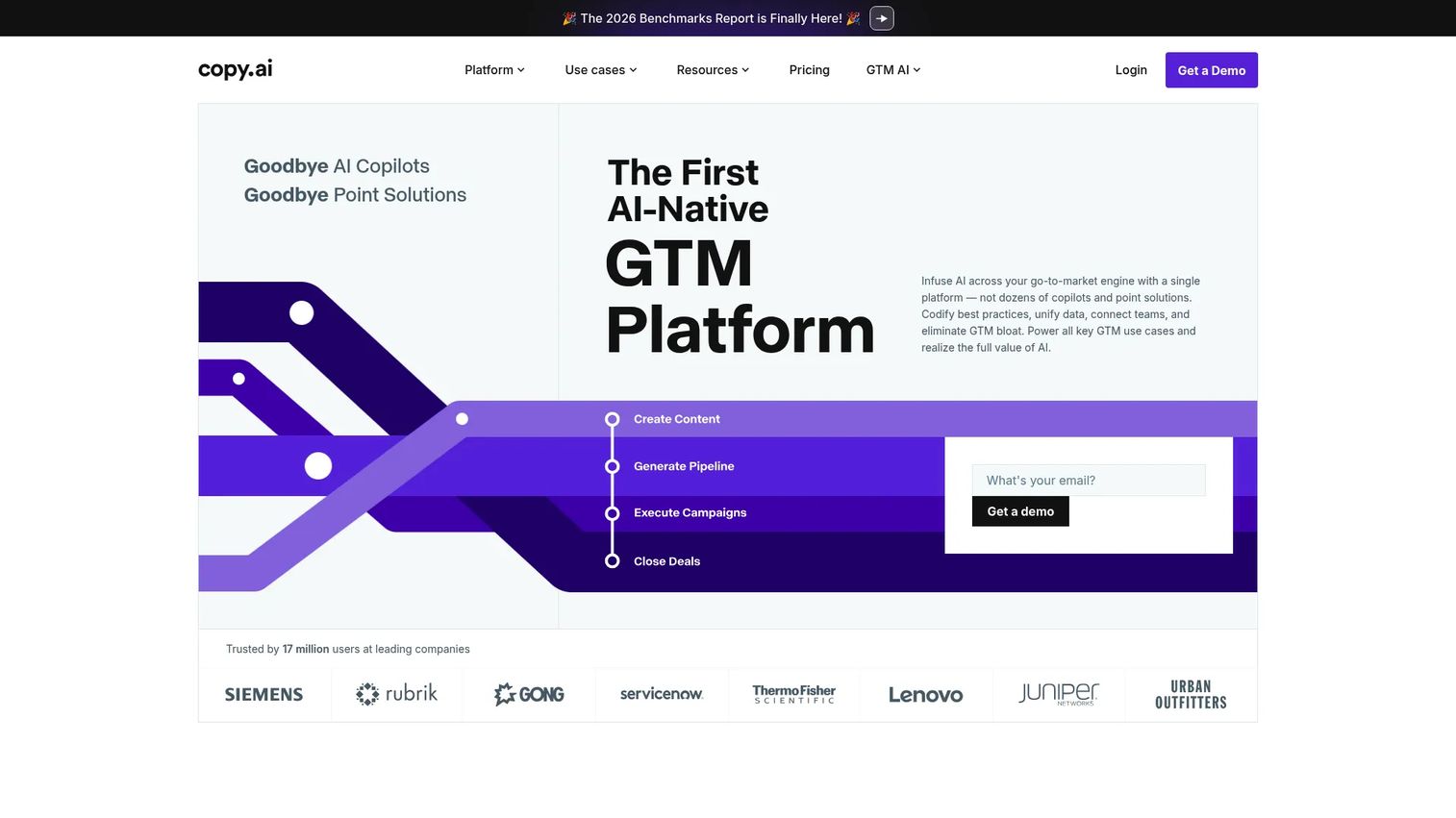
Copy.ai has moved beyond writing assistance into a GTM AI workflow platform. Its workflow builder lets teams codify repeatable GTM processes, including prospect research, messaging, outbound handoffs, and content operations, into AI-assisted automations that run at scale. For growth teams where content production and research consume too much manual time, it offers a way to standardize and speed up those workflows without engineering involvement.
Best for: Teams that want to turn repeatable GTM processes, including research, messaging, and content handoffs, into AI-assisted workflows.
Key features
- GTM workflow builder for multi-step automated processes
- AI content generation with Brand Voice controls
- Prospect research using Copy Agents and Tables
- Actions for GTM system integrations
- Team workspaces with shared workflow management
Why choose Copy.ai: It fits teams where the bottleneck is content throughput and workflow standardization rather than signal ingestion or campaign bidding. Distinguish between teams that need mature GTM workflows (a good fit) and those that mainly need faster copywriting (less differentiated).
Copy.ai pricing: Chat plan starts at $24/month (annual) or $29/month (monthly). Growth is $1,000/month (billed $12,000/year). Expansion is $2,000/month and Scale is $3,000/month. Enterprise pricing is custom. A free signup option is available.
9. Metadata
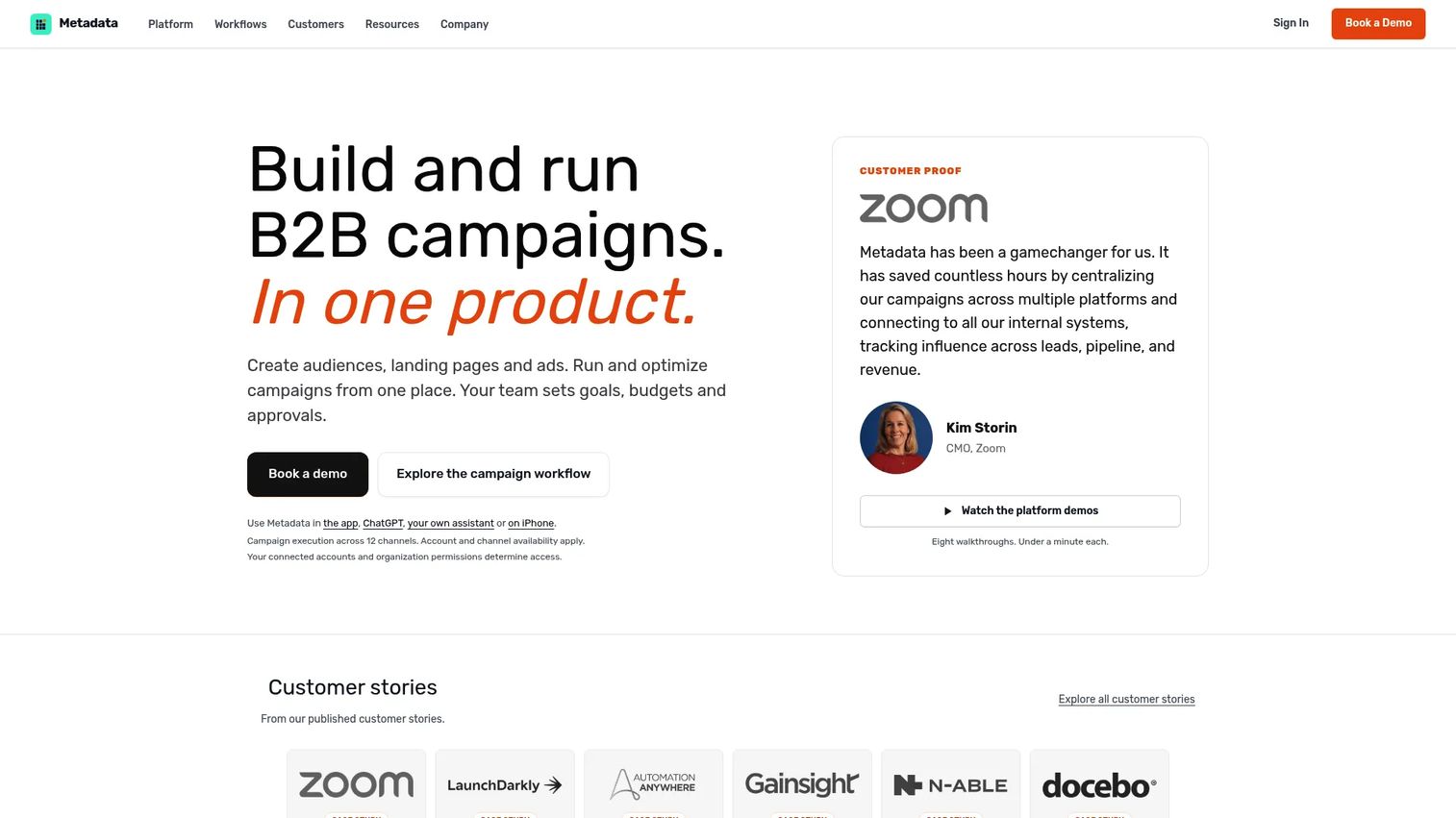
Metadata is an AI-native B2B advertising platform built for demand generation teams running paid campaigns. It handles audience building from firmographic, technographic, intent, CRM, and retargeting signals, then automates campaign setup, creative testing, budget optimization, and pipeline-level reporting across 12 channels. For growth marketers who spend too much time managing paid media manually and too little time on strategy, it moves the operational work to the platform.
Best for: B2B demand generation teams running paid campaigns across account-based audiences and needing pipeline-level attribution.
Key features
- B2B audience building from firmographic, intent, CRM, and retargeting signals
- AI-generated landing pages, creatives, and campaign commercials
- Campaign automation and cross-channel experimentation across 12 channels
- Pipeline-level reporting and revenue attribution
- MCP connectivity for AI-assisted campaign management
Why choose Metadata: The clearest fit is growth teams focused on paid media efficiency where rising CPMs and manual optimization are the core pain points. It is more campaign-centric than CRM-centric. Teams that need deep CRM-side automation alongside paid media should evaluate whether a complementary tool is needed.
Metadata pricing: Pricing is quote-based and varies by channels, managed ad spend, and execution scope. Contact Metadata for a proposal.
G2 rating: 4.6/5
10. Tapistro
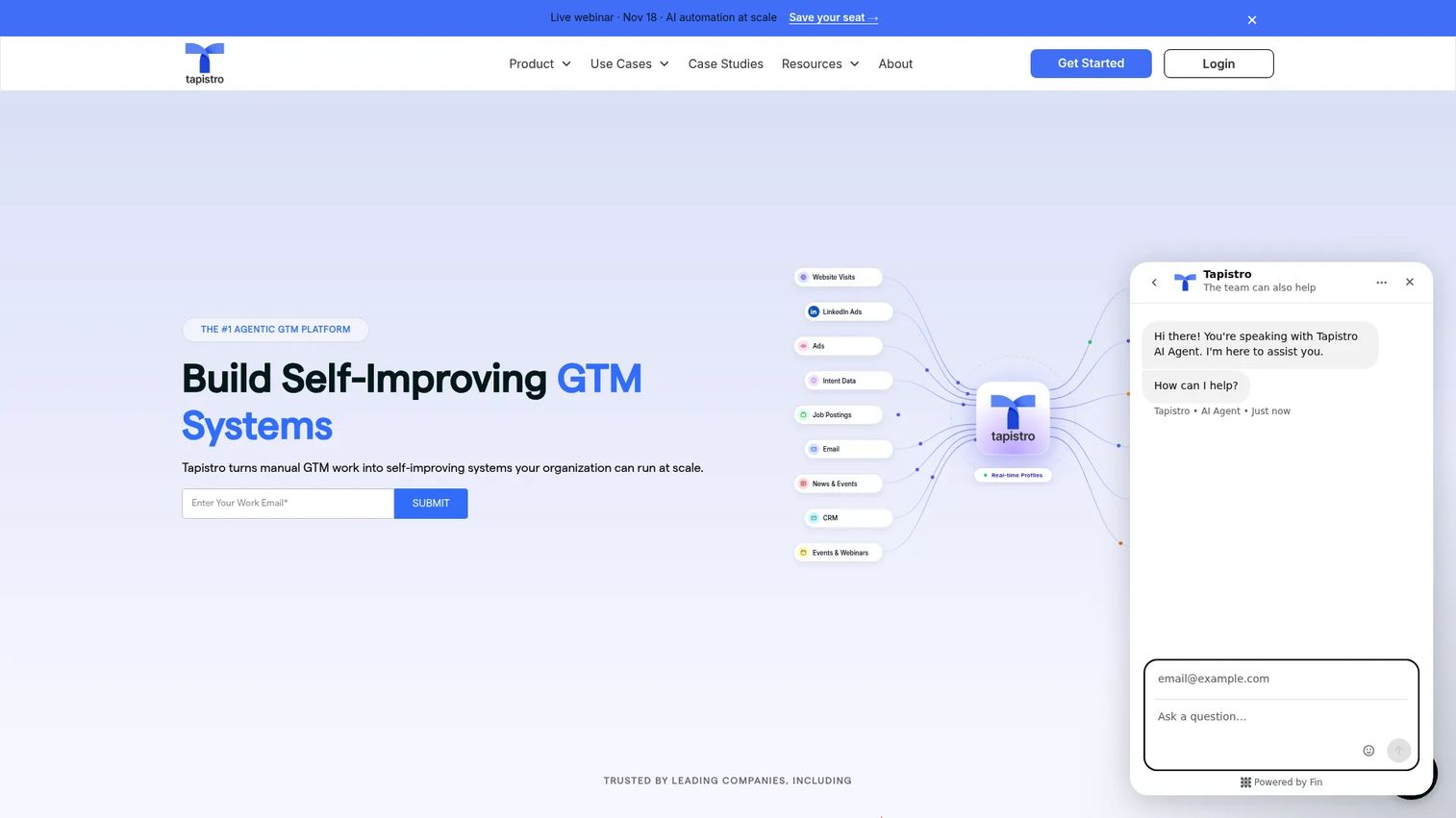
Tapistro is an agentic GTM platform built around signal unification, account intelligence, and journey orchestration. It pulls in first-, second-, and third-party intent signals, builds unified ICP and buying-group profiles, and routes accounts through automated, branching journey workflows. Its autonomy controls let teams define exactly what AI autopilots can do without human approval, which makes it a strong choice for teams evaluating whether agentic GTM is delivering more than rebranded automation.
Best for: Teams evaluating intent-led GTM orchestration with clear autonomy guardrails and signal freshness controls.
Key features
- Real-time intent signal unification from first-, second-, and third-party sources
- AI-powered account and contact research and enrichment
- Unified ICP, account, person, and buying-group profiles
- AI-generated personalized outreach across email, LinkedIn, ads, and CRM tasks
- No-code Journey Canvas for automated, branching GTM workflows
Why choose Tapistro: It fits teams that want signal freshness, explainable prioritization, and defined autonomy controls in a single platform. For a pilot, test one intent signal source, map it to a specific outreach workflow, and measure meeting creation against baseline before expanding.
Tapistro pricing: Free to start with no credit card required. Paid usage scales with enrichment, signals, and AI agent work through Tap credits. Contact Tapistro for account-specific pricing.
G2 rating: 4.7/5
11. 6sense
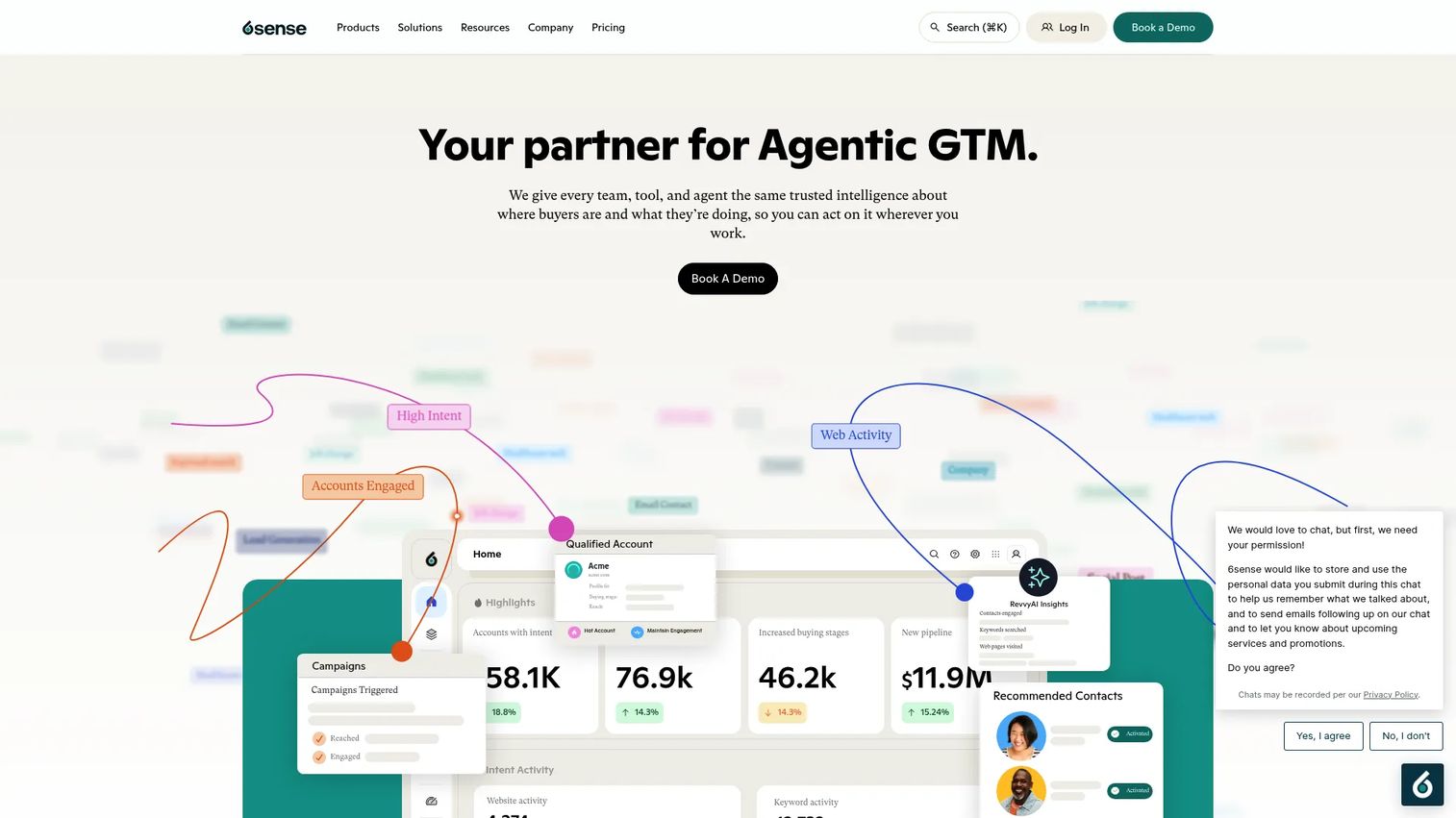
6sense is a B2B go-to-market platform built around predictive intelligence and buyer intent. Its AI models identify accounts in-market before they engage with your brand, score and prioritize them based on behavioral signals, and feed those insights into advertising, sales prioritization, and segmentation workflows. Its RevvyAI assistant and intelligent workflow layer extend that into agent-assisted execution. For enterprise teams with enough data volume to train predictive models, it makes account prioritization feel less like guesswork.
Best for: Mid-market and enterprise teams with mature ABM motions that need to know which accounts are in market and what actions to trigger before the first touch.
Key features
- Predictive account scoring and AI-driven prioritization
- Behavioral intent data from anonymous research activity
- Account identification for anonymous web visitors
- ABM segmentation and campaign activation
- RevvyAI for sales prioritization and intelligent workflows
Why choose 6sense: Success depends on data volume, sales adoption, and clear account ownership. Teams without clean CRM data and defined territories will get less from predictive models. Confirm that your data volume qualifies before budgeting for a full implementation.
6sense pricing: Custom pricing across Revenue Marketing, Sales Intelligence, and 6sense Intelligence packages. Contact 6sense for a quote.
G2 rating: 4.1/5
12. Highspot
Highspot is an AI-powered sales enablement platform that helps GTM teams organize content, guide reps through plays, run training and coaching, and track buyer engagement in Digital Sales Rooms. Its Highspot Agents layer adds AI-driven automation to content recommendations, meeting intelligence, and rep performance workflows. For agentic GTM programs, it covers the execution layer where campaigns hand off to sales and reps need consistent guidance to close.
Best for: Sales and enablement teams where execution consistency and content governance are the bottleneck after demand generation creates the pipeline.
Key features
- AI-powered content organization, search, and personalization
- Sales Plays and Digital Sales Rooms for structured rep execution
- Training, adaptive learning, Role Play, and AI-driven coaching feedback
- Meeting Intelligence and Highspot Agents for workflow automation
- CRM integrations including Salesforce, Slack, and Microsoft Copilot for Sales
Why choose Highspot: It fits teams where the gap between marketing-generated demand and closed revenue comes down to rep execution and content consistency. It is less focused on top-of-funnel signal ingestion than intent or campaign platforms. Pair it with an intent or enrichment tool when upstream signal handling is also needed.
Highspot pricing: Three plans are available: Equip and engage, train and practice, and coach and reinforce. Pricing requires contacting sales.
G2 rating: 4.7/5
13. Zapier
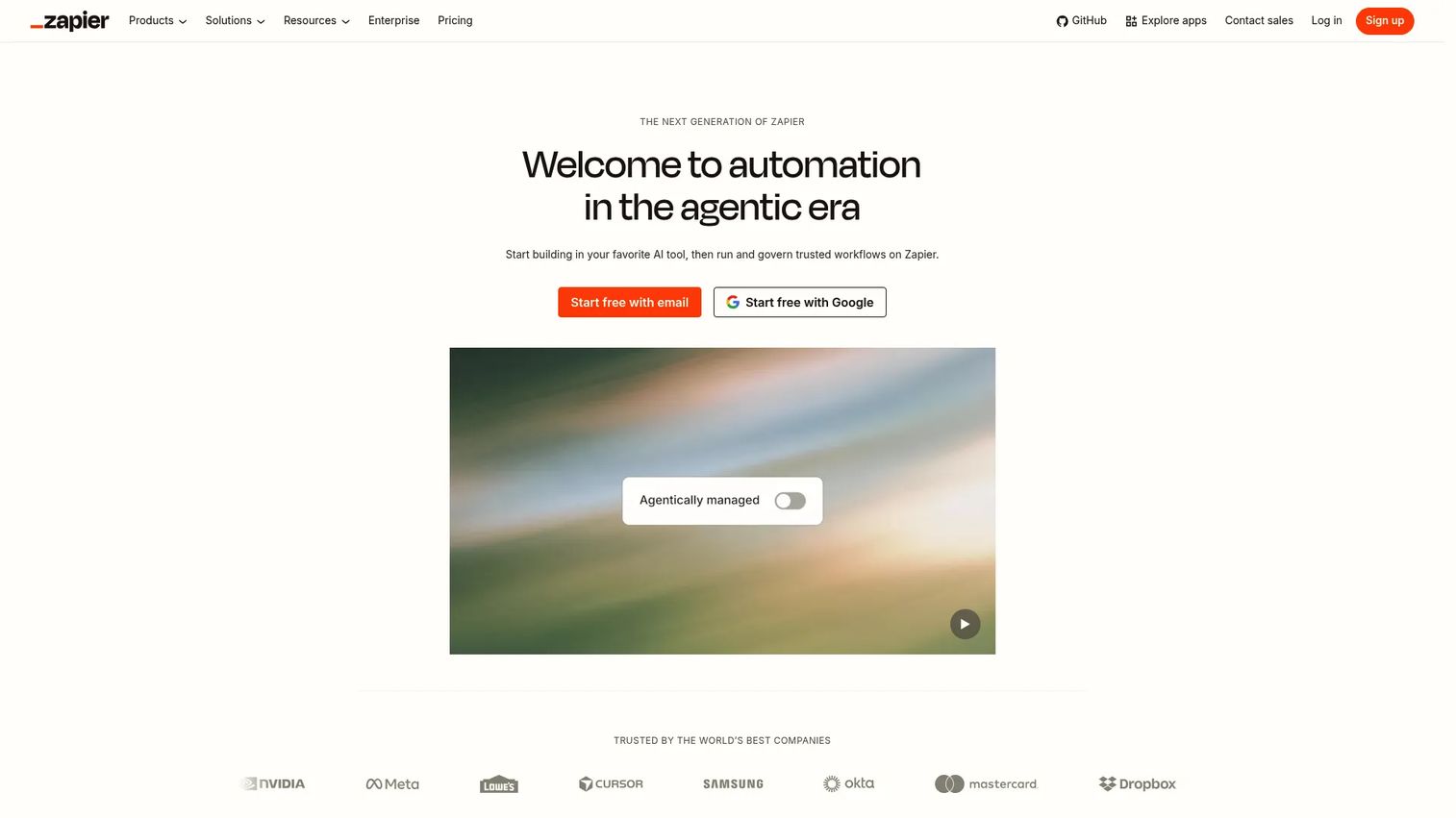
Zapier is a no-code automation and AI agent platform that connects GTM apps through workflows, AI steps, and automated agents. With connections to more than 9,000 apps, it covers the kind of cross-system stitching that growth teams deal with daily: Routing a lead from a form to a CRM, triggering an enrichment call, sending an alert to Slack, or updating a spreadsheet. Zapier Agents extend this into AI-driven actions that can interpret context and decide next steps inside defined workflows.
Best for: Teams that need to connect GTM apps and automate repetitive cross-system workflows quickly, without engineering involvement.
Key features
- No-code automation across 9,000+ app integrations
- Filters, Paths, scheduling, loops, and data formatting
- AI-powered workflow tools including Copilot and AI steps
- Zapier Agents for AI-driven automated actions
- Tables and Interfaces for lightweight data management
Why choose Zapier: Strong fit for scrappy teams connecting a messy stack without help from engineering. It is a workflow automation layer rather than a purpose-built GTM intelligence platform. If you need a system that observes signals, prioritizes accounts, and executes multi-step campaigns autonomously, pair Zapier with a signal or intent tool.
Zapier pricing: Free plan available. Professional starts at $19.99/month. Team starts at $69/month. Enterprise pricing requires contacting sales.
G2 rating: 4.5/5
14. n8n
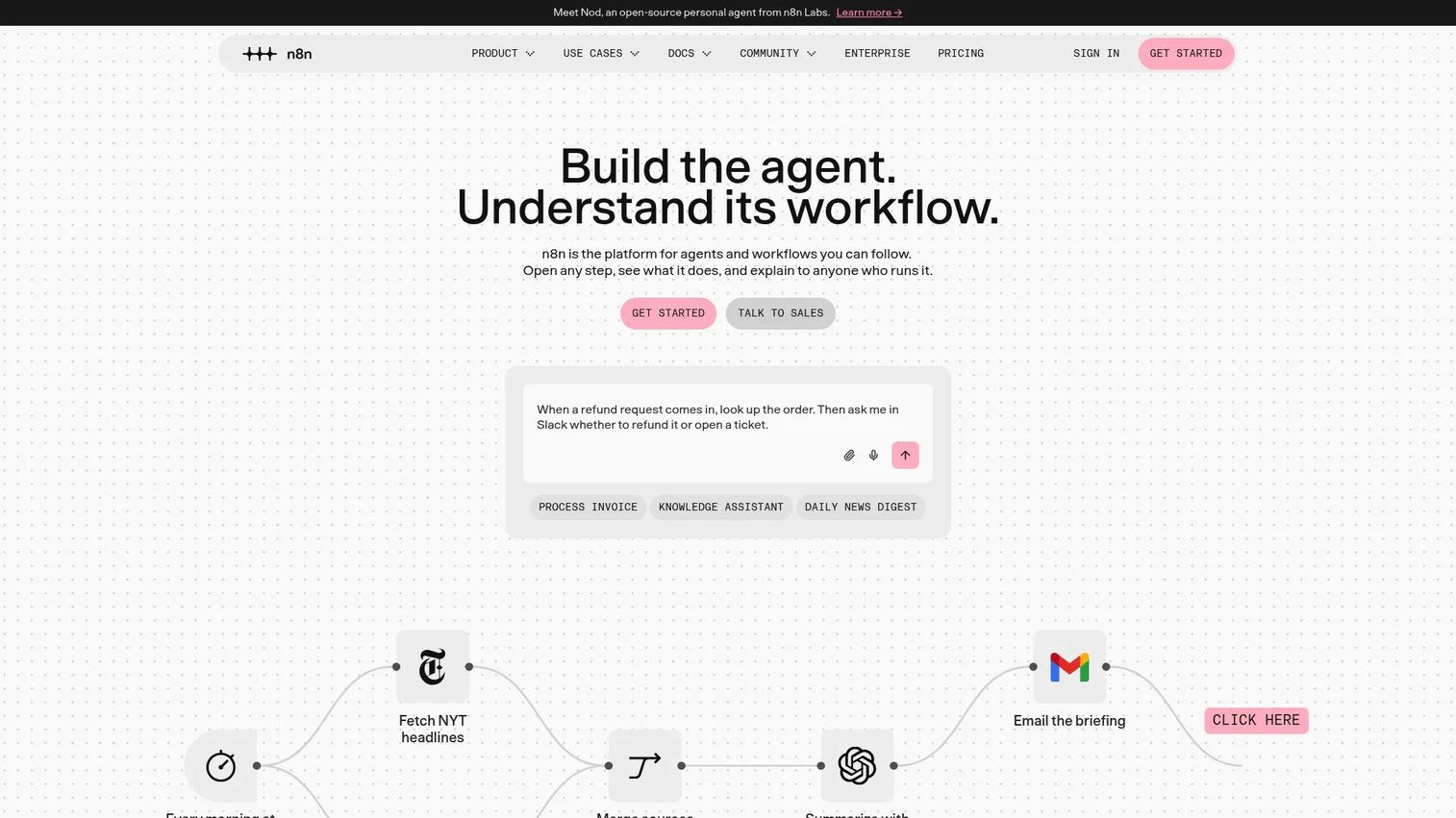
n8n is a workflow automation platform for building AI agents and connected workflows with more technical depth than most no-code tools allow. It supports 500+ native integrations alongside HTTP/API and MCP connectivity, visual workflow logic with JavaScript and Python code steps, AI agent nodes with human approval checkpoints, and self-hosting options for teams with data residency requirements. For RevOps and technical growth teams that find standard automation tools too constrained, n8n provides a lower-level workflow environment with higher extensibility.
Best for: Technical GTM teams that want full workflow control, self-hosting options, and the ability to build custom AI-assisted logic without being locked into a closed platform.
Key features
- 500+ native integrations plus HTTP/API and MCP connectivity
- Visual workflow builder with JavaScript and Python code steps
- AI agent nodes with human approval and workflow visibility
- Self-hosting with on-premises and Docker deployment options
- Workflow history, execution logging, version control, and collaboration
Why choose n8n: The strongest case is teams with technical resources that want something beyond Zapier's constraints. Non-technical marketers should factor in the learning curve. If your RevOps or growth engineering team can manage workflow maintenance, n8n gives you significantly more control over GTM automation logic.
n8n pricing: Starter starts at 20€/month (annual). Pro is 50€/month (annual). Business (self-hosted only) is 667€/month (annual). Enterprise pricing requires contacting sales. A free self-hosted Community Edition and free trials are available. Pricing is listed in euros.
G2 rating: 4.7/5
Considerations when choosing agentic GTM platforms
Start with the bottleneck, not the AI label
Identify the specific GTM workflow that is breaking first. Slow account research, late intent response, campaign testing backlogs, misrouted leads, inconsistent sales follow-up, attribution gaps. The right platform depends on the bottleneck, not the category name. A team where the problem is paid media efficiency will get less from a signal intelligence platform than from a campaign automation tool.
Check data quality before autonomy
Agentic systems act on the data you give them. CRM duplicates, missing account fields, stale ownership records, and inconsistent lifecycle stages all produce bad agent decisions. Before a pilot, audit the data the agent will use. Poor input data produces confident but wrong outputs, and those are harder to catch than obvious errors.
Require explainable decisions
Growth teams need to defend why an account was prioritized, why a budget moved, or why a rep received a specific task. Ask every vendor to show the reasoning behind a recommendation, including which signals drove it, what confidence level was assigned, and where the audit log lives. A platform that cannot explain its decisions is a risk in a function that answers to leadership on pipeline numbers.
Define the autonomy envelope before you go live
Establish clearly what the AI can do without approval and what requires a human sign-off. Examples: Draft outreach copy, enrich an account record, route a lead, shift budget between ad sets, update a CRM opportunity, or send an email. The right envelope depends on the platform, the workflow, and your risk tolerance. Document it before the pilot starts, not after the first incident.
Measure against pipeline, not activity
Emails sent, accounts enriched, and workflows triggered are leading indicators, not outcomes. Set pipeline-level success criteria before you start: Qualified meetings, pipeline created, CAC, stage conversion rate, win rate, and sales velocity. If the platform cannot connect its actions to those numbers, the ROI conversation with leadership will be difficult.
Conclusion
The 14 platforms in this guide cover different GTM bottlenecks, and the right starting point depends on where your execution is breaking down.
For full-funnel agent workflows, Dhisana AI runs research, enrichment, and outreach in a governed agentic loop. Common Room is the clearest fit when buyer signals from product, community, and web channels need to become pipeline actions. Clay gives RevOps and growth teams flexible enrichment and outbound workflows they can build without engineering. On the CRM-native side, Salesforce Agentforce fits Salesforce-heavy orgs, and HubSpot suits teams that want AI inside a consolidated platform. For enterprise ABM and intent, Demandbase and 6sense both serve account-based teams with mature operations, though they differ in predictive depth and pricing model. Metadata handles paid media automation with pipeline-level attribution. Tapistro and Copy.ai address orchestration and workflow standardization respectively. Highspot closes the loop on sales execution and enablement. Zapier and n8n round out the list as workflow automation layers for teams connecting apps rather than building a GTM intelligence system from scratch.
Before committing to any of these, pick one bottleneck, set baseline metrics, and define what the AI is and is not allowed to do without approval. A focused 30 to 60 day proof of concept with pipeline metrics will tell you more than a broad deployment with vague goals.
For related reading on AI tools that support GTM execution, see the guides on agentic AI platforms, agentic AI tools for sales, and best AI agents for a broader category view. For the marketing automation layer that often sits alongside these platforms, the best marketing automation software tools guide covers that stack.
Start your journey with Guideflow today!
FAQs
An agentic GTM platform uses AI agents to connect GTM data, decisions, execution, and learning loops in a system that can observe buyer signals, interpret account context, take action across GTM channels, and improve based on pipeline or revenue outcomes. The key difference from a dashboard is execution: The system acts, not just recommends. Most platforms in this category combine signal ingestion, some form of autonomous or semi-autonomous action, and outcome-based feedback into a single workflow.
Workflow automation follows predefined rules: If X happens, do Y. Agentic GTM platforms interpret context, weigh signals, and decide actions based on account history, goals, and constraints rather than a fixed trigger. The practical difference shows up at scale: Automation works well for predictable, identical tasks, while agentic systems handle messier inputs where the right action depends on what the account has done before. That said, workflow automation remains useful for repeatable tasks and often complements agentic platforms rather than competing with them.
The answer depends on where the bottleneck sits. For paid media efficiency and campaign automation, Metadata is built for that job. For buyer signals and pipeline generation from product and community signals, Common Room is the clearest fit. For enrichment workflows and outbound at scale, Clay gives growth teams flexibility without engineering. Teams already running on HubSpot will find AI value inside the platform. For ABM programs with enough account data volume, Demandbase and 6sense address prioritization and buying-committee intelligence.
Salesforce Agentforce is the natural first option for Salesforce-native organizations because agents run inside the existing data model, permissions, and security framework. Beyond that, Demandbase, 6sense, and Gong all integrate with Salesforce at varying depths for account intelligence, intent data, and revenue analytics. Clay syncs enriched data back to Salesforce records. The choice beyond Agentforce depends on the specific workflow gap, so verify integration depth and CRM writeback behavior before selecting a complementary tool.
Pick one workflow with clear before-and-after metrics. Good candidates include account prioritization from an intent signal, automated enrichment of a named account list, response to a CRM stage change, or campaign audience activation from firmographic data. Run the pilot for 30 to 60 days against a baseline you measured before the pilot started. Define human approval and rollback criteria before go-live. The metrics that matter most are qualified meetings created, pipeline generated, and stage conversion rate, not activity counts like records enriched or emails sent.
Generally no. Most agentic GTM platforms either consume CRM data as their context source or write actions back to the CRM as the system of record. The CRM holds accounts, contacts, opportunities, and revenue history in a way that agentic platforms do not replicate. Salesforce Agentforce and HubSpot are the closest to native CRM-plus-agent combinations, but even they position agents as a layer on top of the core customer data system rather than a replacement for it.
The strongest pilots track pipeline created, qualified meetings booked, CAC, stage conversion rate, sales velocity, win rate, and retention. Activity metrics like accounts researched, emails sent, or workflows triggered are useful leading indicators but insufficient on their own to demonstrate revenue impact. Most platforms in this guide offer pipeline-level reporting. The challenge is attribution: Establishing clean before-and-after baselines and isolating the platform's contribution from other factors. Set those baselines before the pilot starts.
Safety depends on the platform's data handling, your internal governance, and the specific workflows you deploy. Before signing, ask vendors about data retention policies, whether account data is used to train shared models, access controls, approval flows, and audit log availability. Enterprise plans from most platforms in this guide include SSO, audit logs, and permission controls. Treat this evaluation as an internal governance decision rather than a vendor marketing claim, and involve your security or legal team before connecting the platform to production CRM data.