A distributor runs out of a fast-moving SKU on a Tuesday. The supplier had the stock. Nobody flagged the reorder. The customer moved on. That gap, between what the supplier knows and what the buyer sees, is where revenue quietly leaks.
Vendor managed inventory software closes that gap by letting the supplier own replenishment decisions using shared, real-time data. Instead of purchase orders bouncing back and forth, the vendor watches consumption and restocks before the shelf empties. The category is scaling fast for a reason. The vendor managed inventory systems market is expected to grow from about USD 5.32 billion in 2026 to USD 12.56 billion by 2035, roughly a 10% CAGR, according to Business Research Insights. Cloud-based VMI now represents around 65% of deployments, and digitally enabled VMI can cut inventory costs by nearly 25 to 30% through real-time tracking and closer supplier collaboration.
If you own operational software decisions, VMI sits at an interesting intersection: it is part inventory system, part data-exchange layer, and part cross-team workflow. Getting it right means thinking about replenishment logic, forecasting quality, and how cleanly it plugs into your ERP and EDI stack, not just feature counts. The same evaluation discipline you would bring to comparing AB testing tools or AI customer service software applies here: judge the workflow, not the brochure.
This guide compares seven platforms that support vendor managed inventory in different ways, from broad operations suites to dedicated VMI automation.
What's inside
This is a buyer's guide for operations leaders, supply chain managers, procurement teams, and product managers who own or influence inventory software decisions. It covers seven tools that support VMI or VMI-adjacent workflows, ranked by overall relevance to the keyword and use case.
We selected and evaluated each tool against the criteria that actually matter for supplier-managed inventory: replenishment automation, real-time inventory visibility, demand forecasting, ERP and EDI integration, and fit for multi-location or partner-driven programs. You will find a comparison table, per-tool breakdowns with pricing and G2 ratings, a buyer's checklist, and FAQs at the end.
TL;DR
- Best for broad operations visibility and cross-functional workflows: SafetyCulture, if you want inspections, asset tracking, and inventory in one mobile-first platform.
- Best for enterprise inventory orchestration: Oracle, when you already run Oracle systems and need supplier-managed processes at scale.
- Best for accounting-linked inventory: Fishbowl, for SMBs that want inventory and manufacturing control tied to QuickBooks.
- Best for manufacturing-heavy teams: Katana, for product businesses that plan production and inventory together.
- Best for multi-channel stock control: Finale Inventory, when inventory spans several channels and warehouses.
- Best for true VMI automation and partner collaboration: TrueCommerce, with AI forecasting and EDI-connected replenishment.
What is vendor managed inventory software?
Vendor managed inventory software is a system that lets a supplier monitor a customer's inventory levels and take responsibility for replenishing stock, using shared, real-time data instead of customer-issued purchase orders.
In the supplier-managed model, the buyer shares consumption and stock data with the vendor. The vendor uses that signal, often combined with demand forecasting, to decide when and how much to ship. Ownership of the replenishment decision shifts from the buyer to the supplier, which reduces manual reordering, cuts stockouts, and smooths inventory across the relationship. This model matters more every year as supply chains digitize and both sides push for tighter collaboration and less waste.
Strong VMI platforms share a common set of capabilities:
- Inventory visibility across locations and partners: a single, trusted view of stock at every site and customer location.
- Replenishment automation: rules and signals that trigger orders without manual PO cycles.
- Forecasting and demand planning: consumption-based projections that anticipate demand swings.
- ERP and EDI connectivity: clean data exchange with the systems that already run the business.
- Collaboration and reporting: shared dashboards both supplier and customer teams can trust.
The distinction that trips up buyers: some tools on this list are dedicated VMI platforms, while others are inventory management systems that support VMI-adjacent workflows. Both can work. The right pick depends on how much automation and partner data exchange you actually need, a judgment call similar to choosing between affiliate marketing software and a broader growth suite.
When to use vendor managed inventory software
Reduce stockouts and overstocks
VMI software earns its place fastest in inventory-heavy businesses with frequent demand swings or seasonal variation. When a supplier watches consumption in real time, they can replenish before a shelf empties and avoid dumping excess stock that ties up cash. Distributors, wholesalers, and manufacturers with volatile demand see the clearest payoff, since the cost of a stockout or an overstock is measured directly in lost sales or dead capital.
Automate replenishment across partners
Manual reordering breaks down at scale. Every purchase order is a chance for a delay, an error, or a missed signal. Teams use VMI software to replace that manual cycle with rules-based replenishment automation, so orders trigger consistently across many supplier-customer relationships. This matters most when one company manages inventory on behalf of dozens or hundreds of partners and cannot afford to babysit each account.
Improve visibility for multi-location operations
When inventory is spread across stores, warehouses, or customer sites, no single spreadsheet keeps up. Real-time inventory visibility across all those locations lets both sides plan against the same numbers. That shared picture is what makes supplier-managed replenishment trustworthy: the vendor is acting on live data, not last month's snapshot. The more distributed the operation, the more visibility becomes the deciding factor.
Comparison table
Use this table as a fast filter, then read the item sections for the platform that fits your operational complexity. "Intent" describes the primary reason a team reaches for the tool. "Key use case" is where it does its best work. Pricing and ratings are drawn from each vendor's public pages and G2 listings. Tools are ranked by overall relevance to vendor managed inventory software.
| # | Product | Intent | Key use case | Pricing | G2 rating |
|---|---|---|---|---|---|
| 1 | SafetyCulture | Operations platform with inventory | Inspections, assets, and stock across locations | Free; Premium from $24/seat/mo (annual) | 4.6/5 |
| 2 | Oracle | Enterprise supply chain orchestration | Supplier-managed inventory at enterprise scale | Custom (OCI free tier available) | 4.1/5 |
| 3 | Fishbowl | Inventory and manufacturing control | SMB inventory tied to QuickBooks | From $229/mo (billed annually) | 4.0/5 |
| 4 | Katana | Manufacturing-first inventory planning | Production and inventory for product businesses | Free; Core from $299/mo | - |
| 5 | Finale Inventory | Multi-channel stock control | Inventory across channels and warehouses | From $499/mo | 4.8/5 |
| 6 | Square | Lightweight POS with inventory | Retail and location-based stock handling | Free; Plus $49/mo per location | 4.7/5 |
| 7 | TrueCommerce | Dedicated VMI and EDI automation | AI-driven replenishment with partner collaboration | From £75/mo | 4.4/5 |
The 7 best vendor managed inventory software platforms
1. SafetyCulture
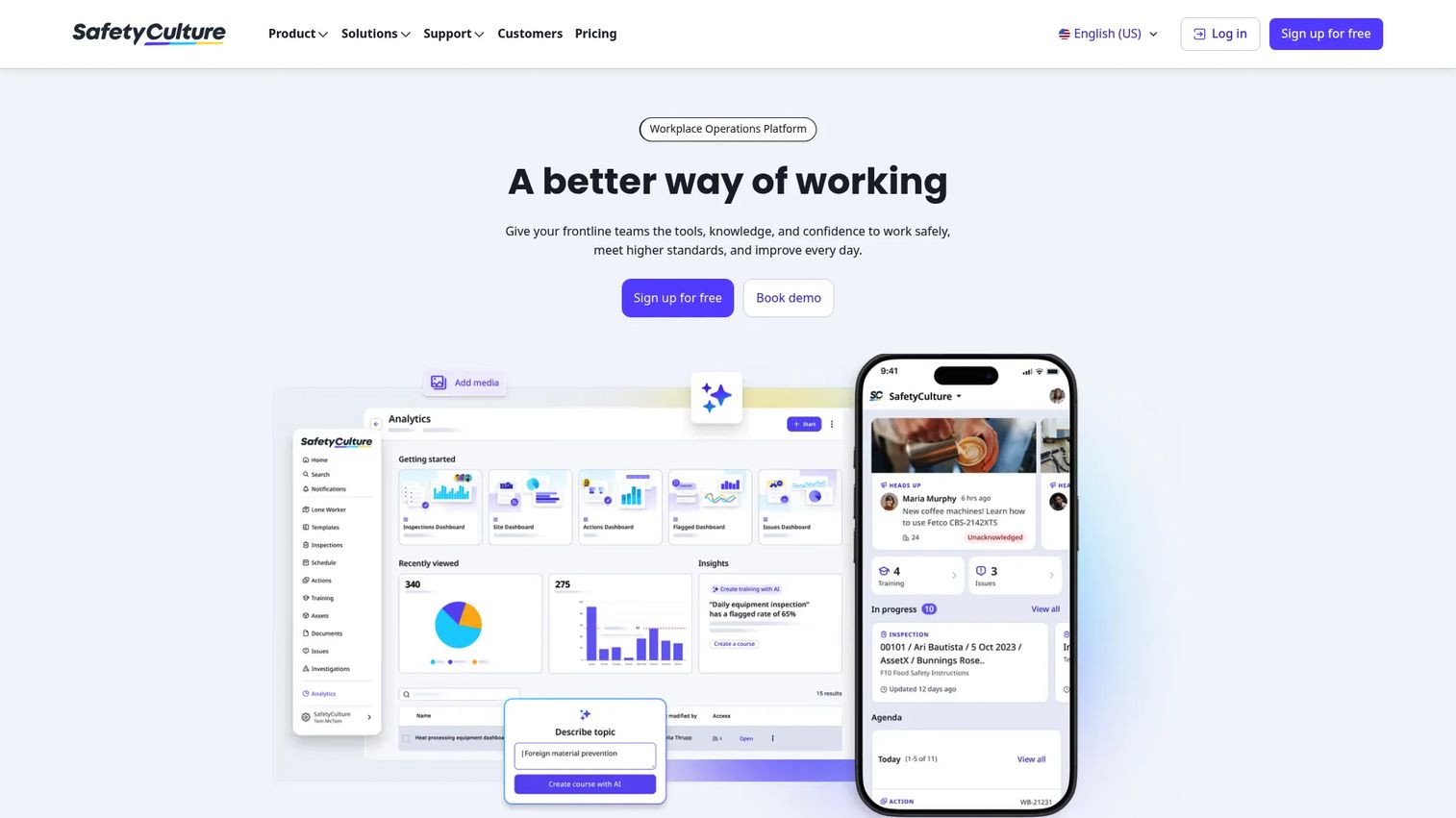
SafetyCulture is a workplace operations platform built around inspections, training, asset management, and issue reporting, with inventory tracking layered into that broader operational picture. Rather than positioning itself as a pure replenishment engine, it fits teams that want stock visibility inside the same mobile-first system they use for compliance and frontline workflows. Smart sensors and checklists let field teams log stock levels and flag issues in real time across many locations.
Best for: Operations teams that want inventory tracking inside a broader inspections and asset-management platform, not a standalone VMI tool.
Key strengths
- Mobile-first inspections and checklists: frontline teams capture stock and asset data from any location on a phone.
- Actions and issue reporting: stock discrepancies or low levels become trackable tasks, not lost notes.
- Schedules and recurring reminders: recurring counts and replenishment checks run on a set cadence.
Why choose SafetyCulture: If your inventory pain is really an operations and visibility pain spread across sites, SafetyCulture gives you one platform for inspections, assets, and stock. It suits teams that value frontline adoption and multi-location oversight over deep, automated replenishment logic. It is less of a fit if pure supplier-managed replenishment automation is your only goal.
SafetyCulture pricing: SafetyCulture is free for small teams of up to 10 users. Premium runs $24 per seat per month billed annually, or $29 per seat per month billed monthly. Enterprise pricing is custom and arranged with sales. The free tier makes it low-risk to pilot with a single team before expanding.
2. Oracle
Oracle supports vendor managed inventory through its broader supply chain collaboration and inventory management ecosystem. For enterprises already running Oracle systems, VMI becomes one orchestration pattern within a much larger platform that spans databases, cloud infrastructure, and business applications. The strength here is depth: supplier-managed inventory processes, demand signals, and replenishment all live inside the same enterprise data model that runs finance, procurement, and operations.
Best for: Large organizations already invested in Oracle that need supplier-managed inventory as part of enterprise-wide supply chain orchestration.
Key strengths
- Oracle Cloud Infrastructure: enterprise-grade compute and data foundation for supply chain workloads.
- Autonomous Database: self-managing data layer that keeps inventory and forecasting data consistent at scale.
- Native supply chain applications: VMI processes connect directly to procurement, finance, and planning modules.
Why choose Oracle: Oracle makes the most sense when you are standardizing on Oracle across the business and want VMI to inherit the same governance, security, and integration as everything else. It rewards companies with the scale and IT resources to run enterprise supply chain software. Smaller teams without an existing Oracle footprint will find lighter-weight options faster to stand up.
Oracle pricing: Oracle does not publish a single brand-wide starting price for its supply chain capabilities, so plan on custom, sales-led pricing scoped to your modules and volume. Oracle Cloud Infrastructure does offer a Free Tier with Always Free services plus US$300 in credits for 30 days, useful for evaluating the underlying platform before committing.
3. Fishbowl
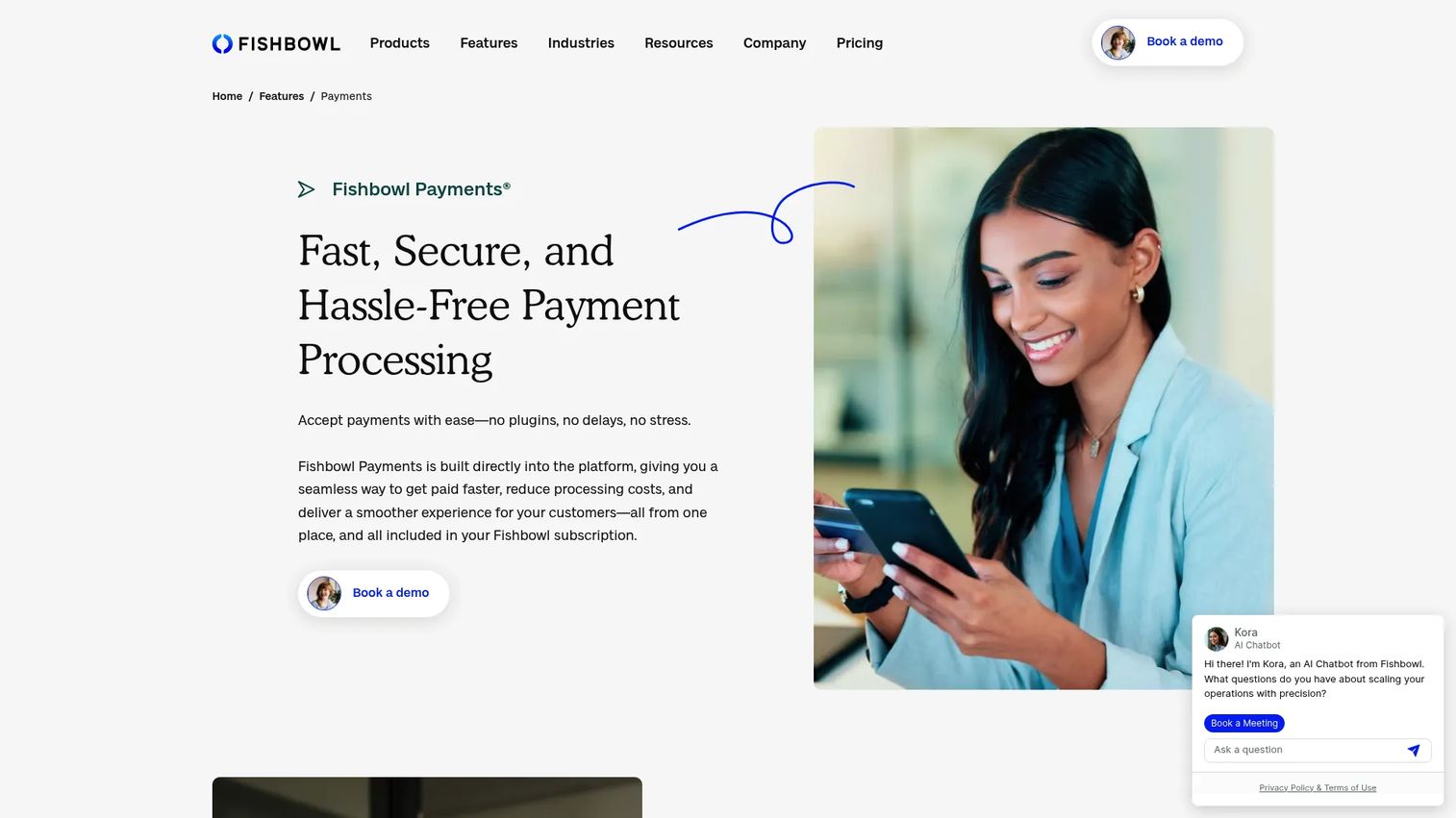
Fishbowl is inventory management, warehouse operations, and manufacturing software built for small and mid-size businesses. Its close QuickBooks adjacency is the standout: teams that run their books in QuickBooks get inventory control that keeps costs, orders, and stock in sync. It is inventory-first rather than VMI-first, which suits SMBs that want operational rigor now and VMI-adjacent workflows as they mature.
Best for: Small and mid-size businesses that need real inventory and manufacturing control tightly linked to QuickBooks accounting.
Key strengths
- Real-time inventory tracking: live stock levels across locations feed reordering decisions.
- Warehouse management and order fulfillment: picking, packing, and shipping stay organized as volume grows.
- Manufacturing and bill of materials support: production and component tracking sit alongside inventory.
Why choose Fishbowl: Fishbowl fits teams that treat inventory as the foundation and want manufacturing and accounting workflows in the same system. It is the practical choice for a growing operation that needs control and structure without jumping straight to enterprise software. Teams needing native, automated supplier-managed replenishment across many trading partners may want a dedicated VMI platform alongside it.
Fishbowl pricing: Fishbowl publishes four plans, all billed annually: Essentials at $229 per month, Growth at $429 per month, Scale at $729 per month, and Advanced with custom pricing available on request. There is no free tier, and an implementation package is part of the purchase, so budget for onboarding as well as the subscription.
4. Katana
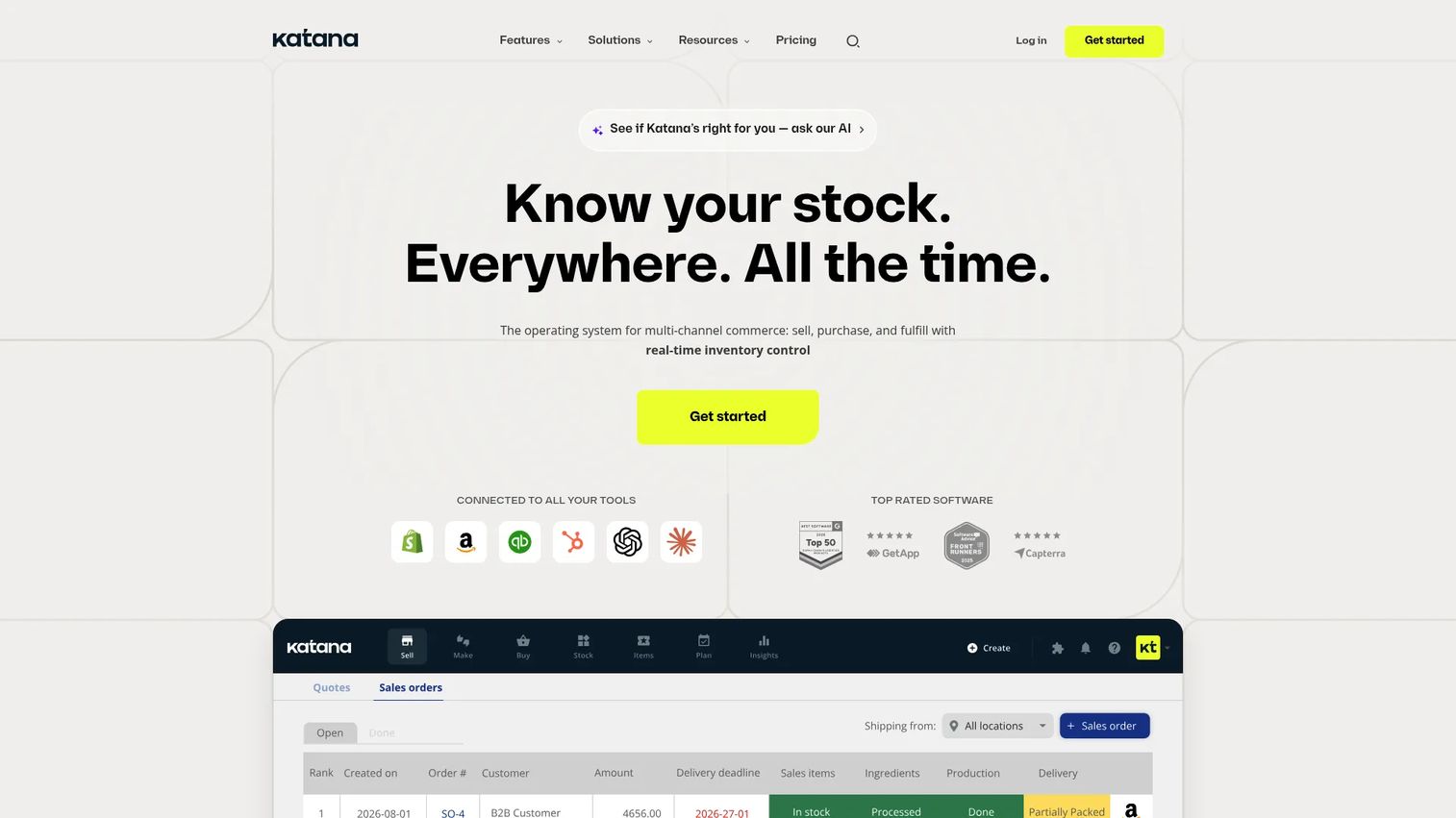
Katana is cloud inventory and manufacturing software built for product businesses that plan production and stock together. Its manufacturing-first design gives small and mid-sized makers real-time visibility into what they can build, what they have on hand, and what they need to buy. For replenishment-heavy teams, that live link between production demand and inventory levels is where Katana does its best work.
Best for: Small to mid-sized product businesses that need inventory control tied directly to manufacturing and production planning.
Key strengths
- Real-time inventory management: stock levels update as production and sales happen.
- Manufacturing and BOM tracking: bills of materials connect component stock to finished-goods demand.
- Purchasing, order management, and warehousing: reordering, orders, and storage live in one workflow.
Why choose Katana: Katana suits makers and manufacturers who need to see production and inventory as a single picture rather than two disconnected systems. It is a strong fit when manufacturing complexity, not multi-partner replenishment, drives your inventory decisions. Teams whose core need is supplier-managed replenishment across external partners should weigh a dedicated VMI platform.
Katana pricing: Katana offers a Free Plan, a Core Plan starting at $299 per month, and an Advantage Plan with custom pricing. Manufacturing and inventory management add-ons are priced separately on the pricing page, so map the modules you need before comparing totals. The free plan makes it easy to test the workflow before scaling up.
5. Finale Inventory
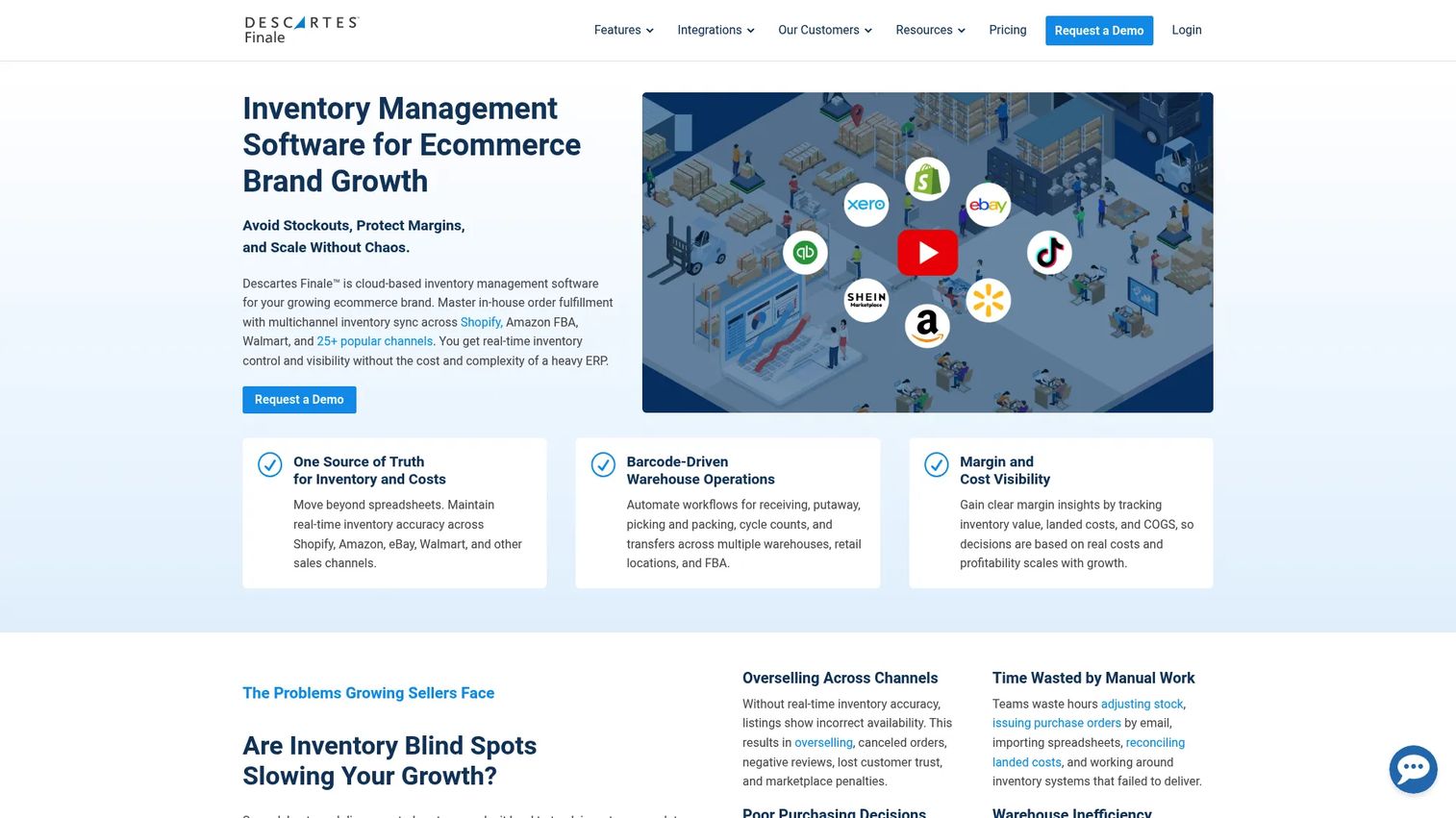
Finale Inventory is cloud-based inventory and warehouse management software built for multichannel sellers and multi-location operations. It centralizes stock control across sales channels and warehouses, with automated replenishment and real-time syncing that keep every location working from the same numbers. For teams juggling several channels, that single source of truth is the point.
Best for: Ecommerce and warehouse teams that need centralized inventory control across multiple sales channels and locations.
Key strengths
- Multi-warehouse inventory management: stock across every warehouse rolls up into one view.
- Real-time inventory syncing across channels: sales on any channel update inventory everywhere instantly.
- Barcode scanning and stock transfers: warehouse teams move and count stock accurately at speed.
Why choose Finale Inventory: Finale fits operations that live or die by channel and warehouse accuracy, where overselling or blind spots cost money. It balances automated replenishment with reporting that helps teams plan across locations. It carries the highest G2 rating on this list, which speaks to reviewer satisfaction with that multi-channel focus.
Finale Inventory pricing: Plans start from $499 per month, with pricing scaled by users, integrations, order volume, and add-ons. Both month-to-month and annual options are available, and there is no free tier, so plan a paid evaluation window to confirm fit before committing.
6. Square

Square is a business software and payment processing platform for selling in person and online, with inventory features built alongside its point-of-sale tools. It handles inventory basics well, count tracking, low-stock alerts, and simple stock management, which makes it a fit for smaller retail or location-based operators. It is the lightweight option on this list, and honest about it: Square is enough when stock handling is simple, but a dedicated VMI platform is the better call when supplier-managed replenishment and partner data exchange become the priority.
Best for: Small retail and location-based businesses that need an all-in-one POS with straightforward inventory handling.
Key strengths
- Point-of-sale across formats: retail, food, appointments, and invoicing run from one system.
- Integrated payment processing: in-person and online card payments live where sales happen.
- Staff, loyalty, and reporting tools: operational basics come bundled without extra tools.
Why choose Square: Square is the right call when you want payments, POS, and basic inventory in one place with minimal setup. It fits owner-operators and small teams who value simplicity over deep replenishment logic. As inventory grows across locations or partners, pair it with or migrate to a more dedicated inventory or VMI system.
Square pricing: Square Free has no monthly subscription cost. Square Plus is $49 per month per location and Square Premium is $149 per month per location, both with a free 30-day trial. Square Pro is custom pricing arranged with sales. Payment processing fees apply separately by plan and channel.
7. TrueCommerce
TrueCommerce is supply chain integration software spanning EDI, e-invoicing, AI-powered vendor managed inventory, and B2B eCommerce. Its Datalliance VMI platform is the most dedicated true-VMI offering on this list. It pairs AI forecasting with automated replenishment, actionable inventory visibility, ATP and allocation logic, and scan-based trading, all connected through EDI and ERP integrations. For teams that want supplier-managed replenishment as a first-class capability rather than an add-on, this is the specialist pick.
Best for: Businesses that prioritize true VMI automation, partner collaboration, and EDI or ERP-connected supply chain workflows.
Key strengths
- AI-powered VMI: forecasting and automated replenishment drive supplier-managed orders.
- EDI platform with trading partner network: connects to ERP systems and a wide partner ecosystem.
- B2B eCommerce and e-invoicing: ordering portals and invoicing round out the supply chain workflow.
Why choose TrueCommerce: TrueCommerce fits teams whose central problem is automating replenishment across trading partners with clean data exchange. The Datalliance VMI heritage and EDI backbone make it strongest where partner collaboration and integration depth matter most. Expect an implementation effort proportional to that depth, and plan onboarding accordingly.
TrueCommerce pricing: TrueCommerce's EDI pricing page lists four packages: Starter at £75 per month, Essentials at £379 per month, Advanced at £749 per month, and Enterprise with custom pricing. Pricing shown is in GBP on the first-party page, so confirm your regional and VMI-specific quote with sales, since VMI scope can affect the total.
Considerations before you buy
Once you have a shortlist, pressure-test each tool against the criteria that decide whether VMI actually works in your environment. The same rigor applies whether you are evaluating inventory software or AI governance tools: the demo looks fine, the integration is where reality shows up.
ERP and EDI integration
Confirm exactly which systems the tool connects to and what data must flow between them. VMI lives on clean, real-time data exchange, so weak or manual integration undermines the whole model. Ask about native ERP integration, EDI integration, supported partner networks, and how the vendor handles data mapping and errors.
Forecasting and replenishment logic
Understand how the platform actually generates orders. Does it use consumption signals, dynamic thresholds, or fixed reorder points? Can it flex with seasonality and demand swings? The quality of demand forecasting and replenishment automation is the difference between a system that prevents stockouts and one that just reports them.
Visibility and collaboration
Both supplier and customer teams need to trust the same inventory picture. Check whether the tool delivers real-time inventory visibility across locations and partners, and whether both sides can act on shared dashboards. If the two parties are looking at different numbers, the supplier-managed model breaks down.
Scalability across locations or partners
Map how the tool handles multiple sites, customers, or business units. A platform that works for one warehouse may strain across fifty partner locations. Ask about performance, permissions, and reporting as you add complexity.
Pricing and implementation effort
Confirm total cost before committing: subscription, implementation packages, training, and support. Several tools here require paid onboarding, and enterprise options are quote-based. Factor in the time your team spends on setup and change management, not just the license fee.
Conclusion
The right vendor managed inventory software depends on the shape of your operation, not on which brand is loudest. If your inventory pain is really a multi-location operations and visibility problem, SafetyCulture keeps stock, assets, and inspections in one place. If you already run Oracle at enterprise scale, VMI fits naturally into that ecosystem. Fishbowl and Katana serve SMBs that want inventory and manufacturing control, with Fishbowl leaning on QuickBooks and Katana on production planning. Finale Inventory wins for multi-channel stock accuracy, and Square keeps things simple for small retail operators.
For teams whose core need is genuine supplier-managed replenishment across trading partners, TrueCommerce and its Datalliance VMI platform deliver the deepest automation, AI forecasting, and EDI-connected workflows.
Start with the platform that matches your operational complexity today, then confirm the integration and replenishment logic hold up in a real evaluation before you sign. The best VMI decision is the one that survives contact with your actual data.
FAQs
Vendor managed inventory software is a system that lets a supplier monitor a customer's stock levels and take responsibility for replenishment using shared, real-time data. It replaces customer-issued purchase orders with supplier-driven restocking, reducing stockouts and overstocks across the relationship.
The buyer shares consumption and inventory data with the vendor, usually through ERP or EDI integration. The VMI software analyzes that data, applies forecasting and replenishment rules, and triggers orders automatically. The supplier ships to keep stock within agreed levels, so both sides work from the same live inventory picture.
The core benefits are fewer stockouts and overstocks, lower inventory carrying costs, less manual reordering, and tighter supplier-customer collaboration. Digitally enabled VMI can cut inventory costs by nearly 25 to 30% through real-time tracking and closer coordination, according to Business Research Insights.
Yes. Vendor managed inventory and supplier managed inventory describe the same model, where the supplier, not the buyer, owns the replenishment decision. The terms are used interchangeably, and both rely on shared data and agreed stock thresholds.
For serious VMI automation, yes. ERP integration keeps inventory, finance, and procurement data consistent, while EDI integration handles structured data exchange with trading partners. Lighter inventory tools can support VMI-adjacent workflows with less integration, but dedicated VMI platforms depend on clean, real-time connectivity.
Distributors, wholesalers, manufacturers, retailers, and equipment dealers use VMI most heavily, especially where demand is volatile or inventory spans many locations. Any supply chain with recurring replenishment and close supplier relationships is a candidate.
Prioritize replenishment automation, demand forecasting quality, real-time inventory visibility, and the depth of ERP and EDI integration. Then confirm it scales across your locations or partners and that total cost includes implementation and support, not just the license.
Yes. Smaller operators often start with inventory-first tools like Fishbowl, Katana, or Square that support VMI-adjacent workflows, then adopt a dedicated VMI platform such as TrueCommerce as partner replenishment and data-exchange needs grow.