Sales acceleration software helps B2B teams close deals faster by automating manual tasks, surfacing buyer insights, and streamlining communication across channels. The category includes everything from conversation intelligence and sales engagement platforms to demo automation tools that let prospects experience your product before a call.
This guide breaks down 11 platforms across five categories, with honest evaluations of what each one actually does well and where it falls short.
What's inside
This guide covers 11 sales acceleration platforms that help B2B teams close deals faster. We selected tools based on real-world adoption, G2 ratings, pricing transparency, and how well each one solves specific pipeline problems.
You'll find a clear definition of sales acceleration software, the main tool categories, honest reviews of each platform, and buying criteria to match the right tool to your situation.
TL;DR
Best for demo automation: Guideflow lets prospects experience your product before a call
Best for revenue intelligence: Gong analyzes conversations to surface winning behaviors
Best for sales engagement: Outreach automates multi-channel sequences at scale
Best all-in-one CRM: HubSpot Sales Hub combines CRM with built-in acceleration features
Best for lead data: ZoomInfo provides verified contact information and intent signals
What is sales acceleration software
Sales acceleration software helps B2B sales teams move prospects through the pipeline faster. The core functions include automating manual tasks, providing AI-driven insights, and streamlining communication across channels.
Without acceleration tools, reps spend only 28% of their week selling and too much time on administrative work. You end up with manual data entry, inconsistent follow-ups, and no clear signal about which leads deserve attention first.
Key capabilities include:
Automation: Reduces time spent on data entry, scheduling, and follow-up sequences
Lead scoring: Uses AI to identify which prospects are most likely to convert
Conversation intelligence: Analyzes calls and emails to improve sales techniques
Real-time analytics: Surfaces insights to optimize strategy and forecast accuracy
Multi-channel outreach: Manages engagement across email, phone, LinkedIn, and more
Types of sales acceleration platforms
Sales acceleration is a broad category. Different tools solve different parts of the problem, so understanding which category matches your primary pain point will help you navigate the options below.
Demo automation and buyer enablement
Demo automation platforms let prospects experience your product before committing to a live call. The category includes interactive demos, sandbox environments, and demo centers.
The value here is friction reduction. When buyers can self-educate on their own terms, they arrive at sales conversations more qualified and ready to move forward.
Revenue and conversation intelligence
Sometimes called revenue acceleration platforms, conversation intelligence tools analyze sales calls, emails, and deal data to surface patterns. They help managers coach reps more effectively and forecast with greater accuracy.
If your win rates vary wildly across the team or onboarding new reps takes too long, this category addresses those gaps directly.
Sales engagement and outreach
Sales engagement platforms automate and sequence multi-channel outreach across email, phone, and social. They track engagement signals and help reps follow up at the right moment with the right message.
The failure mode without them: reps send inconsistent messages, miss optimal follow-up windows, and waste hours on manual task management.
CRM and pipeline management
CRMs organize contacts, track deals, and manage the sales pipeline. They're the foundational layer that other acceleration tools connect to. Most acceleration platforms integrate with CRMs like Salesforce or HubSpot, so your choice here affects what else you can add to the stack.
Lead generation and data enrichment
Lead generation platforms provide verified contact data, company information, and intent signals. They help reps find the right accounts and prioritize outreach based on buying signals rather than guesswork.
Bad data stalls pipelines regardless of what other tools you have. If your team wastes time researching accounts or chasing outdated contacts, this category solves that problem.
When to use sales acceleration tools
Not every team benefits from every category. Here's how to match tools to specific situations:
Situation | Tool category | Why it helps |
|---|---|---|
Prospects ghost after booking calls | Demo automation | Lets buyers evaluate on their own terms, reducing no-shows |
Win rates vary across reps | Conversation intelligence | Surfaces winning behaviors for coaching and replication |
Reps spend hours on manual follow-up | Sales engagement | Automates sequences and tracks optimal timing |
Pipeline visibility is poor | CRM | Creates single source of truth for deal data |
Contact information is outdated | Lead data | Provides verified, enriched prospect information |
Comparison table
# | Product | Intent | Key differentiation | Pricing | G2 rating |
|---|---|---|---|---|---|
1 | Guideflow | Demo automation | No-code interactive demos and sandboxes | Contact for pricing | 4.7/5 |
2 | Vidyard | Demo automation | Personalized video messaging | Free tier available | 4.5/5 |
3 | Gong | Revenue intelligence | Conversation analysis and coaching | Contact for pricing | 4.7/5 |
4 | Clari | Revenue intelligence | Forecasting and pipeline inspection | Contact for pricing | 4.7/5 |
5 | Outreach | Sales engagement | Enterprise multi-channel sequencing | Contact for pricing | 4.3/5 |
6 | Salesloft | Sales engagement | Cadence management and coaching | Contact for pricing | 4.5/5 |
7 | HubSpot Sales Hub | CRM | All-in-one for SMBs | Free tier available | 4.4/5 |
8 | Salesforce Sales Cloud | CRM | Enterprise customization | Starts at $25/user/mo | 4.3/5 |
9 | Pipedrive | CRM | Visual pipeline and ease of use | Starts at $14/user/mo | 4.2/5 |
10 | ZoomInfo | Lead generation | B2B contact and company database | Contact for pricing | 4.4/5 |
11 | Apollo | Lead generation | Data and engagement combined | Free tier available | 4.8/5 |
Best sales acceleration software for demo automation
Demo automation accelerates sales because 61% of buyers prefer exploring products on their own terms before committing to a call. When you remove the friction of scheduling, prospects engage more deeply and arrive at conversations better informed.
1. Guideflow
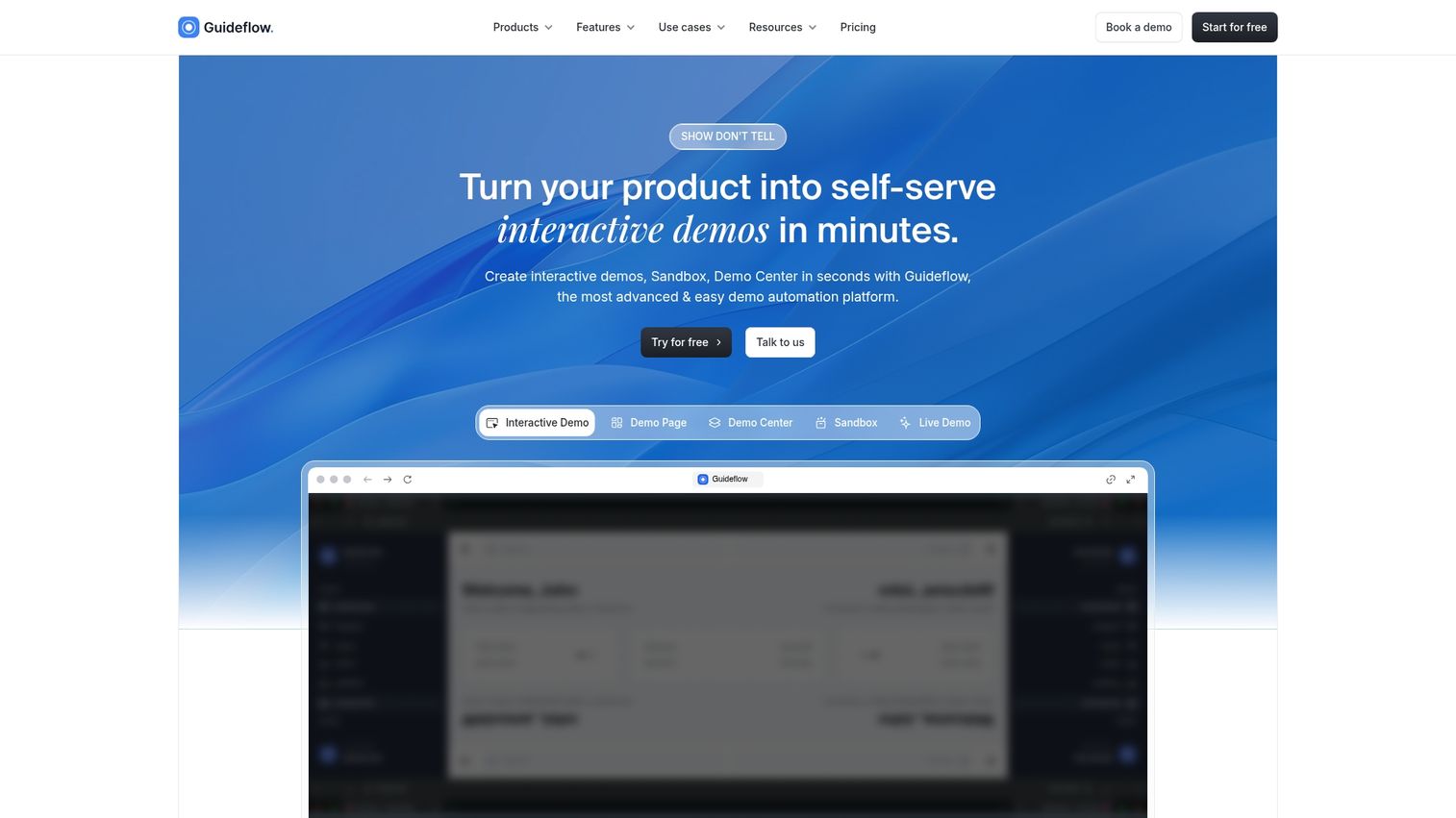
Guideflow is a demo automation platform for creating interactive product demos, sandboxes, and demo centers. The platform stands out for speed, allowing teams to capture flows in clicks and edit in seconds, plus deep personalization and analytics that reveal buyer intent.
Guideflow serves pre-sales teams, marketing, and customer success. If your current approach relies on "book a demo" buttons and static screenshots, you're losing prospects who want to experience the product before committing time to a call.
Key strengths
No-code capture and editing with a drag-and-drop builder
CRM-driven personalization at scale
Real-time engagement analytics showing completion rates and drop-off points
Multiple demo formats including interactive, sandbox, live, and mobile
Start your journey with Guideflow today!
2. Vidyard
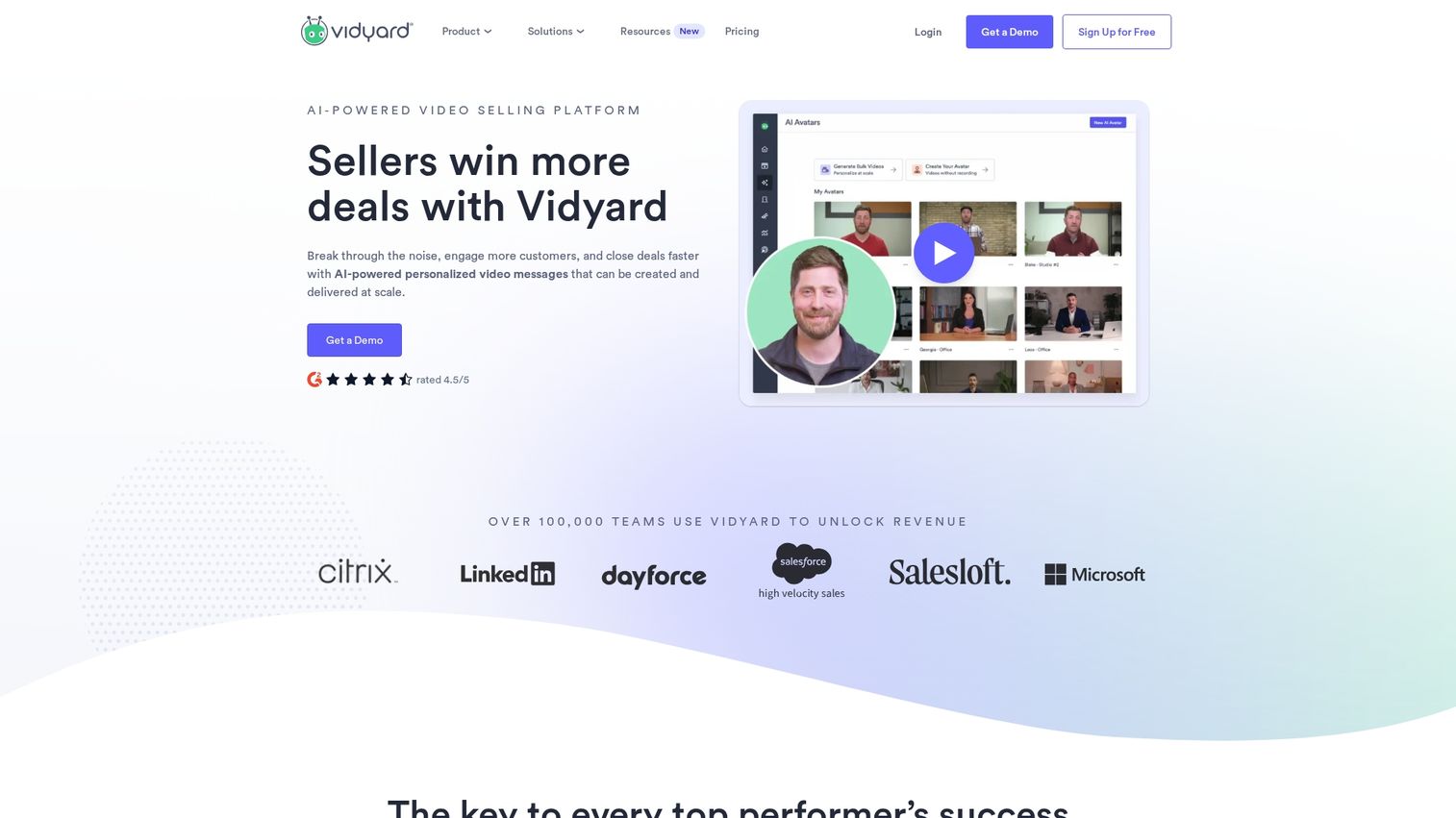
Vidyard is a video messaging and hosting platform widely used for personalized outreach. Reps can record quick screen shares or webcam videos and embed them directly in emails or sequences.
The tool works well alongside sales engagement platforms, adding a personal touch to automated outreach. A free tier is available for basic recording and sharing.
Key strengths
Easy screen and webcam recording with no software install
View notifications showing when prospects watch
Customizable video landing pages
Strong integration ecosystem with sales tools
Best sales acceleration software for revenue intelligence
Revenue intelligence platforms analyze what happens in sales conversations and deals to help teams understand what's working and forecast more accurately.
3. Gong
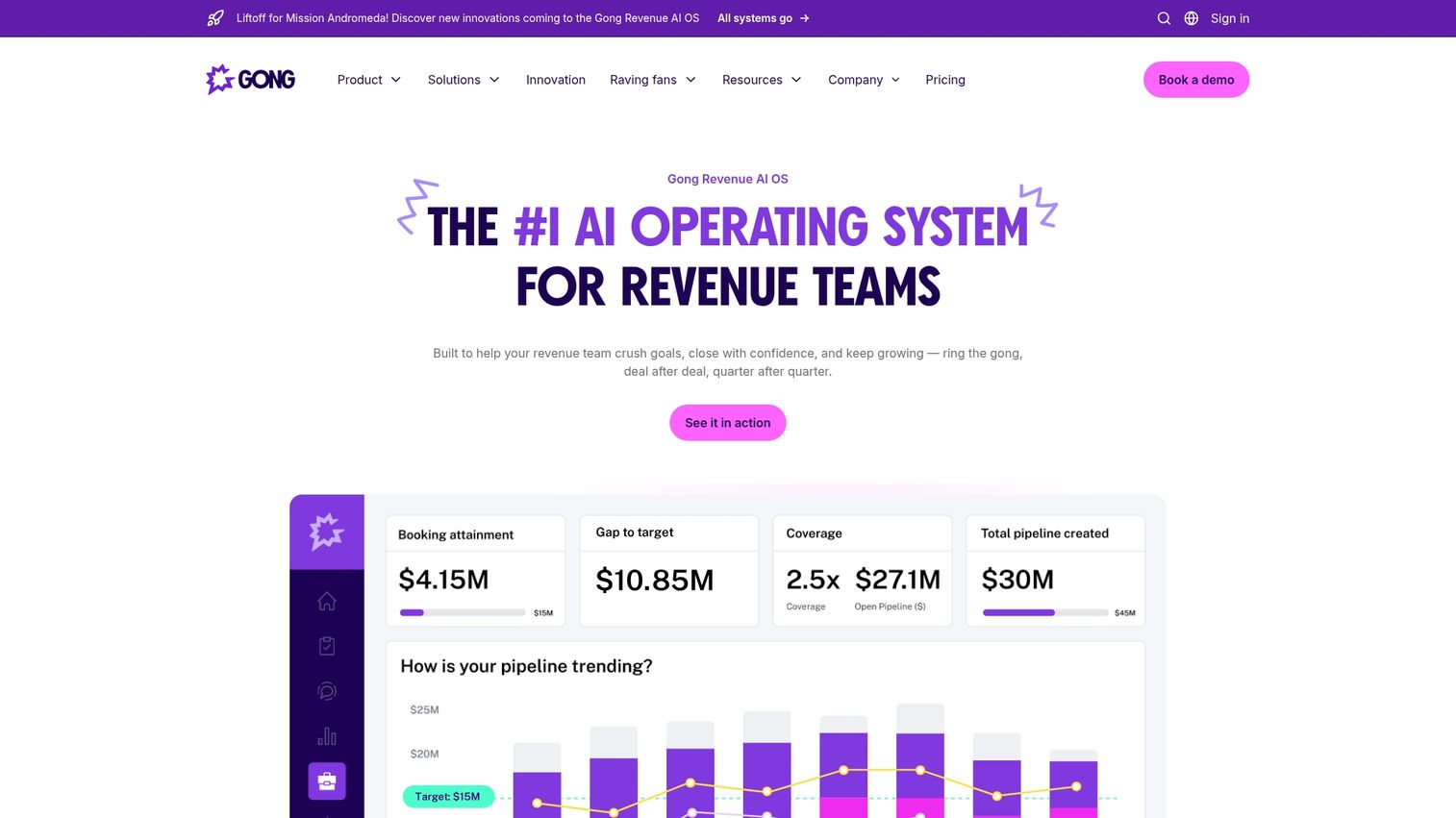
Gong is a leading conversation intelligence platform that records and analyzes calls, emails, and meetings. Gong surfaces patterns in successful deals so managers can coach reps on specific behaviors rather than gut feelings.
The platform also provides deal intelligence, flagging risks in the pipeline before they become lost opportunities. Pricing is available upon request and typically scales with team size.
Key strengths
AI-powered analysis of calls and emails
Topic and keyword tracking across conversations
Deal risk warnings based on engagement patterns
Market and competitor insights from customer conversations
4. Clari
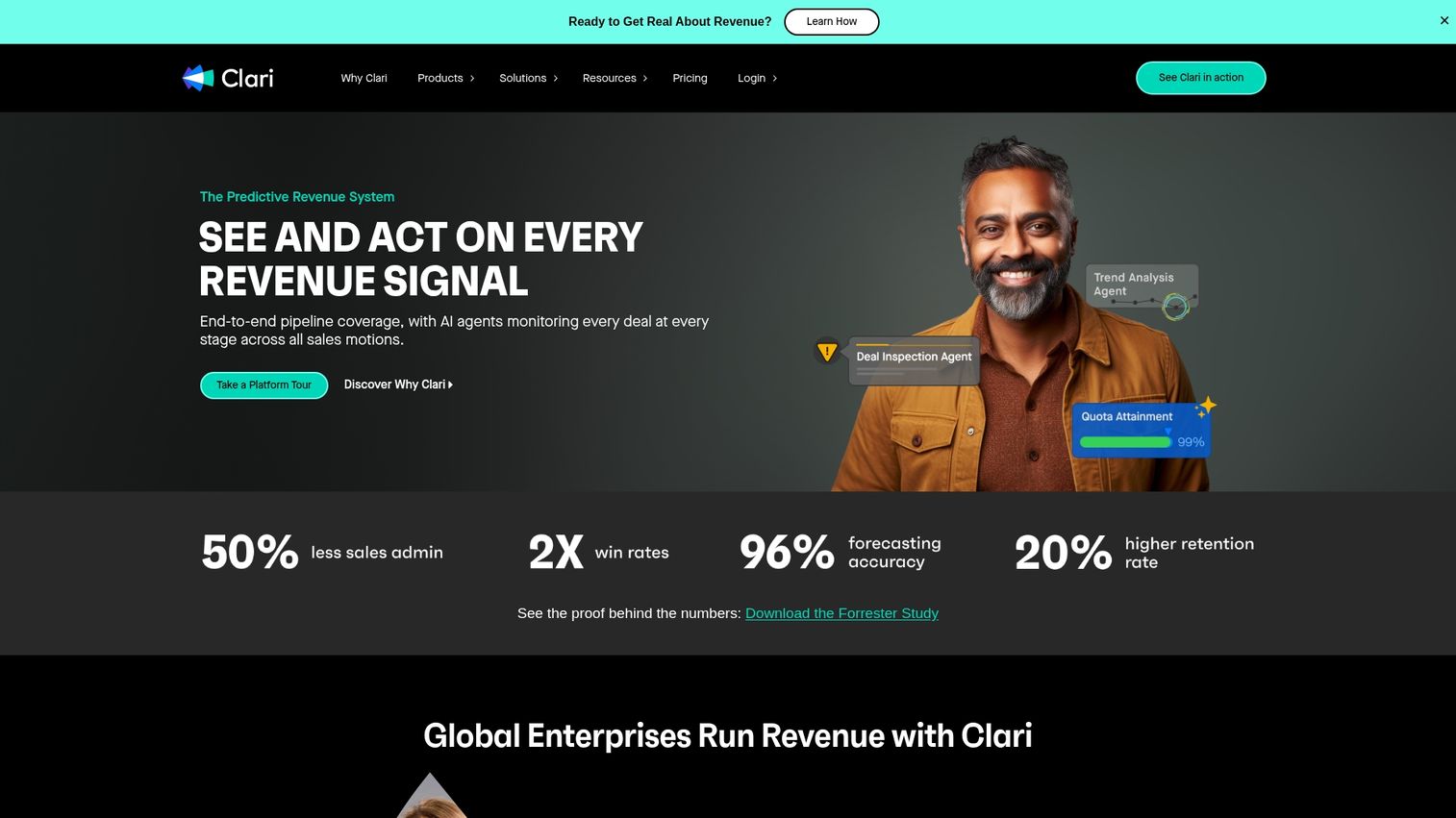
Clari focuses on revenue forecasting and pipeline inspection. Clari pulls activity data from multiple sources to give leadership clear visibility into deal health and revenue predictability.
If your forecasting process relies on spreadsheets and rep opinions, Clari replaces that with data-driven projections. Pricing is available upon request.
Key strengths
AI-driven revenue forecasting
Pipeline inspection showing deal progression
Activity capture from email, calendar, and CRM
Mutual action plan tracking for complex deals
Best sales acceleration software for sales engagement
Sales engagement tools automate outreach sequences so reps can focus on conversations rather than manual follow-up tasks.
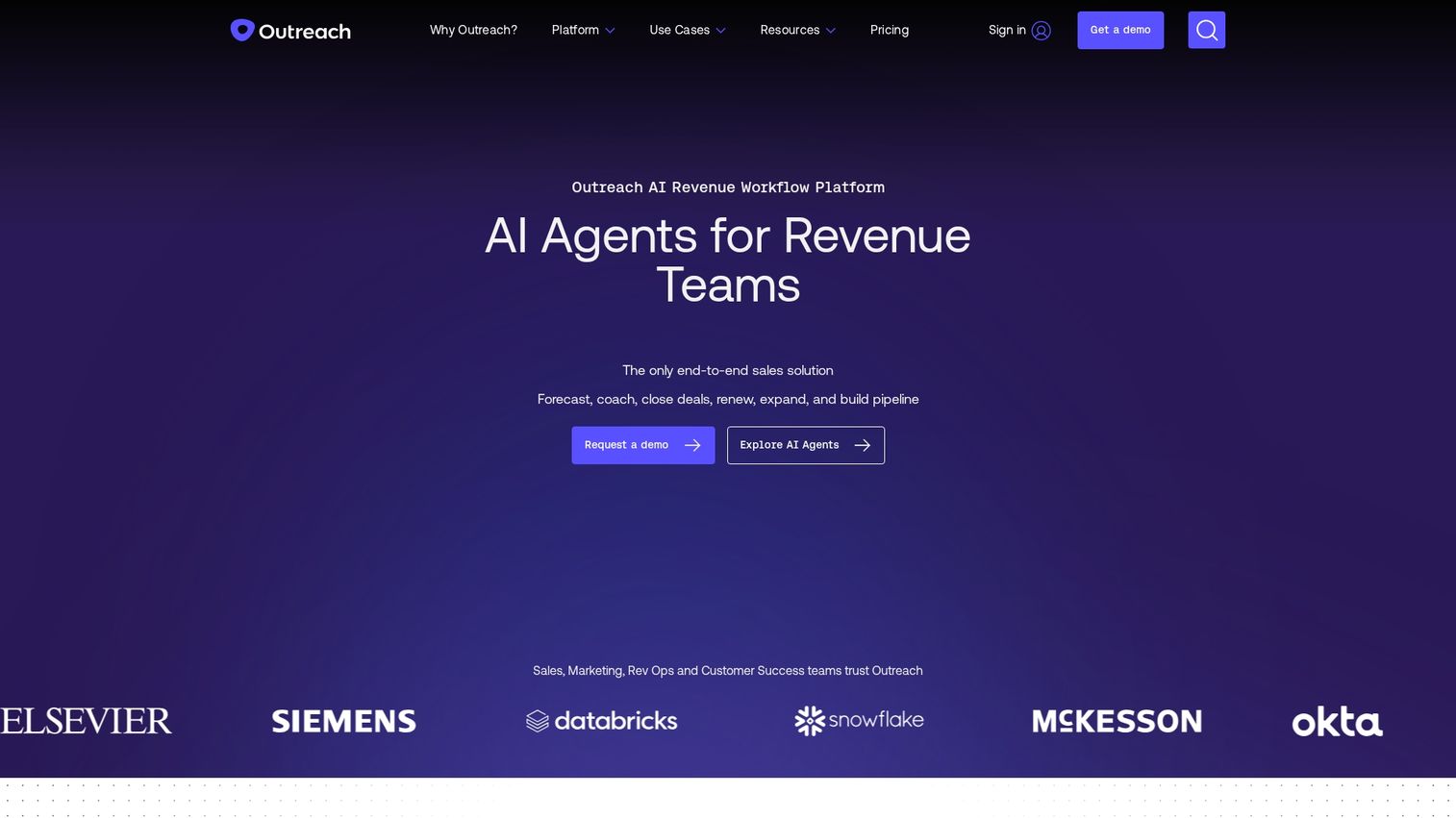
5. Outreach
Outreach is an enterprise-grade sales engagement platform known for powerful multi-channel sequencing. Outreach handles email, phone, and social touches within automated workflows, with AI recommendations for timing and content.
The platform suits larger sales teams with complex processes that require governance and detailed analytics. Pricing is available upon request.
Key strengths
Multi-channel sequences across email, phone, and LinkedIn
AI-powered content and timing suggestions
Advanced reporting on sequence performance
"Kaia" real-time meeting assistant for call guidance
6. Salesloft
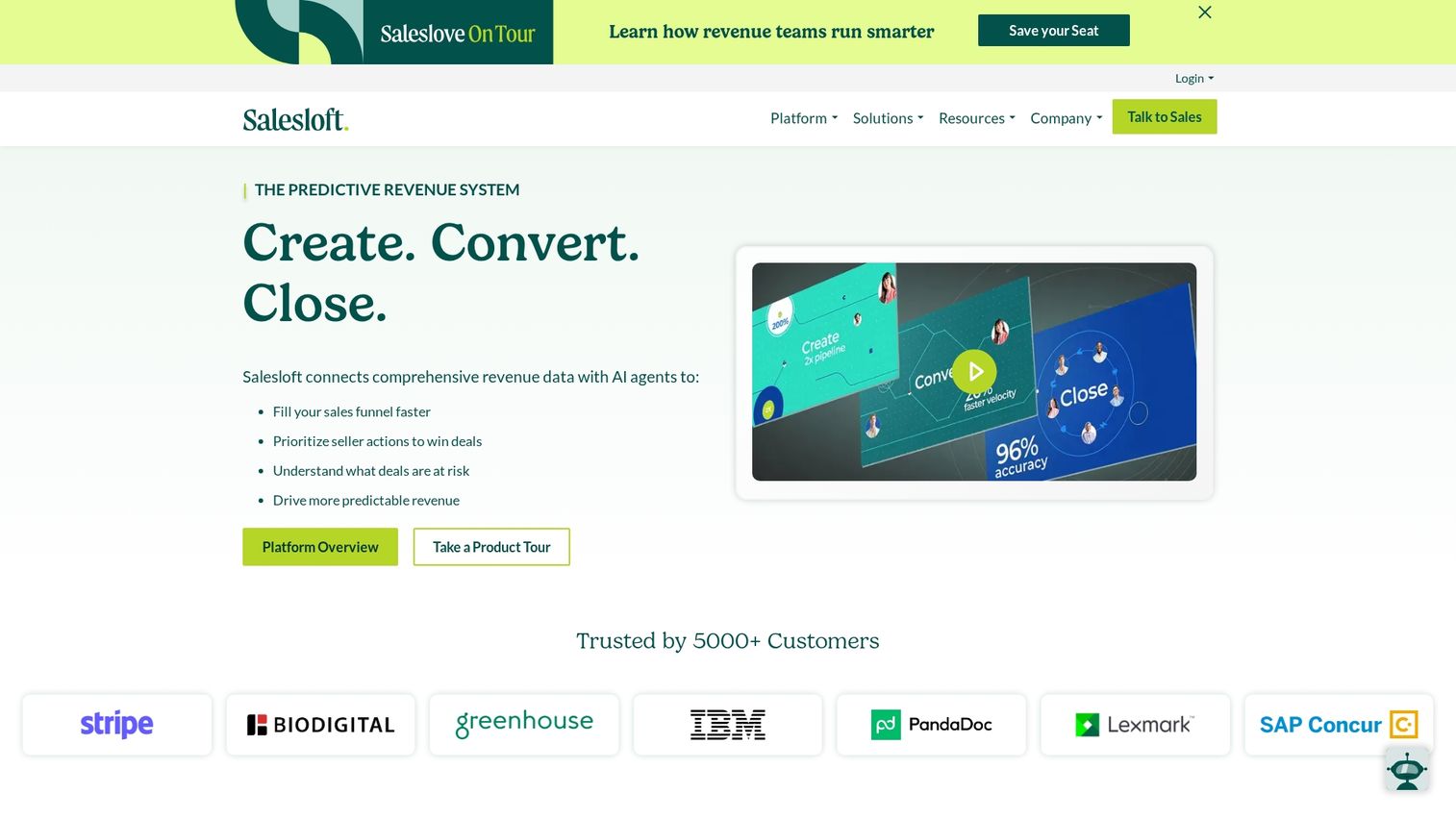
Salesloft competes directly with Outreach, excelling in cadence management and integrated coaching. Salesloft combines sales engagement with conversation intelligence in a single platform.
Teams that want engagement automation plus call coaching without managing separate tools often prefer Salesloft. Pricing is available upon request.
Key strengths
Cadence and automation workflow builder
Integrated dialer and messenger
Conversation intelligence for call coaching
Deal management and forecasting tools
Best sales acceleration software for CRM
The CRM is the foundational layer for your sales stack. Most acceleration tools integrate with CRM systems, so your choice here affects what else you can add.
7. HubSpot Sales Hub
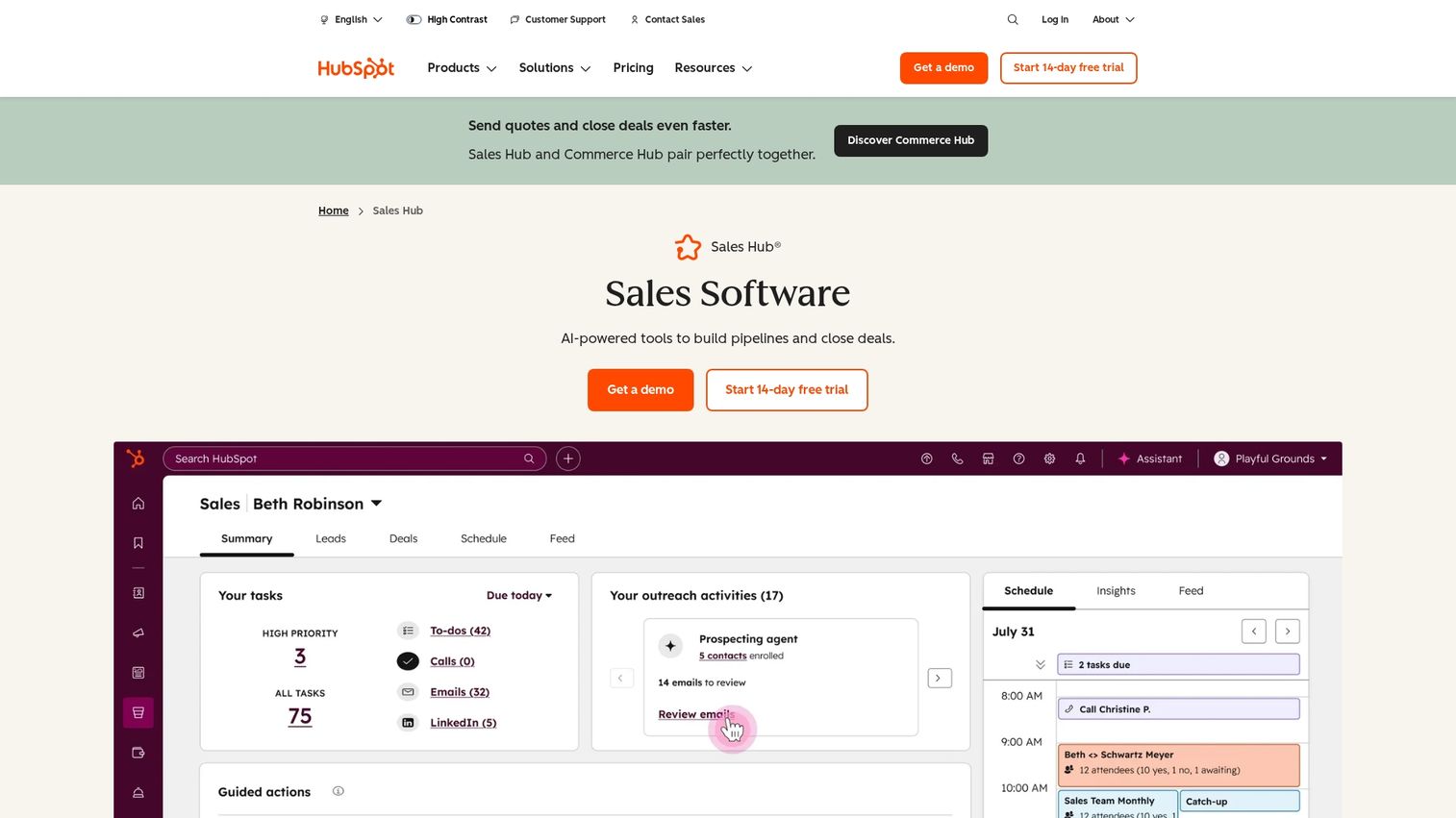
HubSpot Sales Hub is an all-in-one CRM with built-in acceleration features. HubSpot includes email tracking, sequences, and meeting scheduling without requiring separate tools.
The platform works well for SMBs that want simplicity. HubSpot also connects to marketing automation tools for teams running both functions. A robust free tier is available.
Key strengths
Free and affordable pricing tiers
User-friendly interface with minimal setup
Integrated email tracking and sequencing
All-in-one platform with marketing and service hubs
8. Salesforce Sales Cloud

Salesforce Sales Cloud is the market-leading enterprise CRM, known for extensive customization and a vast app ecosystem. Salesforce suits large organizations with complex processes that require deep functionality.
The tradeoff is complexity. Salesforce typically requires dedicated administration and longer implementation timelines. Pricing starts at $25/user/month for basic tiers.
Key strengths
Highly customizable and scalable
Massive third-party app marketplace (AppExchange)
Advanced reporting and forecasting
Robust workflow and process automation
9. Pipedrive
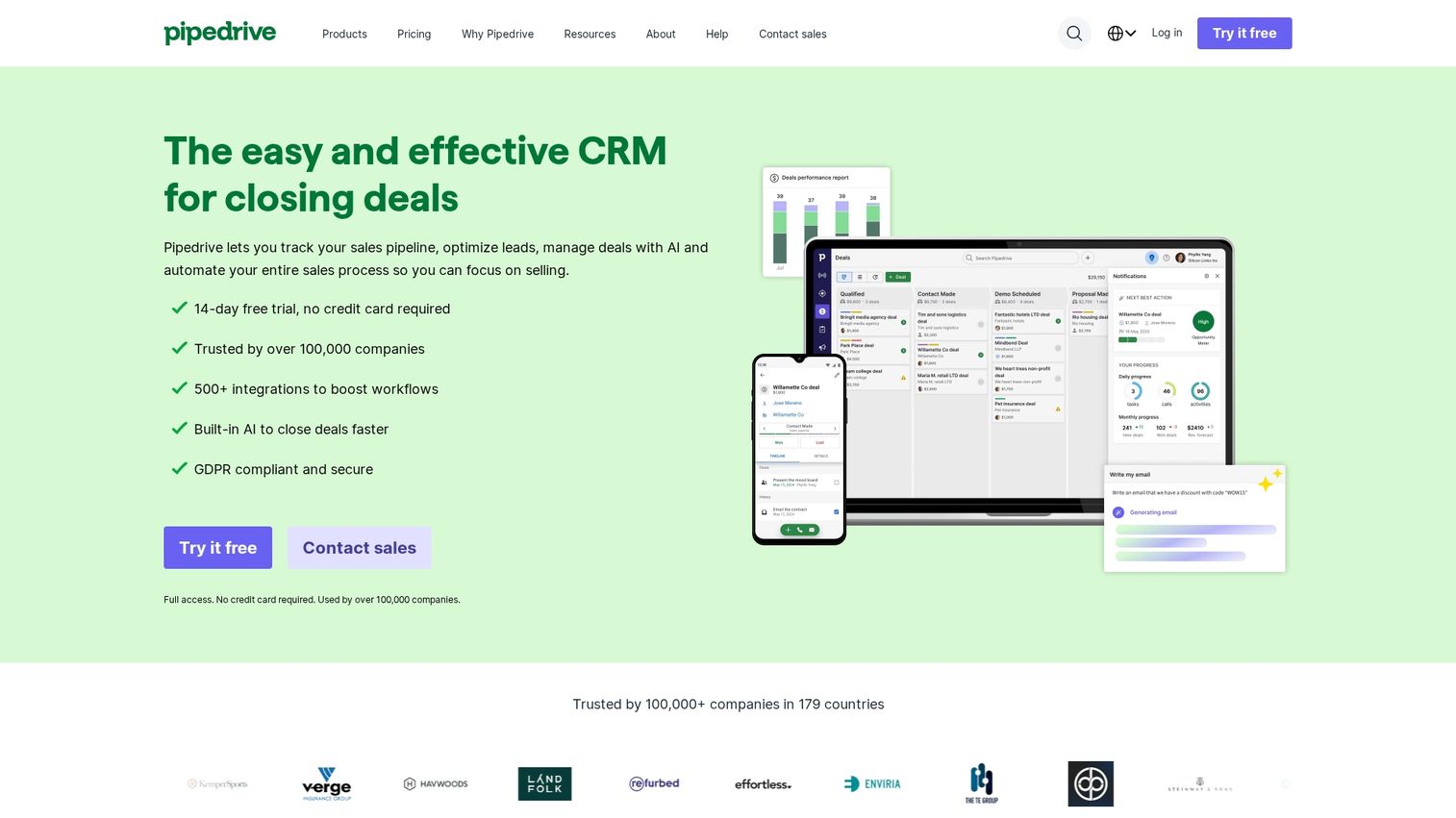
Pipedrive is a visual, pipeline-focused CRM designed for simplicity. Pipedrive's strength is giving small teams clear deal visibility without overwhelming them with features.
If you're a startup or small sales team that wants to get started quickly, Pipedrive offers an approachable entry point. Pricing starts at $14/user/month.
Key strengths
Intuitive visual sales pipeline
Simple setup with minimal configuration
Built-in automation for repetitive tasks
Affordable pricing for small teams
Best sales acceleration software for lead generation
Quality contact data is the foundation of any sales effort. Bad data stalls pipelines regardless of what other tools you have in place.
10. ZoomInfo
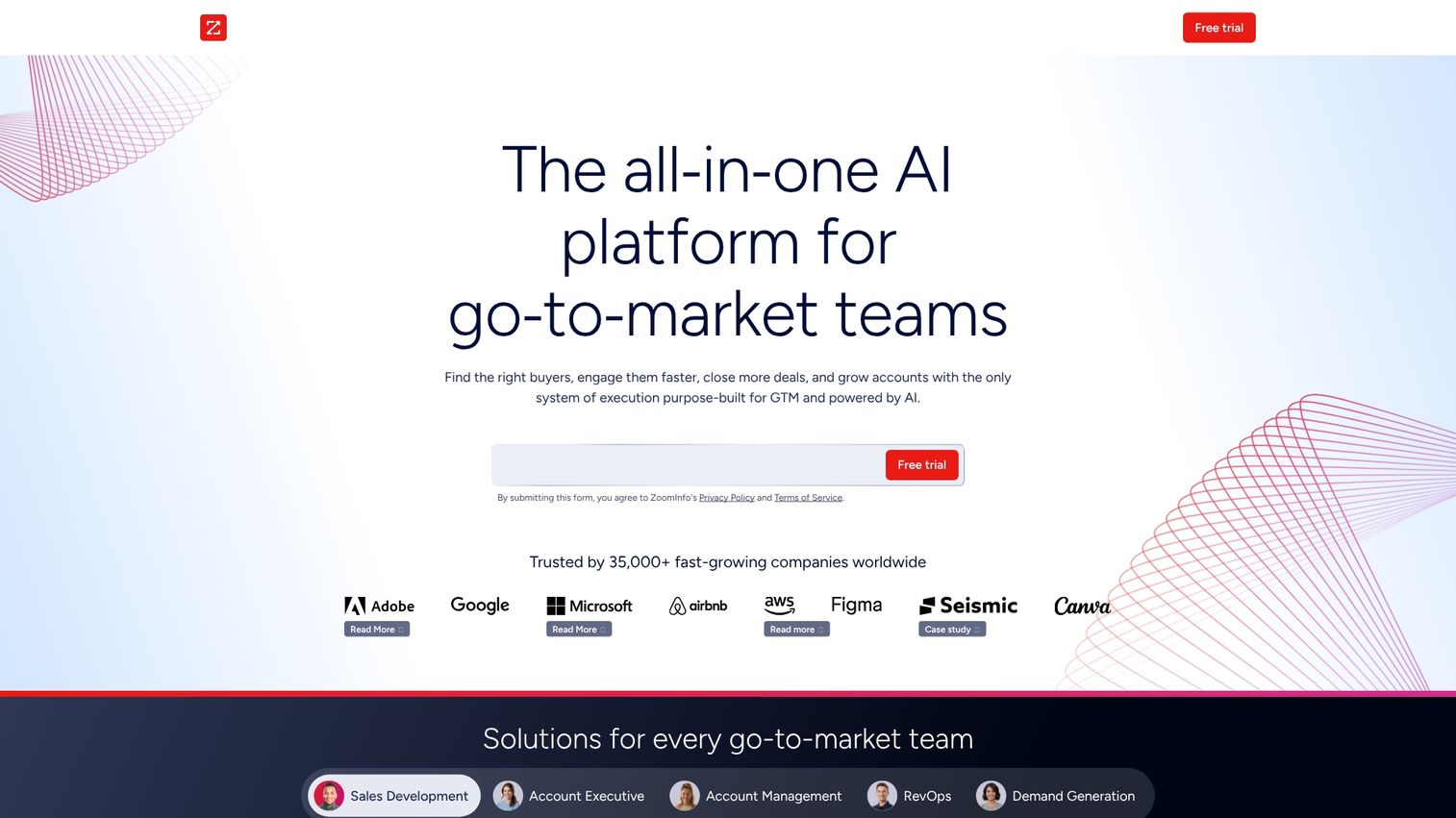
ZoomInfo is a leading B2B contact and company database. ZoomInfo provides verified contact information, company data, and intent signals that identify accounts actively researching solutions like yours.
The platform is enterprise-focused with strong compliance features. Pricing is available upon request and typically involves annual contracts.
Key strengths
Extensive and accurate contact and company data
Buyer intent signals and website visitor tracking
Advanced filtering and list building
Strong CRM and sales tool integrations
11. Apollo
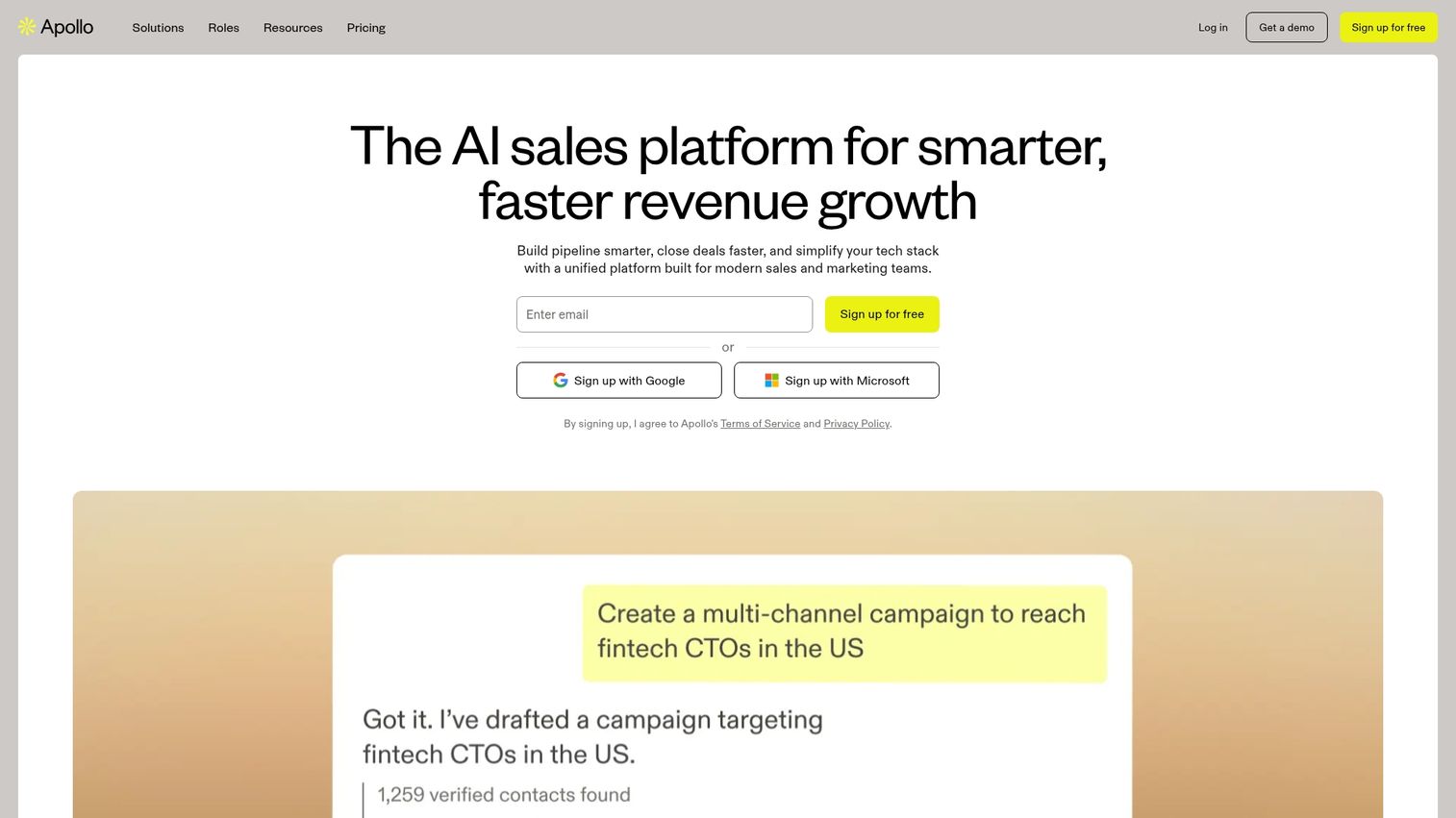
Apollo combines a prospecting database with sales engagement features in one platform. Apollo offers both data and outreach tools at a price point accessible to startups and SMBs.
The platform includes a Chrome extension for prospecting on LinkedIn and built-in email sequencing. A free tier is available with limited credits.
Key strengths
Combined database and engagement platform
Affordable pricing with a free tier
Chrome extension for LinkedIn prospecting
Email sequencing and engagement analytics
What to look for in a sales acceleration platform
Use the following criteria to evaluate options based on your specific situation.
Integration with your existing tech stack
The platform you choose will connect to your CRM, email, calendar, and communication tools. Siloed data defeats the purpose of acceleration. Before committing to any tool, verify native integrations with your core systems and ask vendors about data sync frequency.
Analytics and buyer intent signals
The value of acceleration tools comes from understanding how prospects engage. Look for platforms that surface which leads are ready to buy, not just activity metrics. Effective analytics show completion rates, engagement patterns, and signals that indicate buying intent.
Speed to value and ease of use
Complex setup delays your return on investment. Look for no-code options and quick onboarding processes. If reps won't adopt the tool because it's too difficult, it won't accelerate anything.
Scalability and customization
Match the tool's complexity to your team's maturity. A startup benefits from different capabilities than an enterprise organization. Consider whether the platform can grow with your team through tiered plans or customization options.
Build your sales acceleration stack
The best approach combines tools across categories based on your biggest friction points. Start with one category, measure its impact, then expand.
For teams struggling with demo no-shows and buyer engagement, demo automation typically delivers the fastest results. Prospects who can experience your product before a call arrive more qualified and convert at higher rates.
Start your journey with Guideflow today!
FAQs about sales acceleration software
Q: What is the difference between sales acceleration and sales enablement?
A: Sales acceleration focuses on speeding up the sales cycle through automation, insights, and tools that help reps move deals faster. Sales enablement focuses on equipping reps with content, training, and resources to sell more effectively. The two categories overlap but address different problems.
Q: How much does sales acceleration software typically cost?
A: Pricing varies widely by category and team size. CRMs like Pipedrive start around $14/user/month, while enterprise platforms like Gong or Outreach typically require custom quotes based on team size and usage. Many tools offer free tiers for small teams or individual users.
Q: Do sales teams benefit from AI features in acceleration tools?
A: AI features like lead scoring, conversation analysis, and content recommendations add value but aren't required for every team. Start with core functionality that solves your immediate problems, then add AI capabilities as your process matures.
Q: What is the best free sales acceleration tool for small teams?
A: HubSpot Sales Hub offers a robust free tier with CRM, email tracking, and basic automation. Apollo provides free access to prospecting data with limited credits. Both options let small teams get started without budget commitment.
Q: How do teams measure ROI from sales acceleration software?
A: Track metrics like sales cycle length, conversion rates between pipeline stages, rep productivity, and win rates before and after implementation. The clearest signal is pipeline velocity: how quickly deals move from first touch to close.
Q: How long does sales acceleration software take to implement?
A: Simple tools like demo automation or email tracking can be live within days. Enterprise platforms like Salesforce or Gong may require weeks for full configuration, data migration, and team training. Ask vendors for realistic timelines based on your specific situation.