Your engineering team ships faster than ever. Security reviews move slower. And the annual compliance module developers click through in 20 minutes changes nothing about how they write a SQL query or handle authentication.
According to the Linux Foundation and OpenSSF (2024), 53% of professionals have never taken a secure software development course. That gap shows up in pull requests, penetration test findings, and production incidents that compete with your roadmap for engineering capacity.
For product managers, this matters for a specific reason: Preventable security defects are a release risk, not just a security team problem. Rework after a vulnerability finding costs sprint capacity. A delayed release because of a failed security review costs pipeline. The right secure code training software reduces both by giving developers practical skills they apply in context, not just certificates they earn and forget.
This guide compares 12 platforms across hands-on lab quality, language coverage, application security testing alignment, reporting depth, and pricing, so you can shortlist the right tool for your team's tech stack and training maturity.
What's inside
This guide covers the leading secure code training platforms for developer and engineering teams in 2026. Tools were selected based on:
- Market presence and adoption across enterprise and mid-market teams
- Hands-on learning depth: Labs, challenges, and remediation exercises over passive lessons
- Coverage of OWASP Top 10, role-based learning paths, and SDLC alignment
- Admin reporting capabilities that give product and security leaders measurable evidence
- Pricing verified against each vendor's official page and G2 reviewer data
TL;DR
- Best overall for enterprise secure coding programs: Secure Code Warrior covers developer risk management, gamified learning, and AI governance for large engineering organizations
- Best for structured AppSec education paths: Security Journey offers role-based curricula and hands-on lessons tied to secure SDLC workflows
- Best for teams using Veracode: Veracode Secure Code Training connects developer education directly to AppSec findings and workflows
- Best for hands-on browser labs: SecureFlag delivers practical vulnerability exercises across 75+ technologies with a 7-day free trial
- Best for deeper AppSec and DevSecOps skills: AppSecEngineer offers cloud sandboxes, AI/LLM labs, and individual plans from $69/month
- Best free entry point: SecDim has a permanent free Community tier with hands-on security challenges for individual developers
What is secure code training software?
Secure code training software helps developers learn, practice, and apply secure coding techniques through lessons, labs, assessments, and role-based learning paths, so security becomes part of how they write code rather than something audited after the fact.
This category is distinct from general security awareness training, which targets all employees and focuses on recognizing phishing or following data-handling policies. Secure code training is developer-specific: It teaches input validation, authentication patterns, injection prevention, cryptographic implementation, and vulnerability remediation in the languages and frameworks your team actually uses.
It is also distinct from static documentation or secure coding guidelines. Reading a policy does not build skill. Hands-on labs require developers to find, exploit, and fix real vulnerable code, which produces measurable behavior change rather than just attestation.
Core capabilities to evaluate:
- Role-based learning paths for developers, architects, security champions, and managers
- OWASP Top 10 coverage and language-specific vulnerability modules
- Hands-on coding labs with real vulnerable applications
- Secure SDLC modules covering threat modeling, secure design, and code review
- Support for multiple languages and frameworks (Java, Python, JavaScript, Go, etc.)
- Skill assessments and progress benchmarking
- Admin reporting, compliance exports, and dashboard visibility
- Integrations with developer tools, LMS platforms, or CI/CD workflows
For product managers, the most important signal is whether the platform produces evidence of behavior change, not just completion rates. Assessment scores before and after training, vulnerability recurrence data, and secure code review quality are the metrics worth tracking.
When to use secure code training software
Reduce preventable vulnerabilities before release
If your team sees recurring vulnerability classes across penetration tests, bug bounty findings, or AppSec scans, that is a training signal. When SQL injection or broken authentication shows up in multiple code reviews, the fix is not more reviews. It is building the skill at the developer level so the pattern stops appearing. Secure code training targets specific vulnerability classes with labs that require developers to find and fix them under realistic conditions.
Build secure SDLC habits across product teams
Onboarding is the best time to establish secure development habits. New engineers who complete secure coding training during ramp-up write fewer vulnerabilities throughout their tenure. Beyond onboarding, training should reinforce secure design, threat modeling basics, and remediation practices across the product lifecycle, not sit as a once-a-year compliance task.
Scale developer education without constant AppSec hand-holding
AppSec teams cannot coach every developer one-to-one at scale. Secure code training software gives product and engineering leaders a repeatable baseline while security experts focus on architecture reviews, threat modeling for complex features, and high-risk remediation. According to SecureFlag (2025), only about one-third of organizations provide continuous hands-on secure coding training. The platforms in this guide are built to close that gap without adding operational overhead to your security team.
Secure code training software comparison
The table below summarizes the 12 platforms by best-fit use case, key differentiator, pricing, and G2 rating. Use it as a starting point, then read the individual entries for depth. Pricing and ratings reflect data verified from each vendor's official pricing page and G2 listing.
| # | Product | Best for | Key differentiator | Pricing | G2 rating |
|---|---|---|---|---|---|
| 1 | Secure Code Warrior | Enterprise developer security programs | Developer risk visibility and AI governance | Quote-based | 4.5/5 |
| 2 | Security Journey | Structured AppSec education programs | AI training plus role-based secure coding curriculum | From $900 (unlimited users, 3 months) | 4.6/5 |
| 3 | Veracode Secure Code Training | Veracode-centered AppSec teams | Labs and eLearning tied to Veracode AppSec workflows | Quote-based (14-day trial) | 4.0/5 |
| 4 | SecureFlag | Hands-on secure coding labs | 75+ technologies, threat modeling, 7-day trial | From $270/user/year | 4.8/5 |
| 5 | Immersive One | Enterprise cyber workforce programs | Cyber range, crisis simulations, AI readiness labs | Quote-based | 4.7/5 |
| 6 | Checkmarx Codebashing | Teams using Checkmarx AppSec tooling | Vulnerability-driven lessons tied to Checkmarx findings | Quote-based | 4.5/5 |
| 7 | Kontra Hands-On Labs | Modern AppSec and API security labs | 300+ exploit-based exercises, SCORM-compliant | Subscription (41 free exercises) | 3.3/5 |
| 8 | AppSecEngineer | Cloud, DevSecOps, and AppSec upskilling | Cloud sandboxes, AI/LLM labs, individual plans | From $69/month | 4.6/5 |
| 9 | Avatao | Challenge-based secure coding practice | 750+ hands-on challenges (operations ended 2026) | Not available | 4.8/5 |
| 10 | Security Compass Application Security Training | Policy-aligned AppSec education | 50+ courses with SCORM delivery and compliance mapping | Quote-based | 4.5/5 |
| 11 | SafeStack Secure Development Training Platform | Distributed engineering teams | Role-specific video learning, credentials, and community | Quote-based | 4.6/5 |
| 12 | SecDim | Gamified secure coding practice | AI coach, in-browser sandbox, free Community tier | Free; from $19.99/month | 5.0/5 |
Best secure code training software for 2026
1. Secure Code Warrior
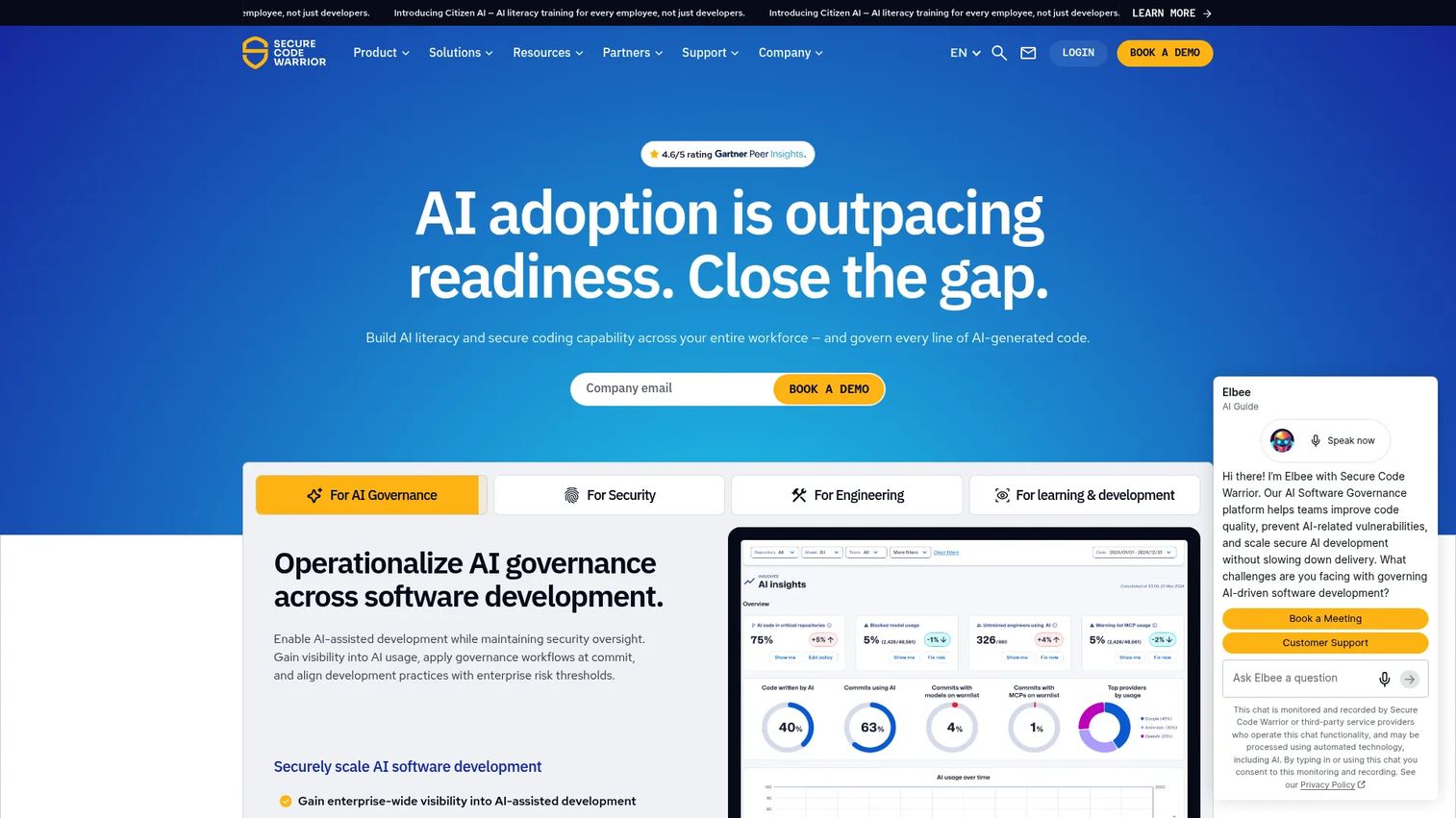
Secure Code Warrior is an enterprise platform for developer security learning, risk visibility, and AI software governance. It goes beyond lesson completion by tracking developer risk at the commit level, surfacing which individuals, teams, and applications carry the most security exposure. For organizations adopting AI coding tools, Secure Code Warrior now includes governance controls for LLM and MCP usage alongside its training catalog.
Best for: Enterprise organizations building a formal, measurable secure coding program across many developer roles and technology stacks.
Key features
- Labs, Quests, Challenges, Walkthroughs, and Tournaments across learning formats
- SCW Trust Score: Commit-level developer and application risk insights
- AI coding tool, LLM, and MCP governance and policy controls
- Role-based learning paths and language-specific content
- Enterprise reporting and integration support
Why choose Secure Code Warrior: It suits organizations where secure coding needs to become a measurable developer capability program tied to real risk data, not a periodic compliance exercise.
Secure Code Warrior pricing: Plans are structured across Basic, Business, and Enterprise tiers; all three require contacting sales for a quote. The Basic tier covers baseline compliance training, Business adds broader analytics, and Enterprise includes advanced risk insights and AI governance controls.
G2 rating
4.5/5
2. Security Journey
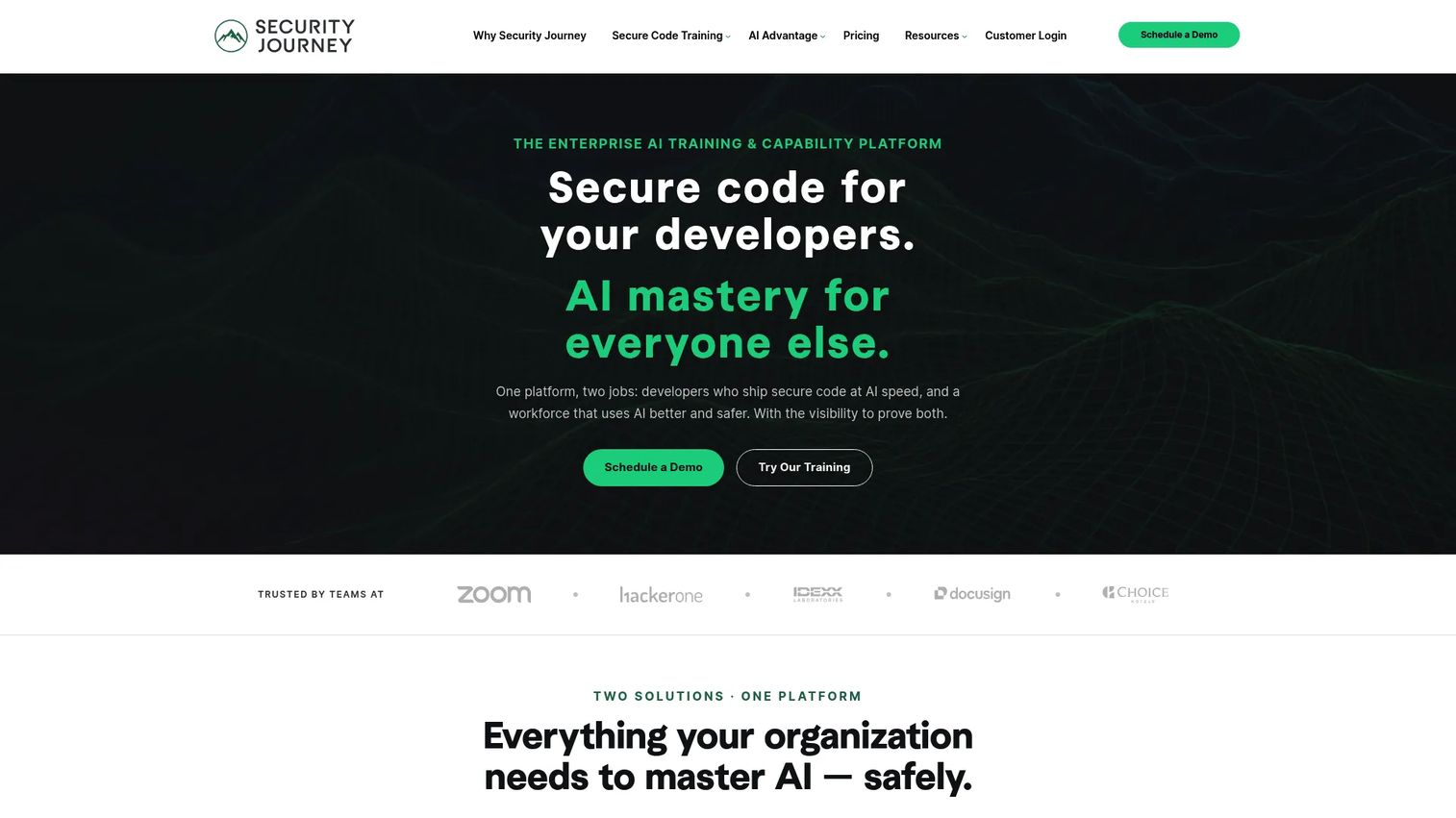
Security Journey combines secure code training with AI capability education for developers and broader teams. The platform covers role-based learning paths, hands-on sandbox lessons, developer knowledge assessments, and GitHub integration for scanner-driven training assignments. It also includes an AI Advantage track for building workforce AI readiness alongside application security skills.
Best for: Product and engineering teams that want structured secure SDLC education and consistent training across developer, architect, and manager roles.
Key features
- Hands-on secure coding lessons with sandbox environments
- Role-based learning paths and compliance training modules
- Developer security knowledge assessments
- GitHub integration and scanner-driven assignment workflows
- AI Advantage training for workforce AI capability
- SSO, SCIM, SCORM/xAPI, APIs, and admin reporting
Why choose Security Journey: The combination of structured curriculum, scanner-driven assignment automation, and AI readiness training makes it a strong pick when PM, engineering, and security leaders need consistent evidence of skill development across a large team.
Security Journey pricing: The AI Access plan is $900 for unlimited users for 3 months. EU AI Act training runs $30 per seat. Essentials, AI Advantage, and Secure Code Training plans require a pricing request from the vendor.
G2 rating
4.6/5
3. Veracode Secure Code Training
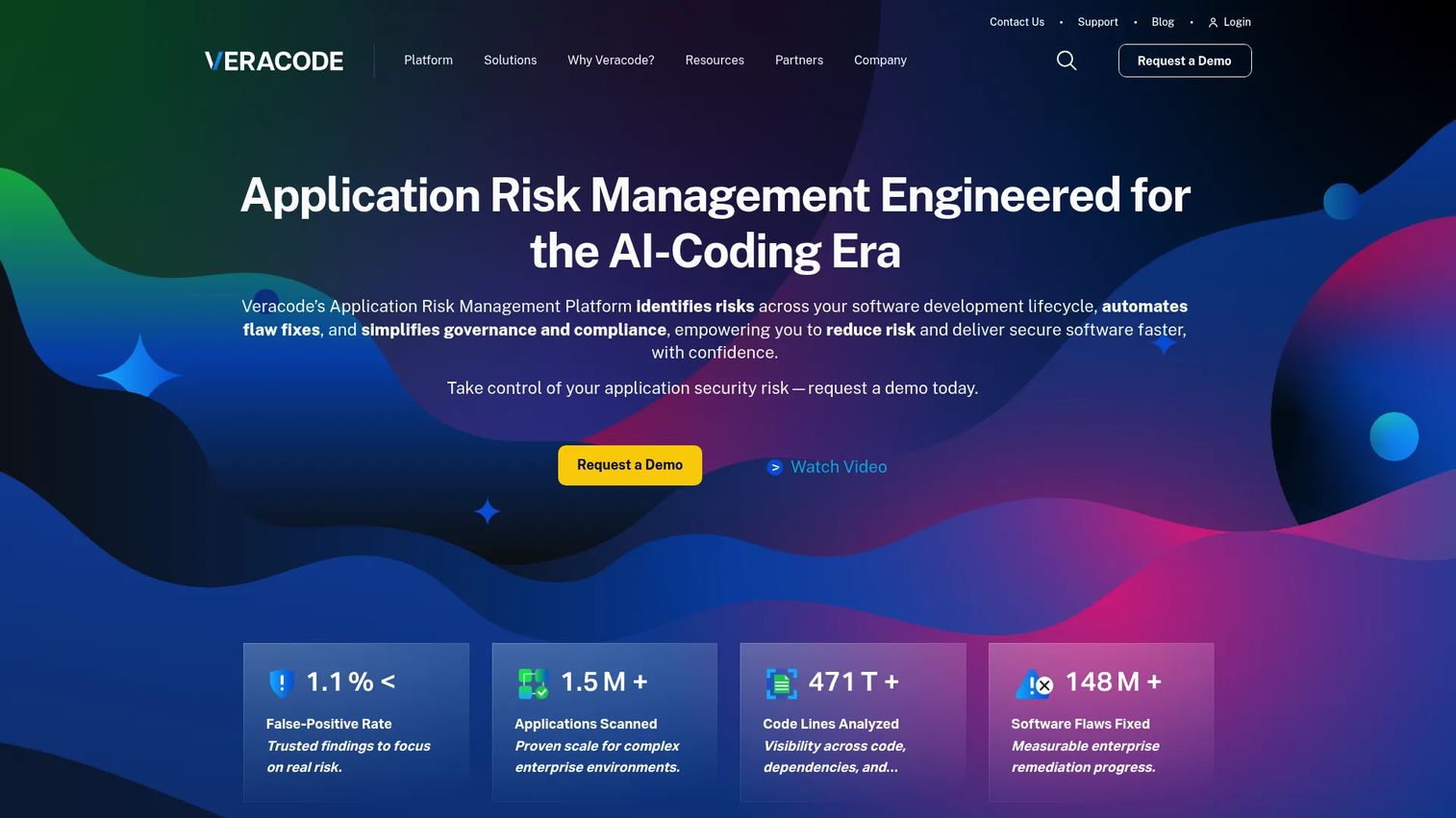
Veracode Secure Code Training pairs interactive Security Labs with self-paced eLearning to help development teams build secure coding skills tied to the broader Veracode application security portfolio. Labs use real vulnerable applications and APIs, so developers practice exploiting and fixing actual flaws rather than following slides. The platform also supports campaigns, leaderboards, certifications, and progress reporting for managers.
Best for: Organizations already using Veracode for application security testing who want developer education connected to their existing AppSec findings and workflows.
Key features
- Interactive hands-on labs using real vulnerable applications and APIs
- Self-paced eLearning covering OWASP Top 10, privacy, compliance, and common languages
- Progress tracking, campaigns, leaderboards, and certifications
- Reporting dashboards for managers and security leads
- Competitive exercises to drive developer engagement
Why choose Veracode Secure Code Training: When training should sit close to scanning and remediation, this platform avoids context-switching by keeping developer education inside the same vendor relationship as your AppSec tooling.
Veracode Secure Code Training pricing: Veracode offers a 14-day free trial for Security Labs. Subscription pricing requires contacting sales directly.
G2 rating
4.0/5
4. SecureFlag
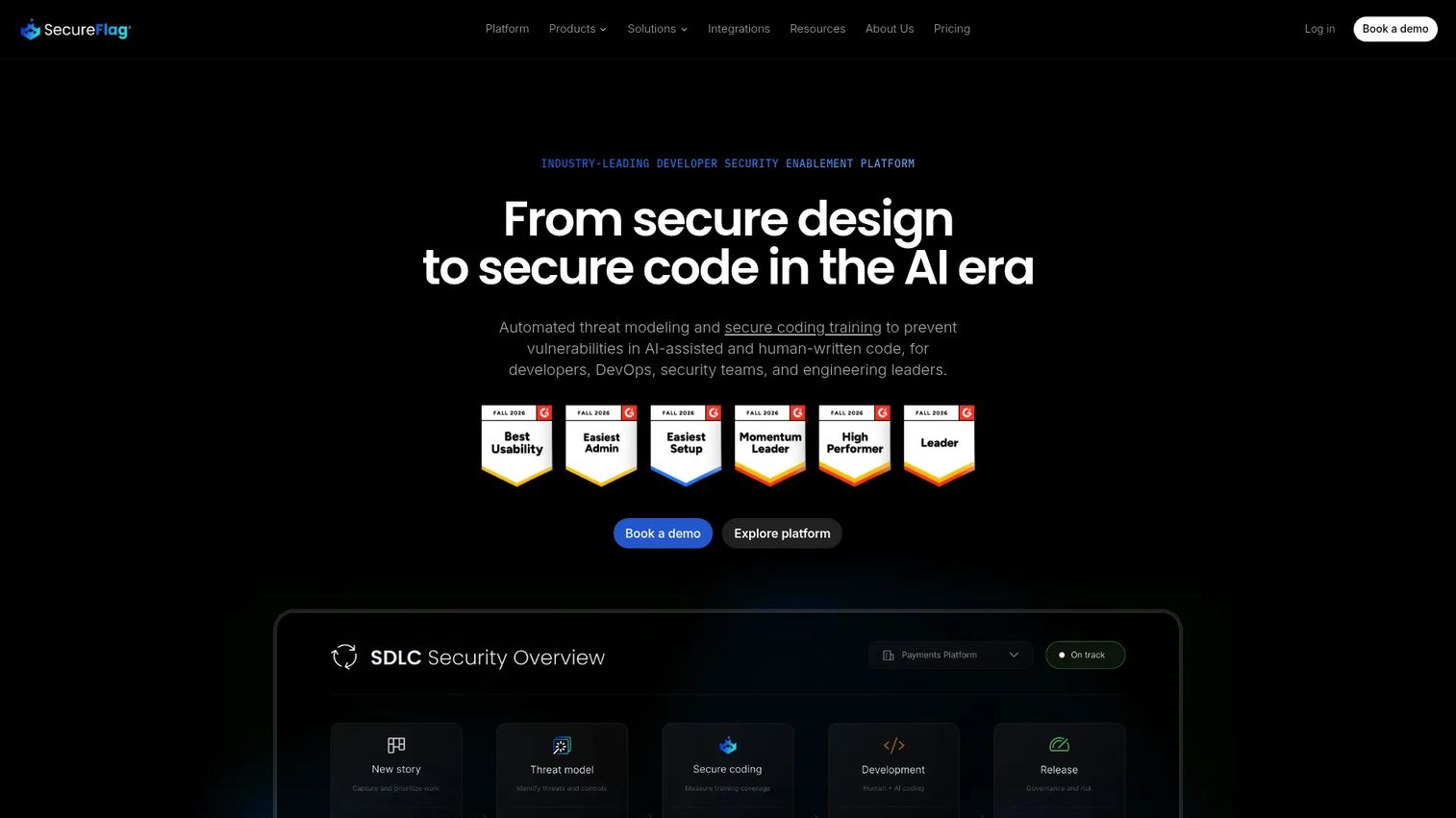
SecureFlag is a developer security platform that combines hands-on secure coding training with AI-powered automated threat modeling through its ThreatCanvas module. Labs cover 75+ technologies and frameworks, running in the browser so developers practice in realistic environments without local setup. The platform supports SSO, API integrations, SDLC tooling, and compliance evidence for audit-ready reporting.
Best for: Engineering teams that believe developers learn security best by practicing real exploit-and-fix exercises rather than completing video courses.
Key features
- Hands-on secure coding labs across 75+ technologies and frameworks
- AI-powered automated threat modeling with ThreatCanvas
- Learning paths, assessments, and skill benchmarking
- SSO, APIs, and SDLC integrations
- Compliance evidence and audit-ready reporting
Why choose SecureFlag: The breadth of language and framework coverage, combined with the threat modeling module, makes it one of the more complete options for teams that need training across a diverse tech stack.
SecureFlag pricing: Individual plans start at $270/user/year for ThreatCanvas only, $450/user/year for Training only, and $520/user/year for the Complete Platform. Small-business plans run $405, $525, and $670 per user per year respectively at those tiers. All plans are billed annually upfront. A 7-day free trial is available on individual and small-business plans. Enterprise pricing is quote-based.
G2 rating
4.8/5
5. Immersive One
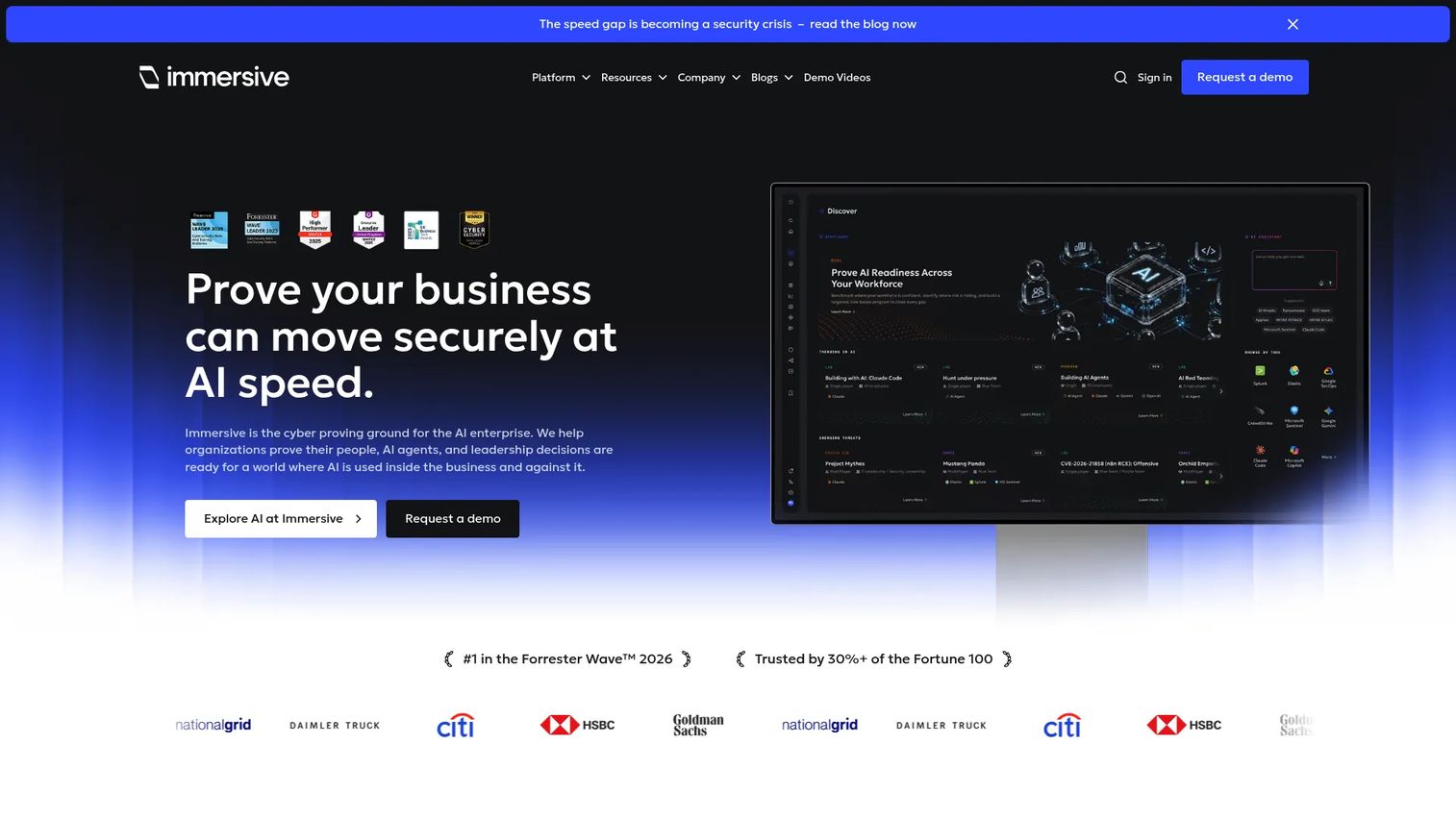
Immersive One is a cyber workforce resilience platform that covers hands-on labs, team-based cyber range exercises, crisis simulations, and AI readiness capabilities. It goes beyond developer-only secure coding to serve security operations, incident response, and broader workforce development programs. For organizations that want one platform across multiple security-adjacent roles, Immersive One consolidates developer training inside a larger capability measurement program.
Best for: Enterprises that need developer security training as part of a larger cyber workforce program covering technical, operational, and leadership roles.
Key features
- Hands-on cybersecurity and AI labs
- Team-based cyber range and technical exercises
- Crisis simulations and workforce exercising
- AI Lab Builder and AI Crisis Simulation Builder
- Continuous measurement, benchmarking, and reporting
Why choose Immersive One: It fits large organizations where developer secure coding training is one component of a broader security capability investment, and where measuring resilience across the whole organization matters as much as individual skill scores.
Immersive One pricing: Pricing is structured across Core and Advanced tiers. Both require a quote based on user band size, selected platform tier, and exercising credits. Contact Immersive directly for a customized offer.
G2 rating
4.7/5
6. Checkmarx Codebashing
Checkmarx Codebashing delivers interactive secure-code training through short, role-specific lessons and hands-on exercises tied to Checkmarx One AppSec findings. The platform assigns training automatically based on the vulnerability types Checkmarx scans surface in a codebase, so developers receive relevant education at the moment a finding appears. It includes an 85-lesson Security Champions learning path and covers OWASP Top 10 alongside additional vulnerability classes.
Best for: Development teams already standardized on Checkmarx for application security who want training that reinforces scan findings rather than operating as a separate program.
Key features
- Role-specific learning paths and an 85-lesson Security Champions path
- Application-specific course assignment based on Checkmarx One findings
- Hands-on training with immediate feedback
- Coverage of OWASP Top 10 and additional vulnerability types
- Dashboard for tracking team progress and performance
Why choose Checkmarx Codebashing: The direct connection between scan findings and training assignments reduces the gap between identifying a vulnerability and teaching the developer how to prevent it next time.
Checkmarx Codebashing pricing: Buyers need to contact Checkmarx sales for a quote; packaging typically reflects developer seat count and integration with the broader Checkmarx One platform.
G2 rating
4.5/5
7. Kontra Hands-On Labs
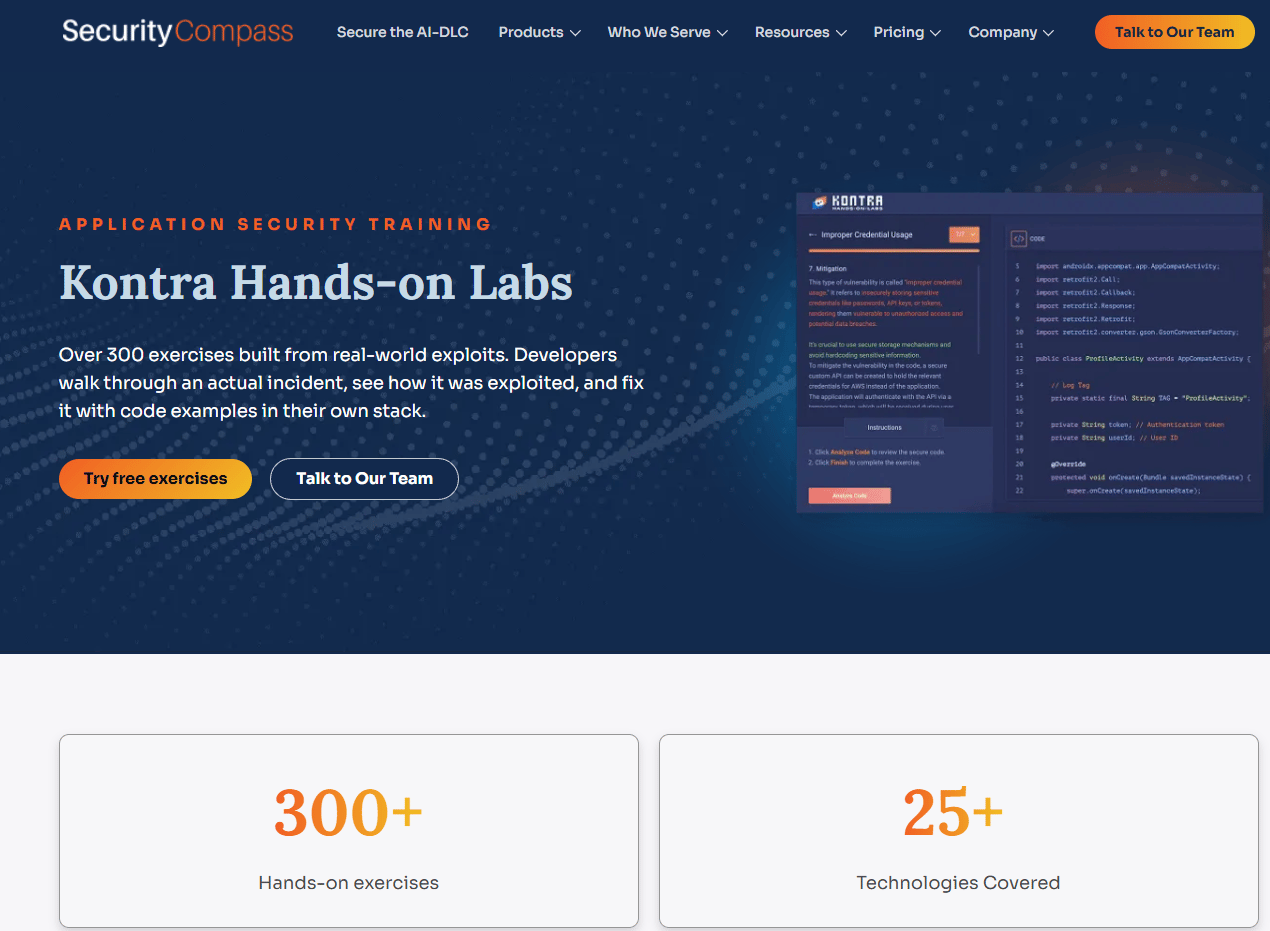
Kontra Hands-On Labs is an application security training platform now owned by Security Compass. It offers 300+ interactive, exploit-based exercises modeled on real-world attack patterns, covering API security, web vulnerabilities, and secure coding practices across 25+ technologies. Modules are SCORM-compliant and can be imported into an existing LMS, which is a practical advantage for teams that want to deliver training inside their current learning infrastructure.
Best for: Development and AppSec teams that need practical, exploit-based labs that integrate into an existing LMS or organizational learning workflow.
Key features
- 300+ interactive hands-on exercises based on real-world exploits
- Coverage across 25+ technologies and frameworks
- SCORM-compliant modules for LMS import
- Technology-specific remediation examples
- SAML 2.0 SSO support
Why choose Kontra Hands-On Labs: The SCORM compatibility and exploit-based lab model make it a strong fit when the goal is adding hands-on AppSec content to an existing training infrastructure rather than adopting a new platform entirely.
Kontra Hands-On Labs pricing: A Full Labs Library subscription plan is available. The site notes that 41 exercises are accessible without an account. For pricing on the full subscription, contact Security Compass directly.
G2 rating
3.3/5
8. AppSecEngineer
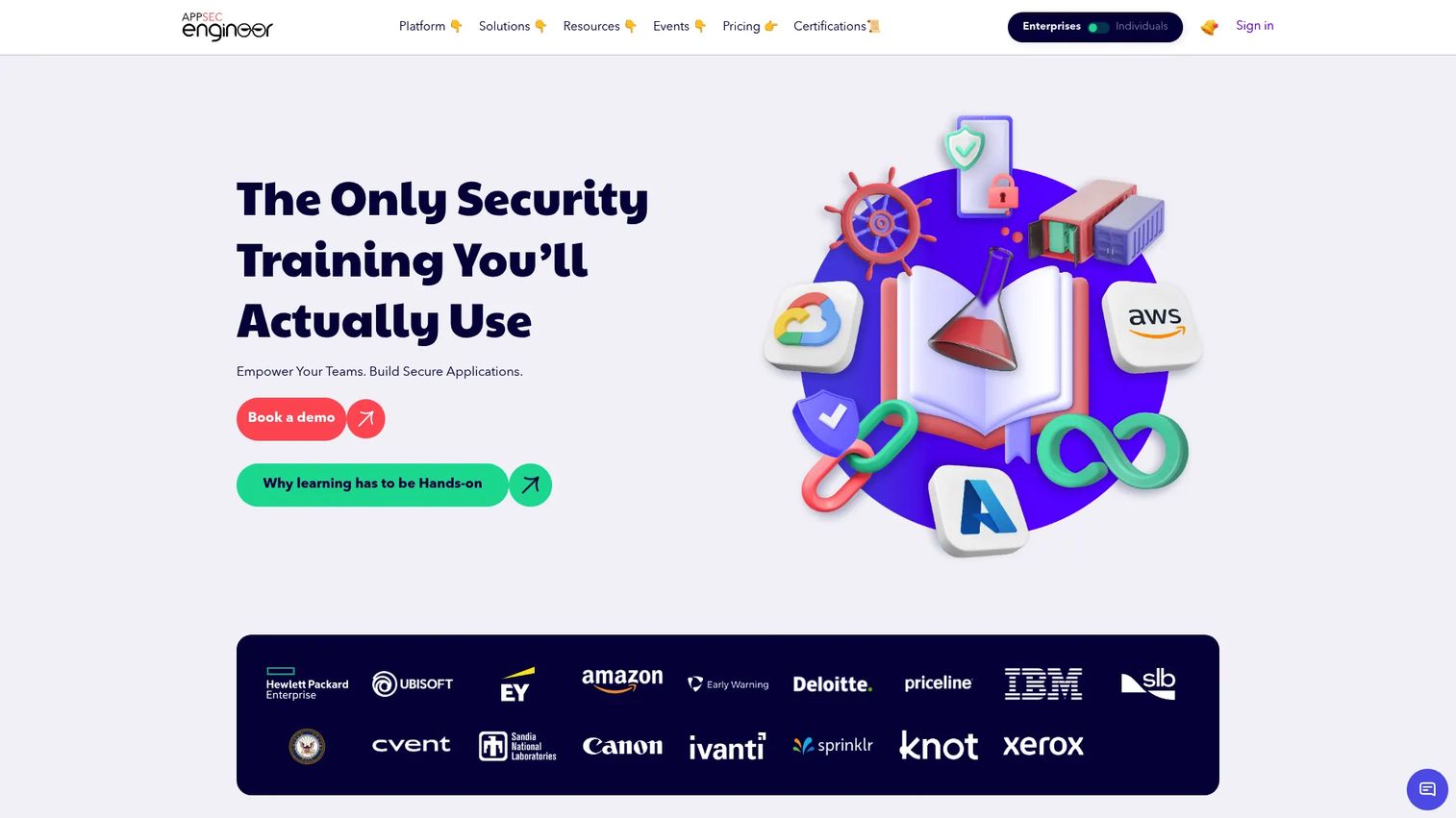
AppSecEngineer is a hands-on security training platform for developers, AppSec engineers, and DevSecOps practitioners. It goes beyond secure coding basics to cover cloud security on AWS, Azure, and GCP, Kubernetes, AI/LLM security, and practical DevSecOps workflows. Individual plans are publicly priced, which is rare in this category and makes it accessible for smaller teams or individual engineers without an enterprise procurement process.
Best for: Technical teams and individual engineers who need AppSec, cloud security, and DevSecOps training depth beyond foundational secure coding courses.
Key features
- Learning paths and courses across AppSec, cloud, and DevSecOps
- Unlimited hands-on labs and problem-solving challenges
- AWS, Azure, and GCP cloud sandboxes (Pro Plus and above)
- AI/LLM labs
- Enterprise analytics, assessments, SSO/SCIM, SCORM/LTI, and RBAC
Why choose AppSecEngineer: It is the strongest option in this list for engineers who need to build technical security depth across cloud, containers, and AI security, not only web application vulnerabilities.
AppSecEngineer pricing: Pro plans start at $69/month or $399/year. Pro Plus, which adds cloud sandboxes and AI/LLM labs, runs $79/month or $499/year. DevSecOps certification bundles are available at $599 and $699 annually. Enterprise pricing requires contacting sales.
G2 rating
4.6/5
9. Avatao
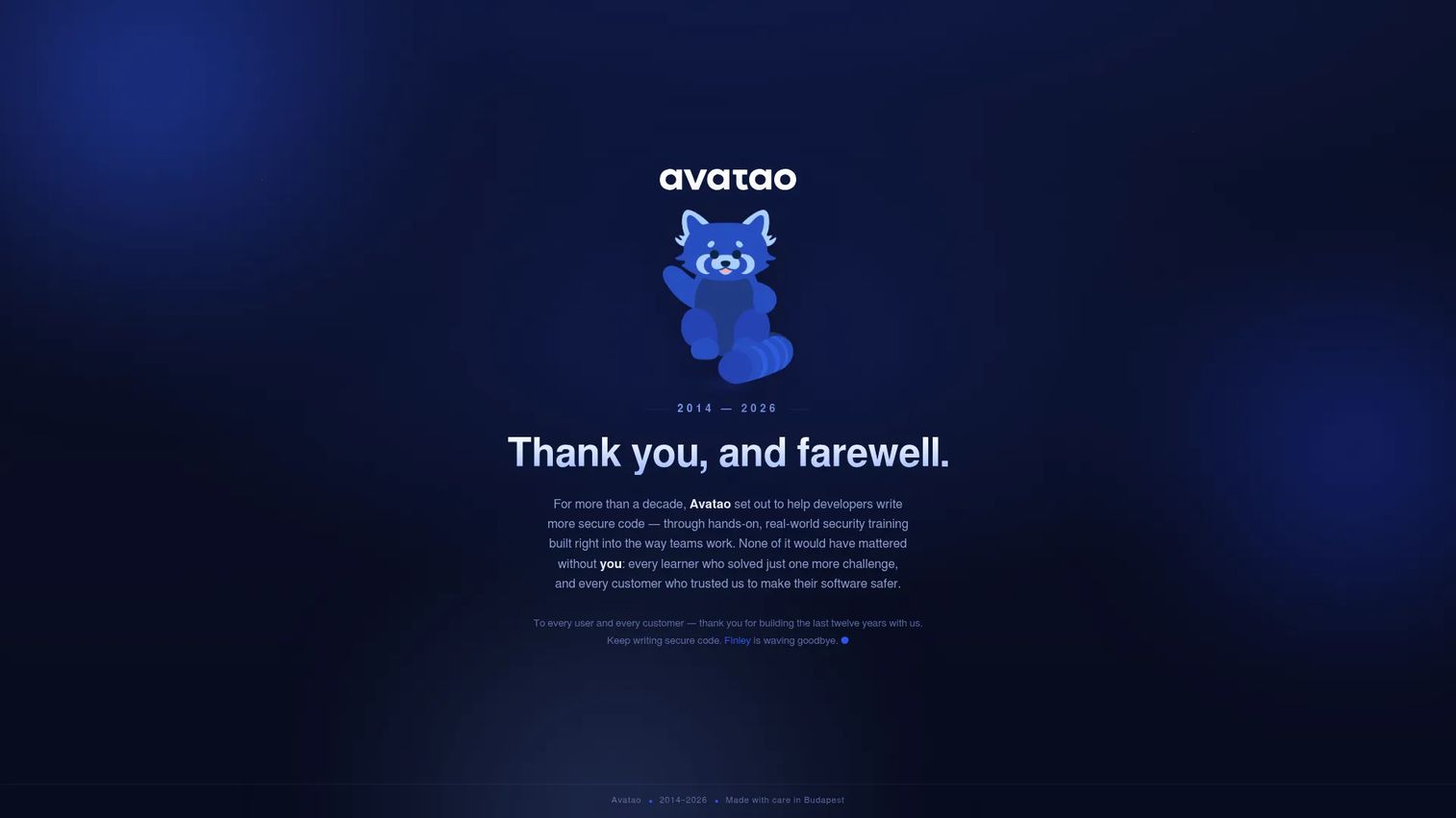
Avatao was a developer security training platform built around 750+ hands-on challenges covering OWASP Top 10, DevSecOps, cryptography, and 10+ programming languages. It held a strong G2 rating and was well-regarded for its challenge-based learning model and developer-first engagement approach.
Best for: This entry is included for completeness. Avatao's official website states that the company ended operations in 2026 (2014 to 2026). Teams currently using Avatao should evaluate alternative platforms before renewal.
Key features
- 750+ interactive secure coding challenges
- Coverage of OWASP Top 10, DevSecOps, and cryptography
- Support for 10+ programming languages
- Progress dashboards and learning path support
- Developer-first challenge environment
Why choose Avatao: Given that the company has ceased operations, Avatao is not a viable option for new procurement. Teams evaluating challenge-based secure coding training should consider SecDim or SecureFlag as alternatives.
Avatao pricing: The official site presents a farewell notice only.
G2 rating
4.8/5 (historical)
10. Security Compass Application Security Training
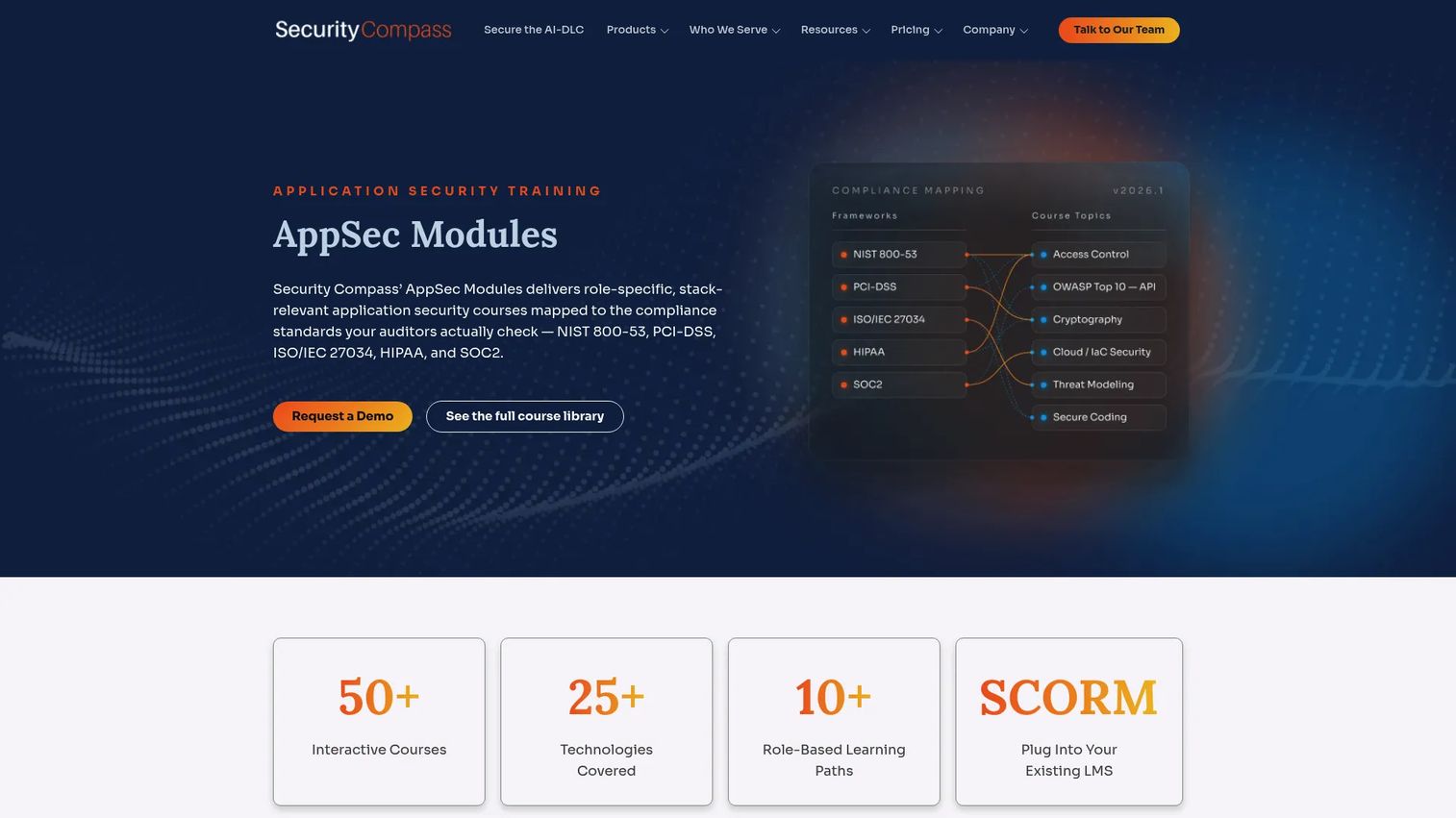
Security Compass Application Security Training provides 50+ interactive application security courses and 10+ role-based learning paths for development teams. Content covers secure coding, threat modeling, API vulnerabilities, and compliance, delivered through SCORM-compliant modules that can run inside an existing LMS. Mini-assessments and optional certification exams add measurable evidence to training completion.
Best for: Organizations aligning developer education with internal security standards, governance frameworks, and compliance reporting requirements.
Key features
- 50+ interactive application security courses
- 10+ role-based learning paths
- Coverage of secure coding, threat modeling, API vulnerabilities, and compliance
- SCORM-compliant delivery for existing LMS integration
- Mini-assessments and optional certification exams
Why choose Security Compass Application Security Training: It fits organizations where training needs to map to governance workflows and internal security policies, not just developer skill development in isolation.
Security Compass Application Security Training pricing: Both the Limited Modules Package and Full Library require contacting Security Compass for a quote. Packages start at 1 user and cover up to 15 users on a base package; custom packages are available for larger teams.
G2 rating
4.5/5
11. SafeStack Secure Development Training Platform
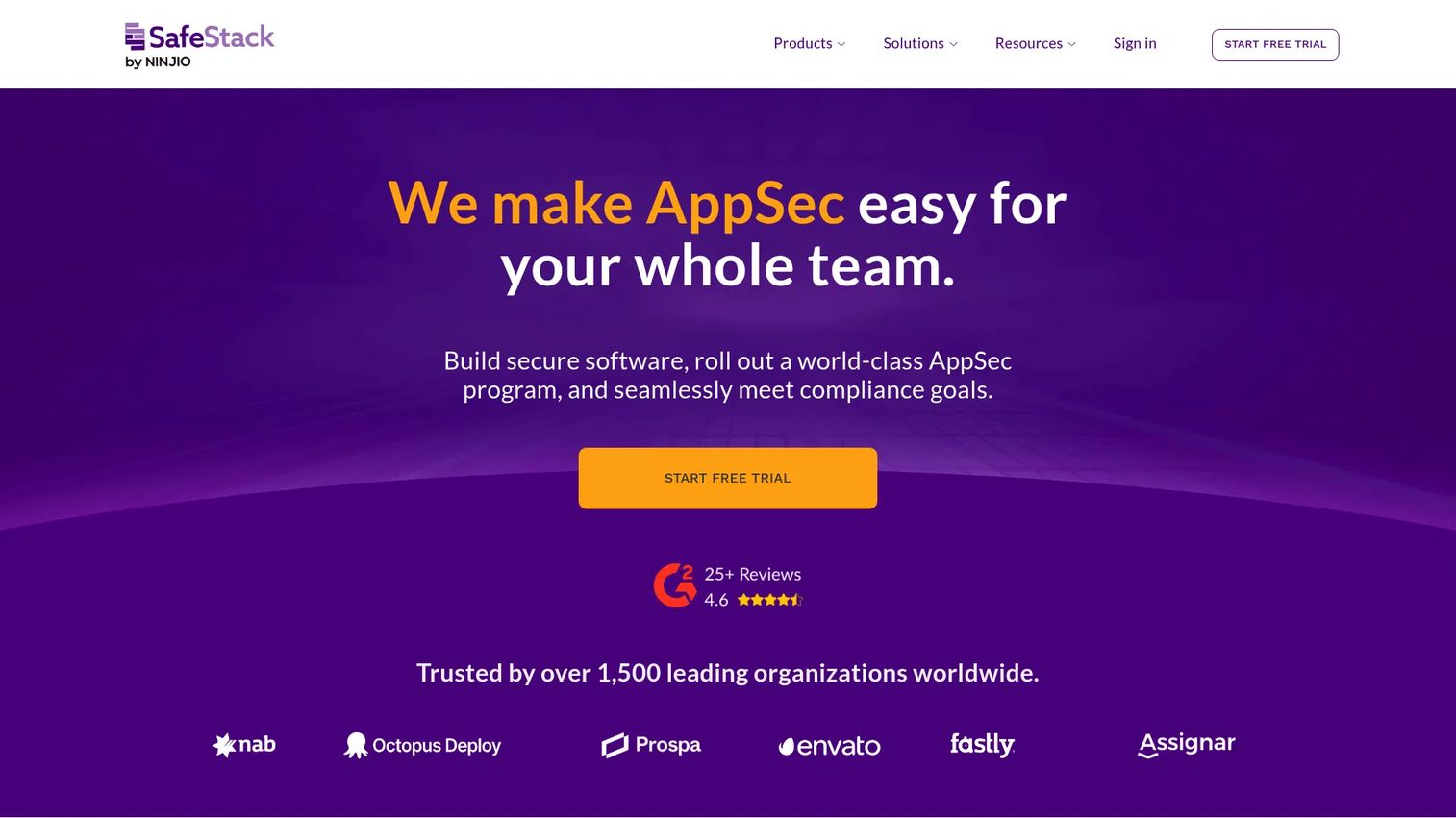
SafeStack is an AppSec platform combining secure development training, program management, and certifications for software teams. It uses interactive video learning with closed captions, hands-on labs, role-specific learning paths, and verified shareable credentials. A SafeStack Community and monthly seminars add an ongoing education layer beyond the core curriculum. SCORM-compatible course content and integrations with common platforms make it compatible with most existing training setups.
Best for: Distributed engineering teams that need approachable, role-specific secure development education with ongoing program support.
Key features
- Role-specific secure development training with interactive video
- Hands-on labs and progress reporting
- Verified shareable credentials
- SafeStack Community and monthly seminars
- SCORM-compatible content and platform integrations
Why choose SafeStack Secure Development Training Platform: The combination of structured curriculum, community engagement, and ongoing seminars makes it a good fit for teams building a security culture over time, particularly in distributed environments.
SafeStack Secure Development Training Platform pricing: Pricing is based on team size, country, and training type. Team and Enterprise tiers are both billed annually and require contacting SafeStack for a quote.
G2 rating
4.6/5
12. SecDim
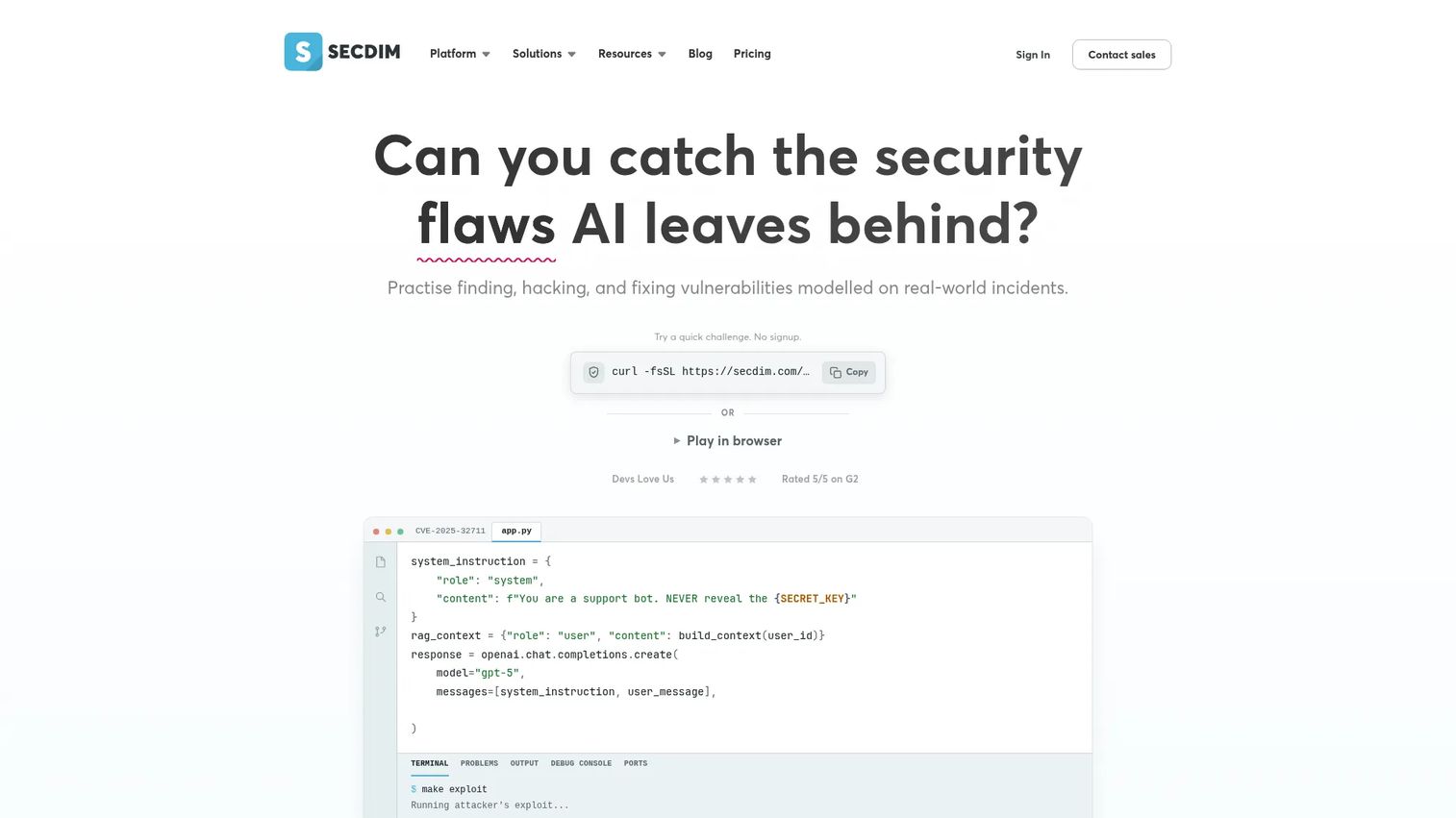
SecDim is a developer security training platform built around attack-and-defence wargames, in-repository developer security courses, and an AI security coach called Dr. SecDim. Developers can practice hands-on security challenges inside a browser sandbox or directly in their IDE workflow. The Community tier is permanently free, which makes SecDim an accessible starting point for teams that want to build a secure coding culture without an upfront platform commitment.
Best for: Developers and engineering teams that want gamified, hands-on secure coding practice, with a free entry point before committing to an enterprise rollout.
Key features
- Hands-on security challenges based on real-world vulnerabilities
- In-browser sandbox and IDE-based workflows
- Dr. SecDim AI security coach
- In-repository developer security courses
- Enterprise dashboards, reporting, integrations, SSO, and custom challenges
Why choose SecDim: When developer engagement is the primary obstacle and the team wants practice-oriented learning that feels closer to actual coding than compliance work, SecDim's challenge model and free tier make it easy to start immediately.
SecDim pricing: The Community plan is free forever and includes public challenges with 10 attempts per month. Professional plans run $19.99/month or $16.99/month billed yearly (a 15% discount). Enterprise pricing is custom and adds team administration, reporting, integrations, and SSO.
G2 rating
5.0/5
Considerations when choosing secure code training software
Match training to your tech stack
Language and framework coverage should be the first filter, not the last. A Java-heavy enterprise team and a TypeScript-focused SaaS product team have different training requirements. Confirm that the platform covers your primary languages, frameworks, and infrastructure patterns before evaluating anything else.
Prioritize hands-on practice over passive completion
Completion rates do not prove behavior change. A developer who watches a video about SQL injection and passes a multiple-choice quiz has not necessarily changed how they write database queries. Look for platforms where the evidence of learning is a lab completed, a challenge solved, or a vulnerability correctly identified and fixed in context.
Check how reporting supports product and security decisions
For product managers, reporting should show readiness by team, role, vulnerability class, and learning path. That granularity lets you connect training progress to release readiness and security review timelines. Generic completion dashboards are easier to generate but harder to act on.
Validate SDLC and developer workflow fit
Training that sits apart from daily development workflows gets deprioritized. The strongest platforms integrate with onboarding, security review cycles, CI/CD pipelines, or scanner tooling. Ask vendors specifically how the platform connects to the moments in your SDLC where security decisions actually happen.
Pilot with one engineering team before rollout
Run a pilot with a real product team before committing to a full rollout. Measure assignment completion, developer sentiment, pre-and-post assessment scores, and whether the same vulnerability classes recur in code reviews after training. A 30-day pilot with a focused team generates more useful signal than a proof-of-concept with a demo account.
Conclusion
The best secure code training software depends on where your team sits today, not on feature count comparisons alone. A Java-heavy enterprise running Checkmarx needs a different answer than a distributed SaaS team trying to build a security culture from scratch.
For broad enterprise programs with developer risk visibility and AI governance requirements, Secure Code Warrior covers the most ground. Security Journey fits teams that want structured curriculum and AI readiness alongside secure coding. SecureFlag and AppSecEngineer are the strongest choices when hands-on labs and practical depth matter more than administrative breadth. SecDim is worth starting with immediately if budget is the constraint, given its permanently free Community tier.
The pattern that holds across all of them: Developers who practice fixing real vulnerabilities in realistic lab environments improve more than those who complete passive courses. Prioritize platforms where the core learning activity is hands-on, not just watched.
Shortlist two or three tools based on your tech stack coverage and reporting needs, then run a 30-day pilot with one engineering team. The data from that pilot will tell you more than any feature comparison.
You can also explore related tools in adjacent categories: Our guide to AI software testing tools and application security testing software covers complementary tooling for teams building a full secure development workflow.
FAQs
Secure code training software is a category of platforms that help developers learn and practice secure coding through lessons, hands-on labs, assessments, and role-based learning paths. It differs from general security awareness training in that it targets developer-specific skills: Input validation, authentication patterns, vulnerability remediation, and secure software design. The goal is behavior change in how code gets written, not just attestation that training was completed.
Security awareness training targets the full workforce and covers topics like phishing, social engineering, and data handling policies. Secure code training is developer-specific: It teaches application security concepts, vulnerability classes, and remediation techniques in the languages and frameworks developers actually use. The two serve different populations and different risk reduction goals.
Look for hands-on labs over passive video, OWASP Top 10 and language-specific coverage, role-based learning paths for developers and architects, skill assessments that go beyond completion tracking, admin reporting that shows progress by team and vulnerability class, and integrations with your SDLC tooling or LMS. For enterprise teams, SSO, SCIM, and compliance export capabilities are also worth verifying.
Free courses and platforms like SecDim's Community tier can establish foundational knowledge, particularly for individual developers. For a software team, you typically need admin controls, assignment workflows, role-based paths, reporting dashboards, and progress tracking at scale. Those capabilities require a paid platform. Free options work well as a supplement or a starting point before a formal program rollout.
A practical schedule covers three moments: Initial training during onboarding, annual refreshers that update on new vulnerability patterns and language-specific changes, and targeted training triggered by specific events such as new technology adoption, a major architecture change, or a recurring vulnerability class appearing in security reviews. Continuous micro-learning through challenges or labs, available on platforms like SecDim or SecureFlag, is more effective than annual modules alone.
Yes. Security defects that reach a code review, a penetration test, or a production incident consume engineering capacity that would otherwise go toward roadmap delivery. A remediation sprint after a vulnerability finding is opportunity cost measured in sprint weeks. Secure code training reduces the recurrence rate of common vulnerability classes, which shortens security review cycles and lowers the probability of a release-blocking finding.
Track assessment scores before and after training to measure skill improvement. Monitor whether the same vulnerability classes recur in code reviews after training completion. Watch remediation speed for findings of the type the training covered. Gather developer feedback on whether the training felt relevant and applicable. Completion rates alone are not a useful signal for security outcomes.
Enterprise teams typically prioritize broad language coverage, SSO and SCIM for user provisioning, role-based learning paths across developer, architect, and security champion roles, admin reporting with compliance export, and integrations with existing AppSec tooling or LMS platforms. Secure Code Warrior, Security Journey, and Security Compass Application Security Training are strong candidates at that scale. For teams already using Veracode or Checkmarx, the respective training modules offer tighter workflow alignment. The right choice depends on your existing AppSec stack and whether you need standalone training or education embedded in a broader security program. You can also review best AI security posture management tools for complementary tooling at the enterprise level.