Your annual completion report says 98%. Then a convincing invoice scam hits finance, five people click, and the security team learns what the dashboard did not show.
Completion proves attendance. It does not prove recognition. According to Fortinet's 2025 Security Awareness and Training Global Research Report, 69% of leaders say employees lack adequate security awareness, even at organizations that already run training programs. AI-generated phishing, voice-cloning impersonation, QR-code lures, and collaboration-app attacks have raised the bar past what a yearly module can address.
The right security awareness training platform does more than assign content and export completion records. It runs realistic simulations, segments employees by role and risk, automates remedial paths, and gives program owners data that connects to behavior, not just attendance.
This guide compares eight platforms on exactly those dimensions, with verified pricing, live G2 ratings, and selection guidance for teams that need a repeatable, measurable cybersecurity awareness training program rather than a compliance checkbox.
What's inside
This guide is for security, IT, compliance, and product leaders evaluating security awareness training software in 2026. Tools were selected based on:
- Simulation depth: Coverage of email, voice, SMS, QR-code, and collaboration-app threats
- Segmentation and automation: Role-based or risk-based assignment, automated enrollment, and remediation paths
- Reporting and instrumentation: Behavior metrics, risk scoring, audit-ready exports, and integration with existing systems
- Operational fit: Maintenance burden, identity integrations, multilingual support, and content update cadence
TL;DR
- Best overall for enterprise programs: KnowBe4 Security Awareness Training, for its large content library, phishing simulations, and per-seat pricing starting at $2.40/month per seat
- Best for adaptive behavior training: Hoxhunt, for personalized phishing scenarios and gamified engagement loops
- Best for AI-era social engineering: Adaptive Security, for deepfake, voice, SMS, and QR-code simulation coverage
- Best for threat intelligence-led programs: Proofpoint ZenGuide, for risk-based learning paths tied to human-risk measurement
- Best for phishing reporting and response alignment: Cofense Phishing Defense Platform
- Best for suite consolidation: Mimecast Engage, for teams already in the Mimecast ecosystem
- Best for training library breadth: Infosec IQ, for content variety and compliance-focused modules
- Best for short-form narrative learning: NINJIO, for 3 to 4 minute story-led episodes with monthly content updates
What is security awareness training software?
Security awareness training software helps organizations educate employees about cyber threats, simulate risky scenarios, measure behavior, and document program participation for audit and reporting purposes.
The category covers far more than a content library. Effective platforms combine simulation, personalization, automation, and measurement into a repeatable employee security awareness training system.
Core capabilities
- Phishing simulation software: Sends realistic phishing, QR-code, SMS, voice, and collaboration-app scenarios to test employee recognition
- Training modules: Covers phishing awareness training, password hygiene, data handling, social engineering, and compliance topics
- Role-based security training: Assigns content by job function, risk level, access tier, or geography
- Automation: Handles enrollment, reminders, manager escalation, and remedial training without manual intervention
- Human risk scoring: Aggregates simulation failures, training completion, and behavioral signals into a per-user or per-team risk score
- Security awareness training reporting: Tracks completion, failure rates, reporting behavior, and risk trends for internal reviews and audit evidence
- Integration: Connects to identity providers, HRIS systems, LMS or SCORM environments, and communication tools like Slack and Microsoft Teams
Security awareness training versus compliance training
Compliance training creates completion records. A security awareness training program goes further by testing recognition behavior through phishing simulations and measuring whether employees improve over time. The two approaches are not interchangeable. Compliance modules establish audit evidence; awareness training changes the behavior that the audit is trying to address.
Security awareness versus technical security training
End user security training reaches the whole organization: Employees, contractors, and non-technical staff. Technical security training is deeper instruction for engineering, IT, and security teams on topics like secure coding, incident response, and infrastructure hardening. Most platforms in this guide focus on end user security training, with some offering role-specific paths for higher-risk populations.
| Category | Primary audience | Main output | Example metric |
|---|---|---|---|
| Security awareness training | All employees | Behavior change and documentation | Phishing report rate |
| Compliance training | All employees | Completion records and acknowledgments | Module completion rate |
| Technical security training | Engineering, IT, security | Skill development | Assessment pass rate |
When to use security awareness training software
Reduce phishing and social-engineering exposure
Run recurring phishing simulations when employee reporting patterns show preventable risk. The goal is coaching and recognition improvement, not catching people out. Platforms that provide immediate feedback after a simulation failure produce better behavior change than those that only log the result.
Support audit and policy requirements
Use a security awareness training platform when your team must assign content, track acknowledgments, document completion rates, and retain exportable evidence for internal or external review. Compliance awareness training coverage varies by platform. Check whether the content library matches your regulatory environment before signing a contract.
Train different risk groups without creating manual work
Finance, executives, engineering, customer support, and privileged administrators each carry different exposure profiles. Segmentation lets you assign targeted content by role, location, behavior, or identity-provider group. Ask whether the platform can ingest identity data from your existing directory before rollout, since that is where most implementation friction concentrates.
Security awareness training software comparison
Eight platforms evaluated across simulation depth, segmentation, reporting, pricing model, and G2 rating. Pricing and ratings were verified against each vendor's official pricing page and live G2 listing in October 2026.
| # | Product | Best for | Key differentiator | Pricing | G2 rating |
|---|---|---|---|---|---|
| 1 | KnowBe4 Security Awareness Training | Enterprise-scale awareness programs | 1,000+ module library with phishing and vishing simulations | From $2.40/seat/month | 4.6/5 |
| 2 | Hoxhunt | Adaptive, behavior-based training | AI-personalized phishing with gamified feedback | Custom pricing | 4.8/5 |
| 3 | Adaptive Security | AI-era social engineering scenarios | Deepfake, voice, SMS, and QR-code simulations | Custom pricing | 4.9/5 |
| 4 | Proofpoint ZenGuide | Threat intelligence-led human risk programs | Risk-based learning paths with just-in-time nudges | Custom pricing | 5.0/5 |
| 5 | Cofense Phishing Defense Platform | Phishing reporting and response alignment | AI-driven detection connected to employee training | Custom pricing | N/A |
| 6 | Mimecast Engage | Mimecast security-stack users | Behavioral nudges via email, Slack, and Teams | Custom pricing | N/A |
| 7 | Infosec IQ | Training library breadth and compliance content | SCORM/LMS support with tiered plan structure | Custom pricing | 4.5/5 |
| 8 | NINJIO | Short-form, story-led employee learning | 3 to 4 minute narrative episodes updated monthly | Custom pricing | 4.8/5 |
Best 8 security awareness training software for 2026
1. KnowBe4 Security Awareness Training
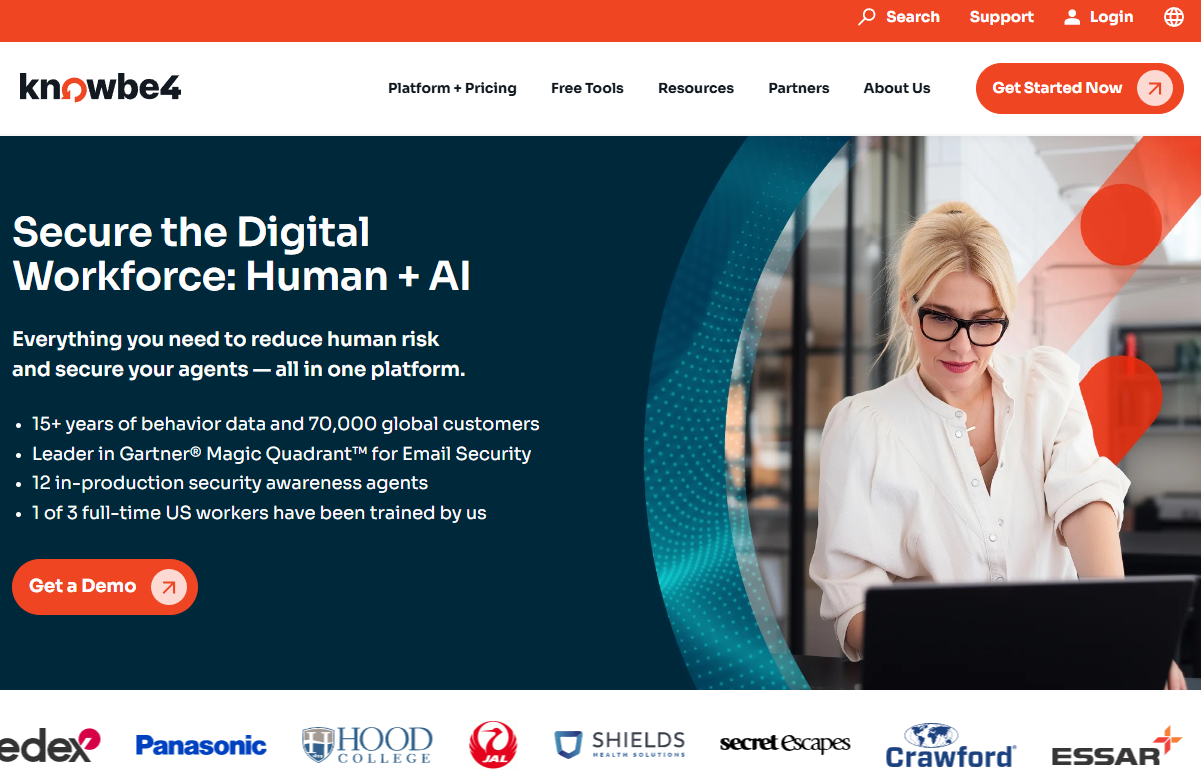
KnowBe4 is an AI-native security awareness training platform combining phishing and vishing simulations, a training library of over 1,000 modules in 47+ languages, and real-time contextual coaching delivered as SecurityTips immediately after a simulation. The platform covers the full training lifecycle from automated campaign setup through risk scoring and remedial assignment.
Best for: Enterprise security and IT teams that need scalable phishing simulation software, structured campaign administration, and broad content coverage across global employee populations.
Key features
- AI-personalized awareness training with adaptive module selection
- Phishing and vishing simulation templates
- Real-time SecurityTips coaching after simulation events
- User risk scoring and behavior analytics dashboard
- Policy and compliance module library
Why choose KnowBe4: KnowBe4 suits organizations that need a mature, repeatable security awareness training program with minimal manual administration. The instrumentation is deep enough for PMs who want to track behavior by segment, not only overall completion rates.
KnowBe4 pricing: SAT Foundation starts at $2.40/seat/month on a 3-year term for 25 to 50 seats. SAT Advanced is $3.75/seat/month on the same term and seat band. Volume pricing applies from 51 seats upward, and organizations with 1,001 or more seats receive a sales quote. Add-ons, including Compliance Plus and PhishER Plus, are priced separately. No permanent free tier is available, though a training preview is offered.
G2 rating: 4.6/5
2. Hoxhunt
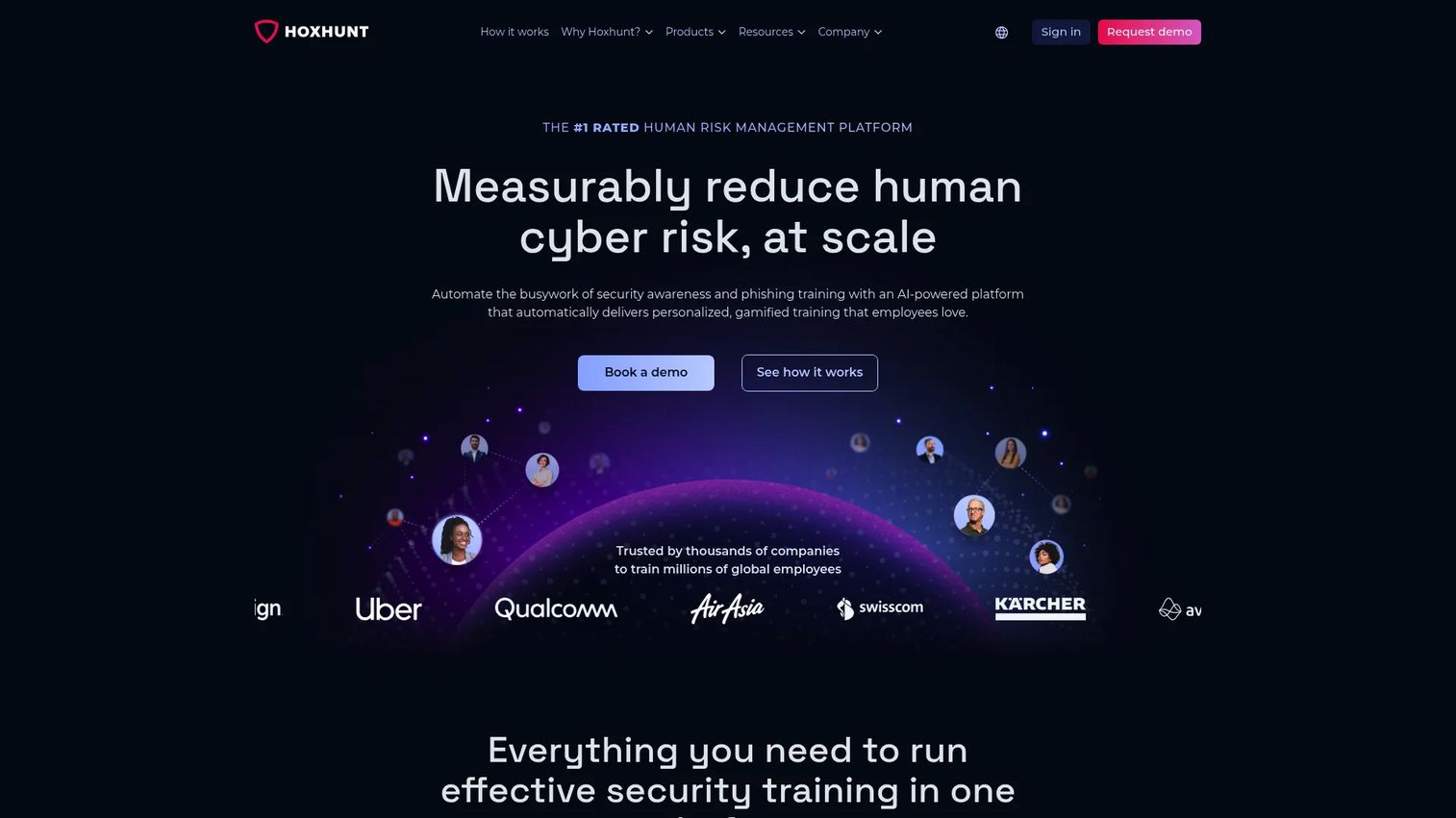
Hoxhunt is an AI-powered human risk management platform built around adaptive phishing simulations that adjust in difficulty based on each employee's behavior. Employees receive immediate, gamified feedback after each simulation, reinforcing recognition rather than punishing failure. The platform also handles automated phishing investigation and inbox-wide remediation, connecting training outcomes to incident response.
Best for: Organizations that want frequent employee participation, behavior-driven segmentation, and phishing simulations that improve in specificity as the program matures.
Key features
- Adaptive phishing simulations personalized by AI to each employee's behavior history
- Gamified feedback with points and progress indicators after each simulation
- Automated phishing investigation and campaign-level inbox remediation
- Reporting-rate tracking by team, geography, and threat type
- Risk-based training assignment for employees flagged as higher-risk
Why choose Hoxhunt: Hoxhunt is the right fit when the program owner wants leading indicators, how quickly reporting rates improve by segment, rather than lagging indicators like annual completion percentages. The gamification approach also improves participation in populations where traditional compliance modules generate low engagement.
Hoxhunt pricing: Hoxhunt prices per employee and scopes the quote based on employee count and required capabilities. A discovery call is required to get pricing details. Reviewer-reported context on G2 indicates the platform is positioned for mid-market and enterprise organizations, consistent with a sales-led commercial model.
G2 rating: 4.8/5
3. Adaptive Security
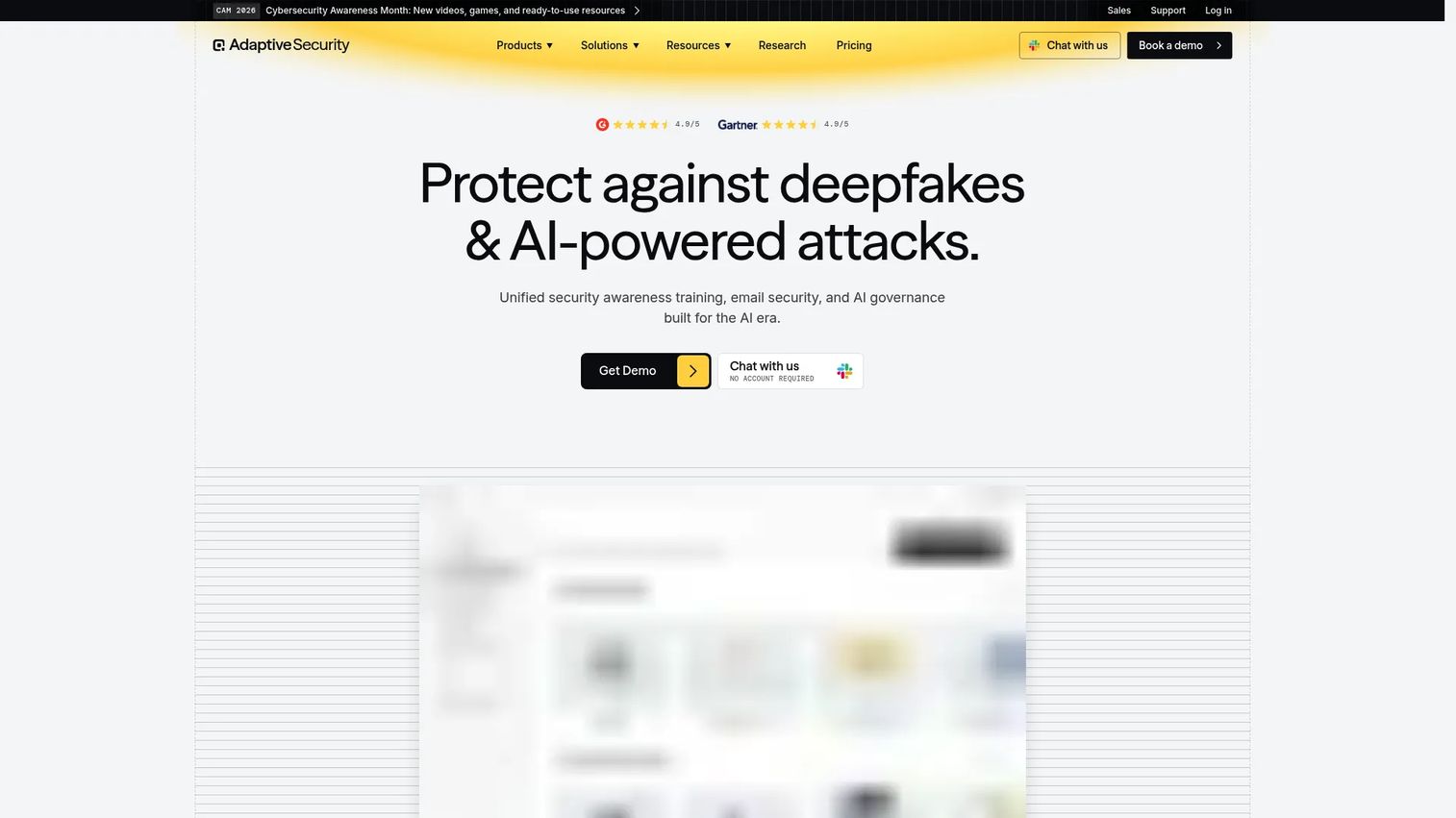
Adaptive Security is a unified platform for security awareness training that addresses AI-era attack scenarios including deepfake video impersonation, voice-cloning calls, SMS phishing, and QR-code lures alongside traditional email phishing. Its OSINT-powered spearphishing engine generates highly targeted simulations. The platform also includes agentic email security, AI governance for shadow-AI discovery, and phish triage for employee-reported messages.
Best for: Teams that need training scenarios reflecting AI-generated impersonation and multi-channel social engineering, particularly where executive impersonation and vendor-payment fraud are active risk areas.
Key features
- Deepfake and voice-cloning attack simulations
- SMS, QR-code, and email phishing across all major channels
- OSINT-powered spearphishing simulation engine
- AI governance with shadow-AI discovery and policy enforcement
- Automated remediation campaigns with risk scoring and SSO/SCIM support
Why choose Adaptive Security: Adaptive Security is worth evaluating when your threat model has moved beyond email-only phishing. The platform's breadth across attack channels makes it particularly relevant for organizations where employees use SMS, collaboration tools, and video calls as primary work surfaces.
Adaptive Security pricing: Adaptive Security uses per-seat annual licensing. Products can be purchased individually or bundled. A custom quote is required through the vendor's sales process. No public price tiers are displayed on the pricing page.
G2 rating: 4.9/5
4. Proofpoint ZenGuide

Proofpoint ZenGuide is a human-resilience platform that connects risk-based learning paths to threat-intelligence data, allowing organizations to prioritize training interventions based on which employees and behaviors present the highest measurable risk. The platform delivers just-in-time behavioral nudges alongside structured phishing simulations and adaptive assessments, with dashboards that surface risk trends for security leadership.
Best for: Organizations already operating within a broader security program that uses threat intelligence to prioritize employee interventions and wants human risk management integrated with training delivery.
Key features
- Risk-based and adaptive learning paths driven by behavioral profiles
- Automated enrollment based on risk score and behavioral signals
- Phishing simulations, interactive training, and knowledge assessments
- Just-in-time behavioral nudges at the point of risk
- Learner and administrator dashboards with human-risk reporting
Why choose Proofpoint ZenGuide: ZenGuide fits teams where security leadership wants to tie awareness training outcomes to a measurable reduction in human-centric cyber risk, not just module completion. Buyer evaluation should include implementation ownership, identity-data dependencies, and whether the reporting model aligns with how the security team already presents risk to the business.
Proofpoint ZenGuide pricing: Proofpoint does not display ZenGuide pricing publicly. Prospective buyers must contact sales for a customized quote. The platform is positioned for enterprise deployments with existing Proofpoint relationships.
G2 rating: 5.0/5
5. Cofense Phishing Defense Platform
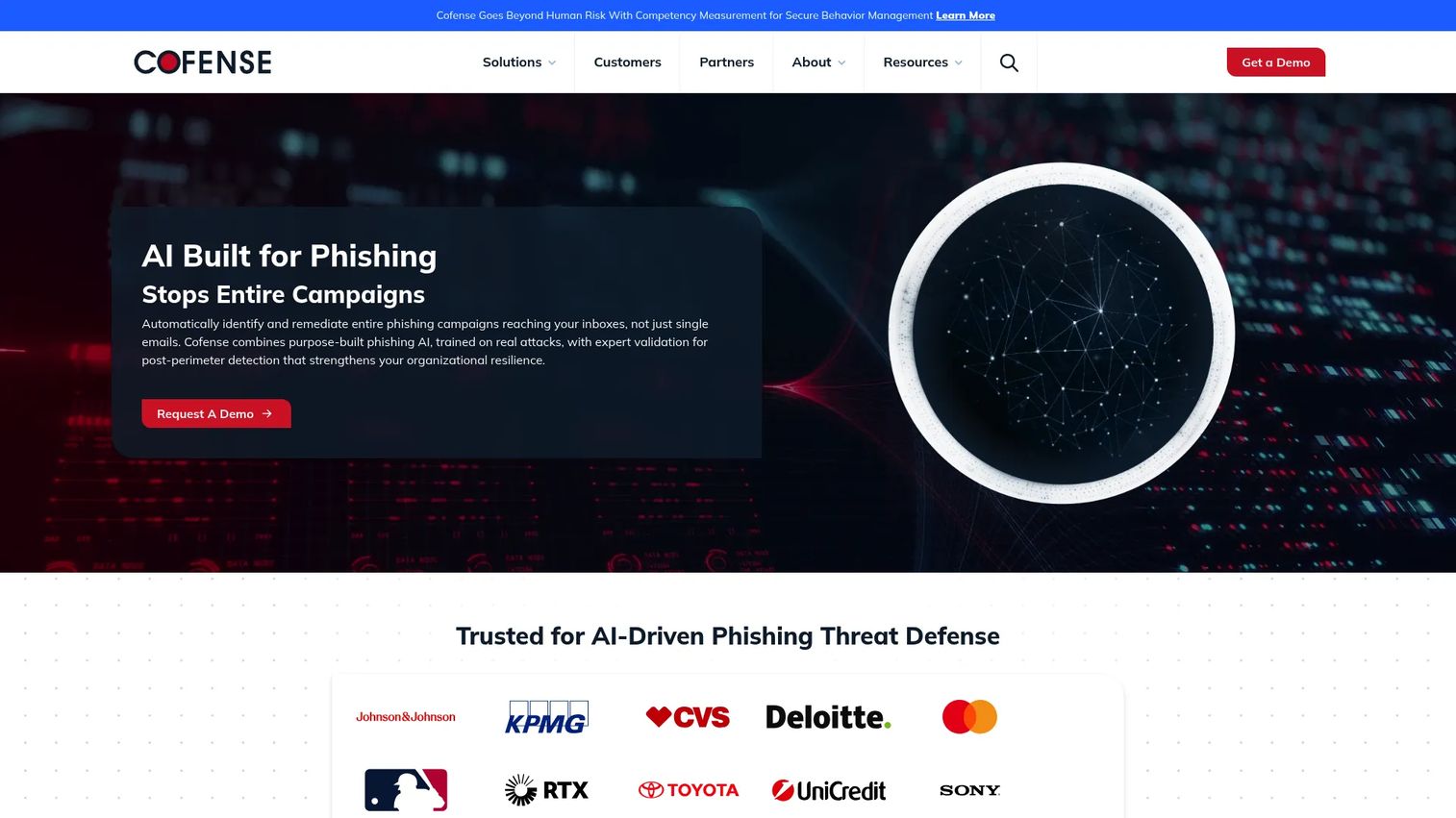
Cofense connects phishing simulation, employee reporting, and security operations into a unified phishing defense workflow. The platform's AI-driven detection engine uses human-validated threat intelligence gathered from employee phishing reports to identify real campaigns, then automates quarantine and inbox-wide remediation. Training content is tied to simulation results, so employees who interact with a simulated phishing message receive targeted remediation immediately.
Best for: Security teams where employee phishing reporting behavior directly feeds incident-response workflows, and where improving reporting quality is as important as improving recognition.
Key features
- AI-driven phishing campaign detection using human-validated intelligence
- Automated quarantine and inbox-wide remediation
- Phishing simulation campaigns with targeted remediation training
- Command Center for detection, remediation, training, and competency insights
- Security operations integration for triage and response
Why choose Cofense: Cofense is the right choice when the security operations team wants better signal from employee reports, not only completion data. The platform's value increases as the employee reporting rate improves, creating a feedback loop between training outcomes and real threat detection.
Cofense pricing: Cofense does not display pricing on its website. Packaging and contract terms are available through a sales conversation. No trial or free tier information was confirmed.
6. Mimecast Engage
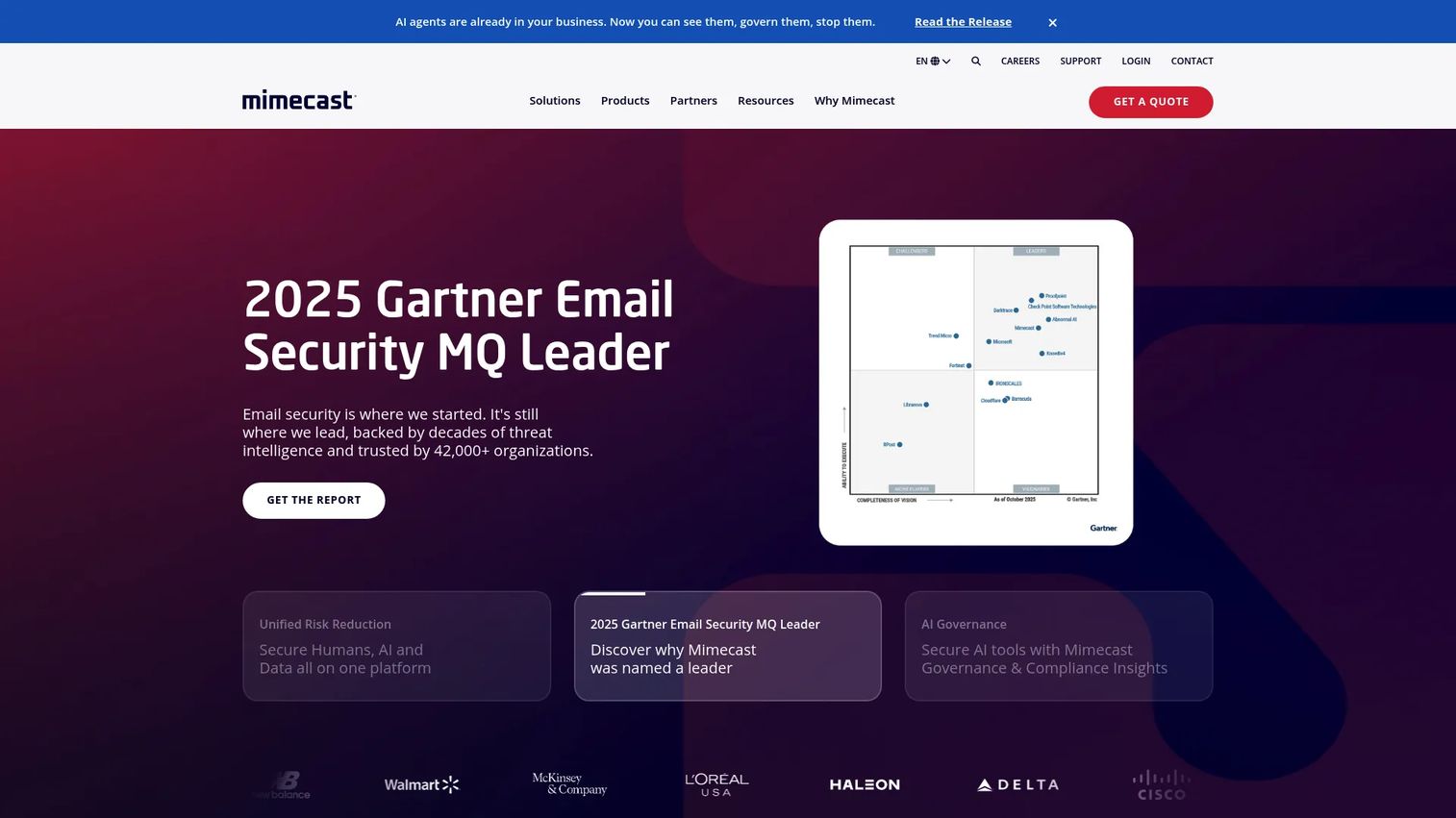
Mimecast Engage is a security behavior management and awareness training platform built within the Mimecast ecosystem. It combines phishing simulations, over 200 training modules in 27 languages, a Human Risk Command Center with risk scores and watchlists, and behavioral nudges delivered through email, Slack, or Microsoft Teams. The Engage Pro plan adds AI-generated phishing templates and personalized user scorecards.
Best for: Organizations already using Mimecast email security products that want awareness training managed within the same vendor relationship and reporting environment.
Key features
- Phishing simulations with customizable templates and campaign reporting
- 200+ training modules available in 27 languages
- Human Risk Command Center with risk scores and watchlists
- Behavioral nudges delivered via email, Slack, or Microsoft Teams
- AI phishing template generator (Engage Pro)
Why choose Mimecast Engage: Mimecast Engage reduces vendor sprawl for teams already in the Mimecast stack. If your organization is evaluating a standalone security awareness training platform, compare Engage's simulation depth and analytics against purpose-built alternatives before deciding based on suite alignment alone.
Mimecast Engage pricing: Mimecast publicly describes two plans, Engage Core and Engage Pro, but displays no numeric pricing for either. Contact Mimecast sales for a quote. The commercial model is sales-led with no self-serve option confirmed.
7. Infosec IQ
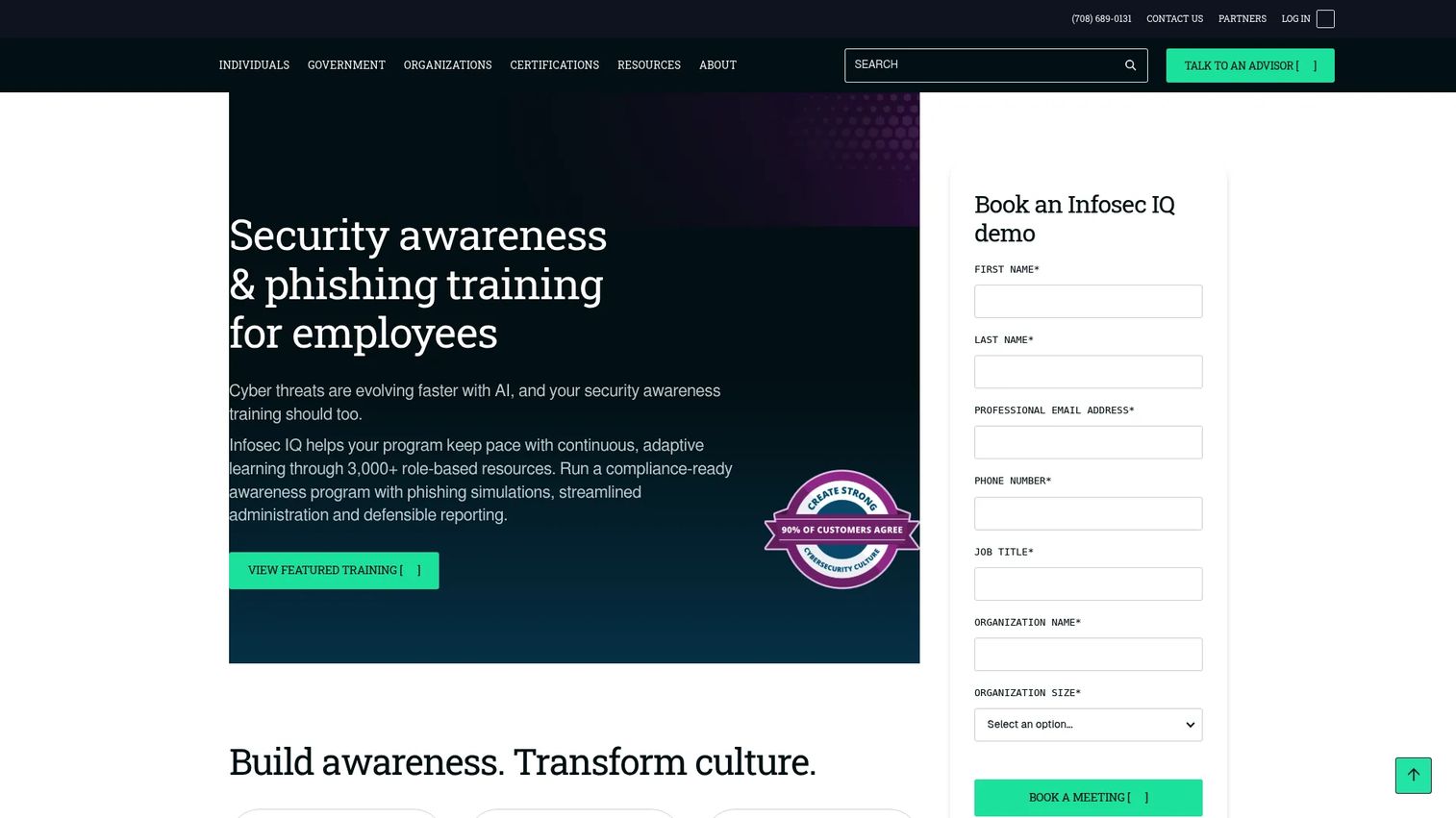
Infosec IQ is a security awareness and phishing simulation platform with a broad training library, knowledge assessments, and risk-based learner grading. The platform offers three plan tiers: Standard covers awareness training, phishing simulations, and prebuilt reports; Enterprise adds LMS and SCORM support, custom reporting, and global administration; Infosec IQ + Skills adds Infosec Skills technical training content. The tiered structure makes it practical to start with core awareness training and expand as program maturity increases.
Best for: Organizations that prioritize a varied content library, phishing simulation capability, and compliance-focused training, particularly those that need LMS integration or SCORM export.
Key features
- Security awareness training library with role-based assignment rules
- Phishing simulation templates across multiple attack scenarios
- Knowledge assessments and learner grading by risk profile
- LMS/SCORM support on Enterprise and above
- Campaign reporting dashboards with exportable data
Why choose Infosec IQ: Content fit matters as much as content volume. Before evaluating the library size, ask whether the modules match your workforce's actual risk profile, the product workflows employees run, and the languages and geographies the program must cover.
Infosec IQ pricing: All three plan tiers require a sales conversation. No numeric pricing is shown on the vendor's pricing page. The tiered structure (Standard, Enterprise, Infosec IQ + Skills) is publicly documented, which helps buyers scope requirements before speaking to sales.
G2 rating: 4.5/5
8. NINJIO
NINJIO is a human risk management platform built around short, 3 to 4 minute cybersecurity awareness episodes delivered as narrative microlearning. Each episode is animated around a real-world attack pattern, and new content is released monthly. The platform also includes adaptive phishing simulations with Emotional Susceptibility Profiles, personalized coaching, one-click suspicious-email reporting, and AI-powered threat analysis. Three package options cover different levels of simulation and coaching depth.
Best for: Teams where traditional module-based training produces low engagement or high skip-through rates, and where concise, story-led content is more likely to reach employees who process security training as a low-priority obligation.
Key features
- Short 3 to 4 minute animated security awareness episodes
- Adaptive phishing simulations with Emotional Susceptibility Profiles
- Monthly content updates tied to current attack patterns
- One-click phishing reporting with automated threat analysis
- Real-time human-risk reporting and per-user coaching
Why choose NINJIO: NINJIO is worth evaluating when employee engagement is the primary adoption problem, not simulation depth or reporting granularity. Before committing, ask about customization options, analytics export capabilities, and whether the phishing simulation engine covers the channels your workforce uses beyond email.
NINJIO pricing: NINJIO offers three packages (NINJIO Engage, NINJIO Prodigy+, and NINJIO Engage Self-Hosted) with pricing available through the sales team. No numeric prices are displayed on the vendor's pricing page.
G2 rating: 4.8/5
Considerations when choosing security awareness training software
Measure behavior, not only completion
Ask whether the platform tracks phishing report rates, repeat-risk behavior by segment, improvement by threat type, and remediation completion. Completion rates satisfy audit requirements. They do not tell you whether employees can recognize a well-crafted voice-cloning call or a QR-code lure embedded in a vendor invoice.
Match simulations to the threats your employees actually face
Evaluate whether the platform covers the channels your workforce uses: Email, SMS, QR codes, collaboration apps, voice calls, and executive impersonation. A broad simulation library is only useful if it can represent the attack patterns your threat model identifies as relevant. Narrow your evaluation to scenario types before reviewing content volume.
Verify segmentation and automation before rollout
Assess assignment logic, identity-provider integration, manager escalation rules, language support, and campaign scheduling. For PMs, the critical question is who owns these workflows after implementation. If the answer is unclear at the demo stage, the platform will create ongoing administrative overhead for whoever inherits it.
Plan for content and policy maintenance
Training content has a release cadence problem: Threat patterns, internal policies, product workflows, and regulatory requirements all change. Ask how quickly a team can update modules, retire stale campaigns, and reflect current attack scenarios. Platforms with monthly content updates and flexible campaign editors reduce the maintenance burden significantly.
Test reporting in your existing decision workflow
Review dashboards, data exports, API access, and identity integrations before signing. The most useful security awareness training reporting surfaces risk trends to security leaders without requiring manual spreadsheet work. Check whether the platform's reporting model aligns with how your organization currently reviews security posture data.
How to choose the right security awareness training software
Choose KnowBe4 for broad program coverage
KnowBe4 is the practical starting point for organizations that need a large content library, formal campaign administration, and phishing simulation across a global workforce. The per-seat pricing model starting at $2.40/seat/month on a 3-year term makes cost planning straightforward. Validate add-on costs, localization depth, and identity integration before finalizing the contract.
Choose Hoxhunt when adaptive practice is the priority
Hoxhunt is the right fit when the program owner wants ongoing participation rather than annual consumption. The adaptive simulation engine and gamified feedback loops produce measurable improvements in reporting rates by employee segment. Ask the vendor to show reporting by business function and threat type during the demo.
Choose Adaptive Security for AI-enabled attack scenarios
Adaptive Security is worth evaluating when your threat model extends beyond email phishing to include voice-cloning calls, SMS lures, deepfake impersonation, and QR-code attacks. Pilot with realistic scenarios for the specific employee groups most exposed to those channels before committing.
Choose Proofpoint ZenGuide or Cofense for broader security workflow alignment
Proofpoint ZenGuide suits teams running threat-informed human-risk programs where training interventions are prioritized by behavioral and risk data. Cofense fits organizations where improving the quality of employee phishing reports directly supports security operations, creating a feedback loop between training and incident detection.
Choose Mimecast Engage, Infosec IQ, or NINJIO for a defined operating model
Route the decision based on your primary constraint:
- Mimecast Engage: For teams consolidating into the Mimecast security stack
- Infosec IQ: For organizations that need LMS/SCORM compatibility and a tiered plan structure that scales with program maturity
- NINJIO: For teams where employee engagement is the primary obstacle and short-form narrative content is more likely to reach the workforce than module-based training
Conclusion
The best security awareness training platforms give security and IT teams a repeatable way to simulate current threats, prioritize risk by segment, train the right groups, and show whether behavior improves. Completion rates remain useful for audit evidence. What moves the risk metric is reporting rate improvement, reduced repeat failures, and faster recognition of the attack patterns employees actually encounter.
For broad enterprise programs, KnowBe4 offers the deepest content library and the most transparent pricing model. For adaptive and AI-era threat coverage, Hoxhunt and Adaptive Security reflect where the category is moving. For organizations where training connects to broader security operations, Proofpoint ZenGuide and Cofense each address a different integration point.
Before committing, run a pilot with a representative employee segment. Score each platform against your threat model, reporting needs, identity integrations, and the question of who will own the program after launch. That last question eliminates more candidates than any feature comparison.
For further reading on related security and compliance software, see our guide to application security testing software and our roundup of best AI security posture management tools.
FAQs
Security awareness training software is a platform that helps organizations educate employees about cyber threats, run phishing and social-engineering simulations, track behavior over time, and produce documentation for audit and compliance purposes. Core capabilities include role-based training assignment, automated campaign management, simulation across multiple attack channels, and reporting that surfaces risk trends alongside completion data.
Effective programs use continuous reinforcement rather than relying on annual training alone. The right frequency depends on workforce risk profile, regulatory environment, incident history, and how frequently internal policies or product workflows change. Most platforms in this guide support ongoing monthly or quarterly simulation cadences, with more intensive targeted training triggered by high-risk behavior signals.
The core feature set covers phishing simulation software for email, SMS, QR-code, voice, and collaboration-app scenarios; training content libraries with role-based or risk-based assignment; automated enrollment and remediation workflows; multilingual support; and security awareness training reporting with exportable audit evidence. The right combination depends on the organization's threat model, workforce size, and integration requirements.
Simulations give employees practice recognizing suspicious messages in the context they encounter at work, rather than through abstract awareness modules. Platforms that provide immediate, coaching-style feedback after a simulation failure consistently produce better recognition improvement than those that only log the result. The goal is to build recognition habits, not to identify employees who fail.
Human risk scoring combines behavioral signals, including simulation failure rates, reporting behavior, and training completion patterns, into a per-user or per-team score that helps program owners identify where additional intervention is needed. Buyers should ask what data feeds the score, how transparent the model is to administrators and employees, what privacy controls apply to the underlying data, and what remediation actions the score triggers.
Most platforms provide completion records, policy acknowledgments, and exportable reporting that organizations use as audit evidence. The software documents program activity. Whether that activity satisfies a specific regulatory requirement depends on the framework, how the program is designed, and how evidence is presented. No platform in this guide guarantees compliance with any specific law or standard.
Start with segmentation: Can the platform assign content by role, location, access level, or behavior, and can it ingest identity data from your existing directory without engineering involvement? Then evaluate instrumentation: Does the reporting surface leading indicators like reporting rates and repeat-risk patterns, or only lagging indicators like completion? Finally, assess maintenance burden: Who updates modules when policies change, how quickly can campaigns be adjusted, and who owns the program after launch?
A baseline is required before claiming improvement. Key metrics include phishing simulation failure rate by employee segment, reporting rate for simulated and real suspicious messages, repeat-risk behavior after remediation, remediation completion rate, risk score trends over time, and incident patterns for avoidable events like credential reuse and phishing clicks. Completion rate alone does not indicate behavior change.