Your backlog does not fail because the scanner found too little. It fails because everything arrives as urgent.
Security teams already know this problem. According to the Verizon 2026 Data Breach Investigations Report, vulnerability exploitation was the initial access vector in 31% of breaches - and yet only 26% of critical known-exploited vulnerabilities were fully remediated in 2025, with the median remediation time rising to 43 days. The scanner is not the bottleneck. Prioritization is.
Risk-based vulnerability management (RBVM) changes the question from "what has a high CVSS score?" to "what creates the most business damage if exploited right now?" It adds context - exploitability, asset criticality, exposure, active threat intelligence - so the work that lands in engineering backlogs is ranked by actual risk, not raw severity. That shift matters enormously for PMs and platform teams trying to protect release cadence while keeping security debt from compounding.
This guide compares 15 RBVM tools to help you match the right platform to your environment.
What's inside
This guide covers 15 risk-based vulnerability management tools evaluated for 2026. Items were selected across four criteria:
- Risk prioritization strength: Does the tool add real context beyond CVSS?
- Remediation workflow support: Can it route ranked work into existing ticketing and patch systems?
- Environment fit: Does it cover cloud, endpoint, containers, AppSec, or Microsoft estates?
- Operational practicality: Does it reduce backlog noise or create more of it?
The guide is for product, security, DevOps, and platform teams building or improving a vulnerability management program.
TL;DR
- Best overall RBVM platform: Ivanti Neurons for RBVM for enterprise teams that want risk scoring tied directly to remediation and patch workflows
- Best cloud-native pick: Orca Security for agentless visibility across cloud workloads, identities, and attack paths
- Best enterprise exposure platform: Tenable One for teams consolidating vulnerability and exposure visibility across a large asset estate
- Best Microsoft estate option: Microsoft Defender Vulnerability Management for organizations standardized on Defender for Endpoint
- Best open-source stack: OpenVAS, Nuclei, Trivy, and DefectDojo for teams assembling custom or AppSec-heavy workflows
- Best validation angle: Cymulate Exposure Analytics for teams that want to test whether remediation actually reduced exploitable exposure
What is risk-based vulnerability management software?
Risk-based vulnerability management software helps teams discover vulnerabilities, enrich them with threat and business context, prioritize remediation by likely impact, route fixes to the right owners, and verify that exposure drops over time.
Traditional vulnerability management typically ranks findings by severity scores, with CVSS being the most common. RBVM adds layers of context that CVSS alone cannot provide:
- Exploitability: Is there a working exploit in the wild?
- Active exploitation: Is this vulnerability on the CISA Known Exploited Vulnerabilities (KEV) catalog?
- Asset criticality: Does this system host customer data or support a revenue-critical service?
- Internet exposure: Is the affected asset reachable from outside your network?
- Attack paths: Can an attacker chain this vulnerability to reach a sensitive target?
- Business impact: What happens to customers, revenue, or compliance if this is exploited?
The goal is not to fix every CVE at maximum speed. The goal is to fix the vulnerabilities most likely to create real business damage, so engineering capacity goes to the right work first.
Key capabilities to look for
- Asset discovery and inventory
- Vulnerability detection and enrichment
- Risk scoring beyond CVSS (incorporating EPSS, KEV, exposure, criticality)
- Threat intelligence integration
- Attack-path and exposure context
- Remediation ownership assignment and ticketing
- Patch workflow integration
- SLA tracking and exception handling
- Validation and retesting
- Executive and audit-ready reporting
RBVM versus traditional vulnerability management
| Dimension | Traditional vulnerability management | Risk-based vulnerability management |
|---|---|---|
| Prioritization model | Severity score (CVSS) | Risk score combining severity, exploitability, exposure, and business impact |
| Context used | Technical vulnerability data | Threat intelligence, asset criticality, attack paths, active exploitation |
| Remediation workflow | List of findings handed to engineering | Prioritized queue with ownership, SLAs, and verification |
| Reporting style | Vulnerability counts and severity distribution | Risk trend, residual exposure, SLA performance |
| Best fit | Compliance-focused programs with stable asset inventory | Teams managing dynamic environments where fixing everything is not feasible |
When to use risk-based vulnerability management software
Prioritize fixes when scanners create too much noise
Raw scan output from even a modest environment can produce thousands of findings per cycle. Without context, everything looks urgent. RBVM tools cut that volume down to a ranked remediation plan by applying exploitability signals, KEV data, and asset-criticality scores. For PMs, this is the difference between a backlog full of ambiguous security tickets and a prioritized list that engineering can actually act on.
Coordinate remediation across security, product, and engineering
Prioritization is only half the problem. The other half is ownership. When a vulnerability is flagged, who owns the fix? What is the SLA? What happens if the fix requires a dependency upgrade that conflicts with the current release? RBVM tools with ticketing integrations, SLA workflows, and exception-handling paths make this coordination explicit rather than leaving it in Slack threads.
Prove risk reduction to executives and customers
Enterprise procurement reviews, SOC 2 audits, and customer security questionnaires all ask the same question: Is your exposure going down? RBVM reporting should answer that with trend data, residual risk documentation, and SLA performance metrics. Without this layer, security work is invisible to leadership and hard to defend during enterprise sales cycles.
Risk-based vulnerability management software comparison
The table below summarizes all 15 tools by environment fit, key differentiator, pricing, and G2 rating. Tools that require a quote are marked accordingly. Open-source tools show their license model.
| # | Product | Best for | Key differentiator | Pricing | G2 rating |
|---|---|---|---|---|---|
| 1 | Ivanti Neurons for RBVM | Enterprise RBVM tied to remediation | Risk scoring connected to patch and ITSM workflows | Custom pricing | 4.3/5 |
| 2 | Orca Security | Agentless cloud vulnerability management | Cloud risk context across workloads, identities, and attack paths | Custom pricing | 4.7/5 |
| 3 | Tenable One | Enterprise exposure management | Broad exposure visibility; starts at $3,500/year for 100 assets | From $3,500/year | 4.5/5 |
| 4 | Qualys VMDR | Enterprise vulnerability and patch operations | Continuous discovery, detection, prioritization, and response | From $2,195 | 4.4/5 |
| 5 | Rapid7 InsightVM | Security teams needing remediation workflows | Live dashboards and remediation projects; $1.62/asset/mo | From $1.62/asset/mo | 4.4/5 |
| 6 | Wiz | Cloud-native exposure prioritization | Security Graph with attack-path context across cloud environments | Custom pricing | 4.7/5 |
| 7 | Microsoft Defender Vulnerability Management | Microsoft-heavy endpoint environments | Native Defender stack alignment; $2.00/user/mo add-on | From $2.00/user/mo | 4.4/5 |
| 8 | CrowdStrike Falcon Exposure Management | Endpoint and exposure management | Adversary-aware ExPRT scoring inside Falcon | Custom pricing | 4.5/5 |
| 9 | Palo Alto Prisma Cloud | Cloud security programs | Vulnerability context inside CNAPP workflows | Custom pricing | N/A |
| 10 | Intruder | SMB and lean security teams | Simple prioritized scanning with a free tier | Free plan available | 4.8/5 |
| 11 | OpenVAS | Open-source network scanning | Community-driven vulnerability scanning | Free (open source) | 4.4/5 |
| 12 | Nuclei | Custom template-based detection | YAML template library for multi-protocol scanning | Free (open source) | 5.0/5 |
| 13 | Trivy | Container and supply chain scanning | Open-source scanning for containers, IaC, and dependencies | Free (open source) | N/A |
| 14 | DefectDojo | AppSec vulnerability orchestration | Findings intake, deduplication, and EPSS/KEV enrichment | Free tier; from $100/mo | 4.6/5 |
| 15 | Cymulate Exposure Analytics | Exposure validation | Correlates vulnerability data with business context and validates exploitability | Custom pricing | 4.9/5 |
Best 15 risk-based vulnerability management tools for 2026
1. Ivanti Neurons for RBVM
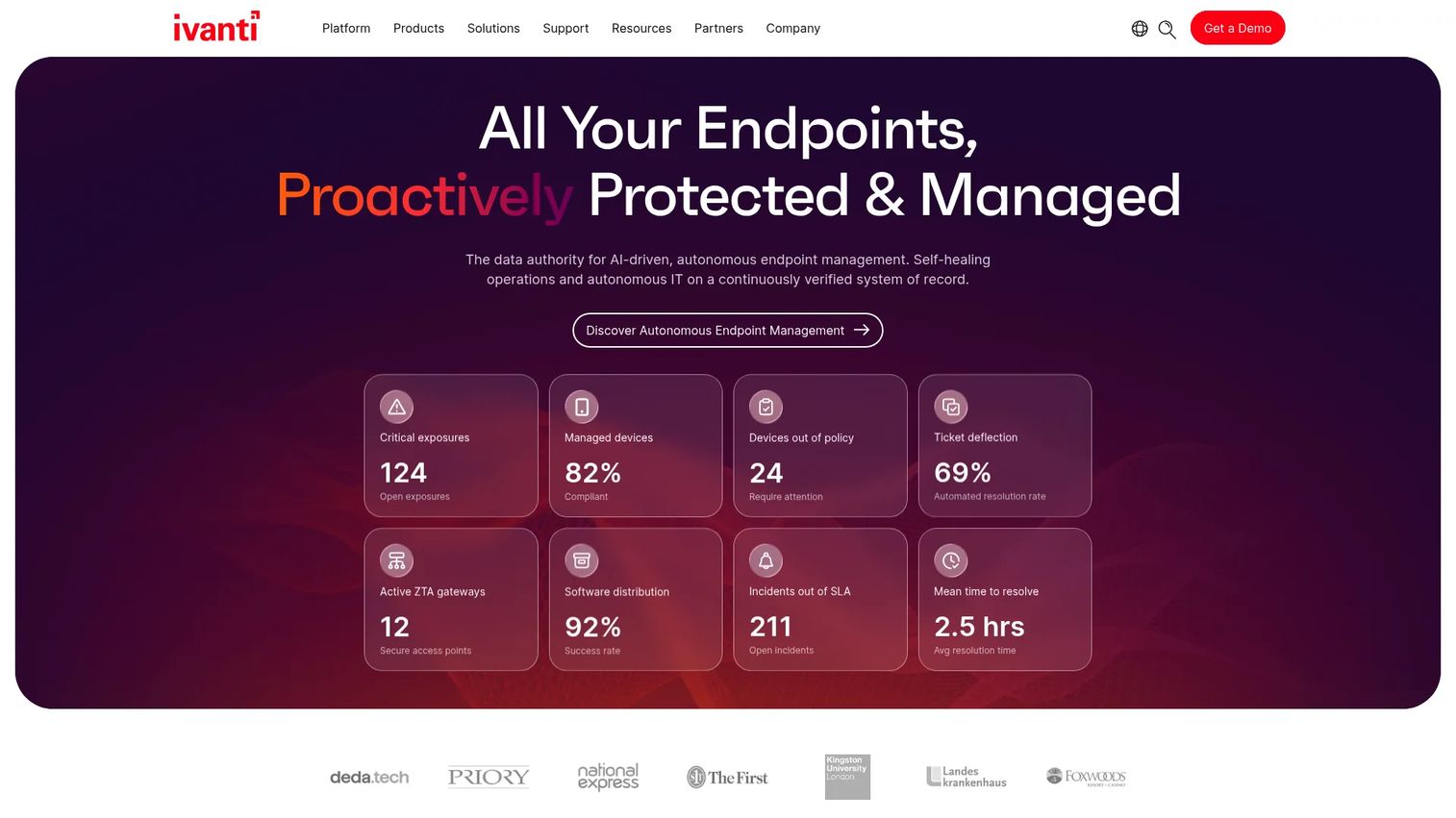
Ivanti Neurons for RBVM is a dedicated risk-based vulnerability management platform built for enterprise security and IT teams. It correlates vulnerability data with threat intelligence, asset criticality, and testing context to produce a Vulnerability Risk Rating (VRR) that goes beyond raw CVSS severity. The platform connects directly to Ivanti's ITSM and patch management products, so risk-ranked findings can flow into remediation workflows without manual handoffs. For security and IT operations teams that need shared dashboards and clear remediation ownership, this connection is the platform's main practical advantage.
Best for: Enterprises that want RBVM tightly connected to patch management and IT service workflows.
Key features
- Vulnerability Risk Rating (VRR) combining severity, threat, and asset context
- Threat intelligence enrichment and threat-based views
- Automation playbooks and SLA-based workflows
- Integrations with Ivanti Neurons for ITSM and Patch Management
- Customizable role-based dashboards
Why choose Ivanti Neurons for RBVM: Strong fit when the core problem is translating risk-ranked CVEs into owned remediation work. It is especially relevant for organizations where security and IT operations need a shared operating model, not just a shared dashboard.
Ivanti Neurons for RBVM pricing: Contact sales for a quote; cost is driven by asset count, modules selected, and deployment scope.
G2 rating: 4.3/5
2. Orca Security
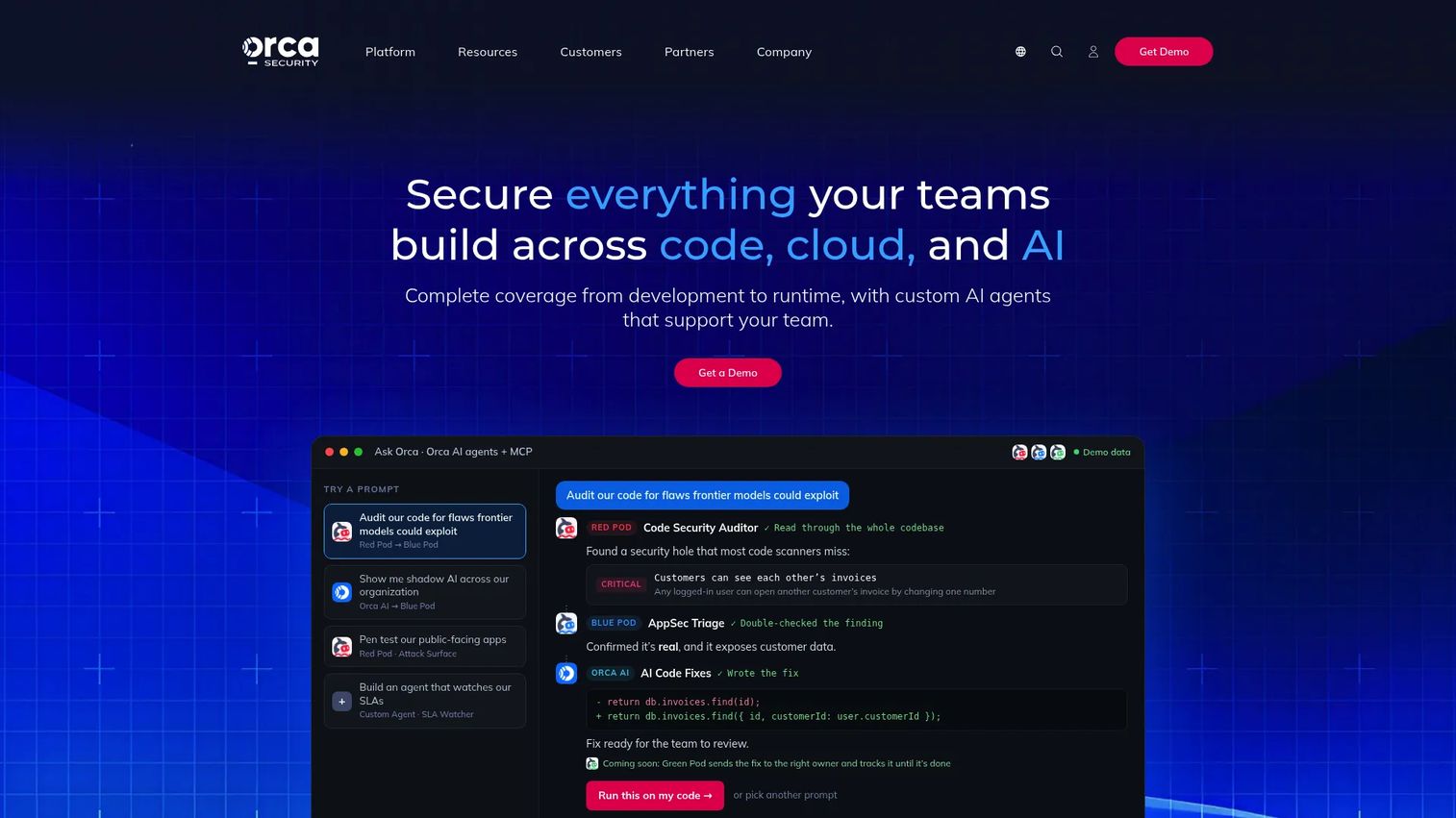
Orca Security is an AI-powered cloud security platform with strong vulnerability management capabilities built around its agentless SideScanning technology. It provides unified visibility across cloud workloads, identities, data, and AI environments without requiring agents on every asset. Orca's unified data model correlates findings across cloud security posture management (CSPM), workload protection, identity entitlement, and vulnerability management into a single risk-prioritized view. Attack-path analysis shows which vulnerabilities are reachable and connected to sensitive data, helping cloud-first PMs and platform teams focus on what actually matters in AWS, Azure, or Google Cloud.
Best for: Cloud-first teams that need vulnerability context across workloads, identities, and reachable attack paths in multi-cloud environments.
Key features
- Agentless SideScanning across cloud workloads
- Attack-path analysis with sensitive data context
- Unified visibility across CSPM, workload protection, and identity
- Application security including SCA, SAST, secrets detection, and IaC scanning
- Cloud detection and response with runtime monitoring
Why choose Orca Security: Choose Orca when your vulnerability backlog lives primarily in cloud environments and "what should we patch?" depends on reachability, identity permissions, and exposed data proximity.
Orca Security pricing: Orca uses a single all-inclusive SKU priced by the number of cloud workloads protected. Contact Orca for a quote specific to your environment size and module selection.
G2 rating: 4.7/5
3. Tenable One
Tenable One is an AI-powered exposure management platform built on Tenable's vulnerability-management heritage. It provides unified visibility across IT assets, cloud environments, OT/IoT, web applications, identities, and AI assets, with attack-path analysis and risk-based prioritization layered on top. For mature programs that already use Tenable products and need a higher-level risk narrative, Tenable One adds the exposure management layer that individual product dashboards cannot provide. This suits security leaders who need to report cyber exposure trends to executives and auditors, not just scanner output.
Best for: Enterprise teams that need a consolidated exposure management view across a large and varied asset estate.
Key features
- Unified exposure view across IT, cloud, OT/IoT, web apps, and identities
- Attack-path analysis and exposure prioritization
- Asset risk scoring with vulnerability intelligence
- Dashboards, reporting, and third-party data connectors
- Executive-ready exposure trend reporting
Why choose Tenable One: Choose Tenable One when leadership needs a consolidated cyber-exposure view rather than another scanner dashboard. Good fit for programs already using Tenable products that need a higher-level risk narrative for auditors and executives.
Tenable One pricing: Foundation and Advanced packages require a custom quote. Tenable One Vulnerability Management for 100 assets starts at $3,500 per year; Web App Scanning for five FQDNs starts at $3,578 per year. A free trial is available.
G2 rating: 4.5/5
4. Qualys VMDR
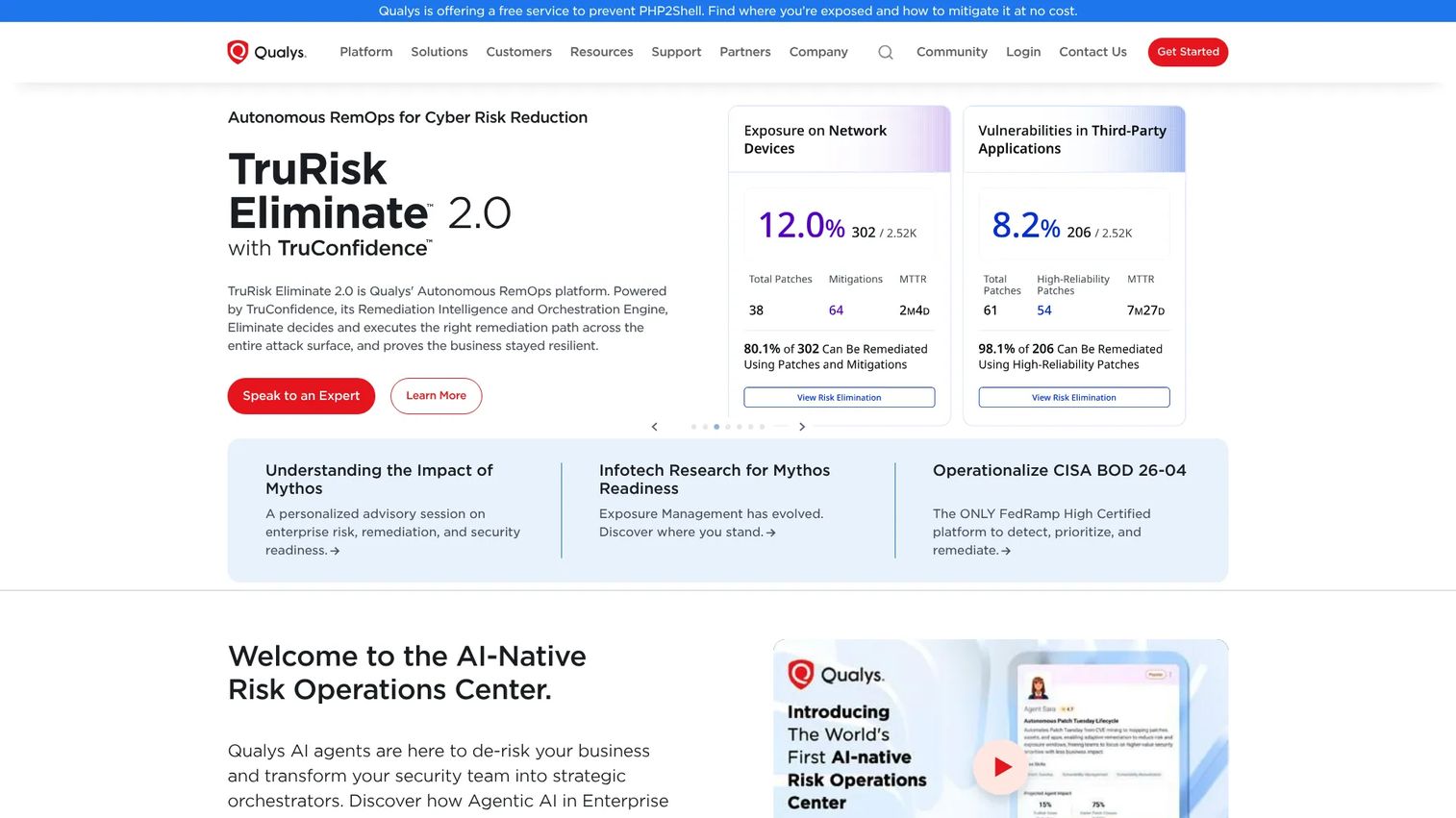
Qualys VMDR (Vulnerability Management, Detection and Response) is a long-standing enterprise vulnerability management platform that handles discovery, detection, prioritization, and response in a single cloud-based program. It applies TruRisk-based scoring that incorporates real-time threat intelligence alongside traditional severity data. Qualys covers on-premises, cloud, container, mobile, OT, and IoT environments with unlimited virtual scanners, cloud agents, and passive sensors. For regulated enterprises that need continuous visibility, operational reporting, and patch workflow integration, Qualys VMDR provides the program-level coverage and audit documentation that compliance teams expect.
Best for: Enterprise teams that want vulnerability discovery, risk-based prioritization, response, and compliance reporting in one program.
Key features
- Continuous asset discovery across on-premises and cloud environments
- TruRisk prioritization using real-time threat intelligence
- CIS benchmark misconfiguration assessment
- Patch detection and remediation workflows with ITSM integrations
- Compliance reporting
Why choose Qualys VMDR: Strong fit when vulnerability management sits close to compliance, audit, and enterprise IT operations. It suits teams that need broad asset coverage and a mature program structure rather than a point solution.
Qualys VMDR pricing: VMDR TruRisk starts at $2,195. VMDR TruRisk FixIT (adds remediation and patch management) starts at $2,995. VMDR TruRisk ProtectIT (adds antivirus and anti-malware) starts at $4,645. A free trial is available.
G2 rating: 4.4/5
5. Rapid7 InsightVM
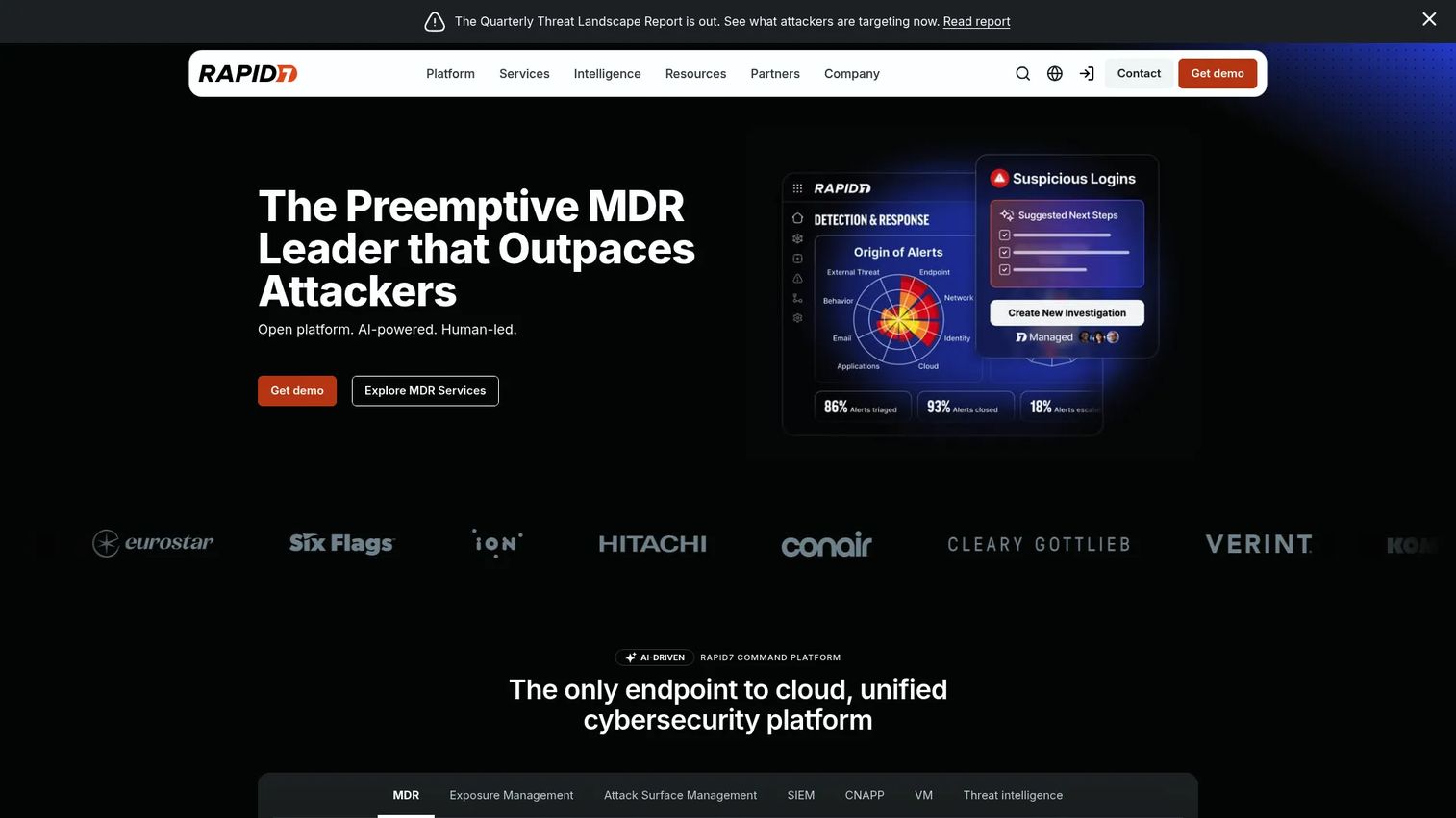
Rapid7 InsightVM is vulnerability risk management software that combines scanning, risk-based prioritization, and remediation project tracking in one platform. It assesses vulnerabilities across cloud, virtual, container, endpoint, and network environments and ranks findings using exploitability, malware exposure, CVSS, and vulnerability age. InsightVM's remediation projects feature lets security teams assign findings to specific owners with due dates, turning a vulnerability list into a tracked workstream. For security teams whose main gap is turning detection into actionable owner-specific work, this remediation project structure is InsightVM's clearest differentiator.
Best for: Teams that need vulnerability prioritization paired with practical remediation tracking across engineering and IT.
Key features
- Risk-based prioritization using exploitability, malware exposure, and CVSS
- Remediation projects with owner assignment and due dates
- Live vulnerability dashboards and customizable reporting
- Cloud, container, endpoint, and network assessment
- Ticketing integrations for Jira and ServiceNow
Why choose Rapid7 InsightVM: Choose InsightVM when your team needs to convert vulnerability findings into owner-specific remediation projects with clear accountability. Its value is strongest when remediation coordination matters as much as detection accuracy.
Rapid7 InsightVM pricing: InsightVM starts at $1.62 per asset per month for 500 assets, billed monthly. Pricing scales with asset count.
G2 rating: 4.4/5
6. Wiz
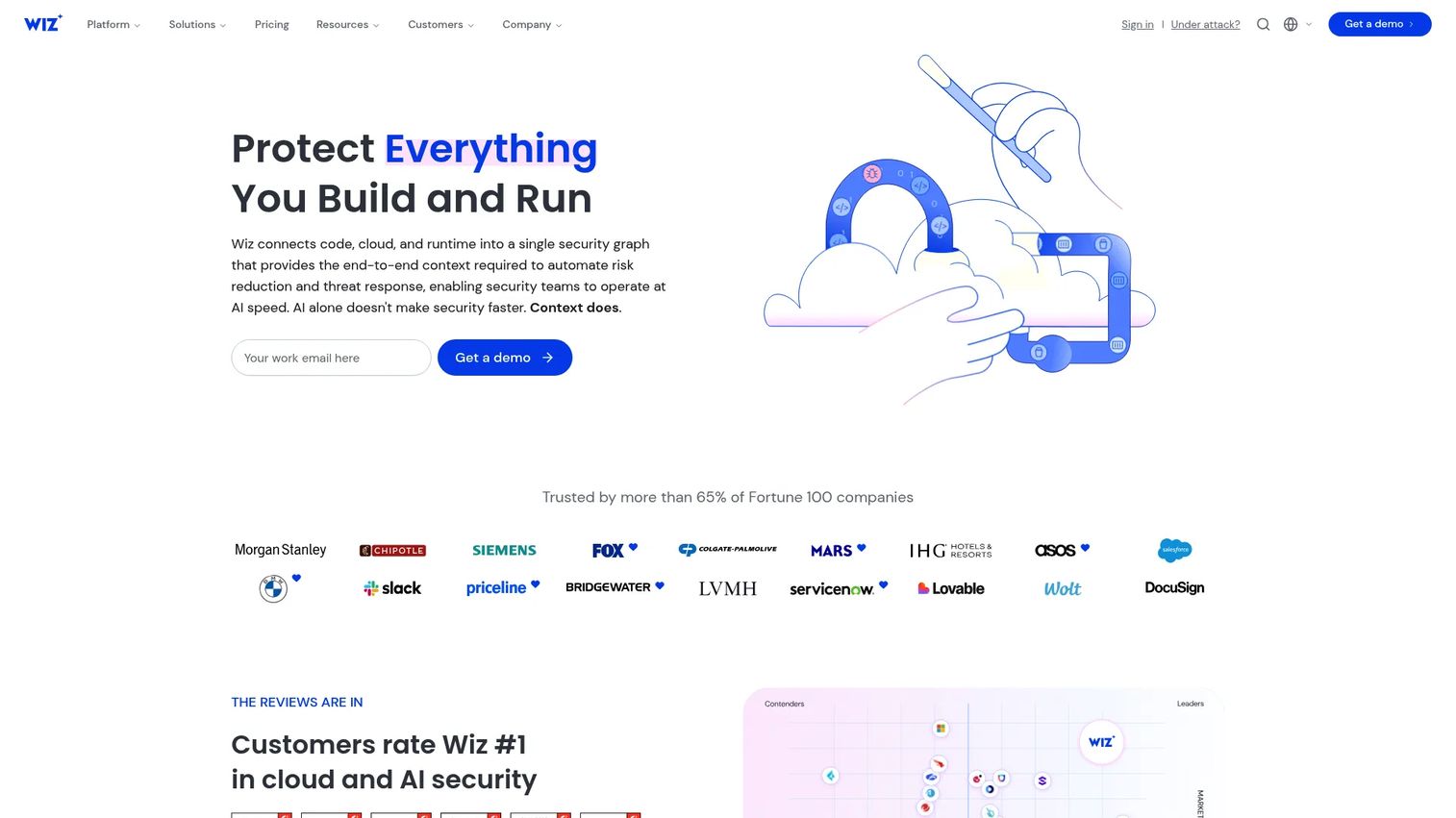
Wiz is a cloud and AI security platform that prioritizes vulnerabilities through the lens of cloud context. Its Security Graph correlates cloud workloads, Kubernetes environments, identities, secrets, data, and application code into a connected risk model. Attack-path analysis identifies which vulnerabilities are reachable from the internet or connected to sensitive assets, so teams can focus remediation effort on issues that matter operationally rather than flooding engineering with every scanner output. Wiz is particularly relevant for cloud-native SaaS teams where infrastructure changes frequently and static vulnerability lists go stale between sprint cycles.
Best for: Cloud-native SaaS companies that need attack-path context for vulnerability prioritization across dynamic infrastructure.
Key features
- Security Graph connecting cloud assets, identities, and vulnerabilities
- Attack-path analysis with reachability and sensitivity context
- Container and Kubernetes vulnerability scanning
- Code-to-cloud correlation and remediation guidance
- Agentless visibility across cloud resources
Why choose Wiz: Wiz is strong when vulnerabilities need cloud context before they become engineering tickets. It helps teams identify which issues are reachable, exposed, or connected to sensitive data - before that context is lost in a Jira queue.
Wiz pricing: Wiz uses modular licensing that scales with cloud workload count, active developers, log ingestion, and sensor coverage. Contact Wiz for a quote specific to your environment.
G2 rating: 4.7/5
7. Microsoft Defender Vulnerability Management
Microsoft Defender Vulnerability Management is the natural RBVM candidate for organizations already standardized on Microsoft security tooling. It provides continuous asset discovery, risk-based prioritization using Microsoft threat intelligence, and assessment coverage across vulnerabilities, software inventory, certificate issues, browser extensions, hardware, and firmware. Remediation workflows connect to Intune, allowing endpoint teams to push fixes without leaving the Microsoft stack. For teams already running Defender for Endpoint, adding vulnerability management through this layer avoids the agent sprawl and data fragmentation that comes with a separate platform.
Best for: Organizations standardized on Microsoft Defender, Entra, and Intune for endpoint security and device management.
Key features
- Risk-based vulnerability prioritization using Microsoft threat intelligence
- Continuous asset discovery and monitoring
- Software inventory and configuration assessments
- Firmware and browser-extension vulnerability coverage
- Intune-linked remediation workflows
Why choose Microsoft Defender Vulnerability Management: Choose it when endpoint risk already flows through Microsoft tooling. It reduces stack sprawl for teams that want vulnerability context close to detection and device management without introducing a separate platform.
Microsoft Defender Vulnerability Management pricing: Available as an add-on to Defender for Endpoint Plan 2 at $2.00 per user per month (annual commitment). A standalone subscription is available; contact Microsoft sales for standalone pricing. A free trial is available.
G2 rating: 4.4/5
8. CrowdStrike Falcon Exposure Management
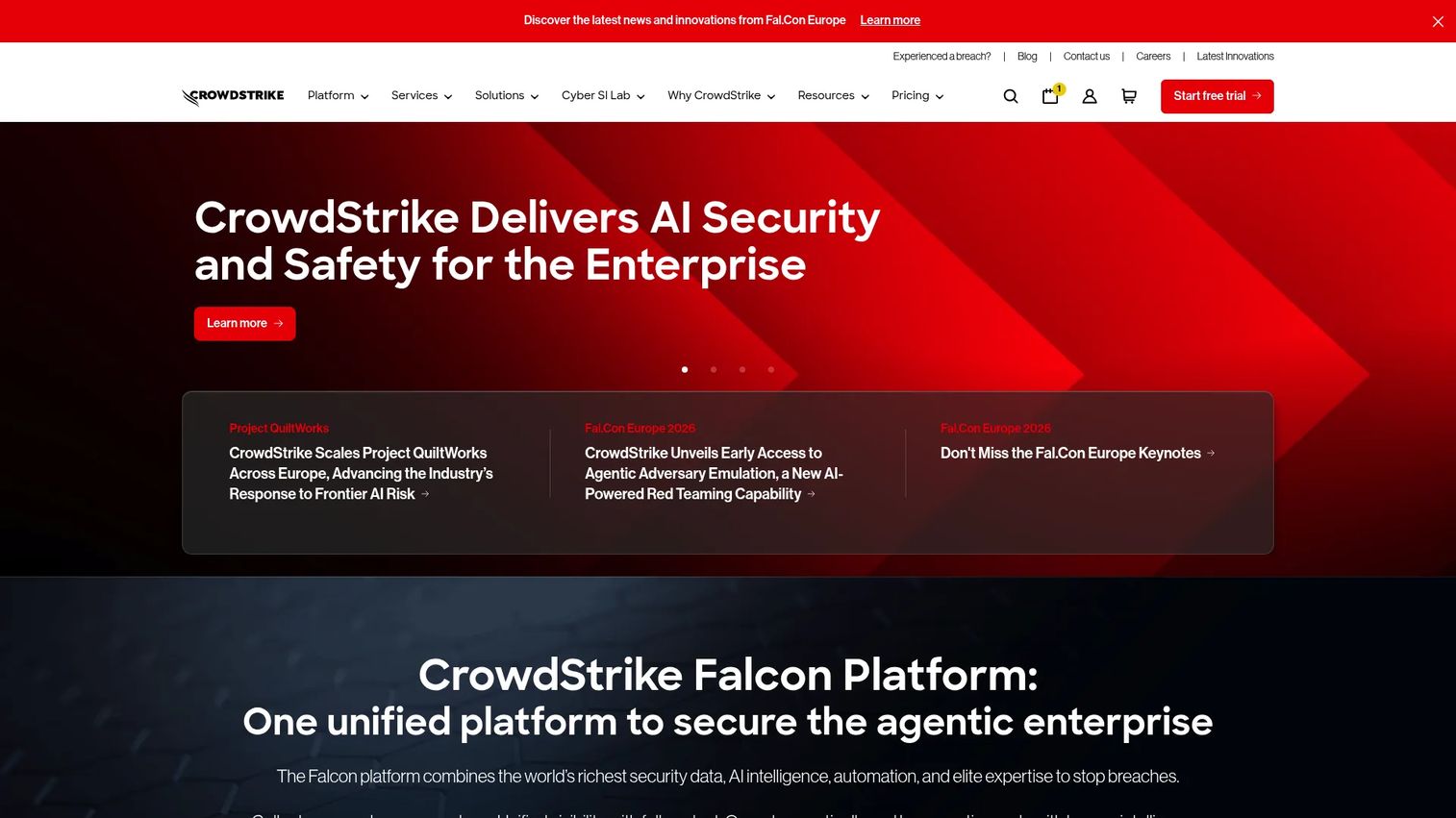
CrowdStrike Falcon Exposure Management delivers real-time exposure prioritization inside the Falcon platform. It covers endpoints, cloud, identities, SaaS, networks, OT/IoT, and external attack surfaces, using adversary-aware ExPRT scoring that incorporates exploitability, threat intelligence, attack-path analysis, and asset criticality. Attack-path analysis specifically identifies which vulnerabilities are reachable and can be chained together, helping teams focus on exposures that represent an actual adversary path rather than theoretical risk. Automated remediation workflows run through Falcon Fusion SOAR, ticketing integrations, and patching capabilities.
Best for: Teams that want adversary-aware exposure prioritization inside an existing Falcon security stack.
Key features
- Adversary-aware ExPRT scoring with exploitability and threat-intelligence inputs
- Attack-path analysis for chained exposure identification
- Continuous visibility across endpoints, cloud, identities, and external assets
- Automated remediation through Falcon Fusion SOAR
- Network Vulnerability Assessment for eligible existing customers
Why choose CrowdStrike Falcon Exposure Management: Choose CrowdStrike when endpoint and exposure data need to stay in the same operational context. It works best for teams already committed to Falcon operations who want exposure management without deploying another agent or platform.
CrowdStrike Falcon Exposure Management pricing: Standalone pricing requires contacting CrowdStrike sales; cost is driven by endpoints, modules, and contract scope. A 15-day free trial is available without a credit card.
G2 rating: 4.5/5
9. Palo Alto Prisma Cloud
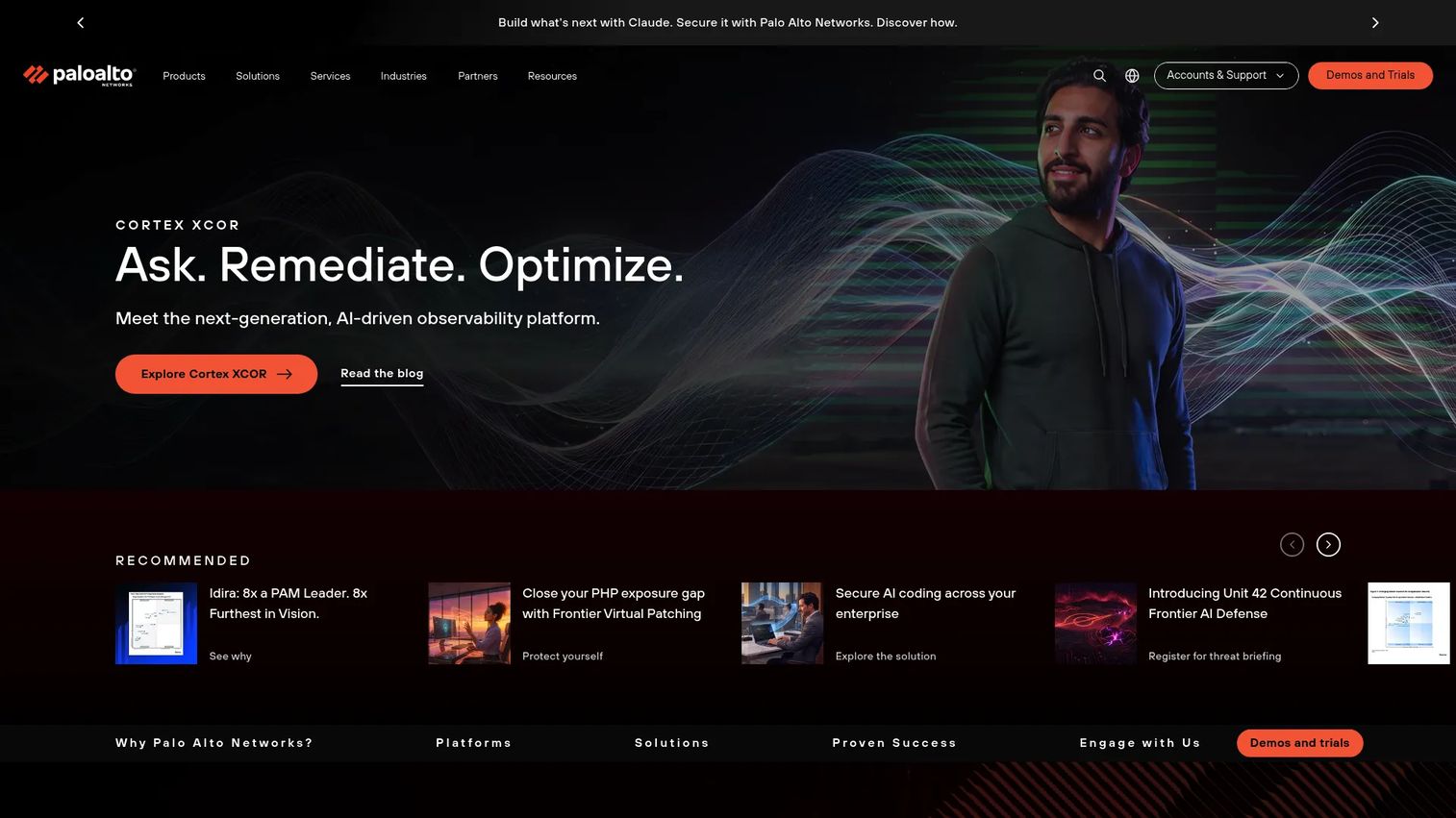
Palo Alto Prisma Cloud is a Cloud Native Application Protection Platform (CNAPP) that includes cloud vulnerability management as part of a broader security program. It covers cloud security posture management, cloud workload protection for hosts, containers, and serverless functions, and code security including IaC scanning, CI/CD security checks, secrets detection, and software composition analysis. For teams managing cloud posture, workload protection, and application security in one program, Prisma Cloud connects vulnerability findings with posture, workload, and deployment context rather than treating them as separate data streams.
Best for: Teams that want vulnerability prioritization inside a broader cloud security program rather than a standalone RBVM tool.
Key features
- Cloud security posture management, compliance, and governance
- Cloud workload protection for hosts, containers, and serverless
- Code security including IaC, CI/CD, secrets detection, and SCA
- Container vulnerability scanning
- Remediation guidance with workflow integrations
Why choose Palo Alto Prisma Cloud: Prisma Cloud fits when vulnerabilities are one part of a larger cloud security investment, not the whole program. It connects findings to posture, workload, and pipeline context for teams where CNAPP coverage matters more than standalone RBVM depth.
Palo Alto Prisma Cloud pricing: Prisma Cloud uses credit-based licensing. Contact Palo Alto Networks for a quote driven by cloud workloads, modules, and account scope. SaaS and self-hosted editions are available.
10. Intruder
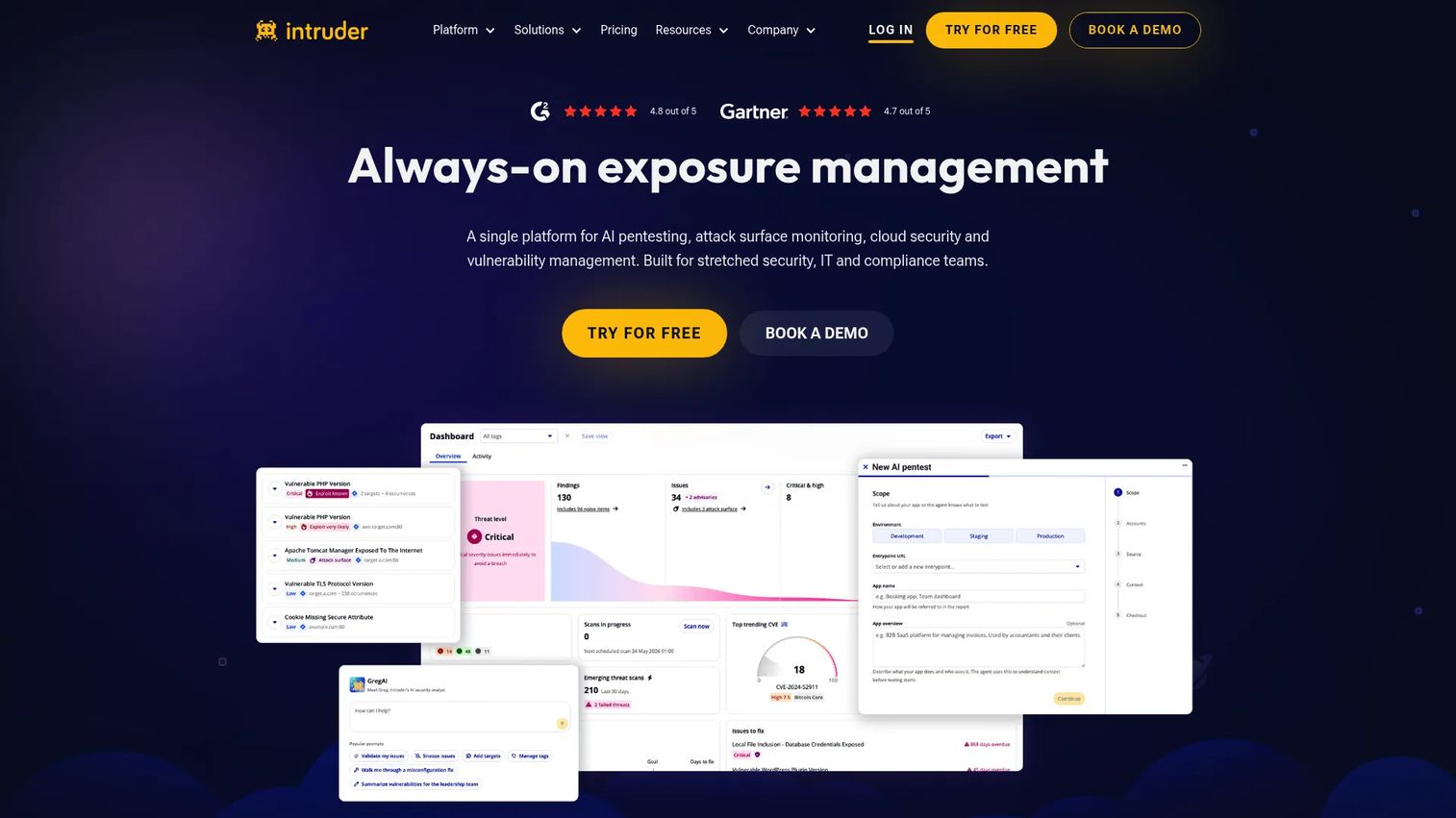
Intruder is a cloud-based vulnerability management platform built for lean security teams that need prioritized scanning without enterprise overhead. It covers external infrastructure, authenticated web applications and APIs, cloud security checks, container images, and internal servers and employee devices. Intruder's Emerging Threat Scans run automatically when new high-severity vulnerabilities are disclosed, so teams with limited bandwidth get timely coverage without manual scheduling. For SaaS PMs at smaller companies where there is no dedicated security operations function, Intruder provides practical scanning and prioritized remediation guidance without requiring a large program infrastructure.
Best for: Lean security teams that need prioritized vulnerability management and attack surface monitoring without enterprise overhead.
Key features
- External infrastructure vulnerability scanning
- Authenticated web application and API security testing
- Cloud security checks and container image scanning
- Internal network and employee device scanning
- Emerging Threat Scans for newly disclosed vulnerabilities
Why choose Intruder: Choose Intruder when the team needs a practical scanning and prioritization workflow without building a full security program. It suits teams that want speed and clear remediation guidance over operational complexity.
Intruder pricing: Intruder offers a free plan covering weekly external scans, one cloud account, two container images, and three users. Cloud and Pro plans add target-based pricing (base fee plus per-target fee, billed monthly or annually). Enterprise pricing is quoted separately.
G2 rating: 4.8/5
11. OpenVAS
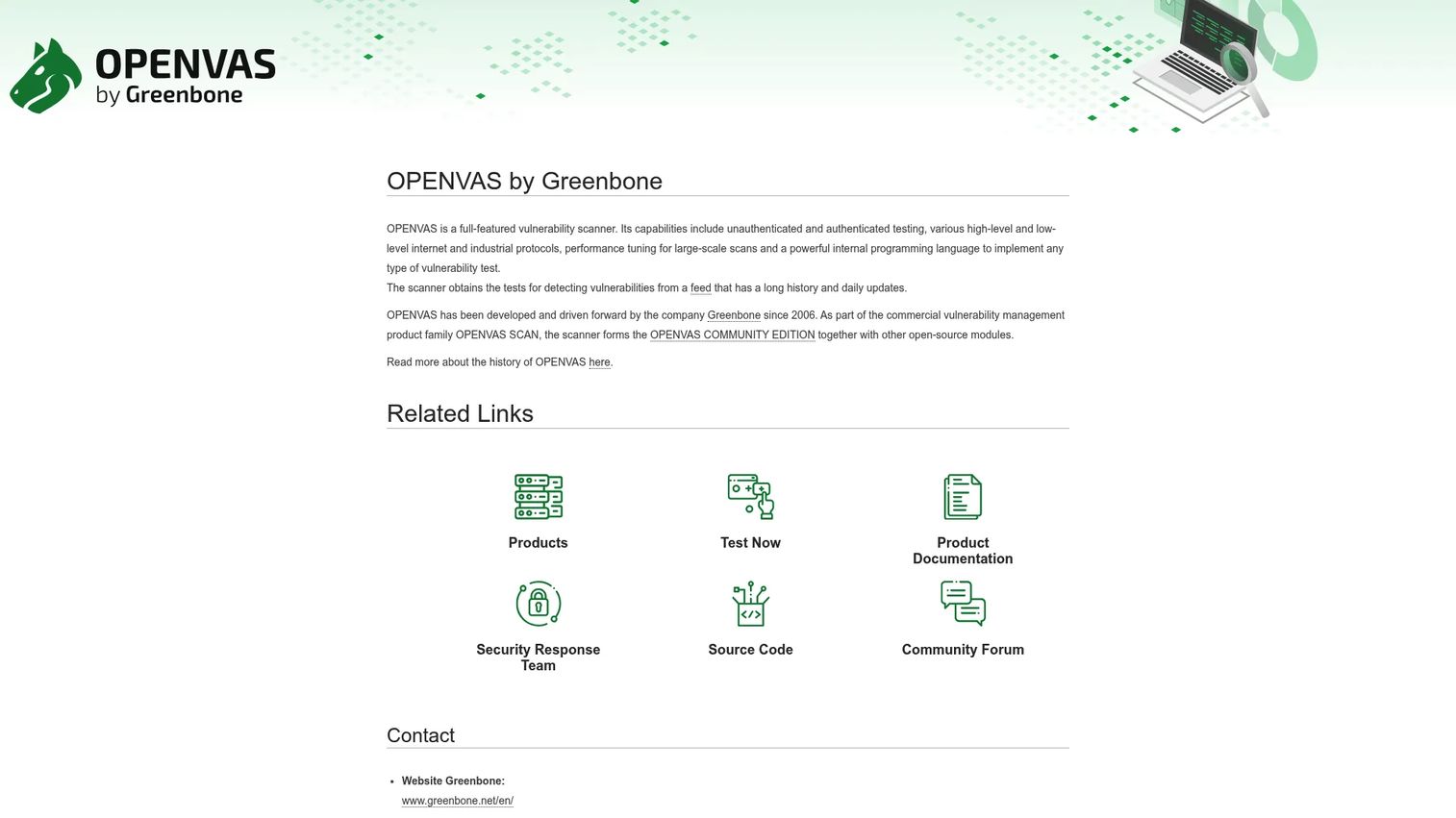
OpenVAS is a full-featured open-source vulnerability scanner maintained by Greenbone. It performs unauthenticated and authenticated testing across a wide range of protocols, with a regularly updated vulnerability test feed. OpenVAS is not a full enterprise RBVM suite - it handles detection and scanning, but risk scoring, ownership assignment, SLA tracking, and executive reporting require additional tooling or manual process around it. For technical teams with internal security engineering capacity, OpenVAS can support a broader RBVM program when paired with orchestration and reporting layers like DefectDojo. See also the broader category of application security software for context on where scanning fits in a full AppSec program.
Best for: Teams that want open-source network scanning and have the internal engineering capacity to build surrounding remediation and reporting workflows.
Key features
- Unauthenticated and authenticated network vulnerability testing
- Support for high-level and industrial protocols
- Performance tuning for large-scale scans
- Regularly updated vulnerability test feed
- Internal scripting language for custom vulnerability tests
Why choose OpenVAS: OpenVAS fits when cost control and customization matter more than packaged RBVM workflows. It requires more internal process to handle prioritization, ownership, and reporting, but it carries no licensing cost for the scanner itself.
OpenVAS pricing: OpenVAS is free and open source. Greenbone offers commercial editions with additional support and management features; contact Greenbone for commercial pricing.
G2 rating: 4.4/5
12. Nuclei
Nuclei is an open-source, template-based vulnerability scanner from ProjectDiscovery. It scans web applications, APIs, networks, DNS, cloud configurations, and infrastructure using community-powered YAML templates. Its template library covers a wide range of detection patterns, and teams can write custom templates for internal workflows, specific CVEs, or proprietary software. Nuclei integrates into CI/CD pipelines, making it useful for security teams that want automated checks during development rather than only post-deployment. It is not a standalone RBVM operating layer, but it functions as a strong detection component inside a custom risk-based workflow. For application security testing software context, Nuclei is worth evaluating alongside dedicated AppSec platforms.
Best for: Security teams, penetration testers, and developers that need fast, template-driven vulnerability detection inside custom workflows.
Key features
- Community-powered YAML templates for multi-protocol scanning
- Custom template creation with validation
- CI/CD integration
- Out-of-band interaction detection through Interactsh
- Scanning across web apps, APIs, networks, DNS, and cloud configurations
Why choose Nuclei: Choose Nuclei when your team needs flexible detection at scale and can connect results to a prioritization and remediation system. It is strongest as a technical detection component, not a full vulnerability management program.
Nuclei pricing: Nuclei is open source and free. ProjectDiscovery's commercial platform (Neo) offers pay-as-you-go plans from $200 per seat per month and an Enterprise tier with custom pricing.
G2 rating: 5.0/5
13. Trivy
Trivy is an open-source all-in-one security scanner from Aqua Security for containers, dependencies, infrastructure as code, Kubernetes clusters, and software supply chains. It detects vulnerabilities, misconfigurations, secrets, and license issues, and can generate software bills of materials (SBOMs). Trivy integrates directly into CI/CD pipelines, so vulnerability visibility can be built into release gates before containers reach production. For PMs managing containerized SaaS release pipelines, Trivy is a practical way to shift vulnerability awareness earlier in the development process. It works best when paired with clear risk policies, exception handling, and a findings management layer for escalated issues. The attack surface management software category covers complementary tools for broader exposure coverage.
Best for: Development and security teams that need open-source vulnerability scanning inside container and CI/CD workflows.
Key features
- Container image vulnerability scanning
- Dependency and software composition analysis
- IaC misconfiguration scanning
- Kubernetes security checks
- Secret scanning and SBOM generation
Why choose Trivy: Trivy is useful when vulnerabilities need to be caught before deployment rather than after. It works best when paired with a findings management layer and clear policies on which issues block a release.
Trivy pricing: Trivy OSS is free and open source. Aqua Security offers a separate commercial product with additional enterprise capabilities; contact Aqua for commercial pricing.
14. DefectDojo
DefectDojo is an application security vulnerability management and orchestration platform. It ingests findings from more than 500 security tools, deduplicates and correlates them, tracks remediation across product engagements, and enriches findings with EPSS scores and CISA KEV data. For AppSec teams running multiple scanners - DAST, SAST, SCA, container scanning, and penetration tests - DefectDojo resolves the findings-chaos problem by providing a central source of truth with owner assignment, Jira integration, SSO, RBAC, and audit trails. It is a findings orchestration layer rather than a scanner, which means it complements tools like Trivy, Nuclei, and OpenVAS rather than replacing them. See also application security testing software for the broader scanning stack it fits into.
Best for: AppSec teams that need to centralize, deduplicate, and track findings from many security testing tools.
Key features
- Import and manage findings from 500+ security tools
- Finding deduplication, correlation, and EPSS/KEV enrichment
- Product engagement tracking with remediation workflows
- Jira integration and REST API
- SSO, RBAC, dashboards, and AppSec reporting
Why choose DefectDojo: Choose DefectDojo when the core problem is findings sprawl across AppSec tools. It helps teams reduce duplicate noise, track ownership across products and services, and produce audit-ready remediation records.
DefectDojo pricing: Community Edition is free and open source. Pro Pay As You Go starts at $100 per month plus $0.15 per finding processed, with no annual commitment. Pro Pre-Pay plans start from low four figures per month (billed annually; quote required).
G2 rating: 4.6/5
15. Cymulate Exposure Analytics
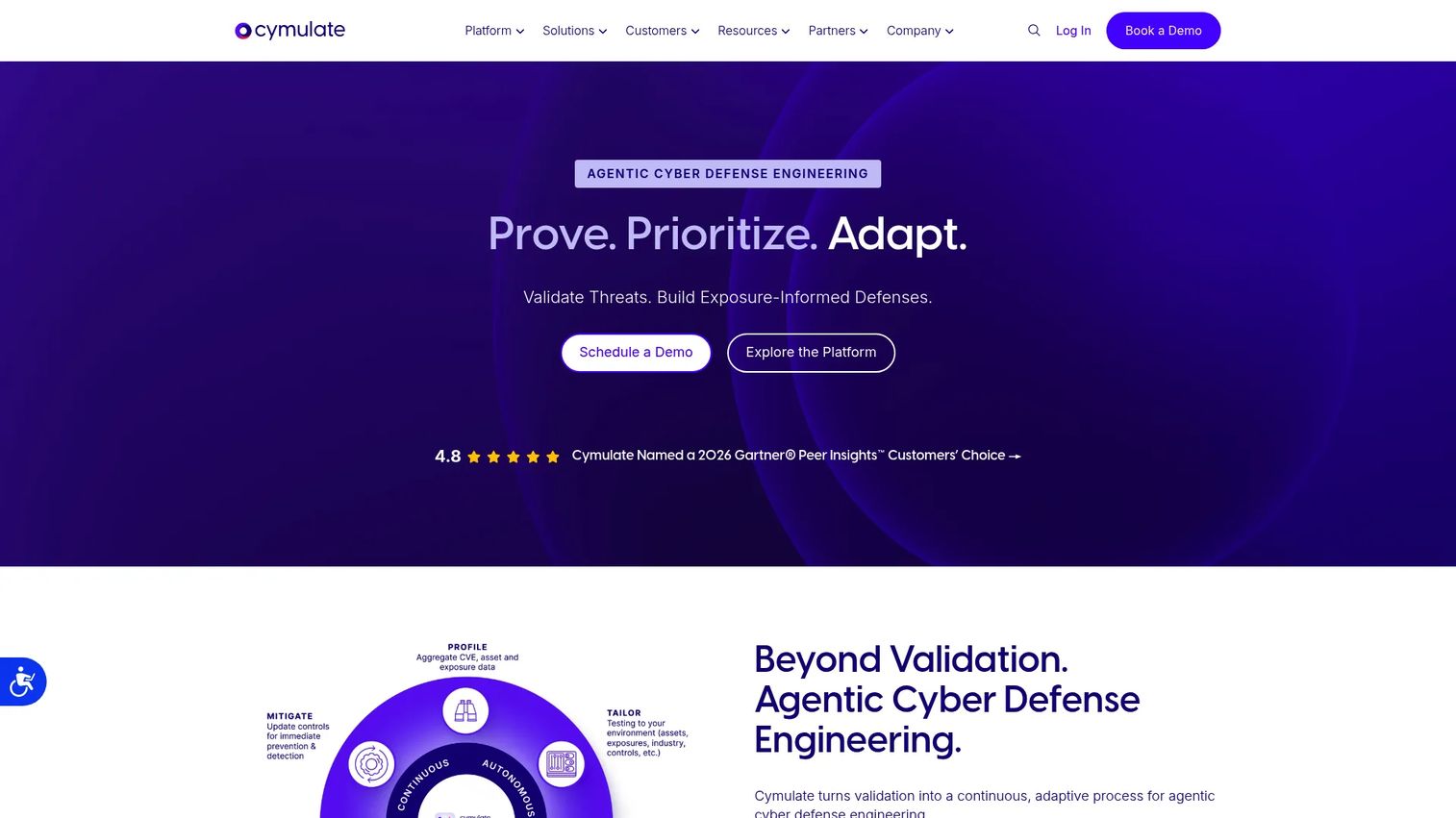
Cymulate Exposure Analytics aggregates security data from across your environment, correlates it with business context, and prioritizes remediation based on risk and cyber resilience rather than raw scanner output. It offers risk-based asset inventory and security-posture views, exposure correlation and de-duplication, and business-context analysis for remediation planning. What distinguishes Cymulate is its connection to breach and attack simulation: Rather than only ranking vulnerabilities by predicted exploitability, it validates whether exposures are actually exploitable in your specific environment and whether remediation efforts have reduced the real attack surface. For security teams that want proof that fixes worked, not just proof that tickets closed, this validation layer is Cymulate's core value.
Best for: Teams that want continuous validation of exposure and need to prove that remediation reduced exploitable attack surface, not just scanner findings.
Key features
- Contextualized vulnerability management with business-risk scoring
- Risk-based asset inventory and security-posture views
- Exposure correlation, normalization, and de-duplication
- Breach and attack simulation-linked validation workflows
- Risk baselining and cyber-resilience performance tracking
Why choose Cymulate Exposure Analytics: Choose Cymulate when risk prioritization needs proof from validation activity, not just predictive scoring. It suits teams presenting risk reduction evidence to auditors, executive leadership, or enterprise customers in security questionnaires.
Cymulate Exposure Analytics pricing: Cymulate uses subscription-based pricing tailored to package, asset count, and selected scenarios. Contact Cymulate for a quote. Two product configurations are available: CVM and Enterprise.
G2 rating: 4.9/5
Considerations when choosing risk-based vulnerability management software
Risk scoring model transparency
Understand what inputs a tool uses and how it weights them. A useful RBVM score should combine vulnerability severity with exploitability, active exploitation status (such as CISA KEV), asset criticality, and business impact. Black-box scoring that security teams cannot explain to engineering or executives creates credibility problems when prioritization decisions need to be defended.
Asset and environment coverage
Map the tool against your actual environment before evaluating it. Endpoint-heavy organizations need different coverage than cloud-native SaaS companies running containerized workloads. AppSec-focused teams building microservices have different requirements than enterprise IT teams managing Windows estates. Coverage gaps create false confidence in remediation status.
Remediation ownership and SLA support
Prioritization is only useful if the work reaches the right owner with enough context to act. Look for ticketing integrations with Jira and ServiceNow, SLA due dates, exception-handling workflows, and verification or retesting capabilities. Without these, risk-ranked findings often stall in inboxes rather than engineering queues.
Integration with existing workflows
Evaluate how the tool fits into your current security data lake, SIEM, patch management system, and CI/CD pipeline. The goal is to put risk-ranked work where engineers already work, not to create another dashboard that requires a separate login and manual triage.
Reporting for executives and auditors
RBVM reporting should answer two questions leadership and enterprise customers consistently ask: Is exposure going down, and by how much? Look for trend reporting, residual risk documentation, SLA performance tracking, and audit-ready evidence exports. Tools that only report vulnerability counts do not satisfy this need.
Conclusion
Risk-based vulnerability management (RBVM) is an operating model, not just a scanner purchase. The 15 tools in this guide cover the full range from enterprise platforms with built-in remediation workflows to open-source scanners that require surrounding process.
For the clearest starting points: Ivanti Neurons for RBVM suits enterprises that need risk scoring tied directly to patch and ITSM operations. Orca Security and Wiz serve cloud-native teams where attack-path context determines prioritization. Tenable One, Qualys VMDR, and Rapid7 InsightVM support broad enterprise vulnerability programs with mature reporting. Microsoft Defender Vulnerability Management fits organizations standardized on the Microsoft security stack. OpenVAS, Nuclei, Trivy, and DefectDojo give technically capable teams open-source building blocks for custom or AppSec-heavy workflows. Cymulate Exposure Analytics rounds out the list for teams that need validation evidence, not just predicted risk scores.
The practical next step is to shortlist three tools based on your environment, then run a proof of concept on one business-critical service. Measure asset coverage, false-positive rate, prioritization quality, ticket clarity for engineering owners, SLA support, and verified risk reduction. For PM and platform leaders, the most important criterion is whether the tool produces work that engineering can act on without derailing the roadmap.
FAQs
Risk-based vulnerability management software helps security teams discover vulnerabilities, enrich them with threat and business context, prioritize remediation by likely business impact, route fixes to the right owners, and verify that exposure decreases over time. Unlike traditional vulnerability management programs that rank findings primarily by severity scores, RBVM incorporates exploitability, active exploitation, asset criticality, and internet exposure to produce a more actionable prioritization. The result is a remediation queue ranked by actual business risk rather than theoretical severity.
Traditional vulnerability management programs typically rank findings by CVSS severity and report on vulnerability counts. RBVM adds context layers including asset criticality, exploit availability, threat intelligence feeds like CISA KEV, attack paths, and business impact to produce a prioritized remediation order. The practical difference is that RBVM reduces the volume of "critical" findings engineering must address each cycle, because it separates theoretically severe issues from vulnerabilities that are actively exploitable on systems that matter to the business.
CVSS measures the technical severity of a vulnerability in isolation, without accounting for whether an exploit exists, whether the affected asset is internet-exposed, or whether the system hosts sensitive customer data. A CVSS 9.8 vulnerability on an isolated internal test environment may matter far less than a CVSS 6.5 issue on an exposed payment processing service. CISA KEV, EPSS scores from FIRST, and asset-criticality data help close this gap by anchoring prioritization to real-world exploitability and business context.
Core capabilities include asset discovery and inventory, vulnerability detection and enrichment, risk scoring beyond CVSS, threat intelligence integration (CISA KEV, EPSS, and active exploitation data), attack-path and exposure context, remediation ownership assignment, ticketing integrations, SLA tracking with exception handling, verification and retesting, and executive-ready reporting. The completeness of remediation workflow support is often what separates a useful RBVM platform from a scanner with a risk score attached.
Cloud-first teams should evaluate platforms purpose-built for cloud asset coverage. Orca Security provides agentless visibility across cloud workloads, identities, data, and attack paths across AWS, Azure, and Google Cloud. Wiz uses a Security Graph to correlate cloud assets, Kubernetes environments, identities, and application code for attack-path-aware prioritization. Palo Alto Prisma Cloud connects vulnerability findings with CNAPP workflows for teams managing cloud posture, workload protection, and application security in one program.
Microsoft Defender Vulnerability Management is the natural starting point for organizations running Defender for Endpoint across Windows estates. It provides device vulnerability assessment, software inventory, configuration findings, and remediation workflows connected to Intune, without introducing additional agents. It is available as an add-on to Defender for Endpoint Plan 2 at $2.00 per user per month, or as a standalone subscription through Microsoft sales.
Open-source tools can support scanning and findings management, but they typically require significant additional engineering to cover risk scoring, ownership routing, SLA tracking, executive reporting, and remediation validation. OpenVAS handles network scanning. Nuclei handles template-based detection. Trivy handles container and dependency scanning. DefectDojo aggregates and deduplicates findings from many tools. Together, they can form a capable stack for teams with internal engineering capacity, but they do not provide the operational completeness of a dedicated enterprise RBVM platform out of the box.
Run the proof of concept against one business-critical service or service boundary rather than your full environment. Measure asset discovery accuracy, false-positive rate, prioritization quality against known high-risk issues, ticket clarity for engineering owners, SLA workflow usability, and verified risk reduction after remediation. For PM and platform leaders, the most PM-relevant criterion is whether the tool's output becomes actionable work that can be assigned, tracked, and closed without derailing the sprint or requiring a security expert to translate every finding.