You can move budget from paid social into retail media and still not know what worked. Every platform claims closed-loop measurement. Every retailer has its own data, attribution window, and reporting logic. The result is familiar: Strong ROAS in a portal, then a finance meeting where nobody agrees what it means.
Retail media advertising is growing fast enough that ignoring the channel is no longer an option. Global retail media spending reached $184 billion in 2025 and is forecast to reach $312 billion by 2030, according to Forrester (2025). U.S. spending alone is expected to grow 20% in 2025, compared to 4.3% for the total ad market, per Nielsen (2025). The category is expanding because retailers hold something search and social cannot match: Verified purchase data tied to real transactions.
But platform fragmentation is the real problem. Each retailer network runs its own auctions, formats, attribution definitions, and minimum spend requirements. Picking the wrong platform means adding a reporting portal nobody reconciles and budget that cannot be measured against anything.
This guide cuts through that. It covers 15 retail media advertising platforms across marketplace, big-box, grocery, pharmacy, home improvement, delivery, and technology layers, ranked to help you spend in the right place.
What's inside
This guide is for growth marketers, media buyers, and demand gen teams evaluating retail media advertising platforms for 2026. Platforms were selected based on:
- Retailer reach: Scale, shopper audience, and category relevance
- Ad format coverage: Sponsored products, onsite display, offsite, video, CTV, in-store
- Targeting and data quality: First-party shopper data, loyalty audiences, purchase signals
- Measurement depth: Closed-loop attribution, incrementality, new-to-brand reporting, API access
The guide includes both retailer-owned networks and third-party technology platforms that activate or optimize retail media campaigns across multiple retailers. Pricing and G2 ratings reflect verified sources.
TL;DR
- Best overall marketplace reach: Amazon Ads fits brands that need sponsored products, DSP, streaming TV, and commerce measurement inside one retail environment
- Best big-box retail reach: Walmart Connect and Target Roundel are strong picks for CPG, household, home, and general merchandise advertisers
- Best grocery retail media: Instacart Ads, Kroger Precision Marketing, and Albertsons Media Collective fit brands that need basket-level and loyalty-driven purchase signals
- Best retail media technology layer: Criteo Retail Media, CitrusAd, Pacvue Platform, and Moloco Retail Media Platform fit teams managing campaigns across multiple retailers
- Best local commerce and delivery media: DoorDash Ads and Uber Advertising fit restaurants, CPG, grocery, and quick-commerce campaigns tied to ordering intent
What is retail media advertising platform software?
Retail media advertising platform software helps brands buy, manage, target, measure, and optimize ads using retailer-owned audiences, shopping data, and commerce inventory.
Three terms often appear together but mean different things:
A retail media network is the retailer's advertising business. It includes the marketplace, app, website, loyalty program, store footprint, and any connected media inventory the retailer controls. Amazon's ad business and Kroger Precision Marketing are both retail media networks.
A retail media advertising platform is the software layer used to plan, buy, run, and report on retail media campaigns. It can be the retailer's own self-serve tool or a third-party platform that connects to multiple retailer networks.
A commerce media platform is broader. It extends beyond retailers to include marketplaces, publishers, delivery apps, travel companies, and any business built on transaction data.
Key capabilities to look for:
- Sponsored products and search ads
- Onsite display and category placements
- Offsite audience extension across display, video, and social
- Retailer first-party data targeting (loyalty, purchase history, basket data)
- In-app, in-store, video, and CTV inventory
- Closed-loop sales attribution
- Incrementality and holdout testing
- Budget pacing and bid optimization
- Retail media reporting APIs
- Creative and product feed management
The defining feature is the data underneath. Retail media works because purchase history is a stronger buying signal than search intent alone. A shopper who bought baby formula three months ago is a confirmed buyer, not just a browser.
When to use retail media advertising platforms
Reach shoppers close to the transaction
Retail media performs best when buyers are already browsing a product category. Sponsored products, search ads, and onsite placements appear during active shopping, so they capture demand rather than create it. If your category has a high replenishment rate or strong brand switching behavior, onsite retail media is worth prioritizing ahead of awareness channels.
Extend retailer audiences offsite
Many retail media networks let brands activate their shopper audiences beyond the retailer's own site. Platforms can serve display, video, CTV, and social ads using first-party purchase data. This matters when your buyer completes research offsite before returning to buy. Privacy-safe audience activation means you can reach confirmed buyers without relying on third-party cookies.
Prove sales impact beyond clicks
Closed-loop reporting is retail media's clearest advantage over other paid channels. Because the retailer owns the transaction, it can match ad exposure to purchase. Attribution windows differ by platform, so ROAS figures from one retailer portal cannot be directly compared to another. Teams that add incrementality testing get the cleaner answer: How many of those sales would have happened anyway?
Retail media advertising platform comparison
The table below covers all 15 platforms in the order they appear in the guide. Pricing reflects verified information from each vendor's official site. Where no price is available, the table notes the buying model. G2 ratings are verified from each tool's current G2 listing.
| # | Product | Best for | Key differentiator | Pricing | G2 rating |
|---|---|---|---|---|---|
| 1 | Amazon Ads | Marketplace and full-funnel commerce media | Sponsored ads, DSP, streaming TV, and commerce measurement | Starts at $10 (sponsored ads); other formats vary | 4.3/5 |
| 2 | Walmart Connect | Big-box retail and omnichannel shopper reach | Walmart purchase data across stores, app, site, offsite | Custom pricing | N/A |
| 3 | Target Roundel | CPG, retail, household, and lifestyle advertisers | Target guest data with onsite and offsite inventory | Custom pricing | N/A |
| 4 | Instacart Ads | Grocery and CPG shopper activation | Cart, category, and delivery app purchase intent | Custom pricing | N/A |
| 5 | Kroger Precision Marketing | Grocery brands needing loyalty-based data | 62M+ verified household purchase signals via 84.51° | Custom pricing | N/A |
| 6 | Criteo Retail Media | Multi-retailer retail media activation | Retail media technology across retailers and brands | Custom pricing | 4.0/5 |
| 7 | CitrusAd | Sponsored products and retailer monetization | Retailer-side ad serving and marketplace monetization | Custom pricing | N/A |
| 8 | Pacvue Platform | Retail media campaign optimization | Commerce management across 100+ retailers | Custom pricing | 4.5/5 |
| 9 | Home Depot Retail Media+ | Home improvement and professional buyer reach | Home improvement purchase data with omnichannel formats | Custom pricing | N/A |
| 10 | CVS Media Exchange | Pharmacy, health, wellness, and CPG media | ExtraCare loyalty data with closed-loop measurement | Custom pricing | N/A |
| 11 | Albertsons Media Collective | Grocery, CPG, and regional shopper reach | Grocery loyalty data with incrementality measurement | Custom pricing | N/A |
| 12 | Walgreens Advertising Group | Health, wellness, beauty, and pharmacy advertisers | myWalgreens purchase data across onsite and offsite channels | Custom pricing | N/A |
| 13 | DoorDash Ads | Restaurants, CPG, grocery, and convenience brands | Delivery marketplace intent and local commerce audiences | Custom pricing | N/A |
| 14 | Uber Advertising | Mobility, delivery, and local commerce media | Ride, Eats, and journey-based consumer touchpoints | Custom pricing (platform access free) | N/A |
| 15 | Moloco Retail Media Platform | AI-driven retail media monetization | Machine learning optimization for marketplaces and retailers | Custom pricing | 4.1/5 |
Best 15 retail media advertising platforms for 2026
1. Amazon Ads
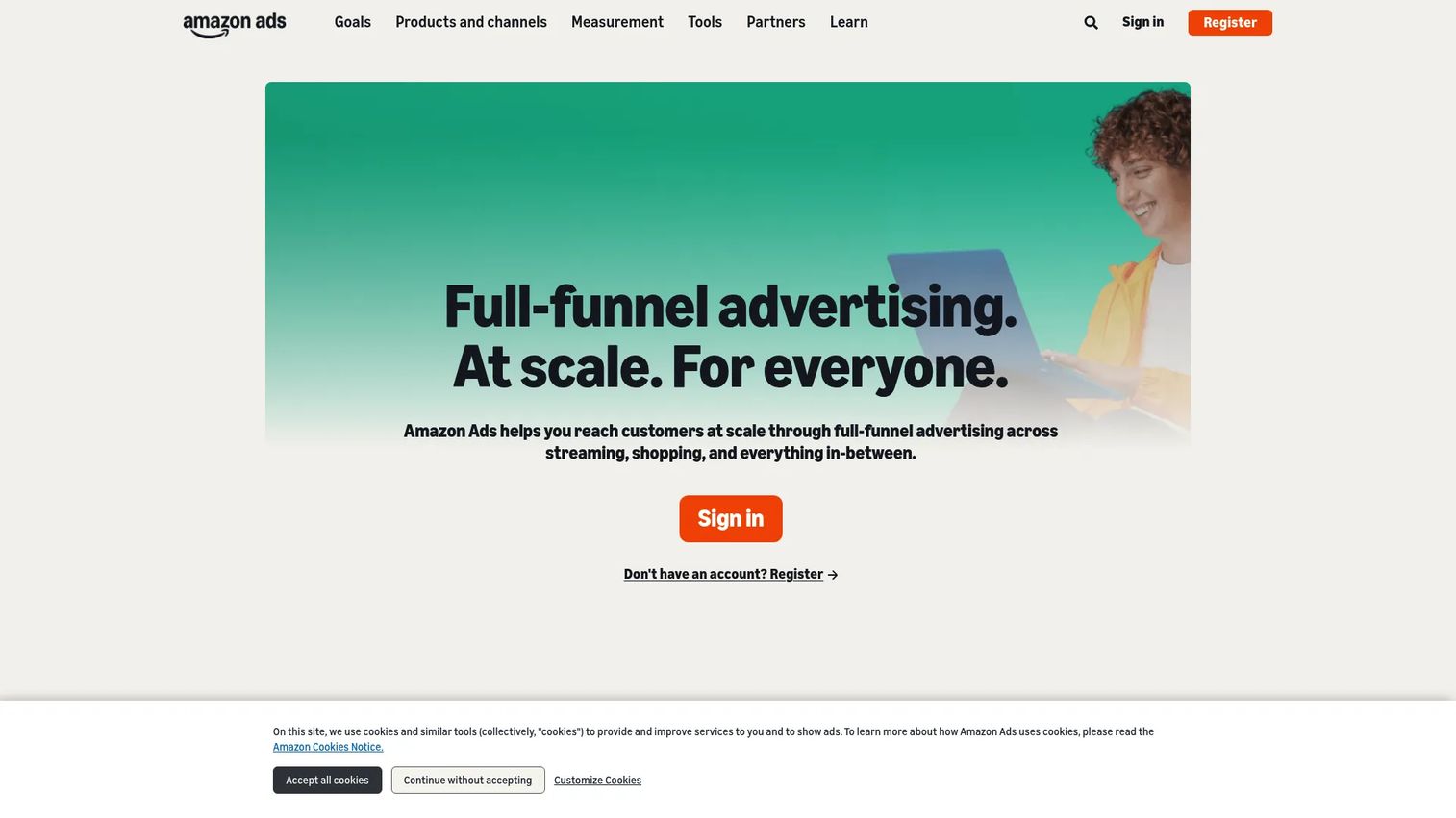
Amazon Ads is the broadest retail media environment available, covering marketplace sellers, endemic brands, and non-endemic advertisers across the full purchase funnel. The platform spans sponsored products, sponsored brands, sponsored display, Amazon DSP, streaming TV, audio, and Amazon Marketing Cloud for custom audience and attribution analysis. Any brand that sells on Amazon or wants access to Amazon's shopper data at scale will find the platform difficult to bypass.
Best for: Brands that sell on Amazon or need large-scale marketplace search, display, DSP, and streaming retail media in one environment.
Key features
- Sponsored products, brands, and display ads
- Amazon DSP for programmatic audience buying
- Streaming TV and audio inventory
- Amazon Marketing Cloud for custom analytics
- Closed-loop sales attribution and reporting
Why choose Amazon Ads: The sheer reach of the marketplace makes it the default starting point for most retail media strategies. It is especially useful when Amazon sales and Amazon media performance are already central to revenue reporting.
Amazon Ads pricing: Sponsored ads have no minimum spend and can start at $10. Advertisers set their own budgets and bids. DSP and managed-service programs involve separate spend thresholds negotiated with Amazon.
G2 rating: 4.3/5 (Amazon Sponsored Ads on G2)
2. Walmart Connect
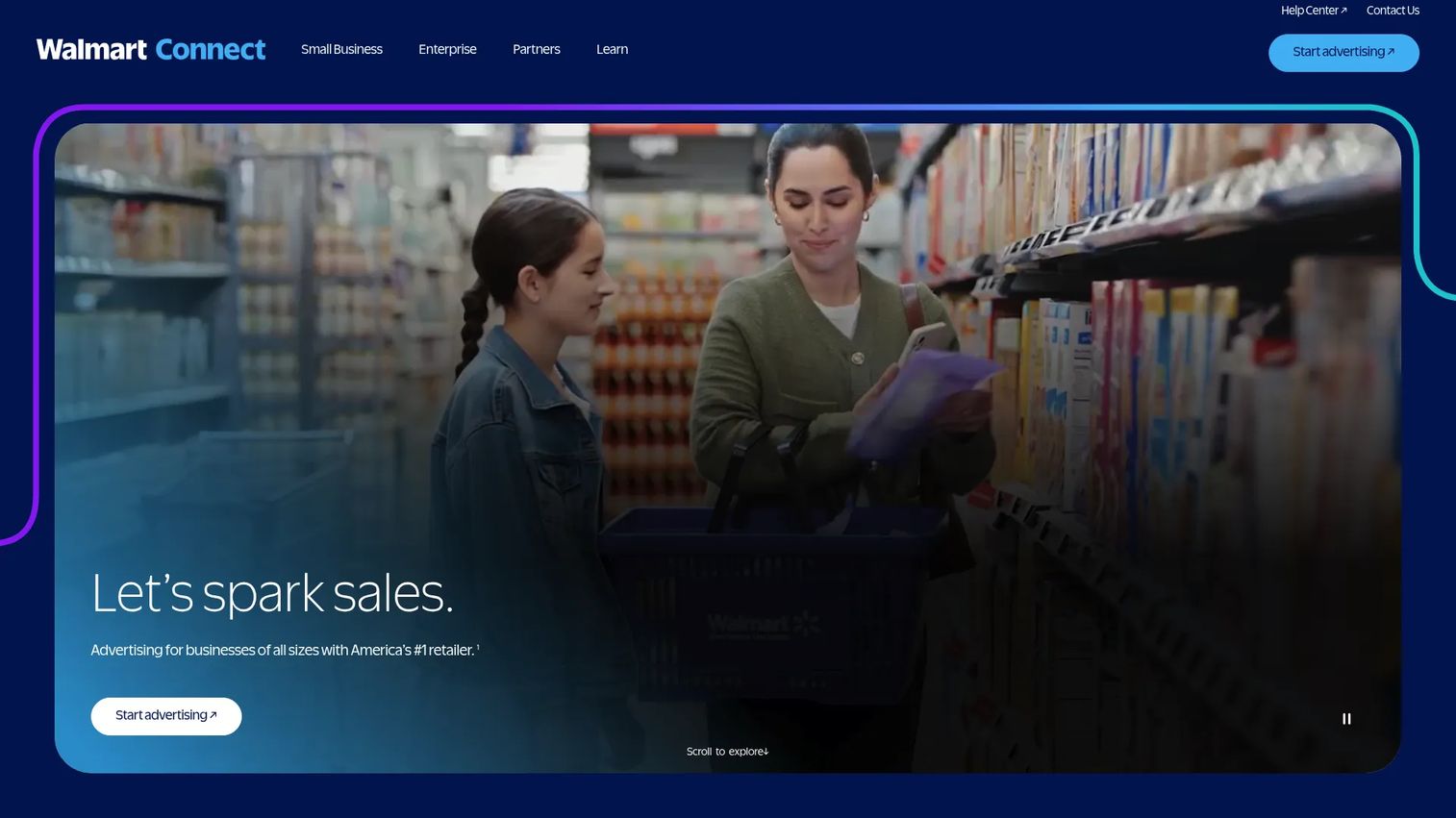
Walmart Connect is Walmart's retail media network, built on first-party purchase data from Walmart stores, the Walmart app, Walmart.com, and offsite digital channels. The platform covers sponsored search, onsite display, offsite media, in-store advertising, and omnichannel measurement. For brands where Walmart is a major retail account, the platform offers a direct line to Walmart shoppers at the point of browsing and buying.
Best for: CPG, grocery, home, electronics, and general merchandise brands with active Walmart distribution.
Key features
- Sponsored search across Walmart browse and category pages
- Onsite display on Walmart digital properties
- Walmart DSP for offsite audience extension
- In-store media options
- Closed-loop sales measurement across channels
Why choose Walmart Connect: Choose it when Walmart is a meaningful sales channel and your team needs ads tied to Walmart shopper behavior. Retail media, merchandising, and shopper marketing teams that coordinate budgets here typically see stronger closed-loop results than those running isolated campaigns.
Walmart Connect pricing: Sponsored search runs on auction-based models, while larger media programs use custom commitments negotiated through Walmart Connect's sales team.
3. Target Roundel
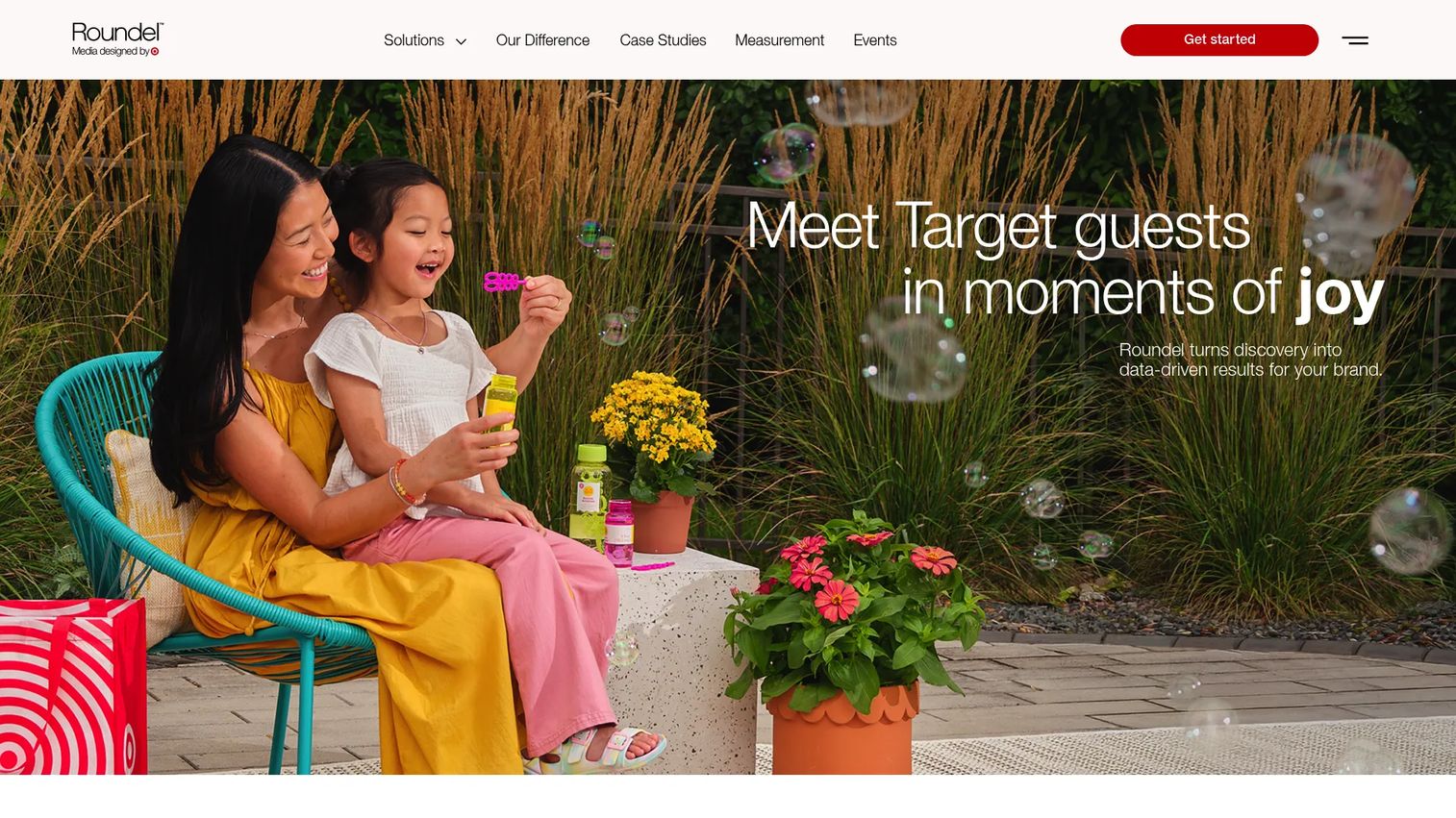
Target Roundel is Target's retail media network, connecting brands with Target guests through onsite and offsite inventory. The platform uses Target's first-party shopper data to power audience targeting across Target.com, the Target app, search, display, CTV, social, in-store, and digital out-of-home channels. It offers closed-loop measurement tied to actual sales and ROAS.
Best for: Brands targeting Target shoppers in CPG, household, apparel, beauty, electronics, and lifestyle categories.
Key features
- Target Product Ads on Target.com and the Target app
- Search, display, CTV, and social advertising
- In-store and digital out-of-home placements
- First-party audience targeting
- Closed-loop ROAS measurement
Why choose Target Roundel: It fits marketers who need premium retail audiences and brand-safe inventory tied to Target's shopper behavior. It delivers most when Target is already a meaningful retail account and when campaign and merchandising teams can align budgets.
Target Roundel pricing: Media packages and service fees vary by partner and campaign type. Contact Roundel's sales team for current rates.
4. Instacart Ads
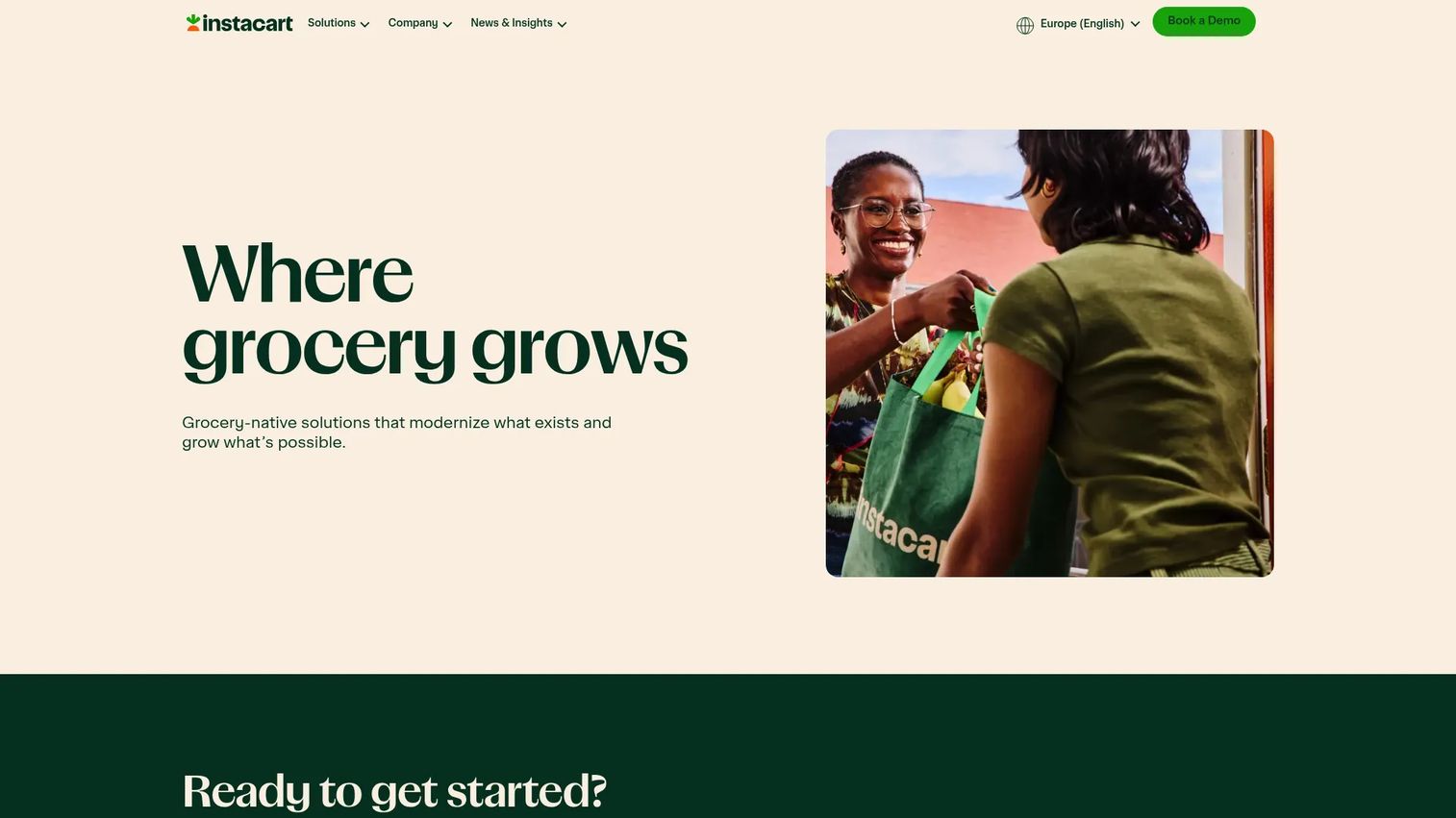
Instacart Ads is Instacart's enterprise retail media product for retailers and commerce platforms. It combines AI-powered ad ranking and optimization with omnichannel personalization across e-commerce and in-store surfaces, including Caper smart carts. For CPG and grocery brands, Instacart provides access to basket-building moments inside a delivery marketplace where shoppers are actively adding items to an order.
Best for: CPG and grocery brands that want to influence purchase decisions during active basket-building in a delivery marketplace.
Key features
- Sponsored product listings in search and category results
- E-commerce display placements
- In-store ads on Caper smart carts
- AI-powered ranking and campaign optimization
- Omnichannel personalization across surfaces
Why choose Instacart Ads: It is useful when your category depends on repeat grocery purchases and basket adjacency. Growth marketers should focus on incrementality, new-to-brand buyer metrics, and category share shifts when evaluating performance, rather than reported ROAS alone.
Instacart Ads pricing: Sponsored product campaigns run on auction-based models, while managed programs use custom budgets. Contact Instacart's advertising team for rates.
5. Kroger Precision Marketing
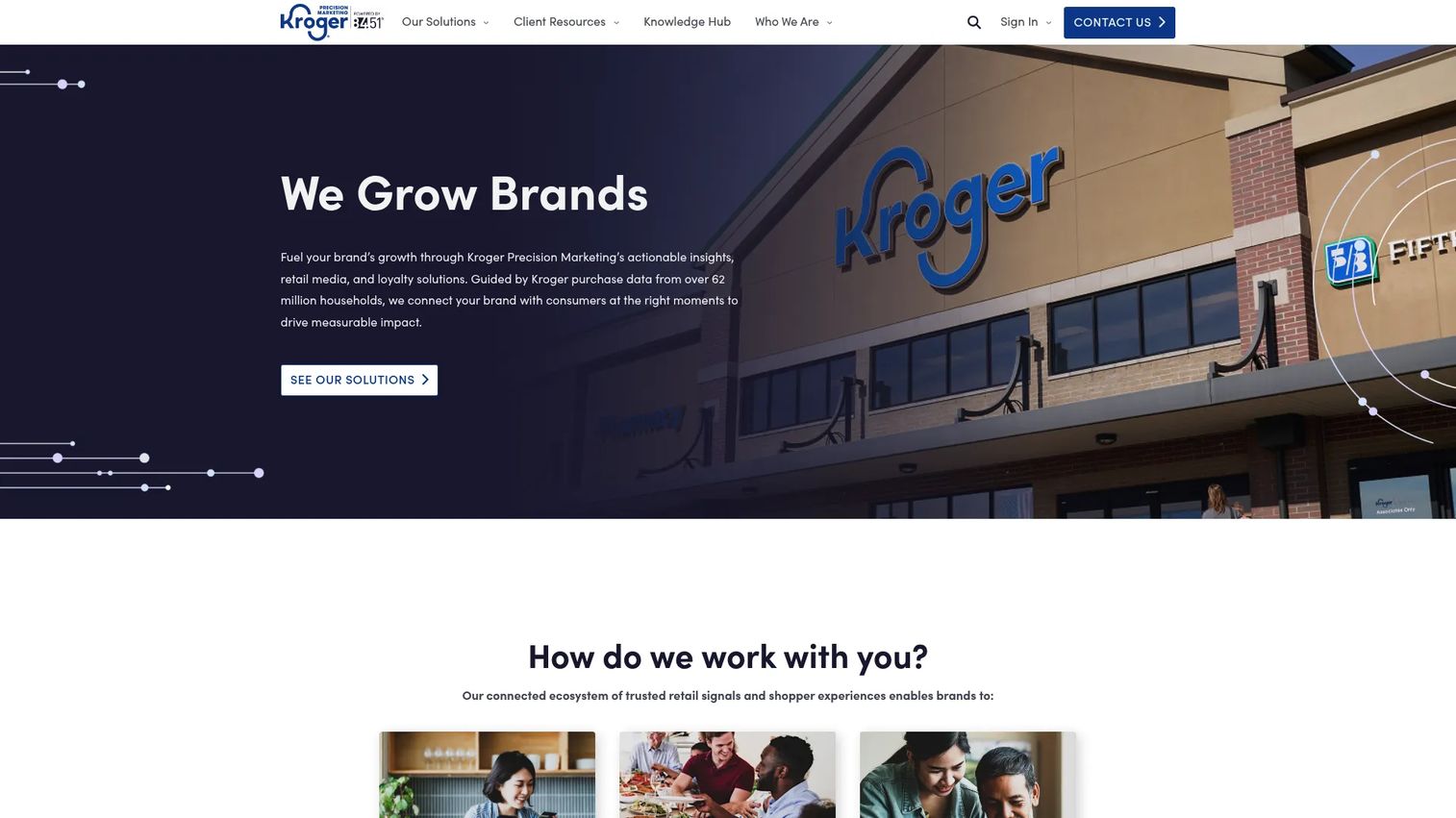
Kroger Precision Marketing is Kroger's retail media business, powered by purchase insights from more than 62 million verified households through 84.51°, Kroger's data science subsidiary. The platform supports onsite search and display advertising, offsite activation across social, CTV, online video, display, and audio, plus a self-service Kroger Ad Platform for campaign management, audience selection, and real-time optimization.
Best for: Grocery, CPG, household, health, and wellness brands that need purchase-based shopper targeting tied to Kroger loyalty data.
Key features
- Purchase-based audiences from 62M+ verified households
- Onsite search and display across Kroger sites and apps
- Offsite activation: CTV, social, online video, audio, display
- Self-service Kroger Ad Platform with real-time optimization
- Closed-loop sales attribution and loyalty program solutions
Why choose Kroger Precision Marketing: Choose it when Kroger sales and grocery category behavior are part of your media plan. The 84.51° data layer gives it meaningful depth for brands that need frequent replenishment targeting or household-level purchase signals.
Kroger Precision Marketing pricing: Campaigns involve custom media packages, managed buys, or partner-enabled activation. Contact Kroger Precision Marketing directly for rates.
6. Criteo Retail Media
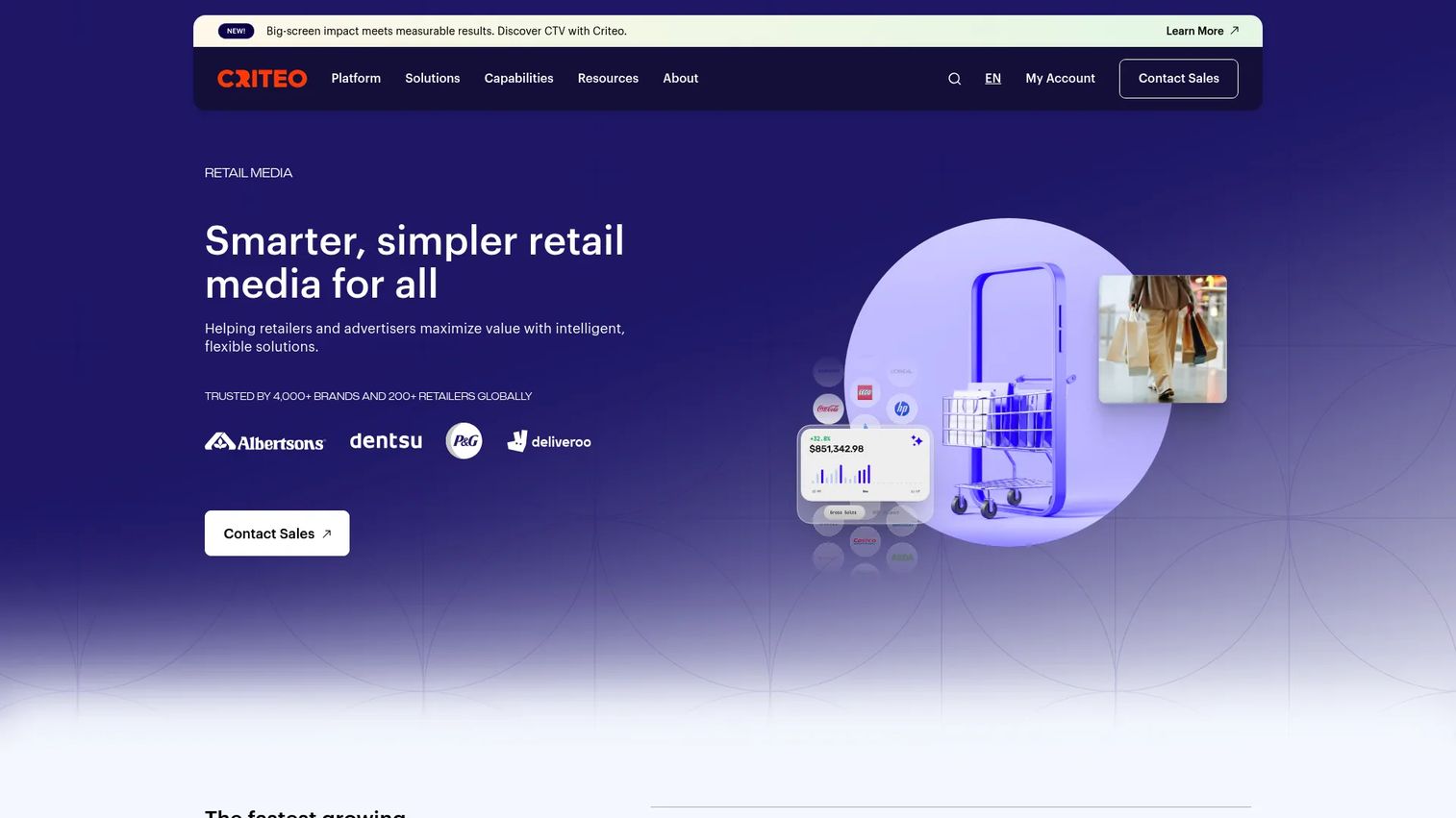
Criteo Retail Media is a technology platform connecting brands and retailers for retail media activation across onsite and offsite inventory. The platform uses AI-powered ad serving to run sponsored products, onsite display, and offsite campaigns, with SKU-level attribution and closed-loop sales measurement. It sits between retailer networks and advertisers, making it useful for teams that need retail media reach beyond a single retailer portal.
Best for: Brands and agencies running retail media activation across multiple retailer environments with consistent measurement.
Key features
- AI-powered sponsored product and display ad serving
- Onsite and offsite retail media campaigns
- Commerce audience targeting across retailer data
- SKU-level attribution and closed-loop reporting
- Campaign management across multiple retailer relationships
Why choose Criteo Retail Media: It fits teams that want retail media technology beyond one retailer's self-serve portal. The value is strongest when campaign management and reporting need to work across several retail partners without rebuilding for each one.
Criteo Retail Media pricing: Commercial terms are sales-led and vary by media spend, platform usage, and retailer relationships.
G2 rating: 4.0/5 (Criteo Commerce Max Retail Media on G2)
7. CitrusAd
CitrusAd is a retail media technology platform focused on retailer monetization and sponsored product advertising. It supports onsite sponsored products, display ads, and brand pages, alongside offsite formats including mobile, online TV, email, social, and in-store digital signage. The platform serves both the retailer side (ad serving, auctions, monetization) and the advertiser side (self-service campaign tools, reporting).
Best for: Retailers and marketplaces building or expanding sponsored product, display, and monetization programs, and advertisers running within CitrusAd-powered networks.
Key features
- Onsite sponsored products, display, and brand pages
- Offsite display, mobile, TV, email, social, and in-store signage
- Sponsored product auctions with self-service advertiser tools
- Real-time campaign reporting and attribution
- Retailer ad serving and marketplace monetization infrastructure
Why choose CitrusAd: It is a strong fit for retailers building or scaling a media network. For advertisers, evaluate CitrusAd based on which retailer inventory the platform powers in your category and geography.
CitrusAd pricing: Retailer-side platform pricing is custom and varies by network scale, managed services, and integration scope.
8. Pacvue Platform
Pacvue is an AI-powered commerce media operating system for planning, activating, optimizing, and measuring retail media performance across more than 100 retailers and partners. It covers cross-retailer campaign management, bid and budget optimization, commerce operations including inventory and pricing, and market intelligence through share-of-voice analytics. For brands and agencies managing many retail media accounts simultaneously, it reduces the spreadsheet work that multiplies when every retailer has a separate portal.
Best for: Brands and agencies managing retail media campaigns across Amazon, Walmart, Instacart, and other commerce channels at scale.
Key features
- Cross-retailer campaign planning, activation, and optimization
- Bid and budget automation with AI-powered rules
- Share-of-voice analytics and market intelligence
- Commerce operations: Inventory, content, pricing, promotions
- Governed workflows and cross-channel reporting
Why choose Pacvue Platform: It fits marketers who need operational control across many retail media accounts. The platform addresses attribution fragmentation by pulling performance into a single reporting layer, which matters when you're defending retail media attribution to finance.
Pacvue Platform pricing: Costs vary by channels, modules, and media spend. Contact Pacvue for current terms.
G2 rating: 4.5/5 (Pacvue on G2, based on 25 reviews)
9. Home Depot Retail Media+
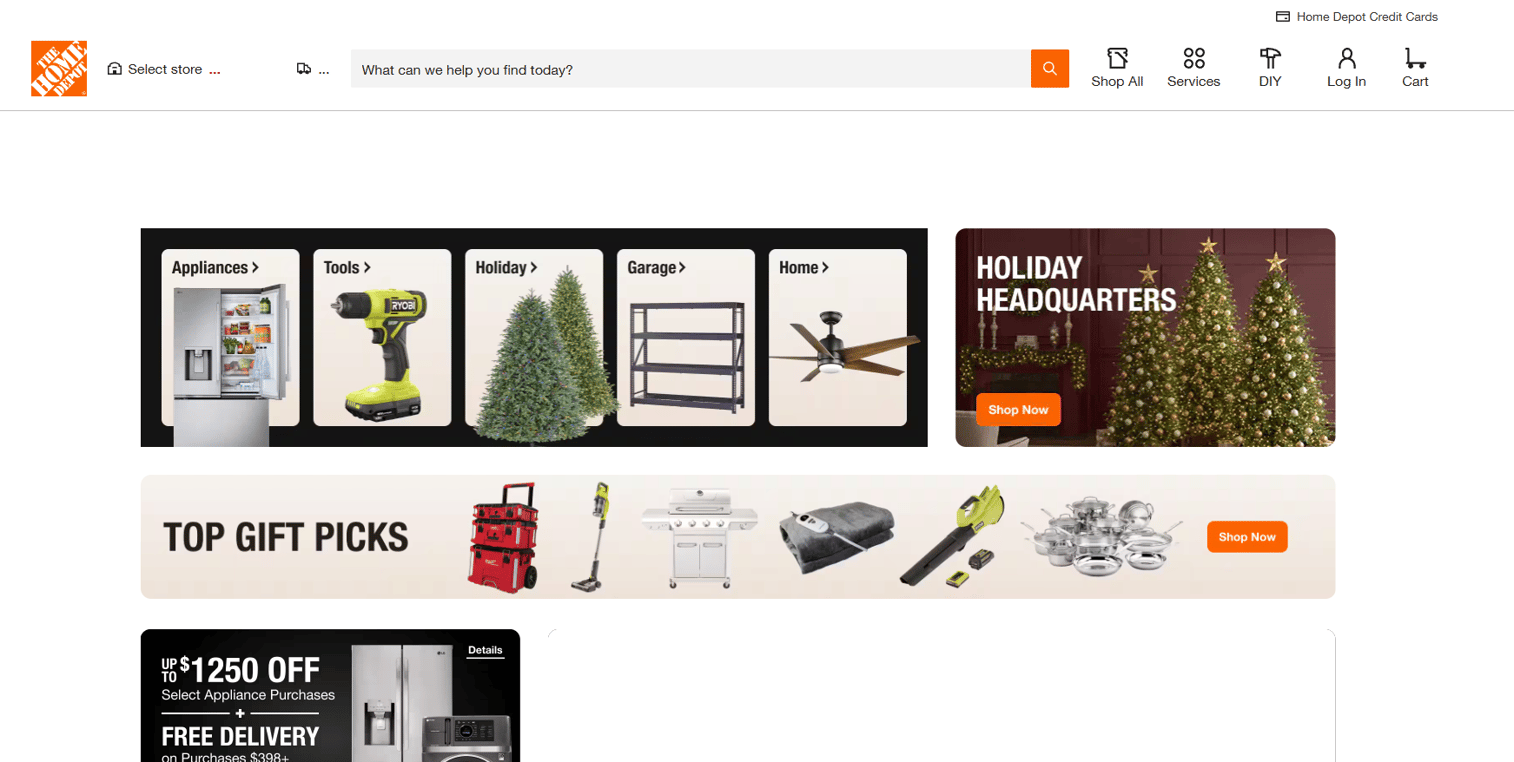
Home Depot Retail Media+, now branded Orange Apron Media, is The Home Depot's retail media network for brands reaching home improvement shoppers. It supports onsite advertising on homedepot.com, offsite advertising including social and CTV, email advertising, and in-store opportunities. The self-service Orange Access platform lets suppliers plan campaigns, manage creative, and track performance without going through a managed service team.
Best for: Home improvement, hardware, tools, appliances, building materials, and professional contractor brands.
Key features
- Onsite advertising on homedepot.com
- Offsite advertising: Social, paid search, CTV
- Email advertising placements
- Self-service campaign management via Orange Access
- Product content, photography, and 3D modeling support
Why choose Home Depot Retail Media+: It is useful when your buyer is planning a project, replenishing supplies, or researching high-consideration products. Aligning campaigns to seasonal project cycles (spring and fall) produces the strongest results.
Home Depot Retail Media+ pricing: Programs use customized packages for vendor partners. Pricing is not published and varies by inventory type, campaign format, and audience access.
10. CVS Media Exchange
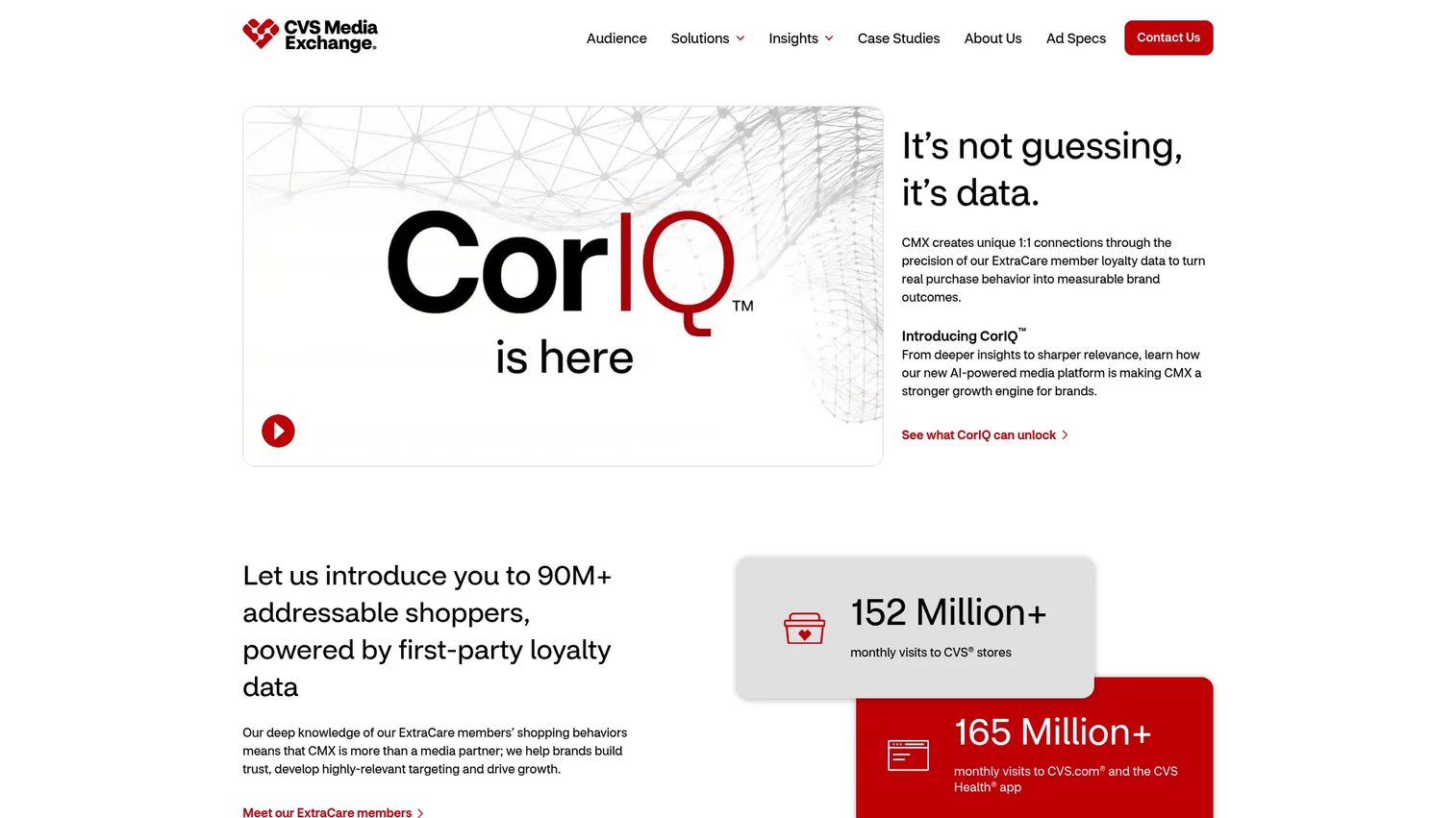
CVS Media Exchange (CMX) is a data-led retail media network built on CVS Pharmacy's ExtraCare loyalty program and first-party shopper data. It supports sponsored products and search ads on CVS.com and the CVS Pharmacy app, plus programmatic display, video, social, audio, and in-store advertising. Closed-loop measurement ties campaign exposure back to CVS purchase data.
Best for: Health, wellness, beauty, personal care, OTC medication, and CPG brands selling through CVS.
Key features
- Sponsored products and search on CVS.com and the CVS app
- Programmatic display, video, social, and audio
- In-store advertising placements
- ExtraCare first-party audience targeting
- Closed-loop performance measurement
Why choose CVS Media Exchange: It fits brands that need pharmacy and wellness context, not just general retail reach. The ExtraCare loyalty base is particularly valuable for health-adjacent categories where replenishment cycle timing and household health context matter.
CVS Media Exchange pricing: Campaigns require contacting CMX directly. Managed programs use custom pricing based on campaign scope and inventory.
11. Albertsons Media Collective
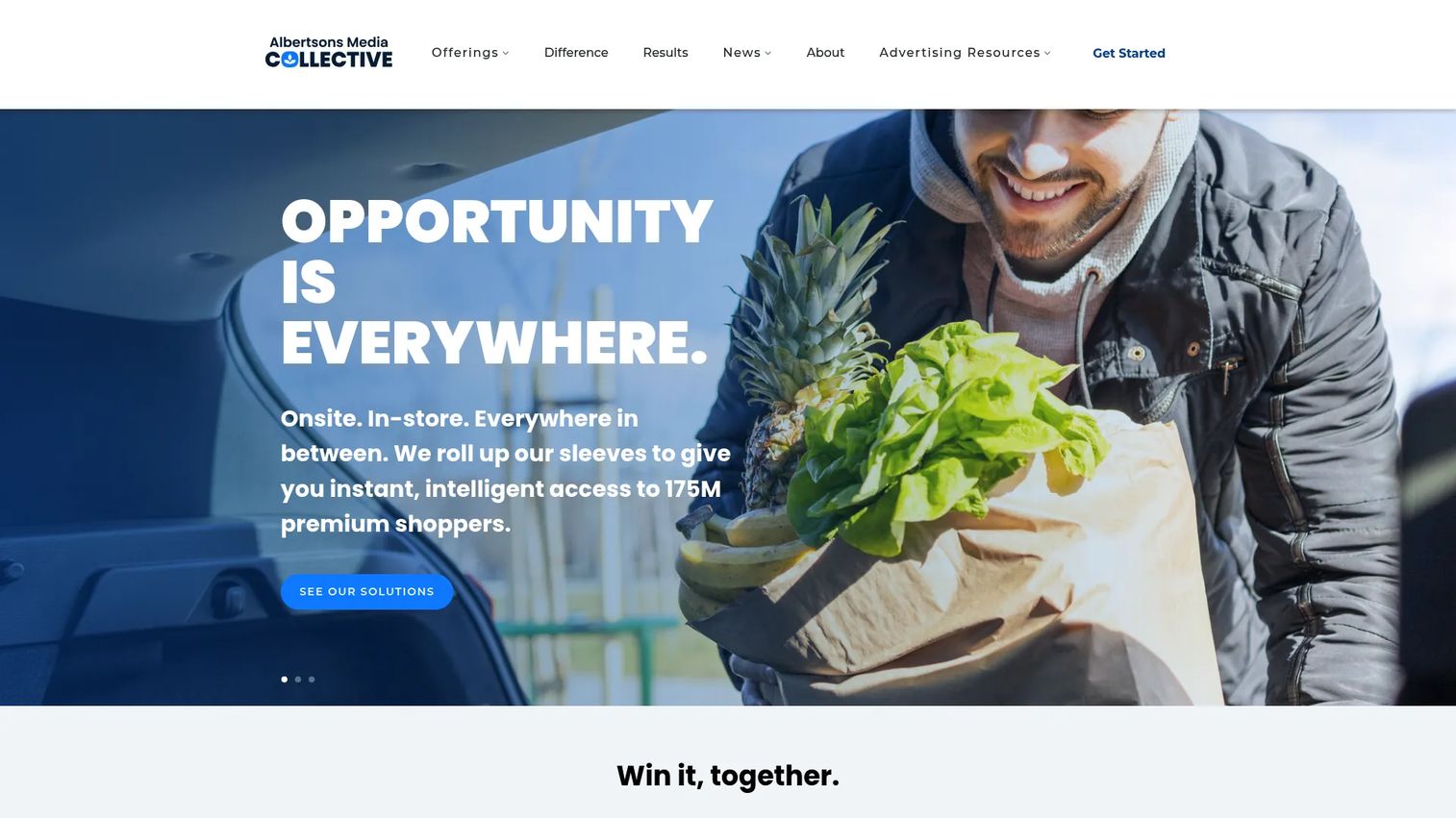
Albertsons Media Collective is a retail media network for brands reaching shoppers across Albertsons Companies' grocery banners, including Safeway, Vons, Jewel-Osco, and others. It offers onsite sponsored products and display, in-store digital media, offsite display and CTV, and social and creator campaigns. First-party loyalty data powers audience targeting, and incrementality-based measurement gives advertisers a cleaner read on what drove incremental sales.
Best for: Grocery, CPG, beverage, household, health, and regional shopper campaigns tied to Albertsons banner shoppers.
Key features
- Onsite sponsored products, display, and video ads
- In-store media: Digital displays, audio, shelf signage, sampling
- Offsite display, CTV, and social campaigns
- First-party loyalty audience targeting
- Incrementality-based measurement
Why choose Albertsons Media Collective: It delivers when a brand needs grocery relevance beyond national marketplace media. Regional activation and category-specific grocery campaigns perform particularly well when the buying moment is tied to specific banner shoppers and meal planning behavior.
Albertsons Media Collective pricing: Programs are custom and priced by campaign scope, inventory, and managed-service needs. Pricing is not published; contact Albertsons Media Collective for rates.
12. Walgreens Advertising Group
Walgreens Advertising Group is a retail media network powered by myWalgreens first-party purchase data, reaching pharmacy, health, wellness, beauty, and convenience shoppers. It supports custom purchase-based audiences, in-store advertising (signage, audio, kiosks, coupons), onsite and in-app advertising, email, and offsite programmatic across search, social, CTV, and streaming audio. Campaign measurement is tied to sales outcomes through the Walgreens shopper database.
Best for: Pharmacy, personal care, beauty, wellness, OTC, and CPG brands where repeat purchase and pharmacy context drive the buying decision.
Key features
- Custom audiences based on myWalgreens purchase behavior
- In-store advertising: Signage, audio, kiosks, coupons
- Onsite, in-app, and email advertising
- Offsite programmatic: Search, social, CTV, streaming audio
- Sales-outcome measurement
Why choose Walgreens Advertising Group: Choose it when pharmacy context and repeat purchase behavior matter more than general reach. Health-adjacent retail categories perform better here than awareness-only campaigns that could run on any display network.
Walgreens Advertising Group pricing: Packages are custom and vary by audience targeting, inventory selection, and campaign scope.
13. DoorDash Ads
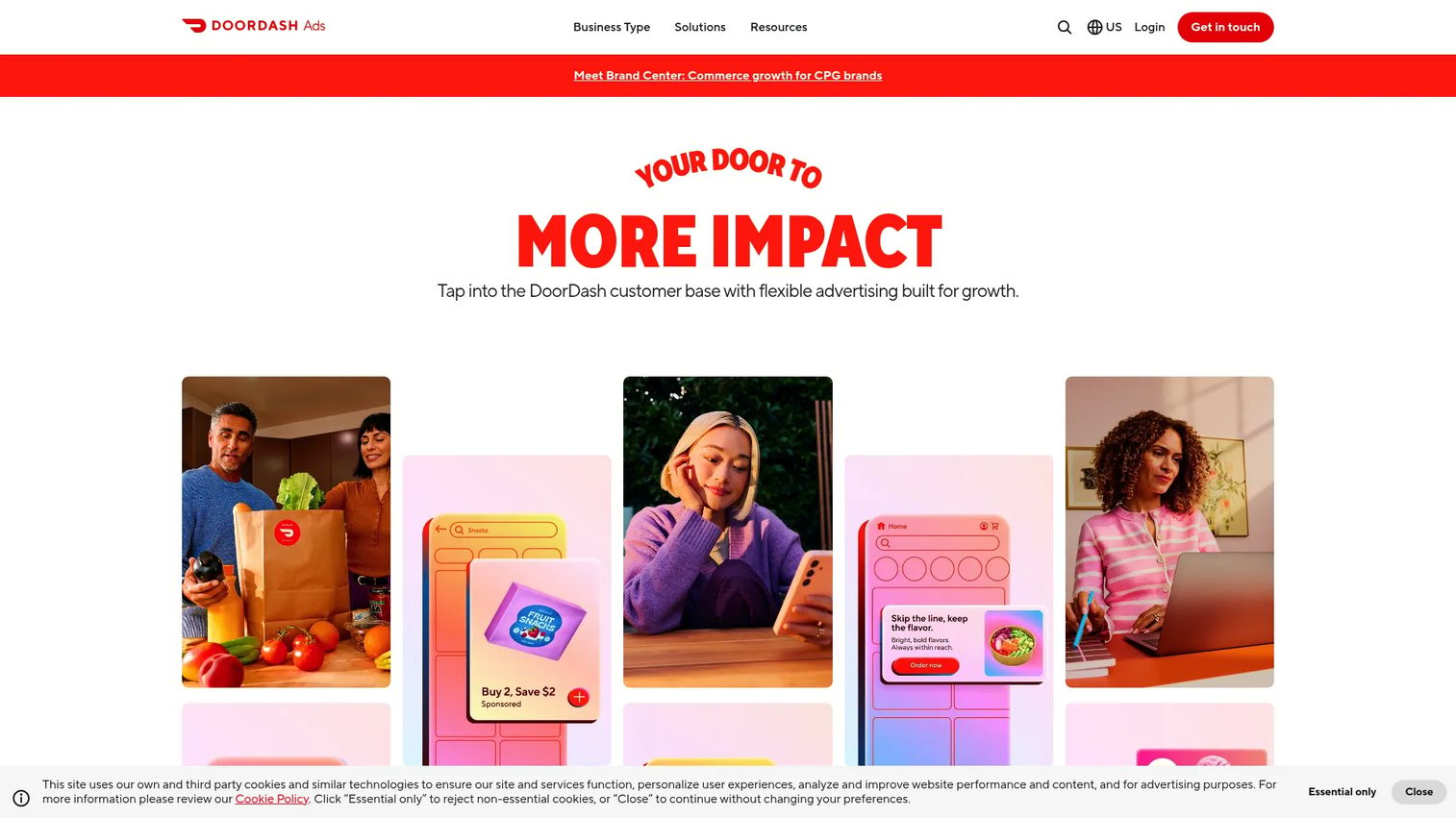
DoorDash Ads helps restaurants and CPG brands reach high-intent DoorDash customers through sponsored products, sponsored brands, offsite advertising, and in-platform promotions. The platform targets using brand interest, dish interest, dayparting, and average ticket size signals. Order attribution closes the measurement loop, connecting ad exposure to completed deliveries.
Best for: Restaurants, CPG brands, grocery marketers, convenience brands, and local commerce advertisers that want to reach customers at ordering moments.
Key features
- Sponsored Products and Sponsored Brands in search
- Sponsored Listings with pay-per-order pricing for restaurants
- Offsite advertising across search, social, and programmatic
- Targeting by brand interest, dish type, daypart, and ticket size
- Order attribution and campaign reporting
Why choose DoorDash Ads: It fits brands that want to influence high-intent ordering decisions in a quick-commerce context. Use it for local activation, convenience tests, and campaigns tied to meal occasions where proximity and urgency shape the purchase.
DoorDash Ads pricing: DoorDash directs advertisers to contact its team. Sponsored Listings for restaurants use a pay-per-order model; other formats use custom pricing.
14. Uber Advertising
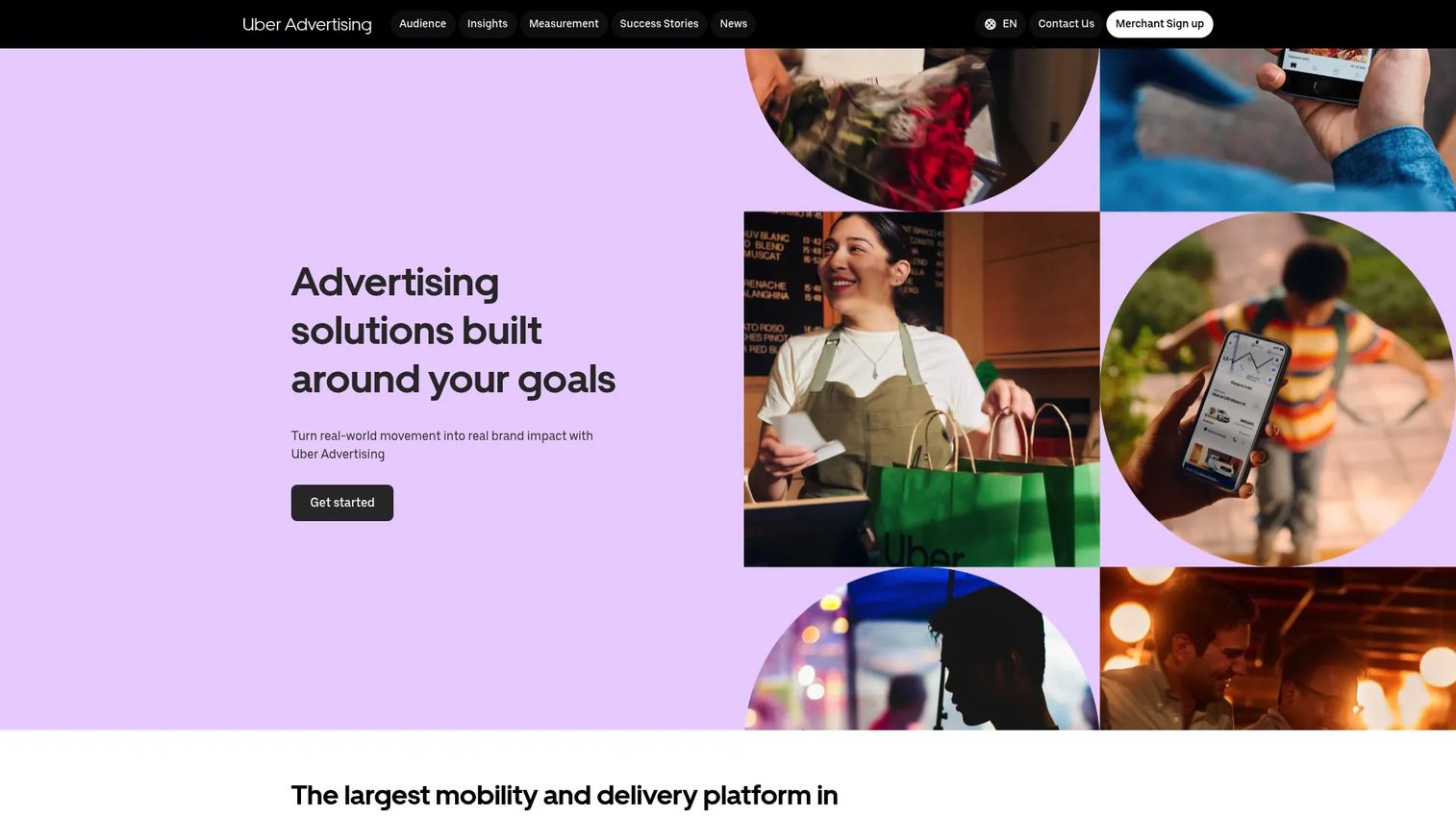
Uber Advertising connects brands with consumers across Uber ride experiences and Uber Eats delivery through mobility, commerce, and performance ad formats. Formats include display and video in ride experiences, sponsored listings and post-checkout placements in Uber Eats, in-app journey ads, and audience targeting based on real-time, contextual, behavioral, and historical signals. A Creative Studio supports bespoke branded experiences.
Best for: Restaurant, grocery, retail, and enterprise brands targeting consumers during rides, delivery orders, and local commerce moments.
Key features
- Display and video ads across Uber ride experiences
- Sponsored listings and post-checkout placements in Uber Eats
- In-app journey ads tied to movement and location
- Audience targeting: Real-time, behavioral, and historical signals
- Creative Studio for custom brand experiences
Why choose Uber Advertising: It fits brands that want media tied to movement, delivery, and local purchase intent. It is especially useful when the customer moment is time-sensitive or location-specific, such as food delivery, quick-service restaurants, or neighborhood retail.
Uber Advertising pricing: Platform access through Ads Manager carries no charge. Specific ad products and features incur fees that vary by placement and program. Contact Uber Advertising for current rates.
15. Moloco Retail Media Platform
Moloco Retail Media Platform, now marketed as Moloco Commerce Media, is an AI-native retail media technology product for retailers and marketplaces that want to build and scale advertising businesses using their own first-party shopper data. It supports sponsored products, sponsored brands, display, and video advertising, with machine learning driving targeting, product selection, bidding, and campaign optimization in real time. SKU-level attribution, A/B testing, and incrementality measurement give retailers the reporting infrastructure to operate a credible media business.
Best for: Retailers and marketplaces launching, replacing, or scaling a retail media network that requires AI-driven optimization and infrastructure.
Key features
- Sponsored products, brands, display, and video ad formats
- AI-powered targeting, product selection, and bidding
- Real-time bidding and campaign optimization
- SKU-level attribution and incrementality measurement
- A/B testing and configurable reporting
Why choose Moloco Retail Media Platform: It fits retailers and marketplaces building scalable retail media programs without assembling custom ad tech infrastructure. For advertisers, evaluate the platform based on which marketplaces and retailer inventory Moloco powers in your category.
Moloco Retail Media Platform pricing: Pricing is structured around each retailer or marketplace's needs. Contact Moloco for current commercial terms.
G2 rating: 4.1/5
Considerations when choosing retail media advertising platforms
Match the platform to the shopping mission
A grocery platform, marketplace platform, home improvement network, and delivery app each capture a different buying moment. The same $50,000 budget behaves differently across a replenishment purchase at Kroger, a discovery search on Amazon, a project purchase at Home Depot, and an urgent meal order on DoorDash. Align the platform to the category and the moment, not to audience size alone.
Normalize attribution before comparing ROAS
Retail media platforms use different attribution windows, view-through rules, and conversion definitions. Amazon's default attribution window differs from Walmart's, and both differ from Instacart's. Do not rank platforms by portal ROAS alone. Use incrementality testing or holdout groups to measure true sales lift before scaling budget into any new network.
Check audience quality and data permissions
First-party retail data is powerful, but access varies by platform, category, and campaign tier. Verify whether you can target loyalty members, lapsed buyers, category shoppers, or new-to-brand households. Understand what data the retailer shares with advertisers, and confirm that the audience methodology aligns with your measurement standards.
Evaluate onsite and offsite inventory separately
Onsite search and sponsored products capture existing demand. Offsite display, video, social, and CTV extend reach to audiences outside the retailer's properties. The right platform depends on whether you need conversion capture or audience expansion, and the best retail media strategies often use both. See the best display advertising software guide if you are building out your offsite display layer separately.
Plan reporting operations before scaling spend
Retail media gets expensive to operate when every retailer exports different metrics. Plan naming conventions, API access, KPI definitions, and incrementality testing protocols before increasing budget. Teams that add platforms without resolving reporting operations end up with more portals and less clarity. Consider whether a campaign management layer like Pacvue or Criteo is worth adding to normalize data across networks.
Conclusion
The right retail media platform depends on where your shopper is and what you can measure when they buy.
Amazon Ads is the default for marketplace-first brands. Walmart Connect and Target Roundel cover the biggest big-box audiences for CPG and household advertisers. Instacart Ads, Kroger Precision Marketing, and Albertsons Media Collective serve grocery and CPG brands that need basket-level and loyalty-driven signals. CVS Media Exchange and Walgreens Advertising Group fit health, wellness, and pharmacy categories that benefit from purchase context. Home Depot Retail Media+ reaches project-driven home improvement buyers.
For teams managing campaigns across multiple networks, Criteo Retail Media, CitrusAd, Pacvue Platform, and Moloco Retail Media Platform provide the technology layer to operate at scale. DoorDash Ads and Uber Advertising address the growing quick-commerce and delivery channel.
Start with the platforms where your products already sell and your shopper data already exists. Add offsite activation and technology layers once you have a baseline for incrementality.
If you sell retail media software or need to show complex campaign workflows to buyers before a live call, interactive demos can help prospects explore your product's setup, audience activation, and reporting on their own terms. Start your journey with Guideflow today!
FAQs
A retail media advertising platform helps brands buy, manage, target, and measure ads using retailer-owned audiences and commerce inventory. It can be a retailer's own self-serve network, a third-party technology product, or both. The defining feature is access to verified purchase data that makes targeting and attribution more precise than most other paid channels.
A retail media network is the retailer's advertising business: The inventory, audience data, and media products the retailer owns. A retail media platform is the software used to activate, optimize, and report on campaigns within that network. Some networks (like Amazon Ads or Kroger Precision Marketing) also serve as the platform, while others rely on third-party technology like CitrusAd or Criteo to power their ad serving.
The main types include sponsored products (search results and category pages), onsite display (banners and placements across the retailer's site), offsite display and video (activating retailer audiences across external channels), in-app ads (within the retailer's mobile app), email placements, in-store digital media (screens, audio, smart carts), and CTV. Sponsored products capture active shoppers; offsite and CTV extend reach to audiences earlier in the purchase journey.
Most platforms use closed-loop attribution that matches ad exposure to purchases within the same retailer environment. Measurement includes attributed sales, ROAS, new-to-brand buyer percentages, and basket size. Incrementality testing, using holdout groups, gives a cleaner measure of true sales lift above the baseline. Platform-reported ROAS figures need normalization before comparison because attribution windows and view-through rules differ by network.
Amazon Ads covers marketplace reach for brands sold on Amazon. Walmart Connect and Target Roundel address big-box retail. Instacart Ads, Kroger Precision Marketing, and Albertsons Media Collective serve grocery CPG with basket-level and loyalty purchase signals. For pharmacy and health categories, CVS Media Exchange and Walgreens Advertising Group provide first-party shopper data tied to health and wellness purchase behavior.
Mostly, but not always. Brands that sell through the retailer (endemic advertisers) have the clearest path to closed-loop measurement. Non-endemic advertisers, those without products on the retailer's shelves, can still access offsite retail audiences for display, CTV, and social campaigns. A financial services brand, for example, might use Kroger's shopper data to reach household decision-makers without selling a product at Kroger.
Sponsored ads on Amazon can start at $10, with no minimum spend requirement. Managed programs, DSP campaigns, CTV, and custom retailer packages typically require larger commitments. Minimum spend thresholds vary by network and are often not published. For most retailer networks outside Amazon, expect to verify minimums directly with the platform's sales team before committing budget.
Compare retailer reach and category fit, audience data depth and permission model, ad formats available (onsite, offsite, in-store, video, CTV), attribution windows and incrementality options, reporting API access and export capabilities, managed-service requirements, and minimum spend. For teams managing social media marketing and retail media simultaneously, also evaluate how well each platform integrates into existing attribution and campaign management workflows.