Your team sold a sponsorship package. The CRM says the deal is closed. Ad ops still needs inventory availability, creative specs, trafficking details, billing terms, and proof that the campaign delivered.
That gap is where media revenue leaks. General CRM tracks the relationship and the opportunity. It doesn't handle rate cards, insertion orders, creative proofing, or the billing reconciliation that finance needs at month end. Media sales software exists specifically for that gap, covering the full workflow from advertiser CRM through campaign fulfillment.
The category is growing fast. U.S. digital ad revenue reached $294.6 billion in 2025, up 13.9% year over year, according to the IAB and PwC. At the same time, 40% of media sellers say AI and automation rank among their company's biggest concerns for the next two years, per TVNewsCheck and SalesFuel's 2025 State of Media Sales report. The right platform helps your team absorb that growth without adding spreadsheets.
This guide covers 15 platforms to help you pick the right one.
What's inside
This guide compares 15 media sales software platforms for 2026, chosen for category relevance and the depth of their media-specific workflows.
- Who it's for: Publishers, broadcasters, podcast networks, event teams, and revenue operations leads managing ad sales pipelines
- Selection criteria: Media-specific CRM depth, inventory and campaign management, advertiser operations fit, and integration quality
- Pricing: Verified from vendor pricing pages; quote-based tools are noted plainly
- Ratings: Pulled from live G2 listings
TL;DR
- Best for enterprise media sales: Salesforce, for teams that need CRM, CPQ, contracts, analytics, and AI-assisted selling in one ecosystem
- Best for large publishers and broadcasters: Operative and Operative.One, for complex ad sales and operations workflows
- Best for inventory-heavy teams: WideOrbit, Prisma, FatTail, and Placements.io
- Best for self-service advertising: DanAds and AdSalesOS by Placements AI
- Best for CRM-first media teams: Boostr and Copper
- Best for quote-to-cash workflows: ADvendio, AdBook, Adpoint, and Mediaocean
What is media sales software?
Media sales software helps publishers, broadcasters, media owners, and ad-supported businesses manage the process of selling advertising inventory, sponsorships, and media packages from lead through billing.
The category covers the full revenue workflow, not just the relationship:
- CRM and pipeline management: Advertiser accounts, contacts, opportunities, activities, and forecasts
- Inventory and availability: What can be sold, when, at what rate, and across which channels
- Rate cards and proposals: Packages, discounts, bundles, custom quotes, and approvals
- Order and campaign workflow: Booking, trafficking, creative collection, proofing, and delivery handoff
- Billing and reconciliation: Invoices, revenue recognition, performance reporting, and finance handoff
- Self-service buying: Advertiser portals, checkout flows, creative uploads, and campaign dashboards
Media sales software is not the same as a generic CRM, an ad server, a demand-side platform, or marketing automation. CRM tracks relationships and deals. An ad server delivers impressions and measures performance. A DSP buys programmatic inventory on behalf of advertisers. Media sales software sits on the sell side, connecting the advertiser pipeline with the operational workflows that make a campaign run. Teams often run all four, but media sales software is what connects them.
When to use media sales software
Sell advertising across more than one channel
Spreadsheet-based planning breaks when your team sells digital, print, audio, and sponsorship bundles in parallel. Rate cards conflict, inventory availability is unknown, and billing cycles overlap. A dedicated platform creates a single source of truth across channels.
Replace CRM-only tracking with media-specific workflows
CRM can track the deal, but media sellers also need insertion orders, trafficking details, billing handoff, and creative approval workflows. When those steps live in email and spreadsheets, campaigns launch late and invoices get disputed.
Give advertisers a cleaner buying experience
Advertiser portals, self-service storefronts, e-signatures, and reporting dashboards reduce the sales-assisted work for smaller campaigns. If your team is manually processing every small buy, a self-service layer pays for itself quickly.
Media sales software comparison
The table below maps each platform to the job it does best. Pricing reflects what vendors show on their pricing pages. Where no figure is listed, the vendor prices through a sales conversation.
| # | Product | Best for | Key differentiator | Pricing | G2 rating |
|---|---|---|---|---|---|
| 1 | Salesforce | Enterprise media companies | CRM, CPQ, contracts, analytics, and AI in one ecosystem | From $25/user/month | 4.4/5 |
| 2 | Operative | Large publishers and broadcasters | End-to-end ad sales and operations workflows | Quote-based | 3.9/5 |
| 3 | Prisma | Media planning and buying teams | Omnichannel media buying and financial workflow management | Quote-based | 4.0/5 |
| 4 | WideOrbit | Broadcast and TV media sellers | Broadcast-focused ad sales and traffic operations | Quote-based | 4.1/5 |
| 5 | AdSalesOS by Placements AI | AI-assisted ad sales workflows | Automation for proposals, trafficking, billing, and reporting | Quote-based | 4.5/5 |
| 6 | DanAds | Self-service ad sales | White-labeled advertiser portals and online ad buying | Quote-based | 4.3/5 |
| 7 | AdBook | Publishers selling ads online | Booking, order, and advertiser workflow management | Quote-based | 3.7/5 |
| 8 | ADvendio | Salesforce-native media sales | Omnichannel ad sales built on Salesforce architecture | Quote-based | 3.5/5 |
| 9 | Boostr | Media sales CRM | CRM and pipeline management for media revenue teams | Quote-based | 4.1/5 |
| 10 | Operative.One | Modern media operations | Unified planning, selling, and ad revenue management | Quote-based | 4.1/5 |
| 11 | Adpoint | Publishers and media groups | Ad sales CRM, bookings, and campaign operations | Quote-based | N/A |
| 12 | Placements.io | Digital ad operations | Inventory, orders, billing, and revenue workflows | Quote-based | 4.5/5 |
| 13 | FatTail | Premium digital publishers | Direct-sold inventory and campaign management | Quote-based | 3.7/5 |
| 14 | Mediaocean | Omnichannel media workflows | AI-powered media finance and operations infrastructure | Quote-based | 4.1/5 |
| 15 | Copper | Small media teams using Google Workspace | Lightweight CRM for advertiser relationship management | From $23/seat/month | 4.5/5 |
Best 15 media sales software tools for 2026
1. Salesforce
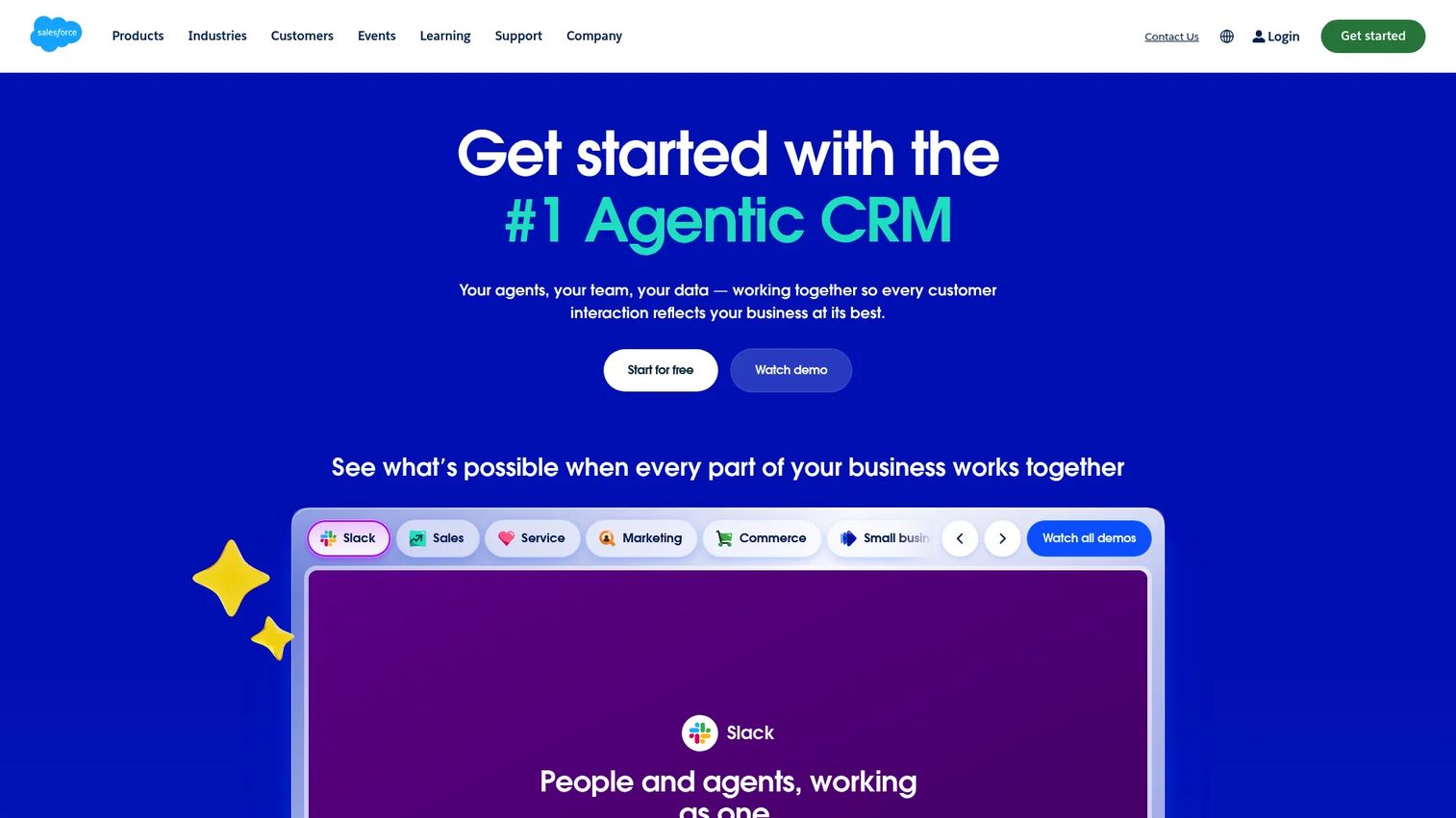
Salesforce is an agentic CRM platform connecting sales, service, marketing, commerce, data, and AI. For media companies, it serves as the enterprise foundation for managing advertiser relationships, CPQ workflows, contracts, and revenue analytics. Teams that have already built a Salesforce environment often extend it into media sales rather than add a separate platform. It suits complex ad products and multi-stakeholder buying committees where approval chains and data integrity matter.
Best for: Enterprise media companies already using Salesforce, or planning a Salesforce-centered revenue stack.
Key features
- Media Cloud workflows for advertising sales processes
- CPQ for proposal pricing, discounting, and contract generation
- AI-assisted selling through Agentforce capabilities
- Sales forecasting and pipeline management with dashboards
- AppExchange integrations for custom ad tech connections
Why choose Salesforce: Choose Salesforce when the media sales workflow needs to connect with legal, finance, and marketing data inside a single governed environment. It can be more infrastructure than a small publisher needs for basic advertiser CRM.
Salesforce pricing: Sales Cloud plans start at $25 per user per month (Starter Suite), rising to $100 (Pro Suite), $195 (Core), $395 (Advanced), and $550 (Max), all billed annually. Media Cloud and advertising-specific modules are priced through a sales conversation after the team confirms workflow scope and implementation needs.
G2 rating
4.4/5
2. Operative
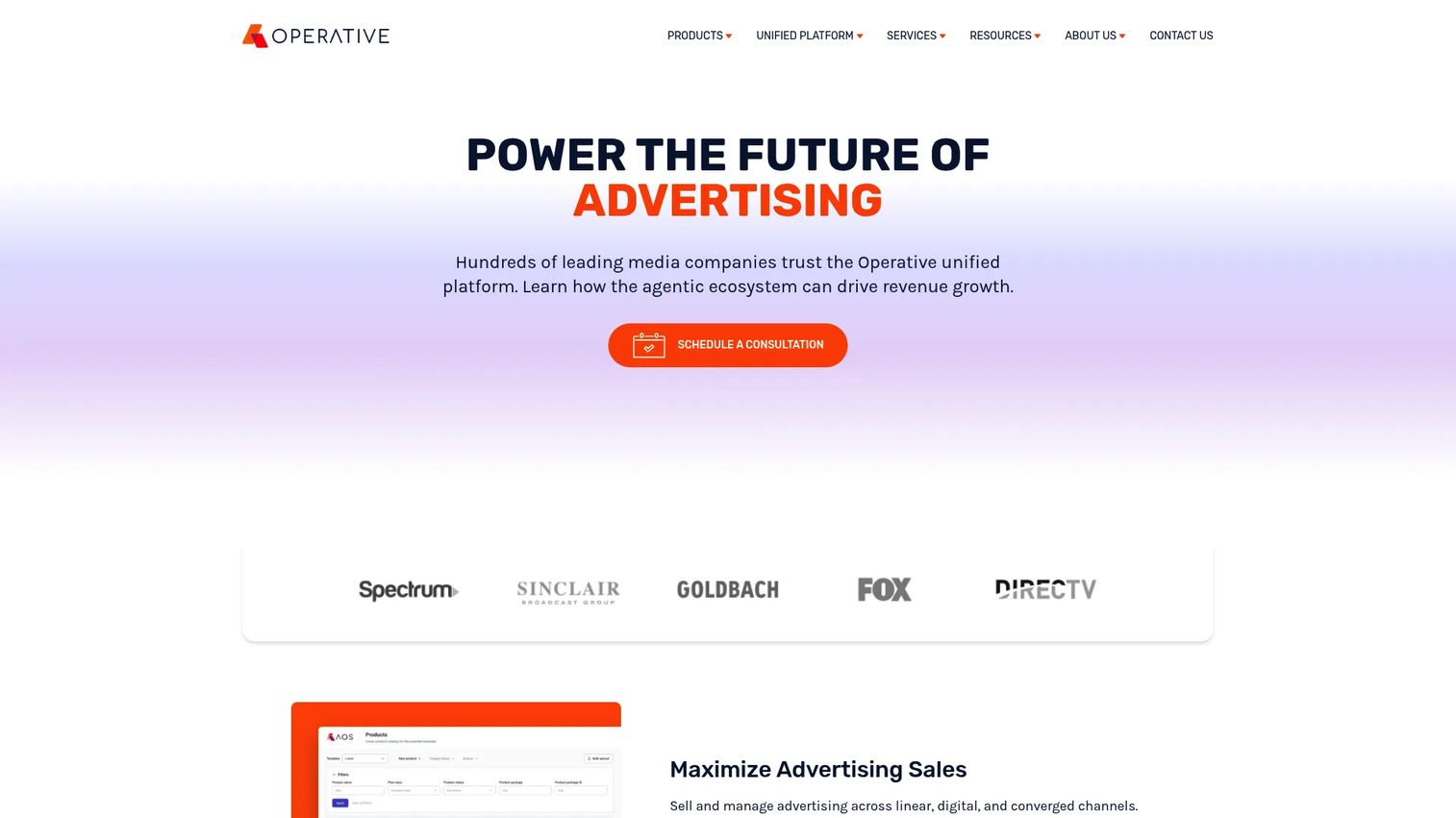
Operative provides advertising and broadcast management software for media companies running omnichannel revenue operations. The platform covers order management, inventory coordination, campaign fulfillment, and billing across linear and digital channels. It is built for media organizations where the gap between sales and ad ops is a persistent source of lost revenue and stalled campaigns.
Best for: Large media organizations that need sales and operations alignment across direct-sold advertising.
Key features
- Proposal workflows and order management across channels
- Inventory coordination for linear and digital inventory
- Revenue operations and campaign fulfillment tracking
- Integrated broadcast content, rights, and traffic management
- Billing and reconciliation workflows
Why choose Operative: Operative fits when media sales is operationally complex and involves sales, ad ops, finance, and fulfillment all working from the same data. Teams that only need a simple pipeline tracker will find it more platform than they need.
Operative pricing: AOS implementation is advertised as included at no additional cost. Additional project weeks run $5,000 per week; active campaign migration costs $25,000 to $35,000 depending on scope. All pricing is confirmed through a sales conversation.
G2 rating
3.9/5
3. Prisma
Prisma is Mediaocean's AI-driven platform for omnichannel media buying, optimization, execution, and financial workflow management. It centralizes campaign management software across channels, connecting media planning with trafficking, reporting, and actualization in one workflow. Teams that coordinate campaigns across digital, print, and broadcast channels use Prisma to consolidate the planning and execution that otherwise lives in separate tools.
Best for: Media planning and buying teams managing cross-channel campaigns and financial workflows.
Key features
- Centralized omnichannel media planning and buying
- Campaign trafficking, reporting, and optimization workflows
- Automated integrations with sellers, ad servers, DSPs, and data partners
- Financial workflow management and actualization
- Approval controls and workflow routing
Why choose Prisma: Prisma is the right choice when campaign planning and post-sale financial coordination matter as much as pipeline tracking. It fits teams moving from spreadsheets to structured media operations.
Prisma pricing: Prisma prices through a sales conversation. Contact Mediaocean's sales team to get pricing based on channel coverage and workflow scope.
G2 rating
4.0/5
4. WideOrbit
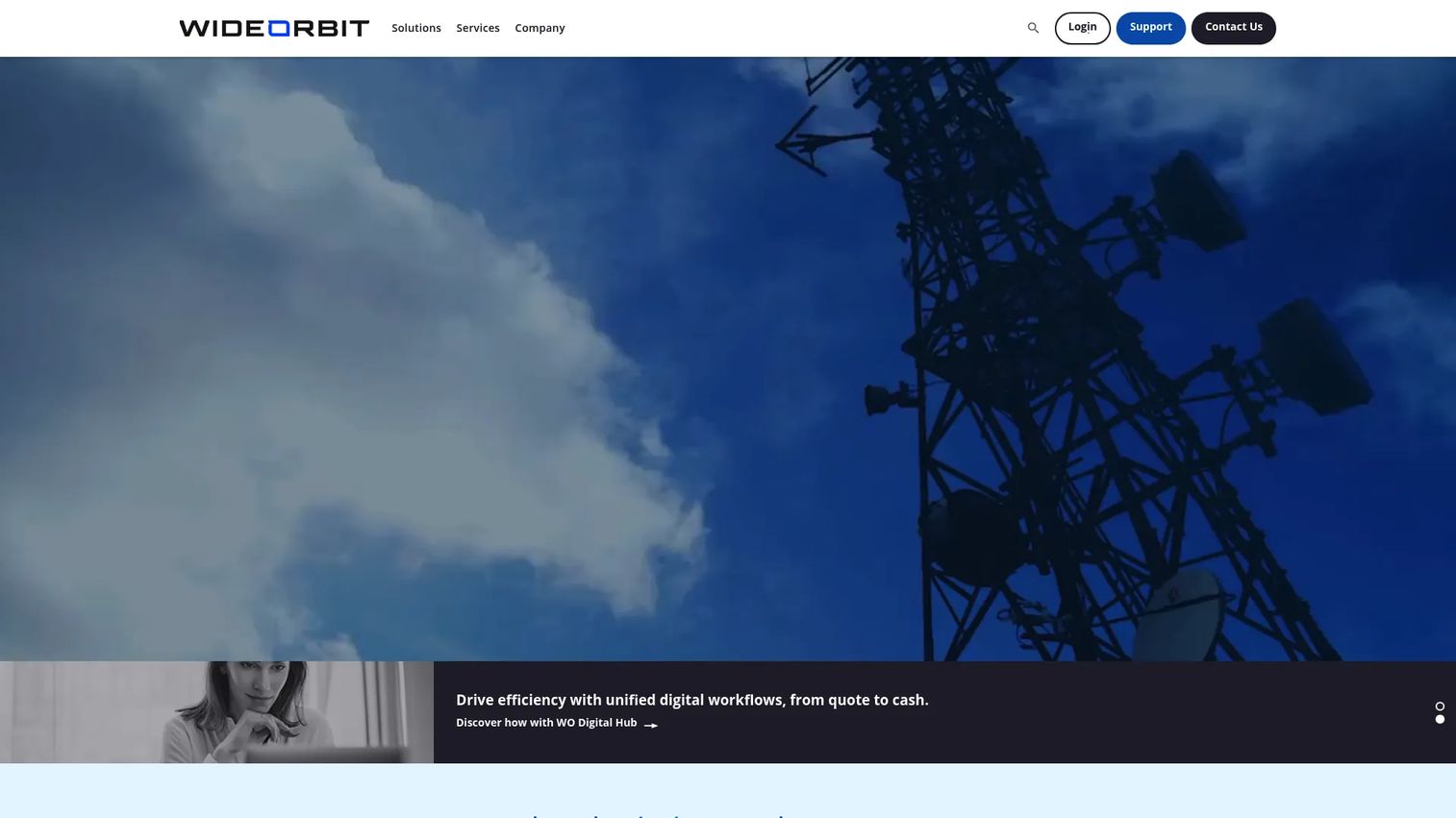
WideOrbit provides unified software for managing digital, linear, and cross-media advertising workflows. The platform covers ad inventory, traffic, scheduling, billing, payments, and revenue management for broadcast, cable, radio, and digital media organizations. Station groups and TV networks use WideOrbit as their primary advertising operations infrastructure.
Best for: Broadcasters, TV groups, and radio station networks managing linear inventory and traffic.
Key features
- Cross-platform selling across linear and digital media
- Ad traffic, scheduling, and inventory management
- Billing, payments, and revenue reporting
- Radio station automation and content workflows
- Analytics and business intelligence integrations
Why choose WideOrbit: Choose WideOrbit when broadcast workflow depth is the main requirement. Digital-only publishers may prefer platforms more focused on self-service or programmatic order management.
WideOrbit pricing: Cloud fees are calculated by the vendor based on client-specific complexity and system demands. Teams request pricing after WideOrbit reviews station group size, modules needed, and implementation scope.
G2 rating
4.1/5
5. AdSalesOS by Placements AI
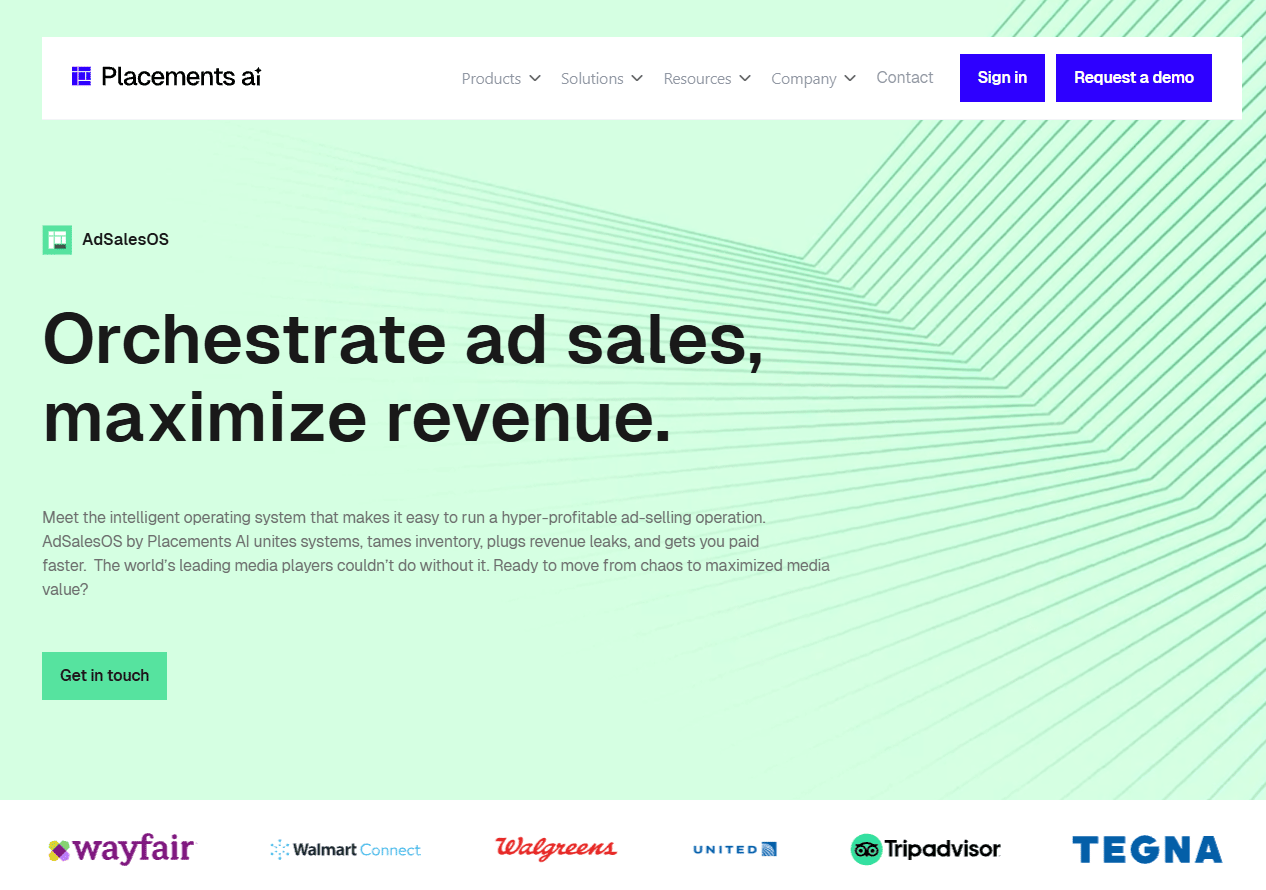
AdSalesOS by Placements AI is an AI-powered operating system for managing digital advertising sales from quote through billing. It connects Salesforce opportunities with omnichannel media planning, inventory forecasting, ad trafficking, campaign optimization, and automated billing. Digital publishers and retail media networks use it to reduce the manual coordination between sales and ad operations.
Best for: Digital publishers and media revenue teams that want automation across the ad sales workflow from proposal to reconciliation.
Key features
- Salesforce integration and opportunity syncing
- Omnichannel media planning, inventory forecasting, and pricing
- Automated ad trafficking and campaign optimization
- Billing and reporting automation
- Sales process controls and approval routing
Why choose AdSalesOS by Placements AI: Choose AdSalesOS when the team wants to cut the manual hand-off between sales and operations. Verify specific AI capabilities against current vendor documentation before buying, since the feature set updates frequently..
G2 rating
4.5/5
6. DanAds
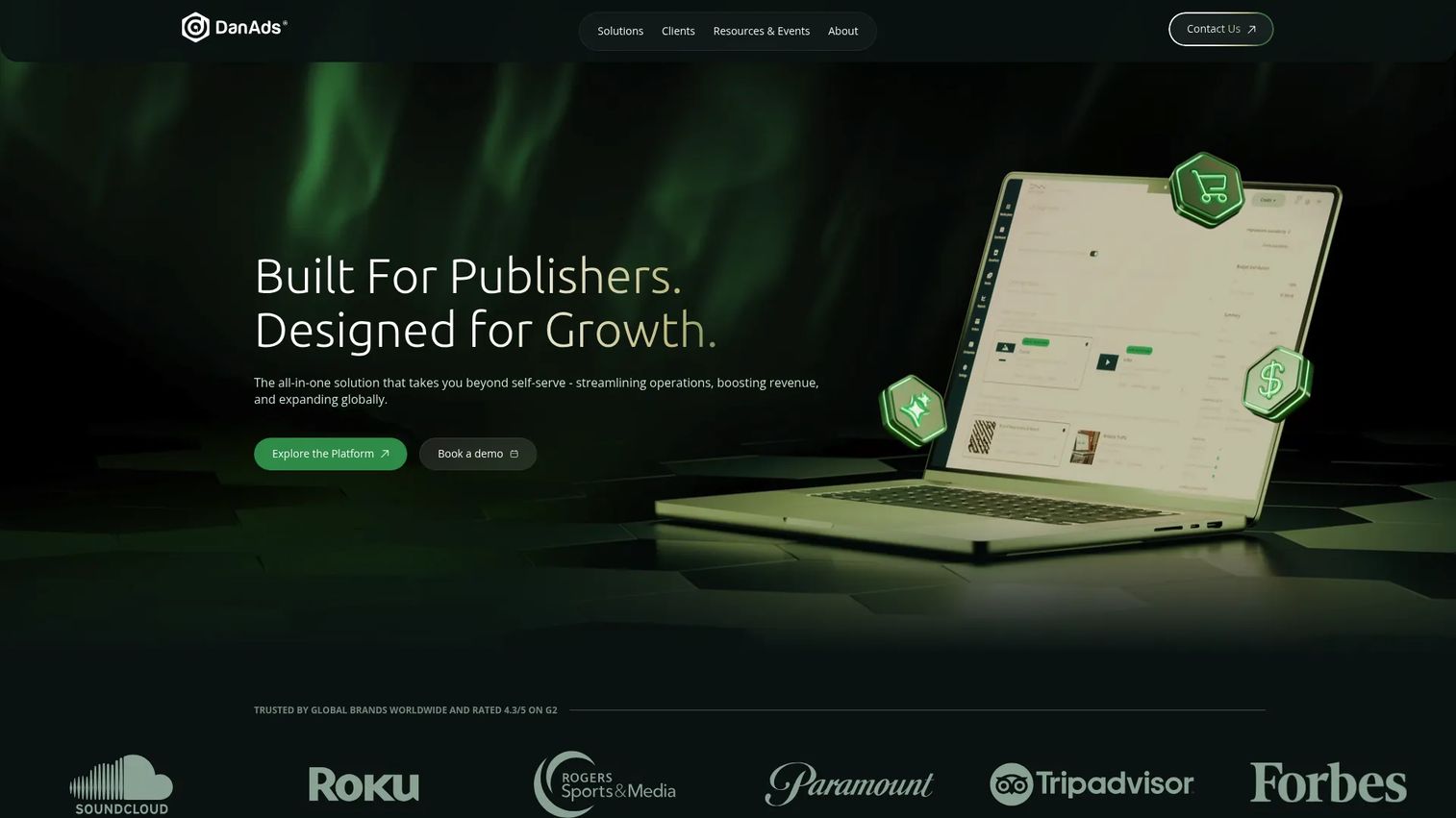
DanAds provides customizable, automated self-service advertising technology for publishers and advertisers. It lets media owners build white-labeled portals where advertisers browse inventory, set budgets, upload creatives, configure targeting, and manage campaigns without going through a sales rep for every step. Multi-currency and multi-language support makes it usable across international publisher networks.
Best for: Publishers and media owners adding a self-service advertising layer alongside direct sales.
Key features
- White-labeled advertiser storefronts and self-service checkout
- Campaign setup with budgets, schedules, and audience targeting
- Creative builders and AI creative tools
- Real-time performance dashboards and reporting
- Flexible payments: Credit card, invoice, and payment links
Why choose DanAds: DanAds is the right choice when your bottleneck is the sales-assisted buying process for smaller advertisers. It scales low-touch revenue without forcing every buyer through a custom proposal workflow.
DanAds pricing: DanAds prices through a sales conversation based on portal scope, integrations, and media products.
G2 rating
4.3/5
7. AdBook
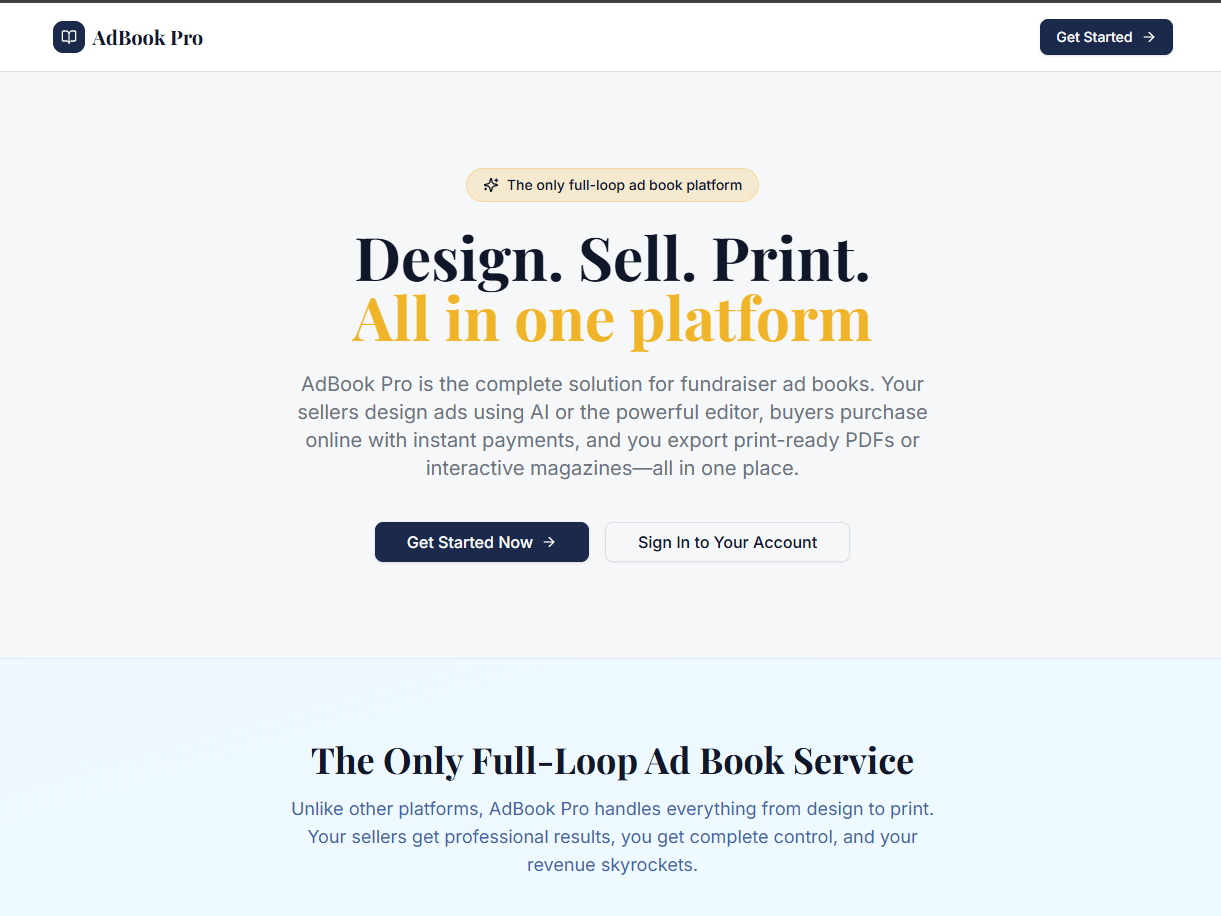
AdBook is a revenue management platform for advertising sales enablement, yield management, and workflow automation. Publishers use it to organize bookings, track advertiser records, manage orders, and report on sales performance without depending on spreadsheets. The platform focuses on the operational side of ad sales rather than the CRM relationship layer.
Best for: Advertising publishers that need structured booking and order management distinct from their general CRM.
Key features
- Ad booking and order tracking workflows
- Advertiser records and account management
- Sales enablement tools
- Yield management controls
- Campaign coordination and reporting
Why choose AdBook: AdBook fits teams that need a cleaner operational system around ad bookings. If the main problem is CRM discipline rather than booking coordination, evaluate CRM-first tools like Boostr or Copper alongside it.
AdBook pricing: AdBook prices through a sales conversation. Buyers request a quote based on users and required modules.
G2 rating
3.7/5
8. ADvendio
ADvendio is a Salesforce-native advertising management platform for omnichannel ad sales, inventory, campaign operations, and financial automation. It runs directly on Salesforce architecture, so media companies already in that environment get media-specific workflows without leaving their CRM. The platform covers print, audio, digital, out-of-home, and linear TV.
Best for: Media companies that want advertising sales management connected to an existing Salesforce environment.
Key features
- Salesforce-native CRM and advertising workflows
- Omnichannel campaign and revenue management
- Ad inventory management and campaign optimization
- Automated billing, invoicing, and reconciliation
- Integrations with ad platforms, DSPs, ad exchanges, and social media
Why choose ADvendio: Choose ADvendio when the team wants media-specific features without stepping outside the Salesforce environment. Verify integration depth and implementation effort with the vendor before committing, since the Salesforce dependency adds complexity.
ADvendio pricing: ADvendio offers four products: AdOne, AdGateway, AdFinance, and AdPortal. Each uses a different model, ranging from fixed monthly per-user fees to hybrid pricing. ADvendio requires a sales conversation to confirm package pricing, users, and implementation scope.
G2 rating
3.5/5
9. Boostr
Boostr is an ad sales management platform combining CRM, order management, proposal recommendations, and AI agents for media revenue teams. It replaces generic CRM for publishers that need media-specific fields, omnichannel forecasts, and real-time revenue reporting. The Proposal IQ feature automates product and pricing recommendations when RFPs come in.
Best for: Media revenue teams that want a CRM built around advertising sales, not general deal tracking.
Key features
- Media sales CRM with calendar and email integrations
- Order management for complex media sales
- Proposal IQ: Automated product and pricing recommendations for RFPs
- AI agents for media sales, planning, and ad operations
- Real-time revenue forecasting and revenue reporting
Why choose Boostr: Boostr is especially relevant for teams tired of forcing advertiser revenue into generic CRM objects. If pipeline discipline is the main gap and inventory management is handled elsewhere, start here.
Boostr pricing: Boostr prices through sales. Subscription amounts are set in customer-specific order forms and are not publicly posted.
G2 rating
4.1/5
10. Operative.One
Operative.One is a digital advertising order management platform for media companies handling advertising sales and operations across channels. It manages the full order lifecycle from campaign planning and proposal generation through execution, reporting, and billing. Streaming services, broadcasters, and digital publishers use it to consolidate what previously required point tools for each stage.
Best for: Media organizations modernizing legacy ad sales and operations infrastructure, particularly streaming and converged-channel businesses.
Key features
- Unified advertising management across digital, linear, and converged channels
- End-to-end order lifecycle management
- Campaign planning and proposal generation
- Execution, reporting, and billing in one platform
- Order management for streaming video and connected TV
Why choose Operative.One: Choose Operative.One when you want a platform approach rather than separate tools for CRM, planning, and operations. Confirm current product naming and packaging with the vendor, since the Operative product portfolio has evolved.
Operative.One pricing: Pricing is set through a sales conversation after the vendor confirms workflow scope and implementation requirements.
G2 rating
4.1/5
11. Adpoint
Adpoint covers ad sales CRM, booking workflows, campaign coordination, and account management for publishers and media groups. The platform focuses on the operational handoff from seller to campaign execution, covering the steps between closing a deal and delivering a campaign. It is a practical choice for media groups that want a media-focused alternative to generic CRM without the complexity of enterprise platforms.
Best for: Media groups that need a practical ad sales system spanning sales and campaign operations.
Key features
- Ad sales CRM and account management
- Booking workflows and campaign coordination
- Order tracking and delivery management
- Revenue reporting
- Multi-channel support across print, digital, and events
Why choose Adpoint: Adpoint suits teams that find generic CRM too broad and enterprise platforms too complex. The focus on operational handoff makes it useful when the gap between sales and fulfillment is the primary pain point.
Adpoint pricing: Adpoint prices through a sales conversation after the vendor reviews user count, workflow needs, and implementation.
12. Placements.io
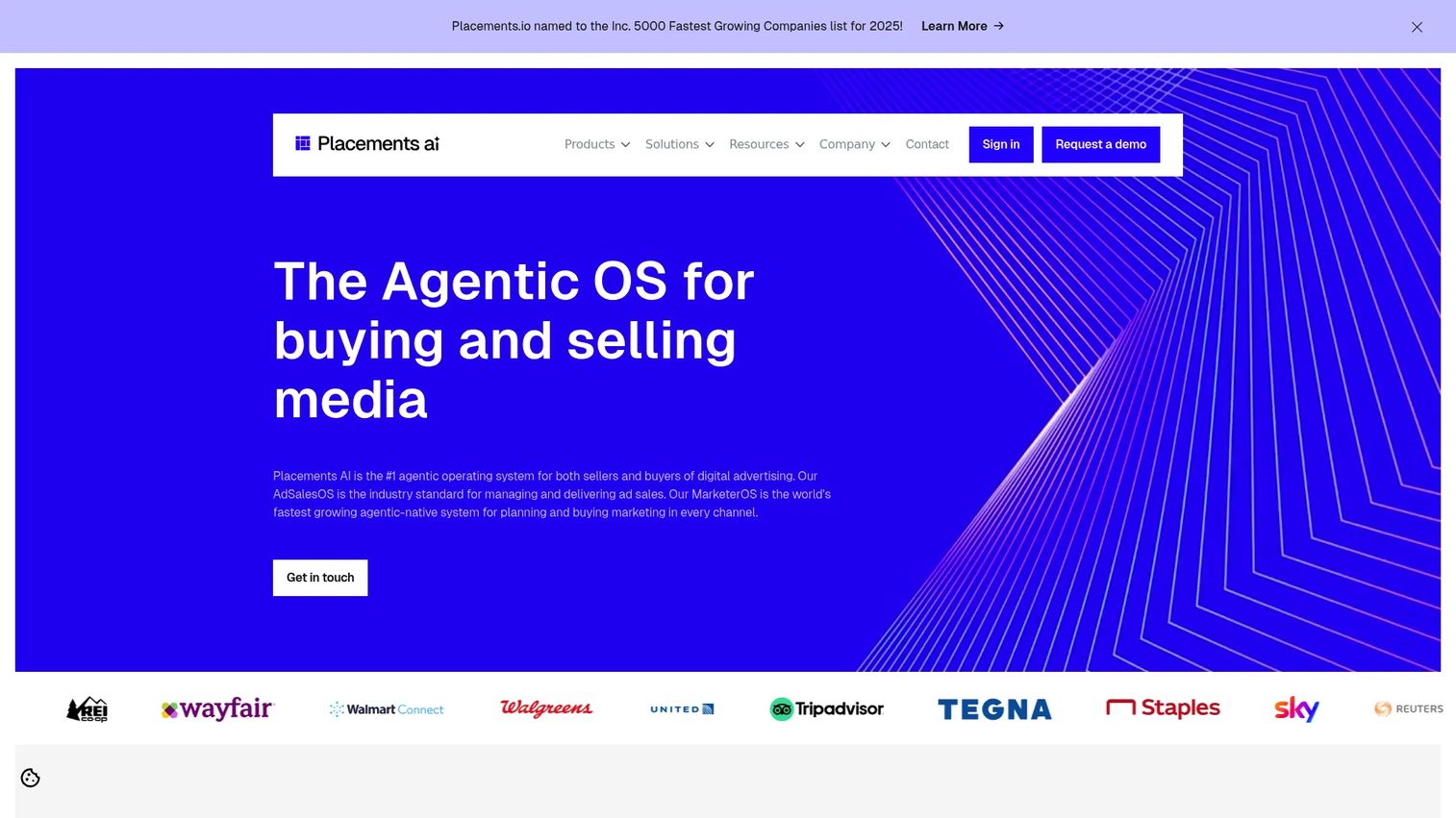
Placements.io is a SaaS operating system for managing digital advertising sales and buying operations. It handles omnichannel campaign planning, execution, optimization, billing, and reporting with Salesforce integration built in. Retail media networks, broadcasters, and digital publishers use it to manage inventory forecasting, dynamic rate cards, proposal building, and approval workflows.
Best for: Digital publishers and ad operations teams where the hardest problem starts after the sale, covering order through invoice.
Key features
- Omnichannel campaign planning, execution, and optimization
- Inventory forecasting, dynamic rate cards, and proposal building
- Billing and revenue workflows
- Salesforce integration and CRM synchronization
- Approval workflows and reporting
Why choose Placements.io: Placements.io is strong for teams that need operational control from order to invoice. It fits media sellers who want account management software depth connected to their ad operations stack.
G2 rating
4.5/5
13. FatTail
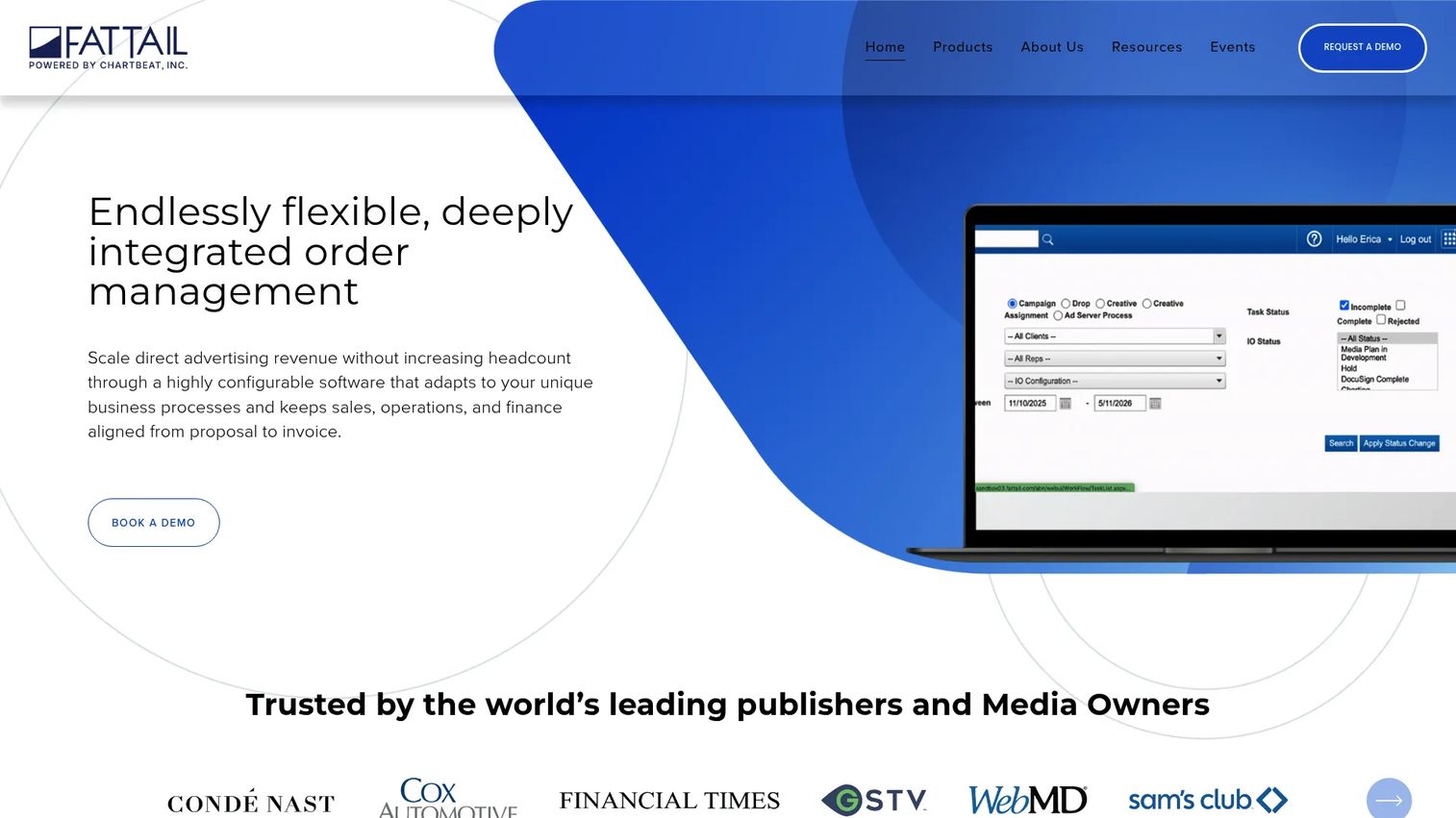
FatTail provides configurable order management and revenue management software for publishers and media owners. The platform covers direct-sold advertising from sales enablement and AI-driven product recommendations through deal automation, financial management, and buyer self-service. Premium publishers that cannot manage high-value direct campaigns with spreadsheets are the core audience.
Best for: Premium digital publishers with direct-sold inventory, complex campaign workflows, and yield-sensitive operations.
Key features
- Sales enablement with AI-driven product recommendations and dynamic pricing
- Buyer self-service for campaign reporting, billing, and creative assets
- Deal automation with approvals, alerts, and configurable rules
- Financial management with reconciliation, billing, and payment collection
- Integrations with ad servers, CRMs, billing systems, and BI tools
Why choose FatTail: Choose FatTail when premium inventory needs careful control from sale through delivery. The configurable automation and financial management depth set it apart from lighter booking tools.
FatTail pricing: FatTail prices through a sales conversation after reviewing inventory complexity, users, and integrations.
G2 rating
3.7/5
14. Mediaocean
Mediaocean is an AI-powered omnichannel advertising platform for planning, buying, executing, measuring, and financially managing media campaigns. It incorporates Prisma for media buying, Innovid for ad serving and creative personalization, and Protected for ad verification. Enterprise brands, agencies, and large media organizations use it as the financial and operational backbone for multi-channel advertising.
Best for: Enterprise media organizations and agencies managing large-scale, cross-channel media workflows with complex finance requirements.
Key features
- AI-driven media buying and optimization through Prisma
- Omnichannel ad serving, creative personalization, and measurement through Innovid
- Ad verification including brand safety and invalid traffic through Protected
- Financial management and campaign reconciliation
- Enterprise integrations across the full media supply chain
Why choose Mediaocean: Mediaocean fits large teams with complex media finance and operations needs. It may be more infrastructure than a smaller publisher needs for basic advertiser CRM or direct-sold campaign management.
Mediaocean pricing: Pricing is handled through a sales conversation after the vendor scopes products, users, and enterprise integrations.
G2 rating
4.1/5
15. Copper
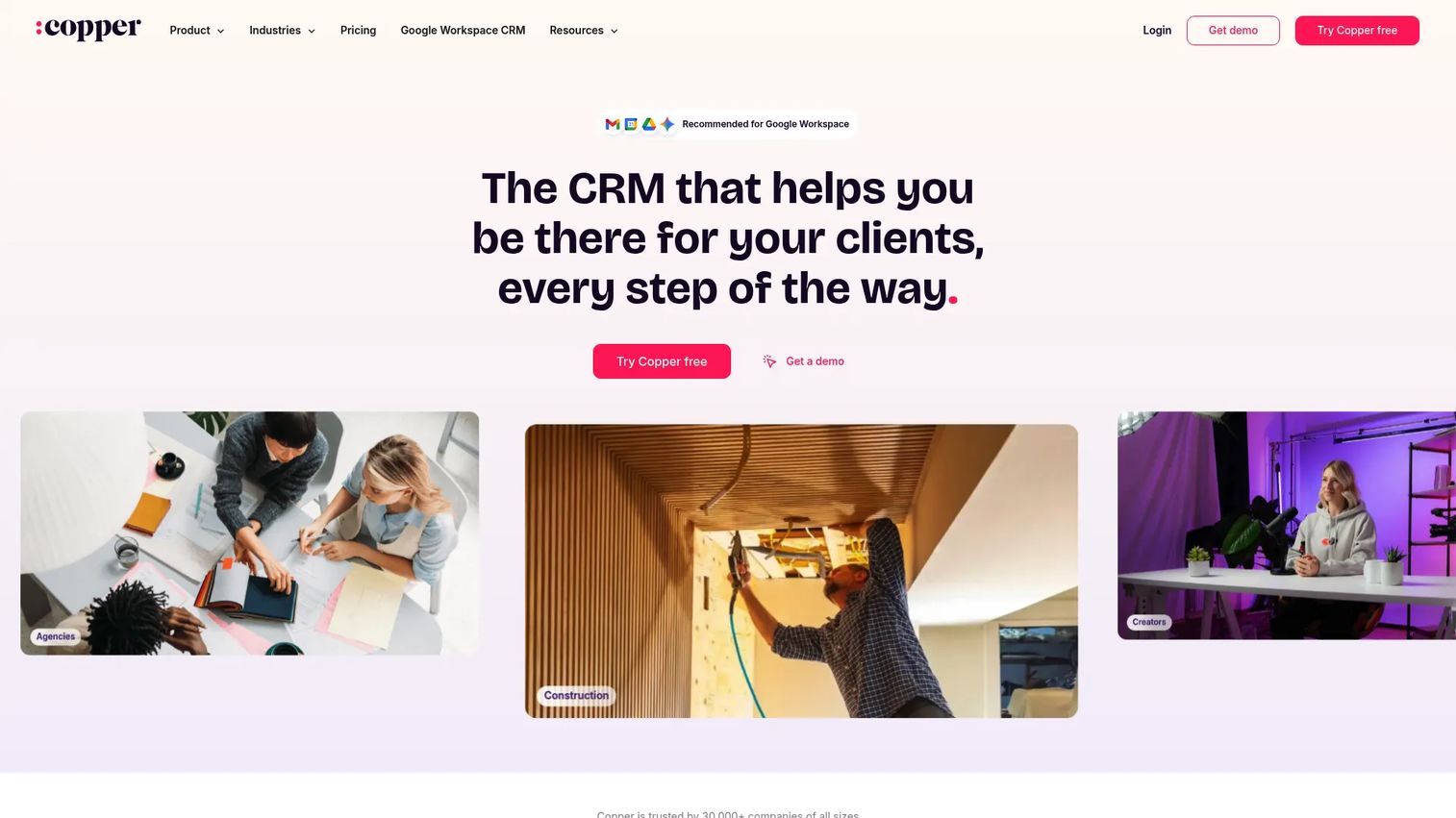
Copper is a CRM for relationship-focused businesses built to work inside Google Workspace. For media teams, it functions as a lightweight advertiser relationship management tool with pipeline tracking, activity logging, and deal management running directly inside Gmail and Google Calendar. It is not a full media operations system, but it works well when the main need is cleaner advertiser follow-up and pipeline discipline.
Best for: Small media teams using Google Workspace that need CRM discipline for advertiser relationships without inventory or operations complexity.
Key features
- Google Workspace sync across Gmail, Calendar, Drive, and Contacts
- Customizable sales pipelines and deal management
- Pipeline automation and workflow management
- Project management with tasks and collaboration
- Contact enrichment and activity tracking
Why choose Copper: Choose Copper when the team needs cleaner advertiser relationships and pipeline follow-up, not deep inventory forecasting or ad operations. This is the lightweight CRM choice in the list, and the most accessible starting point for smaller teams.
Copper pricing: A free trial is available. Paid plans start at $23 per seat per month on the Basic plan (billed annually) or $29 per seat per month billed monthly. Professional is $59 per seat per month (annual) or $69 monthly. Business is $99 per seat per month (annual) or $134 monthly.
G2 rating
4.5/5
Considerations when choosing media sales software
Match the tool to your revenue model
Identify whether you sell digital display, print, broadcast, audio, events, newsletters, sponsorships, or bundled packages before shortlisting. A digital publisher and a TV broadcaster need different workflows. Tools built for broadcast traffic management won't map cleanly onto a podcast sponsorship or programmatic direct business.
Check where generic CRM stops helping
CRM tracks relationships and deals well. It often misses inventory availability, rate cards, insertion orders, creative proofing, and billing reconciliation. Map your current process and find the first step that breaks in a generic CRM. That step tells you which category of tool to prioritize.
Validate inventory and availability workflows
Test how the platform handles sellable units, packages, date ranges, pricing rules, overbooking risk, and fulfillment handoff. This is the step most demo scripts skip. Ask to see what happens when inventory is overbooked or a campaign needs a makegoods adjustment.
Review billing and finance handoffs
Media sales breaks when finance works from a different truth than sales. Ask how invoices, revenue recognition, credits, and reconciliations move through the platform. If the answer is "we export to accounting," understand what that means for month-end and audit workflows.
Test the advertiser experience
If advertisers upload creative, approve proofs, sign documents, pay invoices, or view performance reports, the portal experience matters as much as the internal workflow. A self-service layer that advertisers won't use is not a self-service layer.
Conclusion
The right media sales software depends on where your workflow breaks. For enterprise teams that need CRM, data, and media workflows connected in one governed environment, Salesforce is the natural starting point, especially for organizations already running Sales Cloud.
Operative, Operative.One, WideOrbit, Prisma, FatTail, Mediaocean, and Placements.io fit larger operations-heavy media businesses where the complexity lives in fulfillment, inventory, and financial reconciliation rather than the pipeline itself. DanAds and AdSalesOS are the picks when self-service and automation are the priority. ADvendio, AdBook, Adpoint, and Boostr suit teams modernizing specific parts of the ad sales process. Copper is the entry point for smaller teams that mainly need advertiser relationship discipline.
Practical next step: Shortlist three tools from this guide, one CRM-first option, one operations-first option, and one self-service option. Then test each against a real campaign from proposal to invoice before committing.
For best sales management software recommendations across adjacent categories, check the Guideflow resource library.
FAQs
Media sales software helps publishers, broadcasters, media owners, and ad-supported businesses manage the full process of selling advertising inventory, sponsorships, and media packages. It covers advertiser CRM, pipeline management, inventory availability, rate cards, proposals, order management, billing, and reconciliation. G2 introduced Media Sales as a formal software category in April 2026, defining it around managing advertising inventory sales across digital, TV, print, audio, and out-of-home channels.
A general CRM manages contacts, opportunities, and pipeline stages. Media sales software adds the operational layer: Inventory availability, rate cards, insertion orders, trafficking details, creative approvals, billing, and campaign delivery confirmation. CRM tells you the deal is closed. Media sales software tells you whether the campaign can actually run.
Publishers, broadcasters, podcast networks, event media teams, digital media companies, out-of-home networks, and ad sales teams at any media property that sells advertising inventory. Revenue operations leads and ad sales managers are typically the primary evaluators.
Look for advertiser CRM, pipeline management, inventory forecasting, rate cards, proposal workflows, order management, creative approvals, billing and reconciliation, advertiser-facing reporting, and integrations with ad servers and finance systems. Self-service portals matter if your team handles high volumes of smaller buys. Check campaign management software capabilities if you need end-to-end campaign tracking.
There is overlap, but the terms refer to different sides of the transaction. Media sales software focuses on the seller side: Managing advertiser relationships, proposals, inventory, and billing. Ad management software can also refer to campaign delivery, trafficking, ad serving, and performance optimization, which are buyer-side or operations-side functions. Many platforms handle both, but the distinction matters when evaluating feature depth.
Clear triggers include: Missing inventory checks before closing deals, duplicate proposal work across reps, billing errors tied to manual reconciliation, delayed campaign launches because trafficking details aren't captured at sale, weak forecast visibility, and inconsistent advertiser follow-up. If any two of those are present, a dedicated platform will pay back its cost quickly.
Yes, if the main need is account tracking and pipeline visibility. Copper is a good example of a CRM that works for media teams focused on advertiser relationships. Dedicated media sales tools become necessary when inventory, insertion orders, billing, and campaign fulfillment get complex enough that spreadsheets create errors or delays.
Compare total cost across users, modules, implementation, integrations, support tiers, and operational volume. Many platforms in this category price by quote, so the first number a vendor gives you covers the base subscription only. Ask what implementation costs, what integrations cost separately, and what ongoing support fees look like. For more context on best sales management software pricing approaches across adjacent categories, the Guideflow blog covers related evaluations.