Post acute care software rarely gets evaluated before something breaks. A referral slips through because intake runs on a spreadsheet. Reimbursement delays stretch to 45 days because OASIS documentation sat incomplete. A census report requires three manual exports before the board meeting. Skilled nursing, home health, hospice, and rehabilitation teams each work from a different system, and nobody has a clean view across all of them.
The U.S. post-acute care market reached $490.6 billion in 2025, according to Global Market Insights. That scale makes software selection a high-stakes decision, not a procurement checkbox. The wrong platform slows clinical documentation, creates billing leakage, and leaves operations leaders stitching together data that should flow automatically.
This guide cuts through that complexity. It compares 12 long term post acute care software platforms for 2026, organized by care setting and buying situation, so you can build a shortlist before talking to a single sales rep.
What's inside
This guide is for operators, executives, CIOs, and clinical leaders comparing platforms across skilled nursing, home health, hospice, senior living, rehabilitation, and DME workflows.
- Who it's for: Multi-site post acute operators, IT and revenue cycle leaders, and consultants evaluating software for 2026
- Selection criteria used: Care setting coverage, clinical documentation and regulatory workflow support, billing and revenue cycle capabilities, interoperability and referral management, and implementation fit
- Pricing: Requested from vendor pricing pages and G2 reviewer reports; most platforms in this category price by quote
- Ratings: Pulled from live G2 listings
TL;DR
- Best broad post acute platform: WellSky for multi-service organizations spanning home health, hospice, DME, care coordination, and analytics
- Best for integrated post acute EHR: Netsmart myUnity for providers consolidating records across several post acute care settings
- Best for health system alignment: Epic for organizations already running a broad Epic environment where post acute workflows need to connect upstream
- Best for skilled nursing and senior living: PointClickCare and MatrixCare for facility-based providers managing census, documentation, billing, and compliance
- Best for home health and hospice agencies: Axxess, AlayaCare, Homecare Homebase, KanTime, and Alora Home Health for agencies prioritizing scheduling, EVV, OASIS, and reimbursement
- Best for DME and HME workflows: Brightree for equipment providers managing resupply, claims, and patient pay
What is long term post acute care software?
Long term post acute care software is healthcare technology used by providers after a hospital stay or outside a hospital setting to manage clinical documentation, care coordination, billing, compliance, scheduling, referrals, analytics, and patient or resident engagement.
Core care settings it supports
- Skilled nursing facilities (SNF)
- Long term care and long term acute care
- Home health and home care
- Hospice and palliative care
- Senior living, assisted living, and memory care
- Inpatient and outpatient rehabilitation
- DME, HME, infusion, and specialty pharmacy
- Personal care and private duty nursing
Key capabilities to look for
- EHR and EMR documentation with regulatory assessment support (MDS, OASIS, HIS)
- Referral intake and transitions of care management
- Scheduling, workforce management, and EVV
- Medication, therapy, and care plan workflows
- Billing, claims, eligibility, denials, and revenue cycle management
- Interoperability with hospitals, payers, pharmacies, labs, and HIEs
- Analytics covering census, utilization, risk, readmissions, and outcomes
- Patient, resident, and family engagement tools
Category boundary to clarify
A hospital EHR centers on inpatient and acute workflows: Surgical schedules, emergency department triage, inpatient orders. Post acute software centers on longer care episodes, distributed care teams, regulatory assessments, recurring visits, reimbursement complexity, and transitions across settings. The two categories overlap at the discharge door. Knowing where one ends matters when your referral sources are hospital-based but your operations are not.
When to use long term post acute care software
Coordinate care across settings
Providers managing handoffs between hospitals, skilled nursing, home health, hospice, rehab, and senior living lose referrals when intake runs on fax and phone. Post acute aged care management software creates structured referral intake, electronic discharge data, and shared care records so transitions happen without the manual follow-up that delays admission and slows census recovery.
Standardize documentation and reimbursement
Clinical documentation delays cost cash, not just compliance points. When OASIS assessments sit incomplete or MDS submissions run late, reimbursement gets held. Post acute platforms connect point-of-care documentation to billing workflows so that the clinical record drives the claim rather than triggering a second data entry cycle.
See performance before it hits the board deck
Census, readmission rates, payer mix shifts, and staffing utilization tell a different story at week three than they do at quarter end. Operators who track these metrics in real time can adjust before a weak month becomes a weak quarter. For founders and executives under board pressure, post acute analytics platforms make operational data board-ready without a manual reporting project.
Long term post acute care software comparison
Most platforms in this category price by quote. Pricing depends on care setting, census or patient volume, module selection, user count, and implementation scope. The table below reflects verified G2 ratings and pricing status as of October 2026.
| # | Product | Best for | Key differentiator | Pricing | G2 rating |
|---|---|---|---|---|---|
| 1 | WellSky | Multi-service post acute organizations | Broad suite across home, facility, DME, analytics, and services | Quote-based | 4.2/5 |
| 2 | Netsmart myUnity | Integrated post acute EHR across settings | Unified record spanning home health, hospice, SNF, senior living | Quote-based | 3.4/5 |
| 3 | Epic | Health systems extending post acute workflows | Native connection to enterprise EHR and health system data | Quote-based | 4.2/5 |
| 4 | MatrixCare | Long term care and senior living providers | Facility, home health, hospice, and senior living coverage | Quote-based | 3.8/5 |
| 5 | PointClickCare | Skilled nursing and senior care organizations | Post acute network connectivity and SNF workflow depth | Quote-based | 4.3/5 |
| 6 | Axxess | Home health, hospice, and care at home agencies | Cloud-based agency operations with mobile documentation | Quote-based | 3.8/5 |
| 7 | AlayaCare | Home-based care organizations | Scheduling, EVV, clinical workflows, and workforce operations | Quote-based | 4.1/5 |
| 8 | Homecare Homebase | Enterprise home health and hospice agencies | Agency-scale scheduling, documentation, and revenue cycle | Quote-based | 3.7/5 |
| 9 | KanTime | Multi-line home-based care agencies | One platform across home health, hospice, pediatric, private duty | Quote-based | 3.6/5 |
| 10 | Alora Home Health | Small to midsize home health agencies | Transparent pricing with OASIS, billing, and EVV included | From $295/month | 4.5/5 |
| 11 | Brightree | DME, HME, and pharmacy-adjacent providers | Equipment, resupply, claims, and patient pay workflows | Quote-based | 4.1/5 |
| 12 | MatrixCare Senior Living | Assisted living and memory care operators | Resident-centered workflows for senior living communities | Quote-based | 3.8/5 |
Best 12 long term post acute care software platforms
1. WellSky
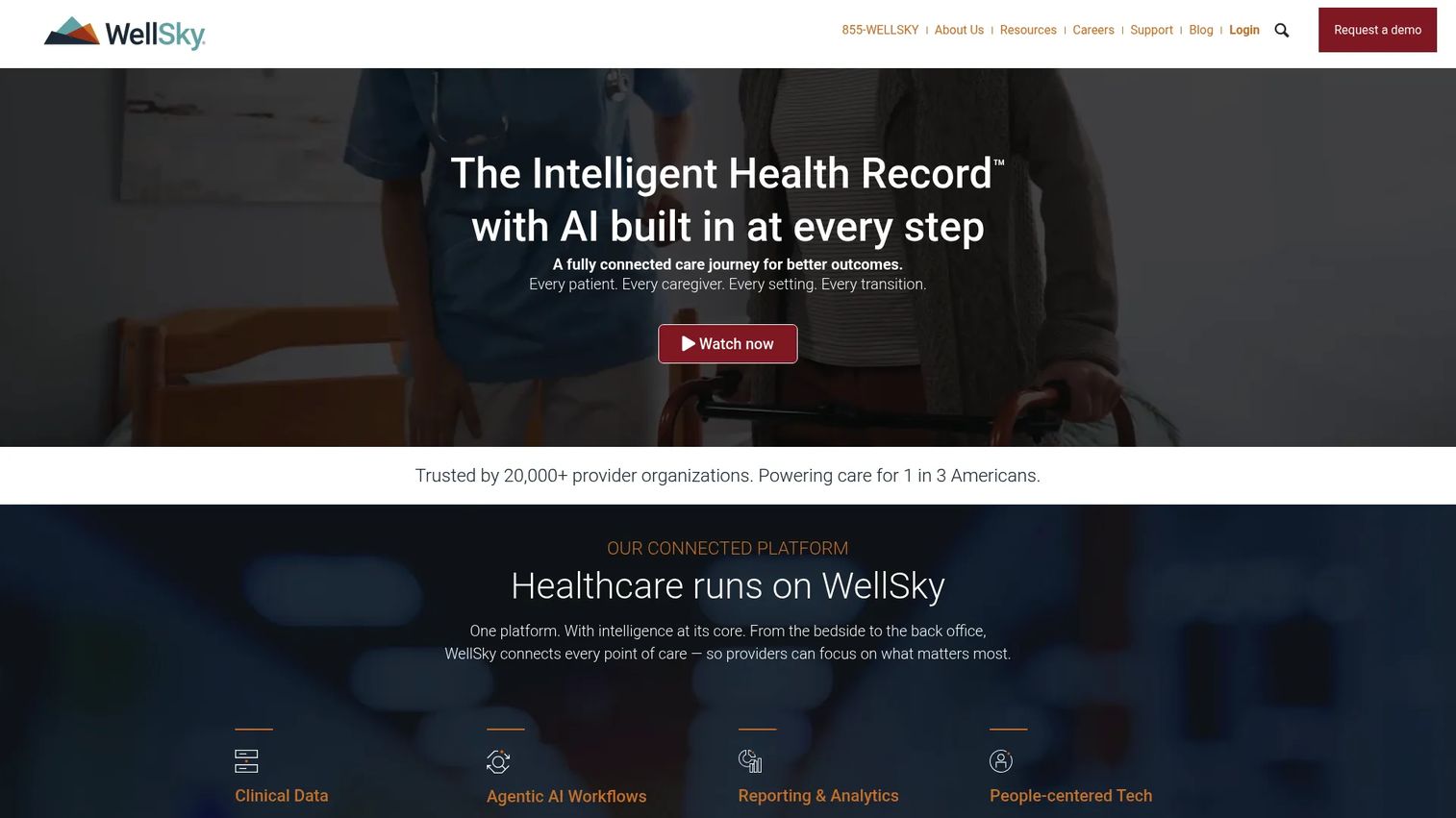
WellSky is a broad post acute care platform covering home health, hospice, palliative care, personal care, DME and HME, infusion, specialty pharmacy, long term care, rehabilitation, care coordination, referral management, patient engagement, analytics, and revenue cycle services. It serves providers across multiple care settings from a single vendor relationship. Organizations that have grown through acquisition often use WellSky to consolidate previously siloed operational systems.
Best for: Multi-service post acute organizations that want one vendor across home-based care, facility care, equipment, and analytics.
Key features
- Home health and hospice clinical workflows
- DME, HME, and infusion management
- Referral and intake management tools
- Predictive analytics and care coordination
- Revenue cycle management services
Why choose WellSky: The platform suits operators who need breadth across several service lines and want to reduce the number of vendor contracts that clinical and revenue cycle teams have to manage. It fits organizations that have outgrown a single-setting tool.
WellSky pricing: WellSky prices by quote. The company's core software portfolio does not carry a published rate card; buyers should ask sales to break down module-level packaging, implementation fees, interface costs, and any managed services components separately.
G2 rating: 4.2/5
2. Netsmart myUnity
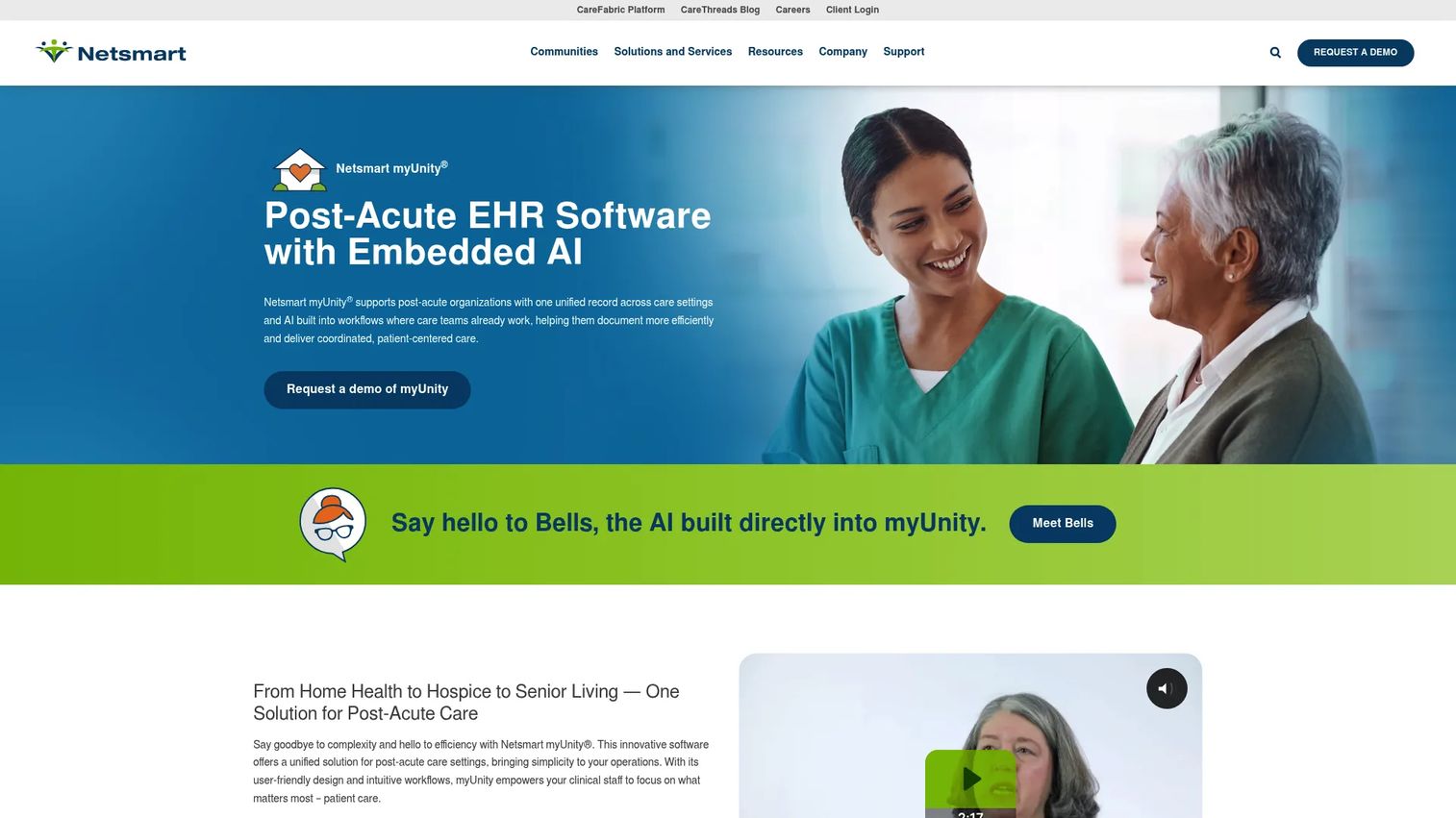
Netsmart myUnity is a post acute EHR within Netsmart's broader CareFabric platform. It covers home health, hospice, palliative care, personal care, skilled nursing, senior living, and care at home in one clinical record. Capabilities include care coordination, referral management, virtual care, revenue cycle management, billing automation, clinical decision support, predictive analytics, mobile access, and interoperability with HIEs, ACOs, hospitals, and major acute care EHRs. The platform embeds AI across clinical and operational workflows.
Best for: Post acute providers consolidating records, referral workflows, and analytics across multiple service lines.
Key features
- Unified post acute EHR across care settings
- AI-embedded clinical and operational workflows
- Interoperability with HIEs, ACOs, and hospital EHRs
- Predictive analytics and real-time KPI dashboards
- Electronic prescribing and medication management
Why choose Netsmart myUnity: Strong for organizations that need a single patient record across several post acute settings without running separate clinical systems for each service line. The interoperability depth matters when hospital referral sources expect electronic discharge data rather than fax-based intake.
Netsmart myUnity pricing: Pricing is not publicly listed. Netsmart states that subscriptions are priced on organizational factors including average daily census, with a one-time implementation fee for certain capabilities. Ask sales to price each service line separately and confirm implementation scope before signing.
G2 rating: 3.4/5
3. Epic
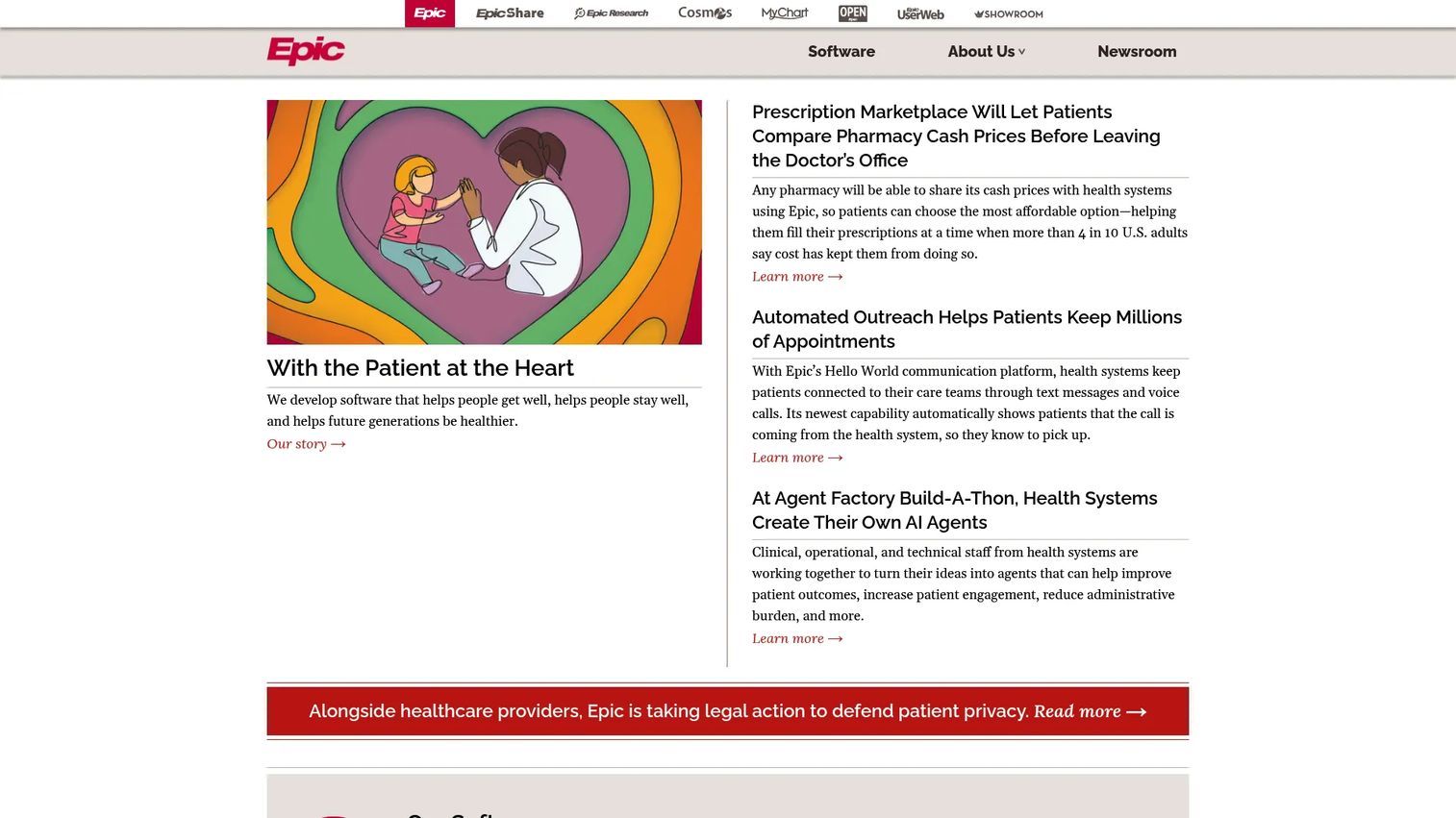
Epic extends into post acute workflows for long term care, long term acute care, rehabilitation, patient experience, healthcare intelligence, interoperability, regulatory documentation, and discharge planning. For health systems that already run Epic across inpatient and ambulatory settings, extending it into post acute care means the patient record travels across the care continuum without a data translation layer. AI charting, interoperability tools, and healthcare intelligence capabilities carry through to the post acute modules.
Best for: Health systems already standardized on Epic, or post acute providers deeply tied to Epic-based hospital referral sources.
Key features
- Enterprise EHR connection across inpatient and post acute
- Long term care and rehabilitation clinical workflows
- Healthcare intelligence and analytics
- Interoperability and health data exchange
- AI charting and clinical documentation support
Why choose Epic: The platform makes sense when post acute operations need to sit inside a broader health system record and data environment. Facilities receiving high referral volume from Epic-based hospitals benefit from native data exchange. The tradeoff is implementation scale, which suits health system-aligned post acute networks more than independent agencies.
Epic pricing: Enterprise quote-driven. Epic does not publish general platform pricing. Buyers should clarify module scope, implementation timeline, training, integration, and annual support costs before procurement. The evaluation process typically runs several months for post acute deployments.
G2 rating: 4.2/5
4. MatrixCare
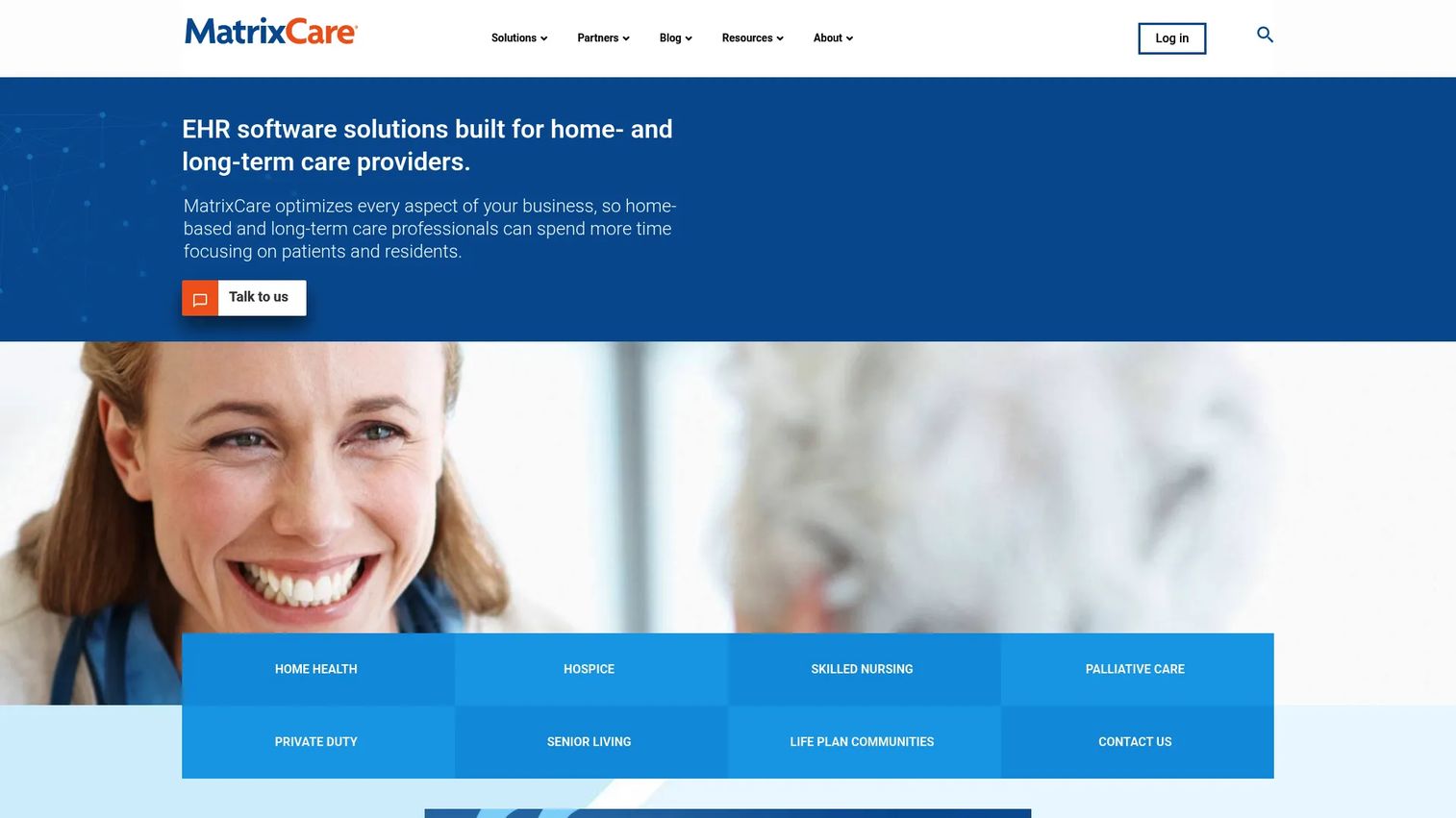
MatrixCare is a post acute technology platform covering long term care, senior living, skilled nursing, home health, hospice, palliative care, and life plan communities. It supports EHR documentation, financial operations, staff scheduling, resident and family engagement, and analytics. Point-of-care clinical documentation works offline, which matters for home-based clinicians in low-connectivity areas. Scheduling, routing, mileage tracking, and EVV connect field operations to billing and compliance workflows.
Best for: Long term care and senior living operators that need facility-centered workflows with adjacent home health and hospice coverage.
Key features
- Skilled nursing and long term care EHR
- Home health and hospice clinical workflows
- Billing, revenue cycle, and compliance tools
- Senior living and life plan community workflows
- Analytics and operational reporting
Why choose MatrixCare: The platform fits operators balancing resident care, facility operations, documentation requirements, and revenue cycle management across multiple care settings. Organizations managing both SNF and senior living under one ownership structure often find the coverage breadth useful without needing a separate vendor for each setting.
MatrixCare pricing: Pricing is quote-based and not displayed on the vendor's website. Buyers should ask sales to price by care setting, census size, module selection, integration requirements, and implementation scope. G2 reviewer comments confirm pricing varies significantly by organization size.
G2 rating: 3.8/5
5. PointClickCare
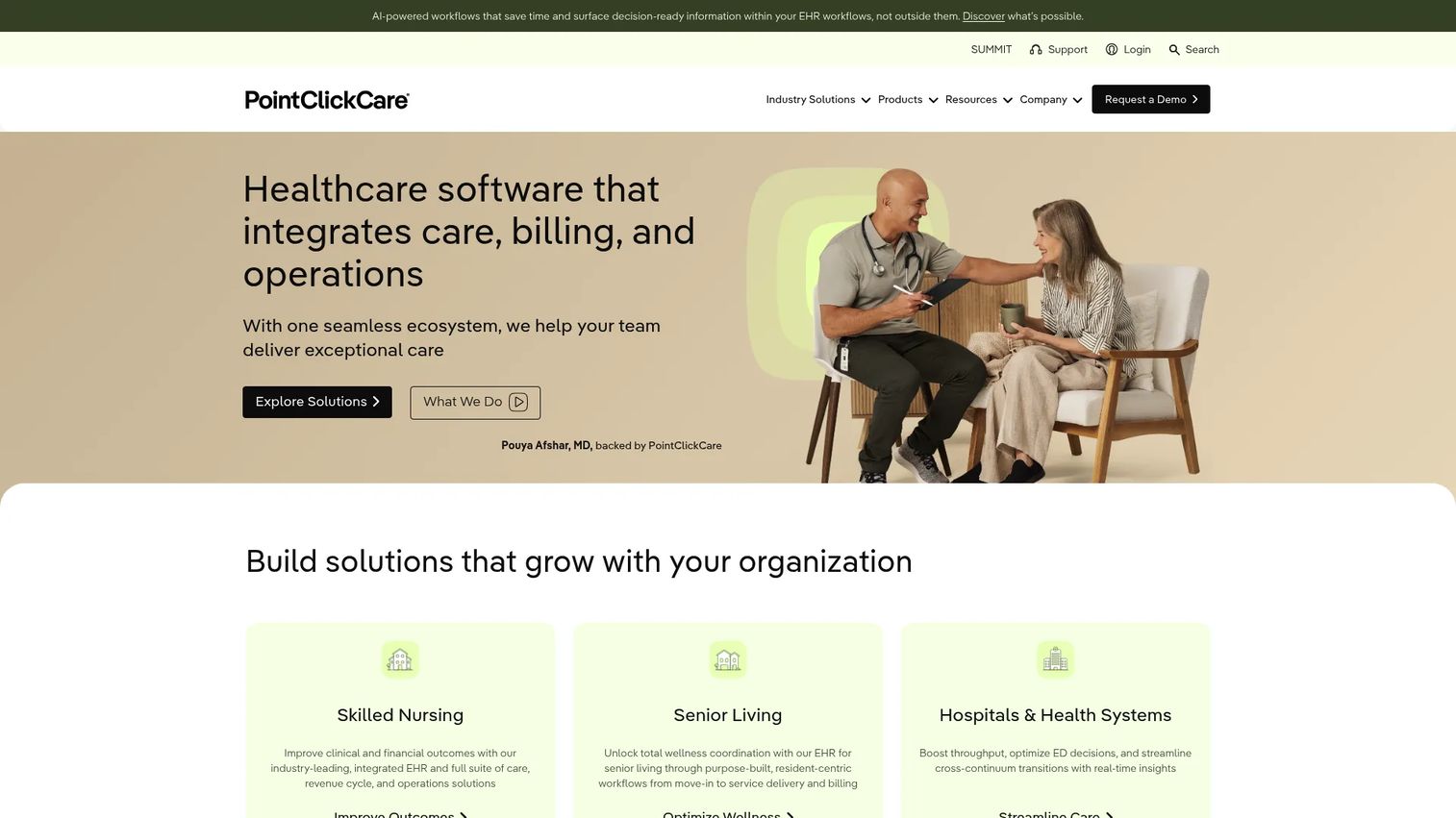
PointClickCare is a senior care and post acute platform supporting skilled nursing, long term care, assisted living, care collaboration, medication management, analytics, and interoperability. Its post acute network connects skilled nursing facilities with hospitals, health plans, ACOs, and other post acute providers. Mobile point-of-care documentation, secure care-team messaging, and lab and imaging order integration support day-to-day clinical operations. Reporting and analytics cover census, quality metrics, and operational performance.
Best for: Skilled nursing and senior care organizations focused on network connectivity, documentation compliance, and census visibility across facilities.
Key features
- Skilled nursing and senior care EHR workflows
- Post acute network and care collaboration tools
- Point-of-care mobile documentation
- Interoperability and health data exchange
- Lab and imaging order and result integration
Why choose PointClickCare: The platform's network connectivity stands out when SNF operators need to receive referrals electronically from hospital partners and share care data with payers and ACOs. Organizations competing on quality scores and readmission rates benefit from the analytics depth alongside the clinical workflow coverage.
PointClickCare pricing: Core platform pricing is not publicly listed and requires a sales conversation. The USCDI Connector FHIR API carries a published rate of $65 per App per Facility per Month for third-party integrations. Ask sales about pricing drivers including facility count, user seats, module selection, and integration scope.
G2 rating: 4.3/5
6. Axxess
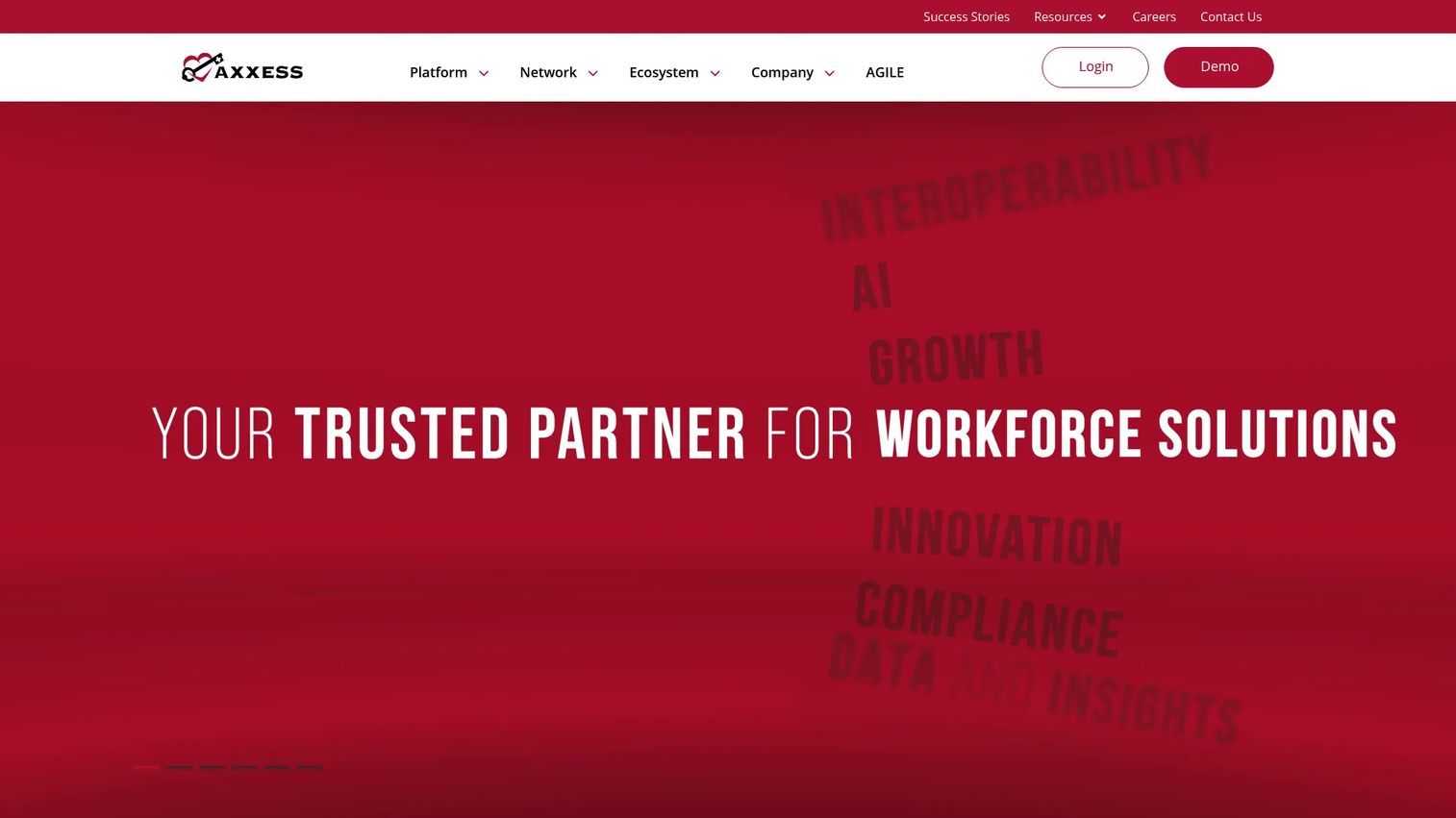
Axxess provides cloud-based software for home health, hospice, palliative care, home care, and staffing operations. It covers scheduling, caregiver coordination, visit documentation, EVV, billing, claims, QA workflows, HIPAA-compliant communication, and mobile access for field clinicians. AI-powered analytics capabilities surface operational insights across clinical and financial data. The platform is built for agencies managing care at home across multiple payer types.
Best for: Home-based care agencies scaling clinical, scheduling, and billing operations without adding administrative headcount.
Key features
- Home health and hospice clinical documentation
- Scheduling and caregiver coordination
- EVV and mobile clinician access
- Electronic billing and revenue cycle management
- AI-powered workflow analytics
Why choose Axxess: The cloud-based architecture and mobile-first design fit agencies with distributed field teams where clinicians document at the point of care rather than returning to an office. The billing and QA integration reduces the gap between visit completion and claim submission.
Axxess pricing: Pricing is not publicly displayed on the Axxess website. Buyers should contact sales and ask about pricing by service line, patient volume, user count, and EVV requirements. No free trial was confirmed from the vendor's current site.
G2 rating: 3.8/5
7. AlayaCare
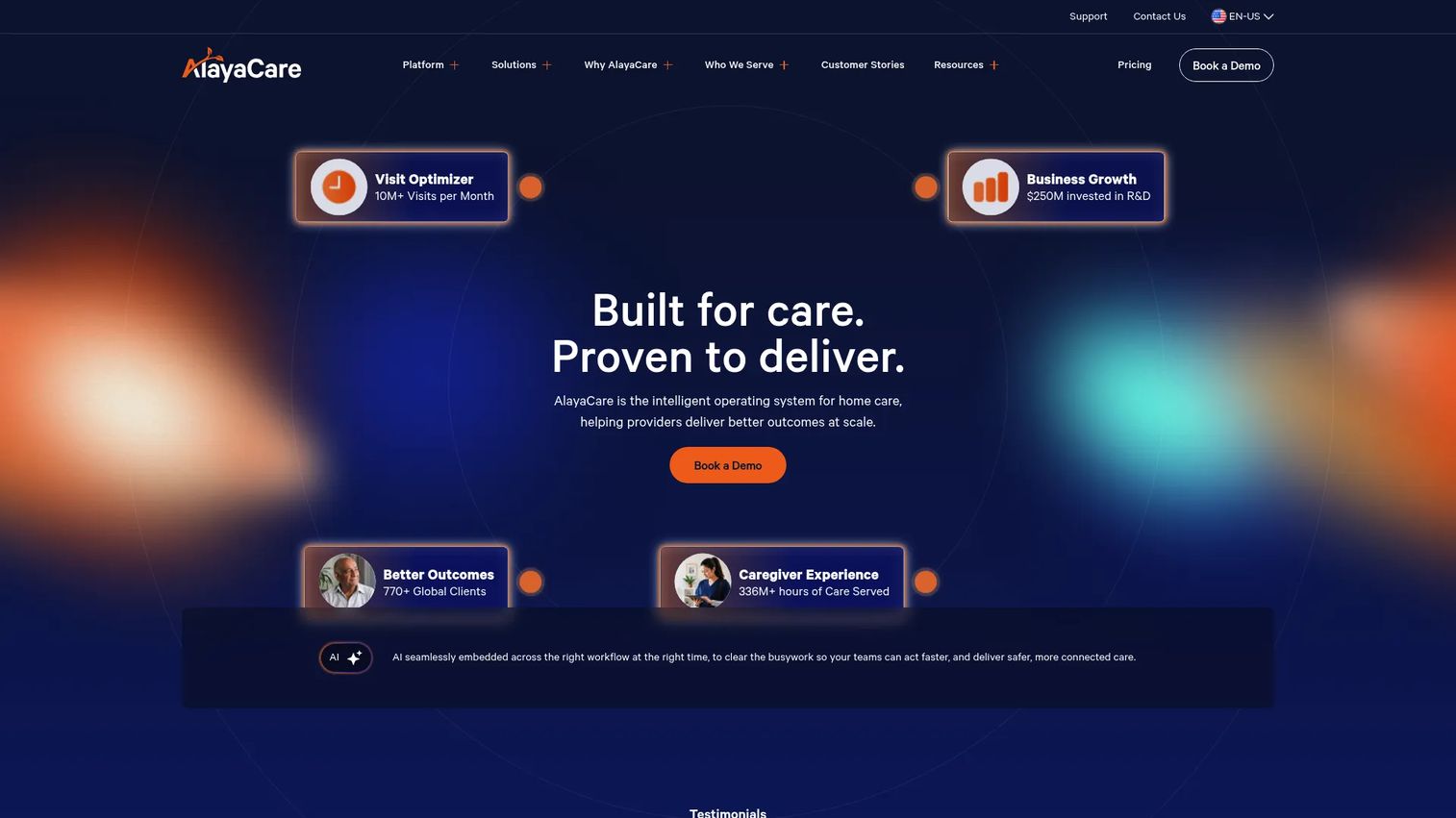
AlayaCare is a cloud-based platform for home care and home health organizations. It handles scheduling, route optimization, authorization management, EVV, clinical documentation, care plans, family portal access, and workforce operations. A caregiver mobile app supports visit verification and point-of-care charting. AI-powered automation and analytics capabilities connect scheduling efficiency to clinical and financial outcomes. AlayaCare serves providers across North America, Australia, and internationally.
Best for: Home-based care providers that need operational coordination across caregivers, visits, schedules, and client records at scale.
Key features
- Scheduling, routing, and authorization management
- Electronic visit verification and mobile caregiver app
- Clinical documentation and care plan management
- Billing and financial workflows
- Family portal and virtual visit tools
Why choose AlayaCare: The platform fits providers trying to reduce scheduling friction and coordinate distributed home care teams. The route optimization and workforce operations layer connects caregiver availability to client schedules in a way that reduces manual dispatch work. AlayaCare does not offer a generic free trial; pricing is custom by organization size, care model, region, and module selection.
AlayaCare pricing: Custom pricing; contact sales directly. The vendor's pricing page confirms no free trial and that pricing reflects organization size, care models, regions, and selected modules. Ask about minimum contract terms and implementation costs alongside the subscription rate.
G2 rating: 4.1/5
8. Homecare Homebase
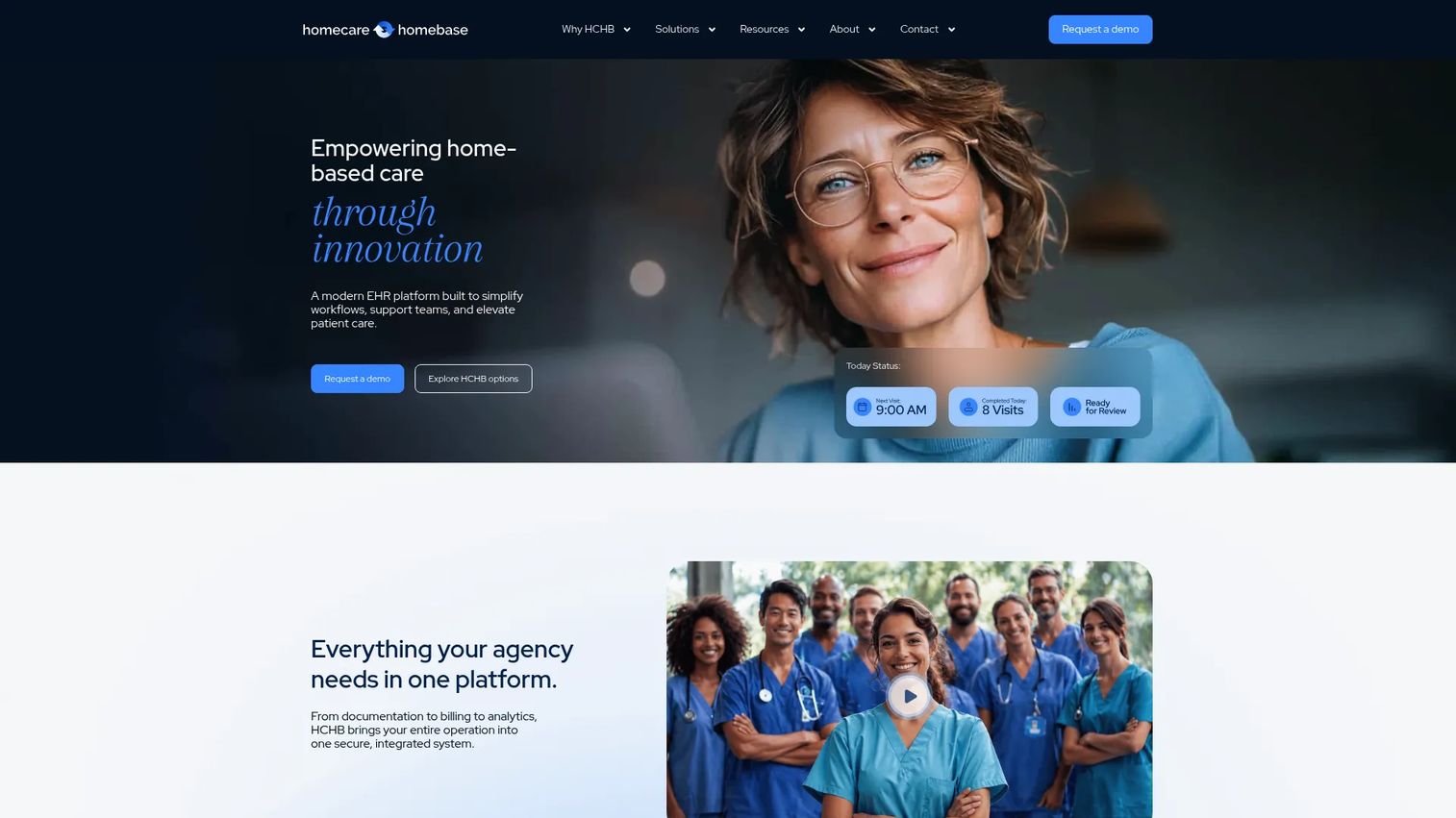
Homecare Homebase is an integrated cloud-based EHR and operations platform built for home health, hospice, and personal care agencies. It covers scheduling, workforce management, mobile point-of-care documentation, billing, compliance, order management, and analytics. The platform is positioned for agencies running high visit volumes where scheduling precision and clinical-to-billing speed matter most.
Best for: Enterprise home health and hospice agencies with high visit volume that need scheduling, documentation, and revenue cycle tightly connected.
Key features
- Home health and hospice operations and scheduling
- Mobile point-of-care documentation
- Revenue cycle management and compliance tools
- Order management workflows
- Analytics and operational reporting
Why choose Homecare Homebase: The platform is built around agency scale. Operators running thousands of visits per week need scheduling that connects to clinician availability, patient acuity, and payer authorization without manual coordination at each step. The billing and compliance integration reduces the audit exposure that comes with high-volume claim submission.
Homecare Homebase pricing: Pricing is not displayed on the vendor website and requires a direct sales conversation. Ask about module pricing, implementation fees, interface costs, and training when evaluating total cost of ownership.
G2 rating: 3.7/5
9. KanTime
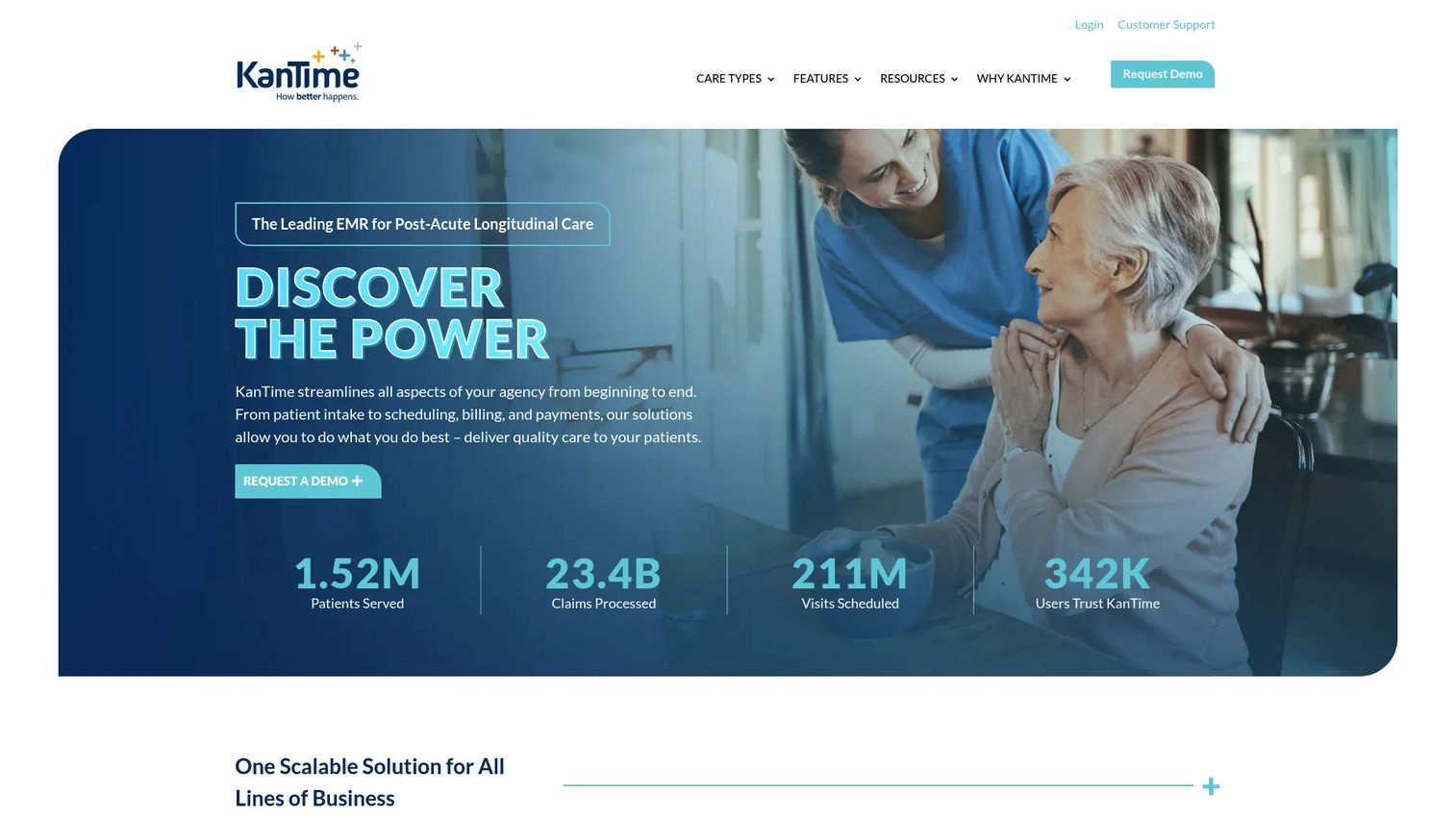
KanTime is an enterprise post acute care EMR and agency management platform. It covers home health, hospice, pediatric care, palliative care, and private duty from one operational system. Capabilities include intelligent scheduling, clinical documentation, longitudinal patient records, end-to-end billing and coding, denial management, automated payroll and timekeeping, and analytics dashboards. KanTime positions itself as a multi-line platform for agencies that want one system across several home-based care service lines.
Best for: Agencies managing multiple lines of home-based care, from home health and hospice to pediatric and private duty, from a single platform.
Key features
- Home health, hospice, pediatric, and private duty workflows
- Intelligent scheduling and calendar management
- End-to-end billing, coding, claims, and denial management
- Automated payroll and timekeeping
- Analytics and customizable operational dashboards
Why choose KanTime: The multi-service-line coverage fits agencies that have grown beyond a single care category and need clinical plus financial workflows connected across home health, hospice, and private duty without running separate billing systems for each. Pricing is based on a base license, patient census, concurrent users, and implementation services; ask sales to price each component separately.
KanTime pricing: Pricing is not publicly listed. The vendor's documentation confirms pricing depends on base license, patient census, concurrent users, and optional services. Contact sales and confirm implementation timeline alongside subscription terms.
G2 rating: 3.6/5
10. Alora Home Health
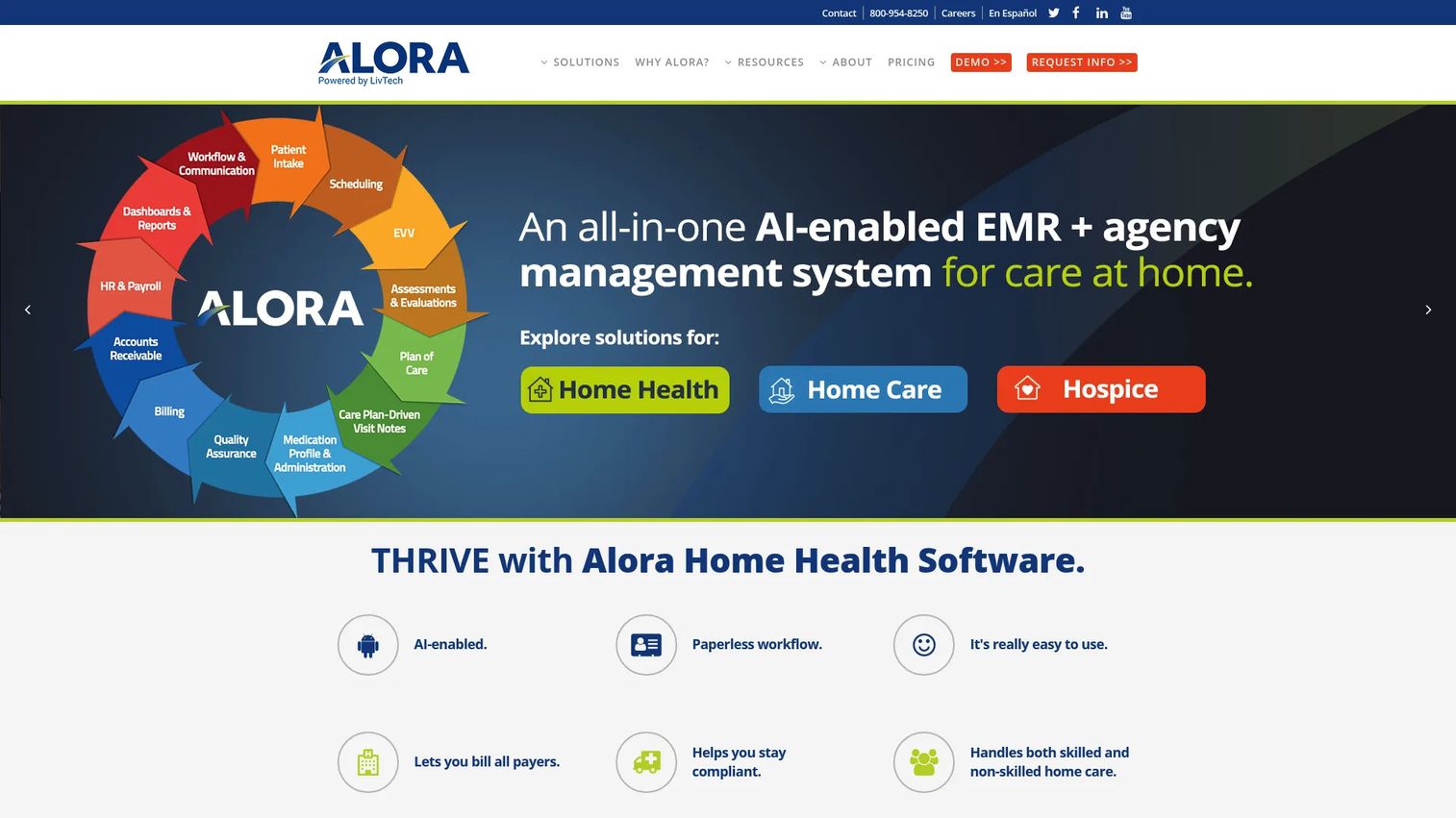
Alora Home Health is a cloud-based platform for home health, home care, and hospice agency operations. It covers clinical documentation, OASIS assessments, scheduling, billing, payroll integration, accounts receivable, EVV via GPS and telephony, offline charting, mobile access, electronic signatures, and multi-office support. Alora supports Medicare, Medicaid, private insurance, VA, and private-pay billing from a single system. It is one of the few platforms in this category that publishes pricing ranges directly on its website.
Best for: Small to midsize home health agencies that need clinical and billing basics covered without enterprise-scale implementation complexity.
Key features
- Clinical documentation and OASIS assessments
- Scheduling, billing, and accounts receivable
- GPS and telephony-based EVV
- Offline charting and mobile access
- Multi-office and multi-payer billing support
Why choose Alora Home Health: The platform earns its place at the smaller agency end of the market because it covers clinical documentation, billing, and EVV without requiring a lengthy implementation or a dedicated IT resource. The transparent pricing structure means operators can evaluate cost before talking to sales.
Alora Home Health pricing: Plans run from $295 to $800 per month for small agencies, $800 to $2,000 per month for midsize agencies, and $2,000 to $8,000 per month for larger agencies. Pricing is based on unlimited users or unlimited patients depending on the selected model. Customized written quotes are available.
G2 rating: 4.5/5
11. Brightree
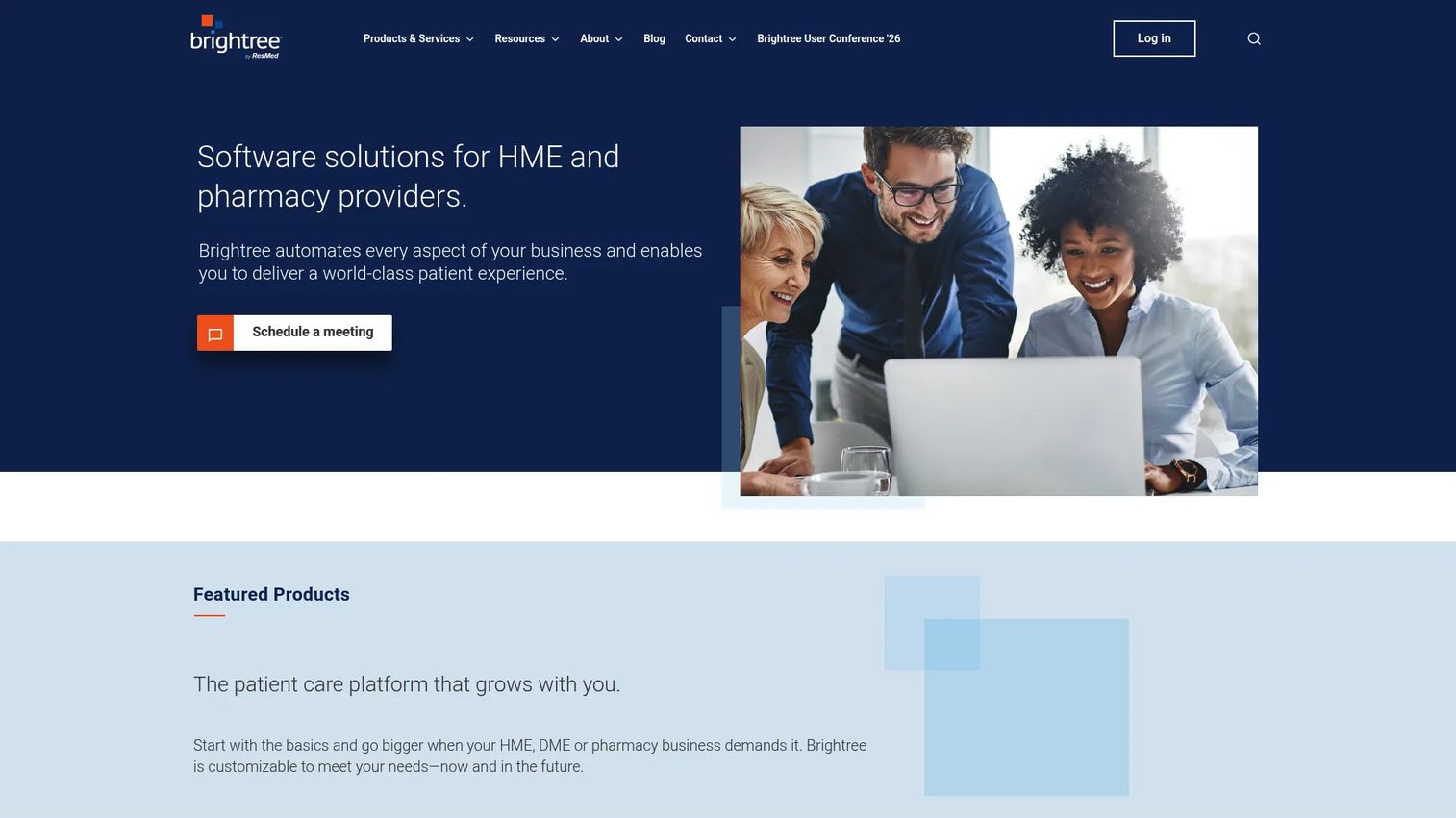
Brightree provides cloud-based software for HME/DME providers and pharmacy home infusion businesses. It covers patient intake and referral management, billing, claims processing, revenue cycle management, denial management, inventory management, mobile delivery workflows, patient engagement, and automated resupply programs. Brightree connects post acute equipment operations to clinical records, payer documentation requirements, and patient payment workflows.
Best for: HME and DME providers managing equipment orders, resupply, claims, and patient collections as part of a broader post acute care operation.
Key features
- Patient intake and referral management
- Billing, claims, and denial management
- Inventory management and mobile delivery
- Automated patient resupply programs
- Patient engagement and payment workflows
Why choose Brightree: Post acute care delivery often includes equipment alongside clinical services. Brightree fits when the operation includes recurring equipment orders, resupply cycles, payer documentation requirements, and patient payment collection that generic EHRs do not handle well. The focus on DME and HME workflows means clinical staff and billing teams work in a system built around equipment-centric reimbursement rules.
Brightree pricing: Pricing is not publicly displayed on the Brightree website. Buyers should contact sales and ask about pricing by claims volume, resupply program scale, integration requirements, and implementation scope.
G2 rating: 4.1/5
12. MatrixCare Senior Living
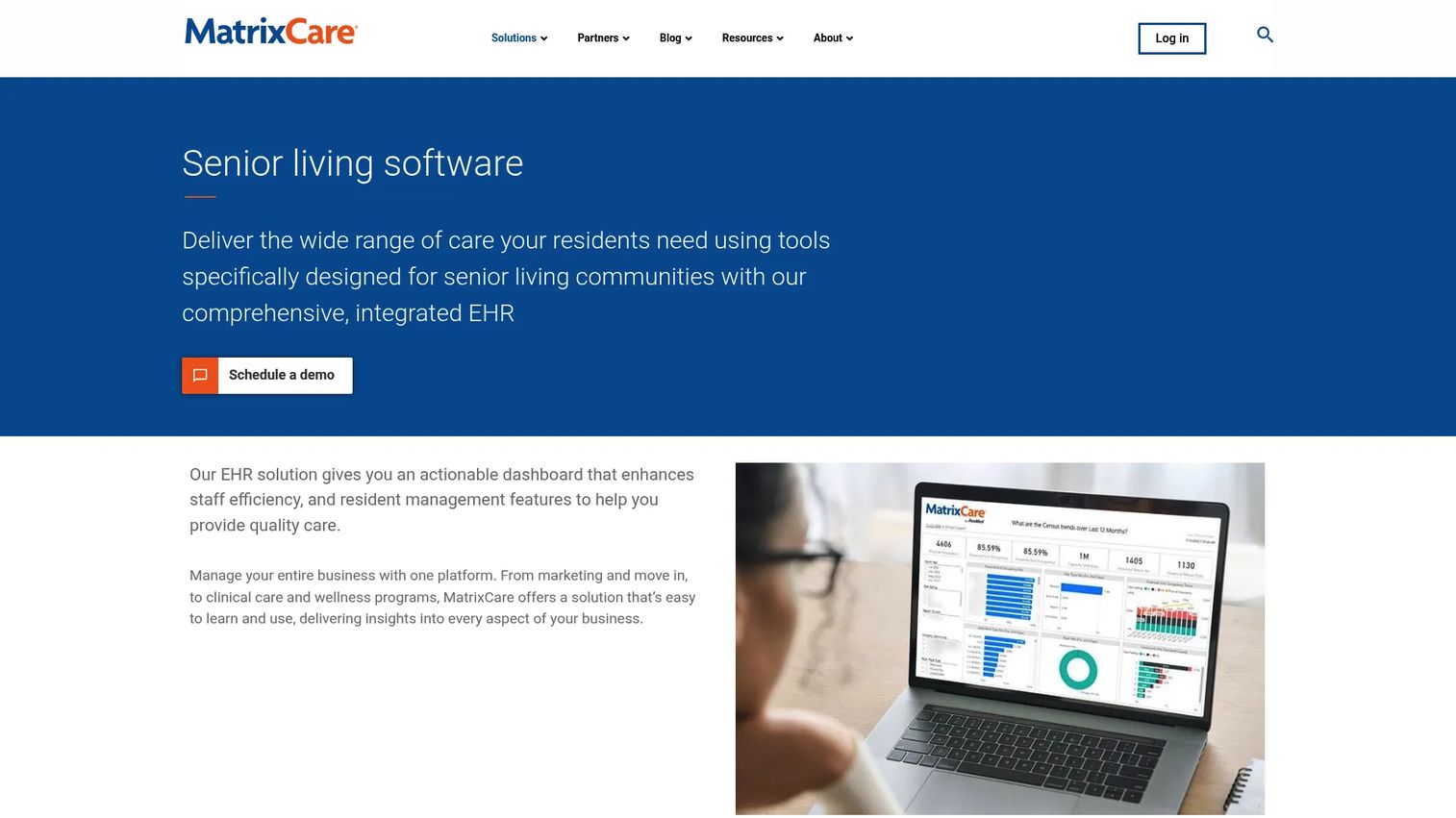
MatrixCare Senior Living is a dedicated senior living EHR and operations management platform for assisted living, memory care, and similar community settings. It includes resident care management through CareAssist, eMAR, and point of care functionality, plus a customizable dashboard with drag-and-drop widgets for census, vacancy, and occupancy tracking. Automated resident-data integration supports reimbursement and coding workflows. Family communication, mobile documentation, and workflow customization round out the operational layer.
Best for: Assisted living and memory care operators that need senior living-specific workflows rather than a platform built primarily for skilled nursing or home health.
Key features
- Resident care management with CareAssist and eMAR
- Customizable dashboard for census, vacancy, and occupancy
- Automated resident data integration for reimbursement
- Mobile documentation capabilities
- Family communication and engagement tools
Why choose MatrixCare Senior Living: The platform is the more focused option when the buyer cares less about home health workflows and more about community-based resident operations. Operators managing assisted living and memory care communities benefit from resident-centric clinical documentation, family communication, and census reporting without paying for modules designed for home visit management.
MatrixCare Senior Living pricing: Pricing is quote-based. Pricing drivers include community count, resident count, selected modules, and implementation scope. Contact the MatrixCare sales team to get a breakdown by community type and size.
G2 rating: 3.8/5
Considerations when choosing long term post acute care software
Care setting fit
Map your current service lines and your 12-month growth plan before comparing platforms. A skilled nursing tool and a home health agency platform solve different workflow problems. Buying a broad suite for a single-setting operation usually means paying for modules you will not use. Buying a specialized tool for a multi-setting organization means managing more vendor relationships than necessary.
Clinical documentation and regulatory workflow
Evaluate whether the platform supports the specific assessments your care settings require: MDS for skilled nursing, OASIS for home health, HIS for hospice. Incomplete or late regulatory documentation delays reimbursement, not just survey scores. Ask vendors to show the documentation workflow for your highest-volume care setting before committing.
Revenue cycle and payer complexity
Billing in post acute care spans Medicare, Medicaid, managed care, VA, and private pay, often within a single patient episode. Platforms that separate clinical documentation from billing create a second data-entry cycle that introduces errors and delays claim submission. Evaluate whether the billing module connects directly to clinical records or requires an export step.
Interoperability and referral flow
Referrals from hospital discharge planners arrive faster when your platform connects electronically to the hospital EHR. Assess HIE participation, HL7 and FHIR support, and payer data exchange capabilities. Operators receiving high referral volume from Epic-based systems should ask specifically about native connection options.
Implementation and change management
The best-reviewed software on paper can still fail if clinical teams revert to paper workflows during go-live. Ask every vendor about data migration timelines, go-live support staffing, mobile adoption training, and what happens if the system goes down during a visit. Get SLA commitments in writing before signing.
Conclusion
Shortlist by care setting first, then evaluate revenue cycle fit, implementation risk, and interoperability depth.
WellSky and Netsmart myUnity cover the broadest post acute scope, making them the natural starting point for multi-service operators. Epic belongs on the shortlist only when the post acute operation is tightly connected to a health system already running Epic. PointClickCare and MatrixCare are the strongest options for skilled nursing and senior care facilities. For home-based agencies, Axxess, AlayaCare, Homecare Homebase, KanTime, and Alora Home Health each fit different agency sizes and service line combinations, with Alora standing out as the only platform to publish transparent pricing. Brightree is the specialist for DME and HME operations. MatrixCare Senior Living fits assisted living and memory care operators who need resident-centered workflows without the skilled nursing overhead.
Every platform in this category prices by quote except Alora. Start with a care setting map, bring your census numbers and payer mix to the first sales call, and ask each vendor to show the clinical documentation and billing workflow for your highest-volume setting before you go further.
Start your journey with Guideflow today!
FAQs
Long term post acute care software is healthcare technology used by providers outside or after the hospital setting to manage clinical documentation, care coordination, billing, compliance, scheduling, referrals, analytics, and patient or resident engagement. It covers care settings including skilled nursing, home health, hospice, senior living, rehabilitation, and DME operations.
Acute care EHRs support hospital-based workflows: Inpatient orders, surgical scheduling, emergency department triage, and same-day discharge planning. Post acute software supports longer care episodes across distributed care teams, recurring visits, regulatory assessments like MDS and OASIS, and reimbursement complexity that spans multiple payer types. The two categories overlap at hospital discharge, which is where referral management and interoperability capabilities matter most.
Skilled nursing buyers should prioritize MDS workflow support, census management, clinical documentation, pharmacy and lab connections, billing, and interoperability with hospital referral sources. PointClickCare and MatrixCare are the most commonly evaluated options for SNF operations. Epic fits SNFs that are part of a health system network. Netsmart myUnity covers skilled nursing within a broader multi-setting EHR if the organization also runs home health or hospice.
Home health buyers should focus on OASIS documentation, scheduling, EVV compliance, mobile visit documentation, claims and denial management, QA workflows, and referral intake. Axxess, AlayaCare, Homecare Homebase, KanTime, and Alora Home Health each fit different agency sizes. WellSky and Netsmart myUnity also cover home health within broader platform suites. Alora is the only option in this group that publishes pricing ranges.
Pricing in this category depends on care setting, census or patient volume, module selection, user count, integration requirements, and implementation scope. Most platforms price by quote. Alora Home Health is the exception, with published ranges starting at $295 per month for small agencies. Enterprise platforms serving multi-site skilled nursing or health system-connected post acute networks typically involve six-figure annual contracts. Ask vendors to separate subscription, implementation, training, and interface costs.
Core capabilities include EHR documentation, medication and care plan workflows, census management, billing and regulatory assessment support, staff scheduling, reporting, family communication, and interoperability with hospitals and payers. Regulatory assessment support should match your care settings: MDS for skilled nursing, OASIS for home health, HIS for hospice. Analytics covering readmissions, payer mix, and utilization round out what operators need for operational visibility.
Broad suites reduce vendor sprawl and create a single record across service lines, but they require heavier implementation and may include modules you do not need. Specialized tools fit a care line faster and often carry lower initial cost, but they require more integrations as the organization grows. Map your current service lines, your referral sources, your payer requirements, and your reporting needs. If your payer and hospital relationships demand electronic data exchange across several settings, a broader platform usually justifies the implementation investment.
Ask about data migration from legacy systems, training approach for clinical and billing staff, go-live support staffing and duration, integration timeline with hospital EHRs and payer systems, reporting setup and configuration, mobile device requirements, downtime procedures for field clinicians, support SLA terms, and total cost including implementation services and add-on modules. Get commitments in writing. The implementation plan is where most post acute software projects run over budget and timeline.