A new feature ships. Security review comes back with questions about database access controls, audit trails, and how sensitive fields are masked in non-production environments. Engineering has two sprints of runway. The questions are legitimate, but answering them without purpose-built tooling burns the kind of focused time that belongs on the roadmap.
That tension is the core problem database security solutions exist to solve. According to IBM (2025), the average global data breach cost reached $4.44 million. Meanwhile, Thales (2025) found that 54% of cloud data is classified as sensitive, but only 8% of organizations encrypt 80% or more of their cloud data. The gap between data exposure and controls is wide, and it widens faster as products add new integrations and data workflows.
The question for product managers is not whether to invest in database protection. It is which database security tools reduce risk without creating a permanent maintenance burden for engineering.
What's inside
This guide is for product managers, engineering leads, and security stakeholders evaluating database security software in 2026. Tools were selected based on:
- Database coverage across relational, NoSQL, cloud-managed, and warehouse environments
- Core capability depth: Encryption, database activity monitoring, data masking, access control, and threat detection
- Deployment flexibility across cloud, hybrid, and on-premises models
- Pricing transparency and integration fit with existing GTM and engineering stacks
TL;DR
- Best for centralized encryption and key management: CipherTrust Data Security Platform, for broad hybrid and multi-cloud database protection
- Best for database activity monitoring at scale: IBM Guardium, for auditing and threat detection across large estates
- Best for cloud data discovery: Cyera Platform, for AI-native visibility across modern cloud data stores
- Best for policy enforcement across distributed infrastructure: Imperva Data Security Fabric, for monitoring and risk-based controls
- Best for access governance: Satori Data Security Platform, for centralized policy management across cloud and hybrid data
- Best for Microsoft-centered governance: Microsoft Purview Data Governance, for cataloging and classification across Microsoft estates
- Best for focused database firewall and masking: DataSunrise, for teams with a defined database protection problem
- Best for SQL Server compliance monitoring: Idera SQL Compliance Manager, for SQL Server auditing and compliance reporting
- Best for broader data exposure analysis: Varonis Data Security Platform, for discovery, classification, and access analysis across hybrid environments
What is database security software?
Database security software protects stored data and database activity through controls for encryption, identity management, access governance, monitoring, data masking, threat detection, auditing, and policy enforcement.
Core capabilities
- Database encryption: Protects data at rest and in transit, with support for key rotation and external key management
- Authentication and authorization: Enforces identity, least privilege, privileged user controls, and role separation
- Database activity monitoring: Records queries, administrative actions, access patterns, and policy violations in real time
- Data masking and tokenization: Reduces exposure of sensitive values in development, testing, analytics, and support contexts
- Database threat detection: Identifies suspicious access, SQL injection patterns, abnormal query behavior, and policy breaches
- Database auditing: Produces evidence for internal investigations and regulatory reviews
- Cloud and hybrid coverage: Protects managed cloud databases, self-managed infrastructure, data warehouses, and mixed deployments
Database security software versus broader data security platforms
Database security software focuses specifically on database systems and their activity. Broader data security platforms may also cover file stores, SaaS applications, endpoints, data discovery, classification, and governance across many repository types.
As a product manager, map the boundary to the actual risk. A database-native tool fits a focused database control problem. A broader platform fits teams managing many data repositories across a complex estate.
Database environments to verify
Before selecting any tool, confirm support for:
- Relational databases (PostgreSQL, MySQL, Oracle, SQL Server)
- NoSQL databases (MongoDB, Cassandra, DynamoDB)
- Cloud-managed databases (RDS, Cloud SQL, Azure SQL)
- Data warehouses (Snowflake, BigQuery, Redshift)
- On-premises systems
- Hybrid and multi-cloud deployments
When to use database security software
Protect customer data during product growth
A SaaS product adding new tenants, regions, or data workflows expands its exposure surface with each release. Purpose-built database security compliance tooling can apply consistent controls across new environments without requiring bespoke engineering for every feature. This matters most when release cadence is high and manual control reviews create a bottleneck.
Prepare for audits and security reviews
Audit evidence, access logs, and policy reports take significant engineering time to assemble without dedicated tooling. Database security services can organize audit trails, generate compliance reports, and surface policy violations before reviewers ask for them. Good tooling does not replace governance or legal review, but it does eliminate the scramble.
Secure cloud and hybrid databases
Product teams operating across managed cloud services, data warehouses, and legacy on-premises systems often lack uniform visibility into who is accessing what. A database protection platform with hybrid database security coverage can enforce consistent monitoring and access policies across deployment models, which reduces the blind spots that grow when infrastructure is heterogeneous.
Database security software comparison
The table below compares category fit, database protection focus, pricing visibility, and verified G2 ratings.
Pricing and G2 ratings verified September 30, 2026.
| # | Product | Best for | Key differentiator | Pricing | G2 rating |
|---|---|---|---|---|---|
| 1 | CipherTrust Data Security Platform | Centralized encryption and key management | Broad hybrid and multi-cloud protection with centralized key lifecycle | Free community edition; paid plans via Data Protection on Demand marketplace | Not verified |
| 2 | IBM Guardium | Database activity monitoring at scale | Auditing, discovery, vulnerability assessment, and AI-powered threat detection | Contact IBM for pricing | 4.4/5 |
| 3 | Cyera Platform | Cloud data discovery and DSPM | AI-native data discovery, classification, and exposure analysis | Custom pricing | 4.6/5 |
| 4 | Imperva Data Security Fabric | Policy enforcement across distributed databases | Monitoring, discovery, and risk-based controls across hybrid environments | Contact Imperva for pricing (Data Assure, Data Secure, Data 360 plans) | Not verified |
| 5 | Satori Data Security Platform | Data access governance | Centralized access policy management and real-time enforcement | Contact Satori for pricing | 4.7/5 |
| 6 | Microsoft Purview Data Governance | Microsoft-centered data governance | Cataloging, classification, lineage, and governance across Microsoft estates | Pay-as-you-go via Azure subscription | 4.7/5 |
| 7 | DataSunrise | Database firewall and masking | Real-time database firewall, dynamic masking, and activity monitoring | Custom pricing (personalized quote required) | 4.3/5 |
| 8 | Idera SQL Compliance Manager | SQL Server compliance monitoring | SQL Server auditing, compliance templates, and policy alerting | $1,897/instance per year (annual subscription) | 4.4/5 |
| 9 | Varonis Data Security Platform | Broader data exposure analysis | Discovery, classification, access analysis, and automated remediation | Contact Varonis for pricing | 4.6/5 |
9 best database security software tools for 2026
1. CipherTrust Data Security Platform
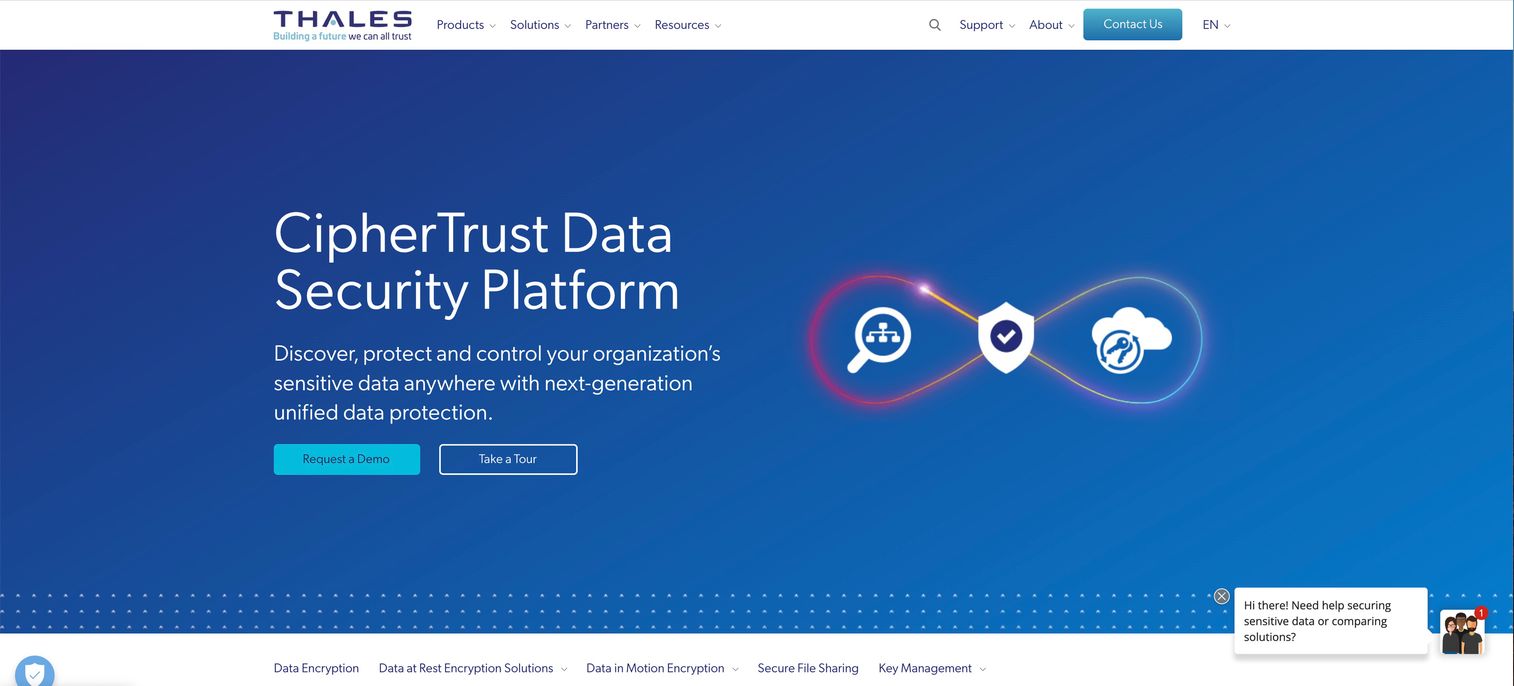
CipherTrust Data Security Platform from Thales is an integrated data-centric security platform that unifies discovery, classification, encryption, centralized key management, and access controls across on-premises and cloud environments. It supports relational databases, NoSQL databases, big data platforms, and containers. For product organizations managing sensitive customer data across multiple deployment models, CipherTrust addresses the encryption and key lifecycle problem without requiring separate tooling per environment.
Best for: Enterprise security teams that need centralized encryption and key management across diverse, hybrid database estates.
Key features
- Transparent data encryption: Files, databases, big data, and containers
- Centralized enterprise key management across cloud and on-premises
- Tokenization and data masking for sensitive field protection
- Granular role-based access controls and privileged user separation
- Hybrid and multi-cloud database coverage
Why choose CipherTrust Data Security Platform: Choose CipherTrust when encryption governance and key lifecycle management represent the largest operational risk. Teams with complex deployment models benefit from having one centralized control plane for key management rather than managing keys per cloud or database type. Architecture planning and cross-team coordination with infrastructure are part of the setup process.
CipherTrust Data Security Platform pricing: Thales offers a free-forever Community Edition for evaluation and development use. Paid CipherTrust services are available through the Data Protection on Demand marketplace, with pricing displayed per service. Contact Thales or visit the Data Protection on Demand pricing page for commercial plan details.
2. IBM Guardium
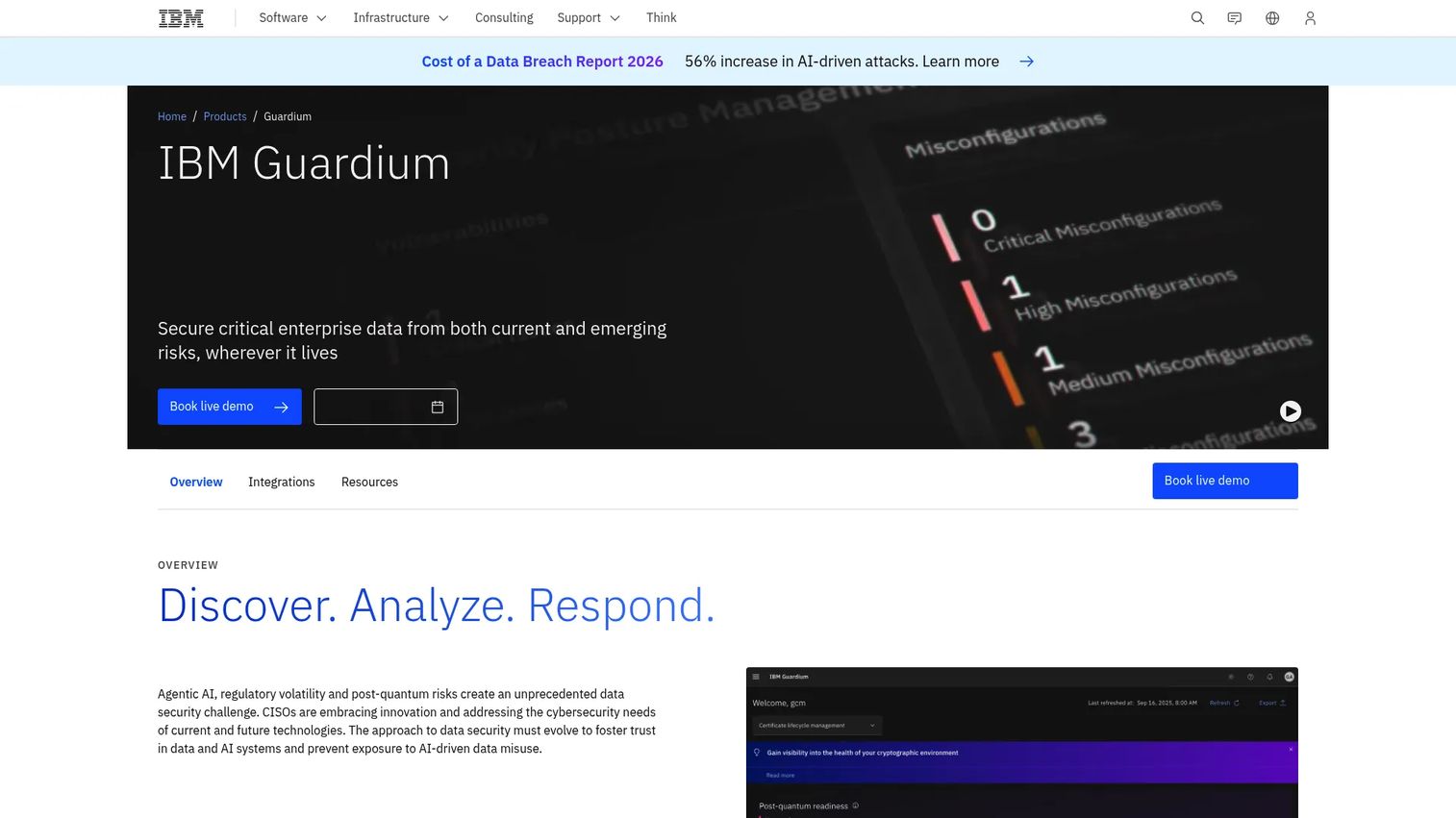
IBM Guardium is a data security portfolio that discovers, monitors, analyzes, and protects sensitive enterprise data across hybrid cloud environments and AI systems. Its database activity monitoring capability records real-time queries, access patterns, and policy violations across a wide range of database engines. For product teams operating inside organizations with formal security operations and audit workflows, Guardium's depth in monitoring and compliance reporting addresses the audit evidence problem directly.
Best for: Large organizations that need database activity monitoring and audit evidence across complex, multi-database estates.
Key features
- Real-time database activity monitoring and continuous compliance
- Sensitive data discovery and classification
- Database vulnerability assessment and remediation
- AI-powered threat detection and automated alerting
- Compliance reporting across major regulatory frameworks
Why choose IBM Guardium: Guardium suits organizations where monitoring breadth, audit depth, and regulatory coverage are non-negotiable. The portfolio is extensive, which means specialist implementation time and internal coordination across security operations and infrastructure teams are expected parts of deployment.
IBM Guardium pricing: IBM pricing for Guardium varies by configuration and selected offerings. Contact IBM directly for a quote based on your database estate and deployment requirements.
G2 rating: 4.4/5 (IBM Guardium Data Detection and Response, verified September 30, 2026).
3. Cyera Platform
Cyera is an AI-native data security platform that discovers sensitive data, governs human and AI access, and protects against AI-driven risk across cloud, SaaS, on-premises, and hybrid environments. Cyera's agentless discovery engine classifies data automatically, surfaces exposure risk, and provides remediation guidance. For product managers dealing with fast cloud adoption and visibility gaps during product expansion, Cyera addresses the inventory problem: You cannot protect data you cannot see.
Best for: Cloud-first organizations that need visibility into sensitive data and exposure risk across modern, rapidly changing data environments.
Key features
- Agentless data discovery and AI-native classification
- Data Security Posture Management (DSPM) with automated remediation
- AI security posture management and AI asset inventory
- Real-time AI interaction monitoring, alerting, and blocking
- Data Loss Prevention, access governance, and privacy automation
Why choose Cyera Platform: Cyera fits organizations where discovery and posture management are the primary gaps, particularly those dealing with AI data risk and fast-moving cloud infrastructure. Teams that also need deep database-native query monitoring or transparent encryption will likely need complementary controls alongside it.
Cyera Platform pricing: Cyera offers two custom-quote plans, DSPM and DLP, with optional add-ons. Contact Cyera through its pricing page for a quote based on data estate size and selected modules.
G2 rating: 4.6/5
4. Imperva Data Security Fabric
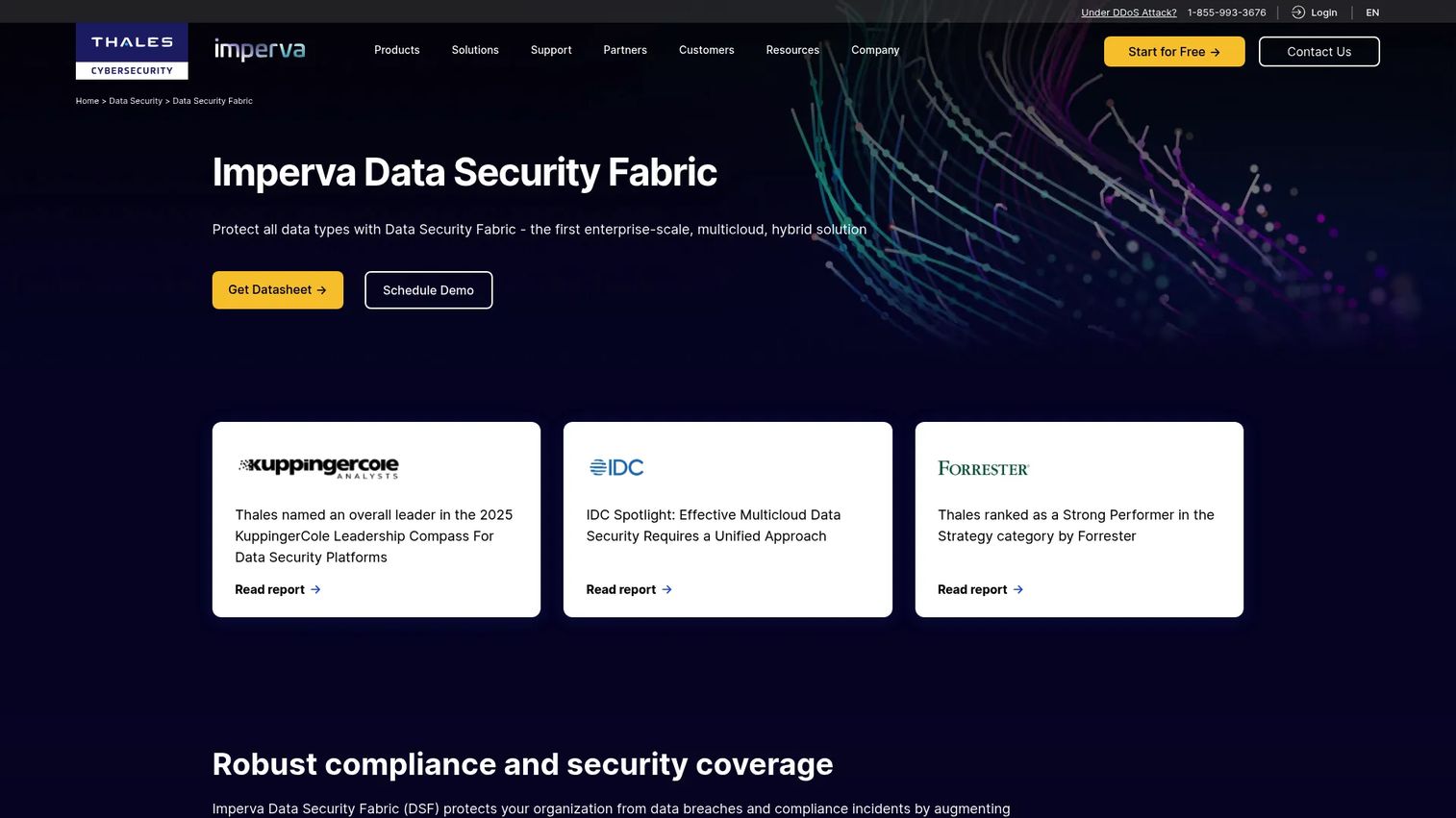
Imperva Data Security Fabric is an enterprise-scale hybrid and multi-cloud data security platform for protecting structured, semi-structured, and unstructured data. It covers database activity monitoring, data discovery and classification, risk-based policy enforcement, and audit reporting across distributed environments. Product teams balancing delivery speed with centralized security policy find Imperva relevant when the data estate spans multiple systems and enforcement consistency is the challenge.
Best for: Security teams managing database activity monitoring and policy controls across distributed infrastructure.
Key features
- Database activity monitoring and data risk analytics
- Data discovery and classification across structured and unstructured repositories
- Risk-based policy enforcement and prioritization
- Cloud database visibility and coverage
- Audit reporting and data retention controls
Why choose Imperva Data Security Fabric: Imperva works well for organizations that need monitoring and policy coverage across several database and data systems from a single fabric. Larger deployments typically involve integration planning and governance coordination. Imperva offers three plan tiers, Data Assure, Data Secure, and Data 360, each priced on request.
Imperva Data Security Fabric pricing: All three Imperva Data Security Fabric plans require contacting Imperva's sales team. Visit the Imperva plans page or request a quote directly.
5. Satori Data Security Platform
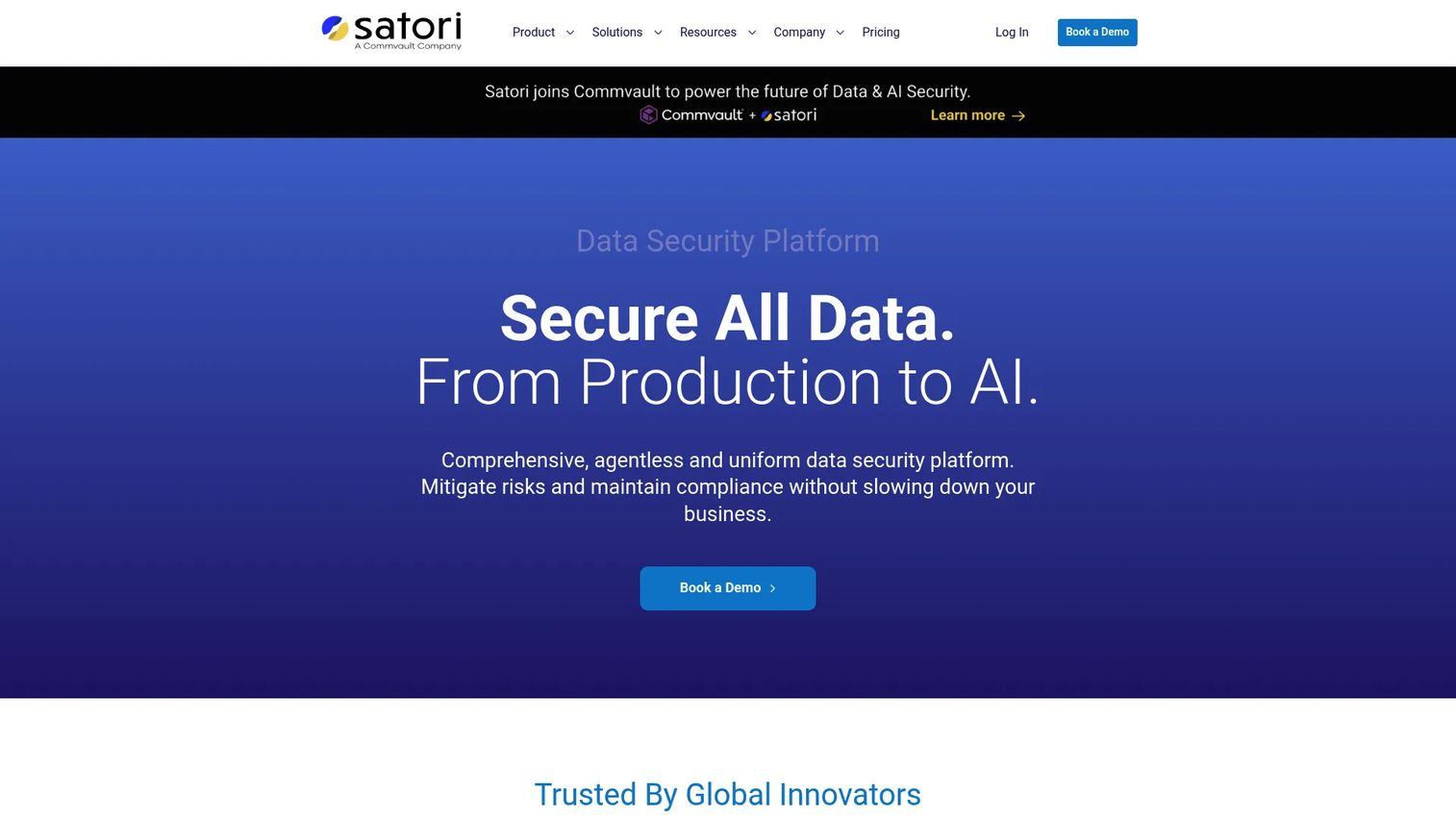
Satori is a cloud-native data security platform that discovers, monitors, and secures data across production databases, analytics environments, AI workloads, and multi-cloud deployments. Its core differentiator is centralized data access control: Satori sits in the access path and enforces policies in real time, without requiring changes to the underlying database. For product teams that need to map access decisions to specific workflows and customer data risk, Satori provides the visibility into who is accessing what and when.
Best for: Organizations prioritizing data access governance and centralized policy enforcement across cloud and hybrid data environments.
Key features
- Data discovery and classification across managed and self-hosted databases
- Centralized access policy management with real-time enforcement
- Sensitive data visibility and exposure analysis
- Activity monitoring with audit trails
- Cloud and multi-cloud data coverage
Why choose Satori Data Security Platform: Satori is a strong fit for teams that need to govern data access across a distributed data estate without modifying individual databases or pipelines. Organizations that also require transparent database encryption or deep query-level monitoring at the database layer may need additional controls to complement Satori's access governance approach.
Satori Data Security Platform pricing: Satori does not display plan pricing on its website. Contact Satori directly for pricing based on your environment size and deployment requirements.
G2 rating: 4.7/5
6. Microsoft Purview Data Governance
Microsoft Purview Data Governance provides unified catalog, data mapping, lineage, classification, and governance workflows across Microsoft-centered environments and supported cloud sources. It is usage-based, operating on a pay-as-you-go model through an Azure subscription. For product organizations already invested in Microsoft's data and identity infrastructure, Purview can reduce the cost of building a governed data catalog from scratch.
Best for: Microsoft-centered organizations that need data cataloging, classification, lineage, and governance workflows across many repositories.
Key features
- Unified data catalog and data map with metadata scanning
- Data discovery, cataloging, and sensitive data classification
- Data lineage and data quality management
- Governance domains, glossary terms, and business concepts
- Role-based access controls and access-request workflows
Why choose Microsoft Purview Data Governance: Purview fits organizations where the data estate is predominantly Microsoft or Azure-hosted and governance is the primary requirement. It provides broader governance coverage than database-native security tooling, but teams that need dedicated database activity monitoring or transparent database encryption will require additional controls alongside it.
Microsoft Purview Data Governance pricing: Purview Data Governance is billed on a pay-as-you-go basis through an Azure subscription. Microsoft's pricing page directs customers to Azure pricing for specific rates, which are calculated by governed assets and data governance processing units. An Azure account is required.
G2 rating: 4.7/5
7. DataSunrise
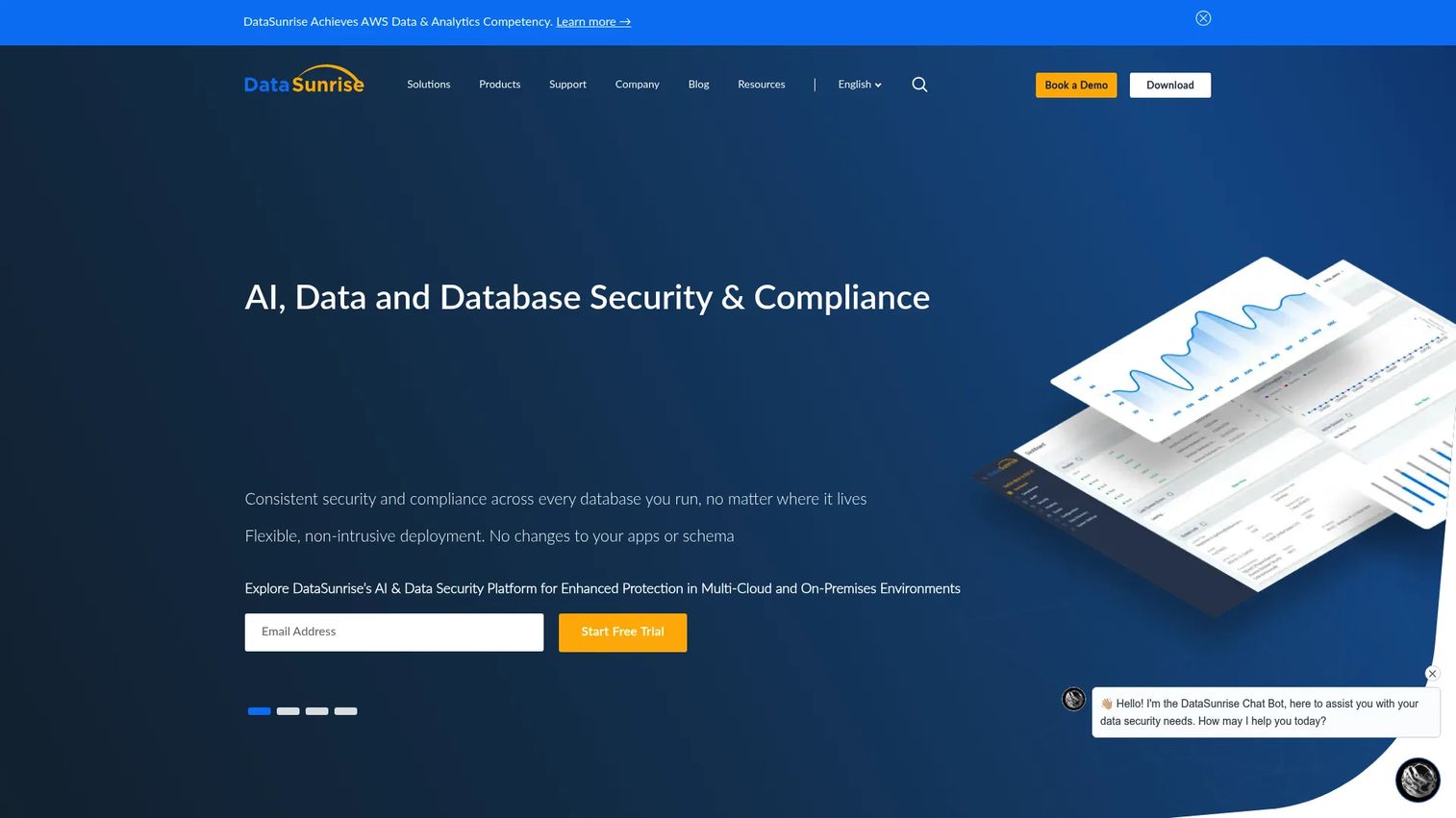
DataSunrise provides data, AI, and database security across cloud, on-premises, and hybrid environments. It covers database activity monitoring, a real-time database firewall, dynamic and static data masking, sensitive data discovery, vulnerability assessment, and generative AI activity monitoring. For teams with a clearly defined database protection problem, DataSunrise delivers focused controls without requiring a broader platform deployment.
Best for: Organizations seeking focused database firewall, dynamic data masking, and activity monitoring capabilities.
Key features
- Database firewall and real-time threat protection
- Dynamic and static data masking for development and analytics environments
- Database activity monitoring and audit trails
- Sensitive data discovery and classification
- Generative AI activity monitoring and controls
Why choose DataSunrise: DataSunrise works well when the protection problem is clearly scoped to database traffic, query monitoring, and sensitive data handling. Organizations that need broad enterprise data governance across file stores, SaaS applications, or a wider repository estate will likely find DataSunrise's scope too focused and may need a broader platform alongside it.
DataSunrise pricing: DataSunrise calculates pricing individually. Contact the DataSunrise team through its pricing page for a personalized quote based on your environment and database coverage requirements.
G2 rating: 4.3/5
8. Idera SQL Compliance Manager
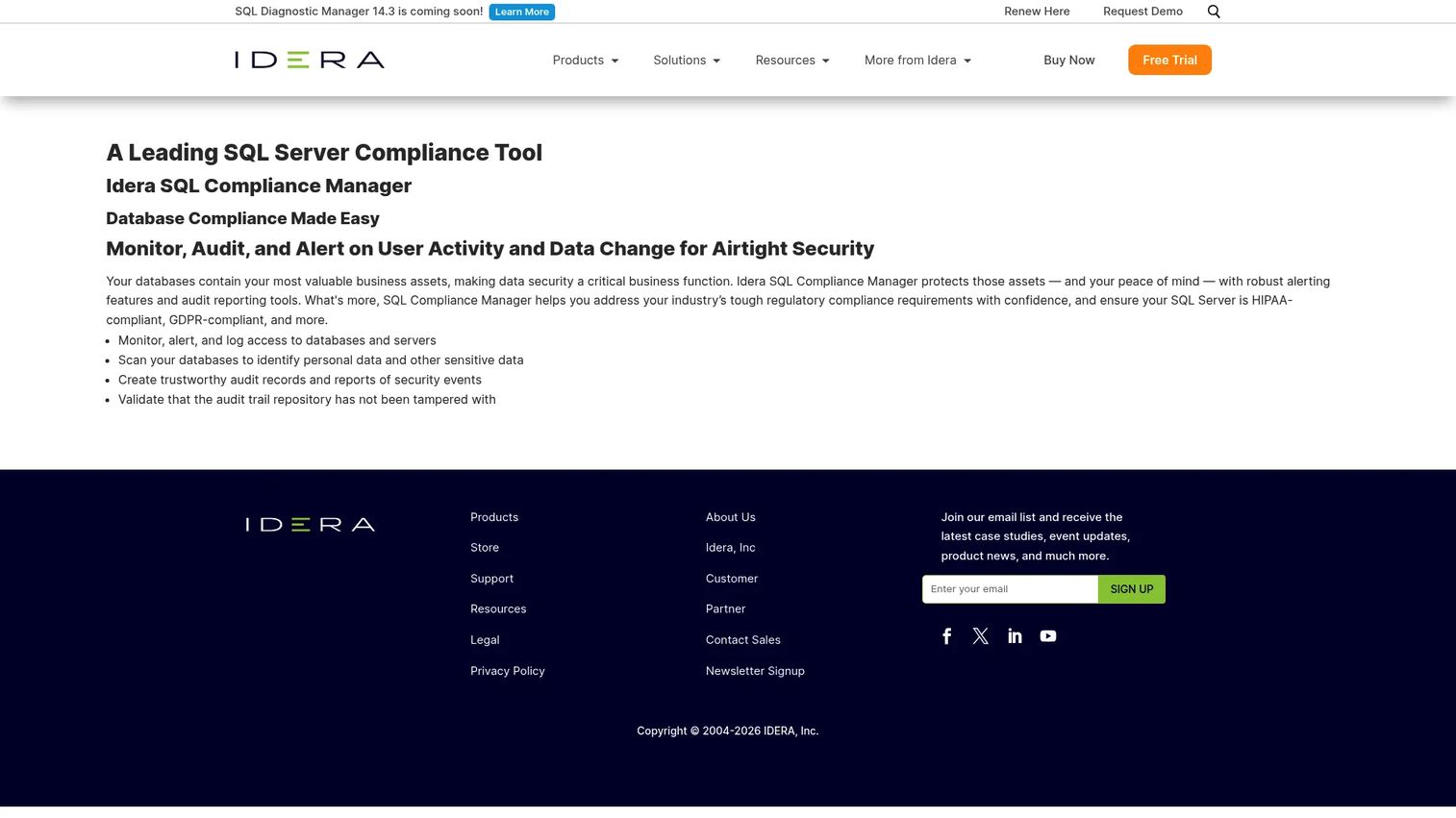
Idera SQL Compliance Manager is SQL Server auditing and compliance software that monitors, alerts on, and reports user activity and data changes in real time. It ships with preconfigured compliance templates for PCI DSS, HIPAA, GDPR, SOX, and other frameworks. For product organizations running predominantly SQL Server-based architecture, SQL Compliance Manager reduces the engineering effort required to produce compliant audit evidence.
Best for: SQL Server environments that need focused auditing, compliance reporting, and policy alerting.
Key features
- Real-time SQL Server auditing of user activity and data access
- Preconfigured compliance templates: PCI DSS, HIPAA, GDPR, SOX, FERPA, and more
- Configurable alerts for suspicious or noncompliant activity
- Audit reporting and long-term data archival
- Sensitive data discovery and tamper-resistant audit repositories
Why choose Idera SQL Compliance Manager: SQL Compliance Manager reduces unnecessary platform complexity when the database estate is narrowly SQL Server-based. The focused scope is its advantage for teams that want auditing without adopting a broader, more complex platform. It does not fit teams running multiple database engines or cloud data platforms beyond SQL Server.
Idera SQL Compliance Manager pricing: An annual subscription is $1,897 per instance, which includes one year of support and maintenance. A 14-day free trial is available. Pricing is verified from Idera's online store as of September 30, 2026.
G2 rating: 4.4/5 (verified September 30, 2026).
9. Varonis Data Security Platform

Varonis is a cloud-native data security platform that discovers and classifies sensitive data, automates the remediation of excessive permissions, detects threats, and monitors data activity across cloud, SaaS, and on-premises environments. Varonis positions itself around exposure reduction: Finding where sensitive data sits, who has access to it, and what should be locked down. For product managers evaluating database security as part of a wider data risk program, Varonis connects database risk with broader file and SaaS exposure in one platform.
Best for: Enterprise security teams that need database risk analysis as part of a wider data security and exposure reduction program.
Key features
- Sensitive data discovery and classification across repositories
- Automated remediation of excessive permissions and misconfigurations
- Data-centric threat detection and behavioral alerts
- Real-time data activity monitoring and searchable audit trails
- Blast-radius and attack-path analysis
Why choose Varonis Data Security Platform: Varonis fits organizations where database risk is one component of a broader data exposure problem. Its automated remediation and behavioral detection add value beyond a focused database tool. Teams seeking database-native encryption or specialized query-level monitoring may find Varonis's scope broader than their immediate database security need and may require complementary products.
Varonis Data Security Platform pricing: Varonis does not display plan pricing on its site. Request a price quote through the Varonis website based on your environment and scope.
G2 rating: 4.6/5
Considerations when choosing database security software
Database and deployment coverage
Map every tool against your actual database estate before shortlisting. A tool that covers SQL Server and RDS today may not support a data warehouse or NoSQL database you plan to add next quarter. Tie coverage requirements to your product roadmap, not just the current architecture, to avoid a second migration decision after the next infrastructure change.
Encryption and key management
Check whether the platform supports transparent database encryption, tokenization, external key management, key rotation, and separation of duties. Confirm what changes are required at the application or database layer before encryption is active. Some platforms encrypt at the storage or column level; others require application-side changes.
Monitoring and detection depth
Review what the tool actually records: Query types, administrative actions, failed logins, privilege changes, and policy violations. Confirm that alerting thresholds are configurable. Alert fatigue from an over-sensitive system creates as much operational overhead as no monitoring at all.
Database access control and data masking
Evaluate role management, privileged user controls, dynamic masking, and static masking across development, analytics, and support workflows. As a product manager, understand how these controls affect your release workflow, testing environments, and troubleshooting access. Masking rules need ownership and a schema-change process to stay current.
Integration and maintenance cost
Assess integrations with your identity provider, SIEM, cloud platform, ticketing system, and data catalog. The real opportunity cost appears here: Implementation effort, policy maintenance across schema changes, and upgrade coordination. A tool with broad coverage that requires ongoing specialist attention has a higher total cost than its licensing fee suggests. Factor engineering hours into the comparison. You can also pair access control software, cloud compliance tools, and compliance management software alongside database security controls to build a more complete governance posture.
Conclusion
The right database security software depends on the actual database estate, release cadence, identity model, and compliance requirements of your organization, not on which platform has the broadest feature list.
For centralized encryption and key management: CipherTrust Data Security Platform. For database activity monitoring at scale: IBM Guardium. For cloud data discovery and DSPM: Cyera Platform. For policy enforcement across distributed infrastructure: Imperva Data Security Fabric. For access governance: Satori Data Security Platform. For Microsoft-centered governance and cataloging: Microsoft Purview Data Governance. For focused database firewall and masking: DataSunrise. For SQL Server auditing and compliance: Idera SQL Compliance Manager. For broader exposure analysis and automated remediation: Varonis Data Security Platform.
For teams evaluating AI security posture management tools or broader compliance management software alongside database controls, these guides cover adjacent decisions.
Start with the tools that match your specific database engines, then validate monitoring depth, access controls, and integration fit before committing.
FAQs about database security software
Database security software protects stored data and database activity through controls including encryption, access management, activity monitoring, data masking, threat detection, and audit reporting. Tools differ significantly in scope: Some focus on database-native encryption and key management, while others cover monitoring, posture management, or access governance across broader data estates.
Database security software focuses specifically on database systems, their activity, and the data they store. Broader data security platforms may extend coverage to file stores, SaaS applications, endpoints, and unstructured data repositories alongside database controls. The distinction matters when you are scoping a solution: A database-focused tool may not cover your data warehouse or cloud object storage without additional tooling.
Start with database engine coverage and deployment model support, since a tool that does not support your specific databases creates a coverage gap from day one. Then evaluate monitoring depth, access controls, masking capabilities, and how the tool integrates with your existing identity provider and SIEM. Tie each requirement to your release cadence and engineering capacity to accurately assess maintenance overhead.
Some platforms provide transparent database encryption that operates at the storage layer with minimal application change. Others focus on monitoring, masking, discovery, or access governance without providing encryption. Always verify key management requirements, key rotation procedures, and whether any application-layer changes are needed before assuming encryption is automatic.
Coverage varies by managed cloud service, database engine, cloud provider, and deployment model. Not every tool supports every combination of AWS RDS, Azure SQL, Google Cloud SQL, self-managed databases, and data warehouses. Verify support for your specific databases, regions, and access paths during evaluation, particularly if you run NoSQL database security alongside relational workloads.
Database activity monitoring (DAM) observes and records database queries, access events, administrative actions, and policy violations in real time. Monitoring data supports investigation workflows, automated alerting, compliance audit trails, and threat detection. The depth of what is recorded varies by tool: Some capture query-level detail, while others focus on access events and policy violations.
Data masking replaces sensitive values with realistic substitutes so that non-production environments, analytics workloads, and support teams can operate without accessing actual customer data. Dynamic masking applies substitution in real time as queries run. Static masking creates a sanitized copy of the dataset. Both approaches require masking rule ownership and a process for updating rules as database schemas change, otherwise masked fields can drift out of sync with production.