Your policy administration system (PAS) is not a back-office database. It is the system that decides how fast you can launch products, how cleanly you can service policies, and whether your operations team is drowning in manual workarounds every time a regulator changes a rule.
According to Majesco's State of Core Solutions Transition report (2026), 77% of insurers' policy solutions remain legacy or on-premises. That number explains a lot of board conversations happening right now. The global insurance policy administration systems software market sits at $4.04 billion in 2026 and is projected to reach $6.37 billion by 2030, growing at 12.1% annually (The Business Research Company, 2026). The window to modernize without falling behind competitors who already have is narrowing.
This guide helps insurers, insurtechs, and operators building shortlists compare 15 policy administration software platforms by capability fit, architecture, and total cost drivers. It is written for people who have been burned before and want specifics, not vendor marketing.
What's inside
This guide covers 15 insurance policy administration systems across life, annuity, P&C, group, health, specialty, and MGA contexts.
- 15 platforms compared by insurance line fit, architecture, and migration approach
- A side-by-side comparison table for quick shortlisting
- Per-tool analysis with key features, best-fit scenarios, and pricing direction
- A buyer checklist covering API depth, migration risk, compliance readiness, and total cost of ownership
Tools were selected based on market presence, insurance line coverage, architecture relevance, and category fit. Ratings and pricing were verified against vendor sources and G2 listings.
TL;DR
- Best for multi-line core modernization: EIS Suite, Sapiens CoreSuite, and Guidewire PolicyCenter
- Best for life and annuity administration: TCS BaNCS, ALIP, Oracle Insurance Policy Administration, FAST, and LifePRO
- Best for P&C carriers: Duck Creek Policy, Insurity, and Guidewire PolicyCenter
- Best for insurtechs and embedded insurance: Socotra Platform and Fadata INSIS
- Best for enterprise implementation depth: DXC Assure, Majesco L&A and Group Core Suite, and FINEOS AdminSuite
- Big selection rule: Choose for insurance line fit first, then architecture, migration path, and operating model
What is insurance policy administration software?
Insurance policy administration software is the core system insurers use to manage policies from quote and issuance through servicing, billing, renewals, endorsements, and downstream claims workflows.
A PAS is different from adjacent systems. Claims software manages loss intake and adjudication. CRM handles customer relationships. Billing platforms manage payments and collections. The PAS sits at the center: It is the operational record for policy terms, coverage, endorsements, premium, and status. Everything else connects to it.
Modern systems differ from legacy platforms in a few concrete ways. Legacy PAS platforms were typically built on mainframe or client-server architecture, where product changes required code releases and specialized developers. Modern platforms offer configurable product engines, low-code or no-code rule management, API-first architecture, and cloud deployment.
Core capabilities to look for:
- Product and rate configuration (define coverage, rules, and pricing without code releases)
- Quote, bind, and issue workflows across channels
- Underwriting and new business support
- Policy servicing and endorsements (mid-term changes, name updates, coverage adjustments)
- Billing and payment integrations
- Renewal and cancellation workflows
- Claims, CRM, and document system connectivity
- Compliance, audit trails, and reporting
- Multi-line and multi-jurisdiction support
For a buyer building a shortlist of insurance administration software, the core question is not which system looks most modern. It is which system actually supports your line of business, your product catalog, your regulatory footprint, and your migration path out of whatever you are running today. If you are also evaluating benefits administration software for adjacent group products, the considerations overlap heavily.
When to use insurance policy administration systems
Launch new insurance products faster
Modern policy admin systems reduce dependency on code-heavy product changes. Carriers can configure new coverage types, adjust rates, add states, and push through digital channels without waiting for a development sprint. This matters for insurtechs launching new programs, embedded insurance operators adding distribution channels, and established carriers trying to match competitor product velocity.
Replace legacy policy systems without losing business rules
The hardest part of a PAS replacement is not the new software. It is extracting undocumented business rules from a system that has been running for 20 years. Migration involves phased cutover, data conversion, parallel runs, and governance of edge cases your team may not even know exist. Any shortlist evaluation should start with migration methodology, not product features.
Connect policy data across the insurance stack
A PAS decision affects every operational dashboard downstream. Billing systems need clean policy records. Claims platforms need coverage and limit data. Analytics teams need structured policy data to report on loss ratios and exposure. Before selecting a platform, map every system that must receive or send data to the PAS, and ask vendors for proof of integration, not architecture diagrams.
Insurance policy administration systems comparison
The table below is a shortlist tool, not a universal ranking. All 15 platforms use custom pricing. Expect cost to move with modules, policy volume, insurance line, deployment model, and implementation scope. Verify pricing and G2 ratings directly with vendors before procurement.
| # | Product | Best for | Key differentiator | Pricing | G2 rating |
|---|---|---|---|---|---|
| 1 | EIS Suite | Multi-line core modernization | Cloud-native platform spanning policy, billing, and claims | Custom pricing | No rating verified |
| 2 | TCS BaNCS | Large life, annuity, and group insurers | Enterprise suite with global delivery model | Custom pricing | 4.3/5 |
| 3 | LifePRO | Life and annuity carriers | Established life PAS with full policy lifecycle depth | Custom pricing | 3.8/5 |
| 4 | FAST | Life insurers replacing legacy admin systems | Verisk SaaS platform with configurable life product engine | Custom pricing | No rating verified |
| 5 | Accenture ALIP | Large life and annuity carriers | Enterprise platform with Accenture implementation depth | Custom pricing | 3.5/5 |
| 6 | Oracle Insurance Policy Administration | Life, annuity, and group insurers on Oracle stack | Rules-based configuration scaling to 100 million policies | Custom pricing | 3.9/5 |
| 7 | DXC Assure | Large insurers needing managed transformation | Modular platform plus services-led delivery model | Custom pricing | No rating verified |
| 8 | Majesco L&A and Group Core Suite | Life, annuity, and group insurers | Cloud SaaS core with 100+ predefined workflows | Custom pricing | 3.0/5 |
| 9 | Socotra Platform | Insurtechs and digital insurers | API-first core designed for fast product configuration | Custom pricing | No rating verified |
| 10 | FINEOS AdminSuite | Group, life, and health insurers | Cloud SaaS core for Life, Accident, and Health administration | Custom pricing | No rating verified |
| 11 | Insurity | P&C carriers, MGAs, and program administrators | P&C suite with embedded analytics and AI-powered underwriting | Custom pricing | 4.1/5 |
| 12 | Sapiens CoreSuite | Multi-line enterprise carriers | Broad core suite with low-code configuration and digital extensions | Custom pricing | No rating verified |
| 13 | Duck Creek Policy | P&C insurers | Configurable P&C policy administration with prebuilt industry content | Custom pricing | 4.6/5 |
| 14 | Guidewire PolicyCenter | Large P&C carriers | Widely deployed P&C core with no-code tools and embedded analytics | Custom pricing | 4.2/5 |
| 15 | Fadata INSIS | Multi-line and international insurers | Configurable core spanning life, non-life, and health with reinsurance | Custom pricing | 3.0/5 |
Best 15 insurance policy administration systems for 2026
1. EIS Suite
EIS Suite is a cloud-native core insurance platform covering policy administration, billing, claims, and customer management in a single integrated system. It is designed for carriers that need product agility across multiple lines rather than a point solution for a single function. The platform supports API-based integrations with third-party systems and deploys on cloud or on-premises infrastructure.
Best for: Enterprise insurers replacing fragmented legacy cores across multiple lines of business.
Key features
- Cloud-native core spanning policy, billing, and claims
- Product, rating, and pricing configuration tools
- Multi-line insurance support
- API-based third-party integrations
- Omnichannel customer data model
Why choose EIS Suite: EIS fits carriers that want a modern core foundation rather than a narrow policy administration system. The integration architecture makes it a practical choice for operations teams tired of maintaining point-to-point connections between siloed systems.
EIS Suite pricing: Pricing is quote-based and typically structured around purchased components and written premium volume. Contact EIS directly to model cost by module and deployment scope.
2. TCS BaNCS
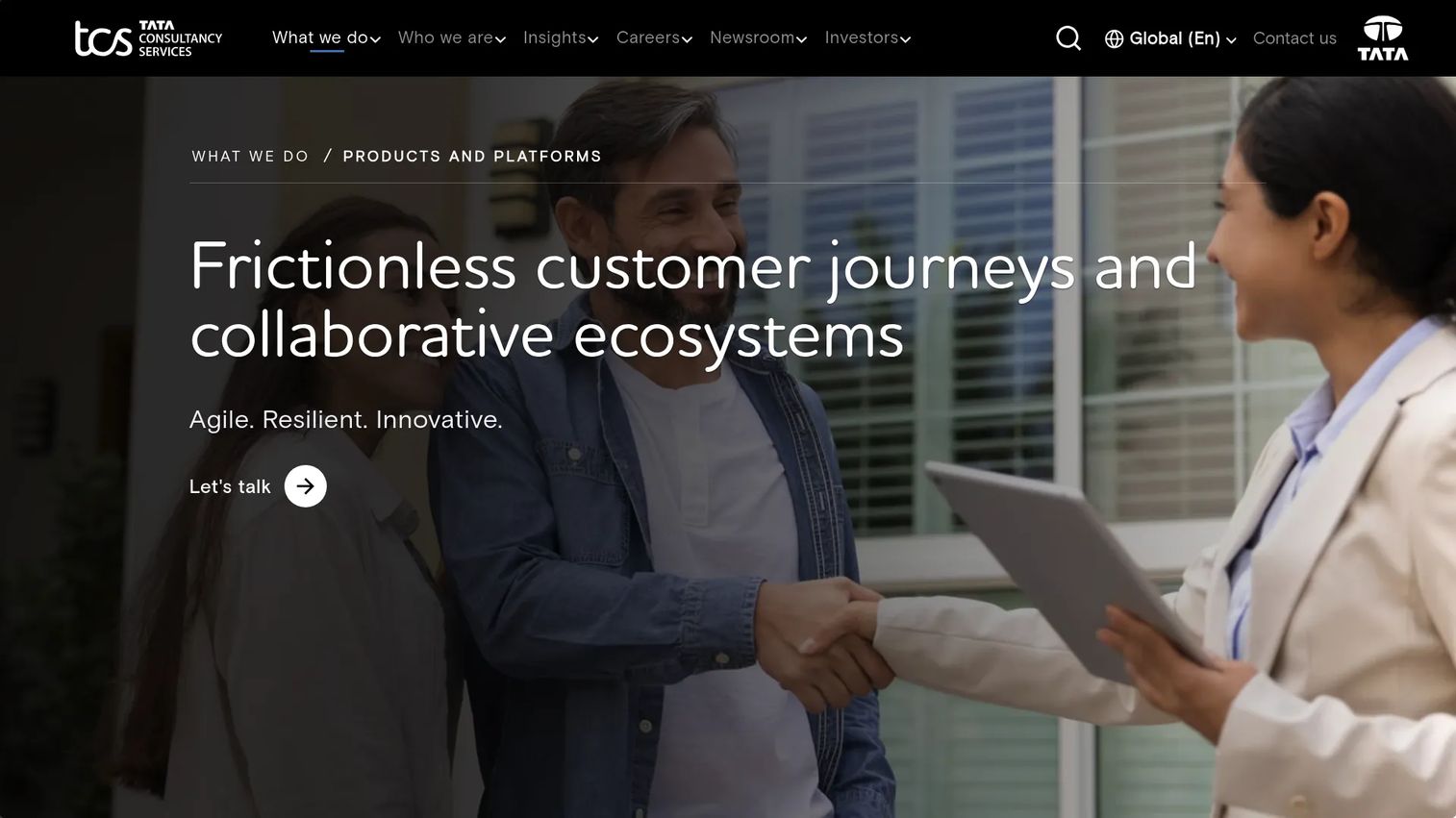
TCS BaNCS is a universal financial services platform from Tata Consultancy Services, covering banking, capital markets, and insurance operations. For insurers, BaNCS supports life, annuity, and group insurance administration alongside broader enterprise financial services capabilities. The platform runs on cloud-native microservices architecture with rich APIs and digital banking application support.
Best for: Large insurers that need software and transformation delivery capacity together, particularly for multi-year modernization programs.
Key features
- Cloud-native microservices with rich APIs
- Life, annuity, and group insurance support
- Digital, omnichannel, and multi-entity capabilities
- Multi-currency support
- Global TCS delivery model
Why choose TCS BaNCS: BaNCS works best when the project is a multi-year operating transformation, not just a software swap. TCS brings global delivery and implementation capacity that matters when the program spans multiple geographies or business units.
TCS BaNCS pricing: Quote-based. Model license fees, implementation services, migration, integration, and managed services as separate cost categories before comparing total cost of ownership.
G2 rating: 4.3/5
3. LifePRO
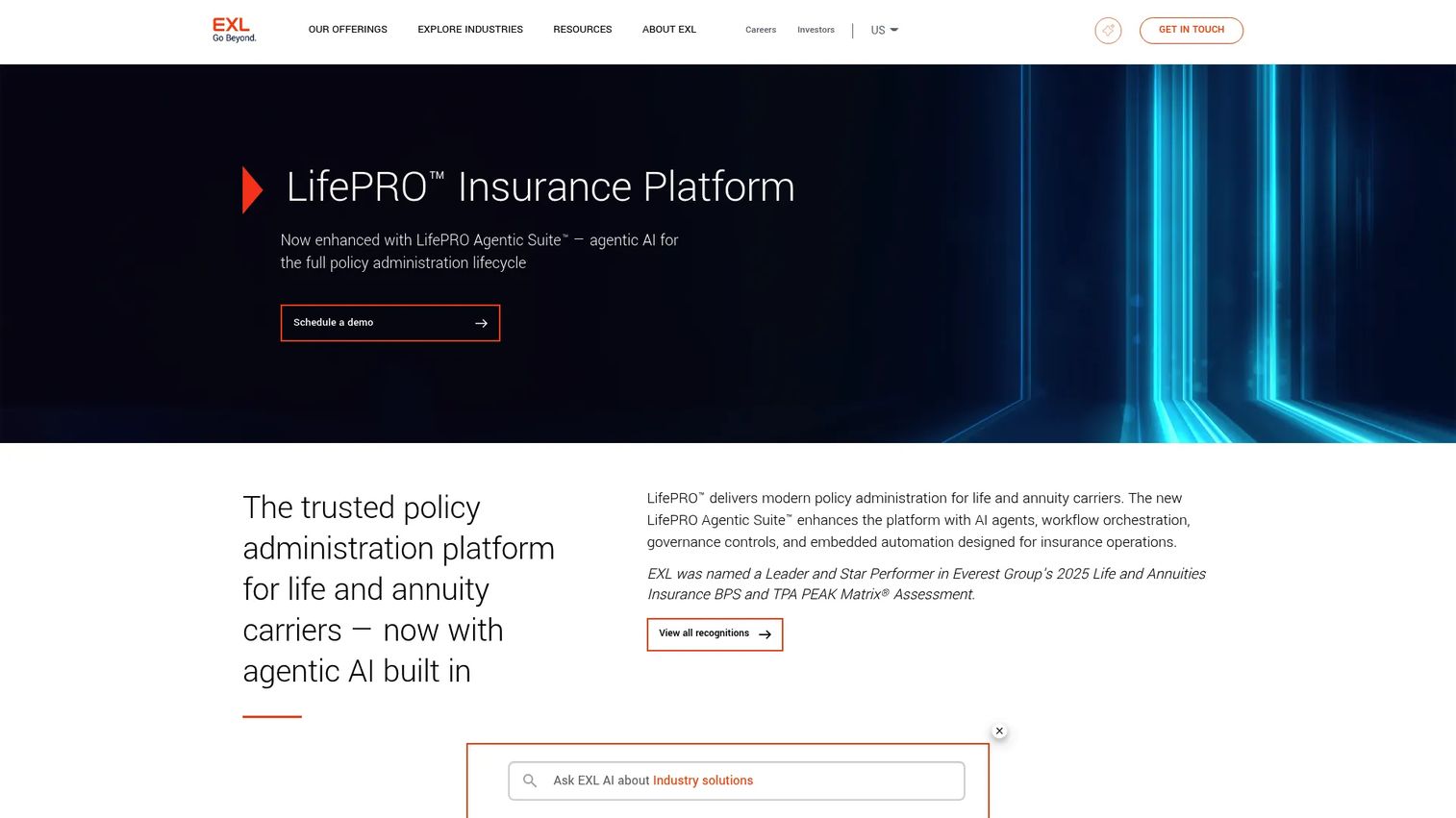
LifePRO is EXL's life insurance policy administration platform covering the full policy lifecycle from quote through claim. It supports straight-through processing with configurable e-applications, underwriting rules, and real-time quoting. The platform includes AI-powered workflow orchestration for new business, underwriting, servicing, and claims, and deploys on AWS, Azure, and Google Cloud.
Best for: Life and annuity insurers that need mature policy lifecycle administration with configurable servicing and claims support.
Key features
- Straight-through processing with configurable underwriting rules
- Real-time quoting and self-service policyholder transactions
- Configurable claims with dynamic benefit definitions and EDI interfaces
- AI workflow orchestration across new business and servicing
- Cloud deployment on major cloud platforms
Why choose LifePRO: LifePRO suits carriers focused on established life administration workflows with proven cloud deployment. It is a practical choice for teams that need operational depth rather than greenfield experimentation.
LifePRO pricing: Quote-based. EXL does not display pricing on its product page. Ask about implementation options and packaging during vendor conversations.
G2 rating: 3.8/5 (based on 2 reviews, verified on G2).
4. FAST
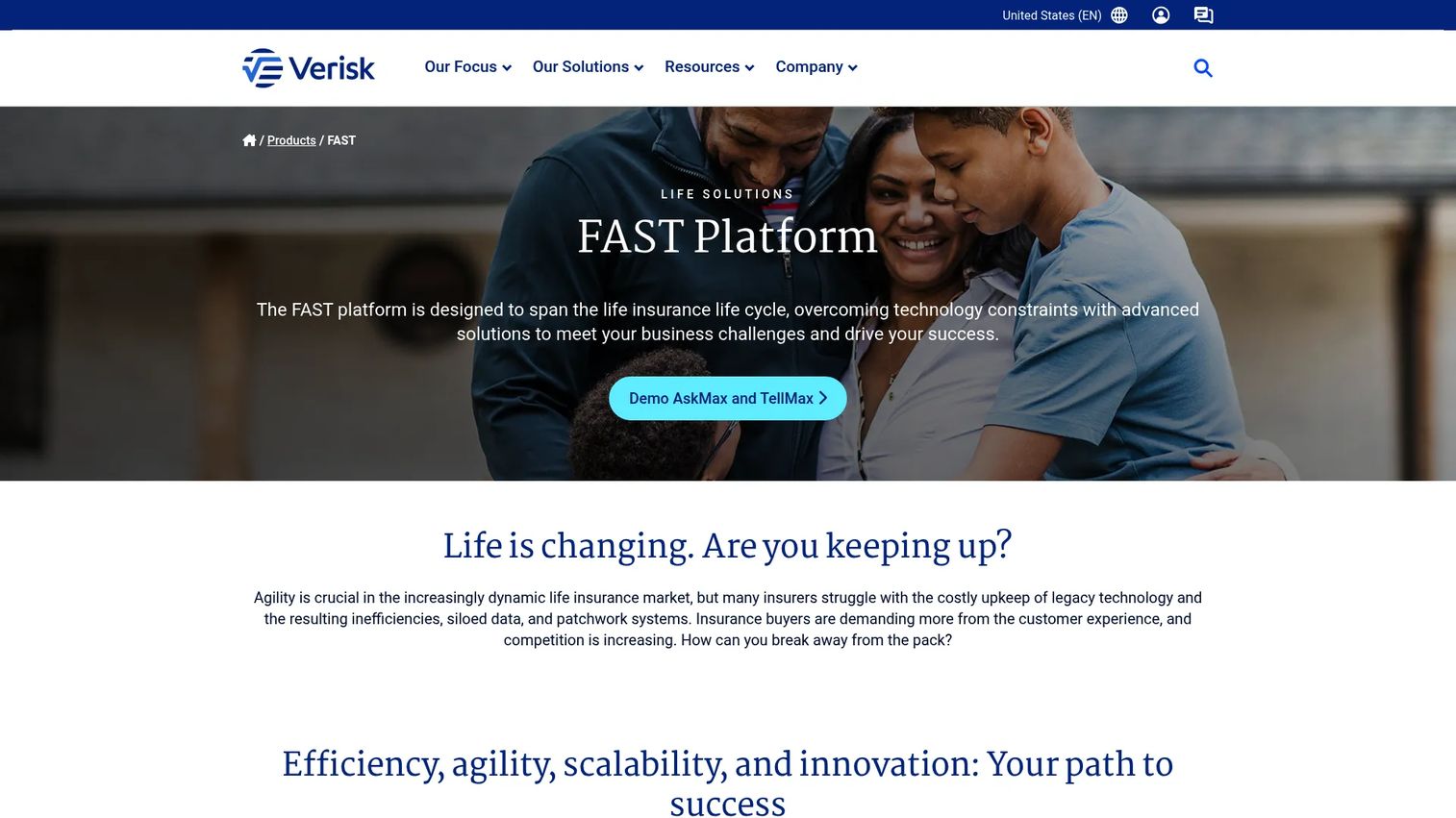
FAST is Verisk's end-to-end SaaS platform built specifically for life insurance and annuity companies. It covers policy administration, new business workflows, product configuration, and automated testing. The platform uses event-driven APIs, open cloud architecture supporting ACORD JSON and XML, and self-service API management tools.
Best for: Life insurers modernizing policy administration without losing operational depth, particularly carriers moving off legacy platforms.
Key features
- Cloud-based policy administration
- Out-of-the-box components for legacy replacement or enhancement
- Rapid product configuration and updates
- Event-driven APIs and ACORD JSON/XML support
- Automated testing and self-service API management
Why choose FAST: FAST is a serious life core replacement option for carriers that need a Verisk-backed platform with proven life product support. Validate implementation partner capacity and conversion methodology before signing.
FAST pricing: Verisk describes FAST using a value-aligned pricing model and directs prospective customers to contact them directly. Cost drivers include product scope, conversion complexity, states covered, and implementation services.
5. Accenture Life Insurance & Annuity Platform (ALIP)

Accenture ALIP is a cloud-enabled, configurable enterprise platform for life and annuity carriers covering new business, underwriting, policy administration, claims, payouts, and analytics. It includes GenAI-powered underwriting and case management, prebuilt product templates, and integrated self-service portals. The platform deploys as modular SaaS with cloud-native, API-driven architecture.
Best for: Large life and annuity carriers that want platform capability and Accenture consulting support in a single engagement.
Key features
- GenAI-powered underwriting and case management
- Full application lifecycle management with electronic and paper applications
- Policy administration covering billing, claims, and tax and regulatory processing
- Prebuilt product templates, rules, interfaces, and APIs
- Modular SaaS with cloud-native architecture
Why choose ALIP: ALIP fits complex enterprise programs where process redesign, data migration, and change management are as important as the software itself. The Accenture implementation depth is a differentiator for carriers that have struggled to find qualified implementation partners for other platforms.
ALIP pricing: Quote-based. Evaluate license fees, implementation services, conversion costs, and ongoing managed services as separate line items.
G2 rating: 3.5/5 (based on 3 reviews, verified on G2).
6. Oracle Insurance Policy Administration
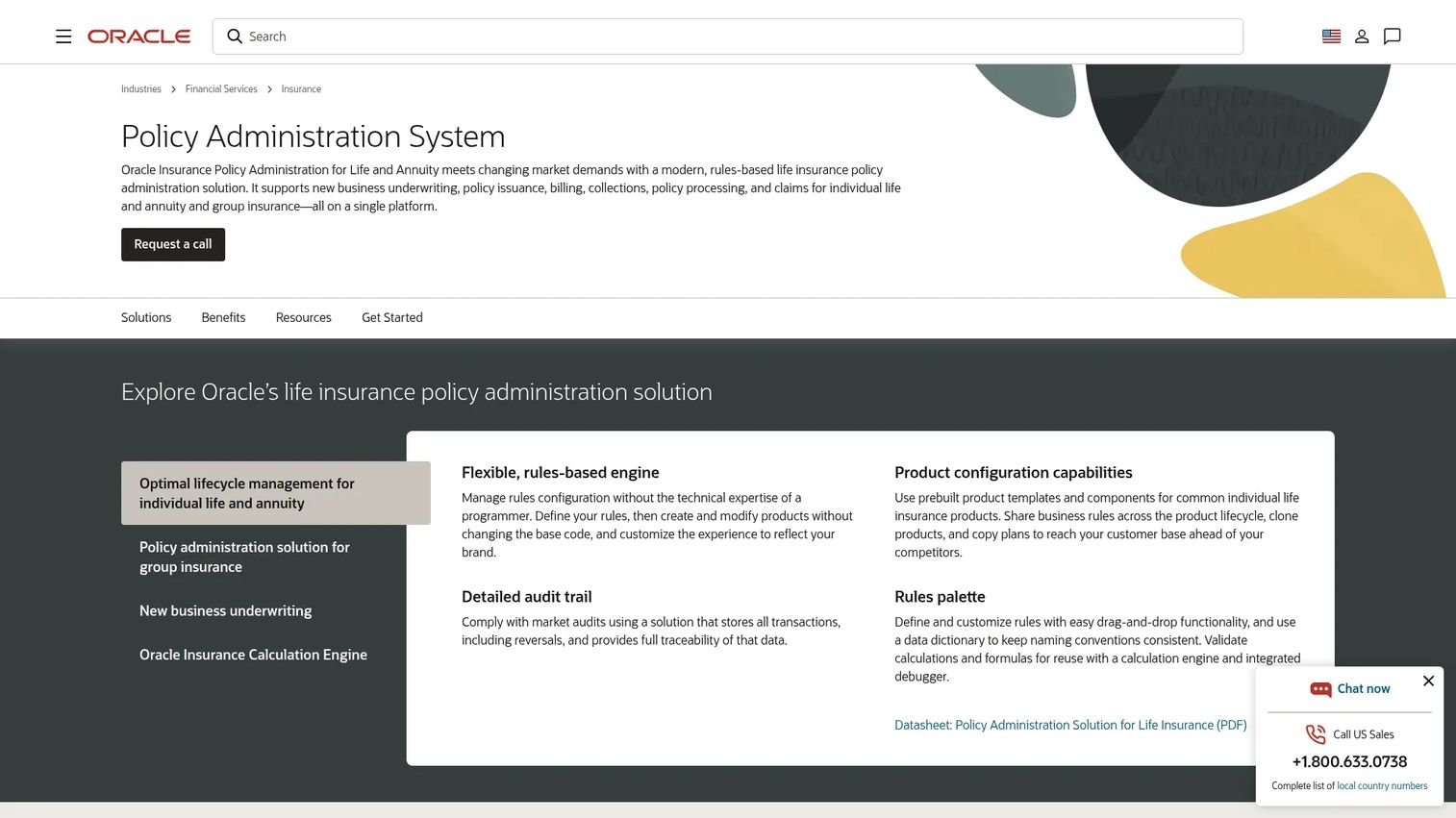
Oracle Insurance Policy Administration is a rules-based policy administration system for life, annuity, and group insurance. It supports underwriting, policy issuance, billing, collections, and claims connectivity. The platform scales to 100 million policies and includes multilingual and multicurrency support, legacy-system integration, and a drag-and-drop rules palette with audit trail and debugger.
Best for: Enterprise life, annuity, and group insurers with existing Oracle architecture or enterprise integration requirements.
Key features
- Rules-based product configuration with drag-and-drop palette and audit trail
- Support for individual life, annuity, and group insurance including group billing
- New business underwriting with requirements management and workflow
- Scalability to 100 million policies
- Multilingual, multicurrency, and legacy-system integration
Why choose Oracle Insurance Policy Administration: This platform fits buyers that want PAS capabilities within a broader Oracle-aligned technology strategy. Validate implementation skills availability and product roadmap fit before committing.
Oracle Insurance Policy Administration pricing: Costs depend on Oracle licensing, implementation scope, integration architecture, and support model.
G2 rating: 3.9/5
7. DXC Assure
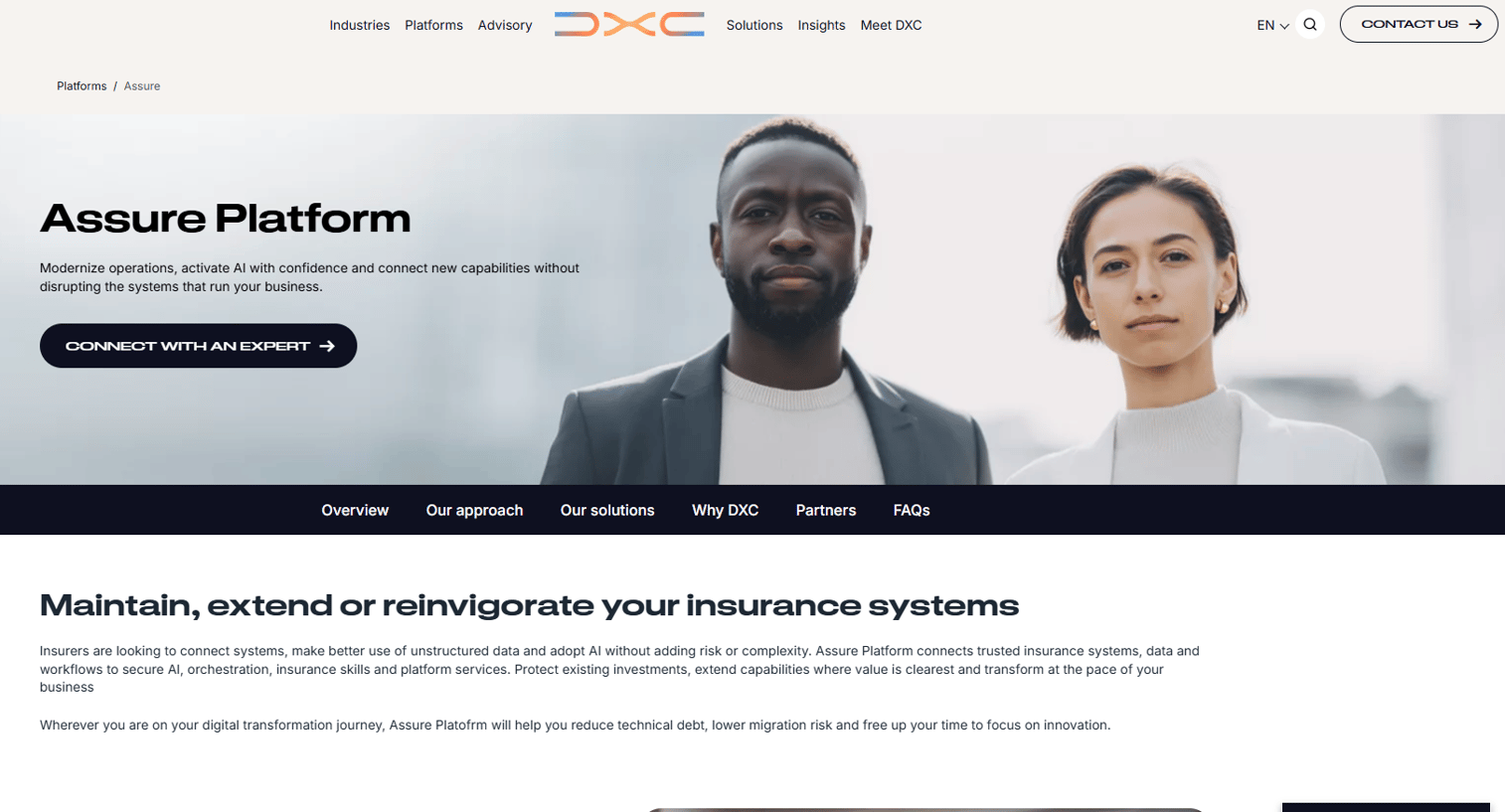
DXC Assure is DXC Technology's modular, cloud-enabled insurance platform covering policy administration, claims, billing, broking, reinsurance, life and annuity, and self-insurance operations. It uses cloud-native, API-enabled, microservices-based architecture. DXC pairs the platform with managed services and transformation delivery capacity for large carrier programs.
Best for: Large insurers that need platform capability plus services-led modernization across policy, claims, and broader insurance operations.
Key features
- Modular insurance solutions across broking, life and wealth, P&C, and specialty
- Cloud-native, API-enabled, microservices architecture
- Policy administration, claims, billing, and workflow automation
- Analytics, integration, and AI capabilities
- Managed services and transformation delivery
Why choose DXC Assure: DXC works for buyers who need implementation, modernization, and operational support from a large services partner alongside the core platform. Keep claims specific to what DXC's current product page confirms.
DXC Assure pricing: Quote-based. Separate software fees, services, migration, hosting, and long-term support when modeling total cost.
8. Majesco L&A and Group Core Suite
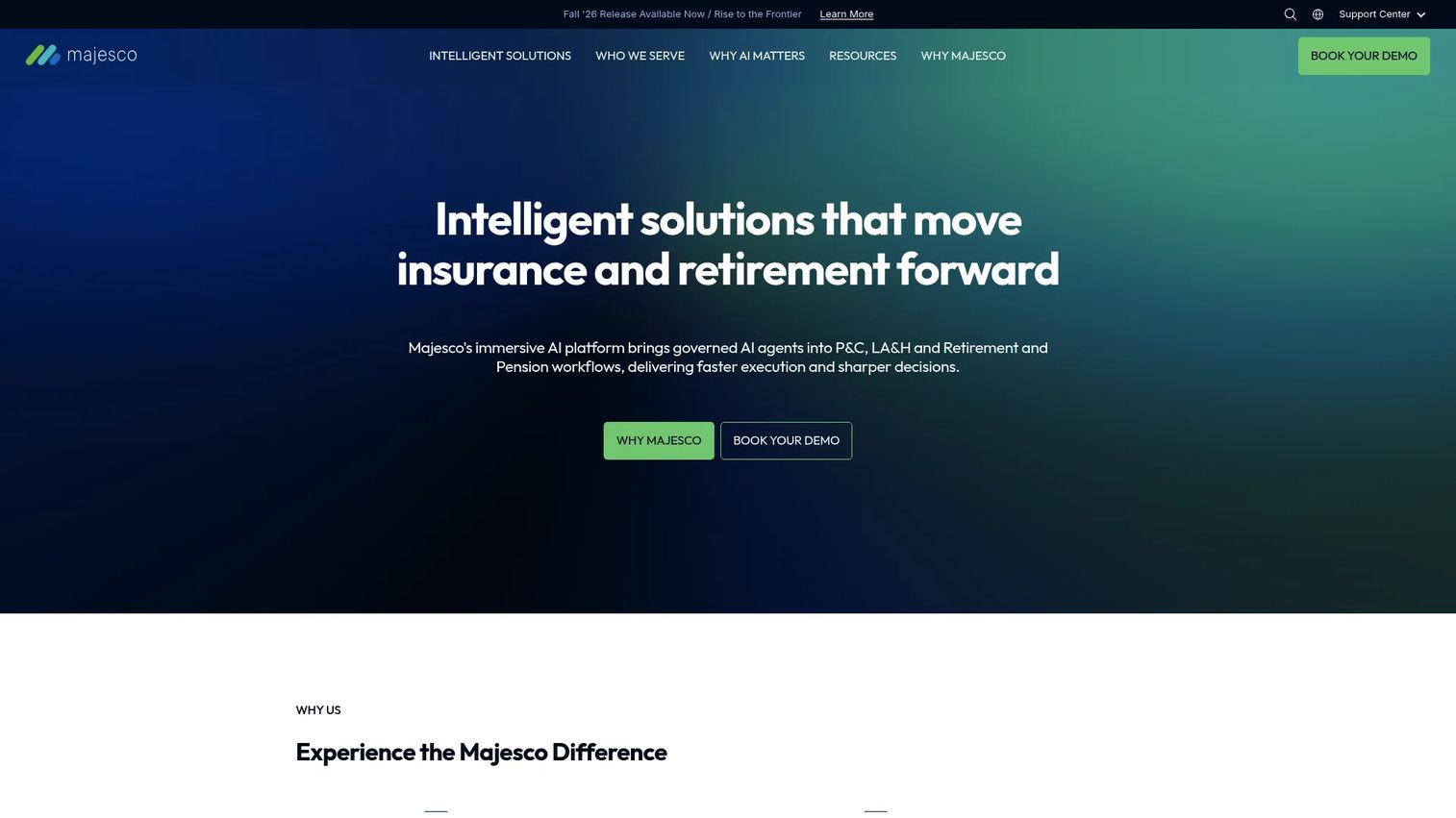
Majesco L&A and Group Core Suite is a cloud SaaS insurance core platform for individual, group, worksite, and voluntary benefits administration. The platform includes more than 100 predefined workflows and 1,000-plus rules, straight-through processing, and workflow automation. It also offers embedded analytics, Majesco Copilot, agentic AI, and digital portals for brokers, employers, and employees.
Best for: Life, annuity, and group insurers prioritizing product agility and cloud modernization.
Key features
- Unified policy, billing, and claims platform
- Support for individual, group, worksite, and voluntary benefits
- 100-plus predefined workflows and 1,000-plus rules
- Embedded analytics and agentic AI with Majesco Copilot
- Digital portals for multiple distribution personas
Why choose Majesco L&A and Group Core Suite: Majesco suits carriers that need to launch, maintain, and service products across complex portfolios. Validate migration scope and integration depth during evaluation, particularly if converting from a legacy system with significant policy volume.
Majesco pricing: Quote-based. Cost drivers include product lines, suite modules, implementation scope, conversion volume, and hosting model.
G2 rating: 3.0/5
9. Socotra Platform
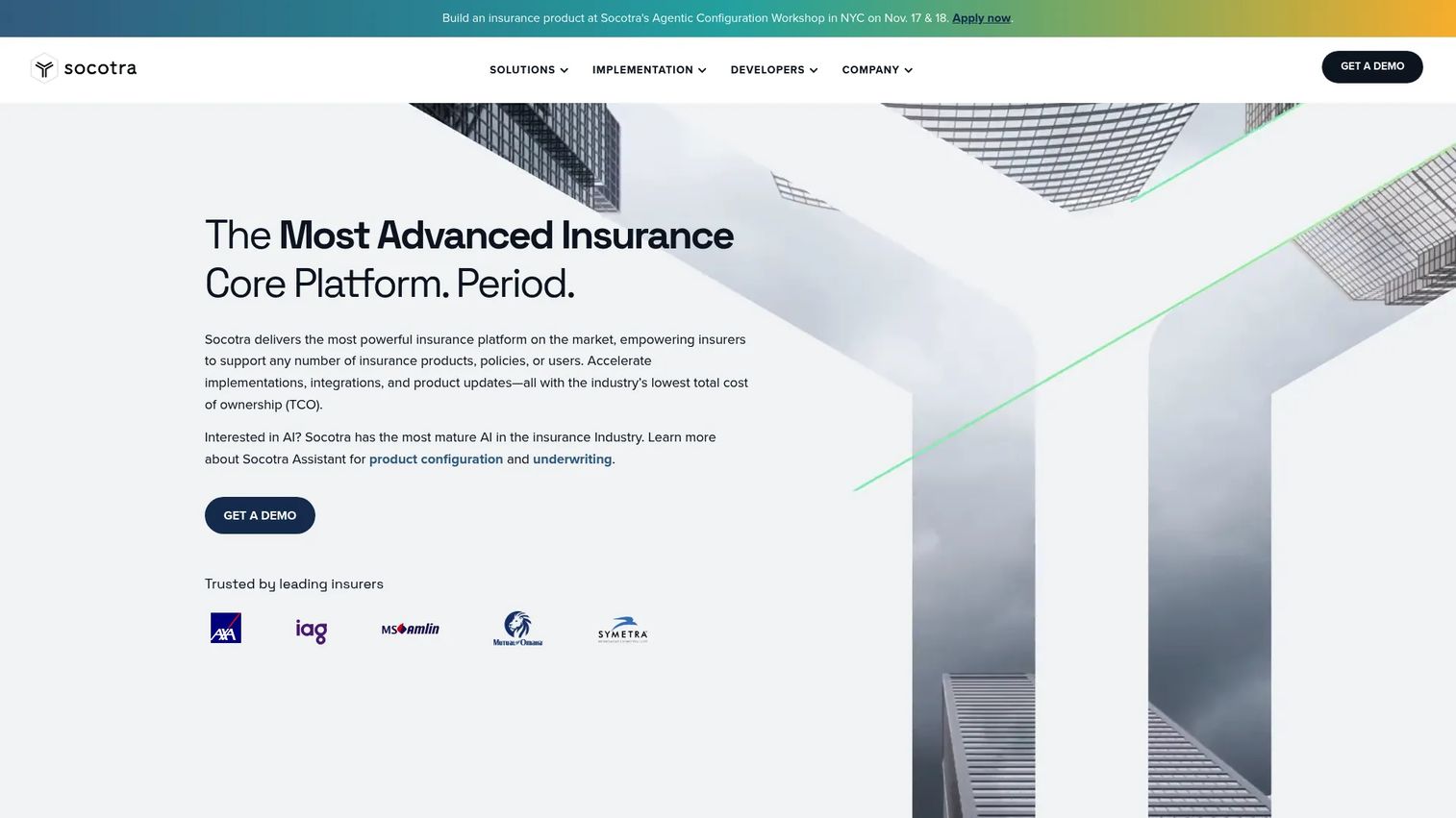
Socotra Platform is a cloud-native insurance core platform built API-first for carriers and insurtechs. It covers policy administration across the full policy lifecycle, billing, invoicing, payments, taxes, fees, and commissions. The platform offers an open API and configurable data model, webhooks, integrations, modern portals, and AI-powered underwriting assistance.
Best for: Insurtechs, embedded insurance programs, MGAs, and carriers launching modern products that need fast product iteration and digital distribution.
Key features
- API-first architecture with open APIs and configurable data model
- Policy lifecycle management and billing
- Webhooks and third-party integrations
- Modern customer, agent, and internal portals
- AI-powered underwriting assistance and document data extraction
Why choose Socotra Platform: Socotra fits teams that want a flexible core for fast product configuration and digital distribution. Buyers with deep legacy portfolios should validate migration complexity early. If you are also evaluating applicant tracking system software or similar SaaS infrastructure, the API-first architecture makes Socotra a familiar evaluation context.
Socotra pricing: Quote-based. Cost depends on policy volume, modules, product complexity, environments, and implementation support.
10. FINEOS AdminSuite
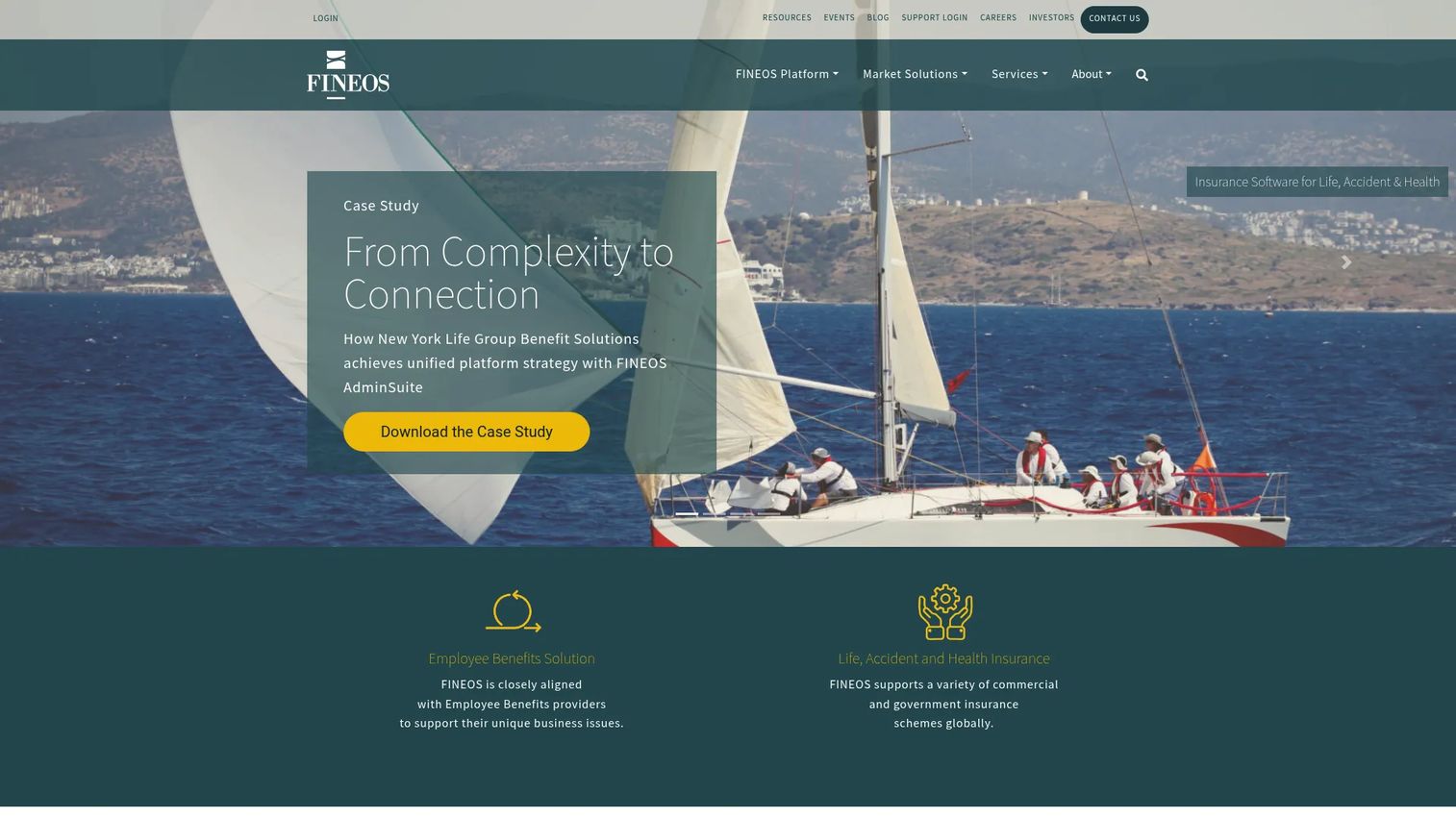
FINEOS AdminSuite is a cloud-native SaaS core administration platform for Life, Accident, and Health insurers. It integrates absence, billing, claims, payments, policy, provider, quote, rating, and underwriting capabilities into a single system. The platform includes configurable workflows, business rules, AI tools, no-code and low-code capabilities, and open APIs for digital ecosystem integration.
Best for: Group benefits, life, and health insurers that need administration depth across employer-driven products and complex benefit structures.
Key features
- Integrated absence, billing, claims, and policy administration
- Quote, rating, and underwriting capabilities
- Configurable workflows, business rules, and AI tools
- No-code and low-code configuration
- Open APIs for third-party system connectivity
Why choose FINEOS AdminSuite: FINEOS AdminSuite fits carriers managing complex group policies and benefit administration. Its strength in Life, Accident, and Health administration makes it particularly relevant for carriers with group and voluntary benefits portfolios.
FINEOS pricing: FINEOS directs buyers to request a demo rather than posting pricing. Quote-based; model employer group complexity, portals, integrations, implementation services, and ongoing support separately.
11. Insurity
Insurity provides cloud-based software, analytics, and AI-enabled workflows for property and casualty insurers, MGAs, brokers, and specialty insurance organizations. It covers P&C policy administration for complex policies and regulatory change, embedded analytics with geospatial intelligence, billing-as-a-service, premium audit automation, and claims workflows for workers' compensation, marine, and specialty lines.
Best for: Mid-market and enterprise P&C insurers, MGAs, and program administrators needing a configurable cloud core with embedded analytics.
Key features
- P&C policy administration for complex products and regulatory change
- Embedded analytics and geospatial intelligence for underwriting
- Billing-as-a-Service and integrated billing workflows
- Premium audit automation
- Claims for workers' compensation, marine, and specialty lines
Why choose Insurity: Insurity suits P&C operational fit and program administration. Check which modules your operation needs before comparing cost, since the suite spans policy, billing, and claims independently.
Insurity pricing: Quote-based. Cost depends on modules, carrier or MGA model, implementation services, integrations, and transaction volume.
G2 rating: 4.1/5 (based on 4 reviews, verified on G2).
12. Sapiens CoreSuite
Sapiens CoreSuite is an end-to-end, cloud-first insurance policy administration suite supporting life, health, wealth, pensions, and P&C operations. It offers low-code and no-code product configuration, cloud-first architecture with API integration, embedded analytics, data management, AI capabilities, digital portals, and multilingual and multicurrency support.
Best for: Large insurers seeking configurable, cloud-based core policy administration across multiple insurance lines rather than a narrow point solution.
Key features
- Low-code and no-code product configuration
- Cloud-first architecture with open API integration
- Policy administration, underwriting, billing, and claims management
- Embedded analytics, data management, and AI capabilities
- Multi-currency and multilingual support
Why choose Sapiens CoreSuite: Sapiens fits carriers that want connected core administration with digital and data layers across multiple lines. Implementation governance matters: Multi-line deployments involve coordination across product teams, regulators, and integration partners.
Sapiens pricing: Quote-based. Sapiens identifies term-license, enterprise-license, and subscription-based licensing models in its public materials. Price modules, implementation, migration, integration, and ongoing support separately.
13. Duck Creek Policy
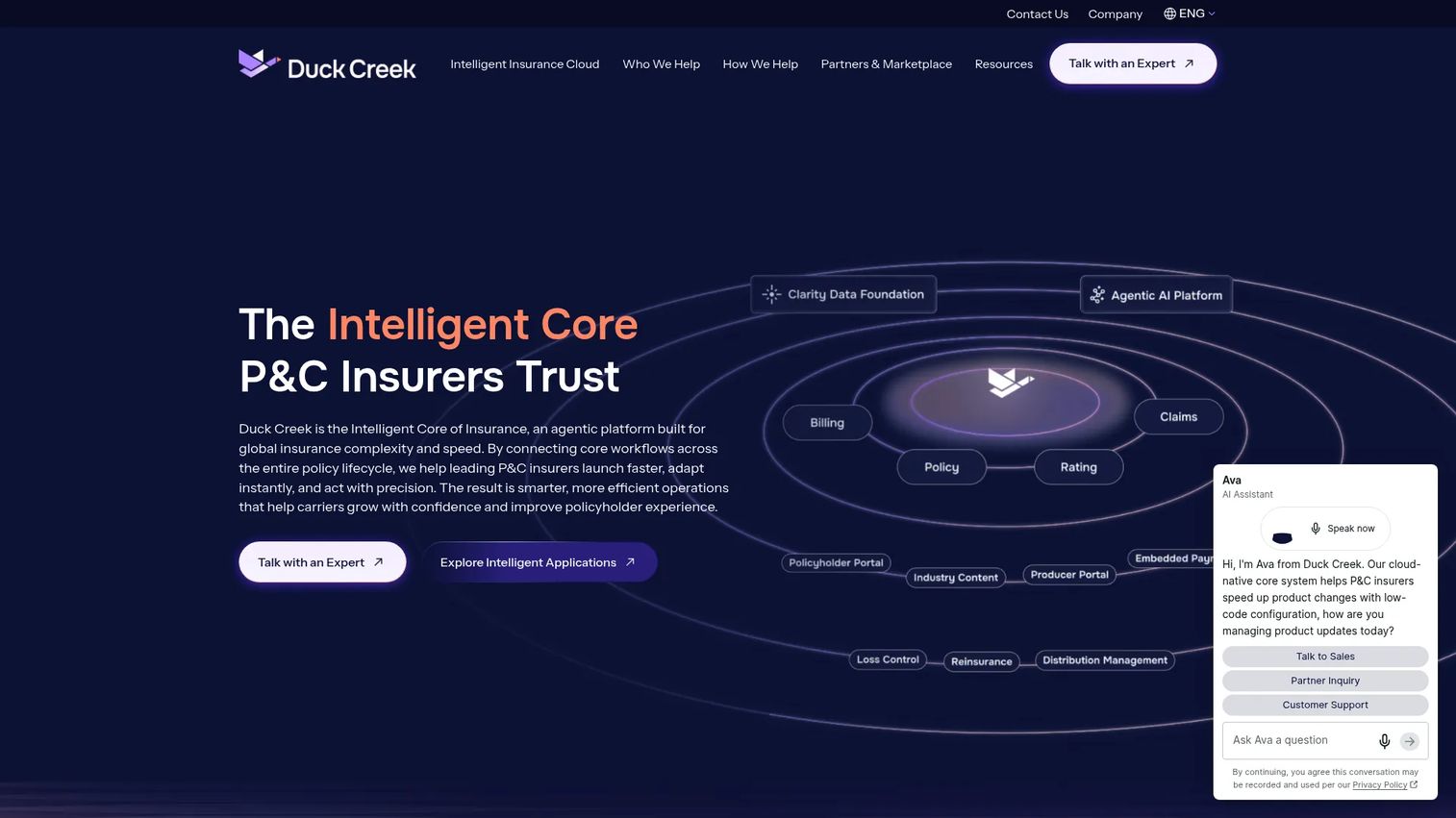
Duck Creek Policy is a SaaS policy administration platform for property and casualty insurers covering the policy lifecycle from product configuration and underwriting through issuance, servicing, and compliance. It features low-code and no-code product configuration, rules-based underwriting and workflow automation, prebuilt industry content including rates, rules, and forms, and API and third-party ecosystem integrations.
Best for: Enterprise P&C insurers needing configurable, scalable policy administration across multiple lines of business and regions.
Key features
- Low-code and no-code product configuration
- End-to-end P&C policy lifecycle management
- Rules-based underwriting and workflow automation
- Prebuilt industry content: Rates, rules, and forms
- API and third-party ecosystem integrations
Why choose Duck Creek Policy: Duck Creek fits P&C insurers that want a mature core with surrounding suite options for billing and claims. Validate product configuration workflow and implementation partner fit before selection.
Duck Creek pricing: Quote-based. Cost depends on modules, line of business, policy volume, integrations, and implementation partner scope.
G2 rating: 4.6/5
14. Guidewire PolicyCenter
Guidewire PolicyCenter is a widely deployed P&C policy administration system for managing the full property and casualty policy lifecycle from product design and quoting through renewal. It supports configurable product design, no-code tools, omnichannel digital experiences, automation, and embedded analytics and AI assistance. PolicyCenter is part of Guidewire InsuranceSuite when paired with billing and claims components.
Best for: Mid-sized and large P&C insurers standardizing core operations across complex product lines and needing a proven, widely adopted P&C core.
Key features
- Full P&C policy lifecycle management
- Configurable product design and no-code tools
- Omnichannel digital experiences
- Embedded analytics and AI assistance
- Guidewire Marketplace integrations
Why choose Guidewire PolicyCenter: Guidewire fits carriers that need scale, ecosystem depth, and a proven P&C core. Implementation planning and partner selection are critical. The Guidewire Marketplace provides a broad set of prebuilt integrations and accelerators that reduce custom development time.
Guidewire pricing: Buyers should evaluate software costs, partner implementation fees, cloud services, integrations, data migration, and upgrade path as separate budget categories.
G2 rating: 4.2/5 (verified on G2).
15. Fadata INSIS
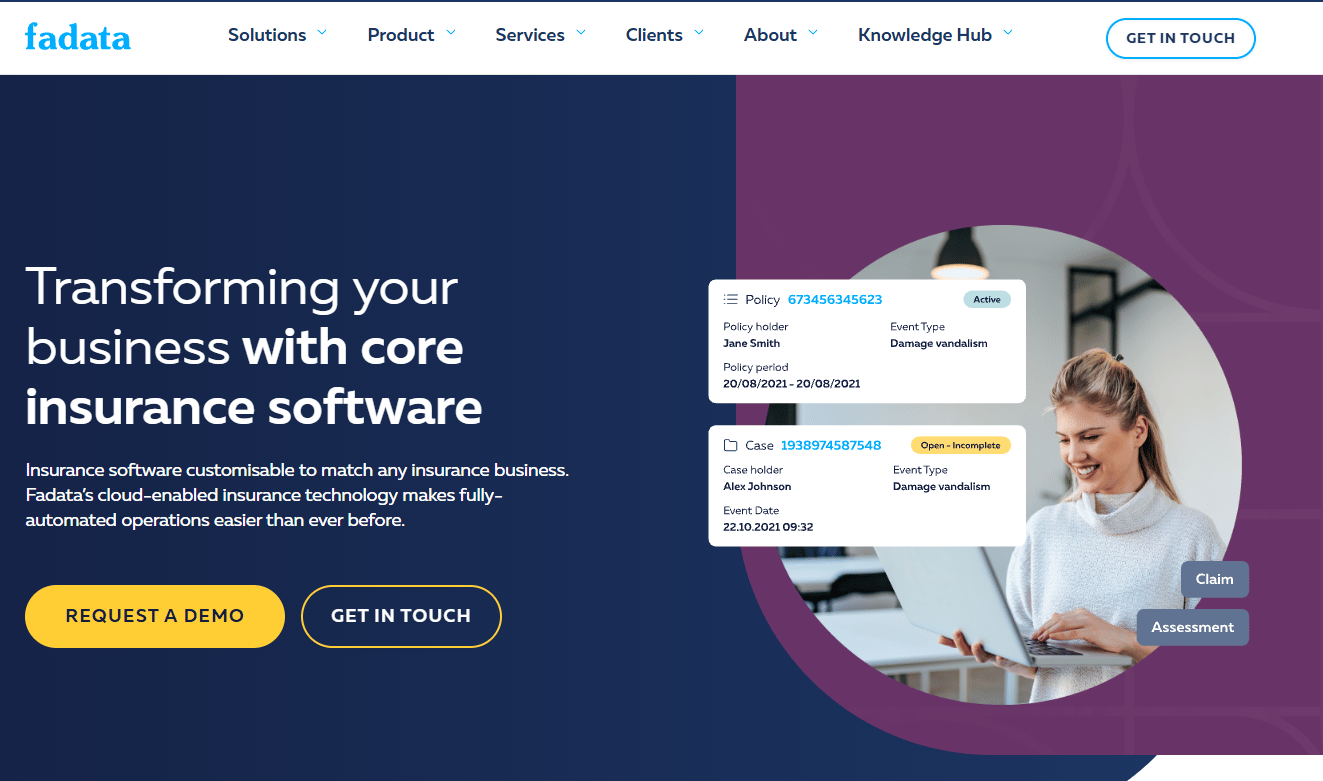
Fadata INSIS is a cloud-ready insurance platform for managing major insurance lines including life, non-life, and health, covering products, processes, policies, claims, billing, and reinsurance. It features low-code product configuration with reusable components, policy administration across quotations, underwriting, alterations, and renewals, and cloud and SaaS deployment.
Best for: Multi-line and international insurers needing configurable policy administration across geographies, products, and regulatory requirements.
Key features
- Low-code product configuration with reusable components
- Policy administration: Quotations, underwriting, alterations, and renewals
- Claims management from first notice of loss through settlement
- Billing, collections, payments, and accounting
- Reinsurance management and cloud or SaaS deployment
Why choose Fadata INSIS: INSIS fits insurers that need flexibility across geographies, products, and regulatory environments. Validate local implementation support and integration capabilities before committing, particularly for multi-country rollouts.
Fadata pricing: Quote-based. Cost drivers include country rollout, product catalog complexity, modules, migration scope, and partner services.
G2 rating: 3.0/5
Considerations when choosing insurance policy administration systems
Match the system to your insurance line first
Life, annuity, P&C, group, health, specialty, and MGA operations have different PAS requirements. A platform built for P&C product configuration will not naturally handle group benefit structures or life policy servicing. Start with line-of-business fit before evaluating architecture or vendor brand.
Validate migration before signing
Ask vendors how they extract, map, test, and reconcile legacy policy data. Undocumented business rules in older books can create more execution risk than any user interface decision. Request references from carriers that completed migrations of similar scale and complexity.
Check API depth against your stack
List every system that must connect to the PAS: Billing, claims, CRM, payments, portals, data warehouse, document generation, rating, reinsurance, and compliance reporting. Ask vendors for working integration documentation and reference customers on the specific integrations you need. Architecture diagrams are not proof of readiness.
Model total cost, not license cost
Include software fees, implementation partner costs, data conversion, integrations, testing, training, governance, and long-term support in your cost model. The lowest-quoted platform can become the most expensive if every product change requires paid services.
Review governance and auditability
PAS platforms touch regulated workflows. Before procurement, verify versioning controls, approval workflows, audit trails, access controls, product-rule history, and compliance reporting capabilities. These matter to regulators and to your operations team managing change over time.
Conclusion
There is no universal best insurance policy administration system. The right choice depends on your insurance line, your existing architecture, your migration complexity, and how much you can invest in implementation.
For multi-line core modernization, EIS Suite, Sapiens CoreSuite, and Fadata INSIS are worth evaluating. Life and annuity buyers typically shortlist from TCS BaNCS, ALIP, Oracle Insurance Policy Administration, FAST, and LifePRO. P&C carriers often start with Guidewire PolicyCenter, Duck Creek Policy, and Insurity. Teams building digital-first products or embedded insurance programs tend to evaluate Socotra Platform first.
Build a vendor scorecard before booking demos. Score each platform on insurance line fit, migration methodology, API depth, implementation partner availability, and total cost drivers. Then shortlist three to five vendors for structured evaluation.
The goal is not to find the most modern-looking platform. It is to find the one that reduces execution risk for your specific product roadmap and regulatory footprint. If your team is also evaluating benefits administration software for adjacent products or exploring how alarm system software or other specialized categories fit your tech stack, the same line-of-business-first evaluation logic applies.
FAQs
An insurance policy administration system is the core software platform insurers use to manage the full policy lifecycle, covering quoting, binding, issuing, servicing, renewals, endorsements, billing connectivity, and downstream claims connectivity. It serves as the operational record for policy terms, coverage, premium, and status, connecting to claims, CRM, billing, and reporting systems.
Policy administration software manages the policy lifecycle: How policies are issued, how they are serviced, and what coverage and terms apply at any point. Claims software manages loss intake, investigation, reserves, adjudication, and settlement. The two systems typically integrate, with the PAS providing coverage and limit data to the claims system when a loss is reported.
Core features include product and rate configuration, underwriting workflows, quote-to-issuance processing, policy servicing and endorsements, renewal and cancellation workflows, billing integrations, document generation, audit trails, compliance reporting, and connectivity to claims and CRM systems. Modern platforms also include API-first architecture, low-code or no-code product configuration, and cloud deployment.
Enterprise PAS platforms price by quote. Cost depends on insurance line, modules selected, policy volume, deployment model, implementation scope, data migration complexity, and integration work. There are no standard published price points across the market. Budget for software, implementation partner fees, data conversion, integration development, testing, and long-term support as separate categories.
Buying a PAS works when a vendor already supports your target line, regulatory requirements, and integration needs. Building gives control but creates long-term maintenance responsibility for a system that must evolve with your product catalog, regulatory changes, and technology stack. Some insurtechs combine a modern PAS with insurance-as-a-service infrastructure to accelerate product launch without building core administration from scratch.
Greenfield launches typically move faster than legacy replacement programs. Migration timelines depend on data conversion complexity, the volume of undocumented business rules, regulatory filing requirements in each state or jurisdiction, integration work, and testing rigor. Large enterprise replacements often run 18 to 36 months. Smaller digital programs on modern platforms can go live significantly faster.
Life and annuity buyers most often evaluate TCS BaNCS, Accenture ALIP, Oracle Insurance Policy Administration, FAST, and LifePRO. Compare product model depth, conversion support, servicing workflow capabilities, and cloud deployment options. The right choice depends on portfolio complexity, states covered, and whether you need a pure-play life PAS or a broader enterprise platform.
P&C buyers typically start by evaluating Guidewire PolicyCenter, Duck Creek Policy, Insurity, EIS Suite, and Socotra Platform, with the choice depending on company size, operating model, and architecture preferences. Validate rating and product configuration workflow, underwriting automation depth, and claims integration readiness for your specific lines of business before narrowing the shortlist.