Your HVAC runs on one dashboard. Access control lives in another. Lighting sits on a schedule nobody remembers setting. Energy data shows up in a monthly PDF three weeks too late to change anything.
That is the reality of most commercial buildings. Systems that should act as one operate as five, each with its own login, its own vendor, and its own failure mode.
The global building automation systems market hit USD 101.34 billion in 2025 and is projected to reach USD 191.13 billion by 2030 at a 13.4% CAGR, according to MarketsandMarkets (2025). That growth is not about buying more thermostats. It is about buildings that need to behave like a single system, with energy performance and security tied together instead of bolted on.
So the real decision is not which feature you want. It is which operating layer you want running the building for the next decade.
What's inside
- This guide is for buyers, integrators, and facility operators comparing building automation platforms in 2026.
- The shortlist ranks tools by control depth, integration breadth, modernization fit, and operational value.
- You get a side-by-side comparison table, short profiles of each platform, and a buyer's checklist.
- The goal is to help you shortlist software that supports both current operations and future upgrades without creating a maintenance headache.
TL;DR
- Best overall for enterprise building control: Honeywell, for teams wanting one portfolio across automation, security, and fire.
- Best for modernization and open architecture: Schneider Electric, built around EcoStruxure and phased platform migration.
- Best for broad building management: Siemens, strong on control depth across large portfolios.
- Best for integrated controls and services: Johnson Controls, anchored by the OpenBlue smart building platform.
- Best for cross-system infrastructure control: Bosch, with multi-vendor and open protocol integration.
- Best for procurement and product discovery: D-Tools, the quoting and design layer for integrators.
- Best for analytics-led connected operations: Honeywell Forge, for real-time building performance visibility.
What is building automation software
Building automation software is a platform that monitors and controls a building's core systems, including HVAC, lighting, access control, security, and energy usage, from a single operator interface. It sits between field devices and controllers on one side and the people running the building on the other, translating raw sensor and equipment data into schedules, alerts, and automated control logic.
The category goes by several names. You will see it called building automation systems (BAS), BAS software, building management software, or a building management system (BMS). Vendors also market smart building software and automated building controls that add analytics and cloud access on top of the control layer. The distinctions blur in practice, but they all describe the same job: making building control systems act together instead of in isolation.
Core capabilities you should expect:
- Centralized monitoring: one view of HVAC, lighting, power, and security across the building.
- Automated control logic: rules that adjust equipment based on occupancy, time, or conditions.
- Scheduling and alerts: setpoints, run times, and fault notifications without manual checks.
- Energy and occupancy optimization: trimming utility waste and matching output to demand.
- Integration across subsystems: connecting multi-vendor equipment through open protocols.
- Analytics and reporting: trend data, fault detection, and performance dashboards.
- Access control and safety coordination: permissioning, video, and fire and life safety in one layer.
The stronger platforms treat these not as separate modules but as one connected system. That is the difference between a building you monitor and a building that manages itself against the goals you set.
When to use
Modernize a legacy building management stack
Old controllers, proprietary protocols, and dashboards that only one retiring technician understands eventually slow everything down. When a single equipment change takes a service call and a week, the stack has become the bottleneck. Building automation software with modernization support lets you replace pieces in phases while keeping the building running.
Coordinate multiple building subsystems from one layer
Teams reach for BAS software when HVAC, lighting, access, and energy need to respond as one system rather than five. An occupancy signal should be able to dim lights, adjust temperature, and log entry data at once. That coordination only happens when the subsystems share a control layer instead of trading data through spreadsheets.
Improve energy efficiency and operational control
When utility waste is high and visibility is low, the goal shifts to control. Automated building controls cut manual intervention, catch faults before they compound, and match energy use to real demand. This is where smart building software earns its keep, turning reactive maintenance into scheduled, data-driven operation.
Comparison table
These platforms differ mostly by ecosystem depth, modernization posture, and how much of the building they can control from one layer. Pricing for enterprise building automation is almost always quote-based, so treat the pricing column as a directional signal rather than a fixed number.
| # | Product | Best for | Key differentiator | Pricing | G2 rating |
|---|---|---|---|---|---|
| 1 | Honeywell | Enterprise building control | Connected automation, security, and fire in one portfolio | Quote-based | 4.4/5 |
| 2 | Schneider Electric | Modernization and open architecture | EcoStruxure open, lifecycle-based platform | Quote-based, some add-ons from $350/yr | Not listed |
| 3 | Siemens | Broad building management | Control depth across large portfolios | Quote-based | Not listed |
| 4 | Johnson Controls | Integrated controls and services | OpenBlue smart building platform | Quote-based | Not listed |
| 5 | Bosch | Cross-system infrastructure control | Multi-vendor and open protocol integration | Quote-based | 4.8/5 |
| 6 | D-Tools | Procurement and product discovery | Quoting, design, and project management | From $99/month | 4.3/5 |
| 7 | Honeywell Forge | Analytics-led connected operations | Cloud building performance analytics | Quote-based | 4.5/5 |
Best 7 building automation software platforms for 2026
1. Honeywell
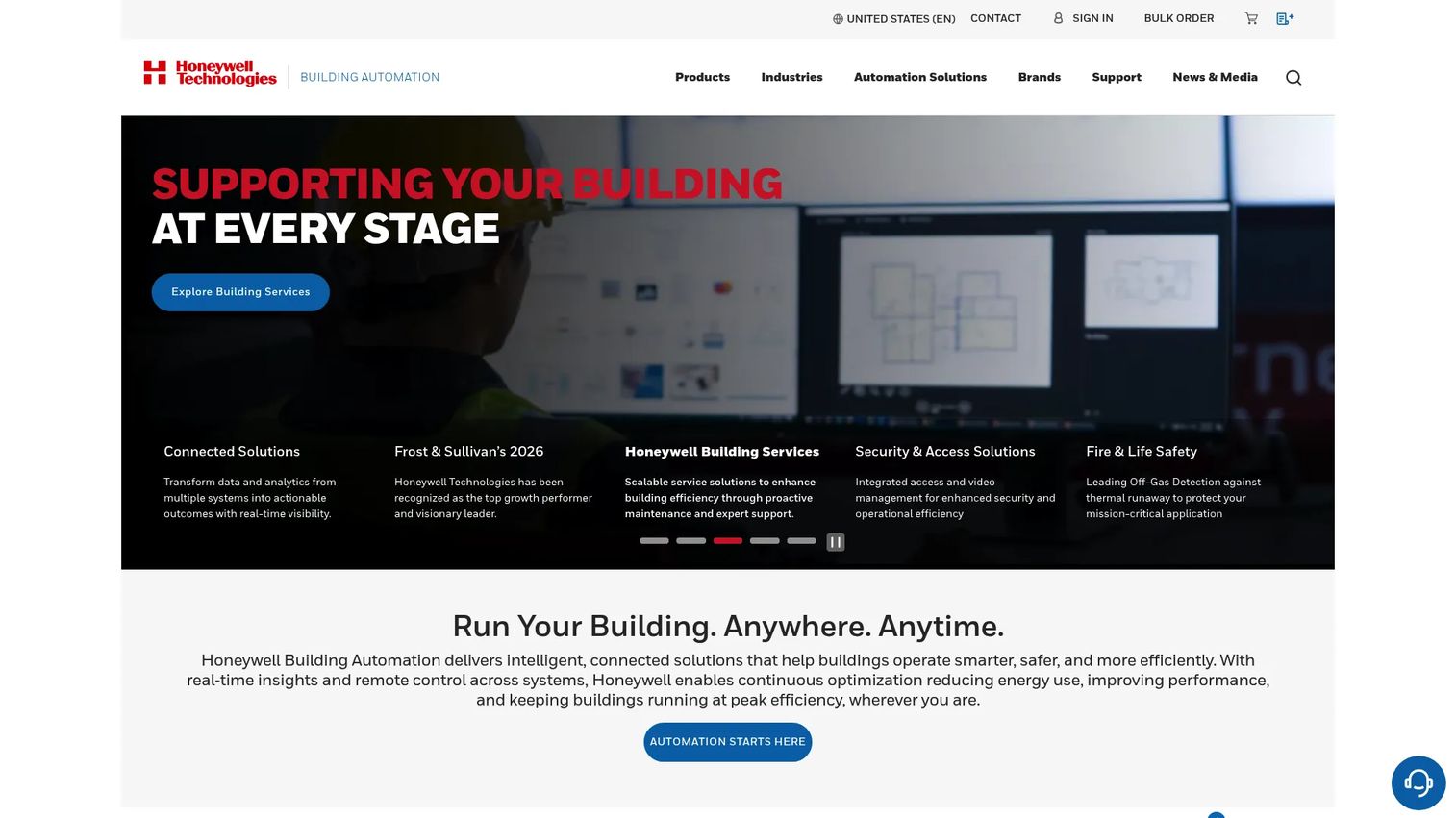
Honeywell is one of the broadest building automation ecosystems available. Its portfolio spans automation and control, security, access, video, and fire and life safety, plus remote management and lifecycle services. For buyers who want one vendor across most building systems rather than stitching together point solutions, this breadth is the pitch.
Best for: Enterprises that want building automation and integrated facility systems from a single portfolio.
Key features
- Building automation and equipment control
- Remote building management via cloud
- Integrated fire, life safety, and security
- Access control and video coordination
- Lifecycle maintenance and support services
Why choose Honeywell: If your priority is consolidating automation, security, and safety under one roof, Honeywell's connected-operations breadth is hard to match. It fits large facility portfolios where owning fewer vendor relationships matters more than best-of-breed in any single subsystem.
Honeywell pricing: Honeywell handles building automation pricing through sales and its distributor network, so figures come from a quote rather than a public tier. Reach out through the customer service portal to scope a project.
Honeywell holds a 4.4 out of 5 rating on G2.
2. Schneider Electric
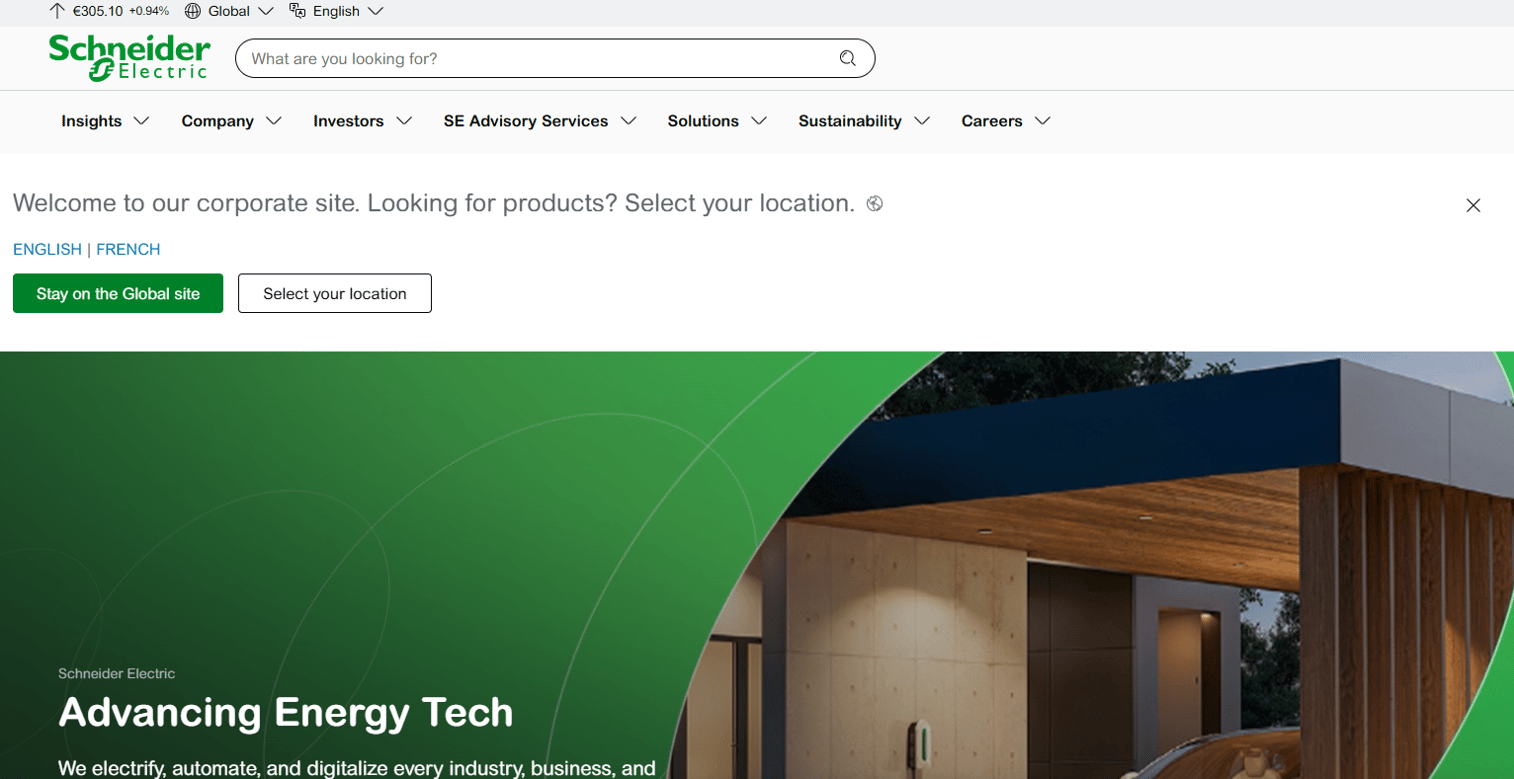
Schneider Electric builds its building management story around EcoStruxure, an open architecture designed to coordinate energy, automation, and building operations across a facility's lifecycle. The angle here is modernization: replacing legacy controls in phases, keeping older equipment running during migration, and moving toward a future-ready platform without a rip-and-replace project.
Best for: Enterprises wanting electrical, automation, and energy management software and hardware from one vendor.
Key features
- Agnostic software portfolio across design to operate
- Energy management and industrial automation
- Cloud-based monitoring and DCIM
- Open EcoStruxure architecture
- Lifecycle and modernization tooling
Why choose Schneider Electric: Choose Schneider if modernization and open architecture rank above single-vendor lock-in. Its lifecycle framing suits owners planning phased upgrades who want energy efficiency baked into the migration rather than added later.
Schneider Electric pricing: Core building automation deployments are quote-based. Some EcoStruxure add-ons carry public subscription pricing, such as a switchboard commissioning feature at $350 per year and advanced testing at $1,700 per year, and several tools offer free trials.
A current G2 rating for the building automation software was not available at the time of writing.
3. Siemens
Siemens brings deep control engineering to building management, with strong integration and enterprise fit across large building portfolios. As a global industrial technology company, it pairs building automation with a wider software and digital-twin portfolio under Siemens Xcelerator, which appeals to owners thinking about buildings as part of a larger operational data picture.
Best for: Enterprise operators managing large or complex building portfolios that need control depth.
Key features
- Building control and automation depth
- Integration across multi-vendor systems
- Digital twin and industrial AI offerings
- Siemens Xcelerator software portfolio
- Cloud SaaS delivery options
Why choose Siemens: Siemens fits buyers who value engineering depth and want building control that scales across a large estate. It is a strong pick when the building automation decision is part of a broader digital transformation program rather than a standalone HVAC project.
Siemens pricing: Siemens delivers building automation through project-based quotes. Its cloud software lines publish tier names and offer trials, but building automation deployments are scoped and priced per engagement.
A verified G2 rating for the building automation offering was not available at the time of writing.
4. Johnson Controls
Johnson Controls centers its building automation around OpenBlue, a smart building platform that ties controls, HVAC, security, and analytics into a connected operating layer. The company leans hard on energy efficiency, decarbonization, and mission-critical performance, which makes it a fit for owners with sustainability targets and complex operational requirements.
Best for: Enterprises needing building automation, HVAC, fire, security, and controls as an integrated program.
Key features
- Building automation and controls
- OpenBlue smart building platform
- Access control and security
- Energy efficiency and decarbonization tooling
- Implementation and lifecycle services
Why choose Johnson Controls: Pick Johnson Controls when you want controls, building systems, and services bundled with a clear sustainability and modernization story. Its combination of hardware, software, and field services suits operators who want a partner rather than just a platform.
Johnson Controls pricing: Johnson Controls prices building automation through quotes and representatives rather than published tiers. Pricing depends on the systems in scope, so a scoping conversation is the starting point.
A current numeric G2 rating for the building automation offering was not available at the time of writing.
5. Bosch

Bosch brings infrastructure credibility to building automation, with cross-system control spanning HVAC, lighting, central plant, and critical building environments. Its strength is integration: multi-vendor, legacy, IoT, wireless, and open protocol support that lets it sit on top of mixed equipment rather than demanding a single-brand estate.
Best for: Enterprises needing integrated building automation plus systems integration services.
Key features
- HVAC, lighting, and central plant control
- Multi-vendor and legacy system integration
- Open protocol, IoT, and wireless support
- Energy management and analytics
- Predictive maintenance and 24/7 monitoring
Why choose Bosch: Bosch fits buildings with mixed, older, or multi-brand equipment where integration matters more than starting fresh. Its systems-integration focus makes it a practical option when you need one control layer over hardware you already own.
Bosch pricing: Bosch handles building automation through its solutions and contact process rather than public pricing tiers. Expect a quote scoped to your building and integration needs.
Bosch carries a 4.8 out of 5 rating on G2, based on a specific Bosch-branded product listing rather than the full building automation line.
6. D-Tools
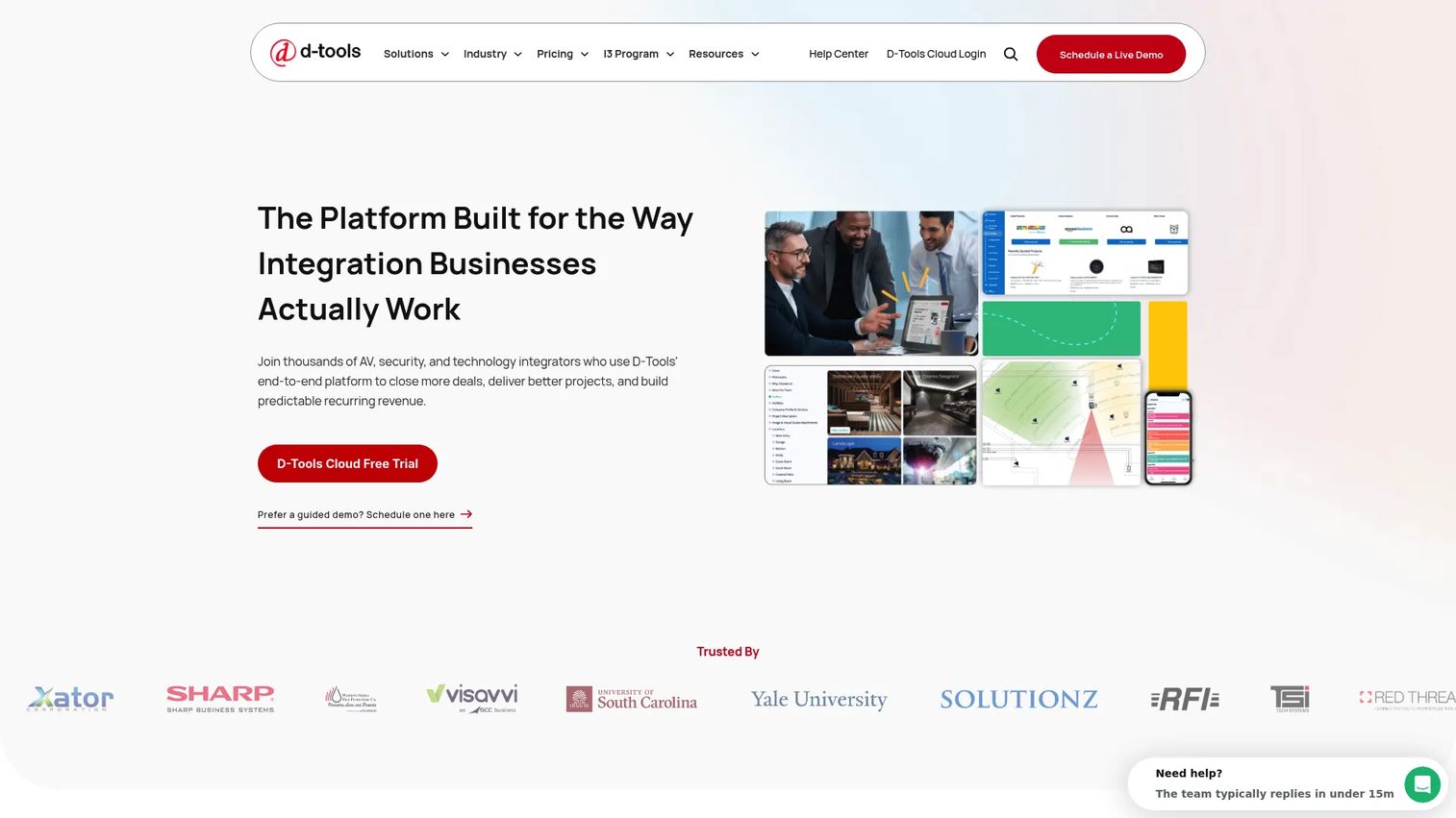
D-Tools is the odd one out here, and deliberately so. It is not a controls platform. It is the procurement and product discovery layer that integrators and buyers use to design, quote, and manage building automation projects. If you are specifying and sourcing the components that make up a building automation system, D-Tools handles the estimating, proposals, and project workflow around that decision.
Best for: AV, security, and low-voltage integrators needing quoting, design, and project management in one platform.
Key features
- Integrated product library with pricing
- Visual quoting and multimedia proposals
- Project management and service workflows
- Inventory and procurement tracking
- Design documentation tools
Why choose D-Tools: Choose D-Tools when your job is selecting and quoting building automation components rather than running them day to day. It fills the selection and procurement gap the controls platforms leave open, which is why it earns a spot on this list.
D-Tools pricing: D-Tools Cloud starts at $99 per month, or $89 per month paid annually. The System Integrator plan runs $1,800 per user annually with a five-user minimum.
D-Tools holds a 4.3 out of 5 rating on G2.
7. Honeywell Forge
Honeywell Forge is Honeywell's cloud analytics and connected-operations layer. Where the core Honeywell platform runs the controls, Forge sits above them to deliver real-time building performance visibility, energy and carbon analytics, and operations dashboards. It is the layer that turns control data into optimization decisions across a facility or portfolio.
Best for: Organizations needing connected building operations, energy analytics, or hospitality workflow optimization.
Key features
- Cloud-based building monitoring and control
- Energy and carbon management analytics
- Real-time performance dashboards
- Hospitality operations workflows
- Portfolio-level visibility
Why choose Honeywell Forge: Reach for Forge when the priority is analytics and visibility rather than the underlying control hardware. It suits teams that already have controls in place and want a performance layer to spot waste, track carbon, and optimize across buildings.
Honeywell Forge pricing: Honeywell Forge is priced through contact and sign-in rather than public tiers, with packaging that varies by the solution within the Forge family.
Honeywell Forge holds a 4.5 out of 5 rating on G2, based on a specific product within the Forge portfolio.
Considerations
Integration depth
The core test is whether the platform can coordinate across the systems you already run, not just a subset of devices. Ask how it handles multi-vendor equipment, legacy controllers, and open protocols. A platform that only controls its own hardware locks you into a single brand for every future upgrade.
Security and access control
Building control systems increasingly touch the network, so access permissioning and security matter as much as HVAC logic. Check whether the platform coordinates access control, video, and fire and life safety alongside automation. Fragmented security across separate tools is where gaps appear.
Energy and operational outcomes
A building automation system should measurably reduce waste, not just report it. Look for real energy optimization, occupancy-based control, and analytics that catch faults early. If the tool cannot connect visibility to action, it is a dashboard, not a control layer.
Modernization and migration
Few buyers can afford a full rip-and-replace. Prioritize platforms that support phased replacement, legacy coexistence, and a clear path to future-ready architecture. This is where open systems earn their premium over closed ones.
Services and support model
Decide whether you need software alone or a broader program with implementation and lifecycle services. Enterprises with lean facility teams often want the vendor to own installation, tuning, and ongoing support. Integrator-led buyers may prefer software plus a strong product and procurement layer.
Conclusion
The right building automation software depends on what you are optimizing for. Choose Honeywell when you want one portfolio across automation, security, and fire. Choose Schneider Electric for modernization and open architecture, and Siemens when control depth across a large estate is the priority. Johnson Controls fits integrated controls tied to sustainability goals, while Bosch suits mixed, multi-vendor buildings that need strong integration. D-Tools covers the procurement and quoting layer for integrators, and Honeywell Forge adds the analytics and performance visibility on top of your controls.
Start by naming your primary driver: modernization, control depth, ecosystem breadth, or analytics. That single decision narrows this list to two or three real candidates faster than any feature checklist.
If your evaluation involves showing product experiences to stakeholders without a live environment, Guideflow lets teams build interactive, self-serve product walkthroughs that buyers explore at their own pace.
Start your journey with Guideflow today!
FAQs
Building automation software is a platform that monitors and controls a building's systems, such as HVAC, lighting, access control, security, and energy, from one interface. It connects field devices and controllers to an operator layer that runs schedules, alerts, and automated control logic. The goal is to make separate building systems act as one coordinated whole.
The terms overlap heavily and are often used interchangeably. A building management system (BMS) traditionally emphasizes monitoring and control of core building services like HVAC and lighting. Building automation software often extends that with cloud access, analytics, and tighter integration of security and energy, though most modern platforms cover both.
Most platforms control HVAC, lighting, and energy usage, then extend to access control, video surveillance, and fire and life safety. Stronger systems also coordinate occupancy sensors, metering, and predictive maintenance. The breadth depends on the platform and how well it integrates with your existing equipment.
It matches energy use to actual demand instead of running equipment on fixed schedules. Occupancy-based control, automated setpoints, and fault detection cut waste that manual operation misses. Analytics then surface where energy is being lost, so you can act before it shows up on a utility bill weeks later.
Prioritize integration depth, security and access control coordination, real energy outcomes, and modernization support. Check whether the platform works with multi-vendor and legacy equipment or locks you into one brand. Also weigh whether you need software alone or a full implementation and services program.
Modernization usually happens in phases rather than a single rip-and-replace. You keep legacy controllers running while migrating subsystems onto an open architecture over time. Platforms with lifecycle and coexistence support, like open EcoStruxure-style systems, make this staged approach less disruptive to daily operations.
No. Large commercial and enterprise portfolios are the most common buyers because the savings scale with size. But mid-sized offices, campuses, hospitals, and mixed-use properties also use these systems. Cloud-based and modular platforms have made building automation practical well below the enterprise tier.