The alert fires at 2 a.m. Traffic spikes 400x. Your login page times out, your API stops responding, and checkout fails. By the time someone traces the source, revenue has already leaked and support tickets are piling up.
That is the scenario DDoS protection software exists to prevent. A distributed denial-of-service attack floods your infrastructure with junk traffic until legitimate users cannot get through. The stakes are uptime, revenue, and reputation, all at once. And the global DDoS protection market reached USD 5.38 billion in 2026, growing at a 13.83% CAGR through 2031, according to Mordor Intelligence (2026). Buyers are spending because outages are expensive.
The buying problem is harder than the threat. You have to choose between cloud, hybrid, always-on, and on-demand architectures. You have to weigh mitigation speed against false positives. You have to make sure the pricing model does not punish you the moment an attack lands. And if you sit in presales, security, or IT, you also have to explain those tradeoffs to procurement and prospects in language they trust.
If you build technical demos or evaluate tools the way presales teams do, you already know the value of hands-on validation over vendor claims, which is exactly why an interactive demo or a live proof-of-concept beats a slide deck when the stakes are real. The same logic applies here: shortlist, then validate. This guide gives you the shortlist and the criteria to validate it.
What's inside
This guide is for security, IT, and presales teams evaluating anti-DDoS software in 2026. We selected tools based on four criteria that matter most when an attack is live: attack-layer coverage (network through application), mitigation speed, deployment model fit (cloud, hybrid, or managed), and pricing clarity during an attack.
The list spans cloud-native edge providers, enterprise scrubbing networks, cloud-provider-native options, and appliance-plus-hybrid platforms. Each entry includes who it fits, key strengths, and verified pricing where public. Use it to build a two-to-three vendor shortlist, then validate architecture fit in a technical review.
TL;DR
- Best overall for broad coverage: Imperva DDoS Protection covers web, network, DNS, and IP assets with a fast Layer 3/4 SLA.
- Best for cloud edge speed: Cloudflare DDoS Protection mitigates at a 500 Tbps global edge with a free entry tier.
- Best for enterprise scrubbing depth: Akamai Prolexic runs 32 scrubbing centers with 20+ Tbps of dedicated DDoS defense.
- Best for AWS-native teams: AWS Shield ties directly into AWS WAF and Firewall Manager for L7 coverage.
- Best for Azure-first infrastructure: Azure DDoS Protection delivers always-on monitoring native to Microsoft cloud workloads.
- Best for hybrid and appliance defense: Check Point Quantum DDoS Protector and A10 Defend Suite pair on-prem and cloud with AI behavioral analysis.
What is DDoS protection software?
DDoS protection software is a set of tools and services that detect, absorb, and filter malicious traffic aimed at overwhelming a network, service, or application, so legitimate users keep getting through. Good DDoS mitigation software does this without adding latency that degrades the experience it is protecting.
Attacks fall into three broad categories, and the right ddos protection services need to cover all of them:
- Volumetric attacks flood your bandwidth with sheer traffic volume, measured in Gbps or Tbps. Think UDP floods and amplification attacks.
- Protocol attacks exhaust server or network resources by abusing Layer 3 and Layer 4 mechanics, like SYN floods that never complete a handshake.
- Application-layer attacks target Layer 7, mimicking real users to exhaust app resources. These are slower, quieter, and harder to spot.
Here are the defensive concepts worth knowing before you shortlist:
- Network layer ddos protection (Layer 3/4): Absorbs and filters volumetric and protocol attacks before they reach your infrastructure.
- Application layer ddos protection (Layer 7): Inspects requests to separate real users from bots targeting login flows, search, and APIs. This is where layer 7 ddos protection earns its keep.
- Scrubbing centers: Distributed facilities that reroute your traffic, strip out attack packets, and pass clean traffic back to you.
- Behavioral analysis and anomaly detection: Baselines normal traffic, then flags deviations automatically instead of relying on static rules.
- Always-on vs on-demand mitigation: Always-on protection filters continuously with near-zero mitigation time. On-demand mitigation activates when an attack is detected, often at lower cost.
- Cloud, hybrid, and on-prem architectures: Cloud DDoS protection scales elastically at the edge. Hybrid ddos protection pairs on-prem appliances with cloud scrubbing for volume overflow. On-prem gives you full control of the data path.
Strong ddos defense combines all of these into a layered posture, because attackers rarely stick to one vector.
When to use DDoS protection software
Protect customer-facing apps and APIs
Login flows, checkout, search, and public APIs are the surfaces attackers hit hardest, because taking them down directly interrupts revenue and trust. These endpoints need continuous protection that can tell a real user from a bot hammering the same endpoint thousands of times a second. Layer 7 coverage matters most here, since volumetric filtering alone will not stop a low-and-slow application attack that looks like legitimate traffic.
Defend critical uptime during peak revenue periods
Attackers time their campaigns for maximum leverage: product launches, seasonal sales, and enterprise buying windows. A five-minute outage during a launch costs more than a five-hour outage on a quiet Tuesday. Always-on protection removes the detection-to-mitigation gap, which is why teams with predictable high-stakes windows lean toward continuous coverage rather than on-demand. Business continuity is the whole point.
Choose a cloud, hybrid, or managed deployment
Your infrastructure ownership and security maturity decide the right model. Cloud-native teams often want edge mitigation with minimal operational overhead. Organizations with on-prem data centers or strict data-path control frequently choose hybrid, keeping appliances local while bursting to cloud scrubbing for volume. Teams without a dedicated security operations function tend to prefer managed mitigation with SLA-backed response.
Comparison table
Here is a side-by-side view of the eight DDoS protection solutions in this guide. Pricing reflects publicly verified values where vendors publish them; several enterprise offerings use custom pricing based on traffic and deployment.
| # | Product | Best for | Key differentiation | Deployment model | Pricing | G2 rating |
|---|---|---|---|---|---|---|
| 1 | Imperva DDoS Protection | Broad multi-asset coverage | 3-second SLA for L3/4 attacks | Cloud, always-on and on-demand | Custom | 4.4/5 |
| 2 | A10 Defend Suite | Service providers and enterprises | Detection, mitigation, orchestration | On-prem and cloud | Custom | 4.0/5 |
| 3 | Cloudflare DDoS Protection | Cloud edge speed | 500 Tbps edge, unmetered mitigation | Cloud | Free; Pro $20/mo | 4.5/5 |
| 4 | Akamai DDoS | Enterprise scrubbing depth | 32 scrubbing centers, 20+ Tbps | Cloud, on-prem, hybrid | Custom | 4.7/5 |
| 5 | Radware Cloud DDoS Protection | Adaptive managed defense | Behavioral detection, auto-signatures | Cloud, hybrid, always-on/on-demand | Custom | 4.8/5 |
| 6 | AWS Shield | AWS-native workloads | WAF-integrated L7 protection | Cloud | Standard $0; Advanced $3,000/mo | 4.0/5 |
| 7 | Azure DDoS Protection | Azure-first infrastructure | Always-on, native Azure integration | Cloud | IP Protection $199/mo | 4.6/5 |
| 8 | Check Point Quantum DDoS Protector | Hybrid and appliance defense | AI/ML behavioral analysis | On-prem and cloud | Custom | 4.2/5 |
1. Imperva DDoS Protection
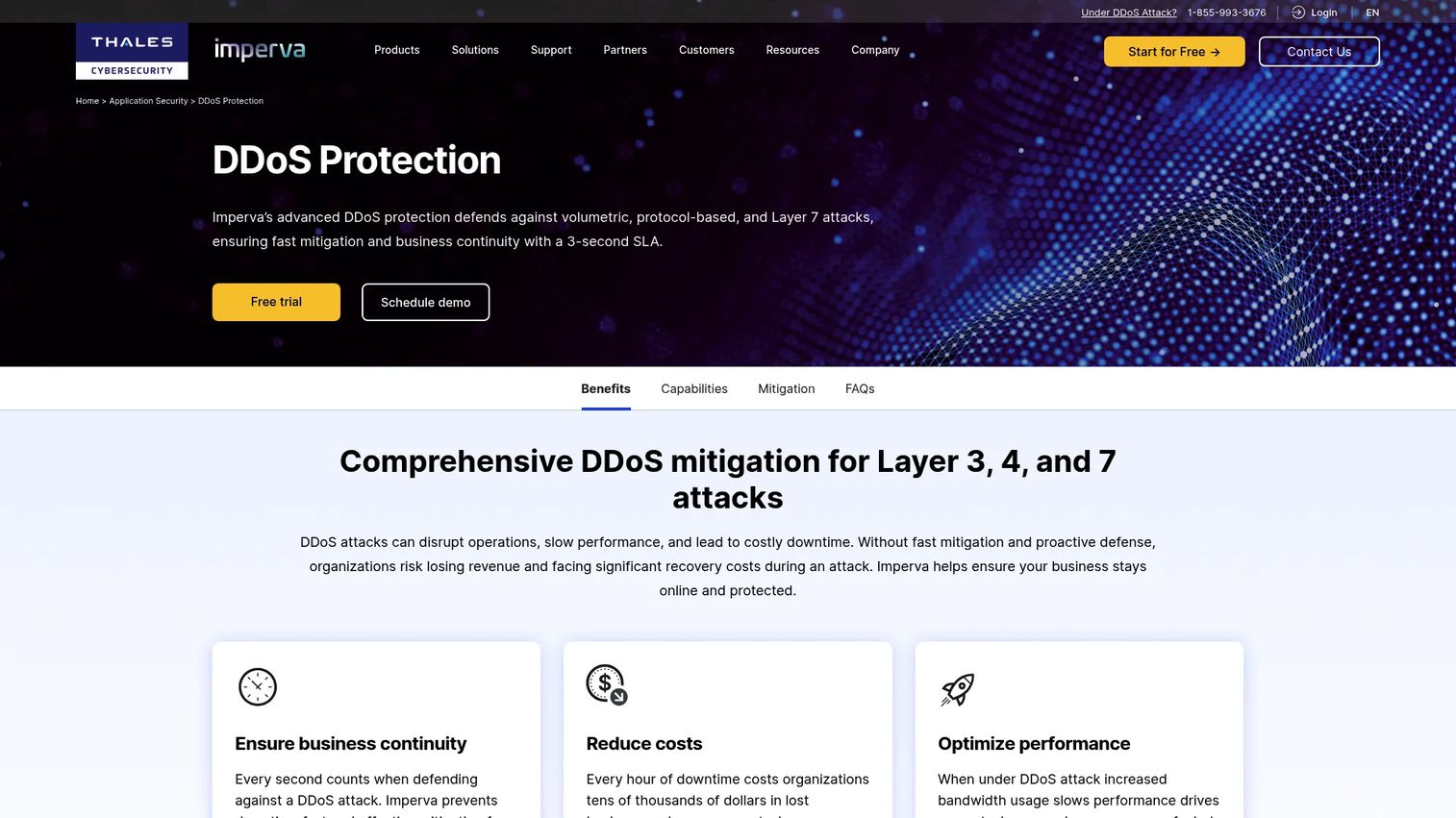
Imperva DDoS Protection is a cloud-based anti-DDoS service that covers websites, networks, DNS, and individual IPs from a single platform. It sits inside Imperva's broader web security stack, so teams that need application-layer coverage alongside network defense get both without stitching vendors together. The application-layer emphasis makes it a strong fit for organizations whose risk is concentrated in web apps and APIs.
Best for: organizations needing managed DDoS protection across web, network, DNS, and IP assets in one platform.
Key strengths
- Broad asset coverage: Protects websites, networks, DNS, and individual IPs, so you defend the full attack surface from one console.
- Fast mitigation SLA: A 3-second SLA for Layer 3 and Layer 4 attacks keeps volumetric and protocol traffic from reaching your infrastructure.
- Flexible posture: Always-on and on-demand mitigation options let you match protection to how predictable your traffic and threat windows are.
Why choose Imperva: If your organization wants one vendor covering both network-layer and application-layer ddos protection, plus a broader security stack, Imperva reduces the tool sprawl that fragmented point solutions create. It fits security teams that value a single pane over best-of-breed assembly.
Imperva pricing: Imperva does not publish a public price on its DDoS product page. Pricing is quote-based, and a network pricing plan sheet exists for teams that request it. Imperva offers a free trial and scheduled demos to evaluate fit before committing.
2. A10 Defend Suite
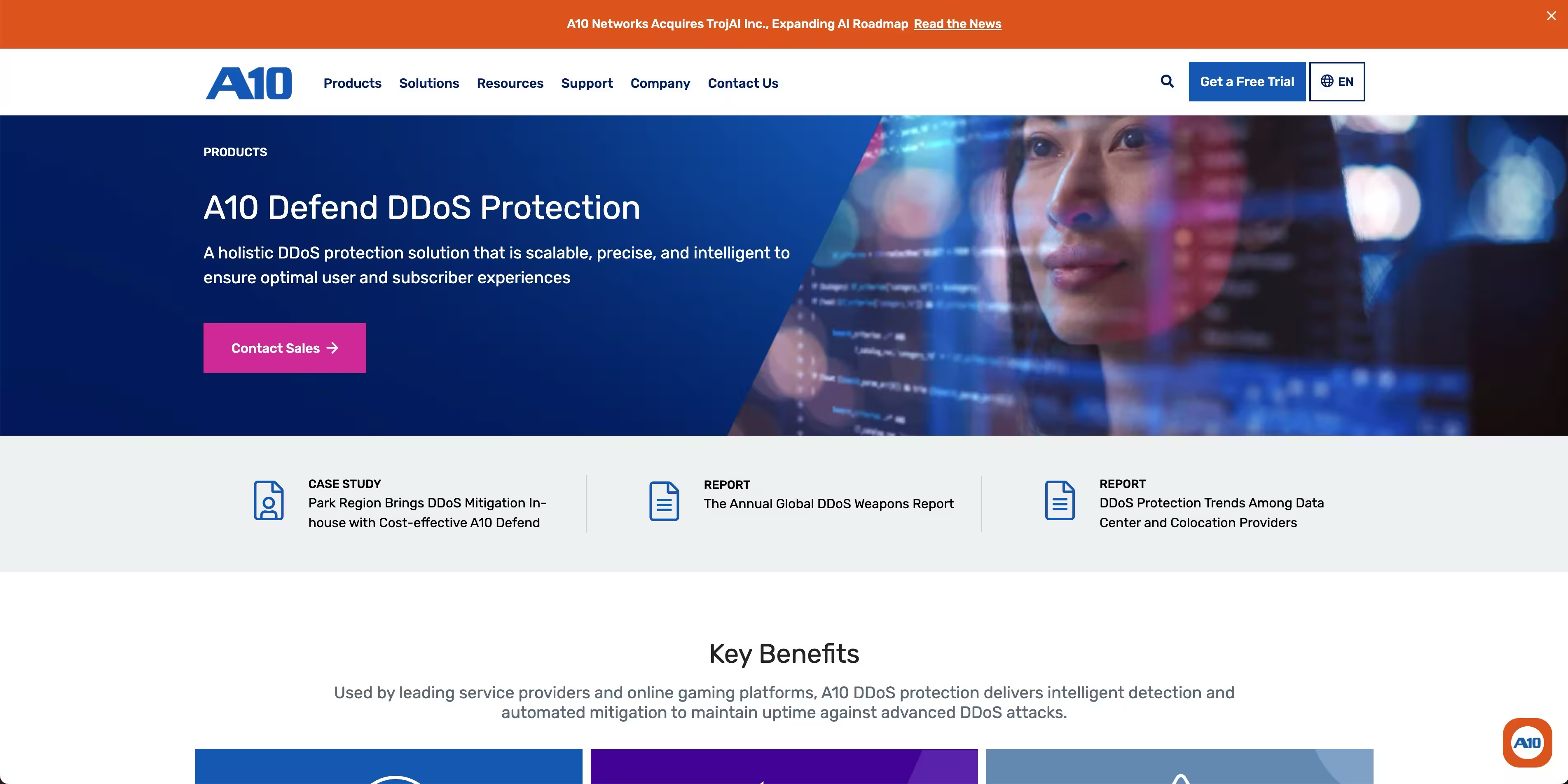
A10 Defend Suite is A10 Networks' layered DDoS defense platform built around detection, mitigation, orchestration, and threat intelligence. It targets service providers and large enterprises that want automated response rather than manual intervention when a multi-vector attack lands. The suite leans on network-wide anomaly detection and AI-assisted baselining to separate attack traffic from legitimate spikes.
Best for: service providers and enterprises needing layered DDoS protection with response automation.
Key strengths
- Automated mitigation: Detects and mitigates attacks without waiting on manual triage, which shrinks mitigation speed when volume climbs fast.
- Network-wide anomaly detection: Baselines traffic across the network to flag deviations before they saturate capacity.
- Threat intelligence: Customizable blocklists and threat feeds sharpen accuracy and cut false positives on known bad sources.
Why choose A10: Teams that operate large networks and want orchestration across detection and mitigation, rather than a single scrubbing endpoint, get a lifecycle approach here. It suits environments where on-prem control and automated response both matter.
A10 pricing: A10 does not list public pricing for the Defend Suite. The product pages route to demo, contact, and trial prompts, so pricing is quote-based and tied to deployment scale and traffic. Request a demo to scope packaging for your environment.
3. Cloudflare DDoS Protection
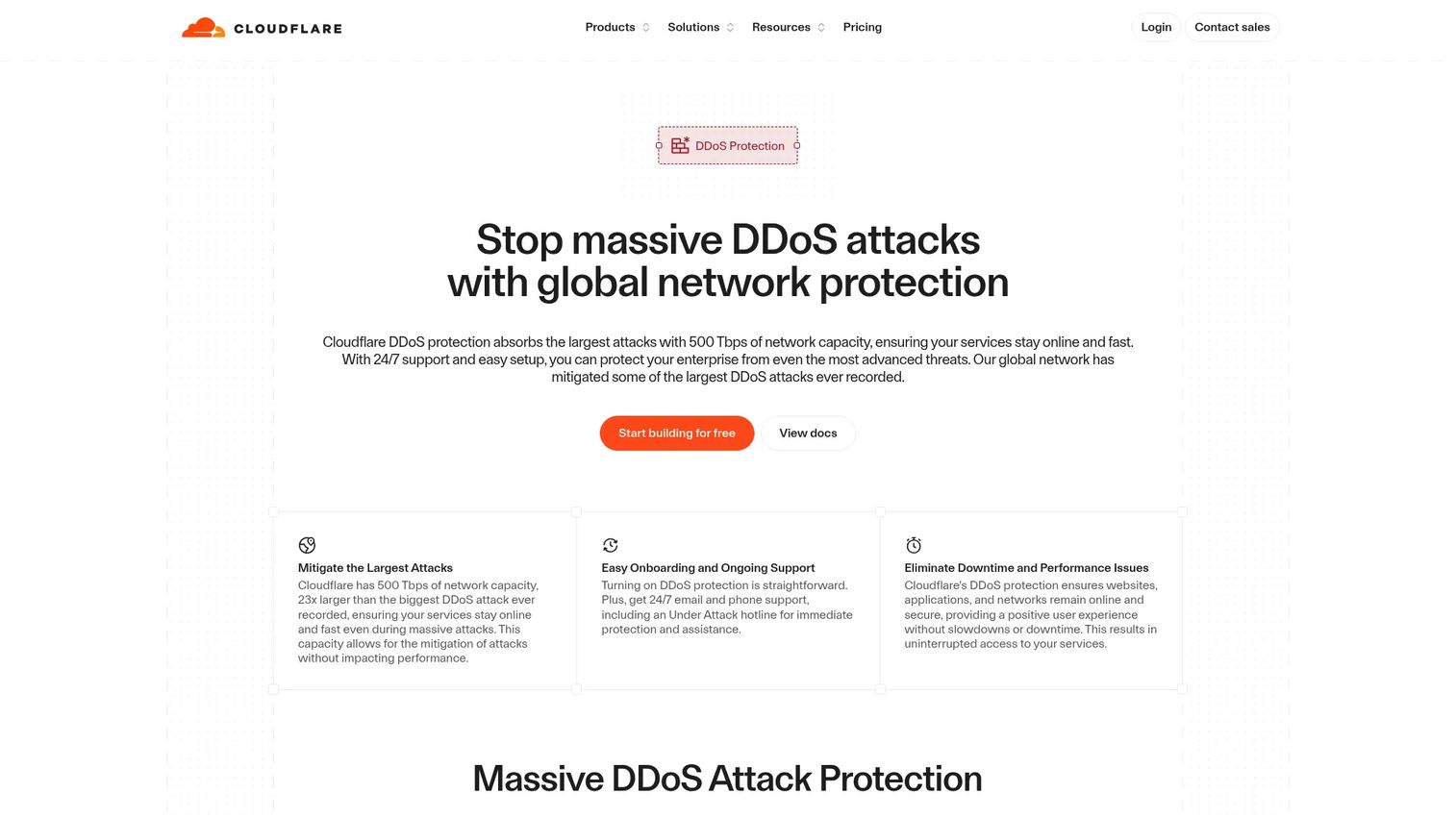
Cloudflare DDoS Protection mitigates attacks at the edge of one of the largest global networks, with 500 Tbps of capacity absorbing volumetric floods before they reach your origin. It protects websites, web applications, TCP/UDP applications, networks, and data centers, and DDoS mitigation is unmetered across plans. Deployment for web apps and APIs is fast, which makes it a common starting point for teams that want coverage live quickly.
Best for: organizations wanting always-on edge DDoS mitigation with a free entry tier.
Key strengths
- Massive edge capacity: 500 Tbps of network capacity absorbs large volumetric attacks at the edge, away from your origin.
- Unmetered mitigation: DDoS protection is unmetered across plans, so an attack does not trigger surprise overage during the worst moment.
- 24/7 support: Email and phone support plus an Under Attack hotline give teams a live escalation path during an incident.
Why choose Cloudflare: For teams that want cloud DDoS protection deployed fast, with predictable unmetered pricing and a free tier to start, Cloudflare lowers the barrier to always-on coverage. It fits internet-facing web apps and APIs especially well.
Cloudflare pricing: Cloudflare's plans page lists Free at $0/month, Pro at $20/month billed annually (or $25 monthly), Business at $200/month billed annually (or $250 monthly), and custom Contract pricing. DDoS protection is unmetered across all plans, so higher tiers add features rather than mitigation limits.
4. Akamai DdoS Protection
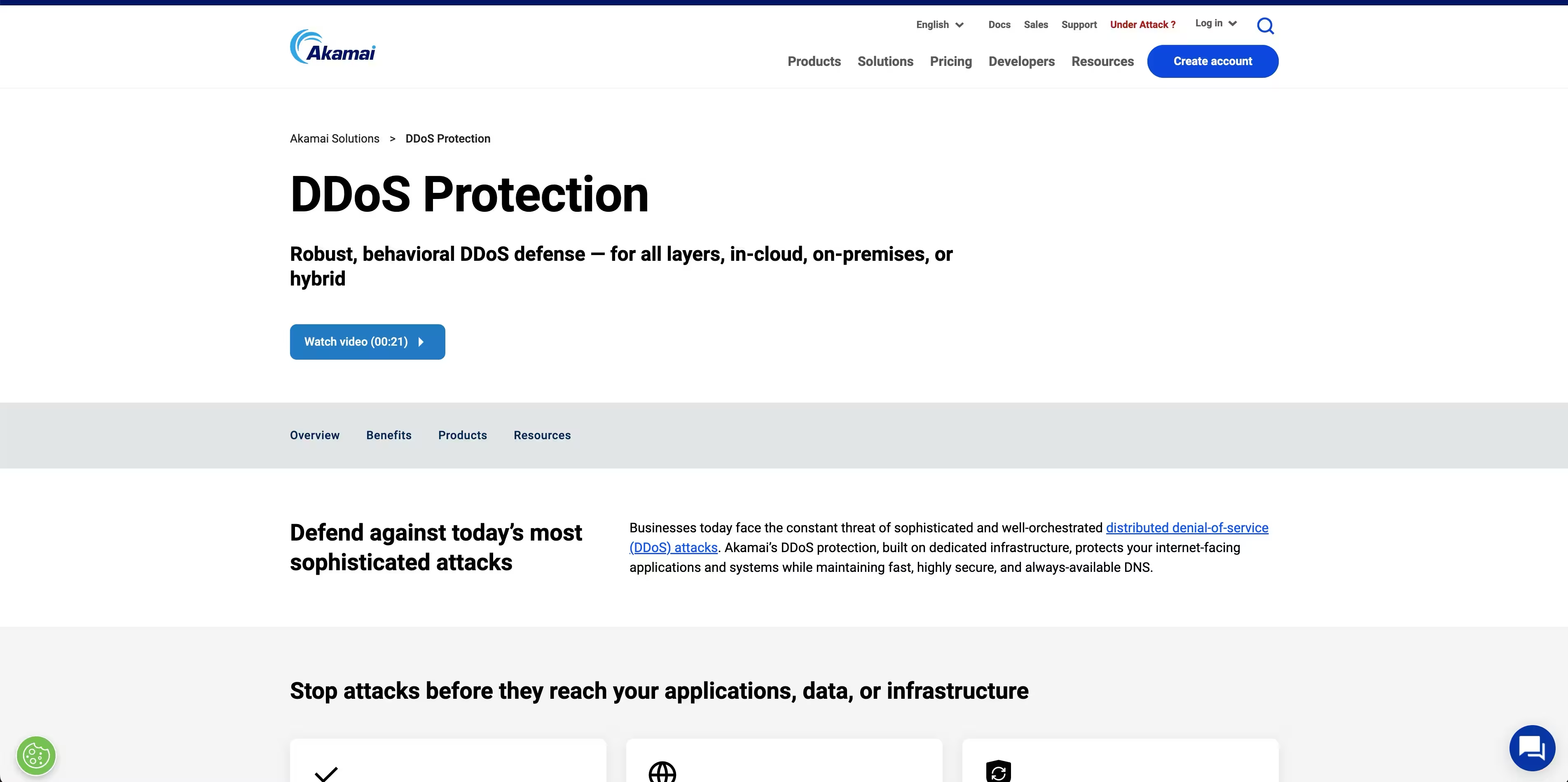
Akamai delivers enterprise DDoS protection across cloud, hybrid, and on-prem environments, backed by dedicated scrubbing capacity built for large attack surfaces. With 32 anycast scrubbing centers and 20+ Tbps of dedicated DDoS defense, it targets organizations with high uptime demands and broad exposure. Managed response and a global network posture make it a fit for teams that want expert mitigation on call.
Best for: large organizations needing managed, high-scale DDoS mitigation.
Key strengths
- Dedicated scrubbing scale: 32 anycast scrubbing centers with 20+ Tbps of capacity dedicated to DDoS defense, not shared with other services.
- Flexible deployment: Cloud, on-prem (powered by Corero), and hybrid options fit different data-path and control requirements.
- Always-on or on-demand: Choose continuous filtering or activation-on-detection based on your risk profile and cost tolerance.
Why choose Akamai: Enterprises with large, internet-exposed attack surfaces and low tolerance for downtime get dedicated capacity and managed response depth. It suits organizations that would rather lean on a scrubbing network than run mitigation in-house.
Akamai pricing: Akamai does not publish public pricing for Prolexic. Pricing is quote-based and scoped to deployment model, capacity, and managed service level. Contact Akamai to scope a plan for your attack surface.
5. Radware Cloud DDoS Protection Service
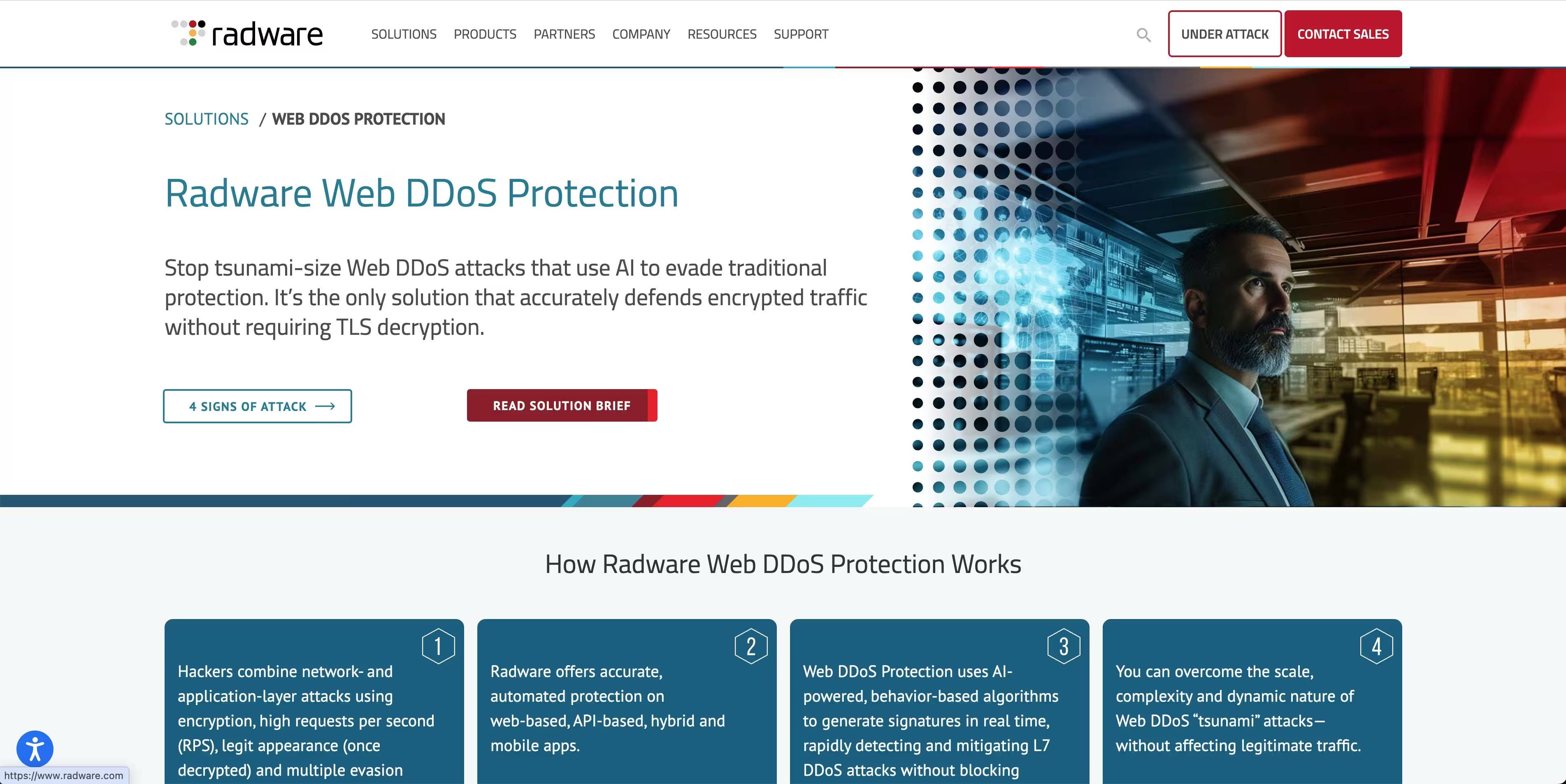
Radware Cloud DDoS Protection combines behavioral detection, hybrid support, and managed mitigation for teams that want adaptive defense. Its behavioral engine baselines traffic and creates attack signatures automatically, which helps it respond to zero-day and multi-vector attacks without waiting on manual rule updates. Cloud, hybrid, always-on, and on-demand deployment options let you match the model to your environment.
Best for: enterprises needing managed cloud or hybrid DDoS protection with adaptive detection.
Key strengths
- Behavioral detection: Automatic signature creation responds to new attack patterns without manual rule writing, reducing false positives.
- Deployment flexibility: Cloud, hybrid, always-on, and on-demand options cover a wide range of infrastructure and risk profiles.
- Managed service: Global scrubbing centers and SLA-based mitigation give teams expert response backed by contractual guarantees.
Why choose Radware: Teams that want adaptive, behavior-driven mitigation with a managed service wrapper, rather than static rule sets, get a defense that adjusts as attacks evolve. It fits enterprises spanning cloud and on-prem.
Radware pricing: Radware states pricing is custom and based on product, features, traffic volume, and deployment. On-prem offerings use annual licensing. Radware offers personalized consultations to scope pricing to your requirements.
6. AWS Shield
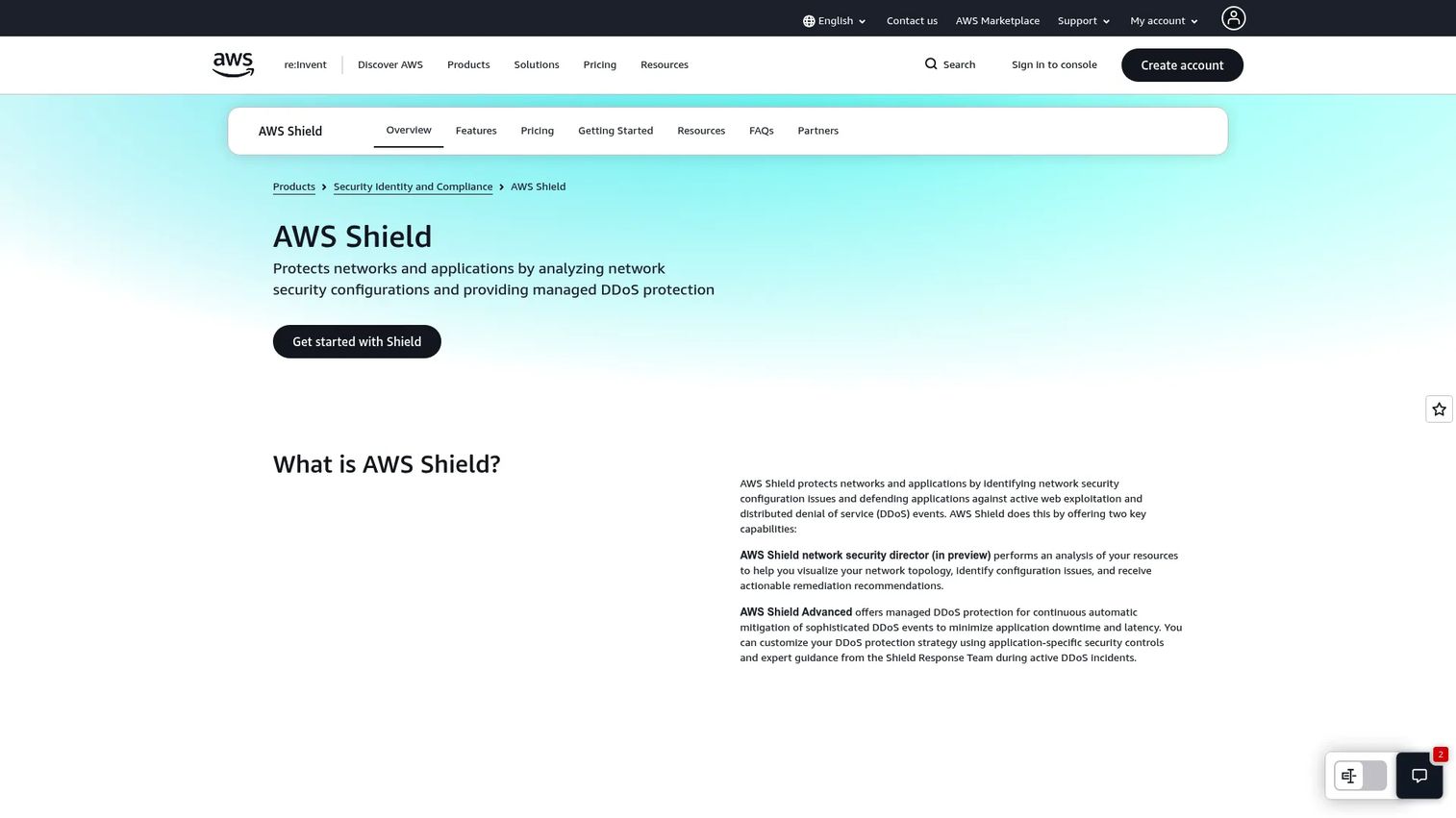
AWS Shield is managed DDoS protection built for teams already running on AWS. Shield Standard is included at no additional charge and provides automatic protection against common network and transport-layer attacks. Shield Advanced adds managed DDoS protection, Shield Response Team access, and application-layer (L7) DDoS protection through AWS WAF, integrated with Firewall Manager for policy at scale.
Best for: AWS customers needing managed protection against DDoS attacks without leaving their cloud stack.
Key strengths
- Native AWS integration: Works directly with AWS WAF and Firewall Manager, so L7 protection lives inside your existing environment.
- Included baseline: Shield Standard protects all AWS customers automatically at no additional charge.
- Managed escalation: Shield Advanced includes SRT access for expert support during active attacks.
Why choose AWS Shield: For AWS-native security teams, keeping DDoS mitigation inside the same console and IAM model removes integration friction. Shield Advanced adds L7 coverage and managed response for workloads that need it.
AWS Shield pricing: Shield Standard is included at no additional charge. Shield Advanced is $3,000/month on a one-year subscription billed monthly, plus data transfer at $0.025/GB. Application-layer protection via AWS WAF is included with Shield Advanced.
7. Azure DDoS Protection
Azure DDoS Protection delivers always-on monitoring and automatic network attack mitigation native to Microsoft cloud workloads. It offers two tiers, IP Protection and Network Protection, so teams can scope coverage to individual public IPs or an entire resource group. Network Protection adds DDoS Protection Rapid Response, cost protection, and WAF discounts for teams that want deeper operational support.
Best for: organizations running Azure workloads that need managed DDoS mitigation.
Key strengths
- Native Azure integration: Protection built into the Azure fabric with observability, policy, and telemetry inside the portal.
- Always-on monitoring: Continuous monitoring with automatic mitigation removes the detection-to-response gap for network attacks.
- Operational extras: Network Protection adds Rapid Response, cost protection, and WAF discounts for enterprise operations.
Why choose Azure DDoS Protection: Azure-first infrastructure teams get mitigation that lives inside their existing observability and policy tooling. Network Protection suits enterprises that want managed response and cost protection built in.
Azure DDoS Protection pricing: IP Protection is $199/month per protected public IP resource. Network Protection is a fixed monthly charge that includes protection for 100 public IP resources, with overage charges for additional IPs. Contact Microsoft for Network Protection pricing specific to your environment.
8. Check Point Quantum DDoS Protector
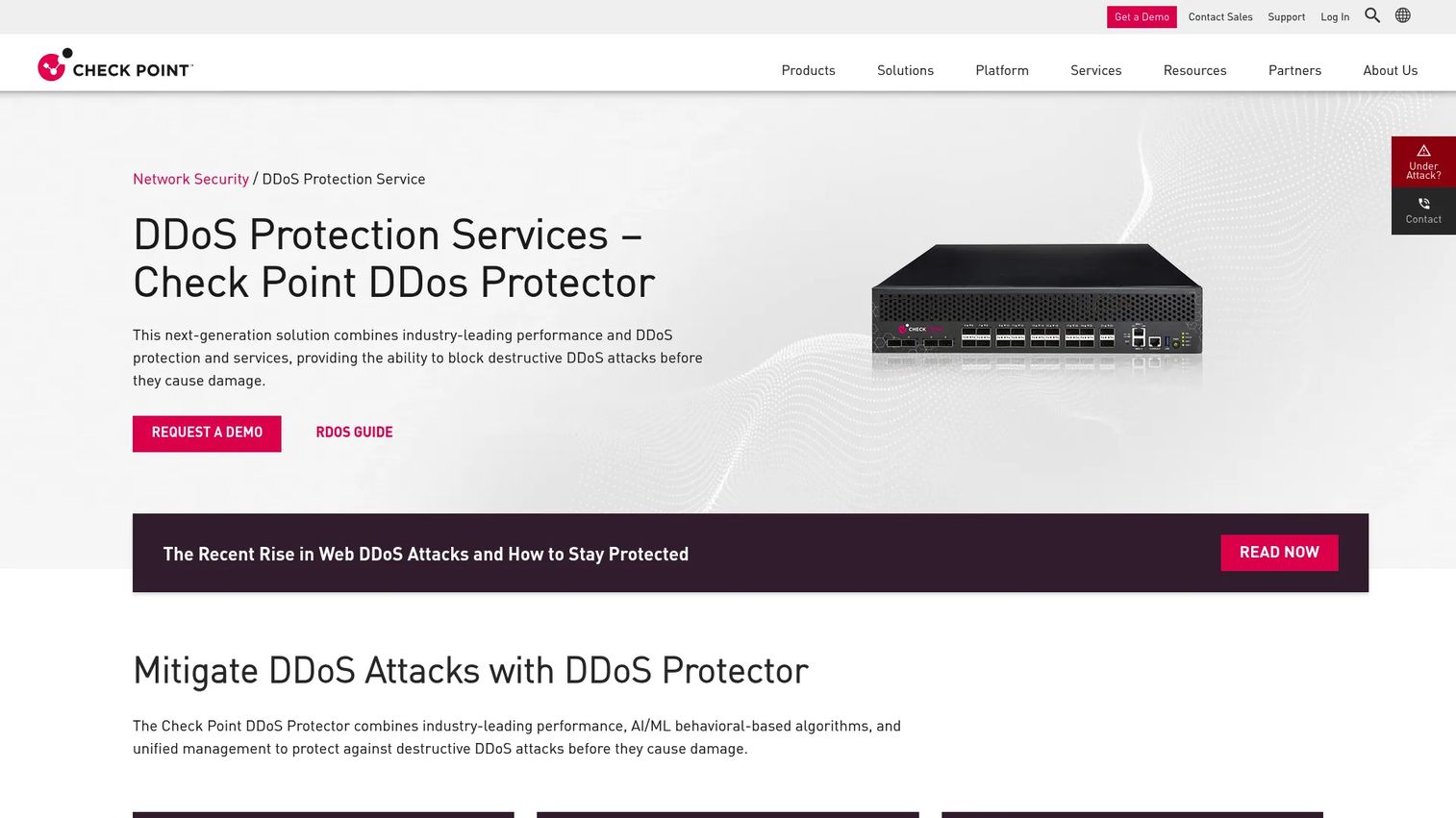
Check Point Quantum DDoS Protector blocks destructive attacks using AI and ML behavioral analysis, delivered through appliance or hybrid-style deployment. It provides real-time defense against multi-vector DDoS attacks with unified management, so network-level and application-aware protection sit under one console. The behavioral algorithms adapt to attack patterns rather than relying only on static thresholds.
Best for: organizations needing on-prem or cloud DDoS mitigation for enterprise networks.
Key strengths
- AI/ML behavioral analysis: Behavioral algorithms detect and mitigate evolving multi-vector attacks in real time.
- Unified management: A single console covers network-level and application-aware protection, simplifying operations.
- Real-time defense: Automated mitigation responds to multi-vector attacks as they unfold, cutting exposure time.
Why choose Check Point: Teams that want appliance or hybrid defense with AI-driven behavioral analysis and centralized management get strong control of the data path. It fits enterprises that prefer on-prem or hybrid over pure cloud.
Check Point pricing: Check Point does not publish a public price for Quantum DDoS Protector. Pricing is quote-based and scoped to appliance capacity and deployment. Contact Check Point or a partner to scope a configuration.
Considerations before you buy
Once you have a shortlist, evaluate on the criteria that actually decide outcomes during an attack.
Attack-layer coverage
Confirm the tool covers network layer ddos protection (L3/4) and application layer ddos protection (L7). Many products excel at volumetric filtering but treat Layer 7 as an add-on. If your risk is concentrated in web apps and APIs, make L7 a primary requirement, not a checkbox.
Mitigation speed and false positives
Ask for the mitigation SLA and how it is measured. A fast time-to-mitigate means little if the system blocks legitimate users along the way. Test both together: how quickly does it react, and how cleanly does it separate attack traffic from a real spike.
Deployment model fit
Match the model to your infrastructure. Cloud DDoS protection suits cloud-native teams, hybrid ddos protection fits organizations with on-prem control needs, and managed services fit teams without a dedicated SOC. Do not pay for architecture you cannot operate.
Pricing model during an attack
Read the pricing model for what happens when volume spikes. Unmetered mitigation gives you predictable cost during an incident. Metered models can bill more precisely but carry attack-time risk. Know which one you are signing.
Conclusion
The right DDoS protection software is not the one with the biggest capacity number. It is the one whose attack-layer coverage, mitigation speed, deployment model, and pricing structure match your environment and your risk.
Cloudflare and Akamai Prolexic anchor the cloud edge and enterprise scrubbing ends. AWS Shield and Azure DDoS Protection make the most sense when you are already committed to that cloud. Imperva and Radware cover teams that want broad, managed, adaptive defense. A10 Defend Suite and Check Point Quantum DDoS Protector fit teams that want appliance or hybrid control with AI-driven behavioral analysis.
The next step is simple. Shortlist two or three tools that match your architecture, run a technical validation against each, and test how they handle false positives on a realistic traffic spike. That last test, not the marketing capacity figure, is what tells you whether your uptime and business continuity are actually protected.
FAQs
DDoS protection is the broader posture: the tools, services, and architecture that defend against denial-of-service attacks. DDoS mitigation is the active process of detecting an attack and filtering out malicious traffic while letting legitimate users through. Protection is the strategy; mitigation is the response in the moment.
It depends on your environment. Cloud DDoS protection scales elastically at the edge and absorbs massive volumetric attacks before they reach you, which suits cloud-native teams. On-prem gives you full control of the data path, which some regulated or latency-sensitive teams require. Hybrid DDoS protection pairs both, keeping appliances local while bursting to cloud scrubbing during large attacks.
Layer 7 DDoS protection defends the application layer, where attacks mimic real users to exhaust app resources through login flows, search, checkout, and APIs. Unlike volumetric filtering, it inspects request behavior to separate genuine users from bots. Because these application-layer attacks look like legitimate traffic, they are harder to detect and require behavioral analysis rather than simple volume thresholds.
A scrubbing center reroutes your traffic through distributed facilities that analyze every packet, strip out attack traffic, and forward only clean traffic back to your infrastructure. Providers with many geographically distributed scrubbing centers can absorb larger attacks closer to their source. This keeps volumetric attacks and protocol attacks from ever reaching your origin.
Validate attack-layer coverage across both network and application layers, the mitigation SLA and how it is measured, and how the system handles false positives on a realistic traffic spike. Confirm the deployment model fits your infrastructure and that pricing stays predictable during an attack. The way you'd validate any technical tool applies here: hands-on testing beats vendor claims, which is why teams that build interactive demos and run structured proofs-of-concept get to a confident decision faster.
Unmetered pricing charges a flat rate regardless of attack size, so a large attack does not trigger surprise overage costs during the worst possible moment. Metered pricing bills based on the traffic mitigated, which can be more precise but carries cost risk during a major attack. For predictable budgeting and peace of mind during incidents, many teams prefer unmetered mitigation.
Yes, in most cases. A web application firewall inspects and filters application-layer requests, but it is not built to absorb large volumetric attacks that saturate your bandwidth or network. DDoS protection and a WAF are complementary: the WAF handles application-layer threats and some Layer 7 DDoS, while dedicated DDoS mitigation absorbs the volumetric and protocol attacks a WAF alone cannot.