

Someone on your team signed up for a new file-sharing app this morning. Nobody told IT. Nobody filed a ticket. They just needed to move a file, and the free tier took two clicks.
Multiply that by every employee, every quarter, and you get the number that defines the problem. 61.3% of SaaS applications in the average stack are classified as shadow IT, and only 15.5% are formally sanctioned, according to the Torii SaaS Benchmark Annual Report (2026). The rest is invisible to the people responsible for securing it.
That gap is what shadow IT software exists to close. These tools discover unsanctioned apps, monitor how cloud services are actually used, and give security and IT teams the evidence they need to enforce policy instead of guessing. Shadow IT grew 36% year over year across 16,000+ companies analyzed by Vanta (2026), so the surface keeps expanding faster than manual review can track.
This guide compares seven software categories that help teams get visibility, run shadow IT monitoring, and bring app sprawl back under control.
What's inside
This guide is built for the people who get pulled into the shadow IT conversation: security engineers, IT admins, RevOps, and presales teams who help buyers pass security and compliance review. If you sit across from a prospect's security team, you need to understand these categories too.
We compared software based on four criteria that actually matter in evaluation:
- Visibility depth: how much of the environment the tool can see, from apps to users to data flows
- SaaS discovery coverage: whether it finds sanctioned and unsanctioned cloud apps across identity and network signals
- Policy enforcement: whether it can block, restrict, or only alert
- Integrations and reporting: how well it plugs into your identity provider, SIEM, and audit workflows
Expect a comparison table, a breakdown of each category, buying considerations, and FAQs at the end.
TL;DR
- Best for broad cloud governance and control: CASB, which pairs discovery with real-time policy enforcement across SaaS apps.
- Best for finding shadow assets and exposure: attack surface management, which maps exposed apps, domains, and services.
- Best for SaaS-heavy environments: SaaS discovery tools, which surface sanctioned and unsanctioned apps from identity and network signals.
- Best for data sprawl concerns: DSPM, which finds and classifies sensitive data hiding inside shadow systems.
- Best for compliance-driven teams: DLP, which detects and blocks sensitive data moving into unapproved channels.
- Best for Zero Trust aligned stacks: Zero Trust platforms, which verify identity, device, and access before anything connects.
The best shadow IT solutions depend on whether your biggest gap is discovery, monitoring, or enforcement. Most teams end up combining two or three.
Background: what is shadow IT?
Shadow IT is any hardware, software, application, or cloud service used inside an organization without IT approval or oversight. That is the shadow IT definition security teams work from, and it excludes malware or malicious implants, which fall under a separate threat category.
Shadow IT emerges because getting work done is easier than waiting for approval. The main drivers are consistent across organizations:
- Convenience and speed: a SaaS app solves a problem today, the approval process takes weeks
- Consumerization of IT: employees use the same slick tools at work they use at home
- Remote and hybrid work: distributed teams adopt their own stacks with less oversight
- BYOD and personal devices: work data lands on phones and laptops IT never provisioned
- Self-serve SaaS: free tiers and credit-card signups need zero technical setup
Common shadow IT examples show up in every stack: cloud collaboration and file-sharing apps, messaging tools, OAuth apps connected to Google or Microsoft, personal cloud storage, unmanaged devices, and USB drives. The modern version of the problem is less about rogue servers and more about SaaS sprawl and cloud app shadow usage.
Understanding shadow IT software means separating three jobs it does. Visibility answers what exists: which apps, which users, which connections. Monitoring watches behavior over time: new apps appearing, risky OAuth grants, unusual access. Enforcement acts on it: blocking, restricting, or quarantining. Most tools lean toward one of these three, and knowing which one you need most is the first step in choosing.
The shadow IT risks that follow from all this are practical, not theoretical. Unknown apps hold regulated data outside your controls. OAuth grants create access paths nobody reviewed. And when an app disappears or an employee leaves, the data trail goes with them.
When to use shadow IT software
Not every organization needs the same category first. Here is how to read your own situation.
When app sprawl is growing faster than approvals
This is the tipping point where IT loses track of what is sanctioned and what is not. New apps appear weekly, credit-card signups bypass procurement, and nobody can produce an accurate inventory. By 2027, 75% of employees are expected to acquire or create technology outside IT oversight, per Gartner (2026), so this gap widens without intervention. Shadow IT discovery tools help map the environment before you make governance decisions. You cannot govern what you cannot see.
When security needs evidence, not assumptions
At some point "we think we're covered" stops being acceptable. Security teams use shadow IT monitoring and shadow IT detection to identify unknown apps, risky OAuth connections, and unauthorized cloud usage with actual data behind it. The point is alerts with context: not just "a new app appeared," but who adopted it, what data it touches, and what access it was granted. That context is what turns a detection into a decision.
When compliance and audit pressure are increasing
Auditors do not accept "we mostly know" as an answer. Shadow IT affects data retention, access control, and how regulated data gets handled. When compliance pressure rises, teams need policy enforcement, logging, and evidence they can hand to a reviewer. This is where a shadow IT policy, DLP controls, CASB enforcement, and clean audit logs move from nice-to-have to required.
Shadow IT software comparison
The list below compares software categories that help teams discover, monitor, and control shadow IT. Each category is represented by a leading product so you can anchor pricing and ratings to something real. Read the table as a map of where each category is strongest, then use the sections that follow to go deeper.
| # | Product | Best for | Key differentiator | Pricing | G2 rating |
|---|---|---|---|---|---|
| 1 | CASB (Netskope) | Broad cloud governance and enforcement | Cloud app risk scoring plus real-time policy enforcement | From $245 per user/year | 4.4/5 |
| 2 | Attack surface management (CrowdStrike Falcon) | Finding shadow assets and exposure | Continuous discovery of exploitable exposures across the attack surface | Custom pricing | Not listed |
| 3 | Cloud access security broker (Zscaler) | SaaS and IaaS monitoring and control | Multimode CASB with inline and out-of-band scanning | Add-on module, custom | Not listed |
| 4 | SaaS discovery (Microsoft Defender for Cloud Apps) | SaaS-heavy environments | Shadow IT discovery plus SaaS posture management | Custom pricing | 4.4/5 |
| 5 | DSPM (Cyera) | Data sprawl and sensitive data exposure | Agentless discovery and AI-native classification | Custom pricing | 4.6/5 |
| 6 | DLP (Microsoft Purview) | Controlling data movement | Policy enforcement across cloud, email, and endpoints | From $12 user/month | 4.6/5 |
| 7 | Zero Trust (Cloudflare One) | Zero Trust aligned stacks | Identity-first access with SWG, DLP, and CASB | Free, then $7/user/month | 4.6/5 |
Best 7 shadow it software for 2026
1. CASB
Cloud access security broker sits between your users and the cloud apps they use, giving security teams visibility and control over SaaS activity. CASB from Netskope is central to shadow IT work because it does more than find apps: it scores their risk, inspects data flows, and enforces policy in real time. For teams that need broad cloud governance in one place, this is often the anchor of the stack.
Best for: Enterprises needing CASB, DLP, and cloud app control in one security platform.
Key strengths
- Cloud app risk scoring across sanctioned and unsanctioned apps
- Advanced data loss protection built into the platform
- Granular visibility and real-time policy enforcement
CASB shines when you want discovery and enforcement together rather than stitching two tools. It maps which apps employees use, ranks them by risk, and lets you block, restrict, or allow based on policy. Common use cases span shadow IT discovery, access control, encryption, and enforcement of your shadow IT policy across the SaaS layer.
Pricing runs on a per-user, per-year model. Netskope's published CASB packages start at $245 per user per year for the 3-app Professional tier, scaling to $449 per user per year for all-app Enterprise coverage. There is no free tier, and pricing reflects its position as an enterprise governance layer rather than a point tool. Netskope carries a G2 rating of 4.4/5.
2. Attack surface management
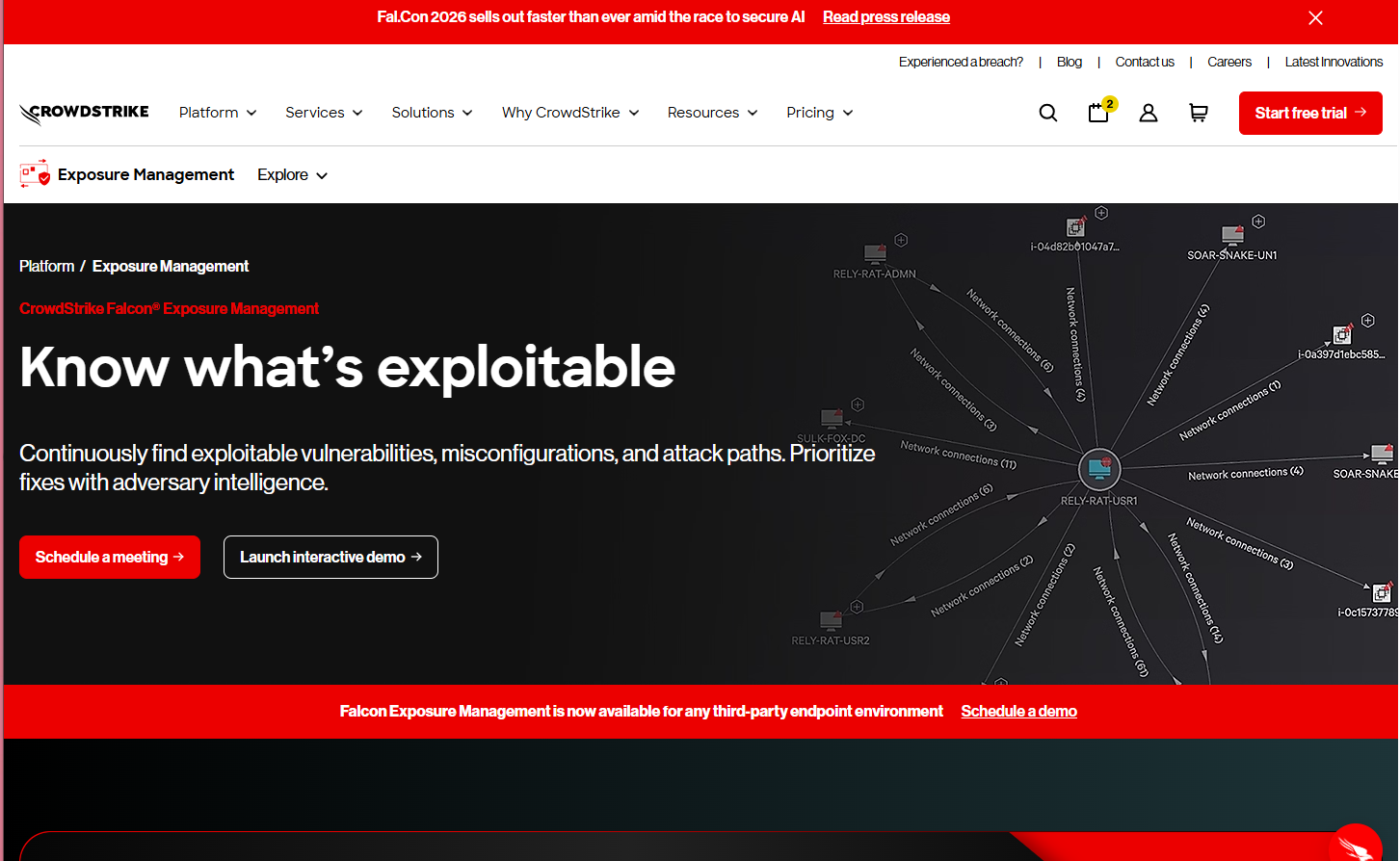
Attack surface management approaches shadow IT from the outside in. Instead of watching SaaS usage, attack surface management through CrowdStrike's Falcon Exposure Management continuously finds exposed apps, domains, services, and assets nobody registered. If a team spun up a subdomain or exposed a service without telling anyone, this is the category that surfaces it.
Best for: Security teams needing continuous exposure discovery and risk prioritization across a large, modern attack surface.
Key strengths
- Continuously finds exploitable vulnerabilities, misconfigurations, and attack paths
- Prioritizes risk using exploitability, adversary intelligence, and asset context
- Covers external assets, endpoints, cloud, network, and shadow AI
This category is strongest for visibility and inventory of shadow assets, not full SaaS workflow governance. It answers "what do we have exposed that we didn't know about," which is a different question than "which SaaS apps are employees using." Teams often pair it with a CASB or SaaS discovery tool so they cover both the asset layer and the app layer.
CrowdStrike does not publish a public price for this module, so budget through a sales conversation. Pricing depends on the size of your attack surface and the broader Falcon bundle you run.
3. Cloud access security broker

Cloud access security broker category is the same core idea as CASB, and vendors package it differently. Cloud access security broker capabilities from Zscaler focus on protecting both SaaS and IaaS apps, from Microsoft 365 and Salesforce to Amazon S3, with inline real-time controls and out-of-band scanning.
Best for: Enterprises needing integrated CASB for SaaS and IaaS data protection and policy enforcement.
Key strengths
- Multimode CASB with inline, real-time security and out-of-band scanning
- Protects SaaS and IaaS apps such as Microsoft 365, Salesforce, and Amazon S3
- Shadow IT discovery, cloud app control, DLP, and browser isolation
Choose this over a discovery-only tool when you need session control and enforcement, not just an inventory. Multimode CASB means you get both live traffic inspection and scanning of data already sitting in cloud apps. That combination matters when regulated data moves through SaaS and you need to act on it, not just log it.
Zscaler lists its CASB as a SaaS Security add-on module rather than a standalone product with a public price. Expect custom pricing tied to your Zscaler platform footprint and the apps you need covered.
4. SaaS discovery

SaaS discovery tools do one thing exceptionally well: identify sanctioned and unsanctioned cloud apps, usually from network and identity signals. SaaS discovery through Microsoft Defender for Cloud Apps surfaces the apps employees actually use, then layers on SaaS security posture management so you can act on what you find.
Best for: Enterprises needing Microsoft-native SaaS discovery and cloud app security.
Key strengths
- CASB functionality including shadow IT discovery and cloud app visibility
- SaaS Security Posture Management (SSPM)
- Advanced threat protection and app-to-app protection
This category matters most in remote and hybrid environments, where employees adopt apps outside any managed network. Discovery tools pull signals from your identity provider, proxy logs, and endpoints to build an app inventory nobody had to maintain by hand. Teams use that inventory to prioritize remediation: which unsanctioned apps hold sensitive data, which have risky permissions, and which to sanction, restrict, or block first.
Microsoft does not publish a standalone public price for Defender for Cloud Apps; it typically bundles into broader Microsoft security licensing, so pricing comes through your Microsoft agreement. The product holds a G2 rating of 4.4/5.
5. DSPM
Data security posture management flips the question from "which apps" to "where is our sensitive data." DSPM from Cyera finds sensitive data inside shadow systems you did not know were holding it, then classifies it and reduces exposure. When your main concern is data sprawl rather than app sprawl, this is the category to lead with.
Best for: Enterprises needing agentless DSPM with AI-driven classification and remediation across hybrid environments.
Key strengths
- Agentless discovery and classification across cloud, SaaS, DBaaS, and on-prem stores
- AI-native classification with business context and high precision
- Automated remediation such as revoke access, mask data, and trigger workflows
DSPM emphasizes data discovery, classification, and exposure reduction rather than app inventory. It answers the question auditors care about: is regulated data sitting somewhere it should not be, and who can reach it. Because it runs agentless, it can scan across cloud, SaaS, database services, and on-prem stores without deploying software everywhere. That breadth is what makes it useful when shadow systems have quietly accumulated sensitive records.
Cyera does not publish numeric pricing; it offers custom quotes across DSPM and DLP plans plus optional add-ons. The platform holds a strong G2 rating of 4.6/5.
6. DLP
Data loss prevention is built for control, not just visibility. DLP through Microsoft Purview detects, blocks, and controls sensitive data as it moves into shadow channels, whether that is an unapproved cloud app, a personal email, or an unmanaged endpoint. Where discovery tools tell you what exists, DLP acts on movement.
Best for: Organizations that want Microsoft-native DLP across Microsoft 365 and endpoint environments.
Key strengths
- Create and enforce DLP policies across cloud apps, email, devices, and AI
- Built-in controls and policy templates for faster setup
- Investigate and triage incidents in Purview, Defender XDR, and Sentinel
DLP covers endpoint, cloud, and email use cases, which is exactly where shadow IT data leakage happens. Someone pastes a customer list into a personal drive, forwards a regulated file to a personal inbox, or uploads source code to an unapproved tool. DLP policies catch and stop those moves. It is stronger for control than discovery, so most teams pair it with a discovery or DSPM tool that tells it where sensitive data lives in the first place.
Microsoft prices DLP through the Microsoft Purview Suite, which starts at $12 per user per month billed annually and bundles information protection, insider risk, eDiscovery, and more. A free trial is available. The offering holds a G2 rating of 4.6/5.
7. Zero Trust
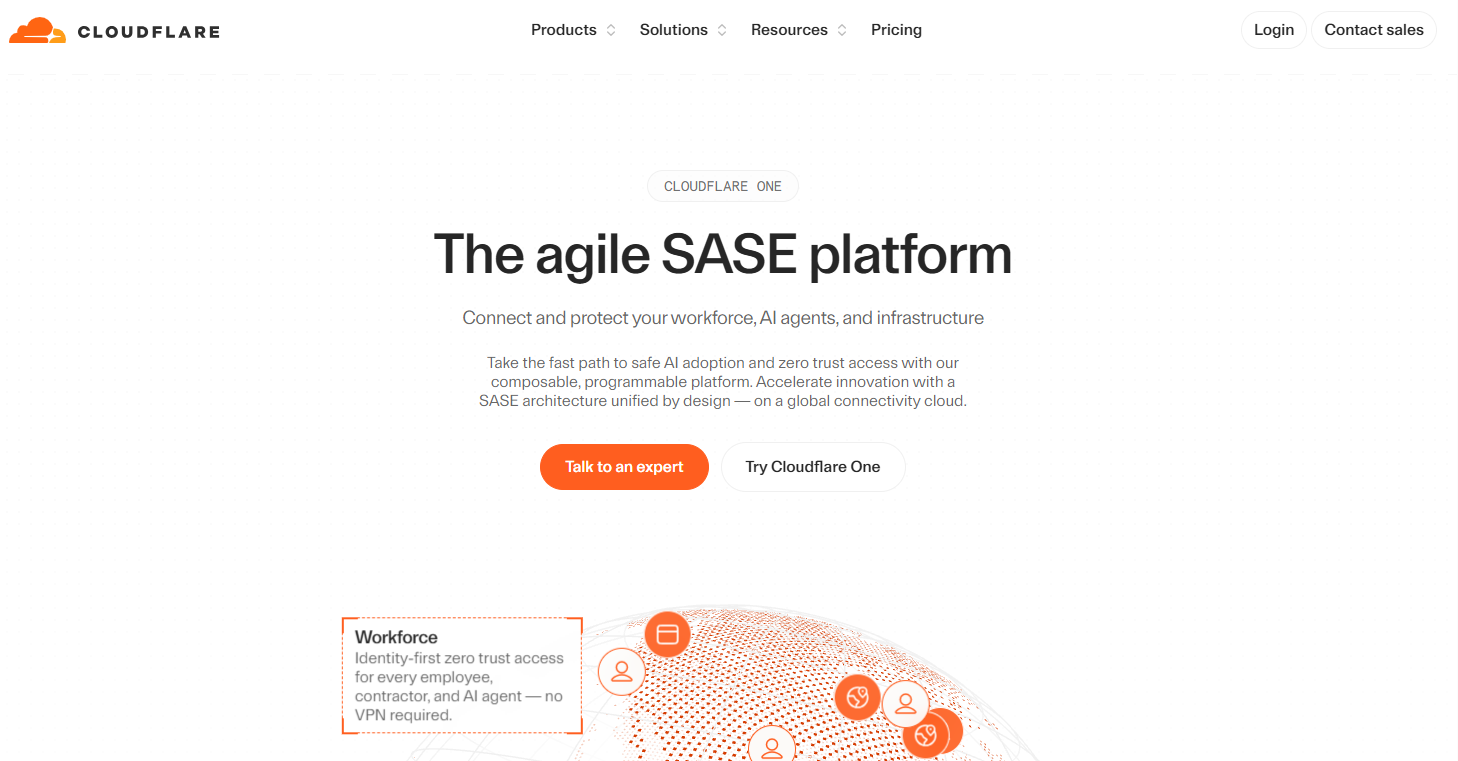
Zero Trust is not a discovery tool; it is a control framework that shrinks the blast radius of shadow IT. Zero Trust through Cloudflare One reduces shadow IT risk by verifying identity, device, and access before anything connects, so an unsanctioned app or unmanaged device does not get a free pass onto your network.
Best for: Teams that want a cloud-delivered Zero Trust and SASE platform with a free entry tier and per-user pricing.
Key strengths
- Identity-first Zero Trust access (ZTNA)
- Secure web gateway, DNS filtering, and web browsing protection
- DLP, CASB, and email security in one platform
Think of Zero Trust as the broader control layer that complements shadow IT discovery. It will not hand you an app inventory the way a SaaS discovery tool does, but it enforces the rules that make unknown apps less dangerous. Cloudflare One bundles ZTNA, a secure web gateway, DLP, and CASB, so it doubles as both a control framework and a place to catch cloud app usage.
Cloudflare One is free for teams under 50 users, then moves to pay-as-you-go at $7 per user per month, with custom contract pricing for larger deployments. That free entry tier makes it one of the more approachable ways to start building Zero Trust muscle. It holds a G2 rating of 4.6/5.
Considerations
Before you commit to any category, run through this checklist. The right tool depends less on brand and more on which of these gaps hurts most.
Visibility depth
Ask whether the tool only detects apps or also identifies users, data flows, and risky access paths. An app list is a start, but the questions that matter are who adopted it, what data it touches, and which OAuth scopes it holds. Deeper visibility is what separates a report you skim from one you can act on.
Enforcement options
Decide whether you need the tool to block, restrict, or just alert. Alert-only tools give you awareness; enforcement tools give you control. If your compliance posture requires stopping data movement, not just observing it, prioritize categories like CASB and DLP that act on shadow activity rather than only flagging it.
Integration fit
Check compatibility with your identity provider, SIEM, DLP, DSPM, and ticketing workflows. A shadow IT tool that cannot feed alerts into your existing security stack creates another silo. The best fit reads signals from what you already run and pushes findings into where your team already works.
Reporting and auditability
Make sure the tool produces usable logs, exports, and evidence for security reviews. When an auditor or a prospect's security team asks how you monitor shadow IT, you want to hand over clean reports, not screenshots. Exportable audit trails turn shadow IT monitoring into something you can defend.
Scalability
Confirm the tool supports SaaS-heavy, hybrid, or enterprise environments without manual overhead. With shadow IT spend running 30 to 40% of IT budgets in large organizations per Gartner (2026), the environment only gets bigger. A tool that needs constant hand-tuning will fall behind the sprawl it is meant to catch.
Conclusion
There is no single best shadow IT software, because the category solves three different jobs. If your gap is knowing what exists, lead with SaaS discovery or attack surface management. If it is watching and controlling SaaS activity, a CASB or cloud access security broker fits. If it is protecting data, reach for DSPM and DLP. And if you want to shrink the risk of unknown apps at the access layer, Zero Trust platforms tie it together.
Start with the category that matches the biggest hole in your stack, then expand. Most mature programs run two or three of these together: discovery to see the sprawl, monitoring to watch it, and enforcement to act on it.
The thing that ties good shadow IT management together is not tooling alone. It is pairing visibility and policy with approved alternatives, so employees do not need to go around IT in the first place. When the sanctioned path is fast enough, shadow IT stops growing on its own.
FAQs
The best discovery tools identify sanctioned and unsanctioned apps from identity and network signals, which is what SaaS discovery platforms like Microsoft Defender for Cloud Apps do well. Discovery-only tools build the inventory; enforcement platforms like CASB and DLP act on it. If your immediate need is seeing what exists, start with a discovery tool, then add enforcement once you know the scope.
SaaS discovery focuses on finding apps and mapping usage, while CASB usually adds policy enforcement on top of that visibility. A discovery tool tells you which apps employees use and how risky they are. A CASB can also block, restrict, or encrypt activity in those apps in real time. Many organizations run both, or use a CASB that includes discovery as one of its functions.
Yes, attack surface management can find shadow assets like exposed apps, domains, and services that nobody registered. It is strong at surfacing unknown exposures from the outside in. It is not a full governance layer, though, so it does not manage SaaS app usage or enforce policy on cloud apps. Pair it with a CASB or SaaS discovery tool for complete coverage.
Shadow IT software supports compliance through visibility, audit logs, policy enforcement, and data controls. It surfaces where regulated data lives, records who accessed what, and enforces rules on how data moves. DSPM and DLP are especially relevant for regulated data handling, while CASB and Zero Trust add access control and enforcement. Together they give you the evidence a security review or audit requires.
Shadow IT creates app sprawl, data leakage, workflow fragmentation, and retention gaps. Unknown apps hold regulated data outside your controls, OAuth grants create unreviewed access paths, and when an app or employee leaves, the data trail can vanish. With 61.3% of the average SaaS stack classified as shadow IT per Torii (2026), these risks are the norm, not the exception.
IT should look for discovery coverage, integrations, contextual alerts, reporting, and policy control. The tool should see apps, users, and data flows, not just app names. It should feed your identity provider and SIEM, produce exportable audit evidence, and give you options to block or restrict, not only alert. Match the depth of enforcement to your compliance requirements.
DLP is strong for controlling data movement, but it is not a complete shadow IT management solution on its own. It stops sensitive data from moving into unapproved channels, which addresses one major risk. It does not discover unknown apps or map your full SaaS footprint. Most teams pair DLP with a discovery tool or DSPM so they know where sensitive data lives before enforcing rules on how it moves.