Cloud environments don't stay still. Every new account, container, identity grant, and serverless function is a potential blind spot, and the window between misconfiguration and incident keeps shrinking. According to Prowler's State of Cloud Security Report (2025), 64% of organizations run hybrid-cloud environments and 55% operate across multiple clouds, yet only 31% report fully automated security monitoring and management processes. The other 69% are still catching up, manually or partially, to an infrastructure that changes faster than any spreadsheet can track.
The real problem isn't a lack of dashboards. Most cloud teams already have data. The gap is between seeing a finding and knowing whether it opens a realistic attack path. Cloud security monitoring software exists to close that gap: Collecting signals across workloads, identities, networks, and logs, then surfacing what actually warrants action.
This guide is for security teams, DevSecOps engineers, cloud architects, and presales or Solutions Engineers who need to evaluate, explain, or shortlist cloud security monitoring tools for technical buyers and security reviews.
What's inside
- Who this is for: Security, DevSecOps, cloud ops, and presales teams comparing cloud security monitoring platforms
- How tools were chosen: Category fit (CNAPP, CSPM, CWPP, SIEM-adjacent, native cloud, open-source, exposure validation), multi-cloud coverage, detection depth, and integration maturity
- Evaluation criteria used: Threat detection capability, cloud posture management, workload coverage, compliance evidence support, and workflow integration
- What this guide does not do: It does not treat general infrastructure uptime monitoring as equivalent to cloud security monitoring
TL;DR
- Best overall CNAPP pick: Wiz, for teams that need cloud risk prioritization, attack-path analysis, and identity context across multi-cloud estates
- Best for enterprise runtime depth: Palo Alto Networks Prisma Cloud, for large organizations standardizing cloud security operations from code to runtime
- Best Microsoft-native option: Microsoft Defender for Cloud, for Azure-heavy teams that want integrated posture management and workload protection
- Best for Kubernetes and container runtime: Sysdig Secure or Aqua Security, depending on whether runtime depth or supply-chain coverage matters more
- Best native cloud monitoring stack: Amazon CloudWatch, Azure Monitor, and Google Cloud Monitoring for teams building inside a single hyperscaler
- Best open-source metrics stack: Prometheus plus Grafana, for engineering teams that want direct control over telemetry collection and visualization
- Best for exposure validation: Cymulate, for security teams that want to test whether their controls and monitoring actually detect realistic attack paths
What is cloud security monitoring software?
Cloud security monitoring software collects, analyzes, and correlates security signals from cloud infrastructure, workloads, identities, networks, applications, and logs to detect risk, support compliance, and speed incident response.
This is a different buying decision from general cloud monitoring. Cloud monitoring tracks availability, performance metrics, and infrastructure health. Cloud security monitoring focuses specifically on threats, misconfigurations, identity misuse, vulnerabilities, data exposure, workload behavior, and compliance evidence. Many platforms now cover both, but the evaluation criteria diverge.
Core capabilities to evaluate:
- Cloud asset inventory: Track accounts, workloads, identities, containers, and services across providers
- Posture management (CSPM): Detect misconfigurations and policy violations before they become incidents
- Threat detection: Identify suspicious runtime behavior, lateral movement, and credential misuse
- Workload protection (CWPP): Monitor hosts, containers, Kubernetes clusters, and serverless environments
- Identity risk analysis (CIEM): Flag excessive permissions, privilege escalation paths, and stale entitlements
- Log correlation: Connect cloud audit logs, network events, and security findings into coherent signals
- Compliance reporting: Map controls to SOC 2, ISO 27001, CIS, NIST, HIPAA, and GDPR where relevant
- Incident workflow integration: Route findings to SIEM, SOAR, ticketing, and alerting tools your team already uses
For presales and Solutions Engineers supporting cloud security deals: Buyers increasingly ask whether a tool only detects posture drift or whether it can prove exploitability and runtime risk. That distinction separates CSPM-only tools from full CNAPP platforms, and it comes up in almost every serious POC evaluation.
When to use cloud security monitoring tools
Monitor multi-cloud risk without switching consoles
Teams running workloads across AWS, Azure, Google Cloud, and Kubernetes face a consistent problem: Each provider surfaces its own findings in its own format. Account sprawl, inconsistent resource tagging, and identity drift across providers create blind spots that only appear at the aggregate layer. A cloud security platform with multi-cloud coverage consolidates those signals, so a single misconfigured S3 bucket policy or overpermissioned Azure service principal shows up in one place rather than three.
Detect threats from cloud logs and workload behavior
Cloud audit logs, VPC flow data, workload telemetry, container runtime events, and application logs each carry pieces of the threat story. Individual signals look benign. Combined, they can reveal credential theft, lateral movement, or data exfiltration in progress. The value isn't alert volume, it's alert quality: Fewer findings with more context, routed to the team fast enough to matter.
Support audits and security reviews with evidence
Compliance frameworks like SOC 2, ISO 27001, CIS Benchmarks, and NIST 800-53 require documented evidence of control operation. Cloud security monitoring tools help teams collect that evidence continuously rather than assembling it from scratch before an audit. Useful for procurement reviews too: When a buyer's security team asks whether you log all privileged access changes, the answer improves when you can show them a live compliance dashboard. Tools support the audit process, but they do not make an organization compliant by themselves.
Cloud security monitoring tools comparison
The table below covers all 21 tools ordered by security monitoring relevance. Pricing reflects verified figures from each vendor's official pricing page. G2 ratings are from each tool's current G2 listing. For tools with custom-quote-only pricing, that is confirmed from the vendor's page, not assumed. Tools with no verifiable G2 listing are marked N/A.
| # | Product | Best for | Key differentiator | Pricing | G2 rating |
|---|---|---|---|---|---|
| 1 | Wiz | CNAPP and attack-path visibility | Security graph connecting cloud risk, identity, and workloads | Custom pricing | 4.7/5 |
| 2 | Palo Alto Networks Prisma Cloud | Enterprise cloud security operations | Broad CNAPP coverage from code to runtime | Custom pricing | N/A |
| 3 | Microsoft Defender for Cloud | Azure-heavy security teams | Native Microsoft cloud posture and workload protection | Free CSPM tier; paid plans vary by resource | 4.4/5 |
| 4 | SentinelOne Singularity Cloud Security | AI-driven workload and runtime security | Unified cloud, AI, and data security with verified exploit paths | From $179.99/yr per endpoint (platform packages) | 4.9/5 |
| 5 | Check Point CloudGuard | Multi-cloud posture plus network security | Threat prevention combined with posture control | Custom pricing | 4.4/5 |
| 6 | Trend Vision One Cloud Security | Hybrid security teams with XDR context | Cloud risk connected to broader detection and response | Custom pricing | N/A |
| 7 | Tenable Cloud Security | Exposure and entitlement risk | Attack-path context tied to vulnerability management | Custom pricing | 4.6/5 |
| 8 | Sysdig Secure | Kubernetes and container runtime | Runtime-powered detection from cloud-native workloads | Custom pricing (host-based) | 4.8/5 |
| 9 | CrowdStrike Falcon Cloud Security | Endpoint-to-cloud detection teams | Cloud workload protection tied to Falcon telemetry | Custom pricing | 4.5/5 |
| 10 | Aqua Security | Container and supply-chain security | Kubernetes, container, and build-time protection | Custom pricing | 4.2/5 |
| 11 | Datadog Cloud Security Management | DevOps teams in Datadog | Security findings inside observability workflows | From $10/host/month (CSM Pro) | 4.4/5 |
| 12 | Splunk Observability Cloud | Telemetry-heavy security teams | Logs, metrics, traces, and alerting at scale | From $15/host/month (billed annually) | 4.3/5 |
| 13 | Amazon CloudWatch | AWS-native monitoring | Deep AWS metrics, logs, and alarms with free tier | Free tier available; usage-based paid tier | 4.3/5 |
| 14 | Azure Monitor | Microsoft cloud operations | Native Azure metrics, logs, and alerting | Usage-based; ingestion-driven pricing | 4.3/5 |
| 15 | Google Cloud Monitoring | Google Cloud operations | Native Google Cloud metrics and alerting | Free allotments; from $0.2580/MiB ingested | 4.2/5 |
| 16 | Grafana | Open-source visualization across sources | Flexible dashboards connecting many data sources | Free tier; Pro from $19/month plus usage | 4.5/5 |
| 17 | Prometheus | Kubernetes-native metrics monitoring | Open-source time-series metrics with PromQL | Open source (free) | N/A |
| 18 | Zabbix | Hybrid infrastructure monitoring | Broad infrastructure and network monitoring, open source | Open source (free); Zabbix Cloud from $50/month | 4.3/5 |
| 19 | Nagios | Legacy and mixed infrastructure | Plugin-based monitoring for heterogeneous environments | Nagios Core: Free; Nagios XI from $2,595 (perpetual) | 4.5/5 |
| 20 | Cloudaware | Cloud asset visibility and CMDB | Multi-cloud inventory, CMDB, and governance workflows | Core: $67/month; Enterprise: $200/month | 4.0/5 |
| 21 | Cymulate | Exposure validation and attack simulation | Continuous security control testing against real attack paths | Custom pricing | 4.9/5 |
Best 21 cloud security monitoring tools for 2026
1. Wiz
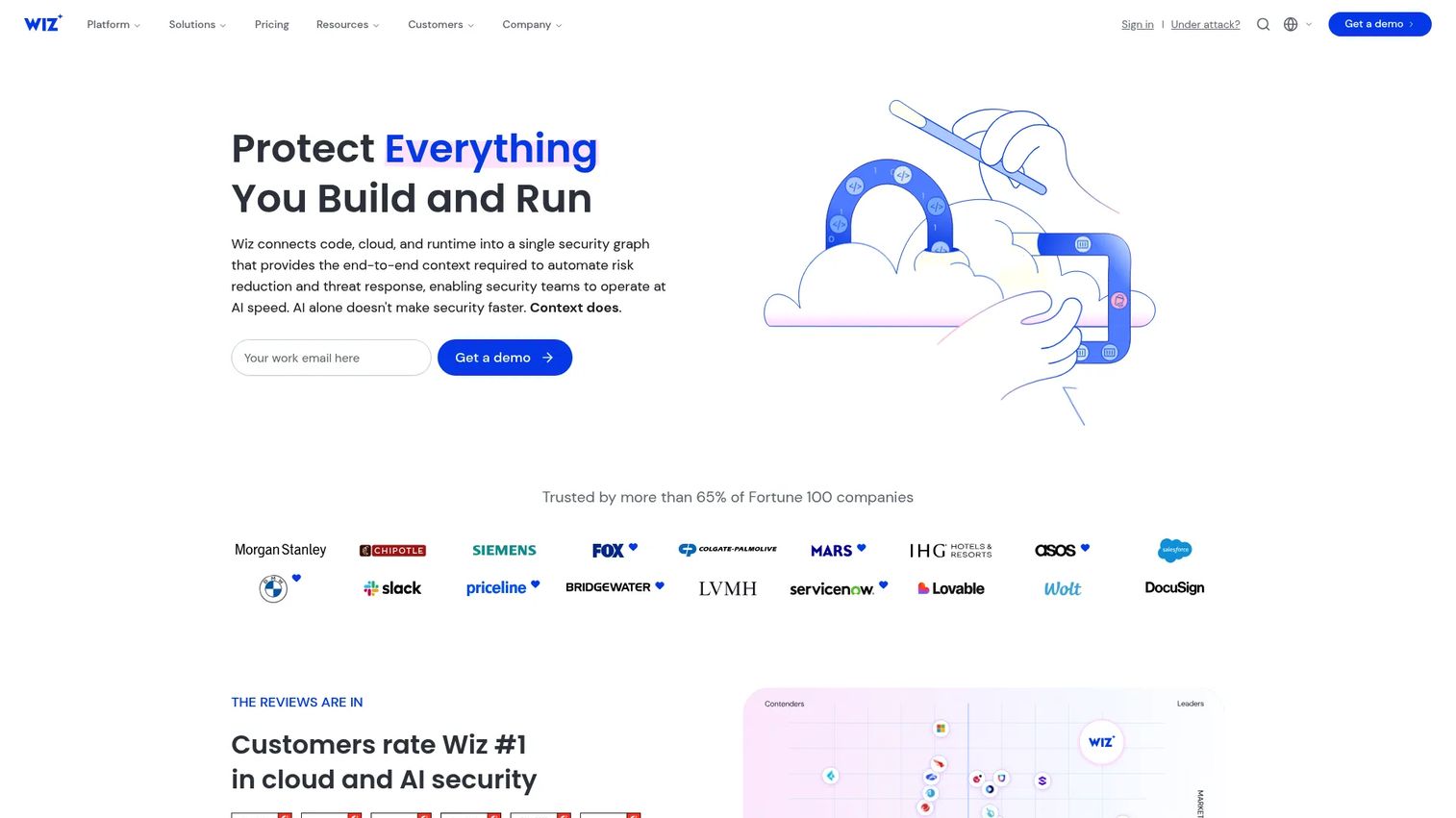
Wiz is a cloud and AI security platform that provides agentless visibility across cloud environments, connecting posture findings, identity risks, vulnerability data, and runtime signals into a security graph. The graph makes it possible to identify which misconfigurations are actually exploitable given the broader context, rather than treating every finding equally. Wiz covers AWS, Azure, Google Cloud, Kubernetes, and container workloads.
Best for: Security teams managing large multi-cloud estates that need risk prioritized by actual exploitability, not just configuration status.
Key features
- Agentless visibility across cloud and AI resources
- Security graph with attack path analysis
- Infrastructure-as-Code scanning
- Cloud threat intelligence integration
- Runtime protection via Wiz Sensor
Why choose Wiz: The security graph approach addresses a core presales objection from technical buyers: "Show me which findings actually matter." Wiz connects identity exposure, workload context, and network reachability to surface the paths an attacker would actually take.
Wiz pricing: Wiz uses custom quote pricing across its Wiz One, Wiz Go, and à la carte offerings. Contact Wiz directly to get a quote for your environment.
G2 rating: 4.7/5
2. Palo Alto Networks Prisma Cloud
Palo Alto Networks Prisma Cloud is a CNAPP platform covering code-to-cloud security, including infrastructure-as-Code scanning, CI/CD security, cloud posture management, workload protection, cloud data security, and web application protection. It is designed for enterprises that want a single platform spanning the entire software delivery and cloud operations lifecycle, from developer commit through production runtime.
Best for: Enterprise security and DevSecOps teams consolidating cloud security operations across multi-cloud and hybrid environments.
Key features
- Cloud security posture management with continuous monitoring
- Workload protection for hosts, containers, Kubernetes, and serverless
- Code security covering IaC, secrets, and software composition
- Cloud data security with discovery and classification
- Web application and API protection
Why choose Palo Alto Networks Prisma Cloud: It fits organizations that already standardize on Palo Alto Networks and want to extend that coverage into cloud-native environments. The breadth of modules is an advantage for large security operations teams and a cost consideration for smaller ones.
Palo Alto Networks Prisma Cloud pricing: Pricing is not published and requires a direct quote. Palo Alto Networks provides Enterprise Edition and Compute Edition licensing guides, but amounts are not listed publicly.
3. Microsoft Defender for Cloud
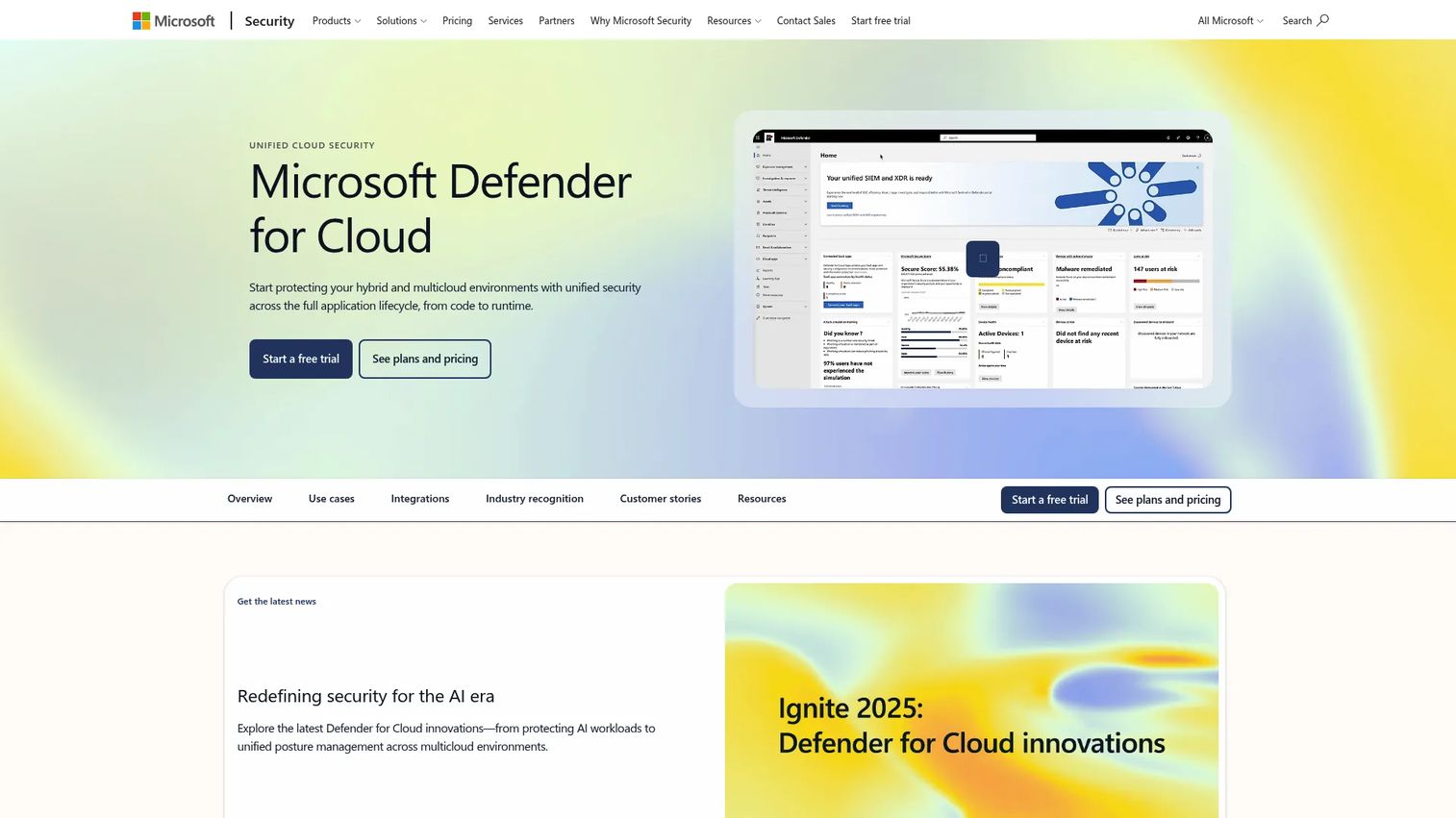
Microsoft Defender for Cloud is a cloud-native application protection platform providing posture management, DevOps security, and workload protection across Azure, hybrid, and multi-cloud environments. It includes a Secure Score that surfaces actionable recommendations, a regulatory compliance dashboard, and workload protection plans for servers, containers, databases, storage, and more. Integration with Microsoft Sentinel connects posture findings to SIEM workflows.
Best for: Organizations with significant Azure investment that want native cloud security posture and threat protection without managing a separate security platform.
Key features
- Secure Score with actionable cloud security recommendations
- Regulatory compliance dashboard mapping controls to frameworks
- Workload protection plans for servers, containers, and databases
- Attack path analysis and DevOps security management
- Microsoft Sentinel integration for SIEM correlation
Why choose Microsoft Defender for Cloud: For Microsoft-centric security stacks, the native integration with Entra ID, Sentinel, and Azure services creates a coherent security operations workflow that third-party tools have to replicate through connectors. The Foundational CSPM tier is free, which lowers the barrier for initial evaluation.
Microsoft Defender for Cloud pricing: Foundational CSPM is free. Enhanced CSPM and workload protection plans are usage-based, with pricing varying by protected resource type (servers, containers, databases, storage). The Microsoft pricing page displays placeholders rather than fixed rates; use the Azure pricing calculator or contact Microsoft for your specific configuration.
G2 rating: 4.4/5
4. SentinelOne Singularity Cloud Security
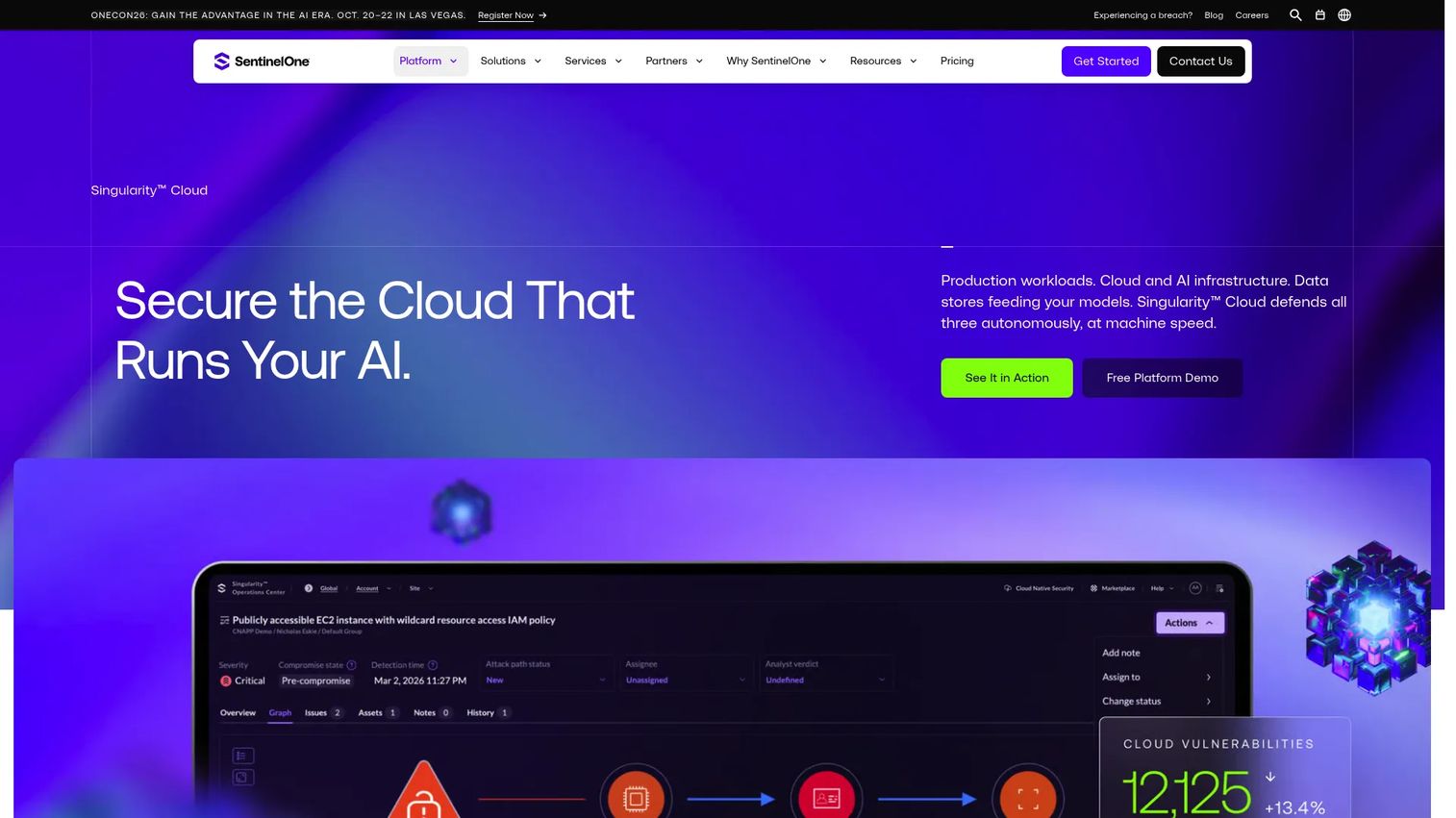
SentinelOne Singularity Cloud Security is an AI-powered CNAPP that unifies cloud workload protection, posture management, cloud data security, and identity risk within the broader Singularity platform. It emphasizes verified exploit paths rather than raw finding counts, giving security teams a prioritized view of which cloud risks are actually exploitable. The platform covers containers, virtual machines, AI workloads, and Kubernetes environments.
Best for: Security teams that want endpoint-to-cloud detection context and AI-assisted risk prioritization across workloads and data.
Key features
- Cloud workload protection for containers, VMs, and AI workloads
- CSPM, CIEM, DSPM, AI-SPM, IaC scanning, and secrets scanning
- Cloud data security with malware detection and automated quarantine
- Verified exploit paths and attack-path analysis
- Purple AI for cross-domain investigation and response
Why choose SentinelOne Singularity Cloud Security: The verified exploit path approach reduces alert noise by surfacing only the risks that have a realistic chain of exploitability. Teams already using SentinelOne for endpoint detection gain correlated cloud context without adding a separate platform.
SentinelOne pricing: SentinelOne lists Singularity Complete at $179.99/year per endpoint and Singularity Commercial at $229.99/year per endpoint. Enterprise pricing requires contacting sales. Note that these are platform-level packages, not a standalone Cloud Security price.
G2 rating: 4.9/5
5. Check Point CloudGuard
Check Point CloudGuard is a cloud security platform covering network security, posture management, workload protection, and web application security across public, private, and hybrid cloud environments. The platform includes advanced threat prevention capabilities, making it relevant for organizations that want prevention-oriented controls alongside monitoring. Free trials are available for selected CloudGuard offerings.
Best for: Multi-cloud teams that need cloud network security and posture control managed from a unified platform.
Key features
- Cloud-native security gateways with threat prevention
- Cloud posture management and misconfiguration detection
- Web application and API security
- IaC scanning and CI/CD integration
- Firewall, DLP, IPS, and URL filtering
Why choose Check Point CloudGuard: It fits security teams with a prevention-first culture who want firewall and network controls to work alongside posture findings in the same console. Useful when the buyer's security architecture already includes Check Point at the network layer.
Check Point CloudGuard pricing: Pricing requires a direct quote from Check Point. Free trials are available for selected CloudGuard products. No public numeric pricing was listed on the official pages.
G2 rating: 4.4/5
6. Trend Vision One Cloud Security
Trend Vision One Cloud Security provides cloud security posture management, cloud workload protection, identity and data risk visibility, and attack-path analysis within the broader Trend Vision One XDR platform. It covers AWS, Azure, Google Cloud, Oracle Cloud, and Alibaba Cloud. The XDR integration connects cloud findings to endpoint, email, network, and container telemetry in a unified investigation workflow.
Best for: Hybrid security teams that want cloud risk connected to broader detection and response across the enterprise environment.
Key features
- Multi-cloud CSPM across five major cloud providers
- Cloud workload protection and AI-SPM
- Attack-path analysis and agentless scanning
- CIEM and DSPM for identity and data risk
- XDR integration connecting cloud and enterprise telemetry
Why choose Trend Vision One Cloud Security: When a security team already uses Trend Vision One for endpoint or email detection, extending coverage to cloud environments through the same platform reduces context switching and improves correlation across attack surfaces.
Trend Vision One pricing: Pricing is not publicly listed and requires contacting Trend Micro directly for a quote.
7. Tenable Cloud Security
Tenable Cloud Security is a cloud security and exposure management platform covering posture management, cloud infrastructure entitlement management (CIEM), workload protection, sensitive data discovery, and attack-path analysis. It fits naturally into environments where Tenable is already the vulnerability management standard, extending that risk prioritization context into cloud infrastructure and identity.
Best for: Security teams running Tenable vulnerability programs who need cloud posture, entitlement risk, and exposure context in the same workflow.
Key features
- Multi-cloud and hybrid cloud asset visibility
- CSPM with misconfiguration detection and remediation
- CIEM with least-privilege analysis and just-in-time access
- Attack-path analysis connecting exposures to exploitable paths
- Cloud workload protection for containers, Kubernetes, and serverless
Why choose Tenable Cloud Security: The combination of cloud posture findings and entitlement risk is useful for presales technical evaluations where buyers ask: "Who can actually reach this exposed resource, and through what path?" Tenable answers both sides of that question.
Tenable Cloud Security pricing: Pricing is customized based on the number of billable cloud resources. No numeric price is listed publicly. Contact Tenable for a quote.
G2 rating: 4.6/5
8. Sysdig Secure
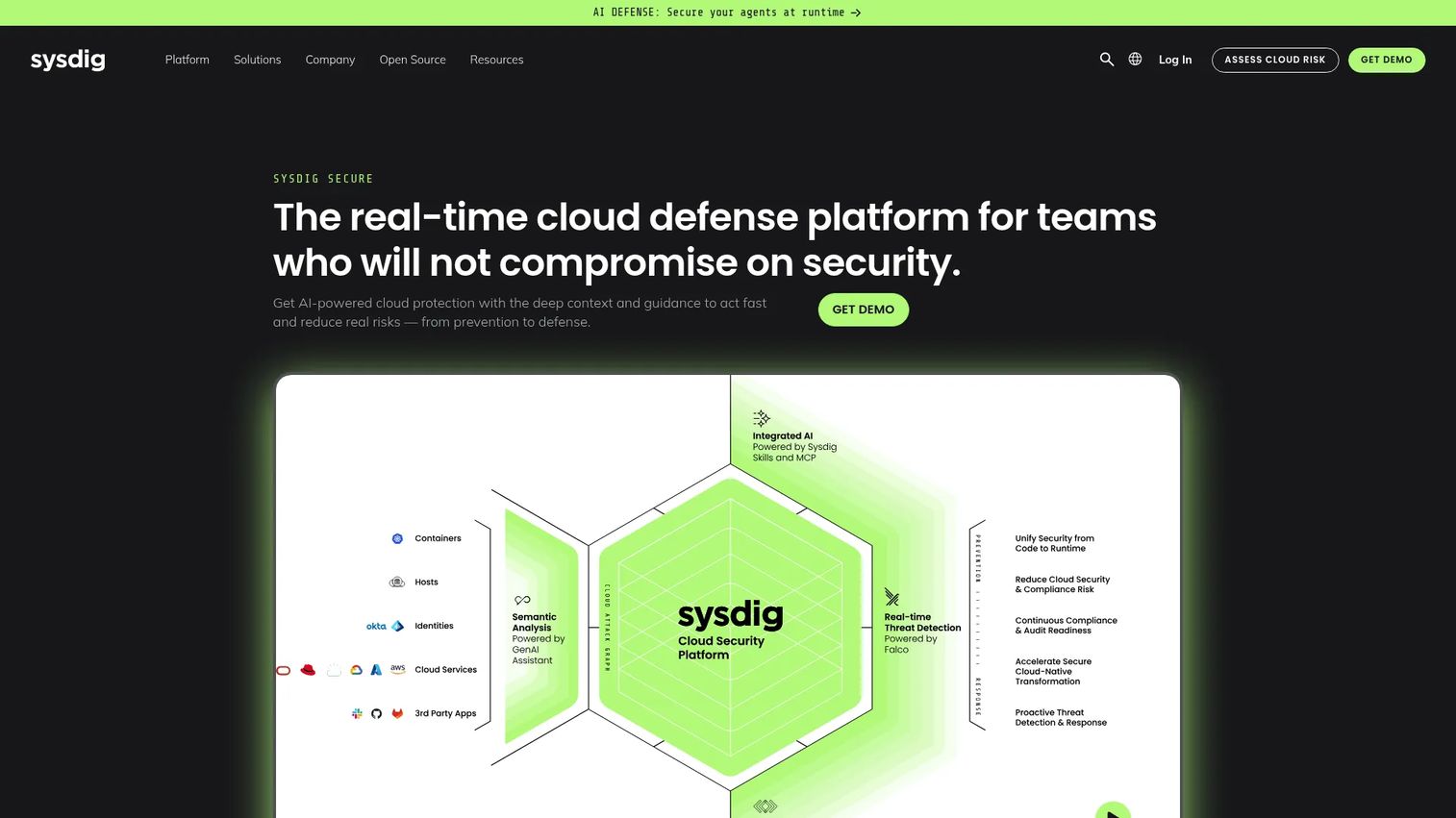
Sysdig Secure is a CNAPP with particular depth in cloud-native and Kubernetes runtime security. It combines runtime threat detection, vulnerability management, Kubernetes posture management, compliance, and identity and entitlement risk in a single platform. The AI-powered Sysdig Sage assistant accelerates investigation. Licensing is host-count-based, with separate pricing for cloud log detection and response.
Best for: DevSecOps teams securing Kubernetes-heavy production environments where runtime behavior matters as much as static posture findings.
Key features
- Runtime threat detection and response
- Vulnerability management and container image scanning
- Cloud and Kubernetes posture management (KSPM)
- Compliance and IaC security
- Identity and entitlement management with activity audit
Why choose Sysdig Secure: Runtime detection gives security teams evidence of what is actually happening in a running workload, not just what the configuration says should happen. For cloud-native environments where containers redeploy constantly, static posture checks alone leave gaps that Sysdig fills.
Sysdig pricing: Quote-based, priced per host with additional event-based pricing for cloud log detection and response. No public numeric rate is listed. Request a quote directly from Sysdig.
G2 rating: 4.8/5
9. CrowdStrike Falcon Cloud Security
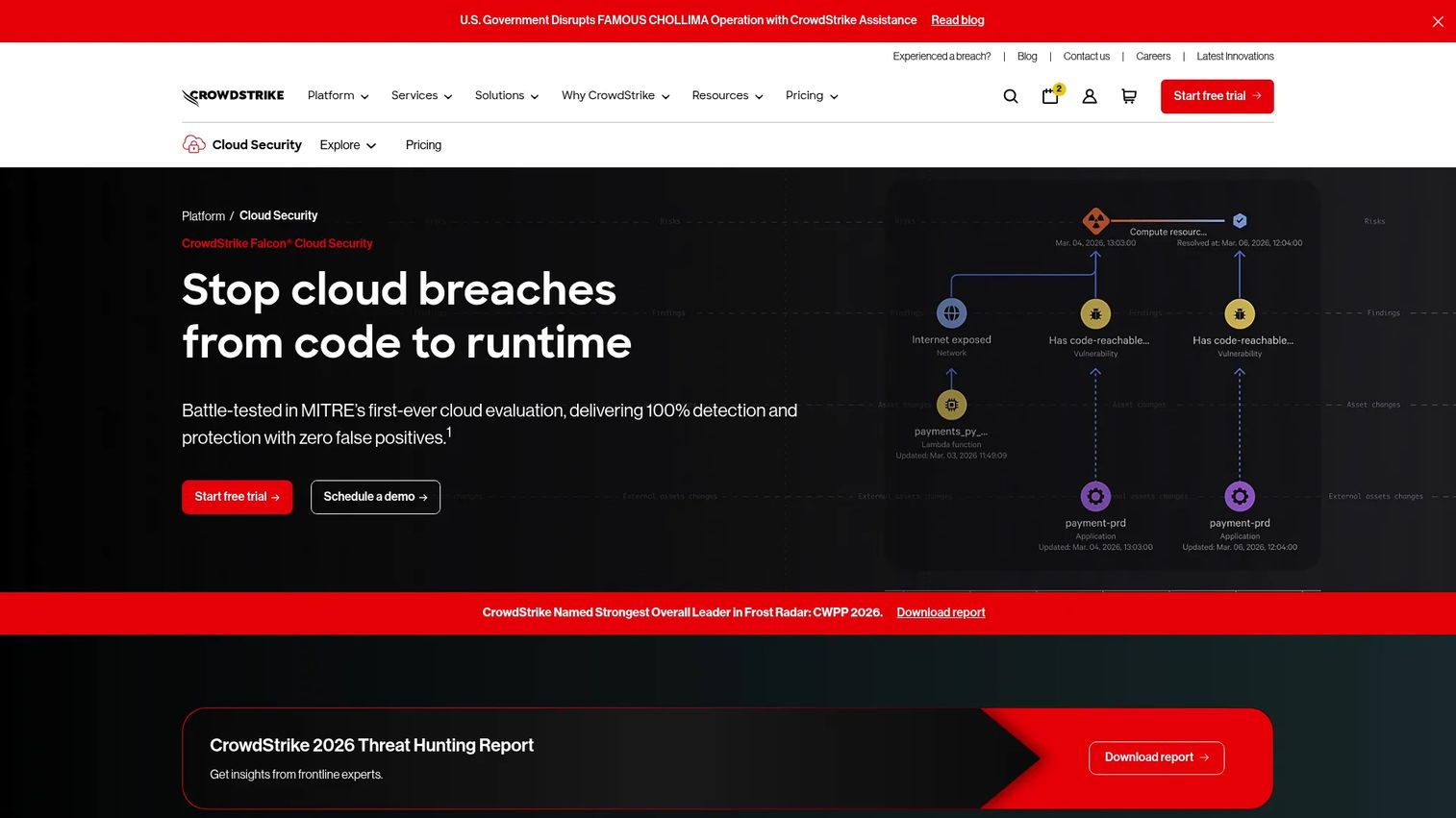
CrowdStrike Falcon Cloud Security brings cloud workload protection, posture management, cloud detection and response, and AI security posture management into the Falcon platform. It uses agentless asset discovery alongside agent-based workload visibility. Six solution packages cover scenarios from proactive security to full CNAPP with container management, all quoted individually.
Best for: SOC teams already triaging alerts in Falcon that want cloud workload and posture findings correlated with endpoint and identity telemetry.
Key features
- Agentless cloud asset discovery and posture management
- Real-time cloud detection and response with automated actions
- Cloud workload and container protection
- Vulnerability and image risk management
- AI security posture management (AI-SPM)
Why choose CrowdStrike Falcon Cloud Security: Security operations teams that already work in Falcon gain cloud context without switching consoles. The correlation between endpoint telemetry, identity signals, and cloud workload events strengthens investigation quality in complex multi-stage attacks.
CrowdStrike pricing: All six Falcon Cloud Security packages are priced by custom quote. No public numeric rates are listed on the pricing page.
G2 rating: 4.5/5
10. Aqua Security
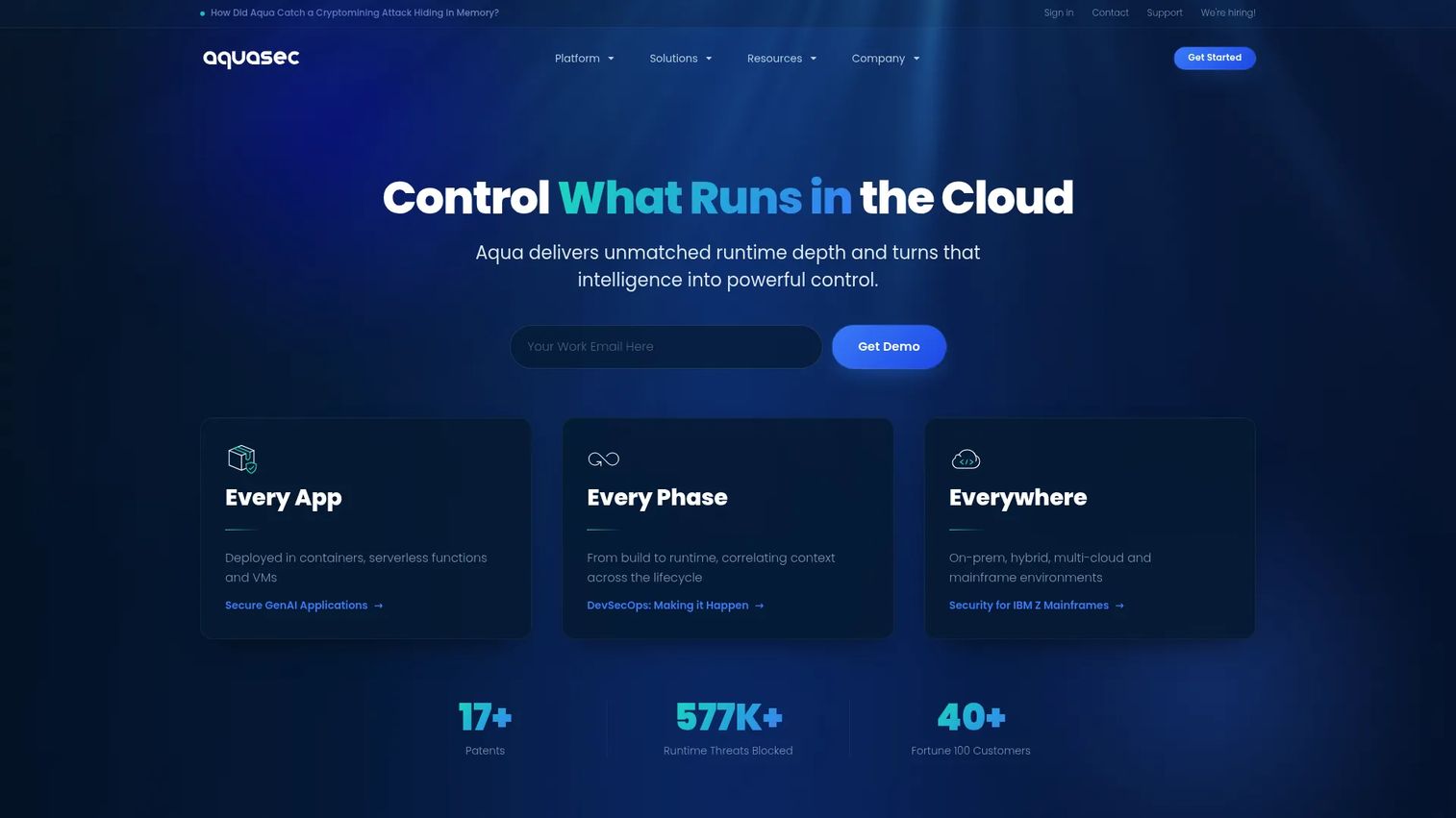
Aqua Security is a CNAPP focused on cloud-native application protection across the software lifecycle, from build-time code and container scanning through production runtime enforcement. It covers containers, Kubernetes, virtual machines, serverless workloads, and AI applications. Aqua's posture management combines agentless scanning with agent-based workload visibility for teams that need both breadth and depth.
Best for: Enterprise DevSecOps and platform engineering teams securing Kubernetes and containerized application pipelines from code to production.
Key features
- Container image scanning for vulnerabilities, secrets, and misconfigurations
- Cloud posture management with agentless and agent-based coverage
- Runtime threat detection, policy enforcement, and workload isolation
- Supply chain security covering build-time risks
- Kubernetes security and serverless workload protection
Why choose Aqua Security: The build-to-runtime coverage means security teams can identify risks before deployment rather than discovering them after a container is running in production. Strong fit for organizations where shift-left security is a stated priority in technical evaluations.
Aqua Security pricing: Pricing is based on the number of code repositories for Dev Security and the number of workloads for Cloud Security. No numeric prices are listed publicly. Contact Aqua for a quote or to start a trial.
G2 rating: 4.2/5
11. Datadog Cloud Security Management
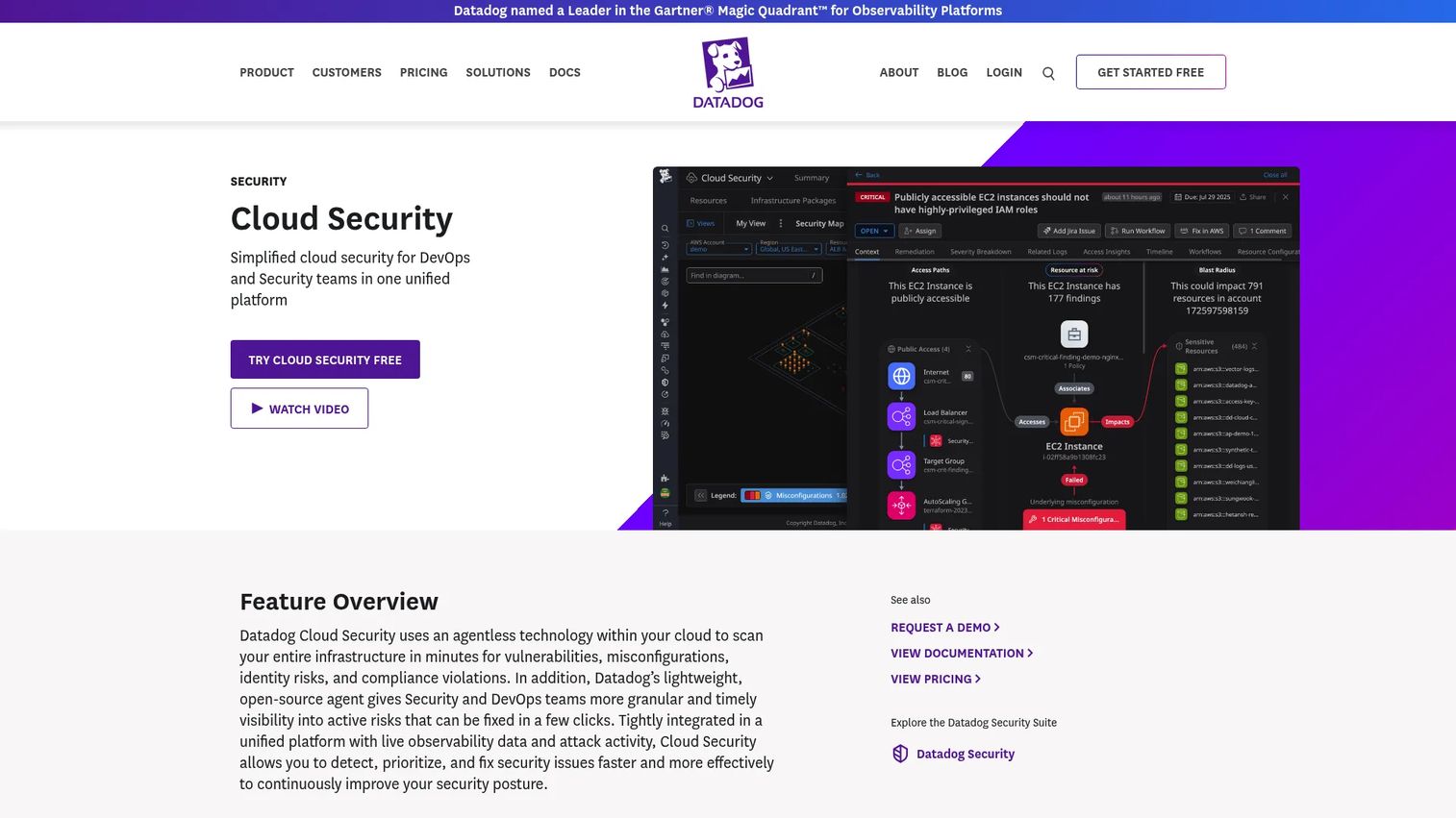
Datadog Cloud Security Management provides cloud posture management, vulnerability scanning, identity risk analysis, and compliance monitoring within Datadog's observability platform. Security findings appear alongside infrastructure metrics, application performance data, and logs, which is the core value proposition for engineering teams that already live in Datadog and do not want to maintain a separate security console.
Best for: DevOps and platform engineering teams that want cloud security findings integrated with their existing observability and on-call workflows.
Key features
- Agentless scanning for misconfigurations, vulnerabilities, and identity risks
- Continuous vulnerability management for hosts, containers, and serverless functions
- Cloud posture management with customizable compliance rules
- Security detection rules and signal correlation
- Compliance posture scoring across frameworks
Why choose Datadog Cloud Security Management: When engineers already use Datadog for infrastructure monitoring and APM, adding cloud security through the same platform reduces tool sprawl and makes security findings visible during normal operational investigation. The per-host pricing model is predictable for teams with stable infrastructure counts.
Datadog Cloud Security Management pricing: CSM Pro starts at $10 per host per month. CSM Enterprise is $25 per host per month. Container pricing is separate: $0.50 per container per month for Pro and $1 per container per month for Enterprise.
G2 rating: 4.4/5
12. Splunk Observability Cloud
Splunk Observability Cloud is an OpenTelemetry-native SaaS platform for real-time monitoring across infrastructure, applications, logs, and user experiences. It handles metrics, distributed tracing, log analytics, database monitoring, and real-user monitoring. Security teams in Splunk-heavy environments use Observability Cloud as the telemetry layer, often pairing it with Splunk security products for investigation and SIEM workflows.
Best for: Organizations with large telemetry volumes and existing Splunk expertise who need observability and security signals in a connected data environment.
Key features
- OpenTelemetry-native data collection across cloud and on-premises
- AI-powered analytics and anomaly guidance
- Full-fidelity distributed tracing with no data sampling
- Infrastructure, database, and real-user monitoring
- Log, metric, and trace correlation for investigation
Why choose Splunk Observability Cloud: Useful when cloud security monitoring needs to integrate with existing Splunk security operations. The observability depth is a genuine strength; teams looking for CNAPP-style posture and runtime security will want to pair it with dedicated security tooling.
Splunk Observability Cloud pricing: Infrastructure tier starts at $15 per host per month (billed annually). App & Infra is $60 per host per month. End-to-End is $75 per host per month. A free edition is available.
G2 rating: 4.3/5
13. Amazon CloudWatch
Amazon CloudWatch is AWS's native monitoring and observability service, covering metrics collection, log aggregation and analysis, alarm creation, and event monitoring across AWS services and applications. It integrates natively with CloudTrail for audit logs, GuardDuty for threat findings, and Security Hub for consolidated security posture. For security teams building on AWS, CloudWatch is typically the foundational telemetry layer before adding a third-party CNAPP.
Best for: AWS-native DevOps, SRE, and cloud operations teams that need integrated monitoring, logging, and alerting without a separate platform.
Key features
- Infrastructure and application metrics monitoring
- Centralized log collection and analysis via Logs Insights
- Customizable alarms with automated actions
- Native AWS service integrations (CloudTrail, GuardDuty, Security Hub)
- Dashboards for operational and security-relevant telemetry
Why choose Amazon CloudWatch: Essential for any AWS-native environment. It is often the first monitoring layer a team puts in place, and the free tier covers meaningful usage. For teams evaluating broader cloud security tooling, CloudWatch provides the raw telemetry that SIEM and CNAPP platforms ingest.
Amazon CloudWatch pricing: A free tier covers standard metrics, dashboards, alarms, and log storage within monthly limits. Paid usage is billed per metrics ingested, logs collected, dashboards maintained, alarms configured, and API requests made. Rates vary by AWS region.
G2 rating: 4.3/5
14. Azure Monitor
Azure Monitor is Microsoft's native monitoring service for collecting, analyzing, and responding to telemetry from Azure applications, infrastructure, networks, and hybrid environments. It includes Log Analytics for centralized log querying, Application Insights for application performance monitoring, near-real-time alerting, and automated response capabilities. Security workflows connect through Defender for Cloud recommendations and Microsoft Sentinel.
Best for: Azure-native engineering and operations teams that need a unified telemetry and alerting layer beneath broader security operations.
Key features
- End-to-end monitoring for applications, infrastructure, and networks
- Log Analytics and Application Insights integration
- Near-real-time alerts with automated responses
- Monitoring for virtual machines, containers, databases, and hybrid resources
- Workbooks for custom reporting and visualization
Why choose Azure Monitor: For Azure-centric teams, Monitor is the foundational telemetry layer that Defender for Cloud and Sentinel build on. Starting with Azure Monitor before layering security tools gives teams a clean data foundation and avoids duplicating ingestion costs.
Azure Monitor pricing: Usage-based, primarily driven by data ingestion volume. Additional charges apply for log retention beyond default periods, alert rules, notifications, and web tests. The Microsoft pricing page shows placeholder rates; use the Azure pricing calculator to estimate costs for your specific ingestion volume.
G2 rating: 4.3/5
15. Google Cloud Monitoring
Google Cloud Monitoring is Google Cloud's native monitoring service for collecting and analyzing metrics, running uptime checks, setting alerting policies, and visualizing cloud telemetry. It supports service-level objective monitoring and integrates with Google Cloud's Managed Service for Prometheus. For security posture, it pairs with Security Command Center, which handles misconfiguration detection and threat findings for Google Cloud workloads.
Best for: Google Cloud-native engineering and SRE teams building operational monitoring and alerting within the Google Cloud environment.
Key features
- Metrics monitoring and customizable dashboards
- Alerting policies and notification channels
- Uptime checks and synthetic monitoring
- Service-level objective tracking
- Managed Service for Prometheus integration
Why choose Google Cloud Monitoring: For Google Cloud-native teams, it's the natural starting point for operational observability before adding security-specific tooling. Pairing it with Security Command Center gives teams posture findings alongside operational metrics in the same cloud environment.
Google Cloud Monitoring pricing: Google Cloud metrics are generally non-chargeable. Monitoring data ingestion starts at $0.2580/MiB for the first 150,000 MiB per month. Managed Prometheus metrics cost $0.060 per million samples ingested. Uptime check execution costs $0.30 per 1,000 after the first million monthly executions. Free allotments apply.
G2 rating: 4.2/5
16. Grafana
Grafana is an open-source and commercial visualization platform for querying, visualizing, and alerting on metrics, logs, and traces from a wide range of data sources. The Grafana Cloud offering includes Loki for log aggregation, Tempo for distributed tracing, and Mimir for scalable metrics storage, all within a managed cloud environment. Teams use Grafana to build unified dashboards combining cloud security telemetry, infrastructure metrics, Kubernetes data, and application signals.
Best for: Engineering and operations teams that need flexible dashboards combining cloud, Kubernetes, security, and application data from multiple sources.
Key features
- Custom dashboards connecting many data sources via plugins
- Alerting across metrics, logs, and traces
- Log visualization with Loki
- Distributed tracing with Tempo
- Managed cloud offering with Grafana Cloud
Why choose Grafana: When a team owns its own telemetry pipeline and needs to visualize security-relevant data alongside operational metrics, Grafana provides the flexibility to build exactly what the environment requires. The open-source core makes it accessible; Grafana Cloud adds managed infrastructure for teams that don't want to run their own instances.
Grafana pricing: Open-source Grafana is free. Grafana Cloud offers a free tier, a Pro plan starting at $19/month plus usage, and an Enterprise plan starting at $25,000/year spend commitment.
G2 rating: 4.5/5
17. Prometheus
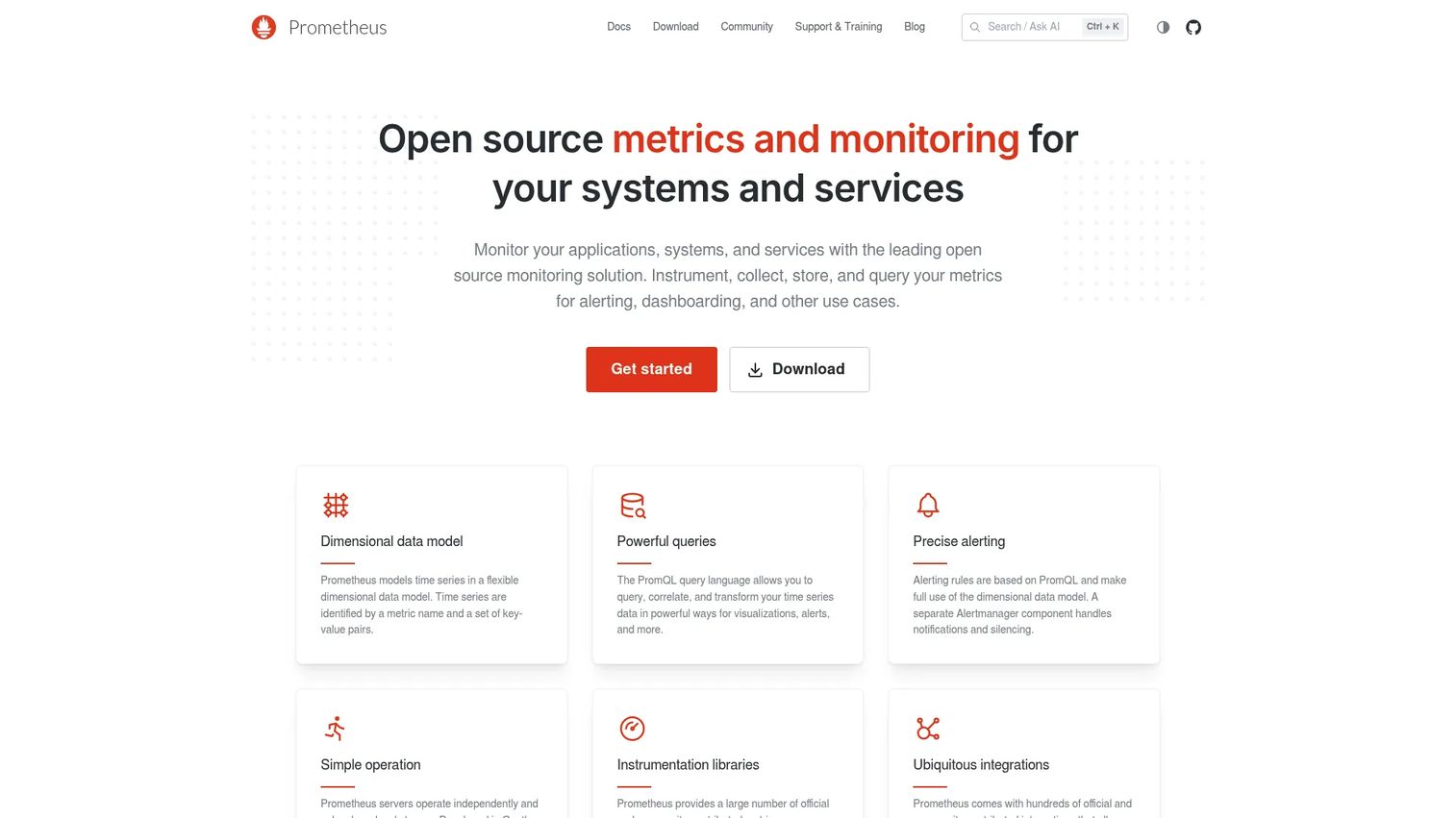
Prometheus is an open-source systems monitoring and alerting toolkit built for cloud-native and Kubernetes environments. It uses a pull-based HTTP collection model, a dimensional time-series data model with PromQL for querying, and Alertmanager for routing alerts. Prometheus is a metrics-first tool, not a security platform, but it provides the workload health and Kubernetes telemetry that security-adjacent dashboards and alerting workflows often depend on.
Best for: Engineering teams running Kubernetes-native monitoring stacks that need direct control over metrics collection, storage, and alerting.
Key features
- Dimensional time-series data model with metric names and labels
- PromQL query language for flexible data analysis
- HTTP pull-based metric collection
- Service discovery and static target configuration
- Alertmanager for alert routing and deduplication
Why choose Prometheus: For teams that want full ownership over their metrics stack, Prometheus provides the control and flexibility that managed cloud monitoring services abstract away. Most commonly paired with Grafana for visualization. Cloud security monitoring use cases typically require pairing Prometheus with a dedicated security tool for posture and threat detection.
Prometheus pricing: Prometheus is 100% open source with no paid pricing tiers. Managed Prometheus offerings are available from cloud providers and third parties at their own pricing.
G2 rating: Not available at time of publication.
18. Zabbix
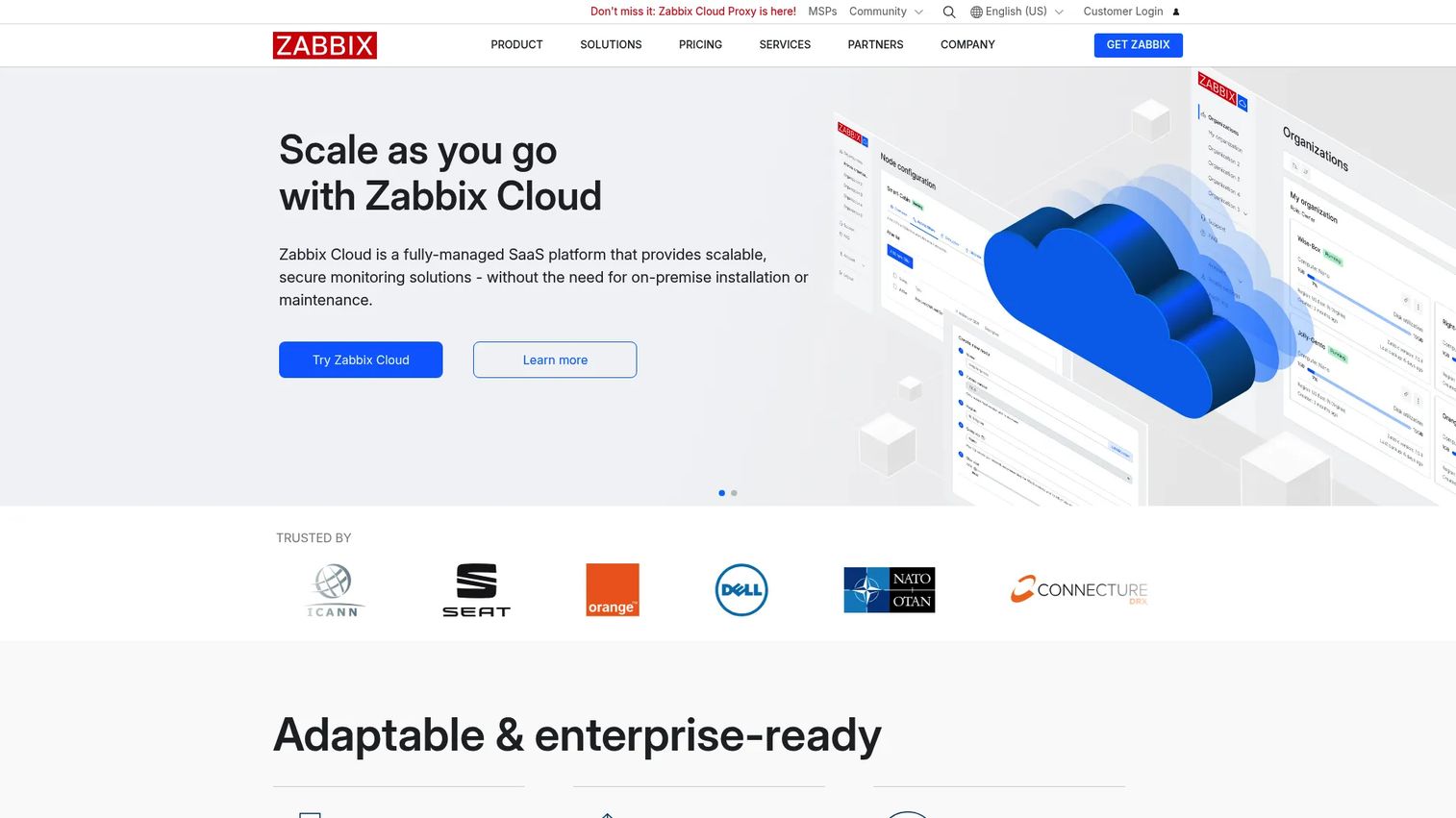
Zabbix is an enterprise-class open-source monitoring platform for infrastructure, applications, networks, cloud services, containers, and databases. It supports smart thresholds, anomaly detection, trend prediction, distributed monitoring, and a wide range of alerting channels. For cloud security monitoring, Zabbix provides the infrastructure visibility layer and can feed findings into broader security workflows through integrations.
Best for: Organizations monitoring hybrid infrastructure, including on-premises and cloud resources, with cost-sensitive monitoring requirements.
Key features
- Metric collection from networks, cloud services, containers, and applications
- Smart thresholds, anomaly detection, and root-cause analysis
- Alerting via email, Slack, Microsoft Teams, Telegram, and webhooks
- Distributed monitoring with high availability support
- Kubernetes monitoring and Zabbix API for automation
Why choose Zabbix: For hybrid infrastructure environments where some workloads are on-premises and others are cloud-hosted, Zabbix provides consistent visibility across both without the per-host cost of commercial monitoring platforms. Teams with Zabbix expertise can extend coverage to cloud environments without starting from scratch.
Zabbix pricing: The open-source software is free. Zabbix Cloud starts at $50/month with a 5-day free trial, scaling through Nano, Micro, Small, Medium, Large, xLarge, and 2xLarge tiers. Paid subscriptions for support and operational assurance use Silver, Gold, Platinum, and Enterprise tiers.
G2 rating: 4.3/5
19. Nagios
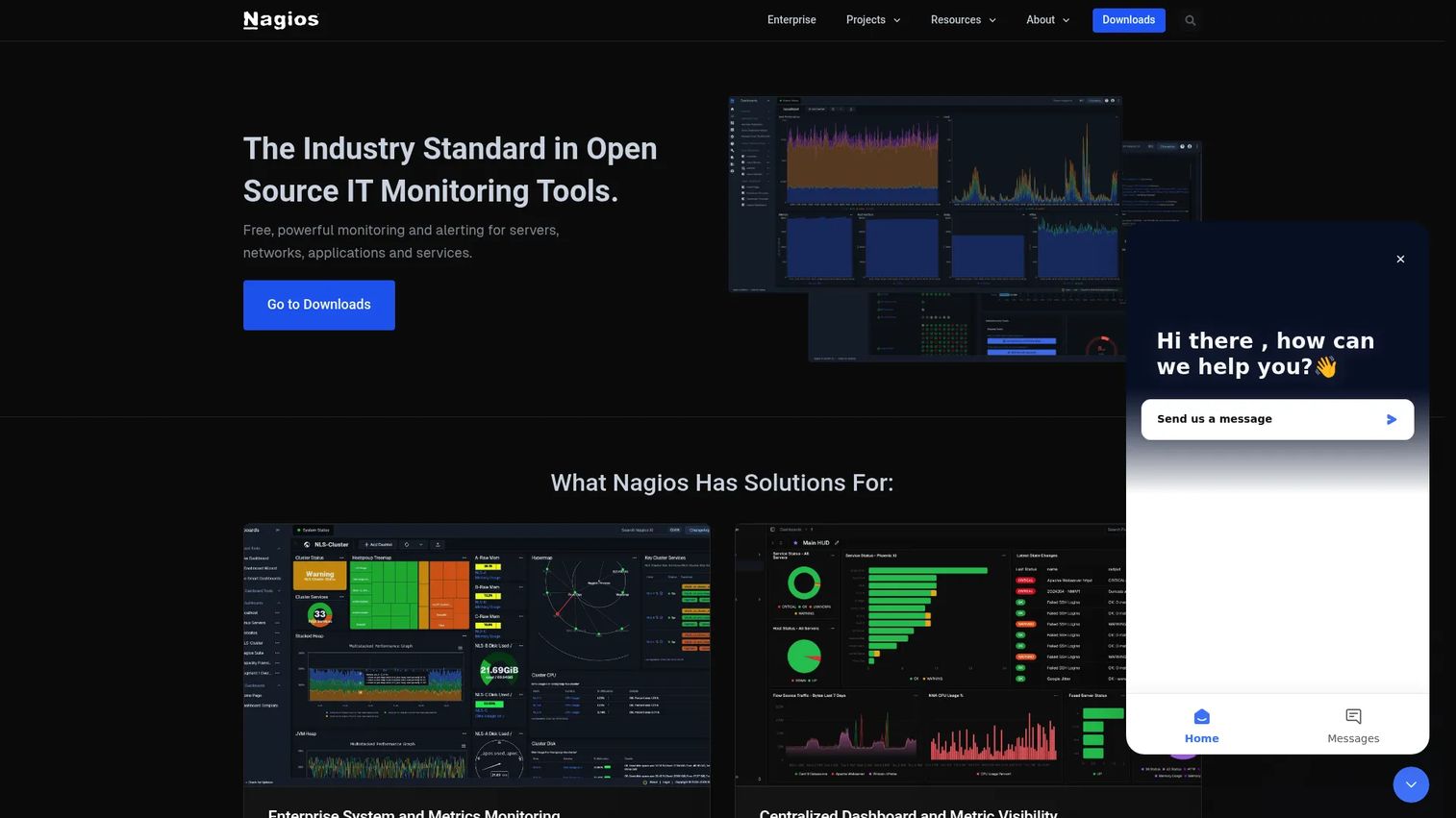
Nagios is an established open-source infrastructure monitoring platform with a large plugin ecosystem covering servers, networks, applications, logs, and services. Nagios Core is the free open-source version. Nagios XI adds a configuration wizard, REST API, dashboards, reporting, and enterprise support on a perpetual node-based licensing model. For cloud security monitoring, Nagios requires plugins and integrations to cover cloud-native environments.
Best for: IT teams with existing Nagios infrastructure investments that need to extend monitoring into cloud-adjacent and hybrid environments.
Key features
- Host and service monitoring with configurable checks
- Extensible plugin architecture with official and community plugins
- Alerting with escalation paths and notification channels
- Performance data export and historical reporting
- Configuration wizards and REST API in Nagios XI
Why choose Nagios: Organizations that have run Nagios for years and understand its plugin model can extend coverage incrementally rather than replacing their entire monitoring stack. For modern cloud-native security use cases, dedicated CNAPP tools cover the attack-path and runtime detection capabilities that Nagios does not provide natively.
Nagios pricing: Nagios Core is free and open source. Nagios XI starts at $2,595 for a 100-node Standard perpetual license. The Enterprise perpetual license for 100 nodes is $4,690. Sitewide licensing for unlimited nodes requires contacting Nagios sales. A free version of Nagios XI covers up to 7 nodes or 100 services.
G2 rating: 4.5/5
20. Cloudaware
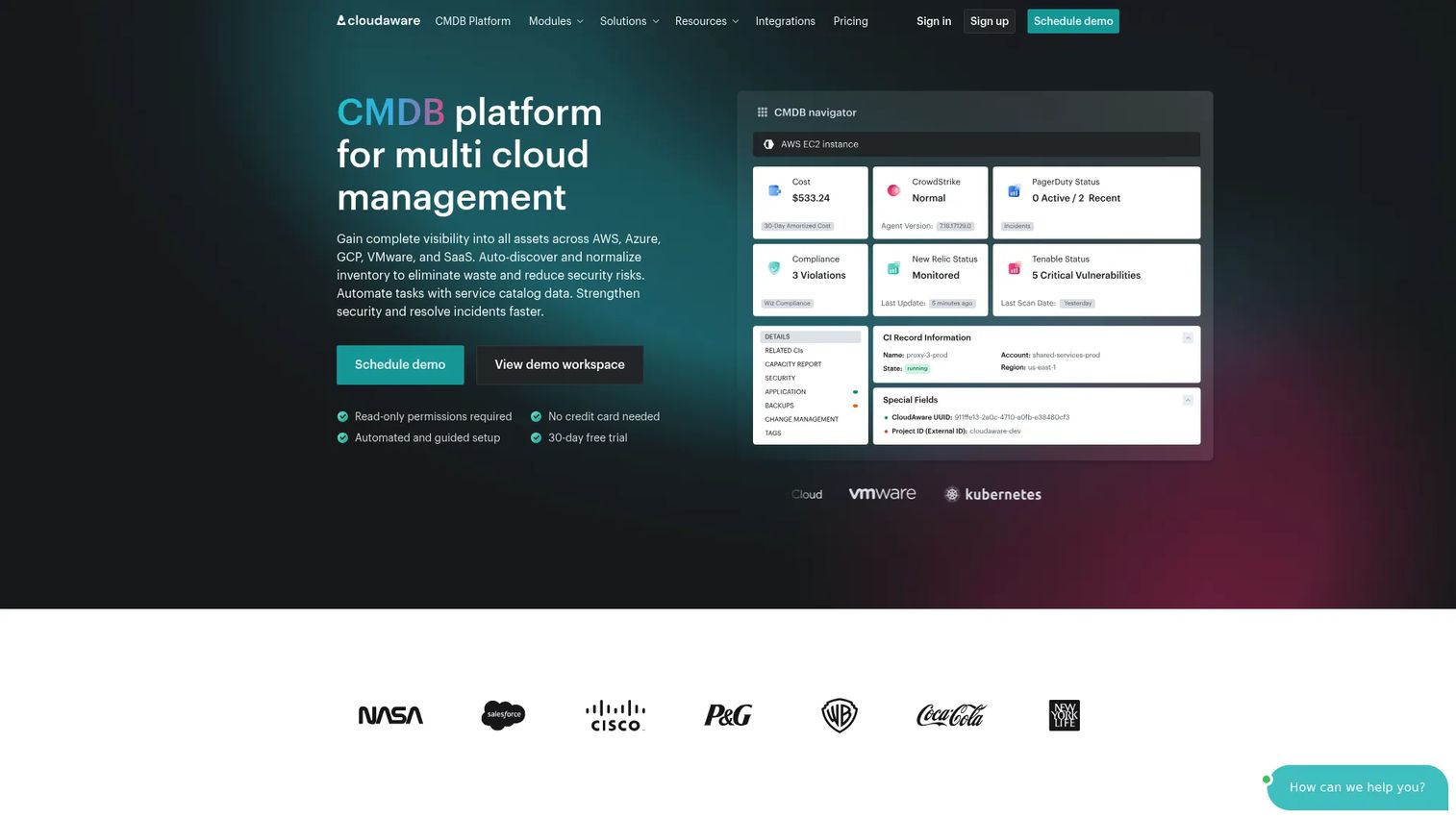
Cloudaware is a SaaS CMDB platform for multi-cloud and on-premises asset management, providing inventory visibility, cost tracking, vulnerability management, security posture controls, centralized log aggregation, and compliance evidence collection. Its Core plan covers CMDB and asset discovery for up to 25,000 configuration items. The Enterprise plan adds Salesforce-native CMDB, advanced workflows, granular permissions, SSO, and enterprise compliance controls.
Best for: Organizations that need cloud asset inventory clarity, ownership context, and governance workflows before adding deeper security monitoring.
Key features
- Multi-cloud and on-premises asset discovery and inventory
- FinOps cost tracking and optimization
- Vulnerability management with remediation workflows
- CSPM policies and cloud security controls
- IT compliance evidence collection
Why choose Cloudaware: When security teams can't answer basic questions about who owns which cloud account or which assets are in scope for a compliance audit, Cloudaware addresses that foundational gap. It's the inventory and governance layer that makes other security tools more effective.
Cloudaware pricing: Core is $67/month. Enterprise is $200/month. A 30-day free trial is available.
G2 rating: 4.0/5
21. Cymulate
Cymulate provides continuous exposure validation and security control testing, mapping simulated attacks to the MITRE ATT&CK framework. Rather than monitoring for threats, Cymulate validates whether existing monitoring and defensive controls would actually detect and stop them. It supports exposure prioritization, automated security control updates, AI-powered workflows, and custom attack-chain creation for red team and detection engineering use cases.
Best for: Security teams validating whether cloud monitoring tools, SIEM detections, and defensive controls perform as expected against realistic attack simulations.
Key features
- Continuous threat and security control validation (MITRE ATT&CK mapped)
- Exposure prioritization with automated control update recommendations
- Custom attack-chain creation and detection engineering support
- AI-powered workflows and integrations with security tools
- Cloud control testing and attack-path validation
Why choose Cymulate: For presales teams supporting security deals, Cymulate answers the question that buyers increasingly ask after selecting a monitoring platform: "Does this actually work?" Cymulate tests the whole chain, from detection rules through response workflows, in a continuous and automated way.
Cymulate pricing: Subscription pricing is customized based on the selected package, number of assets, and simulation scenarios. Request a personalized quote directly from Cymulate.
G2 rating: 4.9/5
Considerations when choosing cloud security monitoring tools
Start with the monitoring layer you need most urgently
Cloud security monitoring covers posture, runtime detection, identity risk, workload telemetry, log correlation, and compliance evidence. Each represents a different buying decision with different tooling. A team whose urgent problem is Kubernetes runtime behavior needs different capabilities than one trying to get a clean SOC 2 evidence trail from AWS. Define the priority layer before evaluating platforms that claim to do everything.
Separate finding volume from prioritized risk
Many cloud security tools produce high finding counts. Fewer tools explain which findings represent an exploitable path given the environment's actual configuration, asset criticality, identity exposure, and network reachability. During POC evaluations, ask vendors to demonstrate how they surface a realistic attack path, not just a list of misconfigurations. This distinction is what separates CSPM-only tools from mature CNAPP platforms.
Check SIEM and SOAR integration costs before signing
Cloud logs create ingestion cost surprises in SIEM environments. Ask vendors which events flow into SIEM by default, what filtering is available, how alerts deduplicate, and whether ticketing integration requires additional connectors. Prowler's 2025 research found that teams with highly automated cloud security processes save an average of 19 hours per week compared to manual approaches, but automation only delivers that value if integrations are properly scoped and budgeted.
Validate multi-cloud and Kubernetes coverage in your actual environment
Vendors claim multi-cloud coverage broadly. Test it with your specific mix: AWS account structure, Azure tenant layout, Google Cloud projects, Kubernetes clusters and versions, container registries, and any SaaS integrations in scope. Coverage claims often vary by API version, cloud region, or Kubernetes distribution. A proof of concept using your real cloud accounts surfaces gaps faster than any feature comparison document.
Treat compliance evidence support as a starting point, not a guarantee
Cloud security monitoring tools can map controls to compliance frameworks, detect policy drift, generate evidence reports, and alert on specific rule violations. They support the audit process and help teams respond to auditor requests. They do not make an organization compliant. Compliance requires process, documentation, training, and governance decisions that no tool automates away entirely.
Conclusion
The right cloud security monitoring tool depends on what you need to see, where your infrastructure runs, and what your team already uses. Security-first CNAPP platforms like Wiz, Prisma Cloud, Microsoft Defender for Cloud, SentinelOne, and Tenable suit teams that need posture management, workload protection, identity risk, and attack-path analysis from one platform. Native tools like Amazon CloudWatch, Azure Monitor, and Google Cloud Monitoring are the right foundation for teams building monitoring inside a single cloud provider before adding third-party security coverage. Open-source options like Prometheus and Zabbix give engineering teams direct control over telemetry collection for hybrid and Kubernetes-heavy environments. Exposure validation tools like Cymulate answer the question that comes after monitoring: Whether the controls you've built actually detect the attacks they're supposed to stop.
For presales and Solutions Engineers, the most useful framing for buyer conversations is this: Cloud security monitoring is not about having more dashboards. It's about knowing which cloud signal deserves immediate action, and whether your current setup would catch a real attack before it becomes an incident.
For further reading on related attack surface management software and asset inventory software to complement your cloud security stack, the Guideflow blog covers both categories.
FAQs
Cloud security monitoring tools collect and analyze security signals from cloud infrastructure, workloads, identities, applications, and logs to detect threats, identify misconfigurations, support compliance evidence collection, and accelerate incident response. They range from security-first CNAPP platforms to native cloud monitoring services and open-source observability stacks, depending on the team's environment and priorities.
Cloud monitoring focuses on availability, performance, infrastructure health, and uptime. Cloud security monitoring focuses on threats, misconfigurations, identity risk, vulnerabilities, data exposure, workload behavior, and compliance evidence. Many modern platforms cover both functions, but the evaluation criteria differ significantly when the primary goal is security rather than operational observability.
CNAPP platforms like Wiz, Palo Alto Networks Prisma Cloud, Microsoft Defender for Cloud, SentinelOne Singularity Cloud Security, and Tenable Cloud Security are commonly evaluated for multi-cloud security monitoring needs. The right choice depends on your specific mix of AWS, Azure, Google Cloud, Kubernetes environments, and container workloads. Always test vendor coverage claims in a proof of concept using your actual cloud configuration.
Native tools like Amazon CloudWatch, Azure Monitor, and Google Cloud Monitoring provide strong foundational telemetry within a single cloud provider. For multi-cloud coverage, regulated workloads, or teams that need attack-path analysis, runtime threat detection, and CIEM, adding a CNAPP or dedicated security platform significantly strengthens the monitoring posture. Native tools are often the telemetry layer; security platforms are typically the analysis and prioritization layer on top.
These tools continuously check cloud configurations against control frameworks like SOC 2, ISO 27001, CIS Benchmarks, NIST, HIPAA, and GDPR, detect policy drift, and generate evidence reports for audit purposes. They map security findings to specific controls, track remediation, and alert on violations. Supporting a compliance audit is different from guaranteeing compliance; the tool provides evidence and monitoring, while the organization must maintain the processes and controls those frameworks require.
Test asset discovery across all accounts and regions, misconfiguration detection against known bad configurations, identity risk analysis for overpermissioned accounts, workload coverage for your specific Kubernetes or container setup, alert quality and deduplication, integration with your SIEM or ticketing system, compliance reporting for your target frameworks, and pricing behavior as your resource count scales. Use real cloud accounts where your security policies permit, since this surfaces integration gaps and coverage limitations faster than a vendor-provided demo environment.
Alert fatigue happens when tools surface high volumes of findings without sufficient context to prioritize them. A misconfiguration alert that doesn't indicate whether the misconfigured resource is exposed to the internet, reachable from a compromised identity, or in a production environment produces the same noise as one that does. The best implementations filter and correlate findings before routing them, prioritize by exploitability and asset criticality, and send only actionable alerts to responders rather than raw finding counts.