You download an app during a long-haul flight. You do lessons every morning for two weeks. Then a product fire takes over your calendar, the streak breaks, and the app disappears into a folder you never open.
That is not a willpower problem. It is a fit problem. The lesson format did not match why you started, and nothing in the product pushed back when your actual schedule took over.
Language learning apps generated $1.54 billion in revenue in 2025, up 18.8% year over year, according to Business of Apps (2026). The market is crowded precisely because most products look interchangeable from the outside: They all promise daily lessons, vocabulary, and speaking practice. What they do not tell you is whether their method matches your specific goal, whether that is holding a client conversation in Portuguese, onboarding a distributed team in three countries, or simply arriving somewhere without sounding completely lost.
The question worth answering before you subscribe is not "which app is most popular?" It is "which format will I actually stick with, given how my week really runs?"
What's inside
This guide covers 10 language learning software tools evaluated for 2026. Selection criteria:
- Teaching method: Does the format build actual skill, or just habit metrics?
- Speaking support: How much does the tool invest in pronunciation and output practice?
- Habit fit: Does the lesson length work during travel, commutes, or a full calendar?
- Pricing value: Is the annual cost proportional to what a consistent learner actually uses?
The guide covers options for beginners, audio-first learners, content-immersion learners, and self-directed study. It also covers what language learning software can and cannot do for fluency.
TL;DR
- Best for building a daily study habit: Duolingo, with gamified short lessons and a generous free tier
- Best for structured adult learning: Babbel, with topic-led courses starting at $8.95/month annually
- Best for speaking and listening confidence: Pimsleur, built entirely around audio recall and pronunciation
- Best for guided study plans with feedback: Busuu, with structured milestones and community corrections
- Best for content-immersion learners: LingQ, for turning books, podcasts, and articles into lessons
- No single tool covers every stage. A core course paired with regular listening or conversation practice is often the more durable system.
What is language learning software?
Language learning software is a digital program that teaches or reinforces a language through structured lessons, spaced repetition, listening, reading, speech practice, grammar instruction, conversation exercises, or live feedback.
What language learning software helps you practice
Most platforms cover at least some of these six skill areas:
- Vocabulary recall: Word-level memory through repetition and context
- Grammar and sentence construction: Rules for building correct sentences
- Listening comprehension: Understanding spoken language at natural speed
- Pronunciation: Producing sounds accurately enough to be understood
- Reading: Decoding written text at increasing complexity
- Spoken interaction: Producing language in real or simulated conversation
Most apps handle vocabulary reasonably well. Fewer give meaningful speaking feedback. Almost none provide sufficient exposure to natural, unscripted language on their own.
The main types of language learning software
- Gamified daily-lesson apps: Short exercises with streaks and rewards, built for habit formation
- Structured course platforms: Sequenced lessons with grammar, dialogue, and review built in
- Audio-first speaking programs: Lessons delivered entirely through listening and prompted recall
- Immersion and content-based platforms: Learn through real books, podcasts, and articles
- Conversation and feedback tools: Practice output with AI or live speakers
Can language learning software make you fluent?
Software can build vocabulary, reinforce grammar patterns, develop listening comprehension, and support pronunciation. Fluency requires consistent comprehension plus active production with real feedback. A good program gets you ready for conversations. The conversations themselves are what close the gap.
Use software to build the habit. Use conversations to test whether the habit transfers.
When to use language learning software
Build a repeatable daily practice routine
Consistent short sessions outperform long irregular ones. A 10-minute lesson during a commute or before morning standups compounds quickly. Choose a format that survives the week with the most meetings, not just the week with the most free time. Gamification helps when it reinforces practice; it becomes a problem when finishing a lesson replaces actually learning anything.
Prepare for travel or customer conversations
Audio-first tools earn their place when the goal is functional speech under time pressure. Reading exercises and grammar drills do not transfer well to a customs conversation or a client dinner. Prioritize pronunciation, situational vocabulary, and listening at speed when you have a specific date and a specific context.
Support international hiring or distributed team leadership
Language study for founders operating across multiple regions is less about fluency and more about cultural context and basic conversational confidence. Even a partial foundation reduces friction in recruiting, onboarding, and early customer conversations in a new market. Set a specific milestone rather than a vague goal, such as holding a five-minute introduction in the target language within 60 days.
Language learning software comparison
The table below compares each tool by the learning outcome it handles best. These products do not all solve the same job. Choosing by feature count rather than method fit is the most common reason subscriptions go unused.
Pricing and G2 ratings verified from vendor pricing pages and G2 listings as of October 2026.
| # | Product | Best for | Key differentiator | Pricing | G2 rating |
|---|---|---|---|---|---|
| 1 | Duolingo | Daily habit building | Gamified bite-sized lessons with a free tier | Free; paid tiers available | 4.5/5 |
| 2 | Babbel | Structured adult learning | Topic-led practical courses | From $8.95/mo (annual) | 4.3/5 |
| 3 | Pimsleur | Speaking and listening | Audio-led recall and pronunciation | From $150 (lifetime); subscription available | 4.3/5 |
| 4 | Busuu | Guided study plans | Structured courses with community feedback | Free tier; Premium available | 4.1/5 |
| 5 | Rosetta Stone | Immersive beginner practice | Visual immersion and TruAccent pronunciation | From $13.25/mo (annual) | 4.2/5 |
| 6 | LingQ | Reading and listening immersion | Learn through imported native content | Free tier; Premium from $10/mo (annual) | N/A |
| 7 | Glossika | Sentence-pattern repetition | High-volume listening and speaking drills | Contact for current pricing | N/A |
| 8 | Rocket Languages | Course-based self-study | Lifetime access audio courses with grammar | From $99.95 (one-time) | 4.0/5 |
| 9 | Mondly | Travel and beginner practice | Scenario-led lessons across 41 languages | Free tier; Premium available | 4.8/5 |
| 10 | Language Transfer | Grammar-first audio learning | Free concept-based audio courses | Free | N/A |
Best 10 language learning software tools for 2026
1. Duolingo
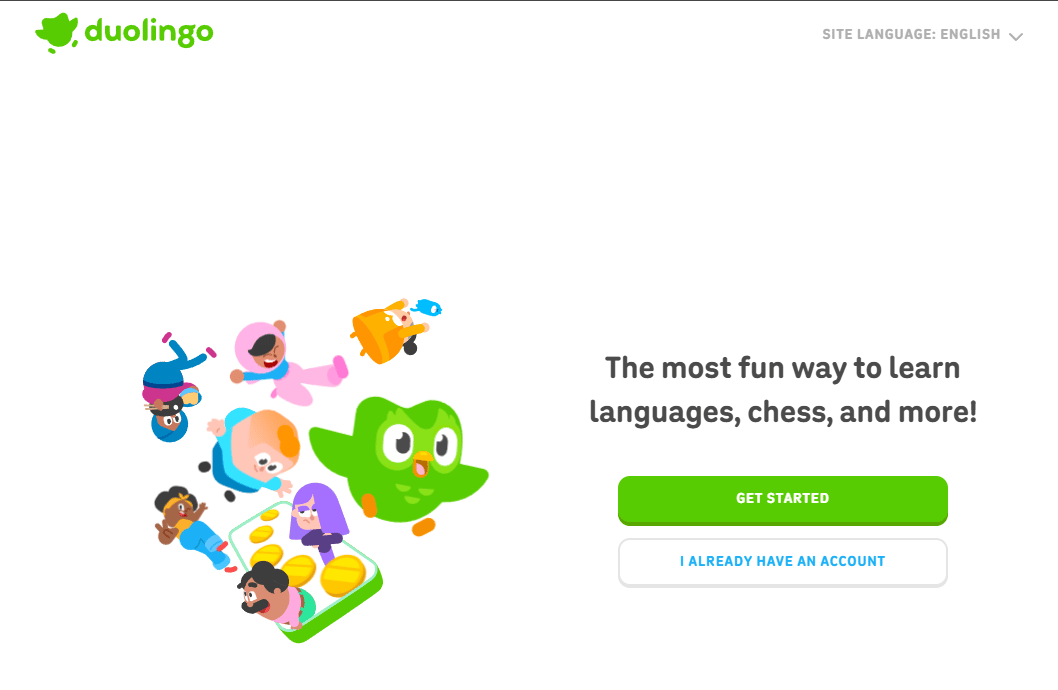
Duolingo is a free, gamified education platform offering language courses alongside math, music, and chess learning. Its language courses use short exercises covering speaking, writing, reading, and listening, organized into a skill tree with XP, streaks, and leaderboards to drive daily returns. Adaptive learning technology adjusts difficulty based on performance.
Best for: Founders and professionals who need a consistent 5 to 15 minute practice routine before committing to a more structured plan.
Key features
- Bite-sized lessons covering speaking, writing, reading, and listening
- Gamification with XP, streaks, and leaderboards
- Adaptive learning technology for personalized practice
- AI-powered Video Call and Roleplay features in Duolingo Max
- Broad language selection
Why choose Duolingo: It excels at habit formation and works as an accessible daily practice layer, especially for beginners. Serious learners who want grammar depth or substantial speaking feedback will benefit from pairing it with a second tool.
Duolingo pricing: The free tier gives full access to courses. Super Duolingo adds an ad-free experience, unlimited hearts, and expanded streak features; Duolingo Max adds AI conversation and roleplay. Subscription prices for Super and Max were not displayed on the pricing page during verification; check duolingo.com/super for current rates.
G2 rating: 4.5/5
2. Babbel
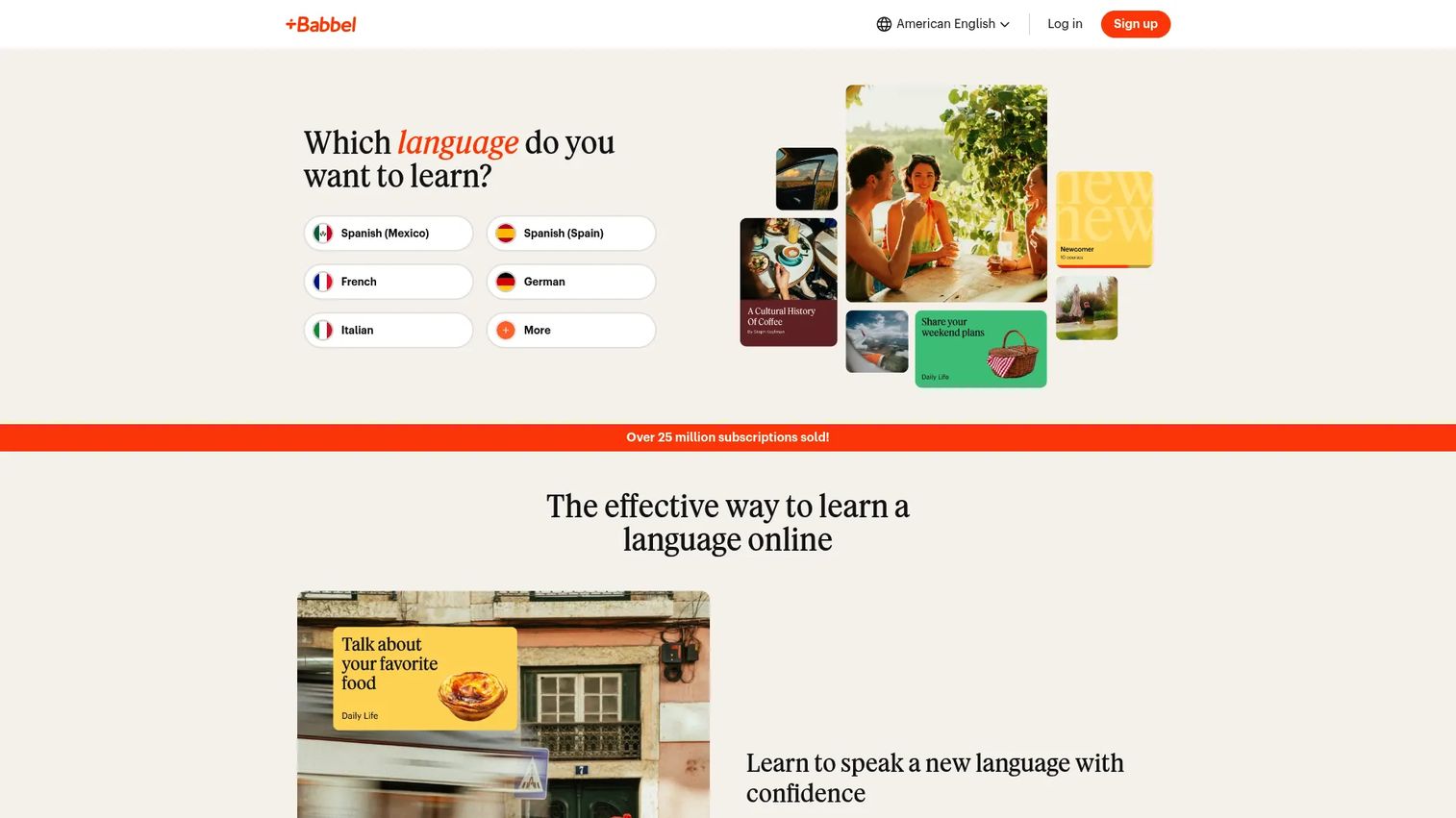
Babbel is a language-learning platform offering expert-designed courses built around real-life dialogues, spaced-repetition vocabulary review, and AI-powered conversation practice. Lessons are organized by practical topic rather than abstract grammar categories, which makes progression feel purposeful rather than arbitrary. Speech recognition is built into exercises, so pronunciation gets checked during regular practice.
Best for: Learners who want structured, adult-oriented lessons tied to practical situations without designing their own study plan.
Key features
- Topic-based lesson paths focused on practical conversation
- Grammar explanations integrated into lessons
- Speech recognition for pronunciation practice
- Spaced-repetition vocabulary review
- AI-powered Babbel Speak conversation practice
Why choose Babbel: It suits people who want to follow a clear curriculum rather than self-assemble one. Subscription value is proportional to consistency, so test the format for at least two weeks before committing to an annual plan.
Babbel pricing: Annual plans start at $8.95/month (billed as one annual payment). A lifetime option is available at $299.99. Group plans for up to six learners start at $30.95/month or $185.70/year. The first lesson of every course is free.
G2 rating: 4.3/5
3. Pimsleur
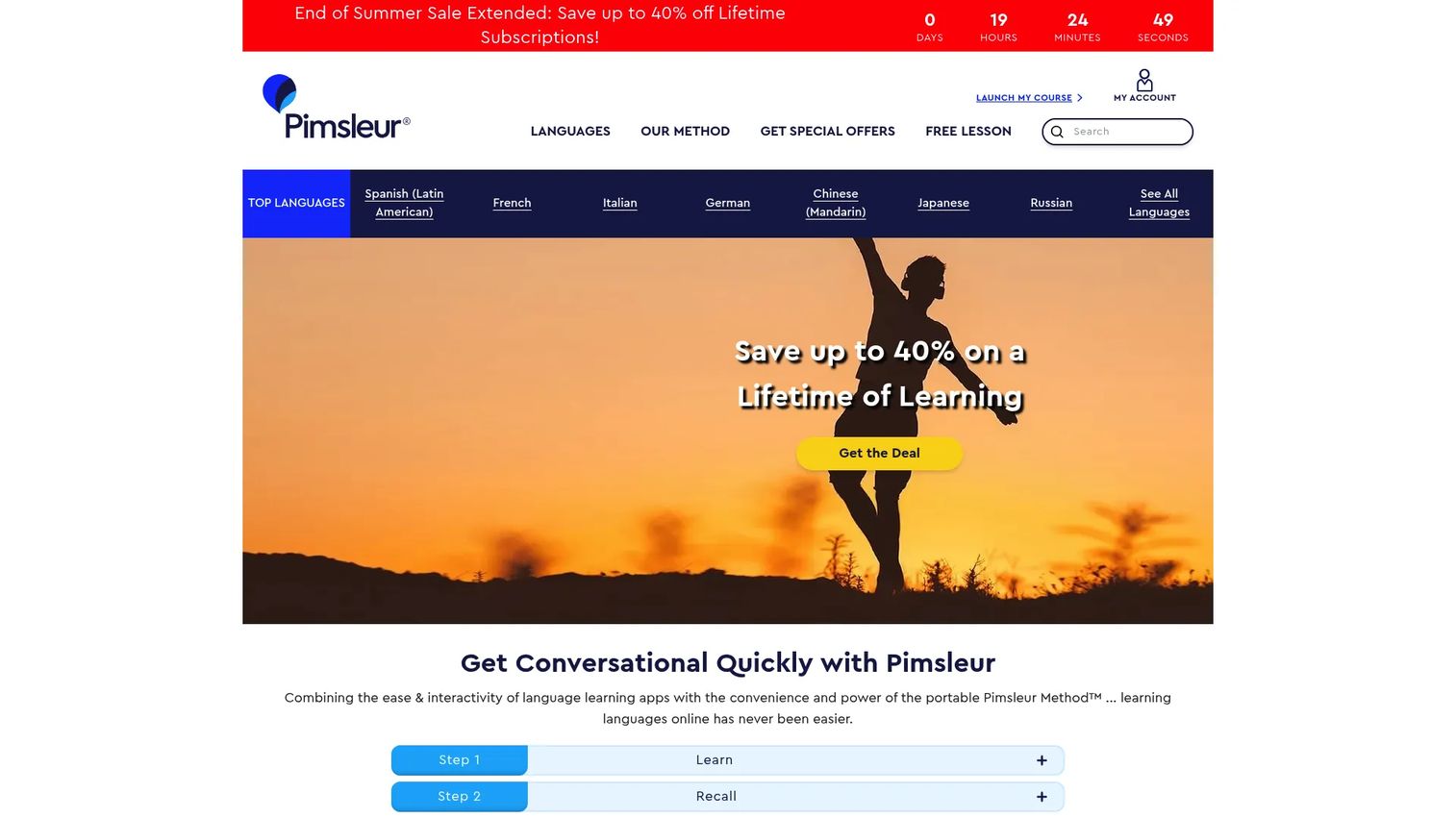
Pimsleur is a language-learning platform built entirely around the Pimsleur Method: 30-minute audio lessons that use prompted recall, spaced repetition, and pronunciation practice to develop conversational ability. Lessons work without looking at a screen, which makes them practical during commutes, travel, and driving. Apple CarPlay and Android Auto support extends that portability further.
Best for: Professionals preparing for travel, relocation, or regular customer conversations who need functional spoken confidence without long screen sessions.
Key features
- 30-minute conversational audio lessons
- Prompted recall and spaced-repetition structure
- Voice Coach real-time pronunciation feedback
- Offline lesson access
- Apple CarPlay and Android Auto support
Why choose Pimsleur: Audio-led practice is the right format when the immediate goal is speaking and listening. Learners who also want reading practice, writing exercises, or detailed grammar breakdowns will find Pimsleur narrow in scope and should plan for a complementary resource.
Pimsleur pricing: A lifetime purchase option starts at $150 for a single language. Subscription tiers (All Access covering 51 languages, Premium for one language, and Audio-Only) are available; exact subscription rates were not displayed on the pricing page during verification. A 7-day free trial is offered. Check pimsleur.com/pricing for current rates.
G2 rating: 4.3/5
4. Busuu
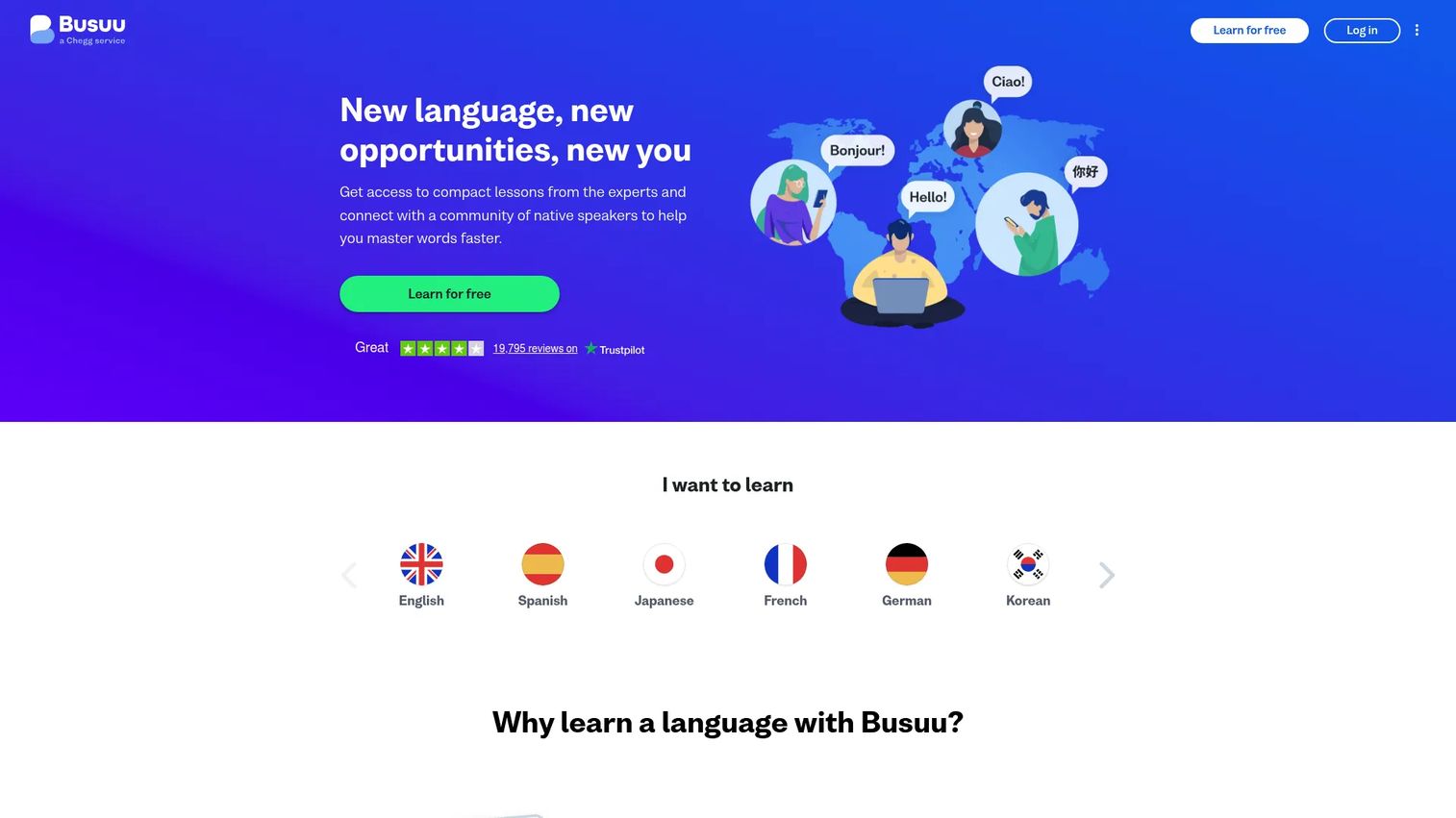
Busuu is a self-paced language-learning platform offering structured courses across 14 languages, AI-powered conversation practice, community feedback from fluent speakers, and guided study plans with checkpoint quizzes. The study plan feature is the practical differentiator: It maps a learning path to a specific goal date, which gives learners the kind of external structure that keeps practice going past the first month.
Best for: Learners who work better with a visible milestone and a defined path, whether that is a travel date, a CEFR level target, or a professional milestone.
Key features
- Guided study plans mapped to goal dates
- AI Conversations and pronunciation practice
- Community feedback and corrections from fluent speakers
- Offline mode for study without a connection
- Certificates and checkpoint quizzes
Why choose Busuu: It suits people who want accountability built into the product rather than invented externally. The community correction feature adds a human feedback loop that purely AI-driven platforms do not replicate.
Busuu pricing: A free tier is available with limited lesson access. Premium and Premium Plus plans add full course access, study plans, and additional practice features. Prices for paid tiers were not displayed on the pricing page during verification; check busuu.com/en/premium-plans for current rates.
G2 rating: 4.1/5
5. Rosetta Stone
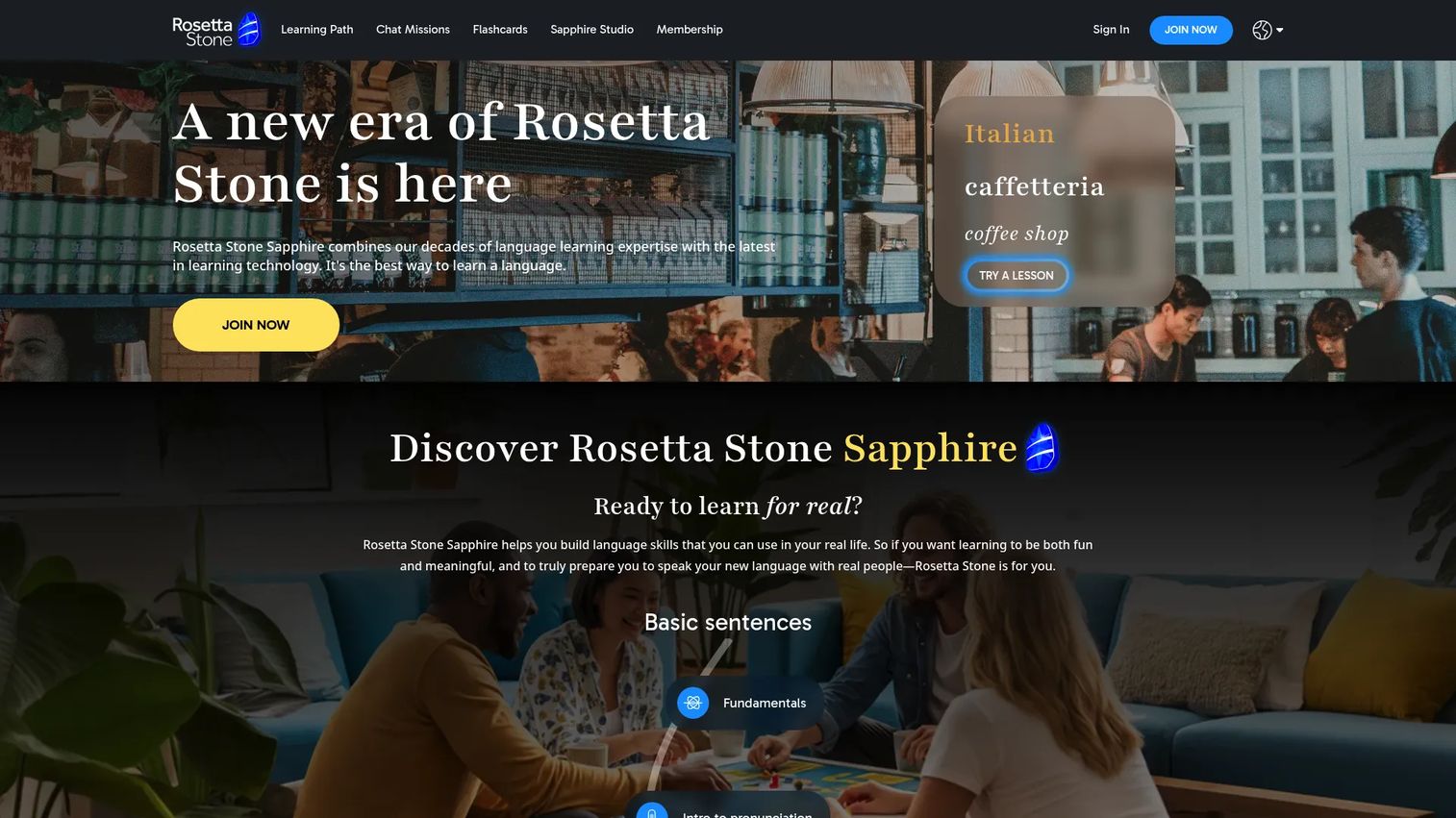
Rosetta Stone is a language-learning platform built around Dynamic Immersion: Lessons that teach meaning through images, listening, and repetition rather than direct translation or grammar-first explanation. TruAccent provides pronunciation feedback by comparing your speech to native speakers. The platform covers 25 languages and includes Chat Missions for real-world conversation practice.
Best for: Beginners who prefer to learn through visual association and repeated exposure rather than explicit grammar instruction.
Key features
- Dynamic Immersion lessons teaching through images and context
- TruAccent pronunciation feedback against native-speaker audio
- Chat Missions for conversation practice
- 500+ flashcard sets for vocabulary review
- Offline access across 25 languages
Why choose Rosetta Stone: The immersion method works well for learners who respond to pattern recognition over rule memorization. Learners who want direct grammar explanations early in the process will find the inferred-meaning approach frustrating.
Rosetta Stone pricing: Monthly plans are $19.99/month. Annual plans work out to $13.25/month, billed as $159 per year. Access covers all 25 languages. A 14-day money-back guarantee applies.
G2 rating: 4.2/5
6. LingQ
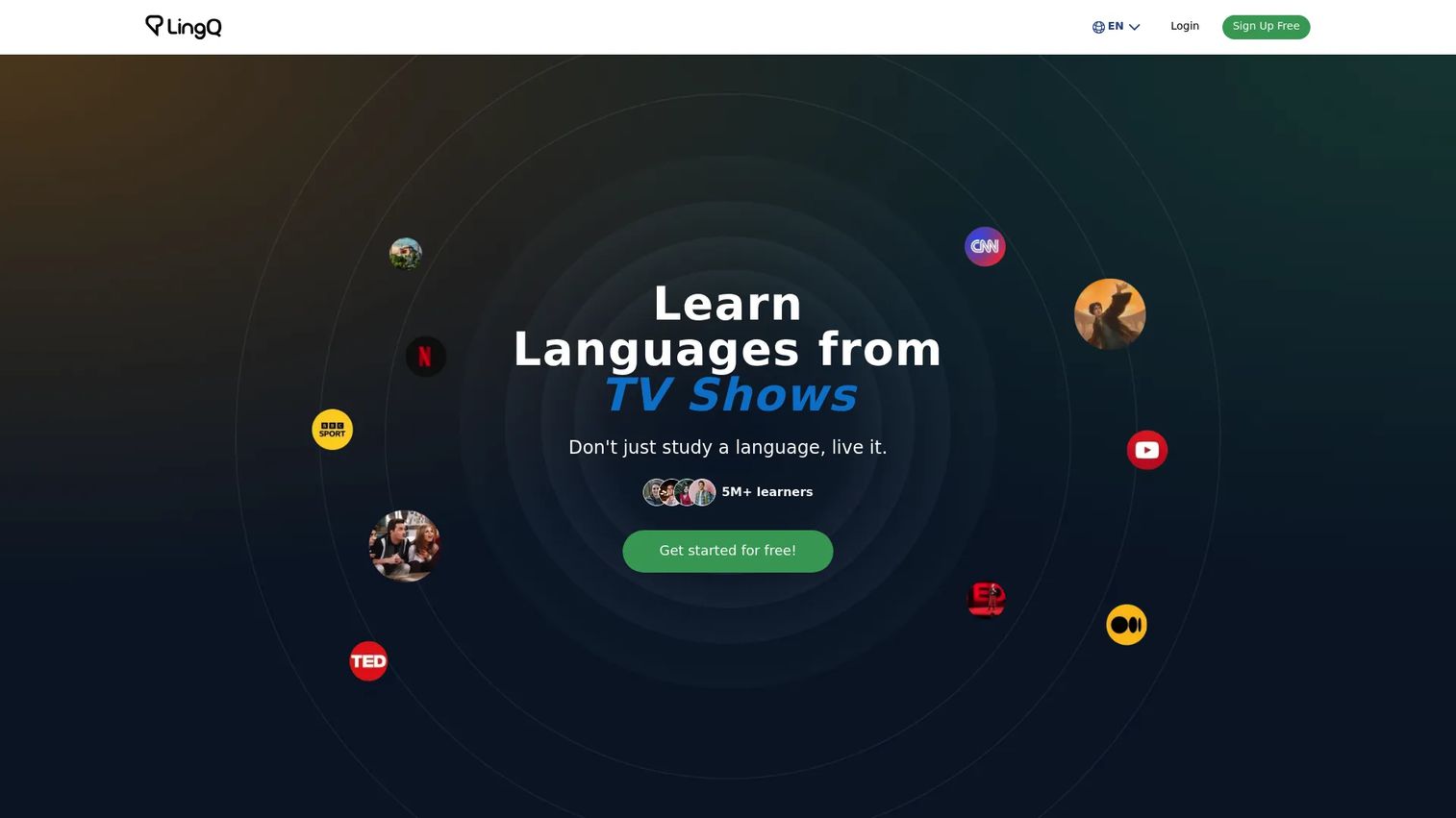
LingQ is a language-learning platform built around reading, listening to, and learning from real-world content. Learners import books, articles, podcasts, and videos or browse the existing content library; unknown words are saved in context, and spaced-repetition review handles vocabulary retention. AI tools generate transcripts, translations, and simplified lessons. A browser importer for Chrome, Safari, Firefox, and Edge makes it practical to turn any webpage into a lesson.
Best for: Intermediate learners who can already understand enough of a language to learn through content they would consume in their native language.
Key features
- Import books, podcasts, videos, news, and articles as lessons
- Save and review vocabulary in context with spaced repetition
- AI transcript generation, audio, and lesson creation
- Progress statistics and language challenges
- Browser content importer for major browsers
Why choose LingQ: This tool earns its place after a learner has a basic foundation. It turns existing reading and listening habits into language practice, which makes consistency much easier to sustain. Starting here without any prior foundation will be difficult.
LingQ pricing: A free tier allows up to 20 saved words, 5 imported lessons, and 1 audio playlist. Premium plans start at $14.99/month or $10/month billed annually ($119.99/year). Premium Plus, which adds AI transcription and advanced features, starts at $29.99/month or $22.50/month on an annual plan ($269.99/year).
7. Glossika
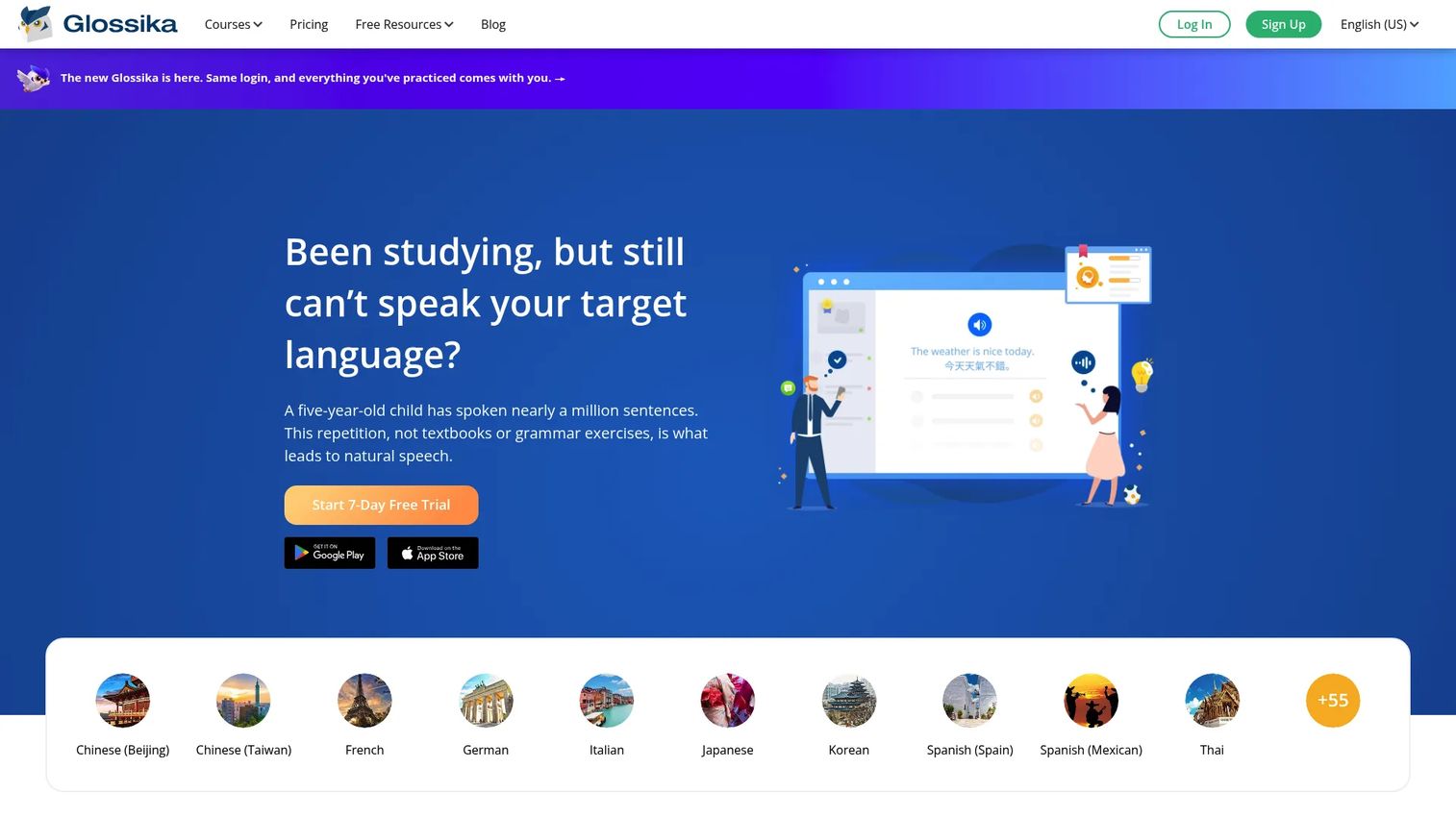
Glossika is a language-learning platform built around contextual full-sentence practice, repetition, and native-speaker audio. Rather than isolated vocabulary or grammar drills, Glossika trains learners through high-volume exposure to useful sentences in full-practice and listening-only modes, supported by spaced-repetition review and pronunciation recording.
Best for: Learners who already know basic grammar and want more listening volume, speaking repetition, and sentence-level automaticity.
Key features
- Full-sentence practice with native-speaker audio
- Full-practice and listening-only modes
- Spaced-repetition review scheduling
- Pronunciation recording and feedback
- Personalized learning plans by level
Why choose Glossika: Think of it as a practice engine rather than a curriculum. It works well alongside a structured grammar course or content-immersion platform, adding the repetition volume that most programs underprovide.
Glossika pricing: Subscription pricing was not displayed on the pricing page during verification. Contact Glossika directly at ai.glossika.com/pricing for current rates.
8. Rocket Languages
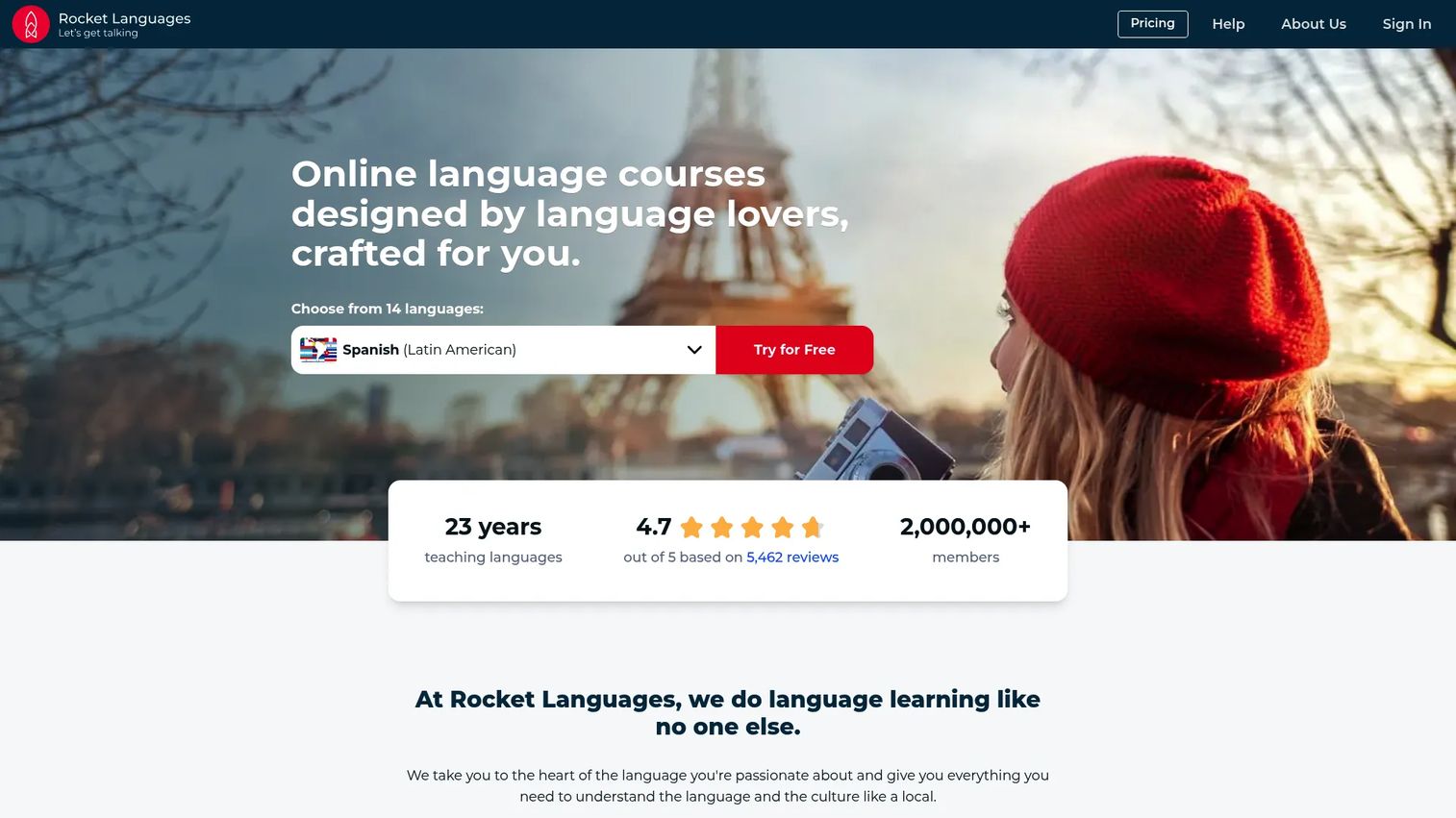
Rocket Languages offers structured language courses built around audio lessons, grammar explanations, cultural notes, and voice-recognition practice. The key structural difference from subscription apps is the one-time purchase model: You pay once and own the course, including future updates. Downloadable audio makes offline study straightforward for travel.
Best for: Self-directed learners who want a complete course with detailed explanations and prefer paying once over ongoing subscription commitments.
Key features
- Audio-based core lessons with grammar explanations
- Voice-recognition pronunciation practice
- Downloadable audio for offline study
- Culture-focused supplementary lessons
- Lifetime access with updates
Why choose Rocket Languages: It fits learners who want to understand why a sentence works, not just memorize it. The course format feels heavier than short-form apps, which is a feature for learners who want depth and a drawback for those who prefer lightweight daily sessions.
Rocket Languages pricing: Rocket English is publicly priced at $99.95 for lifetime access. A free trial is available. Pricing for other languages follows a similar one-time structure; check rocketlanguages.com/pricing for specific language costs.
G2 rating: 4.0/5
9. Mondly
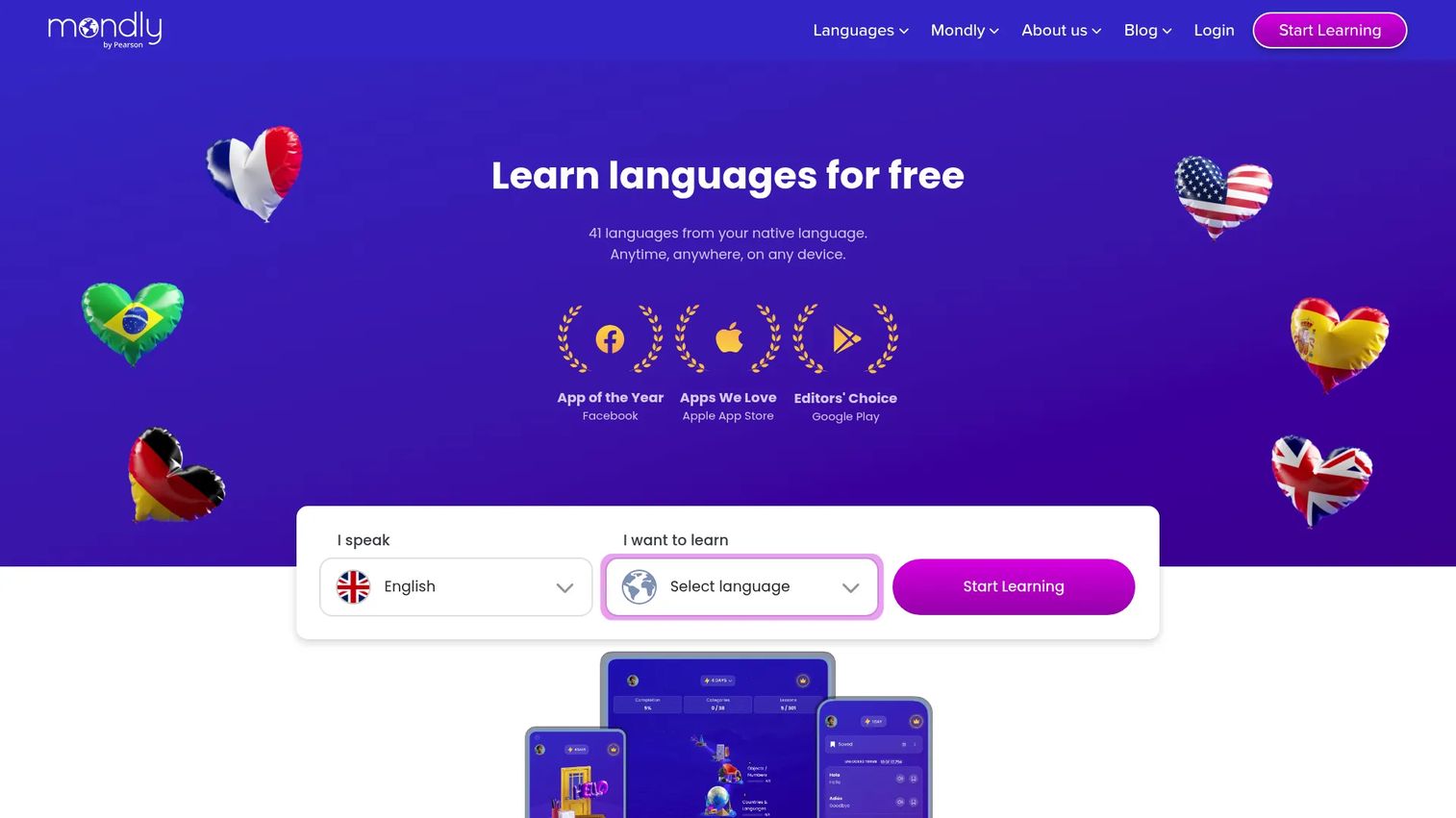
Mondly is a language-learning platform covering 41 languages through short, scenario-based daily lessons, AI conversation practice, pronunciation exercises, vocabulary review, and grammar guides. The breadth of language coverage is one of the largest in this category. Weekly and monthly challenges add structure beyond the daily habit loop.
Best for: Beginners, travelers, and learners exploring a new language before committing to a deeper course or a more intensive program.
Key features
- Daily scenario-based lessons with conversation practice
- AI-powered speaking exercises and pronunciation feedback
- Grammar guides, conjugation tables, and vocabulary review
- Coverage across 41 languages
- Weekly and monthly challenges
Why choose Mondly: It works well as a first step: Low friction, broad language availability, and enough variety to sustain early interest. Learners who want deeper grammar instruction or more advanced content will outgrow it and should plan for a follow-on course.
Mondly pricing: A free tier is available with daily lessons. Premium pricing was not confirmed from the official pricing page during verification; check mondly.com/offer for current rates.
G2 rating: 4.8/5
10. Language Transfer
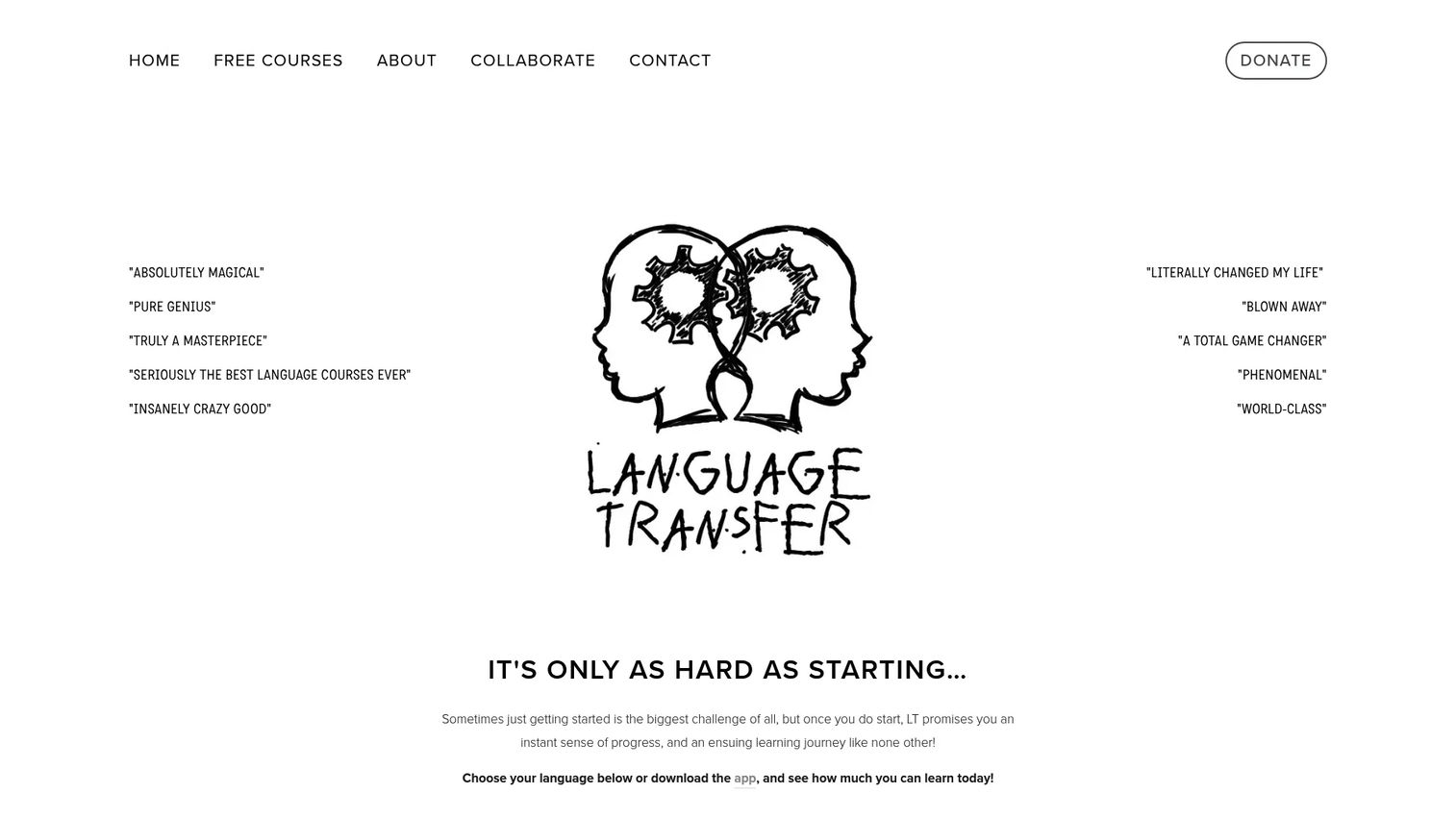
Language Transfer provides free, donation-supported audio language courses built around the Thinking Method: Guided sessions that teach learners to construct sentences from transferable patterns rather than memorize fixed phrases. Courses are available through the app, the website, SoundCloud, and YouTube, with no sign-up, no ads, and no sale of user data.
Best for: Budget-conscious learners who want to understand the logic of a language before adding vocabulary volume or conversation practice.
Key features
- Free audio courses available on multiple platforms
- Concept-based instruction teaching sentence-building patterns
- No ads, sign-ups, or personal data requirements
- Beginner-friendly pacing with clear explanations
- Downloadable for offline listening
Why choose Language Transfer: It provides an unusual amount of grammatical clarity for zero cost. The course alone does not replace extensive listening, reading, or live conversation practice, but it gives learners a mental model that makes those activities more productive. An optional donation supports the project.
Language Transfer pricing: All courses are free. Optional donations and separately sold merchandise support the project.
Considerations when choosing language learning software
Match the tool to a specific learning job
Do not subscribe to a platform because it covers everything. Identify the immediate outcome: Speaking confidence for an upcoming trip, grammar foundation before a more intensive course, or listening volume for an intermediate learner. The tool that matches that specific job will hold your attention longer than a comprehensive app you use at 20% of its capability.
Verify course depth for your target language
Spanish and French content is deep on almost every platform. The same programs may offer significantly fewer lessons, less speaking content, or older recordings for less commonly taught languages. Check the specific language before paying annually, especially for languages like Turkish, Swahili, or Cantonese.
Test the format before committing annually
A two-week trial reveals whether the lesson format works during a travel week or a week with six hours of back-to-back calls. Annual plans are good value only when the format sticks after the novelty wears off. Use free tiers or trial periods to run that test before the payment decision.
Separate motivation mechanics from learning outcomes
Streaks, points, and leaderboards can support return visits. They do not indicate whether the platform gives enough speaking feedback, grammar explanation, or listening input to produce real skill. Evaluate whether the lessons are making you more capable, not just more consistent at opening the app.
Budget for a second tool when one is not enough
A structured course builds a foundation. Once basic comprehension is in place, adding listening immersion (like LingQ) or sentence-pattern drilling (like Glossika) often accelerates progress more than spending the same time on a beginner course you have already largely absorbed. Plan for this possibility rather than searching for a single tool that does everything.
Conclusion
Each tool in this list solves a different problem:
- Duolingo for daily practice momentum with a free starting point
- Babbel for structured adult lessons tied to practical situations
- Pimsleur for listening and speaking confidence built through audio
- Busuu for visible study plans, milestone tracking, and community feedback
- Rosetta Stone for immersion-led beginner study without grammar-first instruction
- LingQ for content-based learning once a basic foundation exists
- Glossika for sentence-pattern repetition and listening volume
- Rocket Languages for detailed self-study with a one-time purchase
- Mondly for broad language coverage and beginner first steps
- Language Transfer for free, grammar-first audio learning
The practical founder-level recommendation: Start with one core tool for 30 days, set a measurable weekly target, and add a second tool only when it fills a specific gap the first tool cannot cover. The most durable language study system is the one that survives your actual calendar.
Start your journey with Guideflow today!
FAQs
Beginners do well with tools that offer clear progression, short lessons, and enough repetition to build confidence before increasing difficulty. Duolingo and Mondly both work well for early habit formation. Rosetta Stone suits beginners who prefer learning through images and repetition rather than grammar rules. Busuu adds structured study plans that help beginners track progress toward a defined goal.
Software builds vocabulary, supports grammar patterns, develops listening comprehension, and trains pronunciation. Fluency requires sustained comprehension plus repeated active production with feedback, and no app fully substitutes for real conversation practice. Think of software as preparation for fluency rather than a path to it on its own.
Audio-first platforms like Pimsleur put speaking and listening at the center of every lesson, which makes them stronger for spoken output than vocabulary-focused apps. Busuu adds community corrections from fluent speakers. Glossika builds speaking automaticity through high-volume sentence repetition. All three work better when paired with real conversation practice as soon as basic comprehension allows.
Free tools can build early vocabulary, establish a habit, and give a genuine sense of a language's structure. Language Transfer delivers an entire grammar-first audio course at no cost. Duolingo's free tier covers full course access. Paid tiers typically add structured study plans, offline access, deeper review systems, or speaking feedback. Whether the free plan is enough depends on whether it supports consistent progress toward a specific goal.
Start with one platform to avoid switching between tools instead of actually studying. A second tool earns its place when it fills a clear gap: LingQ for listening and reading input, Glossika for speaking repetition, or Pimsleur for audio-first practice when screen time is limited. Adding a second tool before the first one is working tends to create the same fragmentation problem as switching apps every few weeks.
Lesson length matters most. Look for platforms where a single session takes 10 to 30 minutes, works offline, and continues across devices without losing progress. Pimsleur's audio format is the most travel-compatible. Babbel and Busuu both offer structured plans that tell you exactly what to study next, which removes the daily decision cost. Avoid platforms whose main engagement mechanism is a streak that breaks every time your schedule does.
Travel preparation centers on listening comprehension, pronunciation, and situational vocabulary rather than grammar depth or reading ability. Pimsleur is purpose-built for this use case: The lessons simulate spoken conversation and train recall under pressure. Mondly covers situational scenarios across 41 languages. Both can be prepared in the weeks before a trip without requiring a long-term curriculum commitment.
Annual pricing varies by platform and what the plan includes. Babbel's annual subscription works out to $8.95/month. LingQ Premium runs $10/month on an annual plan. Rosetta Stone is $13.25/month billed annually. Rocket Languages charges a one-time $99.95 for lifetime access to a single language. Several platforms offer free tiers, and Language Transfer is entirely free. The annual price only makes sense after testing the format for at least two to four weeks on the free or trial tier.