You pulled three reports last week. Each one told a different story about the same customer.
That is not an attribution problem. It is an identity problem. One person shows up as a cookie on your site, an email in your CRM, a device ID in your app, and an anonymous session that never tied back to anything. Your reporting treats them as four people. Your personalization treats them as strangers. Your paid channels optimize toward ghosts.
Identity resolution software exists to fix exactly this. It stitches fragmented identifiers into a single, persistent profile so your attribution, segmentation, and audience activation stop fighting each other. The pressure is rising too. Between 137 and 144 countries now enforce data-protection laws, according to Business Research Insights (2026), which tightens how you collect consented first-party data and raises the bar on identity work. The same research projects the identity resolution software market to grow from USD 1.99 billion in 2025 to USD 5.24 billion by 2034.
The hard part in 2026 is not whether to resolve identity. It is who controls the identity graph. Black-box vendors hold the matching logic. Warehouse-native platforms keep it in your own data infrastructure. That single decision shapes your privacy posture, your integration flexibility, and what you can actually activate.
If you are also evaluating where resolved profiles live and route, our guide to the best customer data platform options pairs well with this one. For teams stitching identity to onboard new users, the best onboarding flow software roundup covers the activation layer.
What's inside
This guide is for marketing, RevOps, and customer data teams trying to unify fragmented records across devices, channels, and systems. We selected each identity resolution platform on five criteria that actually separate them: identity graph control, matching approach (deterministic, probabilistic, or hybrid), privacy and compliance posture, integration and activation reach, and fit with modern martech or CDP stacks.
The list deliberately spans two camps. Warehouse-native tools that keep the graph in your own infrastructure, and vendor-managed platforms that bring scale and reference data you cannot build yourself. Most teams are choosing between those two models right now, so we frame every entry through that lens instead of a generic feature checklist.
TL;DR
- Best for warehouse-native teams: Hightouch Adaptive Identity Resolution keeps the identity graph in your own warehouse with full control over matching and survivorship rules.
- Best for first-party data activation: CustomerLabs 1PD Ops gives marketers no-code collection, stitching, and activation in one layer.
- Best for enterprise cross-channel scale: LiveRamp Identity Resolution offers a broad graph and ecosystem reach for privacy-conscious addressability.
- Best for large-brand precision: Acxiom Real Identity resolves identity in a protected cloud environment with zero PII movement.
- Best for offline plus online unification: Experian Identity Resolution Solutions link offline records with digital identifiers for a fuller consumer view.
- Best for real-time orchestration: Tealium AudienceStream stitches visitor data and activates audiences in real time.
What is identity resolution software?
Identity resolution software is a platform that links fragmented identifiers (emails, cookies, device IDs, CRM records, and anonymous sessions) into a single persistent profile for each person or household. That unified record is what powers reliable attribution, personalization, and audience activation.
Under the hood, it builds an identity graph: a structured map of every identifier that belongs to the same individual, connected by persistent IDs that survive across sessions and devices. When a new signal arrives, the system stitches it to the right profile or creates a new one. The quality of that stitching depends on the matching approach.
There are three:
- Deterministic matching links records when identifiers match exactly, like a shared email or login. High confidence, narrower reach.
- Probabilistic matching infers a likely match from signals like IP, device, and behavior. Wider reach, lower certainty per match.
- Hybrid matching combines both, using deterministic links as the spine and probabilistic signals to extend coverage.
First-party data is the preferred foundation in 2026. It is consented, it is yours, and it holds up under tightening privacy law in a way third-party cookies no longer do. The strongest identity resolution tools treat first-party data as the spine and use enrichment only where it adds value.
Core features to expect from any serious identity resolution platform:
- Identity graph construction with persistent IDs
- Deterministic, probabilistic, or hybrid matching controls
- Data onboarding from CRM, web, app, and offline sources
- Survivorship and golden-record logic to pick the best attribute values
- Consent and governance controls for privacy and compliance
- Integration and activation into marketing, analytics, and ad destinations
When to use identity resolution software
Unify customer records across disconnected systems
When the same person exists as separate records in your CRM, web analytics, mobile app, and offline point-of-sale, you cannot personalize or measure cleanly. Identity resolution merges those records into one profile through deterministic and probabilistic matching. This is the core job: turn four fragmented rows into one customer.
Improve personalization and audience activation
Unified identity is the prerequisite for real segmentation. Once a profile is complete, you can target by full lifecycle behavior instead of partial signals. That sharpens lifecycle campaigns, suppression lists, and lookalike seeds, and it makes audience activation across channels far more accurate. If onboarding is part of that lifecycle, the right onboarding flow depends on knowing who the user actually is.
Fix attribution and reporting gaps
Broken identity is why your reports disagree. When one person is counted as several, every conversion path is distorted. Identity resolution gives measurement a stable backbone of persistent IDs, so multi-touch attribution and channel reporting reflect real people, not duplicated sessions. Pairing clean identity with strong data visualization tools is how teams turn resolved profiles into reporting leadership trusts.
Comparison table
This table helps you compare the tools on the dimensions that matter most in 2026: control over the identity graph, privacy posture, and activation reach. Pricing and ratings reflect publicly available data at the time of writing; several enterprise vendors quote custom pricing only.
| # | Product | Intent | Key differentiation | Pricing | G2 rating |
|---|---|---|---|---|---|
| 1 | CustomerLabs 1PD Ops | First-party data activation | No-code collection, stitching, and activation for marketers | From $129/mo | 4.8/5 |
| 2 | Hightouch Adaptive Identity Resolution | Warehouse-native control | Identity graph in your own warehouse with survivorship rules | Business tier (custom) | 4.6/5 |
| 3 | LiveRamp Identity Resolution | Enterprise addressability | Broad identity graph and cross-channel ecosystem reach | Consumption-based (custom) | 4.2/5 |
| 4 | Acxiom Real Identity | Large-brand precision | Cloud-native resolution with zero PII movement | Custom | Not published |
| 5 | Experian Identity Resolution Solutions | Offline plus online unification | Links offline records with digital identifiers | Custom | 4.4/5 |
| 6 | Tealium AudienceStream | Real-time orchestration | Visitor stitching and real-time audience activation | Custom | 4.3/5 |
| 7 | mParticle IDSync | CDP-native identity | Identity resolution framework inside a CDP | Custom | 4.4/5 |
1. CustomerLabs 1PD Ops
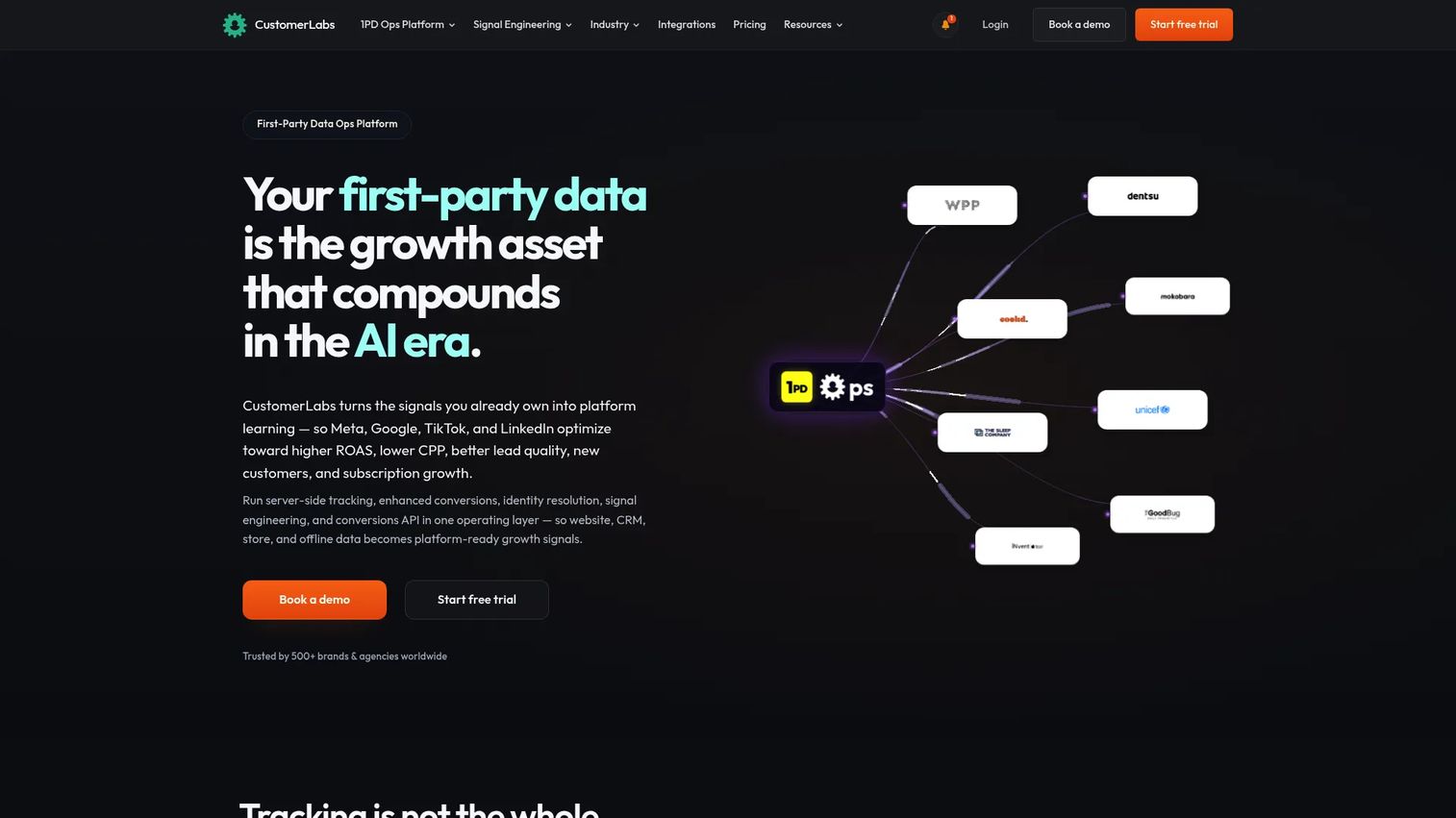
CustomerLabs 1PD Ops is a first-party data ops platform built for marketers who want identity resolution tied directly to activation, not buried in a data engineering backlog. It collects events with no-code tracking, unifies them into 360-degree customer profiles, and pushes resolved audiences out to ad and marketing destinations. The angle here is practical: stitch the identity, then act on it in the same workflow.
For a growth marketer, that matters because it removes the engineering dependency that usually stalls identity projects. You capture the signals you already own, resolve them into profiles, and activate without filing a ticket.
Best for: Marketing teams that need no-code first-party data collection, unification, and activation in one place.
Key strengths
- No-code event tracking: The Action Recorder captures behavioral events without developer work, so marketers own the data layer.
- Identity resolution and 360-degree profiles: Stitches known and anonymous signals into unified customer profiles ready for targeting.
- Audience activation to destinations: Pushes resolved segments straight to Meta, Google, and other marketing channels.
Why choose CustomerLabs: If your identity problem is really an activation problem, this fits. It is aimed at lean teams that need clean first-party data feeding paid and lifecycle channels without standing up a full warehouse stack. The marketer-friendly layer is the whole point.
CustomerLabs pricing: Public pricing shows a Growth plan at $129 per month, billed monthly, including 500k events, 5 sources, 5 destinations, and 5 segments. Add-ons are listed separately, and agency tiers exist without published prices. A 14-day trial is available with no credit card required. The platform holds a 4.8/5 rating on G2.
2. Hightouch Adaptive Identity Resolution
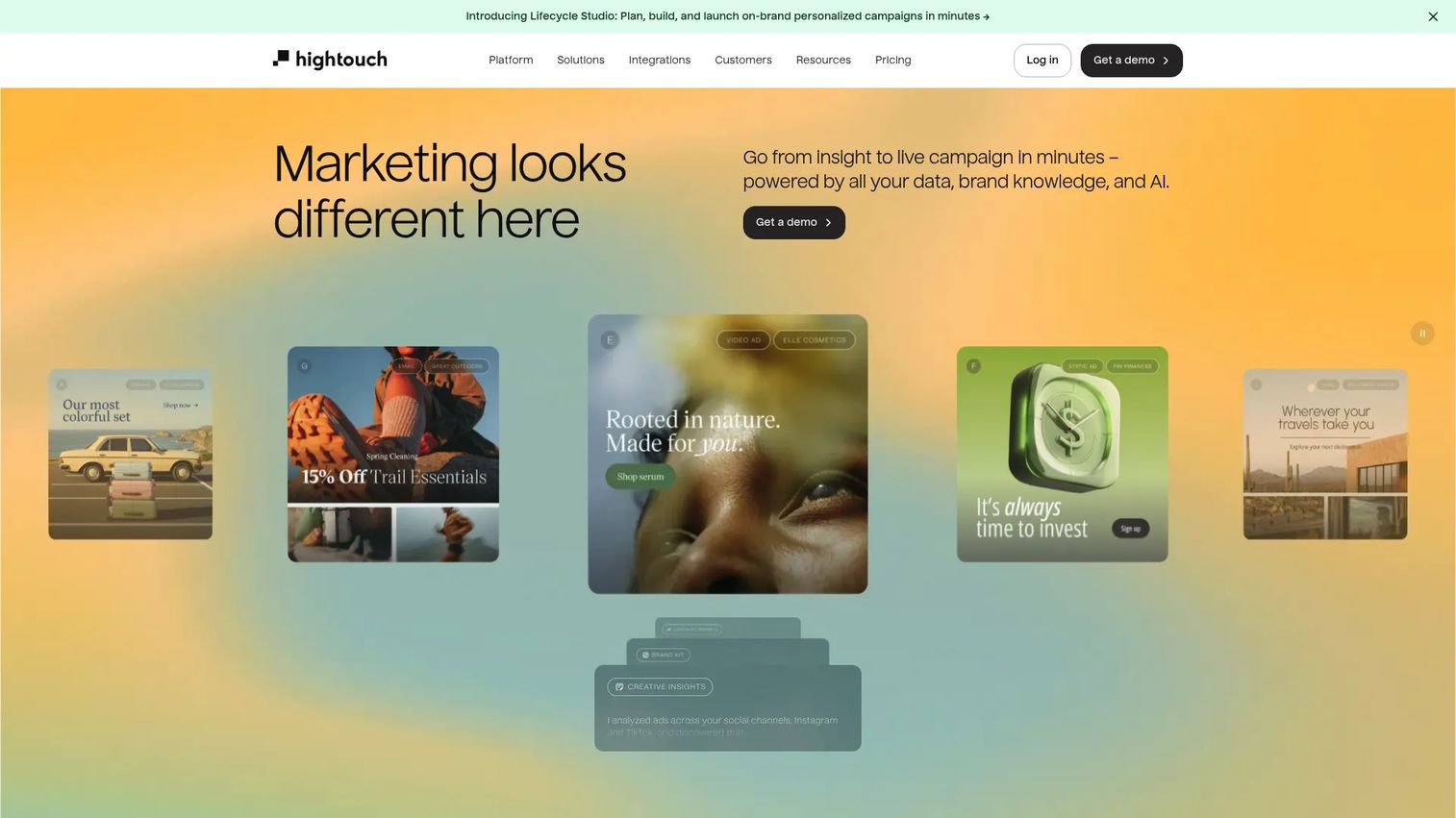
Hightouch Adaptive Identity Resolution takes the warehouse-native approach: the identity graph lives in your own data warehouse, and you control the matching logic end to end. For data teams, this is the structural decision that everything else depends on. You are not handing your identity logic to a black box. You can see it, audit it, and change it.
That control shows up in the details. Hightouch lets you combine deterministic matching and probabilistic matching, then define survivorship rules that decide which attribute values win when records conflict. The output is a golden record you actually understand, built on top of data you already govern.
Best for: Teams that need warehouse-native customer and profile unification across marketing, analytics, and activation tools.
Key strengths
- Deterministic and probabilistic matching: Combine exact-match confidence with broader probabilistic reach in one configurable graph.
- Golden records with survivorship rules: Define which sources and values win, so the unified profile reflects your business logic.
- Warehouse-native identity graph: Keep the graph in your own warehouse for full visibility, governance, and control.
Why choose Hightouch: Choose it when data ownership is non-negotiable and your team can work in the warehouse. The tradeoff against black-box vendors is favorable here: you give up some prebuilt reference data and gain complete transparency over how identity is resolved. Hightouch is named a Leader in the Gartner Magic Quadrant for Customer Data Platforms.
Hightouch pricing: Hightouch uses usage-based, composable plans, but identity resolution is available on Business tier plans, and the pricing page does not publish a specific public price for it. Buyers contact sales for a Business tier quote. Hightouch holds a 4.6/5 rating on G2.
3. LiveRamp Identity Resolution
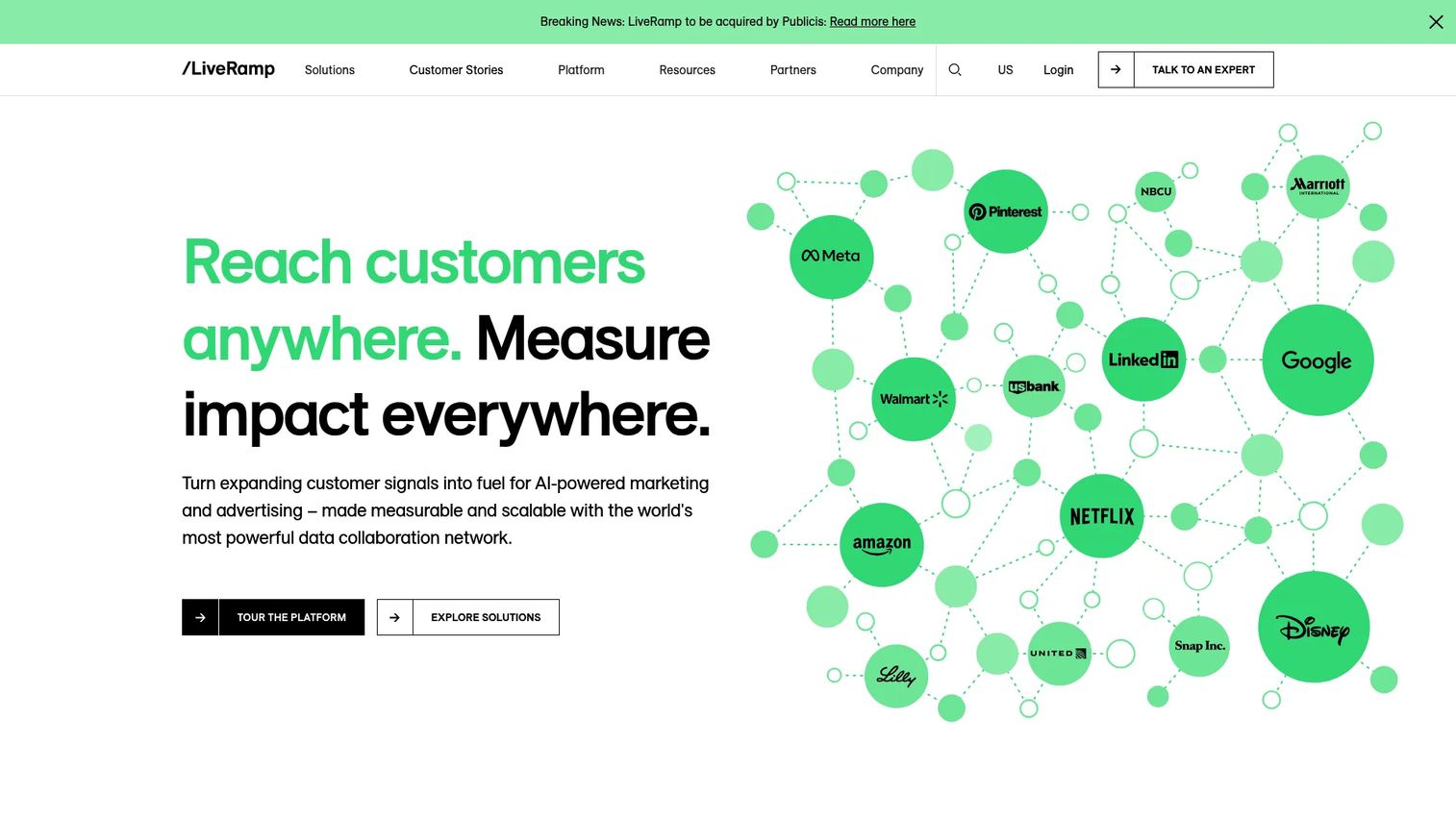
LiveRamp Identity Resolution resolves and translates customer identifiers across digital and offline data sources, anchored by one of the broadest identity graphs in the ecosystem. For enterprise teams, the draw is reach: LiveRamp connects your identity to a wide network of platforms and partners, which is what makes privacy-conscious cross-channel activation work at scale.
It handles both known identity resolution (PII to AbiliTec Links or Known IDs) and pseudonymous resolution (known and pseudonymous identifiers to RampID). That dual model lets enterprise marketers translate identity across platforms and deconflict it without exposing raw PII everywhere.
Best for: Enterprise teams needing privacy-conscious identity resolution and cross-platform addressability.
Key strengths
- Known identity resolution: Resolves PII to AbiliTec Links or Known IDs for stable, deterministic linkage.
- RampID resolution: Translates known and pseudonymous identifiers to a single pseudonymous RampID for privacy-safe activation.
- Identity translation across platforms: Deconflicts and translates identity across destinations, supporting broad addressability.
Why choose LiveRamp: It fits enterprise marketing and data teams that need scale and ecosystem reach more than warehouse-level control. The reference graph and partner network are the differentiators you cannot replicate internally.
LiveRamp pricing: LiveRamp states pricing is consumption-based, determined by the volume of data used and the actions performed with it. No public numeric price is shown; the company directs buyers to contact its team for a custom quote. LiveRamp holds a 4.2/5 rating on G2.
4. Acxiom Real Identity
Acxiom Real Identity delivers cloud-native identity resolution as part of Acxiom's broader customer data and activation capabilities. It is built for large brands and agencies that need precise, high-scale matching inside a protected cloud environment, where identity resolution feeds wider data quality and activation workflows rather than standing alone.
The defining feature is its zero-PII-movement model. Matching happens at high scale without shuttling raw personal data around, which is exactly the governance posture enterprise legal and security teams want to see in 2026.
Best for: Large brands and agencies needing identity resolution in a protected cloud environment.
Key strengths
- Cloud-native identity resolution: Resolves identity at high scale inside a modern cloud architecture.
- Zero PII movement: Matches records without moving raw personal data, supporting privacy and compliance requirements.
- High-scale precise matching: Built for the volume and accuracy demands of large enterprise datasets.
Why choose Acxiom: It fits enterprises that treat identity as one part of a larger data and activation program and that prioritize governed, high-volume matching. The protected cloud environment and zero-PII-movement design are what set it apart for risk-conscious buyers.
Acxiom pricing: Acxiom does not publish public pricing for Real Identity; engagements are quoted through its sales team and typically scoped to enterprise data programs. No product-specific G2 rating was confirmed for this solution, so evaluate it through a direct conversation and reference checks rather than a public score.
5. Experian Identity Resolution Solutions
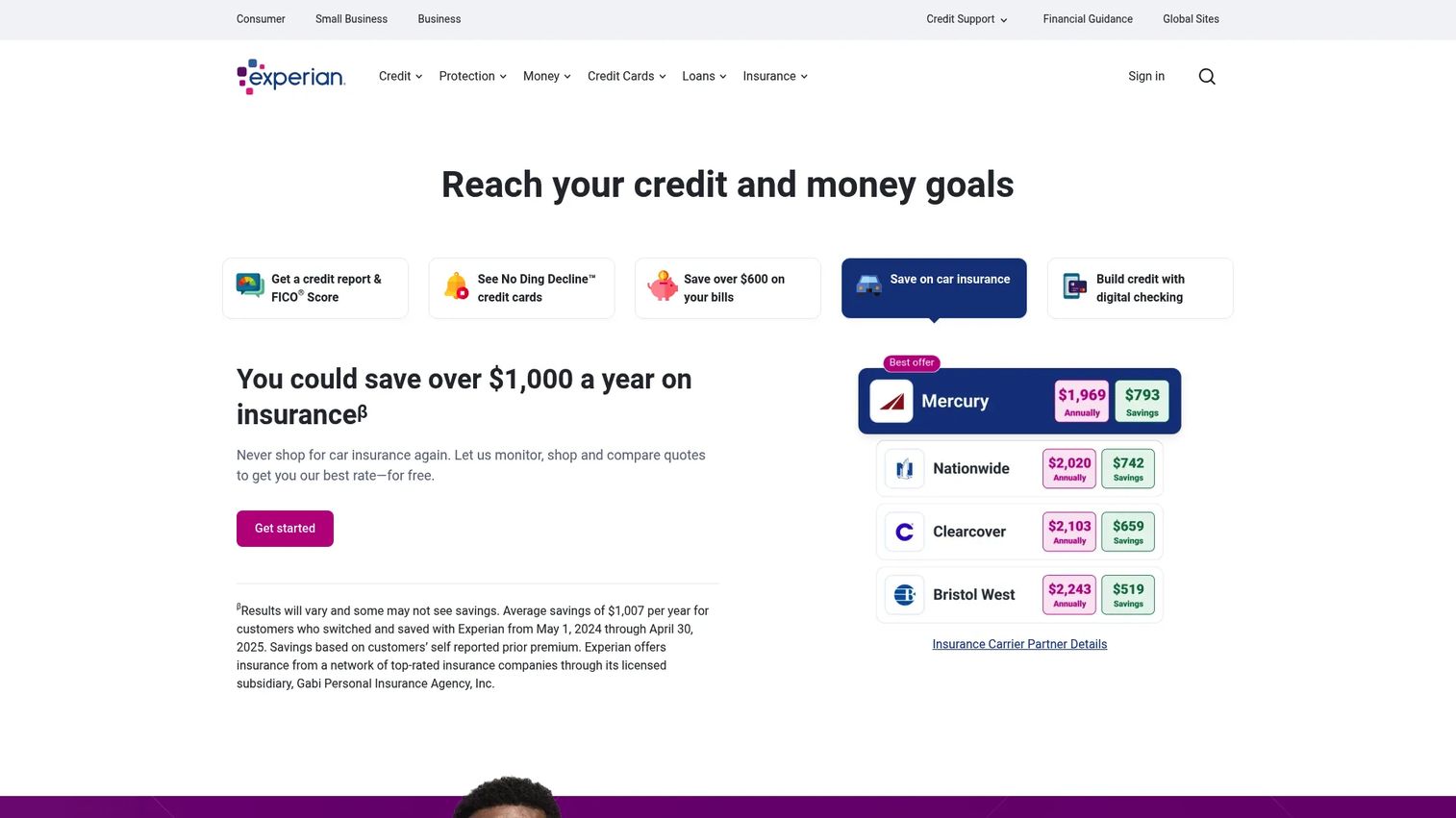
Experian Identity Resolution Solutions unify offline and online identifiers to build a more complete view of consumers, backed by Experian's deep data and matching foundation. For enterprise marketers, the value is the bridge between the offline world (mail, in-store, account records) and digital identity, which most warehouse-native tools cannot reach on their own.
It cleanses, standardizes, and links offline customer records, then supports identity graphs that resolve across both digital and offline sources. That combination is what makes it useful for identity enrichment and building a single customer view at enterprise scale.
Best for: Enterprises needing privacy-first identity resolution for marketing, measurement, and customer data unification.
Key strengths
- Offline plus online unification: Merges offline and digital identifiers into consumer profiles for a fuller view.
- Identity graph support: Resolves identity across digital and offline sources within a managed graph.
- Record cleansing and standardization: Cleanses, standardizes, and links offline records to improve data quality.
Why choose Experian: It fits enterprises that need strong offline data and matching depth alongside digital resolution. The data foundation and standardization rigor are the differentiators, especially for measurement and customer-view building.
Experian pricing: Experian does not display a public price for its identity resolution solutions; the pages use contact-us CTAs, and engagements are scoped through sales. Expect enterprise procurement, security review, and governance discussions as part of the process. Experian holds a 4.4/5 rating at the seller level on G2.
6. Tealium AudienceStream
Tealium AudienceStream is a real-time customer data platform that connects identity resolution to audience and event data orchestration. Its strength is speed: it stitches visitor data as events happen and builds unified profiles you can act on in real time, which fits teams that need activation across channels without batch delays.
Beyond stitching, it handles real-time audience segmentation, profile enrichment, and a wide set of connector integrations. That makes it a fit for marketers who want identity, segmentation, and activation working together as one live system rather than separate steps.
Best for: Enterprises needing unified customer profiles and real-time audience activation.
Key strengths
- Identity resolution and visitor stitching: Links visitor signals into unified profiles as events occur.
- Real-time segmentation and orchestration: Builds and updates audiences live for immediate activation.
- Profile enrichment and connectors: Enriches profiles and activates across a broad set of integrations.
Why choose Tealium: It fits teams that value real-time data use and want identity resolution embedded in a broader CDP and orchestration layer. The real-time profile unification is the differentiator for time-sensitive lifecycle and personalization work.
Tealium pricing: Tealium does not publicly list pricing for AudienceStream; pricing is scoped through sales conversations and typically enterprise-oriented. Tealium holds a 4.3/5 rating at the seller level on G2. If real-time activation is central to your stack, weigh it against a customer data platform shortlist before committing.
7. mParticle IDSync
mParticle IDSync is mParticle's identity resolution framework, built to manage and unify customer identities across apps and platforms inside a customer data platform context. It matters most for teams already on mParticle or evaluating CDP-adjacent infrastructure, where identity resolution and event collection are part of the same data foundation.
IDSync resolves identity across known and anonymous users, and it gives you identity scope and strategy controls to define exactly how identifiers map to profiles. Paired with mParticle's event collection, it turns raw cross-channel signals into stitched, persistent identities.
Best for: Teams that need real-time customer identity resolution and profile management across channels.
Key strengths
- Known and anonymous resolution: Resolves identity across both authenticated and anonymous users.
- Identity scope and strategy controls: Define how identifiers map to profiles with configurable identity logic.
- Client SDK and HTTP API support: Collect and resolve identity through flexible SDK and API options.
Why choose mParticle: It fits teams that want identity resolution and identifier stitching native to their CDP and event collection layer, rather than bolted on. The value compounds if mParticle is already your data backbone.
mParticle pricing: mParticle uses a value-based pricing model, and no public price is displayed; pricing is scoped through sales. IDSync capabilities are documented in mParticle's developer resources. mParticle holds a 4.4/5 rating on G2.
Considerations before you buy
Use this checklist to pressure-test any identity resolution platform against your stack and governance reality.
Identity graph control
Decide who owns the graph before anything else. Warehouse-native tools keep the identity graph in your infrastructure with full visibility into matching logic. Vendor-managed graphs bring scale and reference data you cannot build, but the logic lives with the vendor. This is the single most consequential choice, so make it deliberately.
Matching approach
Confirm whether the tool runs deterministic matching, probabilistic matching, or a hybrid, and whether you can tune it. Deterministic gives confidence; probabilistic gives reach. The best fit depends on how clean your first-party data is and how much certainty each use case demands.
Privacy and compliance
With data-protection laws now enforced in well over 100 countries, consent and governance are not optional. Check how the tool handles consent, data ownership, and PII movement. Models like zero PII movement and warehouse-native resolution reduce exposure by keeping personal data where you already govern it.
Integration and activation
A resolved profile is only useful if you can act on it. Verify the data onboarding sources (CRM, web, app, offline) and the activation destinations (ad platforms, marketing tools, analytics). Thin integration coverage quietly limits everything downstream.
Stack and scale fit
Match the tool to your team. Marketer-led teams often want a no-code first-party data layer. Data teams want warehouse-native control. Enterprises want reference graphs and offline reach. Buy for your operating model, not the loudest feature list.
Conclusion
The 2026 identity resolution decision comes down to control, privacy, integration, and activation, in that order of consequence. Start with data ownership, not vendor marketing.
For warehouse-native teams that want the identity graph in their own infrastructure, Hightouch Adaptive Identity Resolution is the clearest fit. Marketers who need first-party data collection and activation without engineering should look at CustomerLabs 1PD Ops. For enterprise graph scale and cross-channel addressability, LiveRamp, Acxiom, and Experian each bring reference data and offline reach you cannot build internally. And for real-time orchestration, Tealium AudienceStream and mParticle IDSync embed identity inside a broader CDP motion.
Pick the model that matches how your team actually operates. Then evaluate the stack around data ownership first. Everything else (matching, integrations, activation) is easier to fix later than the question of who holds your identity graph.
Start your journey with Guideflow today!
FAQs
Identity resolution software links fragmented identifiers (emails, cookies, device IDs, CRM records, and anonymous sessions) into a single persistent profile for each person or household. The business outcome is reliable attribution, sharper personalization, and more accurate audience activation, because every system finally sees one customer instead of several.
Identity resolution is the matching and stitching layer that decides which records belong to the same person. A customer data platform is the broader system that collects, stores, segments, and activates that profile data. They overlap heavily, and many CDPs include identity resolution, but the categories diverge: you can run identity resolution inside a warehouse without a full CDP, and not every CDP exposes deep control over matching logic. Our best customer data platform guide covers the wider category.
An identity graph is a structured map of every identifier that belongs to the same individual, connected by persistent IDs. When a new signal arrives (a fresh cookie, a login, a device), the graph stitches it to the right profile or creates a new node. The graph is what makes a unified, cross-device customer view possible.
Choose deterministic matching when you need high confidence and have reliable shared identifiers like emails or logins; it is precise but narrower in reach. Choose probabilistic matching when you need to extend coverage across anonymous or cross-device signals and can accept lower certainty per match. Most mature stacks use a hybrid: deterministic links as the spine, probabilistic signals to widen coverage.
It can be, but compliance depends on how you configure it, not the tool alone. With data-protection laws enforced in well over 100 countries, look for clear consent and governance controls, defined data ownership, and models that limit PII movement. Warehouse-native and zero-PII-movement approaches keep personal data where you already govern it, which simplifies privacy and compliance.
Most pull from first-party sources first: CRM records, website behavior, mobile app events, and offline or point-of-sale data. Enterprise vendors add third-party reference graphs and offline data to extend matching reach. The strongest setups treat first-party data as the foundation and use enrichment only where it genuinely improves coverage.
Warehouse-native identity resolution keeps the identity graph inside your own data warehouse instead of a vendor's black box. The benefit is control and visibility: you can audit the matching logic, define your own survivorship rules, and govern the data without moving it. For data teams, that transparency is often the deciding factor.
Run the same four checks for every vendor: control (who owns the identity graph and matching logic), compliance (consent, governance, and PII handling), activation (which destinations and integrations are supported), and completeness (how well it covers your CRM, web, app, and offline sources). Score them against your operating model first, then weigh price and reference data. The vendor that fits how your team actually works beats the one with the longest feature list.