Paid acquisition keeps getting more expensive. CPCs on branded terms have climbed, Meta CPMs have compressed margins, and leadership still wants to know why organic search hasn't become a dependable revenue channel. Choosing an ecommerce SEO agency is harder than it should be because every provider promises higher rankings, and few explain what that actually means for CAC, conversion rate or payback timeline.
Here's the problem underneath the problem: Organic search drove over 1 trillion web visits in 2025 (Semrush, 2026), and 65% of shoppers use search engines to research products before buying (Salsify, 2025). That traffic exists. The gap is converting it into attributable revenue, and most agency pitches stop at keyword rankings and traffic reports.
This guide cuts through the noise. Each agency is evaluated on ecommerce focus, SEO capability, platform fit and what type of team should actually shortlist them, so you can walk into three sales calls with the right questions instead of sitting through twelve.
What's inside
This guide compares 12 ecommerce SEO agencies for 2026, chosen for ecommerce specialization, demonstrated SEO capability, platform experience and relevance to growth marketers who need organic revenue, not just activity reports.
- Who fits: Each agency section names the ideal ecommerce team and growth stage
- What to look for: Core ecommerce SEO services explained so you can spot gaps in a pitch
- How to compare: Pricing signals, platform coverage and review presence for each agency
- What to ask: Practical questions to put to any agency before signing a retainer
TL;DR
- Best overall shortlist starting point: Brilliance, SmartSites and Digital Commerce Partners cover ecommerce SEO from different angles: Enterprise digital commerce, broad multi-channel execution and content-led organic growth
- Best for technical ecommerce SEO: SearchX, BlueTuskr or Devenup SEO
- Best for content-led growth: Digital Commerce Partners or Editorial Link (as a focused authority partner)
- Best for multi-channel teams: SmartSites, BlueHat Marketing or e intelligence
- Best for international or competitive categories: SeoProfy or Elit-Web
- Best buying rule: Match the agency to your actual bottleneck. Technical SEO, content, authority building and platform execution are different problems and different agencies solve them better
What is an ecommerce SEO agency?
An ecommerce SEO agency is a specialist marketing partner that improves an online store's organic visibility, product discovery and revenue from search.
General SEO agencies optimize websites for rankings. An ecommerce SEO agency goes deeper: It understands that a 50,000-product catalog creates crawl and indexation challenges that a 20-page service site never encounters. Category pages, faceted navigation, duplicate metadata from filters, stock status and price changes, internal linking at scale, structured data for products and reviews, and Google Merchant Center feeds are all ecommerce-specific problems that require ecommerce-specific expertise.
Here's what separates a strong ecommerce SEO agency from a generalist: The ability to connect organic search directly to conversion and revenue, not just impressions and clicks.
Key ecommerce SEO services to look for
- Technical SEO and site architecture: Crawl budget, index management, duplicate content from filters and pagination, site speed, Core Web Vitals
- Ecommerce keyword research: Commercial intent, category demand, product modifiers, comparison terms
- Product and category page optimization: Metadata, schema markup, copy that supports both search intent and conversion
- Content strategy: Buying guides, comparison pages, category editorial and informational content that builds topical authority
- Link building and digital PR: Editorial links, brand mentions, authority building for competitive retail categories
- Platform SEO: Shopify, BigCommerce, WooCommerce and Adobe Commerce each have different template structures, app behaviors and developer workflows
- Google Merchant Center and product feed support: Feed hygiene, organic shopping visibility, product schema alignment
- AI search visibility: Clean product data, crawlable pages and authoritative content that surfaces in AI Overviews and answer engines
- CRO connection: Organic traffic that doesn't convert is a wasted acquisition channel
AI search visibility is worth noting separately. It's a developing layer that rewards the same fundamentals: Structured data, authoritative content and clean crawl paths. No agency can guarantee AI Overview placement, but the ones doing ecommerce SEO well are already building toward it.
When to use an ecommerce SEO agency
Fix technical SEO before scaling content
Large ecommerce sites frequently lose organic revenue through crawl traps, index bloat, slow page templates and poor internal linking. These aren't content problems. If your team can identify the issues but can't get engineering to prioritize fixes, an agency with ecommerce technical depth and developer-ready specifications is worth the cost of the audit alone.
Turn product and category pages into revenue pages
Ecommerce SEO is not primarily a blog traffic play. Category pages, collection pages and product detail pages need search intent alignment, metadata, schema, conversion copy and internal link structure. An agency that treats these pages as revenue assets rather than technical checklists will move your numbers faster.
Build organic growth when paid CAC keeps rising
SEO gives growth marketers an acquisition channel with a different payback curve than paid search. It doesn't replace paid media immediately, but over 12 to 18 months, strong organic presence reduces dependence on rising CPCs and gives you a floor when paid channels get more expensive or competitive.
Ecommerce SEO agency comparison
The table below is a shortlist tool. Use it to filter for agencies that match your platform, business model and growth stage. Pricing and ratings reflect verified data at time of writing; always confirm current figures directly with each agency.
| # | Product | Best for | Key differentiator | Pricing | G2 rating |
|---|---|---|---|---|---|
| 1 | Brilliance | Enterprise B2B and B2C ecommerce | Digital commerce strategy plus development integration | Custom quote | N/A |
| 2 | SmartSites | Multi-channel ecommerce teams | SEO plus PPC, web and email under one roof | From $750/mo | 4.9/5 |
| 3 | Digital Commerce Partners | DTC and retail brands needing content-led SEO | Category-first architecture and AI visibility | Custom quote | N/A |
| 4 | SearchX | Brands wanting focused search execution | SEO plus paid media with real-time dashboards | From $3,000 | N/A |
| 5 | BlueTuskr | Ecommerce brands selling across channels | SEO plus marketplace and retention marketing | Custom quote | N/A |
| 6 | SeoProfy | Competitive categories and international markets | Data-led SEO with transparent package pricing | From $1,600/mo | N/A |
| 7 | Elit-Web | Teams needing performance-based execution | Performance-linked pricing with GEO and CRO support | Performance-based | 5.0/5 |
| 8 | Bird Marketing | Retailers needing SEO tied to site experience | SEO plus web design and ongoing site support | From $90/mo (support) | 5.0/5 |
| 9 | e intelligence | Ecommerce brands with multi-channel growth needs | SEO, GEO, paid media and web development coordinated | Custom quote | N/A |
| 10 | BlueHat Marketing | Multi-location and ecommerce retail brands | SEO plus AI visibility, social and paid packages | From $749/mo | N/A |
| 11 | Devenup SEO | Teams needing technical SEO grounded in data | AI SEO, technical audits and digital strategy consulting | Custom quote | 5.0/5 |
| 12 | Editorial Link | Brands with strong on-page SEO needing authority | Managed editorial link building with per-link pricing | From $375/link | 5.0/5 |
Best 12 ecommerce SEO agencies for 2026
The agencies below are ordered by relevance to ecommerce SEO buyers. Each section covers what the agency does best, who should shortlist it, and what pricing questions to ask. Verify each agency's current service scope and pricing before engaging.
1. Brilliance
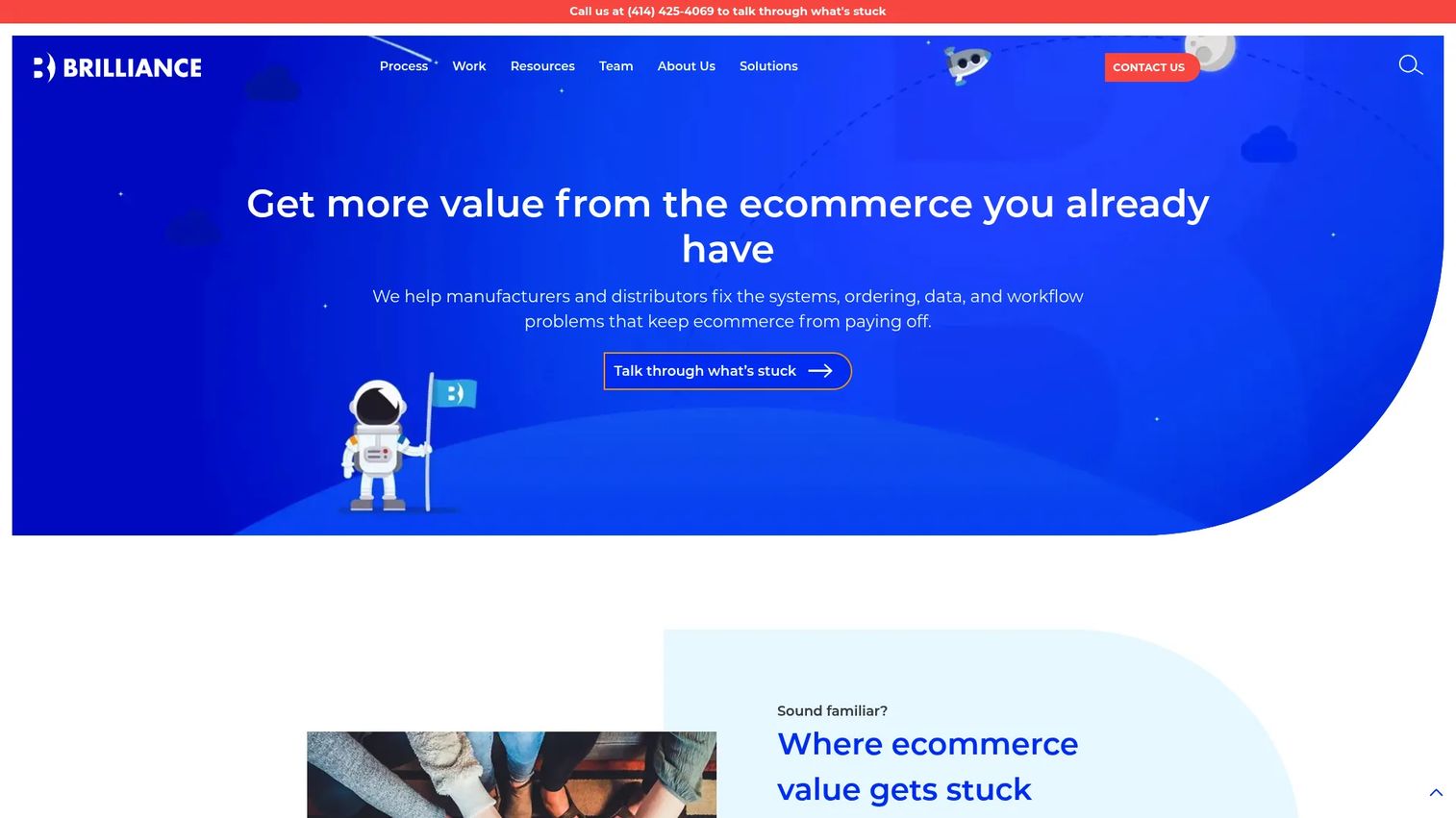
Brilliance is a digital commerce agency focused on B2B and B2C ecommerce strategy, platform development and ongoing optimization. The agency works with manufacturers, distributors and enterprise ecommerce teams that need SEO connected to platform architecture, ERP and PIM integrations, rather than SEO treated as a standalone channel. Its platform experience covers BigCommerce, Optimizely and Shopify.
Best for: Enterprise or mid-market ecommerce teams where SEO problems are tied to platform architecture, catalog complexity or B2B commerce workflows.
Key features
- Ecommerce development on BigCommerce, Optimizely and Shopify
- ERP, CRM and PIM system integrations
- Account-based pricing and bulk ordering support
- Content management and ongoing site optimization
- Technical SEO tied to platform and architecture decisions
Why choose Brilliance: Choose Brilliance when your SEO bottleneck is a platform constraint, an integration gap or a site architecture problem that needs developers and strategists working together. It's a stronger fit for complex operations than for teams that need standalone content production.
Brilliance pricing: Brilliance prices by custom proposal. Ask for the monthly retainer, what implementation fees look like separately, and whether development work is included in the SEO engagement or billed independently.
2. SmartSites
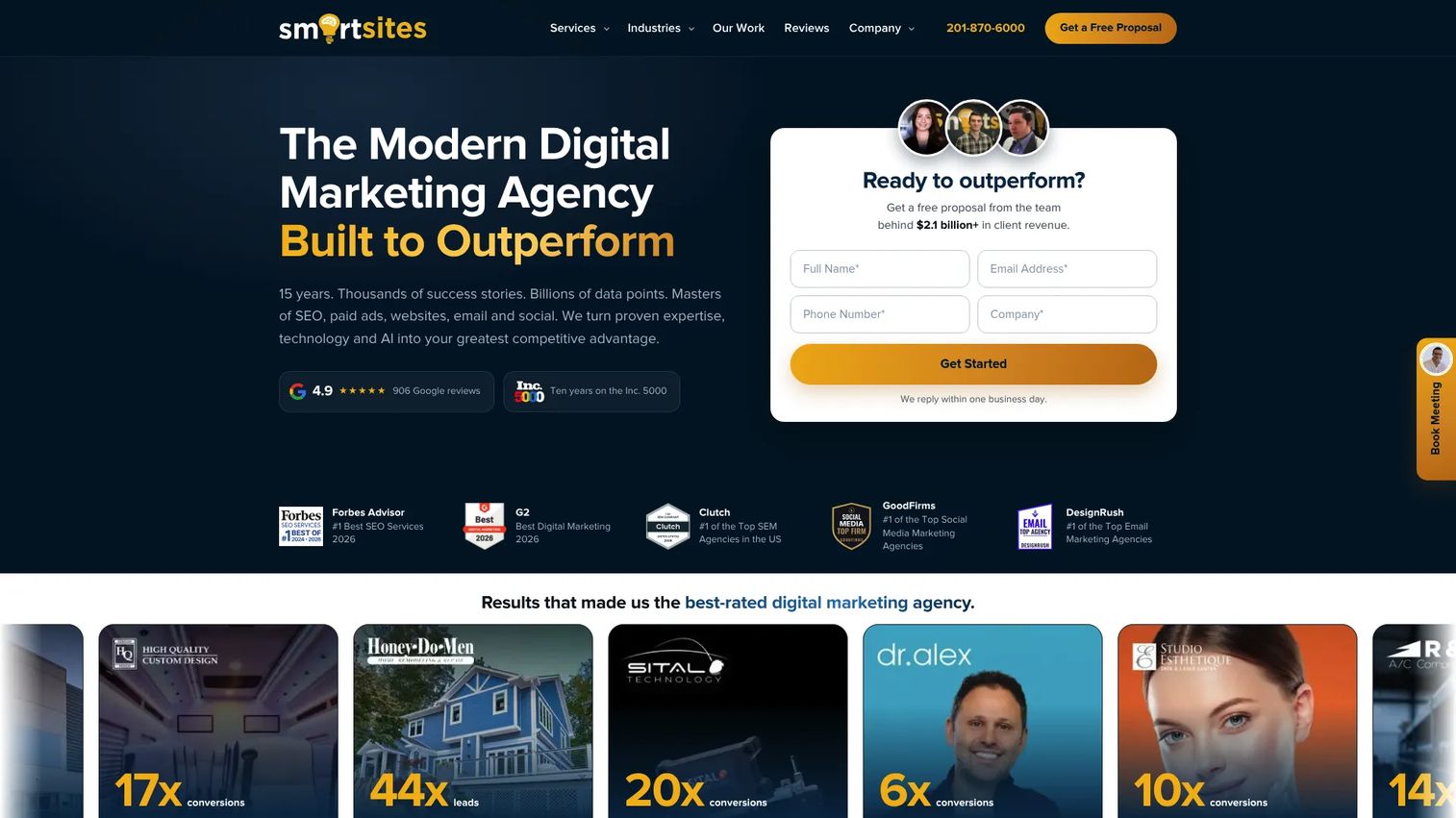
SmartSites is a full-service digital marketing agency offering SEO, PPC, web design, email and SMS marketing, and social media management. For ecommerce teams, the value is in coordinated execution across acquisition channels without managing four separate agency relationships. SmartSites publicly mentions AI search optimization as part of its organic SEO scope, which matters for teams already thinking about AI Overviews and answer engine visibility.
Best for: Ecommerce growth teams that want SEO connected to paid search, web development and email automation from one partner.
Key features
- Organic SEO including AI search optimization
- PPC advertising and paid social campaigns
- Web design and development
- Email and SMS marketing automation
- Client Hub reporting with revenue attribution
Why choose SmartSites: Choose SmartSites if organic is one channel in a bigger acquisition system and you want fewer vendors managing it. The consolidated reporting through Client Hub helps when your CFO asks for attribution across channels.
SmartSites pricing: Marketing automation starts at $750/month. Most clients begin at $2,000/month for three automated flows plus two campaigns. Broader service pricing requires a custom proposal, so ask for SEO retainer, ad management and web project costs in separate line items.
G2 rating: 4.9/5 (263 reviews).
3. Digital Commerce Partners
Digital Commerce Partners is a Toronto-based SEO and AI visibility agency focused on DTC and retail ecommerce brands. The agency builds organic programs around category-first site architecture and content strategy, with a specific emphasis on AI search visibility across ChatGPT, Perplexity and AI Overviews. Its Shopify Plus SEO work covers technical SEO, on-page optimization, keyword research and content marketing as an integrated program rather than separate deliverables.
Best for: Mid-market or enterprise DTC and retail brands that need organic growth built around content strategy and AI search visibility alongside technical SEO.
Key features
- Category-first site architecture and content strategy
- AI visibility optimization across major AI answer platforms
- Shopify Plus technical and on-page SEO
- Keyword research and topical authority planning
- SEO audits and content marketing integration
Why choose Digital Commerce Partners: Choose this agency when your bottleneck is content strategy, topical authority or AI search visibility, not just technical fixes. It's a strong fit for brands that sell through Shopify Plus and want their organic program to compound through content, not just crawlability.
Digital Commerce Partners pricing: Pricing is by custom proposal. When you speak with them, ask for monthly content volume, strategy fees and what the editing and publishing process looks like so you can budget accurately.
4. SearchX
SearchX is a Charleston-based SEO and paid media agency that helps businesses grow through search visibility, paid advertising, web design and social media. Its publicly listed Cruise SEO plan starts at $3,000, which provides a clear entry point for smaller ecommerce teams comparing agencies. Real-time dashboards and reporting are built into the offering, which matters when you need to show attribution quickly.
Best for: Ecommerce brands that want a focused search partner covering SEO and paid media without paying for a full-service agency retainer.
Key features
- SEO services including AI search visibility
- Google and Meta Ads management
- Web design and development
- Social media management
- Real-time dashboards and performance reporting
Why choose SearchX: Choose SearchX when your team has design and email marketing covered and needs a partner focused on search acquisition. The entry-level pricing makes it easier to scope a trial engagement before committing to a larger retainer.
SearchX pricing: The Cruise SEO plan is publicly listed at $3,000. Full tier details and billing frequency require direct confirmation. Ask for the full plan comparison and what implementation or setup fees look like.
5. BlueTuskr
BlueTuskr is a full-service ecommerce marketing agency covering strategy, content, paid media, marketplace marketing, website optimization and email retention. The marketplace and retention scope makes it a different kind of partner than a pure SEO shop: If your ecommerce revenue runs across Amazon, your own storefront and retail channels simultaneously, BlueTuskr coordinates those growth levers together.
Best for: Ecommerce brands selling across multiple channels (own storefront, marketplaces, retail) that want SEO integrated with the broader acquisition and retention strategy.
Key features
- Ecommerce SEO and content marketing
- Marketplace marketing and product listing optimization
- Paid media management
- E-commerce retention and email marketing
- Website design and optimization
Why choose BlueTuskr: Choose BlueTuskr if your organic search challenges connect to marketplace visibility, catalog presentation and retention, not just Google rankings. It's most useful for brands where the SEO bottleneck is part of a wider multi-channel growth problem.
BlueTuskr pricing: Pricing is by custom proposal. When you engage them, ask for SEO retainer scope separately from marketplace fees and content production costs, so you understand what's driving the monthly number.
6. SeoProfy
SeoProfy is an SEO agency with transparent published pricing across multiple service tiers, which is rare in the agency market. Its focus on competitive markets, international SEO and data-led execution makes it a strong fit for ecommerce brands competing in crowded categories or expanding across multiple markets. Services include keyword research, technical SEO, on-page optimization, link building, competitor analysis and AI search optimization.
Best for: Ecommerce companies competing in high-competition categories or running international SEO programs across multiple markets.
Key features
- Technical SEO and on-page optimization
- Keyword research and competitor analysis
- Link building and authority building
- Local SEO and international SEO
- AI search optimization
Why choose SeoProfy: Choose SeoProfy when rankings depend on technical precision and competitive authority, and when you want to see pricing before a sales call. The published tiers let you model budget against scope without committing to a discovery process first.
SeoProfy pricing: Local SEO packages start at $1,600/month. General SEO packages list Basic at $3,000/month, Advanced at $6,000/month and Enterprise at $10,000/month. Ask how market count and link-building volume affect the final figure.
7. Elit-Web
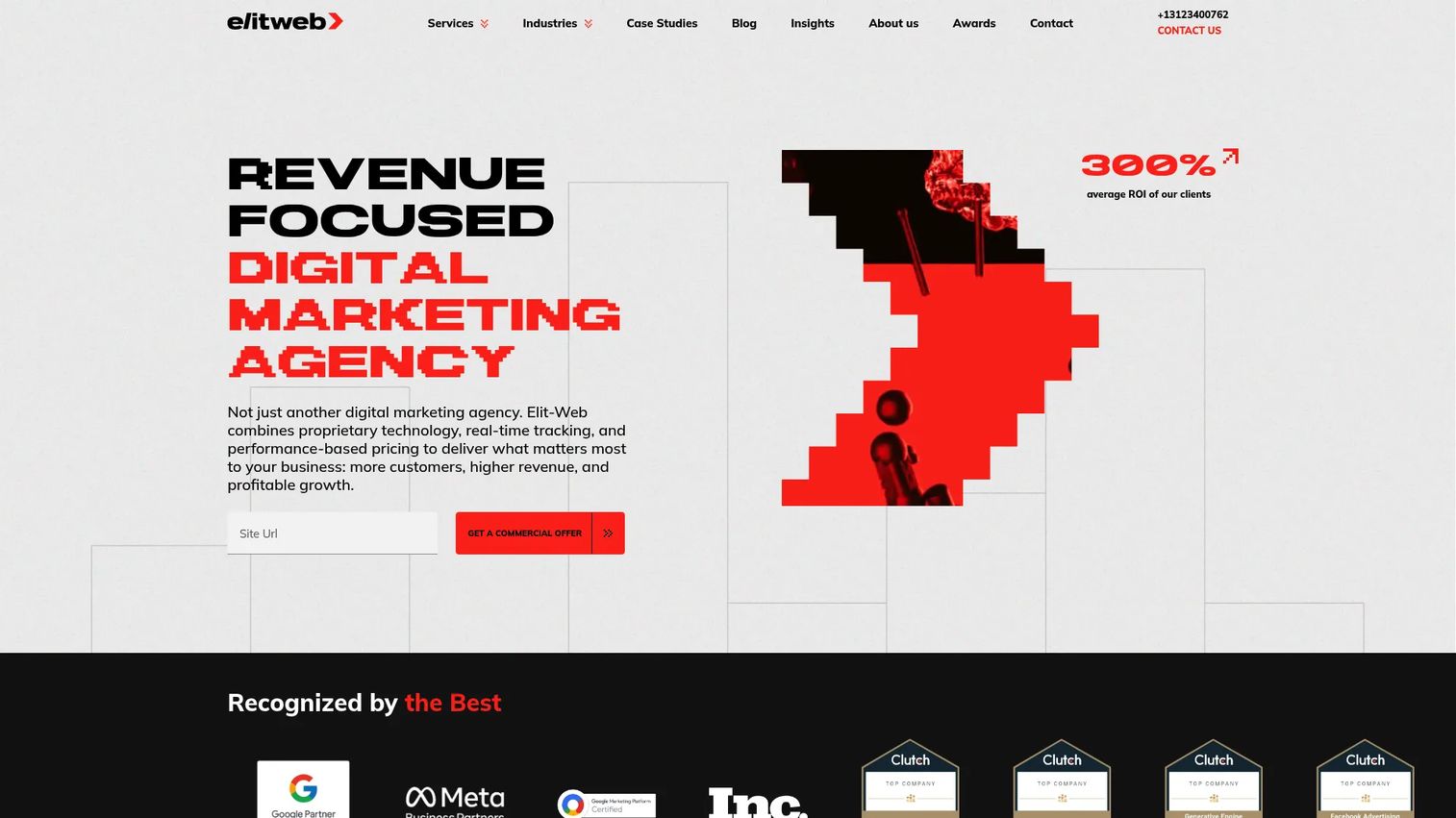
Elit-Web is a performance-driven digital marketing agency that ties pricing to agreed monthly growth targets rather than fixed retainer tiers. Its service scope covers SEO, generative engine optimization (GEO), PPC, ChatGPT Ads, paid social, CRO and email marketing. The GEO and AI visibility work is relevant for ecommerce teams tracking how products appear in AI-generated answers, not just Google's traditional results.
Best for: Ecommerce teams that want performance-linked pricing and an agency covering SEO alongside CRO, GEO and paid media in a coordinated program.
Key features
- SEO and generative engine optimization (GEO)
- Google and Bing Ads, ChatGPT Ads management
- Paid social and social media marketing
- Conversion rate optimization (CRO)
- Real-time KPI and GEO dashboards
Why choose Elit-Web: Choose Elit-Web when you want pricing tied to performance milestones rather than a flat retainer, and when your ecommerce program needs CRO and AI visibility alongside standard SEO. It's a good fit for teams that want accountability built into the contract structure.
Elit-Web pricing: Pricing is performance-based and determined through direct contact. Ask for the growth targets used to calculate fees, what happens if targets are not met, and how reporting is structured.
G2 rating: 5.0/5 (37 reviews).
8. Bird Marketing
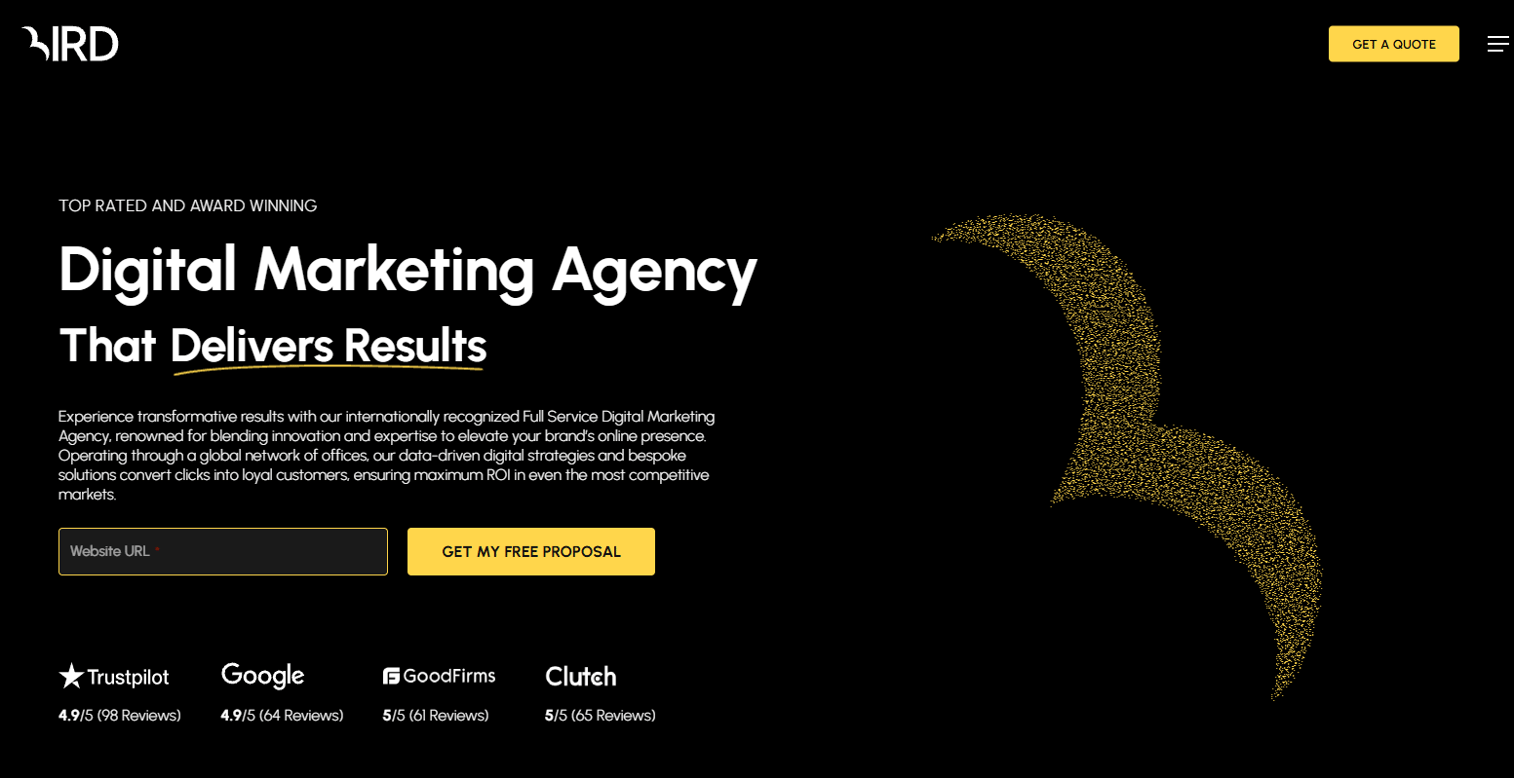
Bird Marketing is a full-service digital marketing agency offering SEO, web design and ongoing website support. Its ecommerce SEO scope covers technical, local, mobile, international and enterprise SEO alongside link building and audits. The website support pricing is publicly listed, which gives ecommerce teams a concrete entry point for site maintenance and security work that often sits alongside an SEO engagement.
Best for: Retail and ecommerce teams where SEO improvement requires website changes, ongoing maintenance and design updates, not just keyword strategy.
Key features
- SEO: Technical, local, ecommerce, international and enterprise
- Web design including ecommerce and bespoke builds
- Website support: Security, backups, content editing and DNS management
- Link building
- SEO audits
Why choose Bird Marketing: Choose Bird Marketing when the website itself is part of the SEO bottleneck. It makes most sense for ecommerce teams that need developers and SEO strategists on the same side of the table, rather than briefing them separately.
Bird Marketing pricing: Website support plans start at $90/month. Ad hoc support is available at $120/hour. SEO and web design project pricing is by custom quote; ask whether SEO and development work are billed separately or packaged together.
G2 rating: 5.0/5 (confirmed on G2).
9. e intelligence
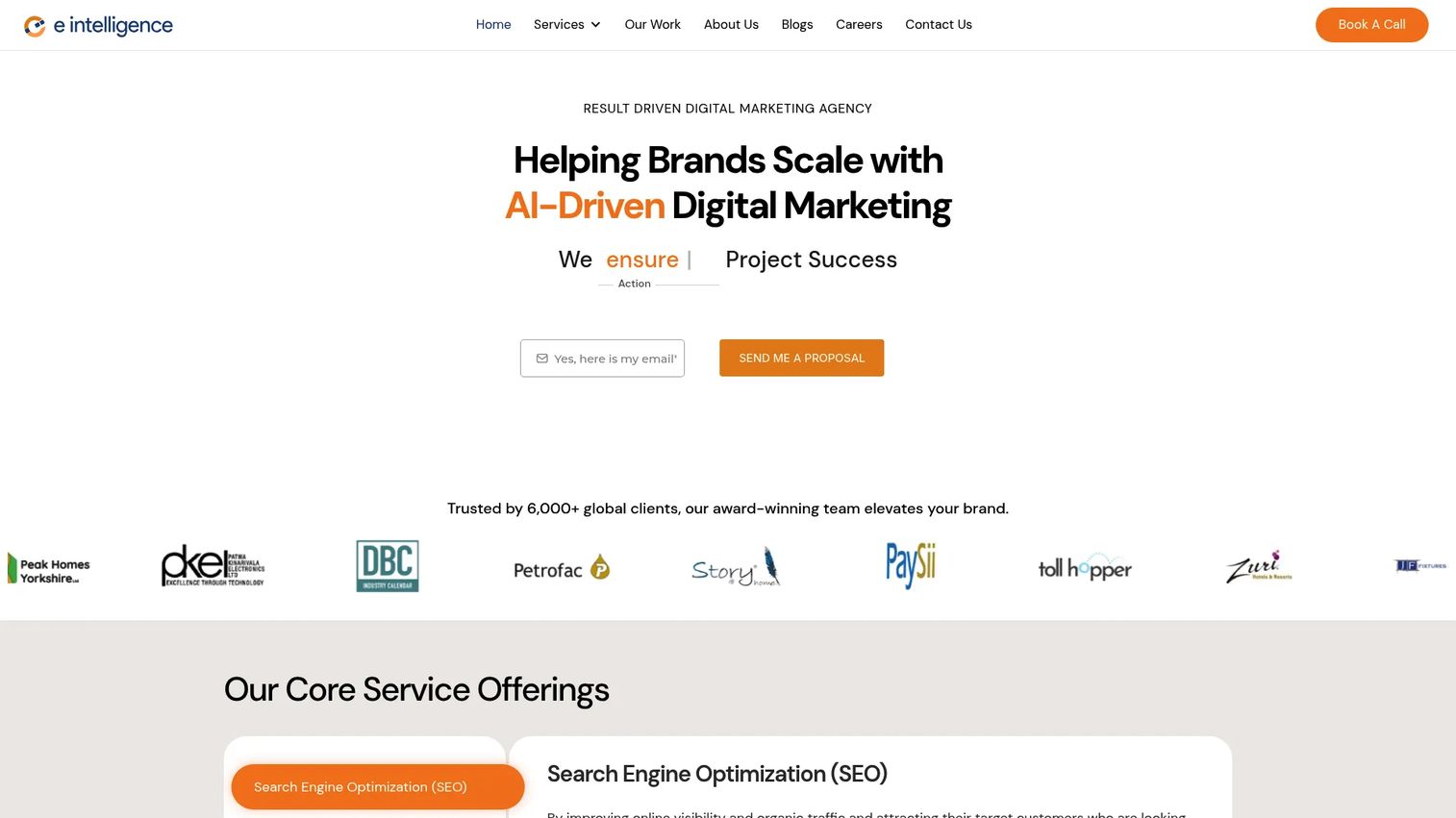
e intelligence is an AI-driven digital marketing agency offering SEO, generative and answer engine optimization, paid advertising, marketing automation, web development and white-label services. The GEO and answer engine optimization work puts it ahead of agencies that haven't yet addressed how AI platforms surface products. It also offers white-label services, which is worth noting if you work with partner agencies.
Best for: Ecommerce brands needing coordinated SEO, GEO, paid media and web development from one partner, particularly those exploring AI search visibility.
Key features
- SEO and generative engine optimization (GEO/AEO)
- PPC advertising
- ChatGPT and Reddit marketing
- Marketing automation
- Web design, development and white-label services
Why choose e intelligence: Choose e intelligence when SEO is one layer of a larger digital marketing program and you want GEO and answer engine optimization included without adding a separate specialist. It suits teams with complex multi-channel needs and limited bandwidth to coordinate multiple agencies.
e intelligence pricing: Pricing is by custom proposal. Ask for channel-level pricing, what is included in the SEO retainer specifically, and how GEO work is scoped and measured.
10. BlueHat Marketing
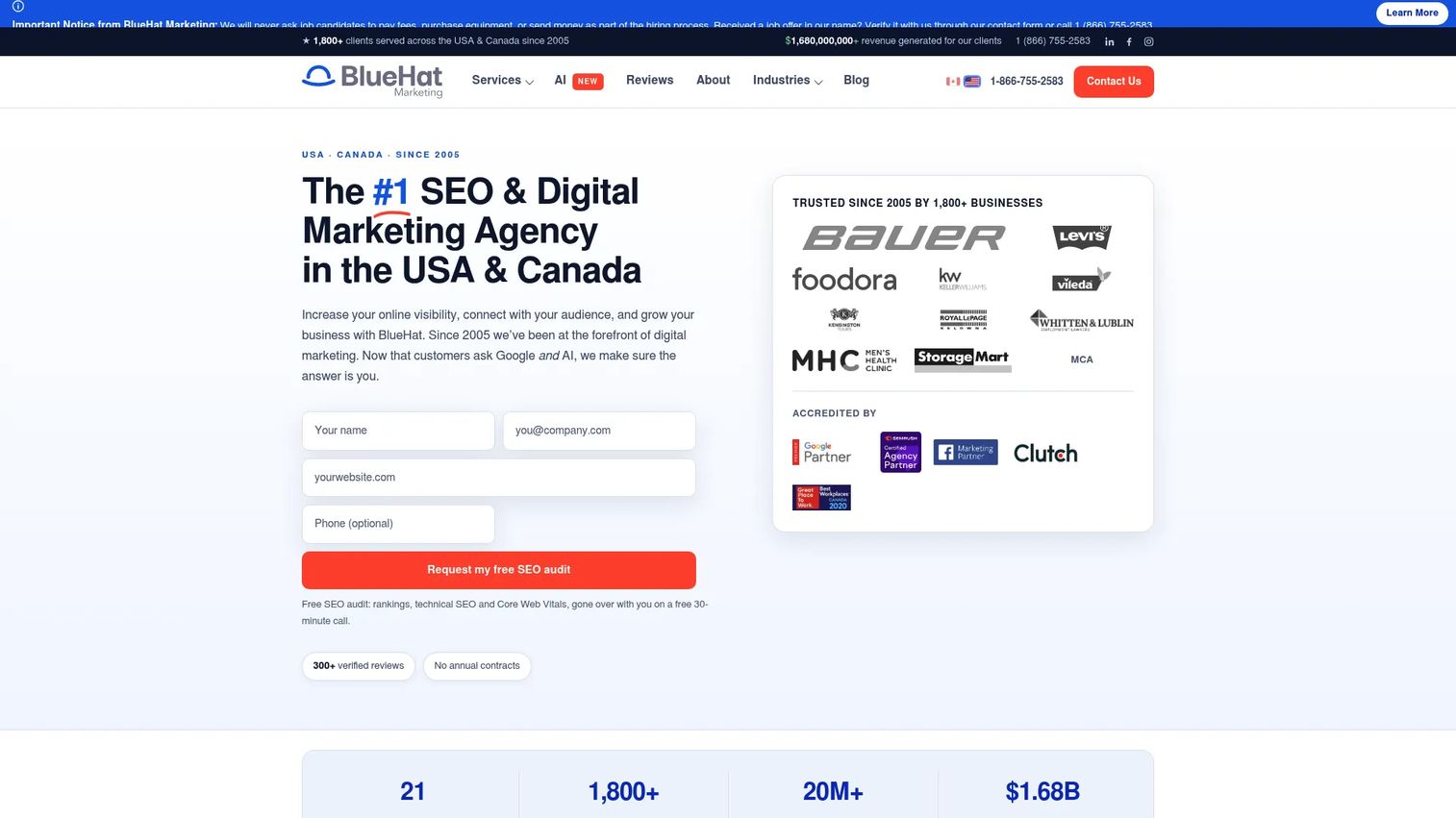
BlueHat Marketing is a digital marketing agency offering SEO (local, national, enterprise, international and hybrid), AI optimization, paid and social marketing, email marketing and bilingual website development. Its publicly listed package pricing across social media, AI visibility and SEO tiers makes it easier to scope a budget before entering a sales process, which is useful for growth marketers managing procurement.
Best for: Ecommerce and multi-location retail brands that need SEO combined with AI visibility, paid media and social marketing in a structured package.
Key features
- SEO: Local, national, enterprise, international and hybrid
- AI optimization and AI chatbot/agent services
- Paid search, social media and email marketing
- Conversion rate optimization
- Bilingual website development
Why choose BlueHat Marketing: Choose BlueHat Marketing if your ecommerce business also depends on regional or location-based discovery, or if you want to see package pricing before engaging sales. The AI visibility work is a differentiator for brands starting to track how they appear in AI-generated answers.
BlueHat Marketing pricing: Social Starter packages start at $749/month. AI Visibility packages start at $1,299/month. SEO Starter packages start at $1,995/month. Enterprise AI pricing is custom. Ask for the deliverables included at each tier before comparing.
11. Devenup SEO
Devenup SEO is a full-service SEO and AI SEO agency providing data-driven search optimization. Its service scope covers website SEO, AI SEO for Google and LLM platforms, link building, digital strategy consulting and technical SEO audits. The free SEO audit is a low-friction starting point for teams that need a diagnosis before committing to a retainer.
Best for: Ecommerce teams that need technical SEO grounded in analytics, audit-first methodology and AI search optimization, particularly when the brief is to diagnose before spending.
Key features
- Website SEO and technical SEO audits
- AI SEO for Google and LLM platforms
- Link building
- Digital strategy consulting
- Analytics setup
Why choose Devenup SEO: Choose Devenup SEO when you need clearer diagnostic work before defending a budget to leadership. The audit-first approach suits teams where the bottleneck hasn't been fully identified yet, or where a previous agency's recommendations weren't executed properly.
Devenup SEO pricing: Pricing is by custom proposal. The website advertises a free SEO audit as an entry point. Ask for audit pricing, retainer minimums and what analytics setup work costs if it needs to be built from scratch.
G2 rating: 5.0/5 (7 reviews).
12. Editorial Link
Editorial Link is a managed link-building and digital PR service focused on editorial backlinks, brand mentions and AI search visibility. It is not a full ecommerce SEO agency: It does one thing specifically, and that specificity is the point. Services include editorial backlinks, digital PR, broken link building, HARO and journalist outreach, guest posting, linkable asset creation and blogger outreach. Clients pre-approve prospects before placement, which maintains quality control.
Best for: Ecommerce brands that already have solid technical SEO and content in place but need stronger domain authority to rank in competitive categories.
Key features
- Editorial backlink acquisition
- Digital PR and brand mentions
- Broken link building and guest posting
- HARO and journalist outreach
- Link reporting, monitoring and client prospect pre-approval
Why choose Editorial Link: Choose Editorial Link as a focused authority partner rather than a complete SEO department. It makes most sense when your site's content and architecture are solid but competitors are outranking you on domain authority and editorial link count.
Editorial Link pricing: Base pricing is $375 per backlink. The Startup plan includes 5 links; the Growth plan includes 20 links at $6,000. Premium placements start at $550 per backlink. Custom pricing is available for larger volumes or agency requirements.
G2 rating: 5.0/5 (27 reviews).
Considerations when choosing an ecommerce SEO agency
Platform experience
Shopify SEO is structurally different from Adobe Commerce or WooCommerce SEO. Template architecture, app behavior, crawl configuration and developer workflows differ across platforms. Ask whether the agency has handled your specific CMS and faceted navigation setup, not just ecommerce generally.
Technical implementation
An audit is only useful if the fixes actually ship. Ask whether the agency provides developer-ready specifications, QA support and prioritization by revenue impact. Agencies that deliver a report and leave implementation to your team often produce less measurable results.
Content and category strategy
Ecommerce content should support purchase intent. Strong agencies map category demand, product modifiers and comparison terms to revenue pages, not just informational blog posts. Ask to see how they approach category page architecture and buying guide planning before you sign.
Authority building
Link building matters in competitive retail categories. Ask how the agency earns links: Editorial outreach, digital PR and linkable assets produce durable authority; directory submissions and low-quality placements do not. Request a sample link report showing placement quality and domain relevance.
Measurement and ROI
This is the question that separates good agencies from great ones. Ask how they report organic revenue, assisted conversions, category-level growth and CAC impact. Reports that stop at impressions and rankings won't help you defend budget when leadership asks why the investment matters.
Conclusion
Picking the right ecommerce SEO agency comes down to matching the partner to your actual bottleneck, not the agency with the best case study deck.
Go to Brilliance or Digital Commerce Partners if content strategy and digital commerce execution are the gap. Try SmartSites or e intelligence if SEO needs to connect with paid media and web development in a coordinated program. Use SearchX or Devenup SEO when technical diagnosis and search execution are the priority. Consider SeoProfy or Elit-Web for competitive categories or international markets. Add Editorial Link when domain authority is the missing piece after on-page work is complete.
A practical next step: Pick three agencies from this list whose specializations match your platform and bottleneck. Ask each for a platform-specific audit sample, transparent pricing by deliverable, timeline expectations and how they report organic revenue impact. Compare based on who can prove business outcomes, not who ranks the most keywords.
Start your journey with Guideflow today!
FAQs
An ecommerce SEO agency improves an online store's visibility and revenue from organic search. The scope typically covers technical SEO, keyword research, product and category page optimization, content strategy, link building, platform-specific configuration and reporting tied to conversions and revenue. The best agencies treat organic search as an acquisition channel, not a traffic metric.
Ecommerce SEO deals with problems that don't exist on a standard website: Crawl budget management across large product catalogs, duplicate content from filters and pagination, faceted navigation traps, structured data for products and reviews, stock and price change handling, and platform constraints from Shopify, BigCommerce or WooCommerce. It also requires connecting rankings directly to conversion rates and revenue, since traffic without purchase intent or landing page quality doesn't move the number that matters.
Pricing varies significantly based on site size, platform complexity, catalog count, content volume and link-building requirements. SeoProfy publishes packages starting at $1,600/month for local SEO and $3,000/month for general SEO. BlueHat Marketing lists SEO starters from $1,995/month. Most full-service agencies price by custom proposal. When asking for quotes, request a breakdown by deliverable, ask what implementation support is included, and confirm the minimum contract term.
Technical fixes can produce measurable movement within weeks if the site has been suppressed by crawl or index issues. Content and authority building typically takes 3 to 6 months to show organic growth, and 12 months is a realistic horizon for competitive category improvements. Timelines depend on crawl frequency, competition level, how quickly fixes are implemented and the site's history. Any agency promising significant results in under 60 days for competitive keywords should be pressed for specifics.
The most common platforms requiring specialist SEO support are Shopify, BigCommerce, WooCommerce, Adobe Commerce (formerly Magento) and Salesforce Commerce Cloud. Each has different template structures, app behaviors, crawl configurations and developer workflows. Ask specifically whether the agency has worked on your platform version, not just the platform brand, since major version differences affect what's technically possible.
An in-house specialist is strong for daily coordination, stakeholder communication and institutional knowledge about your product catalog. Agencies add value for technical audits at scale, link building programs, platform-specific expertise across multiple CMS environments and execution capacity your in-house team can't cover. Many growing ecommerce teams run a hybrid: One internal SEO lead coordinating a specialist agency for technical and authority work.
Start by identifying your actual bottleneck: Technical issues, content gaps, weak authority or platform constraints each point to different agency strengths. Match agency experience to your platform, catalog size and business model. Ask for case studies from brands with a similar scale and product type. Request sample audits, reporting examples and pricing clarity before shortlisting. Prioritize agencies that connect organic search outcomes to revenue metrics, not just ranking reports.