

Your ops team just spent three hours pulling rates. Two carriers replied by email. One quote came back in a spreadsheet, another in a PDF, and the tracking numbers live in four different portals. By the time you booked, the rate had moved.
That is the daily reality of fragmented freight procurement. Rate data in one place, booking in another, shipment tracking scattered across carrier logins, and no single view of what a lane actually costs over time.
The category built to fix this is growing fast. The global digital freight platform market was valued at USD 4.1 billion in 2023 and is projected to reach USD 18.6 billion by 2033, a 16.4% CAGR, according to DataHorizzon Research (2024). Cloud-based deployment already accounts for 78.9% of the digital freight management market, with shippers representing 48.1% of end-user share, per Market.us (2024).
A digital freight platform pulls rate comparison, quoting, booking, shipment tracking, and analytics into one system. Instead of stitching together an online freight marketplace, a freight brokerage platform, and a spreadsheet, you get a single workflow. Some lean toward marketplace-style instant rate comparison, others toward deep freight management software with ERP TMS API integration and real-time visibility.
This guide compares seven platforms on the things operators actually care about: how fast you can quote and book, how visible your shipments are, how well the system integrates, and how much freight procurement automation it removes from your day.
What's inside
This guide covers seven digital freight platforms for 2026, chosen for operational depth rather than brand recognition alone. We looked at how each one handles the core freight workflow and where it fits different logistics motions.
Selection criteria:
- Quoting and booking depth: how quickly you can quote and book freight across ocean, air, or trucking.
- Visibility and tracking: shipment tracking, exception handling, and real-time visibility across carriers.
- Integration options: ERP TMS API integration, API connectivity, and data flow into your stack.
- Workflow fit: support for shippers, freight forwarders, carriers, or ecommerce shippers.
This guide is for operators, founders, and logistics buyers shortlisting vendors before a demo or RFP. Platforms are ordered by relevance to the digital freight platform keyword, not by ranking.
TL;DR
- Best for instant freight comparison: Freightos, an online freight marketplace with instant rate comparison, booking, and market intelligence.
- Best for market intelligence and benchmarking: SeaRates, with its Freight Index, tracking, and CO2 calculator.
- Best for freight forwarders: cargo.one, an air and ocean freight rate and booking platform built for forwarder workflows.
- Best for straightforward ocean forwarding: iContainers, a digital freight forwarder with quoting, booking, and document management.
- Best for end-to-end supply chain visibility: Flexport, with customs, landed cost analytics, and deep ERP and TMS integration.
- Best for ecommerce shipping: Easyship, with multi-carrier comparison, label printing, and tax and duty automation.
- Best for trucking and brokerage: Loadsmart, for digital freight brokerage and managed freight automation.
What is a digital freight platform?
A digital freight platform is software that digitizes freight procurement and shipment management, letting shippers, forwarders, and carriers quote, book, track, and analyze freight in one place instead of across email, phone, and spreadsheets.
The category covers two broad models. An online freight marketplace connects you to multiple carriers for instant rate comparison and booking. A freight management platform goes deeper into workflow, adding freight rate management, document handling, and analytics for teams that run high volumes.
Core functions most digital freight platforms share:
- Rate comparison and quoting: pull live or contracted rates across carriers and lanes, then quote and book freight without manual back-and-forth.
- Booking: confirm capacity through a freight booking platform rather than email threads.
- Shipment tracking: real-time visibility across ocean, air, and trucking, with exception alerts.
- Document management: store and exchange bills of lading, customs paperwork, and invoices.
- Invoicing and settlement: reconcile freight spend against booked rates.
- Analytics and market intelligence: benchmark lanes, track a freight index, and support procurement decisions.
The line between a freight quoting platform and full freight forwarder software comes down to depth. A marketplace optimizes for speed and carrier comparison. A management platform optimizes for control, with ERP TMS API integration that pushes shipment and cost data into your finance and planning systems. For founders reading this as a stack decision, integration depth and clean data are the same signals you look for in any scalable tool.
When to use a digital freight platform
When you need faster quoting
Manual rate collection slows down sales and operations. If your team fields repeated lane requests, handles high quote volume, or faces buyer pressure for same-day turnaround, a freight quoting platform removes the bottleneck. Instant rate comparison turns a multi-hour email chase into a few clicks, and standardized quotes reduce errors that cost margin later.
When you need shipment visibility
Juggling multiple carriers, portals, and email updates creates blind spots. Centralized shipment tracking matters when operations, customer support, and leadership all need the same answer to "where is my freight." Real-time visibility with exception alerts lets your team act on delays before a customer calls, instead of after.
When you need cleaner procurement and analytics
The category also earns its place when leaders want rate benchmarking, routing discipline, and procurement control. Freight rate management and market intelligence give you lane-level cost history, so you can negotiate from data and make repeatable routing decisions. That is margin control, and it is the kind of repeatability that survives board scrutiny.
Digital freight platform comparison
Below is a side-by-side view of the seven platforms. Pricing and ratings reflect verified current values where publicly available. Use this to shortlist, then read the sections for operational fit.
| # | Product | Best for | Key differentiator | Pricing | G2 rating |
|---|---|---|---|---|---|
| 1 | Freightos | Instant freight comparison | Online freight marketplace with market intelligence | From $119/mo (Terminal) | 3.9/5 |
| 2 | SeaRates | Market intelligence and benchmarking | Freight Index and CO2 calculator | From $29/mo (tracking) | 4.5/5 |
| 3 | cargo.one | Freight forwarders | Air and ocean rate management and booking | Free Starter; paid plans | 4.8/5 |
| 4 | iContainers | Ocean freight forwarding | Digital forwarder with dashboard | Quote-based | Not listed |
| 5 | Flexport | End-to-end supply chain visibility | Customs, landed cost, ERP and TMS integration | Lane-based rates | 4.2/5 |
| 6 | Easyship | Ecommerce shipping | 550+ couriers, tax and duty automation | Free; from $29/mo | 4.4/5 |
| 7 | Loadsmart | Trucking and brokerage | Digital freight brokerage plus TMS | Free instant rates | 4.5/5 |
Best 7 digital freight platforms for 2026
1. Freightos
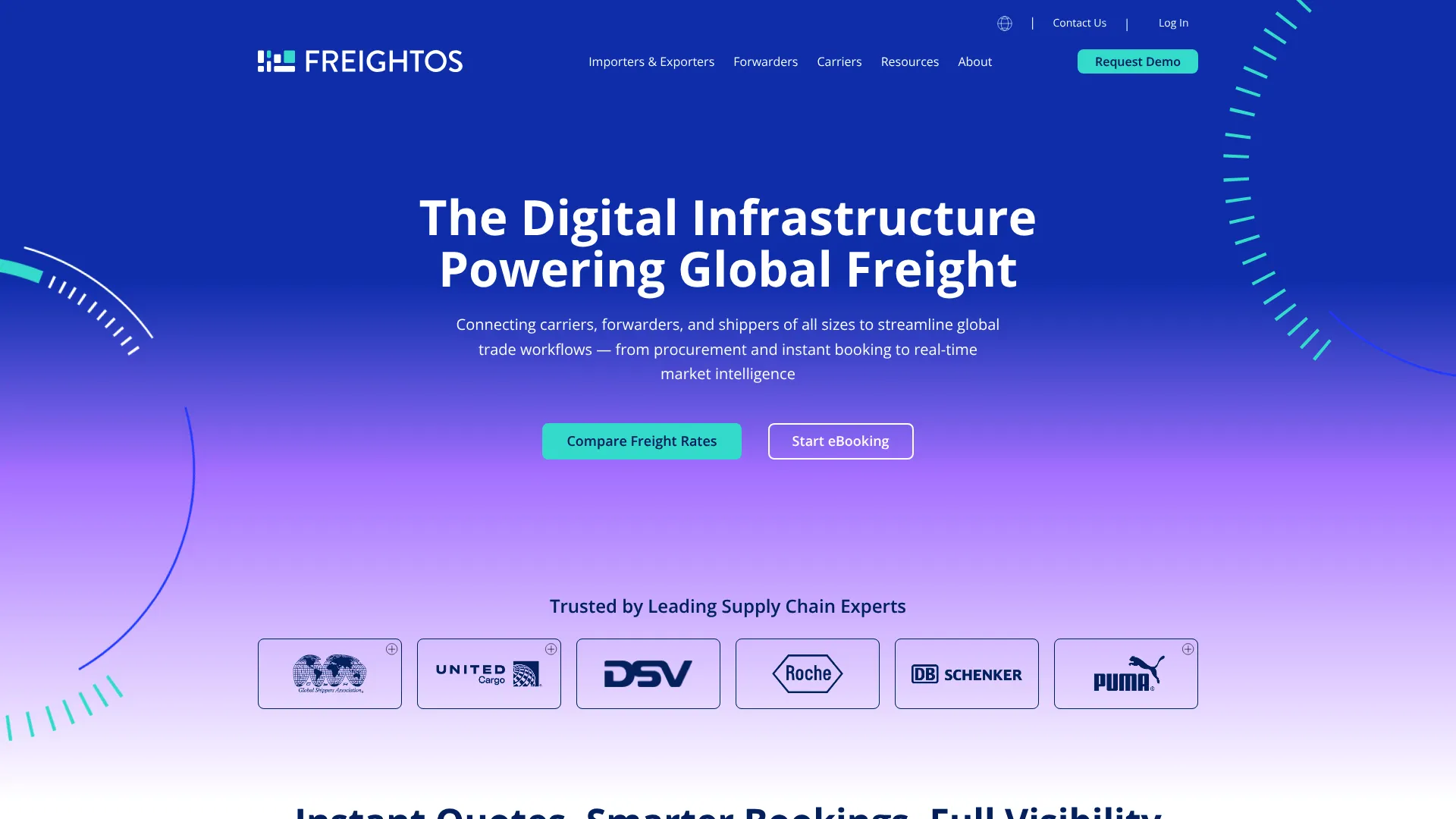
Freightos runs one of the largest online freight marketplace platforms, where shippers and forwarders compare live rates across ocean and air, then book directly. It also carries deep market intelligence through Freightos Terminal, giving procurement teams lane benchmarking and freight index data to negotiate from. Its positioning is vendor-neutral: you compare and book across many carriers rather than one.
The workflow is built for speed. Search a lane, compare instant rates, and book without email back-and-forth. Beyond booking, Freightos layers shipment management and role-specific tools for shippers, forwarders, carriers, airlines, and ocean liners, so different sides of the market work in the same system.
Best for: shippers and forwarders who want instant rate comparison and booking backed by market intelligence.
Key strengths
- Real-time freight rate comparison and booking
- Forwarder sales, rating, and quoting tools
- Market intelligence and benchmarking via Terminal
Why choose Freightos: if your priority is comparing carriers fast and grounding procurement in lane benchmarking data, Freightos gives you both the marketplace and the intelligence layer. It fits teams that want established category coverage over a single-carrier relationship.
Freightos pricing: Freightos Terminal starts at $119 per month for the Individual Starter Ocean plan and $239 per month for Individual Starter Air. A Custom Enterprise Package is quote-based.
2. SeaRates
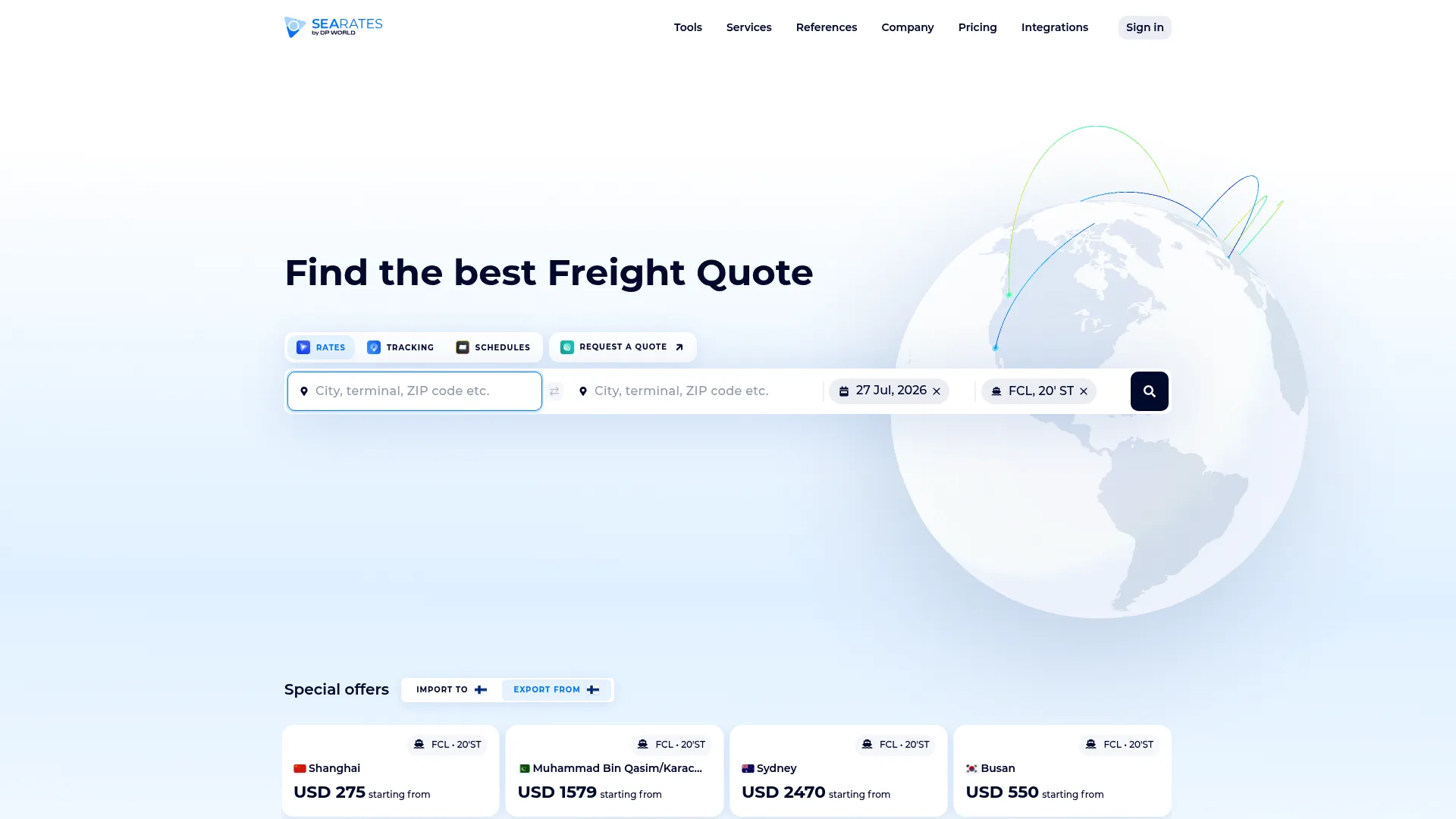
SeaRates is a global freight marketplace and logistics platform that packs freight search, container tracking, route planning, and rate data into one place. Its standout assets are the Freight Index for market transparency and a CO2 calculator for teams that report on shipping emissions. That combination makes it useful for both cost analysis and sustainability reporting.
Beyond quoting and booking-related workflows, SeaRates offers a freight rate management system for storing and exchanging rates, plus a logistics explorer, load calculator, and distance and time tools. Container tracking includes predictive ETA and carrier autodetect, giving importers and exporters real-time visibility without logging into each carrier separately.
Best for: importers, exporters, and forwarders who want rate data, tracking, and freight analytics in one platform.
Key strengths
- Container tracking with predictive ETA and carrier autodetect
- Freight rate management system for storing and exchanging rates
- Ship schedules, logistics explorer, load calculator, and distance tools
Why choose SeaRates: if lane benchmarking and market transparency drive your decisions, the Freight Index and CO2 calculator set SeaRates apart. It fits teams that treat rate data and emissions reporting as first-class inputs, not afterthoughts.
SeaRates pricing: Container Tracking plans start at USD 29 per month (Pro), USD 99 per month (Pro+), and USD 279 per month (Ultra). Unregistered users can track one shipment per month free, and registered users get five per month.
3. cargo.one
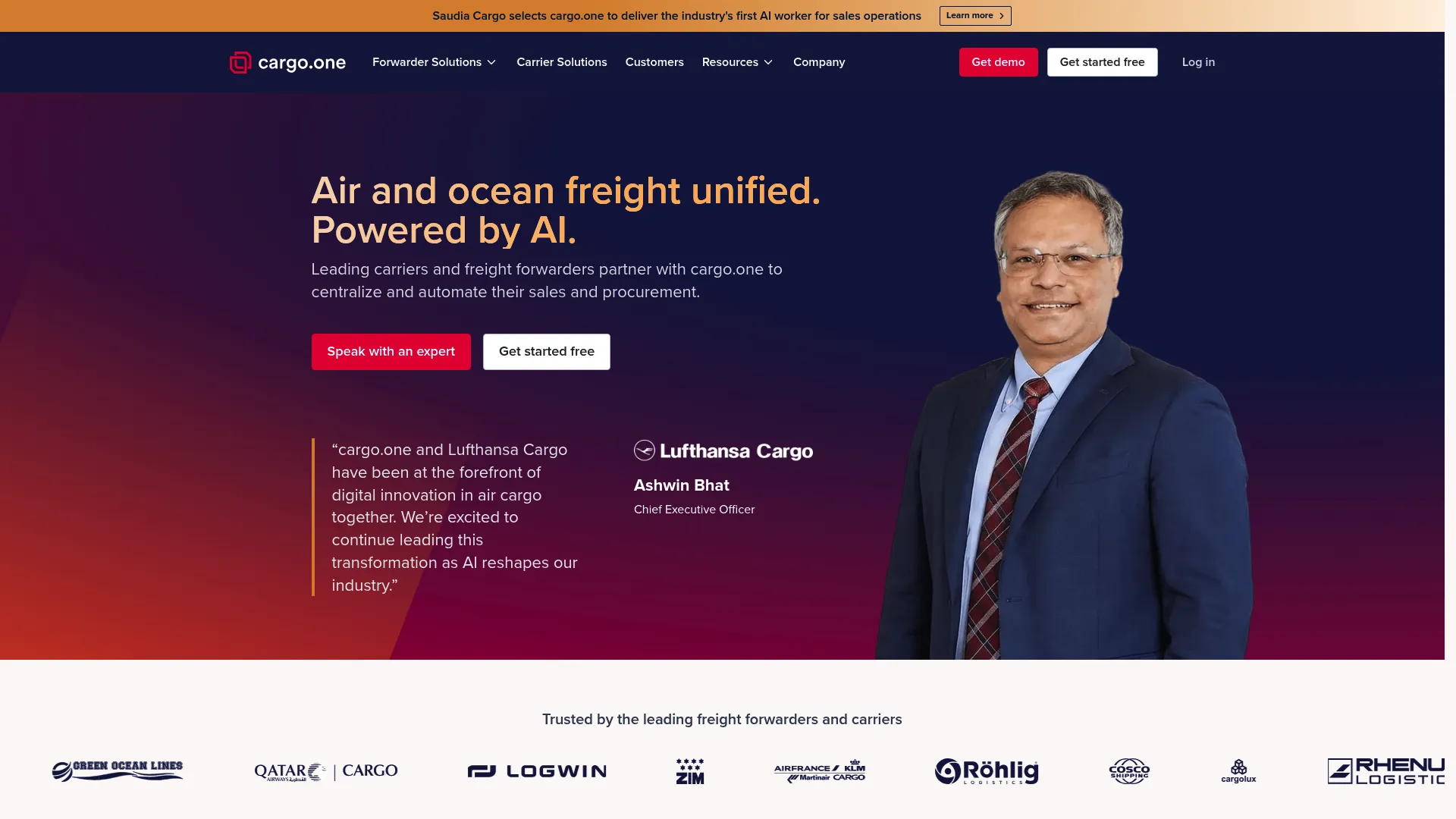
cargo.one is an air and ocean freight rate and booking platform built for freight forwarders and carrier-facing workflows. It centralizes sales and procurement, so forwarders manage rates, quote, book, and track in one operating system rather than across carrier portals. The platform supports both static and live rates, which matters when you need real-time capacity as well as contracted pricing.
For forwarders, the value is in freight procurement automation. Rate management keeps pricing current, live booking confirms capacity fast, and customer portal tooling lets your sales team quote and book on behalf of clients. API and TMS integrations push that activity into existing systems, reducing manual re-entry.
Best for: freight forwarders and carriers who need digital air and ocean rate management and booking.
Key strengths
- Unified air and ocean freight workflows
- Rate management, quoting, booking, and tracking
- API and TMS integrations
Why choose cargo.one: if you run forwarder operations and want live airline rates alongside contracted pricing in one place, cargo.one is built around that motion. It fits teams that want to automate quoting and booking rather than manage it by inbox.
cargo.one pricing: cargo.one offers a free Starter package, a fee-based pro plan, and a custom Enterprise plan. Paid pricing is not published publicly.
4. iContainers
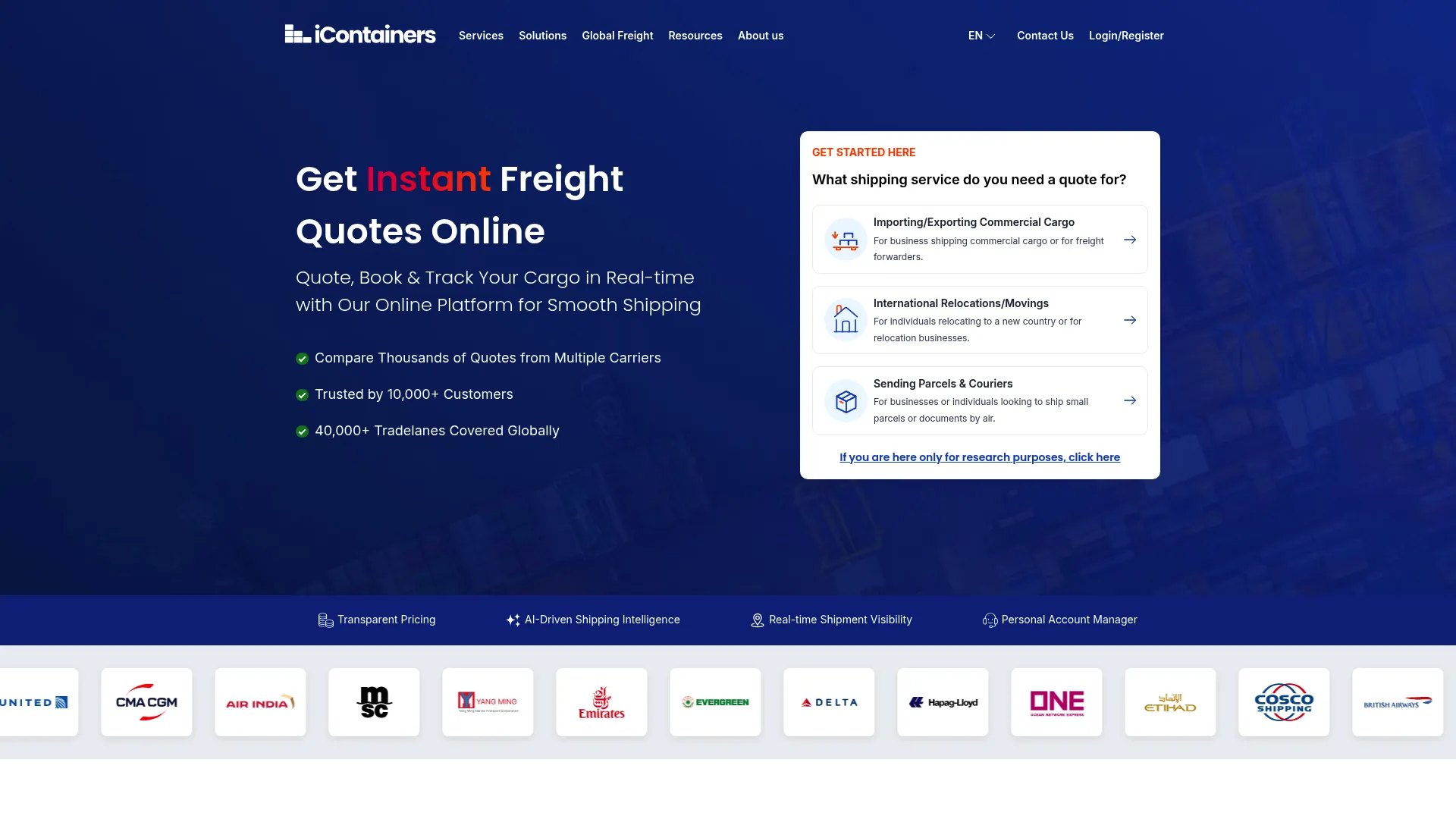
iContainers is a digital freight forwarder focused on ocean and air freight, giving shippers instant quotes, online booking, tracking, and customs-related support through a dashboard. It leans toward the operational side of the booking journey: get a quote, book, upload documents, and follow the shipment without email threads. For smaller teams, that straightforward flow is the appeal.
Where a marketplace optimizes for carrier comparison, iContainers acts as the forwarder itself, managing the shipment end to end. That means you get instant freight quotes across multiple carriers plus the coordination a forwarder handles, from booking to delivery, in one place.
Best for: smaller shippers and teams that want simple, digital ocean freight forwarding without managing carriers directly.
Key strengths
- Instant freight quotes across multiple carriers
- Book, manage, and track shipments online
- Ocean freight, air freight, and moving services
Why choose iContainers: if you want a digital forwarder to handle the shipment rather than a marketplace to compare carriers yourself, iContainers fits. It suits teams that value a clean quote-to-book dashboard over deep configuration.
iContainers pricing: pricing is quote-based. The platform emphasizes instant quotes through its freight calculator rather than published subscription plans.
5. Flexport
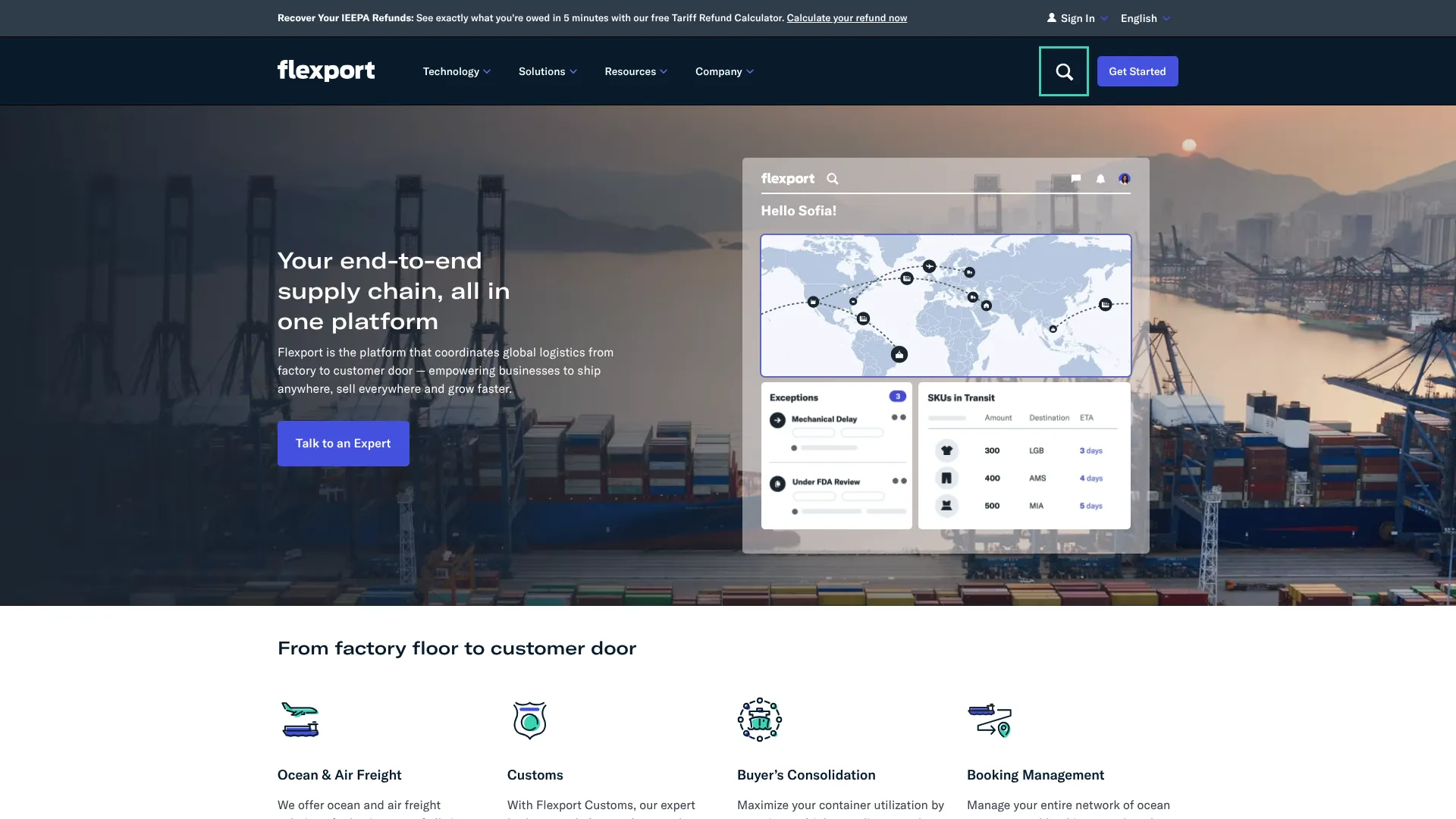
Flexport is the broadest end-to-end logistics platform on this list. It combines freight forwarding across ocean, air, rail, and trucking with customs, landed cost analytics, and a fulfillment and warehouse network. For teams that want platform depth rather than marketplace access alone, this is the section to read closely.
The draw is single-pane-of-glass control. Flexport gives you shipment, order, and inventory visibility, customs and landed cost tools, and a tracking dashboard with exception management. Its ERP TMS API integration connects freight and cost data into your planning and finance systems, which matters for larger operations with complex supply chains. Real-time visibility plus customs clearance in one platform reduces the handoffs that create delays.
Best for: companies that need freight forwarding plus supply chain visibility and fulfillment in one platform.
Key strengths
- Ocean, air, rail, and trucking freight forwarding
- Shipment visibility and tracking dashboard
- Fulfillment and warehouse network services
Why choose Flexport: if you need broader supply chain control, not just a way to quote and book freight, Flexport covers the full journey including customs and fulfillment. It fits teams running higher complexity that want fewer systems in the middle.
Flexport pricing: Flexport publishes lane-based shipping rates, with air starting from $5,046 per shipment, Ocean FCL from $6,565, and Ocean LCL from $1,068. Many services remain quote-based, and you can sign up to view rates.
6. Easyship

Easyship is a multi-carrier shipping platform built for ecommerce brands rather than heavy freight procurement. It gives online stores access to 550+ courier services with discounted rates, plus checkout rate display, tax and duty calculation, and shipping automation. If your shipping problem is parcels and orders rather than containers, this is the fit.
The workflow centers on ecommerce operations: compare carrier rates, generate and bulk-print labels, calculate tax and duty for cross-border orders, and give customers branded tracking. Shipping rules automate carrier selection so your team is not choosing manually on every order. An open shipping API connects it to your store and systems.
Best for: ecommerce businesses that need multi-carrier comparison, checkout rates, and shipping automation.
Key strengths
- 550+ courier services and discounted shipping rates
- Shipping dashboard plus open shipping API
- Rates at checkout, tax and duty calculation, and automation
Why choose Easyship: if you run an online store and need shipping ops efficiency more than container freight procurement, Easyship is purpose-built for that. Note the difference: parcel shipping platforms like this optimize orders and labels, while freight platforms optimize lanes and capacity.
Easyship pricing: Easyship offers a free forever plan, with paid plans at $29 per month (Plus), $69 per month (Premier), and $99 per month (Scale). Enterprise is custom pricing.
7. Loadsmart

Loadsmart is a logistics platform centered on trucking and digital freight brokerage, with freight execution, pricing, and dock scheduling tools. Where marketplaces connect you to carriers and forwarders manage shipments, Loadsmart adds broker-led freight digitization plus a TMS layer for planning and execution. That makes it a fit for shippers moving truckload freight who want automation around booking and operations.
Its ShipperGuide TMS handles planning, procurement, execution, visibility, settlement, and analytics, with instant, bookable freight pricing. Opendock adds dock scheduling, which ties yard operations into the same system. For teams that want managed freight with operational automation rather than a self-serve marketplace, that combination is the differentiator.
Best for: shippers and carriers who need freight execution, pricing, and dock scheduling in one platform.
Key strengths
- ShipperGuide TMS for planning, procurement, execution, visibility, settlement, and analytics
- Instant, bookable freight pricing
- Dock scheduling via Opendock
Why choose Loadsmart: if trucking and brokerage-led freight are your core motion, Loadsmart combines instant rates with TMS and dock scheduling. It fits shippers that want broker digitization and operational automation, not just carrier comparison.
Loadsmart pricing: ShipperGuide Instant Rates is free to use, with no contracts and no sales call required. A premium ShipperGuide TMS account is available, with pricing provided on request.
What to compare before choosing a digital freight platform
Quoting and booking speed
Test how fast you can go from lane request to a confirmed booking. Run one real lane through two shortlisted platforms and time it. Instant rate comparison and a clean freight booking platform flow are worth more than a long feature list if they shave hours off every quote.
Visibility and tracking depth
Check whether tracking covers all your carriers and modes, and whether it surfaces exceptions proactively. Real-time visibility only helps if operations, support, and leadership see the same shipment status without logging into separate portals.
Integration and data flow
Confirm ERP TMS API integration and API connectivity for the systems you already run. Clean data flow into finance and planning is what turns a freight tool into part of a scalable stack, not another silo. Ask what syncs automatically versus what needs manual export.
Analytics and rate management
Look at freight rate management and market intelligence. Lane-level cost history, benchmarking, and a freight index give you leverage in negotiations and discipline in routing. This is where margin control lives.
Workflow fit for your role
Match the platform to your motion. Shippers, freight forwarders, carriers, and ecommerce sellers need different depth. A forwarder needs rate management and customer portals, while an online store needs multi-carrier labels and tax automation.
Conclusion
The right digital freight platform depends entirely on your motion, not on which brand is best known.
- For instant marketplace comparison and market intelligence, Freightos and SeaRates lead, with SeaRates adding a Freight Index and CO2 calculator for benchmarking and emissions reporting.
- For forwarder and ocean workflows, cargo.one automates air and ocean rate management and booking, while iContainers handles straightforward digital ocean forwarding.
- For end-to-end control, ecommerce, or trucking, Flexport covers full supply chain visibility with customs and ERP TMS API integration, Easyship owns multi-carrier ecommerce shipping, and Loadsmart digitizes trucking and brokerage.
The practical next step is simple. Shortlist two platforms that match your primary motion, then test quote-to-book speed with one real lane on each. That single test tells you more about operational fit than any feature comparison, because it shows you how the platform performs on the workflow you run every day.
FAQs
A digital freight platform is software that lets shippers, forwarders, and carriers quote, book, track, and analyze freight in one system instead of across email, phone, and spreadsheets. Some work as an online freight marketplace for instant rate comparison, while others are deeper freight management platforms with rate management, document handling, and analytics.
You enter a lane or shipment, the platform returns rates from one or many carriers, and you book directly in the system. From there it tracks the shipment in real time, stores documents, handles invoicing, and feeds analytics. Marketplace platforms emphasize speed and carrier comparison, while management platforms emphasize workflow control and integration.
A freight marketplace connects you to multiple carriers and forwarders so you compare and book across them directly. A digital freight broker acts as the intermediary itself, sourcing capacity and managing the shipment on your behalf, often with added TMS and execution tools. Loadsmart leans brokerage, while Freightos and SeaRates lean marketplace.
Yes. Most platforms built for volume offer ERP TMS API integration and API connectivity, pushing shipment and cost data into your planning and finance systems. Flexport and cargo.one emphasize this integration depth. Confirm which systems are supported and what syncs automatically versus manually before committing.
cargo.one is built specifically for freight forwarders, with air and ocean rate management, live and static rates, customer portals, and booking automation. Freightos also serves forwarders with sales, rating, and quoting tools plus market intelligence. The right pick depends on whether you prioritize forwarder workflow automation or marketplace comparison.
Easyship is purpose-built for ecommerce, with 550+ couriers, checkout rate display, tax and duty automation, branded tracking, and shipping rules. It optimizes parcel and order shipping rather than container freight procurement, so it fits online stores better than a freight-focused marketplace or forwarder platform.
Most do. Shipment tracking with real-time visibility and exception alerts is standard, and analytics range from basic status reporting to full freight rate management and market intelligence. SeaRates offers a Freight Index and CO2 calculator, and Flexport adds landed cost analytics and a control tower view for deeper supply chain visibility.
Compare quoting and booking speed, tracking and visibility depth, ERP TMS API integration, freight rate management and analytics, and workflow fit for your role. The fastest way to decide is to run one real lane through two shortlisted platforms and measure quote-to-book time, since that reflects the workflow you run daily.