The rack diagram says there's room. Facilities says power is constrained. The CMDB has a different asset count. And the change request is sitting in a queue because nobody trusts the source data enough to approve it.
That's the friction DCIM software is built to fix. Data center infrastructure management software gives IT operations and facilities teams a shared view of physical assets, capacity, energy, and infrastructure dependencies, so decisions rely on one system rather than three conflicting spreadsheets.
The DCIM market reached $3.99 billion in 2026, projected to hit $8.42 billion by 2031 according to MarketsandMarkets (2026). That growth reflects a real operational problem: Data center electricity demand grew 17% in 2025, far outpacing the 3% growth in global electricity demand reported by the International Energy Agency. Power constraints are the new capacity bottleneck, and teams that can't instrument their infrastructure can't plan ahead.
G2 tracked 69 products in its DCIM category as of October 2026, which is why feature checklists alone rarely settle the buying decision. This guide cuts it to seven worth evaluating.
What's inside
This guide is for IT infrastructure leaders, platform engineers, facilities managers, and product managers coordinating data center, colocation, edge, or hybrid infrastructure initiatives. Tools were evaluated on:
- Asset model quality and data completeness
- Capacity and environmental visibility (power, cooling, space)
- Integration fit with CMDB, ITSM, BMS, and monitoring systems
- Operational maintenance requirements and total cost of ownership
The guide includes a comparison table with verified pricing and G2 ratings, plus buying criteria for teams that need to defend the decision across engineering, facilities, and finance.
TL;DR
- Best for enterprise-scale lifecycle and hybrid infrastructure: Nlyte, for broad asset lifecycle, capacity planning, and hybrid environment coverage across on-premises, colocation, cloud, and edge
- Best for discovery and dependency mapping: Device42, for teams that need to understand what's running and how it connects before a migration, consolidation, or audit
- Best cloud-based DCIM: Hyperview, for SaaS delivery with transparent asset-based pricing and a 30-day free trial
- Best for facilities and power operations: EcoStruxure IT Advisor (Schneider Electric) for digital-twin capacity planning, or Sunbird dcTrack for structured operational workflows
- Best open source options: NetBox for infrastructure source-of-truth and automation, openDCIM for focused rack and asset inventory on a limited budget
What is DCIM software?
DCIM software is a category of data center infrastructure management software that models, monitors, and manages physical IT and facilities infrastructure, including assets, racks, power, cooling, capacity, connectivity, and environmental conditions.
What DCIM software manages
- Asset inventory and lifecycle records (hardware, firmware, warranty, location)
- Rack and floor layout visualization
- Power chain and outlet-level monitoring
- Cooling and environmental telemetry
- Capacity planning software functions for space, power, and cooling
- Connectivity and dependency mapping
- Change workflows and audit trails
- Integrations with CMDB, ITSM, BMS, EPMS, and monitoring platforms
How DCIM differs from adjacent tools
| Tool category | Main job | Where it falls short alone |
|---|---|---|
| CMDB | Records configuration items and service relationships | Often lacks rack, power, cooling, and facility capacity detail |
| Network monitoring | Detects network events and performance issues | Does not model physical space and facilities constraints |
| BMS | Manages building systems | May not connect facilities telemetry to IT asset and rack context |
| DCIM software | Connects physical infrastructure, operations, and capacity data | Requires disciplined ownership and accurate source data |
DCIM is the coordination layer, not a replacement for every adjacent system. Its value depends entirely on whether the data inside it stays current.
When to use DCIM software
Replace spreadsheet-based asset and rack tracking
Spreadsheets, static floor maps, and manually updated rack elevations drift almost immediately after a change window. Two teams maintain separate versions, and neither matches physical reality. A PM coordinating infrastructure decisions can't run a meaningful capacity review when the inventory is three move-add-change cycles out of date. DCIM creates a single updatable model that facilities and IT can both trust.
Plan capacity before adding hardware
An empty rack unit does not equal available capacity. Power circuits may already be loaded, cooling may be constrained by hot aisle density, and network ports may be exhausted. DCIM platforms surface these constraints before hardware gets ordered, not after it arrives. Teams evaluating asset lifecycle management software alongside DCIM will find the two workflows naturally connect: Procurement decisions require accurate current-state data.
Connect IT and facilities operations
Change requests stall when IT, facilities, security, and finance each have a different view of what's available. DCIM gives all four groups access to the same infrastructure model. That shared visibility speeds up maintenance windows, reduces planning assumptions, and creates an audit trail when something goes wrong.
Use DCIM now if any of the following apply:
- Active data center growth or consolidation project underway
- Frequent disputes over available power, cooling, or space
- Multiple sites, colocation providers, or edge locations to coordinate
- Repeated audit, asset reconciliation, or change tracking problems
DCIM software comparison
The table below is a starting point, not a final answer. The right choice depends on whether your immediate problem is full lifecycle DCIM, infrastructure discovery, cloud-based operations, facilities monitoring, or open source asset inventory software. Pricing and G2 ratings were verified against vendor pricing pages and live G2 listings in October 2026.
| # | Product | Best for | Key differentiator | Pricing | G2 rating |
|---|---|---|---|---|---|
| 1 | Nlyte | Enterprise and hybrid infrastructure management | Lifecycle, capacity, energy, and workflow coverage across distributed environments | Custom pricing | 4.5/5 |
| 2 | Device42 | Discovery-led asset and dependency mapping | Automated discovery with infrastructure relationship mapping | Custom pricing | 4.7/5 |
| 3 | Hyperview | Cloud-based DCIM operations | SaaS delivery, $3/asset/year base, 30-day free trial | From $3/asset/year (annual) | 4.8/5 |
| 4 | EcoStruxure IT Advisor | Facilities and power operations | Digital-twin capacity planning for complex multi-site environments | Custom pricing | Not listed on G2 |
| 5 | Sunbird dcTrack | Capacity and operational workflow management | Cabinet-based pricing with transparent tiers, structured change management | From $19.50/cabinet/month | 4.6/5 |
| 6 | NetBox | Infrastructure source of truth and automation | Open source IPAM, device inventory, and topology with API-first design | Free (self-hosted); cloud plans by quote | 5.0/5 |
| 7 | openDCIM | Budget-conscious rack and facility inventory | Free web-based rack, power, and asset management under GPLv3 | Free (GPLv3) | 4.4/5 |
Best 7 DCIM software tools for 2026
1. Nlyte
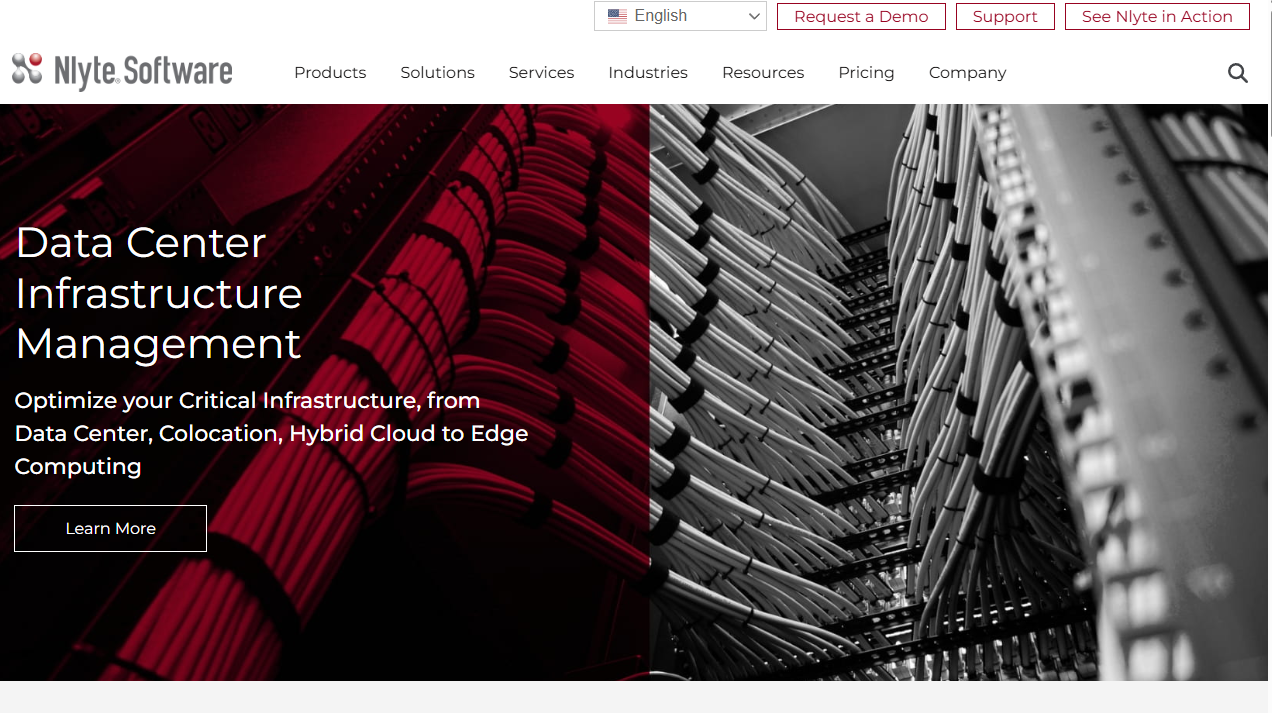
Nlyte is an enterprise data center infrastructure management platform built for organizations managing hybrid environments: On-premises data centers, colocation sites, cloud-connected infrastructure, and edge locations. It covers asset lifecycle management, capacity planning, energy optimization, operational workflows, and integrations with ITSM and CMDB systems. For PMs coordinating infrastructure decisions across engineering, facilities, and finance, Nlyte provides a single model that connects the physical plant to the operational record.
Best for: Large organizations that need a broad system of record across facilities and IT operations in distributed environments.
Key features
- Asset lifecycle management across hardware, firmware, and warranty records
- Space, power, and cooling capacity planning
- Energy optimization and power monitoring workflows
- Environmental alarms and operational alerts
- ITSM and CMDB integrations for change and configuration workflows
Why choose Nlyte: It suits PMs and infrastructure leaders who need a platform that spans the full operating model, from rack-level inventory to energy reporting, rather than a tool focused on one constraint. The breadth of coverage is the reason to choose it; that same breadth is also the reason to invest in a defined ownership model before deployment.
Nlyte pricing: Nlyte sells through custom quotes based on facilities, infrastructure assets, power capacity, required modules, and deployment scope. Contact Nlyte for a current package and implementation scope. Pricing was not displayed on the vendor's website as of October 2026.
G2 rating: 4.5/5 (verified October 2026)
2. Device42
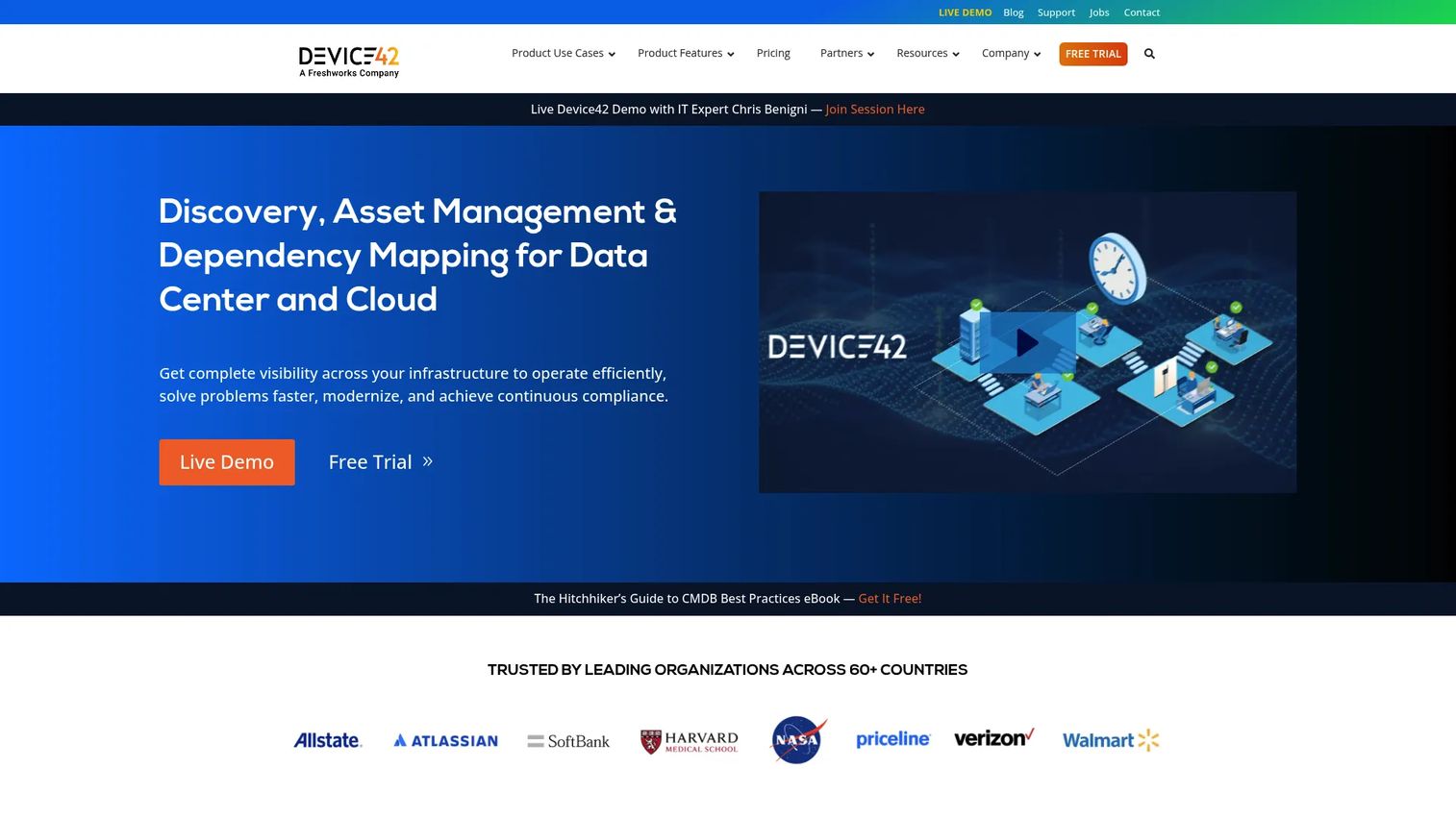
Device42 is a hybrid IT infrastructure discovery and dependency mapping platform with DCIM capabilities built in. Its strongest angle is exposing assets, application dependencies, and infrastructure relationships, particularly in environments where the existing inventory is incomplete or out of date. Teams preparing for a migration, consolidation, audit, or modernization initiative often reach for Device42 first because it reveals what's running before anyone commits to a plan.
Best for: IT infrastructure teams that need discovery and dependency visibility alongside physical asset and data center inventory management.
Key features
- Agentless infrastructure discovery across hybrid environments
- Application dependency mapping and relationship modeling
- Asset inventory with lifecycle and lifecycle-status tracking
- Rack and room visualization
- CMDB synchronization for downstream configuration management
Why choose Device42: The PM case for Device42 is speed to accurate inventory. When the current environment is underdocumented, assumptions about migration or consolidation scope create scope risk. Device42 reduces that risk by exposing actual relationships, not just device lists. Teams primarily concerned with detailed facilities energy operations should validate power and cooling workflow depth during evaluation.
Device42 pricing: Pricing is an annual subscription based on device count. A 14-day trial limited to 100 devices is available. Contact Device42 for current quote terms.
G2 rating: 4.7/5 (verified October 2026)
3. Hyperview
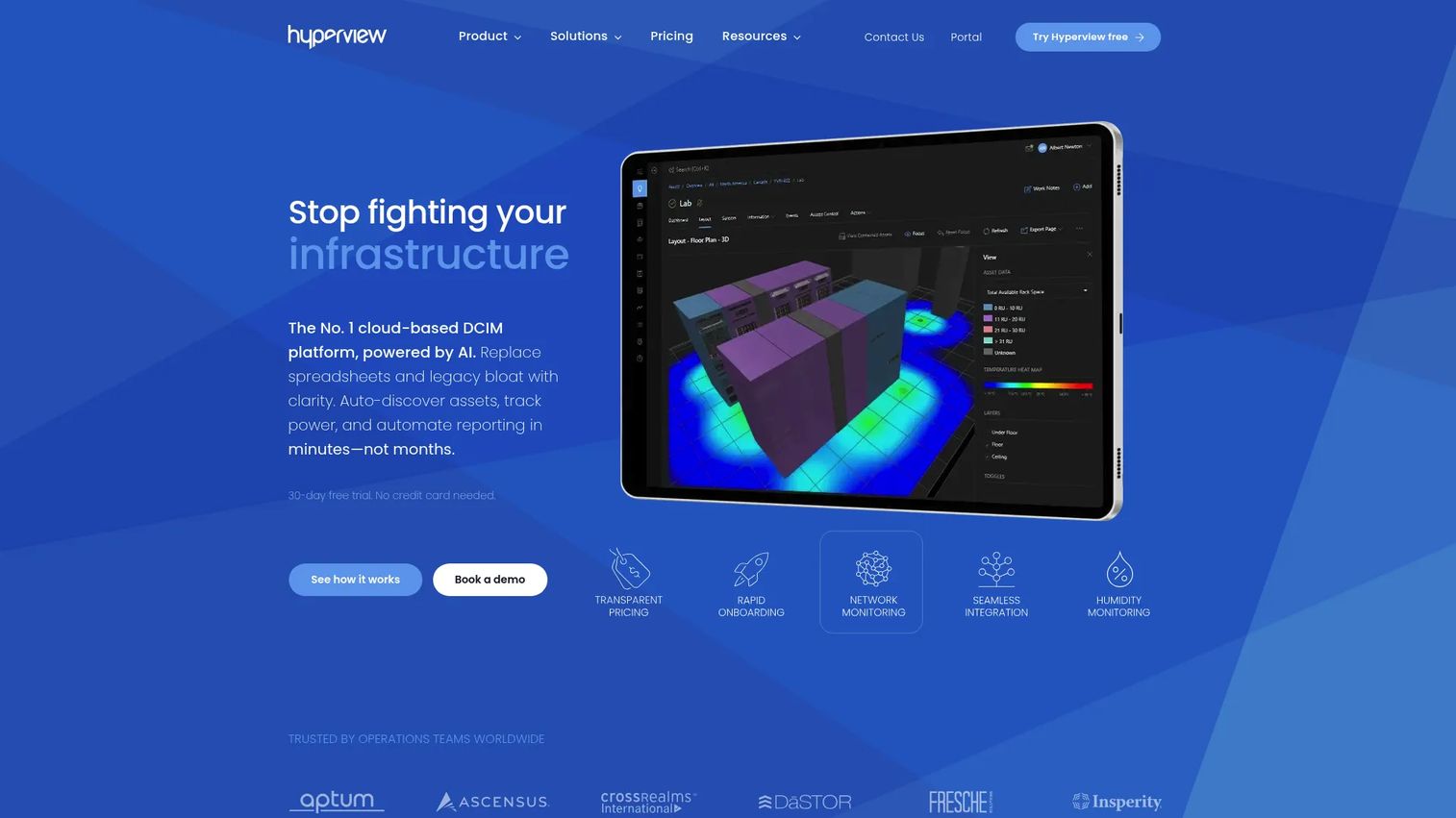
Hyperview is a cloud-based data center management software platform for teams that want operational monitoring, asset tracking, and capacity planning without running a self-hosted application. It supports agentless auto-discovery using IPMI, SNMP, and BACnet, and includes REST APIs and a ServiceNow integration. For PMs who want shared access across teams or multiple sites without adding another self-managed infrastructure application, cloud delivery removes a meaningful operational burden.
Best for: Data center operations teams seeking SaaS-based DCIM for distributed environments, colocation operations, or modern physical infrastructure management.
Key features
- Cloud-based asset discovery and lifecycle management
- Capacity and space planning for power, cooling, and floor space
- Power, energy, and environmental monitoring
- Agentless auto-discovery via IPMI, SNMP, and BACnet
- REST APIs and ServiceNow integration
Why choose Hyperview: The SaaS model means no platform to deploy and maintain internally. That matters when infrastructure team bandwidth is the bottleneck. Integration requirements with existing facilities data, ITSM workflows, or monitoring platforms should be tested early to confirm compatibility with the current stack.
Hyperview pricing: Starts at $3.00 per asset per year (annual subscription, minimum 500 assets). Add-ons include Accelerated Polling ($1.00/asset/year), Connectivity ($2.00/asset/year), and ServiceNow Integration ($1.00/asset/year). A 30-day free trial with no credit card required is available. Pricing verified October 2026 at hyperviewhq.com/pricing.
G2 rating: 4.8/5 (verified October 2026)
4. EcoStruxure IT Advisor
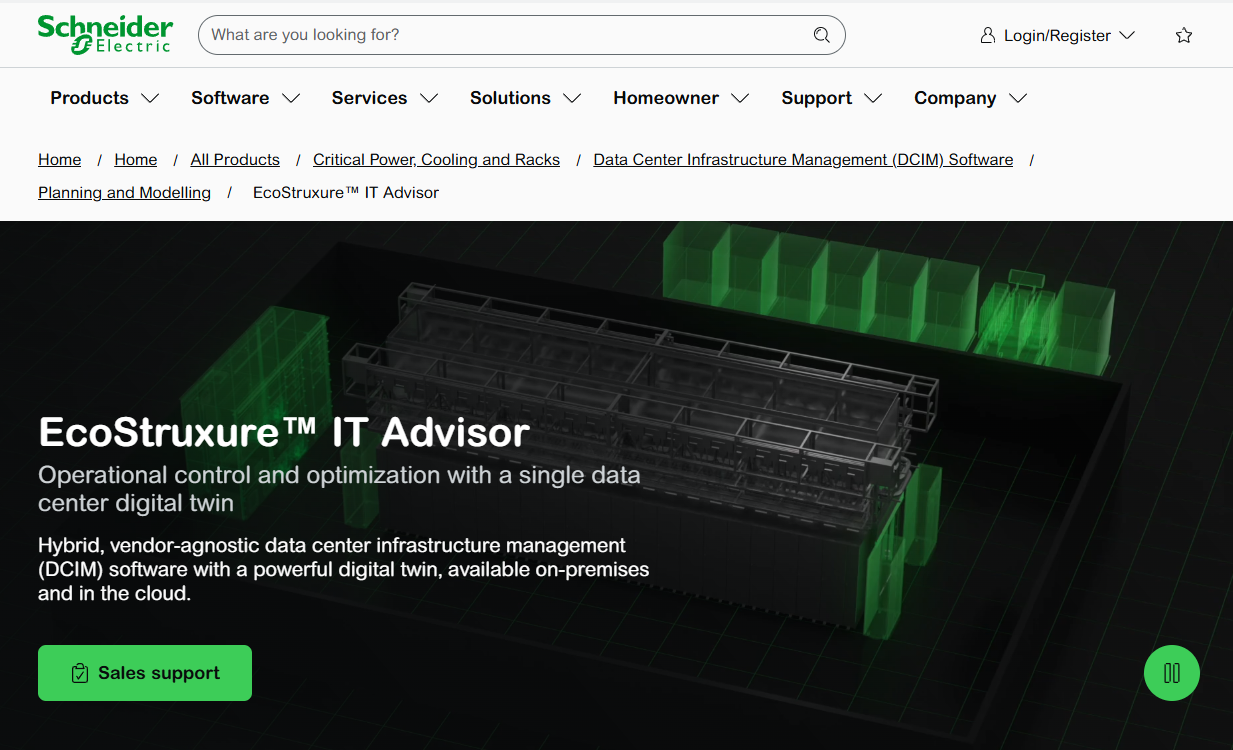
EcoStruxure IT Advisor from Schneider Electric is a DCIM platform built around digital-twin modeling of data center infrastructure. It covers assets, racks, power, cooling, and dependencies, and supports what-if capacity analysis for planning changes before they affect production. Multi-site and colocation environments are within scope. Fit is strongest when the organization already operates substantial Schneider Electric infrastructure and needs a planning layer that connects physical constraints to operational decisions.
Best for: Facilities and IT teams that need digital-twin capacity planning and physical infrastructure management across complex or multi-site environments.
Key features
- Digital-twin modeling of assets, racks, power, cooling, and dependencies
- Capacity planning with predictive what-if impact analysis
- Multi-site and colocation environment management
- Power and cooling planning with facilities-focused reporting
- Environmental monitoring support
Why choose EcoStruxure IT Advisor: When power, cooling, energy, and facility constraints drive the infrastructure roadmap as much as server inventory does, a platform designed around physical infrastructure context belongs in the shortlist. Validate integration depth with existing ITSM, CMDB, and third-party hardware before committing. The question is fit with the current operational estate, not features in isolation.
EcoStruxure IT Advisor pricing: Both on-premises subscription and SaaS-hosted subscription options are listed by Schneider Electric, but pricing figures were not displayed on the vendor's product pages as of October 2026. Contact Schneider Electric for current packaging.
5. Sunbird dcTrack
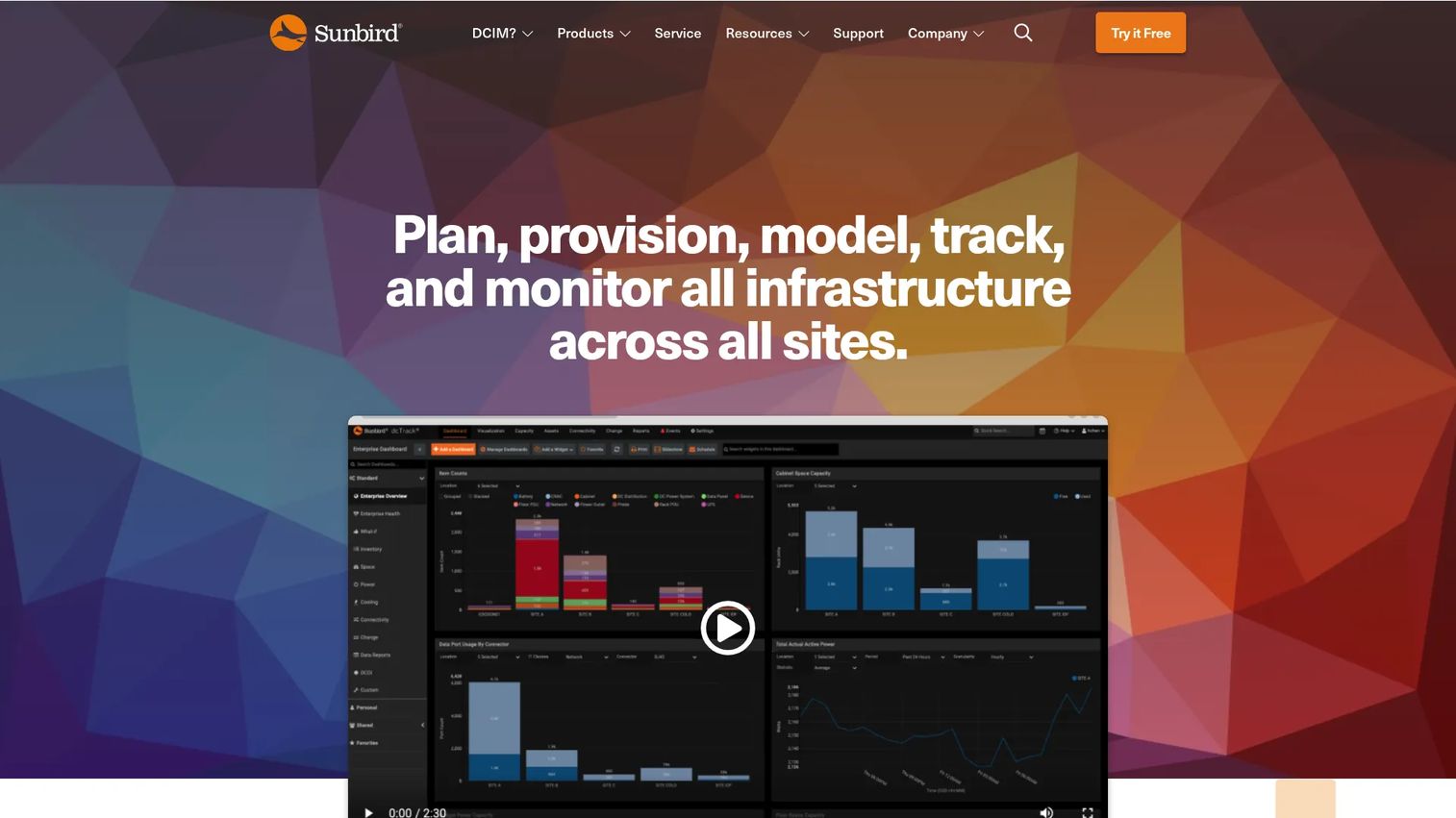
Sunbird dcTrack is a DCIM operations platform focused on asset management, capacity planning, change management, and data center visualization. Its cabinet-based pricing model and transparent public tiers make it one of the easier tools to budget before entering a sales conversation. For operations teams moving off spreadsheets and isolated rack diagrams, it provides structured workflows for moves, adds, changes, and decommissions.
Best for: Data center operations teams that need structured asset, capacity, and change management workflows rather than a simple inventory database.
Key features
- Asset and change management with workflow automation
- Rack elevation visualization with 3D cabling views
- Space, power, and cooling capacity management and reservation
- Port-to-port cable management
- Built-in reporting and ServiceNow and VMware integrations
Why choose Sunbird dcTrack: The tool fits teams that need repeatable operational processes, not just visibility. Cabinet-based pricing means costs scale directly with the physical footprint, which is straightforward to model during procurement. Define ownership for rack data and power feeds before implementation. A detailed model loses value when updates depend on informal memory rather than a defined update process.
Sunbird dcTrack pricing: dcTrack DCIM Operations starts at $19.50 per cabinet per month ($234/cabinet/year on an annual subscription). The DCIM Suite Bundle starts at $27.50 per cabinet per month ($333/cabinet/year). A perpetual license is available by quote. A free test drive is available. Pricing verified October 2026 at sunbirddcim.com/pricing.
G2 rating: 4.6/5 (verified October 2026)
6. NetBox
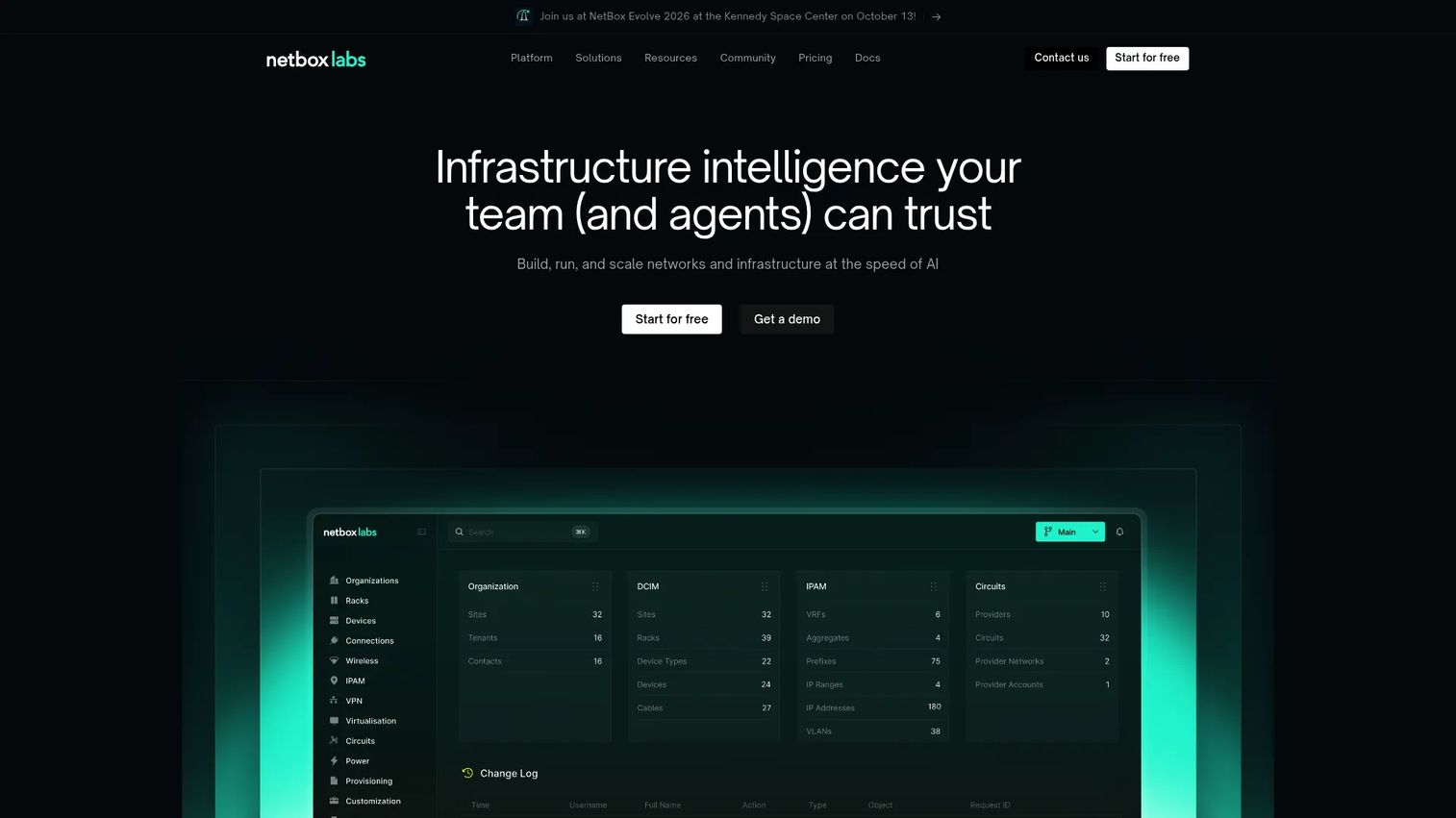
NetBox is an open source network and infrastructure source-of-truth platform covering IP address management, device inventory, racks, cables, circuits, virtualization, and network topology. Its API-first design makes it a natural fit for teams building infrastructure automation pipelines. Where other DCIM tools focus on facilities operations, NetBox is strongest as the authoritative data model that other systems consume. Teams evaluating open source DCIM software will find NetBox covers the infrastructure inventory layer well; full facilities monitoring and power chain management may require complementary tooling.
Best for: Engineering and network teams that need an extensible, automation-friendly source of truth for network, physical inventory, and infrastructure data.
Key features
- IP address management (IPAM) with subnet and VLAN modeling
- Device and rack inventory with detailed asset records
- Cable and circuit tracking including physical connections
- API-first REST and GraphQL interfaces
- Custom fields, webhooks, plugins, and automation-friendly extensibility
Why choose NetBox: The PM case is accurate infrastructure data that downstream automation can trust. NetBox is the right choice when the central problem is modeling network and physical inventory correctly, and when the team has the internal capacity to manage a self-hosted deployment. Plan for data stewardship, hosting, integration design, and ongoing process ownership.
NetBox pricing: The community edition is open source and free to self-host. NetBox Cloud offers Starter, Professional, and Premium plans; pricing requires contacting NetBox Labs. Pricing verified October 2026 at netboxlabs.com/pricing.
G2 rating: 5.0/5 (verified October 2026, based on 2 reviews)
7. openDCIM
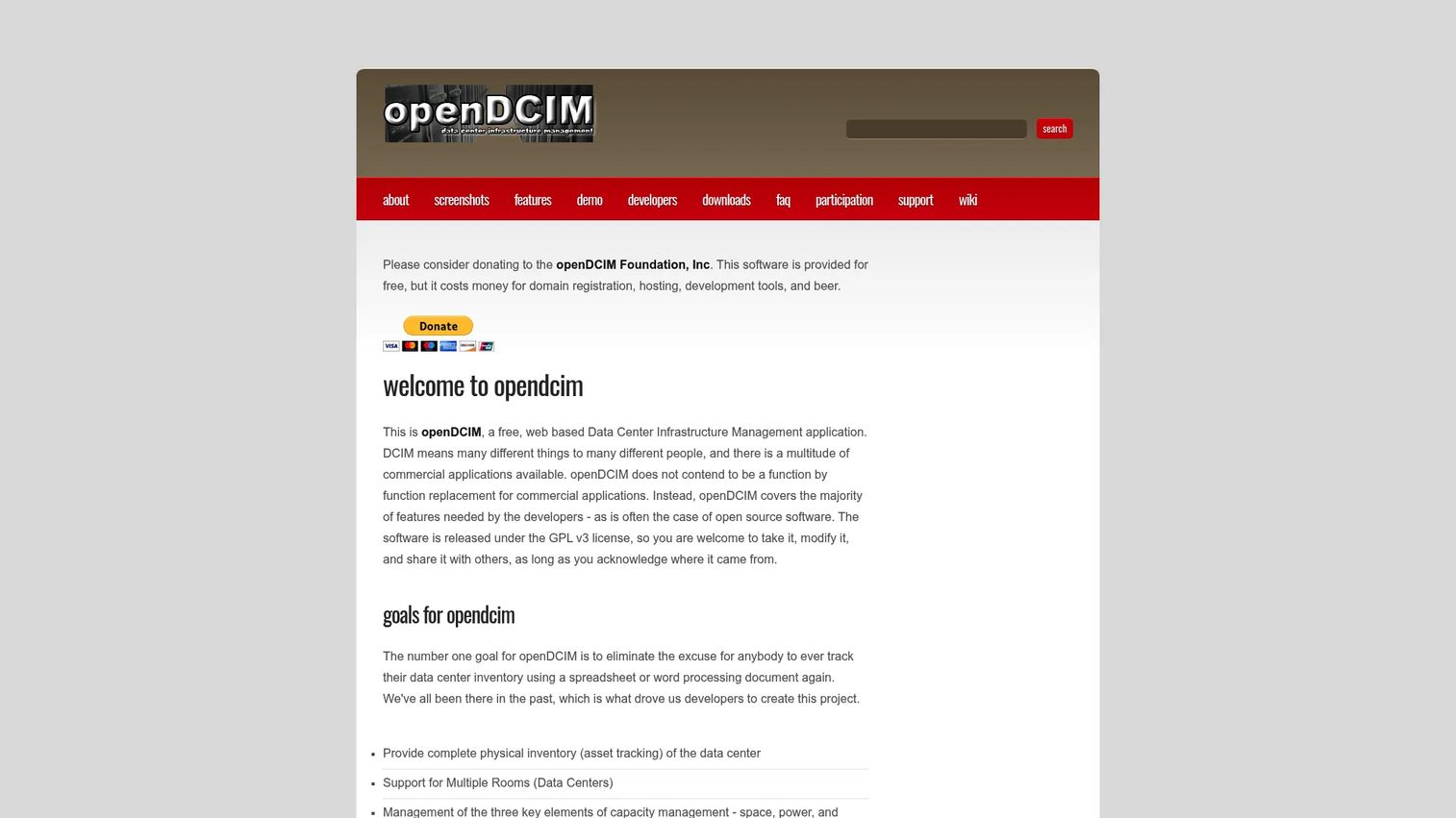
openDCIM is a free, web-based data center infrastructure management application for physical inventory, rack management, power tracking, and basic facility documentation. It suits smaller teams, labs, colocation operators, or organizations with limited budget and internal technical capacity who need a baseline operational system without committing to a commercial platform.
Best for: Teams that need practical rack, power, and asset visibility without a commercial enterprise platform, and have internal capacity to manage self-hosted software.
Key features
- Rack and cabinet management with graphical layout views
- Asset inventory records and lifecycle tracking
- Power chain documentation and connection mapping
- Fault-tolerance and outage-impact simulation
- Multiple rooms and data centers with user-rights management
Why choose openDCIM: It's the right starting point when budget is the binding constraint and requirements are focused on rack inventory, basic power tracking, and physical documentation. A free license does not mean a zero-cost rollout. The organization still owns implementation, hosting, security configuration, integrations, and data quality. Budget for that overhead when comparing it to commercial options.
openDCIM pricing: Free under the GPL v3 license. No paid tiers exist. Verify current support and hosting partner options separately at opendcim.org.
G2 rating: 4.4/5 (verified October 2026)
Considerations when choosing DCIM software
Start with the operating decision you need to improve
Before evaluating dashboards, identify the specific bottleneck: Asset data accuracy, capacity planning, power visibility, change workflows, energy management, or dependency discovery. A platform optimized for power monitoring solves a different problem than one optimized for change workflow automation. The scope of that decision drives which features matter and which integrations are non-negotiable. Related data center change management practices also affect what the DCIM tool needs to connect to.
Validate the data model before the dashboard
A polished visualization cannot fix stale asset records. Before committing to a platform, map who owns each data field, how updates happen after moves and changes, and what the process is when someone decommissions a device. The data model is the foundation. Teams skipping this step end up with another system that looks authoritative but isn't.
Map integrations to the system of record
Identify whether DCIM imports data from CMDB and ITSM, enriches those systems, or replaces them as the source of truth for specific domains. Verify support for existing PDUs, sensors, BMS, EPMS, and monitoring tools. An integration list on a vendor's feature page does not confirm depth, bidirectionality, or maintenance burden.
Price implementation, not only licenses
Ask vendors about onboarding scope, data migration effort, integration configuration, training, and ongoing administration requirements. A lower subscription can cost more over two years if the platform needs a major cleanup project before it reflects physical reality. Sunbird dcTrack's cabinet-based pricing is straightforward to model. Nlyte and Device42 require a scoping conversation to estimate total cost.
Run a representative pilot
Test with one actual rack, a real power and cooling constraint, and one change workflow end to end. The pilot should expose data gaps, reveal integration friction, and test whether stakeholder handoffs work in practice. A successful pilot on representative data is stronger evidence than a polished vendor demo.
How to choose the right DCIM software for your team
If you need enterprise-wide lifecycle and capacity governance
Start with Nlyte. It fits large, distributed environments where the operating model spans facilities, IT operations, colocation, cloud, and edge, and where the team needs a platform that can connect infrastructure inventory to energy reporting and change workflows. Budget for implementation scope accordingly.
If discovery and dependency mapping are the immediate priority
Evaluate Device42. It helps when the team lacks a trustworthy inventory before a migration, consolidation, or modernization initiative. Agentless discovery exposes relationships that static inventories miss, which changes the risk profile of infrastructure planning work. Teams also evaluating broader asset discovery software will find the two categories overlap meaningfully here.
If you want cloud-based DCIM for distributed operations
Choose Hyperview. Transparent asset-based pricing, a 30-day free trial, and SaaS delivery make it the most accessible starting point for teams that need ongoing monitoring and capacity workflows without a self-hosted platform.
If power, cooling, and facilities decisions drive the project
Evaluate EcoStruxure IT Advisor and Sunbird dcTrack based on your hardware ecosystem and workflow requirements. EcoStruxure IT Advisor fits teams that need digital-twin planning across complex physical infrastructure, particularly in Schneider Electric environments. Sunbird dcTrack fits operations teams that need structured change and capacity workflows with predictable cabinet-based pricing.
If you need an open source infrastructure source of truth
Choose NetBox for IPAM, network topology, and automation-oriented modeling. Choose openDCIM when rack and physical inventory management is the core need and internal technical capacity can handle self-hosted deployment and maintenance.
Conclusion
The data center infrastructure management software category spans a wide range of use cases: From enterprise lifecycle governance across hybrid environments to focused open source rack inventory. The seven tools above cover that spectrum.
Nlyte suits large, complex organizations needing broad operational coverage. Device42 is the starting point when discovery and dependency visibility are the bottleneck. Hyperview offers the most accessible cloud-based path with transparent pricing. EcoStruxure IT Advisor and Sunbird dcTrack address facilities and power-focused operations from different angles. NetBox and openDCIM serve teams that need infrastructure source-of-truth capabilities without a commercial license.
Choose based on the operating decision you need to improve first. A platform that improves data visualization for capacity planning but fails to maintain accurate asset records will not become a source of truth. Start with the specific bottleneck, run a representative pilot, and expand the implementation in phases.
Start your journey with Guideflow today!
FAQs about DCIM software
DCIM software brings together physical asset inventory, rack layouts, power chain data, cooling capacity, connectivity maps, and environmental telemetry in a single operational model. IT and facilities teams use it to plan changes with more context, reduce capacity surprises, and maintain an audit trail across moves, adds, and decommissions. It is also used for energy management reporting and compliance documentation.
A CMDB focuses on configuration items and service relationships: What's running, what depends on what, and how services connect. DCIM adds the physical infrastructure layer, including rack positions, power chains, cooling constraints, available floor space, and environmental telemetry. Many teams run both, with DCIM providing the physical context that CMDB records reference but rarely contain.
Smaller single-site environments with stable inventory and infrequent changes can often manage with a well-maintained inventory tool or structured spreadsheet. The economics shift when multiple sites, colocation providers, or edge locations are involved, when power and cooling constraints actively affect planning, or when audit and change tracking problems create recurring operational friction. Those conditions are the common triggers for a DCIM deployment.
It can be, depending on scope and internal ownership capacity. NetBox is widely used in production environments for network and infrastructure source-of-truth modeling. openDCIM works for focused rack and physical inventory management. Both require the organization to own hosting, security configuration, access controls, integration design, and data stewardship. Evaluate whether that internal overhead is cheaper than a commercial subscription given the team's size and existing infrastructure.
Commercial platforms price by several variables: Site count, cabinet or rack count, monitored device count, required modules, or user seats. Sunbird dcTrack starts at $19.50 per cabinet per month with transparent tiers. Hyperview starts at $3.00 per asset per year. Nlyte, Device42, and EcoStruxure IT Advisor require custom quotes based on deployment scope. Budget for data cleanup, integration configuration, training, and ongoing administration alongside license costs.
Many DCIM platforms ingest or connect to power distribution, environmental sensor, and cooling data. Coverage depth varies by platform and deployment. Verify support for your existing PDUs, sensors, BMS connections, and EPMS platforms during evaluation. Hyperview uses agentless auto-discovery via IPMI, SNMP, and BACnet. Nlyte and Sunbird dcTrack include power and environmental monitoring in their core capabilities. The buyer should confirm which protocols and hardware vendors are supported before committing.
Successful implementation starts with a defined use case and a clear data ownership model. Identify who updates each data type, how updates happen after changes, and what the process is when assets move or are decommissioned. Run a pilot on a representative site or room before expanding: Test the integrations, validate the workflows, and confirm that stakeholder handoffs work in practice. Expand in phases rather than attempting a full-estate rollout from day one.