Partner programs rarely fail at recruitment. They fail at activation. You sign partners, hand them a login and a folder of PDFs, and then watch the portal analytics show zero engagement for six months. Deal registration arrives through email threads. MDF requests live in spreadsheets. Co-marketing attribution is a best guess.
The indirect channel is too big to manage this way. The global PRM market is projected to reach $1.94 billion in 2026, growing toward $4.80 billion by 2033 at a 13.8% CAGR, according to Fairfield Market Research (2026). That growth reflects how many companies are formalizing what was previously held together by shared drives and manual follow-up.
The right PRM platform changes what the channel actually produces. It gives partners self-serve access to content and training, makes deal registration consistent, and gives you the attribution data to defend partner-sourced pipeline in a board meeting. The wrong choice just adds another portal nobody logs into.
This guide cuts through 13 platforms to help you pick the one that fits your partner motion.
What's inside
This guide compares 13 PRM platforms for partner teams in 2026. Tools were selected based on recurring category relevance, real user data, and fit across partner program types.
Evaluation criteria:
- Partner onboarding and lifecycle management
- Deal registration, referral tracking, and pipeline visibility
- Partner portal depth and content enablement
- CRM and marketing automation integrations
- Analytics, governance, and program scale
TL;DR
- Best overall for partner enablement: Allbound, for teams that need a portal partners will use and analytics you can present to leadership
- Best for SaaS affiliate and referral programs: PartnerStack, for recruiting and paying partners across multiple program types
- Best for Salesforce-native channel operations: Salesforce Partner Relationship Management, starts at $25/member/month
- Best for enterprise channel programs: Impartner PRM or ZINFI, for multi-tier, multi-region programs
- Best for HubSpot and Salesforce-connected collaboration: Introw, with a free Starter plan
- Best for small or early-stage partner programs: Kiflo PRM at $399/month, or Partner.io at $79/seat/month
What is partner relationship management software?
Partner relationship management software is a platform that helps companies recruit, onboard, enable, manage, and measure channel, referral, reseller, affiliate, and ecosystem partners from one shared system.
Where a CRM manages direct customer relationships, PRM software manages external partner workflows and indirect revenue motions. Most channel teams need both, connected.
Core capabilities the category covers:
- Partner portals: Self-service access to content, playbooks, training, and program updates
- Partner onboarding: Applications, approvals, certification workflows, and activation tracking
- Deal registration: Lead submission, opportunity protection, routing, and conflict management
- Enablement content: Asset libraries, campaign kits, battlecards, and partner training modules
- MDF and incentives: Funds requests, approvals, claims, and payout workflows
- Partner analytics: Engagement tracking, pipeline reporting, revenue attribution, and partner scorecards
- CRM integrations: Connections to Salesforce, HubSpot, marketing automation, and revenue workflows
- Co-selling and collaboration: Shared pipeline, account mapping, partner communications, and business planning
The category is expanding beyond traditional reseller portals toward broader partner ecosystem management, including technology partners, SIs, affiliates, and marketplace programs. Teams evaluating PRM in 2026 should map each vendor against the specific partner motions they actually run, not just portal feature lists.
When to use partner relationship management software
Turn signed partners into selling partners
The activation gap is the core problem in most partner programs. Onboarding sequences that live in email chains do not scale. PRM software creates structured activation paths: Applications get approved automatically, training modules get assigned, certifications get tracked, and content becomes findable. You stop chasing partners for status updates and start seeing which ones are progressing.
Manage deal registration without spreadsheet chaos
Deal registration protects partner-sourced pipeline from channel conflict and gives your sales team a reliable source of truth. A proper PRM handles submission, duplicate checking, approval routing, partner notifications, and CRM sync. Without it, the same opportunity can be registered twice, creating the kind of attribution mess that makes it hard to defend any partner-sourced revenue number.
Scale co-marketing and partner enablement
Partner marketers managing co-marketing across dozens of partner profiles cannot rebuild every asset manually. PRM platforms centralize campaign kits, MDF workflows, co-branded content, and partner communications. The result is a partner portal with assets that partners can find, customize, and use without calling someone on your team first.
Partner relationship management software comparison
The table below covers all 13 tools in this guide. Pricing and G2 ratings reflect verified data from vendor pricing pages and G2 listings.
| # | Product | Best for | Key differentiator | Pricing | G2 rating |
|---|---|---|---|---|---|
| 1 | Allbound | Mid-market partner enablement | Portal activation and content management | Custom pricing | N/A |
| 2 | PartnerStack | SaaS referral and affiliate programs | Partner marketplace and automated payouts | Custom pricing | 4.7/5 |
| 3 | Salesforce PRM | Salesforce-native channel ecosystems | Deep CRM integration and partner workflows | From $25/member/month | 4.3/5 |
| 4 | Impartner PRM | Enterprise channel operations | Mature portal, MDF, and lifecycle management | Custom pricing | 4.5/5 |
| 5 | ZINFI | Global channel programs | Unified platform across all lifecycle stages | From $2,250/month | 4.9/5 |
| 6 | ZiftONE | Channel marketing automation | Through-channel marketing and campaign execution | Custom pricing | 5.0/5 |
| 7 | Introw | CRM-connected partner collaboration | Off-portal collaboration for HubSpot and Salesforce | Free plan available | 4.8/5 |
| 8 | Magentrix PRM | Configurable partner portals | Deep CRM integration and workflow flexibility | From $1,500/month | 4.6/5 |
| 9 | Kiflo PRM | SMB partner programs | Simple onboarding, deal tracking, and commissions | From $399/month | 4.7/5 |
| 10 | Partner.io | Lightweight partner management | Referral, deal registration, and payouts in one plan | $79/seat/month | 4.9/5 |
| 11 | Channeltivity | Channel sales operations | Deal registration and distributor workflows | Custom pricing | 4.7/5 |
| 12 | Oracle PRM | Oracle enterprise environments | Oracle CX integration and enterprise channel fit | From $20/user/month | N/A |
| 13 | impact.com | Affiliate and performance partnerships | Partnership marketplace, tracking, and payouts | From $30/month | 4.4/5 |
Best 13 partner relationship management software tools for 2026
1. Allbound
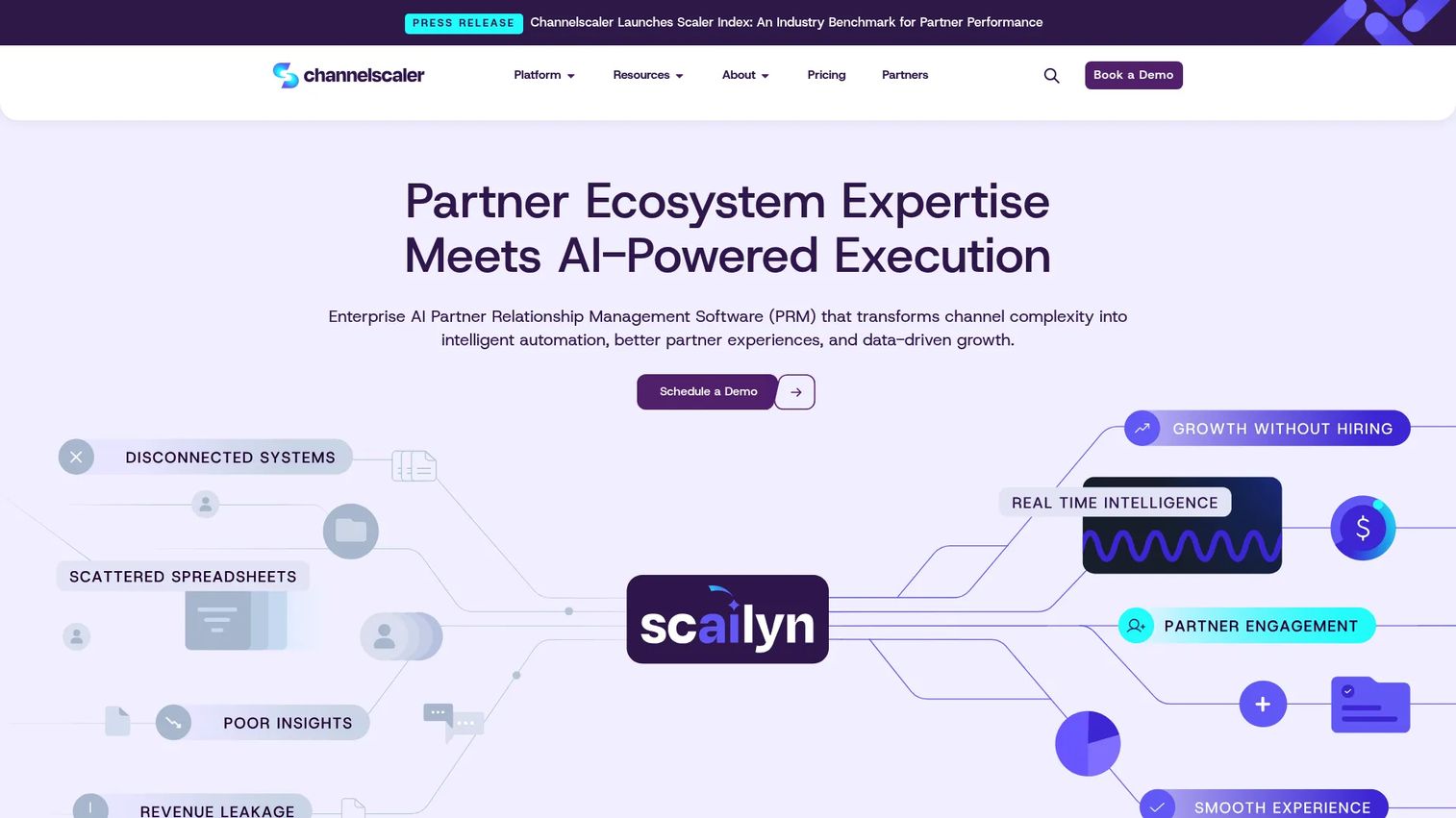
Allbound is a PRM platform built for partner enablement, with a focus on creating partner portals that partners actually log into. It covers deal registration, partner onboarding, content management, training, and partner engagement analytics in one system. The platform positions itself around the activation problem: Getting signed partners to become selling partners.
Best for: Mid-market and enterprise teams whose biggest problem is partner activation and content adoption.
Key features
- Partner portal with content and training access
- Deal registration and pipeline tracking
- Partner onboarding and certification workflows
- Engagement analytics by partner and content type
- MDF management and partner communications
Why choose Allbound: Choose Allbound when partner activation and portal adoption are the metrics you need to move. It fits partner marketing managers who need a single destination where partners can find everything they need and where you can track who is engaging.
Allbound pricing: Allbound prices by quote, with packaging driven by program complexity and partner count. Contact sales for a proposal.
2. PartnerStack
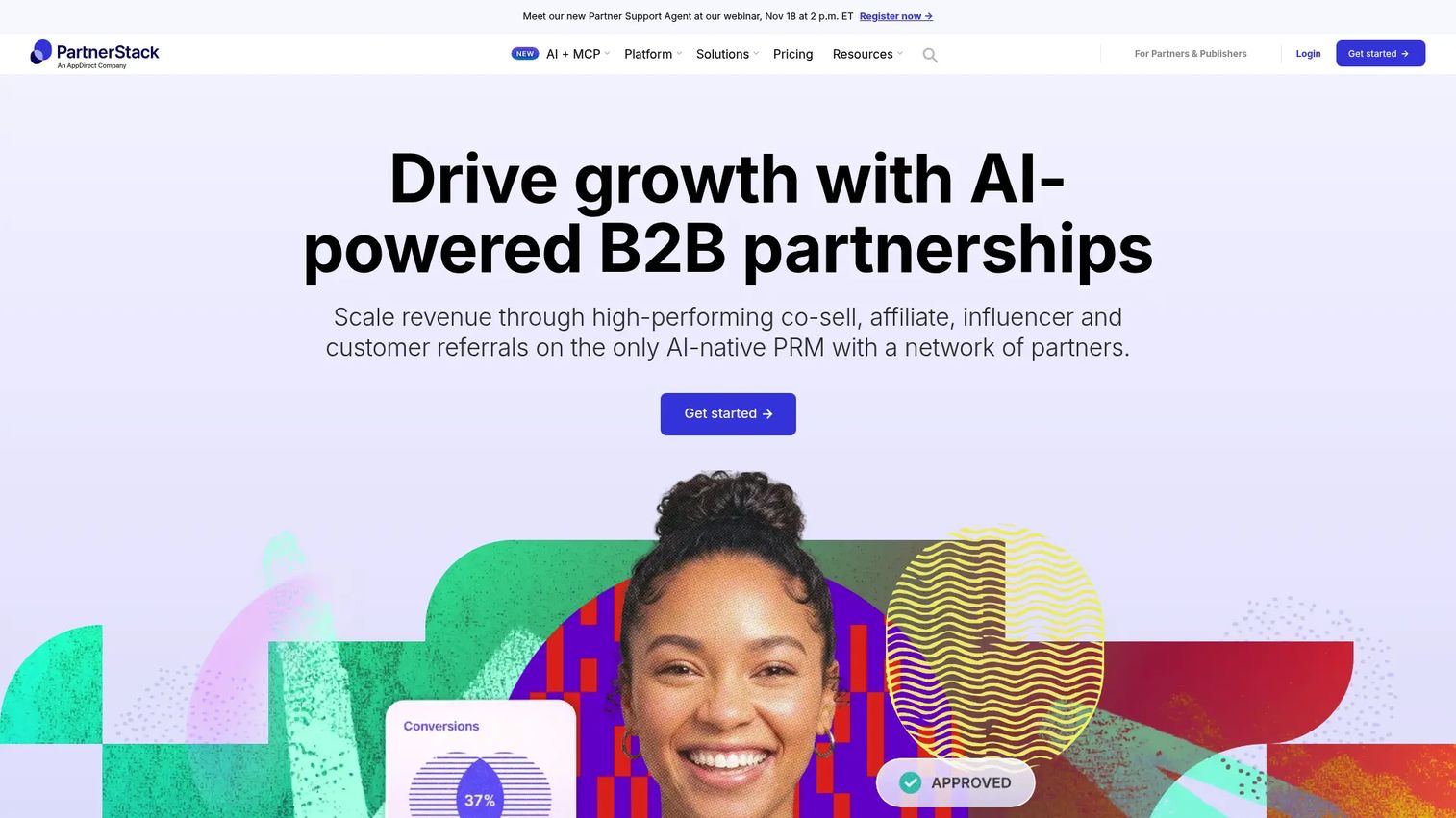
PartnerStack is an AI-powered B2B partnership platform built for companies scaling affiliate, referral, agency, and reseller programs. Its marketplace lets partners discover and join programs, while the platform handles onboarding, tracking, and automated commission payments. PartnerStack has a G2 rating of 4.7/5.
Best for: SaaS companies that want to recruit, track, and pay partners across multiple program types from one platform.
Key features
- Partner marketplace for program discovery
- Referral link and lead tracking
- Automated commission calculation and payouts
- Partner onboarding and enablement workflows
- Program analytics and revenue attribution
Why choose PartnerStack: Choose PartnerStack when partner acquisition matters as much as portal depth. It fits teams building revenue through affiliate and referral channels who need reliable payout workflows and clear performance data.
PartnerStack pricing: PartnerStack lists Launch, Growth, and Enterprise plans, all priced through sales conversations. Cost drivers include program type, partner volume, marketplace access, and payout complexity.
3. Salesforce Partner Relationship Management
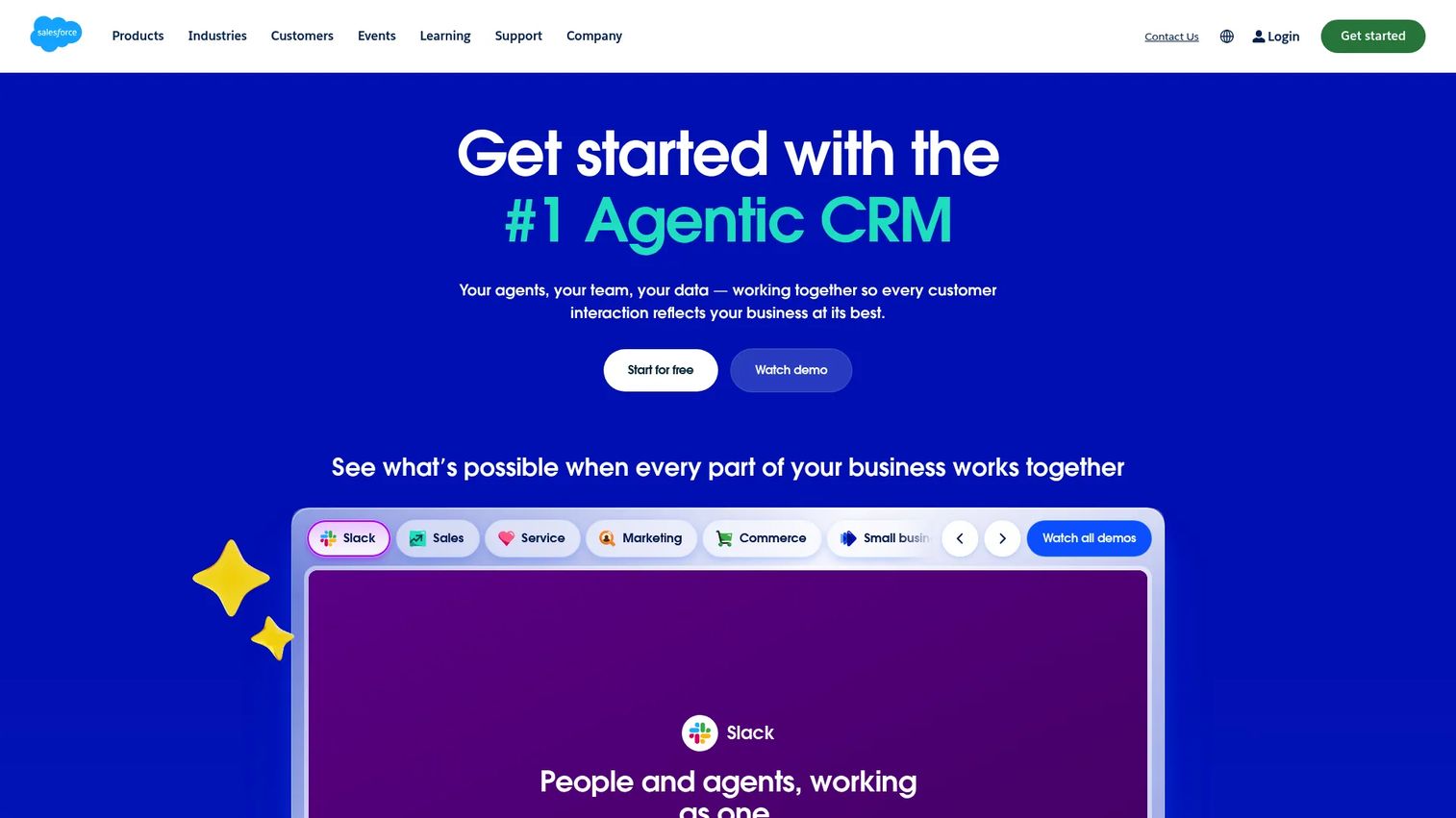
Salesforce Partner Relationship Management (now also positioned as Salesforce Partner Cloud) brings partner portals, deal registration, lead distribution, channel analytics, and AI-enabled workflows into the Salesforce environment. If your direct sales team runs on Salesforce, partner data lives where your pipeline already lives. G2 rates it 4.3/5.
Best for: Salesforce-heavy organizations that need PRM workflows connected to their existing CRM, forecasting, and sales operations.
Key features
- Salesforce-native partner portals
- Deal registration and lead routing
- Channel analytics and dashboards
- Partner selling across connected CRM environments
- AI-powered insights within the Salesforce platform
Why choose Salesforce PRM: Choose it when CRM alignment is the dealbreaker. Partner teams that rely on Salesforce for pipeline data and account management will find a native PRM approach reduces the synchronization work that standalone portals create.
Salesforce PRM pricing: The Partner Relationship Management tier starts at $25/member/month (billed annually). Partner Ecosystem Management, which adds partner enablement, loyalty management, and additional API access, runs $50/member/month. No free tier is available.
4. Impartner PRM
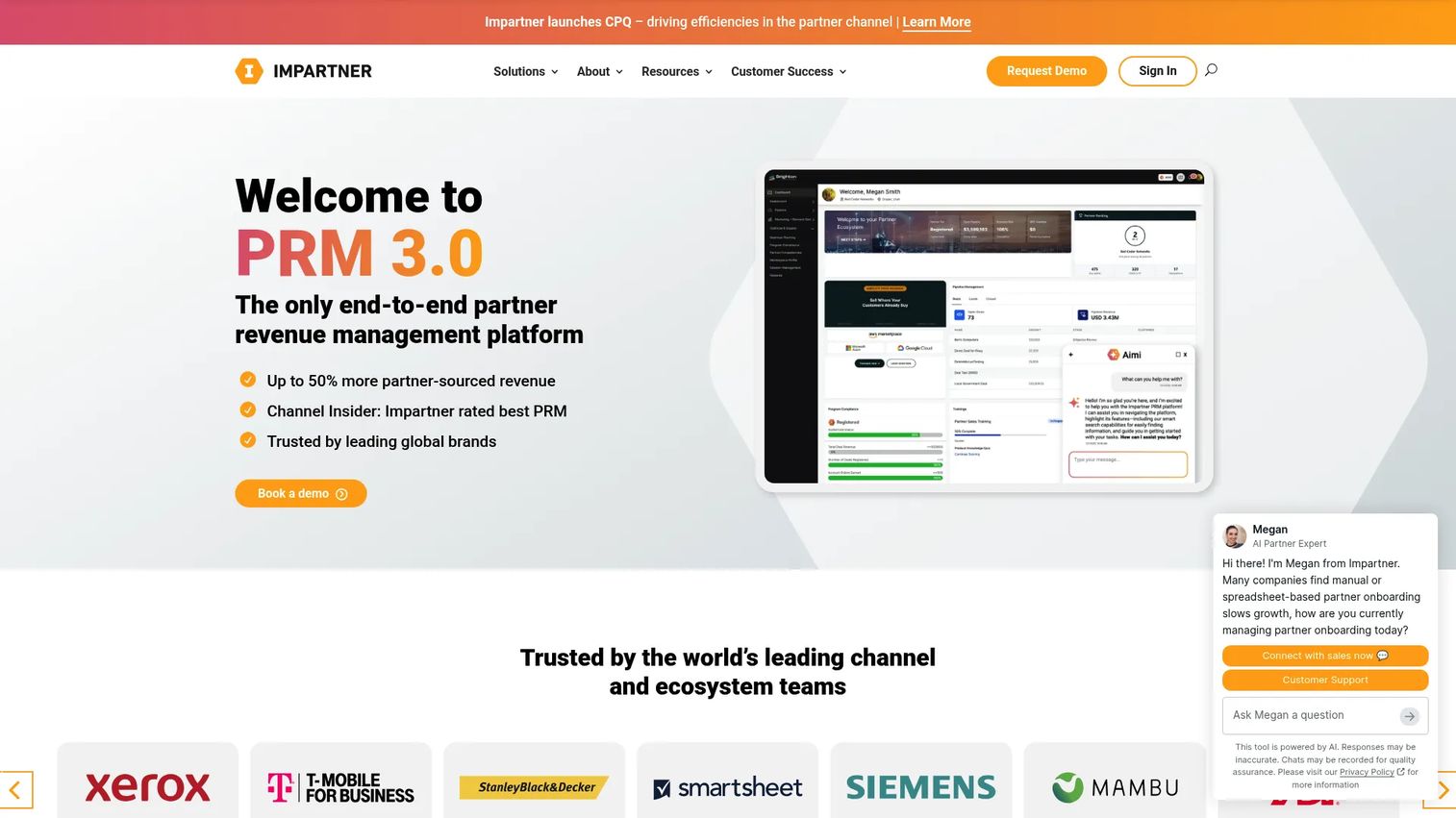
Impartner PRM is an enterprise-grade channel management platform covering partner portals, MDF, onboarding, business planning, deal registration, co-selling, and analytics. It supports Emerge, Ignite, Pro, and Enterprise editions, each scoped to program maturity. Impartner carries a 4.5/5 G2 rating and offers a 30-day free trial.
Best for: Enterprise channel teams managing multi-tier partner programs with mature workflows across MDF, onboarding, and lifecycle management.
Key features
- Partner portal and onboarding workflows
- MDF management with approval and claims
- Deal registration and pipeline management
- AI-powered analytics and reporting
- Integrations with Salesforce, Microsoft Dynamics 365, and HubSpot
Why choose Impartner PRM: Choose Impartner when program complexity demands deeper governance. It fits channel teams managing regional tiers, certifications, and co-marketing operations who need a system built for that scale.
Impartner PRM pricing: All editions (Emerge through Enterprise) are priced on request, with cost driven by modules selected, partner count, and implementation requirements.
5. ZINFI
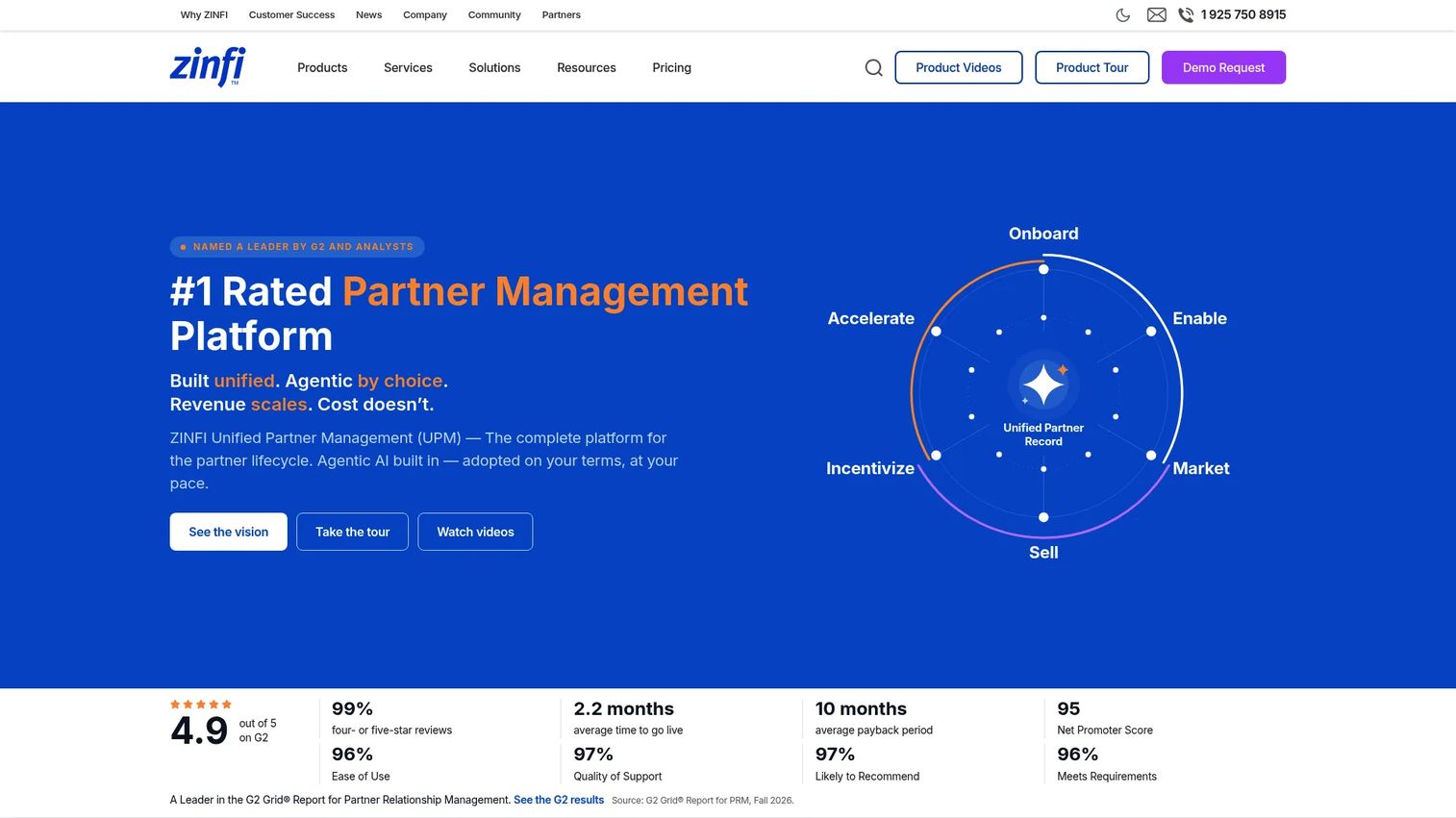
ZINFI offers a Unified Partner Management platform that connects onboarding, enablement, marketing automation, MDF, incentives, deal management, co-selling, and analytics in one system. It is built for technology and manufacturing companies running complex, global indirect channels. ZINFI holds a 4.9/5 G2 rating from 746 reviews.
Best for: Channel organizations that need a single platform connecting partner marketing, partner sales, and partner operations across global programs.
Key features
- Partner onboarding and program management
- Through-channel marketing and content syndication
- MDF, commissions, rebates, and incentive management
- Lead, deal registration, co-selling, and CPQ
- Partner learning, certification, and performance analytics
Why choose ZINFI: Choose ZINFI when partner operations span marketing, sales, and training workflows that need to be managed together. Its Starter plan at $2,250/month covers up to 250 partners with 6 lifecycle apps, making it a concrete starting point before scaling to Professional or Enterprise.
ZINFI pricing: Starter starts at $2,250/month (up to 250 partners, 6 lifecycle apps). Professional runs $3,500/month with 10 apps. Enterprise pricing is available through sales. No free tier is listed.
6. ZiftONE
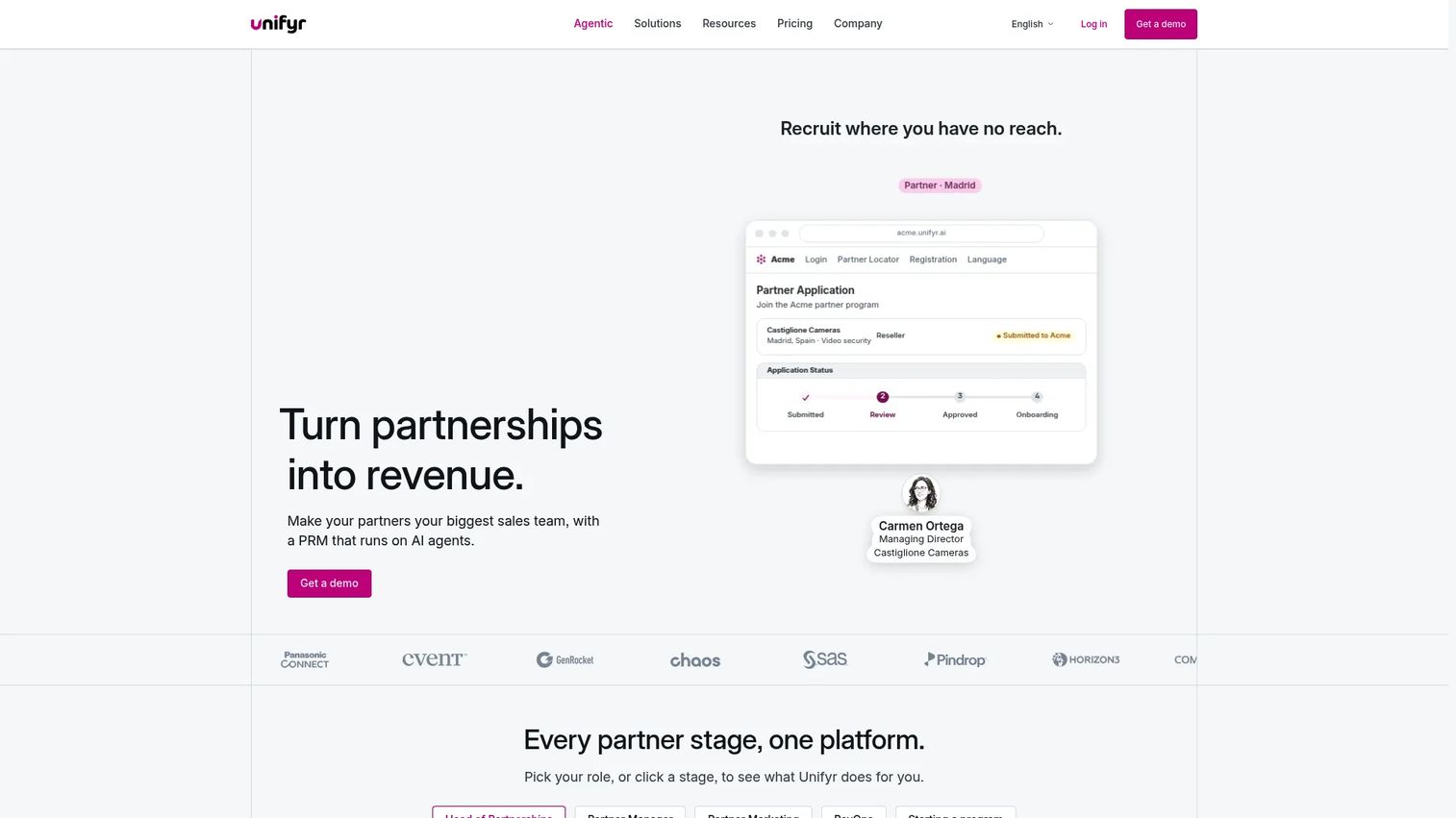
ZiftONE (now operating under the Unifyr brand) is an AI-powered channel and partner platform combining through-channel marketing automation, partner portals, deal registration, channel incentives, and analytics. It is built for teams where co-marketing execution and campaign syndication are as central as deal tracking. G2 currently shows a 5.0/5 seller-level rating.
Best for: Partner marketing teams where campaign execution, content syndication, and MDF reporting are the primary operational pain points.
Key features
- Through-channel marketing and campaign syndication
- Partner recruitment and onboarding
- Partner enablement with content libraries and certifications
- Deal registration and lead distribution
- Channel incentives, rewards, and analytics
Why choose ZiftONE: Choose ZiftONE when co-marketing execution is the central problem. It fits partner marketers managing campaign kits across resellers and distributors who need both PRM depth and marketing automation in one platform.
ZiftONE pricing: The platform is sold through a quote-based model, with cost driven by modules, partner volume, and marketing automation scope.
7. Introw
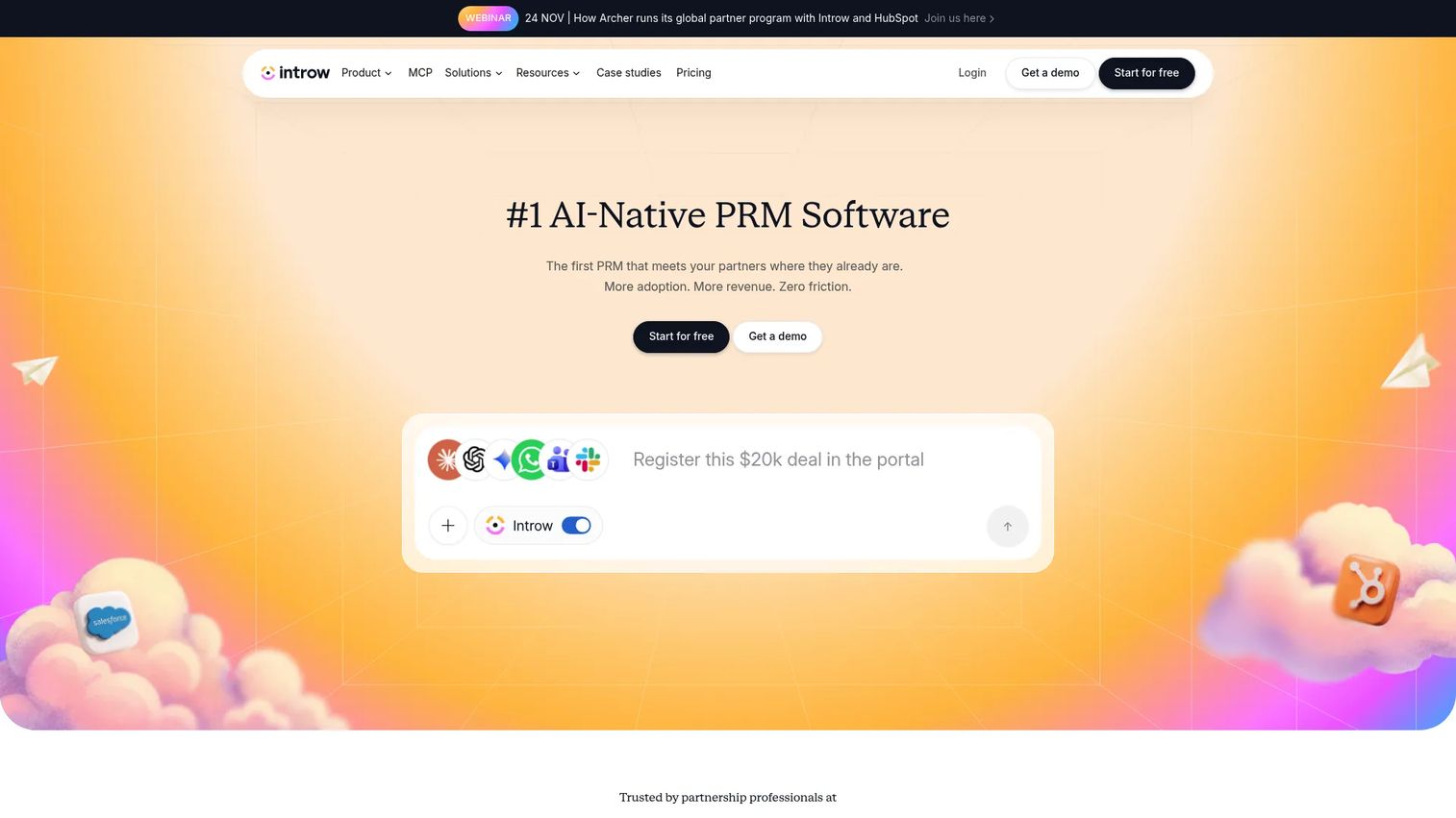
Introw is an AI-native PRM platform built around the idea that many partner teams struggle with portal adoption because traditional portals add friction instead of removing it. Introw connects partner collaboration, deal registration, shared pipeline, onboarding, training, commissions, and AI-powered deal coaching directly to HubSpot and Salesforce. G2 rates it 4.8/5 from 102 reviews.
Best for: SaaS teams that want CRM-connected partner collaboration without the overhead of a traditional heavy-portal rollout.
Key features
- No-code branded partner portals
- Deal and lead registration with shared pipeline
- HubSpot and Salesforce CRM integrations
- Partner onboarding, training, and certification
- Commission plans, incentives, and partner analytics
Why choose Introw: Choose Introw when partner portal adoption has been a problem before. It meets partners closer to the workflows they already use, while keeping partner data connected to your CRM and revenue reporting.
Introw pricing: Starter is free for one seat and one partner portal. Pro, Scale, and Enterprise plans scale by partner count and are priced through sales. A free plan makes it accessible for teams that want to validate the approach before committing.
8. Magentrix PRM
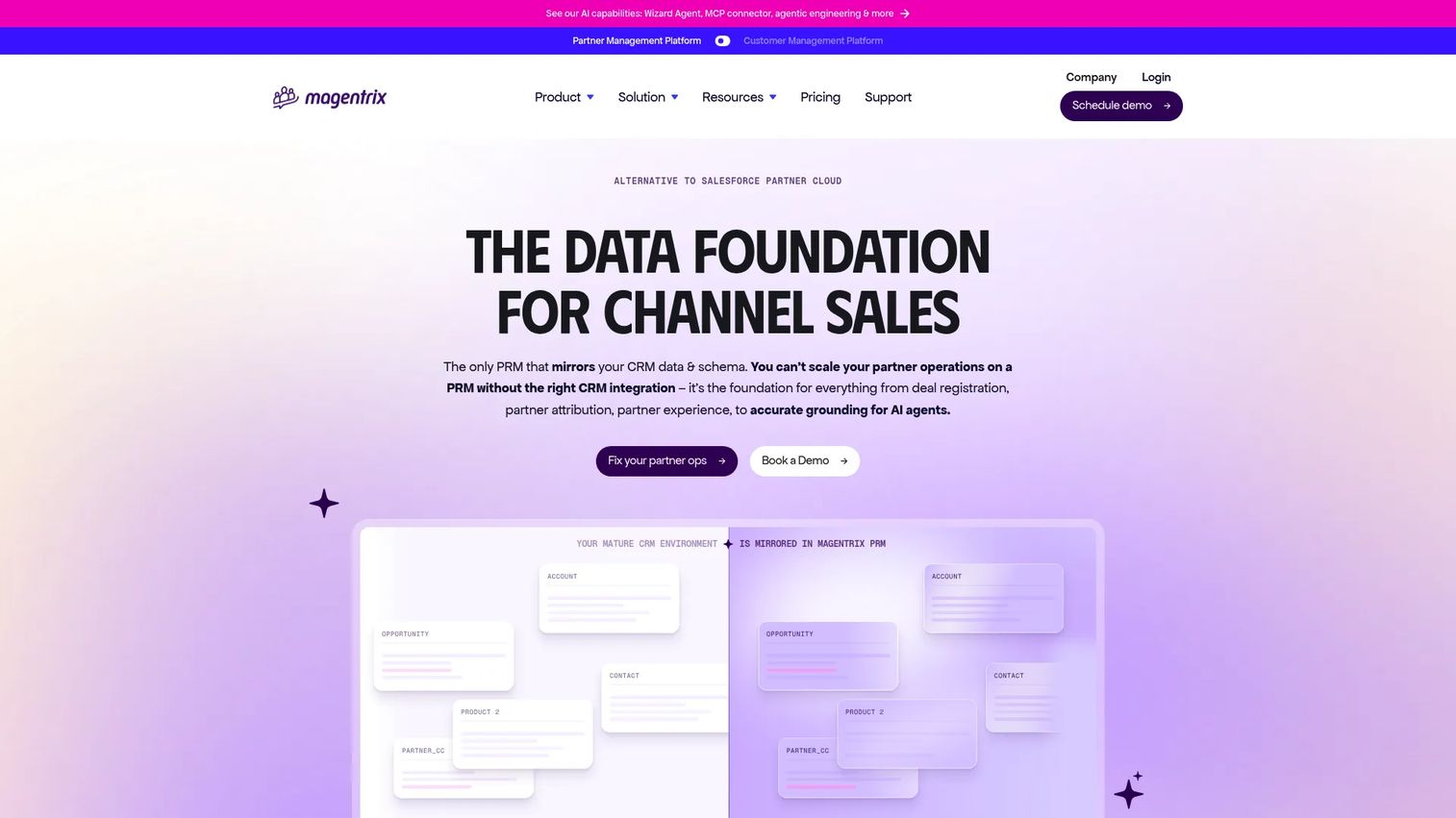
Magentrix PRM is a configurable partner portal and PRM platform covering deal registration, onboarding, training, case management, partner payouts, MDF, and deep CRM integrations. It is built for teams that need to shape the portal to fit specific partner processes rather than conform to a fixed workflow. G2 gives it 4.6/5.
Best for: Teams that need a configurable partner portal with workflow flexibility and CRM depth across Salesforce, Microsoft Dynamics, or HubSpot.
Key features
- Custom portal configuration with workflow automation
- Deal registration and pipeline management
- Partner training and certification LMS
- Partner payouts and MDF management
- Salesforce, Dynamics, and HubSpot integrations with REST API access
Why choose Magentrix PRM: Choose Magentrix when your partner processes are non-standard and a rigid out-of-the-box portal will force workarounds. It fits programs with specific gated content needs or complex portal structures.
Magentrix PRM pricing: Essentials starts at $1,500/month. Advanced runs $3,000/month and adds gamification, MDF, payouts, and advanced developer tools. Unlimited pricing is available through sales. No free trial is offered.
9. Kiflo PRM
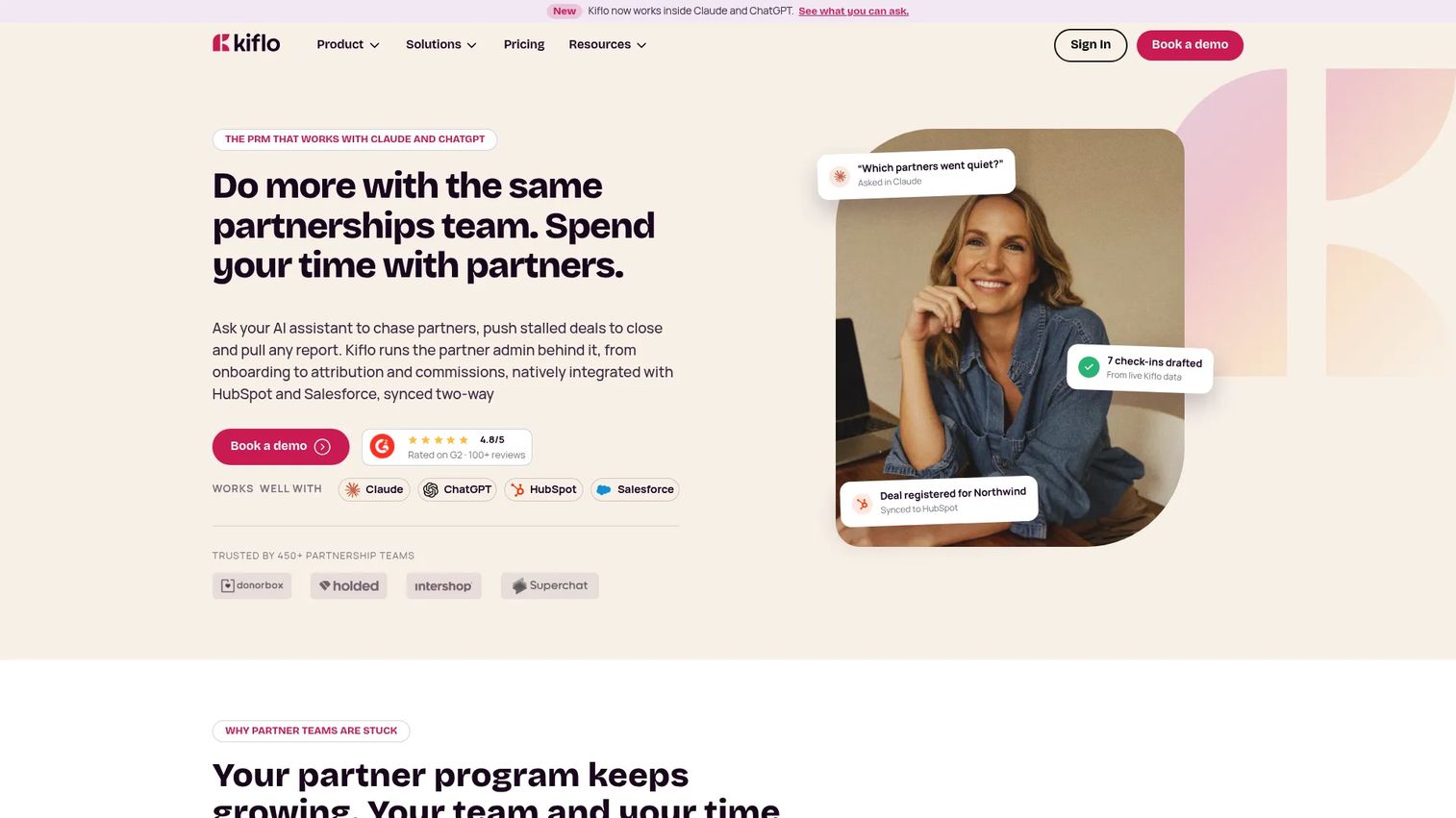
Kiflo PRM is an AI-powered partner management platform for SaaS teams that need deal registration, referral tracking, commission calculation, partner portals, and two-way CRM sync without enterprise complexity. It supports up to 50 active partners on the Core plan and scales from there. G2 rates it 4.7/5.
Best for: SaaS partnership teams moving from spreadsheets into a proper PRM with HubSpot or Salesforce connectivity.
Key features
- Partner portal with lead and deal registration
- Two-way HubSpot and Salesforce sync
- Automatic commission calculation and payout statements
- Partner onboarding, enablement, and certifications
- Account mapping and co-selling workflows
Why choose Kiflo PRM: Choose Kiflo when you need structure without enterprise complexity. It fits teams formalizing a partner program for the first time and wanting clear commission tracking and CRM-connected deal visibility from day one.
Kiflo PRM pricing: Core starts at $399/month on a 12-month contract (billed annually) and supports up to 50 active partners and 3 partner managers. Plus and Premier plans support unlimited active partners and are priced through sales.
10. Partner.io

Partner.io is a full-featured partner management platform for B2B SaaS teams. One plan includes partner portals, referral links, deal registration, program tiers, commission approval, Stripe and ACH payouts, partner training, an AI course builder, account mapping, and integrations with HubSpot, Salesforce, Pipedrive, Slack, Shopify, and Stripe. G2 rates it 4.9/5.
Best for: B2B SaaS teams that want every partner management capability in one plan without gating features behind higher tiers.
Key features
- Branded partner portal with referral links and deal registration
- Commission approval, self-billed invoices, and Stripe/ACH payouts
- Partner training, AI course builder, and certification
- Account mapping and co-selling (Deal Surround)
- HubSpot, Salesforce, Pipedrive, and Shopify integrations
Why choose Partner.io: Choose Partner.io when you want pricing that does not escalate as you add features. The flat per-seat model at $79/seat/month covers everything, and partners are free and unlimited.
Partner.io pricing: One plan at $79 per active team seat per month. No feature gating across tiers. A 7-day free trial is available with no card required.
11. Channeltivity
Channeltivity is a configurable PRM platform for channel sales operations, covering partner portals, deal registration, lead distribution, MDF, training, content management, and reporting. It supports multi-language programs and CRM integrations. G2 rates it 4.7/5.
Best for: Channel sales teams that need deal registration and partner operations workflows across resellers and distributors.
Key features
- Partner portals and onboarding
- Deal registration and lead distribution
- MDF and co-op fund management
- Training, certification, and content libraries
- Multi-language support with CRM integrations
Why choose Channeltivity: Choose Channeltivity when the channel program is sales-led and operations-heavy. It fits teams managing reseller deal flow and distributor activity who need reliable deal registration and content access without over-engineering the portal.
Channeltivity pricing: Contact the team for a quote based on program scope and partner count.
12. Oracle Partner Relationship Management
Oracle Partner Relationship Management gives Oracle-centric enterprises a branded partner portal where channel managers and partners can manage leads, register deals, create quotes, run joint business planning, and access partner service and knowledge resources. It integrates with Oracle CX and requires a subscription to Oracle Sales and Service Enterprise Edition or Premium Edition.
Best for: Large enterprises already committed to Oracle cloud systems that need PRM workflows inside their existing Oracle environment.
Key features
- Branded partner portals and channel-manager experiences
- Partner recruiting, scoring, and onboarding
- Lead management, deal registration, quoting, and order capture
- Joint business planning and MDF management
- Business intelligence, performance dashboards, and incentive management
Why choose Oracle PRM: Choose Oracle PRM when alignment with Oracle systems matters more than standalone flexibility. Enterprise IT governance, procurement, and existing Oracle contracts are the typical drivers.
Oracle PRM pricing: The Fusion Partner Relationship Management cloud service lists at $20/month per hosted named user (minimum 10 users), sourced from Oracle's global price list. A subscription to Oracle Sales and Service Enterprise Edition or Premium Edition is also required.
13. impact.com

impact.com is a partnership management platform for affiliate, creator, referral, and B2B performance partnership programs. It differs from portal-heavy PRM tools: The focus is on partner discovery, contracting, tracking, automated payouts, and attribution rather than partner onboarding workflows for resellers or channel teams. G2 rates it 4.4/5.
Best for: Partner teams managing affiliate, creator, performance, and B2B partnership programs where tracking, attribution, and payouts are the operational core.
Key features
- Partner discovery and marketplace access
- Cross-device and multi-channel attribution tracking
- Automated contracting and reporting workflows
- Automated partner payouts with fraud protection
- Advanced analytics and program performance dashboards
Why choose impact.com: Choose impact.com when the partner program is performance-led and tracking precision matters most. It fits teams managing affiliate and referral channels where commission rules are complex and payout volume is high.
impact.com pricing: Starter runs $30/month. Essentials is $500/month and adds marketplace access and broader tracking. Pro is $2,500/month and includes advanced reporting and dedicated support. Enterprise is priced through sales. A 30-day free trial is available on the Starter plan.
Considerations when choosing partner relationship management software
Match the PRM to your partner motion
A portal-heavy PRM built for resellers may not fit a referral or affiliate program. Map your actual partner types first: Reseller, distributor, affiliate, referral, technology partner, SI, or agency. The features that matter for a channel with 200 resellers differ from one running creator partnerships, so the tool selection should follow the motion, not the marketing language.
Check whether partners will use the portal
Partner portal adoption is where most PRM implementations quietly fail. Before committing, evaluate login friction, mobile access, notification workflows, and content findability. Ask vendors how they measure portal engagement and what their typical activation rates look like. A portal that partners ignore is not an enablement asset.
Verify CRM and marketing automation fit
Partner data has to connect to the systems your sales and marketing teams already use. Check which CRM integrations are native versus built through middleware, and how deal data flows between the PRM and your attribution stack. Salesforce and HubSpot compatibility are table stakes for most programs; Marketo, Slack, and analytics tool connections matter for co-marketing operations.
Look beyond deal registration
Deal registration is necessary but not sufficient. Partners who can submit deals but cannot find training, campaign materials, or MDF guidance will still need hand-holding. Evaluate onboarding sequences, content libraries, certification workflows, and co-marketing tools alongside deal management before shortlisting.
Ask how partner performance is measured
Partner marketing managers need reporting they can present. Check whether the PRM tracks portal engagement by partner, asset consumption by content type, partner-sourced pipeline by tier, and campaign attribution by program. If the analytics require manual exports and spreadsheet work, that reporting burden falls back on a team that is already small.
Conclusion
The right PRM depends on your partner motion, your CRM, and your team's operational capacity.
Allbound stands out for partner enablement and portal-driven programs. PartnerStack and impact.com fit referral, affiliate, and performance partnership models. Salesforce PRM, Impartner PRM, Oracle PRM, and ZINFI fit larger enterprise environments with mature channel operations. Introw, Kiflo PRM, Partner.io, and Channeltivity work well for leaner or more focused programs. ZiftONE is worth evaluating when partner marketing execution is the primary pain. Magentrix PRM fits when configurable portals are the requirement.
Start by mapping your partner motion. Then shortlist the platforms that match how partners sell, submit deals, access content, and prove pipeline.
If your PRM organizes the partner program, interactive demos help partners show the product once they are activated. A Demo Center gives your partner portal a self-serve product experience library. Sandboxes support partner technical certification and integration validation. Partners can embed these experiences in marketplace listings, co-branded campaigns, and partner-led outbound without needing to become product experts first.
Start your journey with Guideflow today!
FAQs
Partner relationship management software is a platform that centralizes partner onboarding, portals, deal registration, content, incentives, collaboration, and reporting in one system. It is designed for companies running indirect revenue programs through resellers, affiliates, referral partners, technology partners, or SIs. PRM software replaces the manual workflows that most early-stage partner programs use, including email chains, shared drives, and spreadsheets.
CRM software manages direct customer and sales relationships, tracking deals, contacts, and pipeline for your own sales team. PRM software manages external partner relationships and indirect revenue workflows, including partner onboarding, deal registration, MDF, and partner-sourced attribution. Most channel teams need both: A CRM to track the deals, and a PRM to manage the partners who influence them. The two systems should be connected so partner-sourced pipeline appears correctly in your revenue data.
Partner marketing managers should prioritize partner portals with high adoption rates, content libraries that partners can self-serve, co-marketing workflows and MDF management, and analytics that tie partner activity to pipeline and revenue. Deal registration, partner onboarding sequences, and CRM integrations are also critical. The goal is a system where partner-sourced and partner-influenced pipeline can be defended in a board meeting, not estimated.
For small or early-stage programs, Kiflo PRM (from $399/month), Partner.io ($79/seat/month), Introw (free Starter plan), and PartnerStack are worth evaluating first. The right choice depends on whether the program is reseller-led, referral-based, or affiliate-focused. Prioritize adoption and reporting over advanced administration at this stage. A platform your partners actually use is worth more than one with features they never see.
Enterprise programs should evaluate Salesforce PRM, Impartner PRM, ZINFI, Oracle PRM, and ZiftONE. The key factors at enterprise scale are governance, CRM fit, regional and multi-language support, MDF management, SSO, permissions, and implementation support. ZINFI's Starter plan at $2,250/month gives a concrete entry point with verified pricing; Salesforce PRM starts at $25/member/month. Oracle and Impartner are both quote-based.
Pricing varies considerably by program scale and feature set. Partner.io is flat at $79/seat/month. Kiflo PRM starts at $399/month. ZINFI's Starter runs $2,250/month. Magentrix Essentials starts at $1,500/month. Salesforce PRM starts at $25/member/month. Oracle PRM lists at $20/user/month with a 10-user minimum. Tools like Allbound, PartnerStack, Impartner, Channeltivity, and ZiftONE price through sales conversations, with cost driven by partner count, modules, and program complexity.
Most PRM platforms include deal registration, but the depth varies significantly. Strong deal registration should cover submission workflows, duplicate checking, approval routing, partner notifications, CRM sync, and conflict management. Before selecting a platform, test whether deal registration connects to your CRM in a way that makes partner-sourced pipeline visible to your sales team and attributable in revenue reporting.
Yes, most PRM platforms include partner enablement features such as content libraries, training modules, certifications, and partner communications. What they cannot control is asset quality or how clearly partners can explain the product after consuming the material. Partner enablement works best when the PRM organizes and distributes content that is already built for self-serve use. Teams that layer interactive product experiences into their partner portal content, alongside training materials, tend to see higher activation rates because partners can experience the product without first becoming technical experts.