Your cloud security backlog keeps growing, but the question that matters is smaller: Which finding needs engineering attention this week?
Most teams don't struggle to generate findings. They struggle to rank them. Native cloud dashboards produce fragmented alerts. Quarterly audits arrive too late to catch configuration drift. And when every issue looks equally urgent, nothing moves. According to the 2025 Cloud Security Report, 55% of organizations already operate across two or more cloud providers, which means the fragmentation problem compounds with every new account, region, and workload you add.
Cloud security posture management tools exist to give you one operating view: A continuous inventory of cloud assets, a ranked list of configuration risks mapped to real exposure, and a path from finding to fixed. The right CSPM software turns a noisy alert queue into a prioritized, owned backlog your engineering team can actually close.
This guide compares 10 CSPM vendors across multicloud coverage, risk context, remediation workflow, compliance mapping, and deployment model to help you build the right shortlist.
What's inside
This guide is for product managers, platform engineers, and security leads evaluating cloud security posture management tools. Each tool was selected based on:
- Multicloud coverage across AWS, Azure, and Google Cloud
- Quality of risk prioritization and attack-path context
- Remediation workflow depth and engineering integration
- Compliance framework support and policy customization
- Deployment model and ongoing maintenance requirements
TL;DR
- Best for broad CNAPP coverage: Wiz CNAPP for teams that need unified posture, workload, identity, and data risk in one operating view
- Best for Microsoft-centric estates: Microsoft Defender for Cloud, with a free foundational CSPM tier and deep Azure integration
- Best for Kubernetes-heavy teams: Sysdig Secure, where runtime and container posture connect to cloud configuration checks
- Best for agentless visibility: Orca Security, using read-only SideScanning rather than endpoint agents
- Best open-source option: Prowler, with a free CLI and a managed cloud tier starting at $79 per account per month
- Key question to ask before buying: Can the platform route findings into owned remediation work, or does it just produce a longer alert list?
What is CSPM software?
Cloud security posture management software continuously inventories cloud resources, detects configuration risk, maps findings to policy requirements, and helps teams prioritize remediation across cloud environments.
A CSPM tool is not a firewall or a runtime monitor. Its job is posture: Knowing what you have, whether it's configured correctly, and which gaps carry the most exposure. Most platforms in this category now extend beyond basic misconfiguration detection into risk prioritization, compliance evidence, and remediation workflow.
What CSPM tools do:
- Asset discovery: Identifies cloud accounts, services, identities, storage, workloads, and exposed resources across providers
- Configuration assessment: Detects settings that conflict with internal policy, cloud-provider guidance, or established frameworks like CIS Benchmarks and NIST controls
- Risk prioritization: Adds context such as exposure, permissions, asset criticality, reachable attack paths, or workload importance
- Compliance monitoring: Maps controls to frameworks including CIS, NIST, PCI DSS, HIPAA, and SOC 2 for continuous cloud compliance monitoring
- Remediation support: Routes work through tickets, infrastructure as code workflows, cloud-native controls, or security operations processes
- Multicloud visibility: Brings AWS, Azure, Google Cloud, and sometimes hybrid environments into one operating view
CSPM versus adjacent cloud security categories:
| Category | Primary question answered | Typical capabilities |
|---|---|---|
| CSPM | Is cloud configuration and policy posture acceptable? | Asset inventory, misconfiguration detection, compliance checks |
| CWPP | Are workloads protected while running? | Runtime detection, workload protection, container security |
| CIEM | Are cloud identities overprivileged? | Entitlement discovery, least-privilege analysis |
| DSPM | Is sensitive data exposed or governed correctly? | Data discovery, classification, access analysis |
| CNAPP | Are cloud applications protected from code through runtime? | CSPM plus workload, identity, code, and risk context |
Many tools in this list are broader CNAPP platforms with strong CSPM capability built in. That does not mean every buyer needs all CNAPP modules. Start with the security outcomes your team needs, then decide whether a focused CSPM product or a broader platform fits your roadmap and operating model.
When to use CSPM tools
Centralize multicloud posture management
When separate cloud-native dashboards produce inconsistent policy evidence and fragmented alert streams, a CSPM platform becomes necessary. For a product manager overseeing infrastructure and compliance priorities, the value is a single risk backlog with consistent ownership across AWS, Azure, and Google Cloud accounts. The 2025 State of Cloud Security Report found that 20% of organizations have an IaC misconfiguration that could allow cross-account IAM role access without MFA or an external ID, the kind of issue that often hides across provider-specific dashboards until a CSPM surface it.
Move from audit preparation to continuous evidence
Quarterly security audits are reactive by design. Cloud compliance monitoring through a CSPM tool replaces point-in-time snapshots with continuous checks mapped to CIS, NIST, PCI DSS, HIPAA, and SOC 2 controls. Continuous evidence collection shortens audit prep cycles and gives compliance teams something to work from rather than scramble toward. Keep in mind: A CSPM tool supports evidence gathering but does not itself make an organization compliant.
Prioritize engineering work by exposure and business impact
Not every misconfiguration belongs in the next sprint. CSPM software becomes most valuable when it can distinguish a low-impact configuration deviation from an exposed production resource with broad IAM permissions. Product managers and platform engineers should choose a CSPM platform when they need finding quality, not just finding volume, to align security work with release cadence and business impact.
CSPM tools comparison
The table below reflects verified pricing and ratings from each vendor's official pricing page and live G2 listings. Where no numeric price is shown, pricing requires a sales conversation. Pricing and ratings verified October 2026.
| # | Product | Best for | Key differentiator | Pricing | G2 rating |
|---|---|---|---|---|---|
| 1 | Wiz CNAPP | Broad cloud-native risk visibility | Security Graph with attack-path context across multicloud | Contact sales | 4.7 |
| 2 | Palo Alto Networks Prisma Cloud | Platform standardization and code-to-cloud coverage | Broad CNAPP from code through runtime | Contact sales | N/A |
| 3 | Microsoft Defender for Cloud | Microsoft-centric cloud estates | Free foundational CSPM tier with Azure-native integration | Free tier; paid plans usage-based | 4.4 |
| 4 | Orca Security | Agentless multicloud visibility | SideScanning with no agents required | Contact sales | 4.7 |
| 5 | CrowdStrike Falcon Cloud Security | Falcon platform alignment | Cloud posture connected to Falcon operations | Contact sales; 15-day trial | 4.6 |
| 6 | Tenable Cloud Security | Exposure-management programs | Cloud posture integrated with exposure context | Contact sales | 4.6 |
| 7 | Sysdig Secure | Kubernetes and container-heavy teams | Runtime detection connected to cloud posture | Contact sales | 4.8 |
| 8 | SentinelOne Singularity Cloud Security | SentinelOne platform users | Cloud posture within a broader AI-native platform | From $179.99/yr per endpoint | 4.9 |
| 9 | Check Point CloudGuard | Check Point security environments | Prevention-first cloud security controls | Contact sales | 4.4 |
| 10 | Prowler | Engineering-led open-source assessments | Open-source CLI plus managed cloud tier | Free CLI; cloud plans from $79/account/mo | N/A |
Best 10 CSPM tools for 2026
1. Wiz CNAPP
Wiz is a cloud-native application protection platform that puts CSPM alongside workload, identity, data, Kubernetes, and code security in a single operating view. Its Security Graph connects cloud assets, misconfigurations, identities, and exposure paths to show which combinations of issues create real attack paths rather than isolated findings. Teams get a prioritized view of risk, not just a longer list of alerts.
Best for: Security and platform teams in complex multicloud environments that need contextual risk prioritization rather than raw finding counts.
Key features
- Agentless cloud visibility with multicloud asset inventory
- Security Graph with attack-path analysis and risk prioritization
- Configuration posture checks across AWS, Azure, and Google Cloud
- Compliance framework mapping for CIS, NIST, PCI DSS, and others
- Cloud workload visibility alongside posture data
Why choose Wiz: The Security Graph makes it easier to explain to engineering which findings belong in the next sprint, because you can show the exposure chain, not just the configuration deviation. Product managers evaluating Wiz should test whether the graph context holds up against your actual cloud architecture during a proof of concept.
Wiz CNAPP pricing: Wiz uses modular licensing with cost driven by workloads, active developers, log ingestion, and selected modules. All pricing requires a sales conversation. Wiz offers separate modules: Wiz Cloud, Wiz Code, Wiz Defend, and Wiz Sensor, plus a bundled Wiz Go package for smaller teams.
G2 rating: 4.7 out of 5.
2. Palo Alto Networks Prisma Cloud
Palo Alto Networks Prisma Cloud is a CNAPP platform covering the full application lifecycle from infrastructure as code scanning through runtime workload protection. CSPM is a core module, alongside cloud workload protection, identity security, application security, and supply-chain controls. It's suited to organizations that want security coverage from the point a developer writes infrastructure code through the production environment where workloads run.
Best for: Enterprises seeking a broad platform approach to cloud security rather than a CSPM-only point solution.
Key features
- CSPM policy engine with continuous misconfiguration detection
- Cloud workload protection for hosts, containers, Kubernetes, and serverless workloads
- Infrastructure as code security with CI/CD integration
- Identity security context and entitlement analysis
- Compliance reporting across multiple frameworks
Why choose Palo Alto Networks Prisma Cloud: Teams already standardizing on Palo Alto Networks for network and endpoint security often consolidate cloud security under Prisma Cloud to reduce the number of vendor relationships and integration points. Evaluate whether your organization has the operational maturity to configure and tune a broad platform rather than a narrower posture tool.
Palo Alto Networks Prisma Cloud pricing: Prisma Cloud uses credit-based licensing across Enterprise and Compute editions. Credits consumed depend on the modules selected and the number of workloads protected. All pricing requires a sales conversation; no public numeric price is available.
3. Microsoft Defender for Cloud
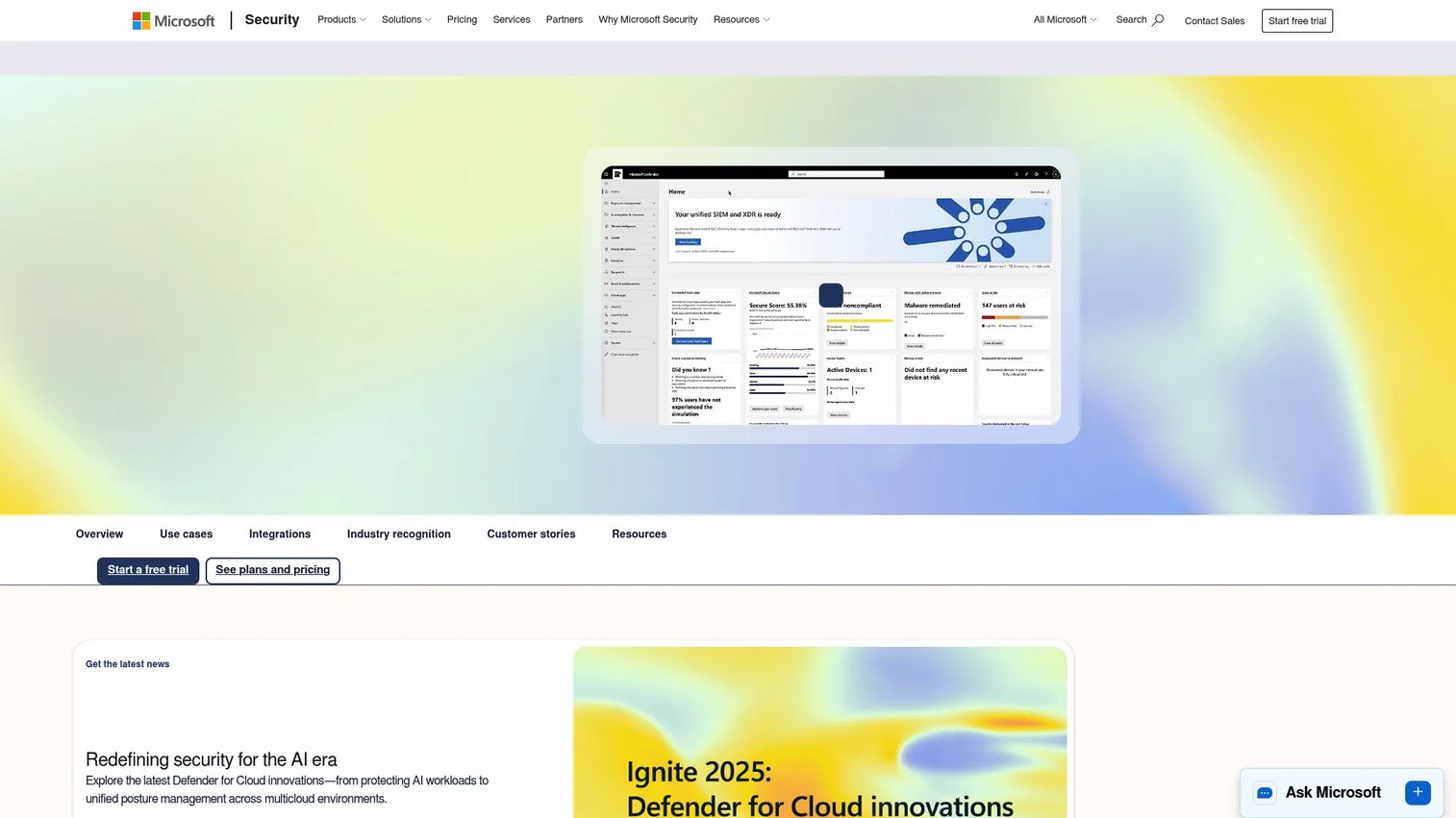
Microsoft Defender for Cloud offers foundational CSPM capabilities at no cost and enhanced posture management and workload protection on paid plans. It connects directly into Azure subscriptions and extends multicloud coverage to AWS and Google Cloud through connector configuration. Hybrid environments can reach on-premises resources through Azure Arc. DevOps security posture management covers infrastructure as code and code repositories.
Best for: Product and engineering organizations already standardized on Azure and Microsoft security tooling that want foundational CSPM without an additional vendor license.
Key features
- Foundational CSPM with Secure Score recommendations at no cost
- Azure-native posture management with regulatory compliance dashboards
- AWS and Google Cloud support through multicloud connectors
- DevOps security posture management with IaC scanning
- Hybrid coverage through Azure Arc
Why choose Microsoft Defender for Cloud: Stack fit is the primary decision driver. If your organization already uses Microsoft Sentinel, Microsoft Entra, and Azure natively, Defender for Cloud reduces integration effort significantly. Model expected cost against your actual subscriptions, servers, databases, and container resources before comparing it with third-party platforms.
Microsoft Defender for Cloud pricing: Foundational CSPM is free. Defender CSPM (enhanced tier) and cloud workload protection plans are usage-based and billed per protected resource type. A 30-day free trial is available for paid plans. Specific per-resource rates are published on the Azure pricing page and vary by resource category.
G2 rating: 4.4 out of 5.
4. Orca Security
Orca Security connects to cloud environments through read-only API access and uses its SideScanning technology to collect cloud metadata without deploying agents to individual workloads. The platform covers posture, workload vulnerabilities, identity exposure, data risk, and application security in a unified inventory. Orca also offers a runtime sensor for teams that want additional runtime telemetry beyond what agentless collection provides.
Best for: Teams that want broad multicloud visibility quickly, without a deployment project for endpoint agents across existing workloads.
Key features
- Agentless cloud discovery using SideScanning technology
- Contextual risk prioritization with attack-path analysis
- Misconfiguration detection across AWS, Azure, and Google Cloud
- Identity and exposure insights within the same risk view
- Application security including SAST, SCA, IaC scanning, and container image scanning
Why choose Orca Security: The agentless approach means you can get a full cloud asset inventory and initial posture assessment without touching workload configurations. During a proof of concept, validate that the remediation context and runtime depth meet your requirements for the highest-risk services in your environment.
Orca Security pricing: Orca offers one all-inclusive platform SKU that covers CNAPP, application security, and runtime capabilities. Pricing scales with the number of cloud workloads protected and requires a sales conversation. No public numeric price is listed.
G2 rating: 4.7 out of 5.
5. CrowdStrike Falcon Cloud Security
CrowdStrike Falcon Cloud Security brings cloud posture management into the Falcon console alongside endpoint, identity, and threat intelligence data. Teams that already investigate security incidents in Falcon can see cloud posture findings in the same workflow rather than context-switching to a separate platform. The platform covers agentless visibility, cloud asset inventory, posture checks, compliance assessment, and container security.
Best for: Security operations teams already working in the Falcon platform that want cloud posture signals in the same console as endpoint and identity data.
Key features
- Cloud security posture management with misconfiguration and compliance detection
- Real-time cloud detection and response with workload runtime protection
- Cloud asset inventory across multicloud infrastructure, identities, and AI workloads
- Container and Kubernetes security
- Cloud infrastructure entitlement management and application security posture management
Why choose CrowdStrike Falcon Cloud Security: The value proposition is operational consolidation for existing Falcon customers, not standalone CSPM depth. Before selecting it as your primary CSPM platform, confirm that cloud engineering teams get enough remediation context from Falcon's cloud posture module, not only the security operations team.
CrowdStrike Falcon Cloud Security pricing: Pricing uses a custom quote model across six package tiers: Proactive Security, Cloud Detection and Response, Cloud Detection and Response with Containers, Cloud Detection and Response with Managed Containers, CNAPP, and CNAPP with Containers. CrowdStrike advertises a 15-day free trial. Cost drivers include selected modules, cloud assets, and existing Falcon agreement scope.
G2 rating: 4.6 out of 5.
6. Tenable Cloud Security
Tenable Cloud Security brings cloud posture management into the broader Tenable exposure management portfolio, alongside vulnerability scanning for on-premises and hybrid infrastructure. Organizations already using Tenable for VM or OT security can connect cloud posture findings to their existing risk model rather than maintaining a separate cloud-only view. The platform covers CSPM, CIEM, container and Kubernetes security, data security posture management, and attack path analysis.
Best for: Exposure-management-led security teams that want cloud configuration risk in a wider, unified risk program rather than a standalone CSPM tool.
Key features
- Cloud security posture management with continuous misconfiguration detection
- Cloud infrastructure entitlement management and least-privilege enforcement
- Cloud workload protection for containers, Kubernetes, and serverless
- Sensitive data discovery and classification
- Attack path analysis and cloud detection and response
Why choose Tenable Cloud Security: Teams that already prioritize vulnerability and exposure work inside Tenable benefit from a shared risk model rather than reconciling findings across separate platforms. Validate during evaluation whether cloud posture findings and existing vulnerability operations share a usable remediation workflow and risk prioritization logic.
Tenable Cloud Security pricing: Pricing is asset-based and customized. Cost scales with the number of billable cloud resources and requires contacting Tenable or a certified partner. No public numeric price is available.
G2 rating: 4.6 out of 5.
7. Sysdig Secure
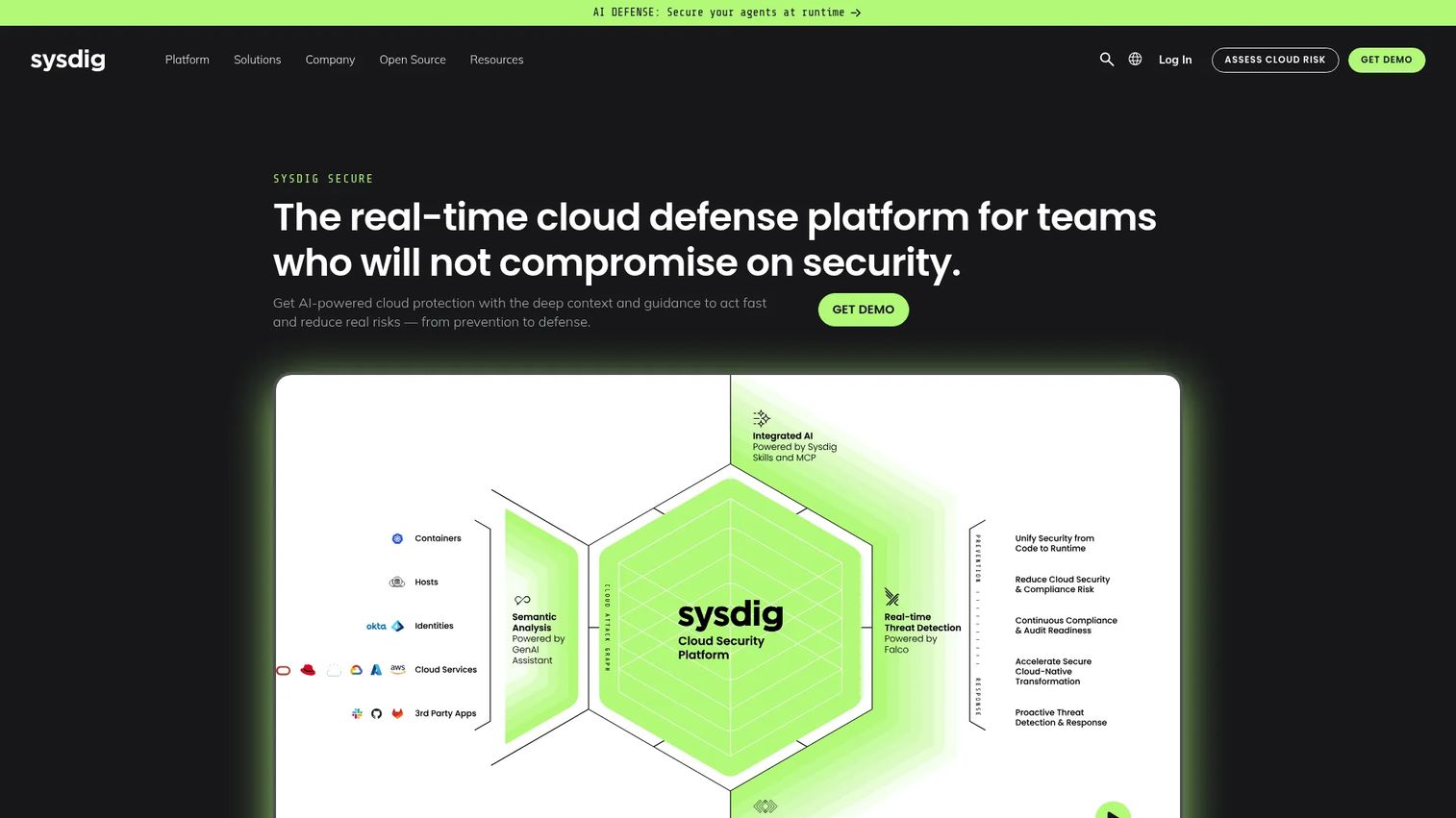
Sysdig Secure combines runtime threat detection, vulnerability management, and cloud posture management in a platform built for Kubernetes-native and container-heavy environments. Its Cloud Attack Graph connects runtime signals to posture findings so a team can see not only that a misconfiguration exists but whether a running workload is actually exploiting the exposure. Sysdig Sage, an AI assistant, surfaces prioritized recommendations within the platform.
Best for: Platform and security teams operating Kubernetes at scale that need runtime detection and container security connected to cloud configuration checks.
Key features
- Real-time threat detection and response for cloud-native workloads
- Kubernetes security posture management and container image scanning
- Cloud and host posture checks with compliance reporting
- Cloud infrastructure entitlement management
- Cloud Attack Graph with AI-powered risk prioritization
Why choose Sysdig Secure: Teams that cannot separate configuration posture from container runtime risk will find the runtime-to-posture connection most valuable. For a product manager evaluating security tooling, test Sysdig's Kubernetes coverage against your specific cluster architecture, admission control configuration, and developer workflow before buying.
Sysdig Secure pricing: Pricing is tailored per customer with licensing based on the number of hosts in the CNAPP offering. All pricing requires a quote conversation. No public numeric price is listed.
G2 rating: 4.8 out of 5.
8. SentinelOne Singularity Cloud Security
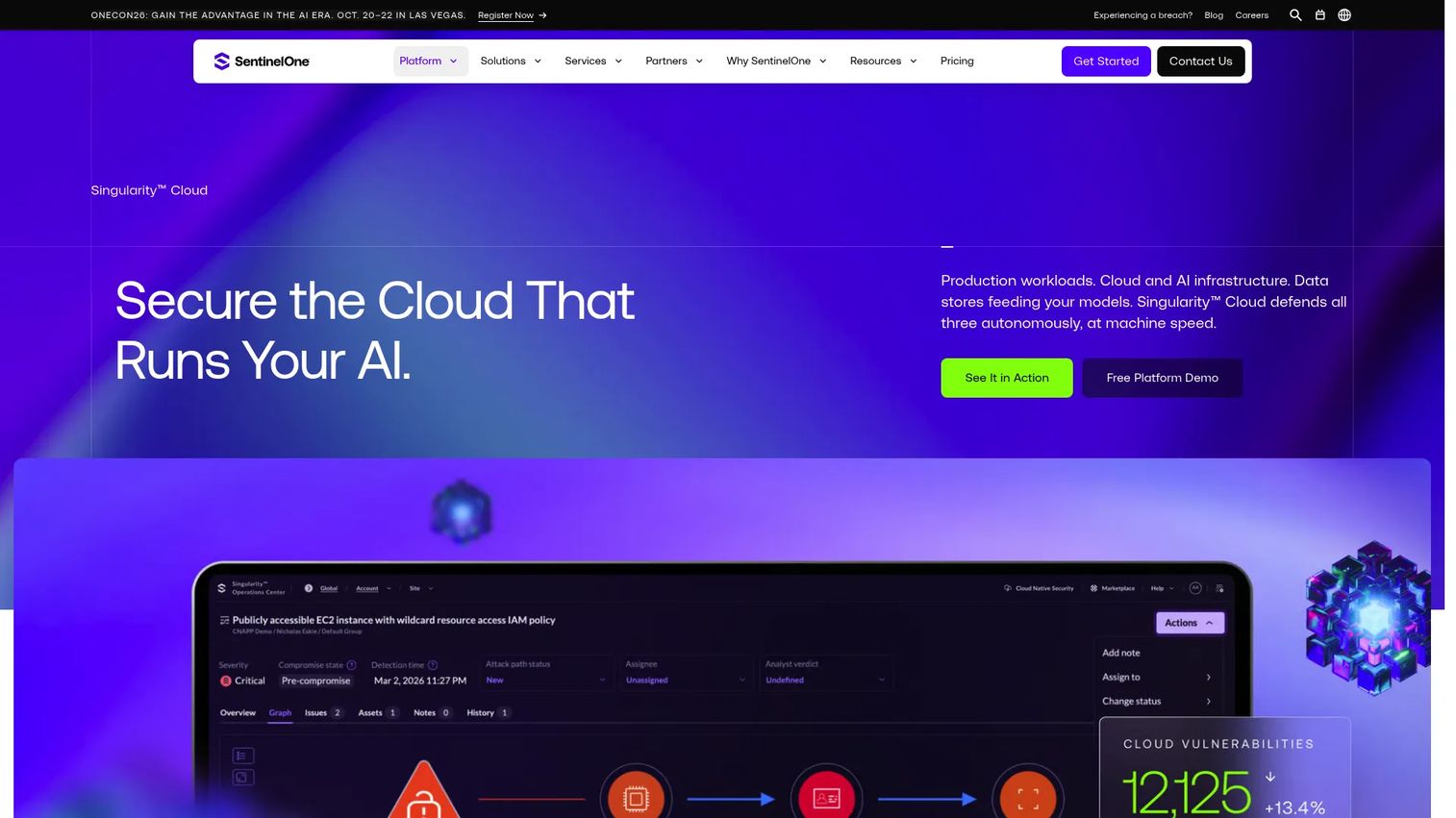
SentinelOne Singularity Cloud Security covers cloud posture, workload runtime, data security, and AI security posture management within the Singularity platform. Organizations already using SentinelOne for endpoint protection can extend coverage to cloud workloads through the same console and unify cloud, endpoint, and identity telemetry for investigation and automated response. Purple AI, SentinelOne's AI assistant, is available for threat investigation across the full platform.
Best for: Existing SentinelOne customers assessing a cloud-security extension that fits their current platform investment.
Key features
- Cloud workload security for containers, VMs, and AI workloads
- CSPM, CIEM, DSPM, and AI security posture management
- Infrastructure as code scanning and secrets scanning
- Cloud data security with AI-powered malware detection and automated quarantine
- Unified cloud, endpoint, and identity telemetry with Purple AI
Why choose SentinelOne Singularity Cloud Security: The case is strongest when your security team already operates Singularity for endpoint coverage. Confirm multicloud breadth, specific cloud-provider support, and remediation workflow depth during a proof of concept before treating it as a primary CSPM platform.
SentinelOne Singularity Cloud Security pricing: SentinelOne's platform packages start at $179.99 per endpoint per year for Singularity Complete and $229.99 per endpoint per year for Singularity Commercial, billed annually. Enterprise pricing requires contacting sales. These are platform packages; dedicated Singularity Cloud Security module pricing is not separately listed.
G2 rating: 4.9 out of 5.
9. Check Point CloudGuard
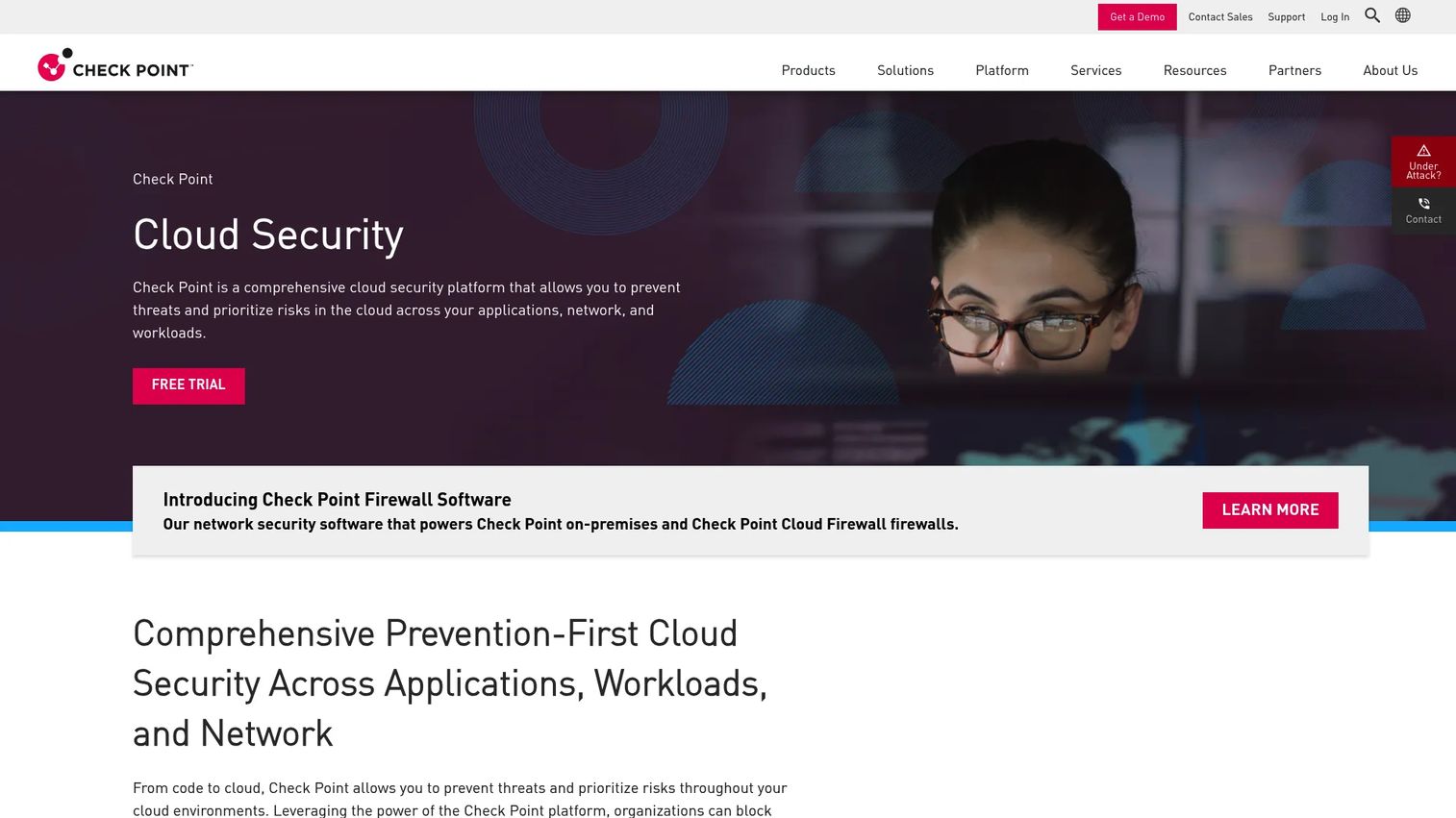
Check Point CloudGuard is a cloud security platform covering application protection, web application and API security, network security, and cloud security posture management across public, private, and hybrid cloud environments. Organizations with an existing Check Point footprint in network or endpoint security can evaluate CloudGuard as a way to extend security governance into cloud infrastructure without adding a separate vendor relationship.
Best for: Security organizations comparing cloud security options alongside existing Check Point network and security controls.
Key features
- Cloud-native application protection and security posture management
- AI-based web application and API security with zero-day protection
- Cloud firewall with advanced threat prevention across multicloud environments
- Cloud configuration assessments and compliance posture reporting
- Policy management with multicloud support
Why choose Check Point CloudGuard: The decision is primarily a platform consolidation question. If your organization already manages network security through Check Point, evaluate whether the posture management workflow and cloud provider coverage align with your current cloud governance model. Review integration depth with your existing Check Point deployment during a proof of concept.
Check Point CloudGuard pricing: CloudGuard pricing depends on the capabilities selected and the number of protected cloud assets. No public numeric price is listed; pricing requires a Check Point sales conversation.
G2 rating: 4.4 out of 5 (verified for Check Point Cloud Firewall within the CloudGuard portfolio).
10. Prowler
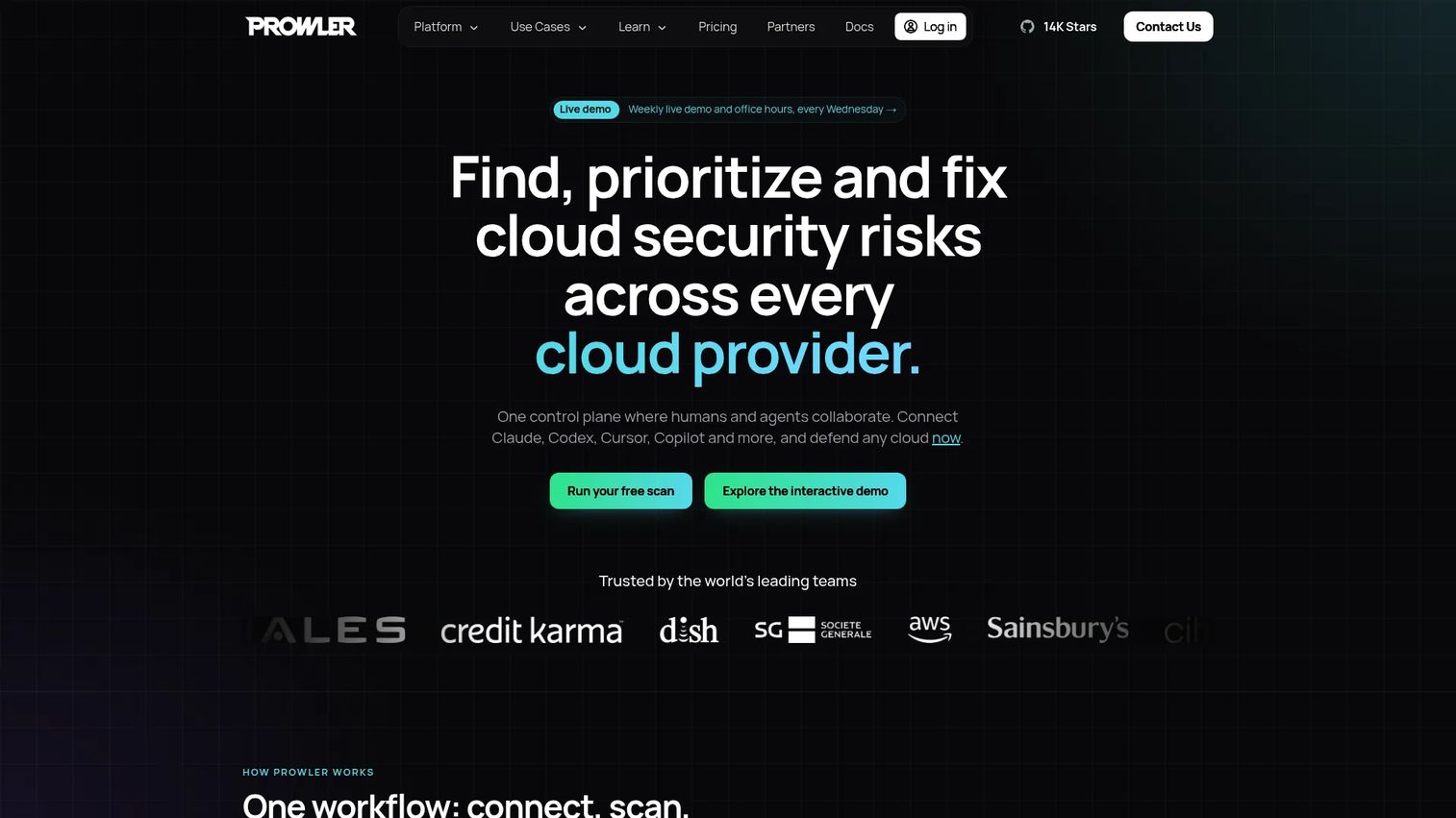
Prowler is an open cloud security platform available as a free open-source CLI and as a managed Prowler Cloud service. The open-source project runs security and compliance checks across AWS, Azure, and Google Cloud from the command line, supports hundreds of compliance framework controls, and produces structured output for reporting pipelines. Prowler Cloud adds dashboards, alerting, workflow integrations, an AI agentic assistant called Lighthouse, and a managed scanning infrastructure so teams don't have to run and schedule the CLI themselves.
Best for: Security engineering teams that want direct control over cloud security checks, open-source extensibility, and the option to graduate to a managed service without switching platforms.
Key features
- Multicloud and SaaS security posture scanning via agentless checks
- Compliance framework support including CIS, NIST, PCI DSS, HIPAA, and SOC 2
- Open-source CLI with command-line automation for AWS, Azure, and Google Cloud
- Prowler Cloud with dashboards, alerts, remediation guidance, and Lighthouse AI assistant
- Prowler MCP Server for agentic workflow integration
Why choose Prowler: Prowler fits teams with the security engineering capacity to own check configuration, scheduling, exception handling, and remediation routing. The managed cloud tier removes operational overhead while keeping the open-source model. Before committing, confirm that the team has named owners for policy maintenance, scan scheduling, and ticket routing, because the platform does not replace that governance work.
Prowler pricing: The open-source CLI is free. Prowler Cloud plans start at $79 per cloud provider account per month billed annually, or $99 per account per month billed monthly. Private Cloud and MSP/MSSP plans are available at custom pricing. A free trial is available for Prowler Cloud.
G2 rating: A verified G2 listing for Prowler was not found at publication. Check the G2 product category page directly.
Considerations when choosing CSPM tools
Cloud coverage and account structure
Verify AWS, Azure, and Google Cloud support against the specific services, regions, and account structures you operate today. Cloud asset inventory depth varies by provider and by product module. Include the environments on your infrastructure roadmap, not only current accounts.
Risk prioritization quality
Finding count is a poor purchase criterion. Evaluate how the platform combines configuration findings with exposure, identity permissions, workload context, and business criticality. Your team should be able to explain why the top ten findings belong in the next sprint without building a separate scoring model outside the tool.
Remediation workflow and ownership
Check integrations with your ticketing system, infrastructure as code pipeline, and chat tools. CSPM remediation without routing produces findings that sit unassigned. The right tool for your team is the one that turns posture findings into work with clear owners and closure criteria, not a dashboard someone checks occasionally.
Compliance evidence and policy customization
Verify that the platform supports the specific frameworks your organization reports against, including custom policy options and exception workflows. CSPM software supports continuous cloud compliance monitoring and evidence collection. It does not guarantee compliance outcomes on its own; policy ownership and process controls remain with your team.
Operating model and total cost
Compare agentless CSPM, agent-assisted, and full CNAPP approaches against your workload mix. Include setup effort, policy tuning time, false-positive management, module requirements, and long-term maintenance. For a platform with usage-based pricing like Microsoft Defender for Cloud, model cost against actual resource counts before signing a contract.
Conclusion
The right CSPM vendor depends on what your team needs to close, not just what it needs to find.
Wiz CNAPP fits teams that need broad context-driven risk prioritization across a complex multicloud estate. Microsoft Defender for Cloud is the practical starting point for Azure-heavy organizations, with a free foundational tier that reduces the barrier to entry. Orca Security suits teams that want agentless discovery without a deployment project. Sysdig Secure is the clear choice when Kubernetes and runtime security need to connect directly to posture findings. Prowler gives engineering-led teams an open-source foundation with a managed upgrade path.
For Palo Alto Networks, CrowdStrike, Tenable, SentinelOne, and Check Point, the decision is often a platform consolidation question: Does your team already operate within that security vendor's broader product suite? If yes, evaluate the cloud posture module alongside what you already have.
Build a proof-of-concept scorecard before booking vendor demos. Use a representative cloud account, a known misconfiguration set, and a real remediation workflow. The platform that finds the most issues is not automatically the platform your team can operate.
For related reading on security visibility and asset management, see our guides on attack surface management software, cloud compliance tools, and AI security posture management tools.
FAQs
CSPM focuses on cloud asset inventory, configuration posture, compliance checks, and remediation support. CNAPP is broader and can include CSPM alongside workload protection, identity security, code security, data security, and runtime capabilities. Start with the security outcomes your team needs, then decide whether a focused CSPM product or a wider platform fits your current cloud maturity and budget.
Most enterprise CSPM platforms support all three major public clouds, but coverage depth varies by service, resource type, region, and product module. Verify support for the specific cloud services your product and infrastructure teams use most frequently, not just the provider names on the vendor's marketing page.
Test whether the platform produces prioritized remediation work, not only alerts. Specifically evaluate asset inventory accuracy against your cloud accounts, risk prioritization logic for your highest-exposure services, ticket routing integrations, policy customization options, cloud-provider coverage, and the maintenance overhead after initial onboarding. Bring a known misconfiguration set so you can compare what each tool surfaces.
They solve different operational needs rather than one being superior. Agentless approaches can accelerate cloud asset discovery and posture assessment by querying cloud-provider APIs, while agents or runtime sensors can add workload-level telemetry that API-based collection misses. The right approach depends on your cloud architecture, runtime requirements, and the engineering capacity available for deployment and maintenance.
CSPM software can map configuration checks to relevant controls and produce continuous cloud compliance monitoring evidence for these frameworks. It does not make an organization compliant on its own. Teams still need policy ownership, process controls, evidence review, and governance. Treat the tool as an evidence collection and gap detection layer, not a compliance outcome.
It can be sufficient when a security engineering team can own check scheduling, exception management, reporting, and remediation workflow design. A commercial platform becomes more compelling when the organization needs continuous multicloud posture monitoring, contextual risk prioritization, integrated ticketing, and executive-ready compliance reporting without building that infrastructure themselves. Prowler's managed cloud tier offers a middle path: Open-source extensibility with managed scanning infrastructure.
Pricing varies by cloud assets, workloads, modules, cloud accounts, and contract scope. Most enterprise CSPM vendors use quote-based pricing. Microsoft Defender for Cloud bills by protected resource type with a free foundational tier. Prowler Cloud starts at $79 per cloud provider account per month billed annually. SentinelOne platform packages start at $179.99 per endpoint per year for the Complete tier.
Track cloud asset coverage as a percentage of total cloud accounts, critical finding volume over time, mean time to remediation, percentage of findings with an assigned owner, policy exception aging, compliance evidence readiness before scheduled audits, and recurrence of previously remediated misconfigurations. A successful CSPM program reduces the last metric toward zero over successive audit cycles.