Shipping a crypto-enabled product is an engineering problem until you involve security, compliance, finance, and legal. Then it becomes a governance problem. The custody decision is where those two problems collide.
Private-key architecture, storage tier selection, approval workflows, and audit-trail requirements stop being architectural preferences and start being product requirements that every stakeholder team will scrutinize. A single misconfigured approval rule can expose assets, fail a security questionnaire, or block a regulatory approval entirely. According to Mordor Intelligence (2026), the digital asset custody market is projected to reach $2.12 trillion by 2031, growing at a 24.7% CAGR from $650 billion in 2025. Demand from regulated institutions and embedded-finance products is driving that growth, and vendors are differentiating on governance depth, key architecture, and integration quality.
This guide does not explain crypto to beginners. It is a vendor shortlist for PMs, security leads, and fintech teams deciding which cryptocurrency custody platform clears their engineering, compliance, and operational bar.
What's inside
This guide compares 13 cryptocurrency custody software options selected for institutional and product-team use in 2026.
- Who it is for: Product, security, operations, and compliance teams shortlisting digital asset custody providers
- How tools were chosen: Key-management architecture, storage model and wallet infrastructure, governance and audit capability, institutional fit, and pricing visibility where available
- What you get:
- A side-by-side comparison of all 13 platforms
- Plain-language explanations of MPC, HSM, storage tiers, and approval policies
- Use-case guidance for fintech products, exchanges, treasuries, and institutions
- A buyer checklist covering security review, RFI scope, and integration overhead
TL;DR
- Best for institutional custody and tokenization: Ripple Custody suits banks, fintechs, and asset managers needing governed digital-asset orchestration with tokenization support
- Best for stablecoin operations and treasury: Utila and BVNK are the strongest options for teams where stablecoin payment workflows sit alongside custody
- Best for developer-first wallet infrastructure: Dfns leads on API depth, with a 30-day sandbox and published annual pricing starting at $800
- Best for enterprise digital asset operations: Fireblocks covers governance, network connectivity, and treasury workflows at scale
- Best for regulated institutional custody: Coinbase Custody and BitGo offer established qualified-custody positioning for institutions with compliance requirements
- Best for custom wallet and exchange infrastructure: OpenWallet and Cobo Custody fit teams building bespoke storage architecture or multi-chain wallet products
Final vendor choice depends on custody model, jurisdiction, asset coverage, approval workflow depth, and what your security and legal teams will sign off on.
What is cryptocurrency custody software?
Cryptocurrency custody software helps businesses store, control, transfer, and govern digital assets by managing private keys, wallet infrastructure, access policies, storage tiers, and transaction approvals.
This is not a consumer wallet. A consumer wallet holds a single user's assets and relies on a passphrase or seed phrase for access. Custody software is infrastructure for organizations that need to hold assets on behalf of clients or institutions, enforce multi-party controls, satisfy compliance requirements, and maintain complete audit trails. The defining feature is key control: Who holds the private keys, under what conditions, and what governance rules surround their use.
Key capabilities in this category
- Private-key management: MPC (multiparty computation), HSM (hardware security module), multisignature, or combinations of these models distribute key control to prevent single-point compromise
- Wallet infrastructure: Hot wallets for active transactions, warm wallets for intermediary flow, and cold vaults for long-term storage with offline signing material
- Policy controls: Approval thresholds, transaction limits, address whitelists, role-based permissions, and quorum requirements that govern every outbound transaction
- Audit trails: Immutable records of transaction initiation, signing activity, admin changes, and policy modifications for compliance and forensic review
- Asset support: Coverage across crypto assets, stablecoins, tokenized securities, and the specific blockchain networks your product requires
- Deployment options: Cloud-managed, on-premises, hybrid, or API-first models with different tradeoffs on control, latency, and vendor dependency
- Operational workflows: Treasury operations, exchange custody, fintech wallet provisioning, broker settlement, and institutional vault custody each have distinct requirements
Custody software is distinct from trading-only exchanges, consumer wallets, mining infrastructure, and crypto accounting tools. Some platforms combine custody with trading, staking, or stablecoin payment infrastructure, but custody should be evaluated on key architecture first. For teams evaluating related financial infrastructure, the banking as a service software landscape overlaps with several of these vendors.
When to use cryptocurrency custody software
Launch a custodial wallet or fintech product
Product teams building embedded wallets, stablecoin payment features, or exchange infrastructure need custody software to avoid building key infrastructure from scratch. Evaluate API quality, wallet provisioning speed, role-based policy support, and sandbox availability before committing. The integration overhead is real: A Wallet-as-a-Service model that covers key generation, signing, and policy enforcement can shave months off a product timeline compared to custom development.
Protect institutional digital assets
Asset managers, trading desks, corporate treasury teams, and exchanges need secure storage with segregation of duties and verifiable controls. Hot wallets handle operational liquidity, warm storage provides a middle layer for active but lower-frequency assets, and cold vaults hold the majority of assets offline. The right split depends on transaction frequency, risk tolerance, and insurance requirements.
Pass security, compliance, and operational review
Custody decisions affect procurement gates, legal review, security questionnaires, and board-level risk sign-off. Reviewers will ask about key architecture, certification evidence (such as SOC 2 Type II or ISO 27001), incident response protocols, and data residency. Verify each vendor's current certification status rather than accepting marketing claims. For teams also managing audit management software alongside custody tooling, the documentation requirements often overlap.
Cryptocurrency custody software comparison
The table below is a shortlist. It is not a substitute for a full security review, vendor RFI, or legal assessment of custody obligations in your jurisdiction.
| # | Product | Best for | Key differentiator | Pricing | G2 rating |
|---|---|---|---|---|---|
| 1 | Ripple Custody | Banks, fintechs, tokenization programs | Custody plus tokenization from a digital-asset finance operator | Contact sales | 4.3/5 |
| 2 | Utila | Stablecoin operations and institutional wallet governance | Governed stablecoin payments with custody infrastructure | From $799/month | 4.8/5 |
| 3 | Dfns | Developer-first wallet infrastructure | API-first platform with published tiers and sandbox trial | From $800/year | 4.7/5 |
| 4 | Fireblocks | Enterprise digital asset operations | MPC security, policy engine, 2,000+ counterparty network | From $999/month | 5.0/5 |
| 5 | Ledger Vault | Institutions prioritizing hardware-backed security | HSM and Secure Element hardware governance (now Ledger Enterprise) | Contact sales | 4.4/5 |
| 6 | Coinbase Custody | Regulated institutional custody | Qualified custodian with 50 bps fee and $500K minimum | From 50 bps AUM | 4.1/5 |
| 7 | BitGo | Established multi-asset custody | Qualified custody, multisignature wallets, and insurance options | Contact sales | 4.1/5 |
| 8 | Cobo Custody | Institutions needing managed custody with hot-warm-cold tiers | FIPS 140-2 HSMs with 95% cold-storage default | From $299/month | 4.0/5 |
| 9 | Coinbase Prime | Trading plus custody workflows | Prime brokerage with integrated custody, financing, and staking | Volume-based | 4.0/5 |
| 10 | Cregis | Product teams launching Web3 wallet operations | Free tier available; MPC wallets with published annual plans | Free tier; from $2,140/year | 4.5/5 |
| 11 | BVNK | Stablecoin payments and treasury | Fiat and stablecoin accounts with payment APIs | Contact sales | 4.7/5 |
| 12 | NodeVenture | Institutional custody discovery | Air Wall offline custody technology, white-label available | Contact sales | 4.5/5 |
| 13 | OpenWallet | Custom wallet and exchange infrastructure | Hot, warm, and cold vault architecture for custom deployments | Contact sales | N/A |
Best 13 cryptocurrency custody software for 2026
1. Ripple Custody
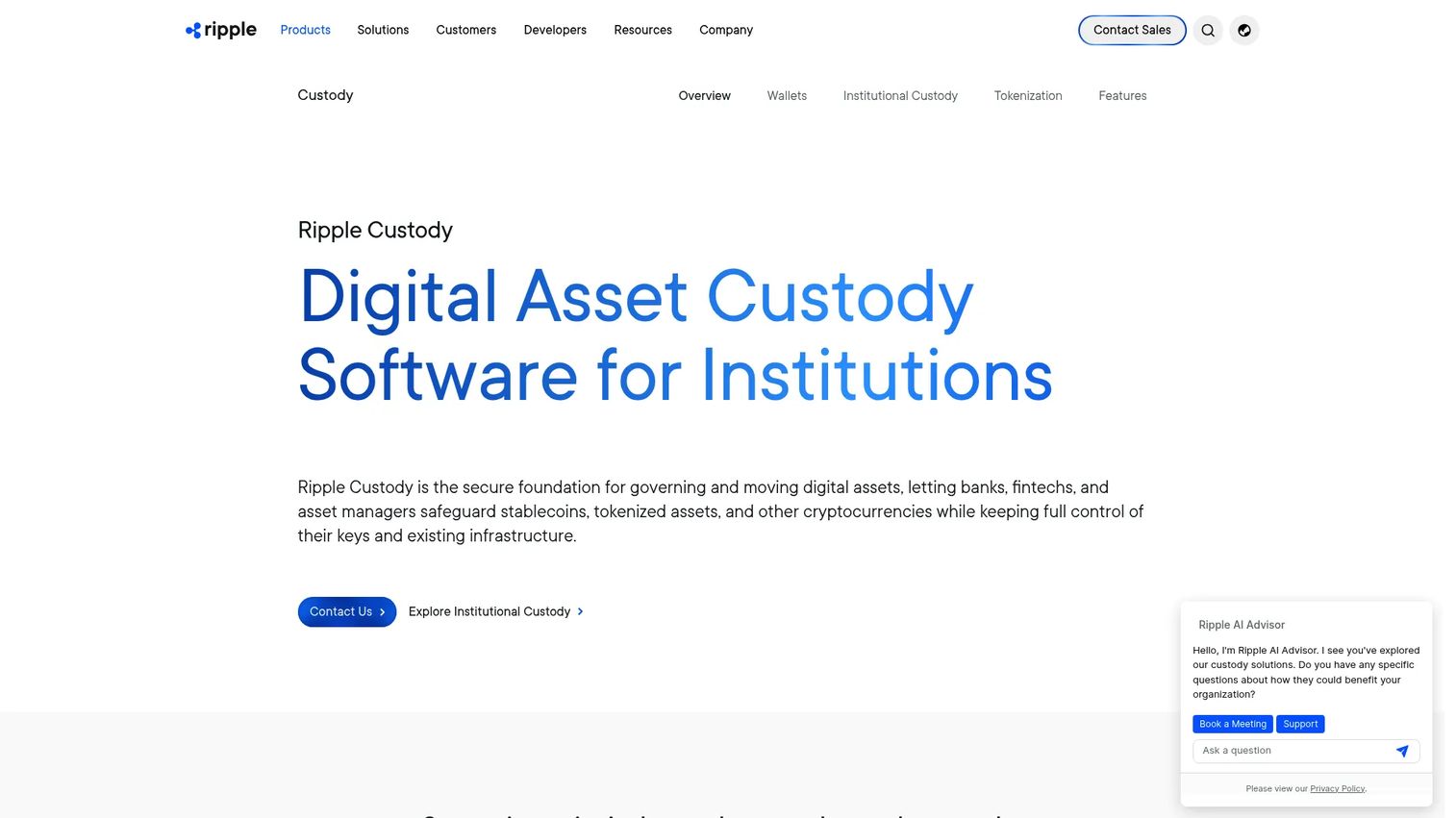
Ripple Custody is a digital asset custody platform built for banks, fintechs, and institutional asset managers that need to retain control of their private keys while operating at institutional scale. The platform covers wallet infrastructure, MPC and HSM key management, governance workflows, and tokenization for stablecoins, securities, and real-world assets. It is designed for organizations where custody is part of a broader digital asset strategy, not an isolated vaulting function.
Best for: Banks, regulated fintechs, and institutions building custodial products, tokenized asset programs, or digital-asset treasury operations.
Key features
- Self-custody with HSM or MPC key management
- Programmable governance and policy-based transaction controls
- Multi-custody orchestration through a unified control plane
- Tokenization for stablecoins, securities, and real-world assets
- Hot, warm, and cold storage across cloud, on-premises, or hybrid environments
Why choose Ripple Custody: Ripple Custody is a strong candidate for institutions that need custody infrastructure and tokenization from the same vendor. PMs should verify supported jurisdictions, available deployment models, and implementation timeline before committing.
Ripple Custody pricing: Ripple Custody prices through sales. Request a quote based on custody model, asset coverage, deployment approach, and support tier requirements.
G2 rating: 4.3/5
2. Utila
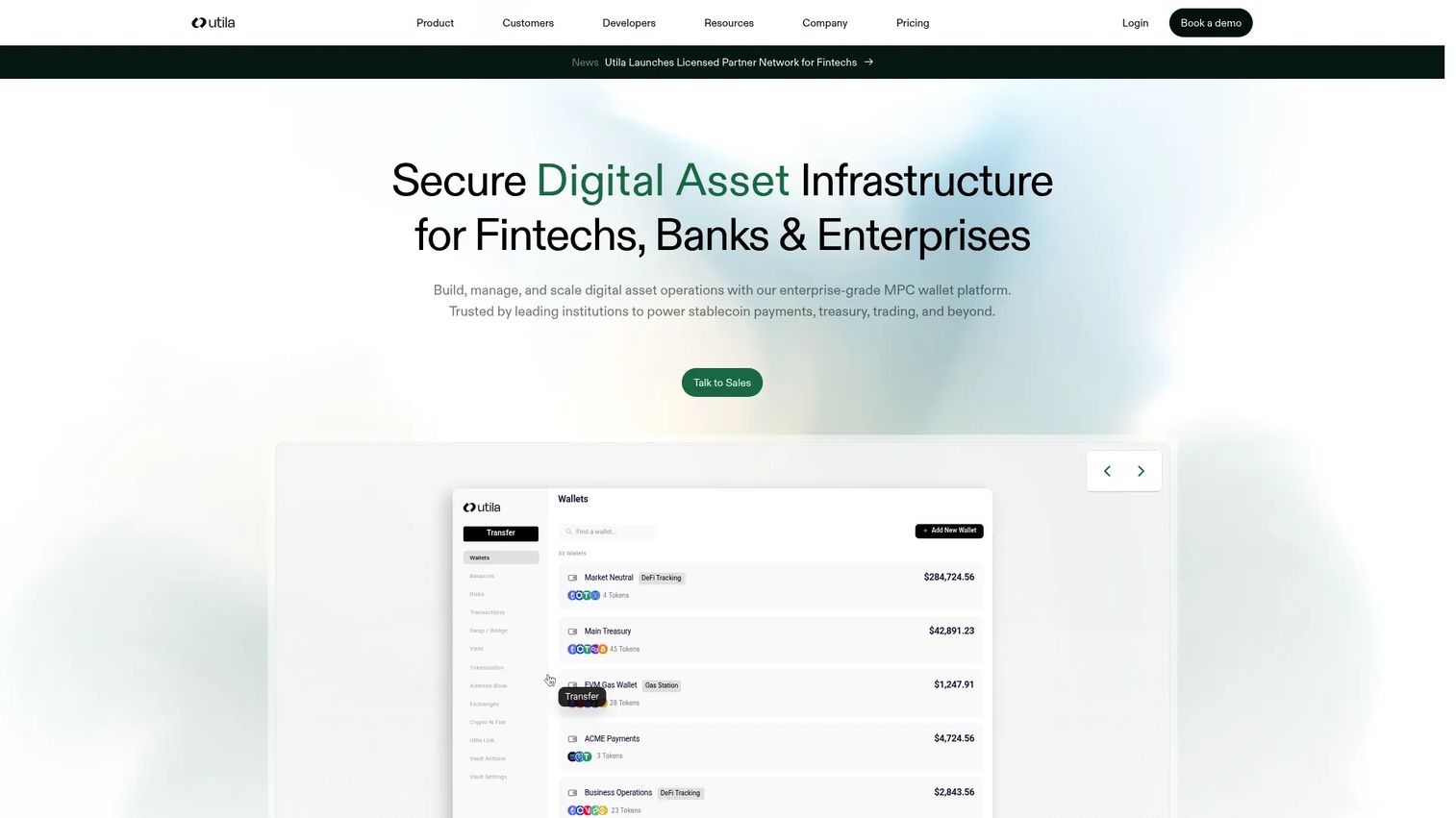
Utila is an institutional digital asset and stablecoin infrastructure platform targeting fintechs, payment companies, banks, and enterprises managing wallet governance, transaction workflows, and treasury operations. The platform provides MPC-based wallets, role-based permissions, approval workflows, and audit trails across 100+ blockchains, with integrations into exchanges, DeFi, compliance providers, and liquidity venues.
Best for: Digital asset operations teams running governed stablecoin payments, institutional wallet workflows, or treasury settlement at scale.
Key features
- MPC-based digital-asset wallets and custody infrastructure
- Policy-driven governance with roles, limits, and approval workflows
- Multi-chain support across 100+ blockchains
- Stablecoin pay-ins, payouts, settlement, and treasury operations
- APIs, webhooks, and exchange and DeFi integrations
Why choose Utila: Utila fits operations teams that need day-to-day transaction control rather than passive vaulting. If stablecoin payments are central to your product roadmap, Utila's treasury and settlement capabilities pair custody with operational workflows.
Utila pricing: The Starter plan costs $799 per month, billed quarterly on a 12-month term, covering up to $3M outbound volume per quarter, 1,000 active wallets, 1 vault, and 3 users. Growth, Pro, Scale, and Enterprise plans carry custom pricing.
G2 rating: 4.8/5
3. Dfns
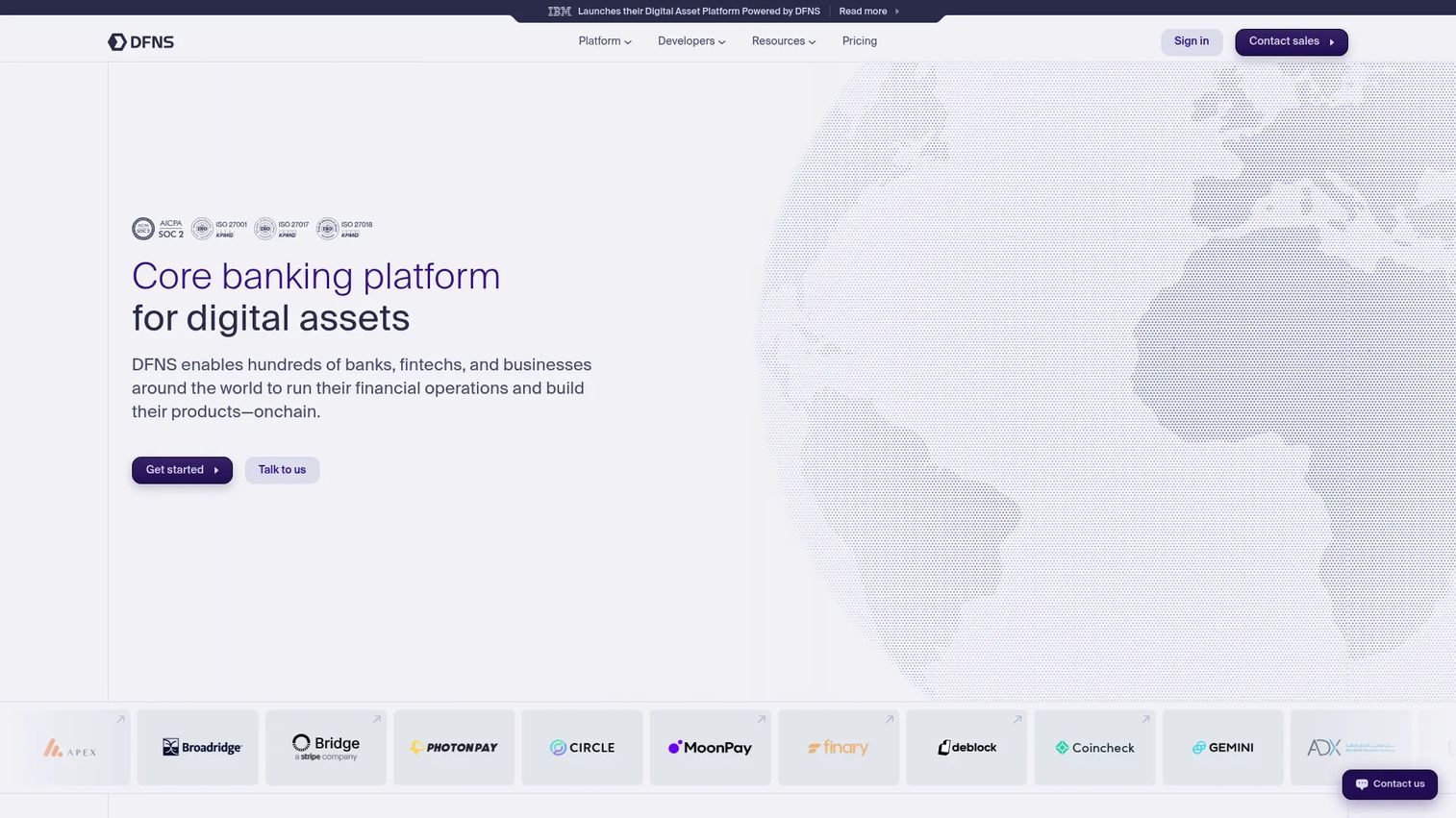
Dfns is a core banking platform for digital assets, delivering wallet infrastructure, transaction management, treasury operations, tokenization, and key management through an API-first architecture. The platform supports over 100 blockchains and offers MPC, TSS, and distributed key generation with SaaS, hybrid, or on-premises deployment. A 30-day self-service sandbox is available with no credit card required, which is rare in this category.
Best for: Product and engineering teams building embedded wallets, fintech applications, or regulated onchain transaction workflows where custody is part of the product architecture.
Key features
- Wallet-as-a-Service across 100+ blockchains
- Transaction management: Approve, decode, simulate, sign, and broadcast
- Treasury management across entities, currencies, and networks
- Tokenization engine for digital asset issuance and management
- Policy engine and key management with MPC, TSS, and DKG
Why choose Dfns: Dfns is the clearest choice when custody needs to integrate tightly into product workflows rather than sit separately as a vault. The published pricing tiers and sandbox access reduce procurement uncertainty compared to quote-only competitors.
Dfns pricing: Published annual plans: Starter at $800/year, Basic at $8,000/year, Pro at $35,000/year, and Enterprise at custom pricing. A 30-day sandbox trial is available with no payment required.
G2 rating: 4.7/5
4. Fireblocks
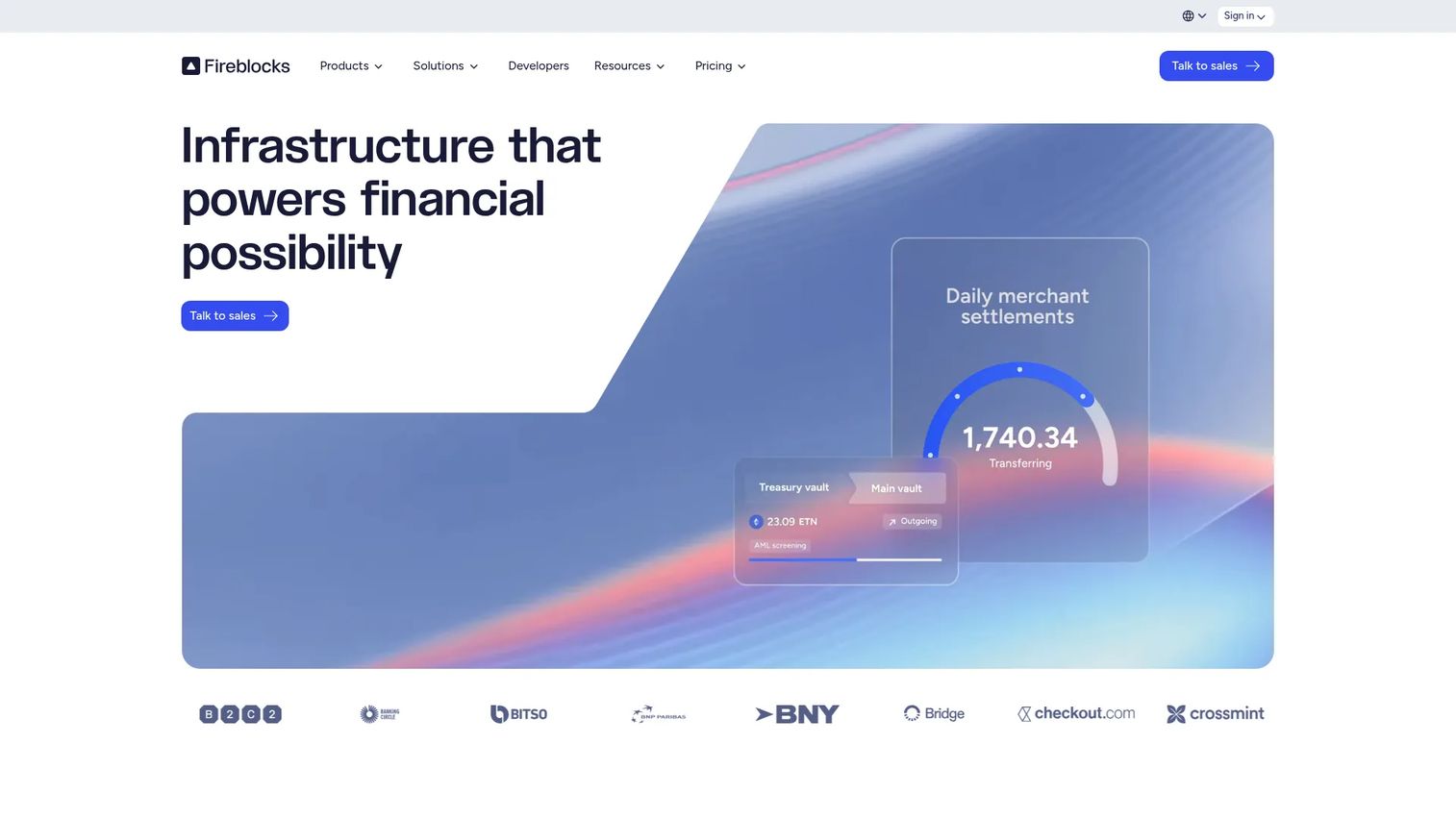
Fireblocks is a widely deployed digital asset infrastructure platform for treasury, custody, transfer, settlement, and institutional operations. It supports MPC-based wallet security with distributed key shares, a granular policy approval engine, connectivity to 2,000+ counterparties and 30+ exchanges, and support for 80+ EVM and non-EVM blockchains. The platform covers both live sales custody and self-serve embedded wallet deployment through its Essentials plan.
Best for: Enterprises and financial institutions managing digital asset operations across wallets, trading counterparties, treasury workflows, and DeFi access at meaningful volume.
Key features
- MPC-based multi-layer security with distributed key shares
- Granular transaction approval workflows and policy engine
- Connectivity to 2,000+ counterparties and 30+ exchanges
- Support for 80+ EVM and non-EVM blockchains
- DeFi, Web3, and staking access
Why choose Fireblocks: Fireblocks is the right fit when custody is inseparable from asset movement, settlement, and counterparty connectivity. PMs should validate total cost of ownership, the operational scope of the policy engine, and implementation support requirements.
Fireblocks pricing: The Essentials plan starts at $999/month with a 6-month maximum at that rate, covering a production environment, $1M quarterly outbound volume, and 5,000 embedded wallets. Custom plans (Pro, Enterprise, Enterprise+) start at $36,000/year.
G2 rating: 5.0/5
5. Ledger Vault
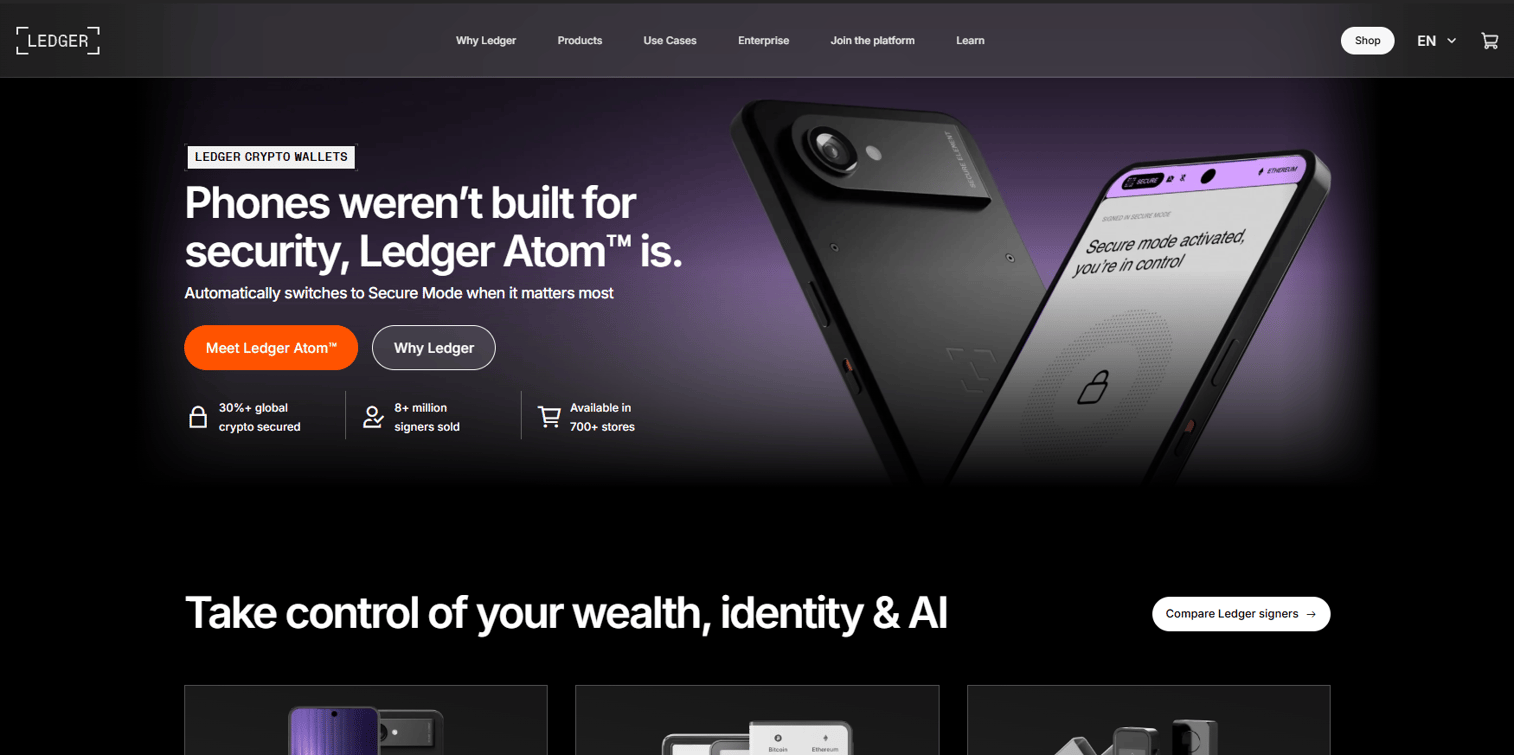
Ledger Vault, now marketed by Ledger as Ledger Enterprise, provides institutional digital asset custody using hardware-backed security through HSMs and Secure Element devices. Governance rules, approval policies, role-based permissions, and transaction controls are enforced at the hardware level rather than purely in software. The platform supports institutional vaulting, DeFi access, staking, and reporting through an API-driven layer.
Best for: Banks, custodians, asset managers, and exchanges that prioritize hardware-enforced key governance and institutional cold storage.
Key features
- Hardware-backed self-custody using HSMs and Secure Element devices
- Hardware-enforced governance with approval rules and role-based permissions
- API-driven automation for transfers, staking, DeFi, and reporting
- Multi-asset support with whitelisting and transaction limits
- Governance auditability across all admin and signing actions
Why choose Ledger Vault: The hardware security model is a differentiator for organizations where software-only MPC is insufficient for internal or regulatory requirements. Verify current product naming and packaging because Ledger has been transitioning from "Vault" to "Ledger Enterprise" branding.
Ledger Vault pricing: Pricing is set through direct sales consultation. Contact Ledger to request quote drivers including custody model, asset scope, and support requirements.
G2 rating: 4.4/5
6. Coinbase Custody
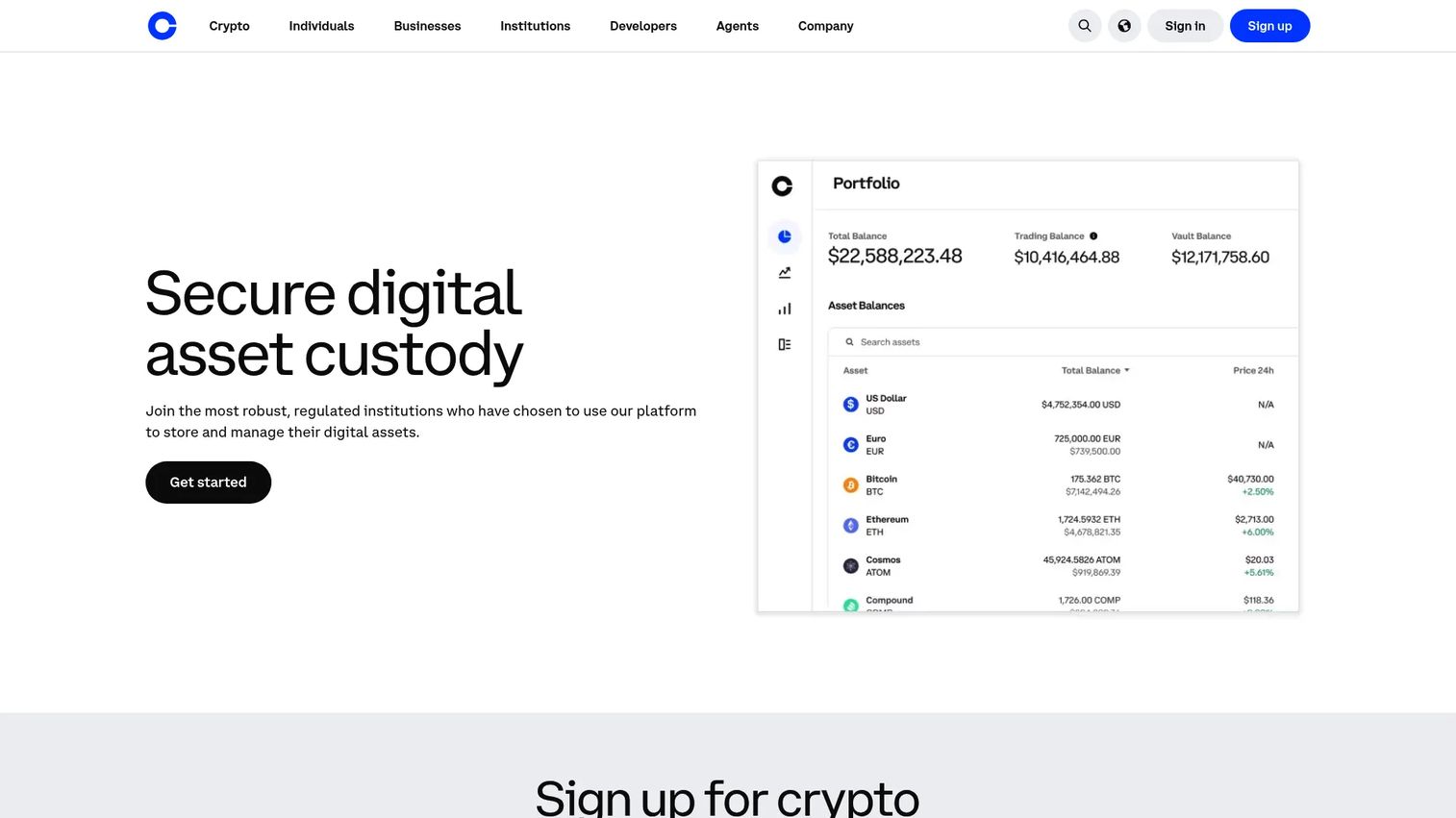
Coinbase Custody operates through Coinbase Custody Trust Company, a New York-regulated qualified custodian. The platform provides segregated cold storage for digital assets, institutional-grade security, support for 470+ assets, staking, and ERC-20 coverage. Custody is accessible through Coinbase Prime, which also delivers trading, financing, and portfolio workflows for institutional clients.
Best for: Institutions and funds that need regulated qualified custody with the brand recognition and compliance positioning of a major digital asset company.
Key features
- Segregated cold storage with offline signing
- Regulated custody through Coinbase Custody Trust Company
- Support for 470+ digital assets including ERC-20 tokens
- Staking services for supported assets
- Multi-user account access and institutional reporting
Why choose Coinbase Custody: This is the clearest choice for institutions whose compliance and legal teams need a named qualified custodian with regulated status. Verify jurisdiction eligibility, insurance terms, and whether standalone custody or the full Prime platform better fits your operational scope.
Coinbase Custody pricing: Implementation fees range from $0 to $10,000 depending on use case. The annualized custody fee is 50 basis points with a $500,000 minimum balance required.
G2 rating: 4.1/5
7. BitGo
BitGo is an established digital asset infrastructure company offering qualified custody, multisignature and MPC wallet infrastructure, trading, staking, financing, and settlement. BitGo has served institutional clients for over a decade and supports a broad range of digital assets. Its REST APIs and crypto-as-a-service infrastructure allow product teams to integrate custody into application workflows alongside broader institutional services.
Best for: Institutions, exchanges, and fintechs that need a mature custody vendor with qualified-custody positioning, broad asset coverage, and API access to wallet and settlement services.
Key features
- Qualified and segregated digital asset custody
- Multisignature and MPC wallet infrastructure
- Trading, financing, collateral management, and settlement
- Staking services across supported assets
- REST APIs and crypto-as-a-service infrastructure
Why choose BitGo: BitGo's depth of infrastructure and institutional track record make it a low-risk choice for teams where vendor maturity is a procurement priority. PMs should validate asset coverage for their specific chains, jurisdiction availability, and integration complexity before engaging.
BitGo pricing: BitGo states that individual qualified custody and electronic prime trading are available at no subscription cost. Product-specific fees and account requirements vary. Contact sales for a quote covering custody model, settlement, staking, and API access.
G2 rating: 4.1/5
8. Cobo Custody
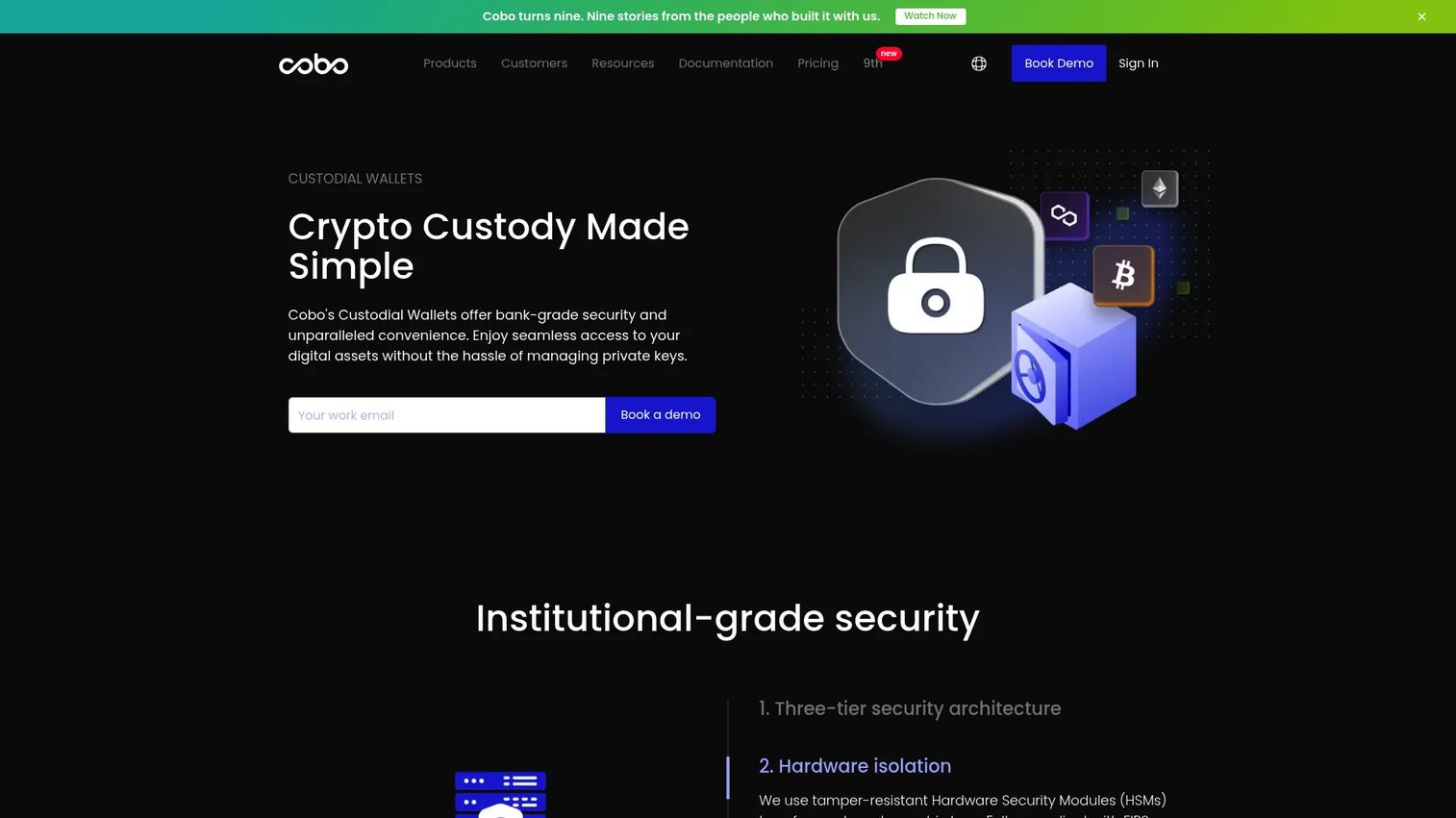
Cobo Custody provides institutional crypto custody with a three-tier hot-warm-cold storage model, keeping 95% of assets in cold wallets by default. The platform uses FIPS 140-2-compliant HSMs, MFA, real-time AML checks, configurable approval workflows, and self-service token listing across more than 3,000 tokens and 80+ chains. It is positioned as a managed custody service for institutions, exchanges, and crypto-native businesses.
Best for: Institutions, exchanges, and Web3 organizations that need managed custody with enterprise security controls, broad chain support, and operational governance.
Key features
- Three-tier hot-warm-cold storage with 95% assets in cold wallets
- FIPS 140-2-compliant HSMs and MPC support
- Configurable transaction policies, transfer limits, and approval workflows
- Self-service token listing across 3,000+ tokens and 80+ chains
- Zero-fee Cobo Loop transfer network and cross-chain transfers
Why choose Cobo Custody: The default-to-cold storage model suits organizations with strict asset security requirements. Verify regional availability, compliance controls for your jurisdiction, and whether the managed custody model aligns with your key-sovereignty requirements.
Cobo Custody pricing: Starter plans begin at $299/month. Standard plans cost $999/month. Enterprise plans carry a custom quote. Note that Custodial Wallets are available on the Enterprise tier only.
G2 rating: 4.0/5
9. Coinbase Prime
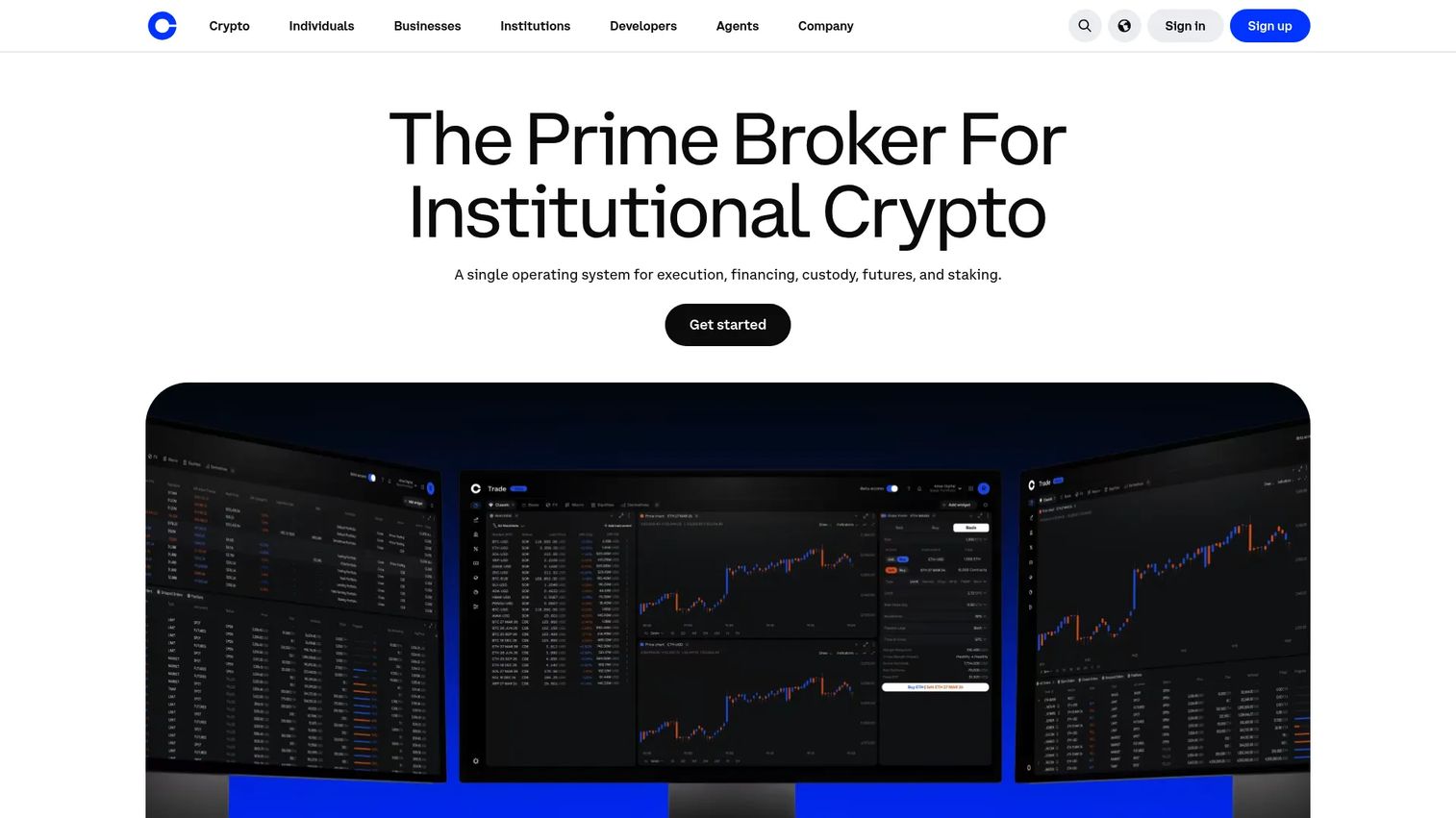
Coinbase Prime is an institutional prime brokerage platform that bundles custody, multi-venue trading, financing, portfolio margin, staking, and onchain wallet capabilities. It is distinct from standalone custody-only products: Prime is designed for institutions that want custody integrated into broader trading and portfolio operations rather than isolated vaulting infrastructure.
Best for: Institutional investors and trading desks that need custody connected to execution, financing, and portfolio management in one account relationship.
Key features
- Qualified institutional custody for digital assets and cash
- Multi-venue trading with aggregated liquidity and advanced order types
- Portfolio margin, financing, and cross-margining
- Staking and rewards across supported assets
- Prime Onchain Wallet with policy-engine controls
Why choose Coinbase Prime: Coinbase Prime makes sense when the team needs active trading, custody, and financing from one provider rather than integrating separate vendors. If your requirement is custody-only integration, evaluate whether the full Prime platform adds complexity without proportional value.
Coinbase Prime pricing: Pricing is volume-based and account-specific. Coinbase Prime issues monthly invoices and directs clients to their account's Plans and Fees section for applicable rates. Contact Coinbase Prime directly for a quote.
G2 rating: 4.0/5
10. Cregis
Cregis is an enterprise digital asset infrastructure platform for wallets, crypto payments, custody technology, and digital asset operations. It provides Wallet-as-a-Service through RESTful APIs and multi-language SDKs, MPC-based single-signature and multi-signature wallets, role-based access control, real-time transaction monitoring, and risk intelligence. It is one of the few platforms in this category with a free tier and published annual pricing.
Best for: Product teams launching Web3 wallet operations, crypto payment infrastructure, or digital asset transaction workflows that need API-first integration and predictable pricing.
Key features
- Wallet-as-a-Service with RESTful APIs and multi-language SDKs
- MPC-based single-signature and multi-signature wallets
- Role-based access control and multi-signature approval workflows
- Real-time transaction monitoring and risk intelligence
- Crypto payment infrastructure and business suite
Why choose Cregis: Published pricing and a free tier make Cregis easier to evaluate without a sales process. For early-stage teams or startups adding crypto payment or wallet capabilities to a product, Cregis reduces procurement friction compared to quote-only vendors.
Cregis pricing: A free plan is available. The Advanced plan costs $2,140/year. The Business plan costs $9,700/year. Enterprise pricing requires contacting sales. All plans are billed annually.
G2 rating: 4.5/5
11. BVNK
BVNK is stablecoin-powered financial infrastructure for global enterprises, covering payments, wallets, liquidity, compliance, and multi-chain connectivity. It is not a pure institutional vault platform. BVNK is relevant when custody connects to stablecoin payment flows, settlement operations, and treasury movement rather than long-term asset storage. It supports global stablecoin payouts, real-time fiat-to-stablecoin conversion, and virtual card issuing against stablecoin balances.
Best for: Enterprises, fintechs, and payment providers building stablecoin payment, treasury, or settlement workflows where custody is part of the payments infrastructure.
Key features
- Global stablecoin payouts and payment acceptance
- Unified fiat and stablecoin accounts and wallets
- Real-time fiat-to-stablecoin conversion
- Virtual card issuing against stablecoin balances
- Single API supporting major chains and stablecoin tokens
Why choose BVNK: BVNK is the right fit when stablecoin payment processing is the core use case and custody is a supporting capability rather than the primary product requirement. Teams building pure institutional vaulting should evaluate other platforms first.
BVNK pricing: Pricing is quote-based. BVNK states that applicable fees are pre-agreed and may include conversion, external wallet transfer, onboarding, monthly platform, and minimum monthly commitment fees. Contact sales for a quote.
G2 rating: 4.7/5
12. NodeVenture

NodeVenture is a secure crypto-asset custody and wallet platform developed by TMIA GmbH for institutional financial-market participants. Its differentiating capability is the Air Wall technology, a patented offline custody approach that provides 24/7 automated asset access through a web application without requiring a hardware device on-site. It supports white-label deployments and API availability, targeting banks, family offices, exchanges, and venture capital firms.
Best for: Banks and institutional financial organizations seeking regulated offline crypto-asset custody infrastructure with automation and optional white-label packaging.
Key features
- Offline crypto-asset custody with patented Air Wall technology
- 24/7 automated access through a web application
- White-label and API availability
- Institutional access for banks, family offices, and exchanges
- Custody designed for financial-market participants
Why choose NodeVenture: The Air Wall offline custody model is worth evaluating for organizations that need automated cold-storage access without physical hardware management. Note that the NodeVenture website was returning errors at time of research, so current-state due diligence through direct vendor contact is essential before including this in a formal shortlist.
NodeVenture pricing: Contact the TMIA GmbH team directly for a quote covering custody scope, users, and integration needs.
G2 rating: 4.5/5
13. OpenWallet
OpenWallet from Openware is cryptocurrency custody and wallet software supporting hot, warm, and cold storage architectures. The platform enables custom web, mobile, and desktop cryptocurrency wallet applications alongside dynamic multi-layer vault storage with checkpoints and locking mechanisms. It is positioned for institutional holders, cryptocurrency exchanges, and businesses that need to build or modernize their own wallet and custody infrastructure.
Best for: Teams building custom cryptocurrency wallet products, exchange custody infrastructure, or organizations modernizing legacy wallet architecture.
Key features
- Hybrid hot, warm, and cold storage architecture
- Dynamic multi-layer vault storage with checkpoints and locking
- Custom web, mobile, and desktop wallet application development
- Exchange-adjacent custody infrastructure
- Institutional asset security controls
Why choose OpenWallet: OpenWallet is relevant when the requirement is custom wallet infrastructure rather than a managed custody service. PMs should factor in implementation scope and vendor dependency before committing, as custom development adds delivery timeline and ongoing maintenance responsibility.
Considerations when choosing cryptocurrency custody software
Custody model and key control
Understand who holds the private keys before anything else. Self-custody software keeps key control inside your organization. Third-party custody delegates it to a qualified custodian. Partial custody splits control between you and the vendor. Each model carries different recovery implications, insurance applicability, and regulatory treatment. Ask legal and compliance to confirm custody obligations for your jurisdiction and customer type before finalizing a model.
Security architecture
MPC, HSM, multisignature, and cold storage are not interchangeable. MPC removes single-point key exposure by splitting key shares across parties or systems. HSMs use dedicated hardware to protect signing material. Multisignature requires multiple cryptographic approvals per transaction. The right architecture depends on transaction frequency, asset value at risk, and what your security team requires for sign-off. "More secure" is too vague to evaluate vendors on; ask for specific key-management documentation.
Governance and approval workflows
Approval thresholds, role-based access, transaction limits, address allowlists, and quorum requirements translate directly into product and operations workflows. A custody platform with a weak policy engine creates engineering work downstream as you compensate in application logic. Evaluate whether the platform supports dual control, emergency override procedures, and policy auditability.
Compliance and auditability
Verify SOC 2 Type II, ISO 27001, and any jurisdiction-specific certifications rather than accepting vendor claims. Confirm audit-trail completeness, including signer activity, admin changes, and policy modifications. If your product requires travel rule compliance, check whether the platform integrates with travel rule providers or requires a separate implementation. For teams also evaluating AI governance tools or compliance infrastructure, custody audit requirements often intersect with broader data-governance obligations.
Integration and maintainability
API quality, SDK availability, webhook support, and documentation depth determine how much engineering work custody adds to your product. A well-documented API-first platform can be integrated in weeks. A poorly documented one with limited webhook coverage can consume engineering quarters. Also assess the vendor's release cadence and change communication practices, because custody software changes affect key operational workflows and require careful version management.
Conclusion
Cryptocurrency custody decisions shape your product's security posture, compliance readiness, and operational complexity for years after launch.
For institutional custody and tokenization programs, start with Ripple Custody. For developer-first wallet infrastructure with published pricing and sandbox access, Dfns is the clearest starting point. Enterprise-scale operations handling significant transaction volume should evaluate Fireblocks and BitGo for governance depth and institutional track record. Teams where stablecoin payment workflows sit alongside custody should include Utila and BVNK in their shortlist. Coinbase Custody and Coinbase Prime suit institutions that need regulated qualified-custody positioning from an established provider. For custom wallet and exchange infrastructure, OpenWallet and Cobo Custody offer flexible storage architecture. If you are running a fintech product launch with budget constraints, Cregis offers the only published free tier in this group.
The practical next step: Shortlist 3 to 5 vendors based on custody model and key-control architecture, send an RFI focused on governance, certifications, and incident response, then run a security-led pilot before committing assets or engineering capacity.
FAQs
Cryptocurrency custody software is infrastructure that helps organizations store, control, transfer, and govern digital assets through private-key management, wallet infrastructure, transaction approvals, and storage controls. It differs fundamentally from a consumer crypto wallet in that it is built for multi-party governance, regulatory compliance, institutional audit requirements, and organizational-scale asset management.
A wallet is primarily an interface and address system for holding and moving assets. Custody software adds the institutional layer: Key management, policy enforcement, approval workflows, audit trails, storage tiers, and compliance reporting. Consumer wallets put key control in the hands of one person. Custody software distributes and governs that control across teams, roles, and policies.
MPC, or multiparty computation, is a key management approach where private-key control is split across multiple parties or systems so no single party holds the complete key at any time. Signing requires coordination between key shares, which eliminates the single point of compromise that exists in traditional single-key models. Evaluate the specific MPC implementation, recovery model, and threshold configuration for each vendor, as implementations vary significantly.
Cold storage keeps signing material offline or isolated from internet-connected environments. Assets stored with cold wallets require an additional signing step, typically involving an air-gapped device or offline HSM, before a transaction can be broadcast. Cold storage reduces attack surface for long-term holdings but adds operational steps for asset movement. Most institutional platforms use a layered approach, with cold storage for the majority of assets and hot or warm wallets for operational liquidity.
The requirement depends on jurisdiction, the type of assets held, your customer base, your business model, and applicable regulatory obligations. Some regulatory frameworks require a qualified custodian when holding assets on behalf of clients. Others do not, or have exemptions for certain company types. Have your legal and compliance teams confirm the custody obligation before launch, not after.
Evaluate custody model and key control architecture first, then storage tiers, approval workflow depth, asset and network coverage, and compliance evidence. After that, assess API quality, SDK documentation, deployment options, and total implementation cost. The practical evaluation sequence is: Clarify internal custody obligations, build an RFI based on key control and governance, run security due diligence against certifications and incident response documentation, and validate integration complexity with engineering before signing a contract.
They serve different primary functions. Wallet-as-a-Service helps companies create, manage, and provision wallets for users or product workflows, often with API-driven key management and signing. Institutional custody focuses on holding and governing digital assets for institutional clients under regulatory and fiduciary frameworks. Some vendors offer both capabilities under one platform, but the two functions have distinct compliance, security, and operational implications.
Cover custody model and key architecture, supported assets and blockchain networks, storage tier configuration, governance and approval workflow capabilities, audit-log completeness and export format, relevant security certifications, insurance coverage and terms, deployment model options, API documentation and SDK availability, SLA commitments, incident response procedures, and minimum contract terms or balance requirements. The RFI should also ask vendors to describe their key-recovery process for scenarios involving lost credentials, vendor failure, or emergency access requirements.