A trailer sits at your gate for 40 minutes because nobody knows which dock is free. Multiply that by 300 trucks a day, and you are paying detention fees on delays your own operation created. Most teams blame carriers. The real problem is visibility. When you cannot see what is in the yard, where it is, and when it needs to move, every downstream decision is a guess.
That guessing gets expensive fast. The global dock and yard management systems market stood at USD 3.9 billion in 2026 and is forecast to reach USD 7.89 billion by 2035 at an 8.1% CAGR, according to Business Research Insights (2026). Buyers are not spending that money on dashboards. They are spending it to cut dwell time, reduce detention fees, and connect the yard to the rest of the supply chain.
The catch: yard management software is not one thing. A regional 3PL running two sites has almost nothing in common with a global manufacturer orchestrating 80 yards through an ERP. Pick the wrong fit and you either overpay for enterprise machinery you never use or outgrow a lightweight tool inside a year. This guide breaks down seven platforms by operating model, integration depth, and where each one earns its keep. If you evaluate software the way product teams evaluate anything, by workflow fit and measurable impact, you will find this useful. For adjacent operational stacks, our roundups on contract lifecycle management software and audit management software follow the same evaluation logic.
What's inside
This guide is built for operations leaders, supply chain managers, and the product and RevOps people who help them choose. We evaluated each yard management system on four criteria: real-time yard visibility and control, gate and dock workflow depth, integration with WMS, TMS, and ERP systems, and honest fit by operation size. We skipped vendors with no verifiable product footprint. Pricing and ratings reflect verified sources at time of writing. Every entry tells you who it fits and, just as important, who it does not.
TL;DR
- Best for fast deployment and dock scheduling: GoRamp, if you want operational clarity without a heavy rollout.
- Best for pure yard control with unlimited users: YardView, a SaaS YMS focused on gate, yard, and dock.
- Best for European sites and yard automation: Peripass, with transparent per-site pricing and process discipline.
- Best for enterprise supply chain execution: Kaleris, with RTLS, spotter management, and network visibility.
- Best for unified WMS and TMS orchestration: Manhattan, for complex, large-scale environments.
- Best if you already run Oracle or SAP: Oracle Yard Management or SAP Yard Logistics, for teams standardizing inside those ecosystems.
What is yard management software?
Yard management software (YMS) is a system that gives logistics teams real-time visibility and control over trailers, containers, and assets moving through a facility's yard, from the gate to the dock and back out. It sits between your transportation management system and your warehouse management system, coordinating the space most companies treat as a blind spot.
A modern yard management system typically covers a consistent set of workflows. YMS software earns its place by turning yard chaos into scheduled, measurable movement.
- Gate management and driver check-in: Automate gate lanes, capture arrivals, verify trailers, and cut the queue at the entrance. Many platforms pair this with a carrier portal so drivers self-register before they arrive.
- Dock scheduling and appointment scheduling: Assign time slots, balance dock capacity, and stop trailers from stacking up on delays nobody planned for.
- Real-time yard visibility: A live yard view or digital map showing where every trailer and container sits, so spotters and yard jockeys stop hunting for assets.
- Trailer tracking and container tracking: Follow each unit through the yard, often with RTLS, geofencing, or sensor data feeding a live location layer.
- Detention and demurrage control: Timestamp every movement so you can dispute detention fees with evidence instead of arguing from memory.
- Yard automation and yard task automation: Auto-assign spotter moves, trigger alerts on dwell thresholds, and route tasks without manual dispatch.
- Yard analytics and reporting dashboards: Track dwell time, truck turnaround, and gate throughput, then feed the numbers into broader supply chain execution software.
- Multi-yard visibility: For networks, a single pane across every site instead of a patchwork of local spreadsheets.
The strongest yard management solutions do not stop at the fence line. They connect the yard to the systems that already run your logistics operations, so a trailer arriving at the gate updates inventory, appointments, and freight status without a human retyping anything.
When to use yard management software
Not every operation needs a full YMS on day one. Here is how to pattern-match your situation.
Automate gate and driver check-in at high-volume sites
If drivers queue at your gate or your team keys in arrivals by hand, gate management and automated driver check-in pay for themselves quickly. High-throughput sites with hundreds of daily arrivals see the fastest return, because every minute saved at the gate compounds across the day.
Control dock scheduling and appointment scheduling
When trailers arrive without appointments, or your dock doors sit idle while trucks wait outside, appointment scheduling brings order. Yard automation lets you balance dock capacity against carrier arrivals so labor and doors match demand instead of fighting it.
Connect the yard to WMS, TMS, and ERP systems
If your yard runs on spreadsheets while the rest of your supply chain runs on integrated software, the yard is your weakest link. WMS integration and TMS integration turn the yard into a live node in your network. For enterprises already standardized on a single vendor, ERP integration keeps the yard inside one system of record instead of bolting on another silo.
Comparison table
Seven platforms, sorted by how broadly they fit the yard management software category, from focused operational tools to enterprise supply chain suites. Pricing and G2 ratings reflect verified sources at time of writing; where a vendor uses quote-based pricing, that is noted.
| # | Product | Intent | Key use case | Pricing | G2 rating |
|---|---|---|---|---|---|
| 1 | GoRamp | Fast-deploy dock and yard control | Dock scheduling and yard visibility for logistics teams | From $175/mo (Capterra) | 4.4/5 |
| 2 | YardView | Focused SaaS YMS | Gate, yard, and dock control with unlimited users | Quote-based | Not verified |
| 3 | Peripass | Yard automation with process discipline | Automated site flows and check-in | From €1,299/mo per site | 4.5/5 |
| 4 | Kaleris | Enterprise supply chain execution | RTLS yard management across networks | Contact sales | 4.6/5 |
| 5 | Manhattan | Unified commerce and supply chain | WMS, TMS, and yard orchestration at scale | Contact sales | 4.0/5 |
| 6 | Oracle | Oracle SCM ecosystem fit | Yard management inside Oracle Cloud | From $54/mo (OCI) | 4.0/5 |
| 7 | SAP | SAP landscape fit | Yard logistics inside SAP supply chain | From $1,771/mo (Integration Suite) | 4.2/5 |
1. GoRamp
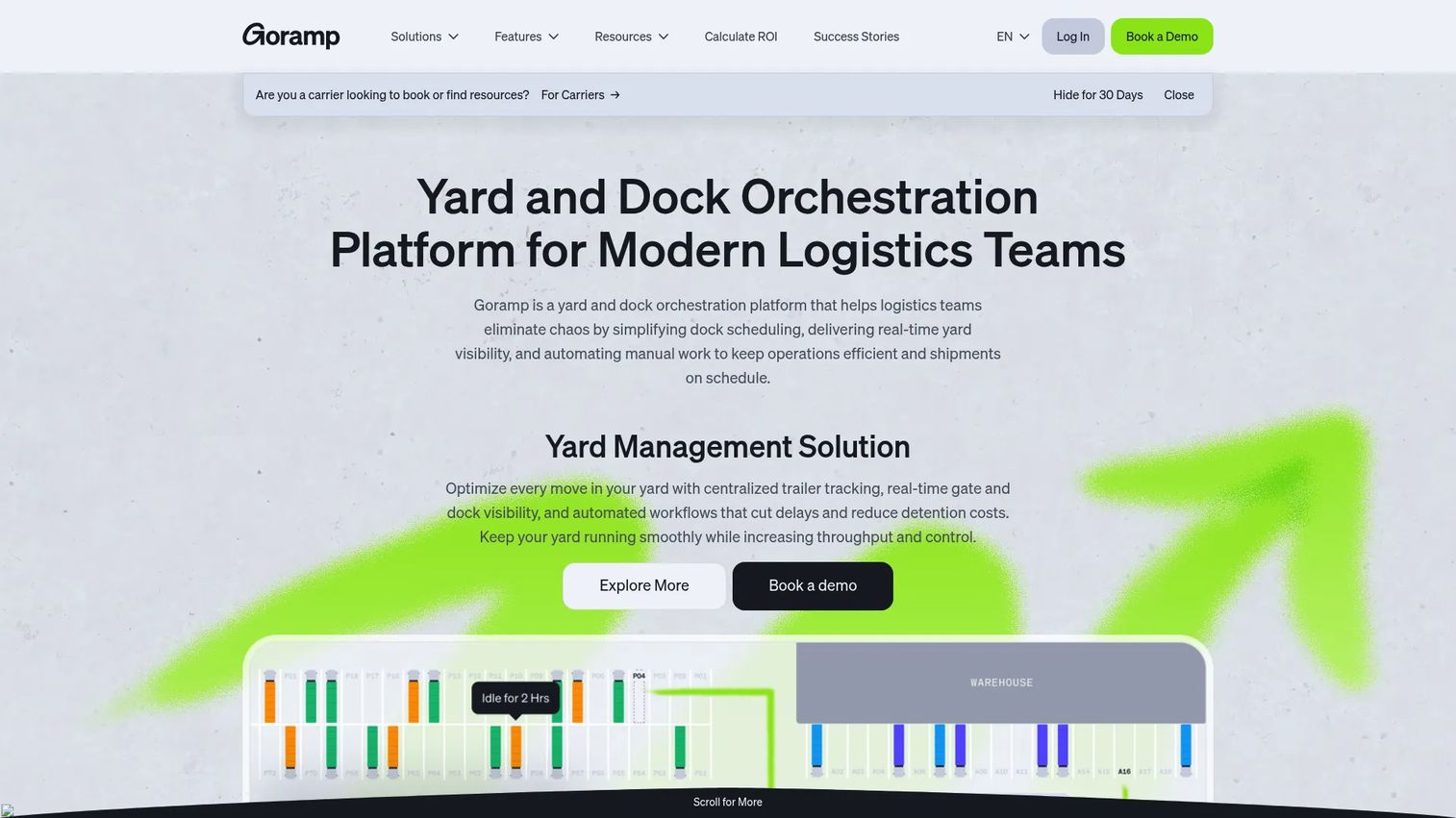
GoRamp is a yard and dock orchestration platform built for logistics teams that want operational clarity without a long implementation cycle. It combines dock scheduling, real-time yard visibility, and automated workflows into a single tool that carriers and warehouse staff can pick up quickly. The focus is practical: get trailers moving, keep docks busy, and give managers a live view of what is happening on site.
Best for: Manufacturers and logistics teams that need dock scheduling and yard visibility without enterprise overhead.
Key strengths
- Dock scheduling and time slot management: Assign appointment windows and balance dock capacity so trucks stop stacking up at the door.
- Real-time yard visibility and alerts: A live yard view with alerts that flag dwell thresholds and exceptions before they turn into detention fees.
- Carrier and supplier performance scorecards: Track how carriers and suppliers actually perform against their commitments, then use the data in negotiations.
Why choose GoRamp: If your bottleneck is the dock and gate, not a 40-yard network, GoRamp gives you the visibility and scheduling control you need without the weight of an enterprise suite. It suits teams that want to be live in weeks, not quarters, and value driver self check-in and clear reporting over deep ERP orchestration.
GoRamp pricing: GoRamp does not publish pricing on its own site and routes buyers to book a demo. Capterra lists a starting price of $175 per month with a free trial available. For teams that want to test workflow fit before committing, the trial is a practical entry point. GoRamp holds a 4.4/5 rating on G2.
2. YardView
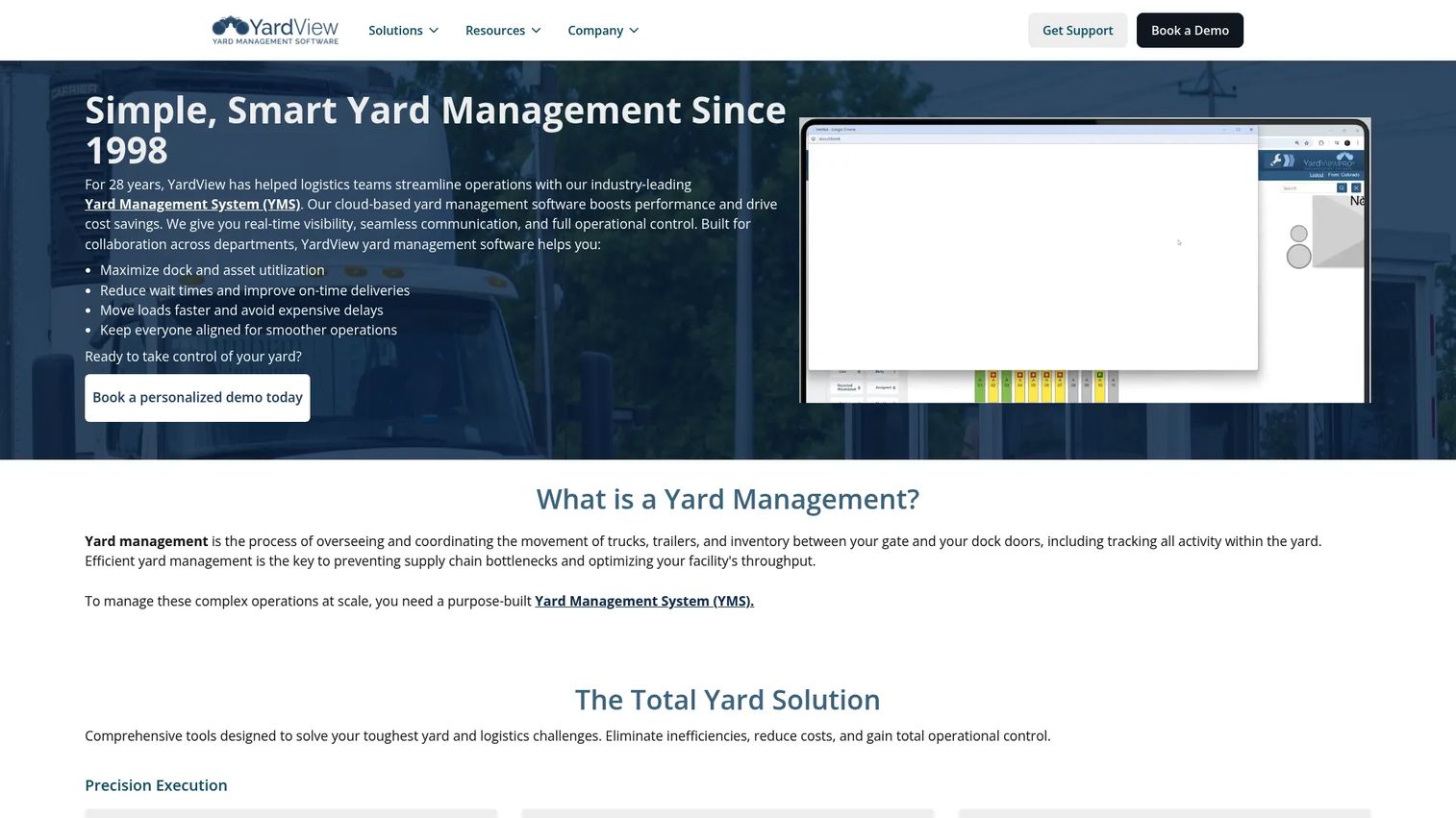
YardView is a yard management system focused squarely on gate, yard, and dock operations. It has been in the YMS space long enough to build deep control features, and its pricing model stands out: a SaaS subscription with unlimited users, so you are not penalized for putting the tool in front of every gate guard, spotter, and dock supervisor who needs it.
Best for: Logistics and warehouse teams that need strong yard, dock, and gate visibility and control without seat-based pricing.
Key strengths
- Gate and access control: Manage every gate movement and control who and what enters the yard, with driver check-in built in.
- Dock management and appointment scheduling: Coordinate dock doors and appointment windows so arrivals and capacity stay in sync.
- Real-time yard visibility: A live yard view of trailer positions and status, so your team spends less time locating assets and more time moving them.
Why choose YardView: The unlimited-user model is a genuine differentiator for operations with large frontline teams, where per-seat pricing on other platforms quietly balloons the cost. YardView fits teams that want yard control and measurable operational ROI, especially those focused on detention and demurrage reduction, rather than a broad supply chain suite.
YardView pricing: YardView uses customized, quote-based pricing built around your yard challenges and required features, billed monthly or quarterly under a SaaS subscription with unlimited users. There is no public dollar figure, so budget conversations start with a scoping call. On Capterra, YardView holds a strong reviewer rating based on customer feedback.
3. Peripass
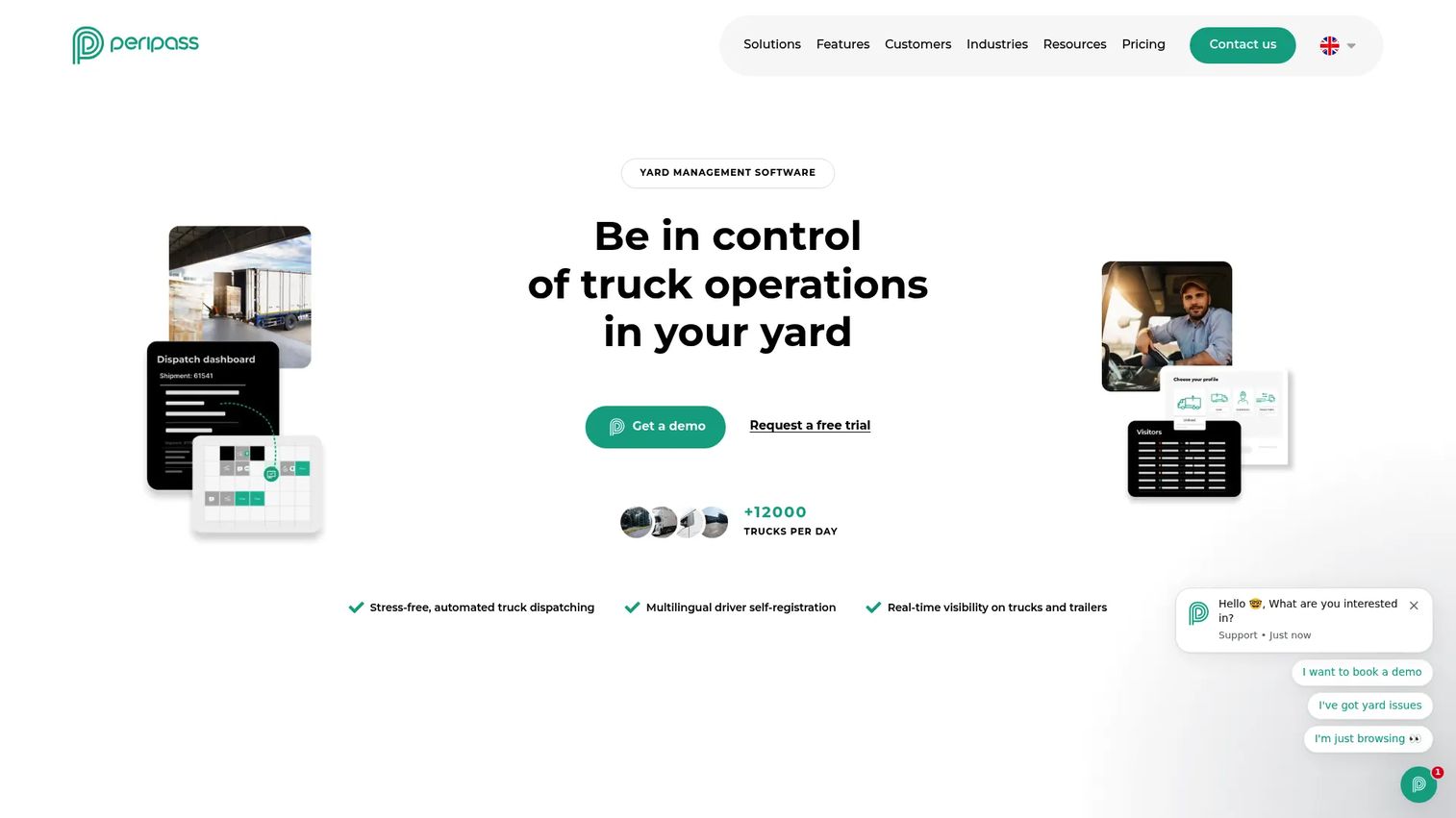
Peripass is yard management software that automates logistics site flows, from self-service registration at the gate to central task management inside the yard. It leans into process discipline: controlled truck and visitor movement, driver communication, and automation that keeps assets moving to the right place without constant manual dispatch. It is one of the more pricing-transparent vendors in this category.
Best for: Manufacturing, 3PL, food and beverage, and retail sites that need structured yard automation and controlled site flow.
Key strengths
- Self-service registration and driver communication: Drivers check in themselves and receive instructions directly, cutting gate queues and language friction.
- Central task management and weighing automation: Coordinate every yard task from one place, with weighing and plate verification automated at the point of movement.
- Access control integrations and trailer plate verification: Connect to physical access systems and verify trailers automatically, so the yard stays secure and accurate.
Why choose Peripass: For operations that care about process discipline and controlled movement, Peripass turns the yard into a governed workflow rather than a free-for-all. It fits sites that want automation and yard visibility with clear, published pricing, which is rare in this market.
Peripass pricing: Peripass publishes pricing in EUR. The QuickStart plan starts at €1,299 per month per site, billed annually. Additional modules, Security and Compliance, Efficiency, and Throughput, start at €1,799 based on your needs, with some higher tiers routing to sales. That per-site transparency makes budgeting for a known number of yards far easier than with quote-only vendors. Peripass holds a 4.5/5 rating on G2.
4. Kaleris
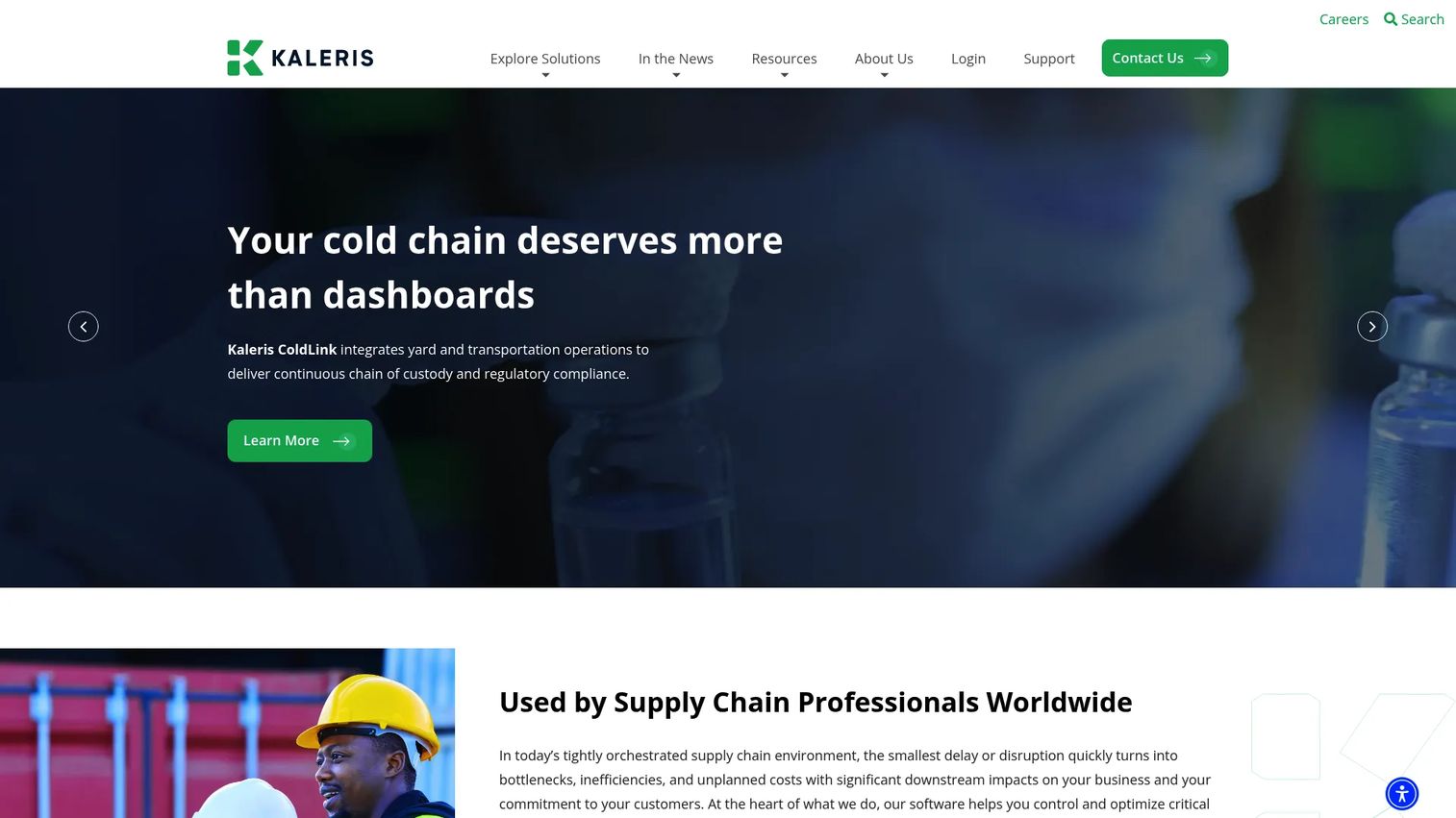
Kaleris is supply chain execution software that spans terminal operations, yard management, and transportation management. Its yard capabilities are built for enterprises that need deeper control: automated gate check-in and check-out, real-time location tracking through RTLS, spotter management, and event-based automation, all feeding dashboards that connect the yard to the wider network. This is a platform for operations where the yard is one node in a larger execution problem.
Best for: Enterprises that need supply chain execution software across terminals, yards, and transportation operations.
Key strengths
- Yard management with RTLS and automated gate check-in: Real-time location tracking and automated gate flows give precise, live visibility across large, busy yards.
- Terminal operating systems: Purpose-built control for marine terminals and inland depots, useful for operations that touch ports as well as yards.
- Transportation management with freight rate and invoice control: Connect yard events to freight rates and invoicing, so detention and demurrage exposure is tracked against the money.
Why choose Kaleris: When your yard problem is really a network problem, spanning terminals, multiple sites, and transportation, Kaleris brings the depth to orchestrate it. RTLS and spotter management suit high-volume, high-complexity yards where knowing exactly where every asset sits directly reduces dwell time and detention exposure.
Kaleris pricing: Kaleris does not publish public pricing and uses a contact-sales model, which is standard for enterprise supply chain execution software at this scale. Expect a scoping and implementation conversation rather than a self-serve signup. Kaleris holds a 4.6/5 rating on G2, the highest among the enterprise platforms in this guide.
5. Manhattan
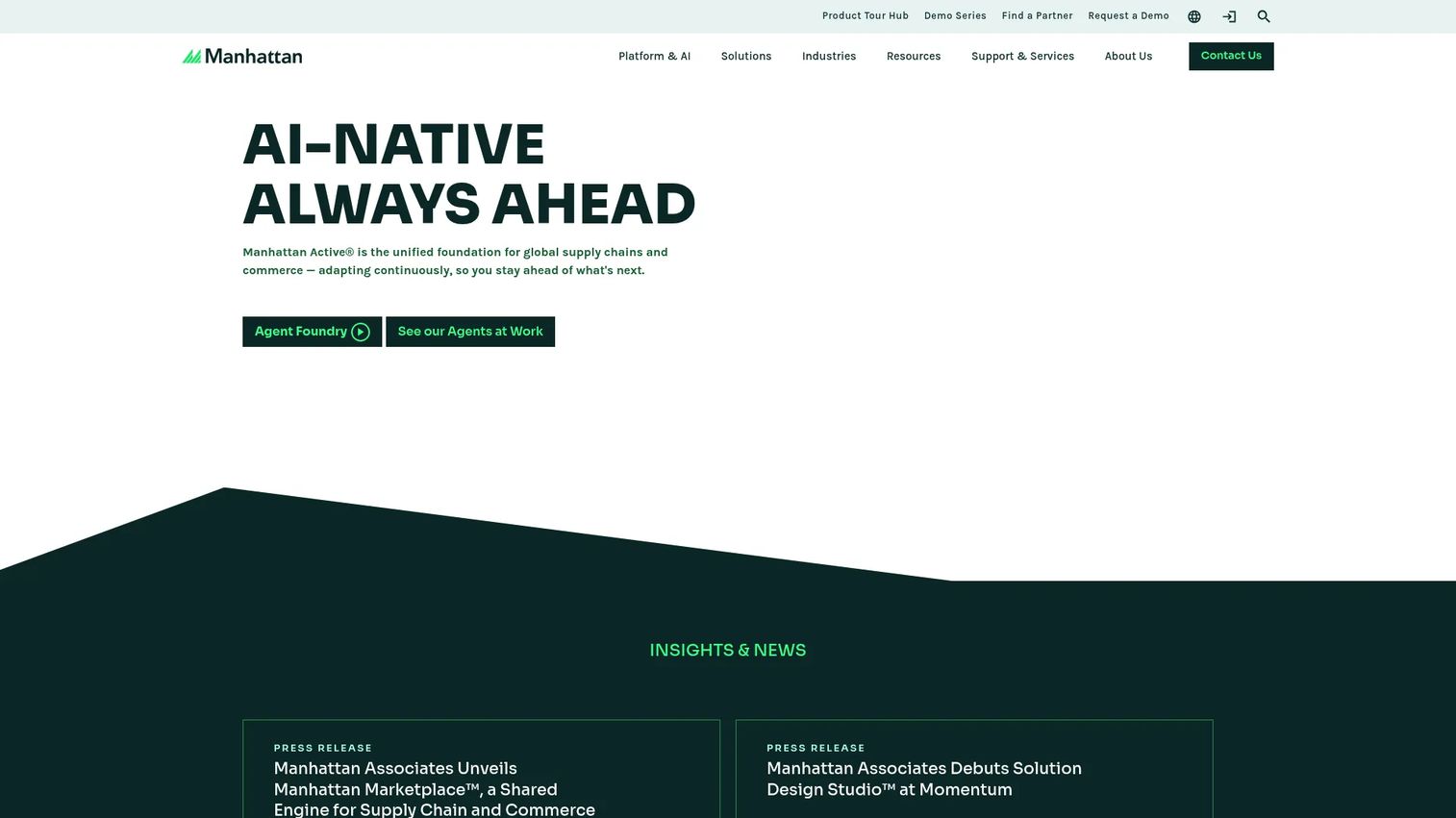
Manhattan is supply chain commerce software offering unified commerce, warehouse, transportation, and planning on one platform. Its Manhattan Active Yard Management sits inside that unified context, which is the point: the yard is not a bolt-on, it is orchestrated alongside warehouse and transportation execution. That unity is what makes it a fit for complex, large-scale supply chains where the yard, dock, and warehouse have to move as one system.
Best for: Large enterprises that need warehouse and supply chain execution software with the yard tightly integrated.
Key strengths
- Unified commerce and supply chain platform: Yard management runs in the same environment as warehouse and transportation execution, removing integration seams.
- Warehouse management and execution: Deep WMS capabilities so trailer arrivals, dock work, and inventory moves stay coordinated in real time.
- Transportation management and supply chain planning: Connect yard activity to inbound and outbound freight, with planning that sees the whole flow.
Why choose Manhattan: If you are already evaluating or running a unified WMS and TMS, adding yard management inside the same platform avoids the integration overhead of stitching a standalone YMS into your stack. It suits enterprises that want digital twin yard visibility, trailer interleaving, and large-scale orchestration in one system. Implementation is an enterprise project, so plan for it accordingly.
Manhattan pricing: Manhattan does not publish public pricing and works through a sales and implementation process typical of enterprise supply chain platforms. Manhattan SCALE holds a 4.0/5 rating on G2. Budget and timeline are best scoped directly, since deployments vary widely by warehouse and network complexity.
6. Oracle
Oracle Yard Management is part of Oracle's broader supply chain management suite, delivering mobile yard transactions and a yard workbench for managing trailer and container movement inside the Oracle Cloud ecosystem. For organizations already standardized on Oracle SCM, the appeal is obvious: the yard lives in the same system of record as the rest of your supply chain, with ERP integration that requires no third-party connector.
Best for: Enterprises already running Oracle supply chain systems that want yard management inside the same ecosystem.
Key strengths
- Mobile yard transactions: Yard staff execute moves and updates from mobile devices, keeping the yard workbench live and accurate.
- Native Oracle SCM integration: The yard sits inside Oracle Cloud, so trailer and inventory data flows without external ERP integration work.
- Enterprise cloud foundation: Built on Oracle Cloud Infrastructure, with the security, scale, and database platform enterprises already rely on.
Why choose Oracle: The case is ecosystem fit, not standalone feature depth. If your organization runs Oracle for ERP and broader supply chain, keeping yard management in the same platform reduces integration cost and gives you one source of truth. For teams not on Oracle, a dedicated YMS will usually be a faster path to yard-specific value.
Oracle pricing: Oracle's pricing is product-specific rather than a single YMS price tag. Oracle Cloud Infrastructure publishes example pricing, including a free tier and compute instances from around $54 per month, but yard management is licensed as part of the broader SCM suite through Oracle sales. Oracle Data Quality, one Oracle product listing, holds a 4.0/5 rating on G2. Scope yard licensing directly with Oracle against your existing footprint.
7. SAP

SAP Yard Logistics handles yard and dock workflows inside the SAP enterprise landscape, connecting yard movement to the broader supply chain, ERP, and business network. For companies already standardized on SAP, the value is integration-first: the yard is not a separate silo but a workflow inside the same platform running ERP, warehouse, and transportation. That alignment is the whole reason to choose it.
Best for: Large enterprises standardized on SAP that need yard logistics inside their existing supply chain platform.
Key strengths
- Yard and dock workflows inside SAP: Manage gate, yard, and dock activity as native SAP processes rather than external add-ons.
- Broad supply chain and ERP integration: Yard events connect to SAP's ERP, supply chain, and business network capabilities with embedded AI.
- Integration and API management: SAP's integration tooling connects the yard to the rest of a complex enterprise landscape.
Why choose SAP: The decision mirrors Oracle's: this is for integration-first buyers whose operations already run on SAP. Keeping yard logistics inside the same landscape avoids another system to maintain and keeps supply chain data unified. If SAP is your system of record, SAP Yard Logistics is the path of least integration resistance.
SAP pricing: SAP's company-wide pricing is not publicly listed, and yard logistics licensing is scoped through SAP sales. As a reference point for SAP's published pricing, its Integration Suite starts at USD 1,771 per month for the starter edition, with standard and enhanced editions higher. SAP holds a 4.2/5 rating on G2. Yard-specific costs should be scoped against your existing SAP contract.
Considerations before you buy
A shortlist is only useful if you know what to check before signing. Here is the buyer's checklist for a yard management system.
Real-time visibility and control
Ask how the platform tracks trailers and containers in real time. RTLS, geofencing, and manual updates deliver very different accuracy. Confirm the live yard view matches the granularity your operation actually needs, not a demo-day ideal.
Gate and dock workflow depth
Map your current gate management and dock scheduling process, then test whether the software handles your edge cases: drop trailers, live loads, appointmentless arrivals. The gap between marketing screenshots and your real workflow is where projects stall.
Integration with WMS, TMS, and ERP
Confirm exactly which systems the platform integrates with and how deep the connection goes. A yard update that does not flow into your WMS integration or TMS integration is half a solution. For enterprises, ERP integration is often the deciding factor.
Analytics and ROI measurement
Decide upfront what you will measure: dwell time, truck turnaround, detention fees avoided, gate throughput. Then confirm the yard analytics and reporting dashboards can produce those numbers. If you cannot measure the ROI of yard management software, you cannot defend the purchase.
Scalability and multi-yard visibility
If you run more than one site, or plan to, verify multi-yard visibility works from day one. A tool that manages one yard beautifully but cannot roll up to a network view will force a painful migration later.
Conclusion
The right yard management software depends entirely on your operating model. For focused dock and yard control with fast deployment, GoRamp and YardView earn their spots, with YardView's unlimited-user model standing out for large frontline teams. Peripass fits European sites and any operation that wants published pricing and process discipline. For enterprise supply chain execution across terminals and networks, Kaleris and Manhattan bring the depth, while Oracle and SAP make the most sense when you are already standardized on their ecosystems and want the yard inside one system of record.
Whatever you shortlist, hold every vendor to the same test: real-time visibility, gate and dock workflow depth, integration with your existing WMS, TMS, and ERP, analytics you can act on, and a defensible ROI. Build a two- or three-vendor shortlist, then run a scoped pilot against your actual yard before committing. The best decision is the one you can measure.
If you evaluate operational software the way product teams evaluate anything, and want to see how modern software communicates value before you commit, Start your journey with Guideflow today!
FAQs
Yard management software is a system that gives logistics teams real-time visibility and control over trailers, containers, and assets moving through a facility's yard. It coordinates gate management, dock scheduling, and yard movement, sitting between your TMS and WMS to turn the yard from a blind spot into a measured, scheduled part of the supply chain.
A YMS timestamps every trailer movement from gate arrival to dock and departure, so you have hard evidence of who caused a delay. That data lets you dispute detention fees with proof instead of arguing from memory. Just as important, faster driver check-in, dock scheduling, and yard automation cut the dwell time that triggers detention in the first place.
The core set is real-time yard visibility, gate management with driver check-in, dock and appointment scheduling, trailer and container tracking, detention control, yard analytics, and integration with WMS, TMS, and ERP systems. Which matter most depends on your bottleneck. High-volume gates prioritize check-in automation; multi-site networks prioritize multi-yard visibility and reporting dashboards.
Most platforms connect through APIs or prebuilt connectors, so a trailer arriving at the gate updates appointments in the WMS and freight status in the TMS without manual re-entry. Enterprise suites like Manhattan, Oracle, and SAP run yard management inside the same platform as WMS and ERP, removing integration seams entirely. Standalone tools rely on the depth and reliability of their connectors, so confirm exactly which systems they support.
Dock scheduling is a subset of yard management. Dock scheduling assigns appointment windows to trailers at specific dock doors to balance capacity. Yard management is the broader system covering the entire yard, gate check-in, trailer tracking, spotter moves, detention control, and analytics, with dock scheduling as one module inside it. Some tools do only scheduling; a full YMS does the whole flow.
For enterprises running multiple sites, high trailer volumes, or complex terminal and transportation operations, a YMS typically pays for itself through reduced dwell time, lower detention exposure, and better labor and dock utilization. The dock and yard management market is forecast to reach USD 7.89 billion by 2035 per Business Research Insights, driven largely by manufacturing, retail, and food and beverage enterprises adopting yard automation and multi-yard visibility.
Start by baselining current dwell time, truck turnaround, gate throughput, and detention fees paid over the last year. Then estimate realistic improvements from visibility and automation, and confirm the platform's analytics can measure those exact metrics after go-live. Run a scoped pilot at one site so your ROI projection is grounded in your own data, not a vendor benchmark.
Models vary widely. Focused tools like GoRamp start around $175 per month per Capterra, YardView uses quote-based SaaS pricing with unlimited users, and Peripass publishes per-site pricing from €1,299 per month. Enterprise supply chain platforms like Kaleris, Manhattan, Oracle, and SAP use contact-sales pricing scoped to your network, since deployment cost scales with sites, volume, and integration depth.