Your wireless bill is not one bill anymore. It is devices, plans, users, roaming, pooled data, taxes, credits, disputes, and lines nobody remembers approving. The wireless expense management software market was valued at $2.6 billion in 2025 and is projected to reach $6.5 billion by 2035, according to WiseGuy Reports (2026). That growth reflects a simple reality: Mobile spend has become complex enough that spreadsheets and carrier portals no longer cut it.
For a Series B SaaS founder, this is not a telecom administration problem. It is an operating discipline problem. When your Head of Finance cannot explain wireless spend without chasing IT, and your IT lead cannot confirm which lines belong to current employees, you have a cost center with no owner. The right wireless expense management tools give your leadership team the visibility to fix that, without routing every cost-control question through you.
This guide covers 15 wireless expense management companies and helps you match the right one to your specific operating problem.
What's inside
This guide is for founders, finance leaders, and IT leaders at SaaS companies evaluating wireless expense management tools. Vendors were selected based on four criteria:
- Invoice accuracy: Ability to audit carrier bills and recover credits
- Inventory visibility: Coverage of lines, devices, users, SIMs, and cost centers
- Carrier management: Support for plan optimization, disputes, and contract tracking
- Implementation lift: Time to first audit and ongoing operational overhead
Pricing and G2 ratings were verified against vendor pages and live G2 listings. Where pricing is quote-based, the cost drivers are explained plainly.
TL;DR
- Best for enterprise wireless complexity: Sakon or Tangoe, depending on whether your primary need is lifecycle management or consolidated technology expense visibility
- Best for procurement-led telecom workflows: Lightyear, which combines sourcing, inventory, and expense management with a free procurement tier
- Best for wireless-specialist managed services: Mindglobal, for teams that want hands-on billing audit expertise rather than software-only oversight
- Best for finance and IT visibility at a predictable price: Genuity, with plans starting at $39.99/month and a free community tier
- Best for mid-market outsourcing: vCom Solutions, priced at $0.13 per device per day for mobile lifecycle management
- Founder takeaway: Choose based on ownership model first. Finance-led audit, IT-led inventory control, and procurement-led carrier management each point to different vendors.
What is wireless expense management software?
Wireless expense management software helps companies track, audit, optimize, and manage mobile carrier spend across devices, plans, users, invoices, contracts, and usage.
It is a subset of telecom expense management, focused specifically on mobile phones, tablets, hotspots, SIMs, IoT lines, carrier plans, pooled data, roaming charges, and mobile device lifecycle costs. Some vendors offer pure software platforms. Others combine software with managed services. Broader telecom expense management platforms may include wireless as one part of a program that also covers fixed voice, data circuits, and cloud communications.
Key capabilities in this category:
- Invoice ingestion and validation: Carrier bill intake, audit rules, tax and fee checks
- Inventory management: Lines, SIMs, devices, users, cost centers, and contracts in one view
- Usage monitoring: Data pools, roaming, zero-use lines, and overage patterns
- Plan optimization: Right-sizing plans and pooling strategies based on actual usage
- Dispute management: Credit recovery workflows and carrier follow-up
- Cost allocation: Chargeback by department, team, location, or individual user
- Reporting: Dashboards built for finance, IT, procurement, and leadership
- Lifecycle workflows: Order, activate, suspend, reassign, upgrade, or retire services
The distinction from mobile device management (MDM) matters here. MDM controls device security, app policies, and access. Wireless expense management controls cost, invoices, plans, inventory, and carrier disputes. Many companies use both, but they solve different problems.
According to Market.us (2026), more than 80% of organizations support personal devices for work, and around 70% have formal BYOD policies. That scale of mobile usage makes unmanaged wireless spend a material cost risk for any growing company.
When to use wireless expense management software
Find wireless spend you cannot see in spreadsheets
Wireless bills hide cost across carrier portals, cost centers, user changes, taxes, and device inventory. If your Head of Finance cannot explain mobile spend without chasing IT for context, the system is broken. Common spend leaks include zero-use lines, duplicate device assignments, former employee numbers, unused hotspots, international roaming, data pool overages, and incorrect carrier charges.
Stop carrier billing errors before they become normal
A one-time bill review is not enough. If the next invoice repeats the same error, you have a recurring cost that compounds quietly. Wireless billing audits, rate validation against contract terms, and structured dispute workflows stop that cycle. The right platform catches these automatically, so your finance team stops auditing manually every month.
Give finance, IT, and procurement one operating view
Finance cares about cost accountability. IT cares about which devices belong to which employees. Procurement cares about carrier contract terms and renewal leverage. For a Series B SaaS company, the right tool gives each function what it needs and stops the founder from being the escalation point when those views conflict.
Wireless expense management software comparison
Most wireless expense management companies price by quote because cost depends on line count, invoice volume, managed-service scope, and carrier complexity. The table below reflects verified pricing where available and indicates quote-based models where exact figures were not disclosed. G2 ratings were verified from live listings.
| # | Product | Best for | Key differentiator | Pricing | G2 rating |
|---|---|---|---|---|---|
| 1 | Sakon | Large enterprise telecom and mobile lifecycle management | Communications lifecycle management across inventory, expense, and workflow | Quote-based | N/A |
| 2 | Tangoe | Enterprise technology expense consolidation | Broad TEM platform covering telecom, mobile, and cloud | Quote-based | 4.1/5 |
| 3 | Calero | Telecom, mobility, and SaaS expense visibility | Unified technology expense management with AI-powered insights | Quote-based | 4.3/5 |
| 4 | Brightfin | ServiceNow-connected IT and telecom expense | Native ServiceNow integration for technology expense management | Quote-based | 4.4/5 |
| 5 | Lightyear | Procurement-led telecom sourcing and expense | AI-powered procurement, inventory, and expense in one platform | Free (Procurement tier) | 5.0/5 |
| 6 | Asignet | Global companies needing invoice validation and governance | Pre-payment invoice integrity across telecom, SaaS, and IT | Quote-based | N/A |
| 7 | Mindglobal | Wireless-focused managed service | Wireless billing audit and optimization specialization | Quote-based | 5.0/5 |
| 8 | RadiusPoint | Audit-heavy telecom expense services | Telecom audit, inventory, and managed expense workflows | Quote-based | 5.0/5 |
| 9 | Cimpl | Inventory-centered telecom expense control | TEM platform with inventory as the foundation | Quote-based | 4.5/5 |
| 10 | Valicom Clearview | Finance teams focused on invoice review | Telecom invoice auditing and reporting with ERP integrations | Quote-based | 4.0/5 |
| 11 | Management of Things | Mobility and IoT-heavy environments | Lifecycle control across mobile and connected assets | Quote-based | N/A |
| 12 | Telesoft | Enterprise telecom audit and dispute support | Managed TEM with invoice and contract controls | Quote-based | N/A |
| 13 | Genuity | Lean IT and finance teams | IT spend visibility with public pricing starting at $39.99/month | From $39.99/month | 4.7/5 |
| 14 | Tellennium | Managed TEM with ongoing optimization | Telecom lifecycle services including utilities and SaaS | Quote-based | 4.9/5 |
| 15 | vCom Solutions | Mid-market telecom lifecycle outsourcing | Mobile lifecycle management at $0.13/device/day | From $0.13/device/day | 4.3/5 |
Best 15 wireless expense management tools for 2026
1. Sakon
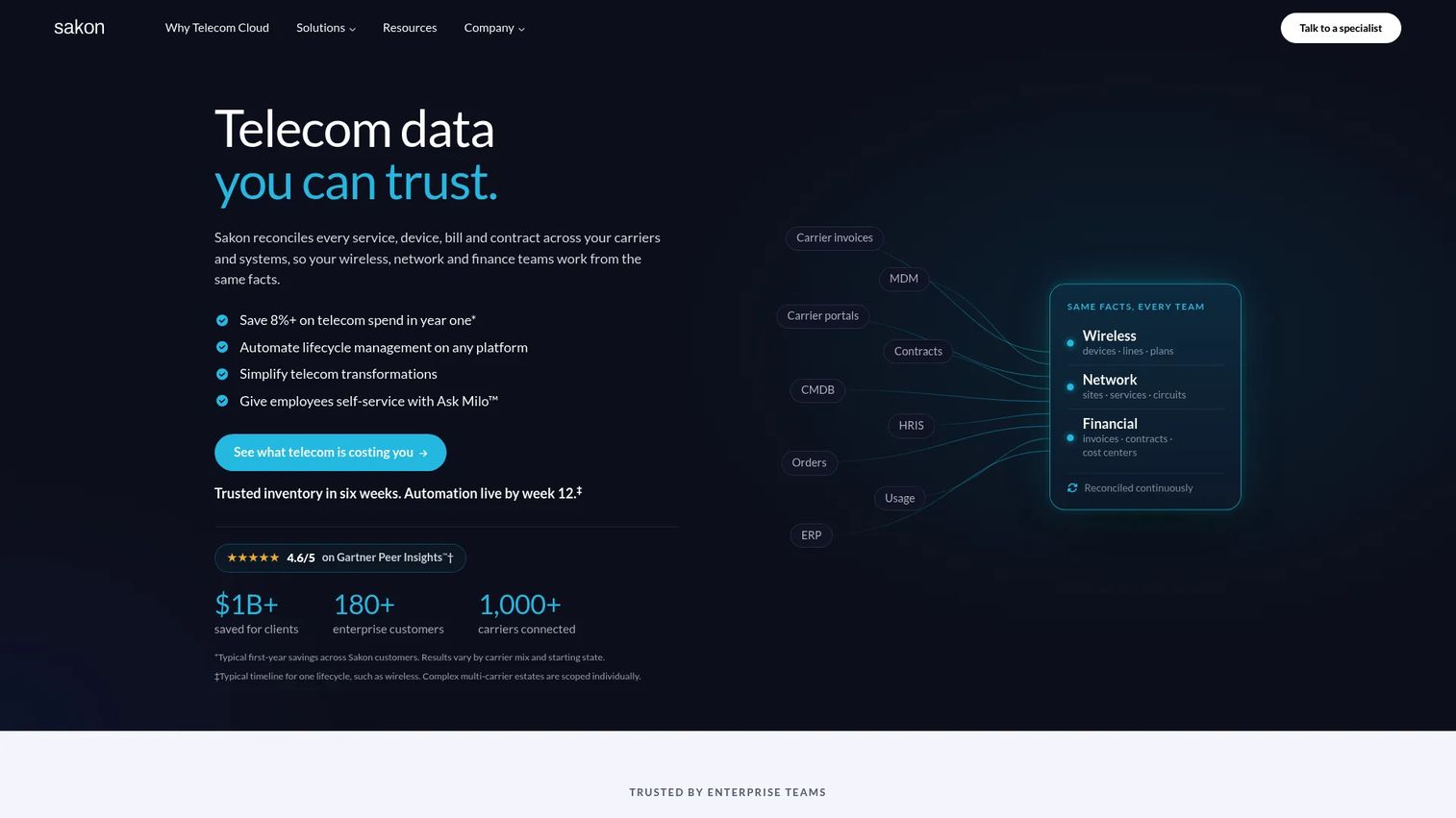
Sakon is a telecom cloud platform that reconciles enterprise services, devices, bills, and contracts across the full communications lifecycle. It covers telecom inventory, wireless device ordering and lifecycle management, invoice validation, and carrier contract governance. Sakon also offers a conversational AI assistant called Ask Milo for employee mobility requests and integrates natively with ServiceNow for telecom workflow automation.
Best for: Large enterprises and IT service providers managing complex, multi-carrier telecom and mobility operations.
Key features
- Telecom inventory reconciliation across carriers and enterprise systems
- Wireless device ordering, shipping, upgrades, and employee self-service
- Invoice validation with accounts-payable automation and spend optimization
- Network service and contract lifecycle management
- ServiceNow integration for telecom workflows
Why choose Sakon: Sakon suits organizations where wireless expense management is inseparable from broader communications lifecycle governance. If your problem spans network services, device provisioning, and carrier contracts simultaneously, Sakon's scope covers all of them. Smaller teams should evaluate whether the full platform matches their actual complexity before committing.
Sakon pricing: Pricing is handled through sales and depends on service volume, managed-service scope, and telecom environment size. Request a quote directly from their team.
2. Tangoe
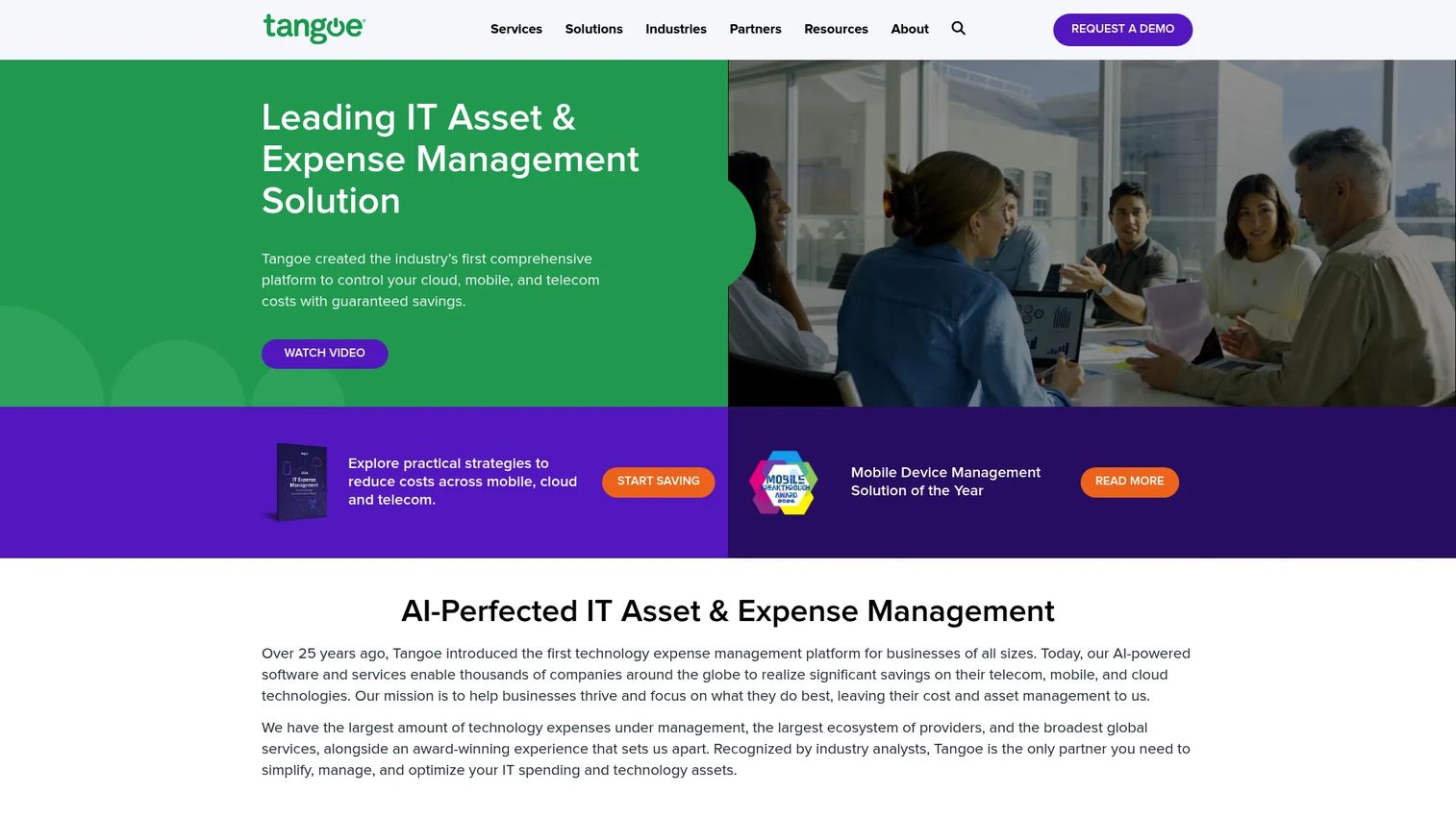
Tangoe is a broad technology expense management platform covering telecom, mobile, cloud, and related IT spend categories. Its AI-powered analytics allow users to ask natural-language questions about spending patterns and get structured answers. Mobile lifecycle management, carrier integration, and usage monitoring are core capabilities alongside broader cost and inventory visibility.
Best for: Large enterprises that want wireless expense management inside a consolidated technology expense program covering multiple spend categories.
Key features
- Centralized telecom, mobile, and cloud expense management
- AI-powered analytics with natural-language query and forecasting
- Mobile lifecycle management with UEM and carrier integration
- Inventory mapping and technology service visibility
- Cost and usage monitoring with optimization workflows
Why choose Tangoe: Tangoe works well when wireless is one of several technology spend categories a finance or IT team needs to rationalize under one program. For a Series B founder, it is worth asking whether Tangoe's breadth matches your current complexity or whether a narrower wireless-focused provider would deliver faster payback with less implementation overhead.
Tangoe pricing: Ask about line minimums, managed-service fees, implementation costs, and reporting module pricing when you engage their sales team.
G2 rating: 4.1/5
3. Calero
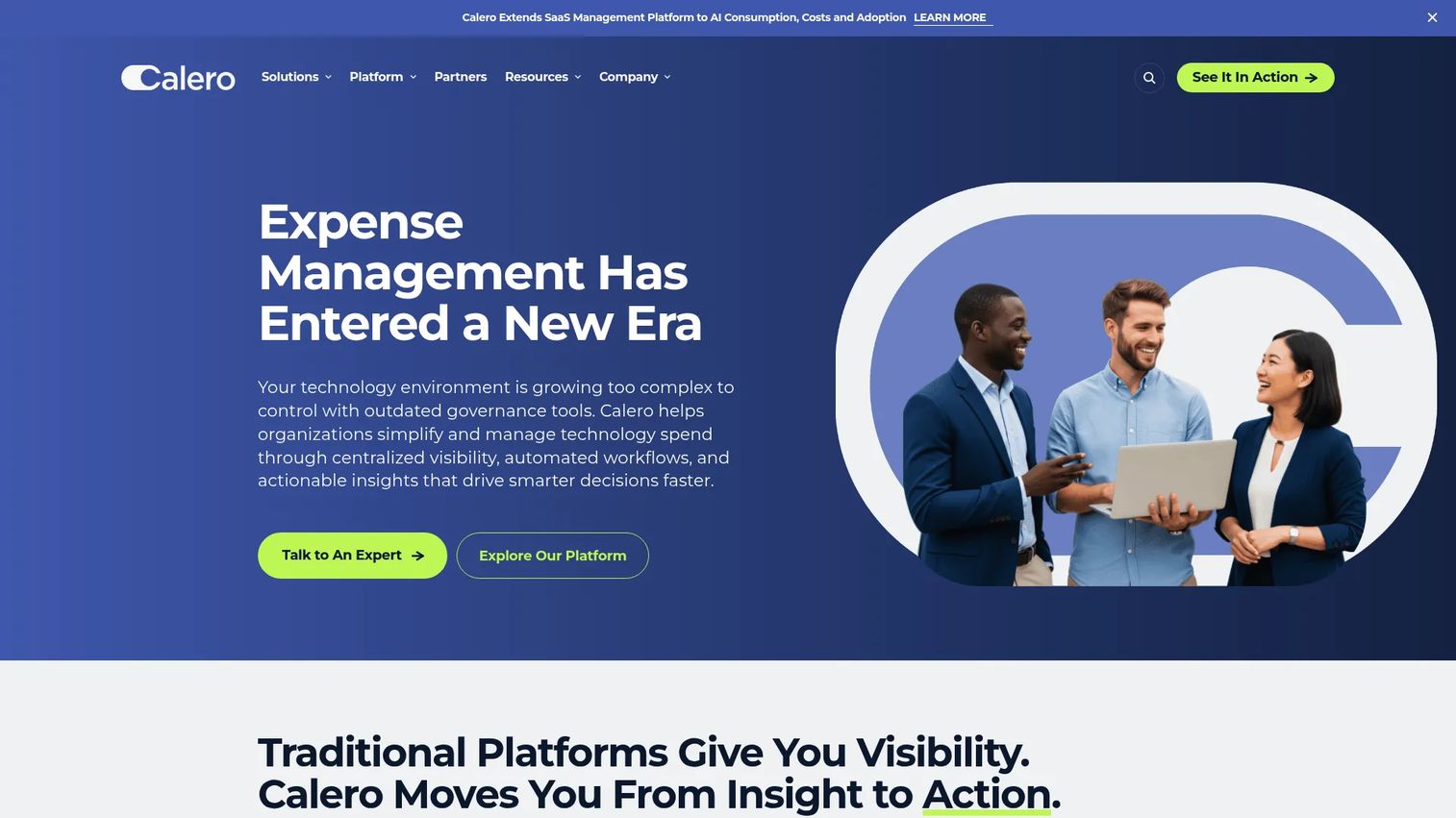
Calero is a unified technology expense management platform for telecom, mobility, and SaaS spend. Its Calero Assistant applies AI-powered insights to invoice processing, audit workflows, and spend analytics. Calero's scope spans market data expenses and broader IT vendor governance, making it one of the more comprehensive platforms in this category.
Best for: Companies that want to connect wireless, telecom, and SaaS expense management under a single governance model.
Key features
- Telecom expense management with invoice auditing and dispute management
- SaaS management covering application usage, contracts, and renewals
- Mobility management with inventory, ordering, and procurement
- AI-powered insights through the Calero Assistant
- Unified analytics and workflow automation
Why choose Calero: Calero is a strong fit when leadership wants to reduce tool fragmentation across technology spend. If wireless cost is one piece of a larger picture that includes SaaS renewals and telecom contracts, Calero's unified scope can replace several point solutions. Founders evaluating it should clarify managed-service scope and supported spend categories before signing.
Calero pricing: Pricing is quote-based and not displayed on the Calero website. Ask about implementation timeline, supported spend categories, user seats, and managed-service scope when requesting a quote.
G2 rating: 4.3/5
4. Brightfin
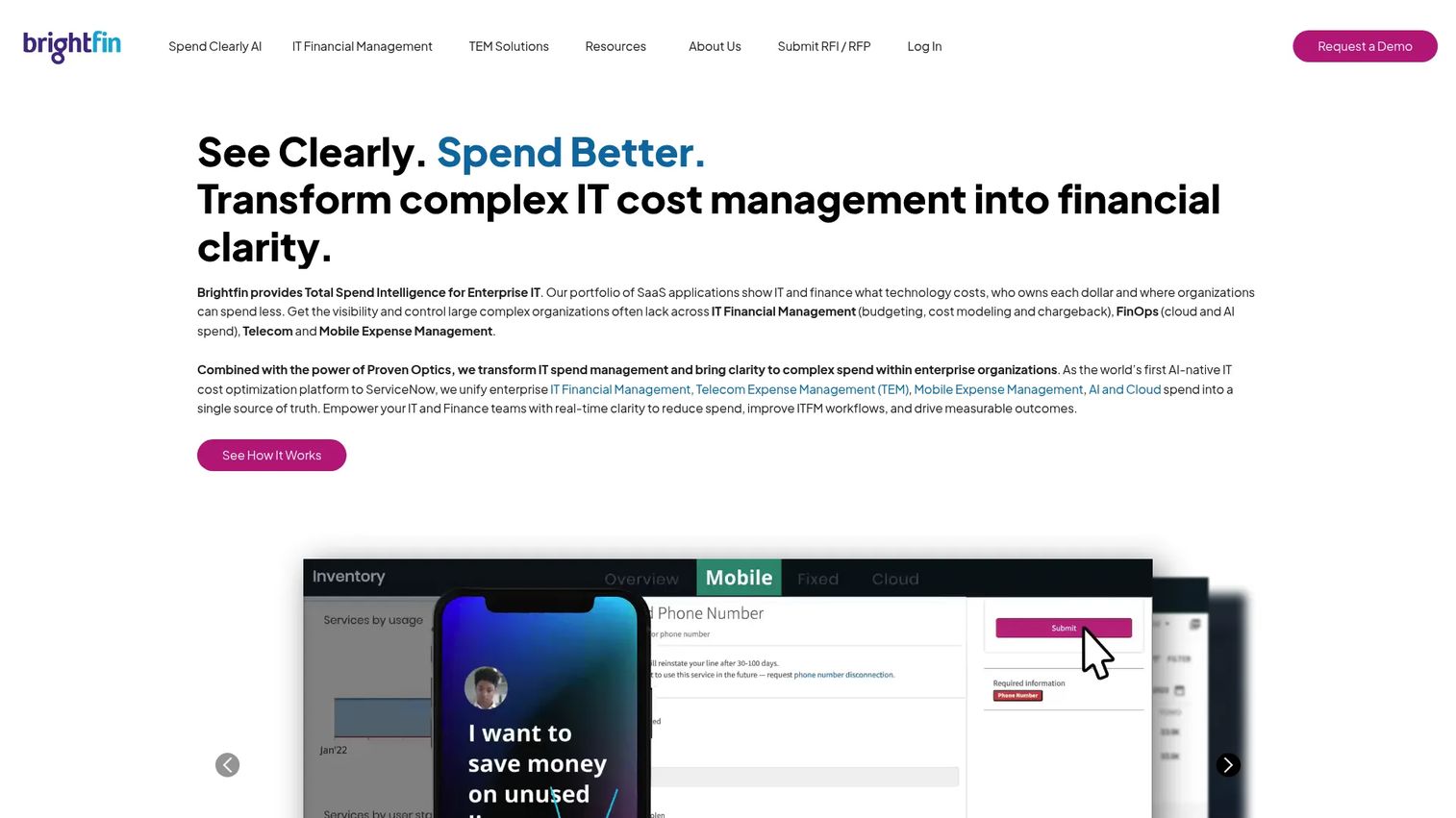
Brightfin is an enterprise technology expense management platform built natively on ServiceNow. It handles IT financial management, telecom and mobile expense, cloud spend, and AI spend management, all within ServiceNow workflows. Brightfin Sync provides real-time UEM asset synchronization into the ServiceNow CMDB, keeping device inventory accurate without manual reconciliation.
Best for: Enterprise IT and finance teams managing technology spend through ServiceNow, where expense management needs to live inside existing service workflows.
Key features
- IT financial management with budgeting, forecasting, and chargeback
- Telecom, mobile, and cloud expense management with invoice processing
- Brightfin Sync for real-time UEM asset synchronization into ServiceNow CMDB
- AI spend management and cost optimization
- ServiceNow-native workflow alignment
Why choose Brightfin: If your IT and finance teams already operate through ServiceNow, Brightfin removes the friction of a separate system by embedding expense management directly into existing workflows. Evaluate it when wireless spend problems overlap with asset ownership and service management processes already running in ServiceNow.
Brightfin pricing: Contact sales for pricing based on your environment. Ask about ServiceNow licensing alignment, asset volume, and implementation requirements.
G2 rating: 4.4/5
5. Lightyear
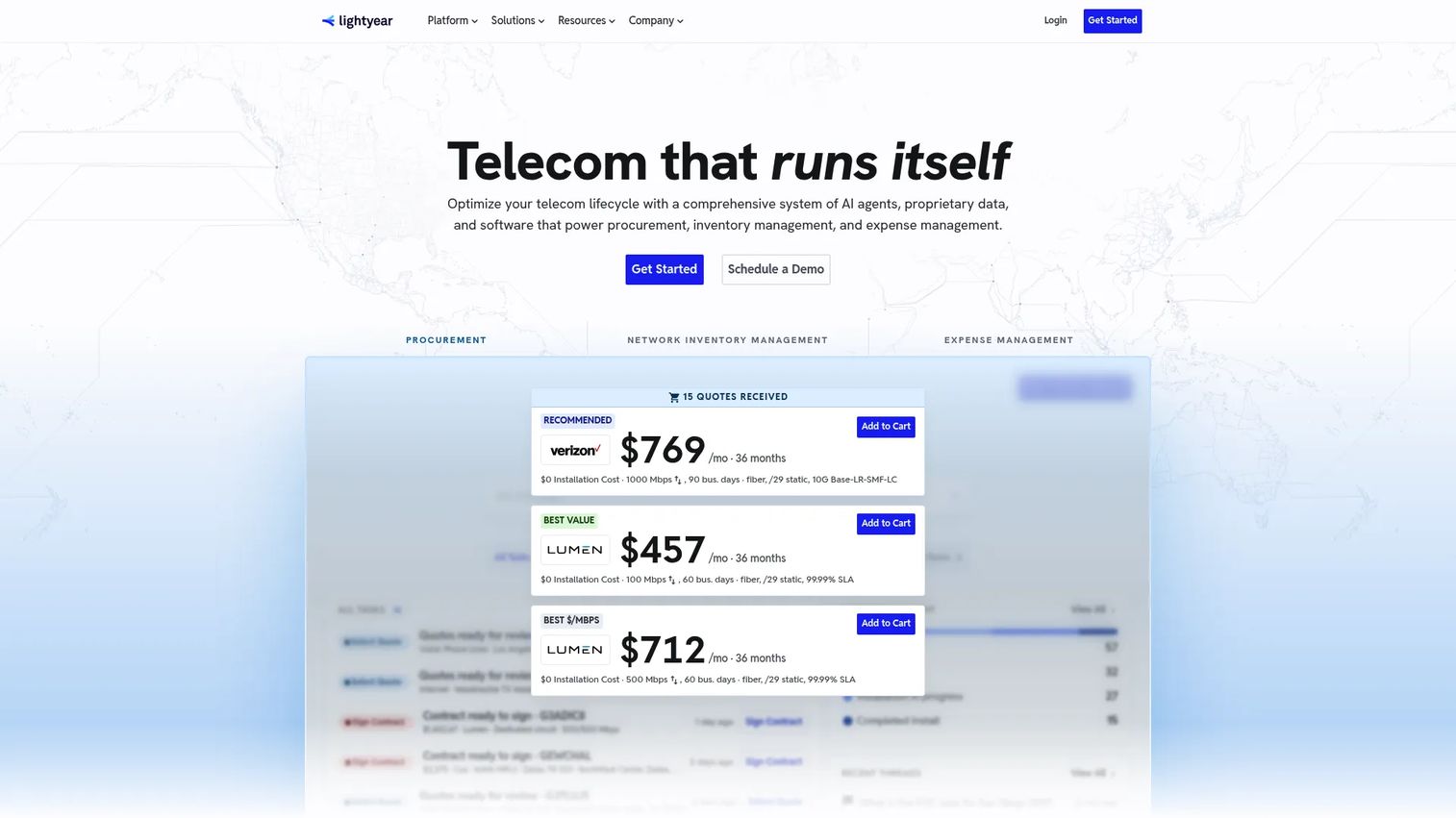
Lightyear is an enterprise telecom platform for sourcing, implementing, managing, and optimizing network services. Its AI Dispatch interface handles natural-language telecom queries, report generation, and workflow initiation. Lightyear covers procurement with AI-powered quoting and implementation agents, network inventory management with MACD workflows and renewal tracking, and expense management with invoice auditing and reconciliation.
Best for: Procurement-led teams that want to connect telecom buying, renewals, inventory management, and expense control in one platform.
Key features
- AI Dispatch for natural-language telecom data, reports, and workflow initiation
- Quoting and Implementation AI Agents for sourcing and installation
- Network Inventory Manager with MACD workflows and cost optimization
- Expense management with invoice auditing, reconciliation, and approvals
- API integrations with ServiceNow, Meraki, NetBox, and Splunk
Why choose Lightyear: Lightyear is the strongest option when wireless expense management is tied to active carrier sourcing and contract renewal leverage. The free Procurement tier lets teams start without a budget commitment, making it a practical fit for founders who want better procurement discipline before the next scale phase without locking into a full enterprise contract.
Lightyear pricing: The Procurement tier is free. Network Inventory Manager and Expense Management are annual subscriptions priced based on network size; both require a sales quote. There is no free trial for paid tiers.
G2 rating: 5.0/5
6. Asignet
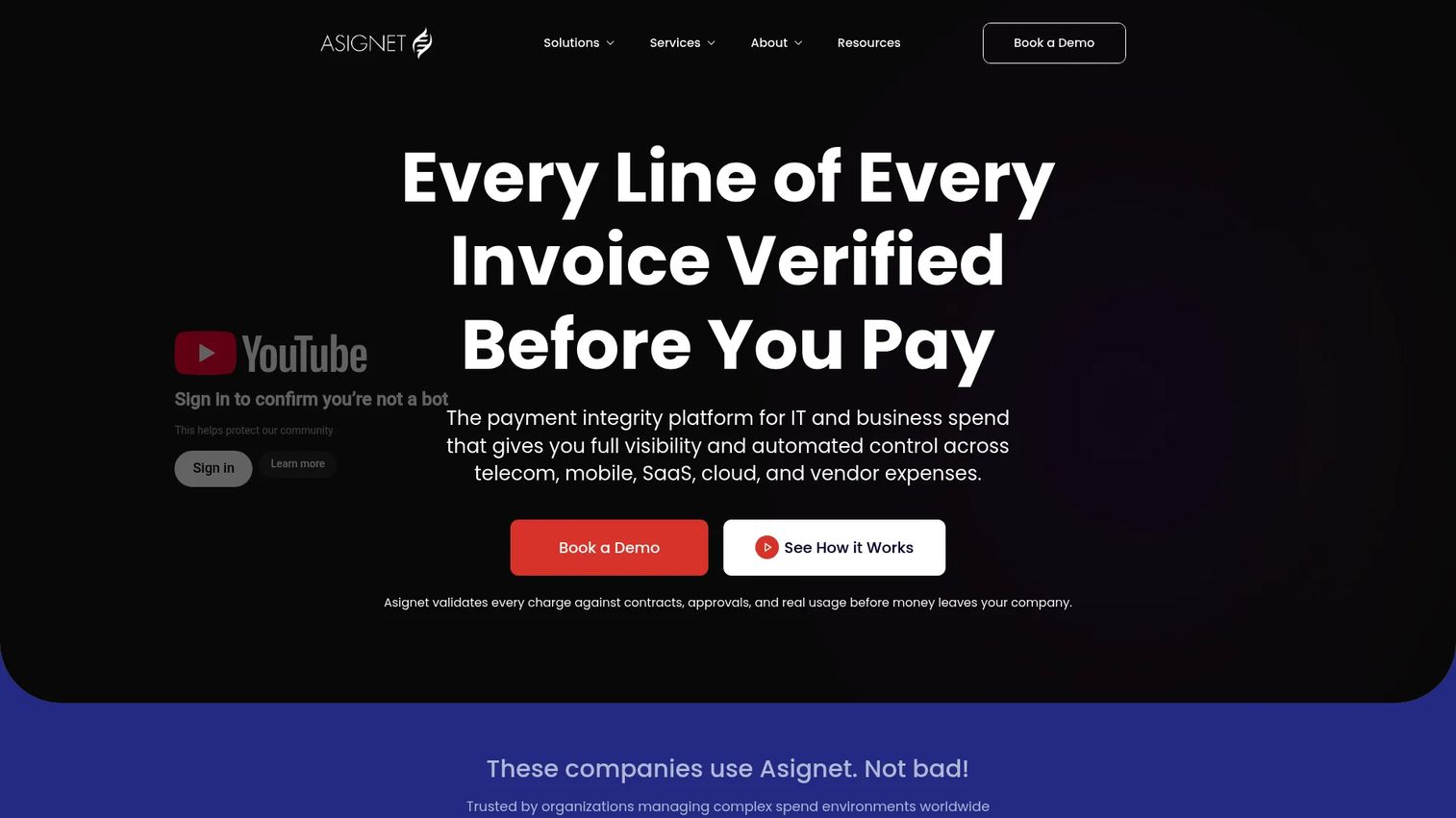
Asignet is a payment integrity platform for validating and controlling IT, telecom, mobile, SaaS, cloud, and vendor expenses before payment. Its approach centers on pre-payment invoice validation against contracts, approvals, and actual usage. Asignet also supports automated provisioning workflows, approval routing, and device, service, and cost-center tracking.
Best for: Global and multi-location companies that need governance across telecom assets, vendor invoices, and cost-center allocations before any payment goes out.
Key features
- Invoice validation against contracts, approvals, and actual usage
- Automated provisioning and approval workflow routing
- Device, service, vendor, contract, and cost-center tracking
- Multi-region and multi-carrier asset governance
- Spend analytics and reporting
Why choose Asignet: Asignet's pre-payment validation model is a good fit for organizations where invoice errors and unauthorized charges are a recurring problem. The focus is on stopping bad charges before they clear, rather than recovering credits after the fact. Teams with global carrier complexity and multiple approvers benefit most from its governance layer.
Asignet pricing: The site directs prospects to book a demo or request an analysis. Ask about service count, regions covered, approval workflow requirements, and managed-service scope when engaging their team.
7. Mindglobal
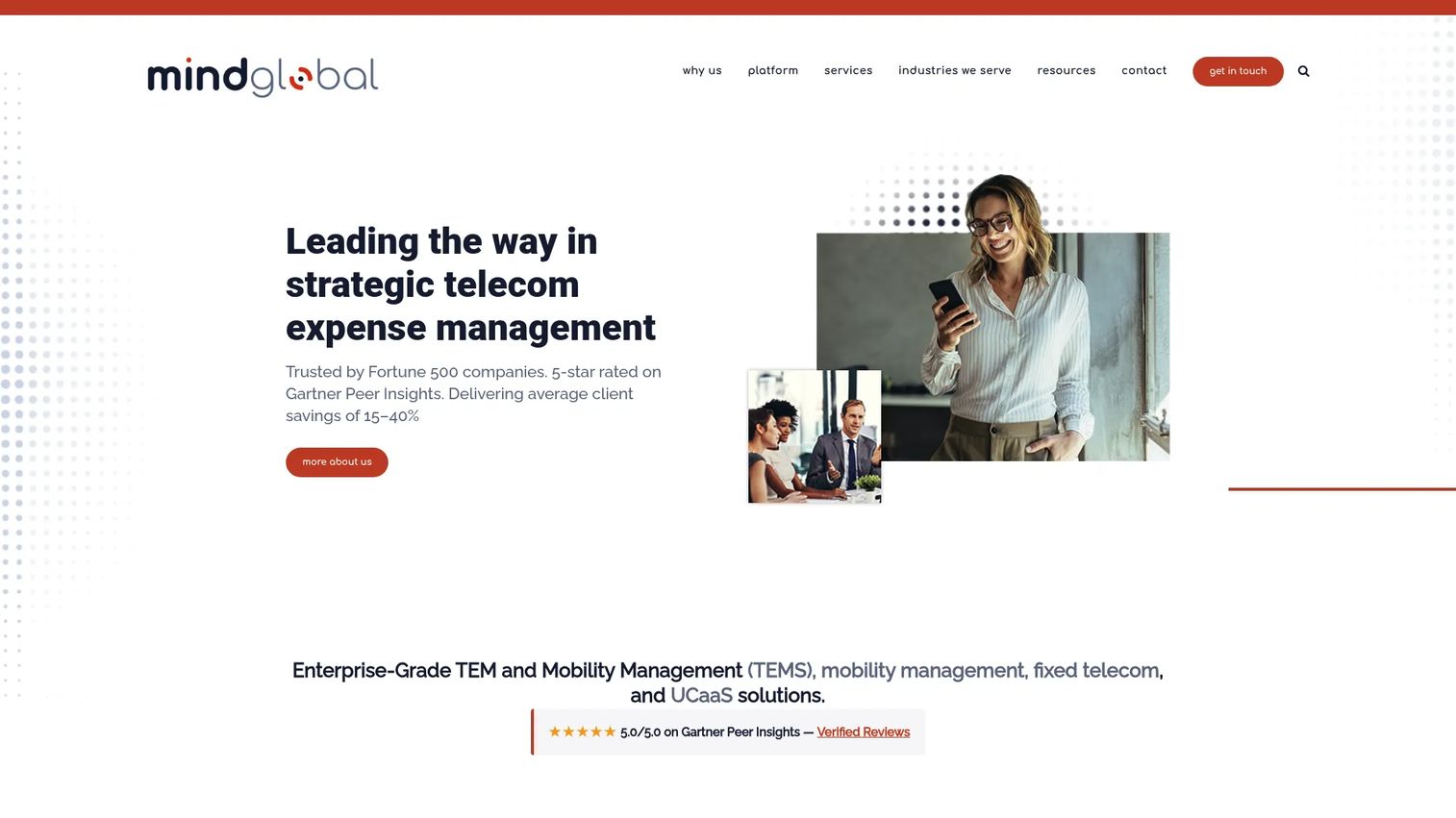
Mindglobal is an enterprise telecom expense management and managed mobility provider. Its focus spans wireless billing audits, mobile device lifecycle management, procurement and provisioning, analytics and cost allocation, and UCaaS license management. Mindglobal operates as a managed-service provider rather than a pure software platform, meaning its team handles the ongoing audit and carrier management work on your behalf.
Best for: Large enterprises that want hands-on wireless expense management expertise, particularly when finance lacks telecom knowledge and IT has no capacity for manual audits.
Key features
- Telecom expense management and wireless invoice auditing
- Mobile device lifecycle and inventory management
- Procurement, provisioning, and workflow automation
- UCaaS license management and contract optimization
- Reporting, analytics, and cost allocation
Why choose Mindglobal: When the problem is not software but expertise, Mindglobal's managed-service model fills the gap. If your team does not have the bandwidth to run carrier disputes or audit pooled data plans, Mindglobal's specialists handle that work. Ask how savings are measured, how fees are structured, and what the ongoing service scope includes before signing.
Mindglobal pricing: Ask about how fees are structured relative to savings recovered, what the ongoing monthly service includes, and minimum contract terms.
G2 rating: 5.0/5
8. RadiusPoint
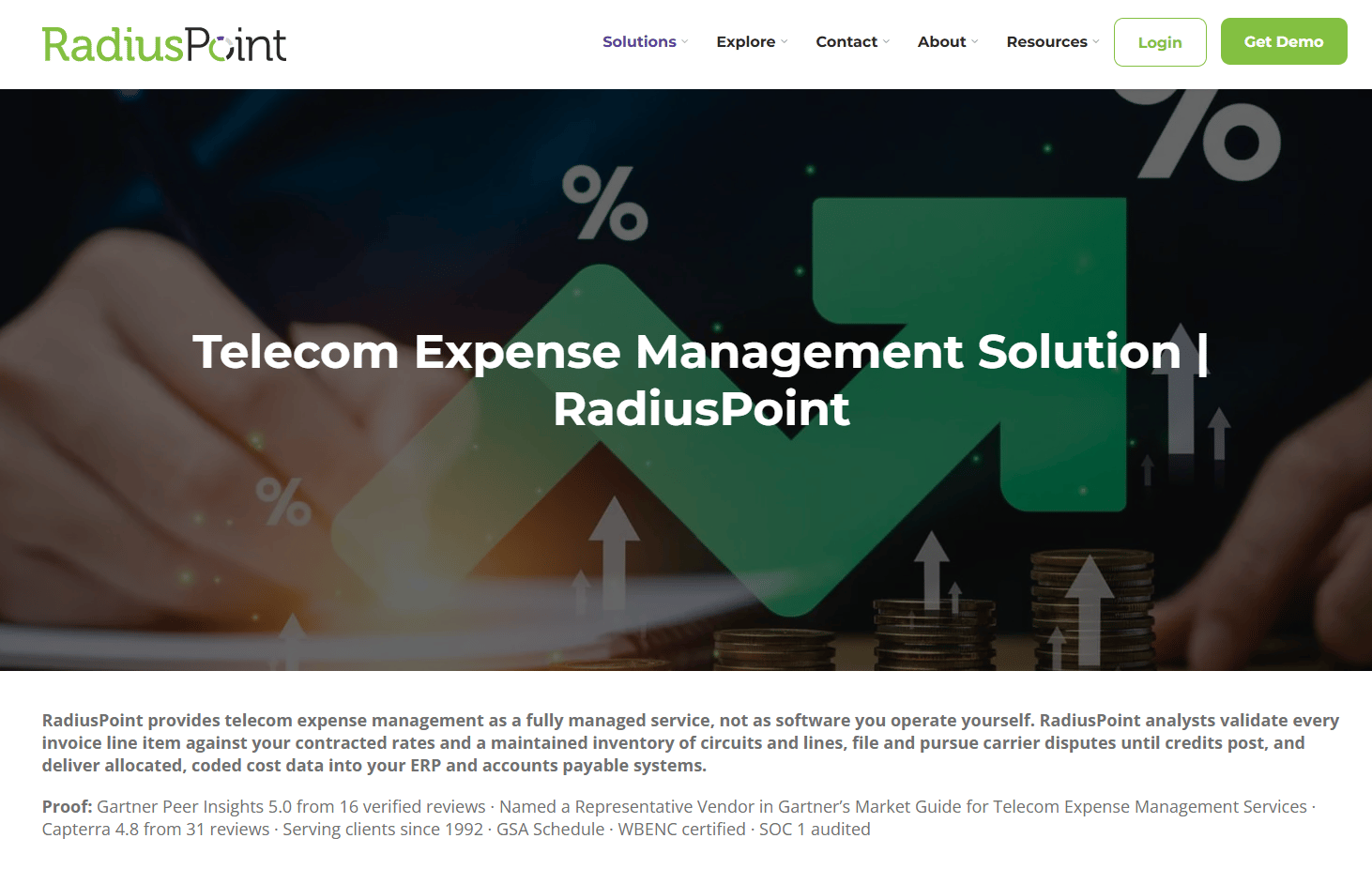
RadiusPoint is a telecom expense management services provider focused on audit, inventory, dispute resolution, and invoice management. Its managed-service approach handles the ongoing complexity of telecom bill review, carrier negotiations, and credit recovery, with cost allocation reporting for finance and IT.
Best for: Teams with recurring invoice problems or limited internal telecom audit capacity that need a managed-service provider rather than a software-only platform.
Key features
- Telecom audit services and wireless invoice review
- Dispute management and credit recovery workflows
- Inventory management across lines, devices, and users
- Cost allocation and chargeback reporting
- Managed telecom expense support
Why choose RadiusPoint: RadiusPoint earns its place when the volume and complexity of billing errors justifies external support. The managed-service depth matters most when savings opportunity is high and internal resources are constrained. Ask about audit scope, any contingency fee structure, monthly service fees, and reporting cadence when evaluating.
RadiusPoint pricing: Pricing is quote-based. Ask about audit scope, service fees, and whether any savings-contingency model applies.
G2 rating: 5.0/5
9. Cimpl
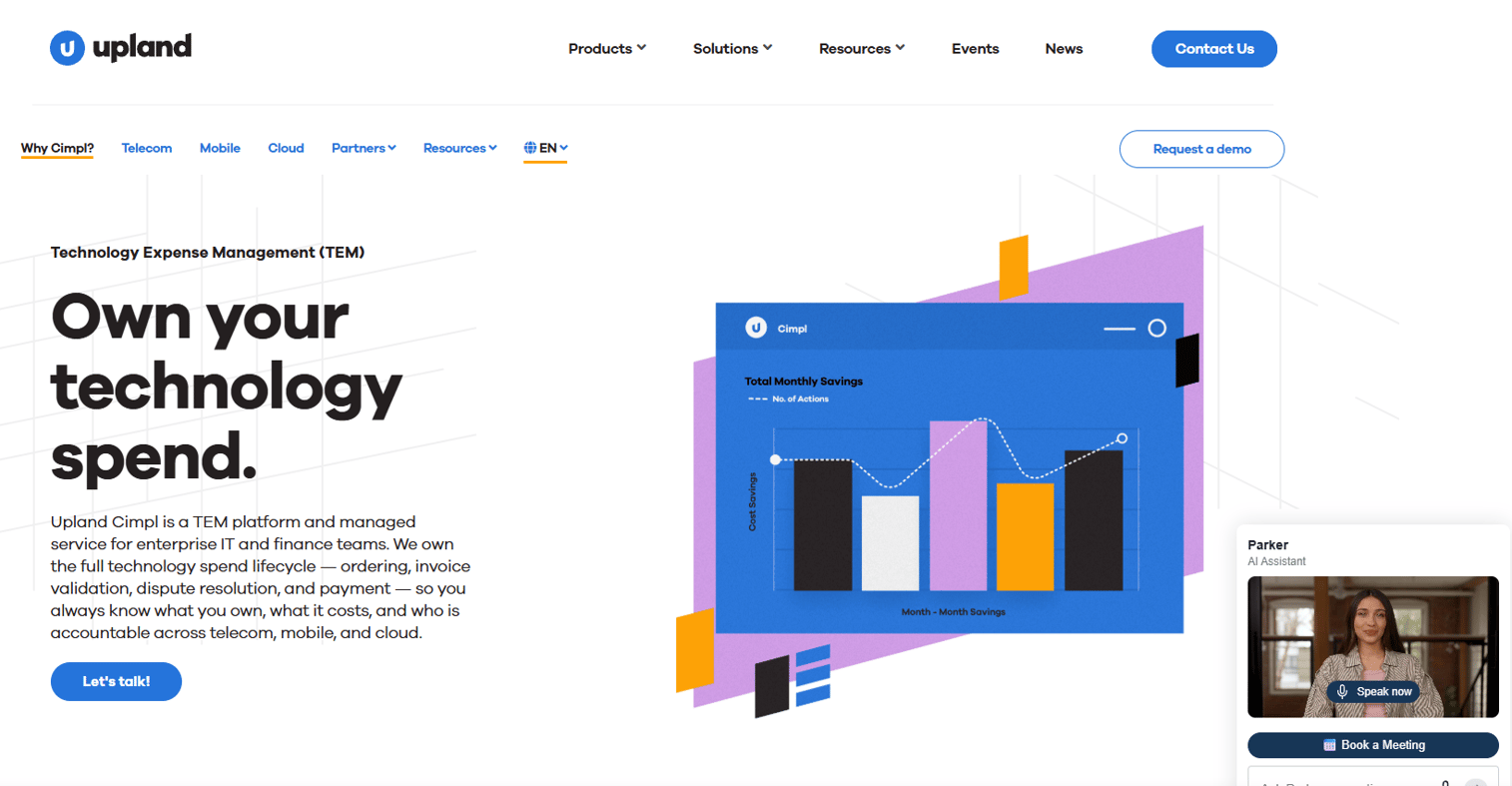
Cimpl is a technology expense management platform from Upland Software covering telecom, mobile, cloud, and IT spending. Its inventory management foundation tracks lines, users, and devices alongside invoice processing, usage reporting, and lifecycle management. A provider portal supports carrier-side interactions within the platform.
Best for: Mid-market and enterprise organizations whose core problem is inaccurate telecom inventory, where cleaning up line and device records must come before optimization.
Key features
- Telecom inventory control across lines, users, and devices
- Invoice processing and wireless expense tracking
- Automated billing and payment workflows
- Procurement and approval workflows
- Usage and cost-management reporting
Why choose Cimpl: If nobody on your team can confirm which lines map to which employees or departments, Cimpl's inventory-first approach gives IT and finance a shared starting point. Getting inventory accurate is the prerequisite for any meaningful plan optimization or savings analysis. Pricing depends on inventory size, services managed, and support level.
Cimpl pricing: Pricing is not displayed on the Cimpl website. Ask Upland Software about inventory size, service scope, integrations, and implementation requirements when requesting a quote.
G2 rating: 4.5/5
10. Valicom Clearview
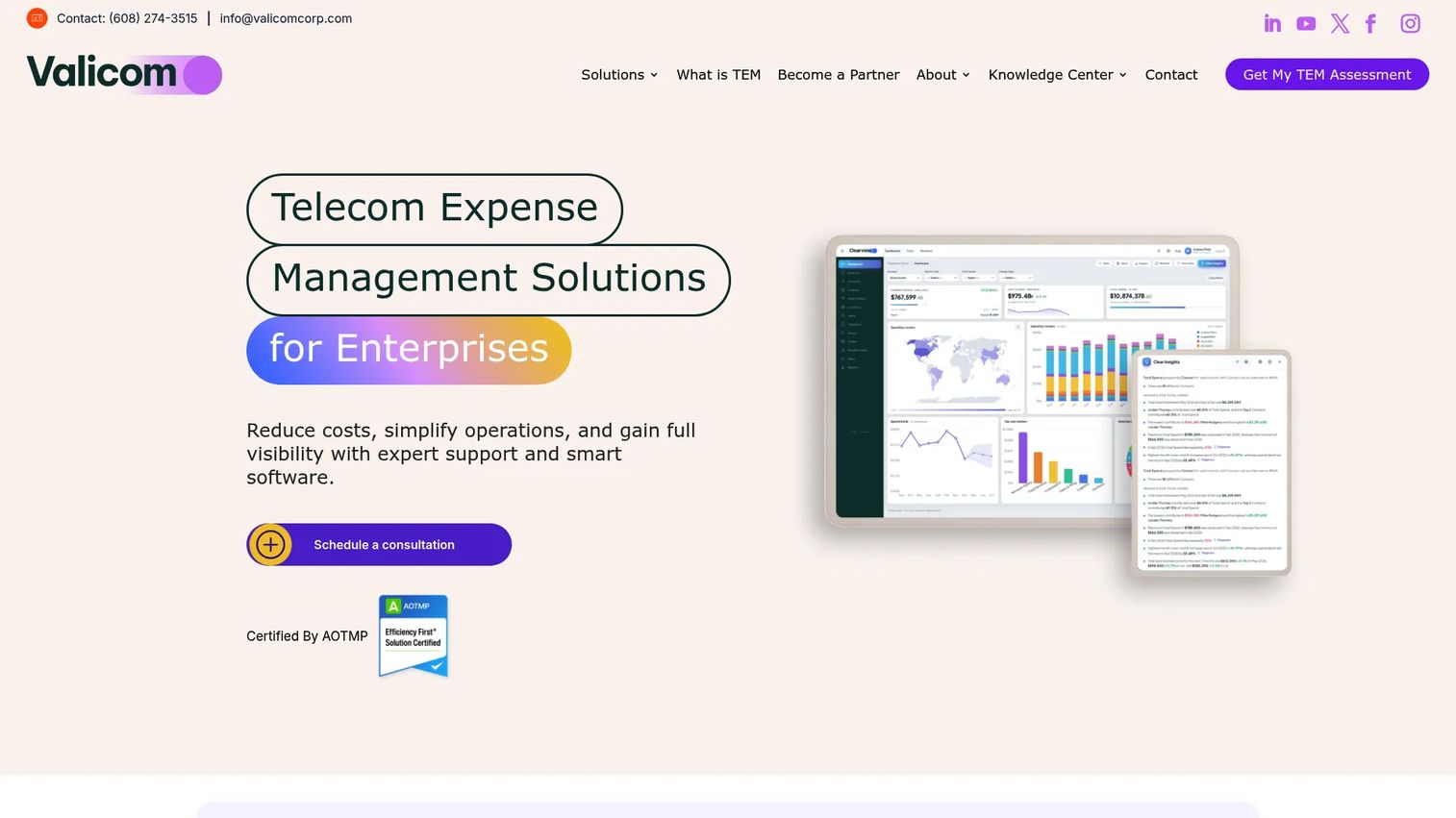
Valicom Clearview is a cloud-based telecom expense management platform focused on invoice auditing, variance reporting, and spend visibility. It handles automated invoice processing, contract validation, executive dashboards, and ERP, HR, MDM, and ITSM integrations. Valicom also supports vendor bill payment and invoice dispute tracking within the platform.
Best for: Finance teams at mid-market and enterprise organizations that want stronger telecom invoice review and reporting without building a large internal audit function.
Key features
- Automated invoice processing and auditing
- Variance and discrepancy reporting
- Contract management and renewal tracking
- Cost allocation and approval workflows
- ERP, HR, MDM, and ITSM integrations
Why choose Valicom Clearview: Clearview fits best when the pain is invoice trust, not device provisioning or full mobility lifecycle management. If finance wants to know whether the bills are correct and what the spend pattern looks like, Clearview provides that visibility with less implementation overhead than a full lifecycle platform. It is less suited when device ordering and carrier provisioning are central requirements.
Valicom Clearview pricing: Ask about invoice volume, audit scope, customer size, and service level when requesting a quote.
G2 rating: 4.0/5
11. Management of Things
Management of Things is a provider focused on mobility, connected assets, and wireless expense workflows. The platform addresses lifecycle management, wireless expense tracking, IoT asset oversight, and carrier support for teams managing mobile and connected-device fleets across multiple users or locations.
Best for: Teams managing mobile and IoT device fleets where wireless expense is tied to connected assets beyond standard employee phones.
Key features
- Mobility lifecycle management for devices and connected assets
- Wireless expense tracking and usage reporting
- IoT asset oversight and inventory
- Carrier support and cost allocation
- Inventory reporting across locations and users
Why choose Management of Things: This provider fits when wireless expense is inseparable from a connected-asset or IoT device program. SaaS founders with field teams, hardware deployments, or IoT connectivity should evaluate whether a mobility-and-IoT specialist covers their needs better than a broader TEM platform. Ask about device volume, carrier mix, and lifecycle service scope.
Management of Things pricing: Contact the team directly for a quote based on device volume, carrier mix, and service requirements.
12. Telesoft
Telesoft is a telecom expense management provider offering managed services, invoice controls, inventory management, contract governance, and dispute workflows. Its managed-service model is designed for enterprises that need ongoing audit and billing management rather than a one-time expense cleanup.
Best for: Enterprises where recurring billing errors or contract leakage justify outside expertise on an ongoing basis.
Key features
- Invoice auditing and variance controls
- Contract management and compliance tracking
- Inventory tracking across telecom services
- Dispute management workflows
- Spend reporting and cost allocation
Why choose Telesoft: Telesoft is worth evaluating when billing errors are not a one-time problem but a persistent pattern that your team has not had the capacity to address. The managed-service model means Telesoft handles the ongoing work. Ask about services managed, billing volume, managed-service scope, and implementation requirements when engaging their team.
Telesoft pricing: Pricing is quote-based. G2 lists Telesoft with insufficient reviews to provide a meaningful rating figure.
13. Genuity

Genuity is a SaaS platform for IT and purchasing management. It covers IT help desk, asset management, SaaS and vendor management, contract tracking, telecom management, and network monitoring, all with public pricing and a free community tier. Genuity is distinct from the other providers on this list in offering transparent per-month pricing rather than requiring a sales conversation.
Best for: Small and mid-sized organizations that need practical IT and telecom spend visibility without heavy enterprise implementation overhead.
Key features
- IT spend tracking and vendor management
- Contract management and renewal tracking
- Asset inventory and IT help desk
- Telecom management and network monitoring
- Reporting dashboards across IT categories
Why choose Genuity: Genuity is the right starting point for founders who need to organize recurring IT and telecom costs before the complexity justifies a dedicated enterprise TEM provider. Its transparent pricing model means you can evaluate ROI without a sales process, and all plans include unlimited users. It may not cover the depth of carrier dispute management or wireless-specific audit workflows that larger providers offer, but it provides strong foundational visibility.
Genuity pricing: The Community Plan is free with qualifying Genuity purchases. The Full Platform Plan costs $99.99/month billed annually ($124.99/month billed monthly). Module-specific plans (Vendor Management, Asset Management, IT Help Desk) are $39.99/month billed annually ($49.99/month monthly). All plans include unlimited users.
G2 rating: 4.7/5
14. Tellennium
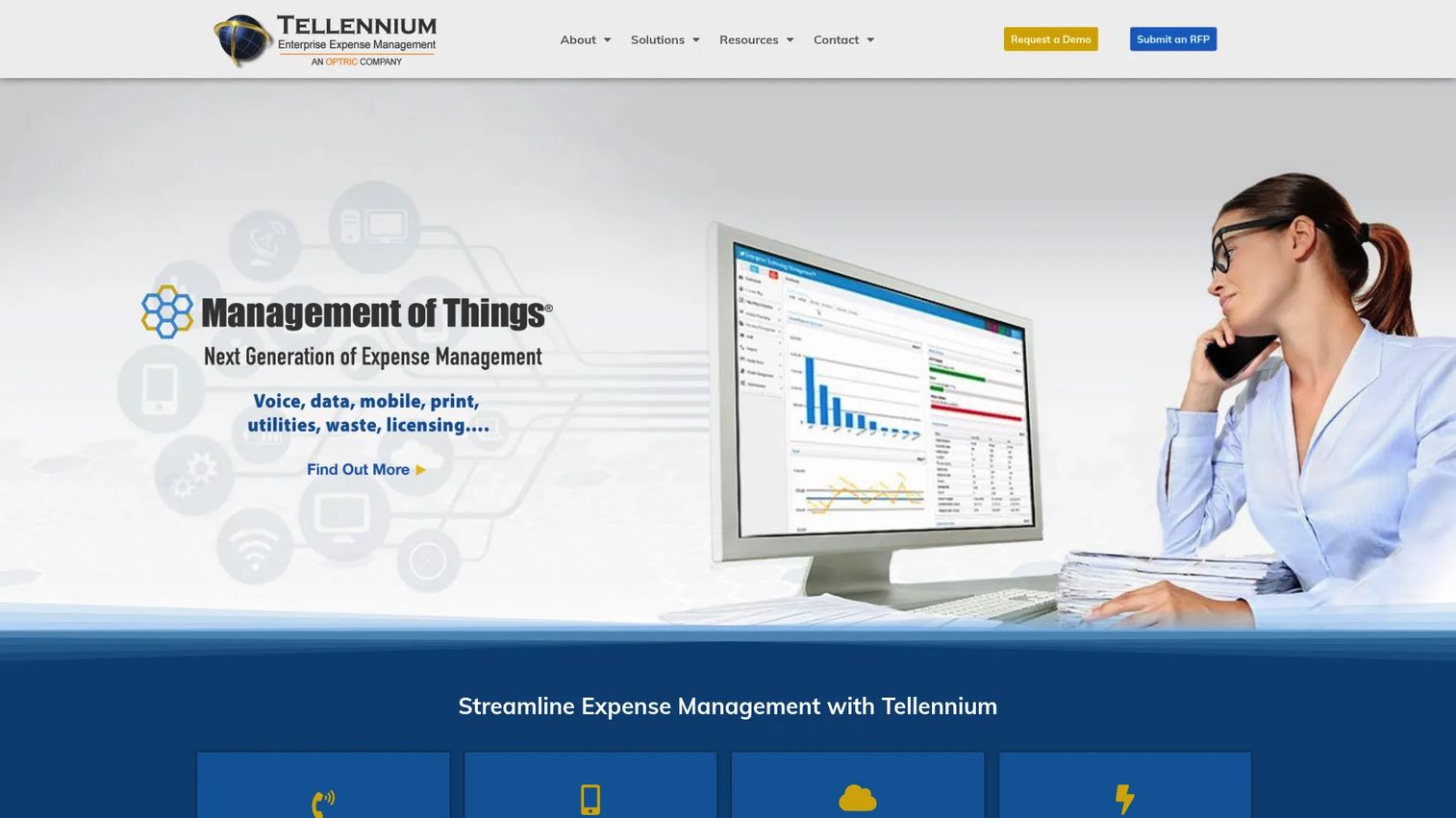
Tellennium provides enterprise technology expense management through its Management of Things (MoT) platform and managed services covering telecom, mobility, utilities, and SaaS expenses. Its capabilities include automated invoice management, detailed inventory tracking across lines, circuits, devices, and assets, cost allocation, contract compliance tracking, and procurement and mobility MACD workflows. Financial reporting with budgeting, trending, and forecasting rounds out the platform.
Best for: Mid-sized and large enterprises managing complex, multi-location telecom, mobility, and SaaS expenses that want managed service support alongside platform access.
Key features
- Automated invoice management with alerts
- Inventory management for lines, circuits, services, devices, and assets
- Cost allocation, payment, and reconciliation management
- Contract compliance tracking and renewal alerts
- Financial reporting with budgeting and forecasting
Why choose Tellennium: Tellennium suits teams that want a provider to handle ongoing telecom expense work while also giving internal teams reporting visibility. Its platform covers utilities and SaaS alongside telecom, which is useful when multiple recurring cost categories need a single owner. Ask about monthly fees, the savings model, support scope, and implementation timeline when evaluating.
Tellennium pricing: Pricing is quote-based and not published on the Tellennium website. Contact sales with details about line count, invoice volume, and service scope to receive accurate pricing.
G2 rating: 4.9/5
15. vCom Solutions
vCom Solutions provides software and managed services for network, mobile, and technology lifecycle and expense management. Its pricing model is notably transparent relative to others in this category. The platform covers network lifecycle management, mobile lifecycle management, technology expense management, procurement, and operations, alongside a Buyers' Club aggregation feature for consolidating vendor spend.
Best for: Midsize and enterprise organizations managing complex, multi-vendor network and mobile spend that want a software-plus-managed-services model with transparent per-unit pricing.
Key features
- Network lifecycle management and procurement
- Mobile lifecycle management for devices and carriers
- Technology expense management at a percentage of spend
- Operations management and vendor coordination
- Buyers' Club spend aggregation and consolidation
Why choose vCom Solutions: vCom's per-unit pricing model makes cost easier to predict at different device counts, which matters for founders who need to estimate ROI before committing. The platform fits mid-market teams with enough telecom complexity to need a partner but not enough internal staff to manage it. Note that vCom states there is no free trial or pilot program.
vCom Solutions pricing: Mobile Lifecycle Management starts at $0.13 per device per day. Network Lifecycle Management starts at $1.67 per circuit per day. Technology Expense Management is priced at 2% of spend under management. No free trial is available. Prices are subject to change and exclude applicable taxes.
G2 rating: 4.3/5
Considerations when choosing wireless expense management software
Start with ownership, not features
Decide who owns the system week to week before selecting a vendor. Finance, IT, procurement, and operations may all touch wireless spend, but if nobody is accountable for the dashboard on Monday morning, the tool becomes another recurring cost without a return. Assign an owner before evaluating vendors.
Separate wireless-only needs from broader TEM needs
A wireless-focused provider is enough when mobile bills are the primary pain. Choose a broader telecom expense management platform when telecom spend spans fixed voice, data circuits, or UCaaS. Add a technology expense management layer only when software, cloud, and assets also need governance under one view. Buying the full platform for a narrow wireless problem adds cost and implementation time you do not need yet.
Verify inventory accuracy before trusting savings claims
Plan optimization depends on accurate records. Former employee lines, shared tablets mapped to wrong teams, duplicate hotspots, and unassigned SIMs all produce misleading savings estimates. Get inventory right first, then optimize. Ask any vendor how they validate existing inventory against your HRIS or carrier portals before the first audit report.
Ask how savings are verified
Savings claims vary widely in how they are calculated. Ask whether one-time credits are separated from recurring savings, what baseline figure is used, when credits are counted, and how the vendor confirms the saving is durable. A one-time audit recovery and a recurring plan optimization have very different payback profiles.
Check implementation lift and payback timing
Founders care about payback within a quarter or two. Confirm what data the vendor needs to start: Carrier portal access, invoice history period, HRIS or asset data, and contract availability. Ask how long it takes from signed agreement to the first audit report, and when the first savings recommendation arrives. Longer implementation cycles push your payback window out.
Conclusion
The best wireless expense management software depends on the operating problem you are solving, not a universal ranking. Enterprise complexity with multi-carrier environments points to Sakon or Tangoe. Procurement-led telecom workflows fit Lightyear, especially at the free procurement tier. Wireless billing audit expertise without internal bandwidth maps to Mindglobal. ServiceNow-connected expense management is Brightfin's home. Managed telecom expense with multi-location inventory needs is where Tellennium and vCom Solutions compete.
For finance and IT teams at a Series B SaaS company that need visibility without heavy implementation, Genuity's transparent pricing and broad IT spend coverage is the fastest path to a clean operating view.
Before you evaluate vendors, do three things: Export 90 days of wireless invoices, list all active lines and devices with their assigned users, and estimate how many lines belong to people no longer at the company. That exercise alone will tell you whether your problem is an audit problem, an inventory problem, or a carrier management problem. The answer points to your shortlist.
For tracking how your software tools and contracts perform across the broader stack, our guide on asset lifecycle management software covers adjacent tooling that many finance and IT leaders evaluate alongside wireless expense management.
FAQs
Wireless expense management software helps companies track, audit, and optimize mobile carrier spend across devices, plans, users, invoices, contracts, and usage. It handles mobile phones, tablets, hotspots, SIMs, IoT lines, pooled data, roaming charges, and mobile device lifecycle costs. It is a focused subset of the broader telecom expense management category.
Telecom expense management is broader and can include fixed voice lines, data circuits, UCaaS platforms, cloud communications, and network services. Wireless expense management focuses specifically on mobile devices, wireless plans, SIMs, hotspots, tablets, and carrier usage data. Many larger TEM platforms include wireless as one part of a wider program, while wireless-specialist providers focus exclusively on the mobile side.
No. Mobile device management controls device security, app policies, remote wipe, and access management. Wireless expense management controls cost, invoices, carrier plans, inventory, usage patterns, and dispute workflows. The two categories solve different problems and many companies run both, since neither replaces the other.
Most enterprise wireless expense management vendors price by quote because cost depends on line count, invoice volume, managed-service scope, carrier complexity, and integration requirements. Genuity is the notable exception, with plans starting at $39.99 per month billed annually. vCom Solutions posts transparent per-unit pricing starting at $0.13 per device per day for mobile lifecycle management. For quote-based vendors, ask specifically about setup fees, monthly platform fees, managed-service fees, and any savings-contingency models.
Common savings sources include unused lines with no active user, incorrect carrier rates charged against contract terms, duplicate charges, data pool overages, international roaming spikes, zero-use devices, tax and fee errors, and plans that no longer match actual usage patterns. The specific recovery depends on the quality of your existing inventory and how long billing errors have gone undetected. Avoid vendors who promise a guaranteed percentage without reviewing your actual invoices first.
Timeline varies based on the data the vendor needs to get started: Carrier portal access, invoice history period (typically three to twelve months), HRIS or asset management integration, and contract availability. A focused wireless billing audit can start delivering results faster than a full global inventory and lifecycle program. Ask each vendor how long it takes from signed agreement to the first audit report as a concrete benchmark.
Finance should own spend accountability and reporting. IT should own device and user accuracy, including line-to-employee mapping. Procurement should own carrier contract terms, renewal timing, and renegotiation leverage. For smaller SaaS teams where those functions overlap, designate one accountable owner who coordinates with the others. If nobody owns the weekly dashboard, the tool will not reduce spend on its own.
Ask these questions before committing to any provider:
- Which carriers do you support, and how do you handle multi-carrier environments?
- How do you verify that savings are recurring rather than one-time credits?
- How do you detect unused lines and zero-use devices?
- Do you manage carrier disputes directly, and what does that process look like?
- What data do you need from us to start, and in what format?
- Which systems do you integrate with, including HRIS, ERP, and MDM?
- How long from contract signing to the first audit report?
- What happens after the first savings report, and what does ongoing support include?