Your trade team is still stitching together spreadsheets, broker emails, and screenshots of screening results. A shipment gets held at customs because a classification code was wrong. A denied-party match slips through because someone forgot to re-run the list after a regulatory update. A duty overpayment goes unnoticed for two quarters. None of these are exotic failures. They are the predictable output of running cross-border trade on manual processes that were never built to scale.
For a growing company, this breaks at a specific point: when the volume of shipments, SKUs, and jurisdictions outpaces the number of people who understand the rules. That is the moment global trade management software stops being a nice-to-have and starts being the operational control layer that keeps goods moving and fines off the books.
The category is expanding for exactly this reason. The global trade management software market is projected to grow from roughly USD 1.3 to 1.97 billion in 2025 to somewhere between USD 2.6 and 6.2 billion by 2034, depending on scope and methodology, according to Fortune Business Insights (2024) and IMARC Group (2024). Trade compliance management alone represents roughly 40% of that market, per Mordor Intelligence (2024). The problem is real, and the tooling is maturing to match it.
What's inside
This guide covers seven global trade management software tools built to handle import and export workflows, customs filing, restricted-party screening, tariff classification, and duty management without a wall of manual touches. Selection favored recognizable vendors with enough functional depth for a meaningful side-by-side comparison. We prioritized four things: compliance breadth across jurisdictions, import and export workflow coverage, customs filing and documentation support, and fit for teams that want fewer people chasing the same problem twice. This is a shortlist for serious buyers, not a directory dump.
TL;DR
- Best for end-to-end supply chain orchestration: E2open, which pairs trade compliance with planning, logistics, and a large partner network on one platform.
- Best for enterprise ERP-adjacent trade execution: Oracle Global Trade Management, especially for organizations already standardized on Oracle.
- Best for tax and trade content depth: Thomson Reuters ONESOURCE, built for teams that need compliance intelligence aligned with global tax.
- Best for SAP-centric environments: SAP Global Trade Services, which centralizes import/export controls, customs, and screening inside SAP.
- Best for manufacturers and supply-chain-heavy teams: QAD, a compliance-first operational layer that sits close to manufacturing ERP.
- Best for customs execution and logistics visibility: Descartes, with broad global coverage across customs and supply chain operations.
- Best for customs and compliance specialization: AEB, strong for regulated, trade-heavy businesses that want focused customs and screening workflows.
What is global trade management software?
Global trade management software is a category of trade compliance software that automates and controls the regulatory, documentation, and financial workflows involved in importing and exporting goods across borders. It replaces the manual patchwork of spreadsheets, broker back-and-forth, and email approvals with a single system that enforces rules, generates documents, and tracks every shipment against current regulations.
A capable global trade management system typically covers a few core functional buckets:
- Import management: Managing inbound shipments, entry filing, duty calculation, and customs documentation on the import side.
- Export management: Handling licenses, export controls, documentation, and shipment compliance for outbound goods.
- Customs filing: Generating and submitting customs declarations and entries, often through direct connections to customs authorities or brokers.
- Restricted-party screening: Automatically checking customers, suppliers, and partners against sanctions and denied-party lists.
- Tariff classification: Assigning the correct HS or commodity codes so duties and controls are applied accurately.
- Duty and tax management: Calculating duties, applying free trade agreement (FTA) preferences and rules of origin, and identifying savings.
- Trade documentation: Producing commercial invoices, certificates of origin, and the paperwork that keeps shipments moving.
Here is how the category maps at a glance:
- What GTM software does: Automates trade compliance, customs, and documentation across import and export operations.
- Who uses it: Trade compliance managers, operations and supply chain teams, logistics coordinators, finance, and software evaluators at import/export businesses.
- Core outcomes: Fewer customs delays, lower fine and penalty risk, better duty optimization, and clearer landed cost visibility.
- Adjacent terms readers confuse it with: Trade compliance software (a subset), customs compliance software, ERP, and transportation management systems.
The framing to keep in mind is operational, not academic. GTM software exists to remove manual bottlenecks and reduce the number of ways a shipment or a filing can go wrong.
When to use global trade management software
Not every company that ships internationally needs a full platform on day one. These are the signals that you have crossed the threshold.
Automating manual import and export workflows
Spreadsheets and broker emails work until they don't. The breaking point usually shows up as version-control chaos: three people editing the same classification sheet, entries filed from outdated data, or a new hire who cannot find the current process. If your team spends more time reconciling documents than actually moving goods, that is the sign. Import management software and export management software exist to standardize these flows so the process does not live in one person's inbox.
Reducing compliance risk and customs errors
A single misclassification or a missed screening hit can trigger fines, seizures, or a shipment stuck at the border. Manual review does not scale with volume, and it does not catch regulatory changes fast enough. Customs compliance software and global trade compliance software reduce this exposure by enforcing screening on every transaction, flagging classification mismatches, and keeping rule sets current so your team is not manually tracking every regulatory update.
Improving landed cost visibility and duty planning
Margin lives in the details of duty and tax. Without landed cost visibility, teams price and plan blind, missing FTA preferences and overpaying duties they could legally avoid. Global trade compliance tooling with duty management surfaces these numbers before the shipment moves, so finance and operations can plan around real landed cost instead of discovering it after the fact.
Comparison table
The tools below are ranked by relevance to global trade management workflows: compliance breadth, customs execution, and import/export coverage. Pricing for enterprise trade platforms is largely quote-based, so we note public figures where vendors publish them and mark the rest as sales-led. G2 ratings reflect each vendor's current listing.
| # | Product | Intent | Key use case | Pricing | G2 rating |
|---|---|---|---|---|---|
| 1 | E2open | End-to-end trade + supply chain | Trade compliance across a connected partner network | From $549/year (marketplace packages); platform quote-based | Not listed |
| 2 | Oracle | Enterprise ERP-adjacent trade | Global trade execution for Oracle-standardized orgs | Quote-based; free cloud tier available | 4.1/5 |
| 3 | Thomson Reuters ONESOURCE | Tax + trade compliance depth | Compliance intelligence aligned with global tax | Quote-based | 3.8/5 |
| 4 | SAP Global Trade Services | SAP-native trade compliance | Import/export controls and customs inside SAP | Price upon request | 4.3/5 |
| 5 | QAD | Compliance-first for manufacturers | Trade compliance close to manufacturing ERP | Quote-based | 4.8/5 |
| 6 | Descartes | Customs + logistics execution | Customs compliance with broad supply chain coverage | From $1,349/month (select products) | 4.6/5 |
| 7 | AEB | Customs + compliance specialization | Focused customs and screening workflows | From EUR 129/month (Compliance Screening) | 4.5/5 |
The 7 best global trade management software tools
1. E2open
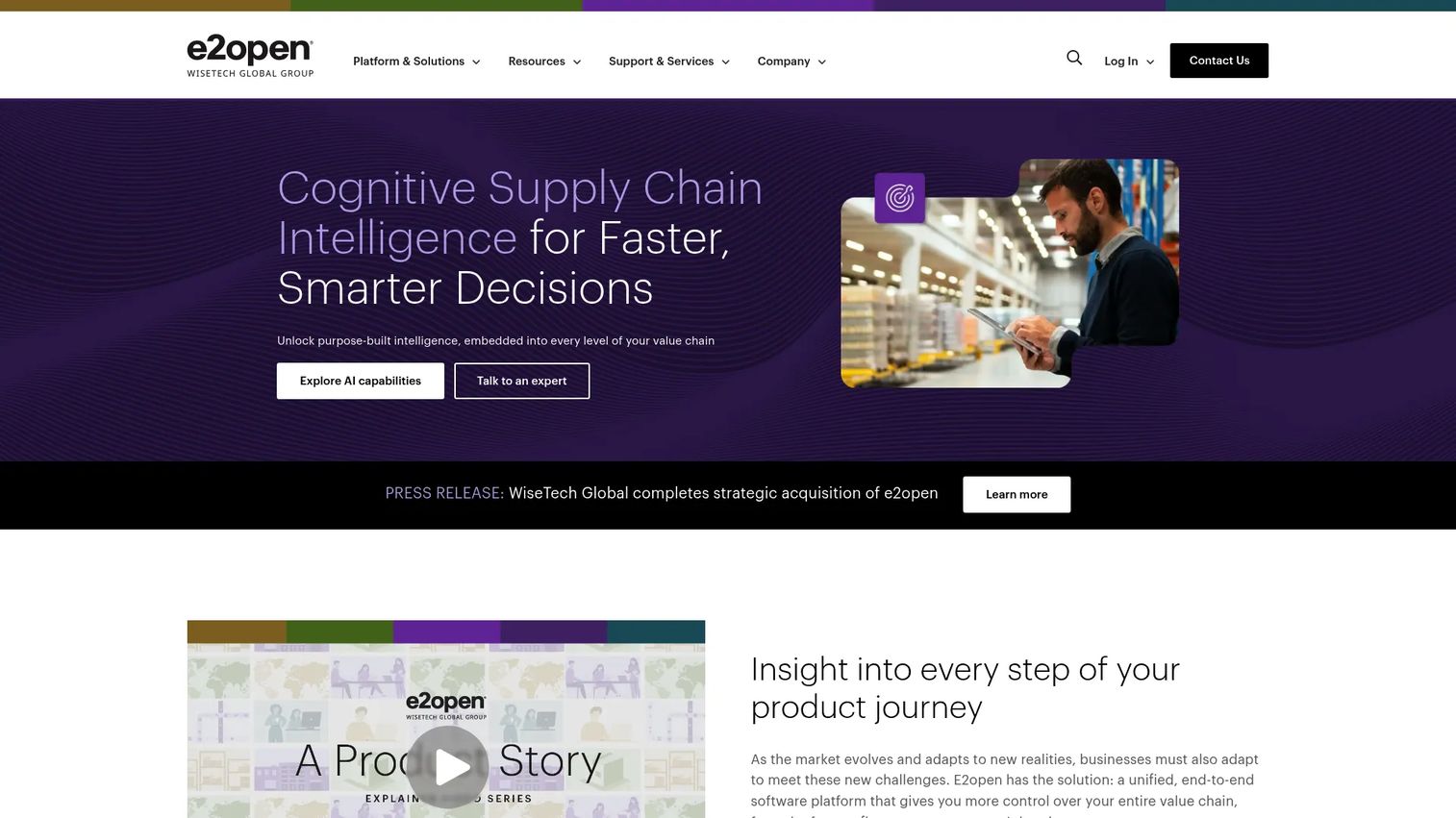
E2open is a cloud-based supply chain platform that treats global trade as one module inside a broader system spanning planning, supply collaboration, logistics, and channel management. That integrated model is the point: trade compliance data does not sit in a silo, it flows through the same platform that manages the rest of your supply chain. For companies that want customs, screening, and duty management connected to how goods actually move, that connectivity matters.
Best for: Large enterprises that want end-to-end supply chain orchestration and partner network connectivity, with global trade compliance as one part of the picture.
Key strengths
- Unified supply chain platform: Planning, supply, global trade, logistics, and channel management run on one system, so trade data does not live apart from execution.
- Harmony user experience: A single interface across modules reduces the tool-switching that fragments trade operations.
- E2net partner network: Multi-enterprise collaboration connects you to carriers, suppliers, and partners without rebuilding integrations for each one.
Why choose E2open: If your trade compliance problem is really a supply chain problem, E2open fits. It suits organizations with complex global workflows where import/export, customs filing, and duty management need to stay in sync with planning and logistics. Teams that only need a narrow customs tool may find the platform broader than the immediate need, but that breadth is exactly what makes it durable as you scale.
E2open pricing: Public pricing is available for E2open's carrier marketplace packages, starting from $549 per year for Web Connect+, with eConnect from $4,500 per year and higher tiers from $18,000 per year. The core enterprise trade platform is quote-based and requires contacting sales, and some capabilities may involve implementation fees.
2. Oracle
Oracle Global Trade Management is the trade compliance and execution layer within Oracle's enterprise application stack. Its strongest fit is organizations already standardized on Oracle infrastructure, databases, or applications, where trade management sits adjacent to the ERP and finance systems that already run the business. That adjacency is the value: less integration overhead, one vendor relationship, and trade data that connects to the systems of record.
Best for: Large enterprises that need cloud infrastructure, databases, and enterprise applications from a single vendor, with global trade management running alongside the rest of the Oracle stack.
Key strengths
- ERP adjacency: Trade management connects to Oracle's broader application and database layer, reducing the integration work of a standalone tool.
- Compliance automation: Screening, classification, and control checks run against enterprise transaction data rather than a separate silo.
- Cloud infrastructure depth: Oracle Cloud Infrastructure gives large organizations the scale and governance to run trade operations globally.
Why choose Oracle: Choose Oracle when you are already an Oracle shop and want operational control without adding another disconnected vendor. The reasons to look elsewhere are the mirror image: if you are not on Oracle, the ecosystem gravity that makes it valuable becomes less relevant. For Oracle-centric enterprises, though, keeping trade execution inside the same stack is a real advantage.
Oracle pricing: Oracle's enterprise trade and cloud products are quote-based and priced at the service level rather than a single subscription figure. Oracle does offer a Cloud Free Tier that includes a US$300 credit valid for 30 days plus Always Free services that do not expire, useful for evaluating the infrastructure layer. Oracle holds a 4.1/5 rating on G2.
3. Thomson Reuters ONESOURCE
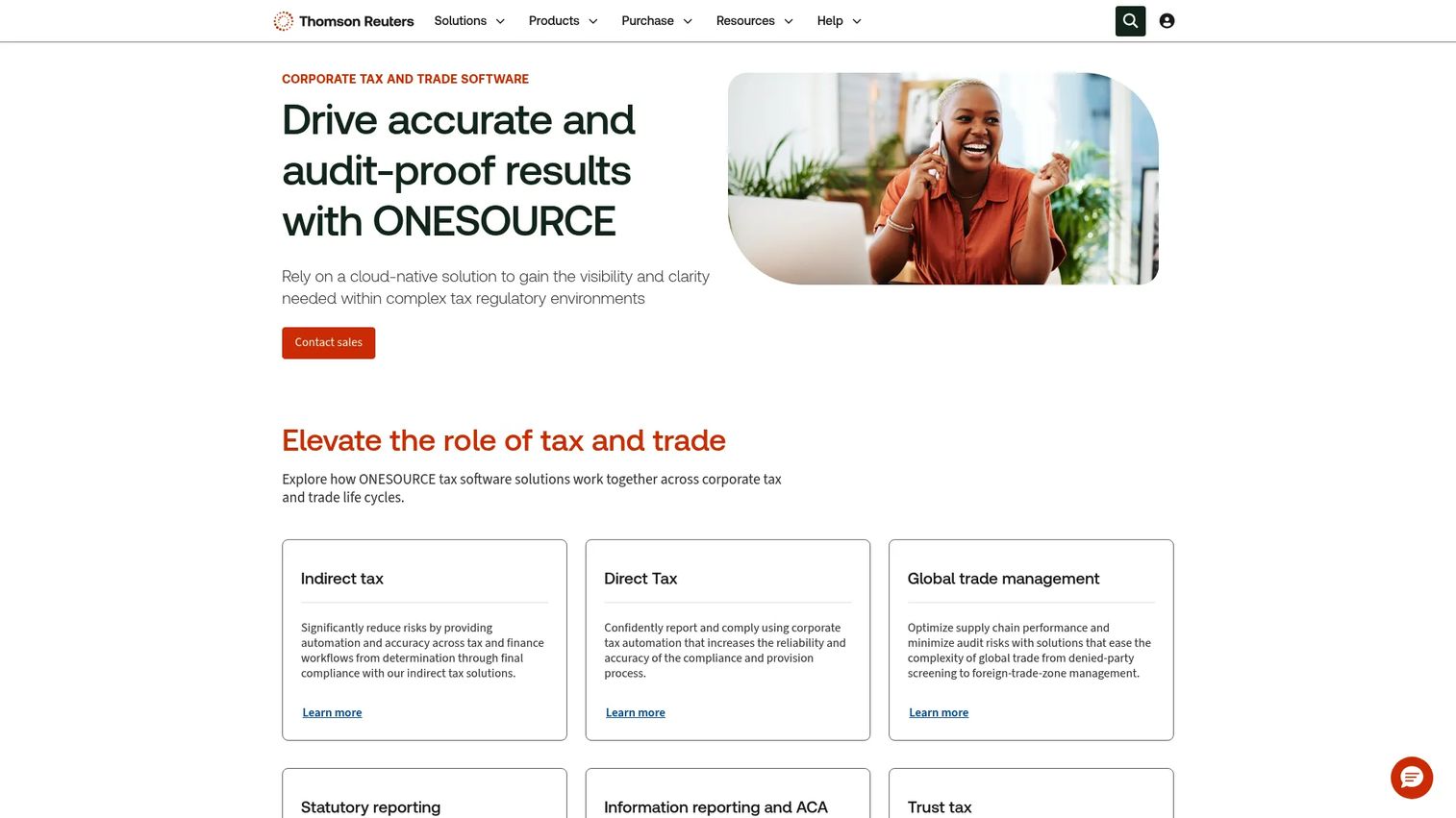
Thomson Reuters ONESOURCE is a cloud-based corporate tax and trade platform, and its differentiation is depth of compliance content. Trade classification, regulatory rule sets, and documentation sit alongside indirect and direct tax capabilities, which matters for teams whose trade compliance obligations are tightly coupled to their global tax position. For a company that treats customs duty, VAT, and corporate tax as one connected problem, that alignment is hard to replicate with a trade-only tool.
Best for: Large corporations that need enterprise tax and trade compliance software with strong regulatory content and global tax alignment.
Key strengths
- Trade content depth: Maintained classification and regulatory content reduces the manual burden of tracking rule changes across jurisdictions.
- Tax and trade alignment: Indirect tax automation and corporate income tax compliance sit in the same platform as global trade management.
- Workflow automation: Documentation and compliance checks are automated rather than manually assembled across teams.
Why choose Thomson Reuters ONESOURCE: Choose ONESOURCE when your trade compliance and tax functions overlap heavily and you want one authoritative source for both. It fits teams that need compliance intelligence, not just execution. Organizations looking purely for customs filing without the tax dimension may find the platform's breadth exceeds their scope, but for tax-and-trade shops, that breadth is the reason to buy.
Thomson Reuters ONESOURCE pricing: Public pricing is not published. ONESOURCE is sales-led, and the site directs prospective buyers to contact sales for a quote. It holds a 3.8/5 rating on G2.
4. SAP Global Trade Services
SAP Global Trade Services is SAP's dedicated platform for managing import and export controls, customs, and cross-border compliance. Like Oracle, its center of gravity is the surrounding ERP: for SAP-centric environments, it centralizes trade compliance inside the systems that already run finance and operations. That integration is the differentiator, keeping classification, screening, and customs procedures aligned with enterprise data rather than in a separate tool.
Best for: Enterprises running SAP that need centralized global trade compliance and customs automation coordinated with finance and operations.
Key strengths
- Import/export controls: Customs and documentation management handle both inbound and outbound compliance in one place.
- Screening and classification: Sanctioned-party list screening and tariff classification run against SAP transaction data automatically.
- ERP integration and governance: Trade compliance stays governed alongside the rest of the SAP environment, supporting audit and control.
Why choose SAP Global Trade Services: Choose SAP GTS when you are an SAP shop and want trade compliance under the same governance model as the rest of your operations. The value is centralization and control. Companies not standardized on SAP will find less advantage in the native integration, but for SAP-run enterprises, keeping trade compliance in the ecosystem simplifies audit, data flow, and ownership.
SAP Global Trade Services pricing: SAP lists the product as priced by users, showing "price upon request" for the visible editions, including the SAP HANA private edition. No public numeric price is displayed. It holds a 4.3/5 rating on G2.
5. QAD
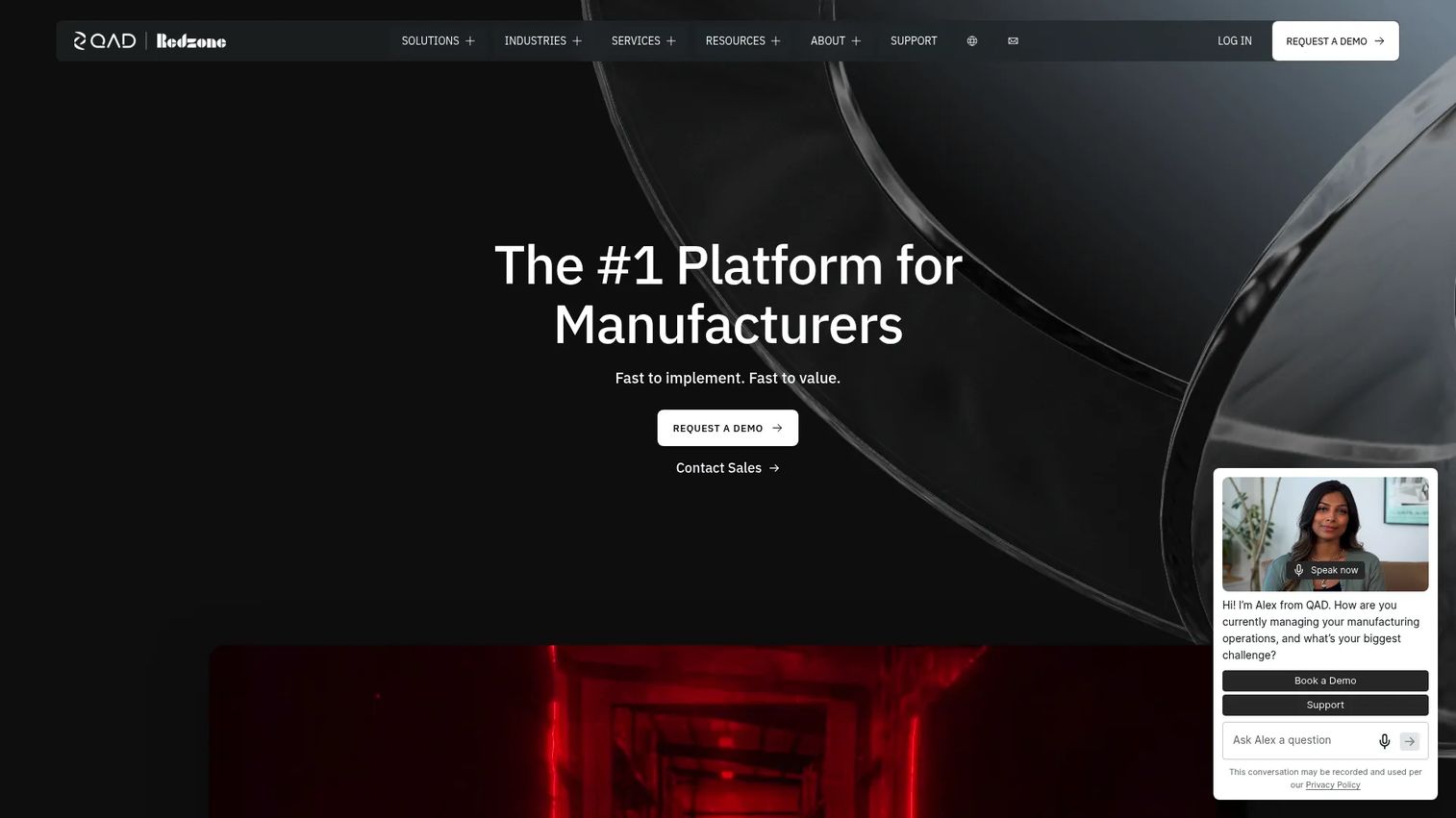
QAD is a manufacturing and supply chain software provider whose global trade compliance capabilities sit close to its adaptive ERP. That positioning makes it a natural fit for manufacturers and supply-chain-heavy companies that want trade compliance as an operational layer inside the same system managing production, inventory, and commerce. When import/export management and restricted-party screening live next to manufacturing data, the compliance function stops being a bolt-on.
Best for: Global manufacturers and supply-chain-heavy teams that want a compliance-first trade layer integrated with manufacturing ERP.
Key strengths
- Adaptive ERP for manufacturers: Trade compliance runs inside a system purpose-built for manufacturing operations.
- Import/export and screening: Restricted-party screening and FTA handling are integrated with the operational data that drives shipments.
- Digital commerce and analytics: Real-time pricing, inventory, and analytics connect trade decisions to commercial reality.
Why choose QAD: Choose QAD when manufacturing is the core of your business and you want trade compliance woven into that operational fabric rather than sitting beside it. It suits teams that value a compliance-first layer tied to production and supply chain. Companies without a heavy manufacturing footprint may not need the ERP depth, but for manufacturers, that integration is the whole appeal.
QAD pricing: QAD does not publish public pricing. Its website routes prospective buyers to request a demo or contact sales. QAD holds a strong 4.8/5 seller rating on G2.
6. Descartes
Descartes is a supply chain and logistics software provider covering ecommerce operations, freight, warehouse management, and trade compliance. Its strength for trade teams is customs execution paired with broad logistics visibility and global coverage. For operations teams that need customs and regulatory compliance connected to how goods actually ship and warehouse, Descartes offers a wider operational surface than a customs-only tool.
Best for: Businesses that need logistics, ecommerce operations, or customs and trade compliance software with broad global supply chain coverage.
Key strengths
- Customs and trade compliance: Customs execution and regulatory compliance are built into a broader logistics platform.
- Warehouse and inventory management: Trade workflows connect to the warehouse and inventory layer that fulfills shipments.
- Ecommerce operations: For ecommerce-heavy businesses, trade compliance sits alongside the fulfillment engine.
Why choose Descartes: Choose Descartes when your trade compliance need is part of a wider logistics and fulfillment operation, and you want customs execution connected to shipping and warehousing. It appeals to operations teams needing broad supply chain support. Teams wanting a pure trade compliance intelligence tool may prefer a more specialized platform, but for logistics-driven businesses, the breadth is the draw.
Descartes pricing: Descartes is a multi-product suite, so pricing varies by product. Public first-party pricing is available for several products, including Sellercloud from $1,349 per month and Peoplevox from $2,050 per month, with warehouse management from around $600 monthly for one to two users. Many other Descartes products are quote-based. Descartes holds a 4.6/5 rating on G2.
7. AEB
AEB provides cloud software for global trade, logistics, customs, shipping, and supply chain operations, with a strong emphasis on customs management and trade compliance. Its focus on customs-oriented execution and compliance workflows makes it a fit for regulated, international-trade-heavy businesses that want specialization rather than a sprawling platform. Export controls, sanctions screening, and multi-carrier shipping are built for teams that live in cross-border complexity.
Best for: Mid-market and enterprise companies that need global trade, logistics, and compliance software with a strong customs and screening focus.
Key strengths
- Trade compliance tools: Export controls and sanctions screening are core, not add-ons, for regulated trade.
- Transportation and multi-carrier shipping: Support for 300+ carriers connects compliance to actual shipment execution.
- Warehouse management: Inventory traceability and automation extend compliance into fulfillment.
Why choose AEB: Choose AEB when customs and compliance specialization matters more than owning one platform for everything. It fits regulated and trade-heavy businesses that want focused customs execution and screening. Companies wanting a single suite spanning planning through channel management may look to broader platforms, but for customs-first teams, AEB's specialization is exactly the point.
AEB pricing: AEB publishes public pricing for its Compliance Screening product, starting from EUR 129.20 per month, with a Compliance Screening plus SAP add-on from EUR 396.70 per month. AEB notes that pricing depends on transaction volume and individual requirements, so other products are largely quote-based. AEB holds a 4.5/5 rating on G2.
Considerations before you buy
Shortlisting the right global trade management software comes down to matching the tool to your operating model, not the biggest brand. Work through these criteria before you commit.
Compliance scope and jurisdictions
Map the countries you import from and export to, then confirm the vendor maintains current content for those jurisdictions. A platform strong in one region may be thin in another. Restricted-party screening, tariff classification, and rules of origin coverage should match your actual trade lanes, not a marketing map.
Customs filing and documentation depth
If customs filing is your core pain, weigh how the tool handles declarations, entries, and broker connectivity. Some platforms file directly; others coordinate with brokers. Confirm the customs brokerage workflows and documentation output match how your team actually clears goods.
ERP and stack integration
The biggest hidden cost is integration. If you run SAP or Oracle, a native trade module can cut months of implementation. If you run neither, weigh a specialist against the integration work of connecting a broader suite. Ask what connects out of the box versus what needs custom work.
Duty management and landed cost
For margin-sensitive operations, confirm the tool surfaces duty optimization, FTA preferences, and landed cost visibility before shipments move. Duty management that only reports after the fact is far less useful than planning-stage visibility that changes decisions.
Team maturity and implementation scale
Be honest about your team. A large platform serves complex global operations well but assumes the internal capacity to run it. A focused tool may deliver value faster if your scope is narrower. Match the deployment scale to the people who will actually own it.
Conclusion
The right global trade management solution depends on your operating model, not the size of the vendor logo. If trade is one thread in a larger supply chain, E2open ties compliance to planning and logistics on one platform. If you already run Oracle or SAP, keeping trade execution inside that ecosystem, through Oracle Global Trade Management or SAP Global Trade Services, cuts integration cost and keeps governance clean. If tax and trade overlap, Thomson Reuters ONESOURCE brings compliance content and tax alignment together. Manufacturers get a compliance-first layer close to ERP with QAD. Logistics-driven operations get customs plus broad supply chain coverage from Descartes. And for customs and screening specialization, AEB delivers focused depth for regulated, trade-heavy businesses.
The practical next step is to shortlist two or three based on three questions: how wide is your compliance scope, how central is customs filing to your daily work, and what ERP do you already run. Answer those honestly, then book demos against your real trade lanes rather than a generic walkthrough. The tool that fits your workflow beats the one with the longest feature list every time.
FAQs
Global trade management software is a system that automates the compliance, customs, documentation, and financial workflows involved in moving goods across borders. It handles import and export management, restricted-party screening, tariff classification, duty management, and trade documentation in one place, replacing manual spreadsheets and disconnected broker communication. The goal is fewer errors, fewer customs delays, and better visibility into landed cost.
Trade compliance software is a subset of global trade management. Compliance software focuses specifically on the regulatory side: screening, classification, licenses, and controls that keep you within the law. Global trade compliance software often sits inside a broader GTM platform that also handles customs filing, duty optimization, documentation, and sometimes logistics execution. In short, all GTM platforms include compliance, but not every compliance tool is a full GTM platform.
Prioritize the capabilities tied to your biggest risk and cost. For most teams that means restricted-party screening, tariff classification, customs filing, and duty management, with strong documentation and current regulatory content across your trade lanes. Integration with your ERP and clear landed cost visibility usually round out the shortlist. Match features to your actual workflows rather than chasing the longest feature list.
A broker handles filing on your behalf, but they do not manage your internal compliance, screening, classification, or duty optimization end to end. GTM software gives you control and visibility over the full process, reduces reliance on manual handoffs, and creates an audit trail. Many companies run both: the software manages the workflow and data, and the broker or customs filing software handles the actual submission where needed.
Trade compliance managers, operations and supply chain teams, logistics coordinators, and finance all rely on it. Compliance teams use it for screening and classification, operations for import and export workflows, and finance for duty and landed cost planning. At software evaluation stage, it is often a cross-functional decision because the platform touches compliance, operations, and margin all at once.
Customs delays usually come from bad or missing data: wrong classification codes, incomplete documentation, or unscreened parties. GTM software enforces correct classification, generates complete customs documentation, and runs screening automatically before goods move. By catching errors before filing rather than at the border, it reduces the holds, corrections, and back-and-forth that stall shipments.
No. Large enterprises account for the majority of the market, roughly 61% of revenue per Mordor Intelligence (2024), but SMEs are the fastest-growing segment, projected at around 4.3% CAGR from 2026 to 2031. Vendors like AEB publish entry-level pricing for focused products such as compliance screening, which makes global trade compliance accessible to smaller and mid-market teams without an enterprise-scale commitment.