


You got the reply. A demo request came in at 4:47pm. By the time you responded the next morning, the prospect had already booked with someone else.
That is the real problem. Not qualification, exactly. Timing, routing, and context.
The sales platforms software market is projected to grow from USD 17.74 billion in 2025 to USD 34.83 billion by 2034, according to Market Research Future (2025). Inside that number, the qualifying stage alone is projected to reach USD 4.7 billion by 2032, per Market Research Future (2023). Money is flowing into this category because manual qualification stops scaling the moment your inbound volume climbs or your outbound list gets serious.
Most SDRs think the fix is better leads. It usually is not. The fix is removing the gap between a signal and a booked meeting. Faster response, cleaner data, smarter routing, and a handoff to the AE that actually carries context. When you close those gaps, the same lead volume produces more pipeline.
The tools below each attack a different part of that gap. If you want to show product value on the first touch instead of pitching, an interactive demo sits nicely alongside any of them, and platforms like Guideflow exist specifically to let prospects experience the product before a rep ever dials.
What's inside
This guide is for SDRs, sales managers, and RevOps teams comparing tools that help you qualify leads faster and hand off better meetings. We looked at the whole qualification workflow, not just one slice of it.
We chose and ranked tools on four criteria:
- Speed: how quickly the tool moves a lead from signal to booked meeting
- Workflow fit: whether it works inside your existing CRM and sequencer without adding tabs
- Data quality: enrichment, scoring, and hygiene that stop you wasting touches
- Meeting conversion: whether it improves the handoff to AE and booked-meeting rates
Pricing and G2 ratings were verified against each vendor's live pages at time of writing.
TL;DR
- Best all-in-one for CRM-first teams: HubSpot, if you want CRM, forms, scoring, and routing under one roof.
- Best for speed-to-meeting: Calendly and Chili Piper, when booked meetings are the KPI you live and die by.
- Best for inbound routing and conversion: RevenueHero and Chili Piper, for turning high-intent form fills into instant meetings.
- Best for enrichment and prospecting: Apollo.io and Clearbit, when data quality drives your qualification.
- Best for RevOps-controlled routing: Traction Complete and LeadAngel, for Salesforce-native matching and assignment.
- Best for conversational and form-based qualification: Drift and Typeform, for qualifying visitors before they hit a rep.
What is sales qualification software
Sales qualification software is a category of tools that filter, score, route, and book leads so sales teams spend time only on prospects who fit the ideal customer profile and show buying intent.
It sits between lead generation (getting attention) and the sales conversation itself (closing). Lead gen fills the top of the funnel. Qualification software decides which of those leads deserve a rep's time, then gets the right ones in front of the right person fast.
Most tools in this category do some combination of the following:
- Lead capture and intake: forms, chat, or landing-page fields that gather qualification criteria
- Lead enrichment: appending firmographic, technographic, and contact data to thin records
- Lead scoring: ranking leads by ICP fit and buying intent so reps prioritize correctly
- Lead routing: assigning each lead to the right rep or team based on rules
- Scheduling: booking a meeting the moment a lead qualifies, no back-and-forth
- CRM sync: writing every signal back to Salesforce or HubSpot so nothing gets lost
- Handoff to AE: passing context, not just a name, so the meeting converts
The point is not to replace judgment. It is to remove the manual steps between a signal and a qualified meeting, so an SDR spends their scarce time on conversations instead of data entry and calendar Tetris.
When to use sales qualification software
Not every team needs a dedicated qualification stack. Here is when it starts to pay for itself.
Speed-to-lead is slipping
If inbound leads sit for hours before anyone responds, you are losing meetings to whoever replied first. Speed-to-lead is the inbound moat. When response time creeps past a few minutes, automated routing and instant scheduling stop being nice-to-haves.
Inbound routing is a mess
Leads land in a shared inbox, get claimed inconsistently, and slip through the cracks. If your team argues over who owns which lead, or high-intent form fills go cold, routing logic fixes the leak.
Outbound prioritization is guesswork
When your list has thousands of accounts and no clear order, reps waste touches on poor-fit prospects. Enrichment and scoring tell you which accounts to work first, so volume actually converts.
Handoff hygiene is broken
If AEs complain that meetings are low quality or that they walk in blind, the handoff is the problem. Tools that carry qualification context and buying intent into the CRM make the AE's second job easier and lift held-meeting rates.
Comparison table
Below is a side-by-side look at all 10 tools. Prioritize the ones whose intent matches your actual bottleneck, not the biggest brand name. A CRM-first team and a routing-heavy team should shortlist very different rows.
| # | Product | Intent | Key use case | Pricing | G2 rating |
|---|---|---|---|---|---|
| 1 | HubSpot | All-in-one CRM + qualification | Forms, scoring, routing, and meetings in one platform | Free; paid from $7/mo/seat | 4.4/5 |
| 2 | Calendly | Scheduling + routing | Book meetings instantly when a lead qualifies | Free; Standard $10/seat/mo | 4.7/5 |
| 3 | Apollo.io | Enrichment + outbound | Prospecting, enrichment, and sequencing | Free; Basic $49/user/mo | 4.7/5 |
| 4 | Clearbit | Enrichment + scoring | ICP-based enrichment and form shortening | Custom (part of HubSpot) | 4.4/5 |
| 5 | Chili Piper | Routing + scheduling | Instant inbound routing and meeting booking | From $1,250/mo | 4.6/5 |
| 6 | RevenueHero | Inbound routing + booking | Qualify and book high-intent inbound instantly | From $15/mo/user | 4.8/5 |
| 7 | Typeform | Qualification intake | Branching forms for pre-qualification | Free; Basic $39/mo | 4.5/5 |
| 8 | Traction Complete | RevOps routing + data | Salesforce-native matching and routing | Sales-led | 4.6/5 |
| 9 | LeadAngel | Lead routing + matching | Lead-to-account matching and assignment | Sales-led | 4.5/5 |
| 10 | Drift | Conversational qualification | Chat-based qualification and booking | Sales-led | 4.4/5 |
Best 10 tools for sales qualification
1. HubSpot
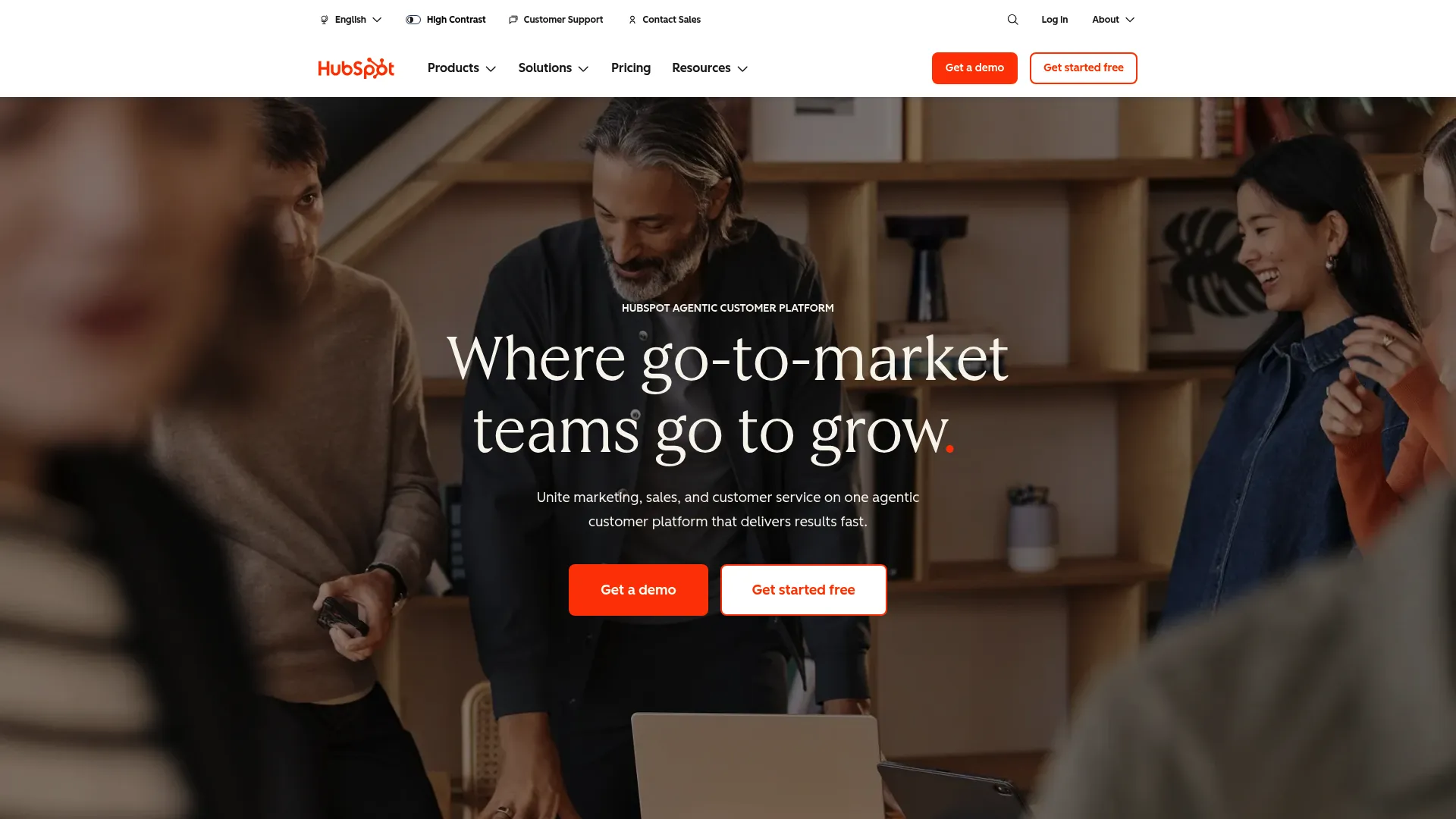
HubSpot is a customer platform that bundles marketing, sales, service, content, and CRM software into one system. For qualification, that means your forms, lead scoring, routing, and meeting booking all live where your contact data already sits. No syncing between three tools that half-talk to each other.
For an SDR, the value is fewer tabs. A form fill creates a contact, scoring ranks it against your ICP fit rules, workflows route it to the right rep, and the meeting link books the demo. Every step writes back to the same record, so the handoff to AE carries the full history instead of a bare name.
Best for: Teams that want CRM plus qualification in one place, especially inbound-heavy SDR teams.
Key strengths
- Free CRM with contacts and deal tracking
- Live chat for website qualification
- AI content writer for outreach
- Native forms, scoring, and routing
- Meeting scheduler tied to contact records
Why choose HubSpot: If you want a single source of truth and hate stitching tools together, HubSpot's all-in-one approach removes most of the integration overhead. The trade-off is that advanced tiers get expensive, but the free CRM lets you start without commitment.
HubSpot pricing: Free tier available. Starter starts at $7/mo per seat. Professional starts at $800/mo, and Enterprise starts at $4,700/mo, billed monthly or annually.
2. Calendly
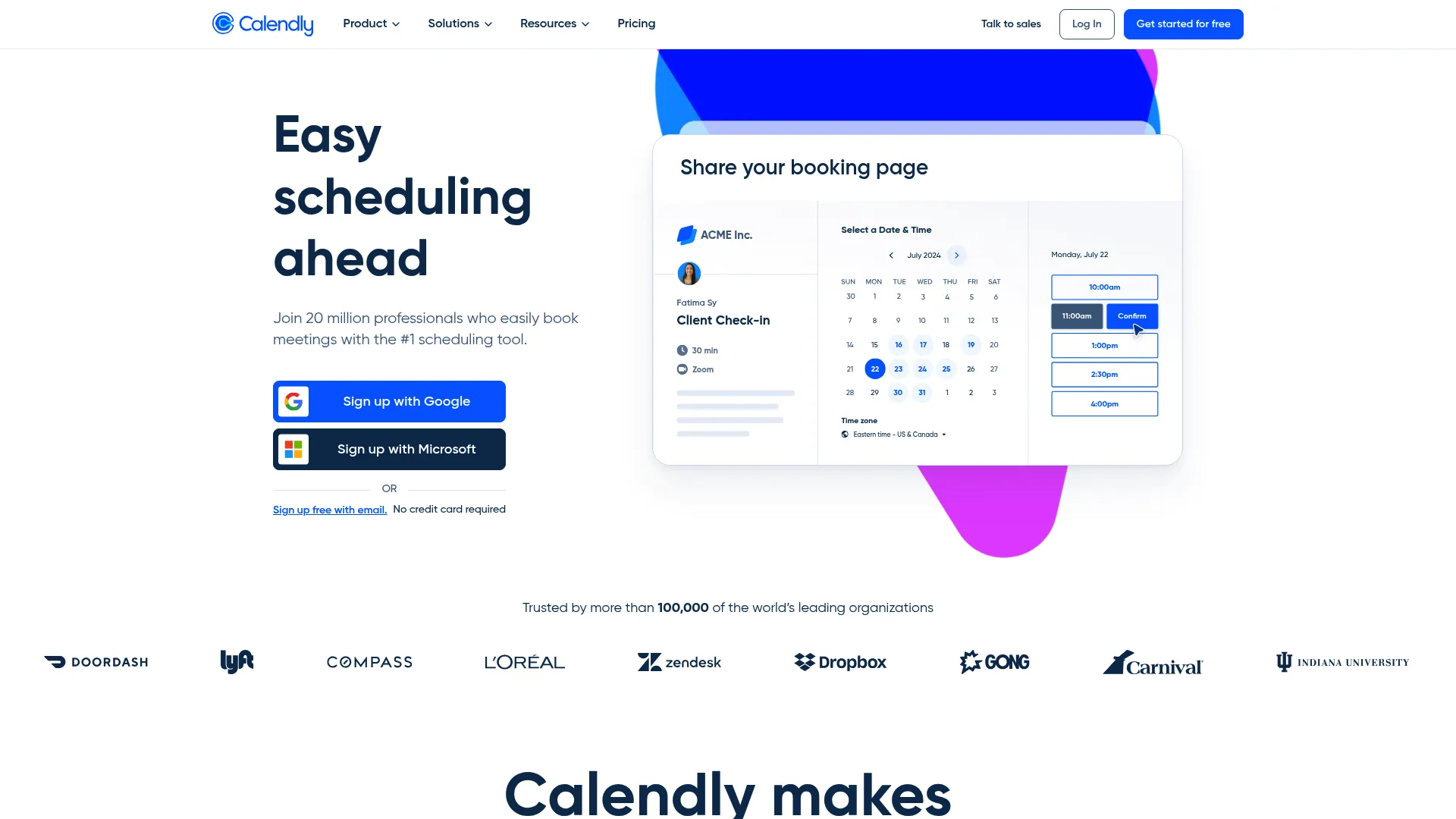
Calendly is scheduling automation that removes the back-and-forth of booking a meeting. When a lead qualifies, you drop them onto a booking page that respects your real availability across connected calendars. Speed-to-meeting improves because there is no email ping-pong between "does Tuesday work" and "actually, Thursday."
For SDR workflows, Calendly's routing forms let you ask a few qualifying questions, then send the lead to the right rep's calendar automatically. Reminders and follow-ups cut no-shows. It integrates with CRMs so booked meetings sync back without manual entry.
Best for: Teams and individuals who need automated meeting scheduling and clean booking workflows.
Key strengths
- Meeting scheduling and booking links
- Calendar integrations and availability syncing
- Routing, reminders, polls, analytics, and admin controls
- Qualifying questions on booking forms
- CRM sync for booked meetings
Why choose Calendly: Calendly is the fastest way to remove scheduling friction. It performs best paired with an enrichment or scoring tool, since Calendly qualifies lightly and books, rather than deeply scoring intent on its own.
Calendly pricing: Free plan available. Standard is $10/seat/mo and Teams is $16/seat/mo, both billed yearly. Enterprise starts at $15k/yr.
3. Apollo.io
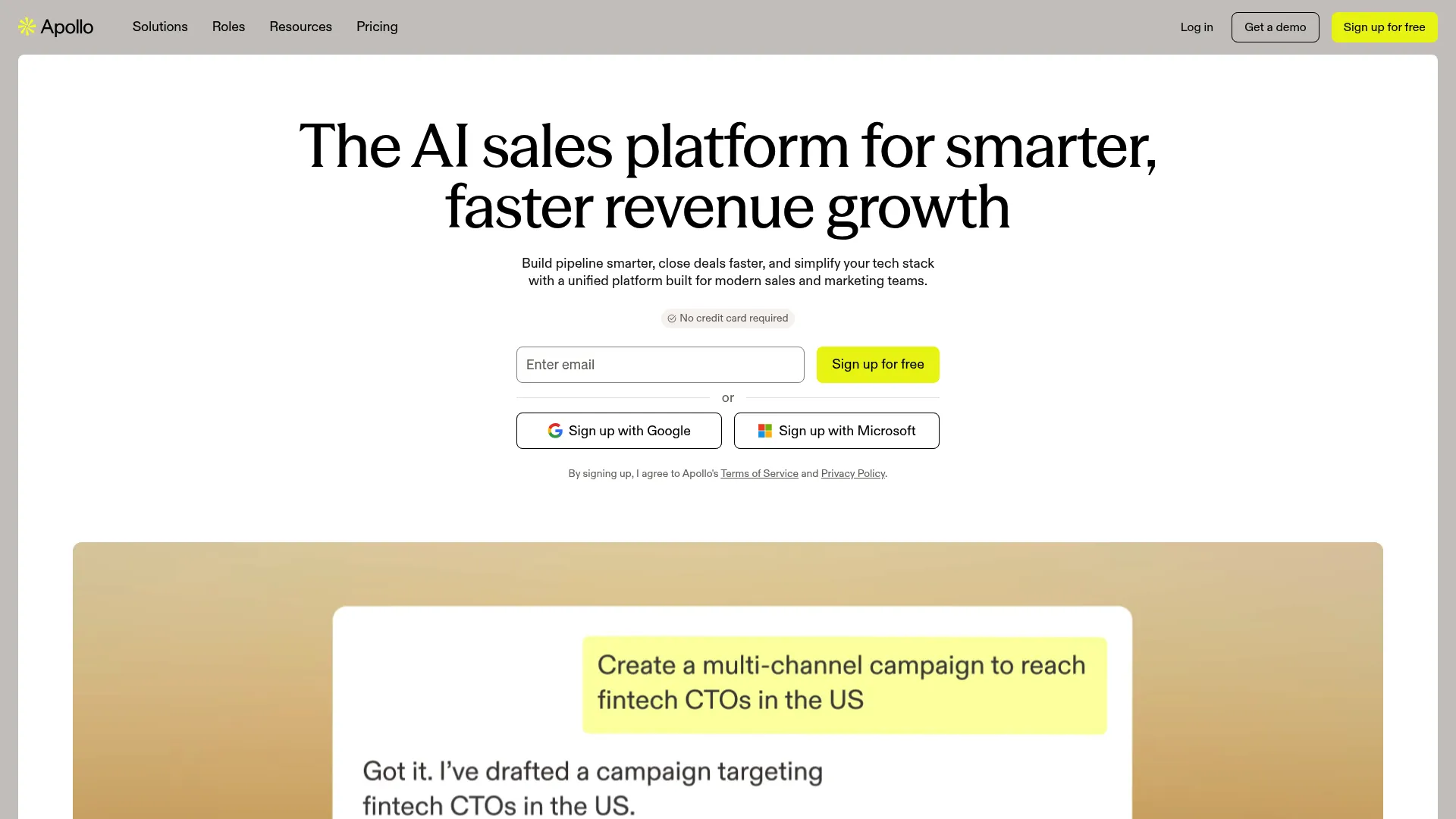
Apollo.io is a sales intelligence and engagement platform that combines a B2B contact database with enrichment and outbound sequencing. For outbound SDRs, qualification starts before the first touch. Apollo tells you who fits your ICP, enriches thin records, and lets you sequence outreach without leaving the tool.
The qualification angle is data quality. Better firmographic and technographic data means you prioritize the right accounts and stop wasting touches on poor-fit prospects. Enrichment also cleans your CRM, which keeps scoring and routing accurate downstream.
Best for: B2B sales teams that want prospecting, enrichment, and outreach in one platform.
Key strengths
- B2B contact and company database
- CRM and CSV enrichment
- Sales engagement and sequencing
- Firmographic and technographic filters
- Contact intelligence for prioritization
Why choose Apollo.io: Apollo consolidates prospecting and enrichment so you qualify accounts before spending a single touch. It excels for outbound-led teams where data quality is revenue quality.
Apollo.io pricing: Free forever plan available. Basic is $49/user/mo, Professional is $79/user/mo, and Organization is $119/user/mo with a three-user minimum, all billed annually.
4. Clearbit
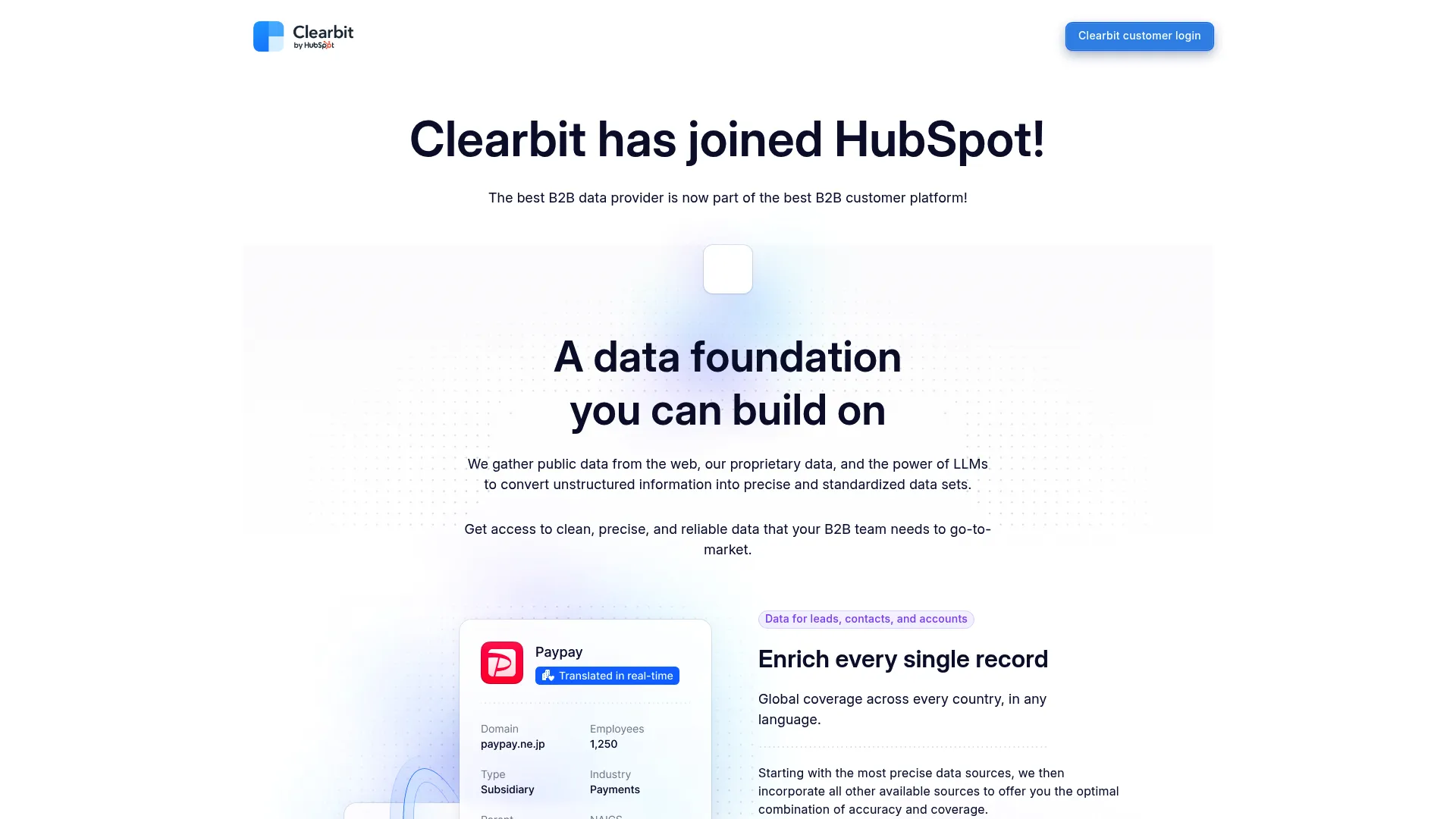
Clearbit is a B2B data enrichment and form optimization tool, now part of HubSpot. Its job in a qualification workflow is to turn a thin lead into a full record in real time. A prospect enters an email, Clearbit appends company size, industry, role, and more, so your scoring and routing rules have something to work with.
That real-time enrichment powers cleaner ICP-fit qualification. Form shortening and autofill also lift conversion, because you ask for less and enrich the rest. For teams already in HubSpot, the pairing is tight.
Best for: B2B teams needing company and person enrichment plus form conversion optimization.
Key strengths
- Real-time enrichment of leads, contacts, and accounts
- Form shortening and autofill
- Lead scoring, routing, and buying-intent signals
- ICP-fit qualification data
- Native HubSpot pairing
Why choose Clearbit: Clearbit shines when clean data is the bottleneck in your qualification workflow. It performs best inside a RevOps-supported stack where enrichment feeds scoring and routing automatically.
Clearbit pricing: Public pricing is not listed; Clearbit is now part of HubSpot and pricing is handled through HubSpot. Contact sales for current plans.
5. Chili Piper
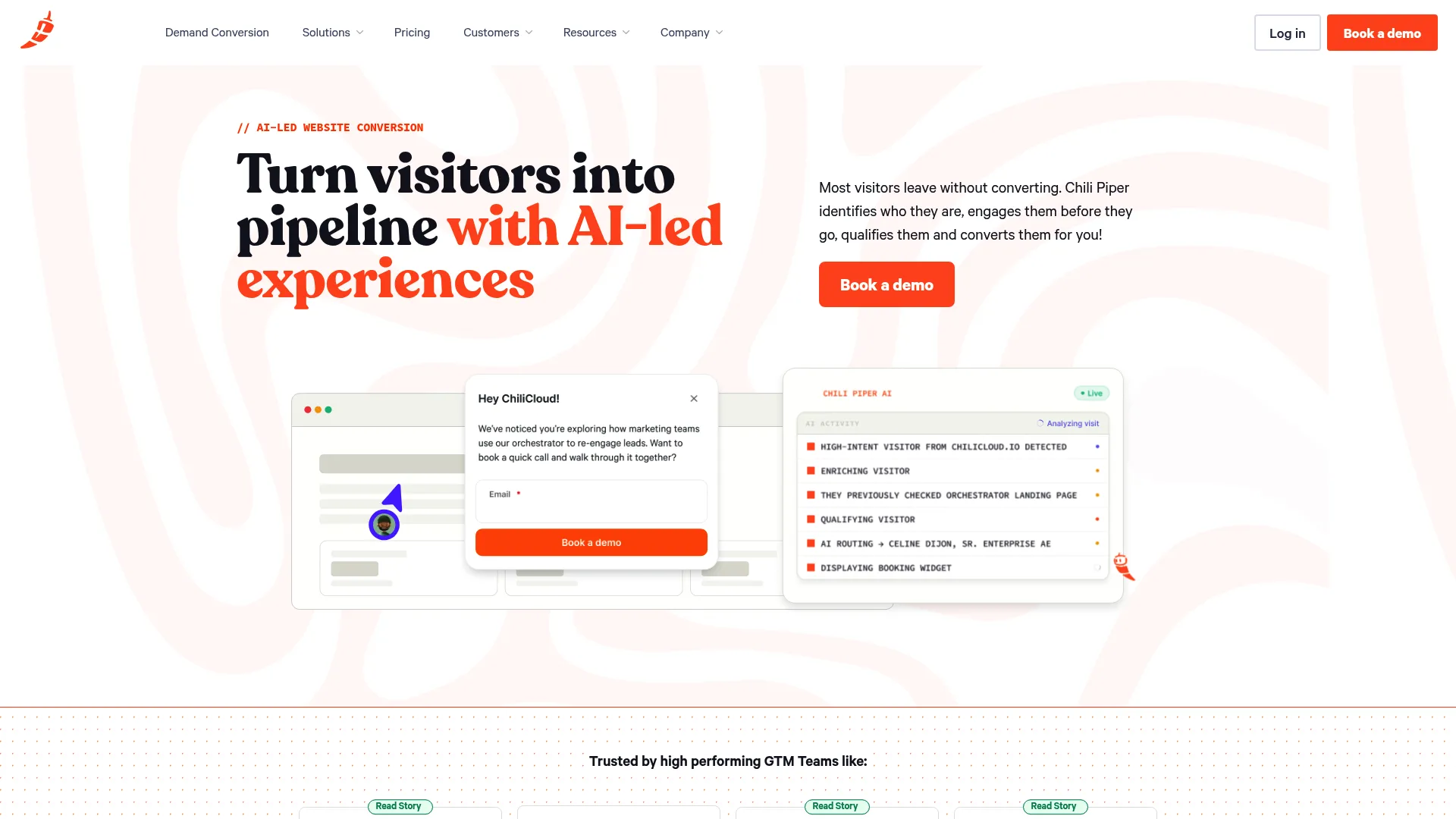
Chili Piper is a demand conversion platform built around routing, scheduling, and lead distribution. The core promise is speed: a lead fills out a form, Chili Piper qualifies and routes it in real time, then books a meeting instantly before intent cools. For inbound SDRs measured on booked meetings, that is the whole game.
The routing engine handles complex rules, territory logic, and round-robin assignment, so high-intent leads never sit in a queue. It writes back to your CRM so the AE inherits full context for the handoff.
Best for: Revenue teams that need automated lead routing and instant meeting booking.
Key strengths
- Routing and scheduling engine
- Experiences for inbound conversion
- ChiliCal standalone scheduler
- Territory and round-robin assignment
- CRM write-back for handoffs
Why choose Chili Piper: Chili Piper is strong when booked meetings are the main KPI and inbound volume justifies serious routing logic. It excels for mid-market and enterprise teams with complex assignment rules.
Chili Piper pricing: Routing and Scheduling starts at $1,250/mo with 15 seats included. Experiences starts at $3,500/mo with 30 seats included. Standalone ChiliCal is $12/user/mo with a 200-seat minimum. Annual billing only.
6. RevenueHero
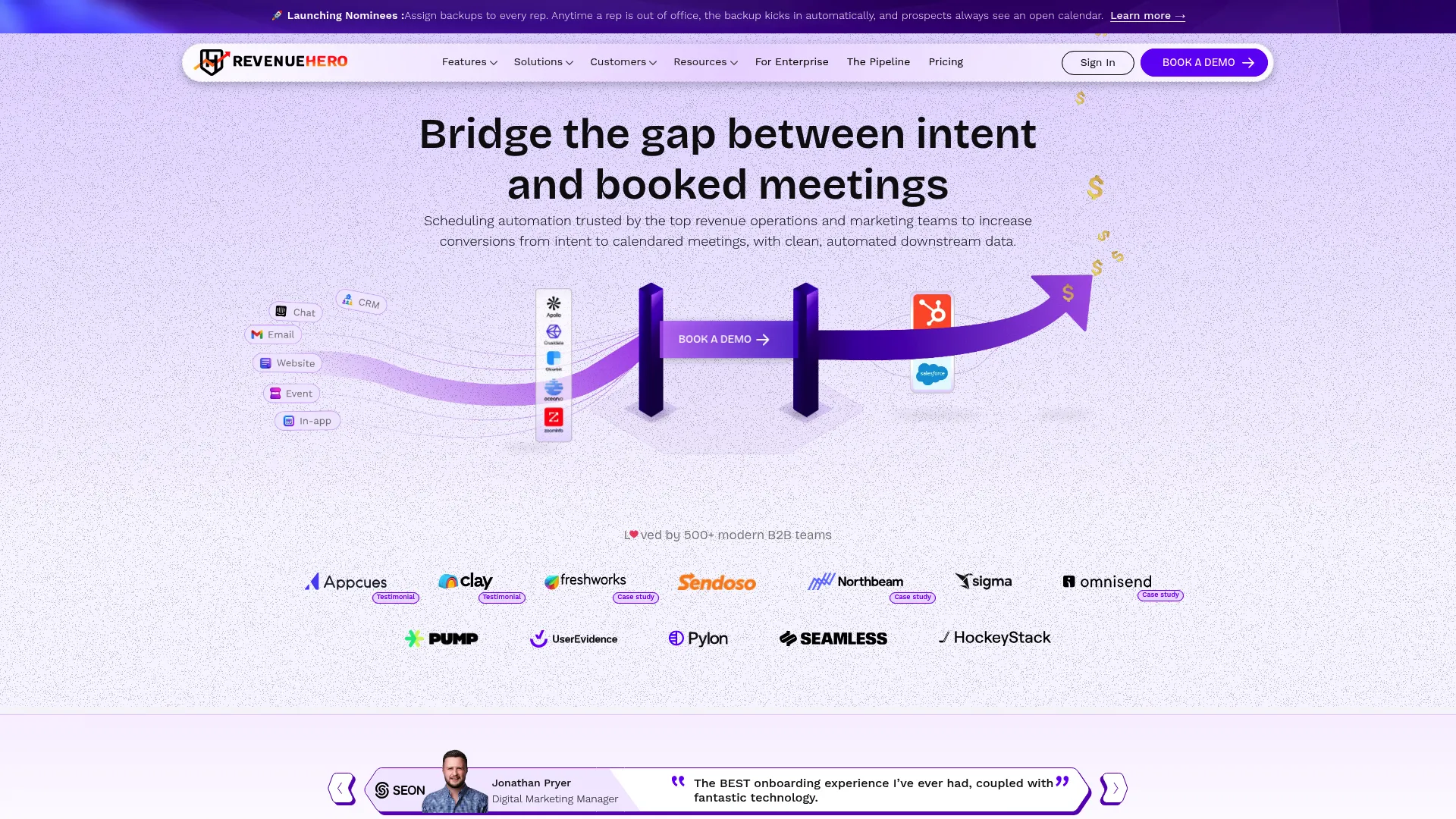
RevenueHero is inbound revenue acceleration software focused on scheduling, routing, qualification, and handoff. It targets the exact moment a high-intent lead raises their hand and gets them into a meeting instantly, on the right rep's calendar, before they lose momentum.
Where broader schedulers stop at booking, RevenueHero folds qualification and routing into the same flow. A form submission gets scored, matched, and booked in one motion. That tight loop is what lifts speed-to-meeting on inbound.
Best for: B2B teams that need inbound lead routing plus instant meeting booking.
Key strengths
- Instant scheduling
- Lead qualification and routing
- Booking pages and meeting automation
- High-intent inbound handoff
- CRM-connected assignment
Why choose RevenueHero: RevenueHero is purpose-built for inbound conversion, so the qualify-route-book steps happen in one flow. It excels when you want to squeeze more meetings out of existing inbound traffic.
RevenueHero pricing: Plans start at $15/mo per user. Add-ons include spam prevention at $30/mo and native enrichment at $31/mo. Contact sales for full plan mapping.
7. Typeform
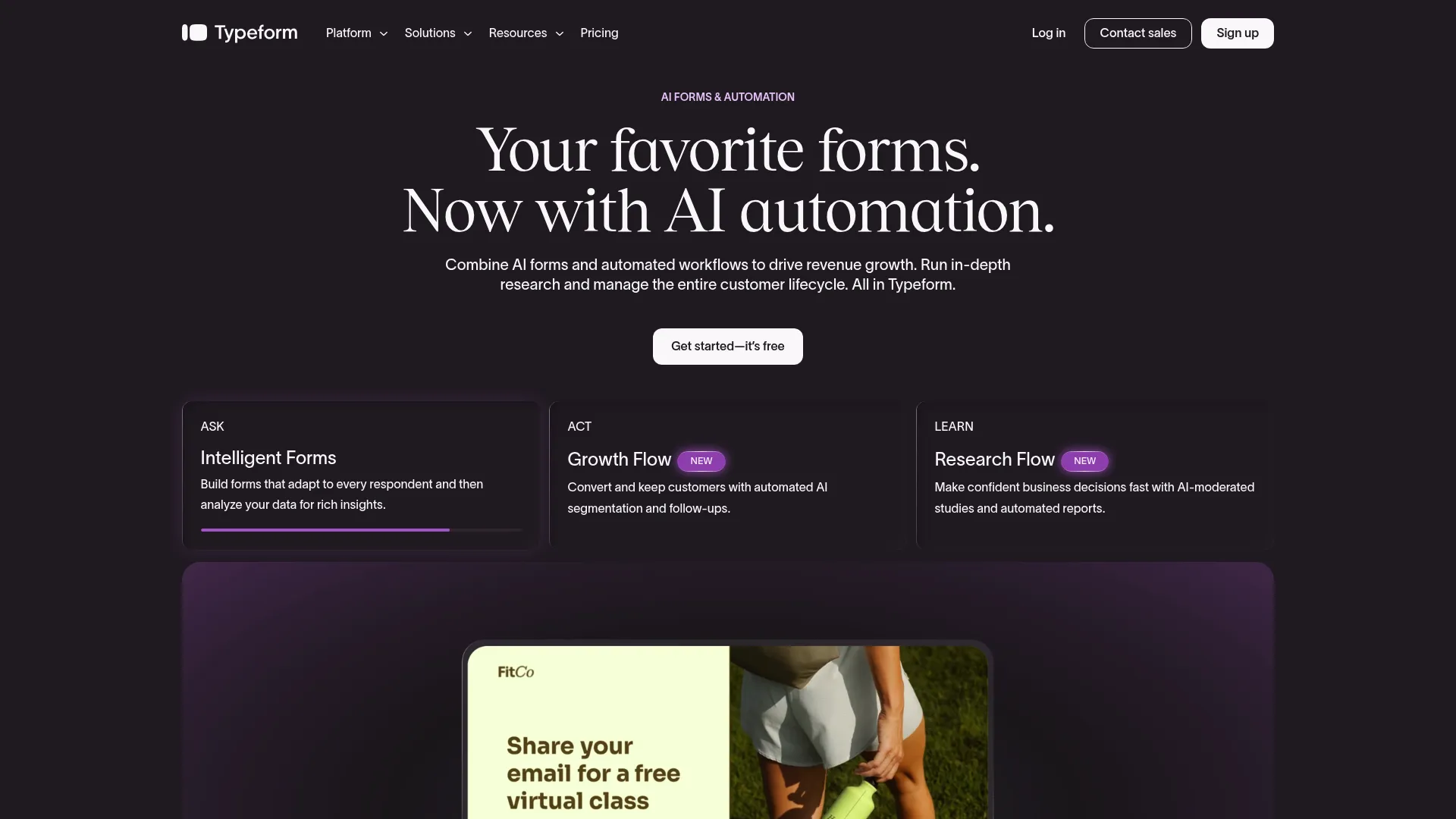
Typeform is an interactive forms and survey platform that doubles as a flexible qualification intake layer. Its conversational, one-question-at-a-time format keeps completion rates high, which matters when you are asking qualifying questions upfront. Branching logic routes respondents down different paths based on their answers.
For SDRs, that means you can pre-qualify before a lead ever reaches a rep. Ask about company size, budget, or use case, then branch high-fit respondents straight to a booking step and low-fit ones to a nurture path. Webhooks and integrations push answers into your CRM.
Best for: Teams that want polished, conversational forms and surveys with integrations.
Key strengths
- AI-powered form creation
- Conditional logic for branching
- Webhooks and integrations
- High completion rates
- Pre-qualification routing
Why choose Typeform: Typeform performs best as the qualification intake layer that feeds the rest of your stack. It captures and branches; pair it with a scheduler and CRM for the full route-and-book flow.
Typeform pricing: Free plan available. Basic is $39/mo, Plus is $79/mo, Business is $129/mo, and Growth Flow is $379/mo, with yearly billing also offered.
8. Traction Complete

Traction Complete is a Salesforce-native data management suite built for revenue operations. It handles lead-to-account matching, routing, and account hierarchy automation directly inside Salesforce, so qualification logic lives where your system of record already is.
For larger GTM stacks, this is RevOps-grade control. It matches inbound leads to the right account, applies routing rules, and keeps data clean through deduplication and relationship mapping. That accuracy is what keeps scoring and assignment trustworthy at scale.
Best for: RevOps teams on Salesforce that need native data routing and account hierarchy automation.
Key strengths
- Data Agents for trusted data workflows
- Lead routing and lead-to-account matching
- Account hierarchies and deduplication
- Relationship mapping
- Salesforce-native architecture
Why choose Traction Complete: Traction Complete gives RevOps deep control over routing and data hygiene inside Salesforce. It excels for teams where clean, matched data is the foundation of every qualification decision.
Traction Complete pricing: Pricing is sales-led with no public numeric price listed. Contact the vendor for a quote based on your Salesforce environment and team size.
9. LeadAngel
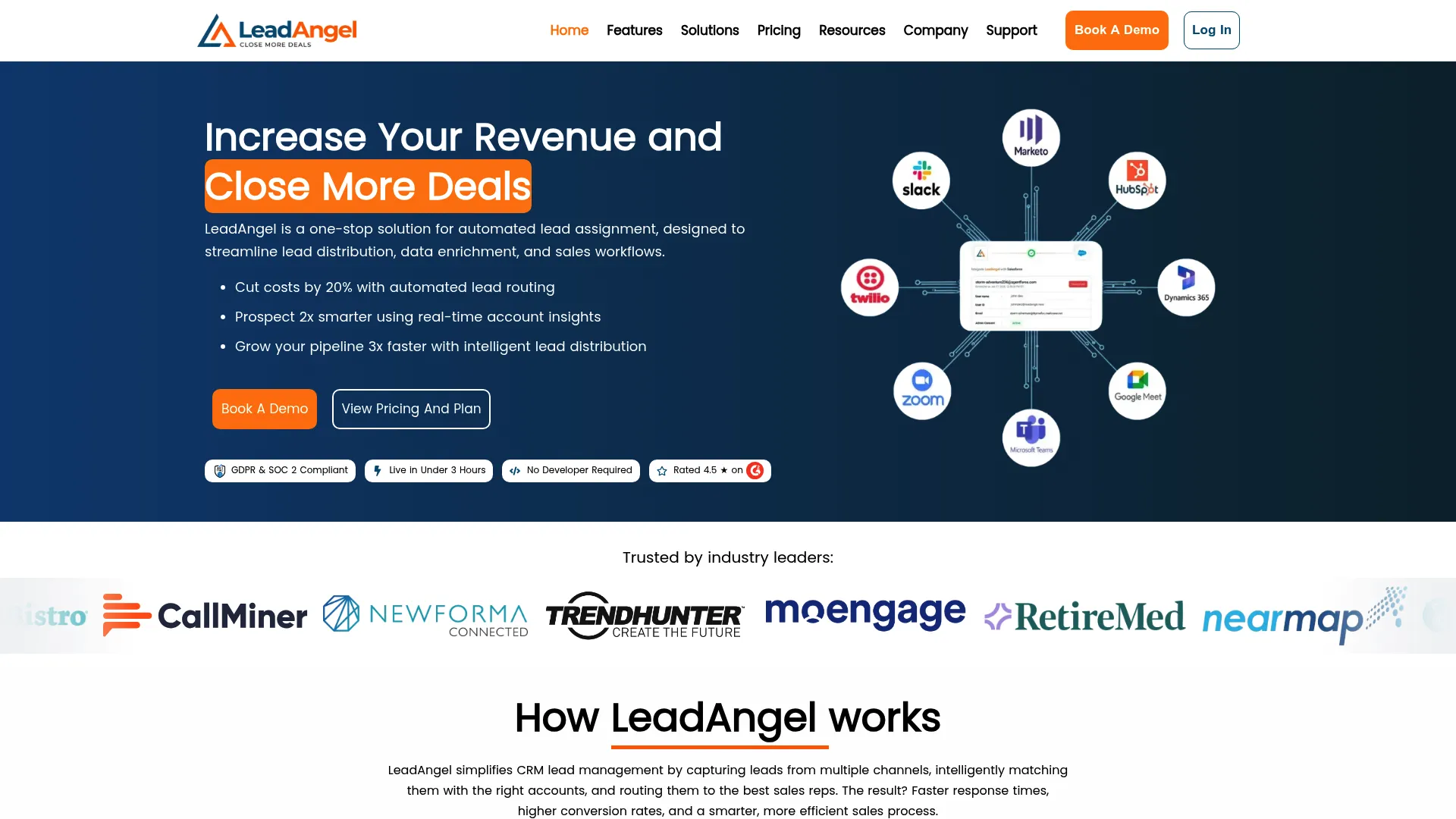
LeadAngel is a B2B lead management platform focused on routing, lead-to-account matching, scheduling, deduplication, and reporting. It solves the assignment problem: getting each lead to the right rep quickly and correctly, without leads falling through gaps.
For enterprise handoff control, LeadAngel matches leads to accounts, applies routing rules, and books meetings so nothing stalls between capture and conversation. Deduplication keeps your CRM clean, which keeps downstream qualification accurate.
Best for: Sales and RevOps teams needing automated lead routing and matching.
Key strengths
- Lead-to-account matching
- Lead routing
- Calendar scheduling
- Deduplication
- Assignment reporting
Why choose LeadAngel: LeadAngel is a focused routing and matching tool for teams that need reliable assignment at scale. It excels when enterprise handoff control and data hygiene are the priority.
LeadAngel pricing: LeadAngel lists Professional and Professional Plus plans with pricing handled through sales. Contact the vendor for a current quote.
10. Drift
Drift is AI chat and buyer-engagement software, now operated by Salesloft. It qualifies website visitors in real time through conversation, then routes and books high-intent ones into meetings. Instead of a form, a visitor chats, answers qualifying questions, and lands on a rep's calendar if they fit.
For website-first qualification, this is the fastest path from anonymous visitor to booked meeting. Chatbots handle the initial questions around the clock, and Fastlane routes qualified leads straight to booking. ROI reporting ties chat engagement back to pipeline.
Best for: B2B teams wanting website chat, lead qualification, and meeting booking.
Key strengths
- Live chat for real-time qualification
- ROI reporting
- Fastlane for qualified-lead routing
- 24/7 chatbot coverage
- Meeting booking from chat
Why choose Drift: Drift performs best when your website is a primary lead source and you want to qualify visitors in the moment. It excels at turning chat engagement into booked meetings.
Drift pricing: Public pricing is not listed. Drift is now part of Salesloft, and pricing is handled through sales. Contact the vendor for current plans.
Considerations
Before you buy, run each shortlisted tool through this checklist against your actual workflow.
CRM fit
Verify the tool writes cleanly to your CRM, both directions. If it does not sync qualification data back to Salesforce or HubSpot, your handoff to AE loses context. Check whether the CRM integration is native or relies on a third-party connector.
Routing logic
Confirm the routing supports your real assignment rules: territory, round-robin, account ownership, and fallback. Weak routing logic is where high-intent leads go cold. Test the edge cases before you commit.
Data quality
Assess how the tool handles enrichment, deduplication, and hygiene. Dirty data breaks scoring and routing downstream. If the tool is your enrichment source, check coverage and accuracy for your specific market.
Scheduling depth
Look at how booking works when a lead qualifies. Instant scheduling with the right rep beats a generic link every time. Check reminder logic and no-show handling, since a booked meeting only counts if it is held.
Reporting and adoption
Make sure you can measure speed-to-lead, booked meetings, and conversion after implementation. A tool nobody adopts is wasted spend, so weight ease of use for your SDRs as heavily as features.
Conclusion
The best sales qualification software is the one that closes your specific gap between signal and booked meeting. There is no universal winner, only the right fit for your bottleneck.
If you want CRM and qualification in one place, HubSpot is the natural starting point. If speed-to-meeting is the KPI, Calendly and Chili Piper remove scheduling friction fast. For inbound routing and conversion, RevenueHero and Chili Piper turn form fills into instant meetings. When data quality drives qualification, Apollo.io and Clearbit sharpen your prospecting. For RevOps-controlled routing inside Salesforce, Traction Complete and LeadAngel give you the control. And for website-first or form-based qualification, Drift and Typeform qualify before a rep gets involved.
Whatever you pick, pair it with a way to show product value on the first touch instead of pitching. Prospects who explore a guided interactive demo before a call arrive more qualified and more engaged, which lifts the quality of every meeting you book.
Start your journey with Guideflow today!
FAQs
Sales qualification software filters, scores, routes, and books leads so reps spend time only on prospects that fit your ICP and show buying intent. It automates the manual steps between a lead signal and a qualified meeting, covering capture, enrichment, scoring, routing, and scheduling.
Lead generation software gets attention and fills the top of the funnel. Qualification software decides which of those leads deserve a rep's time and gets the right ones in front of the right person fast. Generation is about volume; qualification is about filtering and routing that volume efficiently.
Prioritize speed-to-lead, CRM sync, routing logic, and clean handoff context. An SDR benefits most from tools that reduce clicks and work inside the existing CRM and sequencer. Enrichment and scoring matter too, but only if the tool writes signals back so the AE inherits full context.
Yes, mostly by removing delay and friction. Instant routing and scheduling cut the gap between a high-intent signal and a booked meeting, which is where inbound teams lose deals to whoever responded first. Faster response and cleaner routing typically lift both meetings booked and meetings held.
Usually, because they solve different problems. Scoring tells you which leads matter most; routing gets each lead to the right rep quickly. Scoring without routing leaves good leads sitting in a queue, and routing without scoring sends reps to poor-fit prospects. Together they protect rep time.
Yes, though the emphasis shifts. Outbound teams lean on enrichment and scoring to prioritize which accounts to work first, so volume converts instead of wasting touches. Tools like Apollo.io and Clearbit qualify accounts before the first touch, which is where outbound qualification really happens.
If you want one system of record and fewer tabs, an all-in-one CRM like HubSpot may cover qualification well enough. Choose a dedicated tool when your routing, scheduling, or enrichment needs outgrow what the CRM does natively. Many teams run both, with dedicated tools feeding the CRM.
Track speed-to-lead, speed-to-meeting, meetings booked versus held, and conversion from qualified lead to opportunity. Watch pipeline cleanliness and forecasting reliability too. If a tool is not moving these numbers within a quarter, revisit your routing rules and adoption before blaming the software.