You launched four landing pages this quarter. Marketing added two new ad pixels. Someone embedded a chat widget. A vendor script slipped in through a tag manager nobody audited. Each change made sense in isolation. Together, they quietly pushed your site out of compliance, and nobody noticed until legal asked for proof.
That gap is the real problem. Websites grow faster than the governance around them. Trackers, pixels, third-party scripts, and consent behavior drift [the moment a stack expands, and a cookie banner sitting on top does not guarantee that anything underneath it behaves correctly. The cost shows up as wasted audit hours, broken trust with legal, and regulatory exposure you cannot defend without evidence.
The market reflects how urgent this has become. The global privacy management software market is projected to grow from USD 6.24 billion in 2026 to USD 17.63 billion by 2031, a 23.08% CAGR, according to Mordor Intelligence.](https://www.mordorintelligence.com/industry-reports/privacy-management-software-market) Buyers are spending because manual checks no longer scale across multi-site, multi-region web stacks.
For marketing teams managing many properties, the right tool is the difference between knowing what fires before consent and guessing. If you also build interactive product experiences across those properties, it helps to track engagement cleanly, the same discipline behind the best email verification tools and broader audit management software categories. This guide focuses purely on website privacy auditing tools and how to choose one.
What's inside
This guide covers seven website privacy audit software platforms built for detection, consent verification, and evidence-driven remediation. It is written for marketing ops, RevOps, privacy, and compliance buyers who own or influence what runs on a growing set of web properties.
We selected tools based on four criteria:
- Privacy compliance fit: how well the tool maps to GDPR, CCPA, and consent requirements
- Monitoring depth: tracker detection, third-party script detection, and continuous privacy monitoring
- Reporting quality: evidence reports that hold up in an audit
- Scale: multi-site privacy governance for portfolios, not single pages
TL;DR
- Best for portfolio-wide governance and managed support: Nixon Digital, built for auditing single sites and large website portfolios with page-level risk detection.
- Best for compliance-first teams: Osano, an all-in-one privacy platform with consent management at the core.
- Best for AI-driven consent and data permissioning: Ketch, with consent orchestration and DSR automation.
- Best for enterprise privacy programs: TrustArc, an end-to-end compliance and assurance suite.
- Best for deep tracker and tag detection: ObservePoint, automated web governance and CMP validation at scale.
- Best for automated AI scanning: Privado AI, with a dedicated Web Auditor for website privacy compliance.
- Best for tag and data-quality monitoring: DataTrue, automated validation with privacy compliance checks.
What website privacy audit software is
Website privacy audit software scans your site to detect what cookies, trackers, pixels, and third-party scripts actually do, then verifies whether that behavior matches your consent setup and privacy policy.
It helps to separate three categories that buyers often confuse:
- A scanner crawls pages and reports what fires, when, and from which domains. It answers "what is happening on the site right now."
- A consent management platform (CMP) collects and stores user consent, then signals other tools whether they are allowed to run. It controls the banner and the consent record.
- A broader privacy platform combines scanning, consent, data mapping, subject rights, and governance into one operational system.
Most website privacy auditing tools detect and document:
- Cookies: first-party and third-party, including duration and category
- Pixels and tags: advertising, analytics, and conversion trackers
- Third-party scripts: embeds, widgets, and vendor code loading on the page
- Consent behavior: what fires before opt-in versus after, the core of consent behavior verification
- Policy gaps: mismatches between what the site does and what the privacy notice claims
- Domains and data flows: where data is sent and which external parties receive it
The strongest platforms add continuous privacy monitoring, evidence reports, and a remediation workflow so findings turn into fixes instead of a static PDF that ages out the day after it's generated.
When to use website privacy audit software
Audit a site before launch
New landing pages, campaign microsites, and embeds are where compliance quietly breaks. A marketer ships a page Friday, adds a heatmap script and a retargeting pixel, and nobody checks what fires before consent. Run a website privacy compliance audit before the page goes live, not after a regulator or a customer flags it. For fast-moving experiments, a pre-launch scan catches the script you forgot you added.
Verify consent behavior after banner changes
A banner is a control surface, not proof of compliance. Every time you reconfigure a CMP, change consent mode, or update categories, the actual firing behavior can shift. Test before and after opt-in to confirm trackers respect the choice. Banner configuration alone is not enough when scripts still load before a user clicks anything.
Monitor a portfolio at scale
One-off audits do not hold for multi-brand, multi-region companies. New tags get added weekly, vendors update their scripts, and regional sites diverge. Continuous monitoring across the portfolio catches drift as it happens and produces the reporting trail you need for audit readiness. The more sites you run, the more a one-time check becomes a snapshot that's already stale.
Comparison table
Here's a fast shortlist view of the website privacy audit software in this guide, ordered by relevance to portfolio-wide auditing and tracker detection.
| # | Product | Intent | Key differentiation | Pricing | G2 rating |
|---|---|---|---|---|---|
| 1 | Nixon Digital | Website privacy auditing and portfolio control | Page-by-page risk detection across single sites and large portfolios | From €49,50/mo | 4.8/5 |
| 2 | Osano | All-in-one privacy compliance | Consent management plus subject rights and assessments | Free tier; paid by quote | 4.5/5 |
| 3 | Ketch | AI privacy and data permissioning | Consent orchestration and DSR automation | Free; Starter from $150/mo | 4.6/5 |
| 4 | TrustArc | Enterprise privacy program | End-to-end compliance, consent, and assurance | By quote | 4.2/5 |
| 5 | ObservePoint | Tag and tracker detection | Automated web governance and CMP validation | By quote; free scan | 4.5/5 |
| 6 | Privado AI | Automated AI privacy scanning | Web Auditor for website compliance scanning | From $600/site/mo | 4.6/5 |
| 7 | DataTrue | Tag and data-quality monitoring | Automated validation with privacy compliance checks | From $999/mo | 4.6/5 |
1. Nixon Digital
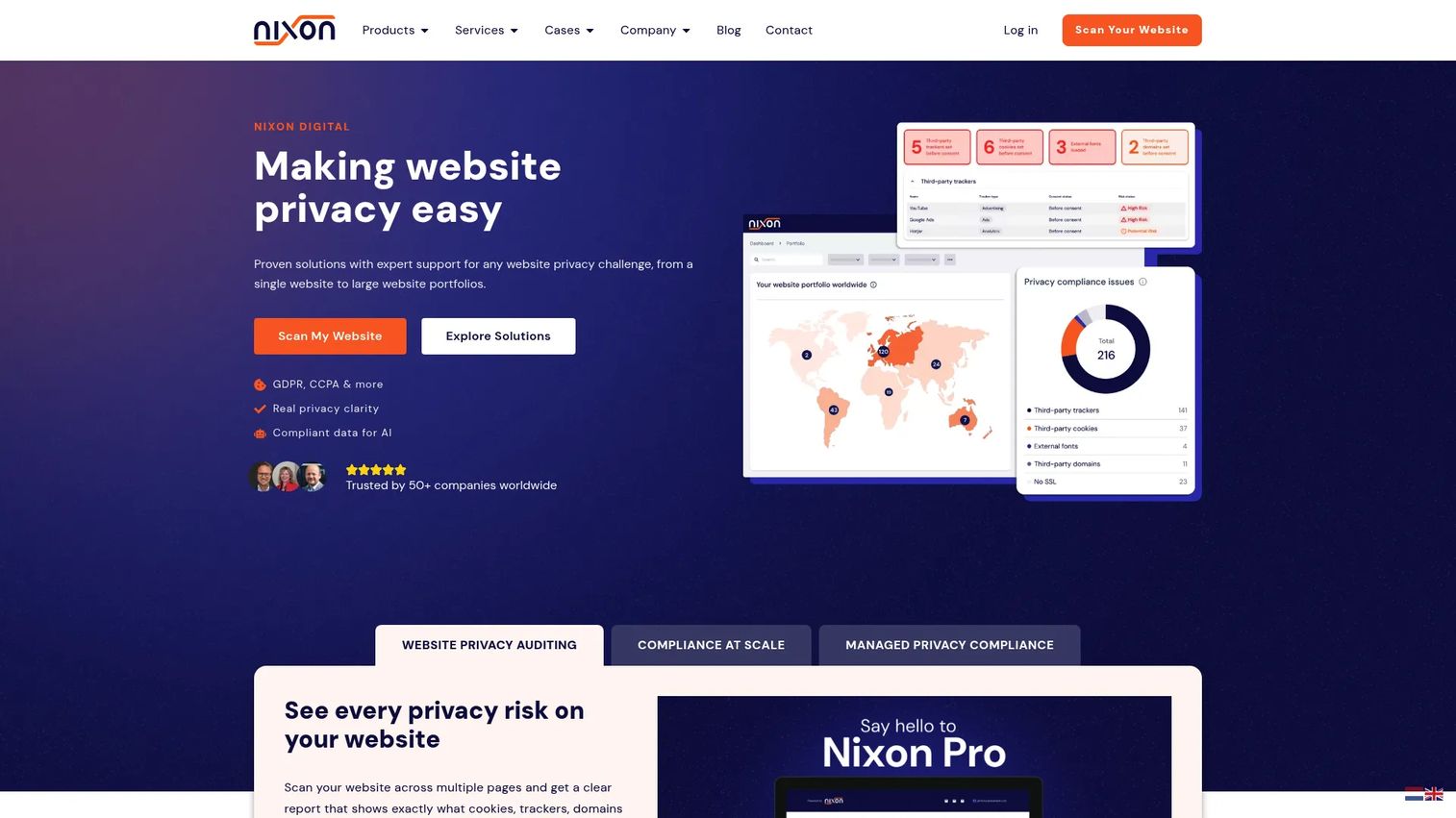
Nixon Digital is website privacy and compliance software built to audit single sites and manage larger website portfolios. It gives teams instant clarity on website privacy, security, and control, with page-by-page risk detection that flags exactly what's happening before and after consent. For marketing-heavy organizations running dozens or hundreds of properties, this portfolio-wide angle is the differentiator. You can run one-off scans or schedule recurring audits, which matters when sites change weekly and a single snapshot goes stale fast.
The platform scans across multiple pages and returns a clear report showing what cookies, trackers, domains, and fonts do, both before and after a user gives consent. That before-and-after view is the core of real consent behavior verification, not just banner presence. Findings route into the tools your team already lives in.
Best for: Teams that need website privacy compliance auditing plus portfolio-level oversight across many sites.
Key strengths
- Page-by-page risk detection: Pinpoints exactly which page and which script creates exposure, so remediation is targeted not guesswork.
- Portfolio-wide monitoring: Discovers, monitors, and controls privacy across single websites and large portfolios from one place.
- Workflow integrations: Connects with ServiceNow, Jira, Slack, Teams, AWS, Azure, Rapid7, and BitSight to push findings into existing workflows.
Why choose Nixon Digital: If your problem is scale, that you have too many sites to audit by hand, Nixon Digital is built for exactly that. The combination of recurring audits, before-and-after consent reporting, and ticketing integrations turns scanning into a repeatable remediation workflow rather than a one-time report.
Nixon Digital pricing: The Nixon Pro pricing page lists Small at €49,50 per month, Medium at €199 per month, and Large at €699 per month, with a Custom tier for larger inquiries. Monthly and yearly billing are both shown, and free scan credits let you audit up to five websites before committing. Nixon Digital holds a 4.8/5 rating on G2.
2. Osano
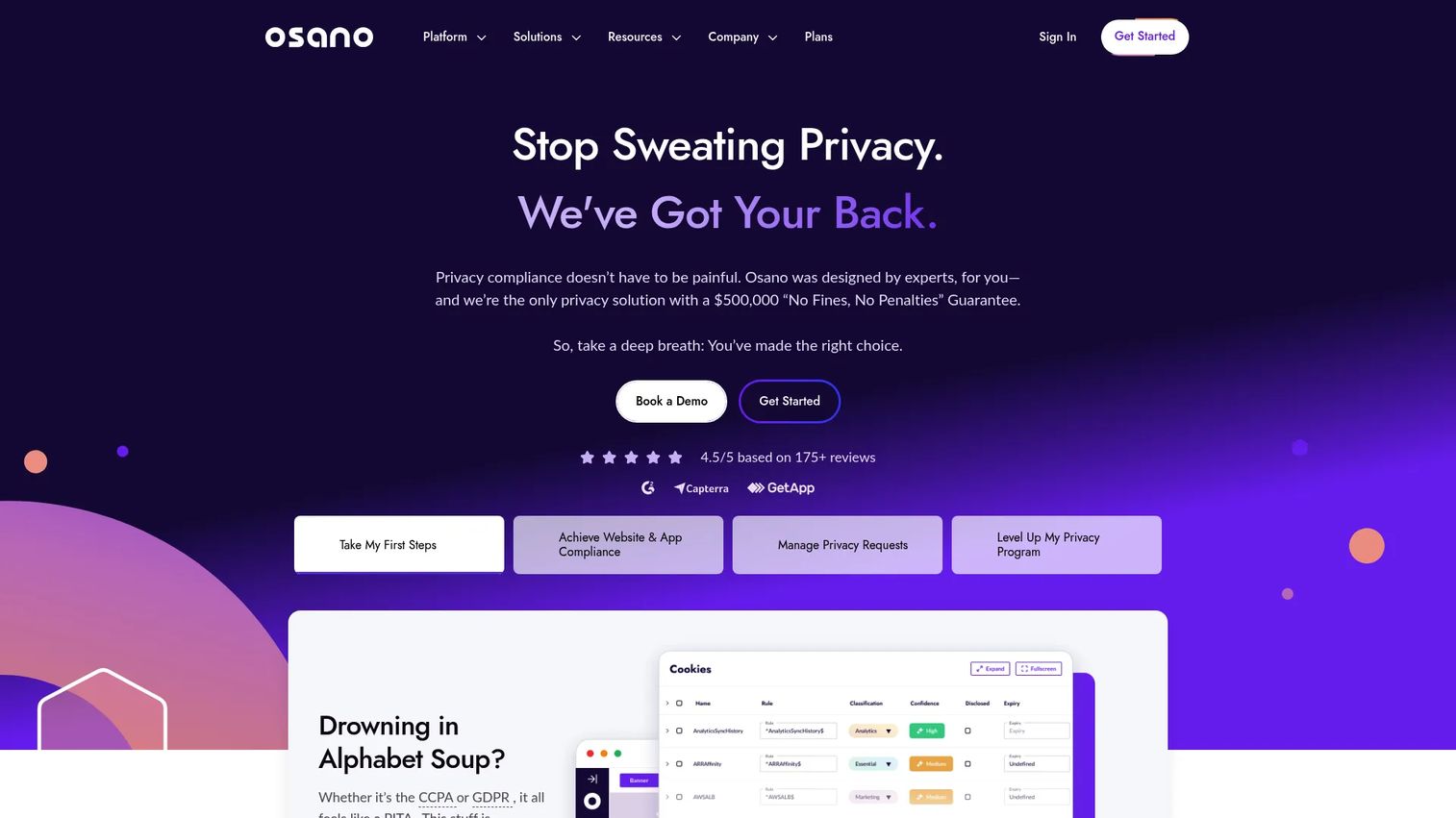
Osano is a data privacy management platform that covers consent, data subject access requests, vendor risk, assessments, and broader privacy operations. Where a pure scanner stops at detection, Osano wraps audit scanning inside a full compliance system, which fits teams that want privacy operations and audit readiness in one place. Its consent management sits at the center, making it a strong choice when legal and marketing stakeholders both need to operate from the same record.
For larger orgs, the appeal is breadth. You get cookie consent compliance, subject rights workflows, and a unified consent and preference hub, so the same platform that audits behavior also manages the controls that govern it. That reduces the gap between finding a problem and owning the fix.
Best for: Teams that want an all-in-one privacy compliance platform with consent management at the core.
Key strengths
- Cookie consent management: Configures, serves, and records consent so banner behavior and audit findings stay connected.
- Subject rights management: Handles DSARs and rights requests inside the same platform that runs your scans.
- Unified consent and preference hub: Centralizes consent and preference data across properties for cleaner governance.
Why choose Osano: Choose Osano when you want one platform spanning detection, consent, and privacy operations rather than stitching a scanner to a separate CMP. It fits compliance-first teams who value audit defense and governance over a single-purpose scanning tool.
Osano pricing: Osano offers Free, Plus, and Premier plan levels. The Free level suits testing or very small businesses, Plus includes a 30-day free trial of the full platform, and Premier includes the complete suite. Public numeric prices were not listed on the plans page, so paid tiers are quote-based. Osano holds a 4.5/5 rating on G2.
3. Ketch
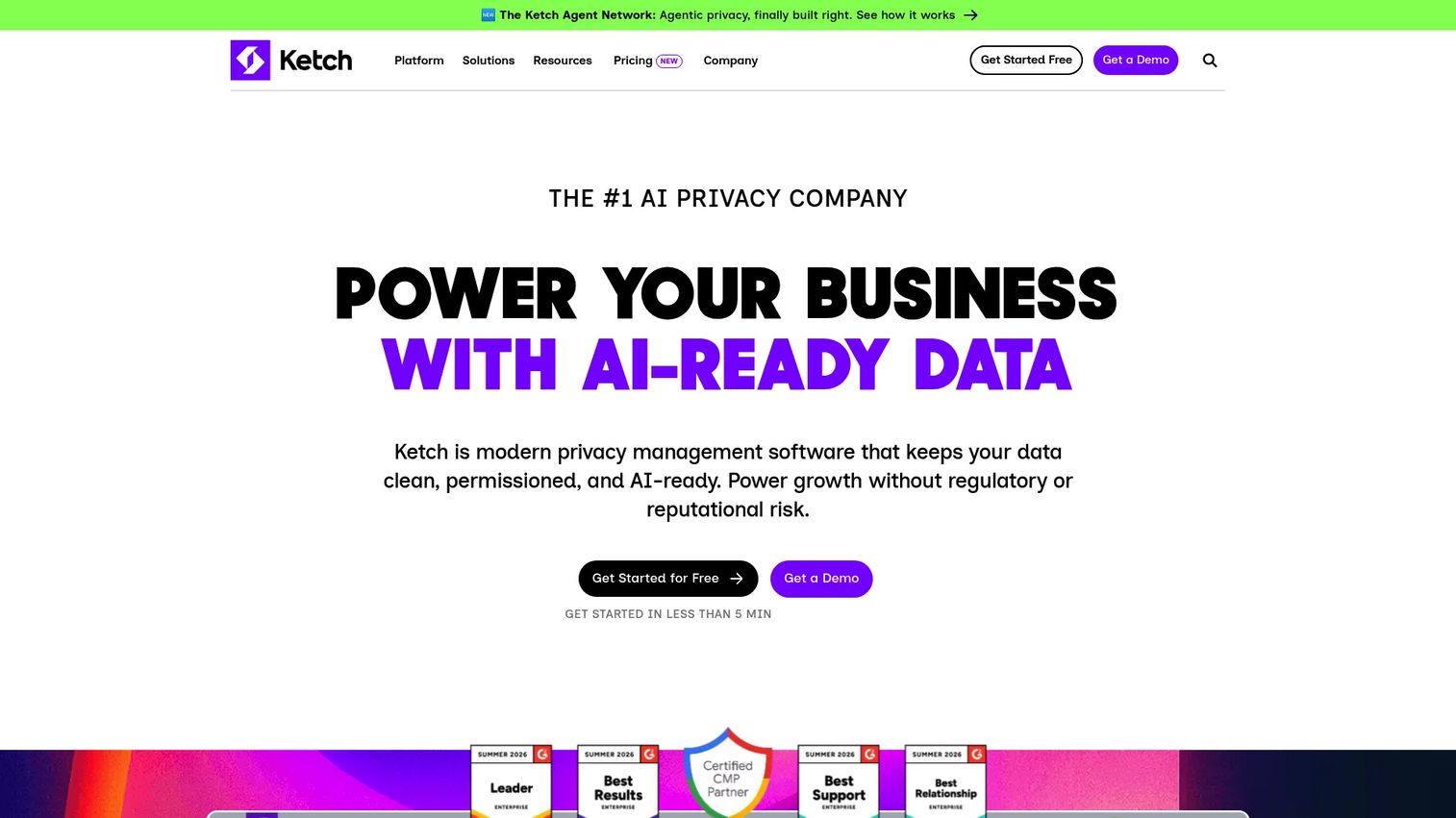
Ketch is AI privacy and data permissioning software covering consent, rights, data mapping, and governance. It leans into modern, data-rich privacy operations, with consent orchestration that coordinates how data permissions flow across your stack. For teams that think about privacy as an ongoing data problem rather than a one-time banner setup, that orchestration angle stands out.
The platform pairs consent management with DSR automation and data mapping and discovery, so you can see what data you hold, govern how it's used, and respond to rights requests without manual scramble. That combination supports both privacy monitoring and the documentation side of audit readiness.
Best for: Mid-market and enterprise teams needing privacy compliance and consent orchestration.
Key strengths
- Consent management: Captures and coordinates consent across web and app surfaces.
- DSR automation: Streamlines subject rights requests so they don't pile up as manual tickets.
- Data mapping and discovery: Surfaces where personal data lives and flows, the foundation for defensible compliance.
Why choose Ketch: Ketch fits teams that treat consent and data permissioning as connected problems. If you want consent orchestration tied to data mapping and rights automation, rather than a standalone scanner, Ketch covers that ground with an AI-forward approach.
Ketch pricing: Ketch offers Free, Starter, Plus, and Pro plans. Free is limited to 5k unique users per month, Starter is $150 per month for up to 30k unique users, Plus starts from $499 per month billed annually for up to 100k, and Pro is custom pricing. Ketch holds a 4.6/5 rating on G2.
4. TrustArc
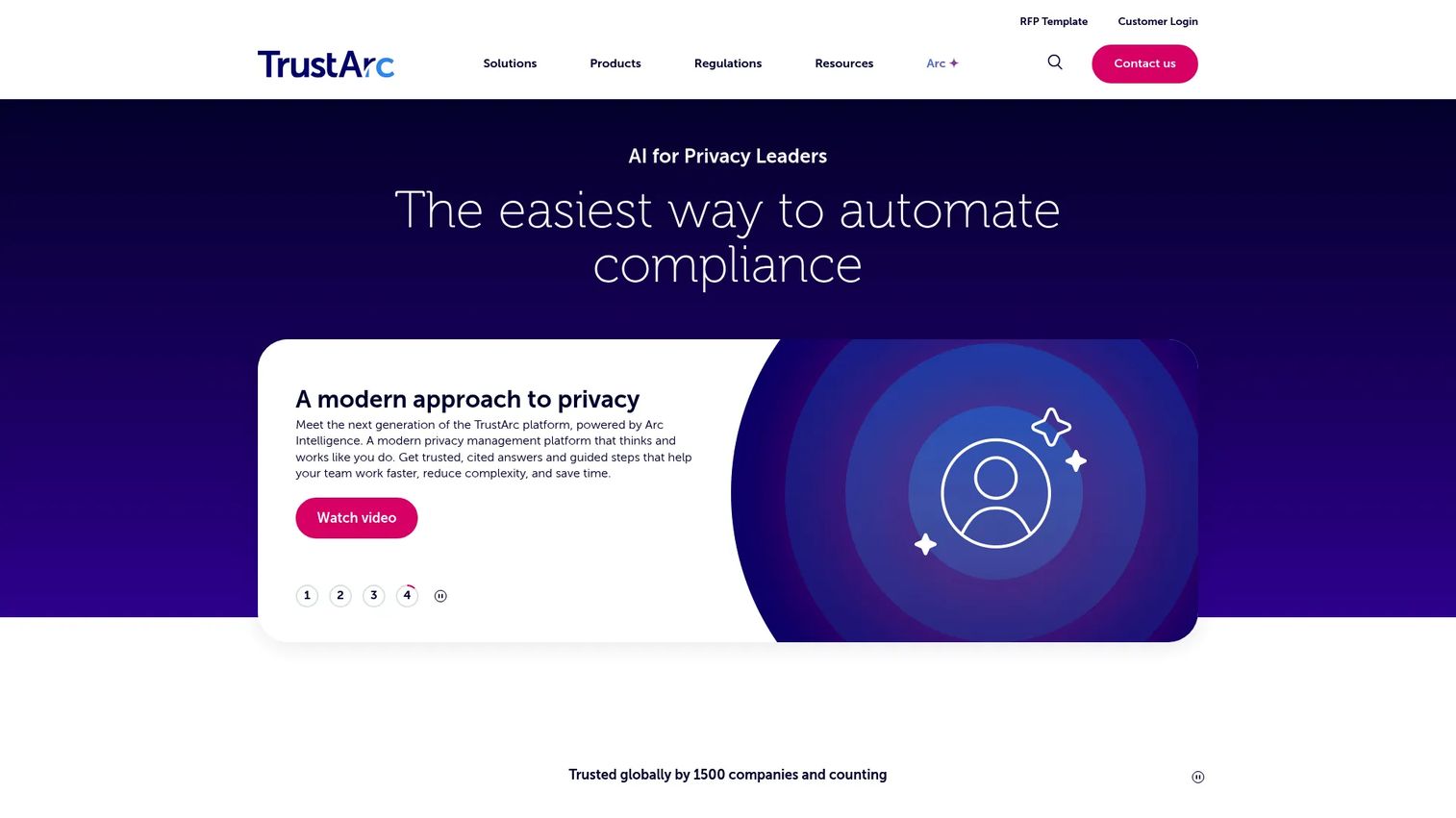
TrustArc is privacy management software and services for compliance, consent, data subject requests, governance, and assurance. It targets organizations that need structured privacy management across multiple teams, with the operational maturity to run a formal compliance program rather than ad hoc checks. Evidence collection and governance are first-class here, which is what audit-heavy enterprises need.
The platform spans consent and preference management, data subject request automation, and privacy governance with AI and privacy workflows. For privacy teams coordinating legal, security, and marketing stakeholders, that breadth keeps the program in one operational system instead of scattered tools.
Best for: Enterprise privacy teams needing an end-to-end compliance platform.
Key strengths
- Consent and preference management: Governs consent across regions and properties at enterprise scale.
- Data subject request automation: Manages rights requests with documented, repeatable workflows.
- Privacy governance and AI workflows: Structures privacy programs with governance and evidence collection built in.
Why choose TrustArc: TrustArc fits organizations with mature compliance needs that want a single platform for governance, consent, and assurance. If your privacy program already involves multiple stakeholders and formal documentation requirements, its breadth and evidence workflows match that operational reality.
TrustArc pricing: TrustArc does not publish list pricing; plans are available by contacting sales. No public numeric price was visible on the brand site during this review. TrustArc holds a 4.2/5 rating on G2.
5. ObservePoint
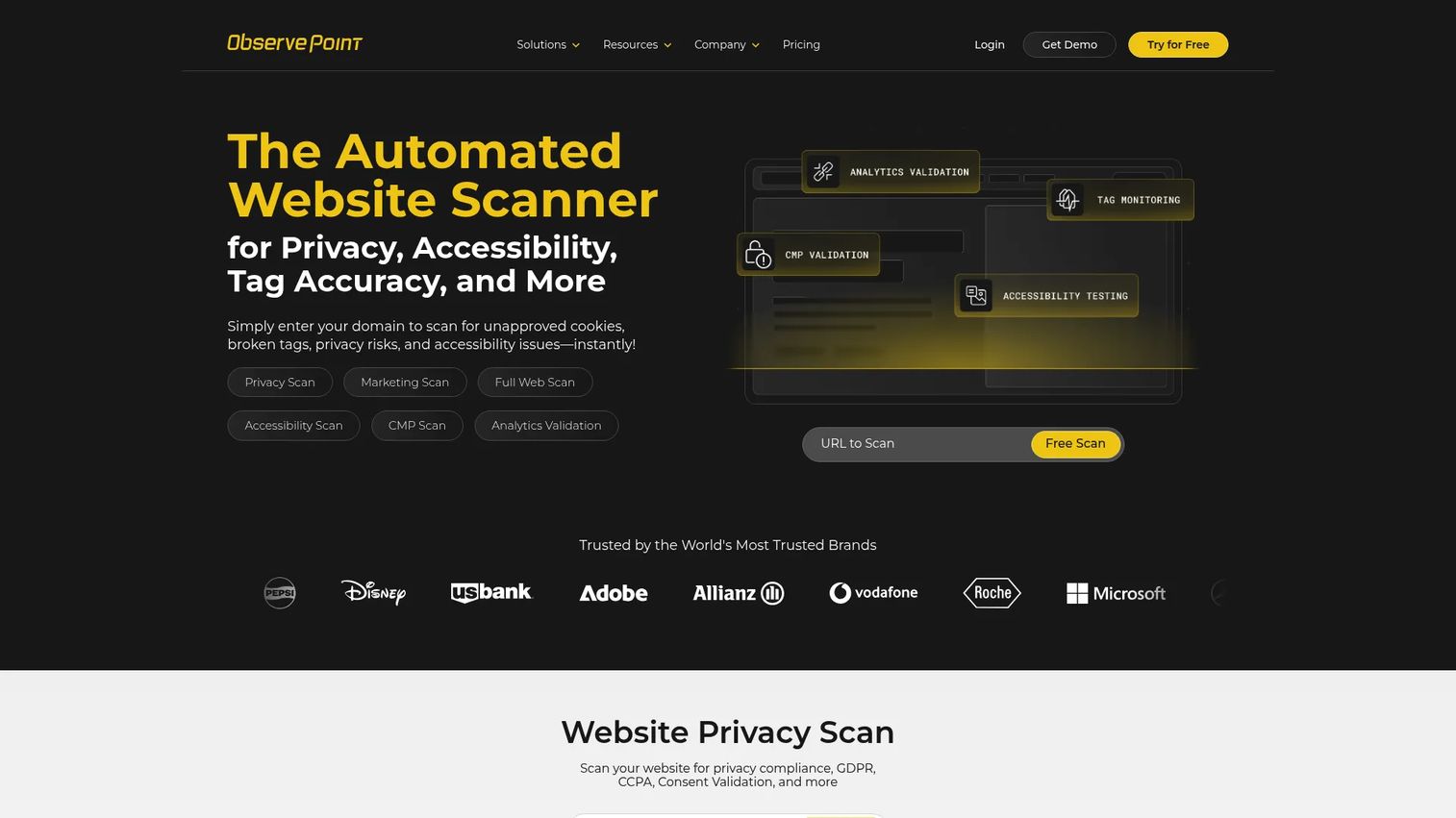
ObservePoint is automated web governance software covering privacy, accessibility, tag accuracy, and related website validation. For teams that need deep visibility into marketing tags and third-party scripts, this is the tracker-detection specialist of the list. Its automated web scanner uncovers what's firing across your site, then validates that consent controls actually work as configured.
The platform runs privacy scans for GDPR, CCPA, and CPRA, validates consent, and checks the functionality of your CMP. You get a full picture of where cookies fire, confirmation that banners are in place and working, and assurance that data isn't shared or collected where it shouldn't be. Audits and Journeys workflows let you test multi-step user paths, not just static pages, which matters for measurement and QA-focused web governance.
Best for: Teams needing automated website governance and compliance validation at scale.
Key strengths
- Privacy and consent scans: Runs GDPR, CCPA, and CPRA scans with CMP and consent validation.
- Analytics validation: Verifies tags across Adobe, Google, and Tealium so tracking stays accurate and compliant.
- Accessibility scans: Adds WCAG, ADA, and EAA checks for broader website governance.
Why choose ObservePoint: ObservePoint is the pick when tag and tracker accuracy is the priority. Marketing ops and analytics teams that need to validate exactly what fires, where, and under which consent state get the deepest detection workflows here, paired with journey-based testing that mirrors real user behavior.
ObservePoint pricing: ObservePoint presents pricing as a calculator rather than a fixed list price, with a request-demo flow. A free scan and a try-for-free entry point are available on the homepage. ObservePoint holds a 4.5/5 rating on G2.
6. Privado AI
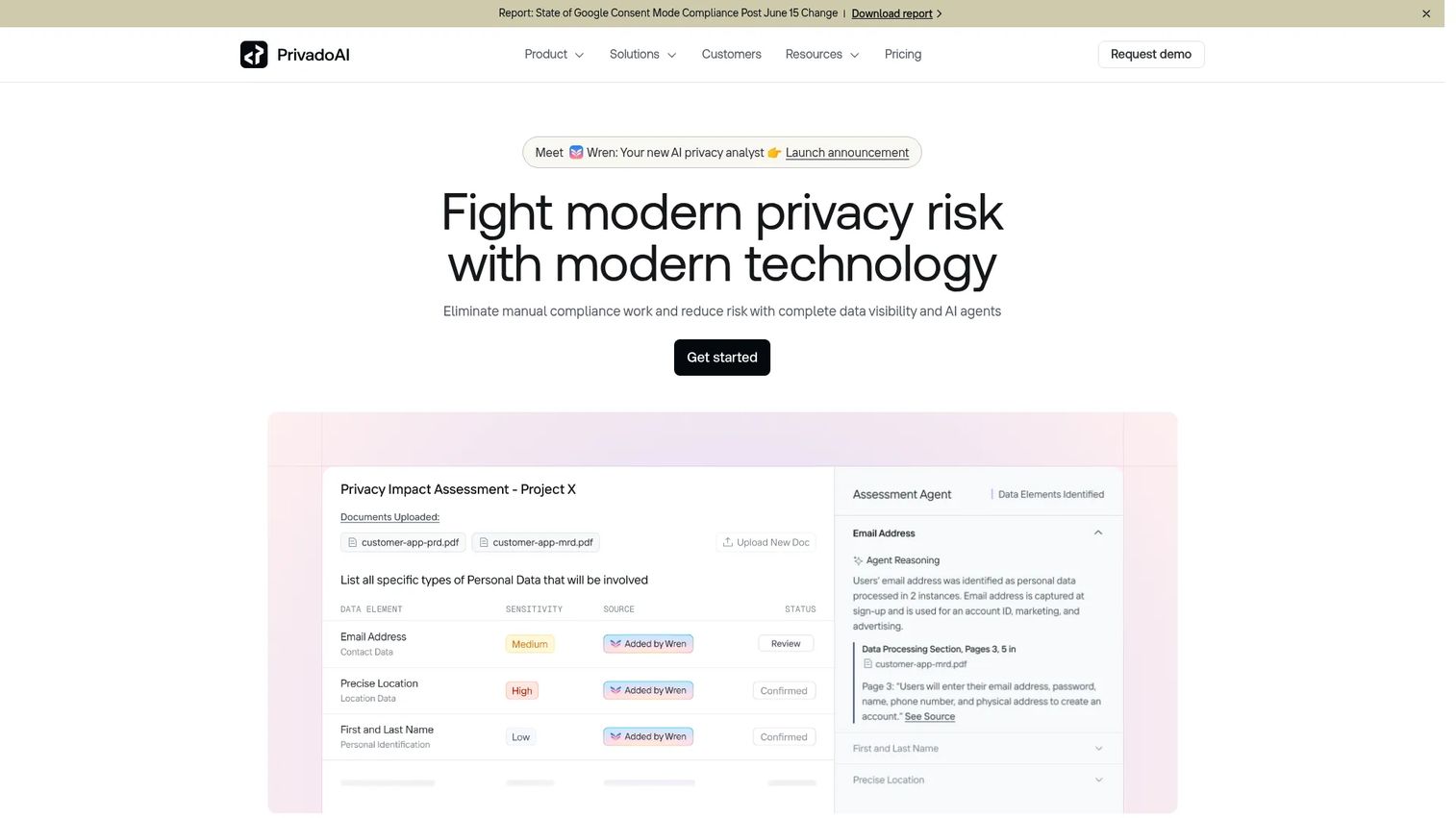
Privado AI is an AI privacy compliance platform covering websites, mobile apps, assessments, and data maps. Its Web Auditor focuses specifically on website privacy compliance scanning, which makes it a clean fit for buyers who want fast, automated discovery without standing up a full enterprise suite first. The AI-based detection angle is the differentiator, pointing at faster scanning and modern workflow support.
Alongside the Web Auditor, Privado AI offers an App Auditor for mobile privacy compliance scanning and Wren, an AI privacy agent that handles assessments and records of processing activities. That gives privacy and compliance teams a path from automated scanning into assessment and documentation workflows as needs grow.
Best for: Privacy and compliance teams needing automated scanning and assessment workflows.
Key strengths
- Web Auditor: Scans websites for privacy compliance with automated, AI-driven detection.
- App Auditor: Extends compliance scanning to mobile apps, useful for teams shipping both web and app.
- Wren AI privacy agent: Automates assessments and RoPAs to speed up documentation.
Why choose Privado AI: Privado AI suits buyers who want automated, AI-forward scanning they can start with quickly, then expand into assessments and data mapping. If speed of discovery and a modern workflow matter more than a sprawling legacy suite, its per-product structure lets you start narrow and grow.
Privado AI pricing: Privado AI publishes starting prices. Web Auditor is $600 per website per month billed annually, App Auditor is $800 per app per month billed annually, and Wren is $4,200 per month billed annually. The full Privacy Management Platform is custom-priced and scales with your business. Privado AI holds a 4.6/5 rating on G2.
7. DataTrue
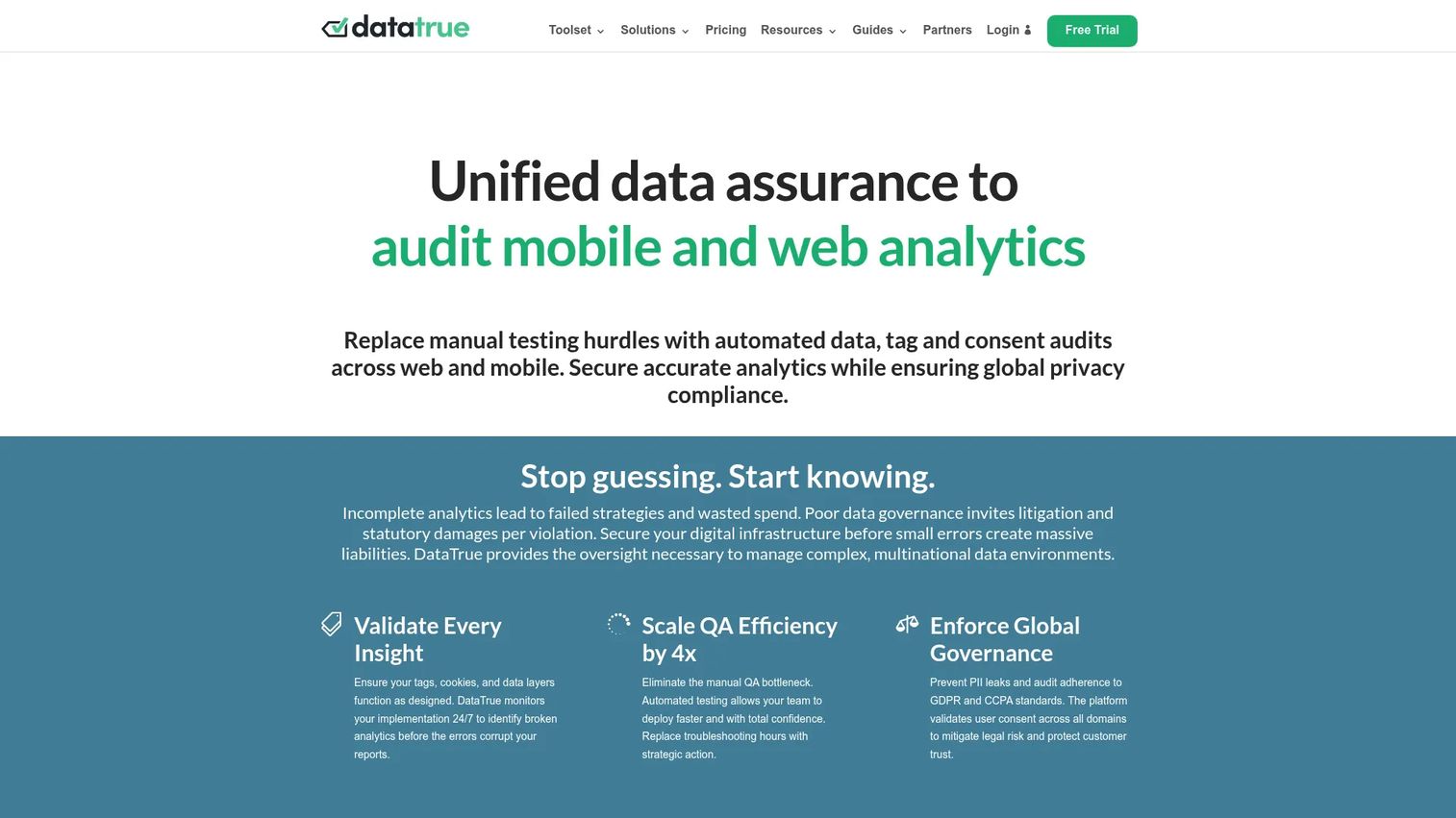
DataTrue is an enterprise data validation and monitoring platform for website tags, analytics, cookies, and related governance checks. It pairs automated tag testing with privacy compliance monitoring, so the same system that protects data quality also watches for privacy risk. For teams that care about both clean analytics and compliant tracking, that overlap is practical.
The platform validates the compliance of cookies and tags against user consent and privacy policies, supports data layer validation, and runs user-journey testing. That means you can confirm tags fire correctly and that they comply with GDPR, CCPA, and other standards across real user paths, not just isolated page loads. Findings feed risk discovery and the evidence workflows that back audit readiness.
Best for: Teams that need automated website tag and data-quality monitoring alongside privacy audits.
Key strengths
- Automated tag testing: Validates tags and data continuously so broken or non-compliant tags surface fast.
- Privacy compliance monitoring: Checks cookies, PII, and consent behavior against policy requirements.
- Journey and data layer validation: Tests multi-step user journeys and data layers, not just single pages.
Why choose DataTrue: DataTrue fits teams that want data-quality monitoring and privacy compliance in one system. If your analytics integrity and your privacy posture both depend on tags behaving correctly, combining the two checks reduces the number of tools you maintain.
DataTrue pricing: DataTrue offers Starter at USD 999 per month, Team at USD 1,999 per month, and a custom Enterprise tier, all billed annually. A free 30-day trial is available. DataTrue holds a 4.6/5 rating on G2.
Considerations before you buy
The shortlist narrows fast once you weigh these against your situation.
Detection depth versus operational breadth
Decide whether you need a focused scanner or a full privacy platform. A tracker-detection specialist gives you the deepest visibility into what fires and when. A broader platform trades some of that focus for consent management, subject rights, and governance in one system. Match the tool to whether your gap is visibility or operations.
Portfolio coverage and continuous monitoring
If you run more than a handful of sites, prioritize multi-site privacy governance and continuous privacy monitoring over one-off scanning. Confirm the tool can discover sites you forgot about, schedule recurring audits, and flag drift as new tags appear. A snapshot is useless the day a vendor updates a script.
Consent verification, not just banner presence
A tool should test behavior before and after opt-in, not just confirm a banner exists. Ask specifically how it verifies that trackers respect consent choices. Consent behavior verification is where most compliance gaps actually live.
Evidence and remediation workflow
Detection without action is a report nobody reads. Look for evidence reports that hold up in an audit and a remediation workflow that routes findings to the right owner, ideally through Jira, ServiceNow, or Slack. The goal is fixes, not findings.
Integration and stakeholder fit
Privacy spans marketing, legal, RevOps, and web ops. Confirm the tool fits the teams that will use it and connects to the systems they already work in. A platform legal loves but marketing ignores will not close the gap.
Conclusion
Your starting point depends on your gap. If you run many properties and need portfolio-wide auditing with managed support, Nixon Digital is the most direct fit. If you want privacy operations and consent management in one compliance-first system, Osano and TrustArc cover that breadth, with TrustArc leaning enterprise. Ketch is the pick when consent orchestration and data permissioning are the priority.
For pure tracker and tag detection, ObservePoint goes deepest, while DataTrue pairs that detection with data-quality monitoring. Privado AI is the fastest path to automated, AI-driven scanning you can start narrow and scale.
The practical sequence is the same regardless of tool: start with detection to see what's actually firing, move to consent behavior verification to confirm trackers respect choices, then layer in continuous monitoring and a remediation workflow so the audit trail stays current. Run a free scan where one's offered, validate the findings against a real campaign page, and shortlist from there.
FAQs
It checks the cookies, pixels, third-party scripts, and tags that load on your site, plus how they behave before and after a user gives consent. Good tools also flag policy gaps where the site's actual behavior doesn't match the privacy notice, and they map where data flows to external domains. The output is an evidence trail you can use for audit readiness.
No. A banner is a control surface, not proof of compliance. If scripts and trackers still fire before a user clicks accept, the banner is decorative. Real cookie consent compliance depends on what actually fires before and after opt-in, which is exactly what consent behavior verification tests.
A CMP, or consent management platform, collects and stores user consent and signals other tools whether they're allowed to run. A privacy audit tool checks what your site actually does, whether trackers respect that consent in practice. They're complementary: the CMP sets the rules, the audit tool verifies the rules are followed.
Run a one-off scan before any launch, campaign page, or new embed goes live. Beyond that, active marketing sites need continuous privacy monitoring because tags, pixels, and vendor scripts change constantly. For multi-site portfolios, scheduled recurring audits catch drift that a single annual check would miss.
Marketing and marketing ops, privacy, legal, RevOps, and web operations all touch it. Marketing owns the pages and pixels that create exposure, legal owns the compliance risk, and web ops owns remediation. The best tools give each team a shared view so findings turn into fixes instead of finger-pointing.
Prioritize portfolio visibility, so the tool can discover and monitor every property, including ones you forgot about. Then weigh reporting quality, a clear remediation workflow that routes findings to owners, and governance features for multi-region compliance. Continuous monitoring matters more than one-off scanning once you're past a handful of sites.
GDPR compliance software and CCPA compliance software detect what runs before consent, prove that trackers respect user choices, and document the whole thing as evidence. That covers the detection, monitoring, and proof a regulator or auditor expects. The documentation side, evidence reports and records of processing, is what turns a passing scan into a defensible compliance position.